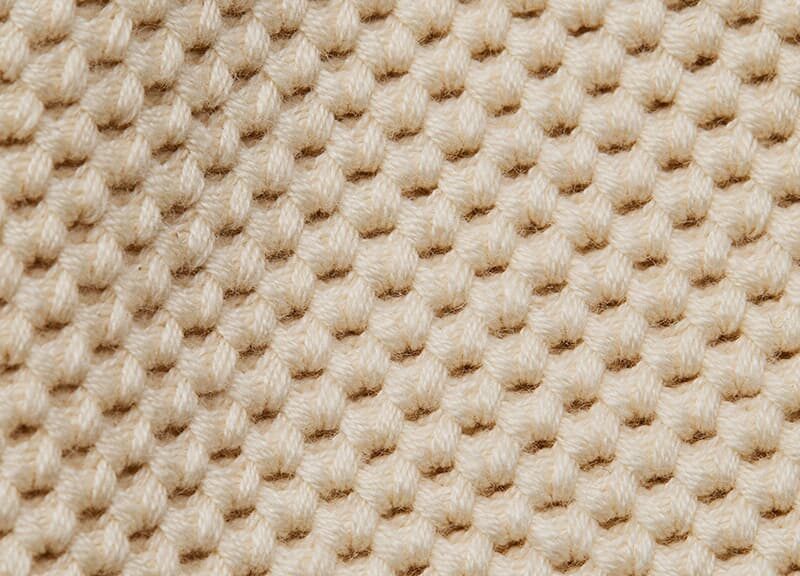
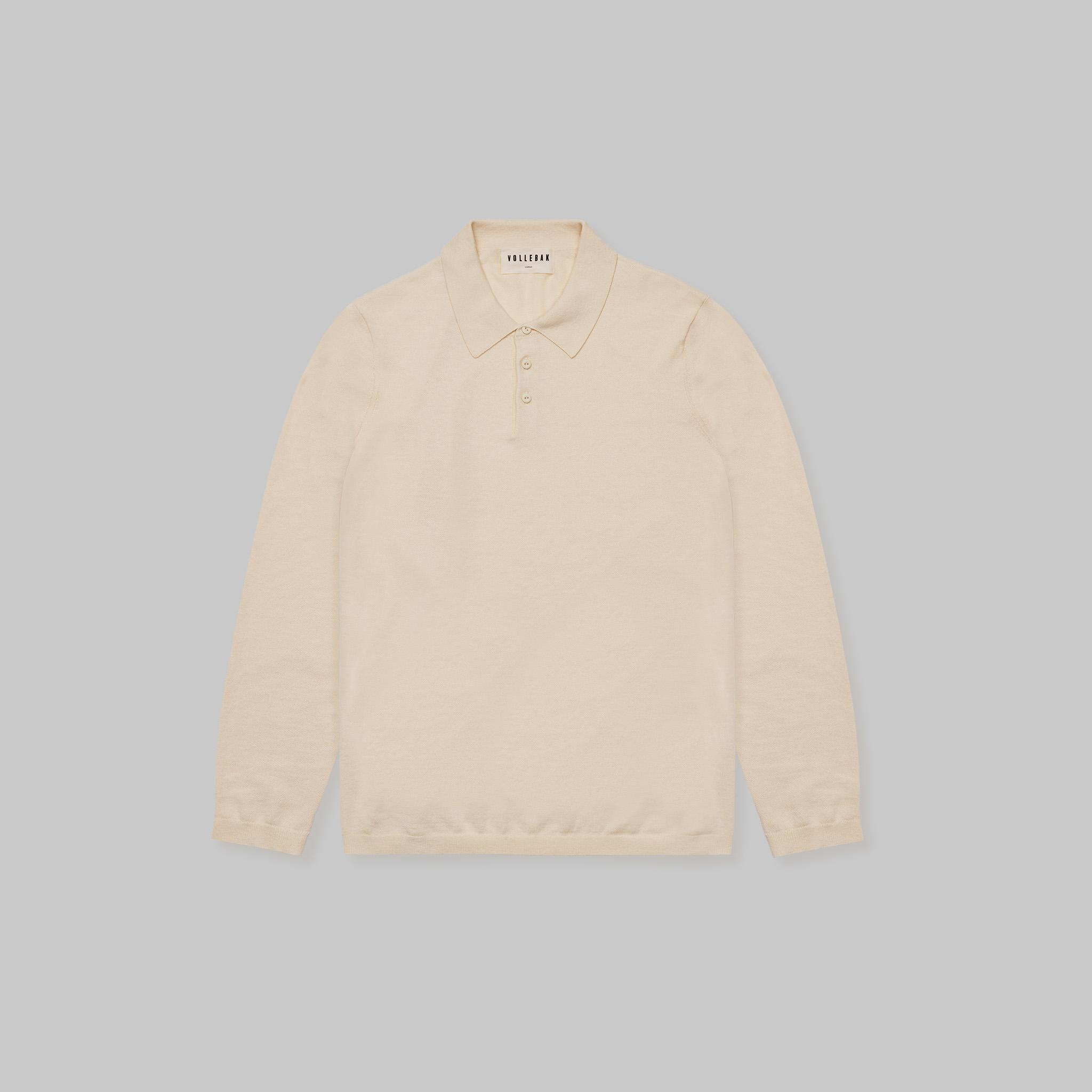
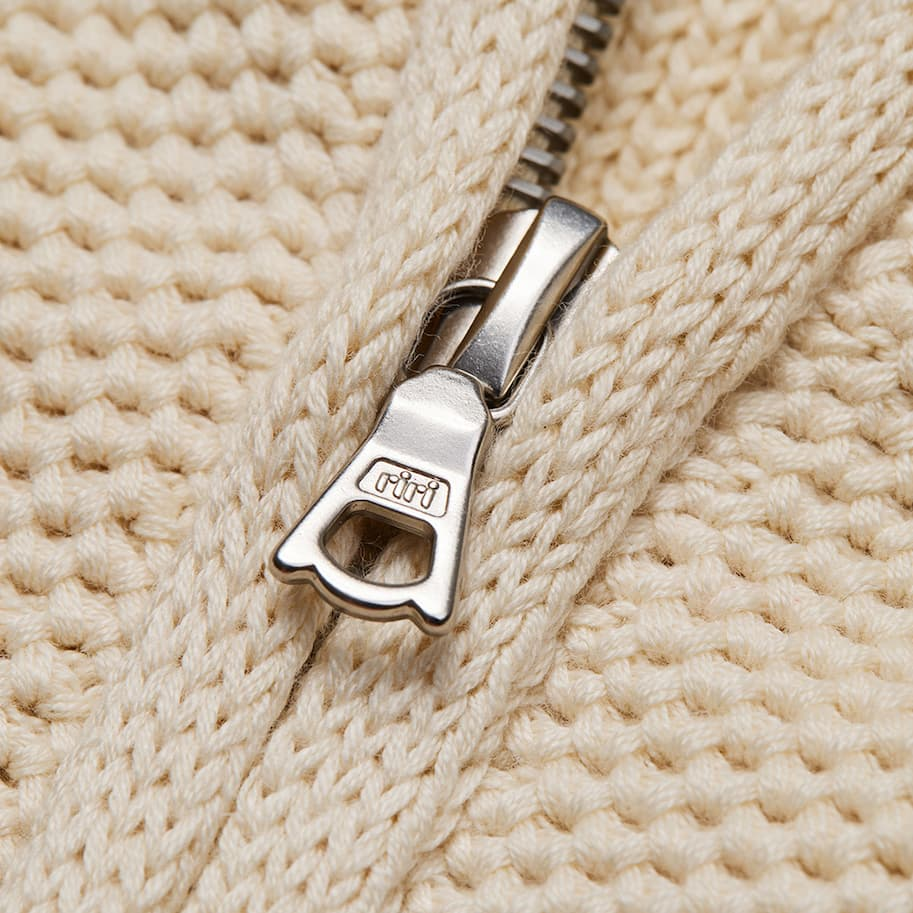
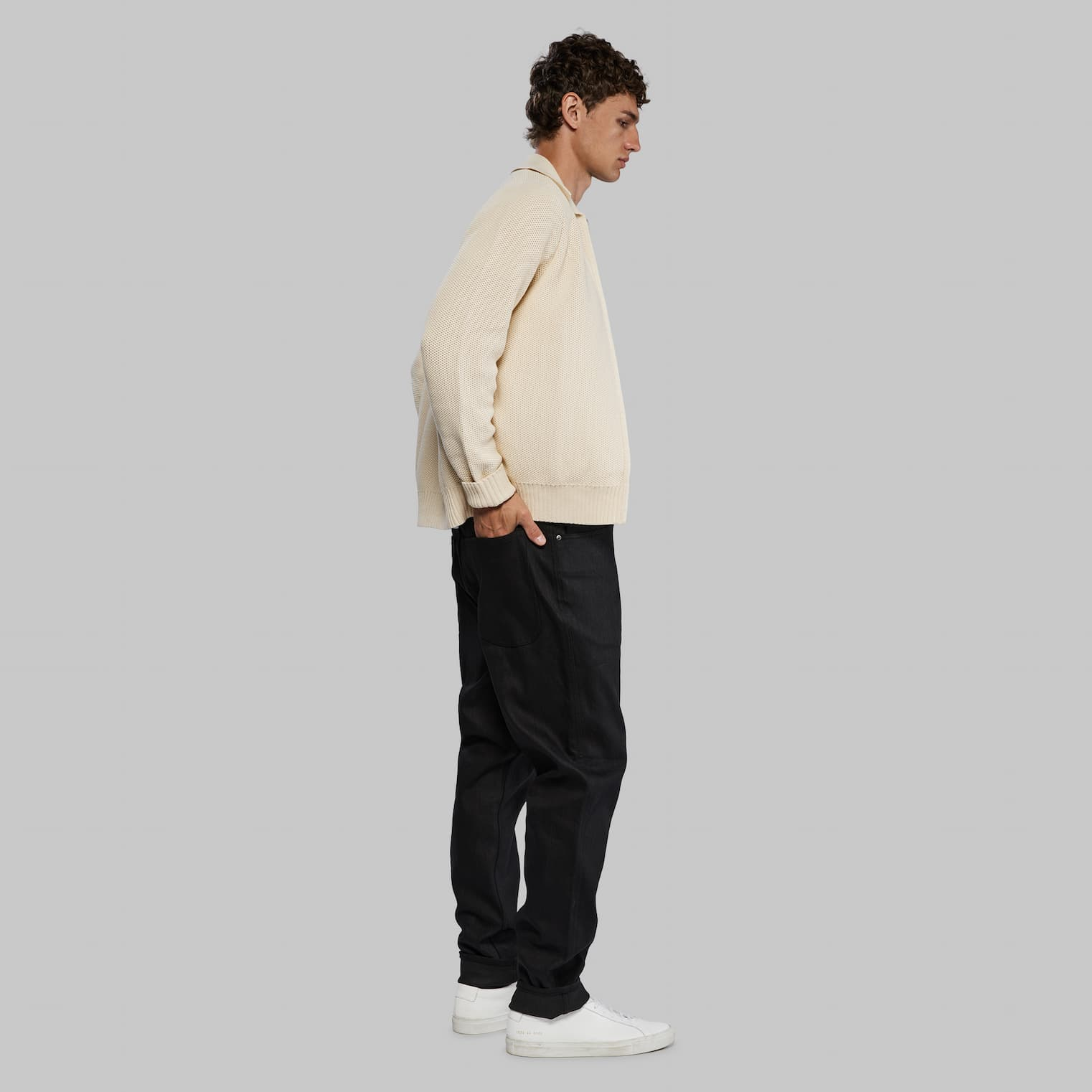
Kelp can grow 24 inches a day on nothing but sunlight and saltwater. That’s faster than a triffid, but with a much lower chance of getting eaten. And our friends at vollebak used it to make the Underwater Kelp Cardigan.

In John Wyndham’s classic The Day of the Triffids, much of the world has been blinded by a meteor shower. Eight-foot-tall walking plants – possibly bioengineered by the Soviet Union – sting and then slowly digest stumbling, unsighted humans.

Seaweed, a type of marine algae, is almost as weird and otherworldly. But it doesn’t walk, and it doesn’t eat people.
It might turn out to be one of the most useful organisms on the planet. Which is why they’ve used it to build the Underwater Kelp Cardigan.
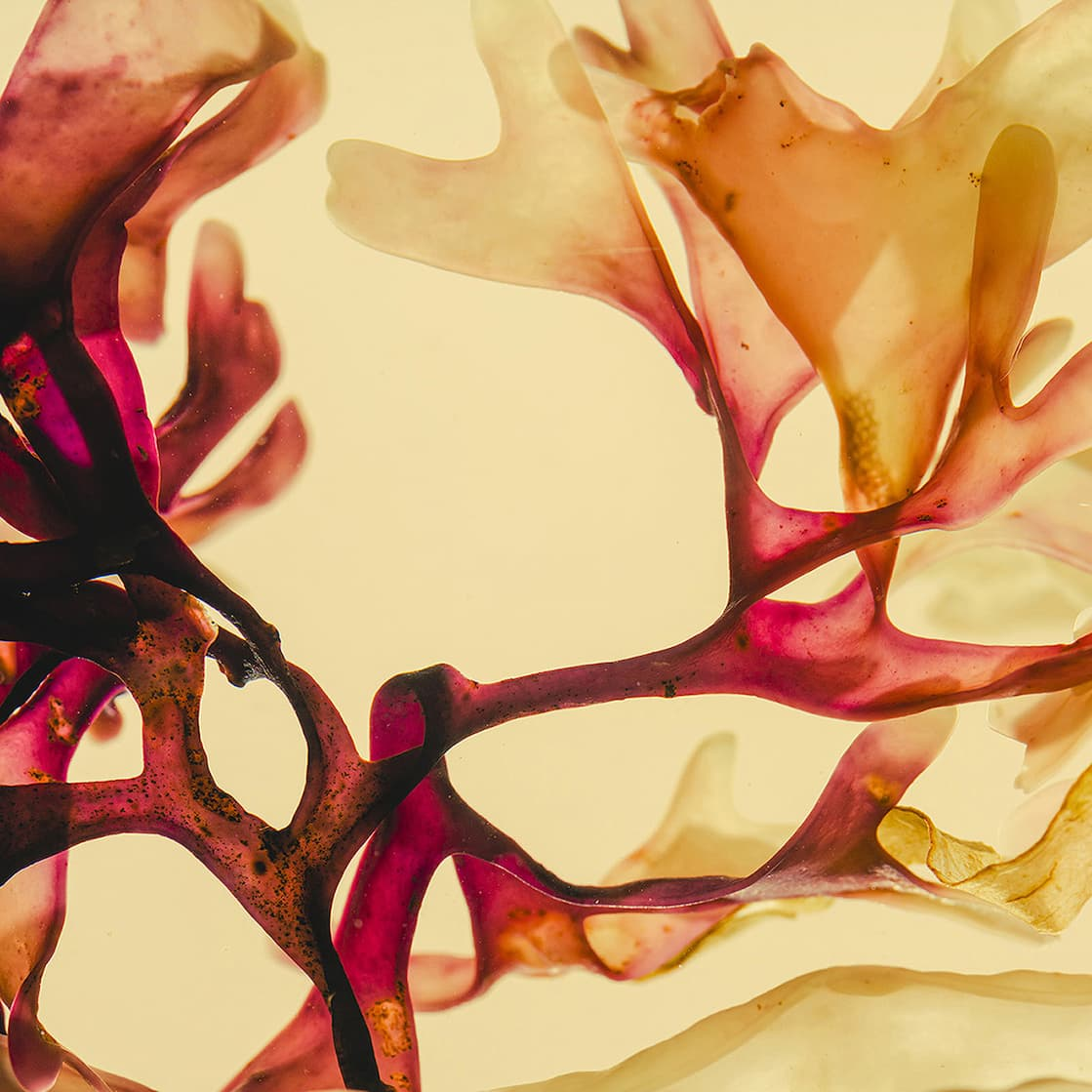
What makes seaweed so exciting? Let’s start with how fast it grows. Kelp – the long, ribbon-like brown algae that forms forests on the seabed – can grow by up to 24 inches a day. That makes it one of the fastest-growing organisms on Earth. Faster than triffids. Considerably faster than bamboo.
And it does it on almost nothing. No soil. No freshwater. No fertilizer. No pesticides. Just seawater, sunlight, and dissolved nutrients. Farming on land needs fields, irrigation, and machinery. Cultivating seaweed just needs a rope and a stretch of coastline.
The forests it builds are among the most productive ecosystems anywhere. Underwater rainforests, dense with life, growing up through the water column rather than out across a field. More than 35 million tonnes are now produced globally each year. Most of it is farmed rather than torn from the wild.
What’s inside is more interesting still.
Seaweed’s cell walls are packed with biopolymers – alginate, agar, carrageenan, cellulose – industrial building blocks that are already in everything from ice cream to pharmaceuticals. Extracted and refined, they can be reassembled into films, gels, coatings, and fibers.
These polymers can be spun into yarns that look, feel, and behave like natural fibers, but at a fraction of the environmental cost. They need up to 70 times less water than cotton. They cause zero microplastic pollution. And rather than lingering for centuries, some seaweed-based materials are designed to disappear, biodegrading in a matter of weeks.
Brown and red seaweeds can also – and with much less intervention and engineering – be turned into thin, transparent films that are strong enough for packaging. It’s also compostable. Instead of outliving everyone who ever touched them, they just quietly disappear.
Then there’s everything seaweed does while it’s still growing. It absorbs carbon dioxide straight out of the water. It acts as a living filter, pulling excess nutrients from coastal seas and quietly restoring balance.
It’s not all upside.
Processing seaweed at scale is still energy intensive. But seaweed is more than a single miracle material. It’s the basis of a new material system, a blue biorefinery, where the entire plant gets used across food, feed, chemicals, and textiles with as little waste as possible.
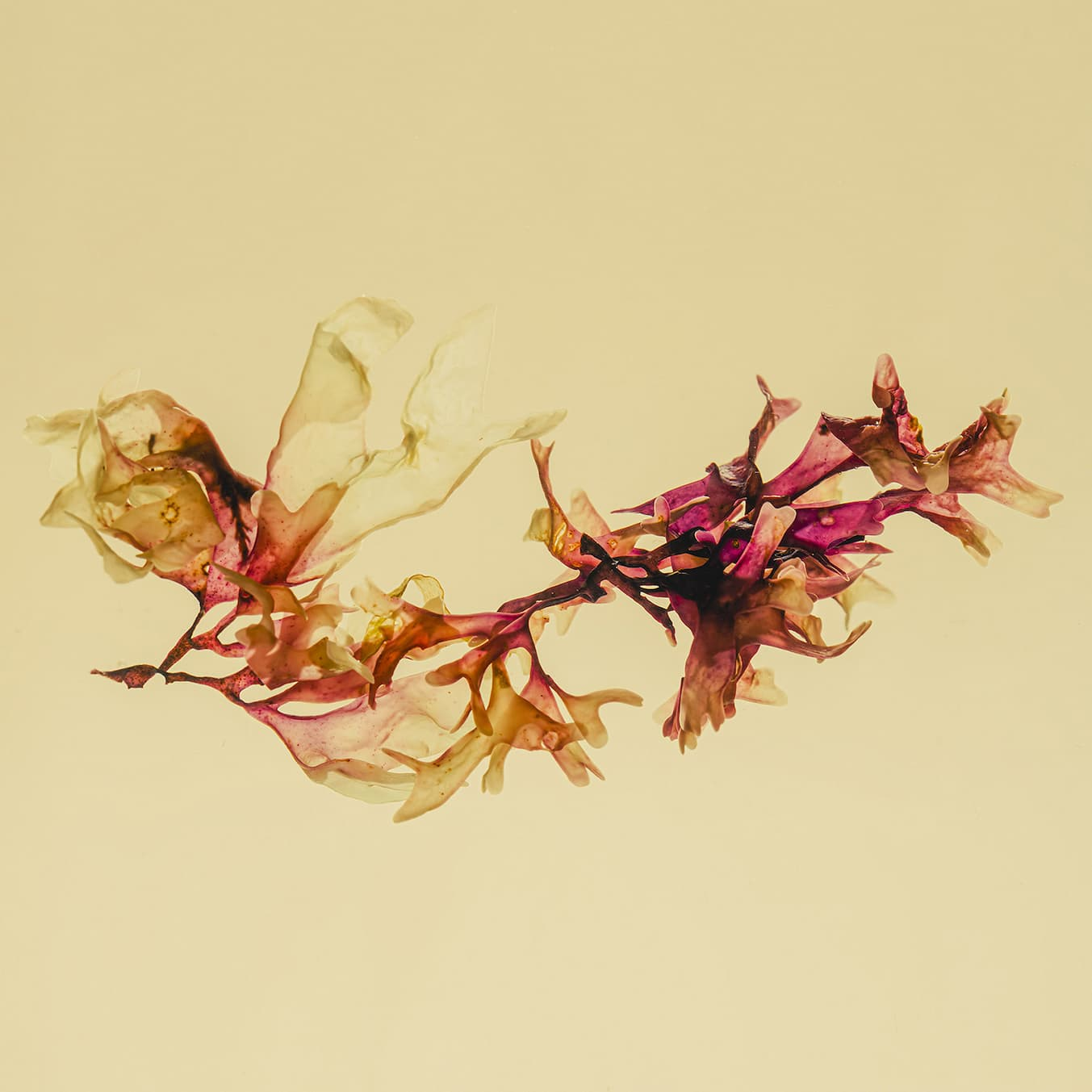
For most of history, seaweed has been seen as an unsightly annoyance. That’s all about to change.
For the Silo, Jarrod Barker.