
Audiobooks Are A Quickly Growing Industry In Canada

Canada is in the midst of an audiobook boom. Though sales numbers aren’t available yet, they’ve been growing rapidly in the United States, and north of the border, there’s been a substantial influx of publishers entering the audiobook market.

Why Do Canadians Listen to Audiobooks?

What’s behind their growing popularity? It all comes down to the pleasure of listening. Canadians are busy, stressed out, and looking for a way to slow down. Carving time out of the day to sit back and listen to a book is a chance to clear out the cobwebs, recharge, and rebalance. You can listen to audiobooks at the end of a long day, on your commute, on a lazy Saturday morning, or while you’re cleaning up and doing the dishes.

There’s also the appeal of the narrator. Talented voice actors bring great stories from the page to the speaker. They can bring a different personality to a book and new life to a story you already love.

While not every author has a voice made for narration, some of the best audiobooks available are narrated by the authors themselves. Neil Gaiman is a standout in this category. A natural-born storyteller, Gaiman has narrated a number of his own audiobooks and graced other works with his signature voice, though he’s not alone. Writers like Jenny Lawson, Christopher Hitchens, and Seamus Heaney have all made names for themselves narrating their own books. 

Indie Canadian Publishers Getting into Audiobooks

It’s not just international publishers that are producing audiobooks in Canada. Independent publishers like House of Anansi and ECW Press have entered the audiobook market, producing some of their own award-winning titles and making them available on various audiobook platforms.

Titles like Tanya Talaga’s Seven Fallen Feathers, Eden Robinson’s Song of a Trickster, and Cherie Dimaline’s bestselling Empire of Wild are just some of the titles available as audiobooks thanks to the recent uptick in the Canadian market.

Great Canadian Talent

Canada has been relatively slow to enter this market, but it’s uncovered a hidden talent pool. As independent publishers have looked toward local actors, they’re discovering Canadians have a knack for narrating. Some audiobook producers are hoping more Canadians will make it easier to find great voice actors for their titles.

How Audiobooks Are Changing Book Clubs

Audiobooks have also opened up new opportunities for book clubs, moving from solitary reading to listening as a social activity. Clubs can now appreciate titles together and talk about what they think chapter by chapter. Club meetings can even be hosted online.

How Do Canadians Get Their Audiobooks?

Subscriptions have become the preferred way for Canadians to get their audiobooks. They work like a “book of the month club.” For example, a subscription with Audible gets you credits to pick one audiobook each month. You can buy more if you’re a voracious listener, and there are usually other membership benefits, such as access to podcasts.

With fast-growing sales and increased production, Canadian book-lovers can look forward to lots of new Canadian titles making the transition to audiobook format.

Nature’s Power Is Unleashed: Bold New Season At Boca Raton Museum Of Art

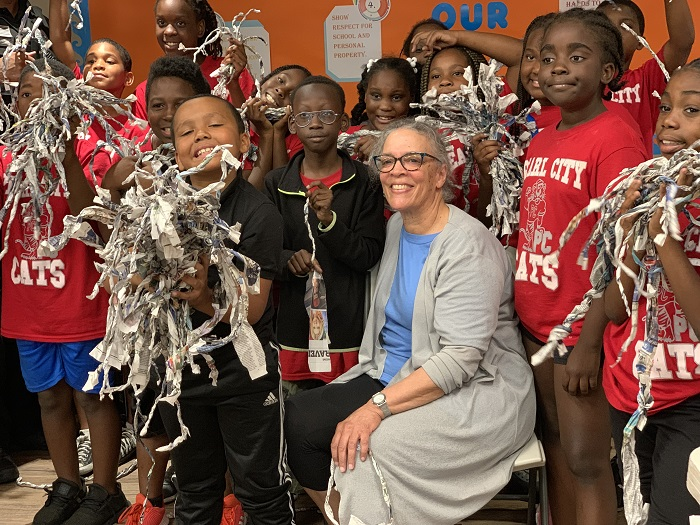
The artist Maren Hassinger with children from Pearl City, the historic African American neighborhood where the majestic 100-year-old banyan tree, the “Tree of Knowledge,” still stands today. The children joined hundreds of community members to create together thousands of aerial branches from recycled newspapers for Hassinger’s new monumental installation.
Clifford Ross in the ocean surf, photographing hurricane waves.
The power of nature is unleashed with two timely, powerful exhibitions at the Boca Raton Museum of Art for the new season. Both of these original shows ─ Maren Hassinger: Tree of Knowledge and Clifford Ross: Waves ─ will kick off the museum’s 70th anniversary season (on view November 5th – March 1st). 

The museum is presenting both exhibitions together because the two shows sound a clarion call for environmental awareness. These shows also remind viewers that the beauty of nature can still inspire us, despite the over-saturation of society by hand-held devices and screens.
The two exhibitions are presented side-by-side in adjoining galleries.

The artist Maren Hassinger with children from Pearl City, the historic African American neighborhood where the majestic 100-year-old banyan tree, the “Tree of Knowledge,” still stands today. The children joined hundreds of community members to create together thousands of aerial branches from recycled newspapers for Hassinger’s new monumental installation.Clifford Ross in the ocean surf, photographing hurricane waves.The Clifford Ross exhibition features a new approach to his monumental depictions of ocean waves that the artist captures during extreme weather. The result is the most comprehensive survey of his process ever shown in a museum.

Ross dramatically presents the monstrous power of the seas in his new exhibition at a crucial moment in time for our planet: the United Nations recently issued a major new report warning that the dangerous effects of climate change on our oceans is much worse than previously thought.
The new findings warn about warming oceans and damaged ecosystems.

Sea levels are rising faster than previously predicted, glaciers and ice sheets melting more rapidly than expected, shrinking the fisheries that feed millions.  Watch the spectacular video of Clifford Ross in the ocean surf at vimeo.com/168830477 The new report warns that many cities around the world will experience annual flooding events by 2050 that previously occurred only once per century.

The world’s oceans have been warming since 1970 and have absorbed 90 percent of the planet’s excess heat, killing off vast stretches of coral reefs. Absorbing massive amounts of carbon has made the ocean more acidic and inhospitable to corals that millions of species depend on for survival.


“When I first began photographing these hurricane waves 30 years ago, most of us were unaware that global warming was seriously damaging our oceans,” said Clifford Ross. “Now, as I look back on my work, it takes on a whole new meaning.”

Above – the two artists headlining the new season: Clifford Ross and Maren Hassinger. MAREN HASSINGER: TREE OF KNOWLEDGERenowned sculptor and performance artist Maren Hassinger was commissioned by the museum for a residency that explored the staying power of nearby Pearl City, Boca Raton’s historic African-American neighborhood.

This is the largest installation that Hassinger has ever created in her long and celebrated career. Her new site-specific installation is based on Pearl City’s landmark, the “Tree of Knowledge.” This majestic, 100-year-old banyan tree still stands today and is protected by the Historic Preservation laws. The tree has served the people of Pearl City since the dawn of the 20th century, as a gathering place for sharing stories and communal spirit. The majestic 100-year-old banyan tree at Pearl City is the inspiration for Maren Hassinger’s Tree of Knowledge.(photo by Aylin Tito)
Hassinger vigorously engaged the public to recreate the tree’s aerial roots by gathering many groups over several months.

People from the community and visitors to the museum spent hundreds of hours twisting by hand thousands of recycled newspapers. Thousands of recycled newspapers were twisted to mimic the aerial roots of the banyan tree for Maren Hassinger’snew installation Tree of KnowledgeThese banyan “branches” will be suspended from the ceiling of the main gallery, representing the community-based “Creation-Stations.” The participants’ names will be incorporated into the monumental new work.

“I want visitors to the museum to think about the endurance of the tree and the endurance of the people who live beside it,” said Maren Hassinger. “I hope they realize it’s possible to build a world in which, like this installation, people work together side by side. Both the tree and the residents have inspired me with their mutual endurance.

In new reports, the United Nations warns that fires such as those causing de-forestation in the Amazon elevate concerns for the planet’s natural life support systems. This global call to action urges countries, companies and consumers to build a new relationship with nature.

The destruction of the world’s largest rainforest calls attention to the need to prevent ecosystems from declining to a point of no return, with dire consequences for humanity.

This year, the leading scientists of the world warned that civilization was in jeopardy due to forest clearance, over-usage of land, climate change, and pollution, putting a million species at risk of extinction.

Hassinger’s new installation is about nature as knowledge and about education. The twisted ropes of newspaper are made of words and stories.

“I hope the community and all of the visitors to the museum take a moment to think about the materials used in the project, which are not traditional art materials, and realize that this giant project was made not by artists, but by the public, working together,” adds Maren Hassinger. 

“Both adults and children from the community welcomed my project with enthusiasm and proceeded to twist and twist to create the aerial branches. Their enthusiasm and spirit of camaraderie is uplifting and contagious,” says Hassinger.

Paper is a natural material, made from trees, and throughout the installation there will be fans that evoke the wind blowing gently through nature, as opposed to the hurricane winds of Ross’s work.Wind, the video by Maren Hassinger, will also be part of the exhibition. Watch the video trailer here vimeo.com/368811486

“Following the theme of nature for our new season at the Museum, how appropriate that Maren Hassinger would choose this legendary tree, known as the Tree of Knowledge, as the subject for her site-specific installation,” said Irvin Lippman, the executive director of the Boca Raton Museum of Art.
“From its inception to its installation, this has involved audiences of all ages from every corner of our community to participate in the making of the aerial roots from streams of recycled newspapers. Much in the manner of the Banyan tree, we are all connected to one another,” adds Irvin Lippman.  

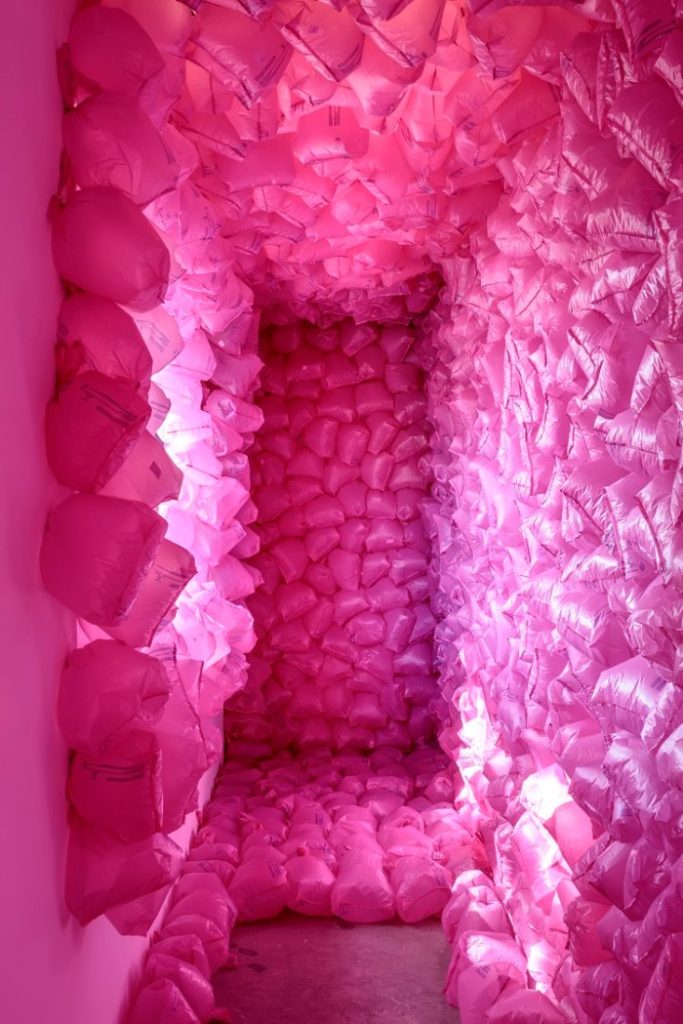
Hassinger’s new exhibition will also feature the installation Love – an experiential portal for visitors to walk through. As the entranceway into the museum’s main galleries, it will surround visitors with hundreds of recycled pink plastic bags that will completely cover all of the surfaces around them. The shopping bags are filled with the air of human breath, and contain human love notes inside. Love, by Maren Hassinger. This installation will serve as the entryway featuring hundreds of recycled pink plastic bags, surrounding visitors.The bags are filled with human breath and contain human love notes.Maren Hassinger (still from her video Pink Trash). 

CLIFFORD ROSS: WAVES On the subject of Clifford Ross: Waves, Irvin Lippman adds: “It would seem obvious that a museum with a coastal address such as ours would naturally be ever fascinated by the subject of waves. The subject of Clifford’s photographs in this new exhibition, however, goes deeper into the unpredictable shapes of waves, as much about abstraction as realism.” 
The effect of being engulfed in a room full of his work is profound, causing some viewers to claim they can actually hear the sound of the ocean waves although there is no sound component.
Ross is celebrated worldwide for his Hurricane Waves series, monumental images that were photographed by the artist during storms and while hurricanes were off-shore, while he was attached by a tether to his assistant who remained on land as Ross braved the ocean surf.

The size of these images is humbling. The angle of vision, from as low as possible, is calculated to inspire awe. The waves dominate us, framed or cropped; we feel their full force.
These waves invoke the power of wind as well as the power of water, the great cyclical forces of nature that generate energy.  
This major survey includes his monumental hurricane wave images. The exhibition also features a site-specific installation of extremely large-scale prints on wood, as well as the artist’s Digital Waves – A computer generated video displayed on an LED wall that has been acquired by the museum for its collection.
Other sections include: the Horizons series (photographs that explore movement with the added power of obstruction); his Hurricane Scrolls; and the Grains series of bold abstract works exploring the purity of color.Clifford Ross, Hurricane LXIII, 2009. Archival pigment print.“The pure abstraction of the Grains series is an antidote to the hurricane, a space to calm down. A quiet end to this stormy story where we can recompose our thoughts,” said Clifford Ross. 
While it explores the limits of photography and abstraction, this exhibition is also a dramatic declaration about climate change.
“This exhibition is a thorough survey of my working methods,” said Ross. “an effort to show all the ways I have approached the subject of ocean waves. But there’s also a deeper theme of addressing climate change – unavoidable in this day and age.”A work from Clifford Ross’s Digital Waves series (computer generated videos displayed on an LED wall) has been acquired by the museum for its collection. “Somehow the apocalyptic quality of the show does not erase the basic lyricism and beauty that I see in nature. When I started out, wanting to celebrate nature by creating bodies of work that were an homage to the sublime, I didn’t understand that the images were also capturing evidence – evidence of our negative impact on nature.”

“The ferocity, the forms of these waves were partially due to global warming. This project has come full circle, as much a meditation on the medium of photography as it is a photographic reflection of our world,” said Clifford Ross. 
Photo of artwork
Clifford Ross, Wood Wave LIV, 2017. Triptych UV cured ink on maple veneer. 
Caption for first photo at top: Clifford Ross, Hurricane LI, 2009. Archival pigment print.
MORE ABOUT THE TWO ARTISTS: Above – the two artists headlining the new season: Maren Hassinger and Clifford Ross. Maren Hassinger has work held in the permanent collections of the Hammer Museum in Los Angeles; the Reginald F. Lewis Museum of Maryland African American History & Culture in Baltimore; the California African American Museum in Los Angeles; Portland Museum of Art; The Studio Museum in Harlem; Williams College Art Museum in Williamstown; and the San Francisco Museum of Modern Art, among others.
Her many awards include: the Lifetime Achievement Award from the Women’s Caucus for Art, Maryland Institute College of Art; Joan Mitchell Foundation Grants; Anonymous Was a Woman; and the Pollock-Krasner Foundation, among others.
More about Maren Hassinger here.
The works of Clifford Ross are held in the collections of the J. Paul Getty Museum in Los Angeles, The Museum of Modern Art in New York, and the Museum of Fine Arts in Houston, among others. He is the editor of the book Abstract Expressionism: Creators and Critics, and is Chairman of the Helen Frankenthaler Foundation. His work has been widely exhibited in the United States, Europe, Brazil and China.
He has lectured in numerous university and museum settings, including Princeton, Yale, and New York University. Ross is a member of the Yale School of Art Dean’s Advisory Board.
More about Clifford Ross here. 
Photo of artwork
The majestic 100-year-old banyan tree at Pearl City is the inspiration for Maren Hassinger’s Tree of Knowledge.
(photo by Aylin Tito)
Love, by Maren Hassinger. This installation will serve as the entryway featuring hundreds of recycled pink plastic bags, surrounding visitors.The bags are filled with human breath and contain human love notes.
Photo of artwork
Thousands of recycled newspapers were twisted to mimic the aerial roots of the banyan tree for Maren Hassinger’s
new installation Tree of Knowledge
A work from Clifford Ross’s Digital Waves series (computer generated videos displayed on an LED wall) has been acquired by the museum for its collection. 

The Royal Ontario Museum Publishes Cloth That Changed The World: The Art And Fashion Of Indian Chintz

New book explores the story of India’s richly coloured textiles ahead of ROM original exhibition

Photography by Tina Weltz

TORONTO — The Royal Ontario Museum (ROM) is pleased to announce the publication of Cloth that Changed the World: The Art and Fashion of Indian Chintz on December 2, 2019. The collection of essays explores the far-reaching influence this vividly printed and painted cotton cloth has had on the world, from its origins 5,000 years ago to its place in fashion and home décor today. The volume is the official companion to the ROM-original exhibition The Cloth that Changed the World: India’s Painted and Printed Cottons, which runs from April 4 to September 27, 2020 in Toronto.

The scholarly and beautifully illustrated publication draws from the Royal Ontario Museum’s own Indian chintz collection, which ranks as one of the best in the world. Featuring extensive new research, this multidisciplinary book traces the story of chintz and the indelible footprint it has left on the world. The publication combines vivid field photography of artisans at work with striking images from the ROM’s world-class collection, as well as images from India’s fashion runways and the work of top designers embracing this heritage textile today.

“The world would be a drab place without India,” says Sarah Fee, editor, Cloth that Changed the World and ROM Senior Curator of Eastern Hemisphere Fashion and Textiles. “Our blue jeans and printed T-shirts trace much of their lineage back to the ingenuity of India’s cotton printers and dyers. This exhibition and companion book celebrate how India ‘clothed the world’ in exuberantly coloured cottons for thousands of years. It explores the art’s resiliency in the face of modern industrial imitation and shares the exciting stories of reviving natural dyes and hand skills in India today.”

Contributing writers include leading experts Ruth Barnes, Rosemary Crill, Steven Cohen, Deepali Dewan, Max Dionisio, Eiluned Edwards, Sarah Fee, Maria João Ferreira, Sylvia Houghteling, Peter Lee, Hanna Martinsen, Deborah A. Metsger, Alexandra Palmer, Divia Patel, Giorgio Riello, Rajarshi Sengupta, Philip Sykas, and João Teles e Cunha, and a preface by Sven Beckert, Harvard University’s Laird Bell Professor of History.

Next spring, the book comes to life in the ROM’s Patricia Harris Gallery of Textiles and Costumes, where ROM-original exhibition The Cloth that Changed the World: India’s Painted and Printed Cottons will take visitors on a journey through the ROM’s world-renowned collection of chintz, on public display for the first time in over 50 years.

The striking exhibition will explore thought-provoking themes, including the ingenuity, skill and technique of Indian artisans; the adaptation of chintz for international markets; and the environmental impact of the global textile industry over time. With a focus on attire and home furnishings, the exhibition features 80 objects spanning 10 centuries and four continents. Religious and court banners for India, monumental gilded wall hangings for elite homes in Europe and Thailand, and luxury women’s dress for England showcase the versatility and far-reaching desire for Indian Chintz.

About Sarah Fee (Curator and Editor)

Dr. Sarah Fee is Senior Curator of Eastern Hemisphere fashion and textiles at the Royal Ontario Museum. She has degrees in Anthropology and African studies from Oxford University and the School of Oriental Studies, Paris, and in 2002, guest-curated an exhibition on Madagascar for the Smithsonian’s National Museum of African Art. Today, she continues to focus on Malagasy historic textiles and fashions, in addition to those of Zanzibar and Western India. A research associate at the Musée du Quai Branly, Paris, and the Indian Ocean World Centre at McGill University, Fee also teaches at the University of Toronto’s Department of Art. Fee is a past Board Member of the Textile Society of America, and currently sits on the editorial board of the Textile Museum Journal (TMJ).

About the Publication

Cloth that Changed the World: The Art and Fashion of Indian Chintz
Editor: Sarah Fee
Available at the ROM store starting December 2, 2019.
9 x 12, 272 pages, 300 colour illustrations.
$50.00.
Royal Ontario Museum and Yale University Press.

ROM SOCIAL MEDIA 

Join the Conversation: @ROMtoronto
Like: ROM Facebook
Watch: ROM YouTube

Sarah Fee
@aTextilesCurator

ABOUT THE ROM

Founded in 1914, the Royal Ontario Museum showcases art, culture and nature from around the world and across the ages. Among the top 10 cultural institutions in North America, Canada’s largest and most comprehensive museum is home to a world-class collection of 13 million art objects and natural history specimens, featured in 40 gallery and exhibition spaces. As the country’s preeminent field research institute and an international leader in new and original findings, the ROM plays a vital role in advancing our understanding of the artistic, cultural and natural world. Combining its original heritage architecture with the contemporary Daniel Libeskind-designed Michael Lee-Chin Crystal, the ROM serves as a national landmark, and a dynamic cultural destination in the heart of Toronto for all to enjoy.

ON NOW


It’s Alive! Classic Horror and Sci-Fi Art from the Kirk Hammett Collection
Gods in My Home: Chinese New Year with Ancestor Portraits and Deity Prints

COMING SOON


November 16, 2019 | Bloodsuckers: Legends to Leeches
March 7, 2020 | Egyptian Mummies: Exploring Ancient Lives


À L’AFFICHE


Sauve qui peut! L’art des grands films d’horreur et de science-fiction de la collection de Kirk Hammett
Accueillir les divinités : Portraits d’ancêtres et estampes de dieux pour le nouvel an chinois

À VENIR


Le 16 novembre 2019 | Soif de sang
Le 7 mars 2020 | Les momies égyptiennes : À la rencontre des Anciens

4 Simple Situations That Call For Investing In New Residential Windows

There are plenty of reasons to consider replacing your current residential windows with new ones. All it really takes is determining that making repairs would be more costly and ultimately less satisfying than investing in new Oshawa windows. Outside of that, why else would you take on this type of project? Here are four scenarios to consider. One of them may relate to your current circumstances.

You’re Buying A First Home

Purchasing a first home is exciting, even if the place could use some work. One of the benefits of new windows is that they will make the place for energy efficient. They’ll also improve the look of the place. As you look around for the best deals for Waterloo windows, keep factors like cost, energy rating, and style uppermost in your mind. Your choices now will pay off in the years to come.

You’re Planning on Flipping A Residential Property

Your entrepreneurial instincts tell you that a certain residential property can be purchased for a low price, remodeled, and sold for quite a profit. One of the upgrades you’ll make is ripping out the old windows and replacing them with new ones. Make sure you go with Energy Start windows that fit nicely with the home’s style. Doing so will impress potential buyers and go a long way toward generating interest in the property.

You Hope To Sell The Home In Five Years

For now, the plan is to live in the home for several years and then place it on the market. Opting for new windows now will benefit you in two specific ways. The first is that the home is more comfortable during your years of occupancy. Since it’s easier to heat and cool, that means lower utility costs.

The second has to do with ensuring the home enjoys plenty of attention from potential buyers. When they see the windows are in great condition, that’s one more reason to see what else the property has to offer. See the windows as a way to receive offers sooner rather than later. There’s also more of a chance of getting higher offers. Think of what that means in terms of having more money to go toward your next home.

You Want To Remodel The Home Before Retiring

You’ve loved your home since the first moment that you saw it. The plan is to remain in the home for the rest of your life. With retirement looming in several years, now is the time to make any changes, repairs, and upgrades that will ensure the place is in top condition.

Along with determining if anything needs to be done with the wiring, plumbing, and insulation, take a good look at the windows. Do they all work properly? Are they energy efficient? Would you prefer a different style?

Preparing the home for retirement means wanting to avoid costly repairs later on. It also means making sure your utility costs are more affordable and that the place is easier to maintain. The right replacement windows will go a long way toward guaranteeing that the place will be a home sweet home during those retirement years.

Whatever your reasoning, spend some time looking into all your options for new residential windows. Feel free to ask questions and listen to the answers that the professionals provide. In the long run, you’ll end up with windows that make life easier in more than one way.

4 Important Ways Technology Is Making It Easier To Connect With Your Target Audience

Technology, including online technology, never stands still. There’s always something new or at least a different way to use it. Making the most of technology does require an expert touch. When you choose to seek out help from some of the best SEOs in Toronto, like Mike Zhmudikov, you position your online presence to more easily connect with your target audience. Here are some examples of how current and emerging technology is enhancing how you make and maintain those connections.

You Have More Ways To Tell Your Story

The factors that you should include in all of your SEO campaign strategies are more varied than they were 10 or 15 years ago. These days, there are many more ways to tell your story online and attract people who really want to hear that story. Making use of all those approaches improves the odds of broadening your reach.

For example, the prudent use of social media allows you to reach more people. Images included with the posts make a difference. You’ll also find that embedding videos in posts, or at least linking to them, also attract attention. Don’t overlook the potential of using text advertising to go along with email campaigns. Look at each way to engage consumers and identify the ones that resonate with your target audience. You may be surprised at how many avenues are actually open to you.

Providing More Information In Less Time Has Never Been Easier

Information in any form must not only be accurate. It also needs to be delivered quickly and in forms that consumers readily digest. That means optimizing your mobile site so everything loads quickly. The same is true for your traditional website.

Remember that attention spans are not what they were a generation ago. Today’s audience requires quick and accurate returns to their queries. If your pages lag, some will move on in disgust and never come back. By contrast, if you offer relevant data that loads without a long wait time, you have a good chance of making a new connection.

Technology Makes Relationship Marketing Simpler

You want to make information easier for users to share. When they come across your great social media feed and especially like a specific post, ensure they can share it with ease. Use widgets to ensure site visitors can share your pages on the most popular social media sites. You want your text or email ad to be easy to share with others. Today’s technology makes sharing a task that requires no more than one or two steps. Tap into that and you’re poised to reach more people.

Enhanced Customer Support and Building Rapport

When people think of customer support, their minds rightly move toward taking care of existing customers. That’s certainly the primary focus. What is sometimes overlooked is that potential customers are likely to contact support teams before they reach out to sales and marketing personnel. You can benefit from this by using technology to acknowledge their queries and then move them over to those who can onboard them as customers.

In order to do this, use technology to make reaching your customer support team easy. Along with voice and email, do make use of real-time messaging. While it can be automated up to a point, auto-attendants can only accomplish so much. Ultimately, you want actual people who review queries and step into the conversation.

How would technology help increase your brand recognition, online reputation, and motivate more consumers to turn to you? Only an expert can provide specifics. Work with someone who understands technology, SEO, and other elements of contemporary online strategies. You can bet that the investment of time and resources will be worth it.

Start Saving for an Emergency Fund

Debt is much more common than you think. Almost everyone has encountered it at least once in his or her life, and it’s nothing to be ashamed of. What is most important is being able to recognize it and address that you need help.

One way to get help is by consulting a not-for-profit credit counselling agency that offers holistic support in all aspects of debt maintenance. The right agency will offer advice on everything from how to spot and avoid credit repair scams to delivering judgment-free credit rebuilding advice through wise credit and money management.

To avoid future situations of financial uncertainty start saving for an emergency fund once you’ve been able to knock off some of your debt. Having a safety net will make you feel more stable in years to come, and as the title suggests, it’s always an excellent idea to have funds available if any sort of emergency takes place.

It takes time and dedication, but you’ll thank yourself later on when you can pay debts off in half the amount of time as it would normally take.

How Much Should You Save?

Of course, everyone’s situation is different. Depending on if you have a family or you live on your own, if there is a beloved pet that may require medical care — there are many factors that can affect how you should consider initiating your emergency fund.

It’s a common belief that a typical person should be able to access six-months of salary at any time. This is incredibly unrealistic for most people, but it can be a long-term goal.

Look at what you earn per month, and think of an amount that makes sense to set aside in a savings account each paycheque.

How to Build the Emergency Fund

Speak with your Credit Counsellor first to gain some insight on what your emergency fund could look like, and consider these ideas.

  • The first step is to save one month of living expenses. Sit down and plan out how much your food, entertainment, bills, rent, and so on cost. Work out how long it would take to save that amount, and set aside a chunk of money each month. Even if takes a few months, the point is that you’re working toward a goal.
  • If time and health allow, get supplemental income. Are you free on weekends to work a few shifts at your friend’s store? Perhaps you could take on an additional freelance writing or design gig to chip away at in the evenings. It’s hard work, but if you’re able to take on something a little extra, it will pay off.
  • Save your tax refund. It might not be possible to save the entire amount, but if you’re able to, do it! After you’ve filed your taxes and if you qualify for a refund, saving it can be a simple way to boost your savings.

Think about the benefits of opening an emergency fund. You’ll feel so much more secure and calm knowing that there are funds available in case something unpredictable happens.

You will get back on track and you can plan for the future.

Reform WTO And Resist Protectionism, Say Commonwealth Trade Ministers

Trade ministers from across the Commonwealth today made a commitment to resist all forms of protectionism, and to work urgently together towards reforming the World Trade Organisation, which sets the global rules for international trade.

Following a meeting in London, ministers from the 53 Commonwealth member countries declared their collective support for free trade in a transparent, inclusive, fair and open multilateral trading system, with the WTO as its core institution.

They agreed that any WTO reform should take into account the views of all members, underlining the special circumstances of the developing and the least developed countries, as well as small and vulnerable economies, including Small Island Developing States (SIDS).

group pic ctmm small.jpg

Ministers also endorsed an action plan designed to boost trade among their countries to at least $2 trillion by 2030, through the Commonwealth Connectivity Agenda. Intra-Commonwealth trade is projected to reach $700 billion by next year.

Commonwealth Secretary-General Patricia Scotland said:

“The multilateral trading system is the only way for our countries, as diverse as they are, to trade in a predictable, stable, transparent and fair environment. While the global trading system may be far from perfect, it is the surest pathway towards eradicating poverty.

“Building on this, the Commonwealth Connectivity Agenda will help businesses, including micro, small and medium sized enterprises, to plug into global trade networks and benefit from world trade. In this way, intra-Commonwealth trade offers immense opportunities to contribute to reducing poverty and achieving sustainable development.”

The Chair of the meeting, UK Secretary of State for International Trade and President of the Board of Trade Liz Truss said:

“The UK along with its Commonwealth partners has today clearly set out its commitment to fight against protectionism. We must work together to promote free trade and reform the multilateral system to make sure it works for every nation, small or large.

“Trade has the power to drive growth, jobs and opportunities – it is an essential tool in the fight against extreme poverty and insecurity.

“By sharing experience across the diverse Commonwealth community, we can help to break down existing barriers to trade which currently prevent businesses in all our countries from trading successfully.”

Ministers called for an end to the impasse regarding the WTO’s Appellate Body – a key panel of judges, whose rulings help resolve the trade disputes.

They highlighted the need to update WTO rules to address new challenges and opportunities, including e-commerce. They pledged support for a global agreement that would prohibit certain forms of fisheries subsidies that contribute to overcapacity and overfishing, and eliminate subsidies that contribute to illegal, unreported and unregulated fishing by the end of 2019.

In their communiqué issued from the meeting, ministers also welcomed progress made under the Commonwealth Connectivity Agenda, including the work of active country-led ‘clusters’ focused on five areas: digital, physical, regulatory, supply side and business-to-business connectivity.

The outcomes of the meeting will inform leaders’ discussions at the forthcoming Commonwealth Heads of Government Meeting in Kigali, Rwanda in June 2020. For the Silo, Jarrod Barker.

Read the full communiqué

Canadian Money And How Select Banks Create It

Poof!My book, Money: Whence It Came, Where It Went, tells us that “The study of money, above all other fields in economics, is one in which complexity is used to disguise truth or to evade truth, not to reveal it.

 The process by which banks create money is so simple the mind is repelled.”

Graham Towers, the first Governor of the Bank of Canada, explained the process by which banks create money: “The manufacturing process consists of making a pen-and-ink or typewriter entry on a card in a book. That is all. Each and every time a bank makes a loan, new bank credit is created – new deposits – brand new money.

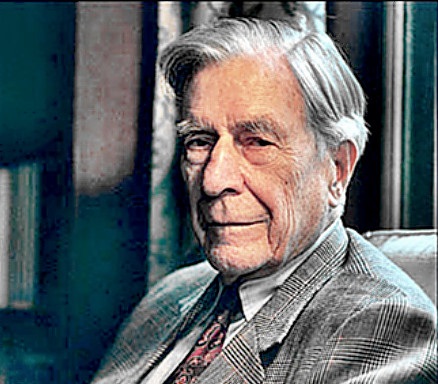
John Kenneth Galbraith- mystic or curmudgeon? image: poorwilliam.net

Broadly speaking, all new money comes out of a bank in the form of loans. As loans are debts, then under the present system all money is debt.”

Money created by banks and other financial institutions is interest-bearing debt. They create the principal and expect their money to be returned with interest. We can’t create interest the way they create the principal, so we must obtain it from some other money that was also created as interest-bearing debt. There is never enough of this money in existence at any time to pay off all of our collective debt. More interest-bearing money must continually be borrowed into existence.

In 2013, not so long ago, the ratio of household debt in Canada, including mortgages and consumer debt, was more than 160% of disposable income after mandatory deductions and income taxes and this statistic will keep growing with each year. The federal debt in Canada then was more than $600 billion, and interest payments on the debt in 2011-2012 cost $31 billion dollars or 11 cents of every tax dollar. Now in 2019, the federal debt has grown to $768 billion.

The five largest banks in Canada reported more than $27 billion in combined net income for the 2012 fiscal year.

Canada’s central bank, the Bank of Canada, claims to “regulate credit and currency in the best interests of the economic life of the nation”, and to mitigate “fluctuations in the general level of production, trade, prices and employment”, yet the purchasing power of the Canadian dollar has dropped steadily since the Bank of Canada was founded in 1934. As a store of value the dollar has not performed very well. It should also be noted that Canadian banknotes ceased to be redeemable for gold in 1929.

Bank of Canada notes are fiat money that the federal government declares to be legal tender, and the Bank has a monopoly on the issuance of bank notes. These notes are supplied to financial institutions to satisfy public demand. Chartered banks in Canada are no longer required to maintain statutory cash reserves for the loans they make. According to some estimates, Bank of Canada notes add up to less than 2% of the total amount of loans made by the banks and other financial institutions.

Once upon a time, Canada used real paper bills for one and two dollars. The move away from paper currency is interesting. Is there a concerted effort to 'do away' with physical money? (The recent withdrawal of the penny being an example.) The penny was costing more to manufacture and distribute than its actual physical value...that's partly because it wasn't made out of pure copper- hence it became "expensive". Will the nickel be the next coin to die? Is it even made out of nickel anymore? Check back in ten years. CP

Money created as interest-bearing debt is scarce from the moment it is created, which curtails its effectiveness as a medium of exchange. Every dollar comes into existence as interest-bearing debt, and the overall cost of interest is reflected in the price of everything we buy. This is not to suggest that interest should be banned or that interest rates need to be controlled by a central bank. Anyone should be free to lend his or her savings at a mutually agreeable rate. Equity financing, with shared risks and rewards, is another option.

What is being suggested here is that we ask some fundamental questions about the monetary system and the function of money.

 Are you able to use your goods, services, labour, knowledge, skills and abilities to obtain enough money to purchase other goods and services?

Are you able to obtain credit when you need it and are also willing and able to pay it back? Are you able to negotiate an agreeable price for credit and loans? Are you on a treadmill of debt, no matter how hard you work, how many expenses you cut, or how hard you try to save?

Are your savings secure and retaining their value?

Money is basically credit, like an IOU. Our ability to exchange our goods and services should not be hampered by the price of credit or an inadequate supply of money. Anything physically possible is financially possible. We can extend credit to anyone who wants to purchase anything from us and who is willing and able to provide us with a mutually agreeable amount of his or her goods and services. In essence, goods and services pay for other goods and services.

A mutual credit clearing system is an alternative method that can be used to facilitate reciprocal exchange.

Members of a credit clearing association have a trading account where an ongoing record is kept of their sales and purchases, their credits and debits. Every transaction includes a credit entry for one member and a debit entry for another, but interest does not have to be paid when an account temporarily has more debits than credits. Credit is extended to members from the rest of the traders in the group, and the major benefit of this system is that members can obtain interest-free credit. In the long term every member is expected to provide as much as they obtain. It all balances out within the community of traders. It’s all a simple matter of bookkeeping.

Direct credit clearing systems can be operated on a fee-for-service basis to cover expenses and to compensate those who provide this service. Nobody is ever forced to join any trading group and members are also free to leave when their debts are clear. Anyone can start their own credit clearing service, which allows competition between associations based on quality and price of service. Associations can also cooperate with each other to increase the number of potential trading partners and broaden the range of goods and services that are available.

Credit does not have to be scarce or expensive. We can control our own credit and allocate it as we choose. Are your best interests being served by the money you use?   For The Silo, John Kenneth Galbraith.

How Apple Parallels My Life

When I think back to the 1980’s I have mostly fond memories. It was time of great fun and discovery for me personally. I had both Commodore and Apple computers and a hairstyle that is happy to remain in my past. I listened to cool groups like “Twisted Sister” and wouldn’t publicly admit that I enjoyed “Culture Club”. Being in high school, I was painfully shy and didn’t have a lot of success with girls.

Apple had a pretty similar experience if you think about it. They were a little shy and reserved, but very much loved by those who understood them. They didn’t go out much – choosing to stay in schools and in a very few select homes. They had their share of identity crisis’ in the early 80’s and tried to break free with a whole new persona called “Macintosh” in 1984.

They walked around confused between educational, business, and recreational use and staggered out of the fog towards the end of the decade.

The 1990’s brought about a new confidence and independence. I had started a business just at the end of the 80’s and took my experience to heart as I tried to find the right niche for me. I knew that computers was where I was meant to be and grew a business from nothing to exceptional sales in a short time.

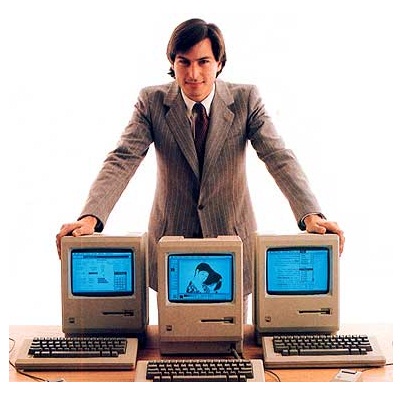
Steve Jobs and Apple’s Macintosh Computer.

I also saw the market hinge and my sales erode and I wasn’t quite able to move fast enough to recover my previous glory.

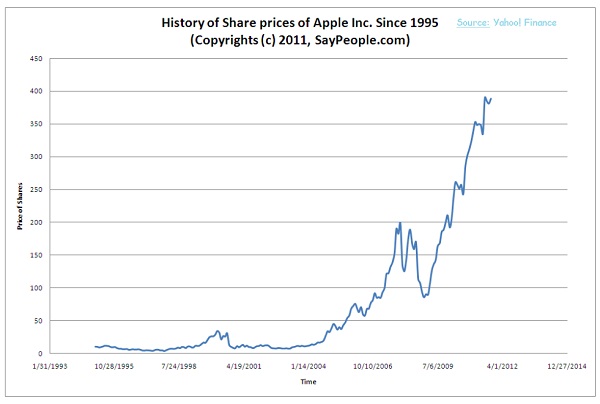
Apple saw their market share grow and decline in the 90’s as well. They knew that computers were where they were meant to be, but they couldn’t decide if they were the company to make them. They tried licensing out their operating system to others in a move that ultimately
muddied the market and left their loyal customers wondering just exactly where they were going next. Following graph courtesy of www.saypeople.com

The 2000’s became a year of maturity for me. More confident in the path I was following, I followed my dreams to open a computer museum and finally saw it through in 2005. I refocused my energies with my passion for video games to acquire the largest collection in Canada while at the same time educating others along the way.

I worked my way towards a global following for those that have shared my vision. Apple made the move from niche computer to dedicated
music device, to a more advanced smart phone in the 2000’s. They grew their loyal following in the computer market by making some radical
changes to their core operating system and integrating their new consumer devices flawlessly. They became the company they had always
dreamed they could be.

Today, I ’m following my dreams and am no longer the shy, awkward guy I was in high school. I ’m successful and I ’ve moved on from “Culture Club”. My life is very interesting because I like to keep one foot in the past to enjoy the good times, while putting another foot forward into the exciting future.

The best is yet to come, and I think the same is true for Apple. For the Silo, Syd Bolton. Check out www.pcmuseum.ca in Brantford,Ontario.