Vancouver Company Producing Anxiety Fighting Play Tents For Children

Vancouver-based maker of play tents for children, Domestic Objects, has made it easier for parents and children to ‘unplug’ from the digital world with their Play Tent Canopy. Designed and manufactured to fit securely over a mattress on the floor, the Play Tent Canopy offer parents a clearly delineated space for family time and imagination-based play, shutting out the digital distractions that can be harmful to early child development and lead to developmental problems such as anxiety.

Domestic Objects Sarah JaggerLaunched by Sarah Jagger in 2014, Domestic Objects has built a solid reputation in Canada, the U.S.A. and abroad for handmade, customizable play tents designed to stimulate a child’s natural curiosity and sense of play.

The Play Tent Canopy was initially created at the request of a mother with a very active toddler who was consistently climbing out of their crib. Now Domestic Objects’ best-selling product, it’s now available in four standard mattress sizes in a variety of fabrics, and as a custom order for non-standard mattresses.

“Part of the attraction of the Play Tent Canopy, I think, is practical. You can have a play area that doesn’t take up extra space in a child’s bedroom,” says Jagger. “Plus, being both a restful sleeping space and an imagination-fuelled play space, a canopy helps with the transition from a crib to a “real” bed.”

But, most important to Jagger, is how Domestic Objects play tents can bring parents and children together in play and spark a child’s innate imagination and creativity. A play tent can help a family unplug from the digital world and facilitate more natural and self-driven playtime.

Domestic Objects Teepee Kids RoomA recent study by the Canadian Paediatric Society states that “[high] exposure to background TV has been found to negatively affect language use and acquisition, attention, cognitive development and executive function in children under 5 years old. It also reduces the amount and quality of parent-child interaction and distracts from play.”

Dr. Shimi Kang agrees. The award-winning, Harvard-trained doctor, researcher, bestselling author and speaker says research shows that children are less creative now than they were before the advent of the parental “helpers” like iPads and online educational games.

Domestic Objects Firepit

“We are living in an era of paradox,” says Dr. Kang. “Our society is technologically advanced, yet our children are becoming increasingly unhealthy with rising rates of anxiety, depression, and addiction. The Play Tent Canopy provides a space where children will receive the brain-boosting benefits of imaginary play, family bonding and precious downtime.”

Domestic Objects Play Tent Canopy (starting at $238 CAD) and its other products are available and ship worldwide through the Domestic Objects website and the company’s Etsy store.

ABOUT DOMESTIC OBJECTS
Domestic Objects offers eight different imaginative play products, including customizable teepees and canopy beds in an array of stylish fabrics, matching floor pillows, whimsical accessories and even and a children’s book, The Play Tent of Imagination, which Jagger wrote in collaboration with illustrator Lenny Wen.

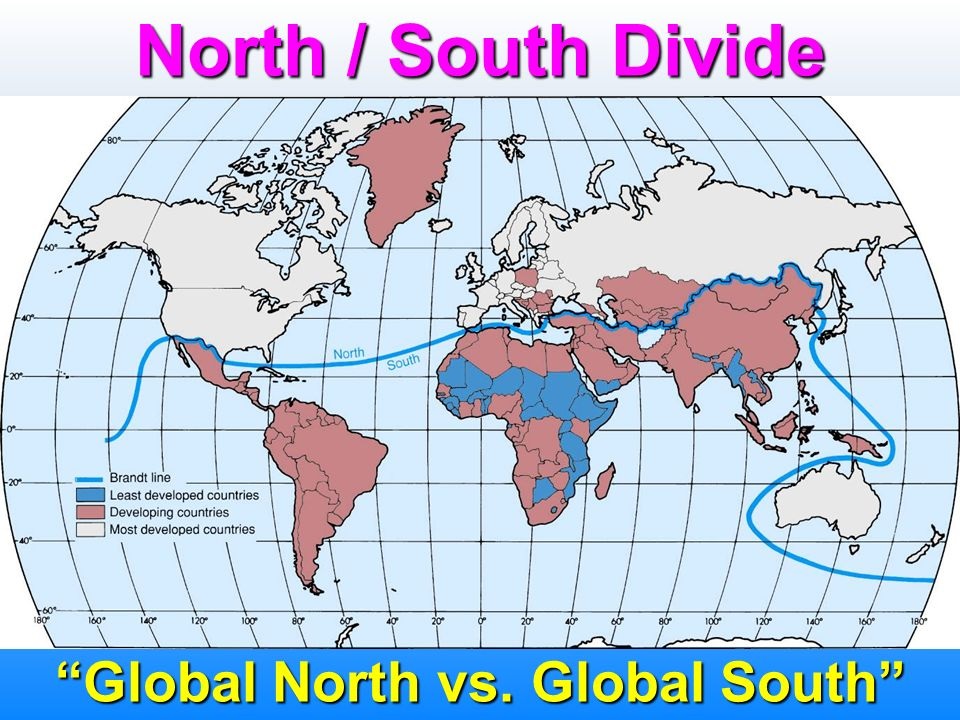
UNESCO Seeks To Open Markets For Global South Cultural Goods

Paris, 30 May – Experts, stakeholders and government representatives will examine ways to improve exports of cultural products from the Global South, reinforce cultural entrepreneurship and improve the status of artists during the biennial meeting of the signatories to UNESCO’s Convention on the Protection and Promotion of the Diversity of Cultural Expressions, at the Organization’s Headquarters from 5 to 7 June.

Government officials and cultural professionals will address these and other issues at three Create|2030 debates during the session:

Rebalancing trade flows: making the case for preferential treatment in culture, will examine ways to open markets to cultural goods and services from the Global South, in line with the Convention’s binding provision to grant them preferential treatment in international trade.  Cultural goods and services from developing countries currently only account for 26.5% of the global trade in this rapidly growing sector. Panelists will also examine how the concentration of creative content on large online platforms is impacting the distribution of cultural products and expressions. (7 June, 10 am—1 pm, Room II)

Strengthening cultural entrepreneurship: The International Fund for Cultural Diversity (IFCD) will discuss investments in vocational training andbring together beneficiaries of UNESCO’s IFCD from Brazil, Cambodia, Colombia and Senegal. The Fund, which aims to address the gap between developed and developing countries in the creative economy, has provided more than 10,000 artists and cultural professionals with new skills in project management, business and career development to date. (6 June, 10 am—1 pm, Room II)

Rethinking the status of the artist will explore ways to enhance the professional, social and economic conditions of artists through policies concerning training, social security, employment, income, taxation, mobility and freedom of expression. (6 June, 2—5 pm, Room II)

During the meeting, participants will also examine an Open Roadmap designed to strengthen the Parties’ capacities to promote the diversity of cultural expressions in the digital age, as well as other innovative policy practices. Priorities in line with the UN’s 2030 Agenda for Sustainable Development will be set for the next two years, with particular attention to gender equality, fundamental freedoms, quality education, economic growth, decent jobs, and equality between countries.

The 2005 Convention on the Protection and Promotion of the Diversity of Cultural Expressions provides a framework for the design of policies and measures that support the emergence of dynamic cultural and creative industries around the world. The 146 Parties (145 States and the European Union) that have ratified the Convention meet at UNESCO every two years to examine its impact and determine future action. Twelve new Members will be elected to the Convention’s Intergovernmental Committee during the session.

Hypnotherapy

hypnotherapistSo many of my clients bring interesting cases to me, everyone is different and so therefore interesting in their own way. But one case that stands out was a client who had “misophonia” – which meant that she experienced a heightened feeling of anxiety or “fight or flight response” in response to certain sounds – mainly that of other people eating. It was becoming difficult even eating around her family. This was a case for hypnotherapy.

With just two sessions we completely solved the problem, We went back in time to her childhood where the problem began – with just a very innocent situation (she didn’t really remember this consciously) but her subconscious mind had held onto it and certain sounds still triggered anxiety. And rather than getting better over time, it was getting worse. Going back to that event, in a safe and controlled way, meant that the problem was resolved almost immediately.

What I described above is known as regression hypnotherapy. It’s all about going back in time to where the problem was first triggered. When people have problematic emotions which are being repeatedly triggered, such as panic, anxiety, depression, etc. , it is usually because something happened which wasn’t fully processed at the time and then the subconscious mind holds onto that feeling, thinking that it’s protecting you.

Once you go back to it, and process the “memory” properly (I say memory in inverted commas because often we don’t remember the event consciously, but it’s stored away in our subconscious which is like a giant library). So once we go back to the original event the subconscious is able to understand that it’s over now and releases the emotion. It is extremely powerful and cathartic. There is more information about regression hypnotherapy in my blog post here: http://www.synergy-wellbeing.com/category/regression/

Are there any preparations required before embarking on hypnotherapy?

"You're getting sleepy."
“You’re getting sleepy.”

Not really. I often recommend that people don’t drink a lot of caffeine before a session because this triggers the fight / flight response – which is the opposite to the relaxation response – so it can interfere with the session a little and make it harder to relax. But other than that, no. Someone who meditates or is good at visualization will generally find they go into hypnosis a lot more quickly, but everyone can be hypnotized. We’re in a state of hypnosis when we watch the television!

I would love to help someone who feels that they are “over–sensitive” – and I would prefer to call it “highly sensitive” myself – because their sensitivities could relate back to childhood and things they are subconsciously holding onto which distressed them. Regression hypnotherapy can help to release the memories trapped in the subconscious so that those emotions are not triggered so readily or inappropriately in the future. EFT (Emotional Freedom Technique) is also an excellent technique which I teach my clients a lot – and this can used as a self help tool whenever needed too, on a daily basis even!


H
ow can we enable our subconscious to let go of bad feelings?

There is a technique which I use myself a lot, and also teach people about. It’s called mindfulness. The sad thing is that we are often told “don’t get upset / don’t cry, etc.” so we learn to push our feelings down – we suppress them. Another word for suppression is depression. So we can easily become depressed when we suppress our true feelings. One of the beautiful things that mindfulness teaches us is to be present as much as possible to our experience. So if you’re feeling angry, or hurt, for example, it’s much better to allow yourself to “feel” that feeling.

Contrary to popular belief, this doesn’t make it feel worse, it actually really helps! So, next time you’re feeling bad – ask yourself “how am I feeling? What does that feel like? Where do I feel that in my body?” – really acknowledge it. And – hey presto! The feeling seriously diminishes or disappears altogether! Our feelings just want to be listened to, to be heard. So once we do this, they are satisfied and they settle back down.

EFT (Emotional Freedom Technique) is something else I practice, and this is wonderful for allowing us to let go of negative emotions. It is also known as the “tapping technique” and more information can be found on my website. For the Silo, Liz Davies Clinical Hypnotherapist and EFT Practitioner.


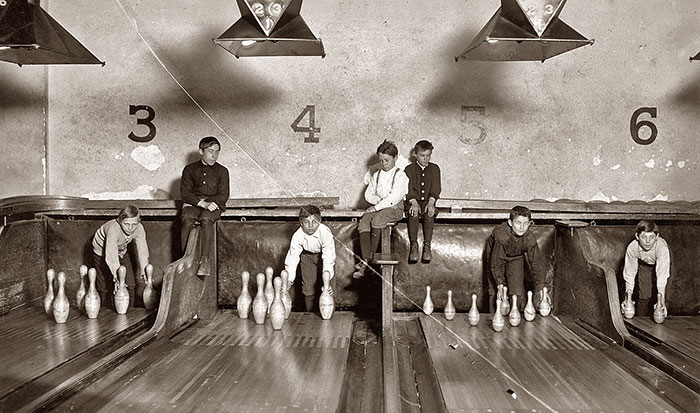
Peter Robinson On Job Obsolescence- Government Should Not Protect Jobs

A recent OECD report finds that low and middle income earners have seen their wages stagnate and that the income share of middle-skilled jobs has fallen. Rising inequality has led to concerns that top earners are getting a disproportionate share of the gains from global “openness and interconnection”. During a Summer 2017 meeting of OECD, employment outlook revealed that job polarization has been “driven by pervasive and skill-biased technological changes.

Founded in 1945, the United States Council for International Business (USCIB) builds awareness among business executives, educators and policy makers around issues related to employment, workforce training and skills enhancement. CMRubinWorld spoke with USCIB President and CEO Peter M. Robinson, who serves as a co-chair of the B20 Employment and Education Task Force, through which he helped develop recommendations to the G20 leaders on training for the jobs of the future. Robinson also serves on the board of the International Organization of Employers, which represents the views of the business community in the International Labor Organization.

“I think the guiding principle for government should be to protect and enable/retrain the worker, not protect the job. Policy makers and educators should focus on making sure that workers are as equipped as possible to transition to new opportunities” Peter Robinson.

Peter, welcome. How severe do you believe jobsolescence will be over the next 20 years? How big will the challenge be to offset it and maintain a growing workforce?

I really don’t think the overall effect will be as dramatic as some people fear, at least for the medium-term as far as we can tell. There is an over-hype factor at play, but the consequences still deserve serious attention. For one thing, so many of the jobs in the United States, Canada and other advanced economies are in the service sector, and involve interacting with other people. Despite all the advances in AI, we are still a long way off from robotic nurses or home health aides. Overall, history tells us that at least as many new jobs are created as are displaced by technological innovation, even though transitions can be difficult in some sectors and localities, and as long as upskilling takes place.

“The biggest threat is that our educational institutions won’t be able to keep pace with new skills demands.” — Peter Robinson

What do you think are the biggest obstacles facing college grads today trying to enter the workforce?

I actually think the greatest obstacles are faced by those who don’t make it to university or some form of higher education beyond high school (a four-year degree is not the right path for everyone). A 2014 Pew survey found that among workers age 25 to 32, median annual earnings of those with a college degree were $17,500 greater than for those with high school diplomas only. Obviously, everyone at whatever educational level needs to keep their skills sharp, and governments should join with employers and educators to instill better life-long learning. But there are far fewer established paths toward long-term employment at a middle-class level of income for those who don’t graduate from college. A greater emphasis on vocational education and apprenticeships would help. We strongly support the work being done by United States Secretary of Labor Acosta to promote apprenticeships.
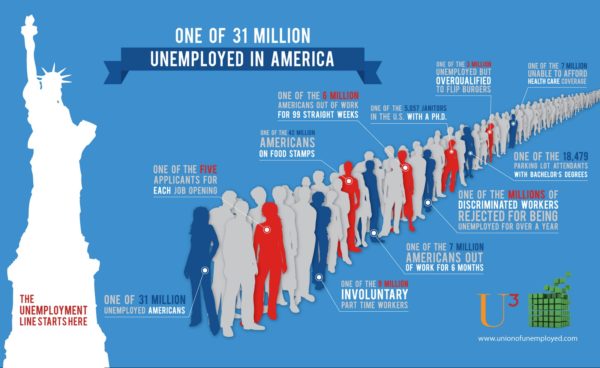
Given that machines are in the process of stripping white collar workers from their jobs, what kind of skills are key manufacturing and service industries going to need from new employees?

I think the premise of your question is overstated. We’re all being told that our jobs are doomed by robots and automation. But the OECD estimates that only nine percent of jobs across the 35 OECD nations are at high risk of being automated, although of course even 9% can be generative of social difficulties. But there is an established track record across history of new technologies creating at least as many new jobs as they displace. Usually these new jobs demand higher skills and provide higher pay. The biggest threat is that our educational institutions won’t be able to keep pace with new skills demands.

“It is becoming clear that Versatility matters, in a constantly changing world, so Jim Spohrer’s IBM model of a “T-shaped” person holds true: broad and deep individuals capable of adapting and going where the demand lies.” — Peter Robinson

In an economy with a significant on-demand labor force, what competencies will these workers need to compete?

There are two types of competencies that will be needed: “technical” – or in other words, related to deep knowledge of a specific domain, whether welding or optogenetics; and “transversal,” which applies to all occupations. Those are described by the Center for Curriculum Redesign as skills (creativity, critical thinking, communication, collaboration), character (mindfulness, curiosity, courage, resilience, ethics, leadership) and meta-learning (growth mindset, metacognition).

How will managerial skill requirements change as a result of major structural changes that are likely, including human replacement by machines and growth of the on-demand economy?

OECD’s BIAC surveys of 50 employer organizations worldwide has shown that employers value not just Skills as described above, but also Character qualities as well. Further, it is becoming clear that Versatility matters, in a constantly changing world, so Jim Spohrer’s IBM model of a “T-shaped” person holds true: broad and deep individuals capable of adapting and going where the demand lies.
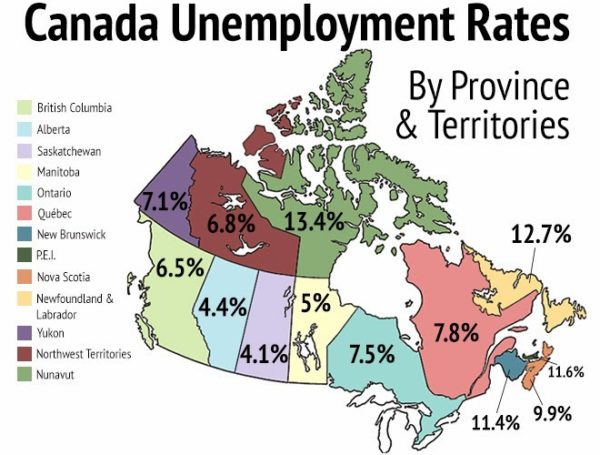
Canada Unemployment Rate By Provinces and Territories

“We often hear about the need for more STEM education. But I think there is an equal need for a greater emphasis on the humanities and the arts, for their intrinsic value as well as for developing skills and character qualities.” — Peter Robinson

What central changes in school curricula do you envision, both at the secondary school and college levels?

We often hear about the need for more STEM education. But I think there is an equal need for a greater emphasis on the humanities and the arts for their intrinsic value as well as for developing skills and character qualities as described above. As David Barnes of IBM wrote recently, these skills are more durable and are also a very good indicator of long-term success in employment.

How can the evolving changes in competencies required for employment be effectively translated into school curricula? Where are the main opportunities to enable this? e.g. Assessment systems? Business/Education collaboration? Curriculum change?

I’d go back to something else David Barnes said: We need much stronger connections between education and the job market, in the form of more partnerships among employers, governments and education institutions. Everyone needs to step up and create true partnerships. No one sector of society can address this alone. OECD’s BIAC has also documented employers’ wishes for deep curricular reforms to modernize content and embed competencies in order to meet today’s market needs.

What role should government play in ensuring citizens receive a quality and relevant education given the challenges that lie ahead?

I think the guiding principle for government should be to protect and enable/retrain the worker, not protect the job. Policy makers and educators should focus on making sure that workers are as equipped as possible to transition to new opportunities as these develop, and on ensuring that businesses have the freedom to pivot and adopt new technologies and business processes.

CMRubinWorld For the Silo, C.M. Rubin.  C. M. Rubin is the author of two widely read online series for which she received a 2011 Upton Sinclair award, “The Global Search for Education” and “How Will We Read?” She is also the author of three bestselling books, including The Real Alice in Wonderland, is the publisher of CMRubinWorld and is a Disruptor Foundation Fellow.


The Consolidation Of North American Food

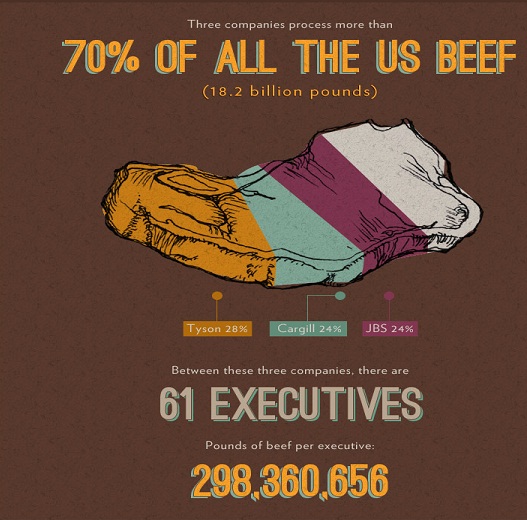
Adam Jacob sent in this tell-all graphic that is pretty shocking. If these statistics are true then ‘it’s clear the small food producer is an endangered species. Unless of course, they start supplying the big chain corporate grocery store chains. And that will likely spell the end of family farm gate-retail…and that will spell the end of the family farm. It is so important to support local farm to table initiatives and preserve food that is not only grown for profit, but grown for quality and healthy consumption.

To learn more about the consolidation of (North) American food and the implications for Ontarians, visit Silo Direct Link to Frugaldad.com


A Cooking Journal With A Unique Interface- Not Connected to Smartphone

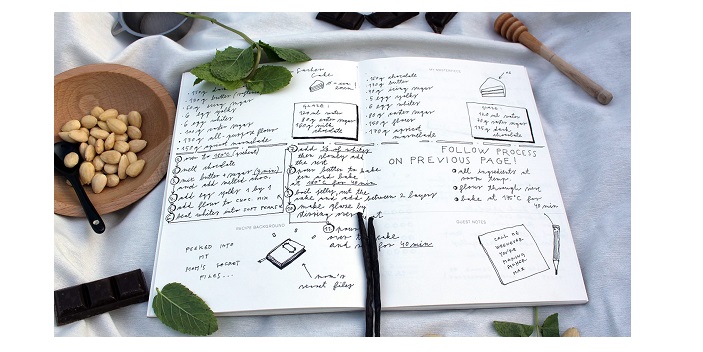
Here’s a cooking journal with a unique platform that helps you create signature recipes and becomes your personal cookbook. It’s a perfect booklet for all people who enjoy cooking and experimenting in the kitchen. The project first launched a couple of years ago on Kickstarter under the name Project Cookbook.

Project Cookbook 1If you want to get more creative with your cooking, but still make sure your ideas don’t melt away as fast as the food from your plates, Cookbook is the perfect fit for your kitchen.  Old Skool – This cooking journal with a unique interface helps you develop signature recipes and create a culinary heritage. And what’s the best part? It’s not connected to your smartphone. It is a physical booklet that will become your trusted cooking companion and is destined to become your personal cookbook.
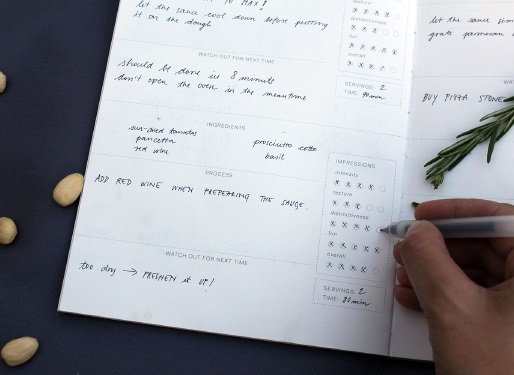
If other similar booklets are meant to simply copy and gather recipes of others, Cookbook’s idea and purpose is much different: after you equip the Cookbook with recipes of your choice, they simply serve as a starting point of your future cooking experiments. It features a development platform for every recipe where you can keep track of all the changes to the original recipe – whether it’s tinkering with your cooking process or changing the ingredients.

Project Cookbook Inside

After each try you can use the scoreboard to evaluate your dish, write down important notes for next time and keep a tab on who loves it the most.

The aim is to remind people that cooking is more than just following recipes. As the team puts it: ‘’We are hoping Cookbook will motivate people to develop their own recipes and create a culinary heritage, which they will be able to share with their friends, family and future generations.

Something like the notebooks our grandmothers used to have, but with a modern twist.

Cookbook also holds an encyclopedia which helps you with everyday pickles like finding the appropriate wine pairing or quickly converting cups into grams. A minimalist design of the book gives you a sense of coziness and at the same time allows you to personalize the final outlook of your Cookbook. For the Silo, Hana Gaber.

Toronto Is Home To Proud History And Great Architecture

Well before the construction of Ontario’s present Queen’s Park Legislative Building, Ontario was governed as the British colony of Upper Canada.

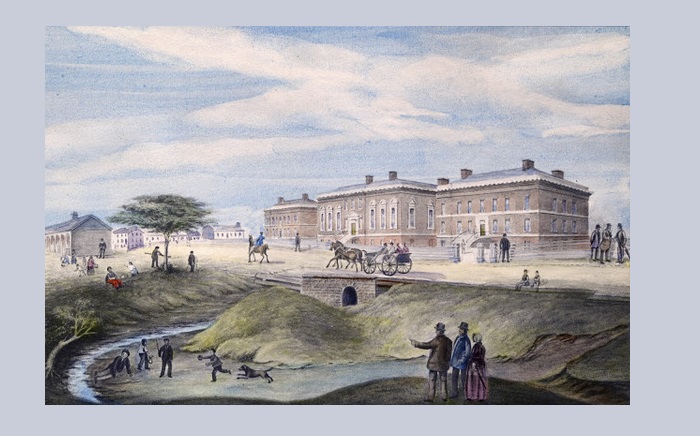
After its formation in 1791, Upper Canada’s elected Legislature first met on September 17th, 1792.  As no permanent structure was built to house the Legislature in Newark, now Niagara-on-the Lake, meetings took place in a variety of locations including Navy Hall—which also served as a residence for our first Lieutenant Governor John Graves Simcoe.  The first legislators were also reputed to have met in Butler’s Barracks, and also under a large oak tree.

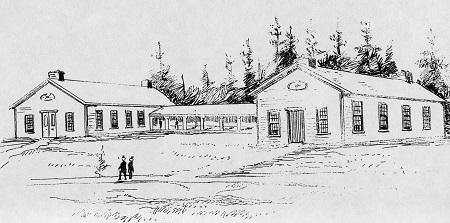
In 1793, a site at York, now Toronto, was chosen as the new location for Upper Canada’s capital.  Lieutenant Governor Simcoe initiated plans for the construction of the colony’s first purpose-built Legislative Building. Completed in 1797, the “Palace of Government,” as it was known, was located near the present-day intersection of Front  and Parliament Streets.  Consisting of two small structures connected by a covered walkway, they were the first in York to be made of brick.

The Legislature met there until 1813, when the building was burned to the ground in the aftermath of the Battle of York during the War of 1812-14.  During this American raid, the first Mace of Ontario—made for the Legislature of Upper Canada in 1792—was seized by the American soldiers. It was later returned in 1934 by President Roosevelt as a gesture of friendship.  While waiting for construction of a new building, Upper Canada’s Legislature met in several temporary locations.

The next structure, completed in 1820 on the same site, was destroyed by an accidental fire in 1824.  As before, sessions of parliament were held in temporary locations, including the court house and the general hospital.

In 1832, another structure at Front and Simcoe Streets served the province well, but by the 1870s, it was in poor condition. This prompted the Department of Public Works to formulate plans for a modern facility.  The legislature continued to meet in the rapidly declining structure until the opening of the present Legislative Building at Queen’s Park in 1893.

 The Legislature, which has become one of my places of business and almost a second home, was proudly opened on April 4th, 1893 by Ontario Premier Sir Oliver Mowat.  It took six years to complete (1886-1892).  People were thrilled by its beauty, expanse and grandeur—not to mention its electric lights and a new and exciting invention, electric elevators. 

The beautiful building was designed by Architect Richard A. Waite in the Richardson Romanesque style, featuring heavy stonework, majestic rounded arches, and fanciful carvings.  The exterior walls are pink sandstone and the roof was covered in slate.  Oak floors and cast iron pillars lined the halls. Intricate details were added to every inch of the building’s interior and exterior. 

The structure is divided into the East Wing, West Wing, and the North Wing, which was constructed later and opened in 1913.

All in all, the building is a large home-like meeting place where I work for my constituents and the people of Ontario.  

When in Toronto, I would urge any lover of great architecture, history, and good government to come for a visit and learn more about our provincial parliament. 

(Acknowledgement to Parliamentary Protocol and Public Relations “History and Heritage” brochure). For the Silo, Toby Barrett MPP for Haldimand-Norfolk.

Featured image-
Historical Maps of Toronto: 1834 Alpheus Todd Engraved Plan of the City

Can Another Ottawa Residence Win Canada’s Best Garden Street?

Congratulations! Russell Avenue in Ottawa’s Sandy Hill neighbourhood is the winner of the Canada’s Best Garden Street contest.
Russell Avenue in Ottawa’s Sandy Hill
neighbourhood is the winner of the Canada’s Best Garden Street contest.

Toronto, ON Garden Days – The month of June hosts Canada’s three-day celebration of gardens and gardening. There are loads of Garden Days official activities scheduled across the country, and almost every province has a Flagship Event for you to enjoy. It’s the perfect time to get dirty in one’s own garden, visit a nearby public garden or spend some time in a local garden center.

You’ll be in great company
If you’re planning travelling around the province or across Canada this Summer, be sure to visit a few of the many public gardens that we’re becoming world renowned for.  Dr. Richard Benfield, author of ‘Garden Tourism’ estimates that annually there are 6 million garden tourists in Canada.

And the winner is . . .

On the occasion of our upcoming National Garden Day, Friday, June 13, the Canadian Garden Council is pleased to announce the winner of the Garden Days’ ‘Best Garden Street’ Contest which celebrates the contribution that public and/or private gardens have made to the quality of life on individual streets and neighbourhoods.  The winner of $1000 worth of Marks’ Choice Lawn and Garden products from Home Hardware, and the bragging rights to be named ‘Canada’s Best Garden Street’ is: Mary Moreland, Russell Avenue, Ottawa.

Garden Days spokesperson, Mark Cullen, recently said, “The partnership between the hand of man and Mother Nature has produced some of the highest quality green spaces and gardens in Canada and on earth.  Garden Days, a new idea that’s all about this successful collaboration, has been sown on fertile soil.  I have no doubt that the ideas and principles behind the concept will sprout and grow into national significance.  And the sooner the better.”
This coming weekend join in the national celebration of everything that the Garden contributes the quality of all our lives.

Garden Days are a family affair. Photo: Pierre Boucher

Organized by the Canadian Garden Council, and kicked off with National Garden Day, always the Friday before Father’s Day, Garden Days is a three-day celebration of gardens and gardening.  The program’s objective is to draw attention to Canada’s garden culture, history and innovations and to underscore the importance of public and private gardens, the values of home gardening and the promotion of environmental stewardship. For the Silo, Courtney Charette.

Plastic Surgeons See Increase In Injectables Procedure For Under 30 Year Olds

Injectables are quickly becoming the most popular treatment on the menu for Millennials at doctor offices and medspas. The latest survey by the American Academy of Facial Plastic and Reconstructive Surgery (AAFPRS) shows that 56% of facial plastic surgeons saw an increase in cosmetic surgery or injectables with patients under age 30 last year.With more patients now relying on injectables for early maintenance, AAFPRS President Fred G. Fedok, MD educates us on some of the most common injection misconceptions:

Myth: BOTOX Is Synonymous With “Injectables”

Truth: The term “Injectables” encompasses neuromodulators and fillers, which have very different functions. BOTOX is a specific brand name for a drug that is part of a group of drugs known as neuromodulators, which include also Dysport and Xeomim. Neuromodulators temporarily weaken or paralyze the muscles that are injected. They are used to diminish muscle action and thus improve small folds or wrinkles in the skin.

Fillers are used to “fill out” deficiencies or voids in the soft tissues. These can be fairly superficial or deeper voids in the underlying fat complement. Restylane, Juvederm, Boletero, and Sculptra are among the most popular fillers used in the US and North America.

Myth: Fillers Are Only For The Lower Face

Truth: Different types of fillers have different ranges of longevity, and stiffness that determine were they are best applied in the face. For instance, under the lower eyelids a facial plastic surgeon looks for filler that is good at filling volume however is not too stiff so as not to produce lumps underneath the thin skin there. In deeper areas such as the cheek, deeper deficiencies are targeted and a stiffer substance can be used.

Myth: Injectables Will Render You Expressionless

Truth: When used correctly, injectables can have a very natural result. You want to choose an experienced injector and a board-certified facial plastic surgeon who specializes in the face, head and neck to ensure the most successful, natural-looking outcomes. The result is not permanent and aging continues over time, as it does with any rejuvenation procedure.

For the Silo, Patty Mathews.

ABOUT THE AAFPRS:

The American Academy of Facial Plastic and Reconstructive Surgery is the world’s largest specialty association for facial plastic surgery.  It represents more than 2,500 facial plastic and reconstructive surgeons throughout the world. www.aafprs.org

Ontario’s Five Year Path To Balance The Books

With Budget 2019, Ontario is committed to balancing the books in a responsible manner – restoring accountability, sustainability and trust. The previous government left behind a $15 billion structural deficit.

The government’s plan will prioritize investments that generate the greatest returns for people in Ontario and protect what matters most. Programs will be continually reviewed to ensure they are efficient, effective and modern, while relying on best practices from around the world.

Over the course of this five-year path to balance, total revenue is projected to grow at an average annual rate of three per cent. Comparatively, program expense over the same period is budgeted to grow at an average annual rate of one per cent.

In order to achieve a balanced budget while protecting what matters most, it is important to transform programs, not only to find efficiencies and savings, but also to make services more modern and accessible.

Several programs have been streamlined to centralize administrative functions.

Ontario is combining six existing provincial health agencies and the Local Health Integration Networks into one new agency – Ontario Health. The goal is to streamline oversight, reduce bureaucracy and reduce the silos – leading to annualized savings of more than $350 million.

An integrated supply chain is being created to consolidate procurement practices across sectors, resulting in reduced government expenditures and reduced red tape for vendors. This initiative is expected to result in annualized savings of $1 billion.

Ontario’s social assistance system will be reformed, simplifying the rate structure, reducing administration, cutting unnecessary rules, and providing greater opportunities to achieve better employment outcomes, resulting in estimated annual savings of over $1 billion at maturity.

Drug benefits under OHIP+ will be focused on those who need them the most – children and young people under the age of 25 who are not covered by private insurance plans – generating annualized savings of $250 million.

The government is restoring the Ontario Student Assistance Program to a needs-based program. OSAP will be reformed so future generations of Ontario students can access financial support for postsecondary education while providing a 10 per cent reduction in tuition for domestic students.

There are important strides toward building a modern and more efficient workforce while ensuring front-line services and workers are protected. As an example, the size of the Ontario Public Service has already been reduced by 3.5 per cent through attrition alone. Additional measures, such as voluntary exit initiatives, will bring further reductions and efficiencies.

All ministries have identified four per cent in administrative efficiencies resulting in cumulative savings of $1.7 billion by 2023-24.

By containing costs and prioritizing spending, the Ontario government is providing a projected $26 billion in much needed relief to Ontario individuals, families and businesses over six years, while continuing to eliminate the deficit. For example, the government is proposing a new refundable tax credit for child care costs.

Restraining spending and finding savings has to be responsible and pragmatic.

While balancing the budget requires difficult decisions and trade-offs, it is also an opportunity to rethink how government works and how the entire broader public sector delivers programs and services. This is why the government will continue to review programs on an ongoing basis.

We all need to feel confident that our government is a careful steward of our tax dollars.

Image result for ontario budget 2019

Toby Barrett is MPP for Haldimand-Norfolk

The Many Cultural Charms Of Buenos Aires Argentina

Obelisk in Buenos Aires
George at the obelisk…

Feel Cooler Than You Really Are. If you want to learn to dance the tango the place to be is Buenos Aires, Argentina. This is a city that expresses its passion and national pride through their music, soccer, dancing, horses, and writing earning it the title of “City of Cool”.

Buenos Aires, (English meaning Fair Winds) Argentina.
With a population of 2.7 million people this capital city of Argentina is a place oozing with charm and things to do. From the moment you begin wandering downtown streets you know it’s going to be interesting. It’s a place to be cool even if you aren’t. Okay, let’s make it clear, I’m not cool, but for some unknown reason I started to feel this way when I mingled with the Argentineans. They spoke, what sounded like to me, an exotic language (Castilian Spanish), and looked and dressed like they were right out of the pages of Vogue magazine. It’s a city that never sleeps, populated by residents obsessed with fashion and image. Slim is beautiful is an established and largely uncontested fact.

Curvy architecture emphasizes the ‘tango’ speed and ‘coffee’ streamlining of Buenos Aires culture

Architecture
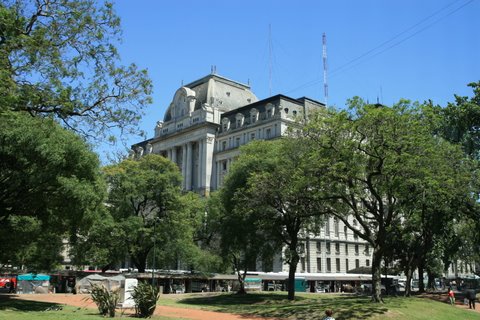
The downtown architecture is quite different from the rest of Latin America. It is strongly influenced by European styles with more than the half of the city buildings being French style. Countless museums, historical buildings, shopping centres, and hotels are yours to discover. And if you do get the urge to learn to tango there are plenty of tango-dancing schools (known as academias) throughout the city.

Bueons Aires is also known as a “city of buildings”

The Tango
Tango music was born in the suburbs, notably in the brothels of poorer suburbs. Its raw sensual dance moves were not seen as respectable until adopted by the Parisian high society in the 1920’s and then all over the world. There are loads of places with free tango shows in restaurant-bars such as Gitanos, where you can also try the national drink. I found it more like herbal tea than anything and its drunk out of a pot-like container through a metal straw. Even though it was foul-tasting, Argentineans say, it’s more addictive than coffee. To each their own.

Walking and Safety
When you walk in any largely populated area don’t be silly and carry an expensive camera slung over your shoulder and don’t ever wear an expensive watch that sets you apart from the crowd. It’s like saying rob-me, rob-me. Use common senses; err on the side of caution. I hid my camera in a plastic shopping bag. Always cross street at crosswalk. I’ll say it one more time to be sure it sinks in…Always walk at crosswalks and don’t begin until all vehicles have come to a stop.

Streets are busy but have marked crosswalks and are well laid out

Recoleta Cemetery
Don’t pass up the chance to visit to the Recoleta Cemetery established in 1822. It’s the final resting place for Argentina’s wealthiest and most famous families and people. The mausoleums are fairly small, befitting the size of the cemetery in an urban setting, and it’s common for many members, and generations even, of the same family occupying one mausoleum. One grave that I did seek out was that of Eva Peron who was the wife of Juan Peron, 3 time president of Argentina. Both are idolized for their efforts to eliminate poverty and to bring dignity to the labour movement. Because of this they were despised by the oligarchy of Argentina’s wealthy and powerful. I found it strange and a bit sad that her neighbours in death are those that despised her in life. Her husband is buried in another cemetery in the city.

Mausoleum at the Recoleta Cemetery

Art and Craft Museums
These museums are all the rage here, with the top attraction being the Malba, which is dedicated to Latin American modern art, the Museo National de Bellas Artes (National Museum of Fine Arts) and Recoleta’s Cultural Centre.  You’ll find the general atmosphere in most of these places is more snooty than sincere. If art and crafts is not your thing, you’ll want to bypass all of these places and scout out somewhere to eat or sit on the grass in Plaza Francia. It’s easy to while away a few hours people-watching. I did both.

Where ever you travel, remember to take time to meet the local people. You will learn much about the culture of a place by watching and talking with citizenry.

The Obelisk
Another must see is to join the gaggle of tourists (and pigeons) that flock to the Plaza de Mayo. This is the site for some of the country’s most important historical occasions, including the revolution in 1810 which led Argentina gaining independence from Spain .If your legs are willing, take a stroll along Avenida Corrientes. When you get to the junction with Avenida 9 de Julio, which claims to be the world’s widest road where you can’t miss the famous Obelisk monument. For goodness’ sake use the pedestrian crossing if you don’t want to die! It’s the cities icon and the place the very spot where the Argentina flag was raised for the first time.       For the Silo, George Bailey.