Australian Archaeologist In Ontario For Practices Exchange

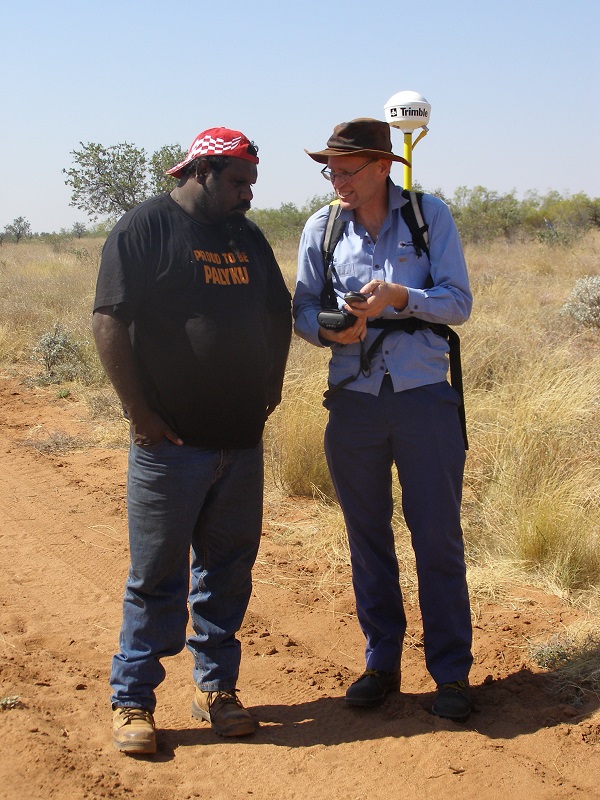
Lindsey Yulline & Phil discussing DGPS

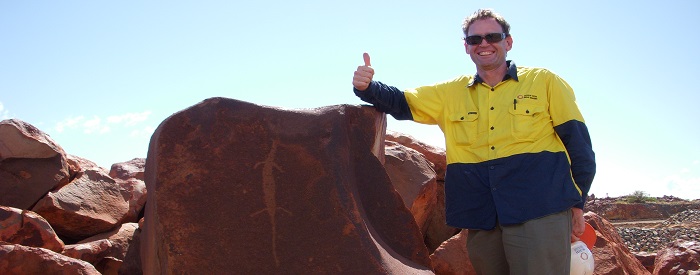
Phil Czerwinski of Perth, Australia and director of “Heritage Western Australia” an archaeological consultant company focusing on the survey of indigenous rock art, archaeological, and ethnographic sites in Western Australia came to learn about archaeology in southern Ontario. Phil arrived in Haldimand-Norfolk County July 4-11, 2014 to participate in an archaeological exchange with the Haldimand Norfolk Archaeological Regional Project (HNARP).

Phil was kind enough to take time from his schedule in Canada to answer a few questions about his experiences with archaeology in southern Ontario.

1. What kind of archaeology do you conduct in Western Australia?

I’m an archaeologist who does a lot of work in Western Australia. We have lots of cool archaeology such as artefact scatters, rock art, and caves with human occupation dating back 40,000 years ago. My main interest is in how hunter-gatherers use the landscape, and how these settlement patterns are shown in archaeological sites. Much of my work is for mining companies.

2. What interested you to come to Ontario and participate in this regional project?

I came to do fieldwork with the Haldimand Norfolk Archaeological Research Project (HNARP) in Ontario because Lorenz and I worked together in Australia a few years ago. He told me about his project and I thought it would be a great idea to see how things are done in Canada.

3. In Haldimand-Norfolk County much of the archaeology is conducted on private lands. When does your company deal with private land owners to access properties to conduct your archaeological work?

We do not do too much work on private lands as most of the work is on Crown Land, which is why I was interested in coming to see how HNARP relates to local landowners. What instantly impressed me during my time in the field with HNARP was the level of community engagement with the landowners and other stakeholders such as collectors. The way Lorenz Bruechert, Project Director spoke respectfully with them, listened to their concerns about accessing fields in crop, handling their precious artefact collections, and making sure the communication was a two way street was refreshing to experience. To have a beer and ‘talk turkey’ (in our case pigs) with landowners was wonderful. The fact that landowners and interested people get newsletter updates on HNARP is a great information sharing initiative.

4. HNARP attempts to develop long term relationships with land owners in an effort to develop community archaeology. When do consultant companies like Heritage Western Australia have an opportunity to develop community archaeology with their clients or within communities where development is planned?

Our archaeology is mostly mining based, so our relationships are with the companies and the Aboriginal groups on whose lands the mining companies want to mine. Often these turn into long term relationships, which have their ups and downs. We aim for sustainability in heritage; where we all get something out of the process.

5. How do corporations support community archaeology in Western Australia?

The main corporate interest in archaeology where I work is based on the approvals process, where heritage is often viewed as another box to check in the mining process. Some of the bigger mining companies do it differently, and sponsor larger regional studies in order to understand the Aboriginal heritage.
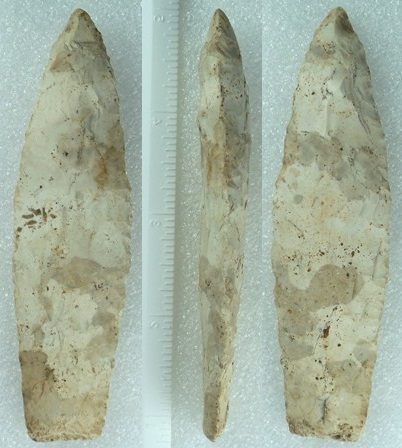
An Agate Basin paleo (ice age) projectile point- types studied by HNARP

6. How do you see a regional archaeological study different or similar to how consultant archaeology is conducted in Australia?

There are long term goals in the type of regional study that HNARP is doing, whereas consultancy based archaeology often does not share this goal and is a get in and out quick approach to archaeology.

7. What benefits did you see in a regional study compared to consultant archaeology?

There are many benefits. By developing relationships with landowners HNARP can give something to the community that consultancy often does not – that being a sense of communal ownership and responsibility for regional heritage. It sheds light on large areas and hunter-gatherer settlement patterns across time and space.

8. The HNARP works collaboratively and in co-operation with land owners to engage them in public archaeology to protect archaeological sites and artifacts from destruction and permanent loss. What opportunities are there to conduct similar practices in for archaeological sites and artifacts in Australia?

Much of our work involves working with Aboriginal people and mining companies to manage archaeological sites for a win-win solutions. Mining takes up land, and archaeological sites are so prevalent in the Pilbara region of Western Australia where I work that this involves destroying sites. Here the aim is ensuring everyone is informed on what is going on, and when sites are to be destroyed they are done so in a culturally sensitive manner and in line with legislative requirements.

9. What finals comments would you like to share with Silo readers about your experiences with HNARP?

It is not easy to tell people about the ins and outs of archaeology in a way they can understand what you are trying to achieve, but being a local Lorenz understands the landowner’s issues and communicates in a down to earth manner. He works to develop long term relationships with landowners. This is rare in archaeology, be it in Australia or anywhere in the world. We have lots of stone artefact sites in Western Australia, although we do not have the nice artefacts such as arrowheads you folks have. To see these local treasures being studied in a project that is solely funded by the researcher is again uncommon.

Archaeology is archaeology anywhere in the world, but people are people. They have interests and issues that should never be over-ridden in the pursuit of academic studies. With the goal to put archaeology back into the community, HNARP is unique and deserves local support. After all, who best to understand the Haldimand-Norfolk area than an archaeologist who was raised and grew up a local farmer. Thanks for this opportunity to share my experiences about archaeology in southern Ontario. CP
 

Shephardess Innovates With Dynamic Agriculture System


photo's: Carrie Wooley
photo’s: Carrie Wooley

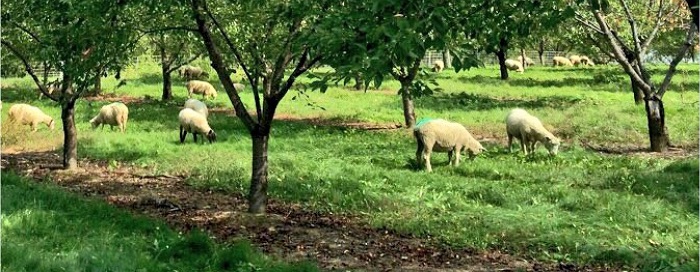
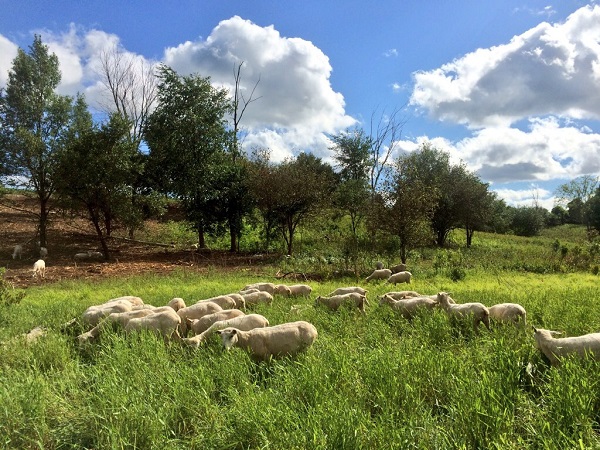
Trying to find agricultural systems that are environmentally friendly and economically viable is a challenge facing the agriculture industry. So when a friend from New Zealand told us about how they graze sheep in fruit orchards we instantly liked the idea.  All of a sudden the apple and cherry orchards on the farm didn’t look just like orchards, they also looked like sheep pasture.  So we went for it and purchased our first group of ewes in January of 2013.  Our goal was to build a sheep production system that worked with the current farm set up and where we can produce quality lamb raised in an environmentally sustainable and welfare-friendly system.  

Our sheep graze permanent pastures in spring and early summer where they give birth to lambs, and are moved to orchards the rest of the year.

Utilizing the grass in the orchards allows us to reduce feed costs and grass cutting costs.  While the sheep convert grass and weeds into meat they also fertilize the orchards with their manure.  Having the sheep on pasture eliminates costs associated with keeping animals in barns such as bedding material and manure removal.  Lambs are born outside on pasture in May and June.  Raising lambs on pasture can bring challenges such as coyotes and internal parasites.  

To help protect our sheep from coyotes we utilize electric fences and livestock guardian dogs.  Livestock guardian dogs have been used for hundreds of years by shepherds to protect their sheep from people and predators. We use the Kuvasz and Maremma breeds of livestock guardian dogs, other guardian breeds include the Great Pyrenees, Akbash, and Anatolian Shepherds.  These amazing working dogs see the sheep as their family and guard them day and night. Raised with sheep from the time they are puppies, guardian dogs sleep with the flock at night and can even be found helping clean off newborn lambs.

Sheep Dogs in Norfolk County

The idea of a more dynamic and sustainable agricultural system is something we want to pursue.  We, as farmers and stewards of the land, recognize that we need to be inventive to keep soils and ultimately the environment healthy.  In agriculture there is always lots to learn and it provides me with an exciting and interesting line of work. 

New Ontario Gov’t Tax Credit to Benefit Farmers and Communities

A new tax credit is helping put nutritious, fresh, locally grown food on the plates of those who need it most.

The Food Donation Tax Credit for Farmers — the only one of its kind in Canada — is giving farmers a tax credit valued at 25 per cent of the fair market value of the agricultural products they donate to community food programs, including food banks and student nutrition programs.

The tax credit is a part of the Ontario government’s local food strategy and Local Food Act, 2013 to promote the good things that are grown and harvested across the province.

Building a stronger agri-food industry is part of the government’s economic plan to support a dynamic and innovative business climate, invest in people and invest in infrastructure.

QUOTES

“This new tax credit will help farmers donate more fresh food to their local food banks, which will support our farmers, drive local economic growth, and benefit families in communities across the province.”

— Charles Sousa, Minister of Finance

“This new tax credit is an integral part of our government’s commitment to support farmers, increase access to nutritious, locally grown food and promote the good things that are grown right across the province.” Jeff Leal, Minister of Agriculture, Food and Rural Affairs
“This new tax credit is an integral part of our government’s commitment to support farmers, increase access to nutritious, locally grown food and promote the good things that are grown right across the province.”
Jeff Leal, Minister of Agriculture, Food and Rural Affairs


“Ontario’s farmers have a long tradition of donating their agricultural products to charitable causes, and we believe this credit will both honour that tradition and help motivate others to donate.”

Neil Currie, General Manager, Ontario Federation of Agriculture

“Everyone should have the opportunity to enjoy local food, and we applaud the Ontario government for introducing a tax credit that will encourage more farmers to make that food available to families and individuals who need it most. Many food bank clients do not receive the recommended daily servings of fruits, vegetables, and protein, which causes additional strains on one’s health and well-being. A balanced diet with local, fresh, and nutritious foods will help improve the health of food bank clients as well as the health of communities across Ontario.”

— Bill Laidlaw, Executive Director, Ontario Association of Food Banks

“Hamilton Food Share has focused on increasing the amount of fresh product distributed to local emergency food programs as the thousands of people who visit a food bank do not have access to fresh food on an ongoing basis. We remain deeply committed to food security and we believe the new tax credit for farm donations will help us forge new partnerships within the agricultural sector in our community.”

— Joanne Santucci, Executive Director, Hamilton Food Share.

QUICK FACTS

One-third of the 375,000 Ontarians served by a food bank every month are children.
More than 600,000 children and youth participate in breakfast, snack and lunch programs in communities across Ontario.
Under the proclaimed legislation, farmers can claim the new tax credit for donations dating back to Jan. 1, 2014.
Ontario’s agri-food sector contributes about $34 billion to the province’s economy and supports more than 740,000 jobs across Ontario.

LEARN MORE

Find local food sources and organizations on the ministry’s Local Food webpage

Ontario Association of Food Banks

Ontario Student Nutrition Program Network

Student Breakfast Clubs

Seasonal recipes at Foodland Ontario

Small Talk Vineyards on how to Master the art of “Small Talk”

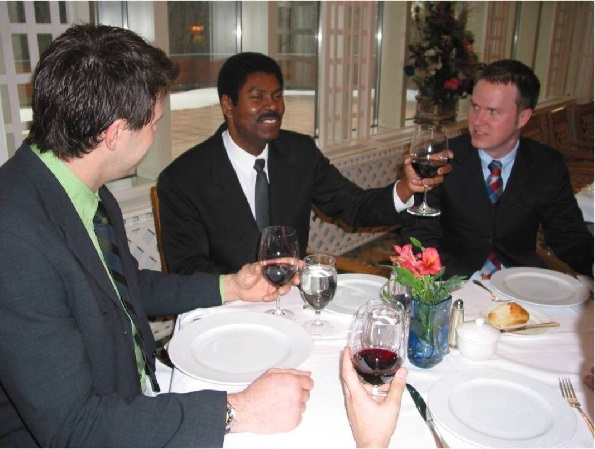
Do you know this guy?

Anyone who’s been caught at a wedding reception or a cocktail party discussing recent changes in the weather knows that these situations can quickly go from bad to worse and that making small talk isn’t as easy as it sounds.

Conversations with strangers can sometimes be stilted and uncomfortable, often resulting in a mad dash for the door as soon as is socially acceptable, but it doesn’t have to be this way.

“Small talk is an art,” says Small Talk Vineyards Owner, Hank Hunse. “It isn’t a skill that people are born with, but it can be mastered. Small talk is the starting point of all relationships and whether you are at a friend’s wine tasting party or a networking event it is an important starting point for everyone.”

Small Talk Vineyards, located in Niagara-on-the-Lake, knows all about the art of good conversation and the winery’s staff have become experts at small talk.

“A big part of our business is engaging our visitors in conversation,” said Hunse. “With hundreds of people visiting the winery each season, we have had to learn how to keep our guests engaged in conversation while ensuring they feel comfortable.”

Smooth!
Smooth!

To help us conquer our jitters of awkward meetings and functions, Small Talk Vineyards has compiled a list of five tips to mastering the art of small talk:

Remember Names

Introductions tend pass in a blur. Names are forgotten just as quickly as the hors d’oeuvres disappear, but make an effort to slow down and stay present. Repeat the person’s name in your head a few times and if you forget a name, discreetly ask a third party for help. Remembering someone’s name goes a long way and they are more likely to approach you at future gatherings.

Establish Eye Contact

This may sound like a no-brainer, but in uncomfortable situations people tend to avoid eye contact. Casual eye contact and a warm, friendly smile demonstrate your interest and desire to communicate. Eye contact for five to ten seconds indicates curiosity and is generally considered friendly. Make an effort to keep your body language open and relaxed – you’ll send out confident and friendly signals that will draw people to you

Discuss the Setting

Finding a topic of discussion after introductions is the hardest part of small talk. By commenting on the location of the event — how long the line is for drinks or floral arrangements — you are creating common ground. For example, if we sense that someone is uncomfortable during a wine tasting, we often comment on the bright paint colours that decorate the winery to find common ground.

Have Fun!

It’s important to remember that you aren’t alone. There are others in the room feeling just as uncomfortable as you, so stop hiding behind your glass of wine and enjoy yourself! Allow yourself to be curious and ask questions, you never know who you might meet.

Make a Clean Escape

When your conversation starts to draw to a close, take the opportunity to make a natural exit. Using phrases such as “I need to grab another drink” or “I need to say hello to a friend who just arrived” allows you to make a clean exit. Make sure to end the conversation with something like: “I’ve enjoyed talking to you, and I hope to talk to you again.” This keeps the lines of communication open for another meeting.

To learn more about Small Talk Vineyards please visit www.smalltalkvineyards.com. Follow Small Talk on Twitter @SmallTalkWines and like it on Facebook at www.facebook.com/smalltalkwinery

The Apple Place Norfolk Fruit Growers Association

About Small Talk Vineyards:

Small Talk Vineyards is an innovative, boutique, small-production VQA winery located in Niagara-on-the-Lake. The estate vineyard is family run and has been in operation since 1955. Small Talk’s  labels are about attending dinner parties and engaging in conversation, the front label in the “Speech Bubble” is what we say out loud during these gatherings and the back label, the “thought bubble” expresses what we’re thinking. Small Talk Vineyards features bold, fresh VQA wines that expose the dramatic gap between what you say … and what you really think!


Grand River Conservation effort targets phragmites- invasive reeds via Roundup

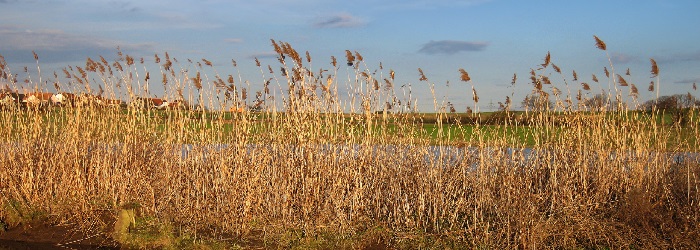
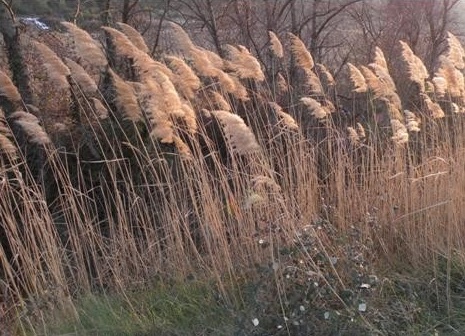
Phragmites

Portions of the Snyder’s Flats Conservation Area will be closed to the public during the week of Sept. 29 while a herbicide is used to control an outbreak of phragmites, an invasive plant species.

Signs will be posted in the parking lot at the entrance to the property on Snyder’s Flats Road near Bloomingdale. The affected sections of the trail network within the conservation area will be marked as closed.

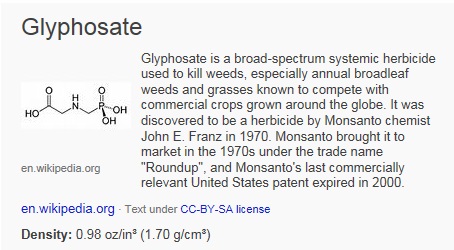
Staff of the Grand River Conservation Authority will be applying the herbicide glyphosate, which is better known by the trade name Roundup. The herbicide has been widely adopted by conservation organizations as a safe and effective way to remove invasive species.

What Is Roundup

The work is scheduled to be done on Monday, Sept. 29 and Tuesday, Sept. 30. The affected areas will be posted for a day after the herbicide is applied. There is a potential that the work could be delayed if there is heavy rain or high winds.

In most areas, the herbicide will be applied by hand to individual plants. Some larger outbreaks will be tackled with backpack-style sprayers.

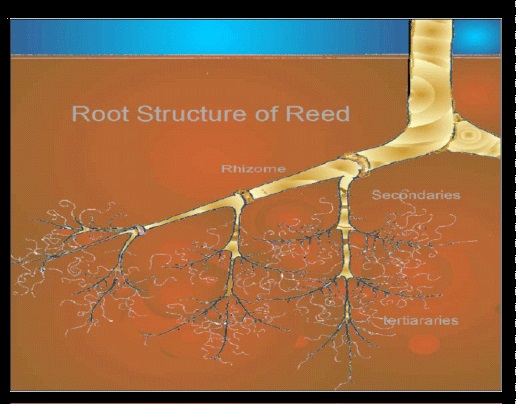
Phragmites australis, also known as European common reed, is a species that came to North America from Eurasia. According to Ontario’s Invading Species Awareness Program, the plant spreads quickly and out-competes native species for water and nutrients. It releases toxins from its roots into the soil to hinder the growth and kill surrounding plants.

Phragmites: tough hombres!

In taking over from native plants, it also reduces the habitat available to wetland wildlife species including birds, turtles and other amphibians and reptiles.

GRCA staff  hope that by reacting quickly to its presence they can keep it from spreading throughout Snyder’s Flats and to other properties.

The work at Snyder’s Flats is part of the GRCA’s long-term program to return the former gravel pit area to a natural state that is home to a wide variety of plant, bird and animal species.

Click to view on I-tunes

1,969 Words on Having Experienced Domestic Abuse

Dear Silo,

In light of the [RayNFL domestic abuse controversy, I decided to write to you about my experience of domestic abuse.

My abuser was my husband. We had children. We had good jobs. People told us how happy we looked.

I had to look happy. He demanded my loyalty. He demanded I speak publicly, often at church, about how much I loved him and was grateful to him for providing for me and the children.

I was raped constantly. Not by knife, though, and not by physical restraints. He ruled my brain and body, he told me. As his wife, it was demanded that I have sex with him whenever he wanted. If I said no, he would be angry for days, calling me names, telling me that no other man would ever want me, that if I didn’t give it to him, he would take the children and never give them back. He would email me at work to continue the fight during the day. He would text me at night if I wasn’t with him.

When I came home from work one day to find all of my belongings on the front yard, I believed he was telling me the truth. I felt like an ungrateful woman who treated her husband horribly. My church leaders even told me that a husband could not rape his wife. One did tell me to leave, but I wasn’t strong enough then.

He took the air out of my tires so I couldn’t go out with a girlfriend. One of our children witnessed it.

I finally turned to the police. They wrote our episodes up as domestic disputes, which didn’t break the Canada’s Criminal Code (I have the reports, highly redacted). My husband was too smart to do something for which he could be charged.

Neighbours called the Police on him. My family also called the Police, afraid he was going to kill me because of a status on Facebook they thought was directed at me. The OPP showed up, questioned him, but did nothing when he said he would never harm me.

He kept a knife under his pillow. Why? He told our children that he felt I was going to kill him in his sleep and he had to be protected from me.

I was accused of many affairs. I was unfaithful to him even if I talked with a girlfriend on the phone. I was told that when I was home, I was to only spend time with family, but he meant with him. I couldn’t watch tv with the kids because he demanded that I stay with him.

On nights when I chose to get away from him to watch tv with them, he would bombard me with texts, telling me how horrible I was, keeping my attention on him, not the kids. On really bad days, he would charge into the room where I was with the kids to yell at me there, making sure they knew I was horrible, too.

He told me for 6 years that he wanted a divorce, to keep me in fear of breaking up the family. He would tell me that no man would want to be with a mom of so many kids. He also said that if I ever found someone to be with me, he would make sure he told him about the kinky sex I liked (true or not). I was damaged goods. No one would want me.

For years, I thought that was all I was worth.

That changed. Five years ago, I started planning to get out. It took that long because I had to convince myself that, even if I stayed single, the children and I deserved to not live on egg shells anymore.\

I had to find the strength to be a single mom.

Five years of getting my ducks in a row. Five years of emotionally divorcing him in my head.

When I told him I wanted a divorce, he begged to stay. He told the oldest children without me in the room that I asked for the divorce, that I was kicking him out. My kids hated me.

Then, he played the cancer card. He told the oldest children that the doctors suspected he had cancer and I was still kicking him out of the house. The day he before he was to have his scope, I asked him why he wasn’t clearing out his colon, like I had to do when I had mine scoped. He yelled at me, told me I didn’t know what I was talking about and went to our room.

Well, by then, it was his room alone. I was kicked out.

He told the kids he was moving east on a Friday. With our youngest away for the weekend at a camp with me, she kept asking if her dad was going to be home when she got there. When was he leaving? She was in knots all weekend. He didn’t tell her that he chose to stay. We found out when we got home.

Two weeks later, he said he was moving again. He actually packed the car this time. He said his good-byes before they left for school. He got as far as Quebec when he begged to come back. I refused.

He lived in his car. He lived in a cheap hotel. He told the kids I put him on the street. He emailed or texted me constantly to 1) let him back in, promising he’d change or 2) he’d make sure the kids knew it was all my fault. He told them he’d do anything to let him back in but I refused to forgive him.

Forgiveness was never an issue for me. It was a refusal to live under fear and anger any longer.

The kids and I didn’t have stress in our house anymore after he moved out. It only took a few days of him being away before they told me the house felt so much better without him there, without him yelling anymore.

Then he did something which put the fear back into my heart, fear that he could really hurt us this time. Until then, he had never done anything physical.

When I called the OPP to report it, they put everything back on me. I was told to stop slinging mud at him. They said I was never afraid for my safety before, so this episode was nothing. I was just trying to get him in trouble.

What do you do when the people you most trust to protect you, don’t? The church and the OPP did nothing to help. He was (is) a charmer and manipulator, he had everyone believing he was innocent of everything. Remember, a wife can’t say no to her husband.

I was not perfect. No one is. I was diagnosed with PTSD not long after he moved out.

But people have to stop blaming the victims of abuse for the abuse. We don’t ask for it. He was mad at me by my daily living, why would I do something deliberately to piss him off? No one deserves name-calling, harassment, manipulated into actions they don’t want to do, to walk on egg shells to keep him happy.

I stayed because there was no way in hell I would let him have custody of the kids. I stayed because for years, I believed I was worthless and that no man would ever want me. I was damaged goods. It took me years to get that thinking out of my brain. I am well educated. I have a great career. Abuse doesn’t care.

Abuse doesn’t infect any social status of people more than any other. Abuse infects the minds of women and children who are raised to believe it is the only way to live. Abused people believe they are worthless. Abused people don’t think they deserve any better.

On average it takes women 7-10 attempts to get out of that situation to follow through. Why? It is because they keep getting pulled back in with apologies, gifts. Grand gestures are made in front of children to make the woman look bad.

Example: the first time I said I wanted a divorce (years beforehand), he proposed to me again (with ring) in front of the children, promising things would be different. He gave me diamond earrings, too (he used the mortgage money to pay for them). I didn’t have the strength then to say no. The kids were counting on me to keep the family together. The kids were counting on me to protect them from him.

I failed more times than I care to count.

He came to my workplace once, after using my GPS location at a lawyer’s office, asked me in front of co-workers for a moment to speak to me, put me in his car and screamed at me for wanting a divorce. How dare I try to ruin our family!! I was allowed to leave the car, went back to my desk and cried. My officemate patted my shoulder and asked if I wanted to talk. I couldn’t. How could I let her know I was so badly abused by him and was terrified to leave?

Oh, he also hacked into my digital journal. Private thoughts were no longer private. They became tools to be used against me.

I thought I was strong enough to get out then. He beat me back down verbally, psychologically, financially, emotionally, sexually – yet he never broke the law. He had asked me for years for a divorce. Suddenly, following through with his wishes, I was bad – bad because I was actually pursuing it.

Last week, he used the ‘cancer card’ again, this time on our youngest children. The only thing they know of cancer was watching it slowly kill his dad years ago. It killed his mom, too. He told the kids that doctors thought he had cancer and that he was getting tested. He told them alone in the car, without even his girlfriend to even hear. Manipulative, conniving control freak. He played the pity card to keep them close. He didn’t care about what the news did to them. He only wants control. He demands loyalty.

Laws in this country, and many other countries, need to change. Why does it take a punch to the head to get the police to act? What kind of proof is needed for harassment via texting? I printed out the texts he sent to me at all hours of the night and brought them to the OPP. Nothing was done. Because nothing was done, he continued until I blocked his number. Email is now the only safe way to communicate. I have kept every one for the past 10 years. Plus, screen captures of texts.

Will it make a difference? I don’t know.

Getting a divorce is complicated. And expensive. My ex said he’d pay all court costs. Really? He’ll pay court costs but not child support?

The process is worse when you are divorcing a control freak who refuses to cooperate. He dropped out of mediation. He dropped out of counselling. He only wants divorce on his terms. That is not going to happen. I am levelling off this power struggle.

I don’t know what the future holds with the divorce. What I do know is that when the children are with me, they live in a home without fear, a home where they are trusted, a home where they can tell me whatever they want, even if it hurts my feelings. They can’t do the same with him.

They are the other victims of spousal abuse.

To be continued….

Information has been changed or deleted for fear of retribution.

Toronto Composer Nick Storring sends listener on a journey with “Gardens”

Nick Storring — Gardens

  1. Open Your Eyes And Forget (16.21)
  2. (Come To My) Thicket (5.30)
  3. Unexpecting (3.52)
  4. Nothing Seems To Rhyme (7.25)
  5. Inside Every Man Lives the Seed of a Flower (13.21)
Maestro Nick Storring- not afraid to integrate electronics into classical instrumentation

 Gardens was composed, performed, recorded and mixed spring 2011-autumn 2013. All instruments performed by Nick Storring. The work was designed as an informal tribute to arranger/ producer/ composer Charles Stepney. Its titles refer to the Come To My Garden by Minnie Riperton which Stepney co-wrote, produced and arranged. No musical materials were borrowed, however.

The creative processes which birthed this album was funded by the 2011 Toronto Emerging Composer Award, which is administered by the Canadian Music Centre and generously supported by Michael Koerner and Roger D. Moore. No effects processing was employed aside from simple dynamics, equalization, mixing, and spatialization. Other ‘processing’ is strictly through acoustic or electromechanical means.

Instrumentation: violin, cello, electric mandola, electric bass, guitalele, Strumstick, banjo, harpsicle, autoharp, esraj, kemence, rebab, ananda lahari, Hohner Pianet-T, Yamaha CP60M stage piano, glockenspiel, steel pan, thumb pianos, toy pianos, roto-toms, snare drum, djembe, khol, bells, thunder tubes, rainstick, woodblocks, cymbals, other found/ homemade percussion, jaw harps, melodicas, harmonicas (diatonic and chromatic), tuning reeds, harmonium, khêne, mey, hulosi, xaphoon, concert flute, bansuris, sulings, recorders (alto, soprano, sopranino), various other flutes, mijwiz, been, pan pipes, kazoo, found wind instruments, voice.

Nick Storring

Additional implements: bows, mallets, plectra, e-bow, handheld fan, electric toothbrush, vibrator, microphones,contact microphones, amps, speakers, earbuds, Headrush Shockrock vibration speaker, Danelectro Free Speech Talkbox, Sansui RA-700 spring reverb.

Many thanks to those who offered listening, feedback, instruments, support and exposure (through various channels) during the creation of this work. There are many of you, and I truly value your contributions.

© 2013 Nick Storring

all tracks SOCAN

www.nickstorring.ca

www.scissortailrecords.com

Nick Storring

Supplemental- Blouin Artinfo article about Nick’s recent practice the première of Terminal Burrowing at the AKOUSMA Festival, October 2013


Wendy Carlos Soundtrack Composer

TRDWTR “Treadwater” launches as new mature themed Superhero franchise

TRDWTR  TRDWTR, pronounced ‘treadwater’, is a mature take on the superhero genre, set in a plausible geopolitical future. The franchise will kick off with a graphic novel on September 30th, 2014. A live-action series based on the novel is set to follow suit in 2015. A preview of the graphic novel will be staged in America’s largest comic book store today, September 10th.  To commemorate the launch, a teaser trailer for the TRDWTR franchise has been  made available to the general public. And here it is!

Canada Migrant Worker Program Not Perfect But Seen As World Model

Migrant WorkerTORONTO, CANADA – The world’s most successful program connecting seasonal workers with agricultural employers has kicked into high gear.

Administered by Foreign Agricultural Resource Management Services (F.A.R.M.S.), the Seasonal Agricultural Worker Program (SAWP) links approximately 14,000 requests for seasonal workers with jobs at Ontario farms this growing season.

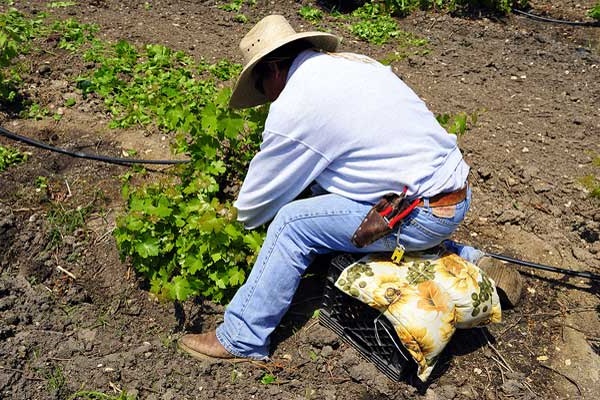
Not only does the 52-year-old program provide a long list of benefits to the workers and the farmers, but also it creates two Canadian jobs in the agrifood industry for every worker employed through SAWP at Ontario agricultural operations, says Ken Forth, president of F.A.R.M.S.

“Governments and agricultural organizations around the world are looking at this program as a model,” Forth says.  “For decades, this program has provided Ontario farmers a steady source of reliable labour as a supplement to local labour. At the same time it gives the seasonal workers well-paying employment, benefits and educational opportunities not available at home.”

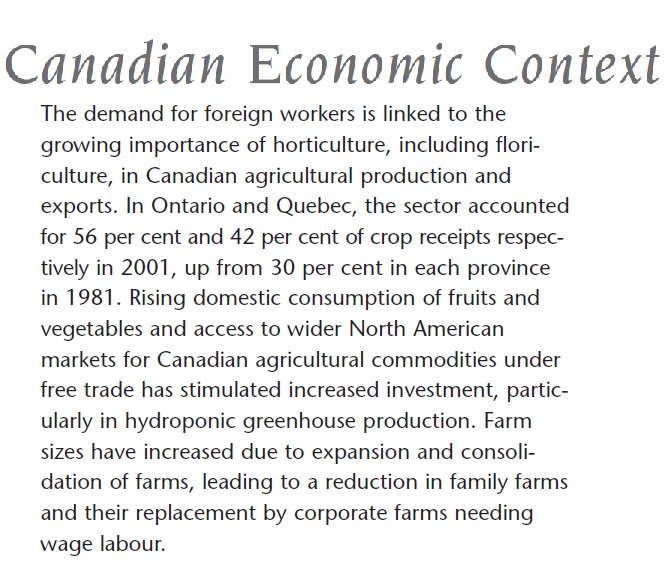
Not without critics- the Seasonal Agri-worker program has been linked to the continued decline of the "family farm" and the continued trend of "farm industrialization"- See supplemental section link below CP
Not without critics- the Seasonal Agri-worker program has been linked to the continued decline of the “family farm” and the continued trend of “farm industrialization”- See supplemental section link below CP

Seasonal workers employed at Ontario farm operations through SAWP:

  • Sign contracts that guarantee them all the protections and benefits that Canadian workers receive, including WSIB, certain EI benefits and provincial health care coverage.
  • Receive an hourly wage rate set by Human Resources & Skills Development Canada.The hourly rate is not less than the provincial minimum wage rate or the local prevailing rate paid to Canadians doing the same job, whichever is greatest.
  • Earn up to five times more than they could in their own countries, which enables them to support their families, educate their children and buy and operate businesses and farms in their own countries.

Farmers have also realized great benefits from the program for more than 40 years, enabling them to hire staff that would otherwise be extremely challenging to find because of the ongoing shortage of suitable and available local Canadian workers.

Social justice groups point to concerns over health and safety

“Ontario farmers pay the highest farm worker wages in North America and face intense competition from low-wage competitors,” Forth says. “Without this program, many Ontario farmers simply couldn’t continue to grow fruits and vegetables. They’d stop growing altogether or move into less labour-intensive crops.

About the Seasonal Agricultural Worker Program:

More information about Canada’s Seasonal Agricultural Worker Program (SAWP) can be found at www.farmsontario.ca

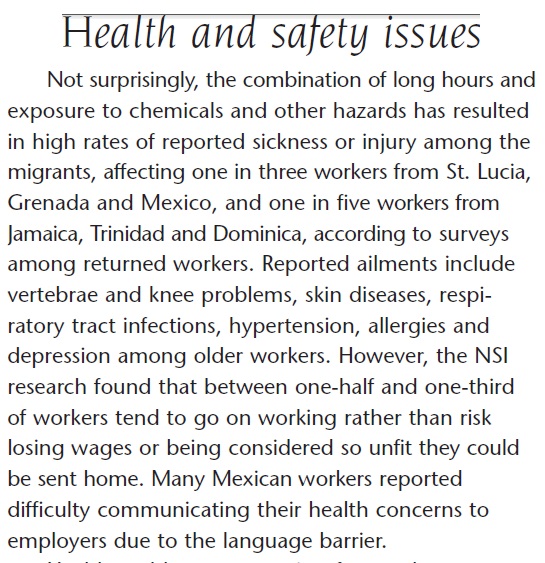
Supplemental- NSI study highlighting concerns related to the program’ http://www.nsi-ins.ca/wp-content/uploads/2012/10/2006-Migrant-Workers-in-Canada-A-review-of-the-Canadian-Seasonal-Agricultural-Workers-Program.pdf

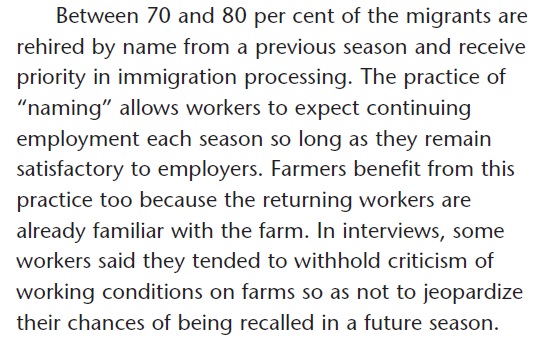
Afraid to speak out? Some workers report that they are reluctant to address concerns out of fear of job loss

CNNMoney- Millennials Saying No To Credit Cards

CNN Money No Credit Cards For Millenials


CNNMoney ‏@CNNMoney 13h

Millennials are saying no to credit cards: http://cnnmon.ie/1uFOSGl  via @blakeellis3 pic.twitter.com/T1U8i7OU2I

What some tweeters are saying:

CalBeach ‏@CalBeach 13h

@CNNMoney @blakeellis3 They’re smart to avoid debt.

YmeYnot ‏@YmeYnot2011 13h

@CNNMoney @blakeellis3 Only use charge card when you can pay entire debt completely before you are charged interest.

NETGAINS ‏@Netgains_ 13h

@CNNMoney @blakeellis3 Great info… Thanks for sharing..

Equality=Peace ‏@angrigarisangri 13h

@CNNMoney @CNN @blakeellis3 Yes to #bitcoin!

Glenn ‏@GlennMPR 13h

@CNNMoney @CNN @blakeellis3 Smarter than my generation then.

Pm3marston ‏@Pm3marston 13h

@CNNMoney @CNN @blakeellis3 We know not to be caught in the credit card trap. Only use it as a cash replacement card, not for debt.

Roger Bustos ‏@rogerbgom 13h

@CNNMoney @blakeellis3 like a smart wallet just pass the wallet and charge from your credit or debit just pick with your phone….

BrokenHearted ‏@patientfailure 12h

@CNNMoney @CNN @blakeellis3 Stupid. You’re spending decisions should never change based on your form of payment.

Patrick B ‏@sportbikeguy00 12h

@CNNMoney @CNN @blakeellis3 Credit & debts of any kind should be avoided,my motto is if you can’t pay cash for it,save up or forget it.

mizo ‏@bemelmesre 12h

@CNNMoney @CNN @blakeellis3 Never used a credit card in my life. Only used credit for commercial purposes.

victor ‏@victor_de64 11h

@CNNMoney @CNN @blakeellis3 I’m a baby boomer and cut all mine 19 years ago and never missed them

CynicalPolitico ‏@IndyinTX31 11h

“@CNNMoney: Millennials are saying no to credit cards: http://cnnmon.ie/1uFOSGl  via @blakeellis3 pic.twitter.com/sAw87n1GDt”()

FatNoMore™ Fitness ‏@FNM_Fitness 10h

@CNNMoney @blakeellis3 Either buy cast or use paypal. Credit cards are just a disaster waiting to happen #ParentWillAgree

Andrew Smith ‏@iSmitty12 10h

@DaveRamsey thoughts? “@CNNMoney: Millennials are saying no to credit cards: http://cnnmon.ie/1uFOSGl  via @blakeellis3 pic.twitter.com/kcL0lgMyzP”

Yvonne Moedt ‏@YvonneMoedt 9h

@CNNMoney That’s great!! You never know what’s left or how big your debt is and will never get out once you start. Real paper money #future

Declan Martens ‏@DeclanMartens 9h

@CNNMoney @blakeellis3 hey that’s us! @Malicious_Tea

Zbolts ‏@zbolts 9h

They use mom/dad?! “@CNNMoney: Millennials are saying no to credit cards: http://cnnmon.ie/1uFOSGl  via @blakeellis3 pic.twitter.com/f1jlE2zlAq”

HogsAteMySister ‏@hogsatemysister 9h

@CNNMoney @blakeellis3 Which is easy to do when you still live at home…

Websterwall ‏@Websterwall 8h

@CNNMoney @blakeellis3 It’s true. No card for me. Living within my means

The Epitomy Of An♈️ ‏@ErnieBlanco63 8h

@CNNMoney With the job market being so rocky it’s a smart move.

Stephen Cefalu ‏@Scef2308 7h

@CNNMoney @CNN @blakeellis3 they don’t know how to use a CC to maximize the rewards and cash back. Learn how to use credit.

Jay Brausch ‏@BigDogStar 7h

@CNNMoney @CNN @blakeellis3 One of the smartest things of the new millennium that they can do.

KC Simbeck ‏@kc_simbeck 6h

@CNNMoney I’d like to not have a credit card. But it’s pretty much required for building credit.

Liesel Rickert ‏@le_rickert3 6h

Ive been wanting 1, but can’t decided bc of 2 factors here RT “@CNNMoney: Millennials are saying no to credit cards: http://cnnmon.ie/1uFOSGl ”


Garmatex Textiles Uses Jade Minerals

For those of you unfamiliar with technical fabrics, you should know that the textile industry is currently experiencing a modern renaissance. With a long list of product innovations including: jade fibers that cool the skin, treatment methods that conserve water and fabrics that repel bugs, the textile industry is driving an evolution in performance materials while churning out a constant supply of new fabrics every day. Not surprisingly, competition in the industry is intense. The key to becoming truly successful in the field is to focus on improving and optimizing existing technologies to exceed current expectations of performance standards.

An early example of "technical fabric"- crucial to the beginning of high altitude, high speed, high G force flight. CP image: salimbeti.com

An early example of “technical fabric”- crucial to the beginning of high altitude, high speed, high G force flight. CP image: salimbeti.com

Garmatex Technologies, a progressive inventor of intelligent fabric solutions, is one of the companies driving this innovation. Located in Surrey, British Columbia, the team has developed over 40 unique technologies. Each developed with the intention of improving quality of life while anticipating how consumer needs change and evolve over time.

Garmatex’s focus on crafting better solutions has led them to invent a number of products. One of these solutions is their anti-microbial Bact-Out® technology. Not a new innovation, fabrics that inhibit the growth of germs have been a staple in the industry for some time. While usually produced through a topical treatment that sometimes includes silver, Garmatex’s Bact-Out® really stands out because the embedded technology does not involve a potentially harmful metal and lasts for 50 washes compared to the 20 washes that most competitors focus on achieving.

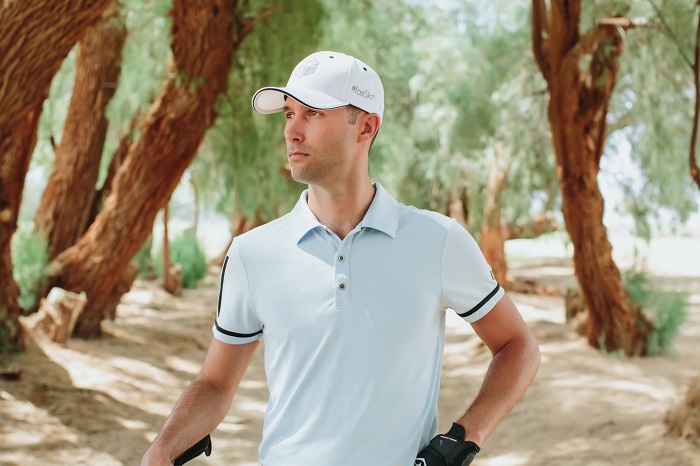
IceSkin shirt technology- the latest design from Garmatex utilize jade crystals!

A more recent innovation to the market is found in materials that help regulate temperature, most often achieved through the use of a chemical cooling ingredient usually found in chewing gum. Garmatex has improved the science behind cooling comfort products by introducing IceSkin™ technology. Developed through a proprietary combination of knitting techniques, natural jade minerals and CoolSkin® quick dry filaments, IceSkin™ technology provides a longer lasting superior cooling alternative.

Science-fiction has paved the way for real-life products. One example are the stillsuits used by the Fremen on Arrakis  from the novel and movie Dune

In the area of protective garments, Garmatex has produced another new technology that encapsulates steel fibers inside of a CoolSkin® micro poly shell. This fabric, aptly named SteelSkin™, provides tremendous abrasion resistance and flexibility. Add to this the ability to be colored dyed to any shade, and this material fabric is certain to open many protective industrial and apparel applications.

In a highly competitive industry, Garmatex will continue to outperform its competitor’s because of its technical innovation and relentless optimization of its existing technologies.


5 tips to Make sure first year Students transition from high school to Biz school

How to succeed in business school: Five tips for first year students


ST. CATHARINES, Ont. – The start of university can be intimidating enough for most first-year students. But business students face an extra set of challenges as they balance their coursework with gaining work and extra-curricular experience to help take them from campus to career. Freaked Out First Year University Student

From co-op work placements to mock interviews and networking breakfasts, the business school experience is designed to help students gain professional polish, acquire leadership skills and learn the foundations of management, accounting and entrepreneurship.

So how can new students and their parents make sure they are ready to take advantage of the available opportunities? These five tips will make sure first year students are ready for the transition from high school to business school:

  1. Be prepared (Textbook not required)

There’s is no need to read your textbooks cover-to-cover over the summer. Instead, spend some time getting comfortable with all that is available at your future school- both offline and online.

Spend a day on campus before the first day of class and figure out where your classes will be held. Don’t forget to attend your orientation. Most schools will offer a faculty specific orientation in the days leading up to the first day of classes.

And do your research online. Follow your business school on Facebook, Twitter and Instagram. Figure out the online registration system, how to access your student email and the online learning platforms. These online tools will be used throughout the academic year so access them early so you don’t miss any emails or messages.

  1. Going to University is your full-time job

While University doesn’t pay you a regular paycheck, it does pay you in grades. At the end of your degree, you will be able to use your straight A’s as currency to get a great job.

Everything you learned at your summer job about responsibility, punctuality and honesty can be used in business school.  So, impress your professor just like you would your boss. Show up to class. Stay on top of your assignments and hand them in on time.

  1. Get involved (and stay involved)

Want to stand out at a job interview? Join a business student club. These clubs focus on everything from accounting to marketing and every subject area in between.  Joining a club is a great way to make new friends and apply coursework to real life situations.

One key tip: it’s not enough to sign up and attend the occasional meetings. If you really want to have an experience that stands out on your resume, get involved on the executive team, attend a case competition or organize an event. You’ll have an experience you’ll never forget and something unique to mention during a job interview.

  1. Make friends (with everyone)

We guarantee that you’ll make friends in your classes and in residence. But don’t forget to build meaningful relationships with faculty, staff and upper year students. They can become important mentors who can help point you to on-campus resources and introduce you to new connections. Plus, if you know your career centre staff they’ll be sure to recommend you to employers who are hiring students.

Do you want to guarantee straight A’s on group projects? One successful strategy we’ve seen Goodman students use is to have a group of friends from different concentrations. When it comes time to write that paper, you’ll have every subject area covered, from HR to entrepreneurship.

  1. Ask for help

It’s a new school, a new environment and new friends. This is a big transition and it’s normal for there to be ups and downs during your first year. Fortunately, your university has resources available to help you succeed. From study skill workshops to mental health resources, there is a lot of support available to you on-campus.

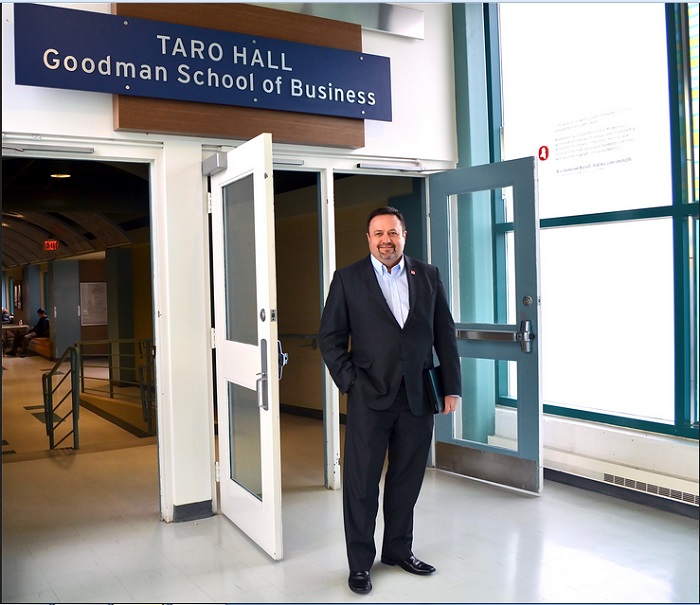
If you need any type of help, talk to your academic advisor or a professor as early as possible. Don’t put your academic career at risk; there are people available to help you get through any type of problem you encounter. For the Silo, Don Cyr, dean of the Goodman School of Business at Brock University.

Don Cyr, dean of the Goodman School of Business at Brock University


About the Goodman School of Business:

Based at Brock University in St. Catharines, Ont., the Goodman School of Business is one of only eight schools in Ontario that is accredited by the Association to Advance Collegiate Schools of Business International. The Goodman School of Business is home to more than 2,600 undergraduate students, 450 graduate students and has 7,000 alumni worldwide.


La Prochaine Soirée Du Restaurant Le Renoir

Renoir Sauvage

RENOIR SAUVAGE- Vous êtes cordialement conviés à la prochaine destination de l’Apéro Sauvage en cavale qui vous fait découvrir à chaque dégustation, un chef et un resto, en plus des merveilles de notre terroir sauvage. La prochaine soirée aura lieu le 3 septembre prochain sur la magnifique terrasse du restaurant Le Renoir, sur la rue Sherbrooke, au centre-ville de Montréal.

L’Apéro Sauvage en cavale propose des 5@7 de réseautage épicurien, de plaisirs gourmands pour tous les sens et de découverte des produits sauvages du Québec, en 2 ou 3 bouchées copieuses, en accord avec des vins et cocktails d’exception.  Cette édition très spéciale mets en vedette les champignons sauvages en 3 accords exceptionnels, crées par le grand chef Olivier Perret et le maître-pâtissier Roland Del Monte – MOF, du restaurant Le Renoir, en collaboration avec Terroirs Québec, Bobby Grégoire et Natalie Richard. Venez célébrer les champignons sauvages et les découvrir comme vous ne les avez jamais goûté, grâce au savoir-faire et à la créativité de deux grands maîtres de l’art gastronomique.

Renoir Sauvage 2

Achetez vos billets en ligne ICI.

Mercredi soirs jusqu’au 17 septembre

Venez faire votre propre cueillette de champignons sauvages avec le chef Perret! Tous les mercredis à partir de 18h, dans le cadre de l’Apéro Sauvage, en collaboration Terroir Québec.

Poêlée de champignons sauvages au choix sur tartines de pain grillé de la boulangerie Hof Kelsten, servi avec accompagnements saisonniers

RESTAURANT LE RENOIR

1155 Sherbrooke Ouest, Montréal, Québec, Canada, H3A 2N3

www.restaurant-renoir.com | 514-788-3038 | h3646@sofitel.com