Tag Archives: crown land

What If Alberta Poll Next Month Supports Separation From Canada?

Canada is at a pivotal moment in its history.

We are repositioning ourselves as a country open to investment. But we do so alongside headwinds. Trade uncertainty with our largest trading partner brings a changing geopolitical and economic reality that is forcing the country to rethink what and how we produce and trade, and now an internal conflict is testing the strength of our diverse federation of governments and its division of powers.
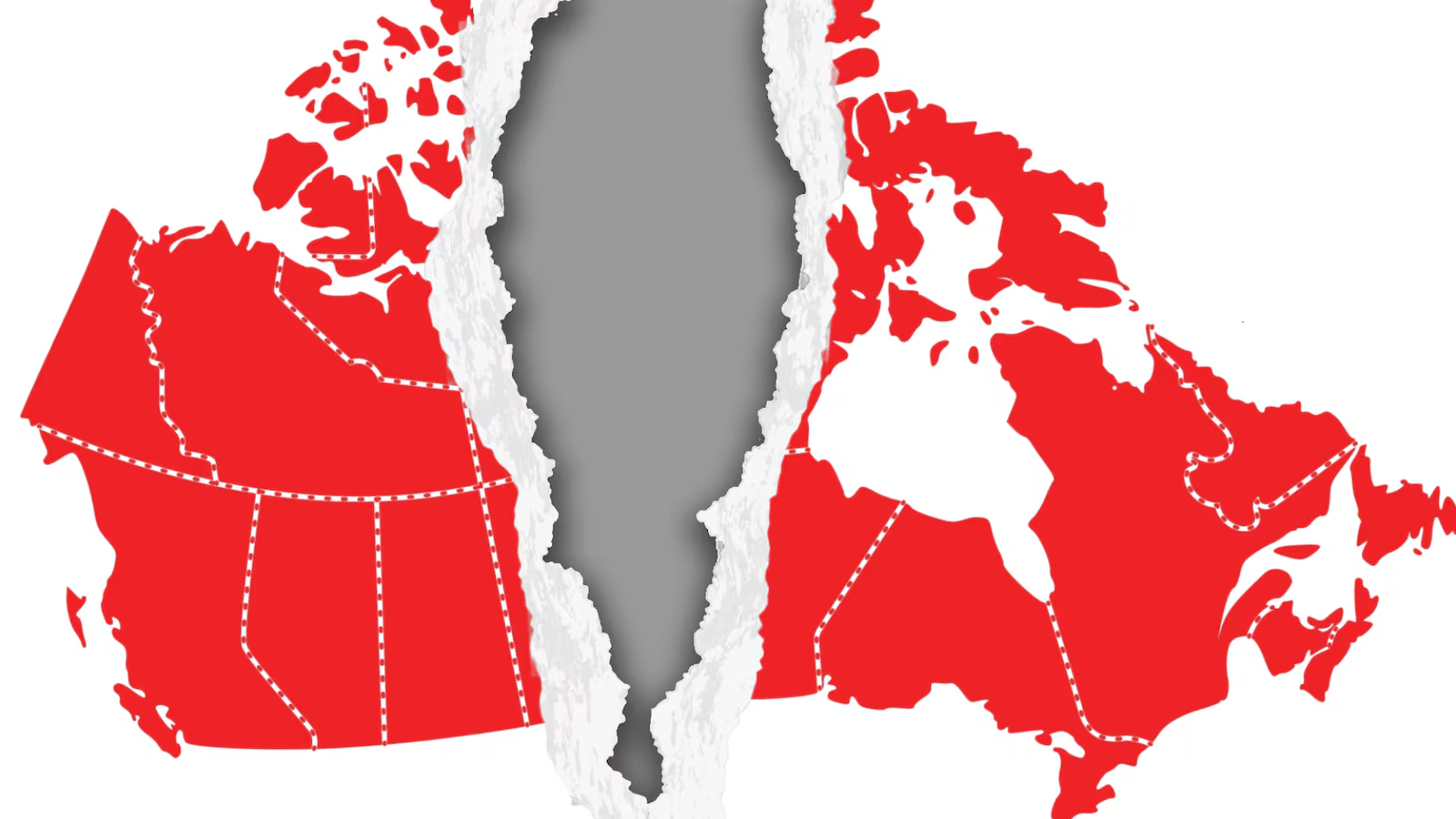
It is within this context that Albertans go to the polls on October 19, faced with 10 referendum questions. Five of these focus on immigration and citizenship; four on the Canadian constitution and provincial rights and jurisdiction; and the final question asks whether Alberta should remain a province of Canada, or commence the legal process required under the Constitution to hold a binding provincial referendum to separate from Canada.

This final question is not itself binding. (Premier Danielle Smith has said that a final question could be posed to Albertans in early 2027 if the October 19 results give her the mandate.)

No matter these details, at its heart is the question: Is Alberta better off in or outside of Canada?
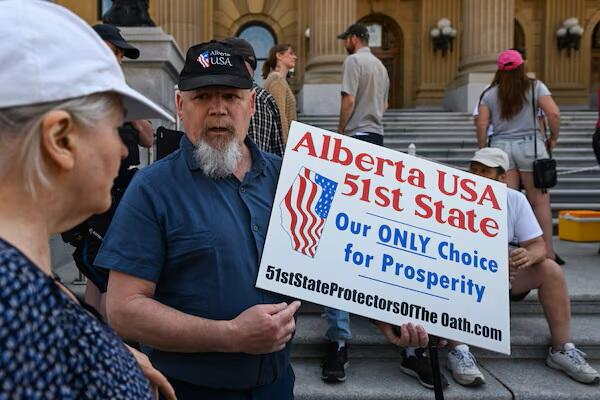
The treatment of Alberta within Canada has been a matter of intense debate within the province for decades, even centuries.

The Northwest Territories was the loose historical term traders applied to land north and west of Lake Superior, and even when its boundaries were codified in in the North-West Territories Act of 1875, it had no representation in the House of Commons or the Senate. Only in 1897 was ‘responsible government’ created.

Calls for provincehood grew louder as the population expanded and its government advocated for more financial autonomy. Ultimately, negotiations split Alberta and Saskatchewan and they entered the confederation as separate provinces in 1905. Meanwhile, the Autonomy Bills of 1905 maintained federal management of Crown lands and natural resources so Ottawa could retain control of immigration, trade, and western settlement. Only in 1930 was management of natural resources transferred to each province.

More recent examples of Alberta demanding more autonomy include the 2001 Alberta Agenda, a letter to then-Premier Ralph Klein from a number of prominent Albertans including former Prime Minister Stephen Harper, outlining several proposals to create greater autonomy within Canada. Many of these proposals mirror the autonomy Quebec enjoys within Confederation.
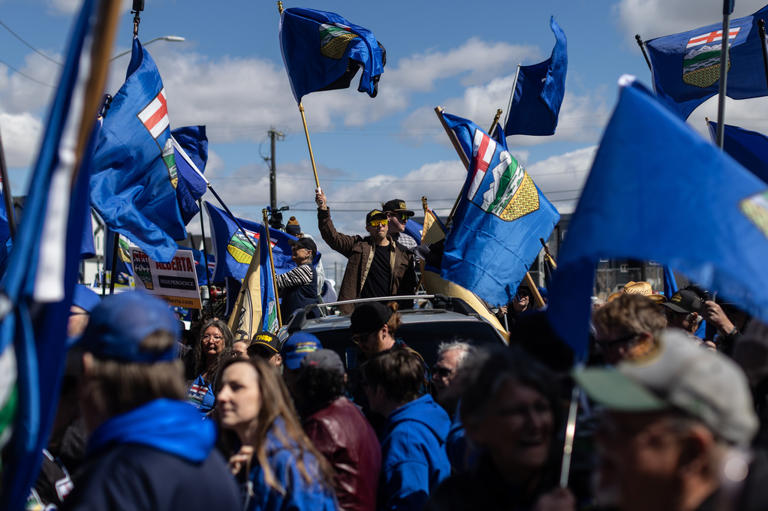
Albertans Are Frustrated

The current situation is in some ways a continuation of this debate, focused on how Albertans can better realize their economic potential. A number of policies over the past 50 years have frustrated Albertans, such as the National Energy Program, various changes to Canada’s regulatory approval regime, the BC oil tanker moratorium, and the oil and gas emissions cap regulation.

The Advantages Of Alberta Being A Part Of Canada

Despite these challenges, it is important to remember the enormous benefits Alberta derives (or has derived) from being a province of Canada. Examples include, but are not limited to, global trade deals, military protection, disaster relief, a stable financial system, contribution to early research on oil sands separation processes and viable uses for the resource, direct financing of a portion of Syncrude’s Mildred Lake operation – a world class facility at the time, and the migration of people to Alberta from across Canada to help build its different industries.

In the lead up to October 19, the C.D. Howe Institute and its contributors seek to share a variety of evidence-based perspectives on the potential consequences of an Alberta departure from Confederation; to bring to light the incredible complexities of the act of separation. Ultimately, this work comes to two conclusions: 1) The downsides to separation outweigh any perceived upsides. And 2) There are opportunities to strengthen the federation and Alberta’s place in it.

This series of Intelligence Memos was published throughout last week and in the leadup to a special C.D. Howe Institute event that was held on September 22 in Calgary and focused on the Alberta referendum, included Memos exploring some of the most critical policy questions of separation. Examples: monetary policy challenges, considerations for Alberta’s international competitiveness and other economic implications of separation, labour market considerations, and fiscal redistribution complexities.

Our Hope?

Our hope is that readers will gain insights into the pertinent policy issues, as well as an appreciation for the complexity of the separation process, and the consequences on Albertans, businesses, and the rest of Canada.

For the Silo, Jeremy M. Kronick- President and CEO of the C.D. Howe Institute, and Kate Koplovich – Calgary-based senior policy analyst. 
Australian Archaeologist In Ontario For Practices Exchange

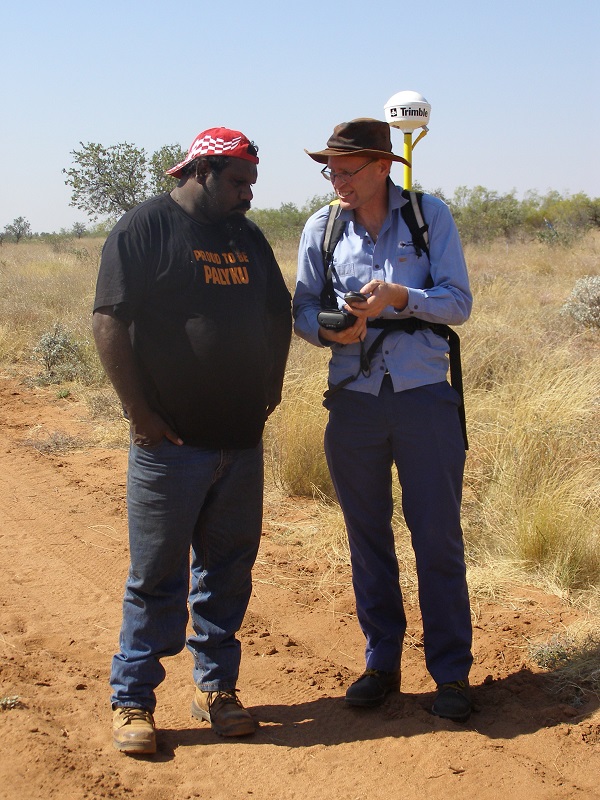
Lindsey Yulline & Phil discussing DGPS

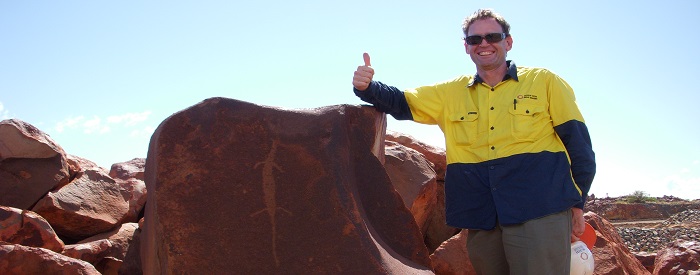
Phil Czerwinski of Perth, Australia and director of “Heritage Western Australia” an archaeological consultant company focusing on the survey of indigenous rock art, archaeological, and ethnographic sites in Western Australia came to learn about archaeology in southern Ontario. Phil arrived in Haldimand-Norfolk County July 4-11, 2014 to participate in an archaeological exchange with the Haldimand Norfolk Archaeological Regional Project (HNARP).

Phil was kind enough to take time from his schedule in Canada to answer a few questions about his experiences with archaeology in southern Ontario.

1. What kind of archaeology do you conduct in Western Australia?

I’m an archaeologist who does a lot of work in Western Australia. We have lots of cool archaeology such as artefact scatters, rock art, and caves with human occupation dating back 40,000 years ago. My main interest is in how hunter-gatherers use the landscape, and how these settlement patterns are shown in archaeological sites. Much of my work is for mining companies.

2. What interested you to come to Ontario and participate in this regional project?

I came to do fieldwork with the Haldimand Norfolk Archaeological Research Project (HNARP) in Ontario because Lorenz and I worked together in Australia a few years ago. He told me about his project and I thought it would be a great idea to see how things are done in Canada.

3. In Haldimand-Norfolk County much of the archaeology is conducted on private lands. When does your company deal with private land owners to access properties to conduct your archaeological work?

We do not do too much work on private lands as most of the work is on Crown Land, which is why I was interested in coming to see how HNARP relates to local landowners. What instantly impressed me during my time in the field with HNARP was the level of community engagement with the landowners and other stakeholders such as collectors. The way Lorenz Bruechert, Project Director spoke respectfully with them, listened to their concerns about accessing fields in crop, handling their precious artefact collections, and making sure the communication was a two way street was refreshing to experience. To have a beer and ‘talk turkey’ (in our case pigs) with landowners was wonderful. The fact that landowners and interested people get newsletter updates on HNARP is a great information sharing initiative.

4. HNARP attempts to develop long term relationships with land owners in an effort to develop community archaeology. When do consultant companies like Heritage Western Australia have an opportunity to develop community archaeology with their clients or within communities where development is planned?

Our archaeology is mostly mining based, so our relationships are with the companies and the Aboriginal groups on whose lands the mining companies want to mine. Often these turn into long term relationships, which have their ups and downs. We aim for sustainability in heritage; where we all get something out of the process.

5. How do corporations support community archaeology in Western Australia?

The main corporate interest in archaeology where I work is based on the approvals process, where heritage is often viewed as another box to check in the mining process. Some of the bigger mining companies do it differently, and sponsor larger regional studies in order to understand the Aboriginal heritage.

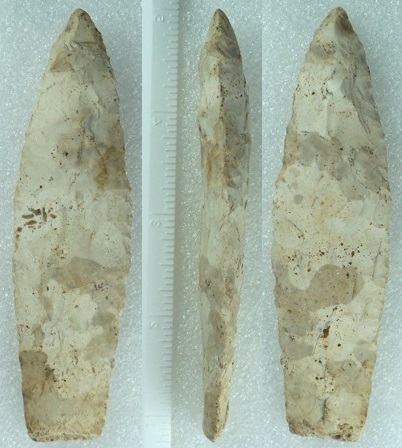
An Agate Basin paleo (ice age) projectile point- types studied by HNARP

6. How do you see a regional archaeological study different or similar to how consultant archaeology is conducted in Australia?

There are long term goals in the type of regional study that HNARP is doing, whereas consultancy based archaeology often does not share this goal and is a get in and out quick approach to archaeology.

7. What benefits did you see in a regional study compared to consultant archaeology?

There are many benefits. By developing relationships with landowners HNARP can give something to the community that consultancy often does not – that being a sense of communal ownership and responsibility for regional heritage. It sheds light on large areas and hunter-gatherer settlement patterns across time and space.

8. The HNARP works collaboratively and in co-operation with land owners to engage them in public archaeology to protect archaeological sites and artifacts from destruction and permanent loss. What opportunities are there to conduct similar practices in for archaeological sites and artifacts in Australia?

Much of our work involves working with Aboriginal people and mining companies to manage archaeological sites for a win-win solutions. Mining takes up land, and archaeological sites are so prevalent in the Pilbara region of Western Australia where I work that this involves destroying sites. Here the aim is ensuring everyone is informed on what is going on, and when sites are to be destroyed they are done so in a culturally sensitive manner and in line with legislative requirements.

9. What finals comments would you like to share with Silo readers about your experiences with HNARP?

It is not easy to tell people about the ins and outs of archaeology in a way they can understand what you are trying to achieve, but being a local Lorenz understands the landowner’s issues and communicates in a down to earth manner. He works to develop long term relationships with landowners. This is rare in archaeology, be it in Australia or anywhere in the world. We have lots of stone artefact sites in Western Australia, although we do not have the nice artefacts such as arrowheads you folks have. To see these local treasures being studied in a project that is solely funded by the researcher is again uncommon.

Archaeology is archaeology anywhere in the world, but people are people. They have interests and issues that should never be over-ridden in the pursuit of academic studies. With the goal to put archaeology back into the community, HNARP is unique and deserves local support. After all, who best to understand the Haldimand-Norfolk area than an archaeologist who was raised and grew up a local farmer. Thanks for this opportunity to share my experiences about archaeology in southern Ontario. CP