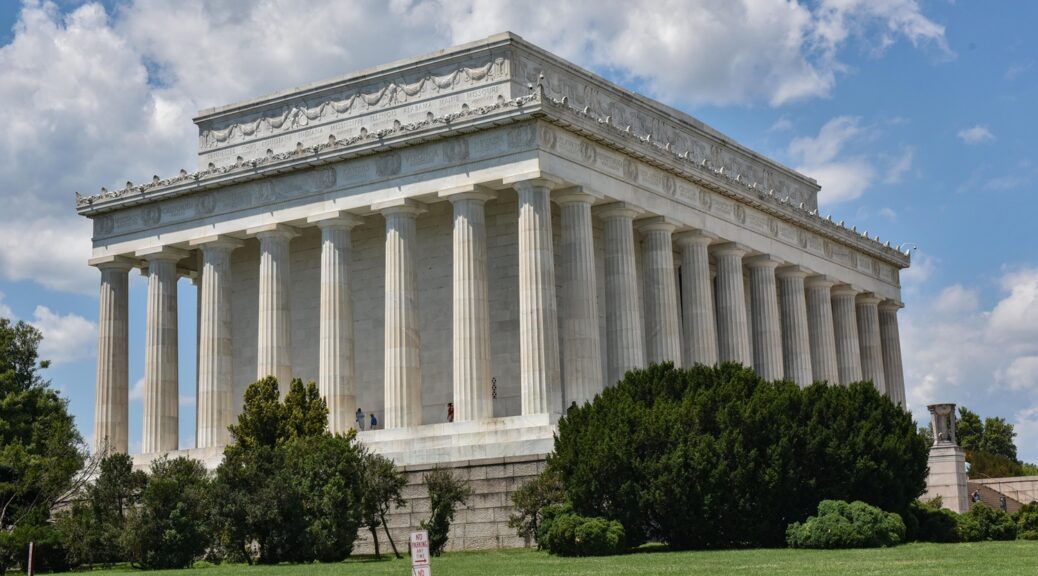
Tag Archives: Charleston

How Classical Architecture Connects To Early Democracies

An 8 MINUTE READ via our friends at Share Ameria

With its marble columns and towering dome, the U.S. Capitol is one of Washington’s most beautiful structures and a striking example of how classical architecture has influenced America’s civic buildings.

President George Washington, who laid the Capitol’s cornerstone in 1793, and Secretary of State Thomas Jefferson saw the architecture of ancient Greece and Rome as emblematic of their new nation’s democratic ideals. To Jefferson, classical architecture’s large entrances and symmetrical layouts symbolized openness and equality, values embodied in the U.S. Constitution. Washington commissioned French architect Pierre L’Enfant to create a classical design for the nation’s capital city.

“They sought to use classical architecture to visually connect our contemporary Republic with the antecedents of democracy in classical antiquity,” President Trump says in an August 28, 2025, executive order on restoring classical designs to American architecture.

U.S. Capitol in twilight (© Frédéric Prochasson/Adobe)
The U.S. Capitol in Washington is an early example of classical architecture in the United States. (© Frédéric Prochasson/Adobe)

The National Civic Art Society, which promotes meaningful public design, finds that 72% of Americans  prefer traditional designs derived from classical architecture over modernist styles for federal buildings.

To David Gobel, a professor of architectural history at the Savannah College of Art and Design, those results aren’t surprising. “Classical architecture is a universal language,” Gobel says. “People don’t have to know their Doric, Ionic and Corinthian orders [of Greek architecture] to recognize that this is familiar, that it is the architecture of the ages.”

Classical architecture’s influence extends across America, most notably in state capitol buildings from coast to coast. American architects introduced stylistic variations, creating civic buildings that reflect both American culture and its natural landscape.

Richmond, Virginia

Diptych of Virginia State Capitol (© Sean Pavone/Adobe) and statue of George Washington (© Joe Sohm/Adobe)
A statue of George Washington (right) stands in the Virginia State Capitol in Richmond. (© Sean Pavone/Adobe, © Joe Sohm/Adobe)

The U.S. Capitol wasn’t the first civic building in the United States to evoke Greek and Roman antiquity. That distinction belongs to the Virginia Capitol building designed by Jefferson in 1785.

Jefferson’s design recalls the Maison Carrée, an ancient Roman temple in Nîmes, France. Both buildings have a triangular pediment atop a wide, columned entryway. Yet Jefferson took a more streamlined approach, choosing simple Ionic columns, rather than the elaborate Corinthian columns seen on the Roman temple in France.

Montpelier, Vermont

Diptych of Vermont State House (© David Lyons/Adobe) and bust of Abraham Lincoln (© Clinton Blackburn/Adobe)
A bust of Abraham Lincoln (right) is displayed in the Vermont State House in Montpelier. (© David Lyons/Adobe, © Clinton Blackburn/Adobe)

The Vermont State House in Montpelier, constructed in 1859, departs from classicism’s traditional use of white marble in favor of local gray granite, bringing a more rugged look tailored to its setting in the Green Mountain range.

The main lobby highlights national and local leaders with statues of Abraham Lincoln, the 16th U.S. president, and Revolutionary War hero Ethan Allen, who was one of Vermont’s founders.

Lansing, Michigan

Diptych of Michigan State Capitol exterior (© Sean Pavone/Adobe) and interior (© Shutterstock)
The Michigan Capitol substitutes local materials for expensive imports. (© Sean Pavone/Adobe, © Shutterstock)

The Capitol building in Michigan, built between 1872 and 1878, combines classical design with American practicality. Artisans in the iron-producing state painted the interior using trompe-l’oeil techniques to trick the eye and make iron and pine wood materials resemble more expensive marble and walnut.

Salt Lake City, Utah

Diptych of mural depicting pioneers in lunette (Utah State Capitol) and Utah Capitol (© Adobe)
A mural in the Utah Capitol depicts pioneers arriving in the Great Salt Lake Valley. (Utah State Capitol, © Adobe)

Constructed between 1912 and 1916, the Utah Capitol combines granite building material with classical styles, including Corinthian columns and a dome. The building’s interior murals depict the state’s history and geography, with images of Mormon pioneers and covered wagons, as well as Utah’s famed Great Salt Lake and red-rock canyons.

American architects continue to add new flourishes to classical designs, says Gobel, the architectural history professor. Recent examples include the Federal Building and Courthouse in Tuscaloosa, Alabama, and the Charleston Gaillard Center, a performing-arts venue in Charleston, South Carolina. The Gaillard Center, completed in 2015, features interior columns crowned with palmettos, a nod to South Carolina’s state tree. Completed in 2011, the Federal Building in Tuscaloosa has a metal roof, a feature commonly used in southern architecture for durability and heat resistance.

“It’s a tradition dating back thousands of years, and it’s never stopped,” Gobel says of classical architecture. “Its purpose is not to represent a particular age or place, but something higher and greater to which we can aspire.”

For the Silo, Lauren Monsen.
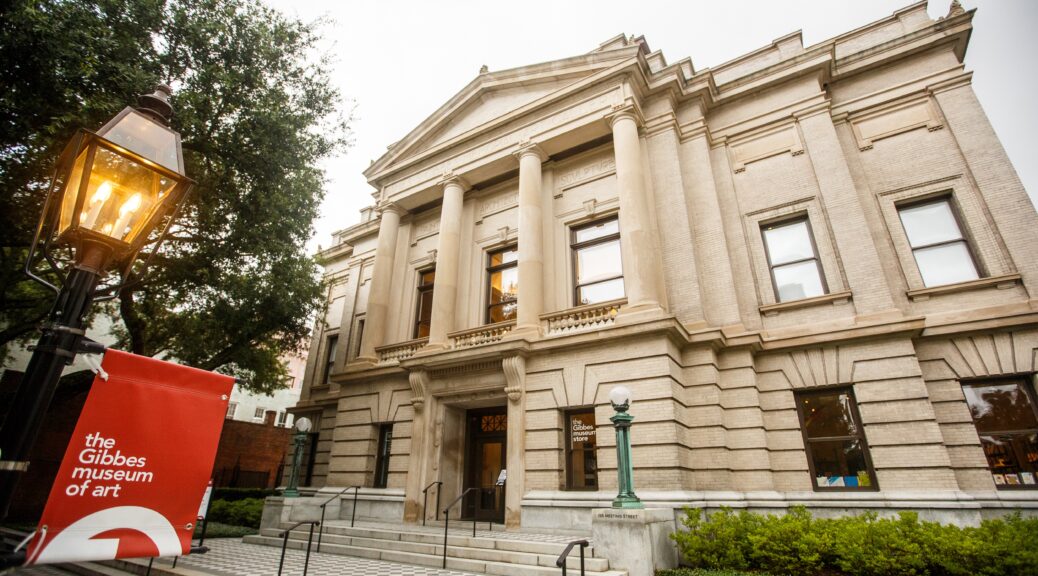
Gibbes Museum Of Art Gifted Half A Million Dollars Via Brinkman Family

The Gibbes Museum of Art, a beacon in the American South since its establishment in 1858, announces the gift of $500,000 usd/ $700,550 cad from Christina Brinkman and Robert Brinkman in honor of one of the Museum’s headline exhibition spaces.


The Christina and Robert Brinkman Gallery encompasses 1,600 square feet, and hosts a variety of exhibitions presented throughout the year ‒ including the national traveling shows the Museum brings to Charleston, and the award-winning original exhibitions created by the Gibbes’ curatorial team. This gift will help fund ongoing renovations, future enhancements, and improvements to the Museum.

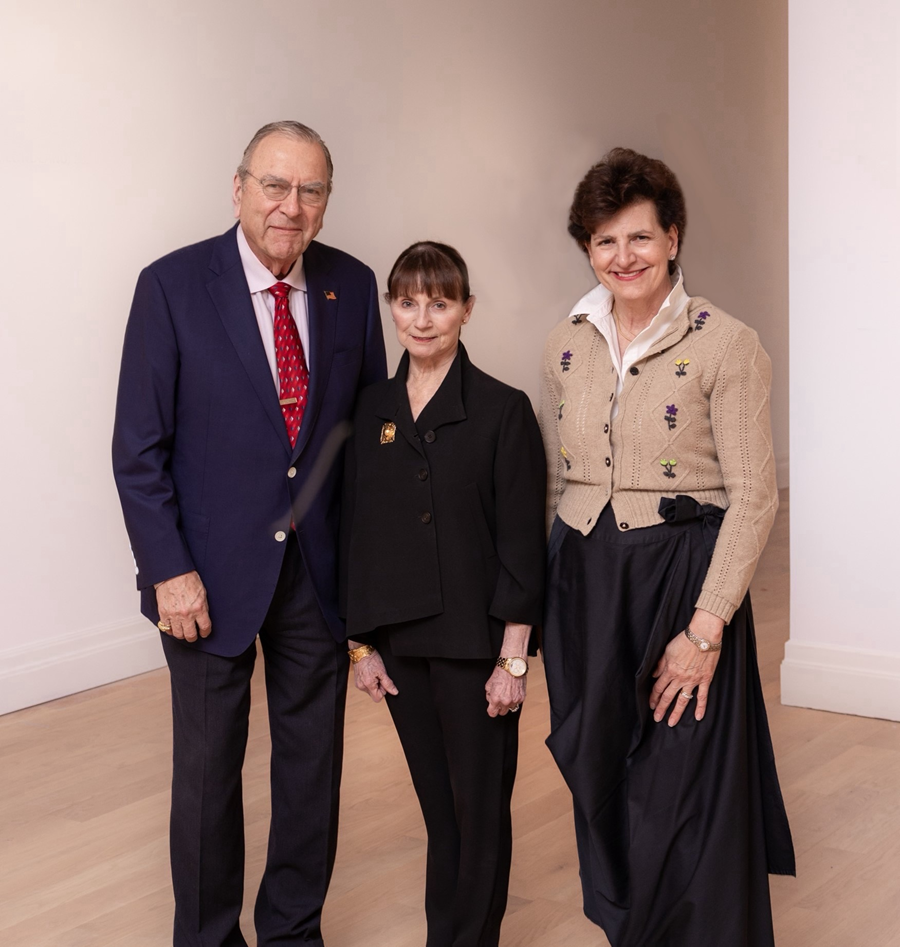
Pictured above: Christina & Robert Brinkman with Angela Mack (the President & CEO of the Gibbes Museum)

“The Gibbes Museum of Art is honored by this generous gift from Christina and Robert Brinkman,” says Angela Mack, the Museum’s President and CEO. “The Brinkmans have adopted Charleston as their home, and demonstrated their incredible passion for the visual arts by choosing to celebrate the work of our Museum. Their generosity reflects a personal commitment to impacting the arts in our community,” adds Mack. 

“From the moment we moved to Charleston, we were immediately drawn to the Gibbes Museum,” says Robert Brinkman. “The visual arts are always a special priority for us, and the Gibbes Museum engages with
art lovers in a meaningful way that makes a difference.” 

“We hope that others will join our family in championing the Gibbes Museum,” says Christina Brinkman. “We love the work this museum team is doing, which allows so many people to make personal connections with art.” 

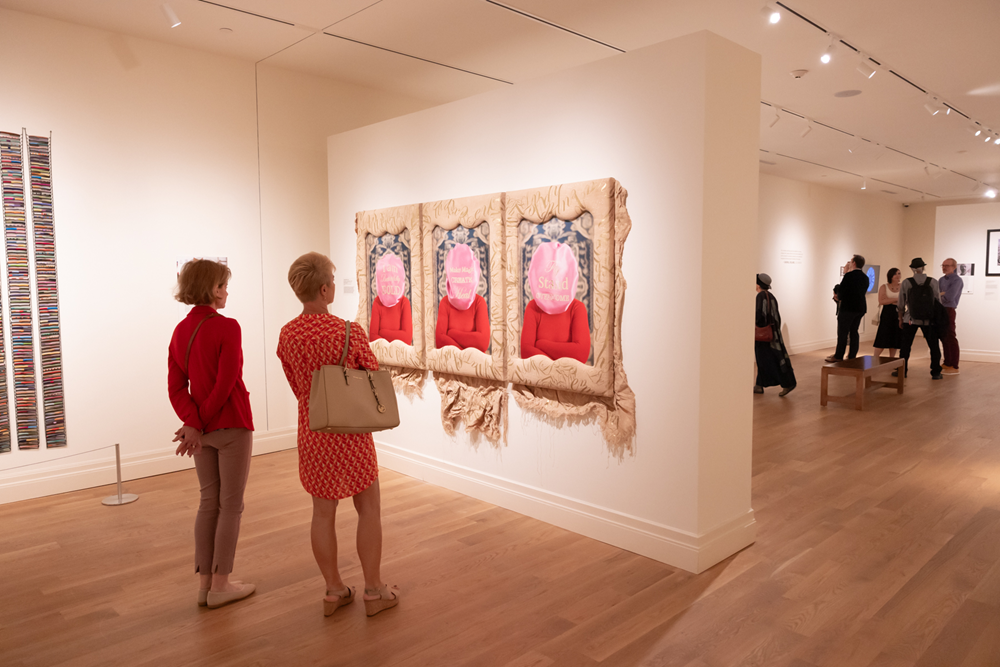
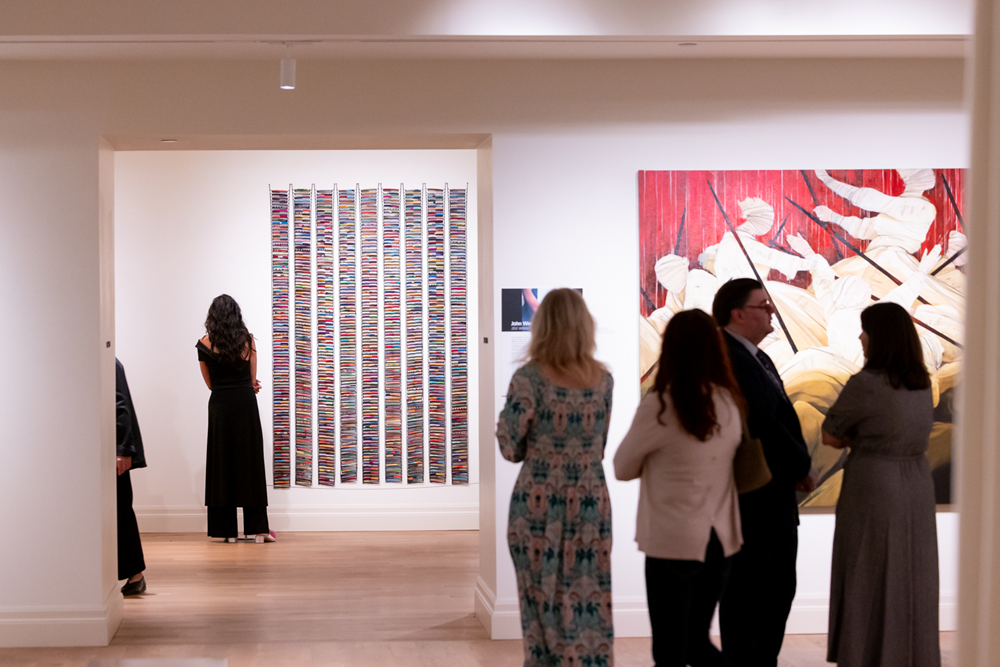
Pictured above and below: the Christina and Robert Brinkman Gallery at the Gibbes Museum of Art

The Brinkmans are collectors of contemporary art, and are originally from Rochester, New York. They made Charleston their home three years ago. Christina serves on the Gibbes Museum’s Collections Committee. Prior to his retirement, Robert Brinkman was the Chairman of Brinkman International Group, which specializes in precision machining and machine tool building.

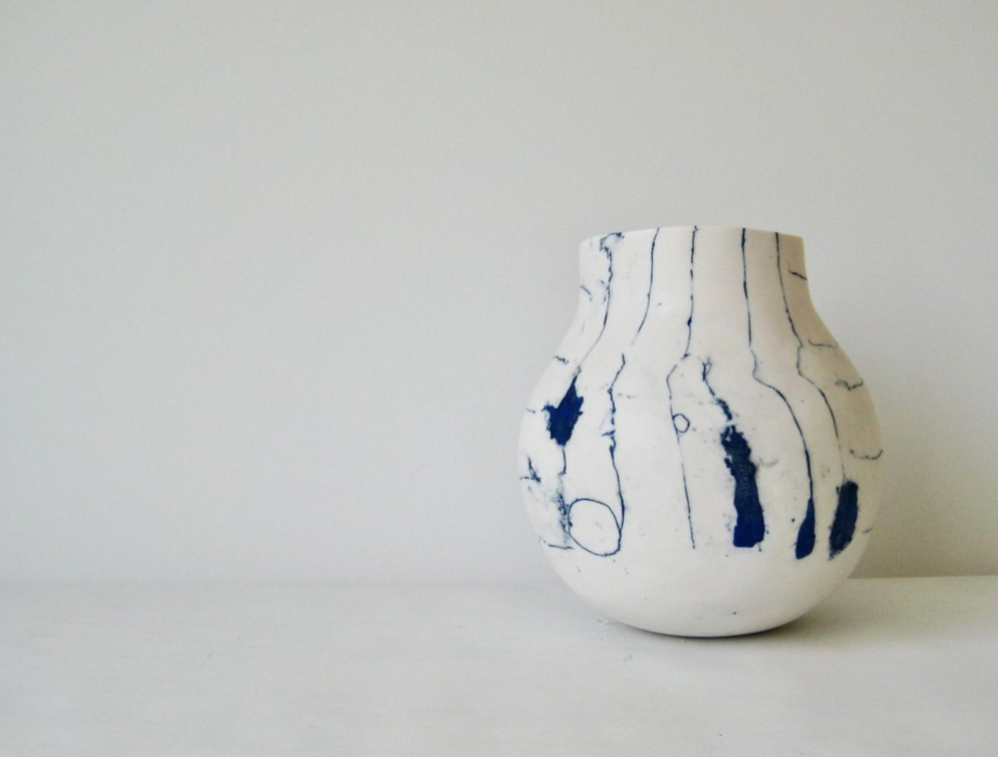
Waterline, finger lakes- Porcelain. C. Brinkman

Christina Brinkman is a celebrated artist currently known for her ceramics, porcelain and metal work. She has worked as an artist all her life, and has artist studios in Charleston and Rochester. Her art is featured in museum collections, and in private and corporate collections. View Christina Brinkman’s works at christinabrinkman.com and on her artist page on Instagram. 

About the Gibbes Museum of Art 


The Gibbes Museum of Art, a beacon in the American South for arts and culture since 1858 when the Museum’s art collection was founded as the Carolina Art Association, is heralded as one of the earliest and most longstanding arts institutions in the United States. The Museum’s collection spans 350 years, and features some of the country’s most celebrated artists ‒ including contemporary, modern and historical works. With world-class rotating exhibitions and a dynamic visiting artist residency program, the Gibbes is a southern museum with a global perspective. The Museum’s mission is to enhance lives through art by engaging people of every background and experience with art and artists of enduring quality, providing opportunities to learn and discover, to enjoy and be inspired by the creative process. 


Museum hours and visitor info at: www.gibbesmuseum.org/visit