Tag Archives: uncertainty

Canada Joins World’s Impending Population Crisis

Canada’s fertility rate has just hit a record low.
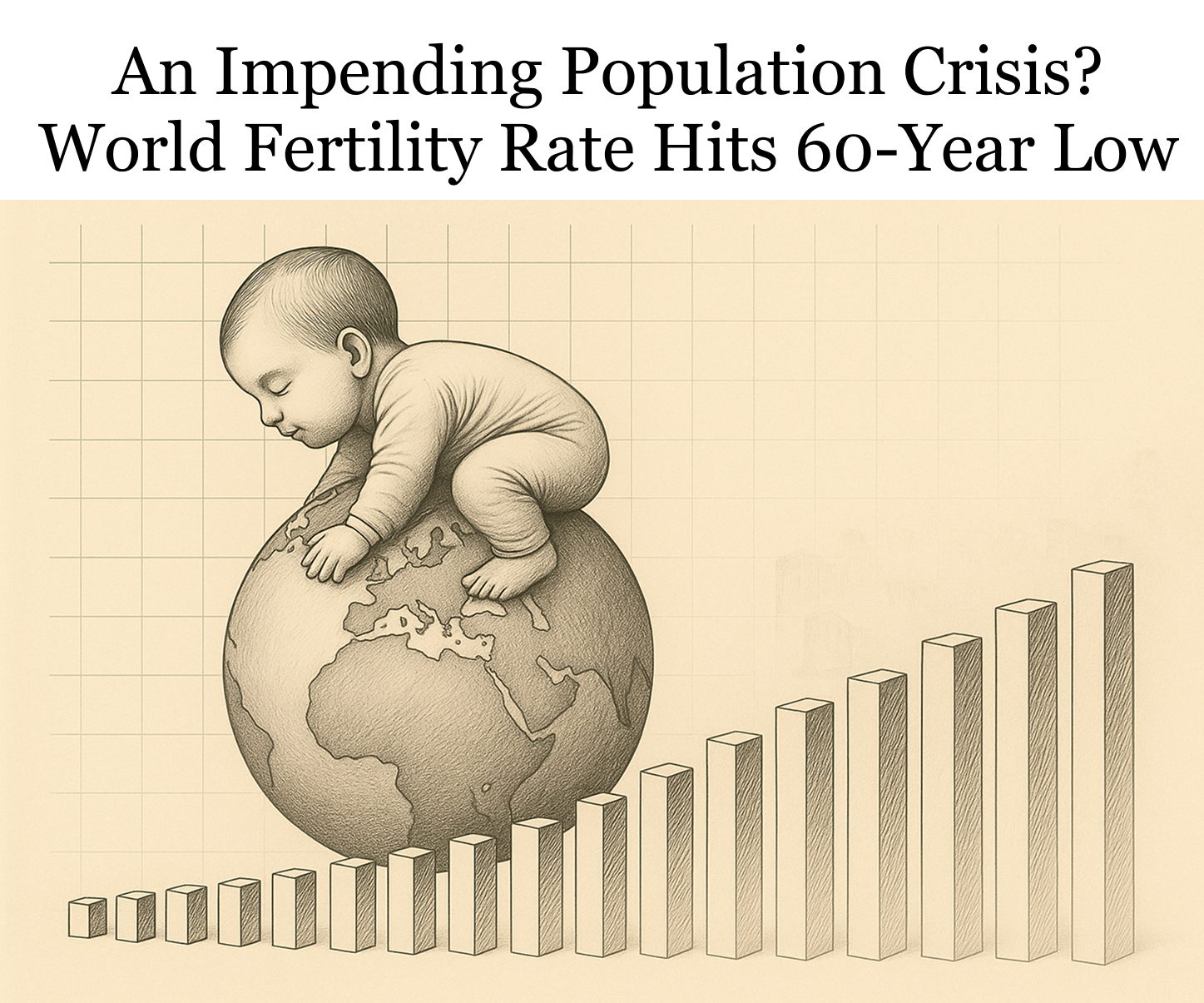
In case you missed it- the world is quietly entering a population crisis. Global fertility rates have plunged to their lowest level in 60 years, raising profound questions about how societies will sustain themselves in the decades ahead.
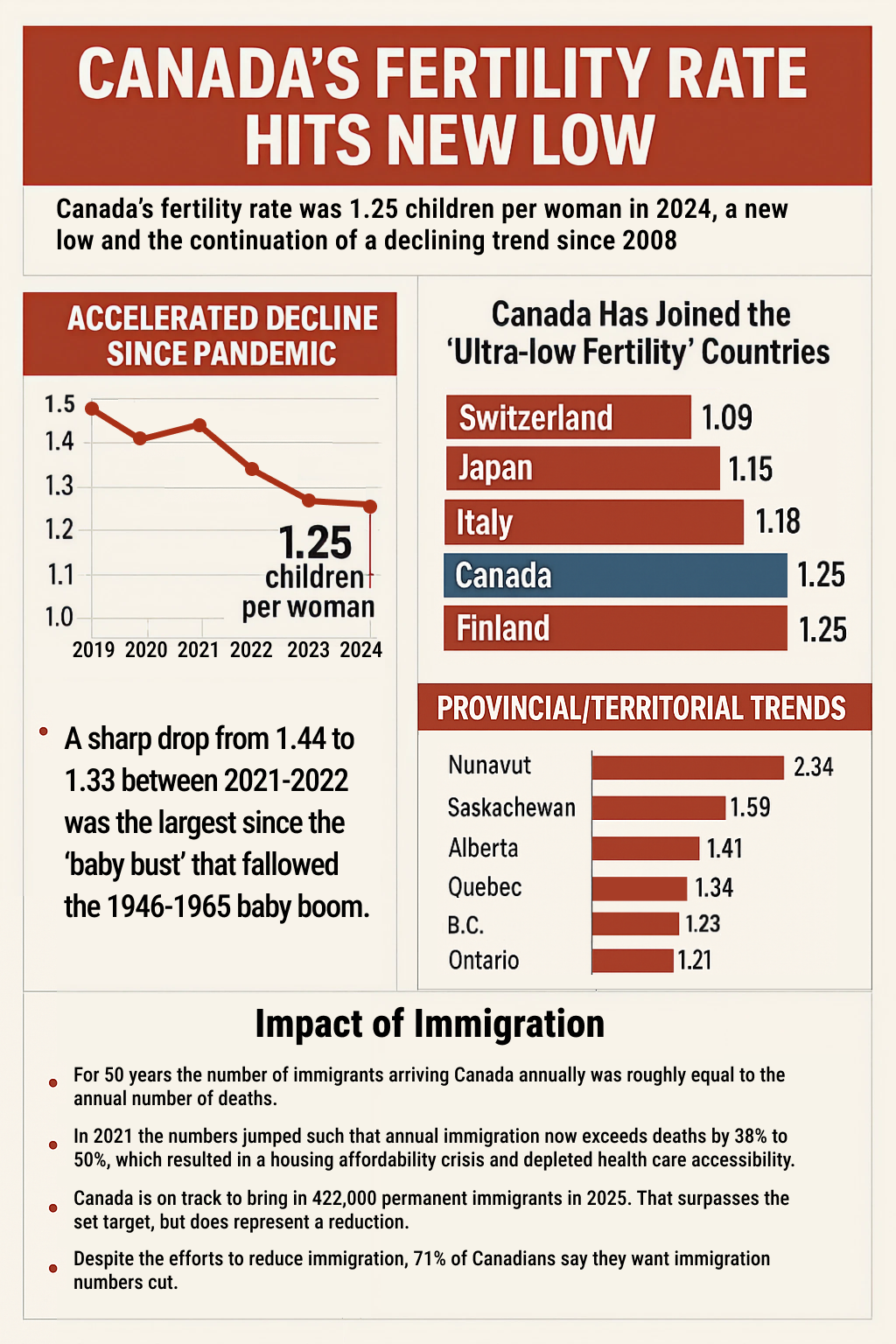
In Canada, births have fallen to just 1.25 children per woman, the lowest in our history. Behind the numbers are shifting values, economic pressures, and growing uncertainty about the future.
This week, let’s examine the global decline in birth rates and explore what’s driving it—and what it means for the economy, family, and national identity.
An Impending Population Crisis? World Fertility Rate Hits 60-Year Low
For the Silo, By Sylvia Xu / Epoch Times.

Fertility rates have plummeted worldwide over the past six decades, leading experts to warn of dire consequences as the downward trend continues.
Continued low fertility rates will cause “a gradual implosion of the world’s economy as the population ages and dies,” Steven Mosher, president of the Population Research Institute.
Mosher is an expert on population control, demography, and China.”
This will not occur overnight, of course, but once it is well underway, it will be difficult, if not impossible, to reverse course,” he said.
The fertility rate is the average number of children born to a woman in her lifetime; the birth rate is the number of live births per 1,000 people in a population over a given period.
Macroeconomist Jesús Fernández-Villaverde called low fertility rates “the true economic challenge of our time” in a February report for the American Enterprise Institute.
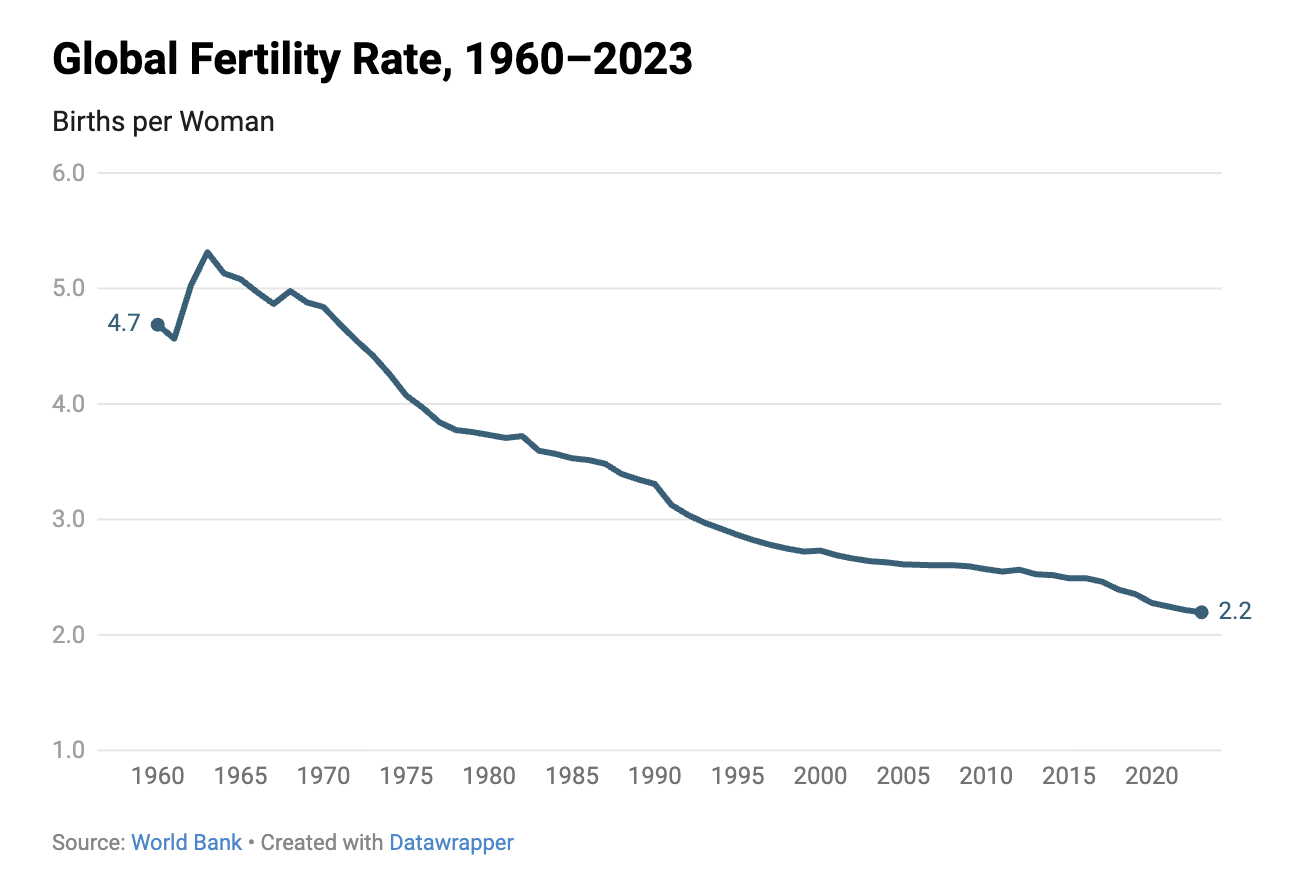
In 1960, the fertility rate was between four and five. By 2023, that number had halved to 2.2, approaching 2.1, the level at which a population replaces itself from one generation to the next.In July, the U.S. Census Bureau projected that the world’s population will reach 8.1 billion this year. Experts say that although the figure has grown from 3 billion in 1960, the number to watch is the pace of population growth.”
The rate of growth peaked decades ago in the 1960s and has been declining since and is projected to continue declining,” the Census Bureau stated.
Fernández-Villaverde warned that although the sagging rate of growth may not have immediate consequences, in less than 50 years, declining fertility will affect the world economy. Countries with low or negative birth rates will contend with a shrinking workforce and the ballooning costs associated with an aging population.
Global Fertility Rates
Only about 4 percent of the world’s population is in countries with high fertility rates—more than five children per woman—and all of those nations are in Africa, according to the Census Bureau. Even in those countries, fertility rates are generally lower than they once were.
The Census Bureau reported that nearly three-quarters of the world’s population is in countries where fertility rates are at or below the replacement level.
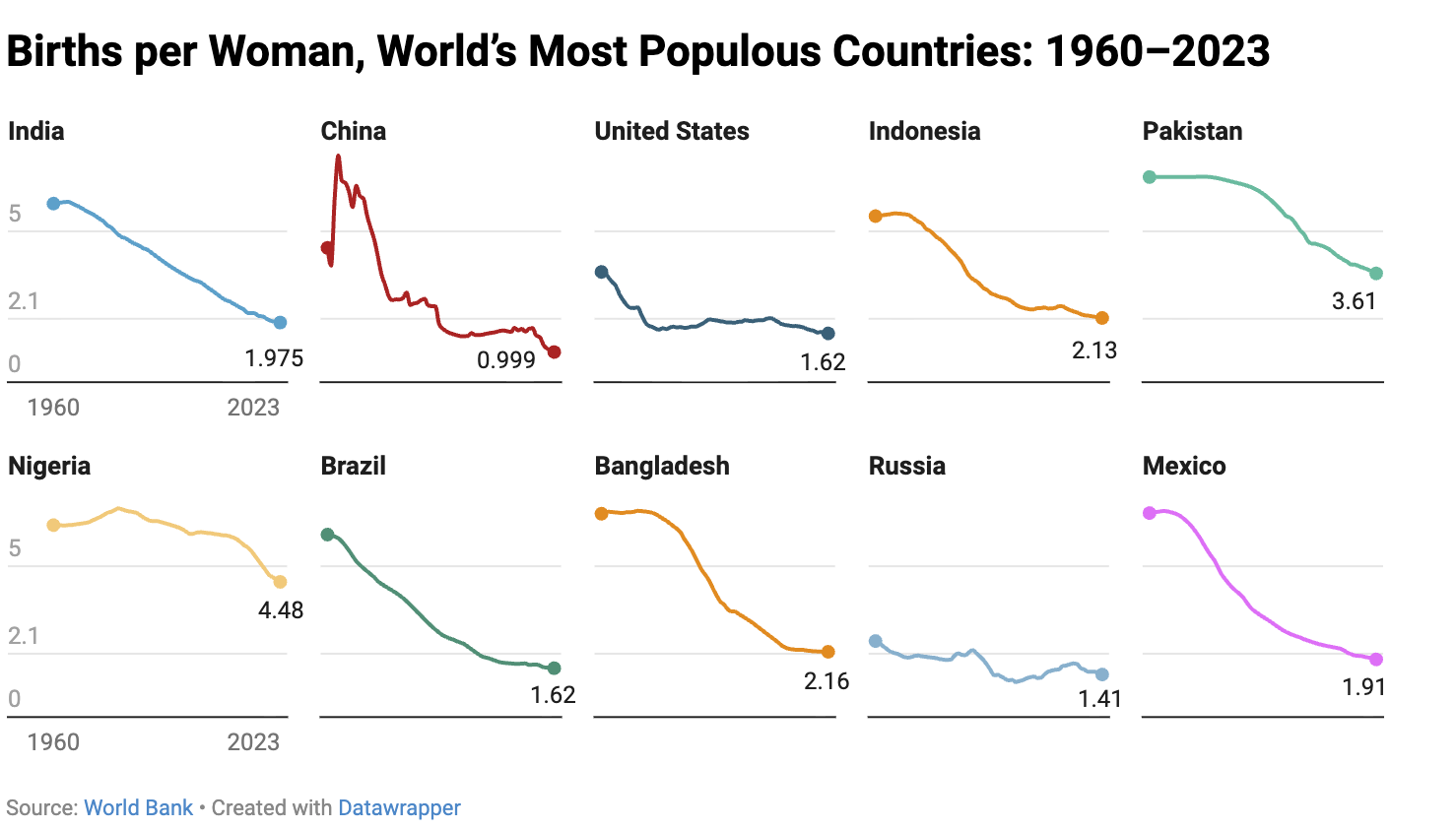
The fertility rate in India, the world’s most populous country, has steadily declined over the past six decades. In June, the U.N. Population Fund reported that India’s fertility rate stood at 1.9 children per woman, down from five or six children in 1960. In Canada, fertility rate fell to 1.25, well below the replacement level of approximately 2.1 children per woman needed to maintain a stable population.
In 1990, China’s fertility rate was 2.51, despite its one-child policy. By 2023, it had dropped to less than one birth per woman, according to the U.N.’s population division.In the United States, fertility has undergone a persistent decline. It fell below the replacement level in 1972, and in 2023, it reached 1.62—a historic low.Asian and European countries have the lowest fertility rates in the world, and South Korea (0.72), Singapore (0.97), Ukraine (0.977), and China (0.999) all have rates below one.  (Read More →)
Key Data & FactsSource: Statistics Canada

Chief Economists Warn of Weak Growth as Economic Environment Shifts

中文 | 日本語 | Español 
Quick Takeaways
-72% of chief economists expect global economy to weaken in 2026 as disruptions in trade, technology, resources and institutions signal a shift to a new economic environment.
-Regional growth pathways are diverging: 56% anticipate greater divergence between advanced and developing economies, with MENA and South Asia emerging as bright spots.
-Debt risks are intensifying in advanced economies, with 80% of respondents expecting vulnerabilities to grow.


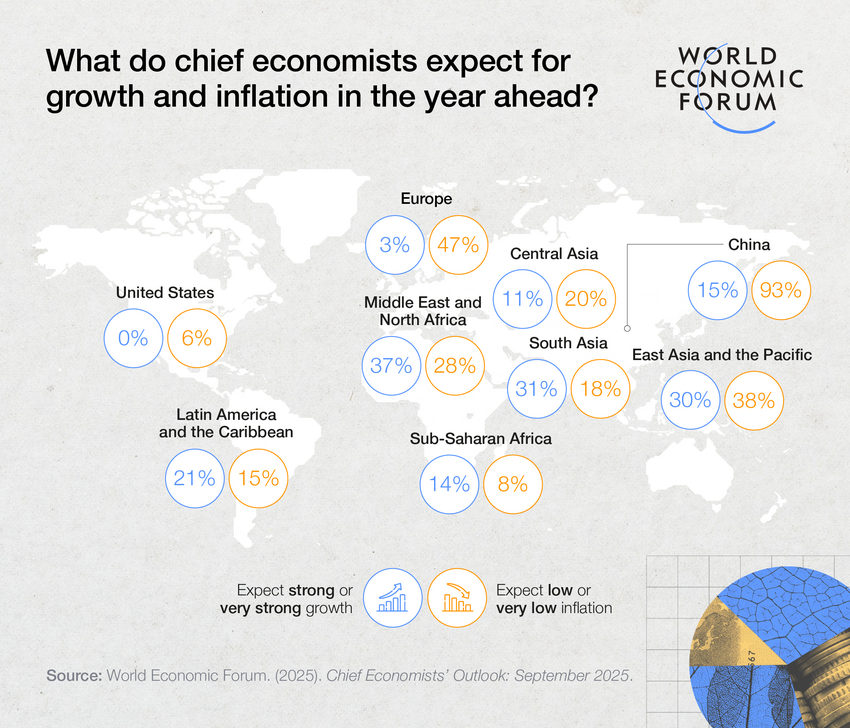
New York, USA, October 2025 – The global economy is entering a period of weak growth and systemic disruption, according to the World Economic Forum’s latest Chief Economists’ Outlook, published today. Some 72% of surveyed chief economists expect the global economy to weaken over the next year, amid intensifying trade disruption, rising policy uncertainty and accelerating technological change. The findings point to the emergence of a new economic environment shaped by persistent disruption and growing fragmentation.

 
Diverging Pathways in a Fragmented Global Economy
The Outlook highlights sharp regional fault lines. Emerging markets are anticipated to be the main engines of growth, with the Middle East and North Africa (MENA), South Asia and East Asia and Pacific seen as bright spots. One in three chief economists expect strong or very strong growth in these regions. The outlook for China is more mixed, with 56% of chief economists anticipating moderate growth, though deflationary pressures are expected to persist. Growth is expected to remain more stagnant in advanced economies. In Europe, 40% expect weak growth with fiscal loosening (74%) and low or moderate inflation (88%). In the United States [& Canada ed.], most chief economists (52%) anticipate weak or very weak growth and high inflation (59%) as monetary policy is loosened (85%).
 
The chief economists warn that advanced and developing economies are on increasingly divergent growth pathways – 56% expect greater divergence over the next three years.
 
Towards a New Economic Environment
Chief economists overwhelmingly agree that today’s disruptions are structural rather than cyclical. Large majorities anticipate long-term disruption in natural resources and energy (78%), technology and innovation (75%), trade and global value chains (63%) and global economic institutions (63%). This marks an important shift. The global economy is not so much weathering isolated shocks as realigning, raising the stakes for new forms of leadership, cooperation and resilience.
 
“The contours of a new economic environment are already taking shape, defined by disruption across trade, technology, resources and institutions,” said Saadia Zahidi, Managing Director, World Economic Forum. “Leaders must adapt with urgency and collaboration to turn today’s turbulence into tomorrow’s resilience.”
 
Trade Realignment, Fiscal Strain and Debt Risks
Structural shifts in the global economy are playing out most visibly in trade, fiscal policy and debt. Some 70% of surveyed chief economists rate the current level of trade disruption as “very high”, far above other domains of the economy, and over three-quarters also expect disruption to trade and global value chains to cascade into other domains. In financial markets and monetary policy, 45% of surveyed economists rate disruption as high or very high, yet only 21% expect it to last. Even so, while 52% see a major near-term crisis in advanced economies as unlikely, 85% warn that any shock could have wide systemic effects.
 
With global public debt levels mounting, the chief economists surveyed highlight that debt vulnerabilities, once largely associated with emerging economies, are increasingly centred in advanced ones – 80% expect risks in advanced economies to grow in the year ahead. Fiscal vulnerabilities are also more frequently identified among the top growth inhibitors in advanced economies (41%) compared to developing economies (12%).
Follow the Sustainable Development Impact Meetings 2025 here and on social media using #SDIM25.
 
About the Chief Economists’ Outlook
The report builds on extensive consultations and surveys with chief economists from the public and private sectors, organized by the World Economic Forum’s Centre for the New Economy and Society. The report supports the Future of Growth Initiative, aiming to foster dialogue and actionable pathways to sustainable and inclusive economic growth.
 
About the Sustainable Development Impact Meetings 2025
The Sustainable Development Impact Meetings 2025 takes place from 22 to 26 September in New York, bringing together over 1,000 global leaders from diverse sectors and geographies. Held ahead of the World Economic Forum Annual Meeting 2026, these meetings are part of the Forum’s year-round work to accelerate progress on the growth, resilience and innovation through multistakeholder dialogues and action. 

For the Silo, Jarrod Barker.

Why Canada Capital Gains Tax Increase Is Bad Idea

January , 2025 – One of the most consequential policy changes in this year’s federal budget – an increase in the capital gains inclusion rate – would have far-reaching consequences for Canadians, many of which are underestimated by the government, according to a new study from the C.D. Howe Institute. Leading economist and former President and CEO of the C.D. Howe Institute, Jack Mintz, examines the extensive economic repercussions of this proposed change in his latest report available in full at the end of this article.

Fiscal and Tax Policy

With Parliament prorogued on January 6, the future of the proposed capital gains tax increase remains uncertain. Canadians face the possibility of the measure being passed, amended, or withdrawn entirely under a new government.

Meanwhile, tax planners and the affected individuals and corporations must await the outcome, even though the Canada Revenue Agency began administering the tax on June 25, 2024, after it was announced in the spring budget. At this time, taxpayers could be assessed interest and penalties if they do not comply with the proposed law. If the law is never passed, taxpayers will have to claim refunds. The provincial budgets reliant on the new revenues will be affected if the planned measure is ultimately withdrawn, adding to the confusion and disruption.

“The planned measure to increase the capital gains inclusion rate should never see the light of day when Parliament resumes after March 24, nor be revived thereafter by a new government,” says Mintz. “The hike would create a triple threat: harming Canadian businesses, discouraging investment, and penalizing middle-income Canadians.”

While the government estimated this change would only impact 40,000 individual tax filers and 307,000 corporations, Mintz’s analysis, using longitudinal data, reveals the true impact would be significantly broader. Over 1.26 million Canadians would be affected over their lifetimes – representing 4.3 percent of taxpayers or some 22,000 Canadians per year – with many middle-income earners among those hardest hit.

The report projects significant economic harm caused by the proposed increase – Canada’s capital stock would decline by $127 billion, GDP would fall by nearly $90 billion, and real per-capita GDP would drop by 3 percent. Further, employment would decline by 414,000 jobs, which would raise unemployment from 1.5 million to 1.9 million workers. Importantly, half of the affected individuals would be earning otherwise less than $117,000 annually, with 10 percent earning as little as $18,000, excluding capital gains income.

“This would not just be a tax on the wealthy,” says Mintz. “Many middle-income Canadians would bear the brunt of this increase, and the economic costs would ripple across the entire economy.”

Mintz also highlights the broader implications for Canadian businesses. The planned measure would likely deter equity financing, discourage investment, and exacerbate inefficiencies in financial and corporate structures. Contrary to government claims of “neutrality,” he argues the tax would disproportionately harm domestic companies. These companies will pay corporate capital gains taxes that will increase investment costs. Moreover, they are dependent on Canadian investors due to “home bias” in equity markets. The changes would risk weakening Canada’s productivity and competitiveness at a critical time.

The report further critiques the lack of mechanisms to mitigate the effects of “lumpy” capital gains. Significant asset disposals, such as selling real estate, farmland, business assets, secondary homes or during events like death or emigration, may occur only once or twice in a person’s lifetime. Without provisions to average or defer taxes, individuals would face disproportionately higher burdens. Additionally, the planned tax hike would exacerbate the “lock-in effect,” which discourages the efficient reallocation of capital.

“If the proposed law does not proceed, it would be worthwhile for a government to review capital gains taxation as part of a general tax review that would improve opportunities for economic growth rather than hurt it,” says Mintz.

Read the full report here.

International Monetary Fund- World Economy Still Recovering

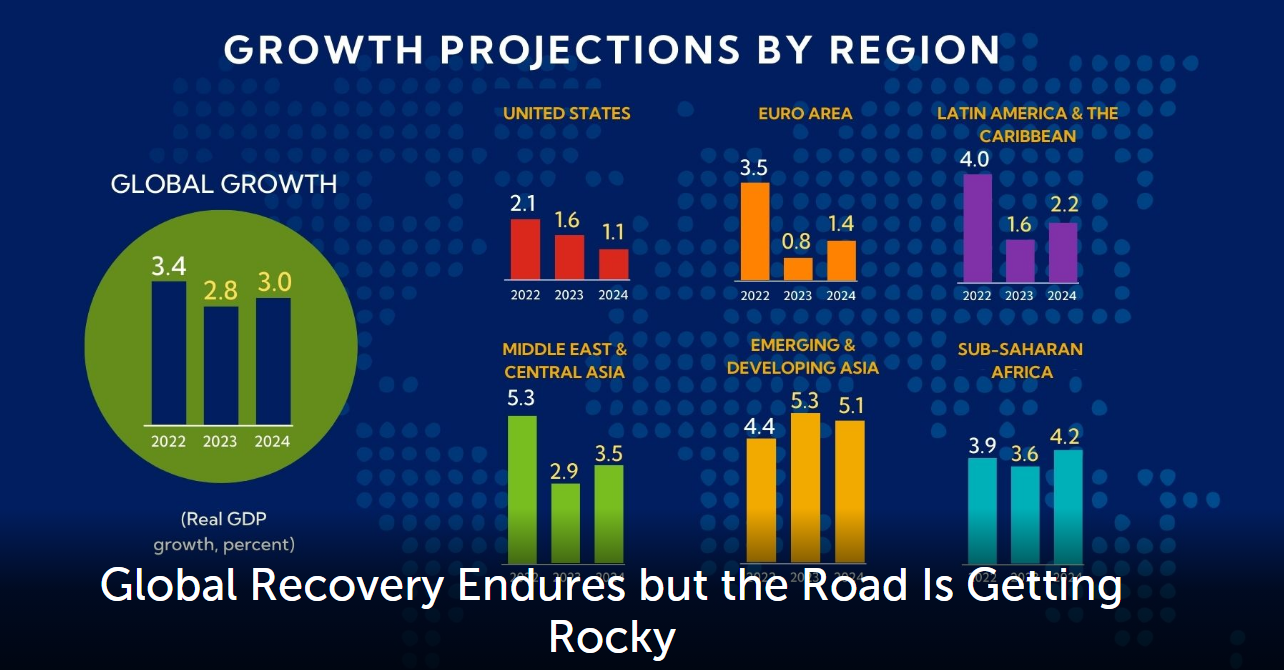
The IMF announced today (Tuesday, April 11, 2023) in the World Economic Outlook’s press briefing that the baseline forecast for global output growth is 0.1 percentage point lower than predicted in the January 2023 WEO Update, before rising to 3.0 percent in 2024.

“The world economy is still recovering from the unprecedented upheavals of the last three years, and the recent banking turmoil has increased uncertainties.”

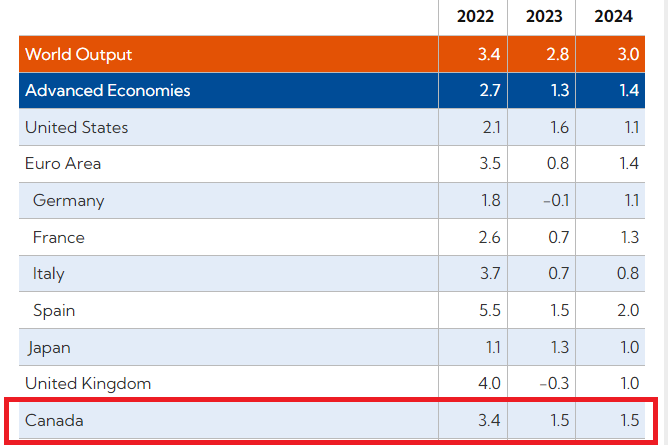
“We expect global output growth to fall from 3.4% last year to 2.8% in 2023, before rising to 3% in 2024, mostly unchanged from our January projections. Advanced economies are expected to see an especially pronounced growth slowdown from 2.7% in 2022 to 1.3% in 2023. Global headline inflation is set to fall from 8.7% in 2022 to 7% in 2023 on the back of lower commodity prices but underlying core inflation is proving to be stickier. Importantly, this outlook assumes that recent financial stresses remain contained,” said Pierre-Olivier Gourinchas, the IMF’s Chief Economist.

Much uncertainty clouds the short- and medium-term outlook as the global economy adjusts to the shocks of 2020–22 and the recent financial sector turmoil. Recession concerns have gained prominence, while worries about stubbornly high inflation persist.

Chart- world economic outlook projections including Canada.

“Once again, risks are heavily tilted to the downside, they have risen with the recent financial turmoil. Most prominently, recent banking system turbulence could result in a sharper and more persistent tightening of global financial conditions. The simultaneous rate hikes across countries could have more contractionary effects than expected, especially as debt levels are at historical highs. There might be a need for more monetary tightening if inflation remains stickier than expected. These risks and more could all materialize at a time when policymakers face much more limited policy space to offset negative shocks, especially in low-income countries,” added Gourinchas.

With the fog around current and prospective economic conditions thickening, policymakers have a narrow path to walk towards restoring price stability while avoiding a recession and maintaining financial stability. Achieving strong, sustainable, and inclusive growth will require policymakers to stay agile and be ready to adjust as information becomes available.

“First, as long as financial stress is not systemic as it is now, the fight against inflation should remain the priority for central banks. Second, to safeguard financial stability, central banks should use separate tools and communicate their objectives clearly to avoid unwarranted volatility. Financial policies should remain laser focused on preserving financial stability and watch for any buildup of risks in banks, non-banks, and the real estate sectors. Third, in many countries fiscal policy should tighten to ease inflation pressures, restore debt sustainability, and rebuild fiscal buffers. Finally, in the event of capital outflows that raise financial stability risks, emerging market and developing economies should use the integrated Policy framework, combining temporary targeted foreign exchange interventions and capital flow measures where appropriate,” said Gourinchas.

Boston Based Artist Jeannie Motherwell Draws Structures From Uncertainty

Dear Artist, Aristotle differentiated humans from their animal counterparts by dint of logos, the power of rational speech. Napoleon was attributed the quote, “four hostile newspapers are more to be feared than a thousand bayonets.” Human civilization was founded on the exercise of this divine faculty, and is destroyed by it in equal measure. Speech, in its complexity and weight, is the only world capable of rivaling nature.

This week, in view of two ponderous interviews, I ask you to summon to mind those rare and revelatory conversations that have left an indelible imprint on your life. What intimate discussion would you revisit and savor, if you were aware of the contents beforehand? What words of the past would be left unsaid or better spoken with the retrospective guidance of age?

Abstract acrylic painter Jeannie Motherwell refuses to grow cold in the artistic shadow of her father and stepmother, Robert Motherwell and Helen Frankenthaler. As a stable ecosystem quells its wrestling constituents, Motherwell’s refined intuition hushes the spontaneous boundaries of dilating paint on clay board and canvas. Over a soberly spoken interview, the New York artist now based in Boston, admits in her work the faint pursuit of a faded horizon: the shifting waters from the view of an old home, replaced, in time, by a windowless studio. The methodology of Motherwell’s art – to draw a structure from an uncertainty – eerily echoes a ritual from her upbringing: discerning, with the right words, to the joy of her guardians, the spiritual essences behind their cascades of paint.

Jeannie Motherwell in her Joy Street Studios, Somerville, MA
Jeannie Motherwell in her Joy Street Studios, Somerville, MA Click image to visit her studio website.

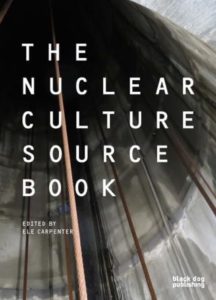
Inexhaustible curator and researcher Ele Carpenter maintains that the lasting footprint of humanity will not be a monument or an idea, but a radioactive glare. Radioactive isotopes of a unique breed first entered the Earth’s atmosphere with the testing of the earliest nuclear bomb, signaling the beginning of a geological period known as the nuclear anthropocene. Dedicated to disseminating information about the irreversible changes to the environment caused by human hand, Carpenter organizes discourse and collaboration on a global scale, uniting scientists, activists, and visionaries in the depiction of a haunting reality that eludes the senses.

the nuclear culture sourcebook by ele carpenter

Additional interviews include: Barbara Wilks, Nate Page, Frans van Lent, and Katya Gardea Brown.

Looking for new additions to your reading list? Rachel Wolfe, one of our users, is deconstructing and rebuilding her fundamental conceptions of nature and mind. Sensitive Chaos, by Theodor Schwenk, vacillates between rigorous and metaphorical depictions of the underlying systems of movement that govern aeolian and liquid dynamics, from the furious dance of a hurricane to the soft aria of a developing child. Strange Tools, by Alva Noe, is a philosophical text that sees artmaking as a faculty for reflection, a primordial instinct that consciously and unconsciously takes stock of the external conditions that govern our identities and worldview.

Occupy Museums is seizing the means of cultural production with Debtfair, an exhibition dedicated to the overworked and underfunded. Creators, performers, and thinkers with financial weights on their shoulders have until December 9th to see their arduous narrative showcased in the 2017 Whitney Biennial. Debtfair serves to expose the aggressive business models that permeate leading art institutions, while encouraging solidarity amongst all encumbered populations of the economically segmented social landscape. Necessity may be the mother of invention, but no artist needs to bear the burden of Atlas.

The great American poet Wallace Stevens, envisioning life’s origins with a brain that thought without words, once instructed, “Begin, ephebe, by perceiving the idea / Of this invention, this invented world, / The inconceivable idea of the sun.”

As always, here are the links to interview archive and free resources page. For the Silo, Brainard Carey.

*Highlight image: Absolute by Jeannie Motherwell. Visit Jeannie’s Boston Studio by clicking here.