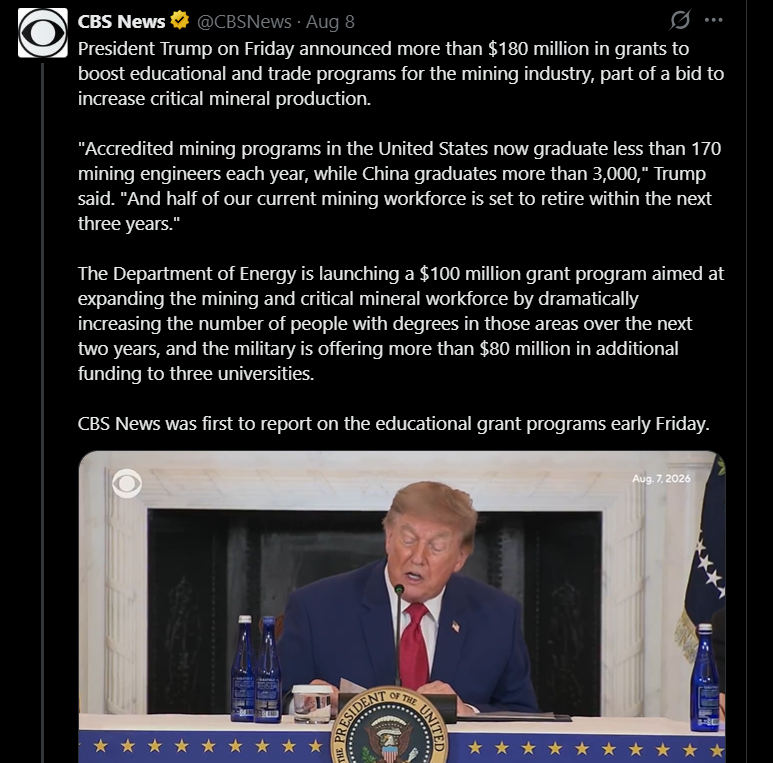
Secretary of State Marco Rubio at President Trump’s Roundtable on American Mining
SECRETARY RUBIO: Thank you, Mr. President. Thank you for coming to the State Department. We like this room a lot, too, and obviously don’t look back; there’s a painting up here. Just don’t – (laughter) – uh-oh.
PRESIDENT TRUMP: (Inaudible.) That’s a good one. (Laughter.) I’m taking it with me.
SECRETARY RUBIO: That – I shouldn’t have said anything. But anyway, Mr. President, thank you for being here. Thank you for your leadership on this topic. It’s a challenge we face in this domain that actually goes to the very survival of the country, and thank you for giving it a priority in your presidency. This has been going on for 25 years. We’ve been walking away from the importance of this, and now we’re trying to make up for 25 or 30 years of mistakes under your presidency. So, we appreciate your presidency valuing this when other presidents did not.
The group of people that are here today represent the whole-of-nation effort that’s involved in this. It’s – because at the core of this is our industrial strength, but also our national sovereignty – that we never depend on other countries for things we need to prosper and to defend ourselves as a people. And so, you’ll see here today, as you’ve already pointed out, we have leaders not just from government but from universities, from private industry, from students who are going to be the future of this industry.
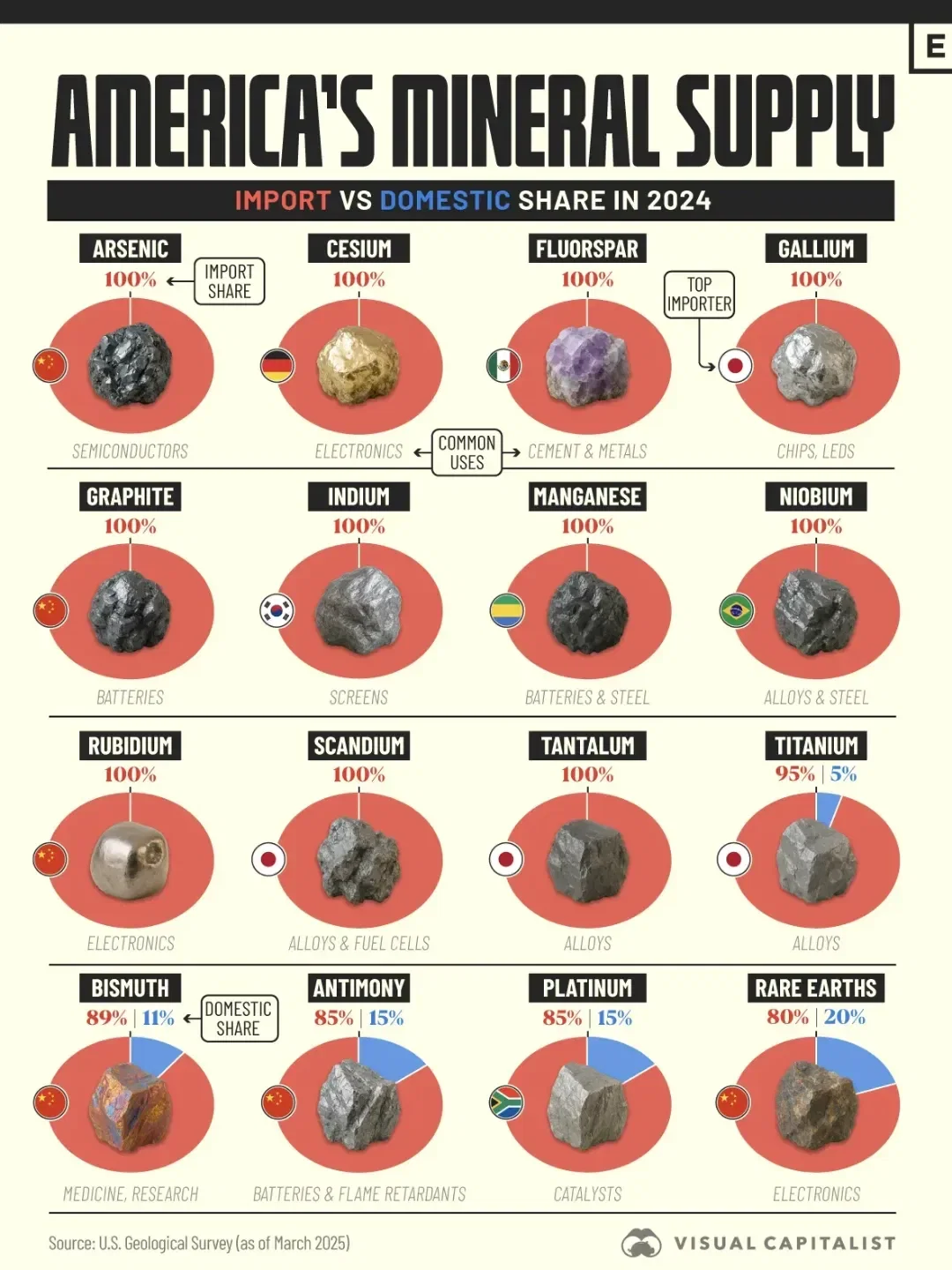
I wanted to briefly – very briefly – touch on what the State Department’s done. Earlier this year we had a Critical Minerals Ministerial. We brought in countries from all over the world to – and announced the creation of something called FORGE, which is an international partnership chaired by us in the United States to leverage public finance and coordinate diplomatic support to secure these supply chains around the world. At that meeting, we signed 11 new critical minerals agreements with countries, adding to the ones that already existed. Today, under your administration, we’ve already signed 27 critical mineral agreements with other countries.
Pax Silica
We also, under the leadership of someone who needs to be recognized, our Under Secretary Jacob Helberg – I don’t know if Jacob is here, but Jacob has been phenomenal. He came up with something called Pax Silica, and it’s an initiative that leads our efforts to partner with the private sector and invest in mining and refining and in processing as well as the end-use applications of that.
There’s still a lot of work left to do, but we at the State Department are willing to utilize our unmatched global presence, our presence all over the world, to ensure that we’re working on this. And we’re committed to working with industry, with universities, with all the elements of our national power to bring this about. And so, thank you, Mr. President, for prioritizing this, and I think we all look forward to working not just nationally but with our allies around the world to ensure that we have supply chains that are diversified and reliable and no country can ever hold this over our head and threaten us in the future. Thank you.
Supplemental- What About Canada?
Canada signs over 20 critical mineral deals but faces $12-billion U.S. challenge to turn diplomacy into mines