Tag Archives: cars

How Japan’s Government Created the World’s Most Sinister Cars

You know the look: A long, low-slung sedan finished in shiny black paint with equally bright chrome rolls through town. Beige, burgundy, and blue cars move out of the way, magnetically repelled by the menacing four-door. 

This threatening style has been idolized by Hollywood since the 1960s, perhaps most famously in the unfortunately short-lived ABC television program The Green Hornet, in which actor Van Williams drove a Chrysler Imperial modified by Dean Jeffries. It was painted black, of course, and the chrome slats that ran horizontally across its huge grille clearly meant business—even on the 19-inch TV screens that took up considerable living room real estate in a 1960s home. 

Black paint, while popular today, was a daring, high-style choice in the 1960s that was not-so-subtly influenced by the largely chauffeur-driven cars that carried around heads of state and other major politicians. For instance, the Soviet Union’s KGB notoriously drove around in black-painted GAZ Chaika sedans that had a distinctly Detroit-inspired appearance. (The irony of which seems to have been lost.) 

An outsider might not expect Japan, where the pavement has been specifically engineered to be quiet, to have a small but mighty homegrown industry producing the world’s most ominous cars.

Nissan

The Japanese Royal Family Needed a Ride of Their Own

Dating back more than 1400 years, Japan’s Imperial Household Agency does just what its name suggests: it manages the royal family’s affairs. This is no easy task for a country so steeped in tradition. In fact, the Imperial Household Agency has more than 1000 civil servants, which stands in marked contrast to the self-funded, non-governmental managers of, say, the British and Swedish royal families. 

The Imperial Household Agency’s wide-ranging list of tasks includes everything from ensuring that the Emperor’s family is comfortable and healthy to organizing and overseeing ceremonies. In the early 1960s, the Imperial Household Agency called automakers together and told them to submit designs for an official state vehicle. The car needed to have four doors, be reasonably spacious, and have a prestigious but not overly ostentatious appearance. 

Nissan

Prior to World War II, the Emperor’s vehicle fleet consisted of large, imported cars from brands like Rolls-Royce and Daimler. The company’s nascent automotive industry focused on small, mostly work-oriented vehicles. By the early 1960s, Japan’s recovery from the war’s devastating effects was well underway, fueled heavily by Western investment. While Japan didn’t give up on its traditions, the bright lights of Tokyo had a strong American influence. So too did the country’s cars, like the Toyota Crown that looked like last season’s Chevy. So when the Imperial Household Agency came calling, it should come as no surprise that the results looked rather Detroit-ish.

The winner was a brand you might not have heard of: Prince Motor Company. Founded in 1947, Prince was Japan’s short-lived flagship automaker in the early 1960s, though it was in the midst of being folded into Nissan.

The Prince Royal that got the royal nod, so to speak, was based on the Prince Gloria, a vehicle already used by the Japanese government in an official capacity. The Prince Royal was extended to provide those in back with stretch-out legroom, and the rear doors were modified to open coach-style for easier and more elegant access. While not a particularly showy car, the Prince Royal has an understated elegance. Its stacked headlights recall the Ford Galaxie and the big W108-generation Mercedes-Benz models. The tall greenhouse, on the other hand, is a nod to practicality rather than style. Inside, in the Japanese luxury tradition, the wool seats make nary a peep as passengers slide across. Leather would be rather squeakier.

Prince Royal gained the Imperial Household car
The Prince Royal gained the Imperial Household Agency’s nod as transport for the Emperor of Japan. These cars served until 2006, when they were replaced by a special version of the Toyota Century.Nissan

Underhood, the Prince Royal utilized a 6.4-liter V-8—not Japan’s first, but only a couple of years after the so-called “Toyota Hemi.” An eight-cylinder design was, admittedly, an odd choice; while inherently fairly smooth, the engine was undoubtedly a costly thing to develop. Fewer than 10 were ever built, one of which lives at the unusual and yet highly appealing Nissan Engine Museum and Guest Hall next to the company’s powertrain factory in Yokohama, Japan.

Just five Prince Royals were built, and they stayed in service for a staggering 40 years, when they were replaced by a limousine version of the Toyota Century. But the Century doesn’t really owe its status to the Prince Royal. It should thank the Nissan President, a model that was developed back when Nissan and Prince were quasi-competitors.

1982 President Type-C
Into the 1980s, the Nissan President retained a classic, but hardly ostentatious, look as seen on this 1982 President Type-CNissan

The President, as its name suggests, was intended from the start as a government vehicle. Unlike Toyota’s Crown, the first Japanese car to use a V-8, the President was developed in direct response to the Imperial Household Agency’s request. At nearly 200 inches long, the President was a very large sedan by Japanese standards. Its styling is contemporary if a bit bland, even in comparison to the Prince Royal. Horizontal headlights embedded in a broad, generic grille give way to fenders that had an almost Ford Falcon modesty to them. There’s a bit more drama at the rear with big NISSAN badging. Copious chrome lines the rocker panels.

While the Prince Royal ended up being chosen to transport the Emperor, Nissan’s President didn’t go home empty-handed. Instead, it was used by the country’s Prime Minister. Government versions were only minimally modified compared to the President models sold through Nissan’s dealership network in Japan, though official-use models were invariably painted black. Those available to consumers came in a slightly wider range of colors. The President was a sign that its owner—and, most likely, the person riding in the back—had arrived. It was the Lincoln Continental of its era. Today, when government spending is closely watched by a hawkish public, there is no U.S.-market comparison.

Nissan wool upholstery
In Japan, fabric upholstery like the wool seen in the 1973 Nissan President remains an indicator of a high-end vehicle because it makes no sound as a human slides across it.Nissan

Nissan didn’t dominate government contracts, but it was a commanding presence into the late 1980s. Then, almost inexplicably, the brand gave up. Its chrome-laden second-generation President, which was based on an early 1970s design, was replaced with a comparatively plebian design that would be sold in the U.S. as the Infiniti Q45. That’s not to say that the Q45 was a dud, but its big plastic bumpers and, in Japanese-market spec, Jaguar-ish grille were not in keeping with tradition. The Imperial Household Agency famously rejected a stretched version of the 1990 President in favor of the Toyota Century.

Toyota’s Century Begins

The original Toyota Century was overshadowed, at least to a degree, by the Nissan President that beat it to the market in Japan and initially secured more government contracts.Toyota

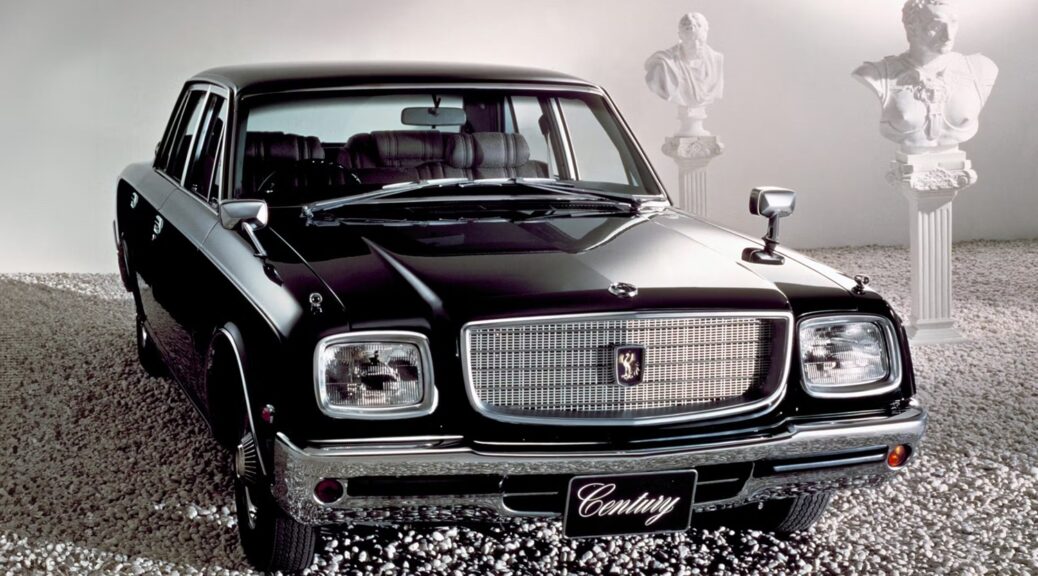
Thanks in part to the floodgates of 25-year-old vehicles from Japan, the Toyota Century has something of a cult status among enthusiasts in the U.S. today. It was not always this way; while the Century was undoubtedly a high-tech vehicle at its 1967 debut, the Imperial Household Agency initially passed it up in favor of the Nissan President. However, the Century’s rise coincided with Toyota’s phenomenal growth in the 1970s and 1980s, when it began to overtake Nissan as the premier Japanese automaker.

The original Century ran for three decades, always with V-8 power. Despite the fact that its specs and power could have appealed to buyers in Europe and, especially, the U.S., it was rarely sold in left-hand-drive markets. (Toyota flirted with the idea in the early 2000s before concluding that the conservative Century would be no match for the comparatively flamboyant Mercedes-Benz S-Class.)
Toyota

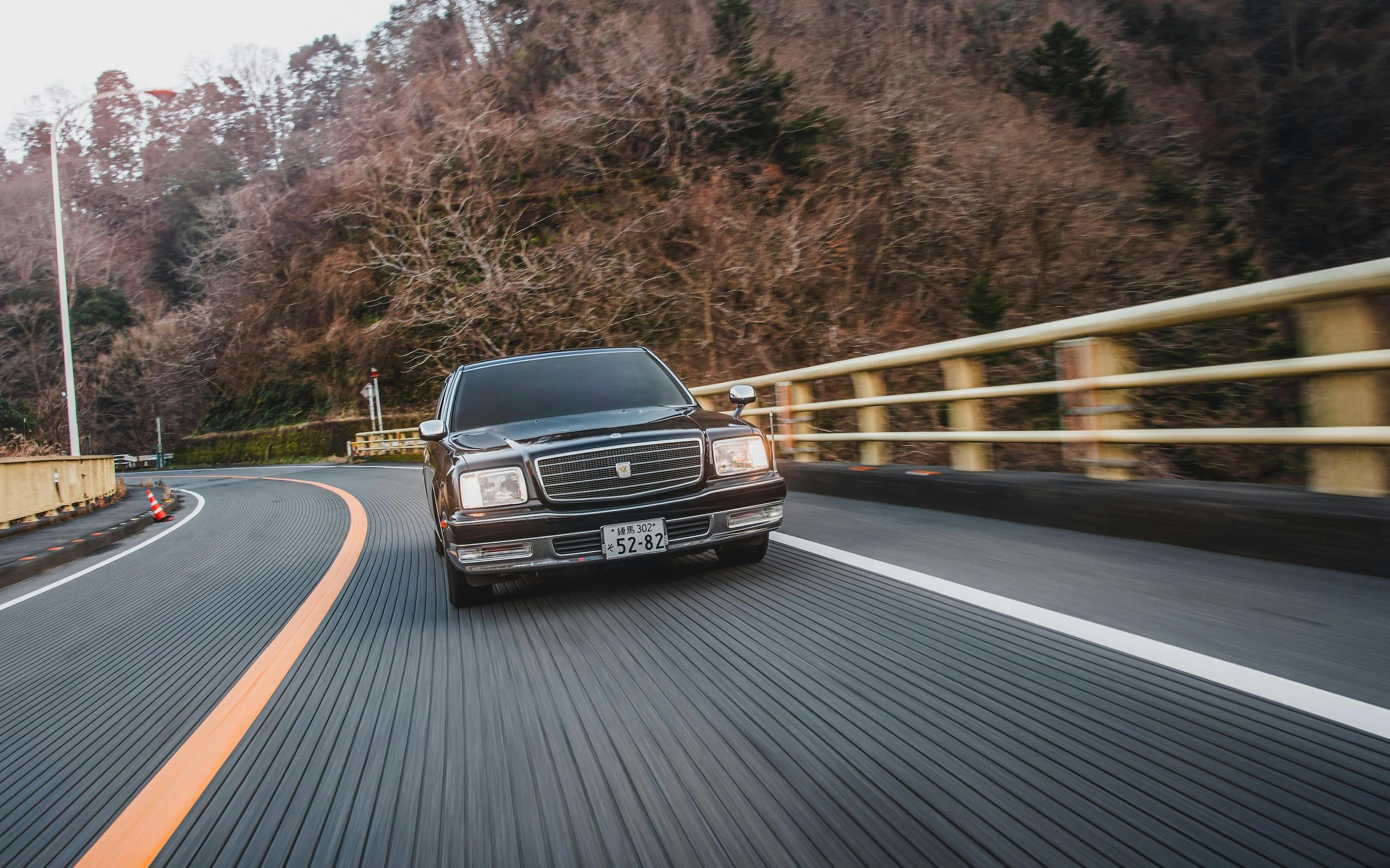
Yet it’s the Century that endures in Japan, an icon in its own time. The Emperor of Japan rides around in a stretched one, approved by the Imperial Household Agency, of course. The redesigned model that arrived in 2018 carries on the 1960s original style in marked contrast to the edgy, modern look found in any Toyota or Lexus model. There’s even an SUV version now, though its front-wheel-drive architecture and hybrid V-6 powertrain mean it’s more like a snazzy Toyota Highlander than a bespoke Emperor-hauler.

Toyota

Clearly, the Century has won out, so much so that Toyota recently announced it will position the Century as its own brand as a more conservative sibling to Lexus. It did face some limited competition from Mitsubishi with its mid-1960s Debonair. While the Mitsubishi, with its slab sides and fenders that leap forward past its grille, is basically a rolling villain, the four- or six-cylinder sedan lacked the interior volume and the power to compete with the Century or the President. Its angular 1986 replacement, which looked sort of like a K-Car with fender mirrors, was anything but debonair.
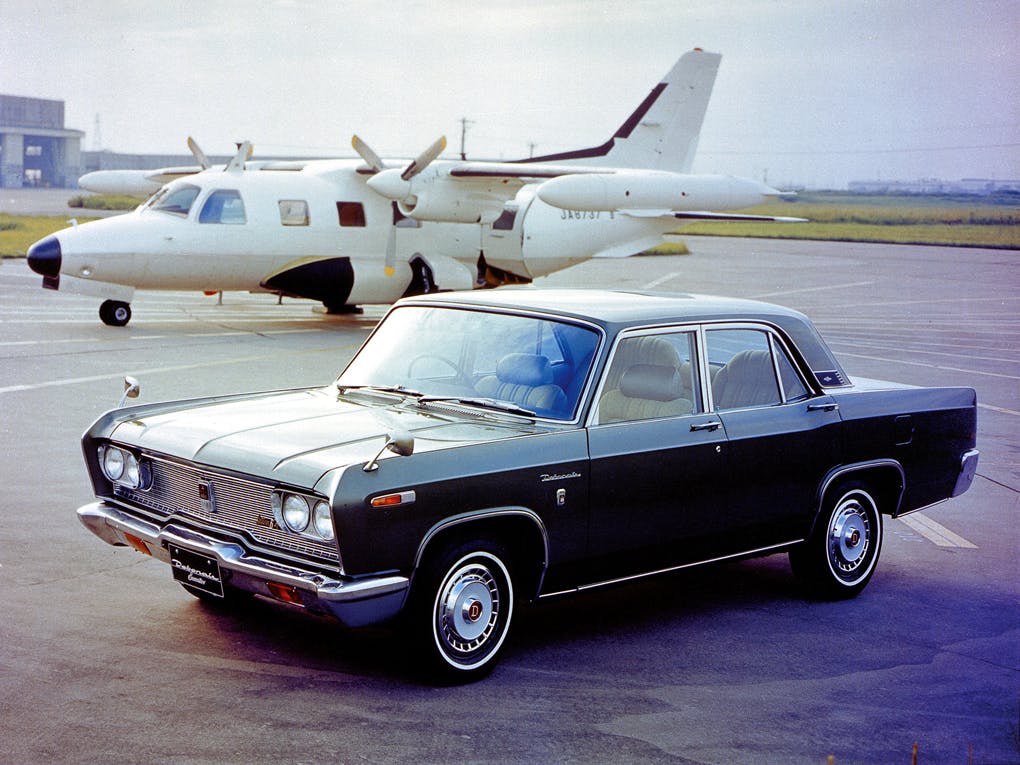
Mitsubishi Debonair front three quarter
Though its effort was comparatively short-lived, the Mitsubishi Debonair boasted a fantastic name and slab-sided Lincoln Continental-inspired looks, if not Conti-style proportions.Mitsubishi

The Yakuza Turns State Cars Into Mafia Cars

Nobody does organized crime like the Japanese—and that is not meant as a compliment. The Yakuza, as the Japanese crime syndicates are broadly known, hit its peak right around the time when the decidedly more upstanding Imperial Household Agency was asking automakers to design a state vehicle.

Those vehicles were soon appropriated by the Yakuza. In retrospect, they have a sinister, angry look. If the bad guy in a period flick drives a car in Tokyo, it’ll be a President, a Century, or perhaps an early Debonair. Set in 1999, HBO’s Tokyo Vice puts the Q45-adjacent Nissan President front and center. While it may not have been the vehicle of choice for the Emperor, that era’s President was the car to have for the heads of organized crime. Perhaps that’s why Nissan steered away from tradition with its final redesign, a swoopy model unsuccessfully sold here as the Infiniti Q70.

1990 Nissan President
The 1990 Nissan President abandoned the 1960s-style chrome bumpers of its predecessors.Nissan

These big, black sedans have an authoritarian presence. Their drivers may think they have impunity. Not only are their cars imposing, but they look official—even if those inside are doing anything but official business. Yakuza members often mounted curtains inside their Presidents and Centurys, a style known as VIP that persists today—albeit in a much broader and harder-to-define look. 

We have no direct equivalent in Canada or the US., at least in terms of how the criminal underground appropriated cars meant for high-ranking government officials. The Crown Victorias once favored by Canadian and American cops lack the luxury and exclusivity of a Century or President. A Chevy Tahoe can’t be all that menacing if you can find dozens of them in the carpool line at your local elementary school. And while our head of state has long had a highly modified Cadillac-ish limousine, which has been described as a tank with a limousine body, it lacks a showroom counterpart. That said, the crested wreath brand made a strong appearance in the late-1990s/early-2000s setting of HBO’s The Sopranos.

It’s a different story in Japan, though. There, a government official arrives in black-and-chrome style—as dictated, if indirectly—by the edicts set forth by the Imperial Household Agency. The automotive equivalent of a tuxedo is, after all, always in style. For the Silo, Andrew Ganz/Hagerty.
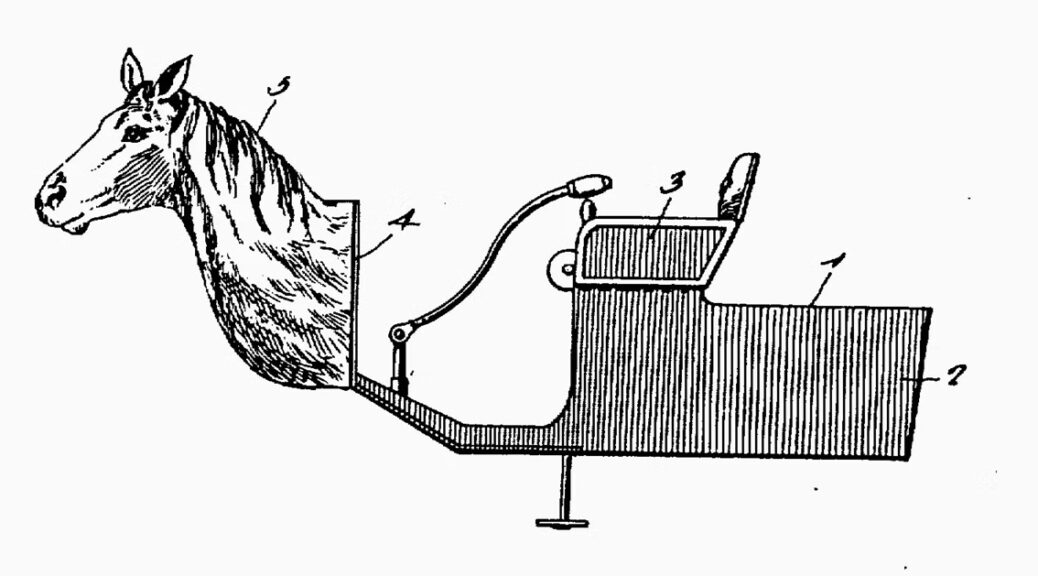
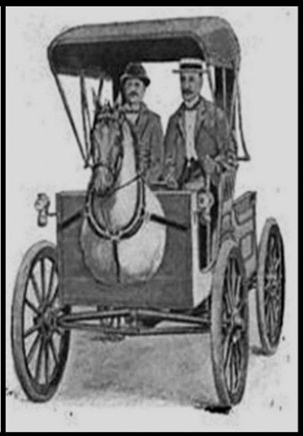
Our Horse Powered Past Drove Today’s Auto Tech

Where did auto tech start?

A horse and buggy. Excellent horse-power huh? People got tired of the nurturing it took to take care of a work horse. People wanted more and as with anything the need for something better fuels the spark for innovation. How about something to do work, but doesn’t need rest? Doesn’t need medication? Doesn’t need someone to shovel up its crap? Take this formula and you get the steam engine, not a crazy engine, but an engine none-the-less. Suddenly the glowing aura of potential is perceivable, right on the horizon. Now we can have multiple horse-power without the care. Still needed someone to shovel though.

The Horsey Horseless. Designed to prevent horses being frightened by a car.

Enter, the mother of current automotive technology today, the oil industry.

Instead of burning coal, why not find some ways to refine oil to be used as fuel sources to run things on? Who knows, we could have been running advanced versions of steam engines today? They actually can be made to be fairly efficient and clean using current technology and were quite practical cars back in 1918.

Then the internal combustion engine enters the scene the oil companies love this, and a mass marketed engine that is completely dependent on oil is born. Just think, this is awesome for business, these engines need oil for fuel and lubrication. Then all the different designs start flowing. (Off the top of my head and in no chronological order) The single cylinder, then 2, then 4, then 6, then the flathead V8. Now this is where we start to see major horse-power and design improvements. The trusty ole’ inline 6’s, the small block eating slant 6’s,The overhead valve V engine, big blocks, small blocks, Hemi’s. There are pancake engines, W engines, rotary engines, v-tecs, boxster engines and many, many more. (Not to mention all of the different fuel delivery systems!)

The cylinder and valves and crankshaft of the Internal Combustion Engine

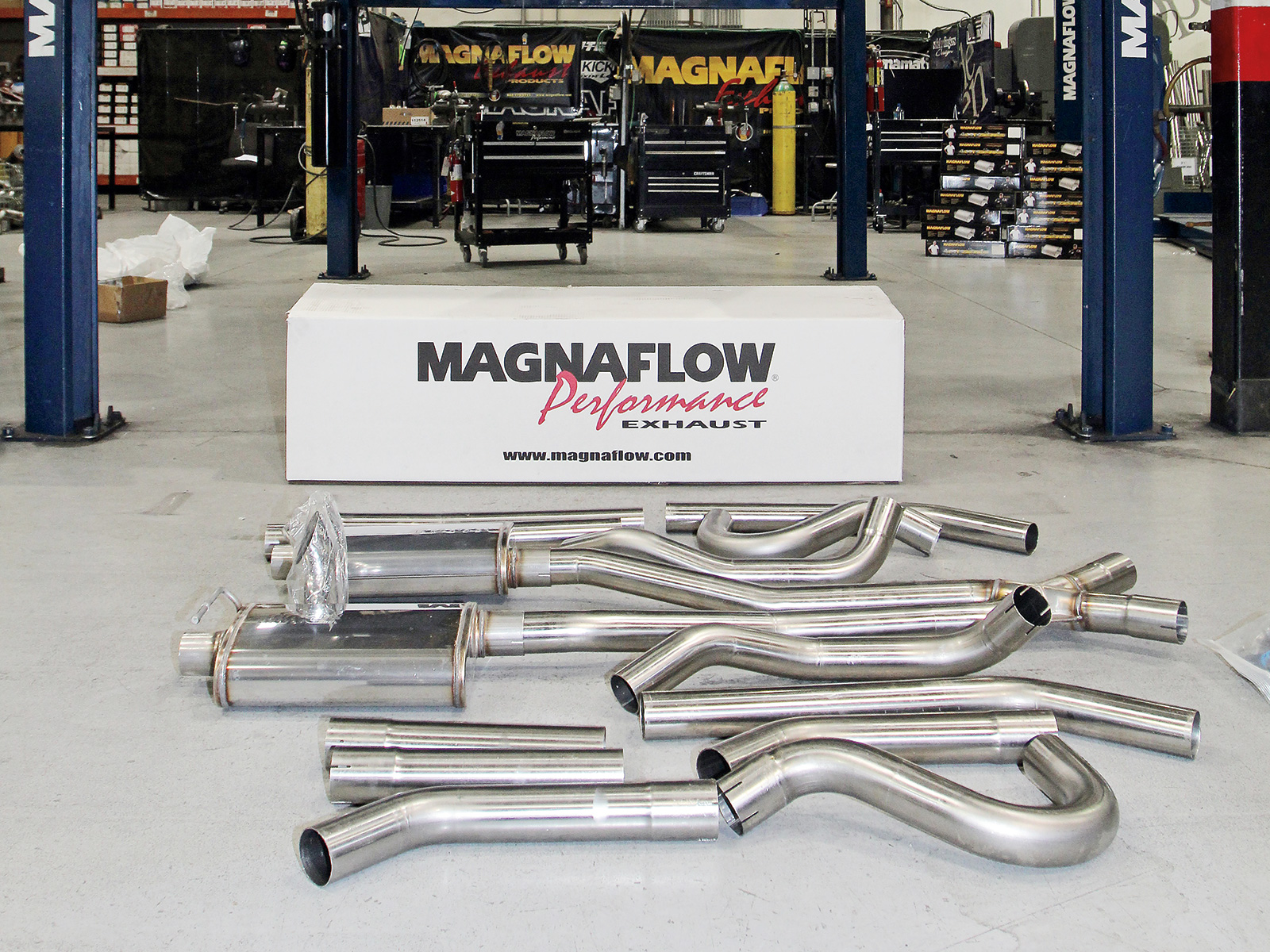
The one thing that really makes me scratch my head is the fact that it took so long getting hybrids, smart-cars, electric cars, and hydrogen cars that are actually worth looking at and driving. I mean, why is it that I can take a full size 2008 Chevrolet Silverado with a 5.3 L vortec engine, put: a cold air intake, a magnaflow exhaust system, and a good edge products programmer, and I can get an average of over 36miles per gallon, with the same horse-power? Why is it that I (not being an automotive engineer) can do this, but you can’t just buy one with those numbers from the manufacturer?


Not to mention brown-gas converters that have been tested on most common engine types that can take, mineral water, and a reaction from current between two electrified plates (similar to a car battery) and create a safe amount of hydrogen gas as a by-product which can make your car run the same on half the amount of fuel. The thing that boggles me is that most people have never even heard of these. You can buy the plans off the internet (not as complicated as it sounds) or I can even get ready to install ones from my performance part supplier. I just find it strange that automotive technology and fuel sources have taken this long to start to veer just slightly away from oil (or as ‘ol Jed calls it “Texas tea”).

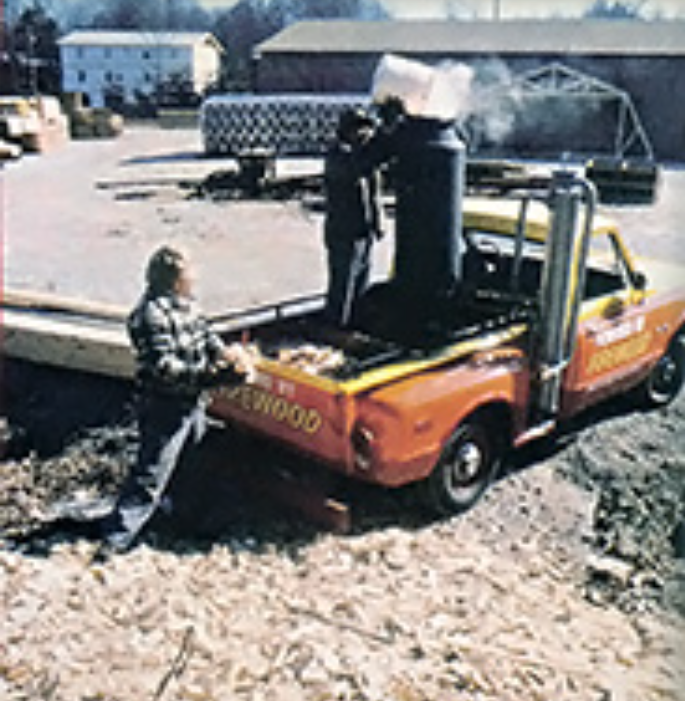
At one point we bridged the gap from a horse and buggy to a steam engine, and then to internal combustion. With the technology we have now, we should have much higher mpg’s and horse-power or an extremely viable alternative. It really makes me wonder where we might be now if this technology was steered in a different direction from the start. It’s been over 100 years now of improving the same technology using more or less the same fuel source. There are guys in the States who run their own garage refined deep fryer grease to power their small pickups and VW buses. There are guys who run pickups off wood-fire smoke. Just something to think about. 

For the Silo, Robb Price.

5 Tips for Regularly Driving Your Vintage Car

Summer, and thus driving season, is currently in full swing for much of Canada. Most of us that have them are trying to drive our classics every chance we get. Here are some vital reminders to heed if your vintage ride gets called up into everyday action.

Where I live is currently in the beautiful pocket of time where the mornings are cool yet bright and the sun only really gets hot in the middle of the afternoon. All of my cars love this weather, and I love driving just that little bit more. So I’m trying to drive as much as I can, and if you are doing the same, here are a handful of reminders for the times your vintage ride gets called up into more routine service.

Before we dive in though, it’s worth mentioning that old cars were once new cars. Someone drove and treated my Chevrolet Corvair the way I currently behave while behind the wheel of my wife’s Jeep Renegade—a daily driver. Traffic 30, 40, or even 90 years ago was radically different than traffic today, and many of our common-sense habits have shifted meaning to the point that what makes total sense for you in your old car will look insane to a common road user. While old cars require an additional amount of care and attention to be used regularly, driving your car is the best thing you can do for it. Don’t be scared of using the car exactly how it was intended.

Old cars have old brakes

Model A cast brakes
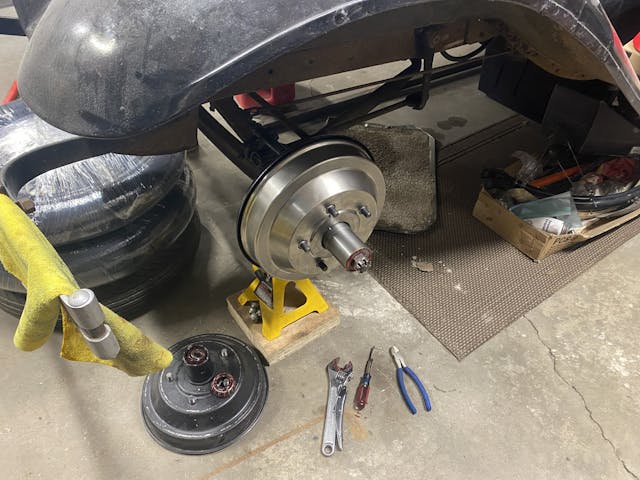
Fresh wheel bearings and drums made for a big improvement in drivability and safety on my Model A Ford.Kyle Smith

It’s easy to get lured into driving like those around you, but be careful. Without notice, you’ll find yourself tailgating at the same distance as the modern cars, and when that line of cars taps the brakes, suddenly the concept of 5-mph bumpers doesn’t seem so comical.

Vintage brakes can be made to work very well with a bit of care and attention, but even I have to admit vintage designs and materials just cannot compare to modern brakes—that is before even mentioning driver assist systems like anti-lock braking or emergency braking. Give yourself plenty of room.

Check your fluids often

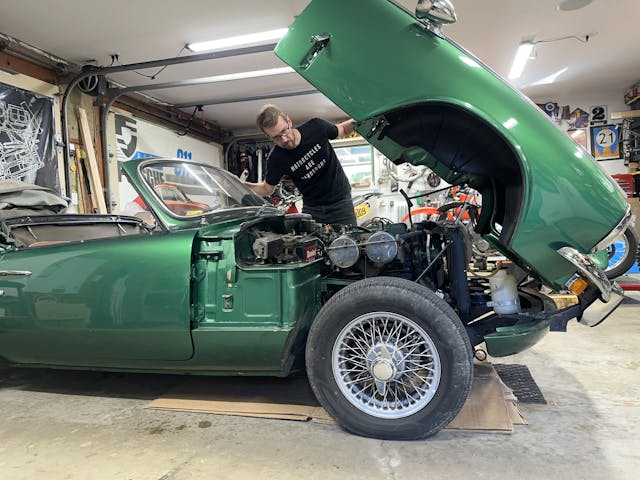
Triumph spitfire hood up
Kyle Smith

Modern cars have spoiled us with the ability to drive thousands of miles without opening the hood. Regardless of how you feel about the separation between driver and mechanic over time, driving your vintage car on more than just a couple weekends a month requires staying on top of topping of fluids.

Old engines can and often do consume oil at a rate much higher than modern engines. Add in even just a small leak and suddenly the bottom of the dipstick is bone dry and before long, so is the oil pickup. Engine oil also helps cool an engine, so keeping oil topped up helps for multiple reasons beyond just proper lubrication. Also keep an eye on brake fluid and coolant.

Get used to the gauges

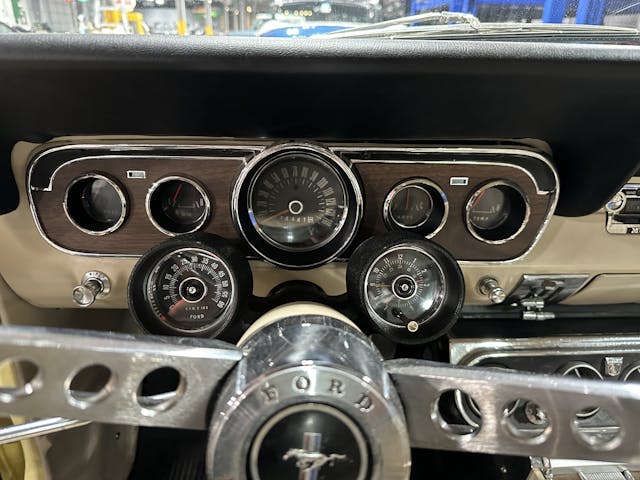
Modern car gauges are “normalized,” meaning that they often will be basically stationary while driving despite slight fluctuation in the pressures, temperatures, and levels they monitor. On older cars, a coolant temp gauge might rise slightly when caught at a long stoplight, but it might not actually be a cause for concern. Most automotive engines operate best when coolant temps are between 180 and 210 degrees Fahrenheit. Modern gauges will be stationary for that entire range, but an old-school mechanical gauge will transmit everything. This means coolant temp could drop slightly when you turn on the heater, or increase some with long periods of idling or while an air conditioner is cycling.

Make your escape plans

Traffic on the IH-10 Katy Freeway viewed facing west near Loop 610
Smiley N. Pool/Houston Chronicle/Getty Images

Even in great condition, aging cars can and do break down. Think through what common failures might occur with your car and formulate a plan for how you will handle the situation. This can mean packing a tool kit, re-upping your roadside assistance membership, or choosing routes and times of day that will help ensure you have a smooth trip. Some vintage cars will have zero trouble in modern traffic, but if yours tends to overheat or get cranky sitting still, make sure that you scout an escape route, should you get snarled in traffic. Being stuck on the side of the road is infinitely better than being stuck in the middle of the road. Trust me. There are a few roads around town that I avoid in my vintage cars due to the lack of shoulder or safe place to veer off. Paranoid? Maybe a little, but I don’t want to get hit while sitting on the side of the road.

Be aware of your tires

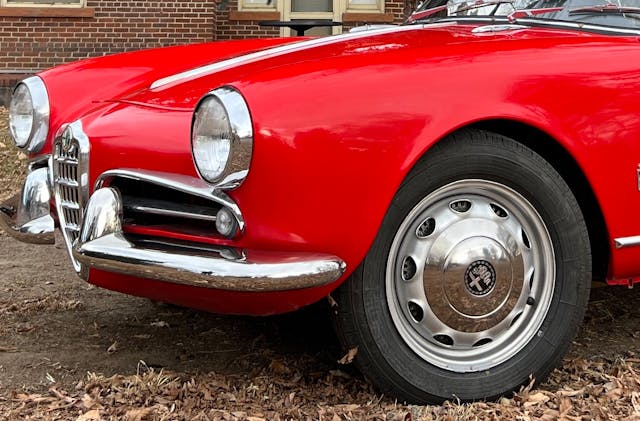
Classic Car Tires Ganz Alfa Romeo
Andrew Ganz

Modern tires are downright amazing and often go underappreciated. Since vintage cars get less mileage than their modern counterparts, a lot more people are willing to drive on older or poor-condition tires, sometimes out of pure ignorance or from lack of inspection. Tread depth and age are big considerations, but if you’re running modern reproductions of older tire designs, there is also the way those tires handle water. Siping and water control have a huge impact on handling and braking. You might have brand-new tires, but if the design is 50 years old, they are going to handle that way. Again, not a bad thing, but something to adjust to. For the Silo, Kyle Smith.

What Happens To Cars That Sit For Long Periods Of Time

The trouble is that automobiles, like everything else, are subject to the law of entropy. “Preservation” is about more than just keeping the odometer reading low. “Like-new” means something different after one, two, or three decades, even if the car still has plastic wrap on the steering wheel. The paint, upholstery, and trim may look flawless—but what about the bits you can’t see, like the complex systems and different materials that make up the driveline? Just because a car is like-new doesn’t mean it actually is new, or that you can just hop in and drive it home. We decided to call up some experts across the industry to answer a big question: What exactly is happening to a car when it sits?

1967 le mans winner ford mark iv at the henry ford gurney foyt
The Henry Ford Museum/Wes Duenkel

First off, what’s happening to it while it sits depends on where it sits. Imagine a car in a museum—perhaps the Le Mans–winning Ford Mark IV at the Henry Ford Museum in Dearborn, Michigan. Now, think of that old pickup you once saw sitting in a field. Technically, they’re both decaying. One is just decaying far more slowly than the other. 

The race car lives in a perfectly curated world. The temperature in the museum is consistent and the humidity is just so: Low enough to deter moisture-loving insects and mold, high enough to prevent the tires and other rubber seals from drying out. A museum car’s tires may barely touch the ground, because the chassis sits on jack stands. The fluids in the car—fuel, coolant, oil—have either been drained or supplemented with stabilizing agents. The upholstery is regularly vacuumed to eliminate pests. Dust barely gathers on the body before someone gently sweeps it off.

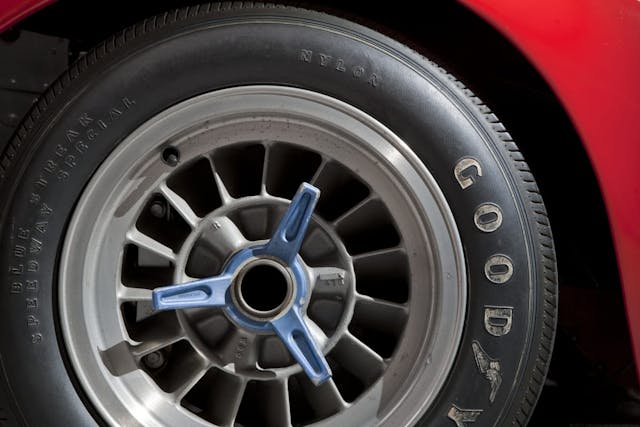
1967 Ford Mark IV Race Car wheel detail
The wheel of The Henry Ford’s 1967 Ford Mark IV race car, with its original tire. The Henry Ford Museum

The pickup, meanwhile, has been at the mercy of the weather for who knows how long. The tires have cracked and rotted. Salty air might be corroding metal. Insects and/or rodents might be living inside the cabin and engine bay. The engine’s cylinders may be dry, the gas in its rusty fuel tank a kind of goo, the oil gray instead of honey-colored. Its paint may be bubbling, its carpets mildewing. 

Those are two extreme examples, of course, but when it comes to the condition of a car, the storage (or display) environment makes all the difference, whether the car is Henry Ford’s original Quadricycle from 1896 or a brain scientist’s sporty Sentra from 1992. To keep a “like-new” car living up to its descriptor, the temperature must be consistent; otherwise, even the most immaculate car will bake, sweat, and/or freeze. The moisture in the air needs to be high enough to slow the decay of organic materials like tires but low enough to protect from rust. The room itself needs to be well-sealed to deter pests. The vehicle also needs a barrier (or two) between the paint and the dust, dirt, and grime that will accumulate. And that’s only the parts of the car you can see …

The Odometer Doesn’t Tell the Whole Story

tom cotter 930 turbo barn find hunter
Tom’s 16,000-mile/ 25,750-kilometer Porsche, where he found it. Youtube / Hagerty

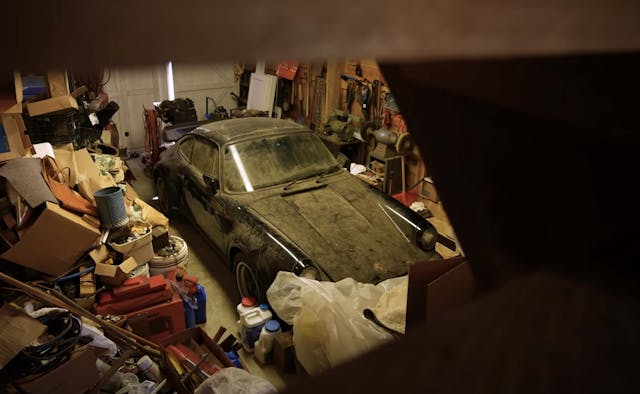
No one is more familiar with finding automotive diamonds in rough storage situations than Tom Cotter, known as The Barn Find Hunter. When I called him to discuss this story, the consequences of bad storage were especially fresh on his mind: He had just bought a barn-find car (a 1986 Porsche 930 Turbo) with 16,000 miles. “That’s the good news,” he said. “The bad news is that it has not been driven since 1996, so nearly 30 years. And even though it had a plastic sheet on it, somehow it got filthy. Filthy. My heart breaks.” Even worse, the windows were open, and the car was infested with mice. It needs a thorough recommissioning: brakes, gas tank, fuel lines, fuel injection unit, fuel injector, fuel pump—and those are just the major areas, says Tom. He’s still in the process of figuring out how much the car needs, but if everything needs to be replaced, the work could cost as much as $40,000 usd/ $58,000 cad. Oh, and he’ll need a new set of tires—the car was parked on its original set from 1986. 

“Just because a car has low miles doesn’t mean it was well cared for,” says Cotter. “Cars go bad when they sit.” A perfect storage environment and a sedentary life don’t guarantee stasis, either: “There are things that happen inside the systems of a car that break down, like the rubber in a brake system or the rubber in our fuel system. It doesn’t matter if the car is hot or cold or clean or dirty, those things are going to break down.” One interesting system that is especially prone to degrading when a car sits is the exhaust, he says. “For every gallon (3.785 liters) of fuel that’s burned in a car, a gallon of water comes out the tailpipe. It’s just part of the combustion process. And so if you run the car and then turn it off and park it for 20 years, you’ve got at least a gallon of water (3.785 liters) sitting in the exhaust system—most of it, in the muffler. Unless it’s made of stainless steel or something, it’s going to just rot right out. There’s really nothing you can do about that.” 

The fluids and the metals in a car are often conspiring against each other. “One of the biggest challenges you have managing large collections—and with cars that sit, too—is coolant system corrosion,” says Scott George, curator of collections at the Revs Institute in Naples, Florida, who knows a thing or two about keeping old cars in peak health. “You’ve got brass, copper, aluminum, iron, steel, all coming in contact with water, and it can create a battery of sorts. It can almost create its own internal energy, which can attack certain metals that are most vulnerable,” like the vanes in a water pump, which are often made of a different metal than the pump itself. Using antifreeze doesn’t eliminate the problem: Those systems can corrode, too, damaging hose connections and water chambers in cylinder heads. “Corrosion in radiators, and things that attack solder and solder seams, are also a big challenge for anybody with large collections.”

Proper storage requires understanding of the car’s construction, because certain materials require special attention and/or precautions. Wool and horsehair, materials that are especially common in the upholstery of cars built before World War II, can attract cloth moths and carpet beetles. Cuong Nguyen, a senior conservator at The Henry Ford, who is heavily involved in the care of the museum’s 300-car collection, suggests vacuuming such cars each season. He also warns that some more modern wiring harnesses are made with soy-based materials that, while eco-friendly, attract mice. Sticky traps, he says, especially those without pheromones, can be good preventive measures for furry pests. 

Understanding how a car is built also helps set expectations for how it ages, even in the best conditions. For instance, different sorts of paints wear differently: Lacquer-based paint, used on most cars built before the late 1980s or early ‘90s, doesn’t hold up as well as the more modern, urethane-based version. Another notoriously finicky modern material covers the soft-touch buttons found in some Italian exotics from the 1990s or early 2000s. The black material gets sticky over time.

Best-Case Storage Scenario

Cotter, who owns a storage facility called Auto Barn in North Carolina, encourages enthusiasts to store their vehicles thoughtfully because they’re protecting their financial investment. “It might take you a half-day to get a car ready to lock up, but put a little bit of effort into it. You are maintaining your investment. It’s a mechanical portfolio. A car that’s parked haphazardly will more than likely go down in value.”

The best place to store a car—with any odometer reading—is in a clean, dry place with temperature and humidity control. To avoid flat spots on the tires, which can develop within a year, the car should be elevated, just slightly, on jack stands (as mentioned above, a trick used by museums) or lowered onto a set of tire cradles. If the fuel isn’t drained, it should be ethanol-free; the regular stuff turns into a gummy, gooey mess when it sits. If the fuel in the tank does contain ethanol, it should be supplemented with a fuel stabilizer. If the car was driven regularly before storage, the carpets in the driver’s side footwell should either be completely dry or propped up, away from the floorboards. Cotter explains why: moisture from the driver’s shoes may get onto and under the carpets, and it may mold the carpets or, worse, become trapped between the rubber backing and the sheet metal underneath, which may begin to rust.

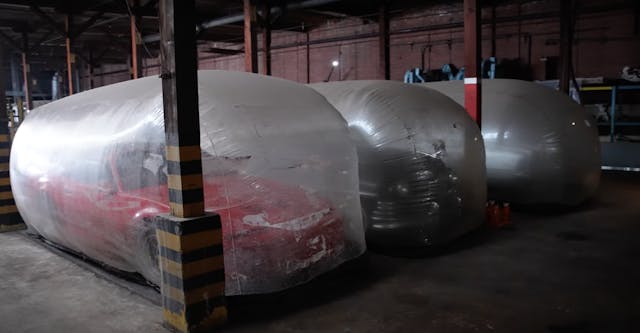
Some sort of rodent protection, even a Bounce sheet, should be taken. (This nifty device, called Mouse Blocker, uses sonic pulses to keep the critters at bay.) One moisture-absorbing trick that Cotter recommends is cheap, and readily found at your local hardware store: charcoal, which absorbs moisture and odors. Ideally, the paint should be waxed and the car put under a cover. Feeling fancy? Look into a Car Capsule, the “bubbles” that the Detroit Historical Society uses to store its cars.

detroit historical society storage bubble car capsule
YouTube / Hagerty

While in Storage

Of course, not all low-mile cars are barn finds like Tom’s Porsche. Many of them present amazingly well. Scott George weighs in. There’s an excitement, he says, about buying a car that appears locked in time and cosmetically perfect—free of nicks, scrapes, bumps, wrinkles. But some people, he says, may not think about what they’re getting into at a mechanical level: “Every time I see a later-model car sell with low mileage, what often goes through my mind is ‘cha-ching, cha-ching, cha-ching.’” He’s seen what can happen when cars sit for 25 or 30 years: “Everything functioning part of the automobile, maybe except for a total engine rebuild, has to be redone.”

Not all buyers may want to drive their pristine, low-mile prize, he admits—some may simply want to be the next owner, to park the car in their climate-controlled showroom as a trophy. There is nothing wrong with that, of course, but down the road, it may be a very costly one—if not for them, for the next person who buys it and wants to drive it. “Cars are operating machines,” George says. “They like to drive.”

At the very least, a car should be started once in a while, and run for more than 5 or 10 minutes—half an hour or so, at least, so that the engine and oil can come up to temperature and cooling fluids can fully circulate. Starting a car and quickly turning it off, says Cotter, “does more damage than if you just leave it alone because the cylinders are dry—there’s not enough oil in the system.”

Acids and moisture can build up, warns George, if a car doesn’t run long enough, “and exhaust systems can corrode from the inside out, and so forth.” He practices what he preaches: The Revs Institute has an unusually high commitment to keeping most of its 120-something collection running, and that means driving the cars—on a circuit loop, for the road cars, or on track, for the race cars, whether that’s at a historic racing event or during a test day where Revs rents out a facility.

Where a car is stored may make the most difference in preserving its condition, but how it is maintained during that period is a close second. “I have witnessed actually cars that 25 or 30 years old that literally sat,” says George, “and I’ve seen it firsthand: every functioning part of the automobile, maybe except for a total engine rebuild, has to be redone. The fuel systems, the fuel injectors, all of that stuff.” Maintaining a low-mile car in driving condition requires a balance of commitment and restraint: “There are some people that have just had these wonderful low-mileage cars,” says George, “and they have done annual maintenance and they have cared for the mechanical systems. They’ve just been cautious about how many mile miles they’ve put on.”

In short, the best way to keep a car in driving condition is to, well, drive it.

Barn Find Hunter Episode 172 Porsche 930 911 Turbo covered in dust in barn

“Just because a car has low miles doesn’t mean it was well cared for,” says Cotter. “Cars go bad when they sit.” A perfect storage environment and a sedentary life don’t guarantee stasis, either: “There are things that happen inside the systems of a car that break down, like the rubber in a brake system or the rubber in our fuel system. It doesn’t matter if the car is hot or cold or clean or dirty, those things are going to break down.” One interesting system that is especially prone to degrading when a car sits is the exhaust, he says. “For every gallon of fuel that’s burned in a car, a gallon of water comes out the tailpipe. It’s just part of the combustion process. And so if you run the car and then turn it off and park it for 20 years, you’ve got at least a gallon of water sitting in the exhaust system—most of it, in the muffler. Unless it’s made of stainless steel or something, it’s going to just rot right out. There’s really nothing you can do about that.” 

The fluids and the metals in a car are often conspiring against each other. “One of the biggest challenges you have managing large collections—and with cars that sit, too—is coolant system corrosion,” says Scott George, curator of collections at the Revs Institute in Naples, Florida, who knows a thing or two about keeping old cars in peak health. “You’ve got brass, copper, aluminum, iron, steel, all coming in contact with water, and it can create a battery of sorts. It can almost create its own internal energy, which can attack certain metals that are most vulnerable,” like the vanes in a water pump, which are often made of a different metal than the pump itself. Using antifreeze doesn’t eliminate the problem: Those systems can corrode, too, damaging hose connections and water chambers in cylinder heads. “Corrosion in radiators, and things that attack solder and solder seams, are also a big challenge for anybody with large collections.”

Proper storage requires understanding of the car’s construction, because certain materials require special attention and/or precautions. Wool and horsehair, materials that are especially common in the upholstery of cars built before World War II, can attract cloth moths and carpet beetles. Cuong Nguyen, a senior conservator at The Henry Ford, who is heavily involved in the care of the museum’s 300-car collection, suggests vacuuming such cars each season. He also warns that some more modern wiring harnesses are made with soy-based materials that, while eco-friendly, attract mice. Sticky traps, he says, especially those without pheromones, can be good preventive measures for furry pests. 

Understanding how a car is built also helps set expectations for how it ages, even in the best conditions. For instance, different sorts of paints wear differently: Lacquer-based paint, used on most cars built before the late 1980s or early ‘90s, doesn’t hold up as well as the more modern, urethane-based version. Another notoriously finicky modern material covers the soft-touch buttons found in some Italian exotics from the 1990s or early 2000s. The black material gets sticky over time.

Best-Case Storage Scenario

Cotter, who owns a storage facility called Auto Barn in North Carolina, encourages enthusiasts to store their vehicles thoughtfully because they’re protecting their financial investment. “It might take you a half-day to get a car ready to lock up, but put a little bit of effort into it. You are maintaining your investment. It’s a mechanical portfolio. A car that’s parked haphazardly will more than likely go down in value.”

The best place to store a car—with any odometer reading—is in a clean, dry place with temperature and humidity control. To avoid flat spots on the tires, which can develop within a year, the car should be elevated, just slightly, on jack stands (as mentioned above, a trick used by museums) or lowered onto a set of tire cradles. If the fuel isn’t drained, it should be ethanol-free; the regular stuff turns into a gummy, gooey mess when it sits. If the fuel in the tank does contain ethanol, it should be supplemented with a fuel stabilizer. If the car was driven regularly before storage, the carpets in the driver’s side footwell should either be completely dry or propped up, away from the floorboards. Cotter explains why: moisture from the driver’s shoes may get onto and under the carpets, and it may mold the carpets or, worse, become trapped between the rubber backing and the sheet metal underneath, which may begin to rust.

Some sort of rodent protection, even a Bounce sheet, should be taken. (This nifty device, called Mouse Blocker, uses sonic pulses to keep the critters at bay.) One moisture-absorbing trick that Cotter recommends is cheap, and readily found at your local hardware store: charcoal, which absorbs moisture and odors. Ideally, the paint should be waxed and the car put under a cover. Feeling fancy? Look into a Car Capsule, the “bubbles” that the Detroit Historical Society uses to store its cars.

detroit historical society storage bubble car capsule
YouTube / Hagerty

While in Storage

Of course, not all low-mile cars are barn finds like Tom’s Porsche. Many of them present amazingly well. Scott George weighs in. There’s an excitement, he says, about buying a car that appears locked in time and cosmetically perfect—free of nicks, scrapes, bumps, wrinkles. But some people, he says, may not think about what they’re getting into at a mechanical level: “Every time I see a later-model car sell with low mileage, what often goes through my mind is ‘cha-ching, cha-ching, cha-ching.’” He’s seen what can happen when cars sit for 25 or 30 years: “Everything functioning part of the automobile, maybe except for a total engine rebuild, has to be redone.”

Not all buyers may want to drive their pristine, low-mile prize, he admits—some may simply want to be the next owner, to park the car in their climate-controlled showroom as a trophy. There is nothing wrong with that, of course, but down the road, it may be a very costly one—if not for them, for the next person who buys it and wants to drive it. “Cars are operating machines,” George says. “They like to drive.”

At the very least, a car should be started once in a while, and run for more than 5 or 10 minutes—half an hour or so, at least, so that the engine and oil can come up to temperature and cooling fluids can fully circulate. Starting a car and quickly turning it off, says Cotter, “does more damage than if you just leave it alone because the cylinders are dry—there’s not enough oil in the system.”

Acids and moisture can build up, warns George, if a car doesn’t run long enough, “and exhaust systems can corrode from the inside out, and so forth.” He practices what he preaches: The Revs Institute has an unusually high commitment to keeping most of its 120-something collection running, and that means driving the cars—on a 40-, 50-, or 60-mile (approx. 64-, 70-, 97 kilometer) loop, for the road cars, or on track, for the race cars, whether that’s at a historic racing event or during a test day where Revs rents out a facility.

Where a car is stored may make the most difference in preserving its condition, but how it is maintained during that period is a close second. “I have witnessed actually cars that 25 or 30 years old that literally sat,” says George, “and I’ve seen it firsthand: every functioning part of the automobile, maybe except for a total engine rebuild, has to be redone. The fuel systems, the fuel injectors, all of that stuff.” Maintaining a low-mile car in driving condition requires a balance of commitment and restraint: “There are some people that have just had these wonderful low-mileage cars,” says George, “and they have done annual maintenance and they have cared for the mechanical systems. They’ve just been cautious about how many mile miles they’ve put on.”

In short, the best way to keep a car in driving condition is to, well, drive it. For the Silo, Grace Houghton.

Great Tips For Winter Storing Your Classic

The trees are almost bare and the evening arrives sooner each day. We all know what that means: It’s time to tuck away our classics into storage.

Just when you thought you’d heard every suggestion and clever tip for properly storing your classic automobile, along comes another recommendation—or two, or three or twelve 😉

As you can imagine, I’ve heard plenty of ideas and advice about winter storage over the years. Some of those annual recommendations are repeated here. And some have been amended—for example, the fragrance of dryer sheets is way more pleasing to noses than the stench of moth balls, and the fresh smell actually does a superior job of repelling mice.

Wash and wax

ferrari 458 wax
Sabrina Hyde

It may seem fruitless to wash the car when it is about to be put away for months, but it is an easy step that shouldn’t be overlooked. Water stains or bird droppings left on the car can permanently damage the paint. Make sure to clean the wheels and undersides of the fenders to get rid of mud, grease and tar. For added protection, give the car a coat of wax and treat any interior leather with a good conditioner.

Car cover

Viper car cover
Don Rutt

Even if your classic is stored in a garage in semi-stable temperatures and protected from the elements, a car cover will keep any spills or dust off of the paint. It can also protect from scratches while moving objects around the parked car.

Oil change

Checking oil 1960 plymouth fury
Sabrina Hyde

If you will be storing the vehicle for longer than 30 days, consider getting the oil changed. Used engine oil has contaminants that could damage the engine or lead to sludge buildup. (And if your transmission fluid is due for a change, do it now too. When spring rolls around, you’ll be happy you did.)

Fuel tank

camaro red fill up gas
Sabrina Hyde

Before any extended storage period, remember to fill the gas tank to prevent moisture from accumulating inside the fuel tank and to keep the seals from drying out. You should also pour in fuel stabilizer to prevent buildup and protect the engine from gum, varnish, and rust. This is especially critical in modern gasoline blended with ethanol, which gums up more easily. The fuel stabilizer will prevent the gas from deteriorating for up to 12 months.

Radiator

This is another area where fresh fluids will help prevent contaminants from slowly wearing down engine parts. If it’s time to flush the radiator fluid, doing it before winter storage is a good idea. Whether or not you put in new antifreeze, check your freezing point with a hydrometer or test strips to make sure you’re good for the lowest of winter temperatures.

Battery

car battery
Optima

An unattended battery will slowly lose its charge and eventually go bad, resulting in having to purchase a new battery in the spring. The easiest, low-tech solution is to disconnect the battery cables—the negative (ground) first, then the positive. You’ll likely lose any stereo presets, time, and other settings. If you want to keep those settings and ensure that your battery starts the moment you return, purchase a trickle charger. This device hooks up to your car battery on one end, then plugs into a wall outlet on the other and delivers just enough electrical power to keep the battery topped up. Warning: Do not use a trickle charger if you’re storing your car off property. In rare cases they’ve been known to spark a fire.

Parking brake

For general driving use it is a good idea to use the parking brake, but don’t do it when you leave a car in storage long term; if the brake pads make contact with the rotors for an extended period of time, they could fuse together. Instead of risking your emergency brake, purchase a tire chock or two to prevent the car from moving.

Tire care

Ferrari tire care
Sabrina Hyde

If a vehicle is left stationary for too long, the tires could develop flat spots from the weight of the vehicle pressing down on the tires’ treads. This occurs at a faster rate in colder temperatures, especially with high-performance or low-profile tires, and in severe cases a flat spot becomes a permanent part of the tire, causing a need for replacement. If your car will be in storage for more than 30 days, consider taking off the wheels and placing the car on jack stands at all four corners. With that said, some argue that this procedure isn’t good for the suspension, and there’s always this consideration: If there’s a fire, you have no way to save your car.

If you don’t want to go through the hassle of jack stands, overinflate your tires slightly (2–5 pounds) to account for any air loss while it hibernates, and make sure the tires are on plywood, not in direct contact with the floor.

Repel rodents

buick in the barn
Gabe Augustine

A solid garage will keep your car dry and relatively warm, conditions that can also attract unwanted rodents during the cold winter months. There are plenty of places in your car for critters to hide and even more things for them to destroy. Prevent them from entering your car by covering any gaps where a mouse could enter, such as the exhaust pipe or an air intake; steel wool works well for this. Next, spread scented dryer sheets or Irish Spring soap shavings inside the car and moth balls around the perimeter of the vehicle. For a more proactive approach and if you’re the killing type, you can also lay down a few mouse traps (although you’ll need to check them regularly for casualties).

Maintain insurance

In order to save money, you might be tempted to cancel your auto insurance when your vehicle is in storage. Bad idea. If you remove coverage completely, you’ll be on your own if there’s a fire, the weight of snow collapses the roof, or your car is stolen. If you have classic car insurance, the policy covers a full year and takes winter storage into account in your annual premium.

  • “An ex-Ferrari race mechanic (Le Mans three times) recommends adding half a cup of automatic transmission fluid to the fuel tank before topping up, and then running the engine for 10 minutes. This applies ONLY to carburetor cars. The oil coats the fuel tank, lines and carb bowls and helps avoid corrosion. It will easily burn off when you restart the car.”
  • A warning regarding car covers: “The only time I covered was years ago when stored in the shop side of my machine shed. No heat that year and the condensation from the concrete caused rust on my bumpers where the cover was tight. The next year I had it in the dirt floor shed and the mice used the cover ties as rope ladders to get in.”
  • “I use the right amount of Camguard in the oil to protect the engine from rust. It’s good stuff.”
  • Your car’s biggest villain is rust, that’s why I clean the car inside and out, and wax it prior to putting it in storage. For extra protection, I generously wax the bumpers and other chrome surfaces, but I do not buff out the wax. Mildew can form on the interior; to prevent this I treat the vinyl, plastic, and rubber surfaces with a product such as Armor All.
  • “Ideally, your car should be stored in a clean, dry garage. I prepare the floor of the storage area by laying down a layer of plastic drop cloth, followed by cardboard. The plastic drop cloth and cardboard act as a barrier to keep the moisture that is in the ground from seeping through the cement floor and attacking the underside of my car.”
  • “Fog out the engine. I do this once the car is parked where it is to be stored for the winter, and while it is still warm from its trip. Remove the air cleaner and spray engine fogging oil into the carburetor with the engine running at a high idle. Once I see smoke coming out of the exhaust, I shut off the engine and replace the air cleaner. Fogging out the engine coats many of the internal engine surfaces, as well as the inside of the exhaust with a coating of oil designed to prevent rust formation.”

Relax, rest, and be patient

Ford Model a roadster in garage
Gabe Augustine

For those of us who live in cold weather provinces or states, there’s actually a great sense of relief when you finally complete your winter prep and all of your summer toys are safely put to bed before the snow flies. Relax; you’ve properly protected your classic. It won’t be long before the snow is waist-high and you’re longing for summer—and that long wait may be the most difficult part of the entire storage process. Practice patience and find something auto-related to capture your attention and bide your time. You’ll be cruising again before you know it. (Keep telling yourself that, anyway.) For the Silo, Rob Siegel/Hagerty.

Is New Porsche 911 GT3 Touring All The car You’ll Ever Need?

Top Gear UK November 2024- Not one but two new Porsche 911 GT3s are upon us, both a regular be-winged car and the more subtle Touring model. And for once, the headline news isn’t the power, the peak revs or the Nürburgring lap time, but how practical it is.

That’s right, because for the first time in the 25-year history of the GT3, it’s being offered with back seats.

It’s only for the Touring, but that addition alone will be enough to start The Internet chattering about whether this is ‘all the car you’ll ever need’.

However, if kids, or at least taking your kids with you, isn’t your thing, then worry not. The back seats are merely an option, and the non-Touring GT3 can’t be had with them at all. Plus, if you’re the sort of Porsche purest who hates weight, you can double down on that ethos with either a Weissach pack for the GT3 or a Leichtbau (aka Lightweight) pack for the Touring.

As for what else is new (and there are a lot of detailed, GT3 RS-inspired changes), join Top Gear’s Tom Ford for an in-depth walkaround of both new GT3s with Andreas Preuninger, Porsche’s Director of GT Cars…

7 Of The Best Sounding Car Exhausts

We asked our friends at Hagerty what defines a great sounding automotive engine. Here’s what they had to say.

When executed just right, a proper exhaust is the cherry on top of the perfect automotive sundae—it stands out in its own right, but it also completes the package. And it’s not just the sound, glorious though it may be. The visual—and sometimes the artistry—that a good set of pipes can add sometimes does more to define a car than any bit of thoughtfully penned bodywork.

We got to thinking about the sights and sounds that captivate us most, and this list was the result. We could have gone on for days, though, and we bet you have some favorites, too, so give our submissions a read, then tell us your favorite exhaust—for whatever reasons you choose—in the comments!

Ford GT40

I’m going to go with the Ford GT40’s “bundle of snakes” exhaust. When you stop to consider the precision with which such a system had to be fabricated, your mind kind of melts a bit. If you’ve never YouTubed one of these things at full honk, do yourself a favor and click play below. — Nate Petroelje

https://youtube.com/watch?v=iMocr95cYfU%3Fsi%3DSRXSg-GEQNSI5Tcf%26enablejsapi%3D1

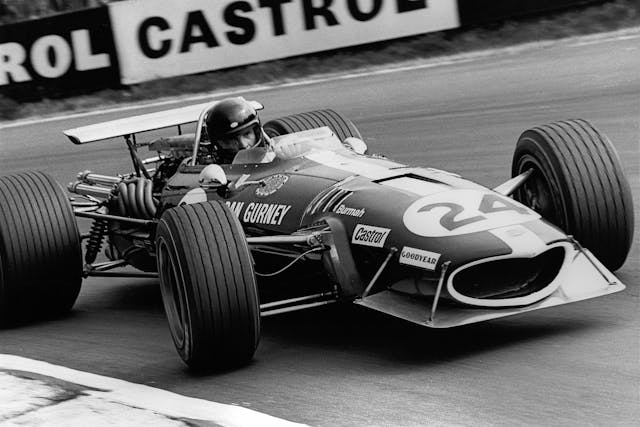
Gurney Eagle

Dan Gurney Eagle-Weslake T1G Grand Prix Of Great Britain 1968
Dan Gurney, Eagle-Weslake T1G, Grand Prix of Great Britain, Silverstone, 20 July 1968.Bernard Cahier/Getty Images

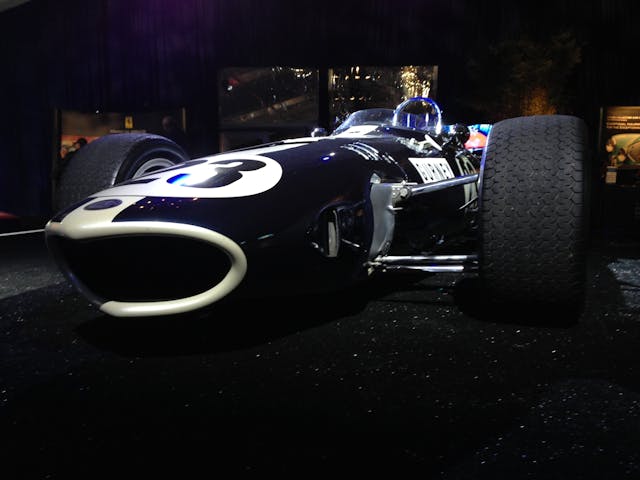
The first time I ever saw a Gurney Eagle was at Gooding’s Pebble Beach auction in 2013.

The car was on display in the lobby area of the tent, and I remember being flabbergasted at the intricacies of the exhaust pipes coming out of that Gurney-Weslake V-12. I’d never seen anything like it, and all I could think of was spaghetti twirled up on a fork. — Stefan Lombard

1966 AAR Gurney Eagle Mk I-1
Stefan Lombard

Outlaw Dirt Sprint Car

Outlaw Dirt Track Sprint Cars race action
Cameron Neveu

No question, there are some lovely-to-look-at exhausts here, but I’m more moved by the sound an engine makes through that exhaust, and that’s a tough call. On several occasions I’ve been lucky enough to be at a racetrack when vintage Ferrari Formula 1 cars were making an exhibition run, and the Ferrari 412 T2’s fabric-tearing sound from its 3.0-liter V-12 is just otherworldly. But I’m picking something far less sophisticated: An exhaust note made by simple unmuffled headers fed by a 410-cubic-inch V-8 engine in an outlaw dirt sprint car. One car is loud; 24 sprint cars, representing about 21,600 horsepower, is thunder. The biggest sanctioning body for sprint cars is the World of Outlaws, which runs about 90 races a year, in a season that, in 2024, starts on February 7 and ends on November 9.

Due to local zoning laws, the WoO requires mufflers for 22 of the races. Since my hearing is shot already (Kids! Don’t do drugs, but DO wear earplugs!), I’ll take the unmuffled races, and the unmistakable smell of methanol in the evening. — Steven Cole Smith

Drag Headers

2021 Dream Cruise woodward ave action hot rod
Cameron Neveu

The best exhaust systems are the ones that end after the headers.

I couldn’t have said it much better than SCS. A 410 engine belching out of unmuffled Schoenfeld headers is tops.

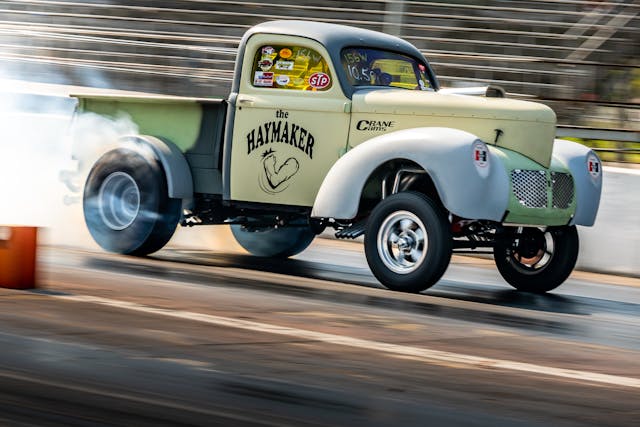
But a close second are drag headers. Zoomies or fenderwell are my favorite on old drag cars. That cackle. That’s the noise I’d like to hear out of the trumpets as I approach heaven’s gate. Oh, and the visual appearance of four pipes directing exhaust up and over fat slicks, or peaking around the lip of a fender. Get outta here! — Cameron Neveu

Milan Nostalgia Drags Willys Truck Gasser
“The Haymaker” Willys gasser.Cameron Neveu

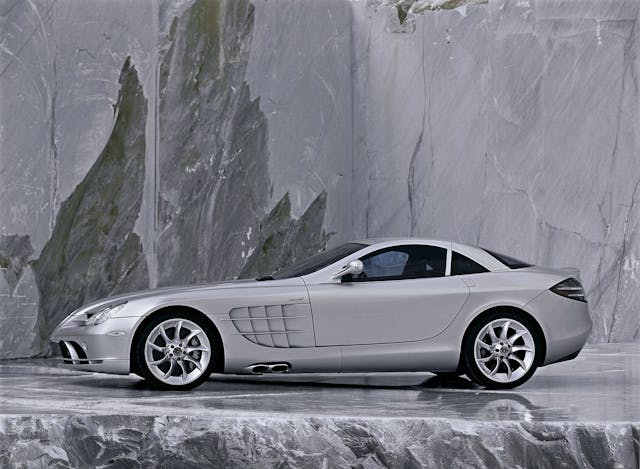
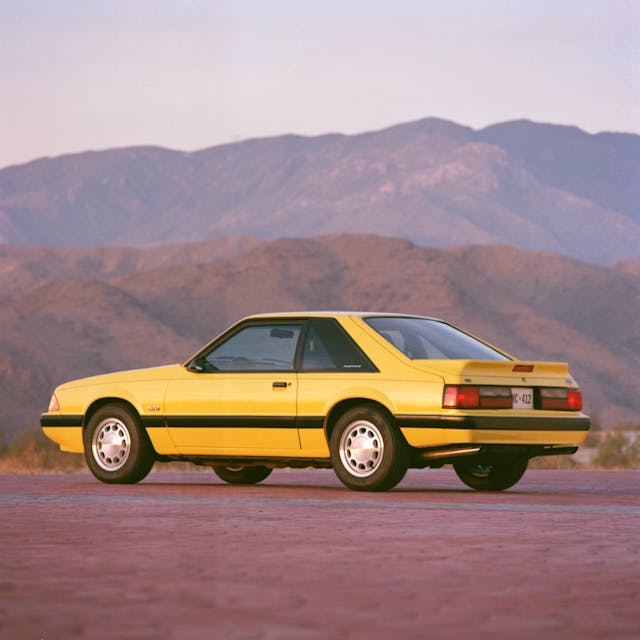
Mercedes SLR McLaren and 1987–93 Mustang LX

Mercedes-Benz SLR McLaren exhaust
Mercedes Benz

My favorite exhaust in terms of looks is the side exit exhaust of the 2003–10 Mercedes SLR McLaren, because of that insane amount of space between the front wheel and the cowl and the subtle little twin pipes peeking under that area. The flat belly pan likely made this a mandatory location, but that only adds to the appeal. But when it comes to looks and sounds, for me there’s nothing like a 1987-93 Mustang LX with its signature chrome double-barreled shotgun tailpipes, and that small block Ford rumble. I could look and listen to that exhaust all day. — Sajeev Mehta

1990 ford mustang LX exhaust
Ford

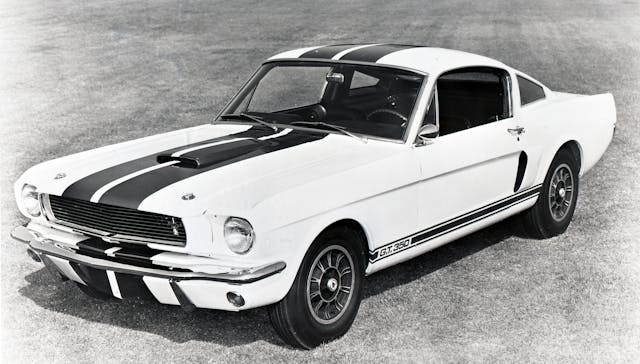
Shelby Mustang GT350

1966 Ford Mustang Shelby GT 350
Ford

I grew up on V-8s in a GM family.

That said, the first time I heard the idle and subsequent roar of a 289 in an early Shelby GT350, I knew Ford had done something right.

It wasn’t till I was older that I learned all about how firing order, crank design, and exhaust setup influenced the amazing sounds that come from our favorite engines. That 289 was what I remember as my earliest favorite so that’s what I picked for this response, but like Steven Cole Smith said, there are so many great sounds out there that it’s a really tough call. Eddy Eckart

Making Life Easy With Easier Parking

With driverless cars already on the streets, will there be similar AI breakthroughs in the future of parking?

In the ’60s, The Jetsons, a cartoon about a family living in the future, featured a flying car that folded down into a briefcase when not in use. It is unlikely that we will ever see that solution to parking become a reality, but many other sci-fi books and films have predicted self-driving vehicles, and we know they are coming because they kind of exist today.

future of parking
Parking facilities in the future must make allowances for electric vehicles. (Photo by guteksk7/Shutterstock)

While brands like Tesla have pushed the boundaries of driver assistance to become a version of self-driving, including parking the vehicle automatically, currently the parking infrastructure has not really kept up. 

But we know that cannot continue, and the reality is that as transport technology evolves, parking solutions will have to evolve as well. But what does that mean long term? Will we be able to arrive at a parking center, get out and leave the car to it, then call it back to us when we want to leave? That seems like the dream approach to parking, but what does it need to make it happen? 

Parking tech

There are two parts to that kind of service, the technology in the car park itself, and the technology within the car. For such a seamless experience, the two will need to work together, in that the vehicle must be able to drive autonomously, but also receive information about parking locations and when it should return to the entrance, from the car park itself. Both sets of technology actually exist today, not as refined as required for a reliable autonomous parking experience, but that is only a matter of time and development. But is it the right answer? 

Right now, parking systems know which cars are parked where within the car park, this data is used to establish remaining capacities and so on, and while not universal, there are cars that can go off and park themselves when needed. So that future service is nearer than we think, but in the meantime what does car parking look like? Some may say that the future is already here without needing self-driving cars.

In Japan and some cities in the US, lift-based parking solutions offer a similar experience today. You arrive at a parking garage; your vehicle is pulled into a cubicle which is then lifted away. When you want to return to your car, the system finds the right cubicle garage and then returns it to the entrance, so you can drive away. 

There are advantages to this approach, without the need for ramps to drive up and down to reach the parking, more cars can be parked in a given space. Because no one actually enters the building where vehicles are stored, it is also incredibly secure too. These systems are being constantly refined, and in the future, it is likely such a garage could be completely automated. With the advantages of space and security, is that more likely to be the future of high-density parking? If we look at other factors, it may well be. 

Cities are increasingly looking to decrease car numbers, opening up spaces instead for social areas, encouraging cycling and other more environmentally friendly approaches to transportation. This is unlikely to change even with the widespread adoption of electric cars, so parking will naturally require large hubs with high-density parking that allows easy access to walks, bikes or public transport to central areas. To get an idea for the future of parking, we can look at what technology best fits this scenario. 

Robotic Solutions

It is likely that these robotic lift-type solutions that pack more vehicles into each parking area fit the needs of city designers better than any more traditional multi-story or underground system that requires ramps and so on, whether the cars are operated by drivers or park themselves. There are other things that are in favor of this approach too. 

Architects are under pressure to soften the appearance of buildings in cities across the world, to create spaces that have more light and elegance. A more compact multi-story space, or an underground alternative with only one small entrance space is easier to disguise with cladding, color and other design tricks that much larger car parks that have ramps and so on. 

There is also the matter of technology. While there are cars that can drive themselves in a limited way now, and numbers are only going to increase, they are not all cars, and may never be. Holden stopped making cars in 2020, but in 20 years’ time, there will still be Holden cars driving on the roads. Those cars can never use autonomous parking systems, but they can use the robotic systems that take your car away and bring it back via a crane lift. They can use them today, and they can use them in the future. 

Machine learning to park

So, the dream of a car swooshing away into its own spot automatically could well be the future. However, it is more likely to be carried there by a machine rather than drive itself. But not all parking is in cities with integrated parking solutions ran by the local authorities. For parking elsewhere, things will develop alongside vehicle technology, and there is one area that must advance for the future of the automotive industry itself, never mind parking. That is electric car charging

Right now, charging is a bit of a mess: different speeds depending on the charger installation, there is no real cohesive system and owners often have to wrestle with a number of different apps to access charging networks on the go. Then there are the mechanics of charging, a heavy cable that has to be plugged in, account information and payment input before the car can be charged. As with phones, wireless charging is the solution, it removes much of the hassle and fail points for a better experience. But what would that look like in cars? 

The obvious answer is charging areas embedded into the road or parking space, with a vehicle stopping on top of it automatically charging. There are hurdles to this, it would mean an end to the various account systems currently used to access charge networks, and instead have something tied to the vehicle itself. However, this kind of solution offers easy and efficient charging without the hassle we have today. 

This would also require new technology for parking. For instance, our robotic car parks could have a charge loop in each container or cubicle, so electric vehicles charge automatically once they are taken away for storage. Likewise, on-road parking at parking meters could include chargers under each space.

This makes the charging process so much less hassle but allows for electric car charging without having to install endless charge stations in streets, and avoiding all the cables that the current system will need. Given the sheer number of electric cars that will be in operation in just a decade or so, and one cable per car, you can see how much an alternative is required. 

But while technology will continue to drive the parking experience, and in cities and communities the need for clean, open spaces will change where we park and what that parking looks like, there will still be areas where parking sits outside of these grand designs. At its heart, a parking space is somewhere to store a vehicle while you go off and do something, and that need is not going to change. Large robotic parking systems in cities may appear in numbers, but they are not going to be the norm in areas with a smaller traffic flow or specific needs. 

What we may see, and it is happening now, is that entrepreneurs and visionaries can find ways to provide a more selective parking solution on a smaller scale, that caters to a very specific need in a specific location. Not only are these services essential and in high demand, but they can be a source of income for anyone who has access to suitable parking space. With more cars than ever on the roads, and with a shift to electric not changing that, the future of parking looks to be heading in multiple directions.

The centralized systems operated in cities and other large communities will follow an approach that minimizes the space required and seek to integrate such facilities into an overall plan for the area. However, in some areas where there is no overall control of parking operations, the idea that you can rent a parking spot from a single person makes sense. Some people have space, others need that space, and as more cars are used, that space is in ever higher demand. This article is an excerpt from the complete e-book Parking Made Easy by Daniel Battaglia.

1955 Mercedes-Benz 300SL Gullwing Coupe at Auction

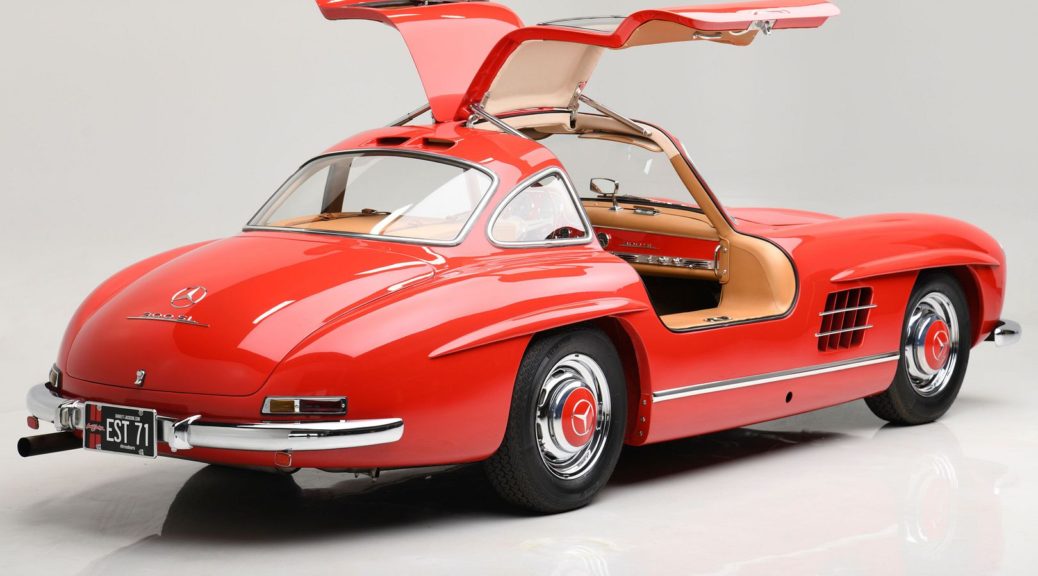
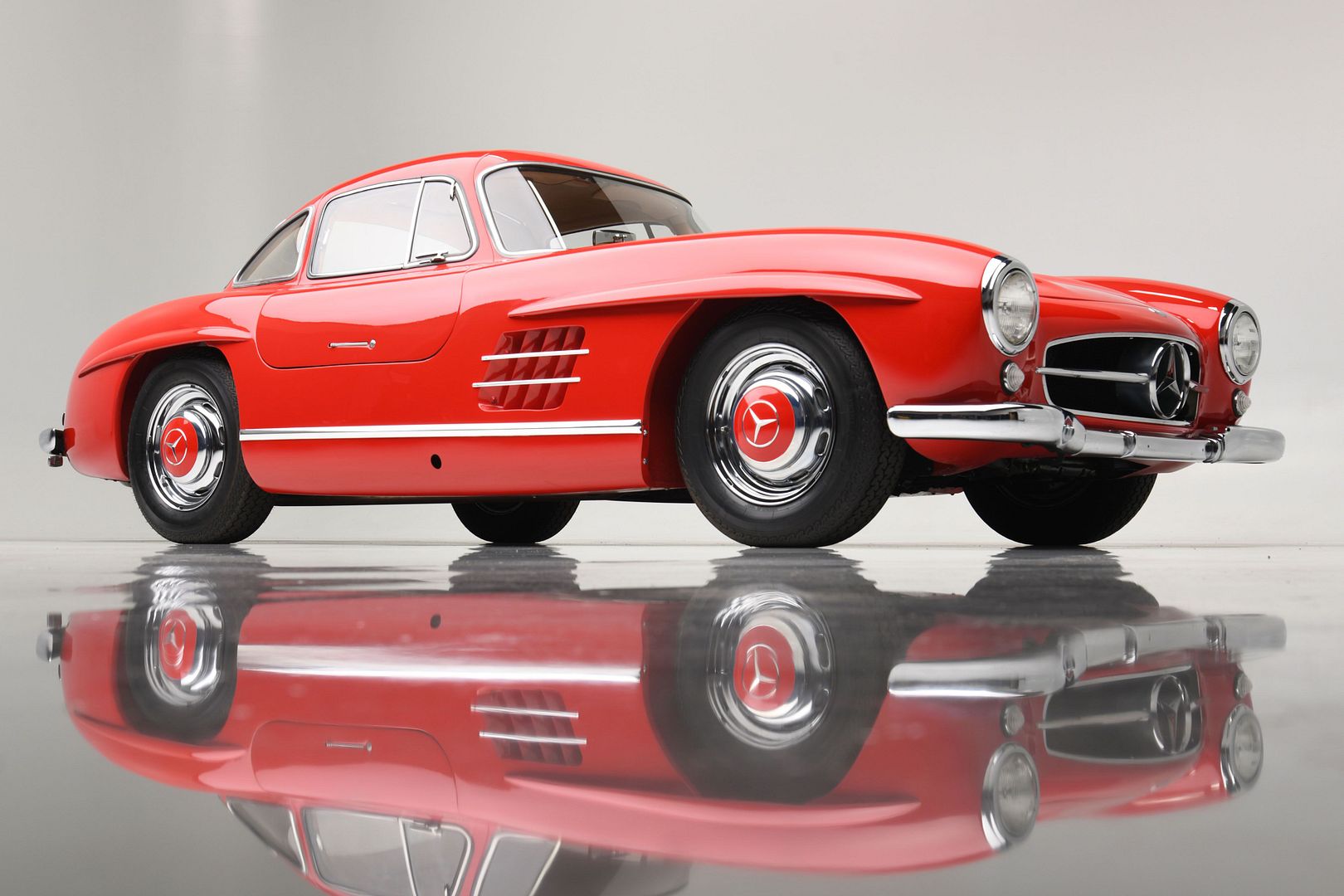
SCOTTSDALE, Ariz. ‒ December , 2021 – Barrett-Jackson will celebrate 50 years of The World’s Greatest Collector Car Auctions with an extraordinary docket filled with uniquely collectible vehicles, all selling at No Reserve, including a restored 1955 300SL Gullwing Coupe (Lot #1415) during the annual Scottsdale Auction at WestWorld of Scottsdale, January 22-30, 2022. One of only 855 made in 1955, the Gullwing was initially delivered to Havana, Cuba, and subsequently rallied by professional race car driver Santiago “Chaquito” Gonzales.

“Some of the star collectible vehicles crossing the block at No Reserve in Scottsdale come with significant provenance,” said Craig Jackson, chairman and CEO of Barrett-Jackson. “The 1955 300SL Gullwing Coupe is one of those vehicles that we’re truly excited to offer at No Reserve. Not only is this Gullwing one of just 1,400 of a total production run, but its pedigree also includes a first-place win at the 1957 Havana Gran Premio National Race. This is an incredible chance to not just own a significant vehicle but help write the next chapter in its evolving legacy.”

Special ordered from the factory with Strawberry Red Metallic paint, the 1955 300SL Gullwing Coupe (Lot #1415) was delivered to the initial owner, the Ministry of Police in Havana Cuba, on June 16, 1955. After being rallied during the first part of its life, it was purchased in 1961 and imported to the United States. Optional features included factory beige leather, VDO gauges, wood steering wheel and custom aftermarket luggage. It is powered by the original matching-numbers M198 engine paired with a 4-speed manual transmission. This 300SL was restored by the third owner in the 1990s followed by a full engine rebuild by the fourth owner in 2003, and currently has only 59,265 miles.

The 1969 Chevrolet Camaro RS/SS “Cutaway” Coupe (Lot #1369) is one of only two known “cutaway” promotional display cars used in 1968. Referred to as the “Double Header Car,” it was used by Chevrolet in 1968 to promote the new 1969 Camaro model. The Camaro’s body is a “first day of production body” and much of it is still in its original condition from the time it was modified for display. It features one of the original GM straight-6 cutaway engines and has been kept privately and out of the public eye for 52 years.

“Our bidders will not only have the chance to take home an incredible vehicle from Scottsdale, but also a true piece of automotive history,” said Steve Davis, president of Barrett-Jackson. “A rich heritage combined with exceptional collectability, many of these vehicles will be the centerpiece of any collection.”

The 1961 Chevrolet Biscayne Fleetmaster 409 (Lot #1291) is reportedly the world’s only 2-door version built and powered by the 409ci engine. It is the only documented 409 Biscayne Fleetmaster known and was ordered new by drag racer Allen May at Capitol Chevrolet in Salem, Oregon. 

1962 Porsche 356 - 1600 B T6 Roadster Coachwork by D'Ieteren | Classic  Driver Market

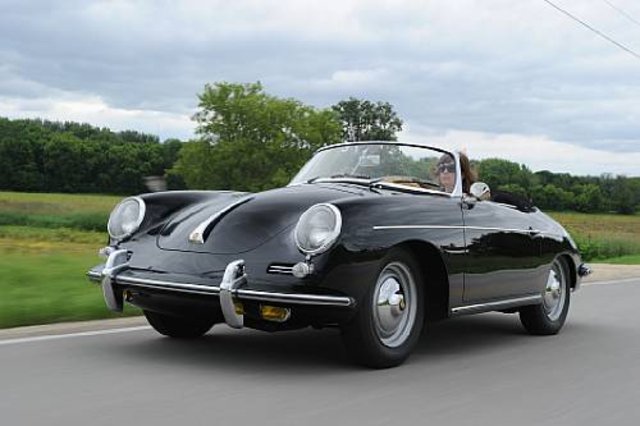
Lot #1312 is one of only 248 1962 Porsche 356B Roadsters that received coachwork by D’Leteren Freres. Finished in black over a tan interior, it is powered by a matching-numbers flat 4-cylinder engine with 4-speed manual transmission. For more information contact [email protected]

Porsche 928 auto was machine with personality and speed

Machine Intelligence 

Let me start this article by sharing with you my own observation about the nature of intelligent mechanical life: EVERY machine I ever interacted with exhibited a distinct personality.  After all, they’re really analog information processors, aren’t they? Like transformers, only not quite so … animatronic.  Even so, they do have a machine “spirit”.  Some docile and some down right malevolent.  

From my first car, the ‘51 Chevy Deluxe, I inherited from my Gramma Hilda, through my ‘63 Chevy Impala SS dual quad 409, to my Deuce and a half water trucks, my Peterbilts (now there’s some evil shit) to my 60 Egg Sport Fish and 54 Bertram Sedan, each had it, and it made itself known immediately.   

Acquiring “Black Beauty” 

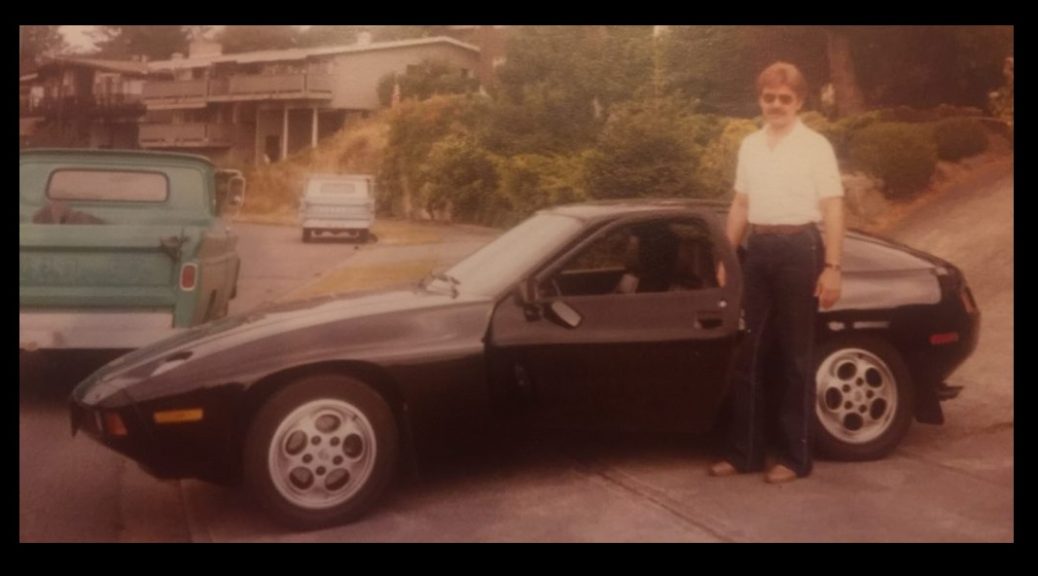
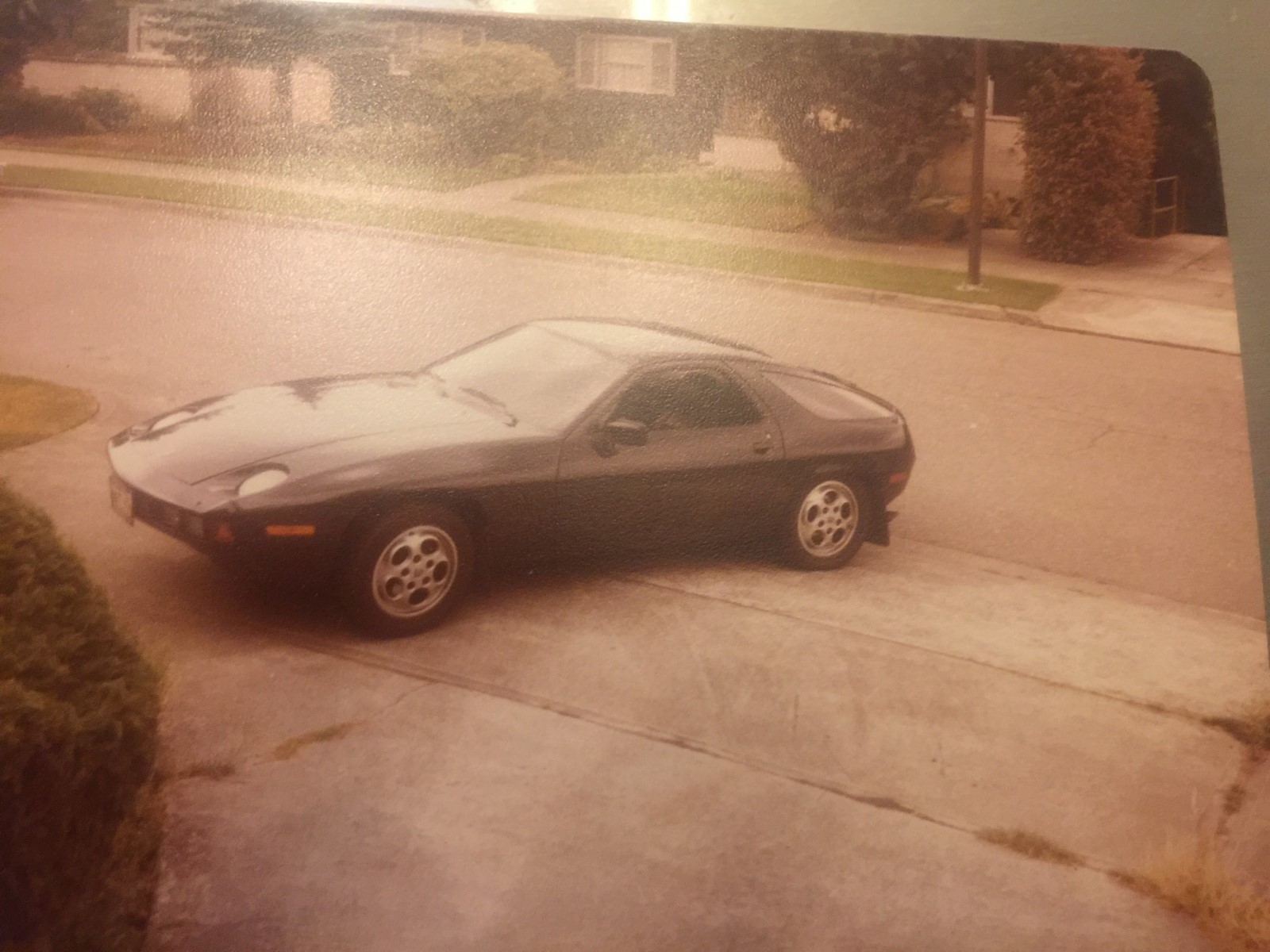
My demon possessed, assassin “business” associate, King, from early days in Seattle commercial real estate, came to my office in December of 1979.  He asked me if I wanted a repo Porsche Rainer Bank hooked. I told him: “The only Porsche I’d want is a Black on Black Euro 928 5-spd with Yellow tinted windows.”  His jaw hit the floor. He grabbed me out of my chair and dragged me out the door and said “We’re goin’ for a ride!”   
We went to the Bank’s repo yard, and all I saw as I walked through the gate was Black Beauty, crouched there like a cat laying in wait exactly as I described. I grabbed the keys from the yard manager, and told him I’d call him later.  Bob and I rolled out the gate and warmed her up a little before BURYING IT!  She obviously had issues on the front left.  I pulled off, and looked . . . shit– a screwed up brake caliper.  We stopped at a pay phone [yeah . . . this is an ancient tale], called the yard manager and told him the issue.  I also told him I wanted the car and would give him less than the trillion dollars they wanted.  He told me to leave a check for the half trillion at the branch and he’d bring the title, and that my branch manager would handle transferring it. 

First Personality Appearance 

I dropped Bob off at the Yard, and took the car to the Porsche Dealer in the U-District.  Told the tech what I thought, and he confirmed it when he got her on the lift. I waited in the customer concierge room for half an hour.  The tech came out and told me that the work was completed.  He said, “what’s with that crazy thing?  I thought she was going to hop off the damn lift.”  I shrugged and drove her home.  My future ex-to-be couldn’t climb into the 928 fast enough! 

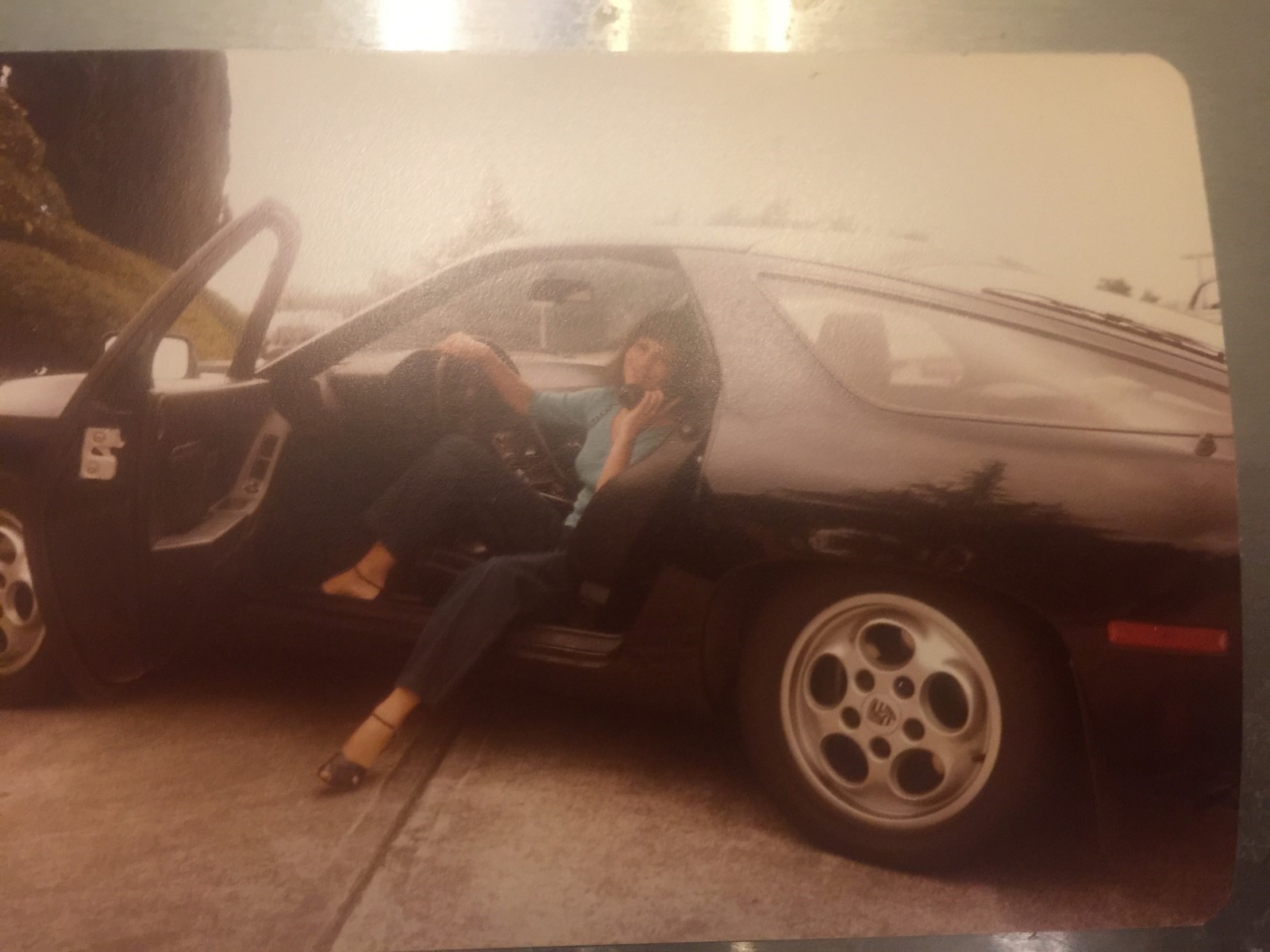
The author’s future ex-to-be. “I always liked those toes!” photo courtesy of the author

Early Life with Black Beauty

Me and this car? It was literally love at first sight.  The first attraction was an instinctual thing:  I am an aeronautical/astronautical engineer and  looking, touching and feeling her I had it figured out. The 928 was an engineering masterpiece. A work of art.  

The next attraction was the sound of the engine exhaust while she ran. (After I smogged the car,  she received 3” stainless Borlas with electric cut outs). Then, the car became the epitome of ssssmmmmoooottthhhhh. Readers, they are fucking smooth.  

And quick- I drove her for a year and she wiped the deck with anyone who’d stand up. After getting tons of shit talk from everyone who raced against it (not quarters but measured mile rolling starts on the I-5 Express Lane Underpass), I pulled everything in her that didn’t make it go forward … interior, carpets, headliner … everything.  

The First Time She Flew 

My buddy, Johnny Roselli, worked for Lake Union Air Service flying turbine otters out of Lake Union to Victoria BC and back . . . “The Sewer Tour.”  While talking one day at Beth’s Café, we ended up together on the Evergreen Point Floating Bridge where we walked a measured mile in the center span from Juanita to the U of Washington turn out. 

I spray painted a vertical line on the side curtain along the bridge deck at the 0’-pt and 5280.0’-pt.  The next morning, at 0500, my little brother was riding as an observer with a second stop watch and we rolled out of the toll gate at Juanita and headed up the hill to the bridge. 

I hit 145 mph (233.3 kph) on the clock by the time I started down to the 0.0 marker. Johnny was doing 2-min turns in his turbine Otter directly above the road bed and dropped a wing and dove down along side. He was all set to film from 50’ (15.24 meters) above ground level. [Uhhhh . . . and you didn’t get arrested . . . hmmm]   

Him in the plane, me in the 928

We were joining up window to window right at 0.0.  [Later, the FAA shithead investigating this “maneuver” had an absolute fucking hemorrage and pulled both our pilot licenses, suspend John for a month].  I blew by him like he was standing fucking still. His airspeed when I went buy was 120. I beat him to the 1.0 mark even when he was spooled all the way up and with his throttle buried in the panel.  

The authors aerodynamically clean 1979 928. aka “Black Beauty”. photo courtesy of the author.

Later, at the J&M Café, Johnny said he’d never seen anything like it. When we compared the clocks the average was 183 mph (294.5 kph). Gears man! Gears! By the way, an aerodynamically clean 928, no rear spoiler and a reinforced chin strap has a V2 right at 183. The nose lifts, it wants to take off, and there’s no fucking where to go.  

V1 and V2 Rockets - Engineering and Technology History Wiki
The WW2 V2 rocket.

I never considered ever selling her and even if I had that couldn’t have happened because she went out in a fiery glory. Burned to the hubs when a hard fuel line ruptured underneath. I fucking cried. I’m not joking. Her loss was unfathomable and what else could I do but cry for her?

Life with Black Beauty

After writing this account I talked with my brother Tim, a retired Cop in Anacortes. He was the was the observer timing the run and talking to Johnny over a walk-n-talkie.  Tim, reminded me that there were all sorts of wild stuff that went on with that car.Stuff that somehow I forgot about: Mechanics refused to work on her … she would do all kinda crazy shit, like dance off the rack when I’d walk by, quiver when they touched her. Weird right? Tim even refused to ride in her for a long time, “cuz she made noises at him.”  

Evenings in Windermere Circle 

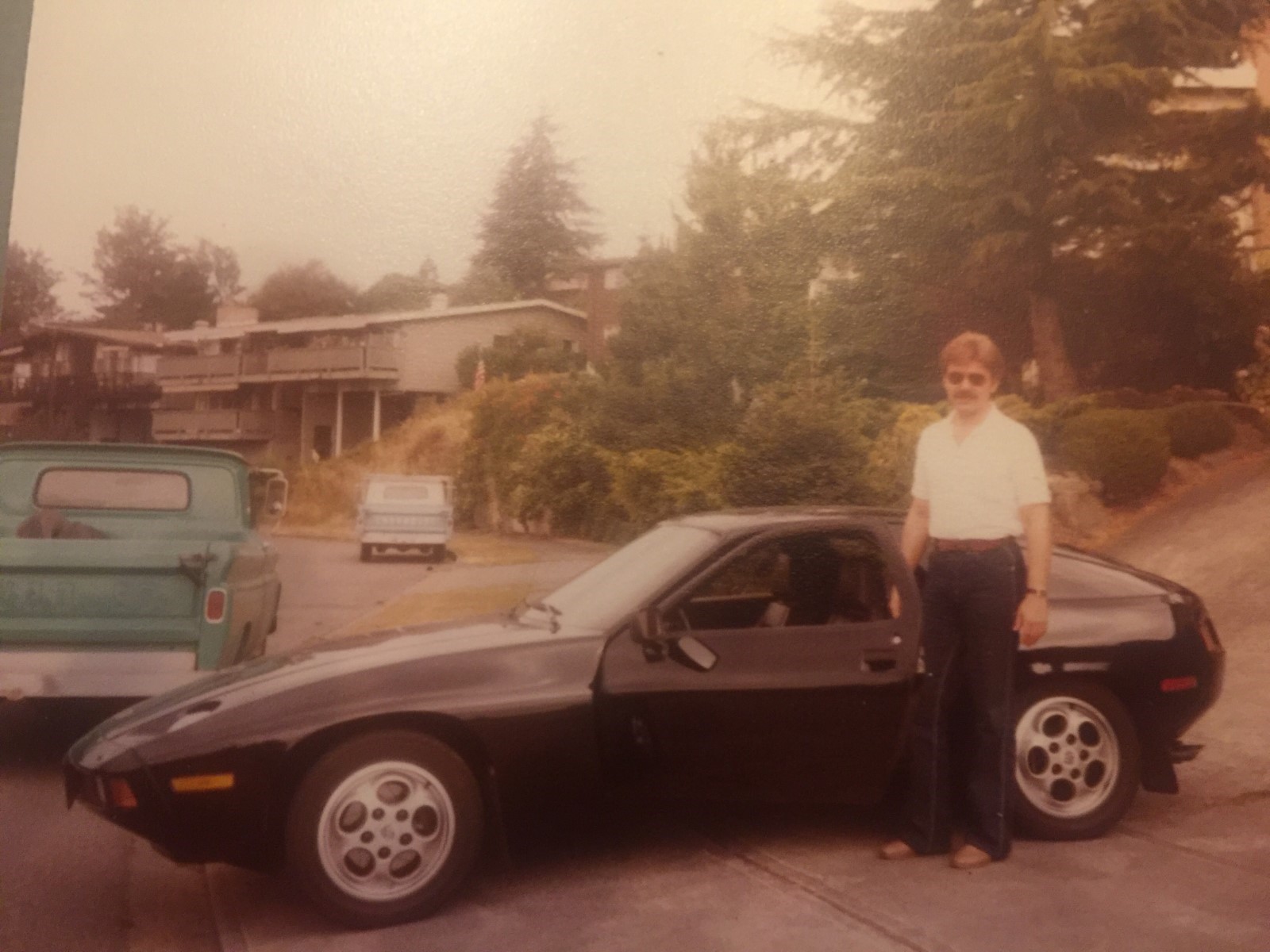
The author and the beauty. photo courtesy of the author.

I used to go down into my garage every night, late, and just sit in front of her hood and look at her, five maybe ten minutes. It was a total love affair between that machine and me.  When I’d leave to go to bed, I’d always walk around to her backside, run a gloved hand across and along her rear end to caress her right beneath the gap in the hatch. It was nutty, but I could feel the car settle, ever so slightly, a couple thousandths, from the left rear shock to the right. 

When I stepped through the garage door to walk back up into the house, I would always, every time, hear her exhaust system … “clink” … and as I closed the door, I’d hear her fuel accumulator gurgle. I’m not fucking kidding.  This beautiful shiny black thing would say good night to me every night. For the Silo, Christopher O’Leary.

How F1 Cars Move Around The World For Races

This year’s 2019 Formula 1 Etihad Airways Abu Dhabi GP is almost here! Have you ever wondered how the cars make it to the race?  It’s a logistical miracle. Custom containers. Hydraulic platforms. Modified cargo jet airliners and much, much more. If you’re a fan of F1 races you may have wondered how your favorite team manages to travel all around the globe in order to make it to the circuit safely on time. Some teams save money by using cargo ships and traveling via sea. Sometimes, they are required to complete this entire process from start to finish in only 48 hours!

Take a look at this nifty infographic from our friends at storagecentres.co.uk to learn more and have another level of appreciation for this incredible sport.

World Agencies Are Eradicating Car Hacking

With Cars becoming more like smartphones nowadays, we thought we’d take a look at the growing concern of Car hacking, a phenomenon that’s sending chill up motorists’ and manufacturers’ spines across the globe, more efficiently than any air-conditioning unit could ever do.

However, perhaps even more importantly, we’ll tell you what the world’s governing agencies are doing to help eradicate car hacking and what YOU can do to prevent your car from being hacked. For the Silo, Louis S. Dixon and our friends at Select Car Leasing UK.

who discovered car hacking infographic

Digital Blessings For Auto Restoration And Repair

CarForumMemeOne of the biggest influences that the internet and social media has on the automotive industry is the now ease of finding hard-to-find parts and procedures. Go on Google, type in your year, make, and model, followed by the part  or procedure you are looking for, and in the results you are bound to find (at the very least) a forum, web group, or page dedicated to your vehicle specifically. What this means to you is that now you can discuss (with others who love the same vehicle as you) parts, repair procedures, styling, or just why you love your vehicle so much! What this also means is that you now can draw from a vast pool of knowledge from others who share your same interest.

So be it a complicated repair or common problem, you can usually chat with someone who has already been there and done that. (a majority of the time) and a lot of the forums usually have step by step procedures with pictures.  This came in handy for me last month when a certain silver Smart car I know had starting issues. The  first problem? Where is the starter? This may sound dumb but, Look under the bonnet (hood under the trunk) and you tell me where the starter is. I would bet 5 bucks that you could not, even from underneath. Unless, you have messed with one, prior. The next Issue, where the heck is this starter supposed to fit out? Lastly, How  do you even get to the bolts that hold it in?


Let's say you need a part for an old Edsel- just plug in the parameter in your fave search engine (give bing.com a try) and voila: related links CP

Luckily for me, there are many Smart car pages based out of the U.K. and one really good one I found, had many members who were very knowledgeable in this topic, this page also had step by step  detailed instructions along with very clear pictures. This is substantial considering that one cannot even get a repair manual for these cars, almost nobody has parts listings OR interchanges for any of these cars  with a model year prior to 2008 (this car being a 2006). Who knew that to change this starter there was insane procedure including dropping the engine and removing the intercooler system.  A bunch of people on this page had already been through this and had come up with a very efficient shortcut. This saved me hours of time.  All this from a free membership.   Here are a few Facebook pages that I follow:

corvettesyndicate

“Restoring Old Cars” – a lot of classic car posts,  “Lifted Trucks USA”- lots of pics of lifted trucks lol, “Chevy Chevelle”- Lots of Chevelle pics, ”Chevy Militia”- jacked up Chevy truck pics, and my two favorite ones “Bow-tie Society”- for everything Chevrolet, also where Ford and Dodge Trollers come to get put back in their respective places.  And “Black Crow Car Education System” –this guy posts all kinds of cool classic auto industry pics, vintage, and artistic mechanical pics. All of these pages are very cool. Check em out by searching them on Facebook. Till next time. For the Silo, Robb Price, WC Kustoms.

Largest And Most Trusted Digital Marketplace For Shipping Estate Sales

We’re  EBTH-  Everything But The House- the largest and most trusted digital marketplace for shipping estate sales, but we started small, in front yards and tag sales. Our founders,-Brian Graves and Jacquie Denny, met while working in the Cincinnati auction and antiques world. While they loved uncovering the potential of pieces waiting inside their clients’ homes, they couldn’t help feeling like the traditional estate sale formats made it difficult for families to earn fair market value for their belongings. Not to mention the fact that design lovers and deal-hunters were limited to shopping for home furnishings and decor in their areas alone.



EBTH founders, Brian and Jacquie.

They also realized they liked helping people and they liked working together and so naturally, EBTH was born, and its online auctions let fans from Ohio to Anchorage in on a well-kept secret: that there were thousands of one-of-a-kind treasures waiting in the America’s best homes and now, at their fingertips.

Eight years later, EVERYTHING BUT THE HOUSE  ( CEO Andy Nielsen , CBO Mandana Dayani  ) sells furniture, jewelry, art coins, cars, collectibles, and more in over 27 US cities and counting. We’re bigger, but no less committed to giving buyers access to incredible homes around the country, fueled by the sellers who inspire us every day. We feel lucky to be at the center of a community that celebrates the rare, historical, weird, and wonderful.

Supplemental- EBTH backgrounder via Fortune.com


LEGO Books From Worlds Leading Builder Yoshihito Isogawa

Yoshihito Isogawa believes his books should be like the LEGO brick—minimalist, colorful, and full of possibility.

In his nearly-wordless releases from No Starch Press, such as The LEGO Power Functions Idea Books (No Starch Press, $24.95 USD each, 324 pp./328pp., October 2015), Isogawa shares hundreds of creative ways to build mechanisms with Power Functions, a wildly popular LEGO TECHNIC system of electronic components. In these books, Power Functions gears, lights, motors, and control units are used to make sliding doors, walking robots, steerable tanks, and more, with each project encouraging readers to become inventive LEGO builders.

Isogawa’s previous books have been praised as “invaluable” (BrickJournal), “fantastic” (Boing Boing), “minimalistic but highly informative” (Booklist), and “indispensable” (The NXT STEP Blog), and this two-volume set is a treasure trove of tiny but surprisingly elegant creations that millions of LEGO Power Functions owners will use for design inspiration.

The LEGO Power Functions Idea Books showcase small projects to build with LEGO TECHNIC gears, motors, and other moving elements that are depicted in vibrant, detailed photographs. Each model includes a list of required parts that guides readers through the build while exploring the principles of simple machines, gear systems, and power translation.

In Volume 1: Machines and Mechanisms, readers will build-

Sliding doors

Grasping claws

Rack-and-pinion mechanisms

Ball-shooting devices

In Volume 2: Cars and Contraptions, readers will build

Four-wheel drive cars

Adorable walking bots

Steerable tanks

Robotic inchworms

Cars that can drive on the edge of a table

New LEGO Book Machines & Mechanisms

Each of these volumes continues No Starch Press’s tradition of publishing high-quality books that inspire readers of all ages to stretch the limits of their imagination and build creatively with LEGO. The LEGO Power Functions Idea Books are available now in fine bookstores everywhere.

3rd Concours d’Elégance Elite Concept Car Event

Peter Auto is delighted to announce that the Concours Chantilly Arts & Elegance Richard Mille, which will be held on 4th September in the Chantilly Domain for the third time, is welcoming two new partners: BMW and ACJ (Airbus Corporate Jets).

Last year's Chantilly.
Last year’s Chantilly.

BMW was present at the 2015 event as entrant in the Concours d’Elégance reserved for concept cars and won the 1st prize with the 3.0 CSL Homage R. In 2016, the year which marks the Bavarian make’s centenary, BMW has joined the Chantilly Arts & Elegance Richard Mille in the context of a wider partnership that will be announced at a later date.

ACJ provides its clients with the most modern business jets in the world based on the full range of planes made by Airbus, leader in the field of aeronautics, thanks to its unique expertise, innovative technology and bespoke customer service. A fully personalised interior can be installed in these very spacious VIP planes including, for example, a lounge, an office, a bedroom and a bathroom. By combining interiors with unique living spaces and a range of action that enables its clients to cover the whole world, ACJ facilitates their life style. With ACJ Chantilly Arts & Elegance welcomes a partner whose values of excellence, innovation and luxury dovetail perfectly with those highlighted by the event.

Last year's winner- the BMW CSL R concept car. What a beauty!
Last year’s winner- the BMW CSL          concept car. What a beauty!

BMW and ACJ join a list of prestigious partners who have renewed their confidence in Peter Auto in 2016 for the Chantilly Arts & Elegance Richard Mille: DS Automobiles, Le Point, Bonhams, Relais & Châteaux, Charles Heidsieck, Radio Classic, the IDEC Group, etc.

The first two Chantilly Arts & Elegance Richard Mille were an instant success with the public, manufacturers, collectors and partners. They were also rewarded in Great Britain by the prize for the Motor Car Event of the Year in 2014 and 2015 at the International Historic Motoring Awards. In 2015 the event received the backing of the French Ministry of Culture and Communication, which has renewed its support in 2016.

The 3rd Chantilly Arts & Elegance Richard Mille follows in the same vein as the previous ones by continuing with the Concours Automobile allied with a wide range of activities that include the French Art of Living, Fine Arts, Arts of the Table, Fashion, Music, Watch making, etc. with the partnership of prestigious houses and brands. Thus, all the ingredients are combined to make it a rendezvous that’s unique in its field in an exceptional setting only a few kilometres from Paris. The riches of the Chantilly Domain and the eponymous princely town give Chantilly Arts & Elegance Richard Mille the quintessence of art and elegance, which all the visitor can enjoy at this convivial, family event.

Click me! Future ready art music for future ready Super Cars.

Is this what Bruce Wayne is driving? Rolls-Royce Wraith arrives in Canada

You've heard the expression "the photo doesn't do it justice" right? You're best bet is to surf this link and watch the video. http://tinyurl.com/opu3uow
You’ve heard the expression “the photo doesn’t do it justice” right? You’re best bet is to surf this link and watch the video. http://tinyurl.com/opu3uow

Rolls-Royce know how to throw a party and turn an unveiling into the perfect analog unwrapping for the Wraith: the most powerful, technologically advanced and arguably the most beautiful Rolls to date.  On the evening of Wednesday, 28 August 2013, Rolls-Royce Motor Cars “got ‘er done” by celebrating the Vancouver arrival of its newest and most powerful model, with a dramatic unveiling event at the Rocky Mountaineer Train Station.  The private event, hosted by Rolls-Royce Motor Cars Vancouver was carefully thought out and put together  to reflect the dark beauty and unparalleled power that are the hallmarks of Rolls-Royce Wraith and we were there! Take a deep breath and sit down…..

We knew this car was something out of the ordinary back in March, when we paid attention to the Geneva roll-out and a few months later, we were blown away by the Hollywood-esque Wraith promo films we were privileged to see. The Wraith seemed like the de facto standard automobile for a superhero in disguise or a secret agent and that’s a good thing.

“The Rolls-Royce Wraith is unlike any automobile produced in Rolls’ long and fabled history, so it is especially fitting that its arrival in Vancouver be marked by an event that [was] as grand as this,” commented Eric C. Shepherd, President  of Rolls-Royce Motor Cars North America. “The  Wraith represents a bold and powerful new statement by Rolls-Royce, so this event [had] been designed convey those same qualities, while bringing  this premier luxury brand to life in a way that is relevant to our  customers.”

It’s a Fastback!
Wraith’s sweeping fastback gives the car its unique character. Bold lines, tension in the panels and a raked rear screen evoke the image of an
athlete poised in the starting blocks. Further expression of dynamic intent can be seen in Wraith’s deeply recessed grill and wide rear track.

Coach doors open to reveal a sumptuous interior complete with softest  Phantom-grade leathers and expanses of wood. Named after the famous cove in the South of France where Sir Henry Royce and his design and  engineering teams spent their winters, the Canadel finish sweeps through
the contemporary interior, cosseting four occupants in a space bathed in  light and warmth.

Sumptuous- tasteful.....but is there a hidden 'machine gun' or 'oil slick' switch in here somewhere? hmmmm.
Sumptuous- tasteful…..but is there a hidden ‘machine gun’ or ‘oil slick’ switch in here somewhere? hmmmm.


The interior ambiance is complemented by Starlight Headliner, a Bespoke  feature available beyond Phantom family cars for the first time. 1,340
fiber optic lamps are hand-woven into the roof lining to give the  impression of a glittering, starry night sky.

A twin-turbocharged V12 engine married to 8-speed automatic ZF  transmission ensure that power delivery is effortless, but dramatic. 624
bhp is available to the driver while the 0-60 mph sprint is achieved in  4.4 seconds, compared with 563 bhp and 0-60 in 4.7 seconds for Ghost.

From 1,500 rpm 590 ft lbs of torque available, a wide rear track, shorter  wheelbase and lower roof height further underwrite the Wraith as the most  powerful, involved driving experience of any Rolls-Royce in history.  Performance delivers as the car’s suspension has been tuned to minimize body roll and discreetly amplify feedback when cornering; while steering weight is heavier at high speeds and lighter at low speeds to give a more polished and spirited drive.

624 BHP. 250 KPH/ 155 MPH with a Governor? A "spirited ride" indeed Helmut!
624 BHP. 250 KPH/ 155 MPH with a Governor? A “spirited ride” indeed Helmut!

Satellite Aided Transmission   The Wraith is no GT bruiser. Agility improvements have been achieved with absolutely no compromise to the sensation of riding on a bed of air. Furthermore, the debut of Satellite Aided Transmission technology takes the powertrain to a new level of effortless delivery, one that perfectly suits the Rolls-Royce brand.

Satellite Aided Transmission uses GPS data to read the road ahead. It sees  beyond what the driver sees; anticipates his next move based on location  and current driving style, then selects the most appropriate gear for the terrain ahead. Corners, motorway junctions and roundabouts are all anticipated meaning Wraith is constantly poised to deliver on its promise of performance.

A more polished, effortless driving experience and even better response brings a new even more dynamic dimension to the famous Rolls-Royce trait, waftability.

For over a century a Rolls-Royce motor car has featured technologies designed to support occupants discreetly, delivering a peerless driving
experience epitomized by the term ‘effortlessness’. In every Rolls-Royce these assist the driver when called upon, but are prepared to return
without fuss to the background when no longer required.

A real "Smart Car". Rolls-Royce innovates once again with Satellite aided transmission: GPS technology interprets the roads physical construction and predicts the best transmission settings for the road ahead. Case in point: Curves ahead. The computer makes adjustments to ensure the driver has the ultimate amount of power and control at their disposal.
A real “Smart Car”. Rolls-Royce innovates once again with Satellite aided transmission: GPS technology interprets the roads physical construction and predicts the best transmission settings for the road ahead. Case in point: Curves ahead. The computer makes adjustments to ensure the driver has the ultimate amount of power and control at their disposal.

Advances in mechanical and electrical technology deliver systems like head-up display, adaptive headlights and Wraith’s keyless opening trunk.
But improvements in connectivity have taken the human-machine interface to a new level of sophistication, a suite of aids that could be likened to a contemporary on-board valet.

Voice activation commands, for example, come with a one-touch call button located on the steering wheel. A destination no longer requires manual input from a navigation menu and route assistance begins immediately, on-screen and via audio guidance following a voice command such as “navigate to 5th Avenue in New York City.”

Additional improvements in communications come in the design and functionality of the elegant Spirit of Ecstasy Rotary Controller. This
allows navigation through on-screen functions using a touch pad that features pinch and pull functionality to echo smart phone usage. Letters
can also be “drawn” onto the pad by hand rather than by scrolling through a series of available characters on-screen. CP ***coming soon- a Silo field report from Vancouver correspondent Arthur Maughan AND his experience driving this incredible machine. Stay tuned.

TECHNICAL SPECIFICATIONS

Rolls-Royce Wraith

Dimensions

Vehicle length
5269 mm / 207.4?
Vehicle width
1947 mm / 76.7?
Vehicle height (unladen)
1507 mm / 59.3?
Wheelbase
3112 mm / 122.5?
Turning circle
12.7 m / 41.7 ft
Trunk Volume (DIN)
470 ltr / 16.6 ft3

Weight

Unladen Weight (DIN)
2360 kg / 5203 lb

Engine

Engine / cylinders / valves
V / 12 / 48
Fuel management
Direct injection
Power output @ engine speed
624  bhp /  465 kW @ 5,600 rpm
Max torque @ engine speed
590 lb ft  / 800 Nm @  1,500-5,500 rpm
Fuel type
Super unleaded1

Performance

Top speed
250 km/h / 155 mph (governed)
Acceleration 0 – 60 mph
4.4 sec
Acceleration 0 – 100 km/h
4.6 sec


Montreal

Rolls-Royce Motor Cars Quebec

5155 Rue de Sorel Montreal Quebec H4P 1G7

Request contact

                Phone: +1 514 738 3030

Visit website


Toronto

Rolls-Royce Motor Cars Toronto

740 Dupont Street Toronto Ontario M6G 1Z6

Request contact

                Phone: +1 416 530 1880 Fax: +1 416 530 4495

Visit website


Vancouver

Rolls-Royce Motor Cars Vancouver

1717 West 5th Avenue Vancouver British Columbia V6J 3H5

Request contact

                Phone: +1 604 736 7381

Visit website