

More from our friends at toptenrealestatedeals.com. Photos by Cameron Carothers.



More from our friends at toptenrealestatedeals.com. Photos by Cameron Carothers.
NBAF is manifesting more this year: more impact, more engaging programming, more opportunities for artists, more exposure, and more funding. We are coming for it all in the new year! In celebration of what will be an amazing year, it is my honor to give you a peek into what we have in store as we prepare to do things even bigger and better in 2024.
Our programming theme for this year is “Artistry Unbound,” an exploration of the resounding power of African American art to propel us toward the realization of our collective freedom. This theme celebrates the profound contributions of African American artists in their relentless pursuit of social justice, equality, and financial equity. It celebrates the trailblazers who have paved the way for a new generation of artists, continuing the legacy of social commentary and artistic innovation. This theme calls us to be “black on purpose” and create programs that directly speak to the injustices that we still face as a people and find artistic and creative ways to address these issues.
We are excited to bring this theme to life through carefully curated programming that will kick off with the NBAF Black History Month event, “Blacklisted! Banned Book Fair”, which speaks directly to the injustices highlighted through recent campaigns designed to censor and diminish Black voices.
Blacklisted! Banned Book Fair takes place on February 24th and 25th, and aligns with NBAF’s mission to:

There are so many exciting things on the horizon for NBAF this year and we look forward to bringing you quality multi-disciplinary programming focused on uplifting and highlighting Black art and artists in new ways throughout 2024. As we continue our transition back to larger immersive events and chart a path back to the renowned NBAF Festival, our team is committed to innovatively presenting the best in Black art and we look forward to continuing to make an impact in the community with your partnership. We look forward to seeing you soon online or at an upcoming event! For the Silo, Stephanie R. Owens.

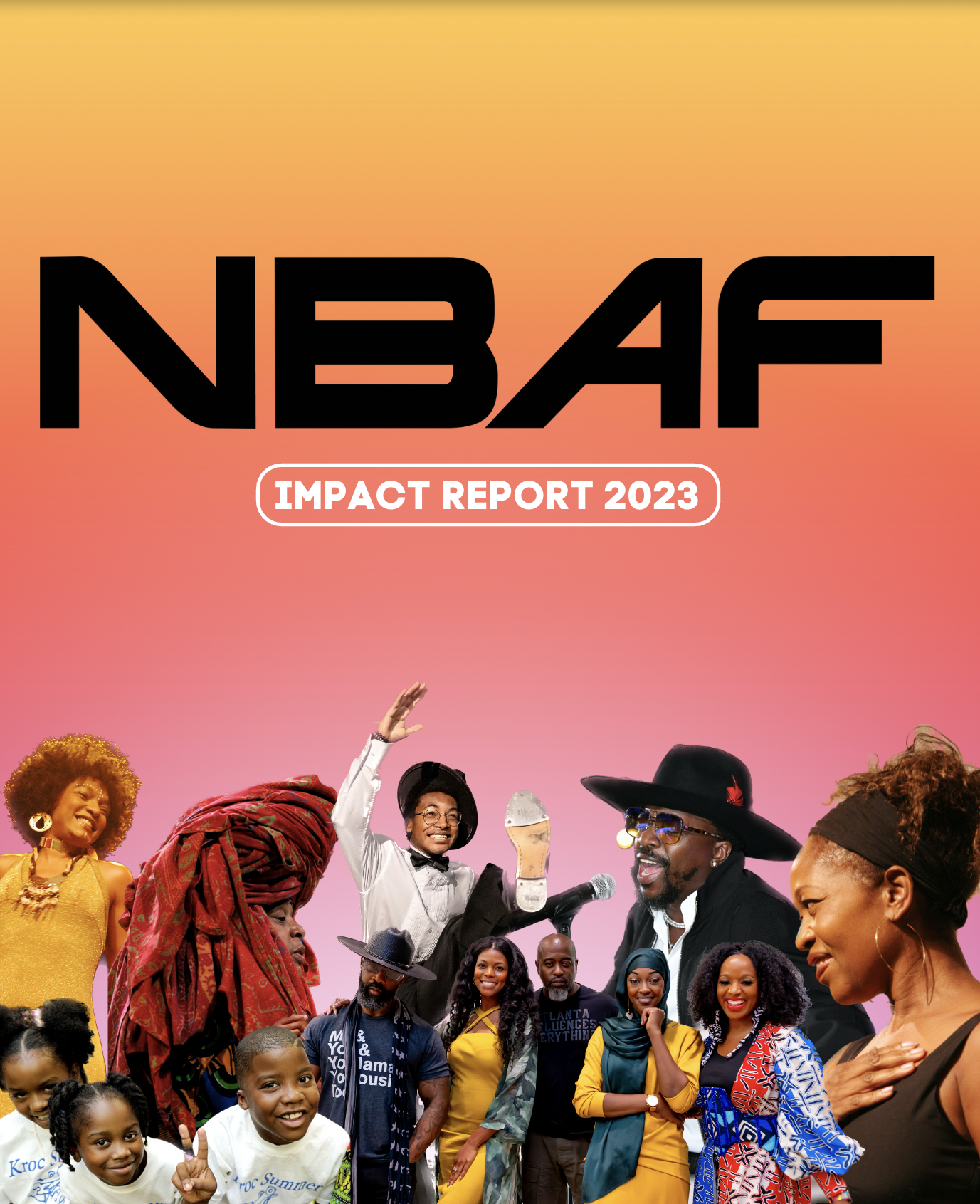
Reflecting on the remarkable journey of 2023, we’re excited to share the significant impact your support has made on our mission and community. We encourage you to delve into the highlights and accomplishments of the past year in our 2023 Impact Report, available here.
Click on the image above to view a visual journey of the transformative moments and positive change that helped us achieve in 2023.
Check out these upcoming events from NBAF!

SAVE THE DATE!
Saturday, March 27
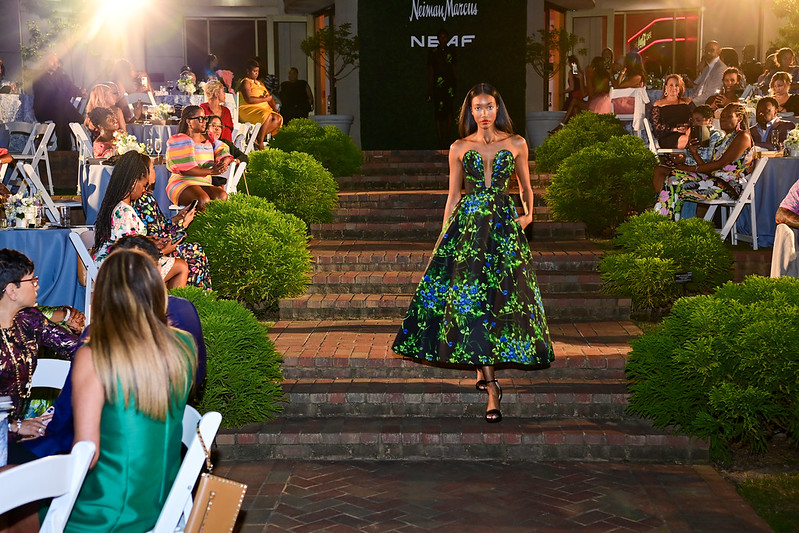
Taking place at the Atlanta History Center and in partnership with Neiman Marcus, FA+F attendees enjoy food + drinks, an impeccably curated fashion show, fashion icons and artists award presentations, and are introduced to the winning student designer of the annual Fashion Forward Student Design Competition.
Fine Art + Fashion raises funds to support NBAF’s operations and programs for artists of all ages and disciplines, particularly our youth arts education programs for underserved students of African descent.
| 2024 NBAF Fashion Forward A Competition for Student Fashion Designers NBAF Fashion Forward honorees are selected by a distinguished panel of judges and receive a cash prize of $1,500. The 2024 NBAF Fashion Forward honorees will be presented at NBAF’s Fine Art + Fashion Benefit on Wednesday, March 27, 2024 in Atlanta, GA. To get started, check out nbaf.org/fashion-forward to download the Fashion Forward Fact Sheet to learn more about the application requirements. If you have any questions or need further information, please contact Fashion Forward Coordinator, Page Yang, at pyang@nbaf.org. Please mention thesilo.ca when contacting. The deadline to apply is Friday, January 26, 2024 at 11:59 PM EST. APPLY HERE! |
New Merch! Your purchase supports NBAF’s year round programming.
| Select from special limited edition art prints, t-shirts, tote bags, note books, and more!Black Art Matters TeeNBAF Commemorative PinsRadcliffe Bailey NBAF 10th Anniversary PostersBlack Art Matters stainless steel tumblerNBAF tote bagNBAF Logo Unisex Hoodie With Shop Pay you can get it now and pay later! Pay in 4 interest-free installments for orders over $50.00. |

Don’t miss out on NBAF news and events.
Follow us on social to stay in the know!
 |
World Economic Forum’s AI Governance Alliance says a global effort is needed to create equitable access to artificial intelligence. Artificial intelligence holds the potential to address global challenges, but it also poses risks of widening existing digital divides or creating new ones. Three new Forum papers offer recommendations on building safe systems and technologies, ensuring responsible applications and transformation, and advancing resilient governance and regulation. Davos-Klosters, Switzerland, 18 January 2024 – The AI Governance Alliance (AIGA) released today a series of three new reports on advanced artificial intelligence (AI). The papers focus on generative AI governance, unlocking its value and a framework for responsible AI development and deployment. The alliance brings together governments, businesses and experts to shape responsible AI development applications and governance, and to ensure equitable distribution and enhanced access to this path-departing technology worldwide. “The AI Governance Alliance is uniquely positioned to play a crucial role in furthering greater access to AI-related resources, thereby contributing to a more equitable and responsible AI ecosystem globally,” says Cathy Li, Head, AI, Data and Metaverse, World Economic Forum. “We must collaborate among governments, the private sector and local communities to ensure the future of AI benefits all.” AIGA is calling upon experts from various sectors to address several key areas. This includes improving data quality and availability across nations, boosting access to computational resources, and adapting foundation models to suit local needs and challenges. There is also a strong emphasis on education and the development of local expertise to create and navigate local AI ecosystems effectively. In line with these goals, there is a need to establish new institutional frameworks and public-private partnerships along with implementing multilateral controls to aid and enhance these efforts. While AI holds the potential to address global challenges, it also poses risks of widening existing digital divides or creating new ones. These and other topics are explored in a new briefing paper series, released today and crafted by AIGA’s three core workstreams, in collaboration with IBM Consulting and Accenture. As AI technology evolves at a rapid pace and developed nations race to capitalize on AI innovation, the urgency to address the digital divide is critical to ensure that billions of people in developing countries are not left behind. On international cooperation and inclusive access in AI development and deployment, Generative AI Governance: Shaping Our Collective Global Future – from the Resilient Governance and Regulation track – evaluates national approaches, addresses key debates on generative AI, and advocates for international coordination and standards to prevent fragmentation. Unlocking Value from Generative AI: Guidance for Responsible Transformation – from the Responsible Applications and Transformation track – provides guidance on the responsible adoption of generative AI, emphasizing use case-based evaluation, multistakeholder governance, transparent communication, operational structures, and value-based change management for scalable and responsible integration into organizations. In addition, for optimized AI development and deployment, a new Presidio AI Framework: Towards Safe Generative AI Models – from the Safe Systems and Technologies track – addresses the need for standardized perspectives on the model lifecycle by creating a framework for shared responsibility and proactive risk management. AIGA also seeks to mobilize resources for exploring AI benefits in key sectors, including healthcare and education. Quotes from the initiative: “As we witness the rapid evolution of artificial Intelligence globally, the UAE stands committed to fostering an inclusive AI environment, both within our nation and throughout the world. Our collaboration with the World Economic Forum’s AI Governance Alliance is instrumental in making AI benefits universally accessible, ensuring no community is left behind. We are dedicated to developing a comprehensive and forward-thinking AI and digital economy roadmap, not just for the UAE but for the global good. This roadmap is a testament to our belief in AI as a tool for universal progress and equality, and it embodies our commitment to a future where technology serves humanity in its entirety.” – H.E. Omar Sultan Al Olama, Minister of State for Artificial Intelligence, Digital Economy and Remote Work Applications of the United Arab Emirates “Rwanda’s participation in the AI Governance Alliance aims to ensure Rwanda and the region do not play catch up in shaping the future of AI governance and accessibility. In line with these efforts, Rwanda’s Centre for the Fourth Industrial Revolution, in collaboration with the World Economic Forum, will host a high-level summit on AI in Africa towards the end of 2024, creating a platform to engage in focused and collaborative dialogue on the role of AI shaping Africa’s future. The event’s primary goal will be to align African countries on common risks, barriers, and opportunities and, ultimately, devise a unified strategy for AI in Africa.” – Paula Ingabire, Minister of Information Communication Technology and Innovation of Rwanda “IBM continues to drive responsible AI and governance. We all have an obligation to collaborate globally across corporations, governments and civil society to create ethical guardrails and policy frameworks that will inform how generative AI is designed and deployed. IBM is proud to work with the Forum’s AI Governance Alliance as the knowledge partner for this paper series.” – Gary Cohn, IBM Vice-Chairman . “The evolution of AI is unique in that the technology, regulation and business adoption are all accelerating exponentially at the same time. It’s critical that the public and private sector come together to share insights, resources and best practices for building and scaling AI responsibly. Leaders in this space must prioritize inclusive AI so that the benefits of this technology are shared in all parts of the world, including emerging markets. The Forum’s three-part briefing paper series offers insightful considerations across responsible applications, governance and safety to empower businesses, respect people and benefit society.” – Paul Daugherty, Chief Technology Innovation Officer, Accenture. |

A few years back, I read Warren Buffett’s book, Snowball. It turned out to be one of my favorite books of all time. In this book, Warren shares stories of when he was a kid and some of his favorite books. One book in particular, 1,000 Ways to make $1,000 by F.C. Minaker, helped shape his idea around business and making money.
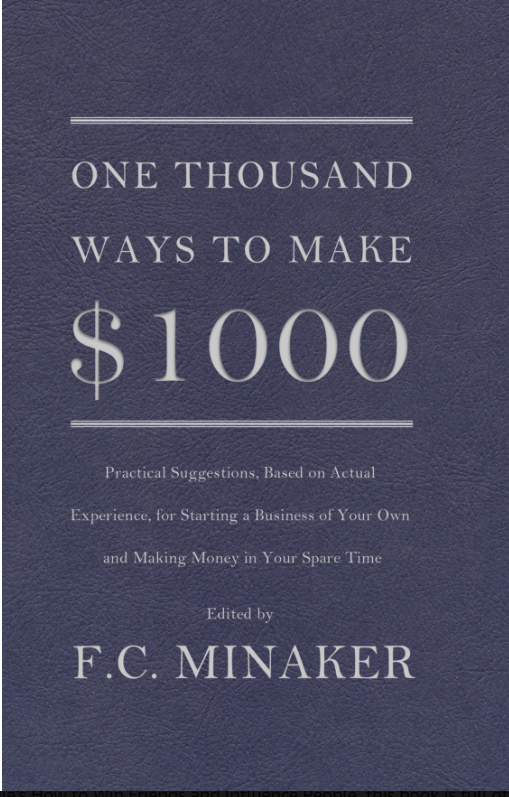
After reading this legendary book many times, I decided to refresh the concept to help others by sharing ideas on how to use current AI technology to make money. As an entrepreneur who uses AI in my business, I know there are many ways in which AI can help you create side hustles, start businesses, and even help make your current jobs more efficient.
If you’re not a techie type, there may be a learning curve to become adept at the skills to succeed at AI. But if you have an interest in it and a desire to learn, and are willing to undergo some training and education, it’s possible to learn enough to make money with AI.

Prompt generators are becoming a lucrative business. Humans will pay for AI prompts that are ‘ready to go’.
The next decade will be a ‘Decade of Abundance‘ due to technological advancements like AI. While AI has its detractors, I believe we should be leaning in to explore this life-changing technology because it will empower the globe.
AI has already been able to improve our lives in many ways, and it has the potential to solve some of the world’s most pressing problems, including in healthcare, education, and security. There’s no reason why you cannot be a part of this revolution, too. For the Silo, Joe Nigro.
Connecticut-based Joe Nigro is an investor, advisor, and entrepreneur who has used AI extensively in his career.
Featured image: Students summarize a text then tried to figure out which summaries were penned by classmates and which was written by a chatbot.Timothy D. Easley, FRE / AP
Doha, January 2024 // The Arab Center for Research and Policy Studies announced the results of their public opinion poll regarding the Israeli war on Gaza on Wednesday 10 January 2024. The poll was carried out on a sample of 8000 respondents (men and women) from 16 Arab countries. The survey questions were selected to determine the opinions of citizens in the Arab region on important topics related to the Israeli war on Gaza.

The results of the survey demonstrate the locality of the war as felt by Arab public opinion, with 97% of respondents expressing psychological stress (to varying degrees) as a result of the war on Gaza. 84% expressed a sense of great psychological stress.
About 80% of respondents reported that they regularly follow news of the war, compared to 7% who said that they do not follow it, a further indication that the Arab public sees this war as a local event. To access the news 54% of respondents relied on television, compared to 43% who relied on the internet.
It is noteworthy that the results highlighted that Arab public opinion does not believe that the military operation carried out by Hamas on 7 October 2023 was in pursuit of a foreign agenda. 35% of respondents considered that the most important reason for the operation was the continued Israeli occupation of the Palestinian territories, while 24% attributed it mostly to defence against Israel’s targeting of Al-Aqsa Mosque, and 8% saw it as a result of the ongoing siege of the Gaza Strip.
The most important motivations for Hamas to carry out the military operation on 7 October 2023
| Most important | Second most important | |
| The ongoing Israeli occupation of Palestinian land | 35 | 13 |
| Defending al-Aqsa Mosque against attacks | 24 | 21 |
| The ongoing blockade of Gaza | 8 | 12 |
| Ongoing and expanding settlement on Palestinian land | 6 | 8 |
| Liberating Palestinian detainees and prisoners in Israeli prisons | 6 | 13 |
| Israel’s rejection of the establishment of a Palestinian state | 4 | 5 |
| The United States’ failure to achieve a just peace | 2 | 3 |
| The international community’s disregard for Palestinian rights and the ongoing occupation | 4 | 5 |
| Halting the normalization process between Arab governments and Israel | 2 | 3 |
| Carrying out the plan or agenda of a foreign power such as Iran | 2 | 2 |
| Other | 2 | 1 |
| Don’t know / Declined to answer | 5 | 0 |
| No second option | 0 | 14 |
| Total | 100 | 100 |
While 67% of respondents reported that the military operation carried out by Hamas was a legitimate resistance operation, 19% reported that it was a somewhat flawed but legitimate resistance operation, and 3% said that it was a legitimate resistance operation that involved heinous or criminal acts, while 5% said it was an illegitimate operation.
The results showed that there is an Arab consensus of 92% expressing solidarity with the citizens of the Arab region with the Palestinian people in Gaza. While 69% of respondents expressed their solidarity with Palestinians and support for Hamas, 23% expressed solidarity with Palestinians despite opposing Hamas, and 1% expressed a lack of solidarity with the Palestinians.
The majority of respondents rejected comparisons between Hamas and ISIS made by predominately Israeli and Western politicians and media personalities.
When asked about the responses of regional and international powers to Israel’s war on Gaza, 94% considered the US position negatively, with 82% considering it very bad. In the same context, 79%, 78%, and 75% of respondents viewed positions of France, the UK, and Germany negatively. Opinion was split over the positions of Iran, Turkey, Russia, and China. While (48%, 47%, 41%, 40%, respectively) considered them positively (37%, 40%, 42%, 38%, respectively).
In the same context, 76% of respondents reported that their position toward the United States following the Israeli war on Gaza had become more negative, indicating that the Arab public has lost confidence in the US. Furthermore, respondents demonstrated a near consensus (81%) in their belief that the US government is not serious about working to establish a Palestinian state in the 1967 occupied territories (The West Bank, Jerusalem, and Gaza).
About 77% of respondents named the United States and Israel as the biggest threat to the security and stability of the region. While 51% saw the United States as the most threatening, 26% considered the biggest threat to be Israel. While 82% of respondents reported that US media coverage of the war was biased towards Israel, only 7% saw it as neutral.
How opinion on US policy in the Arab region has changed since the war on Gaza
Evaluation of US seriousness in establishing a Palestinian state in the 1967 Occupied Palestinian lands
Biggest threats to the peace and stability of the region
| Greatest Threat | Second Greatest Threat | |||||||
| Gaza war | 2022 | 2020 | 2018 | Gaza War | 2022 | 2020 | 2018 | |
| United States | 51 | 39 | 44 | 43 | 25 | 25 | 23 | 28 |
| Israel | 26 | 41 | 37 | 37 | 33 | 28 | 38 | 40 |
| Iran | 7 | 7 | 10 | 13 | 10 | 13 | 19 | 15 |
| Russia | 4 | 6 | 2 | 3 | 8 | 8 | 4 | 7 |
| France | 2 | 2 | 2 | 1 | 10 | 5 | 3 | 1 |
| Turkey | 2 | 2 | 2 | 1 | 3 | 2 | 5 | 2 |
| China | 1 | 2 | 1 | 0 | 2 | 2 | 2 | 0 |
| Other | 1 | — | — | — | 2 | — | — | — |
| Don’t know / Declined to answer | 6 | 1 | 2 | 2 | 0 | — | — | — |
| No second option | 0 | — | — | — | 7 | 17 | 6 | 7 |
| Aggregate | 100 | 100 | 100 | 100 | 100 | 100 | 100 | 100 |
Arab public opinion sees the Palestinian Cause as an Arab issue, and not exclusively a Palestinian issue. A consensus of 92% believe that the Palestinian question concerns all Arabs and not just the Palestinians. On the other hand, 6% said that it concerns the Palestinians alone and they alone must work to solve it. It is worth noting that this percentage is the highest recorded since polling began in 2011, rising from 76% at the end of 2022, to 92% this year. Some countries recorded significant increases. In Morocco, it rose from 59% in 2022 to 95%, in Egypt from 75% to 94%, in Sudan from 68% to 91%, and in Saudi Arabia from 69% to 95%, a statistically significant increase that represents a fundamental shift in the opinions of the citizens of these countries.
Arab public opinion is almost unanimous in rejecting recognition of Israel, at a rate of 89%, up from 84% in 2022, compared to only 4% who support its recognition. Of particular note is the increase in the percentage of those who rejected recognition of Israel in Saudi Arabia from 38% in the 2022 poll to 68% in this survey. Such a statistically significant increase also applies to other countries such as Morocco, where the percentage rose from 67% to 78%, and Sudan, where it increased from 72% to 81%.
When asked about their opinions on what measures Arab governments should take in order to stop the war in Gaza, 36% of respondents stated that Arab governments should suspend all relations or normalization processes with Israel, while 14% of them stated that aid and support should be brought into Gaza without Israeli approval, and 11% said that the Arab governments should use oil as a weapon to assert pressure on Israel and its supporters.
| Most important measure | Second most important measure | |
| Suspend relations or normalization with Israel | 36 | 15 |
| Deliver aid to Gaza without Israeli approval | 14 | 16 |
| Use the oil weapon to pressure Israel and its supporters | 11 | 13 |
| Establish a global alliance to boycott Israel | 9 | 11 |
| Provide military aid to Gaza | 8 | 10 |
| Announce military mobilization | 5 | 6 |
| Reconsider relations with the United States | 4 | 6 |
| Reconsider relations with states that support Israel’s war on Gaza | 3 | 5 |
| Build alliances with states that have taken practical steps against Israel | 3 | 4 |
| Other | 3 | 2 |
| Don’t know / Declined to answer | 4 | 0 |
| No second option | 0 | 12 |
| Total | 100 | 100 |
There is a near consensus among Palestinian respondents from the West Bank (including Jerusalem), around 95%, that safety and freedom of movement between the governorates and cities of the West Bank and their sense of security and personal safety have been affected negatively since 7 October 2023.
Negative effects experienced in the West Bank since 7 October 2023
A further 60% of Palestinian respondents in the West Bank said that they had been subjected to or were witnesses to raids by the occupation army forces, while 44% said that they were subjected to arrest or interrogation by the Israeli army, and 22% reported that they were subjected to harassment by settlers.
Frequency of witnessing or happening upon incidences of raids, arrests, or settler harassment in the West Bank since 7 October 2023
This survey is the first of its kind to gauge public opinion on the topic across the Arab region. The field work was conducted from 12 December 2023 to 5 January 2024 in Mauritania, Morocco, Algeria, Tunisia, Libya, Egypt, Sudan, Yemen, Oman, Qatar, Kuwait, Saudi Arabia, Iraq, Jordan, Lebanon, and the West Bank, Palestine (including Jerusalem). The surveyed communities represent 95% of the population of the Arab region and its far-flung regions. The sample in each of the aforementioned communities was 500 men and women, drawn according to cluster and self-weighted sampling methods to ensure that every individual in each country had an equal probability of appearing in the sample.
For the Silo, Dr Ahmed Hussein, researcher at the Arab Center for Research and Policy Studies.
Recent years have seen an unprecedented increase in Canada’s non-permanent resident (NPR) population far surpassing increases in annual admissions of new permanent residents. This unbalanced growth in the two migration streams will inevitably result in a growing undocumented population and forced deportations. Both developments risk inflaming Canada’s immigration politics and undermining public confidence in the immigration system.
Several factors have contributed to the NPR population surge, including ad-hoc programs aimed at expanding eligibility for permanent status, the well-documented postsecondary appetite for international tuition revenue, and eased employer access to temporary foreign workers, most notably in low-wage occupations.
Statistics Canada estimates that by the fourth quarter of 2023, Canada’s non-permanent population had exceeded 2.5 million, while entries of new permanent residents remained below 500,000 and which the government has announced will stabilize in 2025. The tightening bottleneck in temporary-to-permanent residency flows is worsened because many permanent slots go to applicants residing abroad, not non-permanent residents.
A key factor driving the growth in non-permanent inflows is the government’s repeated announcements of ad hoc programs aimed at easing the pathway to PR status for lower-skilled migrants who would otherwise struggle to clear the hurdle of the Express Entry skilled-based points system.
Examples include the February 2021 decision to provide permanent status to all economic class candidates in the applicant pool regardless of their eligibility scores and the April 2021 provision of pathways to 90,000 “essential workers” including cashiers and truck drivers. And the government expanded the program in January 2023 to give PR status to undocumented construction workers and plans to broaden the program, allowing all undocumented people to apply for permanent status.
But given limited permanent admissions, large numbers of justifiably hopeful NPRs will be unable to realize their dreams. As their study and work permits expire, many will be unable or unwilling to return to their home countries. This leaves them increasingly vulnerable to workplace exploitation, which can distort wage outcomes in lower skilled labour markets, and leaves them in poverty with no recourse to government supports because they are ineligible.
Canada urgently requires a multipronged strategy to stem this ongoing NPR growth and restore the stability and integrity of the immigration system. In our view, policies should be aimed at helping applicants make better decisions about seeking NPR status in Canada by offering a straightforward, predictable system against which they can realistically assess their prospects.
On international students, we recommend reintroducing the cap on off-campus work at 20 hours a week that was waived in October 2022 and recently extended to April 30. Continued policy punting is unhelpful in restoring predictability for prospective foreign students. Study permits have become de facto work permits, and brings job-seekers, not committed students.
We also recommend restricting study permits to institutions of a certain standard. Designated Learning Institutions (DLIs) whose students are currently ineligible for Post-Graduate Work Permits should also be ineligible for study permits. The government should also revoke designation based on the measured immigration and labour market outcomes of an institution’s graduates. Those outcomes should be regularly published by the immigration department to help prospective migrants make informed decisions and combat false dreams pushed by education recruiters.
On temporary workers, extended measures allowing, for example, 30 percent of certain workforces to be low-wage temporary foreign workers, need reconsideration. Stemming the growth in the Low-Wage Stream of the Temporary Foreign Worker Program and restoring the pre-2020 hiring regulations recognizes recent evidence of adverse effects of this program on wages and local unemployment rates.
Most important, the government needs to bring back predictability in its permanent resident admission system in the economic-class applicant pool. Though well intentioned, the one-off programs easing the pathway to permanent status are contributing to temporary resident explosion. The department needs to return to its Comprehensive Ranking System as it did before 2020. The transparency of its points system and a stable minimum eligibility score over time will mean that applicants can see what skills or training they need for entry, thereby advancing the objective of our skilled immigration program.
If these policy levers are collectively applied, they can stem the unhealthy growth in Canada’s non-permanent population, restore fairness and transparency in the permanent admission stream, and secure the immigration system’s integrity and sustainability. In doing so, we can ensure that Canada continues to be a welcoming and prosperous country for all. *note this article was sent as a letter by the C.D. Howe Institute authors to The Honourable Marc Miller, Minister of Immigration, Refugees and Citizenship Canada.
Parisa Mahboubi is a senior policy analyst at the C.D. Howe Institute. Mikal Skuterud is a professor of economics at the University of Waterloo, director of the Canadian Labour Economics Forum and a fellow-in-residence of the C.D. Howe Institute.
Geneva, Switzerland, January 2024 – Drawing on nearly two decades of original risks perception data, the World Economic Forum’s Global Risks Report 2024 warns of a global risks landscape in which progress in human development is being chipped away slowly, leaving states and individuals vulnerable to new and resurgent risks. Against a backdrop of systemic shifts in global power dynamics, climate, technology and demographics, global risks are stretching the world’s adaptative capacity to its limit.
These are the findings of the Global Risks Report 2024, released today, which argues that cooperation on urgent global issues could be in increasingly short supply, requiring new approaches to addressing risks. Two-thirds of global experts anticipate a multipolar or fragmented order to take shape over the next decade, in which middle and great powers contest and set – but also enforce – new rules and norms.
The report, produced in partnership with Zurich Insurance Group and Marsh McLennan, draws on the views of over 1,400 global risks experts, policy-makers and industry leaders surveyed in September 2023. Results highlight a predominantly negative outlook for the world in the short term that is expected to worsen over the long term. While 30% of global experts expect an elevated chance of global catastrophes in the next two years, nearly two thirds expect this in the next 10 years.
“An unstable global order characterized by polarizing narratives and insecurity, the worsening impacts of extreme weather and economic uncertainty are causing accelerating risks – including misinformation and disinformation – to propagate,” said Saadia Zahidi, Managing Director, World Economic Forum. “World leaders must come together to address short-term crises as well as lay the groundwork for a more resilient, sustainable, inclusive future.”
Concerns over a persistent cost-of-living crisis and the intertwined risks of AI-driven misinformation and disinformation, and societal polarization dominated the risks outlook for 2024. The nexus between falsified information and societal unrest will take centre stage amid elections in several major economies that are set to take place in the next two years. Interstate armed conflict is a top five concern over the next two years. With several live conflicts under way, underlying geopolitical tensions and corroding societal resilience risk are creating conflict contagion.
Economic uncertainty and development in decline
The coming years will be marked by persistent economic uncertainty and growing economic and technological divides. Lack of economic opportunity is ranked sixth in the next two years. Over the longer term, barriers to economic mobility could build, locking out large segments of the population from economic opportunities. Conflict-prone or climate-vulnerable countries may increasingly be isolated from investment, technologies and related job creation. In the absence of pathways to safe and secure livelihoods, individuals may be more prone to crime, militarization or radicalization.

Environmental risks continue to dominate the risks landscape over all timeframes. Two-thirds of global experts are worried about extreme weather events in 2024. Extreme weather, critical change to Earth systems, biodiversity loss and ecosystem collapse, natural resource shortages and pollution represent five of the top 10 most severe risks perceived to be faced over the next decade. However, expert respondents disagreed on the urgency of risks posed – private sector respondents believe that most environmental risks will materialize over a longer timeframe than civil society or government, pointing to the growing risk of getting past a point of no return.
The report calls on leaders to rethink action to address global risks. The report recommends focusing global cooperation on rapidly building guardrails for the most disruptive emerging risks, such as agreements addressing the integration of AI in conflict decision-making. However, the report also explores other types of action that need not be exclusively dependent on cross-border cooperation, such as shoring up individual and state resilience through digital literacy campaigns on misinformation and disinformation, or fostering greater research and development on climate modelling and technologies with the potential to speed up the energy transition, with both public and private sectors playing a role.
Carolina Klint, Chief Commercial Officer, Europe, Marsh McLennan, said: “Artificial intelligence breakthroughs will radically disrupt the risk outlook for organizations with many struggling to react to threats arising from misinformation, disintermediation and strategic miscalculation. At the same time, companies are having to negotiate supply chains made more complex by geopolitics and climate change and cyber threats from a growing number of malicious actors. It will take a relentless focus to build resilience at organizational, country and international levels – and greater cooperation between the public and private sectors – to navigate this rapidly evolving risk landscape.”
John Scott, Head of Sustainability Risk, Zurich Insurance Group, said: “The world is undergoing significant structural transformations with AI, climate change, geopolitical shifts and demographic transitions. Ninety-one per cent of risk experts surveyed express pessimism over the 10-year horizon. Known risks are intensifying and new risks are emerging – but they also provide opportunities. Collective and coordinated cross-border actions play their part, but localized strategies are critical for reducing the impact of global risks. The individual actions of citizens, countries and companies can move the needle on global risk reduction, contributing to a brighter, safer world.”

The Global Risks Report is a key pillar of the Forum’s Global Risks Initiative, which works to raise awareness and build consensus on the risks the world faces, to enable learning on risk preparedness and resilience. The Global Risks Consortium, a group of business, government and academic leaders, plays a critical role in translating risk foresight into ideas for proactive action and supporting leaders with the knowledge and tools to navigate emerging crises and shape a more stable, resilient world.
The League of Wrestling Mask Portraits is a growing body of work, undertaken in 2023, by realist painter, Richard Delaney. The work is a satirical, Pop Art-style, examination of the famous and controversial people of our time, such as Donald Trump, Joe Biden, Justin Trudeau, Elon Musk, and Greta Thunberg. Delaney paints their approximately, life-size portraits, in an unconventional manner. Politicians and celebrities are depicted wearing personalized wrestling masks (as in professional wrestling, aka Lucha Libra, often referred to as Mexican wrestling masks). They wear their masks as if ready to battle/wrestle in the social and political ring.
The symbolic clues help the viewer identify the person when the facial features alone are not enough. For example, the design of Greta Thunberg’s mask reflects her climate activism. Yellow flame-patterned, patches, around her eyes, nose, and mouth, rise up to symbolically melt what appears to be an ice cap on the top of her head, causing melt-water to flow into the blue, ocean-like area of the mask, covering her face. The dominant colours, light blue and yellow, reference Thunberg’s country, Sweden, and its flag.
Delaney’s paintings in oil and acrylic are garish, bombastic, and humorous. They are fresh and contemporary while being reminiscent of 1960’s Pop Art. The visual aesthetic is like a combination of cartoon, realistic painting, and or photo collage. The mask component has a hint of vintage, comic book art, and pulp art illustration. In contrast, the facial features of the subjects are rendered in a somewhat, photorealistic style.
Both artists use mass media as a reservoir of ideas. They each present the concept of fame and celebrity in a uniquely identifiable style. There is no doubt that the ‘mask’ in Delaney’s work is simultaneously a visual brand, and a concept to be pondered.
Delaney has coined the terms “maskified” and “maskification,” to describe his portraits. The maskified portraits cannot be viewed without some consideration for the basic idea and purpose of a mask, that is, to conceal true identity, and or to project a persona. The maskification of Donald Trump, for example, in a red mask with gold trim and crown, draws a comparison to classic comic book superheroes or villains, depending on one’s political stance. The connection with Mascaras de Lucha Libra is of course, intentional, and it is this simple juxtaposition that makes the work visually and intellectually, compelling.
Ultimately, he imagines them displayed and for sale in a contemporary art gallery. For the time being, they are available to view on social media in the form of humorous reels and videos. There are many potential subjects that Delaney would like to paint, including, for example, Dylan Mulvaney, Joe Rogan, Kamala Harris, King Charles, Pierre Poilievre, and Jordan Peterson. Who do you think should be maskified? You can make suggestions by following Delaney on social media where he will be frequently unveiling new paintings for his League of Wrestling Mask Portraits.
Some of us are participating in Dry January – (giving up alcohol for the whole month after enjoying it during December festivities) has become pretty popular worldwide. We must agree it`s giving the New Year a quite strong health kick.
Dry January`s popularity is not a surprise at all and has a lot of benefits; it saves money, makes people sleep better, no hangovers (hello morning sex), and brings numerous health welfare – reduced blood pressure, improved skin, more energy – the thing that people really need, according to LELO survey. For 61.28% of respondents, low energy level makes them hard to make it through January.
While Dry January has its charm and a good cause, there is a widespread myth that it is also quite a challenge – especially if you want to continue enjoying your sex life. An encounter without the help of that small something that makes you relax your nerves might sound less exciting, but actually, it turns out, all that not drinking has some pretty positive effect on your sex life.
And no, it`s not just about the “being present at the moment”; being sober significantly improves the physical side of sex. If you have ever experienced drooping after drinking, you`ll know that erectile dysfunction is a real thing.
Besides that, studies have shown that women are more likely to orgasm when they are entirely sober because alcohol reduces physical sensitivity, meaning it`s also harder to feel pleasure. Also, women might struggle to get aroused in the first place when drinking. Making your vagina free from the influence of alcohol gives sex a whole new dimension.
Also, it is a fact that alcohol leads to irresponsible sex encounters; people are more likely to forget to use condoms because alcohol lowers inhibitions, leading to unwanted pregnancy and STIs. Being alcohol-free sounds pretty responsible here, right?

Studies show that alcohol often leads to having partners you might not actually be that keen on, as well as post-sex unsatisfaction. Knowing this, Dry January will ensure you choose people you want, make sexual decisions you are comfortable with, and enjoy it without regret. Additionally, according to the LELO survey, 93.7% of people would be willing to try something new sex-wise to cheer themselves and/or their partner. Is there a better timing than “depressing” January?
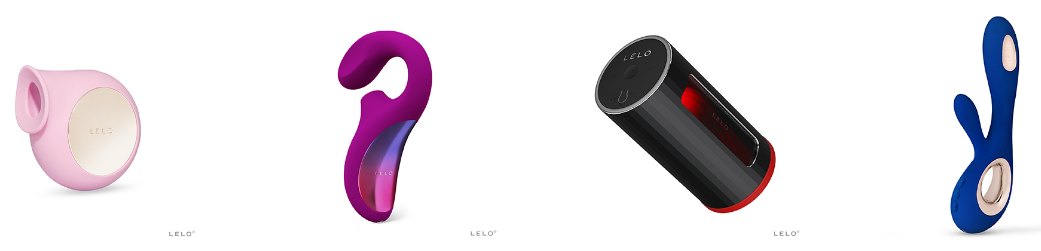
To wrap it all up, cutting out alcohol (a well-known depressant) will make you well rested and more energetic, which automatically increases your libido and improves your sex life. The highlight of Dry January will be more exciting and engaging sex – the one you actually remember. And if we add 51.7% of our survey respondents who will consider buying a new toy to incorporate into their love life, January will be anything but dry.
Caraiva: Inspired by Caraiva, a charming Bahian village by the Brazilian sea
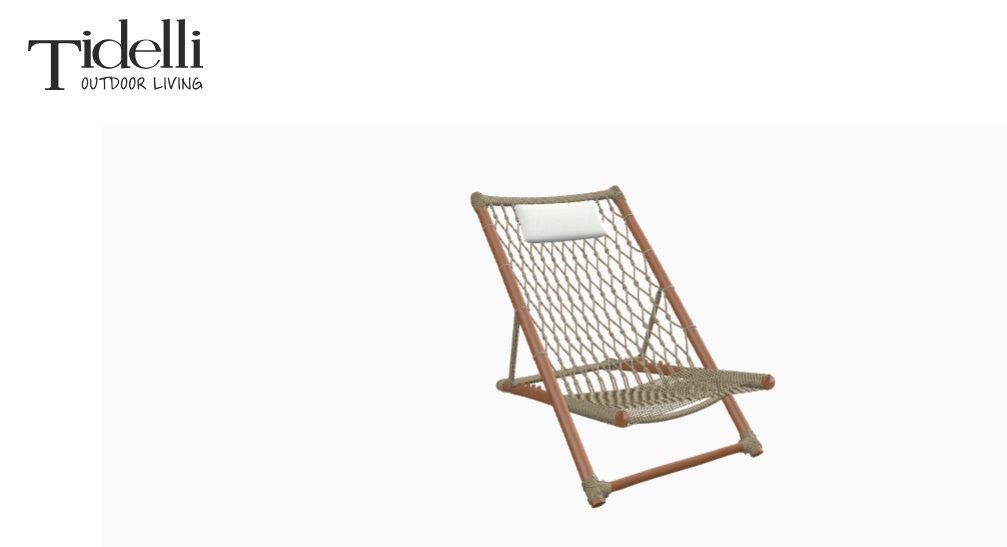
Simplicity and rusticity converge at the Caraiva line. This line is composed of a recliner, a lounger, a bench, and an armchair. Simplicity and rusticity converge with the Caraiva line using variations of woven wood. The pieces have a wooden and aluminum structure with a rope finish and are meant to capture the feeling of ‘feet in the sand’ and the pleasure of enjoying the best of outdoor life.

Drop: Inspired by the most important natural resource on the planet, water
The Drop Line consists of a swing chair; and has rounded shapes complemented by modern patterns of nautical rope on the sides, base, and top. Different from the Caraiva line, the Drop line uses an aluminum structure along with an upholstered seat and back. The Drop line emphasizes comfort by utilizing upholstered cushions, while giving a sense of peace with inspiration from the sea.
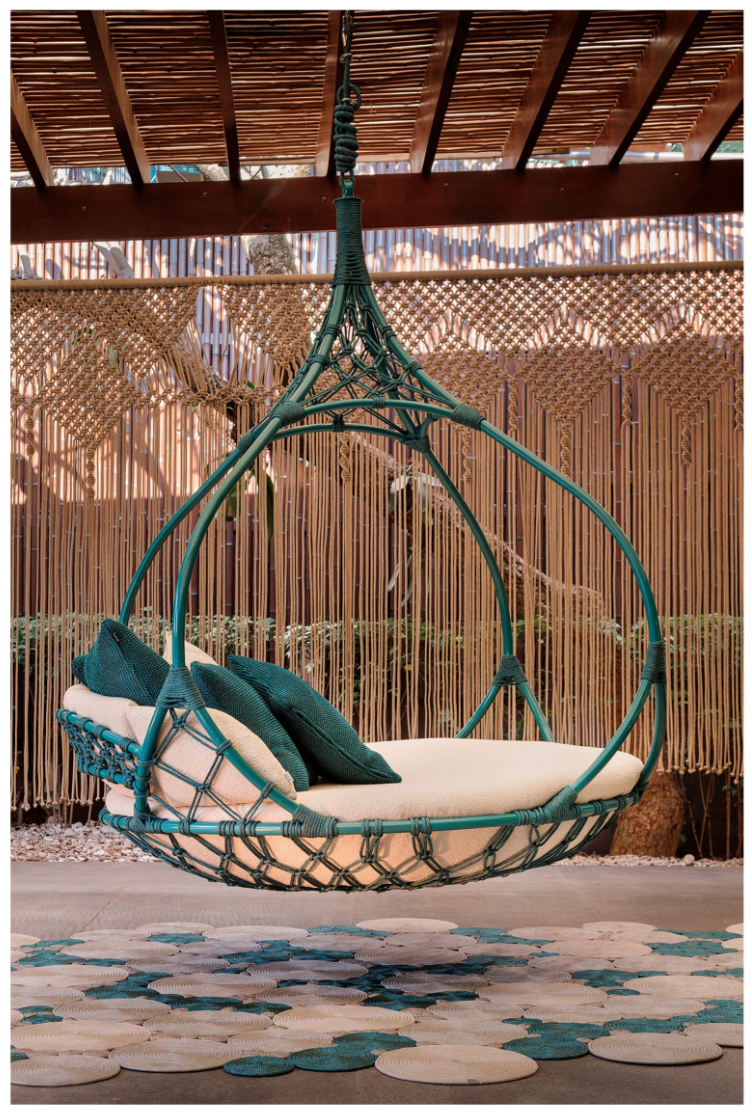
The Drop Line
Round: Projects gain new possibilities with the Round line
The Round line consists of two dining table models: square and rectangular in two sizes. The top is made out of stone or wood and the base is covered in nautical rope.

The Round Line
Sahara: Inspired by the dunes’ movements in the Sahara desert.
The product pieces have an elegant design with rounded corners and a feature that adds lightness for both indoor and outdoor areas. The Sahara line includes a sofa, a chair with backrest and back support, four main modules, two side modules, and a corner module.

The Sahara Line
Shell: Inspired by the design of the seashells
The delicate design of seashells was the starting point for creating the rounded chair designs in nautical rope for this line. The pieces include an armchair, a loveseat, and a chair – all have an upholstered seat, rope finish, wooden legs, and an aluminum structure.

The Shell Line
Split: Versatility is the strong point of the Split line
The Split line consists of seven sophisticated yet versatile modules that allow the building of different composition designs in multiple varieties of styles and sizes.

The Split
For the Silo, Claudia Safavi.