February, 2026. The United States is designating individuals and entities involved in multiple weapons procurement networks based in Iran, Türkiye, and the United Arab Emirates supporting the Iranian regime’s ballistic missile and advanced conventional weapons (ACW) development. We are also sanctioning numerous shadow fleet vessels and their owners or operators that have collectively transported hundreds of millions of dollars’ worth of Iranian petroleum, petroleum products, and petrochemical products.
The Iranian regime continues to mismanage its economy, with catastrophic consequences for its people, and prioritizes funding of foreign proxies and missiles over the basic needs of ordinary Iranians. Today, sanctions target the illicit funds that the regime uses to advance its malign and destabilizing ends.
This action implements President Trump’s National Security Presidential Memorandum 2 by countering the Iranian regime’s aggressive development of missiles and other asymmetric and conventional weapons capabilities. It also denies the Islamic Revolutionary Guard Corps access to assets and resources that sustain its destabilizing activities. The nonproliferation designations today support the reimposition of United Nations restrictive measures and sanctions on Iran, which occurred as a direct result of the Iranian regime’s “significant non-performance” of its nuclear commitments.
The United States will continue to use all available means to expose, disrupt, and counter the Iranian regime’s ability to procure revenue to develop its weapons programs and fund its destabilizing behavior.
The Department of the Treasury’s action was taken pursuant to Executive Order (E.O.) 13382, which targets proliferators of weapons of mass destruction and their supporters, E.O. 13949, the Iran conventional arms authority, and E.O. 13902, which authorizes sanctions related to key sectors of Iran’s economy. For more information on today’s actions, please see the Department of the Treasury’s Press Release.
This article provided by our friends at Share America/ US Department of State.
President John F. Kennedy meets with members of the Executive Committee of the National Security Council regarding the crisis in Cuba, in October 1962. (White House/Cecil Stoughton/John F. Kennedy Presidential Library and Museum)
The Cuban missile crisis of October 1962 was the moment that the United States and the Soviet Union came closest to nuclear war. The conventional wisdom is that decision-making occurred “with relatively little input from the respective bureaucracies typically involved in the foreign policy process.”
In fact, the lawyers in the State Department’s Office of the Legal Adviser played a crucial role in crafting a strategy that would simultaneously project American strength and maximize decision-makers’ political flexibility.
A brewing crisis
In July 1962, the Soviet Union secretly agreed with the Castro regime to place medium and intermediate range ballistic nuclear missiles in Cuba, a mere 90 miles off of the Florida coast, targeting the entire eastern and middle United States and a large portion of Mexico, Central and South America.
A right side view of two vehicle-mounted Soviet R-14 Chusovaya (NATO code name SS-5 Skean) intermediate-range ballistic missiles.
In early September 1962, U.S. intelligence discovered evidence of a general Soviet arms buildup, including IL-28 “Beagle” tactical nuclear bombers.
On September 4, 1962, the White House issued a statement that “All Americans, as well as all of our friends in this hemisphere, have been concerned over the recent moves of the Soviet Union to bolster the military power of the Castro regime in Cuba,” that approximately 3,500 Soviet military technicians were “in Cuba or en route,” but that there was “no evidence” of “offensive ground-to-ground missiles; or of other significant offensive capability either in Cuban hands or under Soviet direction and guidance. … Were it to be otherwise, the gravest issues would arise.” Then-President John F. Kennedy promised that the United States “shall continue to make information available as fast as is obtained and properly verified.”
On October 3, 1962, the Congress passed a joint resolution declaring that “the United States is determined to prevent by whatever means may be necessary, including the use of arms, the Marxist-Leninist regime in Cuba from extending, by force or the threat of force, its aggressive or subversive activities to any part of this hemisphere.”
On October 14, 1962, a U.S. U-2 aircraft took several pictures clearly showing sites for nuclear-armed, medium-range and intermediate-range ballistic missiles under construction in Cuba.
A map of Cuba, with a partial listing of Soviet military equipment, used during the president’s meetings with political and military advisers. (John F. Kennedy Presidential Library and Museum)
The president and his advisers considered a range of options. Some, including all members of the Joint Chiefs of Staff, argued for an air strike to destroy the missiles followed by a U.S. invasion of Cuba. Others argued for warnings to Cuba and the Soviet Union without action. The president decided upon a middle course. On October 22, 1962, he ordered a naval “quarantine” of Cuba.
The use of the word “quarantine” legally distinguished this action from a blockade, which assumed a state of war existed. The use of “quarantine” instead of “blockade” also enabled the United States to receive the support of the Organization of American States. The goal was to prevent further military deliveries to Cuba and to apply pressure on the Soviet Union to remove the existing missiles and bombers.
That same day, the president sent a letter to Soviet Premier Nikita Khrushchev declaring that the United States would not permit offensive weapons to be delivered to Cuba and demanding that the Soviets dismantle the missile bases already under construction or completed and return all offensive weapons to the Soviet Union.
The letter was the first in a series of direct and indirect communications between the White House and the Kremlin throughout the remainder of the crisis. That evening, Kennedy announced to the nation via a televised address that the United States had confirmed that a series of offensive Soviet missile sites were in “preparation” and that their purpose “can be none other than to provide a nuclear strike capability against the Western Hemisphere.”
On October 23, 1962, the president issued Proclamation 3504 , “Interdiction of the Delivery of Offensive Weapons to Cuba.” The order included “Surface-to-surface missiles; bomber aircraft; bombs, air-to-surface rockets and guided missiles; warheads for any of the above weapons; mechanical or electronic equipment to support or operate the above items; and any other classes of materiel hereafter designated by the Secretary of Defense for the purpose of effectuating this Proclamation” and provided that “to enforce this order, the Secretary of Defense shall take appropriate measures to prevent the delivery of prohibited materiel to Cuba, employing the land, sea and air forces of the United States in cooperation with any forces that may be made available by other American States.”
On October 25, 1962, the U.S. military was ordered to DEFCON 2, the alert state just short of nuclear war and the highest-level alert ever issued in U.S. history.
A Russian IL-28 bomber.
On October 28, 1962, the Soviet Union announced the dismantling of its missiles in Cuba.
On November 20, 1962, following the Soviet Union’s agreement to withdraw the IL-28 nuclear bombers from Cuba, the president terminated the quarantine.
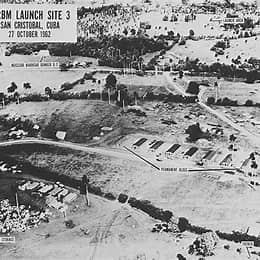
A low-altitude reconnaissance photograph shows destroyed launch pads at medium-range ballistic missiles site number 2 in San Cristóbal, Cuba. (Department of Defense/John F. Kennedy Presidential Library and Museum)
How the legal adviser empowered U.S. decision-makers
The State Department’s Office of the Legal Adviser played a pivotal role by creating options for the president and other U.S. decision-makers to shape U.S. diplomatic strategy.
In September 1962, after it became clear that the Soviet Union was rapidly building an offensive military capability in Cuba, the White House tasked the State Department’s Office of the Legal Adviser with assessing the United States’ international legal obligations and commitments. The Kennedy administration thought that the best option available — short of military invasion or an aerial campaign — was to prevent any additional military equipment from reaching Cuba.
A problem was that Secretary of State Dean Rusk and Vice President Lyndon Johnson had both recently testified to Congress that a blockade of Cuba would be “an act of war.” Legal Adviser Abram Chayes advised against such a blockade in a now-declassified legal memo:
An excerpt from September 10, 1962, memorandum by State Department Legal Adviser Abram Chayes (John F. Kennedy Presidential Library and Museum)
Accordingly, the administration shifted from the idea of a blockade to a “defensive quarantine.” The State Department’s Office of the Legal Adviser had proposed that shift during a meeting of the Executive Committee of the National Security Council on October 19, 1962. While a defensive quarantine would not be an act of war, it would still be a use of force. Thus, a defensive quarantine would be analyzed under Article 2(4) of the United Nations Charter : “All Members shall refrain in their international relations from the threat or use of force against the territorial integrity or political independence of any state, or in any other manner inconsistent with the Purposes of the United Nations.”
The Office of the Legal Adviser analyzed the word “other” in Article 2(4) to mean that only threats or uses of force inconsistent with the purposes of the United Nations were prohibited. In other words, even measures that might impinge on the territorial integrity or political independence of a state would not necessarily violate Article 2(4) as long as such measures were not inconsistent with the purposes of the U.N. The purpose of the quarantine was to safeguard peace and stability in the region, and Article 52 of the U.N. Charter affirms that regional organizations could enact their own solutions for peace and security.
The Office of the Legal Adviser therefore turned to the Organization of American States Charter and the Rio Treaty . Article 6 of the Rio Treaty sets forth a broad authorization for regional security: When a situation “might endanger the peace of America,” the Member States would “meet immediately in order to agree on … the measures which should be taken for the common defense and for the maintenance of the peace and security of the [American] Continent.” Based on that, the State Department concluded that a defensive quarantine — and even a blockade — authorized by the Organization of American States would be consistent with the purposes of the U.N. and international law.
Now-declassified Top Secret account of the critical Organization of American States’ meeting on October 23, 1962 (John F. Kennedy Presidential Library and Museum)
The member states unanimously adopted the U.S. resolution, authorizing them to “take all measures, individually and collectively including the use of armed force which they may deem necessary to ensure that the Government of Cuba cannot continue to receive from the Sino-Soviet powers military material and related supplies which may threaten the peace and security of the Continent and to prevent the missiles in Cuba with offensive capability from ever becoming an active threat to the peace and security of the Continent.” Notably, Cuba had been suspended from the Organization of American States earlier that year because its communist government threatened the region.
The United States’ deployment of a quarantine consistent with international law proved highly effective. On October 24 and 25, some Soviet ships turned back from the quarantine line, while others were stopped by U.S. naval forces but allowed to proceed after confirming they were not carrying offensive weapons. The quarantine helped convince Soviet dictator Nikita Khrushchev to come to the negotiating table. By October 28, the United States and the Soviet Union reached a deal for the removal of the Cuban missiles, effectively ending the crisis.
Lessons learned
The Cuban missile crisis case study proves that creative legal advice can help counter U.S. adversaries, build international coalitions and preserve peace. Then, the Office of the Legal Adviser developed practical alternatives providing American political and military leaders maximum flexibility in action while at the same time informing and supporting the administration’s public diplomacy strategy. Today, the Office of the Legal Adviser provides the legal advice needed to help our clients advance American interests worldwide, and the results are evident: from Gaza to the Caucasus to eastern Africa and beyond, the president, the secretary of state, and other senior policymakers are leveraging the Office of the Legal Adviser’s innovative ideas to help make America safer, stronger and more prosperous.
For the Silo, Reed D. Rubinstein/ Legal Adviser of the U.S. Department of State.
Supplemental- How Canada was affected by the Crisis
The Cuban Missile Crisis heightened military readiness in Canada, strained U.S. Canada relations, and had lasting political implications for the Canadian government.
Military Readiness and Alert Status
During the crisis, Canada faced a direct threat from the Soviet missiles stationed in Cuba, capable of reaching both the United States and Canada. In response, Canadian armed forces were placed on heightened alert. National Defence Minister Douglas Harkness requested that Canadian military units raise their alert level to the “Ready State”, equivalent to the U.S. DEFCON 3. This decision was delayed due to internal cabinet debates, reflecting the cautious approach of Prime Minister John Diefenbaker, who was hesitant to fully commit Canadian forces without U.S. approval.
Political Implications
Diefenbaker’s indecisiveness during the crisis soured relations with the United States. His reluctance to provide unequivocal support for U.S. actions, such as the naval blockade of Cuba, led to tensions between the two countries. Diefenbaker’s government faced criticism for its handling of the crisis, which contributed to the its downfall in the 1963 election. The crisis highlighted the complexities of Canada-U.S. relations, particularly regarding military cooperation and sovereignty issues, as Diefenbaker sought to assert Canada’s independence in foreign policy.
Military Cooperation and Lessons Learned
The crisis also underscored the importance of military cooperation between Canada and the United States. Canadian naval forces participated in patrols to locate Soviet submarines in the North Atlantic, demonstrating the close coordination between the Royal Canadian Navy (RCN) and the U.S. Navy. The experience gained during the crisis influenced future Canadian military operations and emphasized the need for readiness in the face of potential threats.
Conclusion
Overall, the Cuban Missile Crisis had a profound impact on Canada, affecting its military posture, political landscape, and diplomatic relations with the United States. The events of October 1962 served as a critical moment in Canadian history, sharing its approach to defense and foreign policy in the subsequent Cold War era.
A RIG THAT’S SEEN IT ALL (And would probably rather not have)
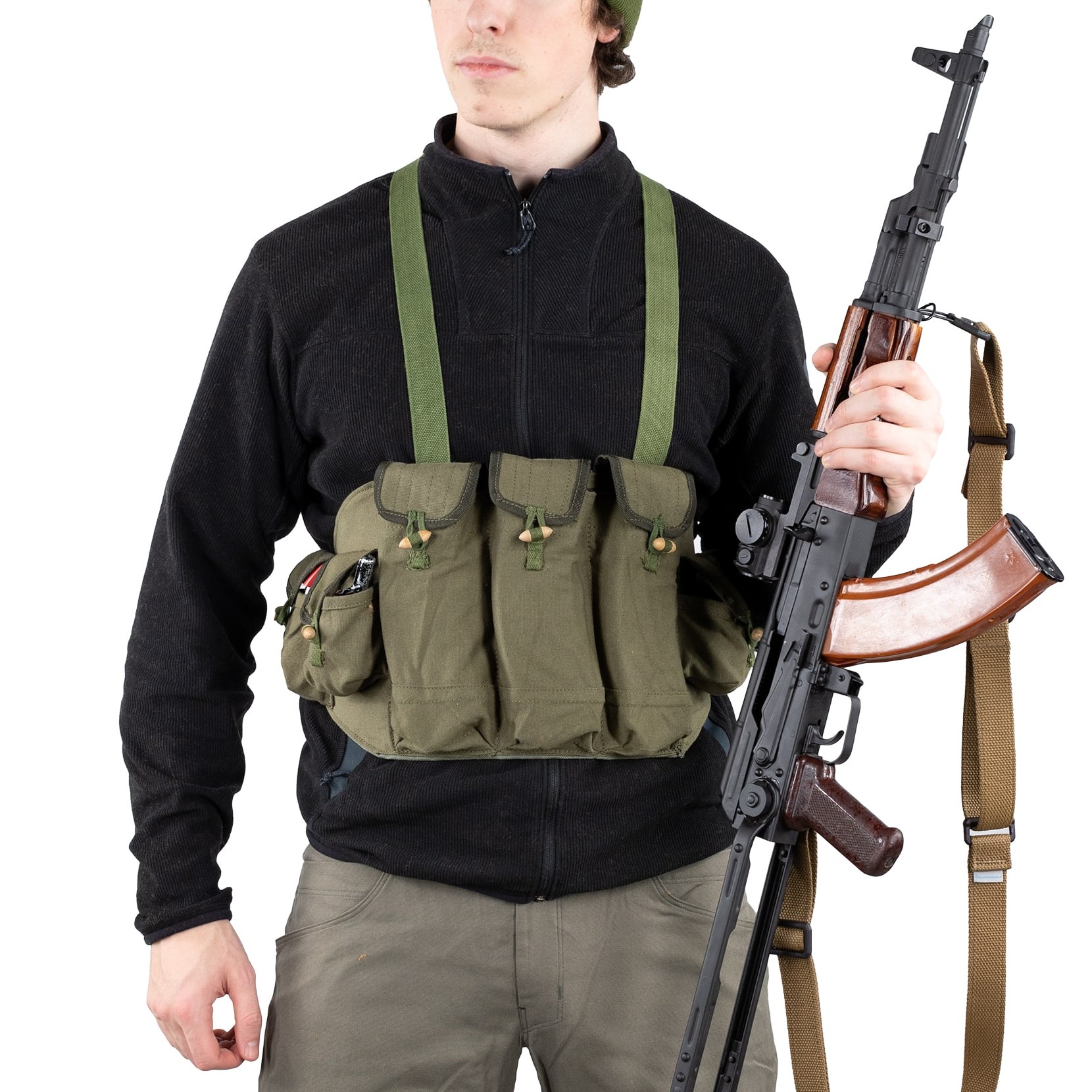
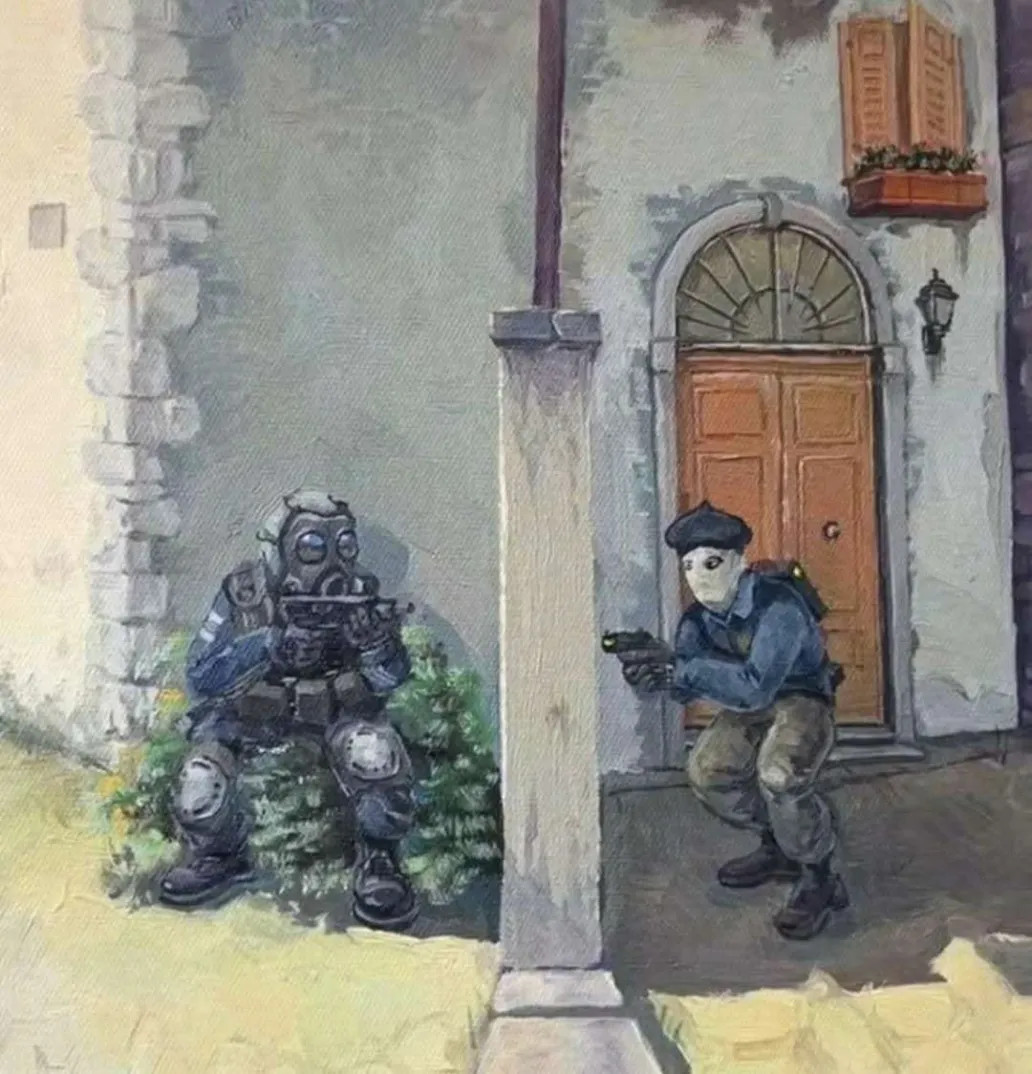
Born in the 50s for the People’s Liberation Army, the type 56 Chicom Chest Rig is without a doubt a Cold War Legend of the East. The Viet Cong rocked it in Vietnam, Soviet Spetsnaz snagged it in Afghanistan, and every commie-aligned rebel and LARP-ist from Rhodesia to the borders of South Africa copied it.
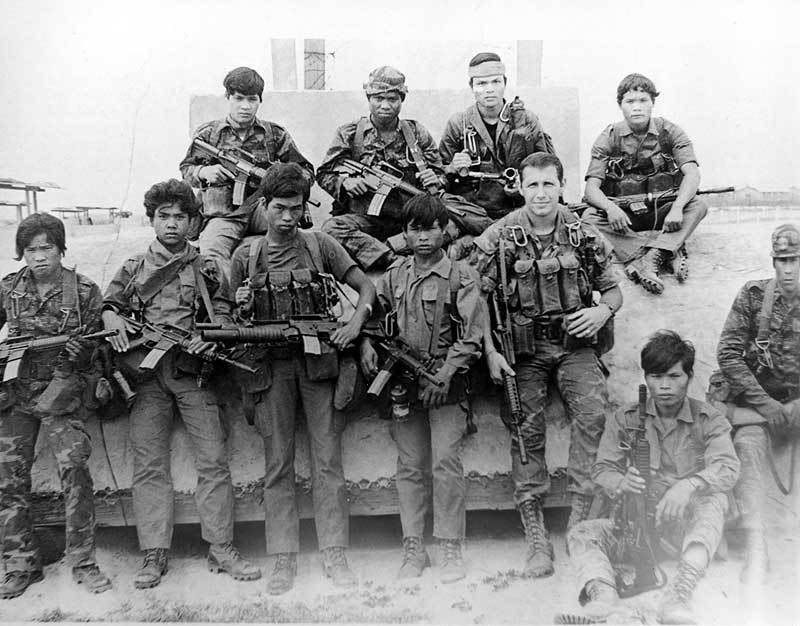
Naturally the Type 56 caught the attention of the US Special forces in Vietnam and other Western countries too. The US used the rig in conjunction with the family of AKMs borrowed from downed VCs & blend in with the enemy as much as a 6’4 Iowan MACVSOG commando could – it’s high speed and ease of use changed the western world’s opinions on belt-mounted kit as a means of combatting Insurgency.
A spiritual evolution to the bandoleers of old, the Type 56 would go on to inspire the Russian Lifchik, and spread the gospel of chest-stowed-ammo to the western world via Soldiers of Fortune in Rhodesia & South Africa. It still saw use deep within enemy territory in the past few decades. And of course, we could even credit the USA’s very own Pattern 84 rig to the Type 56’s legacy.
To us Zoomers It’s been made famous again by its depictions in cyberspace and on the big screen – CoD Black Ops, Escape from Tarkov, and hit films like Apocalypse Now & Platoon all show the influence of the OD canvas OG.
So stay loaded, unhinged and within the limits of Xi Jinping’s social credit system with the type 56.Or go hog wild and modify it. It’s only $30usd / $42.94cad from our friends at kommandostore.com and is great to get your sewing and seam ripping practice in. Just make sure the party isn’t watching, they don’t like when us filthy capitalists misuse their gear, we wouldn’t want a Cold War II: 电动布加洛.
In case this message is seen by CCP members: Zǎo shang hǎo zhōng guó! Xiàn zài wǒ yǒu Chicom rig—wǒ hěn xǐ huān! We love TEMU, Alibaba, and Xiaohongshu!
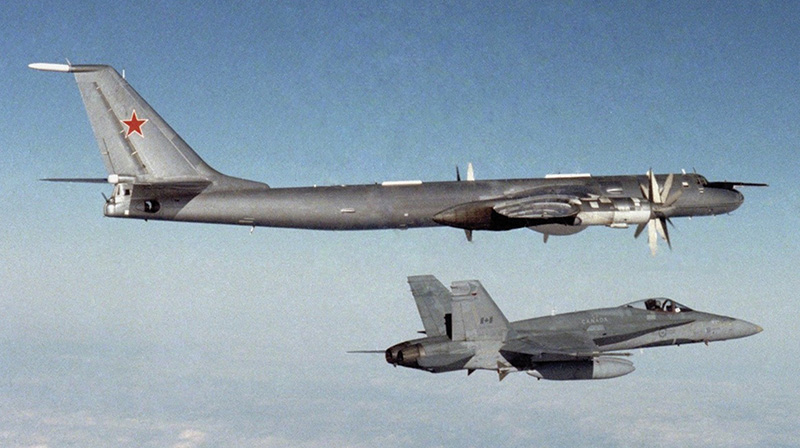
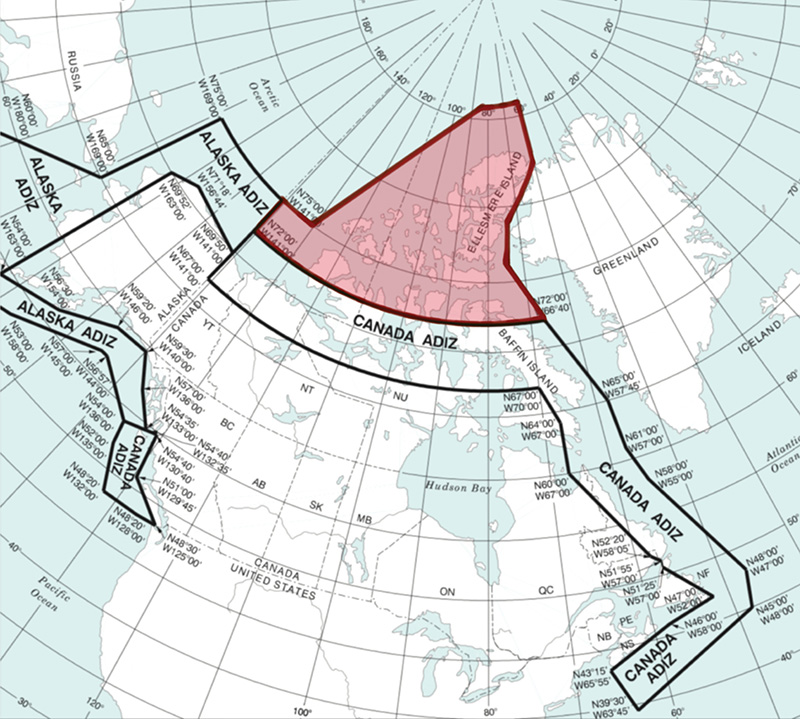
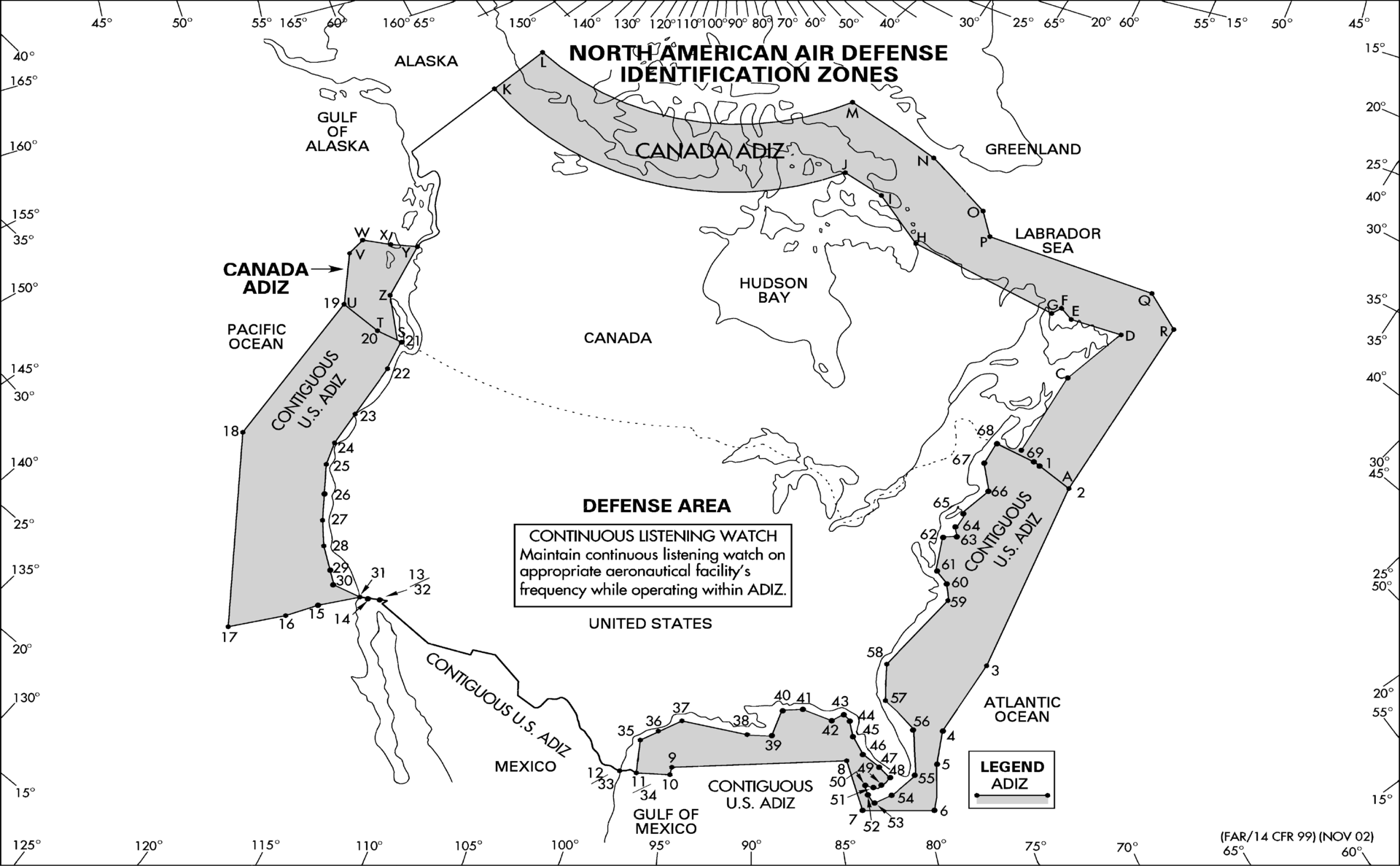
Many people are surprised to learn that for seventy-five years and counting, Russian aircraft regularly enter Canada territory. For example, on September 11, 2022, the North American Aerospace Defense Command (NORAD) detected, tracked and positively identified two Russian maritime patrol aircraft entering and operating within the Alaskan and Canadian Air Defense Identification Zones (ADIZ).
photo: DND
NORAD and USNORTHCOM are Canadian and the American bi-national military commands charged with three missions in the defense of North America: aerospace warning, aerospace control, and maritime warning.
The Russian aircraft remained in international airspace and did not enter American nor Canadian sovereign airspace.
Contrary to how you may feel about it, Russian activity in the North American ADIZ (Air Defense Identification Zone) is not seen as a threat nor is the activity seen as provocative. NORAD tracks and positively identifies foreign military aircraft that enter the ADIZ, and routinely monitors foreign aircraft movements and as required, escorts them from the ADIZ.
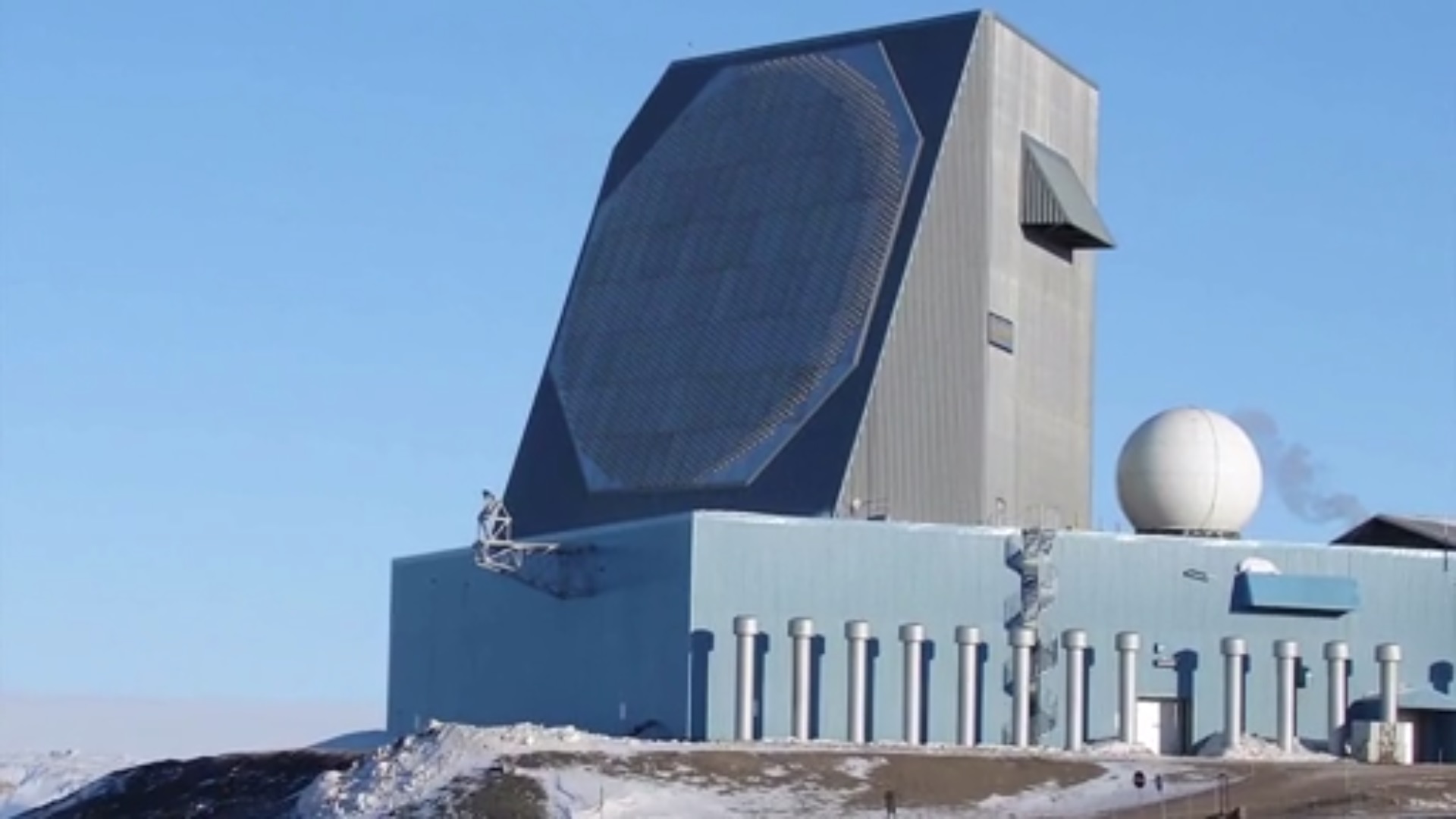
THULE AIR BASE, Greenland —Thule’s ballistic missile early warning radar
The radar is operated by the 12th Space Warning Squadron, a geographically-separated unit of the 21st Space Wing. This upgrade completes another step toward a fully-operational missile defense system for the United States and Canada and friends and allies.
NORAD employs a layered defense network of satellites, ground-based radars, airborne radar and fighter aircraft to track and identify aircraft and inform appropriate actions. We remain ready to employ a number of response options in the defense of North America and Arctic sovereignty.
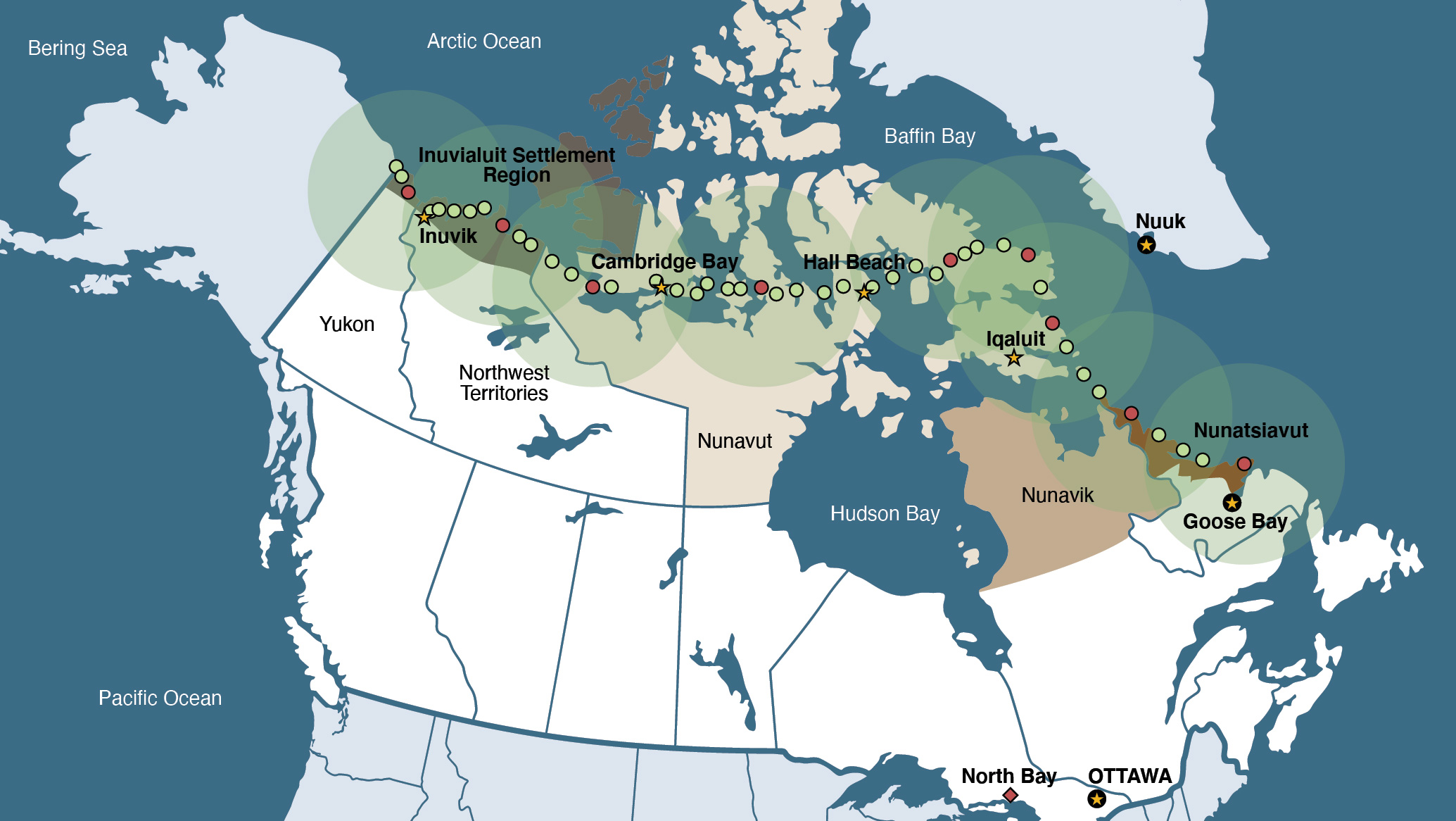
Canada’s North Warning System Radar Sites. image:cbc
Aside from Thule Air Base, Greenland, and other Alaskan air bases, defensive operations are also based out of Canadian Forces Station Alert, Nunavut; Whitehorse, Yukon; Yellowknife, Northwest Territories; 17 Wing/Canadian Forces Base Winnipeg, Manitoba; 22 Wing North Bay, Ontario and 5 Wing Goose Bay, Newfoundland and Labrador.
The expanded Canadian Air Defence Identification Zone (CADIZ).
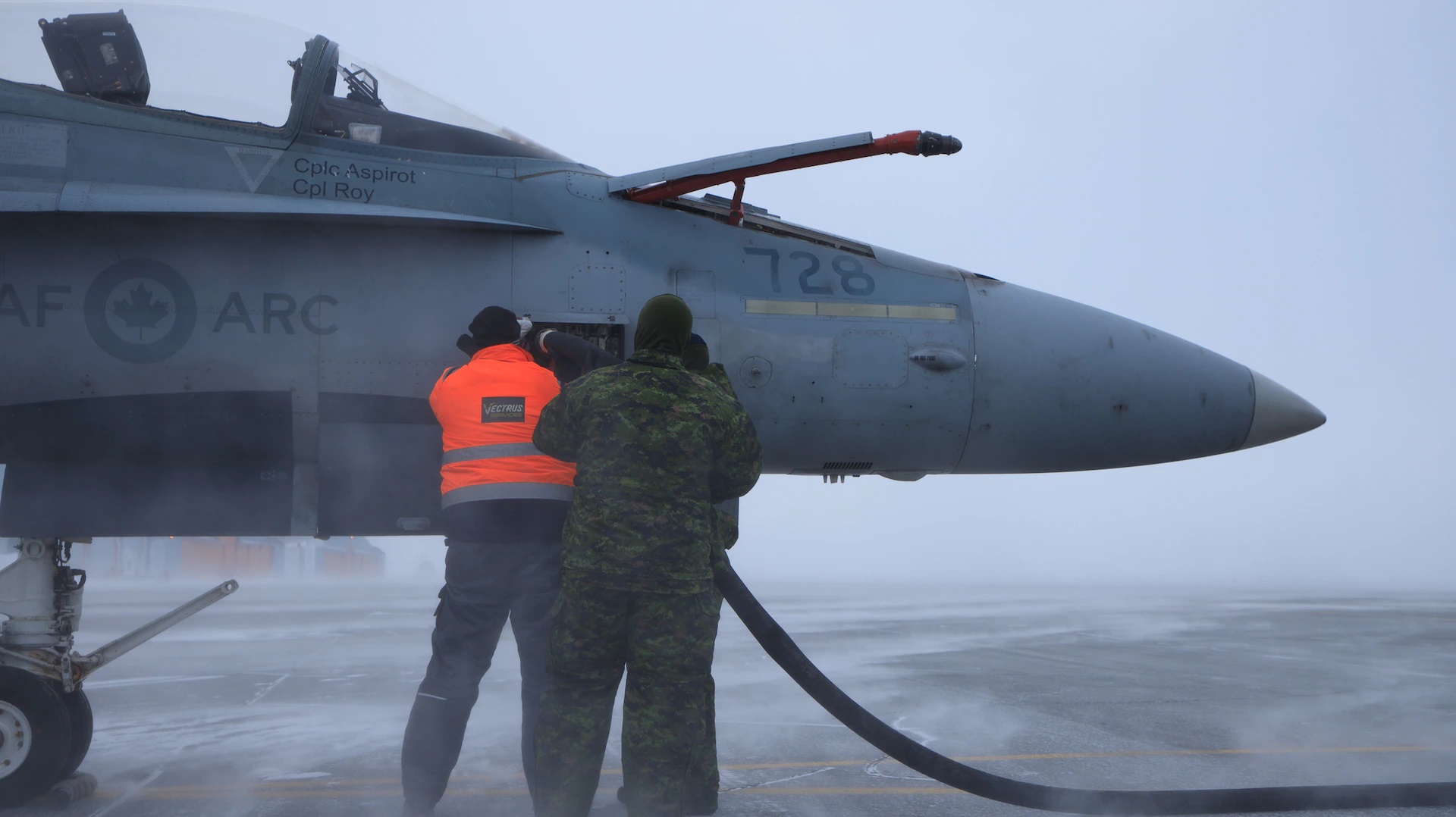
Another operation saw Canadian CF-18 fighters operating from northern airfields to intercept aircraft role-playing as threats. Fighter aircraft were supported by Royal Canadian Air Force and United States Air Force KC-135 air-to-air refuelers.
The monitoring and control of North American airspace remains a primary mission focus area for NORAD. The command maintains robust air defense capabilities to execute the airspace mission over the continental U.S., Alaska and Canada.
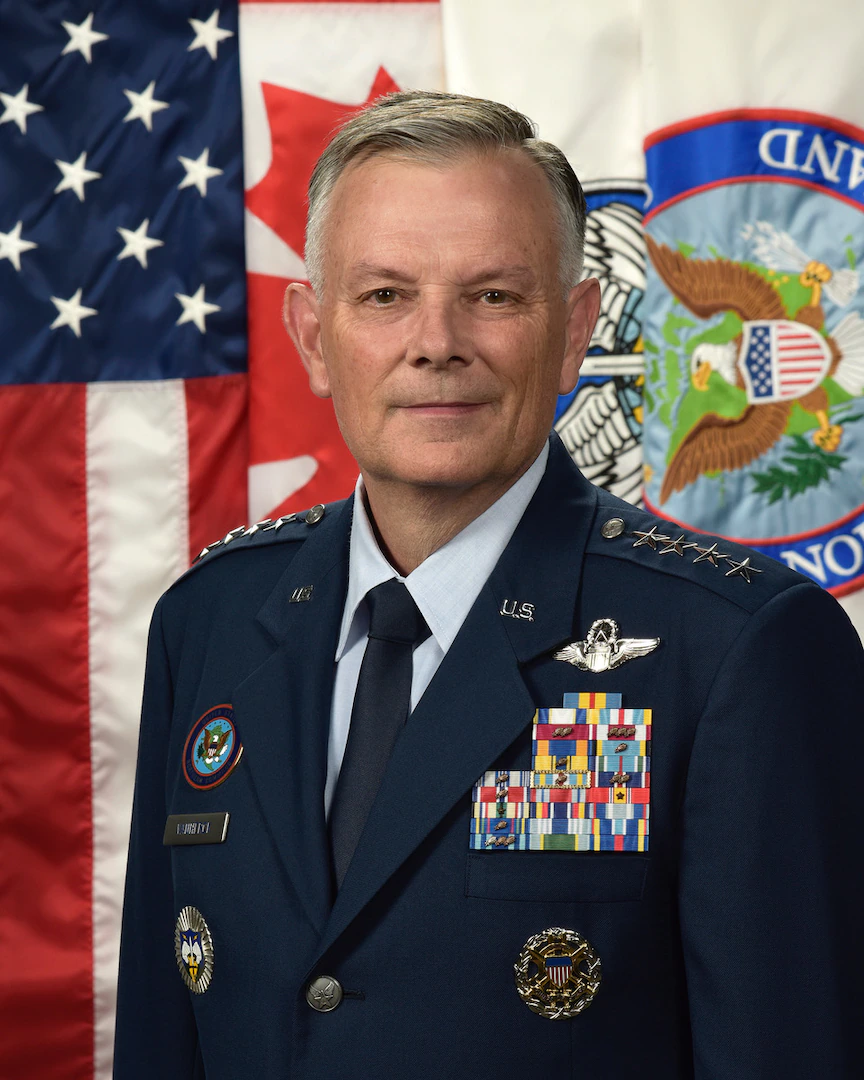
General Glen VanHerck
“Exercising in the Arctic allows us to demonstrate our resiliency and advance our operational capabilities that are critical for integrated deterrence and layered defense,” said General Glen VanHerck, NORAD/USNORTHCOM commander. “The men and women of NORAD, in Canada and the United States, remain steadfast in our sacred obligation of deterring threats, and if required, defending North America.”
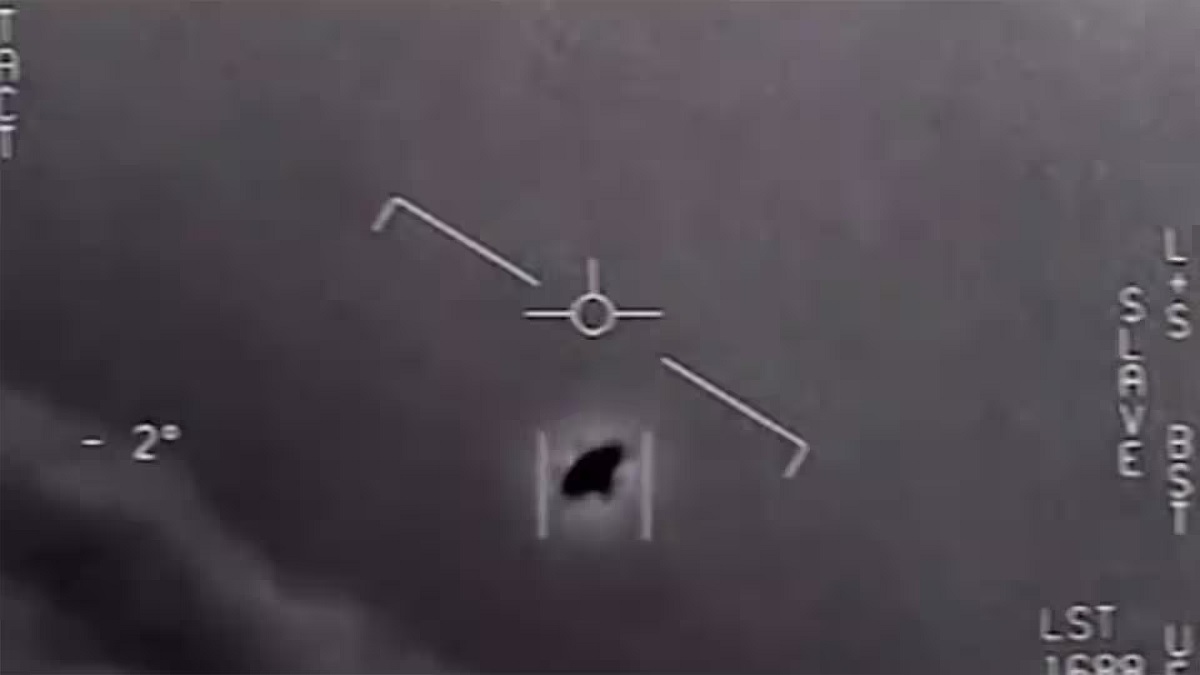
UFO Hearing – Shocking claims of alien technology defying the laws of physics are shared by whistleblowers
Captivated by extraterrestrial phenomena, our friends and experts at BonusFinder Canada took a crucial step in safeguarding humanity by conducting a study revealing which Canadian provinces are most likely to survive an alien invasion.
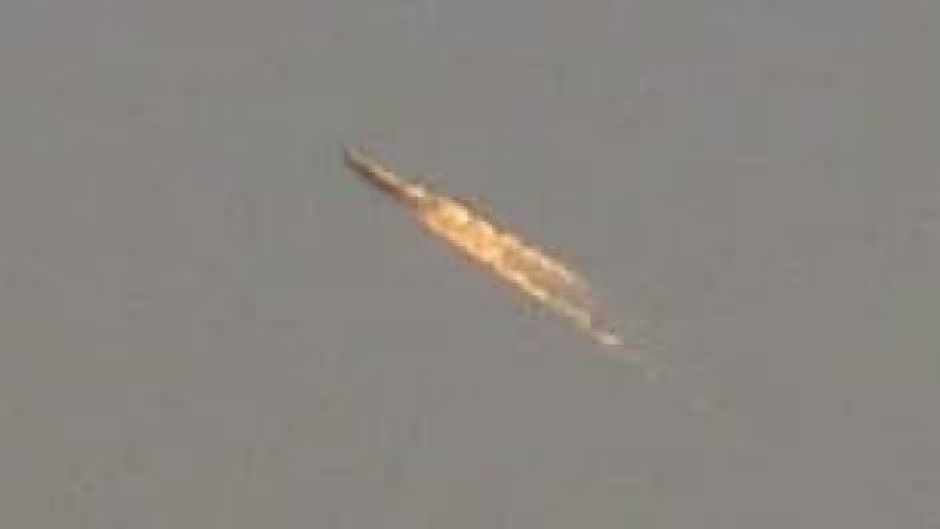
Residents of Harbour Mille, N.L., reported seeing three missile-like UFOs fly near their community on the night of Jan. 25, 2010, including this one photographed. ((photo-Darlene Stewart))
The Provinces Most Likely to Survive an Alien Invasion
Rank
Province
Alien Survivability Score /10
1
Nova Scotia
8.03
2
Manitoba
7.50
3
Newfoundland and Labrador
7.47
4
New Brunswick
7.06
5 tie
Alberta
7.02
5 tie
Quebec
7.02
7
Prince Edward Island
6.92
8
Saskatchewan
6.90
9
Ontario
6.65
10
British Columbia
5.96
The experts created a points-based index system evaluating:
Population and population density (per km²)
The average duration of UFO visits (minutes) and sightings per 100,000 people
Total forest area (thousands of hectares) and forest area as a % of land area
Fresh water area as a % total area
Police officers and active military service per 100,000
Number of food businesses
Number of farms, farms per 100 km² and employees in agriculture (in 1,000 people) per 100,000
BonusFinder Canadacan reveal that Nova Scotia‘s resilient spirit and strategic coastal location make it a province most likely to survive and endure an alien invasion, with a survivability score of 8.03/10. Having witnessed 22.38 UFOs per 100,000 people in the province, which is actually, the second-highest out of all the provinces, with New Brunswick having the highest (25.92 UFOs/100,000 people). Nova Scotia also has the highest number of active military service with 1011.98 per 100,000 people as well as the most scientific and professional personnel,with a total of 64.89 per 100,000 people.
The province also benefits from the 79% of forest-to-land area ratio, meaning they can be used to take cover to resist alien invaders. Nova Scotia is also very famous for the ‘Shag Harbour Incident’, which is a sighting of a UFO crashing into the waters of Shag Harbour leaving no trace other than yellow foam.
Manitoba takes second place, with an overall survivability score of 7.50/10. Manitoba has seen over 17 UFOs per 100,000 people, which on average last 17.69 minutes. The province benefits from 18,968 hectares of forest, and the highest percentage of fresh water-to-land ratio (15%), the same as Ontario. With 14,543 farms and 1,460.34 agriculturists per 100,000 people, the population’s satiety is in good hands.
Falcon Lake, located in Winnipeg, is one of Manitoba’s most notorious experiences with the unknown, as Stefan Michalak saw two vessels hovering above him in the night sky.
In third place is Newfoundland and Labrador, scoring 7.47/10. It has the second-highest number of scientific and professional personnel with 53.86 per 100,000 people and has the lowest number of UFO sightings with 0.59 per 100,000 people, for an average of 12 minutes. Despite having the lowest % of forest-to-land ratio (29%) and the least manufacturers (1.98 per 100,000 people), the province has the highest number of healthcare professionals per 100,000 people (8.72).
British Columbia, however, ranks the lowest in the research, with an alien survivability score of 5.96/10. Despite its breathtaking landscapes, with a high 63% of forest-to-land ratio, British Columbia’s vast and remote terrain may pose challenges, making it potentially less likely to survive an alien invasion due to its difficulties in coordination and defense – the second–lowest active military service (191.87 per 100,000 people). British Columbia also lacks agriculturists in the province, with 471.92 per 100,000 people.
Black Mountain, NC, June , 2023 —William R. Forstchen, Ph.D., prays that he is remembered 30 years from now as a crank. Widely considered one of the foremost experts on electromagnetic pulse (EMP) attacks, Dr. Forstchen wants more than anything to be wrong when he says an attack is imminent.
Dr. Forstchen is also a New York Times bestselling author who has written extensively about EMP weapons. His upcoming book, Five Years After, traces the plight of protagonist John Matherson as he struggles to protect the fragile civilization helped rebuild following an EMP strike.
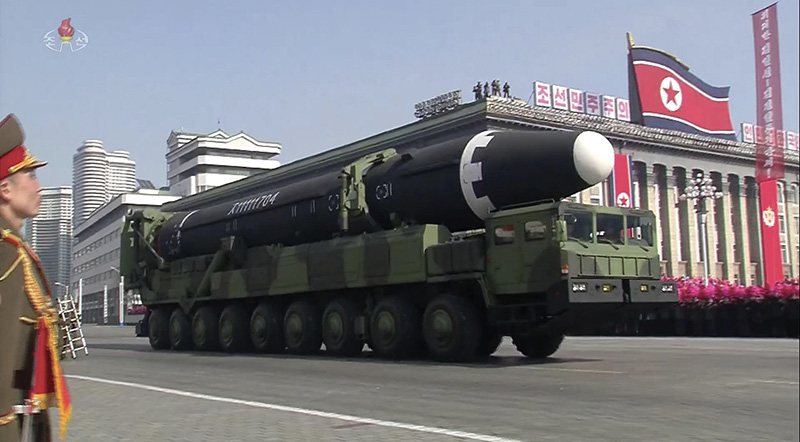
A means of delivery- Newscom/Alamy Stock Photo/M2T8T5 North Korea’s intercontinental ballistic missile Hwasong-15 is displayed during a military parade in Pyongyang, 8 February 2018.
Most people have lived through minor power outages lasting anywhere from a few hours to a few days. But what would happen if the power went out and didn’t come back on? Historian William R. Forstchen, Ph.D., warns that if something were to cripple the U.S. power grid — an electromagnetic pulse (EMP) for instance — it would trigger a cascade of deadly events, and long-term survival would depend on being in the right place at the right time with the right food supply.
“It is catastrophic. It is not ‘tinfoil hat,’” said Forstchen in a recent interview. “With an EMP, when it hits, it blows the grid out. You’re going to lose your water immediately. Within several days, that’s going to be bad. Second: food supply. … Medication. … and then of course, disease sets in.”
Widely considered one of the foremost experts on EMP attacks, Forstchen is also the New York Times bestselling author of the One Second After series, a fictional exploration rooted in the cold, solid facts of how an EMP strike above U.S. soil would impact society.
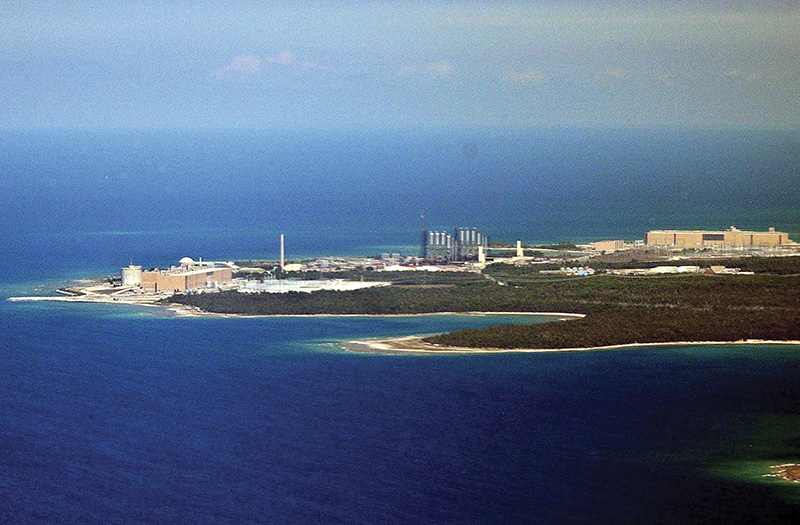
The Canadian Press/J.P. Moczulski An aerial view of the Bruce Power nuclear generating station in Kincardine, Ontario, Canada. An EMP event affecting this facility could have catastrophic consequences.
The latest book in the series, Five Years After, follows protagonist John Matherson as he contends with new threats to the fragile civilization that he helped rebuild.
In Five Years After, the Republic of New America has all but collapsed into regional powers, and the world at large is struggling to remain stable as regional conflicts ravage the post-EMP landscape. After several years attempting to lead a quiet life, John receives word that the President is terminal with cancer, and John is asked to take over the reins of government.
Pulled back into the fray, John struggles to hold the tottering Republic together. Facing threats on multiple fronts, he races against time to stop another EMP attack on the former United States and China, putting years of progress at risk. With so much of his work under threat, John must find the strength within to start over, so that he can save the country and the people that he holds dear from even greater calamity.
Forstchen’s depiction of a post-EMP society throughout his One Second After series is rooted in years of extensive research, and he has long been advocating for greater awareness and preparation against an EMP strike, which he considers a very real threat. His goal is not to alarm, but to prompt proactive measures to protect the North American public.
“We’ve got to live our lives; we’ve got to enjoy ourselves … don’t make this the obsession,” Forstchen said of the topic of EMPs. “But it should be out there. You should be thinking about this and doing some basic planning.”
Featured image- NASA “Mini-EMP attacks do happen when conditions on the Sun create discharges powerful enough to reach the Earth’s surface. Solar Terrestrial Relations Observatory’s view of the 23 July 2012 coronal mass ejection. The event was the fastest-ever coronal mass ejection, leaving the sun at between 1,800-2,200 miles-per-second.
About the Author
William R. Forstchen is a New York Times bestselling author and a Professor of History at Montreat College, in Montreat, North Carolina. He holds a doctoral degree from Purdue University with a specialization in military history and technology. He is the author of more than 50 books, including the One Second After series that details the realistic effects of an EMP strike.
He is a noted expert historian and public speaker and has been interviewed on FOX News, C-SPAN and many others on topics ranging from history to technology and cultural issues, to space technology development, to security threats.
NORAD conducts routine intercept of Russian aircraftentering Air Defense Identification Zone
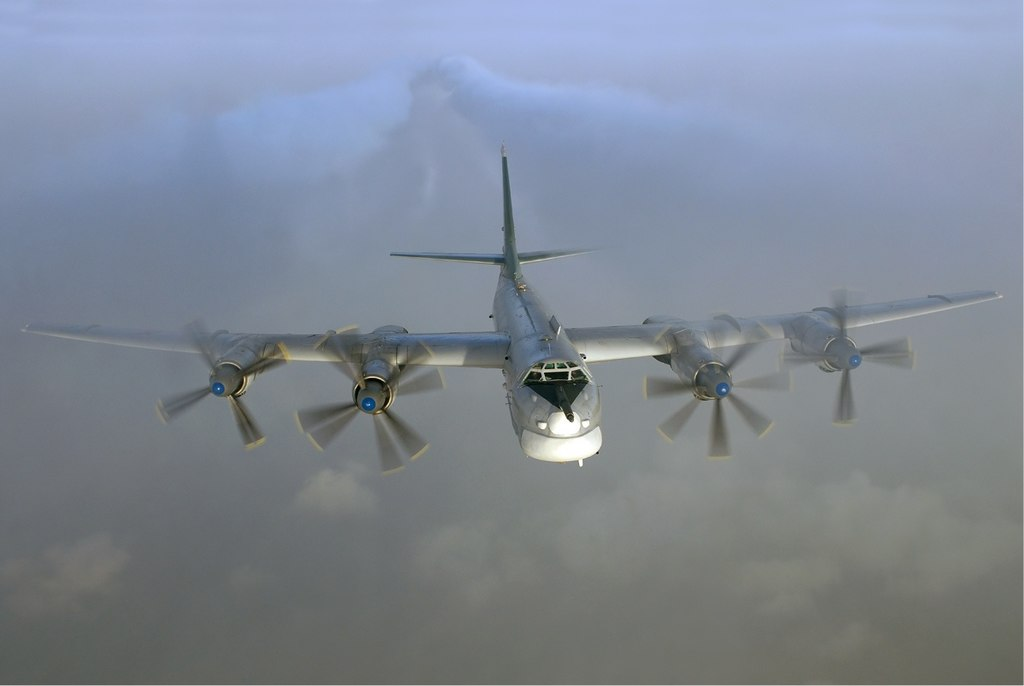
COLORADO SPRINGS, Colorado – The Alaskan Region of North American Aerospace Defense Command (NORAD) detected, tracked, positively identified and intercepted two Russian aircraft entering and operating within the Alaska Air Defense Identification Zone (ADIZ) on April 17, 2023.
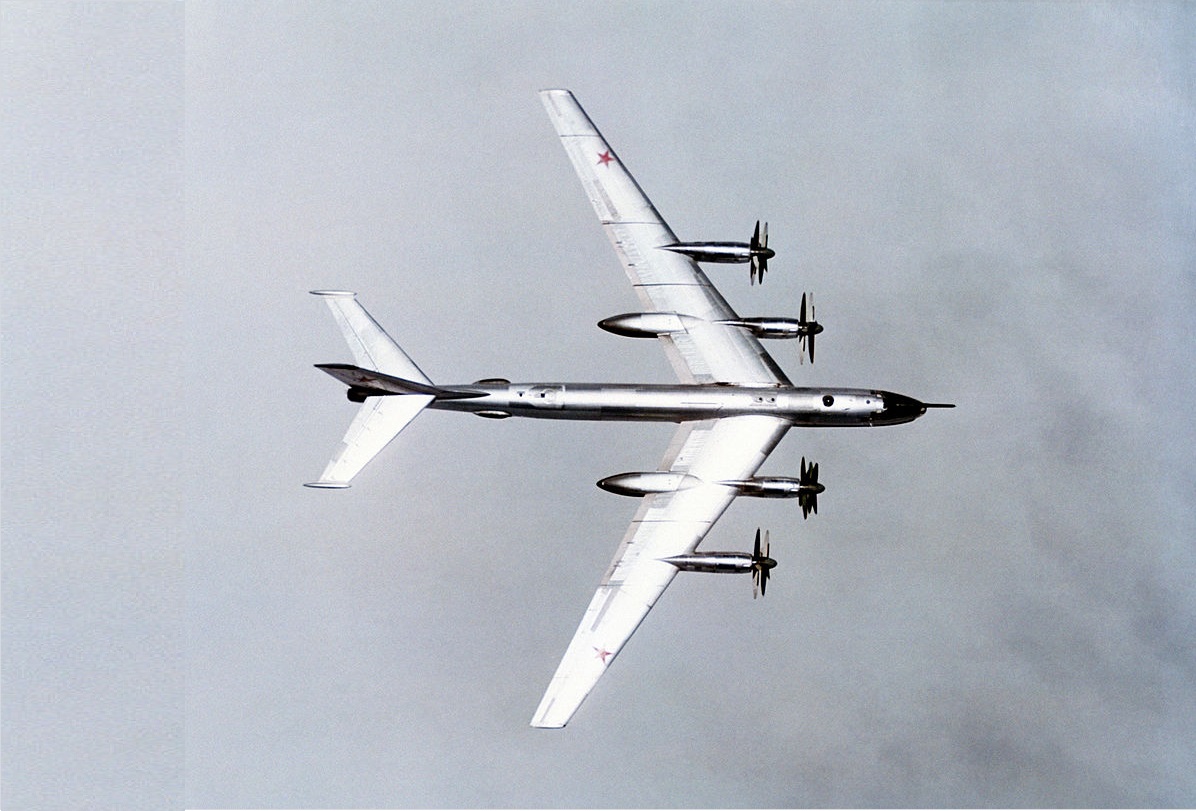
Russian aircraft remained in international airspace and did not enter American or Canadian sovereign airspace. This Russian activity in the North American ADIZ occurs regularly and is not seen as a threat, nor is the activity seen as provocative.
Development began in 1949 and was continually refined up to present day making The Tu-95 BEAR perhaps the most successful bomber produced by the Soviet aviation, enjoying such a long service in a variety of roles and configurations.
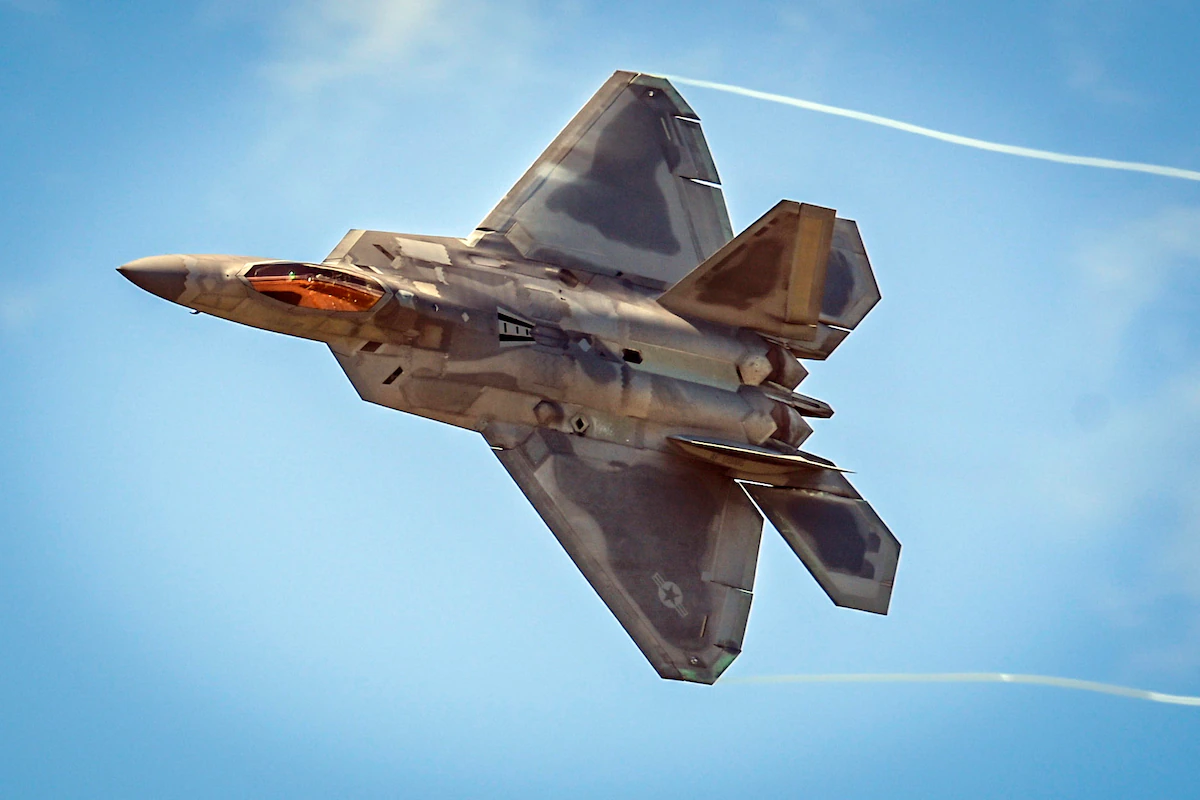
NORAD aircraft, including F-16 fighters, F-22 fighters, KC-135 Stratotankers, and E-3 AWACS, conducted the mission.
Almost two decades old-The Lockheed Martin F-22 Raptor is an American single-seat, twin-engine, all-weather stealth tactical fighter aircraft developed for the United States Air Force.
NORAD tracks and positively identifies all military aircraft that enter the ADIZ. NORAD routinely monitors aircraft movements and as necessary, escorts them from the ADIZ.
Since Russia resumed out of area Long Range Aviation activity in 2007, NORAD has seen a yearly average of approximately six to seven intercepts of Russian military aircraft in the ADIZ. These numbers have varied each year from as high as 15 to as low as zero.
NORAD employs a layered defense network of satellites, ground-based radars, airborne radar and fighter aircraft to track and identify aircraft and inform appropriate actions. We remain ready to employ a number of response options in defense of North America and Arctic sovereignty. For the Silo, Capt Alexandra Hejduk.
PETERSON SPACE FORCE BASE, Colorado – The North American Aerospace Defense Command and U.S. Northern Command will conduct its annual homeland defense exercise, VIGILANT SHIELD 23, Apr. 11-19, 2023.
Exercise VIGILANT SHIELD is a bi-national exercise between the United States and Canada designed to assess and enhance the readiness of NORAD and USNORTHCOM, its components and mission partners to defend North America from attack.
Personnel from across the United States and Canada will participate, including the commands’ Headquarters, the Alaskan, Canadian and Continental NORAD Regions, USNORTHCOM components (U.S. Army North, U.S. Air Force North, U.S. Navy North, U.S. Marine Forces North, and Special Operations Command North), and other subordinate units and mission partners.
VIGILANT SHIELD 23 provides NORAD and USNORTHCOM opportunities to examine and refine strategies, evaluate processes and procedures, and demonstrate the ability to address threats in various environments and domains. It is primarily a Command Post Exercise using simulated forces and involves the commander, the staff, and communications within and between headquarters. While the overall exercise scenario is classified, it is designed to assess and enhance NORAD and USNORTHCOM’s ability to defend North America across all domains, which include air, land, maritime, space and cyber.
NORAD is a bi-national command formed by a partnership between Canada and the United States. NORAD provides aerospace warning, aerospace control and maritime warning for North America. USNORTHCOM conducts homeland defense, civil support and security cooperation to defend and secure the U.S. and its interests. The two commands have complementary missions and are co-located together on Peterson SFB, Colorado.
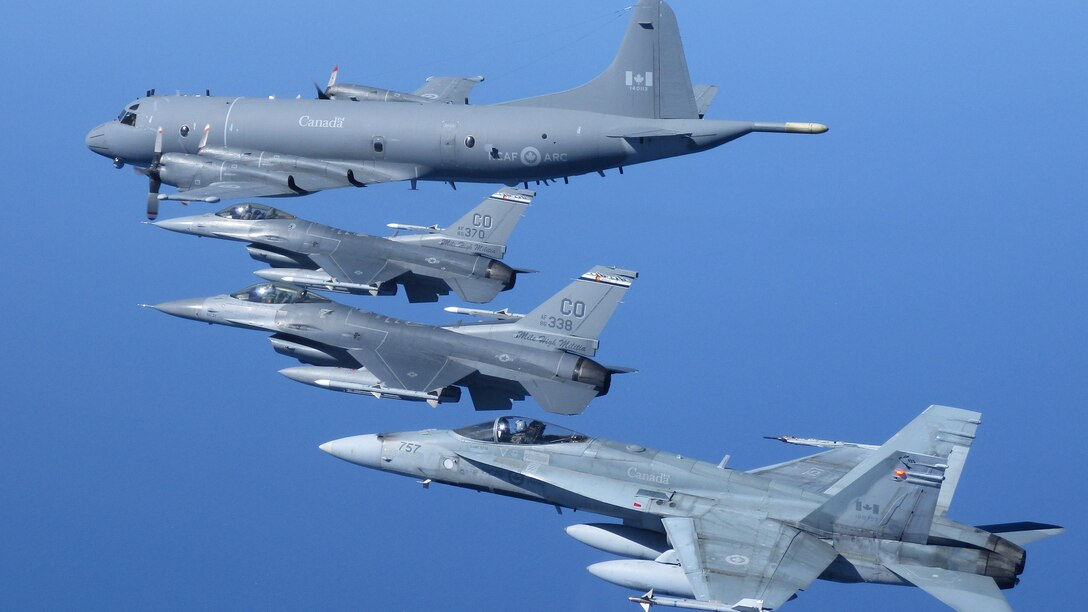
An earlier example of a Canada-United States bi-national command exercise. A Royal Canadian Air Force (RCAF) CP-140 long range patrol aircraft flies in formation with two U.S. Air Force F-16s and a RCAF CF-18 during North American Aerospace Defense Command’s Arctic air defense exercise, Amalgam Dart 21-02, March 22 and 23, 2021. The exercise will run from March 20-26 and range from the Beaufort Sea to Thule, Greenland and extend south down the Eastern Atlantic to the U.S. coast of Maine. Amalgam Dart 21-02 provides NORAD the opportunity to hone homeland defense skills as Canadian, U.S., and NATO forces operated together in the Arctic. A bi-national Canadian and American command, NORAD employs a network of space-based, aerial and ground-based sensors, air-to-air refueling tankers, and fighter aircraft, controlled by a sophisticated command and control network to deter, detect and defend against aerial threats that originate outside or within North American airspace. NATO E-3 Early Warning Aircraft, Royal Canadian Air Force CF-18 fighter aircraft, CP-140 long-range patrol aircraft, CC-130 Search and Rescue and tactical airlift aircraft, CC-150T air refueler, and CH-149 Cormorant Search and Rescue helicopters; as well as U.S. Air Force F-16 fighter aircraft, KC-10 Extender refueler, KC-46 Pegasus, KC-135 Stratotanker, as well as C-130 and C-17 transport aircraft will participated in the exercise. (Photo credit:RCAF)
EMP Attacks: Expert William Forstchen Describes Cataclysmic Impact
Washington, D.C., 2023 — An electromagnetic pulse (EMP) attack above the center of North America would cripple the already vulnerable energy grid, wiping out power and setting off a cascade of deadly events. But just how real is the threat?
“I believe the threat of America being hit by an EMP weapon is the single greatest danger to the survival of [North] America,” said William R. Forstchen, Ph.D.
Widely considered one of the foremost experts on EMP attacks, Forstchen has been consulted by agencies within the American federal and state governments and has spoken at conferences all over the United States.
Forstchen has also written extensively about the devastating impact of EMP strikes, beginning with his New York Times bestseller, One Second After, a realistic look at a weapon and its awesome power to destroy the entire United States and Canada, literally within one second.
One Second After immerses readers in the terrifying concept of an EMP attack, prompting discussions regarding:
The frightening specifics about EMP
The societal impact of an EMP attack
Hour-by-hour, day-by-day, month-by-month details on the effect an EMP attack would have on a community
What, if anything, can be done to protect people and the country against an EMP attack?
If EMP is such a threat, why aren’t we preparing?
The serious threats facing America regarding physical and cyberattacks on our nation’s infrastructure
The publication of One Second After spawned a series that includes One Year After, The Final Day and the upcoming book, Five Years Later. A feature film based on One Second After is currently being developed.
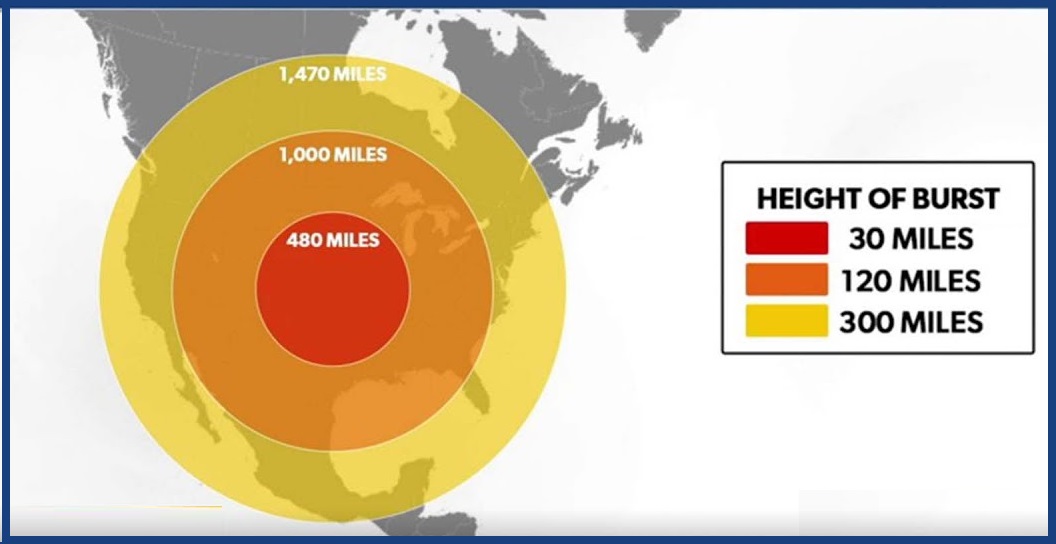
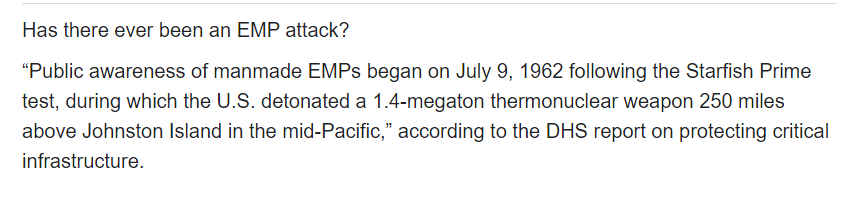
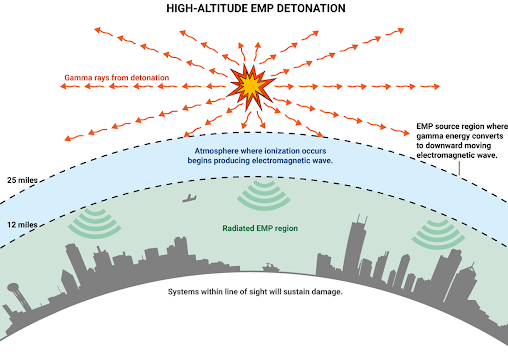
“EMP is a byproduct of detonating a nuclear weapon,” Forstchen said in an interview. “If you detonate a weapon 200-250 miles above the center of the United States … the gamma ray burst when it hits the upper atmosphere starts a chain reaction. … By the time this hits the earth’s surface at the speed of light, it is a giant electrostatic discharge … it blows out the entire power grid of the United States and Canada. Game over.”
William R. Forstchen is a New York Times bestselling author and holds a doctoral degree from Purdue University with a specialization in military history and technology. He is a noted expert historian and public speaker and has been interviewed on FOX News, C-SPAN, and Coast to Coast on topics ranging from history to technology and cultural issues, to space technology development, to security threats.