Tag Archives: US politics

America Welcomes a New G20


StateDept

Dec, 2025

Author: U.S. Secretary of State Marco Rubio

Next year, the United States will host the world’s 20 largest economies for the first time since 2009. Coinciding with America’s 250th anniversary, the 2026 G20 will be a chance to recognize the values of innovation, entrepreneurship, and perseverance that made America great, and which provide a roadmap to prosperity for the entire world. We’ll showcase these values and more when we host the G20 Leaders’ Summit in December 2026 in one of America’s greatest cities, Miami, Florida.

Under President Trump’s leadership, the G20 will use four working groups to achieve progress on three key themes: removing regulatory burdens, unlocking affordable and secure energy supply chains, and pioneering new technologies and innovation. The first Sherpa and Finance Track meetings will be held in Washington, DC, on December 15-16, followed by a series of meetings throughout 2026. As the global economy confronts the changes driven by technologies such as Artificial Intelligence, and shakes off ideological preoccupations around green energy, the President is prepared to lead the way.

We will be inviting friends, neighbors, and partners to the American G20. We will welcome the world’s largest economies, as well as burgeoning partners and allies, to America’s table. In particular, Poland, a nation that was once trapped behind the Iron Curtain but now ranks among the world’s 20 largest economies, will be joining us to assume its rightful place in the G20. Poland’s success is proof that a focus on the future is a better path than one on grievances. It shows how partnership with the United States and American companies can promote mutual prosperity and growth.

The contrast with South Africa, host of this year’s G20, is stark.

South Africa entered the post-Cold War era with strong institutions, excellent infrastructure, and global goodwill. It possessed many of the world’s most valuable resources, some of the best agricultural land on the planet, and was located around one of the world’s key trading routes. And in Nelson Mandela, South Africa had a leader who understood that reconciliation and private sector driven economic growth were the only path to a nation where every citizen could prosper.

Sadly, Mandela’s successors have replaced reconciliation with redistributionist policies that discouraged investment and drove South Africa’s most talented citizens abroad. Racial quotas have crippled the private sector, while corruption bankrupts the state.

The numbers speak for themselves. As South Africa’s economy has stagnated under its burdensome regulatory regime driven by racial grievance, and it falls firmly outside the group of the 20 largest industrialized economies.

Rather than take responsibility for its failings, the radical ANC-led South African government has sought to scapegoat its own citizens and the United States. As President Trump has rightly highlighted, the South African government’s appetite for racism and tolerance for violence against its Afrikaner citizens have become embedded as core domestic policies. It seems intent on enriching itself while the country’s economy limps along, all while South Africans are subject to violence, discrimination, and land confiscation without compensation. Its former Ambassador to the United States was openly hostile to America. Its relationships with Iran, its entertainment of Hamas sympathizers, and cozying to America’s greatest adversaries move it from the family of nations we once called close.

The politics of grievance carried over to South Africa’s Presidency of the G20 this month, which was an exercise in spite, division, and radical agendas that have nothing to do with economic growth. South Africa focused on climate change, diversity and inclusion, and aid dependency as central tenets of its working groups. It routinely ignored U.S. objections to consensus communiques and statements. It blocked the U.S. and other countries’ inputs into negotiations. It actively ignored our reasonable faith efforts to negotiate. It doxed U.S. officials working on these negotiations. It fundamentally tarnished the G20’s reputation.

For these reasons, President Trump and the United States will not be extending an invitation to the South African government to participate in the G20 during our presidency. There is a place for good faith disagreement, but not dishonesty or sabotage.

The United States supports the people of South Africa, but not its radical ANC-led government, and will not tolerate its continued behavior. When South Africa decides it has made the tough decisions needed to fix its broken system and is ready to rejoin the family of prosperous and free nations, the United States will have a seat for it at our table. Until then, America will be forging ahead with a new G20.

Marco Rubio was sworn in as the 72nd secretary of state on January 21, 2025. The secretary is creating a Department of State that puts America First.
RICO EXPERT COMMENTS ON TRUMP’S RECUSAL BID 

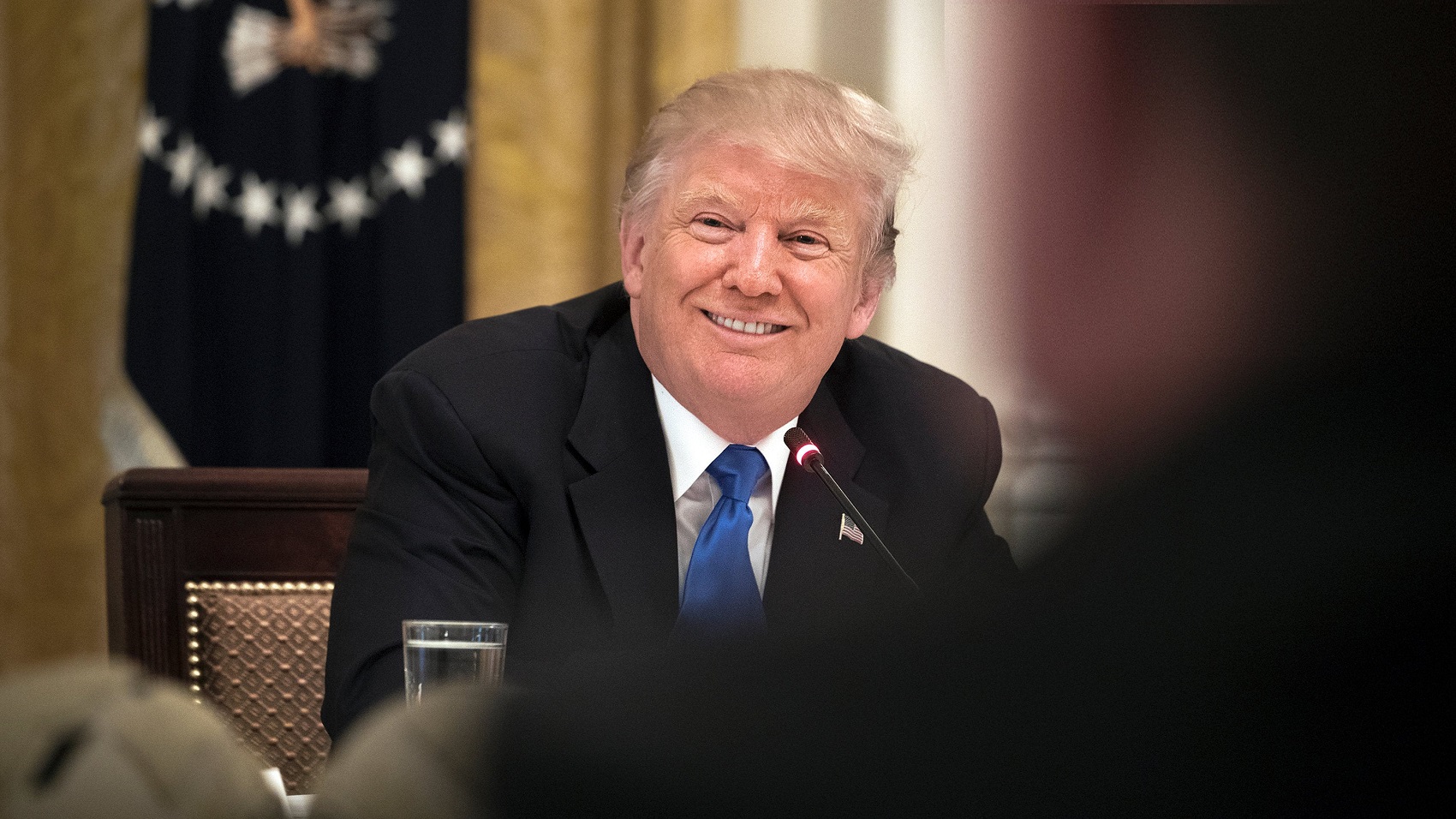
Los Angeles, CA … Lawyers for Donald Trump on Monday asked the federal judge presiding over his election subversion case in Washington to recuse herself, saying her past public statements about the former president and his connection to the January 6, 2021, riot at the U.S. Capitol call into question whether she can be fair. 

“Regardless of anyone’s personal opinion on the matter, Donald Trump’s motion for recusal has merit under the express provisions of 28 U.S.C. § 455, which requires a judge to recuse himself or herself in any proceeding in which [her] impartiality might reasonably be questioned. It is irrelevant whether the judge is actually biased. The U.S. Supreme Court squarely addressed this issue in Liljeberg v. Health Services Acquisition Corp., 486 U.S. 847, 860, which held that recusal is required even when a judge lacks actual knowledge of the facts indicating his interest or bias.

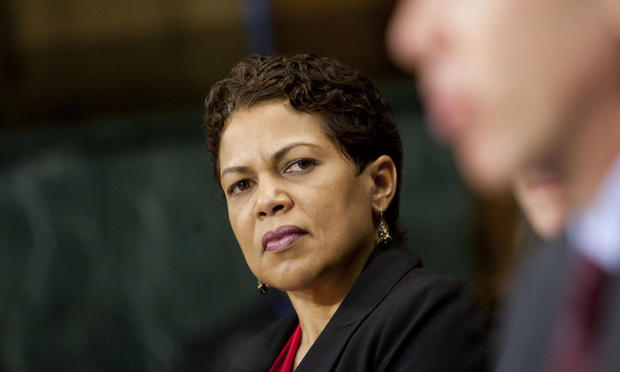
Judge Chutkan

Here, Judge Tanya Chutkan has made previous comments such as ‘Presidents are not kings, and Plaintiff is not a President’ and, in a December 2021 sentencing hearing, she stated, ‘the issue of who has or has not been charged is not before me. I don’t have any influence on that. I have my opinions, but they are not relevant.’ She has therefore publicly acknowledged her bias, which, at the very least, creates an appearance of partiality. This is nevertheless an uphill battle, as the motion has been submitted to Judge Chutkan, who will rule on this motion.

Having litigated this issue extensively in Angelica Limcaco v. Steve Wynn, Case No. 19-15949 (9th Cir. 2020), Donald Trump has to navigate a difficult path because the optics are problematic for him. The Justice Department will likely argue that Judge Chutkan has no financial interest, or something to that effect. Of course, if the motion is denied, the decision could result in an interlocutory appeal that may delay the case,” explained Jordan Matthews, a litigation partner at Weinberg Gonser LLP.

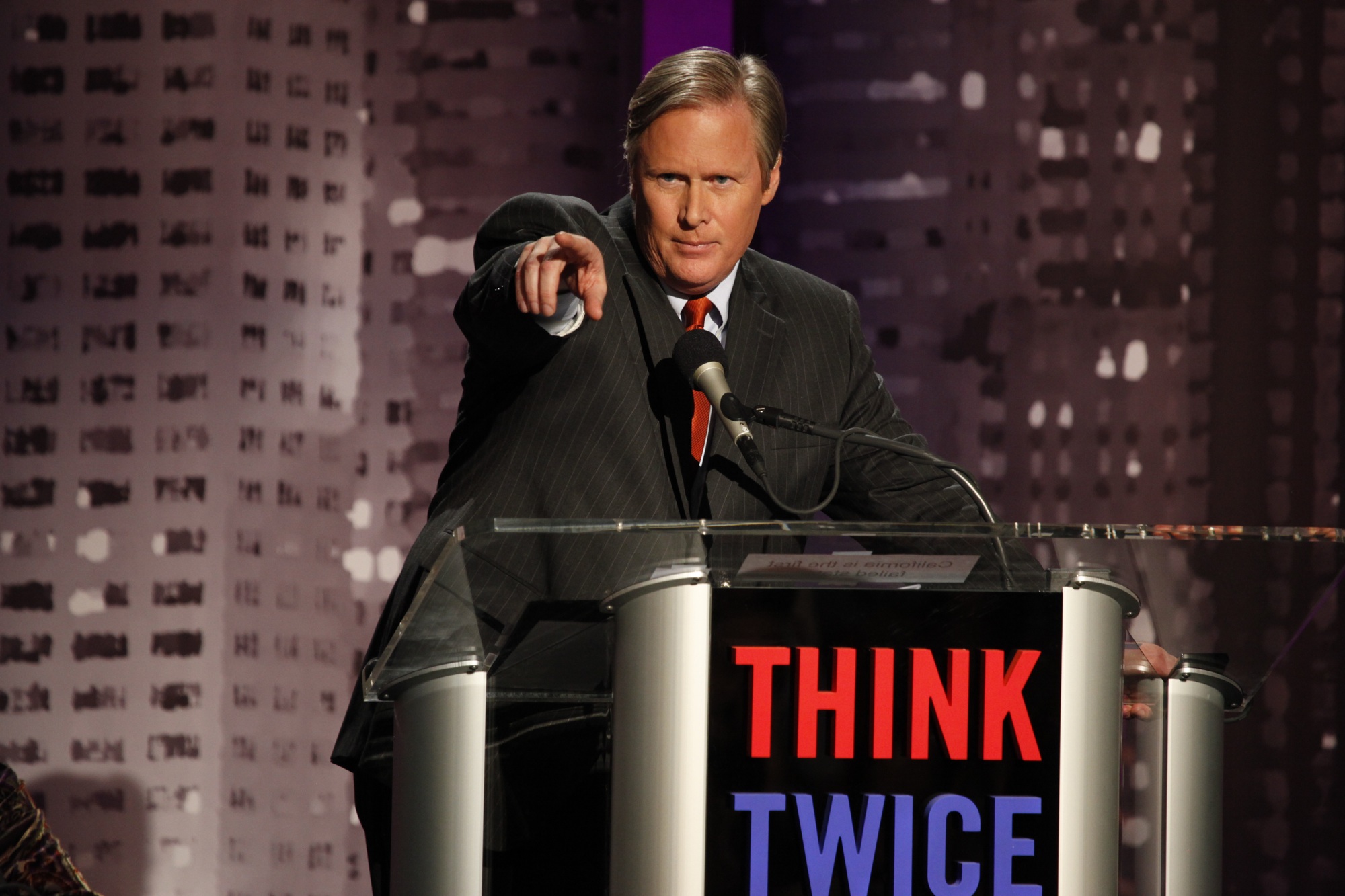
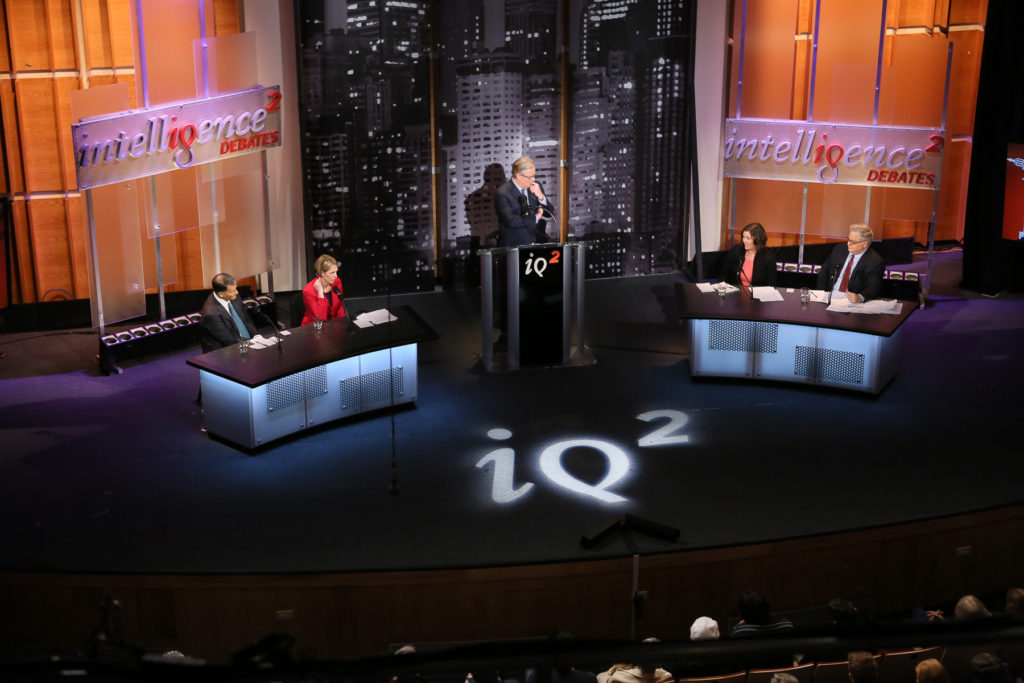
Intelligence Squared U.S. Begins Season Debating Saudi Arabia, Iran & Turkey – In NYC & Online September 12

Saudi Arabia and Iran are vying for regional dominance, as the latter pursues nuclear weapons. Turkey is cozying up to Russia and China. Instability, conflict, and proxy wars have engulfed Syria, Yemen, and beyond. How should the United States respond to changing power, proxy wars, terrorism, and human rights issues in the Middle East? On Thursday, September 12, America’s debate series Intelligence Squared U.S. launches their fall season with a debate not one, but three motions, all investigating 
“Shifting Power in the Middle East”:

Motion 1: Is Trump right on Saudi Arabia?
Motion 2: Is the world safer without the Iran Nuclear Deal?
Motion 3: Is Turkey an asset to NATO?

In this latest installment in Intelligence Squared U.S.’s new “Unresolved”
series, debaters must declare their “yes” or “no” stance on each separate motion, allowing for both sharp disagreements and unexpected
alliances. The debaters will be:
* Michael Doran, senior director on the National Security Council under
President Bush* Reuel Marc Gerecht, former CIA case officer* Bernard
Haykel, professor of Near Eastern Studies at Princeton* Brett McGurk, the State Department’s former Special Presidential Envoy for the Global
Coalition to Defeat ISIS* Barbara Slavin, the director of the Future of Iran Initiative

The debate will be held at NYC’s Symphony Space and stream live online, then air soon after as part of the syndicated public radio show and podcast “Intelligence Squared U.S.” On September 12, online viewers can tune in at IQ2US’s website: https://www.intelligencesquaredus.org/debates/unresolved-shifting-power-middle-east

 WHAT: Intelligence Squared U.S. Debates “Unresolved: Shifting Power in the Middle East”
WHEN: Thursday, September 12 / 7:00-8:45 PM EDT
WHERE: Peter Norton Symphony Space, 2537 Broadway, New York, NY
TICKETS: $40 ($12 for students w/ ID). To purchase, visit http://www.intelligencesquaredus.org/  

Debaters Bios: * Michael Doran, Senior Fellow, Hudson Institute
Michael Doran is a senior fellow at the Hudson Institute in Washington, D.C., where he specializes in Middle East security issues. Doran served as a senior director on the National Security Council under President Bush and was responsible for helping to devise and coordinate U.S. strategy on a variety of Middle East issues, including Arab-Israeli relations and U.S.
efforts to contain Iran and Syria. He also served in the Bush
administration as a senior adviser in the State Department and a deputy assistant secretary of defense in the Pentagon. 

* Reuel Marc Gerecht, Senior Fellow, The Foundation for Defense of
Democracies & Fmr. CIA Case OfficerReuel Marc Gerecht is a former
case officer for the CIA, where he served as a Middle Eastern targets
officer with the CIA’s directorate of operations. He is a senior fellow at the Foundation for Defense of Democracies, a non-partisan organization
centering on national security, where he focuses on Iran, sanctions,
terrorism, and the Middle East. He is the author of “Know Thine Enemy: A Spy’s Journey into Revolutionary Iran” and “The Islamic Paradox: Shiite Clerics, Sunni Fundamentalists, and the Coming of Arab Democracy,”
among others.  

* Bernard Haykel, Professor of Near Eastern Studies, Princeton University Bernard Haykel is a professor of Near Eastern Studies and the
director of the Institute for Transregional Study of the Contemporary
Middle East, North Africa and Central Asia at Princeton University. After working as a post-doctoral research fellow at Oxford University in
Islamic Studies, he joined New York University in 1998 as associate
professor before taking up his post at Princeton. He became a
Guggenheim fellow in 2010 and is co-editor of the book, “Saudi Arabia in Transition; Insights on Social, Political, Economic and Religious Change.” 

* Brett McGurk, Fmr. Special Presidential Envoy for the Global Coalition to Defeat ISISBrett McGurk served as Special Presidential Envoy for
the Global Coalition to Defeat ISIS at the U.S. Department of State, where he helped build and then lead the coalition of 75 countries and four
international organizations in the global campaign against ISIS. He served in senior positions in the Bush and Obama administrations and has led some of the most sensitive diplomatic missions in the Middle East over
the last decade. McGurk is currently the Frank E. and Arthur W. Payne
distinguished lecturer at the Freeman Spogli Institute and Center for
Security and Cooperation at Stanford University. 

* Barbara Slavin, Director, The Future of Iran Initiative, The Atlantic CouncilBarbara Slavin is the director of the Future of Iran Initiative and a nonresident senior fellow at the Atlantic Council. The author of
“Bitter Friends, Bosom Enemies: Iran, the US and the Twisted Path to
Confrontation,” she is a regular commentator on U.S. foreign policy and
Iran on NPR, PBS, and C-SPAN. Previously, Slavin served as a public policy scholar at the Woodrow Wilson International Center for Scholars. Slavin
is a career journalist, and currently writes as columnist for
Al-Monitor.com, a website devoted to news from and about the Middle
East.   

ABOUT INTELLIGENCE SQUARED U.S. DEBATES (IQ2US)
A non-partisan, non-profit organization, Intelligence Squared U.S. was
founded in 2006 to address a fundamental problem in America: the
extreme polarization of our nation and our politics. Their mission is to
restore critical thinking, facts, reason, and civility to American public
discourse. The award-winning debate series reaches over 30 million
American households through multi-platform distribution, including
radio, television, live streaming, podcasts, interactive digital content, and on-demand apps on Roku and Apple TV. With over 160 debates and
counting, Intelligence Squared U.S. has encouraged the public to “think
twice” on a wide range of provocative topics. Author and ABC News
correspondent John Donvan has moderated IQ2US since 2008.