The intersection of logistics, data-driven retail, and social equity offers a unique opportunity for #ValueTransformation. By leveraging the existing infrastructure of modern commerce—specifically barcodes, dynamic pricing, and automated inventory management—we can pivot from bureaucratic stagnation to a lean, responsive governance model. This is not theoretical.
These systems already operate at scale, in real time, with measurable outcomes. The question is not whether the capability exists, but whether the will to repurpose it does.
The Geometry of Taxation: Moving Beyond “Flat”
In Tennessee, the conversation around fair taxation often stalls at the state’s reliance on sales tax. From a value-stream perspective, the current tax system is a “dumb” system; it applies a blunt force to every transaction regardless of the consumer’s economic position or
purchasing context.
However, Tennessee already possesses the technology for Granular Fiscal Scaling. Retailers use advanced POS systems that can instantly differentiate between taxable and non-taxable goods, apply promotions, and even personalize pricing models. The infrastructure exists to move beyond a one-size-fits-all tax approach.
To achieve a system where “those with the most pay the most,” we do not necessarily need new forms, agencies, or bureaucratic layers. We need better algorithms at the Point of Sale—rules-based systems that can dynamically adjust tax burden based on product type, purchasing patterns, or other proxies for economic capacity.
In short, taxation can evolve from a static policy to an adaptive system.
Grocery Operations & the Barcode Revolution
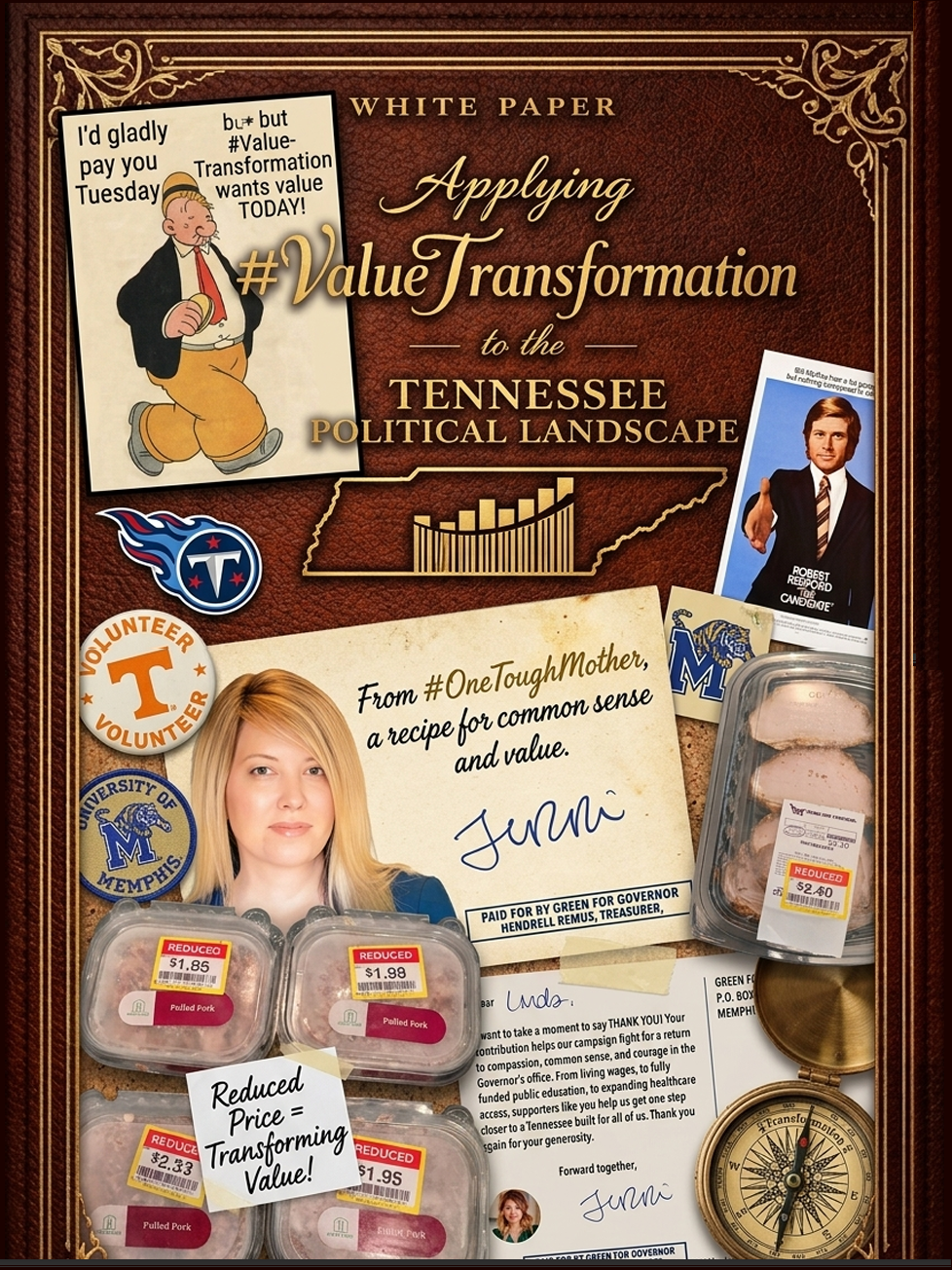
Grocery stores are among the most operationally sophisticated environments in everyday life. They are masterpieces of inventory management, demand forecasting, and waste reduction. When a rotisserie chicken nears its “best-by” hour, a clerk applies a “Reduced”
sticker. This is not just a discount—it is a real-time adjustment of value to prevent loss.
In Tennessee, grocery receipts already reveal the complexity of the tax code. Consumers routinely see different rates applied within a single transaction, such as a lower state rate on groceries versus higher combined rates on prepared foods or general merchandise. The system is already segmented; it is simply not optimized for equity.
The Proposed Policy Shift- The Bean Protocol:
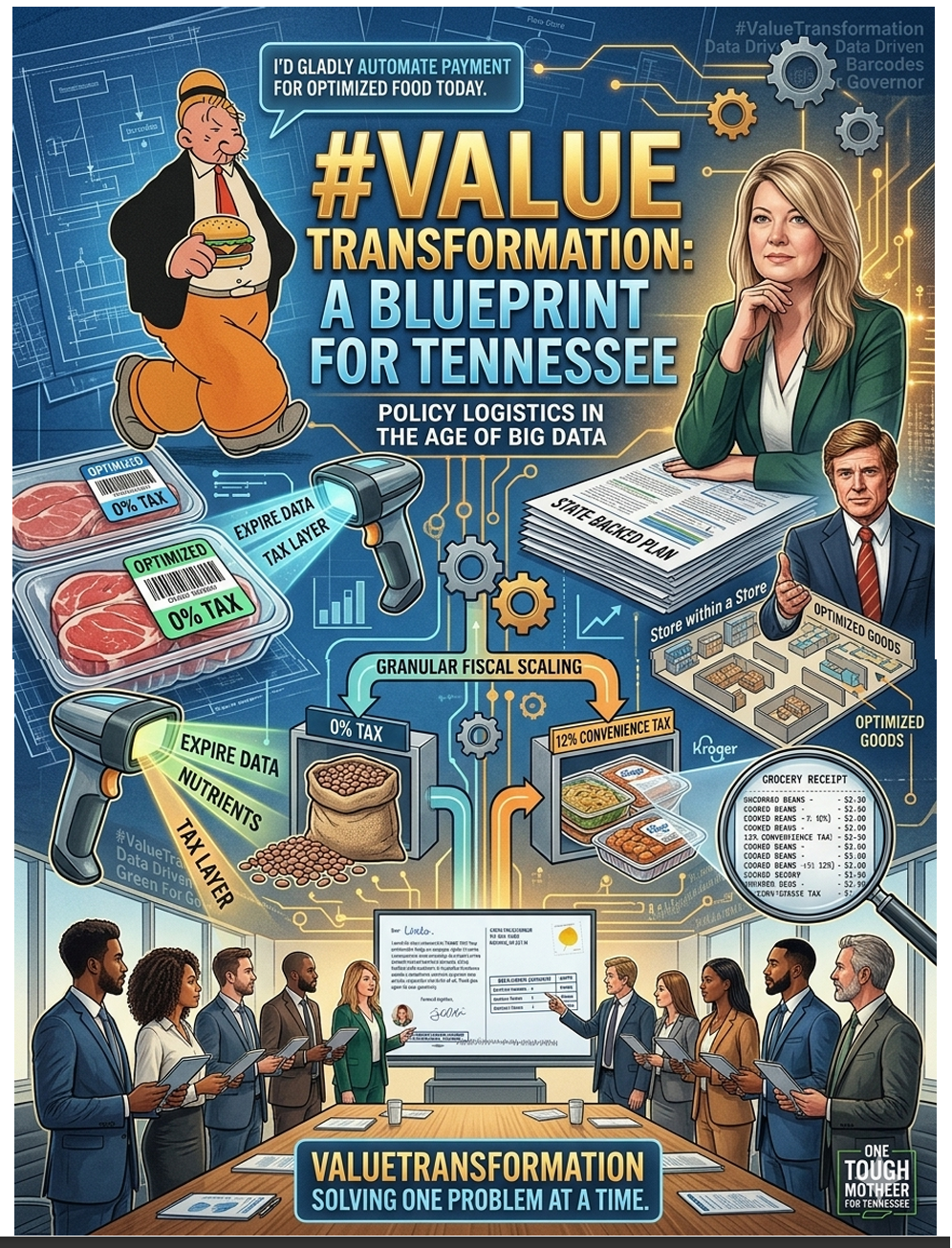
To incentivize home-cooked nutrition and support economically constrained households, a deliberate tax gap can be introduced. Uncooked, shelf-stable staples like dried beans would carry a 0% sales tax, reinforcing low-cost, high-nutrition choices.
In contrast, prepared or convenience versions—“heat-and-eat” beans—would carry a significantly higher tax rate, such as 12%, reflecting their added convenience and positioning them as a discretionary purchase.
This is less about beans and more about behavioral economics. The tax code becomes a nudge engine.
The Store-within-a-Store (SwaS) Model:
Every participating retailer would aggregate all “Reduced” or near-expiration items into a clearly defined, centralized zone. This “Value Zone” would be tax-free and highly visible. The goal is to create a frictionless experience for consumers who are maximizing every dollar, while simultaneously reducing food waste at scale.
This is lean thinking applied to hunger: eliminate waste, increase flow, and deliver value where it is most needed.
The Immigration & Infrastructure Myth
The rhetoric surrounding “free benefits” for immigrants often overlooks the mechanical reality of how Tennessee collects revenue. Most taxation in the state is fundamentally location-based, not identity-based.
Sales Tax:
The POS system does not check citizenship or residency status. It does not distinguish between a lifelong resident and a first-time visitor. If a purchase is made in Tennessee, tax is collected. Participation in the economy equals participation in funding the state.
Property Tax:
Property taxes are tied to ownership and location. The obligation is attached to the asset, not the individual’s background or identity.
By recognizing that economic participation drives tax contribution, the conversation can shift away from entitlement debates and toward optimization.
The more relevant question becomes: how do we best allocate and reinvest the value already being generated by everyone within the system?
Feeding the Foodless: The “Wimpy” Integration
The gap between political promises and lived reality is often most visible in food insecurity.
The challenge is not just supply, but access, dignity, and system design. The “Wimpy” philosophy—“I’ll gladly pay you Tuesday for a hamburger today”—can be modernized through digital infrastructure.
For individuals who are food-insecure or temporarily without means, the self-checkout kiosk can become an access point rather than a barrier.
Identity-Linked Accounts:
Using a state-issued ID or secure digital wallet, individuals in immediate need can scan essential items, particularly within the SwaS Value Zone.
The “Tuesday” Account:
Instead of declining the transaction, the system logs it to a state-managed account.
Repayment can occur later through direct payment, payroll deduction, community service credits, or other structured mechanisms. The emphasis is on continuity of access, not denial.
Risk Management:
What retailers currently classify as “shrinkage” (loss through theft or spoilage) can be reframed as a measurable, trackable social investment. With proper data, the state can quantify outcomes, adjust thresholds, and continuously improve the model.
This approach treats people not as liabilities, but as participants in a system designed to stabilize and eventually strengthen their position.
Conclusion: The Green For Governor Vision
The Jerri Green campaign and soon-to-be administration challenge citizens to stop treating governance like a paper-ledger business in a fiber-optic world. The tools of transformation already exist in grocery aisles, retail systems, and supply chains across Tennessee.
By adopting #ValueTransformation, the state can convert everyday commercial infrastructure into a distributed network for social equity. Every barcode becomes a data point. Every transaction becomes an opportunity to align economic efficiency with human need.
The result is a system where “Common Sense, Compassion, and Courage” are not just campaign language, but embedded logic—executed in real time, at the point where policy meets daily life.
For The Silo, Robert Rutherford. Google: #RutherfordRant