Being ‘pitched’ again- The Green Party of Ontario believe that by merging Ontario’s Catholic-Separate school board system with Ontario’s Public school board system (ie: a single school for all students) the province would save $1,200,000,000 per year. CP
Queen’s Park – Green Party of Ontario leader Mike Schreiner is calling on the status quo parties to stop playing political games and
focus on getting Ontario’s economy moving again while protecting the people and places we love.
Green Party of Ontario Leader Mike Schreiner
“It is essential that political leaders put the public interest before their political self-interest,” says Schreiner. “Ontario needs an honest debate about making our schools fair and fiscally responsible, halting the record loss of farmland, and reversing the lack of concrete support for small businesses to create jobs.”
The Green Party urges the three other parties to seek solutions to the issues facing Ontario today that will last beyond the
next election.
Schreiner put forward the Green Party’s policy priorities for the spring session:
* A jobs plan that cuts taxes for small businesses by doubling the exemption level for the Employer Health Tax
* Permanent protection for prime farmland and source water, and
* Improving our kids’ education by merging the school boards into one public system with French and English boards to save $1.2 billion each year
“We need to tackle the tough challenges now. Ontario desperately needs new ideas to foster job creation and to protect the people and places we love,” says Schreiner. “The Green Party will continue to hold the government answerable to the people of Ontario.” For the Silo, Becky Smit.
Fact: Fewer than 35 per cent of workers in Ontario have a workplace-based pension plan. Coverage for workers in the private sector is even lower, with only 28 per cent having the benefit of plan membership.
Government Working on Made-in-Ontario Plan
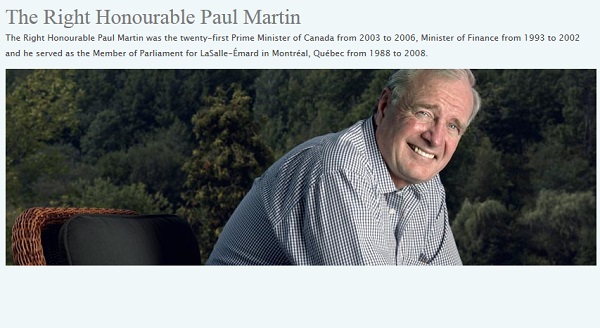
Premier Kathleen Wynne announced today that the Right Honourable Paul Martin has agreed to serve as Special Advisor to the Minister of Finance. Mr. Martin will work with the government on a made-in-Ontario solution to enhance retirement income security for the people of Ontario.
Charles Sousa- Ontario’s Minister of Finance will benefit from Paul Martin’s experiences as Canada’s Prime Minister and Federal Minister of Finances. CP
The announcement followed a meeting between the Premier and the former Prime Minister, where they discussed the urgent need to help hardworking people build a more secure retirement. As federal finance minister, Mr. Martin played an instrumental role in the 1997 federal-provincial agreement to reform the CPP. These reforms were critical to ensuring the plan would be financially sustainable.
Helping people retire with dignity and security is part of the government’s economic plan to invest in people, build modern infrastructure and support a dynamic and innovative business climate.
QUOTES
“I want to thank Paul Martin for taking on this role as Special Advisor. Together, I know we will help protect Ontario’s hardworking people in their retirement with a made-in-Ontario solution that is viable, responsible and puts people first.”
–– Kathleen Wynne, Premier of Ontario
“I am pleased that Paul Martin has agreed to act as Special Advisor on retirement income to the government of Ontario. After the federal government failed to agree to enhance the CPP, our government announced that we will move ahead with a made-in-Ontario solution to enhance retirement savings in the province. Paul Martin will bring a wealth of knowledge and experience as we work towards ensuring that future generations have a more secure retirement.”
–– Charles Sousa, Minister of Finance
QUICK FACTS
The Right Honourable Paul Martin was the 21st Prime Minister of Canada from 2003 to 2006.
Fewer than 35 per cent of workers in Ontario have a workplace-based pension plan. Coverage for workers in the private sector is even lower, with only 28 per cent having the benefit of plan membership.
Retirement savings experts suggest that individuals require 50 to 70 per cent of their pre-retirement income to maintain their standard of living in retirement. Many Ontarians, including middle- and higher-income earners, may not be saving enough to meet this target.
Olivia has been the favourite name for girls since 2008, followed by the same
second, third and fourth place names from last year — Emma, Sophia and Ava. Emily joins the ranks to round out the top five. For boys, Ethan, Jacob and Lucas once again took spots two through four, with Benjamin coming in at five.
Ontario gives parents up to one year to register their newborn’s birth online.
Through the easy-to-use 4-in-1 Newborn Bundle<http://www.ontario.ca/government/register-your-newborn-baby>, they can register their child’s birth and apply for their birth certificate, social insurance number and Canada child benefits, including the Ontario child benefit, in one easy step. Birth certificates ordered online are guaranteed to be mailed within 15 business days or they’re free.
Making it easier for families to access important government services when and where they need them is part of the Ontario government’s economic plan to invest in people, build modern infrastructure and support a dynamic and innovative business climate.
QUOTES
“Parents can register their newly named babies online from the comfort of their own homes. By making it more convenient for families to access our services, we are helping new parents focus on what’s really important.”
— John Milloy, Minister of Government Services
QUICK FACTS
§ More than 99.5 per cent of birth certificates ordered online have been delivered on time.
§ The Ontario Registrar General compiles annual lists of given baby names from registered births in the province for the previous year.
§ ServiceOntario’s 4-in-1 Newborn Bundle was the first of its kind in Canada when it launched in 2007. Since then, more than 720,000 newborns have been registered in Ontario using the service.
§ The Ontario child
benefit<http://www.children.gov.on.ca/htdocs/English/topics/financialhelp/ocb/index.aspx>
provides up to $1,210 per child per year for nearly one million children to support Ontario families.
——————-
Olivia et Liam sont les prénoms les plus populaires pour les filles et pour les
garçons nés en Ontario, et ce, pour la deuxième année de suite.
Olivia est le prénom préféré pour les petites filles depuis 2008. En deuxième,
troisième et quatrième place, il est suivi par les mêmes prénoms que l’an dernier,
soit Emma, Sophia et Ava. Emily s’ajoute à ce palmarès et figure en cinquième place.
Pour les garçons, ce sont les prénoms Ethan, Jacob et Lucas qui l’emportent encore
une fois, en deuxième, troisième et quatrième place respectivement. Ils sont suivis
de Benjamin, qui se classe au cinquième rang.
L’Ontario donne jusqu’à un an aux parents pour enregistrer la naissance de leur enfant par Internet. Grâce au Service d’enregistrement des
nouveau-nés<http://www.ontario.ca/fr/gouvernement/enregistrement-de-votre-nouveaune>,
facile à utiliser, ils peuvent enregistrer la naissance de leur enfant, demander un
extrait de naissance, un numéro d’assurance sociale et leurs prestations pour
enfants du gouvernement fédéral, le tout en une seule étape toute simple. Les
extraits de naissance commandés en ligne sont postés dans les 15 jours ouvrables suivant la commande, et le tout est garanti. En cas de retard, l’extrait de naissance est gratuit.
Offrir aux familles un accès plus facile aux services gouvernementaux au moment et à l’endroit où ils en ont besoin fait partie du plan du gouvernement en matière d’économie visant à investir dans la population, à bâtir une infrastructure moderne et à soutenir un climat d’affaires dynamique et innovateur dans l’ensemble de
l’Ontario.
CITATION
« Les parents peuvent enregistrer en ligne leur bébé avec son prénom sans avoir à sortir de la maison. En facilitant l’accès à nos services pour les familles, nous aidons les nouveaux parents à se concentrer sur ce qui compte vraiment. »
– John Milloy, ministre des Services gouvernementaux.
FAITS EN BREF
§ Plus de 99,5 % des extraits de naissance commandés en ligne ont été livrés à temps.
§ Le registraire général de l’Ontario compile des listes annuelles des prénoms à partir des naissances inscrites dans la province au cours de l’année précédente.
§ Le Service d’enregistrement des
nouveau-nés<http://www.ontario.ca/fr/gouvernement/enregistrement-de-votre-nouveaune>
4 en 1 de ServiceOntario a été le premier du genre au Canada lors de son lancement, en 2007. Depuis, plus de 720 000 nouveau-nés ont été enregistrés en Ontario à l’aide de ce service.
§ La Prestation ontarienne pour
enfants<http://www.children.gov.on.ca/htdocs/French/topics/financialhelp/ocb/index.aspx>
verse jusqu’à 1 210 $ par enfant, par année à près d’un million d’enfants pour
soutenir les familles ontariennes.
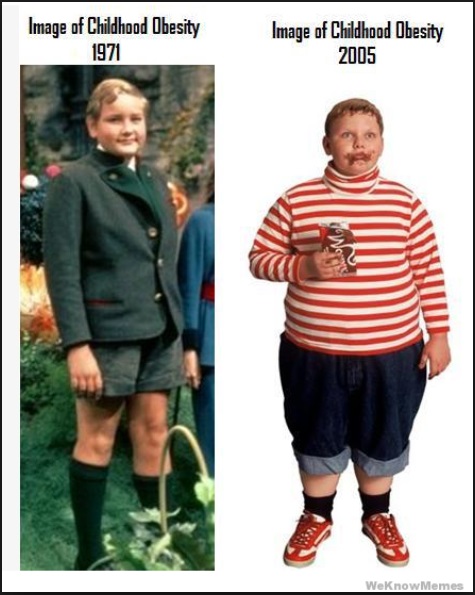
It appears North American society has been desensitized to what childhood obesity ‘looks like’- what a difference a single generation can make. Here we see child obesity stricken Augustus Gloop characters from Willy Wonka’s Chocolate Factory- (Left) 1971 (Right) 2005. Clearly, what was considered obese 42 years ago would not be considered obese today. As Society as a whole becomes more overweight and as media desensitizes our perspectives due to film and video characterizations, our opinions have been influenced. CP image: weknowmemes.com
October, 2013 Ontario will help parents and their children make healthier choices by putting calories on menus, following consultations with the fast-food industry and health care sector.
Legislation that would require large chain restaurants to include calories and other potential nutritional information on their menus will be introduced this winter. The government will also seek advice on how to reduce the marketing of unhealthy food and beverages aimed at kids.
Consultations on menu labeling will include parents and representatives from food and beverage manufacturing, agriculture, restaurant, food service, food retail and health sectors. Consultations on limiting the marketing of unhealthy food and beverages to children will also include the media and telecommunications industry.
Making it easier for Ontario families to choose healthy food is a key component of the Healthy Kids Panel report and helps deliver on our Action Plan for Health Care.
This is part of the Ontario government’s economic plan to invest in people, invest in infrastructure and support a dynamic and innovative business climate.
QUICK FACTS
* The consultations build on steps the government has already taken to implement recommendations from the Healthy Kids Panel, including a 24-hour support line for breastfeeding moms and expanding Ontario’s Student Nutrition Program.
* In 2009, the economic cost associated with physical inactivity and obesity in Ontario was $4.5 billion.
* More than 80 per cent of food ads in Canada are for food high in calories and low in nutritional value.
* A vast majority of Ontarians (95 per cent) support requiring fast food restaurants list nutritional information on their menus (Ipsos Reid, 2011).
Australia’s controversial “Break the Habit”- childhood obesity commercial
““We have to keep an enormous amount of paperwork, about serving sizes, food temperatures, labels, on and on,” our source says. “The new forms are more complex, ask for more information that’s just being duplicated on other forms. (Food service workers) are all collecting the same data for reports that sit in a file drawer and never get looked at.” Our source believes the new government-required paperwork consumes so much of the employees’ time that it is driving up labor costs for the school district, which serves a low-income community.” source/image: eagnews.org
Dr. Jack Newman: “Breastfeeding should almost always work” image: breastfeedinginc.ca
Earlier today [Sept 30, 2013 ed.] , our provincial government announced an investment of more than $2.5-million for enhanced breastfeeding supports. This will include the launch of a 24-hour helpline providing access to lactation experts with service in more than 100 languages. This really is a fantastic program for breastfeeding mothers who can benefit from increased support, no matter what region of Ontario they call home.
Ontario Government Helping Babies Get Healthy Start
Ontario newborns and their families will soon benefit from enhanced breastfeeding supports, helping ensure that every woman who wants breastfeeding support can get it.
Breastfeeding helps to encourage healthy development and can reduce the likelihood of overweight and obesity in adolescence and adulthood. As part of Ontario’s Healthy Kids Strategy, the government is investing more than $2.5 million to help families give their infants a sound nutritional start by:
* Providing 24-hour telephone access to expert support for mothers who are breastfeeding.
* Supporting Ontario’s hospitals and community health care organizations with training, tools, guidance and resources to help them achieve the World Health Organization’s Baby-Friendly Initiative<http://www.who.int/nutrition/topics/bfhi/> designation and adopt clinical best practices in infant feeding that meet Baby-Friendly Initiative designation requirements.
· Targeted support for mothers in population groups that have lower rates of breastfeeding.
* Providing new resources to support breastfeeding through Best Start: Ontario’s Maternal Newborn and Early Child Development Resource Centre.
These initiatives fulfill recommendations made by the Healthy Kids Panel.
Giving Ontario’s children the healthiest start in life helps deliver on our Action Plan for Health Care to provide the right care, at the right time, in the right place. This is part of the Ontario government’s economic plan to invest in people, invest in infrastructure and support a dynamic and innovative business climate.
In Ontario, approximately 90 per cent of mothers want to breastfeed, but only 60 per cent do so when they leave the hospital after giving birth. By six months, only 28 per cent are breastfeeding- that means 72 per cent are feeding their infant formula.
QUOTES-
“We’re helping moms to breastfeed with round-the-clock telephone support and expert
help from hospitals and community health providers. Breastfeeding promotes closeness
between mom and baby, helps protect against illness, and sets babies on the path to
leading healthy lives right from the start.”
– Deb Matthews, Minister of Health and Long-Term Care
“Experts tell us that the first few years of our lives have a major impact on our
health as adolescents, teenagers and in adult life. This investment will help
mothers who want to breastfeed and create more Baby-Friendly Initiative certified
places where they can go to get answers and supports that are critical to raising
healthy children.”
– Teresa Piruzza, Minister of Children and Youth Services
“Breastfeeding should almost always work. Almost all breastfeeding problems are
preventable and if they are not prevented, they can be fixed. Unfortunately in
Ontario today, mothers have significant difficulties with breastfeeding because they
cannot get the best start from day one and they cannot always find help when they
need it. The initiatives the Ontario government is announcing today will help moms
get the support they need to breastfeed successfully.”
– Dr. Jack Newman, International Breastfeeding Centre and Newman Breastfeeding Clinic
“Though breastfeeding is natural, it is a learned behaviour and two must learn. Here
in Ontario there hasn’t been enough knowledgeable help for learning mothers and
babies up until now. I am hopeful with these new initiatives announced today that we
will see a vast improvement in the support mothers receive to achieve their
breastfeeding goals.”
– Edith Kernerman, International Breastfeeding Centre, Newman Breastfeeding Clinic,
Centre for Breastfeeding Education and Ontario Lactation Consultants Association
QUICK FACTS
* In Ontario, approximately 90 per cent of mothers want to breastfeed, but only 60 per cent do so when they leave the hospital after giving birth. By six months, only 28 per cent are breastfeeding.
* The benefits of breastfeeding include improved cognitive development and reduced incidence of illness during infancy, childhood and later in life.
* For each month a baby is breastfed until the eight month, the risk of obesity is reduced by four per cent – resulting in a reduced risk of obesity of 32 percent overall when a baby is breastfed for the first eight months.
But why do we continue to feed government? Why would we participate in any political or economic system that is not serving our best interests?
Government is basically unproductive and can only give what it takes. Bigger government takes more and gives less.
The fruits of our labour are controlled, confiscated, and redistributed through taxation, inflation, interest, and government spending. There is also a systemic shortage of official currency, which leads to a shortage of paid employment, and the jobs that are available might be completely unproductive. We are forced to compete for currency that is systemically scarce, even though there are plenty of worthwhile activities that can be done and there are plenty of people who are willing and able to do productive work.
There seems to be an increasing level of dissatisfaction with government and the political process, but there certainly isn’t a consensus in defining the problem or offering a solution that will sufficiently address all of our concerns or satisfy everyone. This poses a challenge, but it also presents us with an opportunity to carefully examine the form and function of government, and explore a full range of possible alternatives.
If we have freedom of choice and a free market then we should be able to individually select the goods and services that we wish to purchase from a variety of producers and providers, who should be able to compete for customers based on the quality and price of their products and services. All products and services, including government programs and services, should be able to compete in a free market.
Trade and exchange should be voluntary and mutually beneficial. We should not be forced to pay for anything that we don’t want or don’t use, and we should not have to do business with anyone who consistently offers poor quality goods and services or who does not pay their legitimate debts.
If we have economic freedom then we should be able to negotiate agreeable prices, accept or refuse any form of payment, control the allocation of our credit, and use any method or medium of exchange. We should not be compelled to use a systemically scarce currency that is created as interest-bearing debt.
If the purpose of an economic system is to facilitate the production and exchange of goods and services then it should be possible to create numerous ways to serve this purpose, with various concurrent systems operating in any location. This would give us more control over our time, labour, skills, and resources.
If government is a provider of services then it should compete for customers based on the quality and price of any services that it is actually willing and able to provide, including education, health care, and defence. If government services were the best ones available then we would presumably choose to use them. Our wealth should not be confiscated and redistributed to pay for anything that we don’t want or don’t use.
We can already seek membership in various communities, organizations or other groups, based on our own political, religious, social, recreational, or business interests. If we have freedom of association and political freedom then we should even be able to choose a apolitical system and type of government, without having to move to a different place, and without imposing or choice on anyone else. This would give us the option to hire people to manage our affairs and make decisions on our behalf, but we would not be represented or lead without imposing our consent.
Any imposed political system or government is a method of control. Political freedom does not exist if an individual is forced to accept the decisions of any other individual or group, even if it calls itself a majority.
Imposed political systems and territorial governments with their restrictive geopolitical boundaries can be replaced with a variety of voluntary communities, mutual benefit associations, and autonomous protective groups, with overlapping membership in any location. Multiple communities can exist in any geographic region, without any imposed territorial monopolies for the provision of services.
Individual participation in any economic or political system should be entirely voluntary, based on choice and consent, rather than coercion and compulsion. No person is an island, but everyone should essentially be able to individually decide how he or she would like to organize and manage his or her economic and political activities.
Government is a human invention that has changed over time and will continue to change, but the direction of this change will be determined by the way we think and the choices we make.
Diverse methods and arrangements can co-exist simultaneously in any location to facilitate the production, provision, distribution, and exchange of goods and services, for the mutual benefit of all voluntary participants, at their own risk and expense. James Clayton
Note- boldfacing was not indicated in the original submitted letter to the Silo.
(Queen’s Park): Green Party of Ontario leader Mike Schreiner is calling for an end to political gamesmanship at Queen’s Park. Instead,
Schreiner wants the minority legislature to move on legislation that protects food and water, democracy and local jobs during the fall session.
“Greens will push the government to protect the people and places we love,” says Schreiner. “The status quo parties need to stop playing political games so that we can get things done for the people of Ontario. Greens succeeded in pushing the Premier to save the Experimental Lakes Area [ search our site for more on the Experimental Lakes Area CP] in the spring, which was more than the Tories accomplished with 36 seats.”
As the only political leader to sign the Food and Water First pledge to protect prime farmland and source water, Schreiner is challenging the Premier and opposition parties to follow his lead.
“We can’t eat subdivisions, quarries or pipelines,” says Schreiner. “Ontario is losing farmland at an accelerating rate, bees are dying, and 2 pipeline proposals threaten our drinking water. None of the status quo parties are doing enough to protect the places we love.”
Greens know that part of the solution is to reduce the influence of powerful vested interests by banning corporate and union donations to political parties.
“People vote, not corporations,” says Schreiner. “We have to get politics back on track by closing the money taps that buy influence for powerful corporations and big unions.”
Greens are also calling on the government to remove barriers for entrepreneurs to create local jobs. Schreiner wants to see changes to finance laws to allow crowd source funding for new businesses.
“Ontario must invest where the puck is going, not where it is,” says Schreiner. “People want to invest in their communities to support entrepreneurs in clean tech and low carbon industries.”
For the Silo, Becky Smit
The Ontario government will introduce legislation to establish a Financial Accountability Officer, an independent officer of the Legislative Assembly. Ontario is the first province in Canada to introduce this oversight measure.
If the legislation is passed, the Financial Accountability Officer would provide independent analysis to all MPPs about the state of the province’s finances, including the Ontario Budget, as well as trends in the provincial and national economies. In addition, at the request of a legislative committee or an MPP, other types of research could be provided by the officer, including the financial cost or benefit to the province of any public bill. The Financial Accountability Officer could also be asked to review and estimate the financial cost or benefit to the province of any proposal that relates to a matter over which the Legislature has jurisdiction, such as the establishment of a new program.
Increasing financial openness is part of the government’s plan to work collaboratively, attract investment, create jobs and help people in their everyday lives.
“We are proposing the creation of a Financial Accountability Officer to further
enhance the openness and transparency of government. This would also include the
financial assessment of any public bill brought forward to the Legislature by an
MPP. The work undertaken by this independent officer will help better inform the
house on possible financial impacts of a proposed bill and increase information
available to Ontarians.”
– Charles Sousa, Minister of Finance
“We are fulfilling our commitments with the introduction of the Financial
Accountability Officer Act. I look forward to working with the opposition to pass
this Bill and other important legislation that we will be debating this fall.
Ontarians want to see minority government working, and I’m optimistic we’ll be able
to make progress in the Legislature.”
– John Milloy, Government House Leader
QUICK FACTS
§ The Financial Accountability Officer would be selected by a panel consisting of
one member from each recognized party, chaired by the Speaker of the Assembly who is
a non-voting member.
§ The Financial Accountability Officer would produce an annual report on or before
July 31 of each year.
§ The establishment of a Financial Accountability Officer builds on previous
government actions to enhance accountability and transparency, such as the Fiscal
Transparency and Accountability Act, 2004.
Ontario Premier Kathleen Wynne (Lib) in Thunder Bay, ON home to new law school.
Ontario Premier Kathleen Wynne attended the opening of two professional programs in Northern Ontario on September 4th, as part of her commitment to help young people in every part of the province prepare for promising careers.
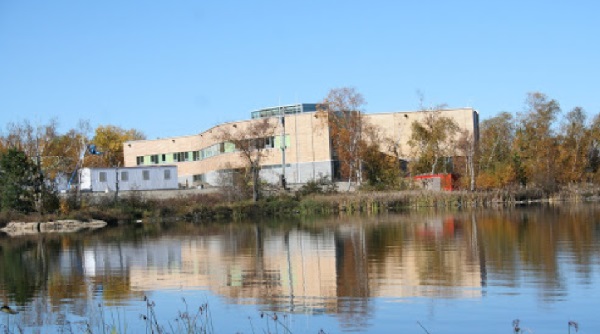
Lakehead University’s Faculty of Law in Thunder Bay and Laurentian University’s School of Architecture in Sudbury are Northern Ontario’s first law and architecture schools, and the first of their kinds to open in the province in more than 40 years.
The schools will help Northern Ontario students enter the law and architecture professions, and study closer to their families and the communities where they grew up. There is currently a shortage of lawyers who specialize in Northern issues, and Lakehead’s new law school will help bridge that gap by focusing on issues such as access to justice in Northern and rural communities, as well as Aboriginal, natural resource and small- or single-practitioner law.
The Ontario government is committed to making smart investments that will help Northern Ontario’s economy grow and create more jobs.
“I want young people in every part of this province to be able to pursue their
dreams, find great careers and give back to their communities. These two exciting
programs bring new opportunities to a wonderful part of our province.”
—Kathleen Wynne, Premier of Ontario
“A post-secondary education continues to be one of the most important investments
people can make in themselves and their future. Programs like these will help
prepare students in the North for the global economy, give them better access to
good jobs and help Ontario build the highly skilled and educated workforce it
needs.”
—Brad Duguid, Minister of Training, Colleges and Universities
“These two new programs further establish Thunder Bay and Sudbury as destinations
for specialized post-secondary education and training. Our government is so proud to
be able to work with educational institutions in Northern Ontario to ensure we have
the infrastructure needed to educate the workforce of tomorrow.”
—Michael Gravelle, Minister of Northern Development and Mines
Laurentian University. Main campus. photo: Google.ca
QUICK FACTS
§ The Ontario government invested $1.5 million in Lakehead’s new Faculty of Law building, and $21 million in Laurentian’s new School of Architecture.
§ Approximately 57 per cent of Lakehead’s 60 new Faculty of Law students are from Northern Ontario. Laurentian’s inaugural School of Architecture class is comprised of 70 students.
§ Laurentian is the first Canadian school of architecture outside of Quebec to offer French programming. It also provides students with access to an Elder-in-residence, and several courses focused on Aboriginal teachings.
Ontario’s ruling Liberals want to ban Teen Tanning but need support to pass the legislation.
“PCs and NDP Threaten to Stall Youth Tanning Bed Ban” (Queen’s Park) One day after calling on the government to fast-track Bill 30, legislation to ban youth access to tanning beds, the PCs and NDP are threatening procedural tricks to stall the bill in the Ontario Legislature.
“When the House returns next month, our government will move a programming motion in the Legislature in order to quickly pass this life-saving bill into law by the end of September,” said Liberal MPP Deb Matthews. “The PCs and NDP have already pledged to support Bill 30 – it’s concerning to hear the opposition parties might play procedural games to prevent this vital legislation from passing.”
Matthews was referring to published media reports that indicate both opposition parties are backtracking from a commitment to fast-track the tanning bed ban:
· NDP Health Critic France Gelinas said Thursday the Government should pass the legislation “fast, very fast…[Ontario Liberals] controls the calendar.” (Toronto Sun, August 22, 2013). Today, Gelinas said the Liberals “are not in control” and “can’t simply push legislation through the house without getting agreement from the two opposition parties.” (Toronto Sun, August 23, 2013).
· The PCs said Thursday “We support the legislation” and called for a time allocation motion to secure speedy passage (Toronto Sun, August 22, 2013). The same day, the PCs wouldn’t confirm if they will follow through on their pledge to fast-track the Bill (Globeandmail.com, August 22, 2013).
“It’s time to put an end to the procedural games blocking our efforts to pass new tanning legislation so we can prevent skin cancer among young Ontarians. MPP France Gelinas has been unclear on whether or not she will support our efforts to fast-track this legislation. I would like a clear answer from Ms. Gelinas – yes or no – will her party help us get this bill passed before the end of September? All MPPs have a shared responsibility to make the legislature work so we can help to keep young people safe,” stated Matthews.
The proposed legislation would prevent skin cancer among youth and create awareness potential harm by prohibiting the sale of tanning services to youth under 18. It ould also require that tanning bed operators request identification from anyone who appears under25 years old.
Last spring, the opposition blocked progress on Bill 30, Skin Cancer Prevention Act(Tanning Beds), 2013 by needlessly extending debate on three other bills for more than55 hours – far more than required. By running out the clock debating the Local Food Act, the Air Ambulance Amendment Act & Co-op Housing legislation, the opposition prevented this important tanning bed legislation from moving forward.
Ottawa, ON – Green Party leader and Guelph candidate Mike Schreiner called for the complete protection of prime farmland in Ontario.
“We can’t eat subdivisions, quarries or pipelines,” said Schreiner while attending the Association Municipalities of Ontario Conference
in Ottawa.
“The Ontario government must stop destroying prime farmland before it’s too late.” Only five percent of Ontario’s land mass is suitable for growing food. Less than 0.5% is prime farmland. Yet Ontario is losing approximately 126,000 acres of farmland each year to development.
“People are tired of the Liberal’s bait and switch government that says one thing and does another. The government’s local food act is meaningless if the Liberals fail to protect prime farmland,” added Schreiner. “There will be no local food if the province continues to lose farmland at a rate equal to the size of Toronto each year.”
The Green Party is pushing the government to protect prime farmland from development in the new Provincial Policy Statement, which is currently under review. Schreiner is the only political leader to sign the Food and Water First pledge to protect farmland and source water regions. He has challenged other political leaders to sign the pledge.
“Good soil is priceless and must be protected. It is a shame no Liberal, NDP or PC MPP has taken a simple pledge to put food and water first in Ontario,” said GPO deputy leader Kevin O’Donnell. “The Greens will always put food and water first before developers, quarries and pipelines.” CP
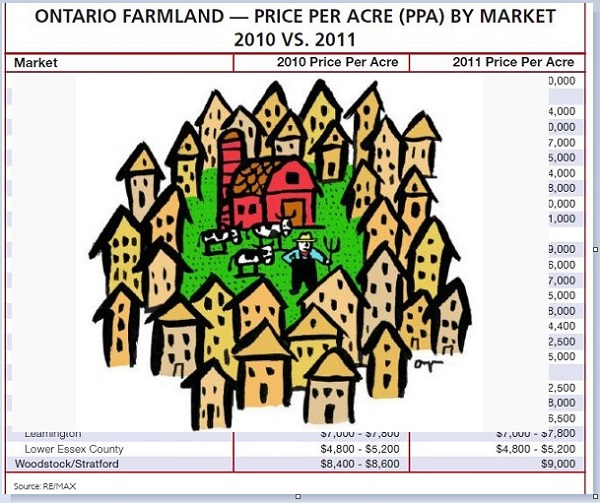
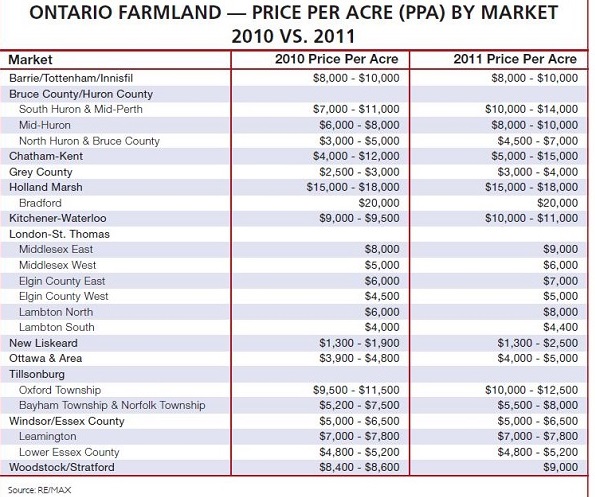
Big rise in per acre value in only 12months. We’re not sure why but Norfolk County and Haldimand County farmland values are missing from this chart and we were unable to find those stats anywhere on the RE/MAX farm realty site.
See the supplemental section below for more on this photo-
Green Party of Ontario leader Mike Schreiner made the following statement in response to the Ombudsman’s 2012-2013 Annual Report [search the report here at thesilo.ca CP ]: “Whether it’s safe transportation for medical issues, our civil liberties or responsible, accountable government, the Liberal government has put people at risk by failing to act.
It is especially irresponsible that the Liberal government has failed to introduce legislation to address the appalling conditions of non-emergency medical transportation services.
The current Premier promised action two years ago when she was Minister of Transportation, yet nothing has happened. According to the Ombudsman, the current Transportation Minister was unaware of how serious this issue is and the need to take action now. Ontario can’t afford to wait for a tragedy to take action.
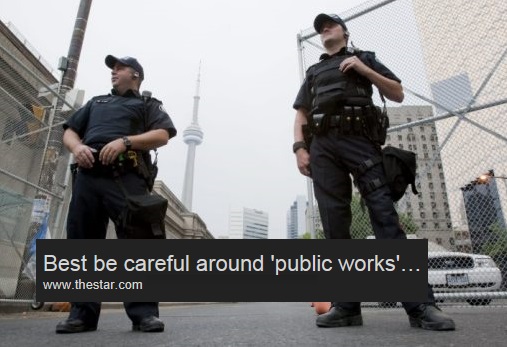
Three years after the Liberals violated our civil liberties at the G20 summit in Toronto, the outdated Public Works Protection Act: http://www.e-laws.gov.on.ca/html/statutes/english/elaws_statutes_90p55_e.htm has not been overhauled. All three status quo parties at Queen’s Park shoulder the blame for the delay in fixing this serious breach of our civil liberties.
Finally, it is embarrassing that Ontario remains the only province without Ombuds oversight of hospitals, long term care facilities, children aide societies and other MUSH sector public institutions. With the Liberals third-rate cover up of the gas plant scandal, we’ve seen this government demonstrate a fear of proper oversight and accountability.
It’s unacceptable that they continue to fail to provide citizens with proper oversight of the MUSH sector.
The Ombudsman’s annual report once again shows the Liberals are a bait and switch government. They say one thing and do another or simply fail to act.” For the Silo, Becky Smit
The 10 foot tall ( 3.048 m) work in progress Robocop statue. image: freep.com
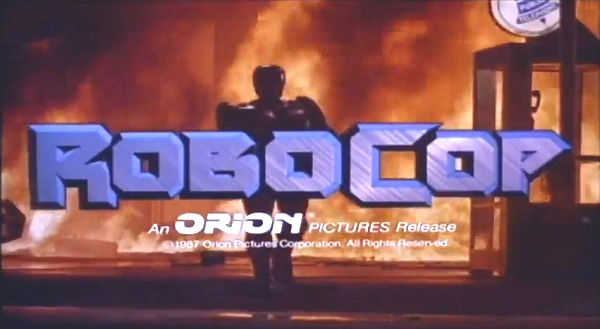
In the 1987 the Dutch auteur film maker Paul Verhoeven created a movie unlike any other. He called it Robocop and I’m old enough to remember watching this dark comedy sci-fi masterpiece when it was brand spanking new.
This film and its sequel (humbly titled: Robocop 2) continue to resonate and influence today’s art and culture. Sometime this year or perhaps next, in the real-world city of Detroit a ten-foot tall Officer Murphy (aka Robocop himself) statue will be unveiled- 26 years after Verhoeven chose Detroit as the setting for a near future city on the brink of disaster due to the privatization of that city’s police force and its resulting corporate mismanagement.
It seems OCP, Detroit’s police force, have no choice but to create a half-man half-machine cyborg in hopes of not only a public relations coup but with an eye on a bright future of profitable policing. Enter the complicated messages stitched into Robocop.
Film like all media, has been used as a political statement before but perhaps Robocop did this unintentionally. It’s a sci-fi movie first and foremost but the personal message exists too: THIS MIGHT HAPPEN. “Dead or alive….you’re coming with me.” CP
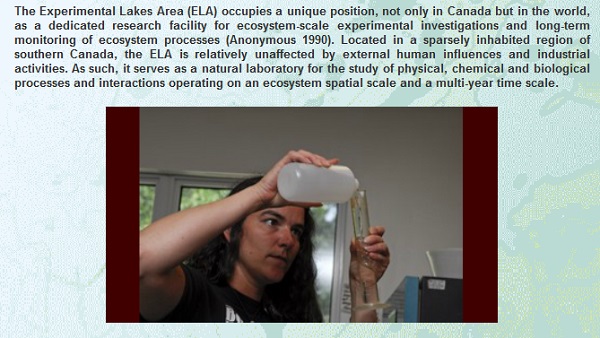
(Toronto, Ontario): The Green Party of Ontario has launched a campaign calling on the Ontario government to take over the Experimental Lakes Area (ELA) from the federal government. In less than a day over 700 people have written emails to the Finance Minister Sousa demanding the ELA be included in the upcoming Ontario budget.
Federal Bill C-38 terminates federal funding for the ELA on March 31, 2013. “The Prime Minister is poised to throw away 45 years of world-renowned freshwater research with his anti-science agenda,” says Green Party leader Mike Schreiner.
“The Experimental Lakes Area is vital to keeping our water clean, sovwe’re calling on Premier Wynne and Minister Sousa to save this priceless resource for future generations.”
Ontario already owns the 58 lakes around Kenora that make up the Experimental Lakes Area. Since 1968, the federal department of Fisheries and Oceans has managed the operations of the ELA. The cost to maintain the ELA as avworld-renowned laboratory is only $2 million per year.
The ELA has played an essential role in explaining algal blooms and acid rain. ELA scientists continue to publish in scientific journals with the ELA being recognized as the most important freshwater research facility in the world.
“No one can predict the next threat to our water,” says Schreiner. “But we can predict the ELA will be vital to the scientists working on tomorrow’s challenges. The Prime Minister refuses to protect Canada’s water, so we’re demanding Premier Wynne step in before it’s too late.”
Ontario is taking steps to provide vulnerable consumers with protection against unfair business practices of some companies that offer debt settlement services.
As part of the province’s continuing commitment to strengthen consumer protection, the Ontario government intends to introduce legislation that, if passed, would impose new rules for debt settlement services, including:
Banning companies from charging upfront fees for debt settlement services.
Limiting the total amount of fees consumers are charged.
Requiring clear, easy to understand contracts.
Establishing a 10-day cooling-off period, providing consumers more time to consider their agreements.
Allowing the licenses of non-compliant companies to be revoked.
These proposed reforms would help protect the rights of consumers and are part of the new Ontario government’s commitment to building a strong economy and a fair, safe and informed marketplace.
QUOTES
“Ontario consumers need to have confidence that they’re getting what they pay for when purchasing debt settlement services. We’re going to introduce legislation that would protect some of our most vulnerable consumers from being taken advantage of, at a time when they need the most help.”
— Tracy MacCharles, Minister of Consumer Services MPP Pickering-Scarborough-East
“Ontarians work hard for their money. Why just give it away to a company that is going to take your up-front fee but not actually settle with your creditors? I’m pleased the Ontario government is strengthening protections for consumers looking for help from debt settlement companies”
— Gail Vaz-Oxlade, financial writer and host of “Til Debt Do Us Part”
QUICK FACTS
Ontario is joining other provinces like Alberta and Manitoba that regulated companies offering debt settlement services.
There are currently 22 companies and 38 credit counselling providers offering debt settlement services in Ontario.
The average consumer debt in Ontario is more than $25,000 per person.
LEARN MORE
Read more about how the Ontario government protects consumers who use companies that offer debt settlement services. www.sse.on.gov.ca
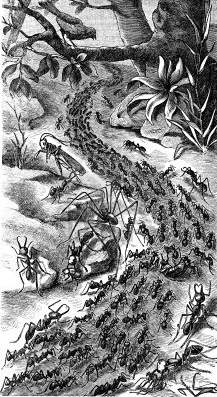
Like a column of ants- “Today, in the Greater Toronto and Hamilton Area, the average commute time is 82 minutes a day. Gridlock is a major issue affecting our province’s productivity.” Ontario Premier Wynne image: us.123rf.com
Where investing in transit can take us…….The first subway line in Toronto opened in 1954, the year after I was born. I still remember riding the subway with my grandmother as a little girl. I was wearing my white gloves because it was a special occasion. Everyone was so excited, so proud.
Today, in the Greater Toronto and Hamilton Area, the average commute time is 82 minutes a day. Gridlock is a major issue affecting our province’s productivity.
This is not just an issue of commute times for people in one region. Congestion in the GTHA hurts farmers who want to move food through the region quickly, truck drivers trying to get to the US border, tourists trying to visit and countless families who want to move from one side of the city to the other, without getting stuck in endless traffic.
Fixing transportation infrastructure will improve our lifestyle and our economy. It will also have a positive impact on our tourism, our natural environment and on the health of the millions of people who call this region home.
That’s why I know we have to move forward on this conversation.
But I don’t want anyone to think that transit or the GTHA is getting unfair attention or disproportionate investment.
And so it’s important to note that for the past 20 years, transit investment in Ontario has lagged well behind the funding we have put into the province’s road network, our bridges and underpasses.
That part of our transportation puzzle has received hundreds of millions a year; and in the past nine years, billions.
In contrast, there have been several years in that time period when the provincial government’s capital expenditure on transit was exactly zero.
There is a pressing need for change. That is not up for debate.
But when I listen to the rhetoric around transportation investment, I believe some politicians have made a short-sighted decision to avoid real solutions.
I know improving our daily commute is not about scoring political points. It’s about ensuring Ontario’s success. And that is my core responsibility as the Premier of this province.
People are ready to get moving. But to develop real momentum we have to change the way we talk about these investments.
We need to bring excitement back to the discussion of transportation infrastructure, and where it can take us, our children and grandchildren.
We have to talk about what we DO want. We want every part of this province to move quickly, safely and efficiently so that we can all benefit.
When it comes down to it, transportation investments will need tens of billions of dollars over the next twenty years. Our whole provincial budget each year is about $125B.
And our spending on programs including education and health care is already tightly constrained, the lowest of any province.
We need to find dedicated revenue for these projects, because the money cannot be found elsewhere.
I believe that any new funds must be directly tied to a measurable result. People need to know what they are paying for; they need to see where the money is going.
Whether the need is for new transit in the GTHA, light-rail lines in Ottawa, bridge repairs in Kenora or highway refurbishing in Huron County, we need to get this done.
We need to get Ontario moving.
So I will keep talking about what we can achieve for this great province. I will focus on the positive impact we can make through smart, fair investment.
But I need your help. Let’s tap into the desire for a safer drives, a better commute, cleaner air, a stronger economy. I know the will is there. I know the support exists. And progress will be made.
Together we can get this done. Premier Kathleen Wynne
(Toronto) – GPO leader Mike Schreiner is criticizing the NDP for hurting the economy and environment by refusing to support dedicated revenue tools to fund public transit. “NDP leader Andrea Horwath sounds like Rob Ford when it comes to funding public transit,” says GPO leader Mike Schreiner.
“Ontario’s economy will grind to a halt if we don’t reduce gridlock with dedicated revenue for public transit.”
Gridlock costs the GTHA economy $6 billion per year in lost productivity. If the status quo doesn’t change, gridlock will cost the economy $15 billion per year. Congestion hurts our health, environment and takes time away from family and community.
The GPO is calling on MPPs in the minority legislature to support dedicated funding for transit. “We need to be realistic about funding public transit,” adds Schreiner. “People are tired of being stuck in traffic. They understand that we can’t afford transit improvements without new revenue. It’s unfortunate the NDP is standing in the way of better public transit for those who need it most.”
“The NDP are wasting the opportunity they have in the minority legislature to leave a great legacy for ours and our kids’ future by funding world-class transit across the province,” adds Schreiner. “We need to change direction in transportation planning, and we need to be realistic about funding. Wishful thinking won’t fund transit.”
Ontario can’t afford to let gridlock continue. Better transit benefits everyone. It means less congestion, fewer accidents and less pollution. For the Silo, Becky Smit
Dear Silo, We have as of late been inundated with all the bad news about the “ Idle No More “ protests by the aboriginals and how disgusting it is, and counterproductive it is and all the finger pointing that is going on, and who’s right and who’s wrong and how dare theses people disrupt our way of life.
These people have a legitimate road to hoe with their issues and have had for years now. They were the originators of this country, had at one time a huge empire here that stretched across the country and ran their affairs according to their laws. While I do not condone some of the acts that have been done it’s not hard to see why they have done so to make or stress their point. I mean is it not hard to envision that if you had been put on reserves and given second class status and had issues would you not also rail against what you felt was wrong for you and your people.
Ms. Spence may have squandered money in an incorrect fashion and may have played fast and loose with taxpayers dollars and if so well that’s just dead wrong. But who amongst us recalls that sordid affair over the “Gomery Commission “ into the now infamous “Sponsorship scandal “ which in itself was riveting stuff and played out daily in the papers and tv broadcasts across the nation. And who can forget that utterly bumbling scenario with the Prime Minister blathering on about “ golf balls “ and trying to bamboozle the taxpayers with his charm and chutzpa and everyone seeing right through that like he was the “Emperor with no clothes “ eh????
The point is there is a legitimate beef here and yes has to be corrected and things sorted out. There is no difference between this and the Gomery deal both were wrong and a travesty of the use of tax payers money and have to be corrected. Perhaps if there were better checks and balances put into place maybe this would not have happened. If the tax payers of this country want better representation for their tax dollars then maybe they should use the right to protest for better use of tax money as after all this is about tax dollars and its use or misuse. We live in a democracy and what is going on here is democratically correct and must be respected fully regardless of the warts and bumps of the system and all its flaws. Wryter
KELOWNA, B.C. – The Joint Canadian Tanning Association (JCTA) as the representative voice for Canada’s professional salon sector, responds to the Ontario government’s introduction of a “teen ban” on UV light exposure.
“Ontario’s professional salon sector is disappointed that this legislation was brought forward. JCTA salons have long instituted standards which restrict access for youth, unfortunately due to the actions of a few bad apples within our industry who do not share the JCTA’s commitment to client protection, the government has felt the need to respond.” said Doug McNabb, JCTA President. http://tanresponsibly.ca/find-a-salon/
image: thefrisky.com
Professional salons, which comprise the JCTA’s membership, already mandate professional control over UV light exposure, age-based restrictions and the continuing education of salon workers. As a result, teenagers currently make up between 2 to 5% of salon sales. http://tanresponsibly.ca/professional-standards/
People who visit JCTA salons are by and large educated adults who look to patronize an establishment that cares as much about their health as they do- that’s why they don’t mind paying a few dollars more for top notch service. Additionally that is why teens have never been a significant market for us. All too often they refuse to take the long term steps needed to build a tan safely and as a result visit non-professional salons which do not limit exposure. Today we see the result of that.
Moving forward, the JCTA is eager to work with government to ensure that regulations under the act do not impose unnecessary red tape on small businesses, who continue to struggle in a difficult economic environment.
“The JCTA is not opposed to the age based restriction – we currently have one in our professional standards. Our only concern at this point is to ensure that regulations under the act get it right and do not add unnecessary red tape to small businesses.” said Doug McNabb, JCTA President. Ontario’s indoor tanning sector currently comprises over 1000 small salons, operating in every corner of the province. Together these providers (mostly female operators) employ thousands of workers and generate millions of tax dollars for the province.
To Ontarians following this story all I can say is be smart about your choices. http://tanresponsibly.ca/ As an adult tanner you should only visit a professional salon – one that has a current JCTA sticker in the window – and never ever use a self-serve bed. Trained and industry certified operators controlling the equipment is one of the best ways for you to minimize risk.
This simplified diagram shows the spectrum of light. Tanning beds use UV ultra-violet light. At extreme frequencies, UV light can destroy cellular tissue- the JCTA represents professional tanning salons in Canada and works to ensuring safety for all users. The recent move by the Canadian government to ban “teen tanning” is has upset the JCTA.
The Joint Canadian Tanning Association (JCTA) is a national non-profit organization created to increase understanding of the professional tanning industry’s scientifically supported position that regular moderate ultra-violet exposure from sunshine or sunbed in a non-burning fashion is part of a responsible lifestyle that recognizes both the inherent benefits and the manageable risks associated with ultraviolet light exposure. For the Silo, Steven Gilroy Executive Director JCTA
Supplemental- It is difficult to contextualize the full story of tanning beds especially in terms of any possible associated health risks. Studies can show no health risk, little health risk, moderate health risk and severe health risk. These studies are greatly variable and depending on the subjects age, gender, health and tanning frequency and although the technology is the same for tanning salons, conditions and equipment can vary. The JCTA works towards ensuring safety standards are met by members. Check with your tanning salon to ensure that they are JCTA members in good standing.
The maniacal Hal9000 computer was in charge of operating a spacecraft in Kubrick’s 2001:A Space Odyssey.
It’s time to scrap Ontario’s Drive Clean program and the latest reboot of the decade old Drive Clean program should get the boot altogether. I make this claim following the Wynne government’s latest set of changes introducing a bureaucratic and excessively onerous procedure for consumers and car dealers to follow if their vehicle fails the new Drive Clean test. The changes build on a government revamp of the program that now have vehicles undergo an OBD (On-Board Diagnostics) test instead of an emissions test directly at the tailpipe – changes that resulted in an immediate jump in failure rates from 5 per cent up to 10.5 per cent.
[In the scene below- astronaut Dave is refused entry back into the main spaceship after retrieving the body of fellow astronaut Frank. The Hal9000 computer incorrectly diagnosed a failure in the spaceship’s communication antenna array. CP]
When our previous government introduced the program in 1999, emission reduction was both the goal and the result – today numerous drivers are being told their car has failed the test simply because its on-board computer isn’t ‘ready with the only reduction coming to the motorists wallet. It’s clear government introduced a more stringent e-test as a way to justify a program that has obviously outlived its usefulness.
To ensure all monitors/on-board computers are ready, the Ministry of the Environment has suggested motorists should spend a few days driving the vehicle on the highway and around town.
It seems hypocritical that a program geared to emission reduction would also encourage Ontarians to drive around aimlessly to remedy a technical glitch before they can pay more money to take another e-test. The fact that this is an unworkable, ineffective money-grab that has well passed it’s best before date. The Auditor General specifically warned the Liberals last year to delay the implementation of their new e-test in order to ensure that all technical testing was completed and problems were resolved.
In typical Liberal-fashion, the government ignored the advice of the Auditor General and rushed ahead with their new emissions test – neglecting any due diligence whatsoever. For the Silo by Toby Barrett
Contact Toby for more information at 519-428-0446 or 1-800-903-8629
Hello Silo, I think this is a very, very important non-partisan political issue.
I believe it is imperative to get the word out to all Canadians.
I hope The Silo will give it some publicity.
It is about the Canada-China Treaty Agreement.
This is a letter I got from Elizabeth May after I sent an eletter to Mr Harper.
“Thank you for your interest in the Canada-China Investment Treaty. Although Stephen Harper prefers to keep Canadians in the dark about this Agreement’s grave implications for our sovereignty, security, and democracy, I am hopeful that we can force the issue into daylight. Your letter proves that you recognize the seriousness and urgency of what is about to take place behind our backs.
While the Canada-China Investment Treaty will likely be our most significant treaty since NAFTA, Stephen Harper plans to sign it into law as early as November 2nd, 2012, without any public consultation, any consultation with First Nations, any Parliamentary debate, or even a single vote in the House of Commons. I do not accept such blatant disrespect for either the will of Canadians or for our democratic institutions.
Sadly, in addition to the anti-democratic process to approve this Agreement, it is the actual content of this investment deal with which I am most concerned. For the first time in Canadian history, the Canada-China Investment Treaty will allow investors (including Chinese state-owned enterprises such as CNOOC or Sinopec), to claim damages against the Canadian government in secret, for decisions taken at the municipal, provincial, territorial or federal level that result in a reduction of their expectation of profits. Even decisions of Canadian courts can give rise to damages.
Realizing what the Conservatives were attempting to do, in secret and without debate, and realizing that we will be bound by this destructive Agreement for up to 31 years once it is ratified, on October 1st, 2012, I made a request in the House of Commons for an Emergency Debate to allow Canada’s democratically elected Members of Parliament to study the implications of the Canada-China Investment Treaty.
Although my request for an Emergency Debate was regrettably denied, we have not given up and are continuing to pursue all available options to stop the treaty’s approval. Given what is at stake, we hope that you will join us.
In addition to the tools found on our Canada-China Investment Treaty campaign site at http://www.greenparty.ca/stop-the-sellout, I urge you to push back against this sell-out of our sovereignty, security, and democracy, and help to educate Canadians by talking to your friends and neighbours, writing letters to the editor in local and national newspapers, calling in to talk radio shows, and filling up the comment boards of news website.
Crucially, this is not a partisan issue, and it is only by coming together to stand up for Canada that we will succeed in stopping this agreement.
Stand up against the sellout to China | Green Party of Canada www.greenparty.ca
On September 9th, Prime Minister Stephen Harper signed an agreement with China, theCanada-ChinaInvestment Treaty. The agreement was kept from the Canadian public and Parliament until September 26th, 2012, when it was quietly made public, tabled in the House of Commons. No press release. No technical…. Jackie Davies
Follow-up Letter from Mrs. Davies
The Canada-China Investment Treaty is a threat to our national integrity, environmental values, and our autonomy.
And, it is now legal for it to happen without any debate in our nation’s Parliament.
It is the biggest trade deal since NAFTA (1994).
What it will allow is this: Chinese companies (including state-owned enterprises) will be able to sue Canada over decisions that can limit or reduce their expectation of profits. China could claim damages against Canada for decisions at the municipal, provincial, territorial or federal level. Even decisions of our courts can give rise to damages.
It contains the same damaging clauses as NAFTA which are right at this very moment eroding away our Canadian resources and autonomy.
In an email she sent out, Elizabeth May says:
“On November 15th, US-incorporated firm Lone Pine Resources announced its intentions of suing the Government of Canada under the North American Free-Trade Agreement’s infamous Chapter 11. Over what? Quebec’s decision to impose a moratorium on all oil and gas exploration activities in the Gulf of Saint Lawrence.
By announcing the moratorium, Quebec not only made the right decision (the GPC is the only federal party calling for a moratorium on any oil and gas exploration and/or development in the Gulf of St. Lawrence), but it set the standard for every other province. The decision was made by elected officials and with overwhelming support in the population. Every Quebecer still had the Deepwater Horizon drilling rig explosion in mind. Lone Pine argues the decision was “arbitrary”. I say it was not.”
And so do I and thousands upon thousands of other Canadians.
This is not theoretical. This is happening right now with private US corporations. I shudder to think what would happen if Chinese Communist Party-controlled enterprises had this kind of power over our democratic processes.
By the way, Green Leader Elizabeth May won top honours at tonight’s 2012 Parliamentarian of the Year Awards, an annual event organised by Macleans’ and L’Actualité. The MPs themselves voted in eight categories to select the winners.
“I am so honoured to receive such an enormous award from my colleagues in the House.” She is the first woman and first Green Party member to win the award.
Jackie Davies
*The Silo is a non-partisan online and print publication. The opinions expressed in Letters to the Silo are not necessarily those of the Silo/Mith Media. We welcome all input and encourage informed debate
November 1, 2012 His Excellency the Right Honourable David Johnston, C.C., C.M.M., C.O.M., C.D. Governor General
Your Excellency:
I am going to start with this quote i read today “I am a Canadian, free to
speak without fear, free to worship in my own way, free to stand for what I
think right, free to oppose what I believe wrong, and free to choose those
who shall govern my country. This heritage of freedom I pledge to uphold
for myself and all mankind.” – John Diefenbaker.
Now as a proud First Nations citizen of Canada, I strongly urge you to use
your discretionary reserve powers as the Head of State of this country and
to suspend Stephen Harper as Prime Minister and to dissolve Parliament in
order to preserve and protect our democracy. The method in which Prime
Minister Harper negotiated in secret the Canada-China Foreign Investment
Promotion and Protection Agreement (FIPA) and his refusal to have any
debate or discussion on it in the House of Commons is extremely
undemocratic. There are many who believe he no longer nor ever acted in
the true benefit of Canada as a whole, i speak for myself and for my
peoples, as i know many will be, or would have wanted to, sending letters.
The First Nations are only just getting word out with regards to the full
effect this will have on our peoples. We are begging for our
Constitutional Rights given to us through our treaties. I see Elders
crying, these people lead our communities not the false leaders imposed on
us. i cry as i write this…our Elders gave a unanimous decision to reject
any deals to use our lands. We have been closed out of any trade
agreements, some based on technicalities…now to quote from of the
government documents our growing youth population (which is getting
healthier) is excepted to be “400,000” these children are what we fight
for. Our beliefs are that we are here as maintainers or caretakers of this
land. Mother Earth will be here long after we leave, our children’s
children should not have to “maintain” our messes. I was raised outside
the First Nations community, taken away as a child isolated(almost
literally) from people for around 6 years of my life, i had school and i
had my sister but i was forced to spend a lot of time alone, plus
physical/psychological abuse, i am one of the lucky ones. But our
communities are only just starting the healing process, and on top of that
educating ourselves. We need to be able to Listen to our Elders, our
Elders are begging for our Treaty rights and I do know “hear” news of our
tribal leaders asking for the same.
All citizens of Canada have a democratic right to be informed and consulted
on any such far reaching agreements especially when they have the potential
for very dire repercussions as does FIPA. In ratifying this agreement,
which provides communist run corporations the power to sue Canadian
governments at all levels should our laws and policies impede their
expected profits, it is not only completely contrary to the best interest
of Canadians it in fact serves to undermine the very core of our democracy.
By ratifying this agreement, Prime Minister Stephen Harper is providing
Chinese corporations the ability to challenge and overturn our laws and
strike down our democratic process and that is without question an attack
on our democracy and our ability to be sovereign country. The vast majority
of Canadians strongly oppose this agreement but their Conservative Members
of Parliament choose to follow party lines rather than to represent their
constituent’s wishes. The people of Canada have lost confidence in the
Harper Conservative Parliament and our elected representatives refuse to
act accordingly. One of the Governor’s General most important
responsibilities is to ensure that Canada always has a prime minister and a
government in place that has the confidence of the people who elected the
Parliament. For the sake of Canada and Canadians, please execute your
duties and suspend Stephen Harper as Prime Minister and dissolve Parliament.
The above is a quote from a fellow citizen, but I have done research.
Everything I have been looking up over the last month with regards to
environmental amendments and First Nation goals are extremely disturbing,
and to mention on top of those are budget indiscretions and the
environmental impact he has allowed to happen. I am not someone that can
sit on the sidelines and not do something or say something when you know
something being done is wrong. What the Conservative government is doing
to Canada is wrong, what he has planned for the First Nations communities
is wrong. This government can not be allowed to continue on with it’s
agenda.
Sincerely
Lenore Gold
From the Cree Nation and a Canadian Citizen
*The Silo is a non-partisan online and print publication and welcomes open-forum debate and comments. The opinions expressed in letters to the Silo are not necessarily those of the Silo.
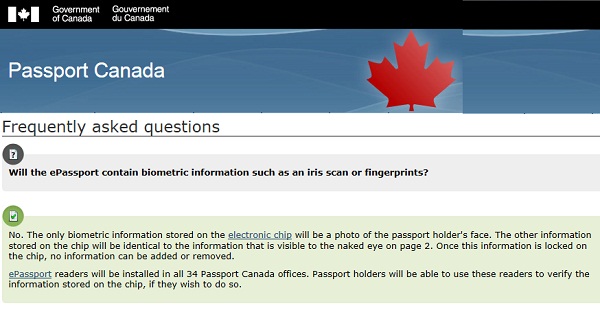
Canada states that new ePassports do not contain biometric data but the ICAO (see supplemental) set standards for passports internationally and do require biometric data. “..1.3 ICAO’s adoption of a blueprint for Biometric ID in MRTDs in May 2003, after extensive work undertaken since 1997, represents an important step forward in machine- assisted identity confirmation. This involved the selection of facial recognition as the globally interoperable biometric FAL/12-WP/83 – 2 – technology, in combination with contactless IC chips for data storage in a logical data structure (LDS), using a modified public key infrastructure (PKI) scheme to prevent unauthorized alteration…” from http://www.icao.int/Meetings/FAL12/Documents/fal12wp083_en.pdf
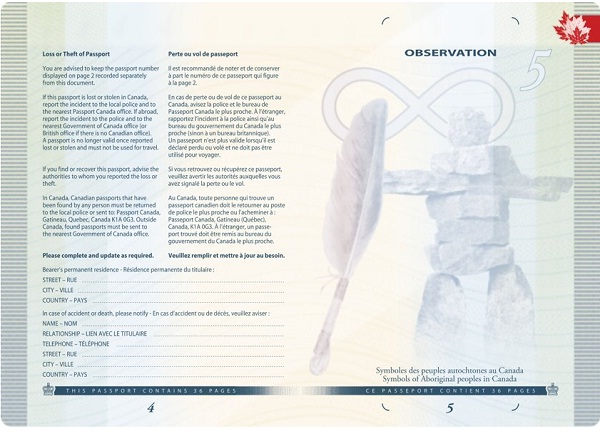
Gatineau, Québec, October 26, 2012 – Foreign Affairs Minister John Baird today announced that Canada’s new ePassport will be full of iconic images that will make Canadian passports more attractive and more secure.
“The new ePassport will be more reflective and representative of who we are as Canadians,” said Baird during an event at the newly renamed Canadian Museum of History. “These images showcase Canada’s history and the building of our great nation while adding essential new security features for the 21st Century.”
The new images will also serve to keep the Canadian passport one of the world’s most secure travel documents. The complexity of the images is – first and foremost – a security feature that makes the passport more difficult to counterfeit.
“Our government is tremendously proud of Canada’s rich history. We urge all Canadians to learn more about the events and people that shaped Canada and the great sacrifices made to secure our freedom,” added Baird.
A look at the inside of the new Canadian ePassports image courtesy of ppt.gc.ca
Countries around the world review their passport designs and security features periodically to stay steps ahead of counterfeiters. The new-look ePassport will help facilitate legitimate trade and safe, secure travel which, in turn, helps create jobs, growth and long-term prosperity for Canadians.
The first 5-year ePassports will be issued in select locations during the first quarter of 2013. Production will ramp up through the spring resulting in the full availability of both a 5- and 10- year ePassport in early summer.
For a look at [ more of ] the images included in the new ePassport, please visit the new section on Passport Canada’s website, which features images and descriptions of the new passport design: www.pptc.gc.ca/eppt/photos.aspx?lang=eng.
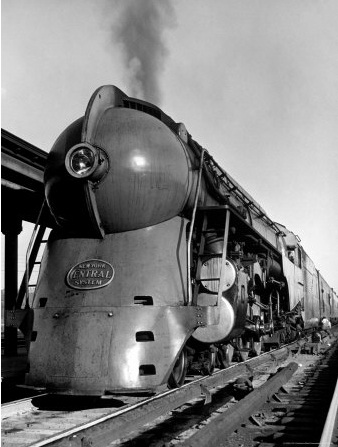
“20th Century Limited Train on Tracks” by Alfred Eisenstaedt
The deficit projection for the current fiscal year has improved by more than $400 million from the 2012 Budget forecast to $14.4 billion. The province remains on track to meet the 2012 Budget deficit targets in 2013-14 and 2014–15 and for the deficit to be eliminated by 2017–18.
Ontario is projecting growth in real gross domestic product (GDP) of 2.0 per cent in 2012, 1.9 per cent in 2013, 2.3 per cent in 2014 and 2.4 per cent in 2015.
As of September 2012, Ontario employment was 356,000 net new jobs above its recessionary low in June 2009. Ontario is expected to create nearly 350,000 net new jobs by 2015, reducing the unemployment rate to 6.8 per cent from a high of 9.4 per cent in June 2009.
The fiscal plan provides no funding for incremental compensation increases for new collective agreements. The government is currently consulting on draft legislation that proposes to freeze compensation for executives and managers across the Ontario Public Service, and the Broader Public Sector (BPS) who are eligible for performance pay. It also proposes to ensure future BPS collective agreements are consistent with the province’s goals to eliminate the deficit and protect jobs and public services. The proposed draft legislation would support avoiding increased spending in the BPS of $2.8 billion over three years and help to protect roughly 55,000 public sector jobs.
QUOTE
“Despite ongoing global economic uncertainty, Ontario is ahead of its targets for lowering the deficit for the fourth year in a row. We will work with anyone who is willing to work with us to meet the objectives of eliminating the deficit and protecting jobs and public services.”
— Dwight Duncan, Minister of Finance
QUICK FACTS
• The 2012–13 revenue projection of $113,019 million is $445 million above the 2012 Budget outlook, largely reflecting a higher estimated 2011–12 tax base. Consistent with the government’s continued effort toward managing the growth in expenses, total expense for 2012–13 has decreased by $3.7 million compared to the 2012 Budget plan.
• Robust business capital investment, a rebound in net trade and increased consumer spending will be key contributors to growth. Over the past two years, business investment spending on plant and equipment has risen by more than 22 per cent, or
$11.1 billion.
• In the 2011–2012 Public Accounts of Ontario, the government announced the deficit for 2011–12 was $13.0 billion, marking the third consecutive year in which the province has improved on its fiscal projections. This result is also 47 per cent lower than the 2009–10 deficit of $24.7 billion forecast in the fall of 2009, at the depth of the global recession.
• The government has brought together business, labour and public sector leaders to form the Jobs and Prosperity Council. Reporting to the Premier, and headed by RBC President and CEO Gordon Nixon, the council will explore additional opportunities in the next few months for a path to sustainable growth that will also help inform the 2013 Ontario Budget.
• The 2012 Budget extended the pay freeze for MPPs by a further two years — for a total of five years.
What kind of tax break would you like to see? Ontario has gotten itself into a difficult situation. Too many people have lost their jobs, our province has lost its leading position in the country, and government has lost its ability to balance its books.
We face a critical choice. Either we implement sensible policies that create jobs and prosperity or we accept a future of high debt, declining public services and living below our economic potential.
The first and most basic thing government needs to do is balance the books. The second is to start to pay down the debt. We can’t afford to run government on a credit card. Interest on our accumulated debt is $10.6 billion a year. That’s a cost we’re passing on to our kids. It slows the economy and restricts government services for years to come.
Over the past nine years, families and businesses in Ontario have experienced a number of unpleasant tax surprises. The primary factor in our slow job creation is high tax levels. The top marginal tax rate in Ontario today is 49.5 per cent. That’s simply too high. Economists have demonstrated that overly high tax rates can actually reduce tax dollars collected because they are a strong disincentive to work. Lower taxes create jobs and higher taxes deter them. We can address the problem of 600,000 people out of work in Ontario, in part, through tax policy.
The three main taxes in Ontario are personal income tax, corporate tax, and the harmonized sales tax. Given that tax cuts create jobs, which sector tax cut do you think would be most effective for job creation? To provide input, contact me at 1-800-903-8629 or [email protected].
Fair competition means giving all businesses an equal chance. It’s not up to government to act as an investment banker to support some businesses at the expense of others. Rather than use public money to favor companies that know how to work the system, use those tax dollars for broad general benefit. Ending corporate welfare will provide enough for significant tax changes.
Ontario has long benefited from free and open markets. The 1960’s Auto Pact between Canada and the United States, and the North American Free Trade Agreement that superseded it, fueled the manufacturing boom in this province. But while $2 billion worth of trade crosses the Canada-U.S. border each and every day, too often the border is a traffic jam, delaying goods and workers from crossing. Breaking this bottleneck with our largest trading partner, and the costly delays at other entry and exit points along our
southern border, is vital to growing Ontario’s economy. Ontario should embrace the economic opportunities in Alberta, Saskatchewan and British Columbia and tear down the barriers that separate us.
Ontario is long overdue for a major reduction in rules that regulate businesses. Some regulations are necessary, but Ontario has accumulated an absurd paperwork burden that costs the province’s businesses too much time and money. We need fewer rules, and those rules must meet a clear need.
We can drive growth through innovation and ingenuity – and through a belief in markets, in entrepreneurialism, in competition and in free trade. These are values that have long driven economic success around the world. And government can lead economic growth with policies to reduce taxes, balance the books, boost trade and cut red tape. By MPP Toby Barrett
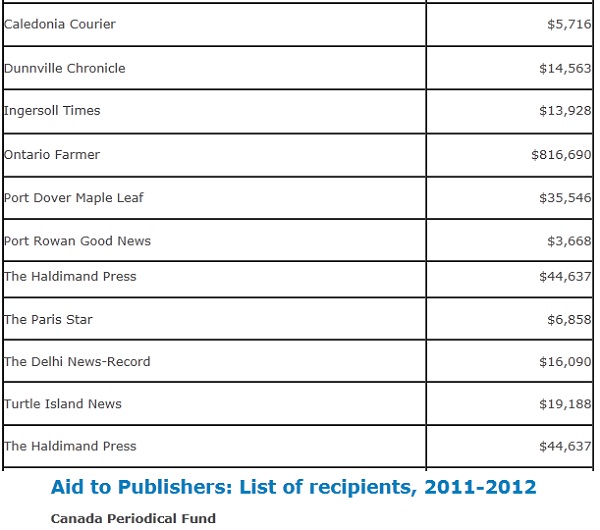
Corporate welfare? In 2011-2012, $ 1,021,521 was steered to Haldimand-Norfolk-Oxford newspapers in one grant alone. image: www.pch.gc.ca
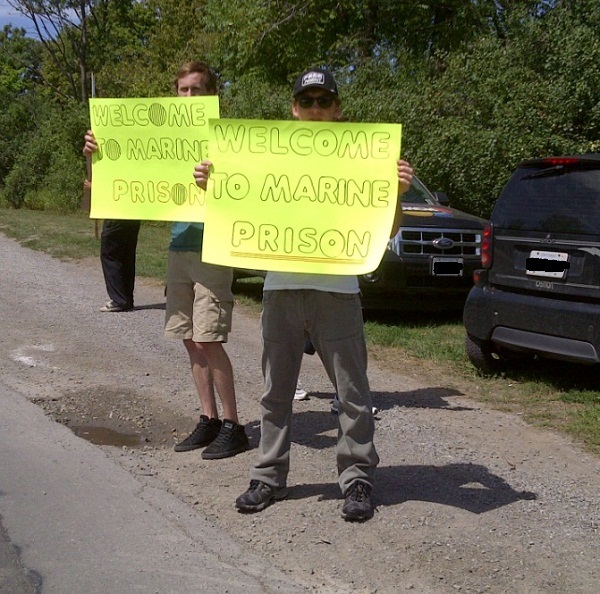
Marineland prostesters at Niagara Falls, Ontario. Summer 2012.
Madeleine Meilleur, Minister of Community Safety and Correctional Services, has announced Ontario is proposing legislative amendments to improve care for marine mammals at aquariums and zoos and strengthen animal welfare enforcement.
Ontario is proposing legislative amendments to improve care for marine mammals at aquariums and zoos and strengthen animal welfare enforcement.
-Propose legislative amendments to the Ontario Society for the Prevention of Cruelty to Animals (OSPCA) Act http://www.e-laws.gov.on.ca/html/statutes/english/elaws_statutes_90o36_e.htm
to improve provincewide enforcement of animal protection measures in the Act. They would also strengthen the governance of the OSPCA.
-Create new regulations to further protect marine mammals in captivity. Explore options for the licensing of zoos and aquariums.
Ontario will continue to work with the OSPCA and other animal welfare partners to fulfill these commitments. The government is also releasing the Animal Welfare Task Force’s report. The task force was established in response to the OSPCA-commissioned Meek-Lesage Review into animal sheltering in Ontario.
QUOTES
“There is no place in our province for those who abuse animals. That’s why our government is continuing to fight for the protection of animals by working with our stakeholders to further strengthen the legislation to make sure all animals can live free of abuse and neglect.”
– Madeleine Meilleur, Minister of Community Safety and Correctional Services
FACTS
•The OSPCA Act was last amended in 2009 to be the strongest animal welfare legislation in Canada.
•There are over 60 zoos in Ontario, which is more than the number of all other provinces combined.
•The Animal Welfare Task Force is made up of government ministries and stakeholders with connections to animal shelters, including the OSPCA.
•The task force concluded animals are well served by Ontario’s animal shelters but has recommended improvements in public health, the operation of shelters, and animal worker health and safety.
Ontario’s Environmental Commissioner Gord Miller. The Environmental Commissioner of Ontario is the province’s independent environmental watchdog. Appointed by the Legislative Assembly, the ECO is tasked with monitoring and reporting on compliance with the Environmental Bill of Rights, and the government’s success in reducing greenhouse gas emissions and in achieving greater energy conservation in Ontario.
Queen’s Park – The McGuinty Liberals have consistently failed to deliver simple policies and programs to protect and conserve our environment. These failures negatively affect our economy, communities and well being.
A [Sept 25,2012] report from the Environment Commissioner of Ontario cites many examples of how the government has failed to provide adequate water protection programs, monitor wild life populations and protect public health from industrial dust pollution. Ontario needs water protection and conservation programs to deal with the more extreme weather events caused by climate change.
We saw the importance of this first hand with this summer’s drought. Not having proper water supply affects our ability to grow food, our health and the productivity of industry.
The government’s failure to invest a relatively small amount in monitoring wildlife threatens forestry, one of Ontario’s most important industries. It is short sighted and irresponsible to not have a functioning wildlife monitoring program in place.
The government’s failure to provide responsible environmental protection directly affects our health. One of the most obvious examples is the government’s inaction on complaints related to industrial dust pollution. Ontario can do better. We must do better. Getting back in touch with environmental issues is important for our health, economy and quality of life. For the Silo by the Green Party of Ontario
“The cost of moving gas power plants for political reasons is more than financial. It erodes confidence in our government and our democracy. It leads to cynicism and turns people off politics.It’s a sad day for democracy when jokes are flying around Queen’s Park that the going rate for a Liberal seat is $40 million. Perhaps the Liberal party should repay the $200 plus million that this fiasco will cost taxpayers or ratepayers.” MIKE SCHREINER, GPO LEADER
The government must be held accountable for such a blatant and obvious example of putting partisan political interests ahead of the public’s interests.
Forgotten in all the talk of gas plants in Mississauga and Oakville is that the Holland Marsh Peaker plant proceeded against local opposition in a PC held riding.
York Enery Centre King Township Peaker Generating Station Construction Progress: 2011-04-21 photos: Greg Locke
That plant is located in Ontario’s protected Greenbelt, adjacent to prime farm land and sensitive wetlands. These compelling reasons and local opposition weren’t enough to stop the plant in a PC riding, yet days before an election local opposition was enough to stop a plant in a Liberal held riding.
Does this new gas plant development contradict Ontario’s 2005 Protecting the GreenBelt plan? check the link below
At a minimum the Premier should issue an unambiguous apology to the people of Ontario for the costs to our finances and democracy that have arisen from his government’s mishandling of siting of gas plants in Ontario.”