Tag Archives: NGO

Daily Survival in Gaza Persists Post-Ceasefire: LIFE Continues Humanitarian Relief Amid Ongoing Needs

Post-Ceasefire, Gaza Families Face Prolonged Hardship as LIFE Continues Delivering Life-Saving Humanitarian Aid

Despite the perception that ceasefires offer meaningful relief, conditions on the ground in Gaza demonstrate that humanitarian emergencies do not end when active conflict pauses. For civilians, the period following a ceasefire is often marked by continued displacement, damaged infrastructure, shortages of food and clean water, and limited access to essential services.
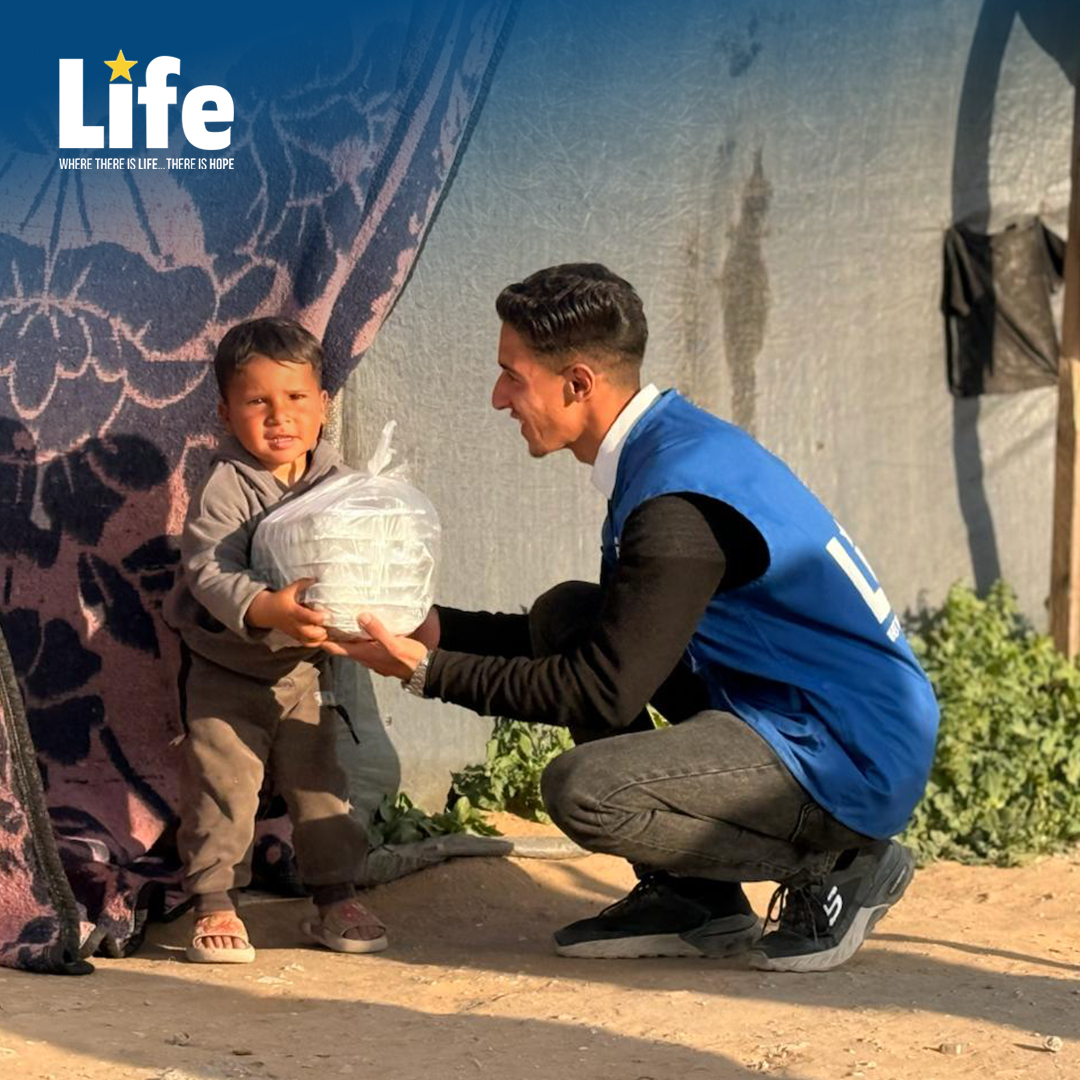
Life for Relief and Development (LIFE), a global humanitarian organization, has maintained an active presence throughout these periods, remaining one of the few international NGOs authorized to deliver aid inside Gaza. LIFE continues to respond to urgent, life-saving needs while navigating significant challenges.

Ceasefires Without Recovery

While ceasefires may reduce immediate violence, they do not restore stability. Families in Gaza frequently return to homes that are damaged or destroyed, seek refuge in overcrowded shelters, or reside in temporary tents without adequate protection. Water networks remain compromised, food availability is inconsistent, fuel shortages persist, and access restrictions continue to impede the flow of humanitarian aid.

Field reports from LIFE-supported operations indicate that displacement remains widespread, with families moving repeatedly in search of safety, food, and water. Even during ceasefires, civilians continue to face severe challenges, including:

  • Limited access to clean drinking water due to damaged infrastructure
  • Inconsistent food supplies and a lack of functional cooking facilities
  • Exposure to harsh weather conditions in makeshift shelters
  • Elevated public health risks stemming from overcrowding and poor sanitation

These conditions underscore the reality that a ceasefire does not equate to recovery or safety.
LIFE’s Ongoing Humanitarian Response in Gaza

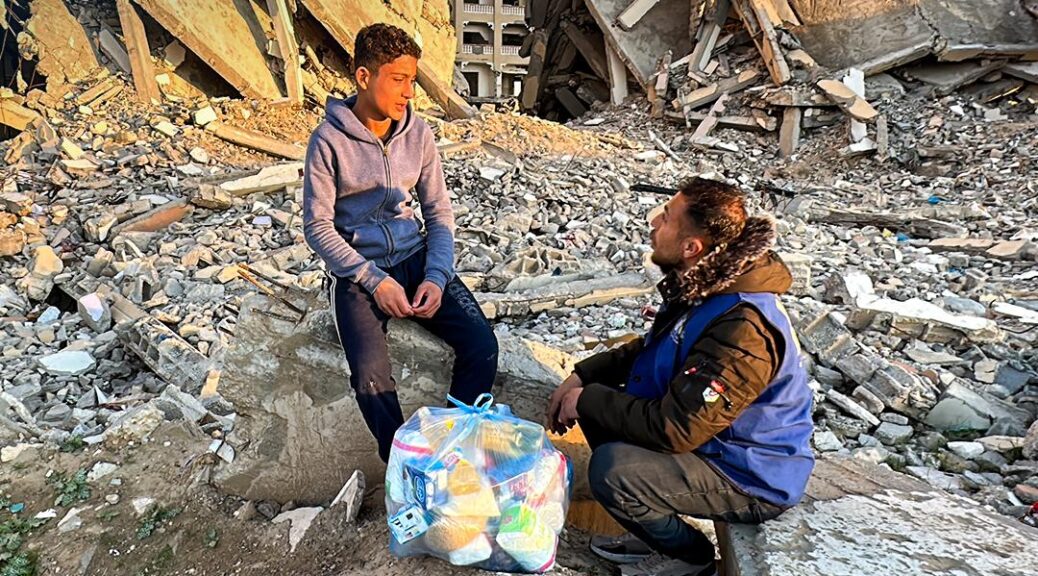
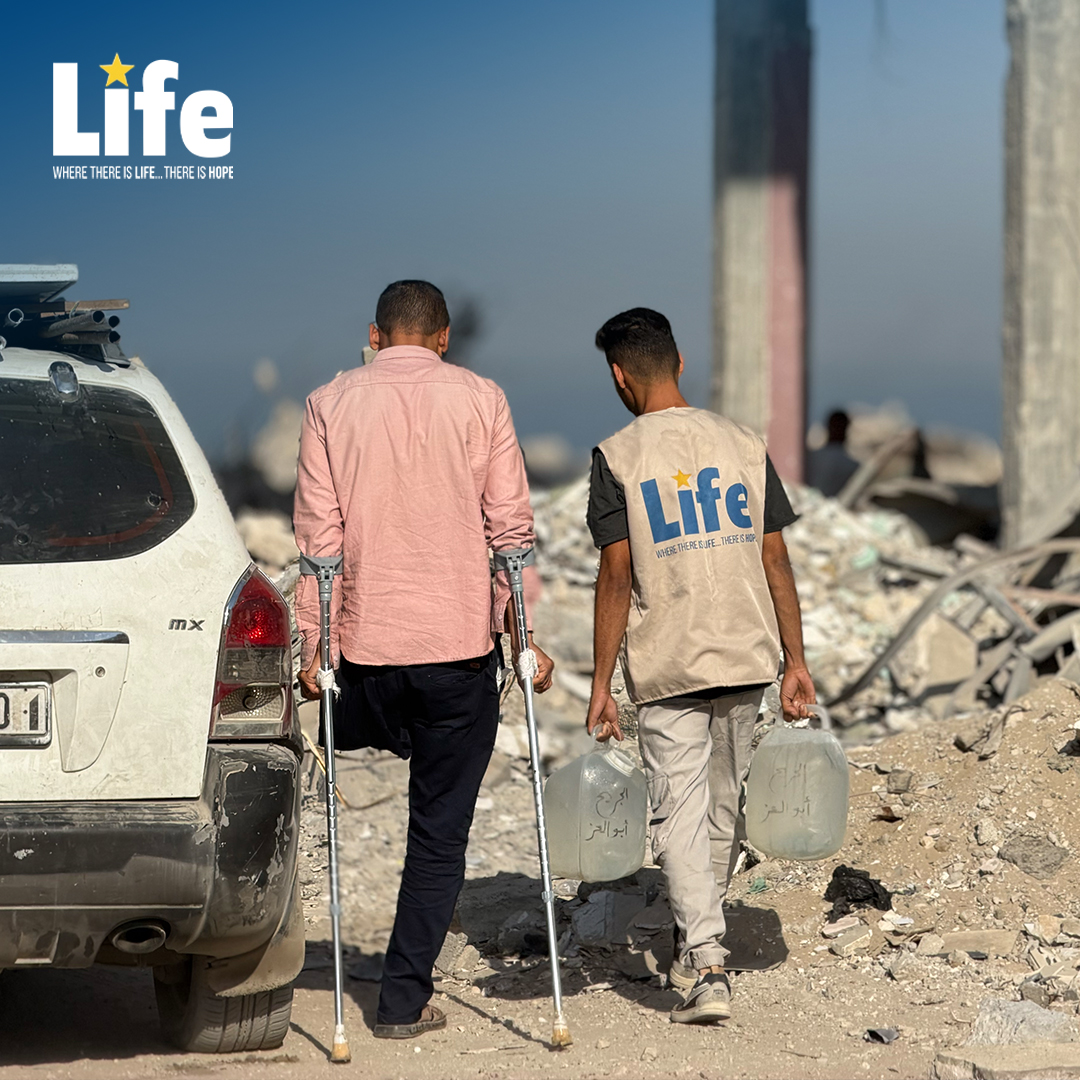
Despite restricted access and operational risks, LIFE has sustained a multi-sector humanitarian response aimed at meeting immediate survival needs and preserving human dignity. Through coordinated interventions across North, Central, and South Gaza, LIFE-supported programs have provided:

  • Emergency food assistance through hot meals, family food packs, and large-scale food convoys
  • Clean drinking water via tanker deliveries and the rehabilitation of damaged municipal water wells
  • Emergency shelter materials, including tents and weather-resistant covers for displaced families
  • Winter relief, such as warm clothing and footwear for children and vulnerable individuals
  • Infant nutrition support to address critical shortages for families with young children

These interventions have reached hundreds of thousands of individuals across multiple phases of emergency response, including periods identified as ceasefires—during which needs remained acute.

Operating Under Constant Constraint

Providing aid in Gaza requires continuous adaptation. LIFE-supported teams have had to navigate border delays, limited fuel supplies, communication disruptions, and security-related restrictions. Daily adjustments ensure that relief reaches the most vulnerable populations, including displaced families, children, older adults, and households with no access to essential services.

By maintaining operations both during and after ceasefires, LIFE helps bridge the gap between temporary pauses in hostilities and the ongoing humanitarian needs that continue long after media attention subsides.

One beneficiary, Neama, a 38-year-old mother of four who has been displaced multiple times, described the uncertainty that continued beyond the ceasefire. Her family faced overcrowded shelters, a lack of cooking facilities, and severe food scarcity. Through LIFE-supported hot meal distributions, her family received freshly prepared meals over several days.

The hot food meant more than nutrition,” she shared. “It restored dignity and gave my children a sense of normal life again, even in the middle of everything.”

Humanitarian Needs Beyond the Headlines

A ceasefire does not end the humanitarian crisis for families in Gaza. Many continue to face shortages of food, water, shelter, and basic services, with recovery dependent on sustained humanitarian support rather than temporary pauses in conflict.

“A ceasefire may pause active fighting, but it does not pause human need,” said Dr. Hany Saqr, CEO of Life for Relief and Development (LIFE). “Families in Gaza continue to experience daily challenges accessing food, water, shelter, and essential services. Our responsibility as a humanitarian organization is to remain present, impartial, and responsive, ensuring that assistance reaches civilians when they need it most, regardless of circumstances.”

For the Silo, Tasneem Elridi.

About Life for Relief and Development (LIFE)

Life for Relief and Development, headquartered in Southfield, Michigan, is a global humanitarian relief and development organization committed to assisting individuals regardless of race, gender, religion, or cultural background. LIFE is a registered 501(c)(3) nonprofit organization and holds Consultative Status with the United Nations Economic and Social Council (ECOSOC).

USA- Breaking The Cycle of Foreign Assistance Enabling Corruption

Moral Hazard – A situation where one party assumes greater risk because it understands that another will remedy the harmful effects.

While the hundreds of billions of dollars in U.S. foreign assistance spent over the years have dramatically improved many people’s lives and livelihoods around the world, too often the United States’ approach to foreign assistance failed to advance U.S. interests, failed to spur systematic development, and enabled and perpetuated dependence and corruption by leaders in recipient countries. Since 1991, the United States has provided more than $200 billion in foreign assistance to Africa, yet the African Union reports that African countries lose an estimated $88 billion each year through tax evasion, money laundering, and corruption. Too often, what is needed for economic growth and development is not more money, but sound reforms that incentivize enduring private investment and growth.

Instead of insisting on mutual accountability to use U.S. assistance to address the causes of poverty and underdevelopment, too often we funded outputs to allay the symptoms. In so doing, we failed both the American taxpayer and the citizens of developing countries who looked to their governments and ours to help create the conditions to realize a better future.

For decades, the United States did not have a consistent policy as to even whether assistance was charity or a foreign policy tool. We did not require a committed partner, a coherent business plan, equity collateral at risk, or funding subject to performance-based disbursements. We infantilized recipient governments instead of having candid discussions on mutual performance expectations. Too often our approach to developing countries – frequently perpetuated by the excuses of those same governments – reflected the soft bigotry of low expectations. We excused away the lack of political will as “capacity constraints,” dismissed it with “we shouldn’t expect too much,” and did not challenge them when governments acted in contrast to their professed commitments.

Too often, we were content to confuse governments’ commitments for actions. We misinterpreted our access to leaders as influence with those leaders. We mischaracterized aid projects’ outputs as outcomes and program objectives as results. We misconstrued governments’ permission for us to expend aid as evidence that they shared a commitment to advance professed objectives. Perhaps worst, we failed to acknowledge when leaders of aid recipient countries demonstrated over and over through their actions that they prioritized their personal interests over, and at the expense of, the interests of their own country and citizens. Virtually never did we withhold assistance funds because host governments failed to deliver on their commitments, instead we responded by providing even more aid “because they have needs.” By trying to save people from bearing the brunt of the bad governance and corruption of their leaders, we helped perpetuate that very same corruption and bad governance.

Quite simply, we violated the central maxim of international development: the donor cannot want development more than the recipient. By doing so, we fueled moral hazard. From the pure greed of Malawi’s “Cashgate” scandal under Joyce Banda to the systematic kleptocracies of Bangladesh or South Sudan, by back filling health and social service needs recklessly created by bad governance, we have enabled and underwritten government corruption. In the worst cases, such as the predatory abuses of Mali’s Ibrahim Keita or Guinea’s Alpha Conde against their own populations, corruption and the failure to deliver basic public services needs led to military coups and incursions by terrorist organizations.

American foreign assistance is not charity but a tool to advance American diplomacy, security, and prosperity.

To accomplish these goals, we must focus our assistance and insist on administering it with host-government buy-in and mutual accountability for outcomes. This, in turn, will leave space for market driven growth that will also help close off the means by which malign international actors exploit developing economies and workers. We should not be dissuaded by detractors who will attempt to vilify a more transactional approach as “neocolonialism.” Quite the opposite is true. By insisting on systematic reforms that spur transparent and accountable growth and allow governments to retain funds to support their people, the United States can do more to catalyze actual economic development and the upliftment of developing countries’ societies – and advance tangible U.S. interests – better than we have in recent decades. It is the dependency-oriented, NGO-driven old model of development that is fundamentally colonial in mindset – refusing to respect development nation sovereignty, determinism, or agency.

Operationalizing this approach involves adopting investment-oriented goals, requirements, and incentives:

  • A Serious Host Nation: Secretary Rubio has been clear, “Americans should not fund failed governments in faraway lands…we will favor those nations that have demonstrated both the ability and the willingness to help themselves.” If a government is not already taking steps to stem corruption and grow the economy when its own funds are at stake, we should have no expectation that they will be better stewards of U.S. funds. Without an aligned host-government, we should focus our resources elsewhere.
  • The Right Focus: Our purpose is not to give money away, but to catalyze systemic reforms that enable sustainable growth and opportunities for the U.S. and recipient country. Neither governments nor donors create growth; instead, our roles are to foster conditions for the private sector to invest, create jobs, spur growth, and pay taxes to fund public services. Hence, U.S. foreign assistance should focus on curbing corruption and overcoming and remediating binding constraints to growth to lay the foundation for a transparent, level, and accountable business enabling environment.

  • Confidence in The Business Plan: Most developing countries have national development plans, but too often they are unresourced and unprioritized works of fantasy, and seldom do governments enforce accountability for their actual implementation. What President Trump explained in clearly delineating America’s national interests in this year’s National Security Strategy is equally true of developing countries: when everything is supposedly a priority, nothing really can be. We should help sincere host governments develop focused, realistic strategies based on core sectors and targeting key constraints that are founded on candid analysis and include specific, tailored tactics.

  • Skin in the Game: If a country is not going to put its own resources behind an effort, it is either not really a priority, they are not really serious, or they don’t have confidence in their plan. Few investors would engage where the owner hasn’t put collateral down or his own equity at risk. Why should foreign assistance not require the same? Here, the Millennium Challenge Corporation (MCC) has demonstrated two key best practices that ensure buy-in. The first is a requirement for co-financing by the host government. The second is conditions precedent: tangible reform actions a host government takes before funding even begins, to enable the success of the project outcomes.

  • The Right Resources: Again, our purpose is not to give assistance away, and the history of both corruption and assistance has shown that money is not what is most lacking to spur development. So, building on an analysis of binding constraints to growth and a business plan that we have confidence in, it is incumbent on the United States and the recipient government to craft a bespoke package of technical assistance interventions to inform and enable the reforms needed. This should not be an approach of letting a thousand flowers bloom, and it must not be built around the question of “how can we help?” Instead, we must start with the questions “what are the outcomes we want to achieve in the American interest and what needs to happen to realize them?” and build an assistance program around that.

  • Have a Contract: Unlike the Development Objective Agreements (DOAGs) of USAID that bound the U.S. to fund sectors but seldom included host governments’ performance commitments, the MCC model again provides a best practice. Explicitly detailing shared objectives and commitments by both governments – typically ratified by the legislature to carry the force of law – reduces uncertainty and improves accountability by enshrining the binding obligations of both parties.

  • Performance-Based Funding: Too often, once development projects were approved, donors’ focus turned inward to implementation, achieving outputs, and keeping funds flowing even if receiving governments actively undermined them. Gradually, funding agencies have begun shifting to performance-based disbursements. By requiring a host government to demonstrate – through its actions, not merely its rhetoric – that it remains politically and financially committed to achieve professed objectives, we ensure that U.S. assistance achieves greater impacts.

Under President Trump and Secretary Rubio’s leadership, we have the opportunity and courage to acknowledge our mistakes, to embrace candid lessons learned, and to do better. America’s generosity in doing business with those who help themselves remains as strong as ever. We are not turning away from less developed nations, instead now is the time to lean in to lend a useful hand to those who are sincere and treat them as mature stakeholders. In engaging valued, sincere nations, nothing should be imposed, hidden, given as ultimatums, or come at the partner’s expense; we are not China. Foreign assistance that delivers for the American people and our partners must be founded on sincere, voluntary, and transparent engagement. But it must be backed by tangible action and, if a recipient nation proves through their actions that they are not committed to our professed shared objectives, our allegiance must first be to the American people to be stewards of their resources.

Having dedicated my life and career to Africa and the developing world, I am invigorated by the massive potential these nations possess, and I have witnessed how the United States can help turn that potential into a reality that benefits both nations. By restructuring our approach to foreign assistance and engaging developing countries based on national interest, we can help curb the corruption that deprives families of the hope of that better future. We can deliver lasting and systematic growth alongside recipient countries. And, we can deliver tangible value for the American people through a more secure and prosperous world.

For the Silo, U.S. Ambassador Michael C. Gonzales.

Michael C. Gonzales is the U.S. Ambassador to the Republic of Zambia and the U.S. Special Representative to the Common Market of Eastern and Southern Africa (COMESA). He has held senior posts throughout Africa and Asia over his career.

Great Barrier Reef: Australia to put in place urgent safeguarding measures requested by UNESCO

Paris, June, 2023 – UNESCO welcomes Australia’s decision to implement urgent new protection measures to safeguard the Great Barrier Reef recommended by UNESCO. The measures include a ban on fishing with gillnets. The Australian government formalized its commitments in a letter addressed to Audrey Azoulay, the Director General of UNESCO this week.
 
“The Great Barrier Reef is a fragile jewel of world heritage. For many years, UNESCO has not ceased alerting the world to the risk of this site losing its universal value forever. We have proposed several concrete measures which provide a roadmap for tackling the problem. I am delighted that the dialogue between our experts and the Australian authorities has now resulted in a set of formal commitments,” said Audrey Azoulay, UNESCO’s Director-General.
 
For many years, UNESCO has sounded the alarm on the Great Barrier Reef.
In 2021, with regard to very worrying data on the reef’s poor state of conservation, experts at the Organization went as far as to recommend the site was inscribed on the List of World Heritage in Danger. This warning had global resonance.  

The fruits of a long process of discussion  
In March 2022, a UNESCO-IUCN joint mission travelled to the Great Barrier Reef in order to examine the reef in even greater detail, and to dialogue with all the relevant actors: public sector decision-makers, scientists and non-government organizations (NGOs). In their report, the experts confirmed that due to the threats posed by pollution, over-fishing and the rise in sea temperatures, the outlook for the Great Barrier Reef was worrying.   UNESCO and the IUCN also emphasized that the implementation of corrective measures could significantly improve the state of conservation of the reef, listing ten precisely-defined actions the Australian authorities should take.   In July 2022, Audrey Azoulay, UNESCO’s Director-General, met with the new Australian Prime Minister, Anthony Albanese and recalled the urgency of taking action. A discussion between UNESCO experts and the Australian authorities followed, with the aim of establishing an implementation plan for the ten priority measures including costs and timetable.   This process has just been completed. In a letter addressed to Audrey Azoulay, the Minister of the Environment, Tanya Plibersek announced that the urgent new measures for the protection of the Great Barrier Reef UNESCO had requested, would be carried out.
 
Key Measures  
In the letter the Australian government committed notably to: Create no-fishing zones in a third of the World Heritage site by the end of 2024, and to ban gill net fishing altogether by 2027; Reach water quality improvement targets by 2025, by significantly reducing pollutant discharges from farmers and industrialists, and restoring flora and fauna in drainage basins; Set successively more ambitious CO2 emissions reduction targets, in alignment with efforts to limit global temperature increase to 1.5°C. This comes in addition to the measures already announced by the Australian authorities in recent months.   UNESCO will closely monitor the effective implementation of these measures. The state of conservation of the Great Barrier Reef will be examined again by the World Heritage Committee at its 45th extended session (September 10-25, Saudi Arabia).
https://youtu.be/bb01n4uQZL0

WFP BREAKS RECORD WITH FOOD SUPPORT IN SOMALIA AMID FAMINE RISK

MOGADISHU – The United Nations World Food Programme is delivering life-saving food and nutrition assistance to record numbers of people in Somalia, with over 4 million people a month receiving urgent humanitarian support to prevent famine in the face of the region’s worst drought in over 40 years.

The scale-up has helped keep the worst outcomes of Somalia’s hunger crisis at bay so far.

But the situation on the ground remains dire, with lives and livelihoods being lost. WFP is racing against time to avert a projected famine and a death toll that could reach the tens or even hundreds of thousands.

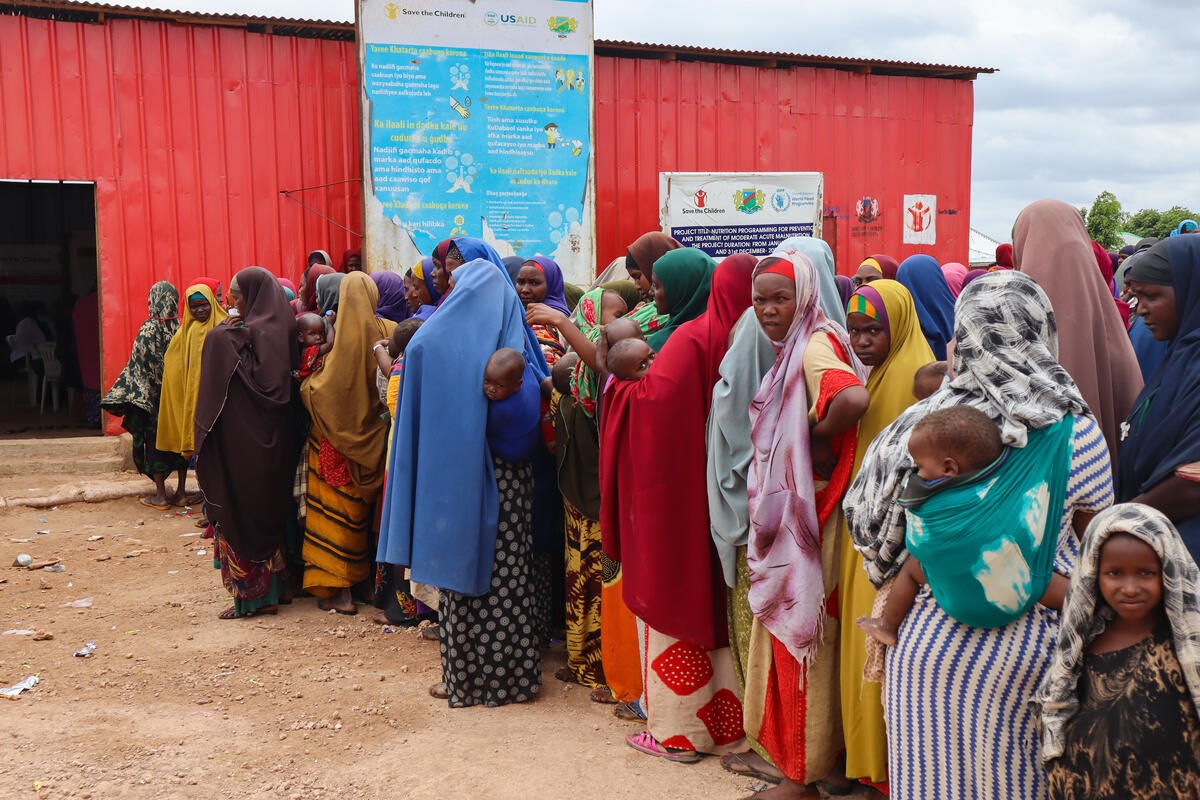
Somalia, Baidoa, 12 October 2022 Nuuriya Ali Mohammed Nuur (30) and her baby Mohammed Nuur Mohammed (2 years old) travelled to Baidoa from a rural town in Southwest state. After four failed rainy seasons, all of Nuuriya’s livestock died due to the drought. She lost ten cows and one donkey which supported her livelihood. She has ten children and was only able to bring four children with her and the oldest stayed behind with their father. There were several stops on her journey to Baidoa, including walking on foot until she reached transportation to reach the camp. Her child was weak and malnourished when she arrived, but with WFP assistance he is starting to gain weight and become healthier. With no expectation to return and nothing left for her at home, she now lives in an IDP camp on the outskirts of Baidoa town, receiving both WFP relief assistance and nutrition services. She is receiving emergency relief cash assistance, each month receiving a mobile cash transfer to buy food. For nutrition, WFP is providing screening services for the baby, nutrition educational services for the mother on child nutrition, distribution of plumpy food for the baby, and referral to relief assistance receiving cash transfers. Photo: WFP/Geneva Costopulos

Additional information:

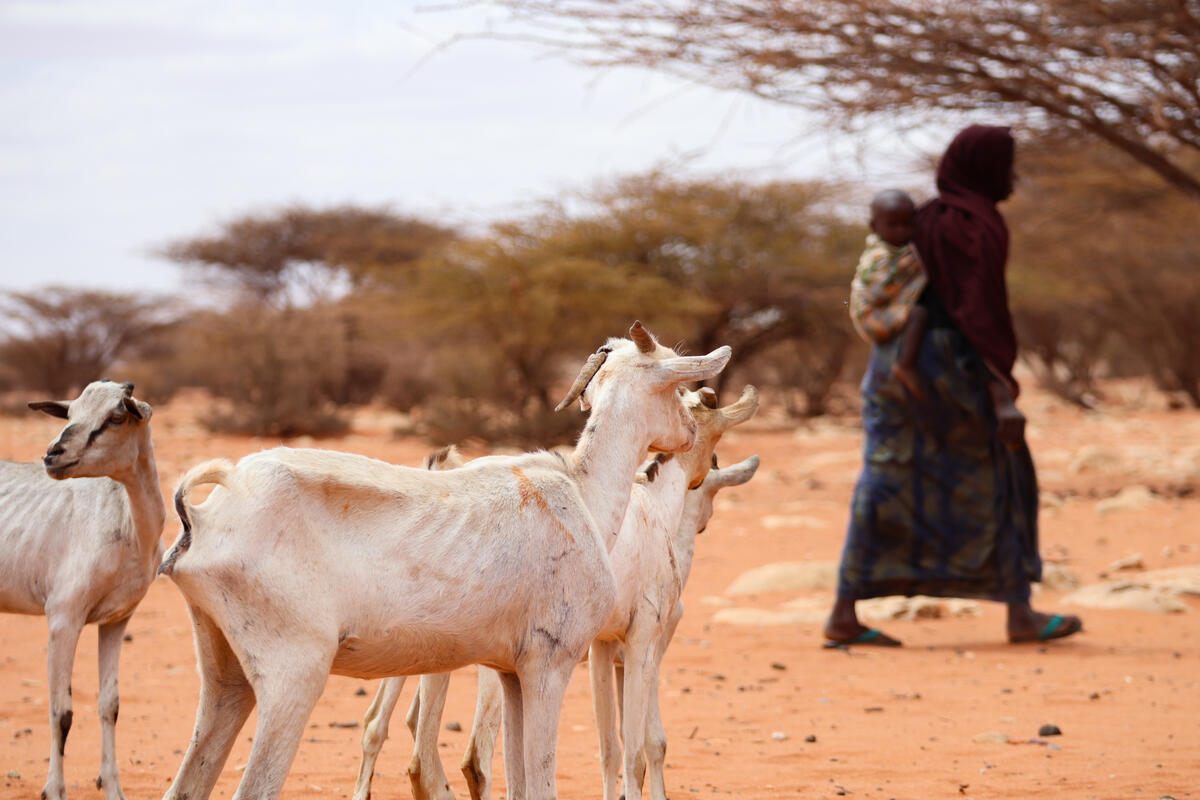
Somalia, Galkayo, Galmudug state, 6 August 2022 In the photo: struggling livestock goats and farmer in Qarqora, Galmudug. Photo: WFP/Geneva Costopulos
  • Nutrition prevention activities were almost entirely suspended from the second quarter of 2022 as WFP was forced to prioritize treatment services due to limited funds. The agency has resumed some prevention activities for children and pregnant or breastfeeding women and is working to do more.
  • WFP is reaching new rural areas, including in the famine risk districts of Baidoa and Burhakaba, with food assistance and cash transfers. WFP’s mobile money transfers are an efficient way to getting assistance rapidly to people in hard-to-reach areas.
  • WFP deployed a new helicopter in Somalia in September to deliver food assistance to hard-to-reach areas and get aid workers to the places they are needed most. The WFP-led Logistics Cluster is also using the helicopter to deliver humanitarian relief on behalf of other UN agencies and NGOs. The helicopter has so far conducted over 30 flights in September and October.
  • WFP is the largest humanitarian agency in Somalia, with 12 offices across the country providing coverage in every state.
  • WFP’s massive scale-up has largely been made possible thanks to timely support from key donors, particularly in recent months. It is essential that this is maintained. WFP has a funding gap of US$ 412 million / CAD$ 565.3 million across all activities for the next six months to March 2023, including a shortfall of US$ 315 million/ CAD$ 432.2 million for life-saving food relief and nutrition assistance.

The United Nations World Food Programme is the world’s largest humanitarian organization, saving lives in emergencies and using food assistance to build a pathway to peace, stability and prosperity for people recovering from conflict, disasters and the impact of climate change.

Featured image: Somalia, Baidoa, 12 October 2022 Nuuriya Ali Mohammed Nuur and her baby Mohammed Nuur Mohammed travelled to Baidoa from a rural town in Southwest state. After four failed rainy seasons, all of Nuuriya’s livestock died due to the drought. She lost ten cows and one donkey which supported her livelihood. She has ten children and was only able to bring four children with her and the oldest stayed behind with their father. There were several stops on her journey to Baidoa, including walking on foot until she reached transportation to reach the camp. Her child was weak and malnourished when she arrived, but with WFP assistance he is starting to gain weight and become healthier. With no expectation to return and nothing left for her at home, she now lives in an IDP camp on the outskirts of Baidoa town, receiving both WFP relief assistance and nutrition services. Photo: WFP/Geneva Costopulos

DTCare Reports Monumental Cleanup Task Following Deadly Beirut Explosion

August, 2020 (Beirut, Lebanon) – Two weeks after a devastating blast in Beirut’s port area that killed close to 200 people and injured thousands more, cleanup efforts are still underway. According to locals on the ground working with American NGO, DTCare, they’ve barely scratched the surface of the monumental task of cleanup, and are now facing the looming threat of a COVID-19 shutdown. 

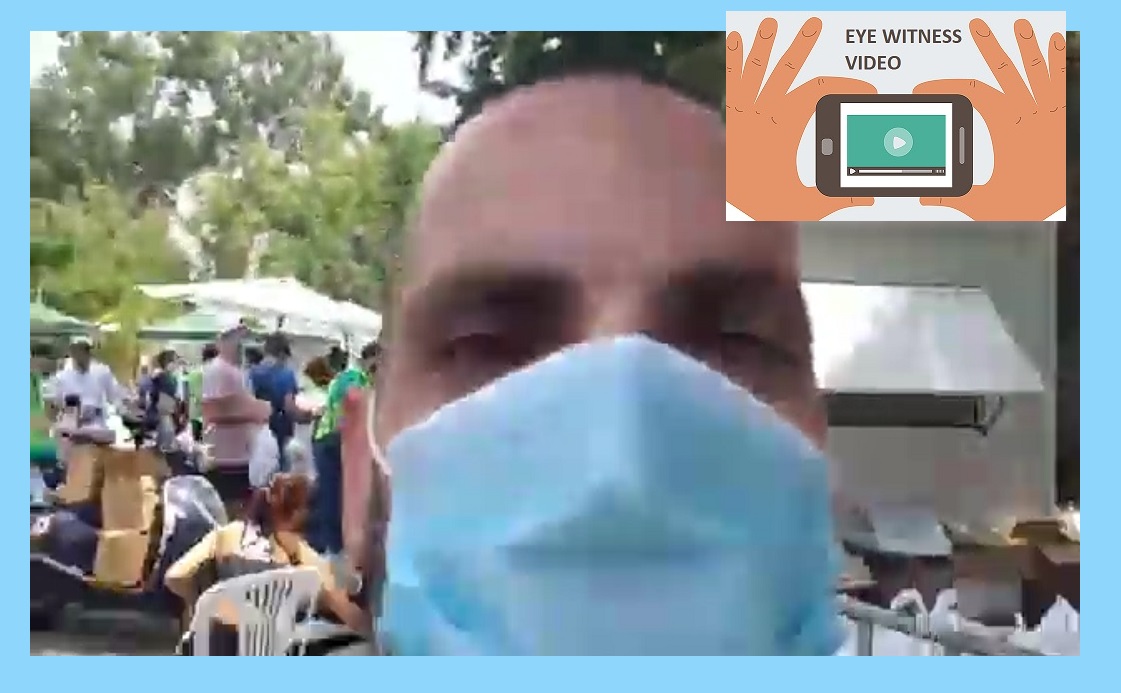
The DTCare Lebanon ground team, in coordination with their United States office, was among the first American NGO on the scene following the deadly explosion on August 4th. The organization had been in Lebanon developing an NGO to help Syrian refugees, and because of their close proximity, they were some of the first responders to the scene, able to mobilize and provide aid to the people of Beirut the same night of the blast.  

The DTCare team on the ground coordinated with the Municipality before the start of the cleanup mission and were allocated a specific landfill just 8 Kilometers away from the cleaning locations. Over the course of seven days, the DTCare team has cleared 200 tons of debris a day (1,000 tons) from the narrow streets of Beirut, a challenge considering the near-constant traffic paralyzing the mobility and speed necessary for machinery and volunteers.  

The blast destroyed a major grain silo, which is critical considering Lebanon imports a majority of their wheat. To help cope with the food scarcity, the DTCare team is distributing 10 rations, daily, to families affected by the blast. Currently, they have been able to distribute 55 food rations, with each ration capable of feeding a family of four for a period of three months. Items included in the DTCare ration box include rice, flour, sugar, salt, tuna, oil, mushrooms, beans, chickpeas, and local grains other than wheat.

For the mission, DTCare partnered with the Contingency Operations Group (COG), which has been set up as a special purpose vehicle for any and all matters with US Corporations represented in Lebanon, helping facilitate all of their business interests in the region. Being the first US organization to jump to the rescue of Lebanon in this time of crisis by sending funds, products and support related to the relief effort, DTCare gained COG’s trust, attention and priority. Their independent status has allowed them to be successful in their efforts, as they remain free of ties to specific religious or political affiliations. 

COG team members have served and supported the US troops who were deployed in Afghanistan and Iraq under the Operation Enduring Freedom (OEF) from 2001 and through the extent of Operation Iraqi Freedom (OIF) 2003 to 2010. DTCare’s management team is very well versed in US defense contracting and State Department operations in the region, following all policies, procedures, regulations and, most importantly, transparency and compliance.

Although the operation is a small dent in the overall relief effort, the DTCare team has been incredibly effective and efficient in their mission, and will remain engaged for the duration of the cleanup effort. Currently, the team is racing to do as much as possibly before the rainy season arrives in October. DTCare predicts the cleanup effort to last between 3 to 5 months in total, weather permitting. For the Silo, Lainya Magaña.