Tag Archives: Nature

The Fuss About Archaeology Conducted On Ontario Farmlands

Farmland development throughout wind-powered Ontario has resulted in the hiring of many consulting archaeologists by developers of solar panels and wind turbine farms and the public continues to wonder why so much attention is given to archaeological sites several thousand years old that hold little or no cultural value to the people who live there today. One reason is simple to explain: developers closely follow the laws of the Ontario Heritage Act, which promotes the protection, and conservation of heritage sites before and after European Contact and therefore are bound to archaeology. The Heritage Act came into force in 1975 as a way to protect archaeological sites. Even architectural structures built over a century ago come under the protection of the Heritage act if deemed of historical significance.
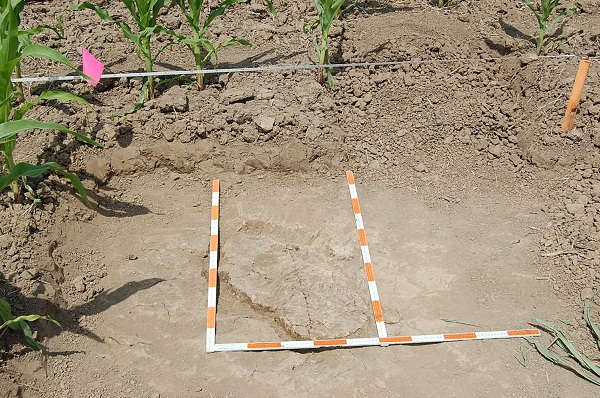
This photo shows a ‘feature’- where stone flakes were recovered from a flintknapping moment about 7,000 years ago.

But other than the legal issues, what is all the fuss about these archaeological sites in Ontario rural municipalities? Well, a lot has to do with how little the public knows about the earliest people who began to inhabit the Great Lakes region over 10,000 years ago. Increased development has resulted in many archaeological sites being uncovered, which helps to answer questions such as: who were these early people? How did they survive? [Especially during a time of mammoths and glaciers CP] Where did they come from? How were they impacted by climatic changes? How long did they live on the landscape before being replaced by other groups of people? Which leads to another, penultimate question: How can these questions be answered?
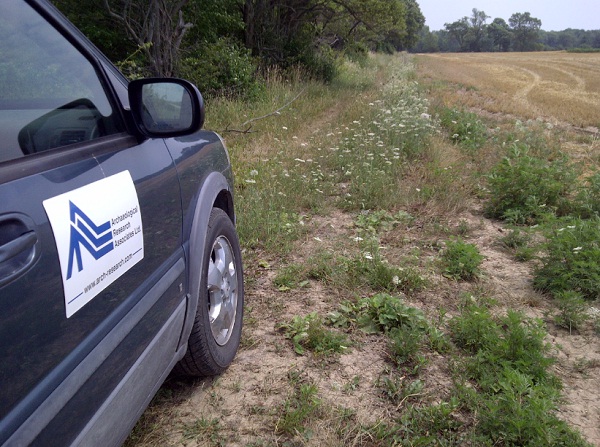
Complying with the Heritage Act- solar and wind power developers are hiring more and more consultant archaeology firms to conduct studies of Ontario farmland. This picture taken on July 17, 2012 at an area East of Nanticoke, Ontario. photo: The Silo

Here is one way. Archaeologists working on a site discovered a location where an ancient person was breaking stone into smaller pieces for making stones tools. Archaeologists found a location below the ground surface where pieces of stone fell and remained for over 7,000 years. One of the first questions archaeologists tried to answer is was that person standing or sitting down at that particular location when they dropped the pieces of stone.

The best way to answer that question was to do “experimental archaeology”. In this case, stone tools left in a forest are observed to determine how natural processes move and cover artifacts over time. Some stone tools are ‘dropped’ or left while standing and others while sitting down on a log or other structure. The difference in posture and stance and the difference in the height of the drop affect the way the pieces of stone fall, land and how they orient themselves on the ground.
Click to view on I-tunes

This affects the way that they are weathered, covered and deposited. After a long period of experimenting and observation, it was determined that a person likely sat on a log while making their stone tools. The broken flakes of stone, covered and protected by forest debris, resulted in a well-preserved location where someone once sat down to made stone tools.
So the next time you come across a scatter of broken stone try to imagine who sat there as they made their stone tools and what the land once looked like long ago. For the Silo, Lorenz Bruechert. /Jarrod Barker.

 

Roadside Memorials Of Loss Are On The Rise

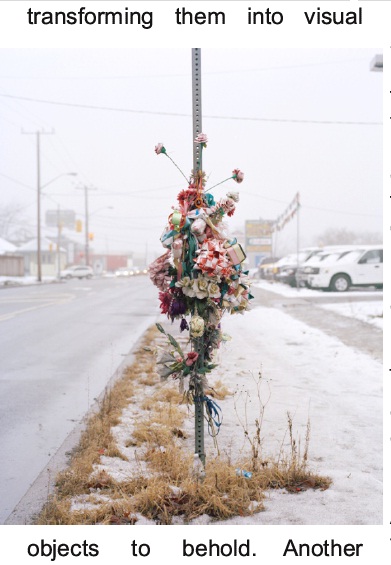
One of Toronto based photographer Erin Riley’s series of photographs depicting roadside memorials in and around the GTA

Indeed, the prevalence of roadside memorials has increased significantly over the past several decades and there is little doubt that each of us has encountered them at some point. Roadside memorials are essentially visual manifestations of profound suffering and loss. They mark the site where a motor vehicle accident has occurred and the death that resulted from it (however , many memorials, especially in major cities, have little to do with motor vehicle accidents and more to do with cycling accidents, innocent bystanders or anything else that faithfully marks the site of passing).

In areas where large gravestones or plaques cannot be placed, for a variety of reasons, makeshift memorials take their place. These sites grow with each flower, ribbon or object and deplete with the wind, rain or snow; they are in a continuous state of flux. The organic quality of roadside memorials may directly reference the very epehemerality of life itself. Moreover, in their various forms and inclinations, they challenge Western society’s visual seperation of the living from the dead; therefore, as they subsist, roadside memorials carry the spectre of mortality into the public sphere, a space where even speaking of death remains taboo.

Post-mortem/momento mori photography during the Victorian age is a fascinating though dark and unsettling movement.

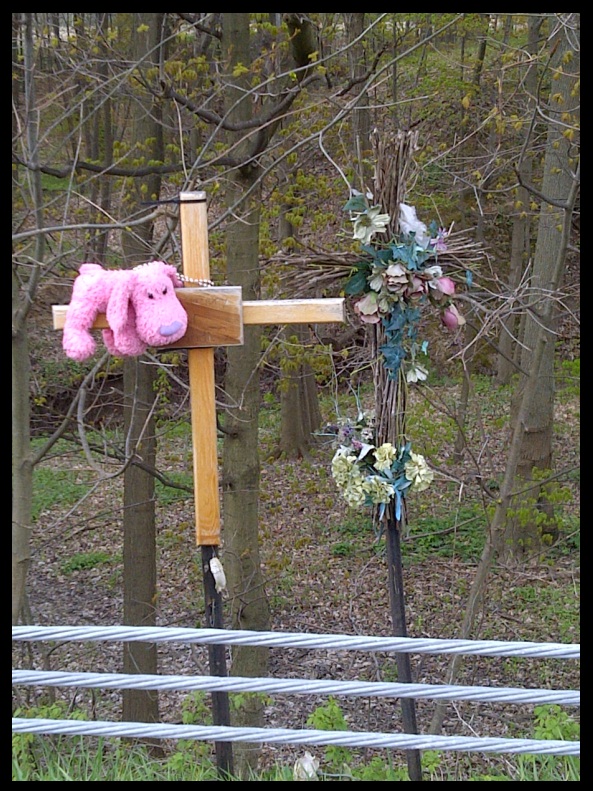
Roadside markers are a rural and urban feature- this marker is located on Front Road, near St. Williams, Ontario, Canada image: www.thesilo.ca

Encountering the idea of death may be one of the reasons why people take issue with the appearance of roadside memorials. For them, they represent a veritable “distraction” while driving, are considered “unsightly” or a “vandalism of public property”. For the families of the deceased, roadside memorials allow the opportunity to mourn their loved one(s) at the very place of their passing. The level of emotion generated by being near the actual site where a loved one has died is different from standing beside their final resting place in segregated communities of loss that are the modern cemetery.

Not only are roadside memorials, as markers of loss, important to the families and groups that maintained a relationship to the deceased, but they powerfully address the living by acting as memento mori (reminders of death). It is through them that one may better appreciate the present.

Toronto-based photographer Erin Riley’s series of photographs depicting roadside memorials in and around the Greater Toronto Area (GTA) specifically engages the publicization of loss and its visual manifestation. Riley’s images are strikingly beautiful and skillfully composed, yet they raise ethical questions precisely because they aestheticize markers of death sites by transforming them into visual objects to behold.  This theme was explored  in Jarrod Barker’s April 2010’s  Umwelt at the Norfolk Arts Center with a central piece depicting a virtual gallery memorial in conjunction with projected audio/video loop of a recently deceased Deer- struck down by a motorist, the piece becoming essentially a rural memento mori.

Happening upon a recently struck deer- Artist Jarrod Barker aestheticized the site by placing a white linen ‘shroud’ over the victim. This would later become a central piece in the installation of Umwelt April 2010 photo: J. Barker

Another question concerns the identification of deceased individuals and whether or not their names should be made public through the vehicle of art. That being said, Riley’s photographs do provide an eloquent record of roadside memorials within the GTA and speak to their social and cultural value. Ask yourself: where do you stand on this issue?

It would seem that, for the families of the deceased, roadside memorials serve the purpose of exactly that: the memorializatin of a life. [ “even” an animal life CP ] They also serve a function for the living, reminding us that life is fleeting and that the dangers of the road are real. Ultimately, rather than causing drivers to collide, roadside memorials may force drivers to more aware of the consequences of speed, negligence and drunk driving. May roadside memorials continue to stand where lives have fallen. For the Silo, Matthew Ryan Smith. 

Supplemental– http://www.rideofsilence.org/memoriam.php


Ask Ontario To Grow Greenbelt To Protect Vital Water Supplies

Dear Silo, I share with you and your readers both good news and not so good news. The Province has launched a consultation process on expanding the Greenbelt to protect critical water resources. Several hydrologically significant areas are included in the proposal, but vulnerable areas are missing.

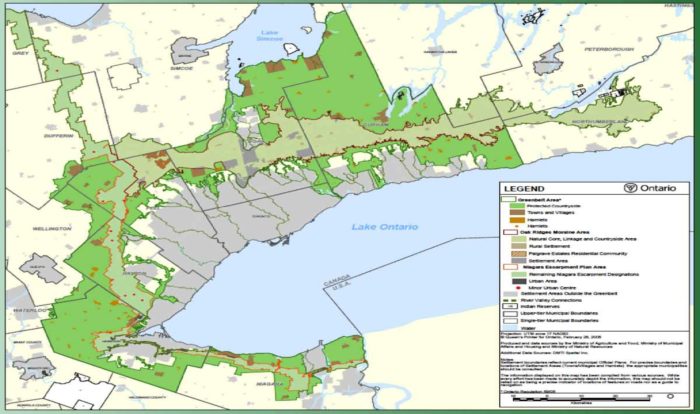
Ontario Oak Ridge Greeenbelt Map

We need to get this right. Ask the Ontario government to expand their proposal and protect a “Bluebelt” of 1.5 million acres to ensure clean water supplies for future generations.

Over 1.25 million people in the region rely on groundwater for their drinking needs. And, our lakes and wetlands are home to numerous at-risk species of fish and wildlife. We urgently need features like moraines, wetlands and headwaters that filter and store water protected from development.

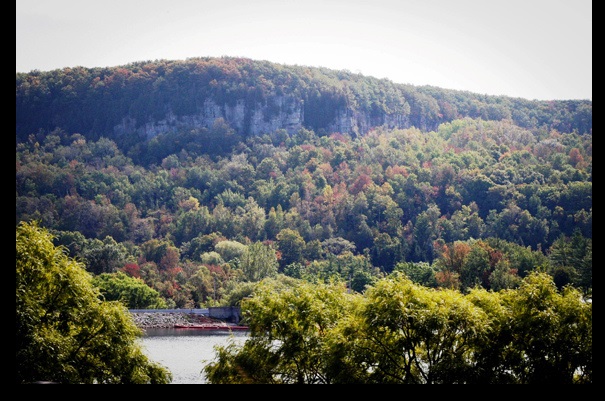
Oak Ridges Moraine Ontario
Oak Ridges Moraine Ontario, Canada

Photo credit: Shezamm

9 in 10 Ontarians support the Greenbelt’s protection of water, farmland and nature. You can be one of them.

Together we can grow the Greenbelt to protect our precious resources.

To learn more, you can read our latest blog.

Susan Lloyd Swail
Livable Communities, Senior Manager

Winners Of Earth Day Canada Hometown Heroes Awards

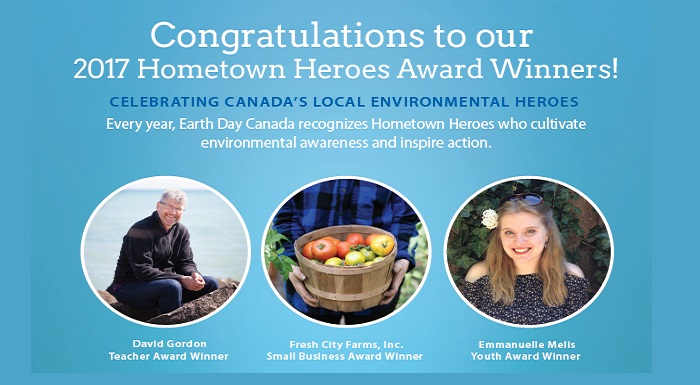
Earth Day Canada is thrilled to announce the five winners of our Hometown Heroes Award Program 2017. This program recognizes and celebrates environmental leaders at the community level with a Youth, Individual, Teacher, Group and Small Business award.
Earth Day Canada’s (EDC) Hometown Heroes Award Program has become one of Canada’s most prestigious environmental awards. Established in 2004, the program recognizes and celebrates environmental leaders, groups and small businesses fostering meaningful, long-term community awareness and action. Local heroes, working at a grassroots level and often with very limited resources, can make an enormous difference to the health of our planet – they deserve our recognition. Learn more at http://www.earthday.ca/hometown.

CLICK to view this year’s Winners

Celebrated every year on April 22, Earth Day is the largest environmental event in the world. Founded in 1990, Earth Day Canada is a national charity that inspires and supports people across the country to connect with nature and build resilient communities. We lead an annual Earth Day campaign in conjunction with free, year-round, award-winning programs that get people outside, interacting with the natural environment — this, in turn, fosters an intrinsically motivated, enduring commitment to stewardship and conservation. EDC works closely with school-aged children and youth through our renowned EcoKids program and new EarthPLAY initiative, and recognizes via our Hometown Heroes Awards those who are leading the way in solving environmental challenges.
Le Jour de la Terre du Canada est ravi d’annoncer les cinq gagnants du prix de notre programme les Héros de chez nous 2017. Ce programme reconnaît et célèbre les leaders environnementaux engagés au sein de leur collectivité en décernant des prix jeunesse, individuel, pour enseignant(e), de groupe et pour petite entreprise ayant pour but d’encourager leurs efforts exceptionnels.
À propos du programme de prix Les Héros de chez nous
Le programme de prix Les Héros de chez nous de Jour de la Terre Canada est devenu l’un des prix environnementaux les plus prestigieux du Canada. Lancé en 2004, le programme reconnaît et célèbre les chefs de file individuels, les groupes et les petites entreprises férus d’environnement qui encouragent une prise de conscience et une action significative et durable au sein de leur collectivité. Les héros de chez nous, en travaillant à l’échelle communautaire et souvent avec des ressources très limitées, peuvent influer de manière concrète sur la santé de notre planète – ils méritent notre reconnaissance. Pour en savoir plus, consultez le site jourdelaterre.ca/heros.

HH2017-Winners-PSA_FR French PDF

À propos de Jour de la Terre Canada
Célébré chaque année le 22 avril, le Jour de la Terre est l’événement environnemental le plus important de la planète. Fondé en 1990, Jour de la Terre Canada (JTC) est un organisme de bienfaisance national qui inspire et soutient des gens de partout au pays dans leur effort de se rapprocher de la nature et de bâtir des collectivités résilientes. Nous menons une campagne annuelle pour le Jour de la Terre au moyen de programmes annuels gratuits et primés qui encouragent la population à sortir à l’extérieur et à interagir avec l’environnement naturel, démarche qui suscite à son tour un engagement durable et une motivation intrinsèque envers la conservation et la saine gestion. JTC travaille de près avec les enfants d’âge scolaire et les jeunes dans le cadre de son programme renommé Écoapprentis et sa nouvelle initiative JEU de la Terre, et il reconnaît, au moyen de son programme de prix Les Héros de chez nous, ceux et celles qui ouvrent la voie en relevant des défis environnementaux.

Words A Spoken Word Poem

“Words”. Thoughtful contemporary poetry from Allen Minor.


Allen Minor is From Utica, New York and lives in Daytona Beach, Florida

@allen_minor (Twitter)

allen minor (YouTube)

allen-minor (Tumblr)

allen_minor (Instagram)

Website  http://Amazon.com/author/asminor

Alcohol Inks in place of Oil Paint has become my new Addiction

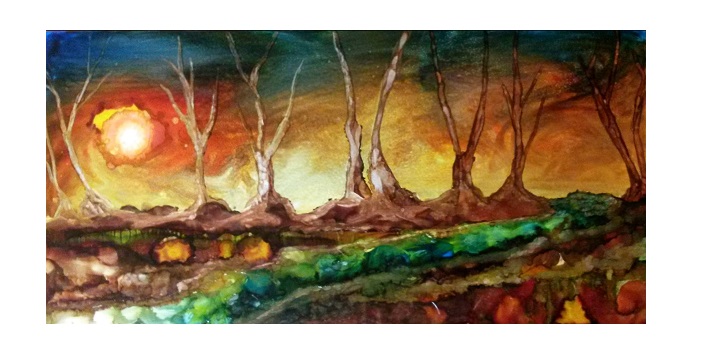
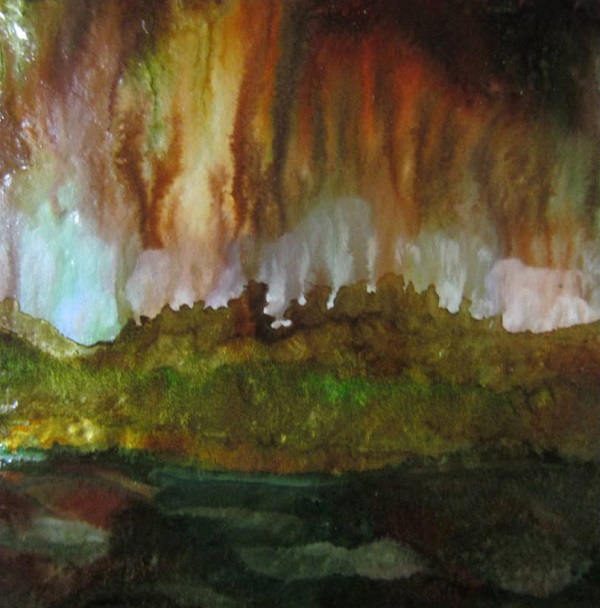
All Alcohol Paintings shown in this post by the Author- Dawn Bank

While searching for ways to expand “the oil painting experience” I came across tiny bottles of Alcohol Inks in all the basic colours, with an extender (strictly rubbing alcohol at 99%) as well as some clean-up solution.

Painting with oils has always been my favorite medium but on occasion I find it kind of rigid- you do this…then that and poof you have a beautiful tree. That’s why using alcohol inks as my new medium has become a new addiction. While doing so, I feel like I am being controlled without the ability to stop working. I have probably used up 3 sets so far.

I had never used inks before and I found myself in uncharted territory. Using inks changed everything. I discovered that they created many outcomes and endless possibilities which then opened up new means of expression to me.

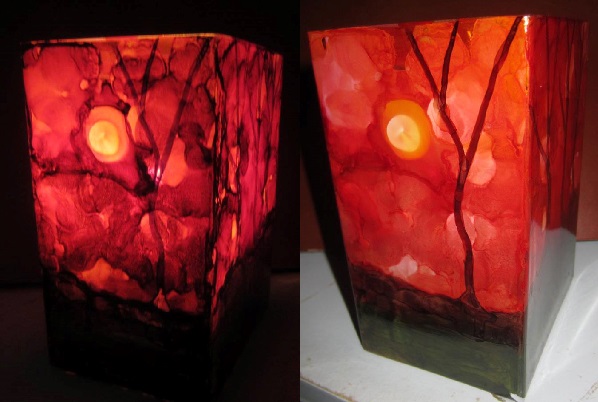
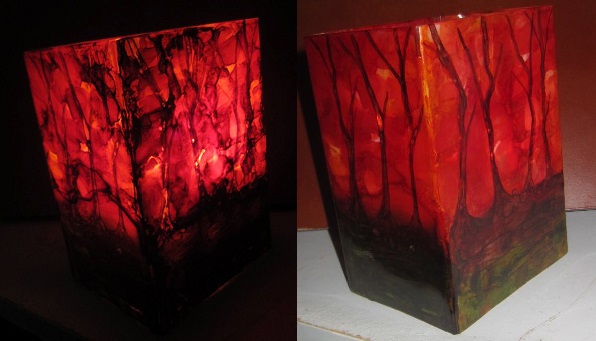
Taking advantage of the translucent qualities of Alcohol Ink- lit (L) & unlit (R) candle holder by the Author

When I begin to ink, I sit down at my table the same way I would when using oils. I Toss little droplets of colour and rotate the tile. Next, I spray rubbing alcohol for a spatter effect and I add a sponging technique that forms a multitude of tiny blotches. I pick out a brush and paint with the alcohol itself paying attention to watching the delicate lines that form as the brush hits the nearly-dry ink. It’s a gentle process and I enjoy the thinning of colour effect from the alcohol spray . For more fun I sometimes go out and buy a can of compressed air. I blow the ink and watch as it begins to layer itself. This is almost magical. It’s so amazing how it all comes together. I think the greatest addiction with this technique is the fact that the results are unpredictable and will never be the same. This whole process takes about half an hour but to me it seems like mere seconds.

Even though the finished ink works are fully dry within a matter of minutes, extra time is required if you choose to work in more detailed designs.

Another view of the Author's candle holder.
Another view of the Author’s candle holder

Speaking of time….I am amazed that while I work with the inks I completely lose all track of time. I am in a completely different space. My house could be burning down and I’m not sure that I would notice because using this medium makes me extremely focused and relaxed. Peacefulness has added to my life and that is just amazing. I have become so “in tune” with the way that the inks move without totally blending together. It’s an exciting time. I have discovered a new way to express and share my world with the whole world. For The Silo, Dawn Bank of One Lady’s Art. To view more alcohol ink work please visit me at https://www.facebook.com/groups/OneLadysArt/.

Help End Peru’s Savage Dolphin Hunt By Adding Your Signature

Letters to the Silo

Dear Silo,

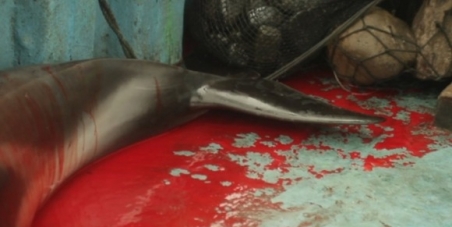
Up to 15,000 dolphins are being killed every year in Peru’s waters — for bait to catch endangered sharks. A new report has forced the government to respond but they’re not taking enough action yet and meanwhile the dolphins and the sharks are being killed. We can stop the massacre by threatening Peru’s international reputation as a tourism destination. Sign now and share: 

SIGN THE PETITION

I just saw a report on the news in Peru showing how fishermen are slaughtering up to 15,000 dolphins every year — for bait to catch endangered sharks. The entire story made me sick — and now I’m fighting to end this nightmare.
My government is starting to react, but they’re not taking enough action yet. Dolphin hunting is already illegal and punishable with several years in prison, but authorities are turning a blind eye — allowing thousands of dolphins and sharks to be butchered. The government cares a lot about Peru’s international reputation, especially for tourism, and if we can make them feel embarrassed with a massive global campaign, I’m sure they’ll start taking action to end the massacre.

Once I deliver a million signatures from all over the world to the government of Peru, Avaaz will place ads in tourism magazines in countries where most of our tourists come from and the government won’t be able to ignore us! Help me stop the brutal slaughter by signing now:

http://www.avaaz.org/en/dolphin_hunt_peru/?bsOTIab&v=33625

When I saw this horrific hunt I realised I needed to do something about it before our dolphins and sharks are gone forever. So I decided to set up a petition and shared it with my friends and in less than 24 hours over 10,000 people had signed it!

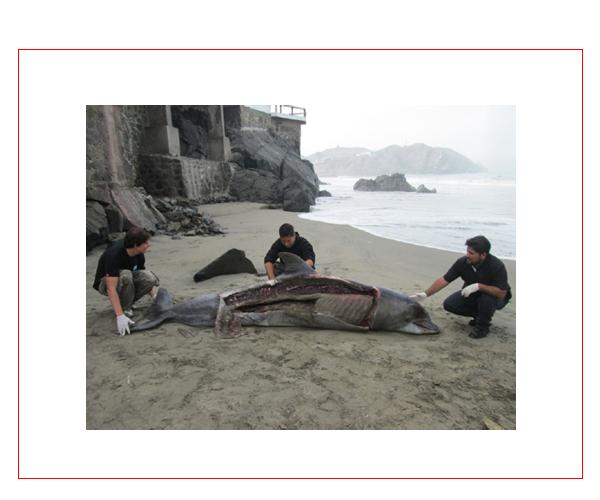
Partially butchered Dolphin, found on Bujama beach on 1.24.13 image: bluevoice.org

Our oceans are under attack. Sharks and dolphins already face threats from pollution, climate change and entanglement in fishing gear. They play an important role as ocean predators and need to be protected — not butchered. Many marine ecosystems are on the verge of collapse from which they won’t recover and they will not wait while our politicians dither around making empty statements.

Tourism is Peru’s third largest industry, growing faster than any other South American country. Visitors are coming to see our pristine wilderness and eco-tourism is very important. We can create a serious threat by taking out hard-hitting ads in key countries where most visitors are coming from. Our government will realise people not only love our country because of the Machu Picchu and local gastronomy but also because they love our oceans and wildlife. Sign now and share this with everyone:

http://www.avaaz.org/en/dolphin_hunt_peru/?bsOTIab&v=33625

As an Avaaz member I’ve been truly amazed at our ability to help protect our oceans. At first, I wanted to get 15,000 signatures to represent the 15,000 dolphins that are killed every year but together we can represent all the dolphins and the sharks that can be saved in Peru’s waters!

With hope and excitement,

Zoe — together with the Avaaz Community Petitions Team

This petition was started on the Avaaz Community Petitions Site. It’s quick and easy to start a petition on any issue you care about, click here: http://avaaz.org/en/petition/start_a_petition/?30311

Supplemental:

Dolphins killed for shark bait in Peru (CNN)
http://edition.cnn.com/2013/10/22/world/americas/dolphins-killed-peru/

Dolphin Slaughter Fueled by Illegal Shark Trade (National Geographic)
http://newswatch.nationalgeographic.com/2013/10/24/dolphin-slaughter-fueled-by-illegal-shark-trade/

Revealed: brutal reality of (The Ecologist)
world’s ‘biggest dolphin hunt’


http://www.bluevoice.org/news_perudolphinhunts.php

Bird Eats Fruit To Get Drunk

The waxwing-

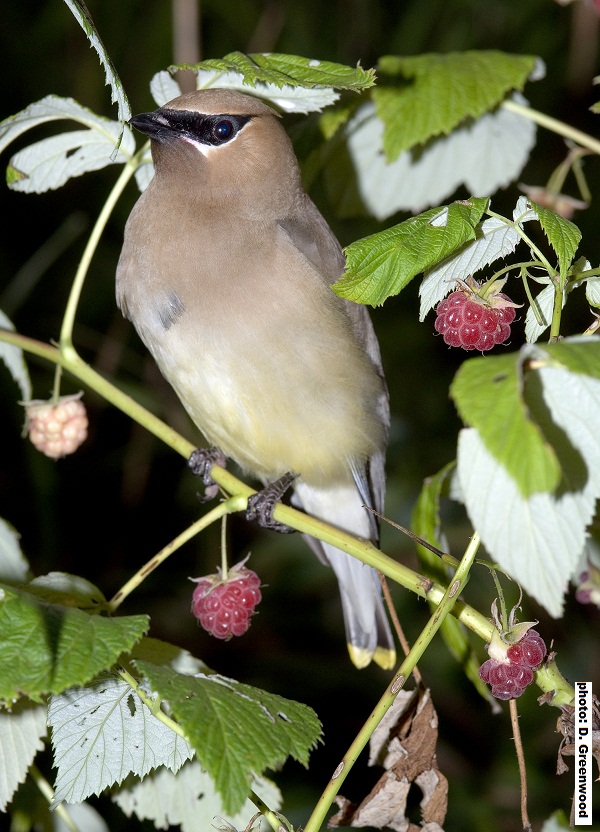
Cedar Waxwings are sleek, masked birds found year round in our area with unusual red, waxy deposits at the tips of their secondary feathers. They are cinnamon-colored, with grayish wings and tails and yellow terminal tail-bands. They have distinctive crested heads, black throats, and black masks lined with white.
The Cedar Waxwing is one of the few North American birds that specialize in eating fruit. It can survive on fruit alone for several months. They also eat flying insects and can often by seen fly-catching, particularly over Haldimand and Norfolk County streams.

Cedar waxwings are very sociable, non-aggressive birds that often travel in flocks, though they may pair off during breeding season. It is very rare to find solitary waxwings. Because they frequently feast on overripe fruit, these birds can become “drunk” on the fermented juices. For the Silo, Dixie Greenwood.


Our Wildlife: The (Canadian) American Bullfrog


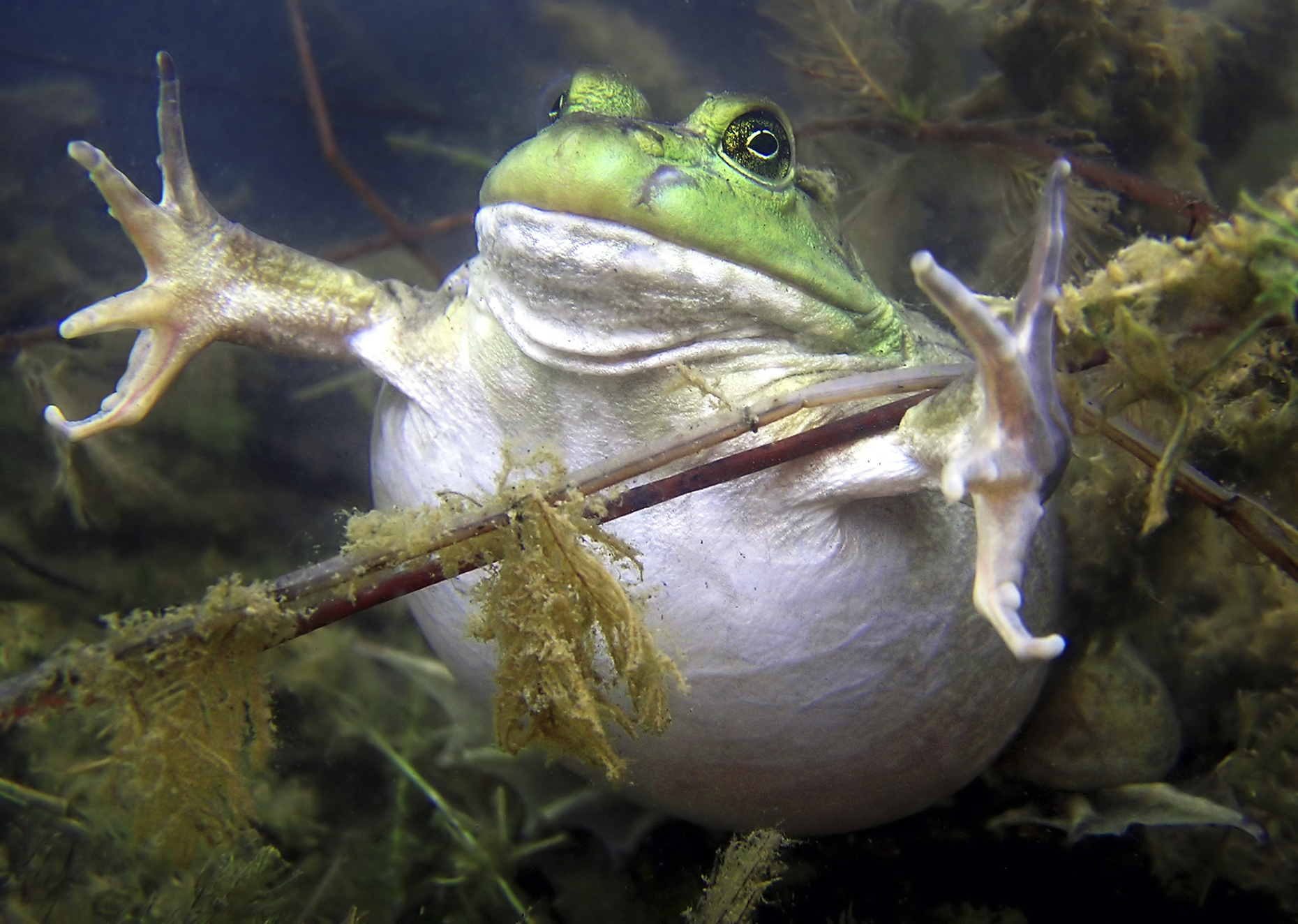
The American Bullfrog (Rana catesbeiana -CP)  is the largest of all North American frogs. They can be  found in freshwater ponds, lakes and marshes  with lots of vegetation, especially water lilies. Photograph by D. Greenwood

Bullfrogs are typically green or gray-brown with brown spots and have easily identifiable circular eardrums, or tympanum, on either side of their heads.

Females are slightly larger than the males, but only the male Bullfrog emits the trademark
baritone bellow Click for sounds of american bullfrog calls and their choruses can be heard during the day or night.

Nocturnal predators, Bullfrogs will ambush and eat just about anything they can fit in their  mouths, including insects, mice, fish, birds, and snakes.  Search “Dixie Greenwood” on the top of any page on our site to view more of Dixie’s nature photographs.

First Nations reader sends letter outlining FIPA Canada-China trade concerns

November 1, 2012 His Excellency the Right Honourable David Johnston, C.C., C.M.M., C.O.M., C.D. Governor General

Your Excellency:

I am going to start with this quote i read today “I am a Canadian, free to
speak without fear, free to worship in my own way, free to stand for what I
think right, free to oppose what I believe wrong, and free to choose those
who shall govern my country. This heritage of freedom I pledge to uphold
for myself and all mankind.” – John Diefenbaker.

Now as a proud First Nations citizen of Canada, I strongly urge you to use
your discretionary reserve powers as the Head of State of this country and
to suspend Stephen Harper as Prime Minister and to dissolve Parliament in
order to preserve and protect our democracy. The method in which Prime
Minister Harper negotiated in secret the Canada-China Foreign Investment
Promotion and Protection Agreement (FIPA) and his refusal to have any
debate or discussion on it in the House of Commons is extremely
undemocratic. There are many who believe he no longer nor ever acted in
the true benefit of Canada as a whole, i speak for myself and for my
peoples, as i know many will be, or would have wanted to, sending letters.
The First Nations are only just getting word out with regards to the full
effect this will have on our peoples. We are begging for our
Constitutional Rights given to us through our treaties. I see Elders
crying, these people lead our communities not the false leaders imposed on
us. i cry as i write this…our Elders gave a unanimous decision to reject
any deals to use our lands. We have been closed out of any trade
agreements, some based on technicalities…now to quote from of the
government documents our growing youth population (which is getting
healthier) is excepted to be “400,000” these children are what we fight
for. Our beliefs are that we are here as maintainers or caretakers of this
land. Mother Earth will be here long after we leave, our children’s
children should not have to “maintain” our messes. I was raised outside
the First Nations community, taken away as a child isolated(almost
literally) from people for around 6 years of my life, i had school and i
had my sister but i was forced to spend a lot of time alone, plus
physical/psychological abuse, i am one of the lucky ones. But our
communities are only just starting the healing process, and on top of that
educating ourselves. We need to be able to Listen to our Elders, our
Elders are begging for our Treaty rights and I do know “hear” news of our
tribal leaders asking for the same.

All citizens of Canada have a democratic right to be informed and consulted
on any such far reaching agreements especially when they have the potential
for very dire repercussions as does FIPA. In ratifying this agreement,
which provides communist run corporations the power to sue Canadian
governments at all levels should our laws and policies impede their
expected profits, it is not only completely contrary to the best interest
of Canadians it in fact serves to undermine the very core of our democracy.
By ratifying this agreement, Prime Minister Stephen Harper is providing
Chinese corporations the ability to challenge and overturn our laws and
strike down our democratic process and that is without question an attack
on our democracy and our ability to be sovereign country. The vast majority
of Canadians strongly oppose this agreement but their Conservative Members
of Parliament choose to follow party lines rather than to represent their
constituent’s wishes. The people of Canada have lost confidence in the
Harper Conservative Parliament and our elected representatives refuse to
act accordingly. One of the Governor’s General most important
responsibilities is to ensure that Canada always has a prime minister and a
government in place that has the confidence of the people who elected the
Parliament. For the sake of Canada and Canadians, please execute your
duties and suspend Stephen Harper as Prime Minister and dissolve Parliament.

The above is a quote from a fellow citizen, but I have done research.
Everything I have been looking up over the last month with regards to
environmental amendments and First Nation goals are extremely disturbing,
and to mention on top of those are budget indiscretions and the
environmental impact he has allowed to happen. I am not someone that can
sit on the sidelines and not do something or say something when you know
something being done is wrong. What the Conservative government is doing
to Canada is wrong, what he has planned for the First Nations communities
is wrong. This government can not be allowed to continue on with it’s
agenda.

Sincerely
Lenore Gold
From the Cree Nation and a Canadian Citizen

*The Silo is a non-partisan online and print publication and welcomes open-forum debate and comments. The opinions expressed in letters to the Silo are not necessarily those of the Silo.

Suck it? Public Breastfeeding.

Come on, breastfeeding is not obscene. Breastmilk has evolved into an immune-building milk tailor-made for each child to protect infants and children from illnesses in their environment. There are over 400 ingredients in breastmilk whose reasons for being there are not fully known. There is a component in breastmilk which is only there to grow the baby’s brain. That’s it. It can’t be replicated. Saying a certain non-humanmilk-based formula is ‘closer to’ breastmilk is akin to saying Michigan is closer to Hawaii than Pennsylvania. True, but one wouldn’t be closer to Hawaii’s environment, would they?

Our September Print edition cover- It is western culture that has sexualized breasts to the point where seeing a mother breastfeeding her child is obscene. image: courtesy of the author

Did you know that if you leave a naked baby on mom’s chest right after birth, they have the knowledge and ability to crawl to the breast and nurse perfectly by themselves (especially if mom was un-medicated during the birth). It is a beautiful moment to watch. That instinct is there for 3-4 months.

Should breastfeeding ever hurt? No. Just because many women do have pain in breastfeeding, doesn’t make it ‘normal.’ Most pain in breastfeeding, in my 20-year experience, is from poor latching or lack of knowledge. There isn’t enough time in a full prenatal labour/birth class to give breastfeeding instruction the time it needs. Attending La Leche League (LLL) meetings while pregnant can help prepare you (www.LLLc.ca). Or, talk with an International Board Certified Lactation Consultant if you are nervous speaking in a group. Plus, partners may feel more comfortable speaking individually. IBCLC’s are listed here: http://www.americas.iblce.org/ibclc-registry. Both LLL and IBCLC’s are available before and after you have your baby and are a tremendous resource and support.

Maternite (Motherhood) by Maria Blanchard. Due to physical conditions that prevented Maria from ever being able to have children, she powered up her paintings with sentiment and substance. CP

The World Health Organization, and the Canadian Pediatric Society both say to exclusively nurse your baby for the first 6 months of life and to breastfeed for 2 years or more. That is the world standard. It is western culture that has sexualized breasts to the point where seeing a mother breastfeed her child is obscene. There is no food on earth which can replace the vitamins, minerals, and immunities which are found in human milk. How is seeing a baby nurse in public worse than seeing the lingerie models in the mall?
Dads should not be left out of baby’s life. But, if dads were meant to feed babies, they would lactate. Skin-to-skin bonding with dad/baby increases parenting hormones and normalizes baby’s temperature, heart, and breathing.

Public breastfeeding- what’s the big dealio? image: courtesy of the author

Dads, or other support people, may use a medicine cup (like what comes with children’s fever medicine) to feed the baby. In addition, baby’s tongue works similarly to breastfeeding, so feeding a baby with cup and at the breast should not cause nipple confusion.
There are documented risks to formula-feeding (increased risks for obesity, diabetes, and general colds/flus). Plus, moms may have an increased risk of breast cancer, cardiovascular disease, and diabetes if she chooses formula feed. Breasts are part of our anatomy to feed our babies. Honour that.

For the Silo by Aboriginal midwife Stephanie MacDonald, IBCLC. Contact Stephanie on twitter @StephIBCLC

Supplemental- 30$ per scoop Ice cream made from human breastmilk on sale in London, England

Protest at Marineland, Niagara Falls Gains Momentum

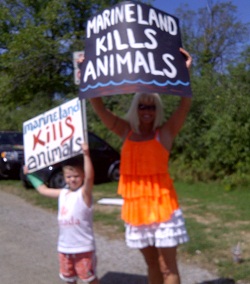
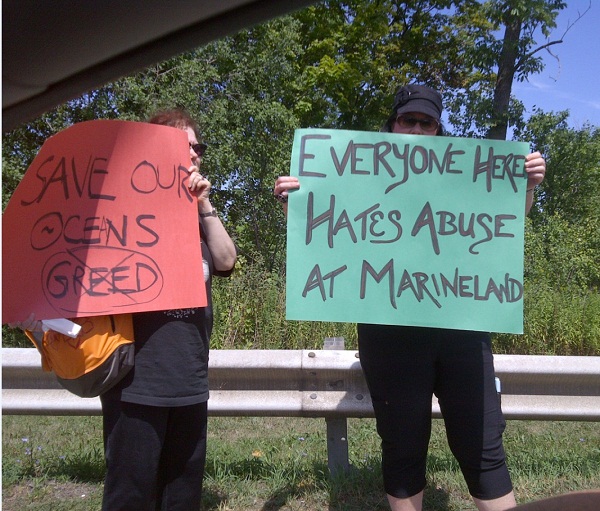
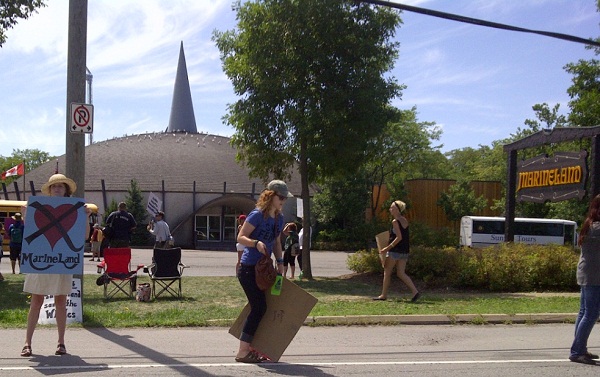
On Saturday August 18th- hundreds of protesters gathered in front of the main entrance gates of Marineland in Niagara Falls, Ontario. At stake was the ethical treatment of animals used for performances and entertainment. Over the past three years there have been increased reports by the media regarding the attacking of trainers by killer whales and other performing animals.

Messages on protest signs were simple, bold and clear. photos:The Silo/Mith Media

Many researchers believe that this sort of behavior is inevitable because killer whales are adversely affected by forcible confinement and pavlovian conditioning and that in turn has many questioning whether theme parks such as Marineland and Seaworld are capitalizing on animal cruelty. It’s not a new topic- zoo’s and circuses are not strangers to demonstration and protest and the relationship between humans and animals is a theme often employed by conscientious artists.

[Warning- the following video contains disturbing images. Viewer discretion is advised CP]

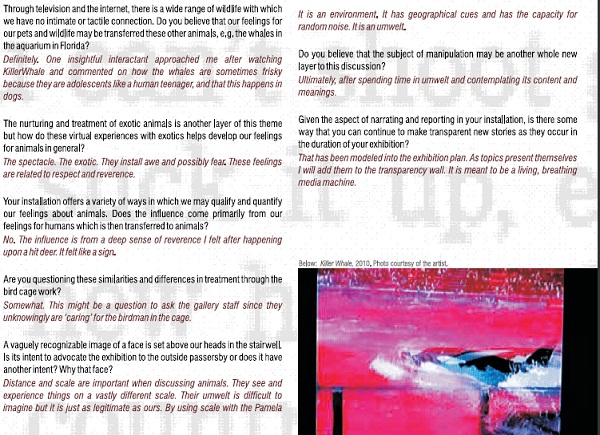
Segment from Umwelt (2010) exhibition catalogue- Jarrod Barker’s installation at the Norfolk Arts Centre explored the connectedness or non-connectedness (ie: the umwelt) of humans and animals. image:courtesy of the artist

Marineland denied our request (along with the Toronto Star’s request) for an interview and requested that the media respect “private [their] property”. That sort of reaction makes it difficult to investigate a story of this magnitude- and many questions remain unanswered. For example, earlier this year an infant beluga whale was attacked repeatedly by two adult belugas until it was killed. Media leaks reveal that the baby whale may have been ill and that the other animals acted out of fear since they may have detected signs of a contagious disease.

image: The Silo

Although no date has been set, The Ontario Society for the Prevention of Cruelty to Animals is planning on bringing independent Sea Mammal experts and Marine Biologists into Marineland for an inspection according to an online report at www.thestar.com CP

image: The Silo