Tag Archives: learning

Student Math Scores Are Substandard Across Canada

  • Over the past decade, Canadian math scores on the Program of International Student Assessment (PISA) and Trends in International Mathematics and Science Study (TIMSS) have declined in all provinces. Canadian fourth-grade students performed below the international average on nearly every benchmark level of math achievement on the 2023 TIMSS assessment.
  •  Research shows early math achievement predicts later academic achievement and future earnings. Strong math skills are crucial for career sectors like technology, finance, and data science.
  •  Canada’s declining math performance is an urgent national concern requiring immediate action by provincial governments.
  •  This E-Brief via our friends at the C.D. Howe Institute outlines five recommendations to reverse Canada’s declining math scores: align math instruction with the science of learning; use assessments and data to drive improvement; strengthen provincial math curricula; improve teachers’ math knowledge; and appoint implementers committed to reform goals.

Introduction

Strong math skills are essential for careers that drive Canada’s economy, including technology, artificial intelligence, finance, and data science. To remain globally competitive and address long-term income gaps, improving math achievement among Canadian students must be a national priority.

The link between early math skills and later academic success is well established (Duncan et al. 2011; Siegler et al. 2012). Early math achievement also correlates positively with future career earnings. According to Werner et al. (2024), math achievement in childhood is a better predictor of adult earnings at age 30 than reading, health, or social-emotional skills. These effects were observed across all demographic groups.

Canada ranked in the top 10 in math on the 2022 PISA survey, an international OECD assessment of 15-year-olds. However, ranking near the top of a falling curve does not imply that all is well. Math achievement has been falling for well over a decade, beginning well before the COVID-19 pandemic. More Canadian students now struggle in math, fewer excel, and in several provinces, the decline is roughly equivalent to two or more years of schooling.

The OECD estimates that a 20-point drop on PISA roughly equates to about one year of learning (OECD 2023). Math scores in all provinces declined more than 20 points since 2003. Seven provinces experienced declines of over 40 points,1 representing approximately two years of lost learning, while the 58-point drop in Manitoba and Newfoundland and Labrador is close to three years.

In all provinces, the share of students below Level 2 on PISA increased since 2003, more than doubling in every province except Prince Edward Island and Quebec. Level 2 reflects the baseline level of mathematics proficiency to participate fully in society. Over the same period, the proportion of top performers declined in every province (OECD 2023; Richards 2025). In four provinces, at least 30 percent of students scored below Level 2 on the 2022 PISA test.2

The latest results from TIMSS3 have flown under the radar in Canada, but they should be another wake-up call. PISA and TIMSS assess different constructs. PISA focuses on mathematical literacy while TIMSS tests Grade 4 and Grade 8 students on curriculum-based academic skills (e.g., arithmetic, fractions, pre-algebra), which are essential for later math courses.

Students from Alberta, Manitoba, Newfoundland and Labrador, Ontario, and Quebec wrote the 2023 Grade 4 TIMSS assessment. While not all provinces participated, these jurisdictions educate well over half of Canada’s students. Results showed a clear downward trend since 2015, predating the COVID-19 pandemic: Canadian Grade 4 students scored below their peers in the United States, well below those in England, and significantly below top-performing countries like Singapore (Figure 1).

Even more alarming, Canadian fourth graders fell below the international median at nearly every benchmark level of math achievement (Table 1).

Provincial assessments tell a similar story. Ontario’s most recent EQAO tests show that 36 percent of Grade 3 students, 49 percent of Grade 6 students, and 42 percent of Grade 9 students are not meeting provincial standards in 2024-2025. Scores have remained stagnant over the last three years, despite provincial efforts to improve math performance (EQAO 2025).

Canada invests heavily in education, spending more per student than the OECD average (Figure 2), but higher education spending does not necessarily translate into better outcomes. Evidence suggests that cumulative expenditure per student between ages six and 15 improves PISA performance up to approximately US$100,000/ CAD $139,000, after which additional investment yields minimal measurable gains in student achievement (OECD 2024). For example, the cumulative spending per student between ages 6 and 15 in Canada is US$125,260/ CAD $173,848, yet Canadian 15-year-olds are outperformed by their Japanese counterparts, even though Japan spends approximately 14 percent less per student (OECD 2024). This suggests that increased funding alone cannot resolve educational performance gaps.

High-performing systems tend to strategically allocate resources toward evidence-based interventions, such as teacher quality improvements, rigorous curriculum design, standardized assessments, and targeted student support. For countries already spending above the threshold, including Canada, improving educational outcomes may require refocusing resources rather than increasing spending.

Evidence-based instructional strategies need to drive education investment decisions. This E-Brief outlines actionable policy recommendations to reverse the downward trend in Canada’s math performance and maximize returns on existing educational expenditure.

Align Math Instruction with the Science of Learning

4

Math Instruction Must be Grounded in High-quality Evidence

A major barrier to improving math outcomes in Canada is that many school math programs are not grounded in scientific evidence about how best to teach and learn math. Many popular math programs emphasize approaches such as inquiry-based or discovery-based learning,5 collaborative problem solving, or open-ended tasks.6 But a large body of research shows that problem-solving ability develops most effectively through explicit teacher-led instruction, which incorporates clear explanations, worked examples, purposeful practice, and feedback (Archer et al. 2011; Fuchs et al. 2021; Hughes et al. 2017; Stockard 2018; Sweller et al. 2010; Kirschner et al. 2006; Hartman et al. 2023; Guilmois et al. 2025).

As Andreas Schleicher, Director for Education and Skills at the OECD, has noted, PISA results reveal that teacher-directed instruction is a stronger predictor of achievement than student-oriented learning (Schleicher 2019). Recent analyses of PISA data from a sample of European countries found that student-oriented (or inquiry-based) instruction was negatively associated with PISA math achievement (Liu et al. 2024). Similar correlations have been observed in the 2010 Pan-Canadian Assessment Program (PCAP) data; the use of teacher-directed instruction was associated with better math performance, while indirect instruction was strongly associated with lower scores (CMEC 2012).

Explicit instruction benefits diverse groups of learners and is particularly critical for novice learners. Powell et al. (2025) describe systematic, explicit instruction as “the instructional approach that has amassed the strongest research base in mathematics, particularly when supporting students with mathematics disabilities or difficulties.” Hughes et al. (2017) identified five essential components of explicit instruction, based on the research literature:

  1. Model: Teacher demonstrates key concepts clearly and concisely.
  2. Break down concepts: Teach complex skills in manageable steps.
  3. Fade support: Gradually reduce instructional guidance as students gain independence.
  4. Respond and feedback: Provide frequent opportunities for student responses and feedback.
  5. Practice: Create purposeful practice opportunities to build mastery.

Teacher professional development in math rarely focuses on explicit instruction. Some popular Canadian math programs even actively discourage teacher-led demonstrations, disparaging explicit instruction as “mimicking” (Boryga 2024). This disconnect between evidence and classroom practices undermines student success.

Provinces Must Set Evidence Standards

Most math programs and instructional approaches are marketed as “research-based,” but the term carries no specific criteria for what qualifies as credible evidence. In science, that phrase usually means rigorous, replicated evidence. In education, it can mean a survey, a case study, or an opinion dressed up as evidence. Without clear standards for what constitutes evidence, schools will continue to adopt programs unsupported by rigorous studies.

The What Works Clearinghouse practice guides published by the Institute of Educational Sciences (IES) identify, evaluate, and rate recommended instructional approaches (e.g., Fuchs et al. 2021; Gersten et al. 2009). High-quality research on effective math instruction has also been summarized by the National Math Advisory Panel (NMAP 2008) and Barak Rosenshine (Rosenshine 2012).

Provincial governments should set evidence standards, drawing on evidence syntheses such as the NMAP Final Report and IES practice guides, prioritizing randomized controlled trials and peer-reviewed studies that show measurable improvements in math achievement. Funding should be directed toward evidence-based programs.

Engage Science of Learning Experts in Math Reform

Cognitive scientists, behavioral scientists, and educational psychologists have warned about the limited use of evidence-based math instruction and persistence of pseudoscientific practices in math classrooms (e.g., Codding et al. 2023; Hartman et al. 2023). These experts offer underused insights about how students develop mathematical knowledge and skills. Provincial governments should actively engage them in setting evidence standards and ensuring that instructional programs align with the best available research on how children learn math.

Math Reform Lags Behind Reading Reform

Recent Right to Read Inquiry reports in Ontario, Saskatchewan, and Manitoba (Ontario Human Rights Commission 2022; Saskatchewan Human Rights Commission 2023; Manitoba Human Rights Commission 2025) found that existing practices ignored the abundance of research on how to best teach reading, known as the “science of reading.” In response, some Canadian provinces and school districts have begun to correct decades of damage done in reading instruction by aligning policies with this evidence (Timmons 2024; CBC Radio 2024; Macintosh 2025). Math has not received the same level of attention or urgency. Despite a strong body of rigorous research, there is limited awareness among educators about how students learn math most effectively. Unlike literacy, where students may gain incidental exposure at home (e.g., by parents reading aloud), many Canadian students are only exposed to meaningful math learning in classrooms, making evidence-aligned instruction even more critical.

Actionable recommendations

  • Set clear evidence standards for math programs, prioritizing randomized controlled trials and peer-reviewed studies that demonstrate measurable gains in math achievement.
  • Prioritize funding for math programs and professional development aligned with high-quality evidence.
  • Engage science of learning experts, such as those in cognitive science, behavioural science, and educational psychology, alongside experienced educators with a track record of effective math instruction, to guide evidence-based practices for teaching math.

Use Assessments and Data to Drive Improvement

Canada lacks clear, consistent measures of student progress in math. Without reliable data, schools cannot accurately diagnose problems early, intervene effectively, or determine whether students are on track in math. Provincial governments should prioritize two types of assessments: standardized tests and universal screening.

Provincial Standardized Testing

Standardized tests are typically given at the end of a term or school year to measure student achievement, monitor system performance, and ensure transparency.

Test scores from school-aged students are a good predictor of later academic outcomes, including post-secondary readiness and future earnings (DeChane et al. 2024). Access to reliable data allows education systems to focus on closing proficiency gaps early, thereby narrowing educational disparities later. Bergbauer et al. (2018) analyzed PISA microdata from over two million students across 59 countries, spanning six testing cycles from 2000 to 2015, and found that accountability systems using standardized tests to compare results across schools and students are associated with higher student achievement. In countries like Estonia and Portugal, standardized assessments have led to rising PISA outcomes and greater equity. In contrast, systems with limited standardized testing, such as Spain in the 1990s, struggled to identify and support struggling students, leading to greater inequality (Crato 2021).

Standardized tests provide critical information for teachers, parents, policymakers, and the public. They give parents a clear picture of their child’s academic progress so they can advocate effectively. They provide policymakers with reliable data to evaluate system effectiveness and target resources. It is standard practice in many countries to conduct annual standardized assessments, with aggregate results published by school districts, enabling transparency and accountability to the public, but it is uncommon in Canada.

Current testing is too infrequent, which hinders early intervention and accountability.7 Moreover, provincial assessments may lack diagnostic value. For example, Ontario’s EQAO assessments allow calculators, even for Grade 3 students, making it impossible to determine whether students have mastered basic arithmetic or learned math facts to automaticity.

Math Fact Fluency Matters

Basic arithmetic fluency is the foundation for later math success, yet many provincial assessments do not adequately determine whether students have mastered foundational skills. England addressed this by introducing mandatory multiplication tables checks for nine-year-old (Year Four) students, sending a clear signal that math fact fluency matters, and prompting schools to prioritize automaticity with math facts (Gibb 2025; Gibb and Peal 2025; UK Department for Education 2025).

The ability to recall math facts, like times tables, accurately and effortlessly from memory, is known as math fact fluency8 or automaticity. This is crucial since it reduces cognitive load, making it easier to tackle complex math problems that involve math facts (National Math Advisory Panel 2008; Hartman et al. 2023; McNeil et al. 2025). For example, when adding two fractions with denominators 6 and 8, math fact automaticity allows students to quickly produce 24 as the least common denominator. Students without math fact automaticity will struggle with fraction arithmetic.

Evidence-based methods for developing math fact fluency have been documented (for example, see Codding et al. 2011; Poncy et al. 2007, 2010 and 2015; and Stokke 2024 for an overview), but if reliable data is not being collected, schools may not devote sufficient resources to this critical skill or may fail to identify students who need support. A mandatory times tables check in primary school is a straightforward, high-impact policy.

Universal screening identifies students at risk of falling behind

While standardized tests provide system-level data, universal screeners are brief, timed assessments given two to three times per year. They are designed to quickly identify students who are behind so that evidence-based interventions can be used to provide remediation to ensure more equitable access to the core curriculum.

Provincial Human Rights Commission reports highlight the importance of universal screening for reading (Ontario Human Rights Commission 2022; Saskatchewan Human Rights Commission 2023; Manitoba Human Rights Commission 2025). Math requires the same urgency. Early studies found that when this kind of data is paired with effective math interventions, student math achievement improved (Fuchs et al., 1989; Fuchs et al., 1991; Allinder et al., 2000; Nelson et al. 2023). The IES practice guide on Response to Intervention recommends screening K-8 students in math twice per year using measures that are efficient (less than 20 minutes), reliable, and demonstrate predictive validity (Gersten et al. 2009). Using valid screeners is essential to accurately identify students at risk (VanDerHeyden et al. 2021; VanDerHeyden and Solomon 2023).

Screening alone is insufficient. Screening must be paired with intervention programs that incorporate evidence-based strategies, since ad hoc or “design your own” programs are unlikely to turn things around for struggling students.

Addressing Myths About Timed Activities

Concerns that timed assessments cause math anxiety are not supported by research. In fact, struggling with math has been identified as a factor in the development of math anxiety (Maki et al. 2024). Therefore, the best way to reduce math anxiety is to improve student achievement in math. Timed activities, such as low-stakes timed practice and timed retrieval practice, are essential for developing fluency. Timed activities are a key recommendation in the IES practice guide on evidence-based supports for struggling students, and there is strong evidence that they increase math achievement (Fuchs et al. 2021). Many timed activities and assessments are brief, and students tend to enjoy them.

Timed activities such as standardized tests and screening are essential to ensure students get the support they need. Standardized tests allow students to show what they have learned, and universal screeners are like academic “check-ups,” helping to catch problems early.

Actionable recommendations

  • Adopt a mandatory times tables check before the end of Grade 4.
  • Prohibit calculators on primary school provincial assessments.
  • Implement universal screening in math for all K-8 students using screening tools with demonstrated predictive validity.
  • Pair screening with evidence-based interventions.
  • Strengthen provincial standardized testing, implementing tests at key grades and tracking student progress over time.

Strengthen Provincial Math Curricula

Delays in Foundational Content are Holding Students Back

In a 2015 C.D. Howe Institute Commentary (Stokke 2015), I recommended that K-8 math curricula focus on concepts critical for later success in algebra and beyond. Most Canadian math curricula still delay foundational skills, leaving students behind their peers in other countries. When students build strong fluency early, they are better equipped to participate in advanced problem solving and mathematical reasoning.

Some provinces have made changes since 2015. Alberta’s 2023 revisions of the K-6 curriculum reinstated core concepts at appropriate grade levels. Ontario’s 2020 curriculum update requires recall of multiplication facts up to 12 x 12 by Grade 5. This is later than international benchmarks, and it is unclear whether fluency will improve since EQAO tests permit calculators. Manitoba and Saskatchewan also delay recall of multiplication facts (up to 10 x 10) until the end of Grade 5 and provide no accountability measures to ensure mastery. British Columbia’s 2016 curriculum is even worse, delaying or omitting key concepts entirely, and explicitly stating in the Grade 5 curriculum that “memorization of [math] facts is not intended” (Province of British Columbia, Ministry of Education, 2016). In contrast, the US Common Core and other international curricula expect students to achieve multiplication fact fluency by the end of Grade 3.

Fraction arithmetic is a strong predictor of later math achievement (Siegler et al. 2012), but is not taught in most Canadian provinces until Grades 7 or 8. This is two to three years behind the US Common Core State Standards, where students learn fraction arithmetic in Grades 4 and 5 (National Governors Association Center for Best Practices & Council of Chief State School Officers 2023). The NMAP stressed improving fraction fluency to improve algebra outcomes (NMAP 2008).

Delays in teaching foundational topics widen inequities by disproportionately harming disadvantaged students, whose families are less able to pay for private tutoring to compensate for gaps. Delays reduce practice time, leading to compounding knowledge gaps and lower success in advanced math.

The above table, based on recommendations from the NMAP final report and benchmarks from high-performing jurisdictions, serves as a guide for when key topics should be covered.

Actionable recommendations

  • Revise provincial math curricula to emphasize foundational topics at earlier grades, using the above table as a guideline.
  • Require automatic recall of basic math facts as an explicit learning outcome in provincial curricula where it is not currently mandated.

Curriculum changes alone are not enough. Without evidence-based math programs and accountability measures such as mandatory times tables checks, rigorous standardized assessments, and restrictions on calculator use in early grades, even strong curriculum outcomes will have limited impact on improving student achievement.

Strengthen Teacher Content Knowledge in Mathematics

To improve math outcomes for students, we must ensure they are taught by teachers with strong math knowledge. The most practical time to build this knowledge is during university, when teacher candidates complete coursework to prepare for their careers. We have a responsibility to future generations to make this investment now, before teachers enter the profession and impact students.

Math Teachers Need More than High School Math

A high school math background and pedagogy courses are not sufficient preparation for teaching K-8 math. Teachers need deep mathematical knowledge, extending beyond the content they are expected to teach, in order to anticipate misconceptions and prepare students for future math success (Ma 1999; Hill et al. 2005).

Since provincial governments certify teachers, they have a duty to ensure that teacher preparation meets minimum standards. Claims suggesting that teachers’ math knowledge is unimportant or negatively related to teaching effectiveness have been debunked (Barr et al. 2024).

Most Canadian provinces follow a generalist model in K-8, where teachers instruct all subjects, including math. In my 2015 Commentary, I recommended that provinces require K-8 teacher candidates to complete at least six credit hours in math content courses designed to give them a solid understanding of the math they will teach. I also recommended implementing math teacher licensure exams for K-8 teachers to ensure minimum proficiency, a recommendation recently echoed by the National Council on Teacher Quality (NCTQ) (Drake et al. 2025).

The NCTQ recommends that teacher candidates receive at least 105 instructional hours in math content and 45 hours of math pedagogy,9 which is equivalent to three to four university-level math content courses in Canada. Apart from Quebec, no Canadian province meets this expectation, and some are regressing.

Manitoba briefly required two math content courses for students entering teacher preparation programs after 2015, with the first affected cohort graduating in 2020, but eliminated the requirement in 2024 (Macintosh 2025). While intended to boost enrolment in teacher education programs, this decision comes at the expense of students taught by unprepared teachers.

The NCTQ also recommends that elementary teacher candidates pass a strong math licensure exam, covering four core math topics.10 Ontario has recently introduced a Mathematics Proficiency Test for teacher certification, effective February 2025 (EQAO, n.d.). Other provinces have yet to follow suit.

Actionable recommendations

  • Require a minimum of six credit hours in math content courses tailored to K-8 teachers, as part of licensing requirements.
  • Implement rigorous math licensure exams for K-8 teachers prior to certification.

Appoint Implementers Committed to the Reform Goals

Reform in math education cannot succeed when implementation is entrusted to individuals who oppose or misunderstand its goals. Policymakers in Canada may recognize the problems within the current system and propose promising solutions to improve math achievement. However, too often, reforms fail when implementation is led by individuals invested in maintaining the very system that needs fixing. For example, despite the Ontario government’s commitment to improving student achievement, improvement has been inadequate, prompting a newly announced external review (Ontario Ministry of Education 2025). To achieve meaningful and lasting improvements in math outcomes, leaders must stay engaged at every stage of the reform process. This includes carefully selecting implementers who are genuinely committed to the goals of reform, building coalitions of educators and stakeholders who support evidence-based practices, and establishing clear accountability measures to track progress and address resistance.

Conclusion

Improving math achievement in Canada requires both immediate action and long-term investments. Policymakers can implement high-impact, low-cost reforms immediately, such as introducing a mandatory times tables check and implementing universal math screening. At the same time, they can work to ensure math instruction aligns with evidence, improve provincial math curricula, and strengthen teacher certification standards.

Below is a summary of actionable recommendations for provincial policymakers and education leaders:

Use assessments and data to drive improvement

  • Adopt a mandatory times tables check by the end of Grade 4.
  • Prohibit calculators on primary school provincial assessments to ensure arithmetic fluency.
  • Implement universal screening in math for all K-8 students, paired with evidence-based interventions.
  • Strengthen provincial standardized testing by adding assessments at key grades and tracking student progress over time.

Align math instruction with the science of learning

  • Set clear evidence standards for math instructional programs, prioritizing randomized controlled trials and peer-reviewed studies showing measurable gains in math achievement.
  • Prioritize funding for math programs and professional development aligned with high-quality evidence.
  • Engage science of learning experts, such as those in cognitive science, behavioural science, educational psychology, as well as experienced educators with a track record of effective math instruction to guide evidence-based practices for teaching math.

Strengthen provincial math curricula

  • Revise math curricula to introduce foundational topics earlier, following benchmarks from the National Math Advisory Panel.
  • Require automatic recall of basic math facts as an explicit learning outcome in all provincial curricula.

Strengthen teacher content knowledge in math

  • Require a minimum of 6 credit hours in math content courses tailored to K-8 teachers, as part of licensing requirements.
  • Implement rigorous math licensure exams for K-8 teachers before certification.
  • Appoint implementers committed to the reform goals
  • Appoint committed implementers who support evidence-based practices to ensure policies are carried out as intended.

Better math education is crucial for Canada’s students, workforce, and economic future. The time to fix math instruction in Canada is now. With committed leadership, evidence-based policies, and meaningful action, provinces can reverse the decline and set students up for long-term success in mathematics.

The author thanks Colin Busby, Brian Poncy, Narad Rampersad, John Richards, Andrew Sharpe, Benjamin Solomon, Ross Stokke, Rosalie Wyonch, and Tingting Zhang for comments on an earlier draft. The author also thanks John Mighton and Nuno Crato for discussions and advice. The author retains responsibility for any errors and the views expressed.

Appendix

For The Silo, Anna Stokke – C.D. Howe Institute

References

Archer, Anita, and Charles A. Hughes. 2011. Explicit Instruction: Effective and Efficient Teaching. New York: Guilford Publications.

Barr, Darja, Jim Clark, James Currie, Payman Eskandari, Shakhawat Hossain, Narad Rampersad, Anna Stokke, Ross Stokke, and Matthew Wiersma. 2024. “Fact-checking Research Claims about Math Education in Manitoba.” Nonpartisan Education Review 20(2): 1–47.

Bergbauer, Annika, Eric Hanushek, and Ludger Woessman. 2018. “Testing.” NBER Working Paper 24836. Cambridge, MA: National Bureau of Economic Research. https://doi.org/10.3386/w24836.

Boryga, Andrew. 2023. “How to Turn Your Math Classroom into a ‘Thinking Classroom’.” Edutopia. March 24. https://www.edutopia.org/article/thinking-classroom-peter-liljedahl-math.

Binder, Carl. 1996. “Behavioral Fluency: Evolution of a New Paradigm.” The Behavior Analyst, 19(2), 163–197. https://doi.org/10.1007/BF03393163.

CBC Radio. 2024. “Updated Reading Curriculum Moves to Embed Phonics and Fluency, Not Just Comprehension.” The Current. April 4. https://www.cbc.ca/radio/thecurrent/updated-reading-curriculum-1.7313187.

Codding, Robin, Corey Peltier, and Jared Campbell. 2023. “Introducing the Science of Math.” Teaching Exceptional Children 56(1): 6-11. https://doi.org/10.1177/00400599221121721.

Codding, Robin, Matthew Burns, and Gracia Lukito. 2011. “Meta–Analysis of Mathematic Basic–Fact Fluency Interventions: A Component Analysis.” Learning Disabilities Research & Practice 26(1): 36-47.

Council of Ministers of Education (CMEC), Canada. 2012. PCAP-2010 Contextual Report on Student Achievement in Mathematics. Toronto: Council of Ministers of Education.

CMEC, Canada. 2023. Measuring Up: Canadian Results of the OECD PISA 2022 Study. Toronto: CMEC.

Crato, Nuno. 2021. “Setting up the Scene: Lessons Learned from PISA 2018 Statistics and Other International Student Assessments.” In Improving a Country’s Education, edited by Nuno Crato. Cham: Springer.

DeChane, Darrin, Takako Nomi, and Michael Podgursky. 2024. “College and Career Ready: How Well Does 8th Grade MAP Performance Predict Post-Secondary Educational Attainment?” CALDER Working Paper No. 300-0524.

Deans for Impact. 2015. The Science of Learning. Austin, TX: Deans for Impact.

Drake, Glenn, Russell Noble, and Heather Peske. 2025. Teacher Prep Review: Solving for Math Success. Washington, DC: National Council on Teacher Quality. April.

Duncan, Greg, and Katherine Magnuson. 2011. “The Nature and Impact of Early Achievement Skills, Attention Skills, and Behavior Problems.” In Whither Opportunity?: Rising Inequality, Schools, and Children’s Life Chances, 47–69.

Education Quality and Accountability Office (EQAO). 2025. “Mathematics Proficiency Test.” https://www.eqao.com/the-assessments/math-proficiency-test/.

EQAO. 2025. “EQAO Releases Assessment Results for 2024-2025 School Year.” https://www.eqao.com/about-eqao/news-release/assessment-results-2025/.

Fuchs, Lynn, Douglas Fuchs, Carol Hamlett, and Pamela Stecker. (1991). “Effects of Curriculum-Based Measurement and Consultation on Teacher Planning and Student Achievement in Mathematics Operations.” American Educational Research Journal 28(3): 617-641. https://doi.org/10.3102/00028312028003617.

Fuchs, Lynn, Rebecca Newman-Gonchar, Rebecca Schumacher, Barbara Dougherty, Natalie Bucka, Karen Karp, John Woodward, Bradley Clarke, Nancy Jordan, Russell Gersten, Madhavi Jayanthi, Brenda Keating, and Sarah Morgan. 2021. “Assisting Students Struggling with Mathematics: Intervention in the Elementary Grades (WWC 2021006).” Washington, DC: National Center for Education Evaluation and Regional Assistance, Institute of Education Sciences, US Department of Education.

Gersten, Russell, Sybilla Beckman, Benjamin Clarke, Anne Foegen, Laurel Marsh, Jon Star, and Bradley Witzel. 2009. “Assisting Students Struggling with Mathematics: Response to Intervention (RtI) for Elementary and Middle Schools (NCEE 2009-4060).” Washington, DC: National Center for Education Evaluation and Regional Assistance, Institute of Education Sciences, US Department of Education.

Gibb, Nick. 2025. “From Decline to Top Rankings: How England Transformed Education with Nick Gibb.” Interview by Anna Stokke. Chalk & Talk (podcast). May 30. https://www.podbean.com/ew/pb-zps9p-18c1e97.

Gibb, Nick and Robert Peal. 2025. Reforming Lessons: Why English Schools Have Improved Since 2010 and How This Was Achieved. 1st ed. London: Routledge.

Guilmois, Celine, Tom Rohmer, and Maria Popa-Roch. 2025. “Learning basic mathematic skills in primary school: testing the effectiveness of socio-constructivist and explicit instruction.” School Effectiveness and School Improvement. https://doi.org/10.1080/09243453.2025.2536485.

Hartman, Judith, Sarah Hart, Eric Nelson, and Paul Kirschner. 2023. “Designing Mathematics Standards in Agreement with Science.” International Electronic Journal of Mathematics Education 18(3): em0739. https://doi.org/10.29333/iejme/13179.

Hill, Heather, Brian Rowan, and Deborah Ball. 2005. “Effects of Teachers’ Mathematical Knowledge for Teaching on Student Achievement.” American Educational Research Journal 42(2): 371–406. https://doi.org/10.3102/00028312042002371.

Hughes, Charles, Jared Morris, William Therrien, and Sarah Benson. 2017. “Explicit Instruction: Historical and Contemporary Contexts.” Learning Disabilities Research & Practice 32(4). https://doi.org/10.1111/ldrp.12142.

Kirschner, Paul, John Sweller, and Richard Clark. 2006. “Why Minimal Guidance During Instruction Does Not Work: An Analysis of the Failure of Constructivist, Discovery, Problem-Based, Experiential, and Inquiry-Based Teaching.” Educational Psychologist 41(2): 75 86. https://doi.org/10.1207/s15326985ep4102_1.

Liu, Xin, Kajsa Hansen, Valcke, Martin, and Jan Neve. 2024. “A Decade of PISA: Student-Perceived Instructional Quality and Mathematics Achievement across European Countries.” ZDM: The International Journal on Mathematics Education. https://doi.org/10.1007/s11858-024-01630-7.

Ma, Liping. 1999. Knowing and Teaching Elementary Mathematics: Teachers’ Understanding of Fundamental Mathematics in China and the United States. Mahwah, NJ: Lawrence Erlbaum Associates.

Macintosh, Maggie. 2025. “A New Read on Literacy.” Winnipeg Free Press. January 31. https://www.winnipegfreepress.com/arts-and-life/2025/01/31/a-new-read-on-literacy.

_______________. 2025a. “Probe into Literacy One of Human Rights Commission’s Top Priorities.” Winnipeg Free Press. January 16. https://www.winnipegfreepress.com/breakingnews/2025/01/16/probe-into-literacy-one-of-human-rights-commissions-top-priorities.

_______________. 2025b. “Changes to Certification Process for Teachers Went Too Far.” Winnipeg Free Press. January 21. https://www.winnipegfreepress.com/breakingnews/2025/01/21/changes-to-certification-process-for-teachers-went-too-far.

Maki, Kathrin, Anne Zaslosky, Robin Codding, and Breanne Woods. 2024. “Math Anxiety in Elementary Students: Examining the Role of Timing and Task Complexity.” Journal of School Psychology 106. https://doi.org/10.1016/j.jsp.2024.101316.

Manitoba Human Rights Commission. 2025. The ABCs of a Rights-Based Approach to Teaching Reading. October. https://www.manitobahumanrights.ca/education/pdf/public-consultations/supportingrighttoread.pdf.

Mayer, Richard. 2017. “Educational Psychology’s Past and Future Contributions to the Science of Learning, Science of Instruction, and Science of Assessment.” Journal of Educational Psychology 110: 174-179. https://doi.org/10.1037/edu0000195.

McNeil, Nicole, Nancy Jordan, Amanda Viegut, and Daniel Ansari. 2025. “What the Science of Learning Teaches Us About Arithmetic Fluency.” Psychological Science in the Public Interest 26(1): 10–57. https://doi.org/10.1177/15291006241287726.

National Governors Association Center for Best Practices and Council of Chief State School Officers. 2023. “Common Core State Standards for Mathematics.” Washington, DC: NGA Center and CCSSO, September. https://corestandards.org/wp-content/uploads/2023/09/Math_Standards1.pdf.

National Mathematics Advisory Panel (NMAP). 2008. Foundations for Success: The Final Report of the National Mathematics Advisory Panel. Jessup, MD: US Department of Education.

Nelson, Gena, Allyson J. Kiss, Robin S. Codding, Nicole M. McKevett, Johna F. Schmitt, Soyoung Park, Monica E. Romero and Jiyung Hwang. 2023. “Review of Curriculum-Based Measurement in Mathematics: An Update and Extension of the Literature.” Journal of School Psychology 97: 1-42. https://doi.org/10.1016/j.jsp.2022.12.001.

OECD. 2023. PISA 2022 Results: The State of Learning and Equity in Education. Vol. I. Paris: OECD Publishing.

______. 2024. Education at a Glance 2024: OECD Indicators. Paris: OECD Publishing. https://www.oecd.org/en/publications/education-at-a-glance-2024_c00cad36-en.html.

Ontario Human Rights Commission. 2022. Right to Read: Inquiry Report – Public Inquiry into Human Rights Issues Affecting Students with Reading Disabilities. February 28. Government of Ontario. https://www3.ohrc.on.ca/sites/default/files/FINAL%20R2R%20REPORT%20DESIGNED%20April%2012.pdf.

Ontario Ministry of Education. 2025. “Ontario Taking Action to Improve Student Achievement.” https://news.ontario.ca/en/release/1006809/ontario-taking-action-to-improve-student-achievement.

Poncy, Brian, Erica McCallum, and Ara Schmitt. 2010. “A Comparison of Behavioral and Constructivist Interventions for Increasing Math-Fact Fluency in a Second-Grade Classroom.” Psychology in the Schools 47(9): 917–930.

Poncy, Brian, Chris Skinner, and Kimberly Jaspers. 2007. “Evaluating and Comparing Interventions Designed to Enhance Math Fact Accuracy and Fluency: Cover, Copy, and Compare versus Taped Problems.” Journal of Behavioral Education 16(1): 27–37.

Poncy, Brian, Kathryn Jaspers, Paul Hansmann, Levita Bui, and William Matthew. 2015. “A Comparison of Taped-Problems Interventions to Increase Math Fact Fluency: Does the Length of Time Delay Impact Student Learning Rates?” Journal of Applied School Psychology 31: 63–82. https://doi.org/10.1080/15377903.2014.963273.

Powell, Sarah, Elizabeth Hughes, Erica Lembke, Matthew Burns, Gena Nelson, Brian Poncy, Robin Codding, Ben Clarke, Corey Peltier, and Genesis Arizmendi. 2025. “The NCTM/CEC Position Statement on Teaching Mathematics to Students with Disabilities: What’s in It and What’s Not.” Research in Special Education 2. https://doi.org/10.25894/rise.2796.

Province of British Columbia, Ministry of Education. 2016. Mathematics K–9 elaborations. BC Ministry of Education. https://curriculum.gov.bc.ca/sites/curriculum.gov.bc.ca//files/curriculum/mathematics/en_mathematics_k-9_elab.pdf.

Richards, John. 2025. “The Case of the Boiling Frogs: Provincial Indifference to Declining Education Outcomes.” E-Brief No. 369. Toronto: C.D. Howe Institute. https://cdhowe.org/publication/the-case-of-the-boiling-frogs-provincial-indifference-to-declining-education-outcomes/.

Rosenshine, Barak. 2012. “Principles of Instruction: Research-Based Strategies That All Teachers Should Know.” American Educator 36(1): 12.

Saskatchewan Human Rights Commission. 2023. Equitable Education for Students with Reading Disabilities: Report. September 21. Government of Saskatchewan. https://saskatchewanhumanrights.ca/wp-content/uploads/2023/09/Equitable-Education-for-Students-with-Reading-Disabilities-report.pdf.

Schleicher, Andreas. 2019. “Where ‘Working Hard and Being Kind’ Are Part of the Curriculum.” OECD Education Today. November 20. https://oecdedutoday.com/working-hard-and-being-kind/.

Siegler, Robert, Greg Duncan, Pamela Davis-Kean, Kathryn Duckworth, Amy Claessens, Mimi Engel, Maria Ines Susperreguy, and Meichu Chen. 2012. “Early Predictors of High School Mathematics Achievement.” Psychological Science 23(7): 691–697.

Stockard, Jean, Timothy Wood, Cristy Coughlin, and Caitlin Rasplica Khoury. 2018. “The Effectiveness of Direct Instruction Curricula: A Meta-Analysis of a Half Century of Research.” Review of Educational Research 88(4): 479–507. https://doi.org/10.3102/0034654317751919.

Stokke, Anna. 2024. “How to Build Automaticity with Math Facts.” Chalk & Talk (podcast). November 8. https://www.podbean.com/ew/pb-3ny3k-17323a9.

__________. 2015. What to Do About Canada’s Declining Math Scores. Commentary 427. Toronto: C.D. Howe Institute. https://cdhowe.org/wp-content/uploads/2025/01/commentary_427.pdf.

Sweller, John, Richard Clark, and Paul Kirschner. 2010. “Teaching General Problem-Solving Skills Is Not a Substitute for, or a Viable Addition to, Teaching Mathematics.” Notices of the American Mathematical Society 57(10): 1303–1304.

Timmons, Kristy 2024. “Changes Are Coming to Ontario’s Kindergarten Program – What Parents and Caregivers Need to Know.” The Conversation, February 12.

UK Department for Education. 2025. “Multiplication Tables Check.” https://www.gov.uk/government/collections/multiplication-tables-check.

VanDerHeyden, Amanda, Matthew Burns, Corey Peltier, and Robin Codding. 2021. “The Science of Math: The Importance of Mastery Measures and the Quest for a General Outcome Measure.” Communiqué 50(5).

VanDerheyden, Amanda, and Benjamin Solomon. 2023. “Valid Outcomes for Screening and Progress Monitoring: Fluency Is Superior to Accuracy in Curriculum-Based Measurement.” School Psychology. https://doi.org/10.1037/spq0000528.

von Davier, Matthias, Ann Kennedy, Katherine Reynolds, Bethany Fishbein, Lale Khorramdel, Charlotte Aldrich, Allison Bookbinder, Ummugul Bezirhan, and Liqun Yin. 2024. TIMSS 2023 International Results in Mathematics and Science. Boston College, TIMSS & PIRLS International Study Center. https://doi.org/10.6017/lse.tpisc.timss.rs6460.

Werner, Kevin, Gregory Acs, and Kristin Blagg. 2024. “Comparing the Long-Term Impacts of Different Child Well-Being Improvements.” Washington, DC: Urban Institute.


Alt Learning On Rise- Alberta School Will Have Agricultural Academy Barn Built On Site

Rolling Hills School: Where Classrooms Meet the Fields

ROLLING HILLS, Alberta — On a crisp fall morning, the hum of tractors in the distance blends with the chatter of children filing into Rolling Hills School. For many of these students, the day began not with cartoons or cereal, but with feeding calves or checking irrigation lines before the bus arrived. Here, agriculture isn’t just a subject in the curriculum—it’s the backbone of the community, and the school has embraced that identity wholeheartedly to create a unique practical learning environment that is innovating and providing students with real world skills.

A School Where Learning Meets The Land

Rolling Hills is a small K–9 school in a hamlet of just a few hundred people, surrounded by endless prairie fields. “Our kids live and breathe farming,” says one teacher. “It only makes sense that their education reflects that.”

From science lessons on soil composition to math problems based on crop yields, the school finds ways to connect classroom learning to the realities of rural life. Students don’t just read about ecosystems in textbooks—they see them unfold in the fields outside their windows.

The Community as a Classroom

What sets Rolling Hills apart is the way the wider community steps in as co-educators. Parents and neighbors, many of them farmers, regularly bring their expertise into the school. A rancher might arrive with a trailer of calves for a hands-on biology lesson, while a grain farmer explains the mechanics of GPS-guided combines during harvest.

“It’s not unusual for a student to raise their hand in class and say, ‘That’s how we do it on our farm,’” notes the principal. “That lived experience enriches the whole classroom.”

Students attend a live stock auction.

The school also doubles as a gathering place. Harvest suppers, farm safety days, and 4-H showcases bring families together, blurring the line between school events and community traditions.

A New Chapter: The Agricultural Academy Barn

This year, Rolling Hills School received a $10,000 cad grant to support the construction of an Agricultural Academy Barn on school grounds. The barn will serve as a hub for hands-on learning, giving students the chance to work directly with animals, crops, and agricultural technology in a structured environment.

“This is a game-changer for us,” says a staff member involved in the project. “The barn will allow students to experience agriculture in a way that goes beyond the classroom or even their family farms. It’s about creating a shared space where learning, innovation, and tradition come together.”

The barn is expected to host projects ranging from animal care and feed management to experiments in sustainable farming practices. For younger students, it will be a place to nurture curiosity; for older ones, it will provide practical skills that could shape future careers.

Learning by Doing

The barn will complement existing initiatives like the school garden, where students plant, tend, and harvest vegetables. Together, these projects reinforce the idea that education is not just about absorbing information but about applying it in meaningful ways.

Older students already take on complex projects—experimenting with irrigation techniques, studying crop rotations, or shadowing local farmers. With the barn, these opportunities will expand, offering a year-round space for agricultural exploration.

Growing More Than Crops

Agriculture teaches patience, responsibility, and resilience—qualities Rolling Hills School works hard to instill. Students who care for animals through 4-H or classroom projects learn that consistency matters, whether it’s feeding livestock or showing up prepared for class.

Environmental stewardship is another theme. With water scarcity and soil health pressing concerns in southern Alberta, the school emphasizes conservation and sustainable practices. “We want our students to see themselves as caretakers of the land,” says a teacher. “That’s part of their legacy.”

A Model for Rural Education

In an era when many rural schools struggle to maintain enrollment and identity, Rolling Hills stands out as a model of resilience. By leaning into its agricultural roots—and now investing in the Agricultural Academy Barn—the school has created a learning environment that is both relevant and inspiring.

Graduates leave with more than academic knowledge. They carry with them a sense of pride in their heritage, practical skills rooted in real-world experience, and a deep connection to their community.

As one parent put it during a recent harvest supper: “This school doesn’t just teach our kids—it raises them, alongside the land that raises us all.” UFA Foundation/ Copilot.

The Dawn of Artificial Intelligence: A Journey Through Time

AI

Artificial Intelligence (AI) has become an integral part of our daily lives, influencing everything from how we interact with technology to how businesses operate. But where did it all begin? Let’s take a journey through the early days of AI, exploring the key milestones that have shaped this fascinating field.

Early Concepts and Inspirations

The concept of artificial beings with intelligence dates back to ancient myths and legends. Stories of mechanical men and intelligent automata can be found in various cultures, reflecting humanity’s long-standing fascination with creating life-like machines1. However, the scientific pursuit of AI began much later, with the advent of modern computing.

The Birth of AI as a Discipline

The field of AI was officially founded in 1956 during the Dartmouth Conference, organized by computer science pioneers John McCarthy, Marvin Minsky, Nathaniel Rochester, and Claude Shannon2. This conference is often considered the birth of AI as an academic discipline. The attendees proposed that “every aspect of learning or any other feature of intelligence can in principle be so precisely described that a machine can be made to simulate it.”

Early Milestones

One of the earliest successful AI programs was written in 1951 by Christopher Strachey, who later became the director of the Programming Research Group at the University of Oxford. Strachey’s checkers (draughts) program ran on the Ferranti Mark I computer at the University of Manchester, England3. This program demonstrated that machines could perform tasks that required a form of intelligence, such as playing games.

In 1956, Allen Newell and Herbert A. Simon developed the Logic Theorist, a program designed to mimic human problem-solving skills. This program was able to prove mathematical theorems, marking a significant step forward in AI research4.

The Rise and Fall of AI Hype

The initial success of AI research led to a period of great optimism, often referred to as the “AI spring.” Researchers believed that human-level AI was just around the corner. However, progress was slower than expected, leading to periods of reduced funding and interest known as “AI winters”4. Despite these setbacks, significant advancements continued to be made.

The Advent of Machine Learning

The 1980s and 1990s saw the rise of machine learning, a subset of AI focused on developing algorithms that allow computers to learn from and make predictions based on data. This period also saw the development of neural networks, inspired by the structure and function of the human brain4.

The Modern Era of AI

The 21st century has witnessed a resurgence of interest and investment in AI, driven by advances in computing power, the availability of large datasets, and breakthroughs in algorithms. The development of deep learning, a type of machine learning involving neural networks with many layers, has led to significant improvements in tasks such as image and speech recognition4.

Today, AI is a rapidly evolving field with applications in various domains, including healthcare, finance, transportation, and entertainment. From virtual assistants like me, Microsoft Copilot, to autonomous vehicles and systems, AI continues to transform our world in profound ways.

A Copilot self generated image when queried “Show me what you look like”. CP

Conclusion

The journey of AI from its early conceptual stages to its current state is a testament to human ingenuity and perseverance. While the field has faced numerous challenges and setbacks, the progress made over the past few decades has been remarkable. As we look to the future, the potential for AI to further revolutionize our lives remains immense.

2: Timescale 3: Encyclopedia Britannica 4: Wikipedia 1: Wikipedia


For the Silo, Microsoft Copilot AI. 😉

Seven Steps For Countries To Regulate Generative AI In Education

Generative artificial intelligence (GenAI) tools have far-reaching implications for education and research. 

Yet the education sector today is largely unprepared for the ethical and pedagogical integration of these powerful and rapidly evolving technologies.

A recent UNESCO global survey of over 450 schools and universities showed that less than 10% of them had policies or formal guidance on the use of GenAI applications, largely due to the absence of national regulations. And only seven countries have reported that they had developed or were developing training programmes on AI for teachers.

That is why UNESCO has developed and released the first-ever global Guidance for Generative AI in Education and Research to support countries amidst the rapid emergence of GenAI technologies.

The new guidance, recently launched during UNESCO’s flagship event Digital Learning Week in Paris, calls on countries to implement appropriate regulations, policies, and human capacity development, for ensuring a human-centred vision of GenAI for education and research. 

What the guidance is proposing

The guidance presents an assessment of potential risks GenAI could pose to core humanistic values. It offers concrete recommendations for policy-makers and institutions on how the uses of these tools can be designed to protect human agency and genuinely benefit students, teachers and researchers.

The guidance proposes seven key steps for governmental agencies to regulate the use of GenAI in education:

Step 1: Endorse international or regional General Data Protection Regulations or develop national ones. The training of GenAI models has involved collecting and processing online data from citizens across many countries. The use of data and content without consent is further challenging the issue of data protection.

Step 2: Adopt/revise and fund national strategies on AI. Regulating generative AI must be part and parcel of broader national AI strategies that can ensure safe and equitable use of AI across development sectors, including in education.

Step 3: Solidify and implement specific regulations on the ethics of AI. In order to address the ethical dimensions posed by the use of AI, specific regulations are required.

Step 4: Adjust or enforce existing copyright laws to regulate AI-generated content: The increasingly pervasive use of GenAI has introduced new challenges for copyright, both concerning the copyrighted content or work that models are trained on, as well as the status of the ‘non-human’ knowledge outputs they produce.

Step 5: Elaborate regulatory frameworks on generative AI: The rapid pace of development of AI technologies is forcing national and local governance agencies to speed up their renewal of regulations.

Step 6: Build capacity for proper use of GenAI in education and research: Schools and other educational institutions need to develop capacities to understand the potential benefits and risks of GenAI tools.

Step 7: Reflect on the long-term implications of GenAI for education and research: The impact and the implications of GenAI for knowledge creation, transmission and validation – for teaching and learning, for curriculum design and assessment, and for research and copyright.

A human-centered vision for digital learning and AI

The guidance is anchored in a humanistic approach to education that promotes human agency, inclusion, equity, gender equality, cultural and linguistic diversity, as well as plural opinions and expressions. In line with UNESCO’s Recommendation on the Ethics of Artificial Intelligence and the Beijing Consensus on Artificial Intelligence in Education, it also responds to the flagship report, Reimagining our futures together: A new social contract for education which calls to redefine the relationship between humans and technology.

UNESCO is committed to steering technology in education, guided by the principles of inclusion, equity, quality and accessibility. The latest Global Education Monitoring Report on technology in education highlighted the lack of appropriate governance and regulation. UNESCO is urging countries to set their own terms for the way technology is designed and used in education so that it never replaces in-person, teacher-led instruction, and supports the shared objective of quality education for all.

Connection Between Music And Math

I remember the first time I heard the statement “Did you know that listening to classical music enhances your mathematical abilities?”

I was both intrigued and excited, intrigued because I did not understand how music and math, two seemingly unrelated subject could possibly affect each other. I was also excited because I began to view classical music as some kind of magical potion that would transform my math skills from decent to extraordinary. When I had the opportunity to write this web paper for The Silo, I immediately jumped into the topic of music and math. The questions that I wish to answer throughout this paper are; does listening to music really help you do better in math? If so, which part of the brain is controlling the correlation between math and music? In addition, how does music stimulate the brain in a way that enhances mathematical abilities?

It turns out that there is much evidence that supports the positive effects of music on one’s ability to do math.

Most research shows that when children are trained in music at a young age, they tend to improve in their math skills. The surprising thing in this research is not that music as a whole is enhancing math skills. It is certain aspects of music that are affecting mathematics ability in a big way.

Studies done mostly in children of young age show that their academic performance increases after a certain period of music education and training. One particular study published in the journal ‘Nature’ showed that when groups of first graders were given music instruction that emphasized sequential skill development and musical games involving rhythm and pitch, after six months, the students scored significantly better in math than students in groups that received traditional music instruction. (1)

The result of this study posed another important question. How does this type of music that emphasized sequential skills, rhythm and pitch manage to improve children’s ability to do math? It turned out that there are two distinguished types of reasoning, spatial temporal (ST) reasoning and Language analytical (LA) reasoning. LA reasoning would be involved in solving equations and obtaining a quantitative result. ST reasoning would be is utilized in activities like chess when one needs to think ahead several moves.

The effect of music on math sometimes termed the Mozart effect.

The Mozart effect gain its name after the discovery that listening to Mozart’s compositions, which is very sequential, produces a short-termed enhancement of spatial-temporal reasoning. Some key reasoning features used in spatial temporal reasoning are:

1. The transformation and relating of mental images in space and time

2. Symmetries of the inherent cortical firing patterns used to compare physical and mental images and

3. Natural temporal sequences of those inherent cortical patterns (3).

The same people who conducted the Mozart effect experiment also suggested that spatial-temporal reasoning is crucial in math. The areas of math that require ST reasoning are geometry and certain aspects of calculus, which require transformations of images in space and time. In higher mathematics, the ability to write mathematical proofs is also associated with ST reasoning because proof writing is a task that requires intuitive sense of natural sequences and the ability to think ahead several steps.

As to the question, what part of the brain controls the correlation between math and music, there are also many resources that provide answers.

Dr. Gottfried Schlaug, found that certain regions of the brain such as the corpus callosum and the right motor cortex, were larger in musician who started their musical training before the age of 7 (2). As to what happens in that area of the brain when one listens to music, we turn to the experiment performed by Xiaodeng Leng and Gordon Shaw. Gordon and Leng developed a model of higher brain function, which is based on the trion model. The trion model is a highly structured mathematical realization of the Mountcastle organization principle, with the column as the basic neuronal network in mammalian cortex. The column comprises mini-columns called trions.

One particular columnar network of trions has a large repertoire of spatial-temporal firing patterns, which can be excited and used in memory and higher brain functions (3). Shaw and Leng performed an experiment in which they mapped the trion model of firing patterns in that particular column onto various pitches and instruments producing recognizable styles of music. This mapping of the trions gaves insight to relate the neuronal processes involved in music and abstract spatial-temporal reasoning (3).

It shows that the part of the cortex, which contains the repertoire of spatial-temporal firing patterns, can be excited by music and is utilized in higher brain functions such as spatial-temporal thinking in mathematics.

In conclusion, my research into math and music does seem to suggest that music truly enhances mathematics skills. Music targets one specific area of the brain to stimulate the use of spatial-temporal reasoning, which is useful in mathematical thinking. However, as to the question of whether or not music is the magical portion that will elevate anyone’s ability to do math, the answer unfortunately . . .would be no.

Just because most mathematicians are fond of music, doesn’t mean that all musicians are fond of mathematics. I found a letter posted on the web written by a fourteen-year-old overachiever to a mathematics professor. The student expresses his frustration that even though he is an excellent musician, math is one of his weakest subjects. In math, he is not making the grades that he needs to stay in a certain prestigious academic program (4).

This letter seems to suggest that listening to music, or being able to master a musical instrument does not automatically guarantee that one can perform well in math. In other words, there are many musicians who are good in music but not in math. Music is a lot more than notes conforming to mathematical patterns and formulas. Music is exhilarating because of the intricacies of the patterns that occurs. Whether or not these patterns resemble math has no relevance to many musicians. More often than not, musicians are inclined to practice music because of the wonders and awe that they feel for music even if they are not aware of the math that is in music. Cindy Zhan

WWW Resources (1)Making the case of music education (2)Music on the mind (3)Spatial-temporal versus language-analytical reasoning: the role of music training (4)Letter written by a young musician

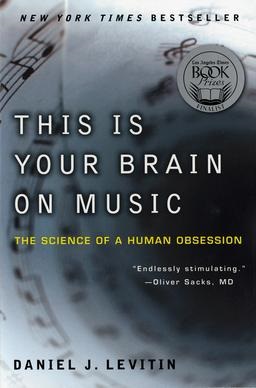
This Is Your Brain On Music BookThis Is Your Brain on Music: The Science of a Human Obsession is a popular science book written by the McGill University neuroscientist Daniel J. Levitin, and first published by Dutton Penguin in the U.S. and Canada in 2006, and updated and released in paperback by Plume/Penguin in 2007. It has been translated into 18 languages and spent more than a year on The New York Times, The Globe and Mail, and other bestseller lists, and sold more than one million copies.

Best Countries For Post Covid Study Abroad Programs

As more students are heading towards graduation each year, the struggle to get a graduate job is becoming more difficult, and students have to ensure strong CVs in order to stand out from the crowd.  The Covid pandemic has put a halt to students having options in countries other than their own. However, with a bit of luck, the pandemic will continue to end and travel restrictions will be eased. When that happens, international students will finally be allowed to return to studying abroad, learning new skills and experiencing new cultures.

Although this may be seen as one long holiday to those not in the know, those that study abroad will, in fact, have a higher starting salary, earning an extra 5% more than those who don’t. On average, this could amount to an extra £75,000 ($126,709 CDN at time of this article)  over a career.

Study Abroad Graduates

Not only will they earn more, they are also almost ¼ less likely to be unemployed after graduation. So although all study abroad programs come with a cost, with readily available bursaries, this opportunity is accessible to any student who is hoping to boost their employ-ability and is an opportunity that should be taken.

Business and Finance Students – China: As the second largest economy in the world, China offers endless business opportunities, whilst encouraging students to learn the most widely spoken language in the world, Mandarin.

Business and Finance Studies in China

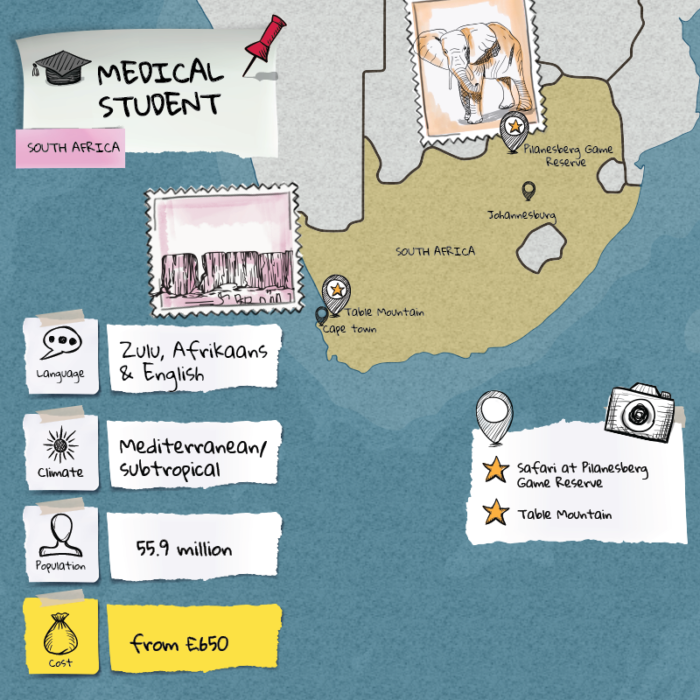
Medical Students – South Africa: Of the 234 million surgical procedures made every year, just 4% of these happen in the poorest third of the global population. When medical students choose to volunteer in South Africa, they will gain experience in a different medical setting, and all whilst giving back.

Medical Student study in South Africa

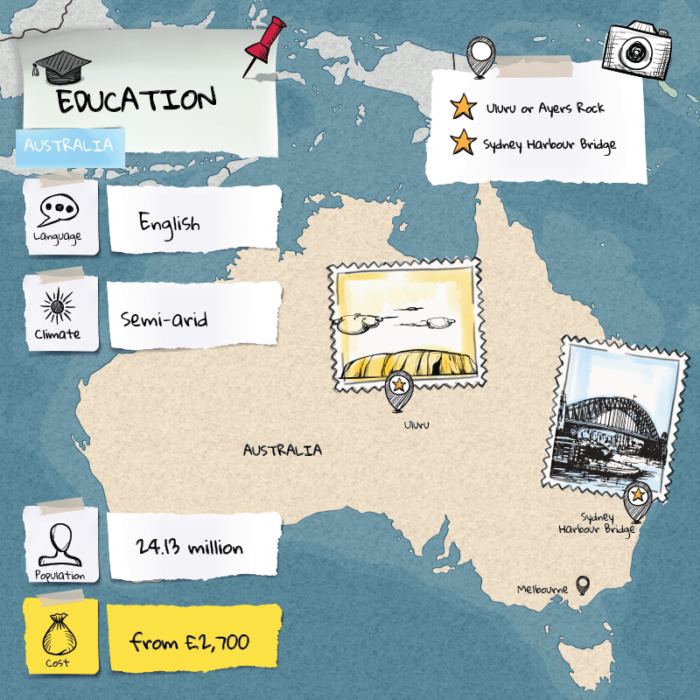
Education Students – Australia: As an English-speaking country, Australia is the perfect study abroad opportunity for future teachers. With the average UK class size standing at 30 pupils, the Australian’s average size of 16 will be a lot easier to manage. Plus for those who decide to stay in Australia long-term, new teachers can expect to earn £40,000+ ($67,572 CDN) compared to the £22,000 ($37,164 CDN) starting salary in the UK.

Education studies in Australia

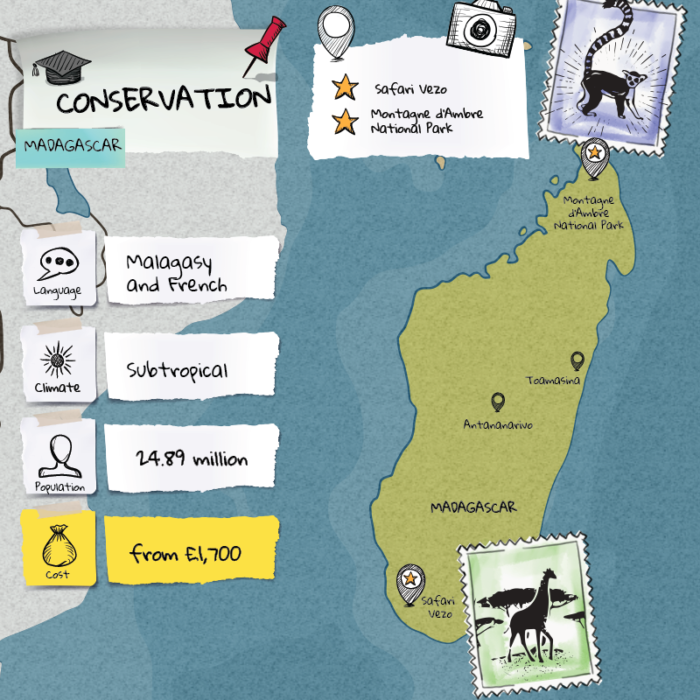
Conservation – Madagascar: Conservation is a growing industry as concern grows for animals and the environment. As the fourth largest island in the world, and as home to species not found anywhere else, Madagascar is the perfect opportunity for a once in a lifetime opportunity for conservation enthusiasts.

Conservation Studies in Madagascar

Art & Design Students – Italy: From ancient and classic sculpture to modern day art, Italy is the perfect place to learn and gain an even greater passion for art history.

Art and Design Studies in Italy

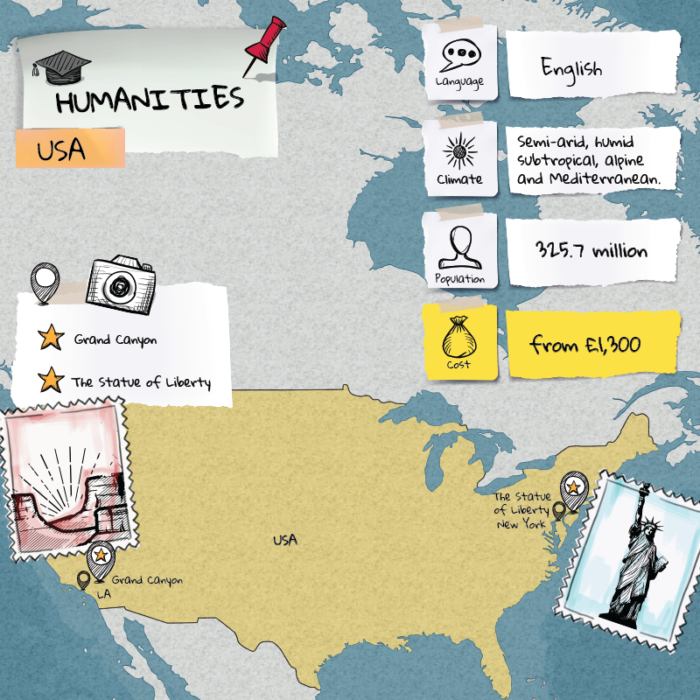
Humanities Students – USA: With three of the top five humanities universities based in the USA, America offers a vast array of historical and literary studying options. This time abroad will open up options for students who are wanting to work in academia, journalism or teaching.

Humanities Studies in the United States
For the Silo, Bekki Ramsay/storageworld.

High School Student Dropped Out Joins Tech World Via Coding School

CodingWhat happened when Katya Eames, a 16 year old female dropped out of High School and joined the tech world by enrolling in a coding school?

Joe Eames, her father, is a successful programmer. He believes in empowering youth and females, through technology. He got his daughter involved in some basic exposure to programming and web development. The more she got involved, the more empowered she felt.

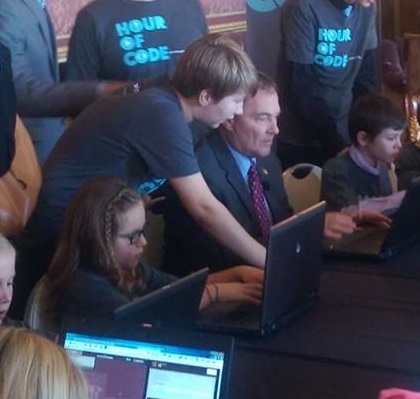
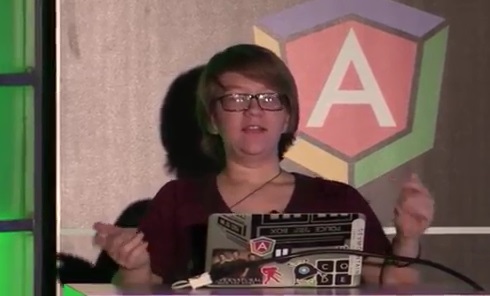
Katya was selected to speak at one of the largest recent gatherings of web developers, ng-conf. Following, she attended an event where she taught Governor Herbert of Utah how to code.  Katya will complete her high school requirements using an online high school.

Katya teaching Governor Hubert how to code.

What are the thoughts of a high school age female about dropping out of school to attend DevMountain, a coding school in Utah?

  1. What do you think was missing from your High School experience in terms of your personal interests?

What I think was missing from my high school experience was the ability to actually learn, and to try new things and grow at your own pace. It seemed less like they wanted you to learn, and more like they wanted you to pass tests.

  1. Was it difficult to transition to coding school at your age?

    It was. In high school it was easy for me to not pay much attention and do my assignments at the last minute but still get relatively good grades. Then at DevMountain, I had to manage myself and had no grades to try and earn. It was definitely very different from high school.

Computer Code

  1. How important was the role of your father, a professional programmer, in helping you make your decision?

    He was really important in my decision because he was an example of how successful I can be doing something I love, and he was really supportive of me choosing to do it though it’s not the normal way to go about getting an education.

  1. Are you finding the online, high school learning experience something you can easily handle?

    I haven’t started yet, but from what I’ve seen and heard from friends who do online schooling, it seems to be much more my speed than traditional public schooling.


  1. Would you encourage other members of your generation to think about their options while still in high school, and perhaps go into coding?

    Definitely. You should explore your options as much as you can in high school, even if it doesn’t seem like something you would like. You never know when you’ll discover something you seem to have a natural talent/understanding for, or something that excites you that you never thought to pay attention to (or especially something you thought only those of the opposite sex are supposed to do).

  1. Do you think that members of your generation are particularly adept with computers and likely prospects for a coding school experience?

Start Coding

    I do. Those in my generation, and the younger Millennials, have grown up with technology always nearby. We know how to use it and we understand newer technology easier than others. Everyone in my generation has ideas on how to make our world better for us and our siblings and our future children. Programming and computer sciences, along with the other sciences, are great ways for us to advance the world in the direction we want it to go.

  1. Have you begun to make an income with your coding knowledge?  Are you in the market for a coding job as an employee or contractor?

    I have started making an income, not solely on my programming, but also on my unique views as someone who wants to know what they want to do in life at a young age in has taken a very untraditional route to pursue that career. As of now I am in the market for smaller projects while I finish school and continue learning.

Click to watch Katya's address at this years ng-conf
Click to watch Katya’s address at this years ng-conf

  1. What do your friends think of this, leaving high school and learning a skill early on in life where you can make an income?

    Some of them were worried first about my sudden decision to drop out of school in the middle of my junior year, but now they’re all very supportive of me and think it’s really cool that I’m able to pursue what I want to do. (though they all have the same complaint of missing me at school.)

  1. Lastly, what are the ideal personality characteristics for a young person to become involved and succeed at coding school?

    They need to be willing to push themselves and manage their own time. They also need to be able to be critiqued regularly by those who are more experienced than them and know that most, if not all, critiques are done with good intentions. You need to be willing to continue learning. Technology is always changing, and so the languages we use to program that technology have to constantly adapt. You never know everything there is to know when you’re a programmer.

About DevMountain

DevMountain started in 2013 in Utah. With over 300 graduates, two campuses, and six course offerings, DevMountain is the largest coding/technology school in the Intermountain West, and one of the highest rated coding schools in the United States.

Supplemental- Could Amazon’s AWS Lambda signal a new future for ‘automated coding’?

Click to view on I-tunes

Ways To Retrain And Put Your Adult Brain Back In Charge

Jungian Psychology uses art-therapy, dreams and imagery in mapping personal and collective unconscious, archetypes and complexes. Jung believed that there were fears and thoughts that children and adults exhibit that are "remarkably similar across time and culture" (allpsych.com) image: skycladtherapist.files.wordpress.com
Jungian Psychology uses art-therapy, dreams and imagery in mapping personal and collective unconscious, archetypes and complexes. Jung believed that there were fears and thoughts that children and adults exhibit that are “remarkably similar across time and culture” (allpsych.com) image: skycladtherapist.files.wordpress.com

The human brain is a wonder of the universe, but our understanding of it can seem contradictory, says Steven Jay Fogel, author of the book Your Mind Is What Your Brain Does for a Living.

“On the one hand, we’re often told of those crucial years that our brain develops in childhood, when we’re rapidly progressing in development of our language and other skills, and our preadolescent and teenage years, when our brains undergo a sort of second Big Bang of learning,” says Fogel, (www.StevenJayFogel.com).

“But although it may seem that the brain is pretty much set by adulthood, it remains malleable throughout adulthood; it continues to change as we learn and adapt.”

Most of us are unaware that elements of our inner child’s development are constantly tugging at us, and we don’t have a clue that it’s happening, he says. In Jungian therapy there’s a concept called the dark side, or shadow side, the place in our unconscious to which certain feelings and thoughts are banished because they don’t support our image of ourselves, he says.

Steven Jay Fogel is a longtime student of human behavior and development.
Steven Jay Fogel is a longtime student of human behavior and
development.

“That is our inner child responding to the emotional pain we experienced and interpreted with the limited understanding we had when we were very young. It continues to steer our reactions and behavior as adults, often in inappropriate ways,” Fogel says.

Awareness creates an opportunity for change. Fogel reviews how our adult brain can take command of the inner child:

• Recognize the elements of your self identity that keep you trapped. Our identity – how we want the world to see us – develops, in part, as a response to avoiding pain. Our identity may change from one situation to another (in the same way a chameleon changes its body color to match its surroundings) as we slip on the persona we believe is expected in a particular environment or social setting. This automatic behavior is the opposite of making mindful choices, and it robs us of the joy of living in the moment and inhibits spontaneity.

• Be aware of when you’re acting. Many of us live our lives as though we’re playing parts in various movies, navigating different storylines every day. You may be the righteous Clint Eastwood manager at work and then shift into the town drunk during happy hour, and later the loving husband and father during brunch the following weekend morning. When you’re playing these roles, you’re not in the present.

Be skeptical of what the voice in your head may tell you. It’s not easy to recognize and quiet the mental chatter associated with the different roles we play. We’ve become so accustomed to the voice in our head, that we don’t realize its messages are programmed – and not necessarily the truth. Is your voice telling you to feel guilty? Ashamed? Angry? Is that rational? If not, it may be your inner child acting out of a childlike fear.

“Instead of simply responding to what we’re hardwired to think and react, we can hear, in mindful repose, those promptings as simply chatter,” Fogel says. “When you’re mindful, the inner child’s chatter can be seen for what it is, and you will be free to take a more mature directionin your day-to-day living.”

Steven Jay Fogel is a longtime student of human behavior and development; he has studied with psychologists, educators, and rabbinical scholars. Your Mind Is What Your Brain Does for a Living, (Greenleaf Book Group Press, 2014), is his third book. He is also the author of My Mind Is Not Always My Friend: A Guide for How to Not Get in Your Own Way (Fresh River Press, 2010) and The Yes-I-Can Guide to Mastering Real Estate (Times Books-Random House). For decades he has been an active participant in the human potential movement, inspiring and mentoring others to seek their true selves. Fogel is a principal and cofounder of Westwood Financial Corp., one of the largest owner-operators of retail properties in the United States. He is a licensed real estate broker and past chairman of the California Arts Council.

Supplemental- Synchronicity is the experience of two or more events that are apparently causally unrelated or unlikely to occur together by chance, yet are experienced as occurring together in a meaningful manner. The concept of synchronicity was first described in this terminology by Carl Gustav Jung, a Swiss psychologist, in the 1920s.
The concept does not question, or compete with, the notion of causality. Instead, it maintains that just as events may be grouped by cause, they may also be grouped by meaning. A grouping of events by meaning need not have an explanation in terms of cause and effect.

Click to view on I-tunes

Better Colleges And Better Universities Equal Better Jobs

"Career colleges have a strong proven track record and are among our province's most efficient paths to employment. They should be rewarded by a reduction in the costly and time-consuming regulatory burden they currently experience so they can be freed to take on students looking to gain access to the job market." Barrett image: thewordforge.com
“Career colleges have a strong proven track record and are among our province’s most efficient paths to employment. They should be rewarded by a reduction in the costly and time-consuming regulatory burden they currently experience so they can be freed to take on students looking to gain access to the job market.” Barrett Image: thewordforge.com

When I wrote this, Ontario was in the midst of an unprecedented jobs crisis and in need of sensible and affordable solutions. One avenue is to improve our colleges and universities.

Ontario’s system of higher learning must reflect the requirements of jobs in the present and the future. And it must reflect today’s economic realities.

Students recognize an academic education is often not enough – it must be coupled with employable skills. Some 80 percent of college applicants cite “career preparation” as a major reason for enrollment – something they may not have considered when they were making their post-secondary choices in high school.

The path from high school graduation to employment is often far longer and more expensive than it needs to be, thus inefficient for both the student and taxpayer.

Currently 35 percent of all new jobs in Ontario go to college graduates and apprentices, and only 26 percent go to university graduates. Many university students end up in the college system after learning how adept it is at teaching job-ready skills. To encourage more students to choose college first, we must create more options and paths for these students and improve the credit transfer system in Ontario. This would allow for part of the degree to be done at the college level and part of the education delivered through a university.

By improving the credit transfer system using online education to create bridging courses between institutions, students who take a course at one institution can be brought up to speed at another – – smoothing the move between institutions that deliver different course content. The online courses should be designed to assess whether students meet the standard at the new institution, whether they are moving from a college to a university or from a university to another university.

Language labs have shown that technology is effective for educating, distant or not. In this photo, Undergraduate Ted Glomski, a third-year Chinese student, practices writing Chinese characters on a tablet PC computer in the Learning Support Services (LSS) Language Learning Lab. For fifty years, LSS has provided technology support to language classes, evolving from the language tapes and foreign films of old to mp3s, DVDs, wikis, blogs and touchscreens. photo: Michael Forster Rothbart

We need to be creative with programs that meet the expectations of students but also offer them at an affordable price.

In response to the growing demand for online learning, university and college programs can be taken at home using the internet. Universities and colleges do offer degree programs online that are flexible, cost effective and allow you to learn on your own time. They feature online instructors who help and provide feedback as you progress through the course.

We should encourage colleges to offer applied three-year degrees and limit the proliferation of four-year degrees in the college system. For example, a Bachelor of Applied Technology Degree is designed to teach leadership roles in the construction industry – – a program that meets a job market need, and is clearly suited to the college sector. Encouraging more three-year degrees like this one would allow colleges to cater to a student market looking for strong credentials without creeping into the degree market best served by universities.

Career colleges have a strong proven track record and are among our province’s most efficient paths to employment. They should be rewarded by a reduction in the costly and time-consuming regulatory burden they currently experience so they can be freed to take on students looking to gain access to the job market.

With these sensible and affordable solutions, improving Ontario’s colleges and universities will most certainly lead to better jobs. For the Silo, Haldimand-Norfolk MPP Toby Barrett.

Supplemental- Online learning in Ontario http://www.ontariolearn.com/en/

Natural World Immediacy A Rare Concept

Immediacy? “Nothing important comes into being overnight; even grapes or figs need time to ripen. If you say that you want a fig now, I will tell you to be patient. First, you must allow the tree to flower, then put forth fruit; then you have to wait until the fruit is ripe. So if the fruit of a fig tree is not brought to maturity instantly or in an hour, how do you expect the human mind to come to fruition, so quickly and easily?” -Epictetus

The Worm (2008) and Watershort (2008) are time-contemplative short films by Canadian sound and visual artist Jarrod Barker.

In the natural world, immediacy is rarely a concept. While it is true the Mayfly lives only for a day, it is also true that each fly is one infinitesimal link in the long succession of the species. As humans have increasingly stepped beyond the boundaries of nature, we have begun to forget the importance of waiting and patience. We live surrounded by cheap treasures gotten easily and quickly. But like the Mayfly, these spoils of instant gratification perish quickly leaving us desiring more. No longer do we answer to the rhythm of nature, preferring instead to force the world to step up to our breakneck pace. All the while we are saturated with reminders that “good things come to those who wait” but too often choose to ignore this time tested wisdom.

Stefan Klein works in Berlin. Presently he is examining the concept of waiting. To this end, he has conducted quite a lot of field research. Waiting, he says, “is something that’s so routinely existing in our daily lives but at the same time has this very existential dimension to it so that almost everybody can relate to it but at the same time it’s a very abstract topic.” Another project, titled Introduction to Microeconomics is a book documenting Klein’s repeated ordering and return of a book by the same name. In this way, he examined documentation as a vital element of a whole work. Much of Klein’s work investigates complex systems through performative means. In September, Klein will begin a series of waiting sessions with people from various disciplines. He will meet with guests at a bus stop (a place of waiting) for a conversation. His audience will be comprised of both those who came to see the performance and those who happened to be waiting for the bus. In this way, Klein will access waiting from many perspectives.

untitled watercolor Emilie Clark 2015

Emilie Clark is a New York City based artist who spends part of the year in New Hampshire. Much of her work is based on the work of nineteenth-century natural historians and scientists, most of them women. She also explores the literal interpretation of the word ecology (earth’s household) incorporating historical texts and working in the landscape. In New Hampshire, Clark works in a floating research station surrounded by the natural world. In New York City her experience is quite different though she has noticed similarities in plant species between the two locations. From her research station, Clark collects specimens, makes sound recordings, draws, paints, preserves, and fully immerses herself in nature. This process is rooted not only in creating but in learning.

Brainard Carey

A Few Words to Keep in your Pocket

A work of art, a career, a relationship, anything worth investing our hearts and minds in, must be given time. We must relearn to wait, to fall back in step with the world around us. For the Silo, Brainard Carey.

Brainard  is currently giving free webinars on how to write a better Artist bio and statement and how to get a show in a gallery – you can register for that live webinar and ask questions live by clicking here.