
“The future is not inherited, it is engineered”.
Building Blocks of the Global Economy Are Changing
The architecture of the global economy is undergoing a profound structural redefinition. What once existed as parallel and independent industries—diplomacy, luxury, artificial intelligence, and space exploration—has begun to converge into a single, interdependent system of influence. This transformation represents more than technological progress; it signals the emergence of a new civilizational framework: the Global Innovation Era.
At its foundation, this era is defined by integration over isolation, ecosystems over sectors, and strategic alignment over fragmented competition. Power is no longer concentrated solely within governments or multinational corporations. Instead, it is distributed across highly interconnected global networks that span continents, disciplines, and spheres of influence.
A New Global Lattice
From Russia’s engineering depth to the United States’ leadership in technological innovation, from Australia’s research capabilities to Dubai’s infrastructural ambition, from Monaco’s concentration of capital and luxury to the Caribbean’s strategic positioning in global lifestyle and investment markets—a new global lattice is taking shape. This system is not accidental. It is being deliberately constructed by a new generation of leaders who understand that the future belongs to those capable of connecting what was never designed to be connected.
Redefining Diplomacy: From Statecraft to System Leadership
Diplomacy in the 21st century has evolved beyond traditional political negotiation into a multidimensional instrument of global coordination. It has become a form of system leadership—the deliberate construction of trust frameworks that enable cooperation across governments, industries, and cultures.
Today, diplomacy operates across multiple strategic layers:
- Economic diplomacy shaping cross-border capital and investment flows
- Technological diplomacy governing artificial intelligence, data ecosystems, and cybersecurity
- Cultural diplomacy influencing global perception, identity, and soft power
- Environmental diplomacy aligning international sustainability strategies
- Educational diplomacy building intellectual capital and global talent pipelines
In this expanded capacity, diplomacy is no longer reactive—it is generative. It establishes the conditions necessary for innovation ecosystems to emerge, scale, and sustain. Without it, global integration fragments into inefficiency and instability.
Luxury as a Strategic Engine of Influence
Luxury is no longer simply a sector of consumption—it is a strategic engine of global influence. It operates as a high-level signaling system that defines aspiration, sets standards, and increasingly prototypes the future of human experience.
Across haute couture, fine jewelry, ultra-prime real estate, private aviation, yachting, and bespoke services, luxury functions as a controlled environment for innovation. Emerging technologies—particularly artificial intelligence—are first deployed in these high-value ecosystems, where personalization, precision, and exclusivity are paramount.
Luxury now serves as:
- A driver of experiential and design innovation
- A curator of global cultural capital
- A bridge between heritage and technological advancement
- A platform for integrating advanced technologies into human-centered environments
Its influence extends far beyond its economic footprint. By shaping perception, it indirectly shapes global demand, behavior, and market direction.


Artificial Intelligence: The Cognitive Infrastructure of the Global Economy
Artificial intelligence has become the defining infrastructure of modern civilization. It is not a supplementary tool—it is the cognitive layer upon which global systems are increasingly built.
AI is transforming:
- Decision-making, shifting from reactive processes to predictive intelligence
- Operations, transitioning from manual systems to autonomous networks
- Value creation, moving from resource-based models to data-driven economies
Its applications are systemic:
- Global supply chains that optimize themselves in real time
- Financial ecosystems that anticipate volatility and opportunity
- Creative industries enhanced by generative intelligence
- Communication systems that eliminate linguistic and geographic barriers
- Security frameworks capable of responding to complex, evolving threats
In this context, AI becomes the invisible architecture of the global innovation ecosystem—quietly orchestrating complexity at scale.
Space: The Expansion of Economic and Strategic Territory
Space is no longer a symbolic frontier—it is an active extension of the global economy. Its commercialization introduces a new dimension of infrastructure, connectivity, and geopolitical relevance.
This expansion includes:
- Satellite networks enabling global communication and digital infrastructure
- Earth observation technologies transforming environmental and resource management
- The rise of space tourism as a new frontier in ultra-luxury markets
- Advanced research in microgravity environments
- Navigation, defense, and security systems with global strategic implications
Space represents the vertical expansion of economic activity—where technological ambition, geopolitical influence, and commercial opportunity intersect at the highest level.
The End of Silos: The Emergence of Integrated Global Ecosystems
The defining characteristic of the Global Innovation Era is not isolated advancement, but systemic integration.
A single initiative today may require:
- Diplomatic coordination across multiple jurisdictions
- AI-driven operational intelligence
- Luxury-level experience design
- Space-based infrastructure support
This convergence marks the نهاية (arabic: nihayat english: the end) of siloed thinking. The most significant breakthroughs no longer occur within industries—they occur at their intersections.
The result is a new paradigm: the ecosystem as the primary unit of value creation.
Within these ecosystems:
- Investors, engineers, diplomats, and creatives operate within unified networks
- Knowledge flows seamlessly across domains
- Innovation accelerates through collaboration rather than competition
This is not incremental evolution. It is a fundamental reconfiguration of how the global economy functions.
The Rise of the Multidisciplinary Global Leader
At the center of this transformation is a new leadership archetype—one defined not by specialization alone, but by synthesis.
These leaders:
- Build influence through global networks rather than hierarchical structures
- Navigate fluidly between public and private sectors
- Combine technological expertise with geopolitical awareness
- Design ventures with immediate international scalability
- Leverage digital infrastructure to operate without geographic limitation
They understand a critical reality: in a connected world, proximity is no longer physical—it is strategic.
Their advantage lies not in isolated knowledge, but in their ability to connect knowledge across systems.
Global Nodes of Influence
The emerging global ecosystem is anchored in interconnected regions, each contributing unique strategic value:
- Russia contributes engineering excellence and scientific depth
- The United States leads in technological innovation and capital markets
- Australia connects research and sustainability with Asia-Pacific growth
- Dubai exemplifies large-scale infrastructure and global business integration
- Monaco represents concentrated financial power and luxury influence
- The Caribbean offers strategic positioning in tourism, investment, and maritime economies
Together, these regions form a distributed but unified network. Their collaboration defines the speed, direction, and scale of global innovation.
Merit in the Age of Global Connectivity
One of the defining shifts of this era is the redefinition of opportunity. While structural barriers remain, access to global platforms, knowledge, and networks has expanded significantly.
However, access alone is no longer a differentiator. Execution is.
Success now requires:
- Intellectual rigor
- Strategic clarity
- Adaptability in complex environments
- Long-term discipline and resilience
Potential may be universal—but meaningful achievement remains highly selective.
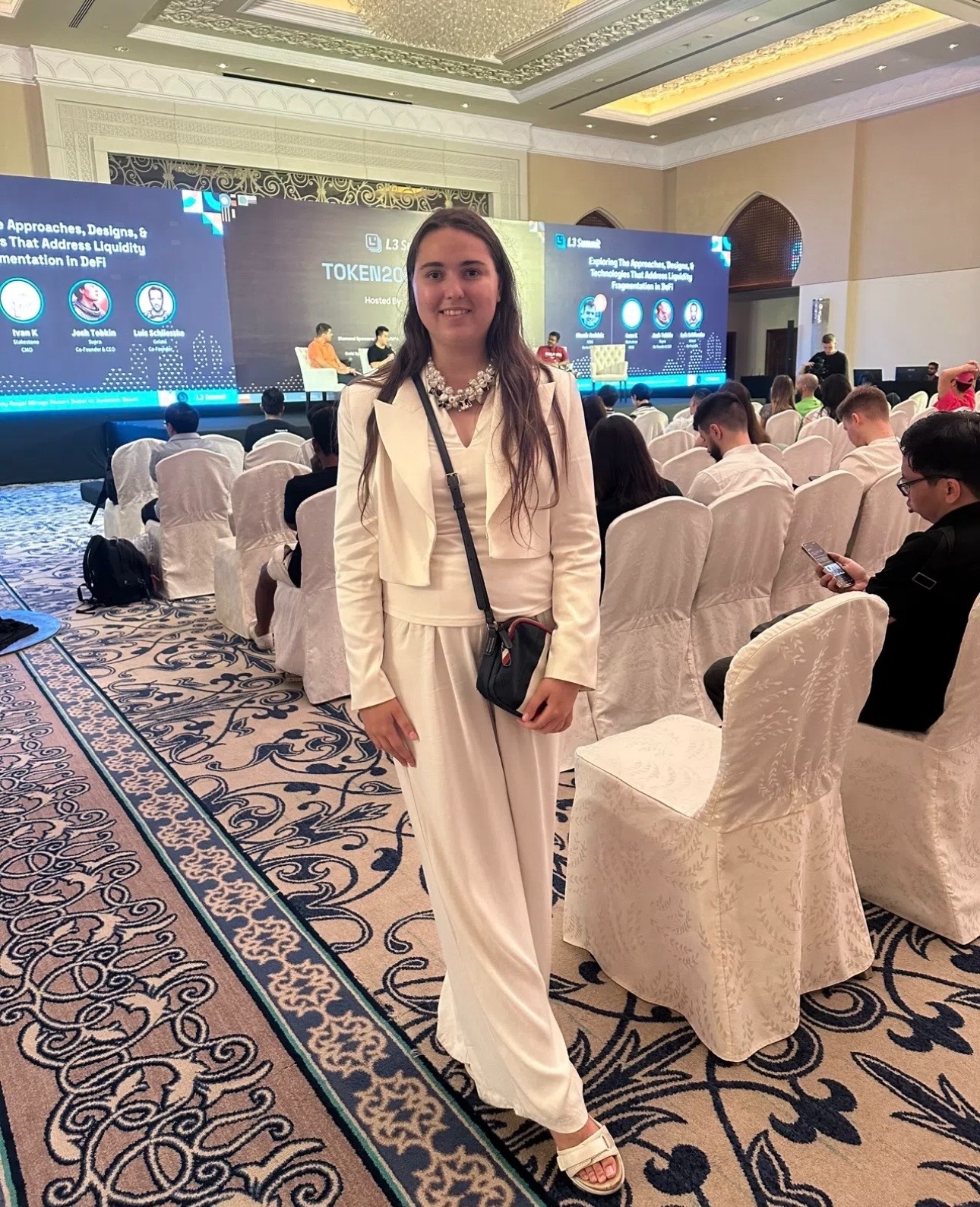
Founder Spotlight: Aleksandra Sokolova and the First Royal Global Ecosystem
At the forefront of this transformation stands Aleksandra Sokolova, founder of the Royal Global Ecosystem—the first integrated global platform of its kind.
This ecosystem represents a pioneering model that unites diplomacy, global luxury, artificial intelligence, space innovation, and international collaboration within a single strategic framework. It is not a conceptual alignment, but a structured, operational system designed to function across sectors and borders simultaneously.
Within this ecosystem:
- Diplomacy enables trust, access, and international partnerships
- Artificial intelligence drives efficiency, scalability, and intelligent systems
- Luxury defines experience, positioning, and global influence
- Space innovation expands infrastructure, connectivity, and future opportunity
The Royal Global Ecosystem establishes a new category of global architecture—one in which industries no longer operate independently, but as interconnected components of a larger system.
For the Silo, Aleksandra Sokolova.
Aleksandra Sokolova’s role reflects the emergence of a new class of leadership: system architects. These are individuals who do not simply operate within existing frameworks, but design entirely new ones.
Her work demonstrates a defining principle of the modern era: the future is not inherited—it is engineered.
Conclusion: The Age of Global System Architects
The world is entering an era defined by complexity, interdependence, and accelerated transformation. Linear strategies and isolated thinking are no longer sufficient.
What defines success now is the ability to:
- Think systemically across industries
- Operate globally across borders
- Build integrated structures that connect people, technologies, and markets
The next chapter of global development will not be led by those who react to change—but by those who design the systems through which change occurs.
In the Global Innovation Era, the ultimate advantage belongs to the architects—those who see the entire system and possess the vision, discipline, and capability to build it.