Tag Archives: copper

Clothes From Future Now Available Including Faraday EMI Blocking Jacket

Vollebak Logo

Don’t worry, we will get to the jacket- but first the story starts in 1836 in Victorian England. And it you weren’t there you didn’t miss anything. It included a grumpy-looking queen, bad weather, a lot of sexual repression, and rich people throwing buckets of human waste out of their windows. 

On the plus side it also had a bunch of scientists running around like kids on acid. One of them was Michael Faraday – Victorian England’s answer to David Blaine.

Over the last 190 years the Faraday cage has gone from a crazy Victorian scientist sitting inside an electrical storm, to critical black-ops architecture, to a wildly experimental jacket that looks like it’s emerged from a craft in Dune.

A Faraday cage at the US Bureau of Standards (now NIST) used to protect delicate measuring instruments from electromagnetic fields.

Now Michael was a showman. But instead of freezing himself in ice, or suspending himself in a glass box, his trick was making super abstract physics feel tangible. And his greatest stunt of all was standing inside an electrical storm. In front of a packed out theatre at the Royal Institution in Mayfair, Faraday lined a large wooden box with metal foil, hit it with discharges from high voltage electrical machines… then calmly stepped inside. Sparks crackled across the outside of the enclosure. Blue light crawled over the metal skin. Faraday meanwhile stood there in silence. Like the final boss. While the energy simply flowed around him.

It might have looked like he’d built his own supersized coffin – complete with all the necessary equipment to kill him – but it turned out Faraday understood equations as well as he understood spectacle. 

  • Made from approx. 50% copper
  • Blocks electromagnetic waves from 0.2GHz to 14GHz
  • Eight-pocket defensive storage system with shielding flaps

By the time he stepped into his foil-lined cube, he’d already spent years dismantling older ideas of electricity.  

A Faraday cage isn’t a wall. It’s a detour. When an electromagnetic field hits a conductive enclosure, the free electrons inside it immediately start to flow, redistributing themselves across the surface until the field inside is cancelled out. Build the right shape from the right material, and electricity behaves like water flowing around a rock.

It’s one of the simplest demonstrations of how matter tells fields what they are allowed to do. The impact of Faraday’s experiment quickly escaped the lecture hall – because the Faraday cage didn’t just deflect static charge, but whole regions of the radio frequency and microwave spectrum.

The principle was applied in bunkers, test chambers and secure rooms. Then in spacecraft, data centres, radar installations and intelligence facilities, where even a stray spike of interference can crash systems or corrupt data. Today our Faraday Cage Jacket is a descendant not only of that wooden box, but everything that followed in its footsteps. It’s the same physics. Just shrunk. Softened. And wearable. And you can join the waiting list here.

We designed it from scratch, using the principles of clothing and electromagnetic infrastructure at the same time.

And this is what transforms it from a pure physics experiment, to an object that looks like it’s just emerged from a craft in Dune. Most of us spend our lives today inside a semi-permanent yet completely invisible electromagnetic fog: radio waves from antennas. Microwaves from routers. Radar from aircraft. Signals bouncing between satellites, phones, vehicles and buildings.

So the first Faraday Cage Jacket treats that electromagnetic energy the same way someone climbing Everest would treat cold weather – as something you can defend against, and insulate yourself from.  It blocks electromagnetic waves across the 0.2–14GHz range. This includes all the unseen wiring of the digital age: WiFi at 2.4GHz and 5GHz. Bluetooth at around 2.4GHz. Mobile networks. As well as higher-frequency Ku-band satellite and radar systems. In lab testing the material reaches shielding effectiveness figures of up to 92 dB – for reference this is the kind of level normally associated with secure infrastructure and electromagnetic test laboratories.

Every seam and every opening affects how energy moves across the jacket.

So the job of the design is to manage those electromagnetic fields. 

And that’s why the jacket is built from large, faceted spaceship-style panels and snap-down flaps. Overlapping sections create layered shielding zones and add 10 – 20 dB more attenuation. Each overlap is another place for energy to be redirected – another chance to keep it moving around the body instead of through it.

The jacket’s eight pockets are designed the same way. Instead of flat bags stitched onto a shell, they’re three-dimensional, origami-like bellows pockets that form enclosed volumes that behave less like pockets and more like small rooms – put a device inside one of these pockets and it’s almost impossible to track, hack or even call. So if you’re looking to shield yourself from the dystopian conditions our future digital overlords set – whether that’s surveillance, space radiation, or select parts of the electromagnetic spectrum – the Faraday Cage Jacket belongs in your future.

Technical Details

Outer material: Shieldex® Kiel + 30 non-woven shielding textile

Material composition: 48% copper, 46.5% polyamide, protective acrylic coating

Textile normally used to shield rooms and electronic environments

Shielding effectiveness: up to 92 dB in lab testing

Blocks electromagnetic waves from 0.2GHz to 14GHz

Thermally and electrically conductive

Naturally antimicrobial

Eight pockets including double-entry origami bellows pockets

Snap-down pocket flaps to add additional shielding

Two-way Riri zip

Nautical-cut hood sits flat when not in use

Engineered sleeves for unrestricted movement

For the Silo, Nick and Steve Tidball/ Vollebak.

Clothes From The Future Available Now

Vollebak Logo
Part spaceship, part shop, the first Vollebak Spaceshop launched in Copenhagen in June. Before it heads off to service nearby galaxies, our friends at Vollebak are sending it on a world tour of Earth first.
Spaceshop World Tour | vollebak.com
Over the last year our friends at Volleback have partnered with sonic powerhouse Bang & Olufsen and Saga Space Architects to build their first prototype interstellar delivery vehicle …the Vollebak Spaceshop.

The craft itself is over 1,000kg of precision engineering that offers a glimpse into a future of interplanetary kit deliveries between Earth, the Moon and Mars. It was designed with SAGA Space Architects whose work includes lunar habitats for the European Space Agency, and lighting systems to help astronauts sleep on the International Space Station. And it’s fitted with Bang & Olufsen’s iconic Beolab 5 and Beosound 2 speakers.

If you missed launch night it involved space-based clothing, Earth-based alcohol, and the sound of the Spaceshop flexing its 120 decibels of muscle with ‘Intergalactic’ by the Beastie Boys. As soon as the next destination has been selected they’ll let you know. And while you’re waiting they have 4 pieces of space-ready cargo available for testing.

It includes their Martian Aerogel Jackets which are built from the Jet Propulsion Laboratory’s hypersonic deep space parachutes that landed the last Rover on Mars – and the same aerogel that stopped it freezing in the vacuum of space, and burning up on entry. They have their awesome Full Metal Jackets engineered from 11 kilometres of disease-resistant copper that were hailed by WIRED as “the virus-killing coat of the future,” and they’ve built to explore how humans could avoid taking diseases from Earth up into space.

You’ll also find electromagnetic Shielding Suits embedded with pure silver that block WiFi, Bluetooth, Ku-band satellites and radar systems, and deflect mid and long wave infrared radiation so they can’t be seen on infrared cameras. And last up they have the world’s first Anodised Jacket. Built with metallic insulation originally engineered by NASA to stop their spacecraft freezing in space, each jacket is fused with a near-invisible layer of metal from a galvanic bath that makes you appear cold or even invisible to infrared cameras.
Spaceshop World Tour | vollebak.com

Happy Canada Day- Remembering Canada’s Penny And Why Coins Matter

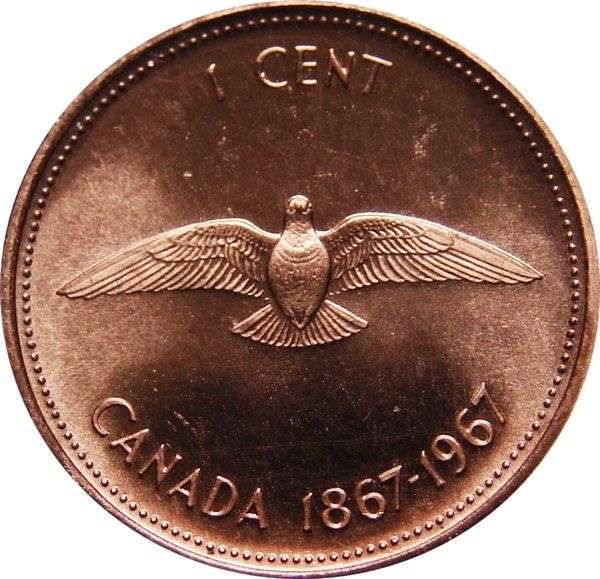
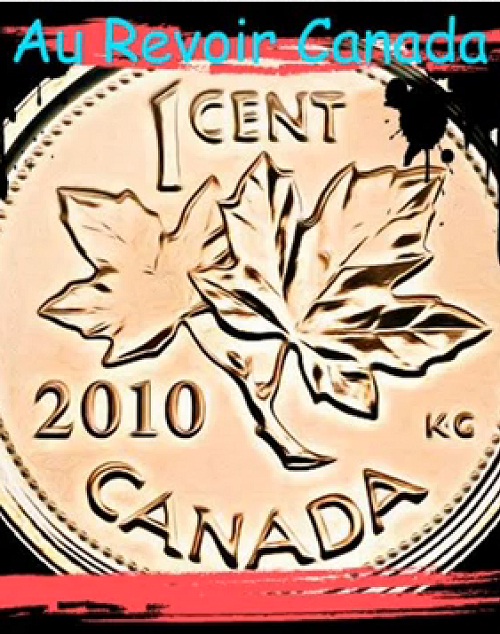
Thirteen years ago, the Canadian mint circulated fresh pennies for the very last time.

Back then I looked out the window at my favorite Café , I noticed one of the employees was sweeping the pavement. He had one of those stand-up dust pans in one hand, and a pole-like brush in the other. In the dustpan were wrappers, cigarette butts, and coins. I couldn’t believe it. Yes, it was money! I watched with disgust and dismay as pennies (which were the majority of the money) and nickels and dimes were swept into the waiting dustpan.

Then Finance Minister Jim Flaherty presses the button that stamped the last penny at the Royal Canadian Mint in Winnipeg on May 4, 2012.

Brief flashes of light came from the dust as the sunlight reflected off the coins’ surfaces.

The employee was very efficient and obviously had done this before. He walked around to the side of the Café where he emptied his dustpan filled with garbage and the “change” into a larger plastic container. “I can’t believe it!” I said out loud. “Give me a break. How can anyone just throw away change?”


The local Humane Society had a campaign asking for pennies. This was a fundraiser toward building a permanent structure for the stray animals they house, feed and adopt out. While running their campaign a few years ago, they had a large old trailer as their “shelter” and office. The fundraiser  “Pennies for Paws” was successful and with the end of the penny it may be difficult to find a replacement. With the news that the government has decided to stop minting pennies, it is even more important and applicable to see the importance of what “small change” can do for others.

Instead of throwing away all those pennies that I felt had no worth, I just put them in a container with a lid and added the label “Pennies for Paws” that I printed off from the Society’s website. I started collecting pennies in January of 2012  when I first heard of the campaign and had filled one coffee container and was working on my second one by June. My father-in-law had one at his house in Hamilton. Somehow soliciting friends and neighbors for pennies isn’t as daunting as asking for donations for other causes but with the end of the penny, charities have seen a downturn in contributions.

A friend of mine only uses paper money to pay for things.

He saves all his change which ranges from pennies up to Toonies. He deposits this money into jars and cans. When his vacation time comes around in August, he has enough money to take his wife and four kids away for much needed “family time.” He has accumulated $1,500-$2,000. Making a habit of saving “change” not only helps with expenses later, but it makes you feel as if you are getting a “bonus” every year from your work.

A few years ago, I parked at the end of the large parking lot of my favorite grocery store and was walking toward the front door. As I neared the entrance, I noticed people going in the store seemed to be streaming to the left or right of the main entrance. I soon saw why. A group of kids in their early 20’s were standing with their backs to the center of the front entrance flipping quarters, dimes and nickels onto the payment. These kids were throwing away all their loose change as if they were playing “Tiddly Winks” or “Beer Pong”.  “Are you throwing them away?” I asked as I got closed to this group. I’m sure I sounded upset and looked very bewildered.

“It’s only change man,” the larger kid replied to me unaware of why this would draw attention. I swooped down and picked up two handfuls of coins in front of them.

“This is stupid!” I declared. “Didn’t your parents teach you about the value of money?” As soon as I said it, I realized I sounded just like my parents. The response from the group was shrugs as they walked quietly away unaffected by my actions and questions. I counted the change and it was almost $8.00.

I had another friend several years back that I stopped associating with because his wastefulness upset me so much. One of his worst habits I witnessed was when my wife and I went over to have supper with them. He threw all the supper leftovers into the garbage along with his change he had taken out of his pockets.

I wouldn’t have believed it if I had not personally witnessed this.

He let his kids play with loose change he took out of his pockets and placed on the kitchen table, then at the end of the week, he would take it and any other coins lying around the house on other tables, floor, or on the couch, and throw it into the weekly garbage he put out on the curb. I was so upset. So, I gave him a large jar to fill and would collect it every week showing him the error of his ways, and how much money he had saved. His reply was, “Blair, you are so silly.”

For months, I would visit weekly and collect the jar of money which my friend put his loose change into, tally up the amount, and tell him the total. He didn’t care and didn’t want the change. I would replace the jar and take the filled one to the local Food Bank. They appreciated this very much and bought baby food which they always had a shortage of for the mothers who came on a regular basis.

Eventually, I felt I could no longer be involved with a person so wasteful in his life, and who set such a poor example for his children.

So everyone out there, keep and collect all your unwanted change.

There are many charities that would gladly take it. It is simple to collect with containers left by your front door, on your dresser in the bedroom, by your flat screen, or other places where you spend a lot of your time. You would be helping others, and teaching your children the importance of giving to others. All money, including “change” has value. For the Silo, Blair Yager.

Where To Sell Your Old Coins In Toronto

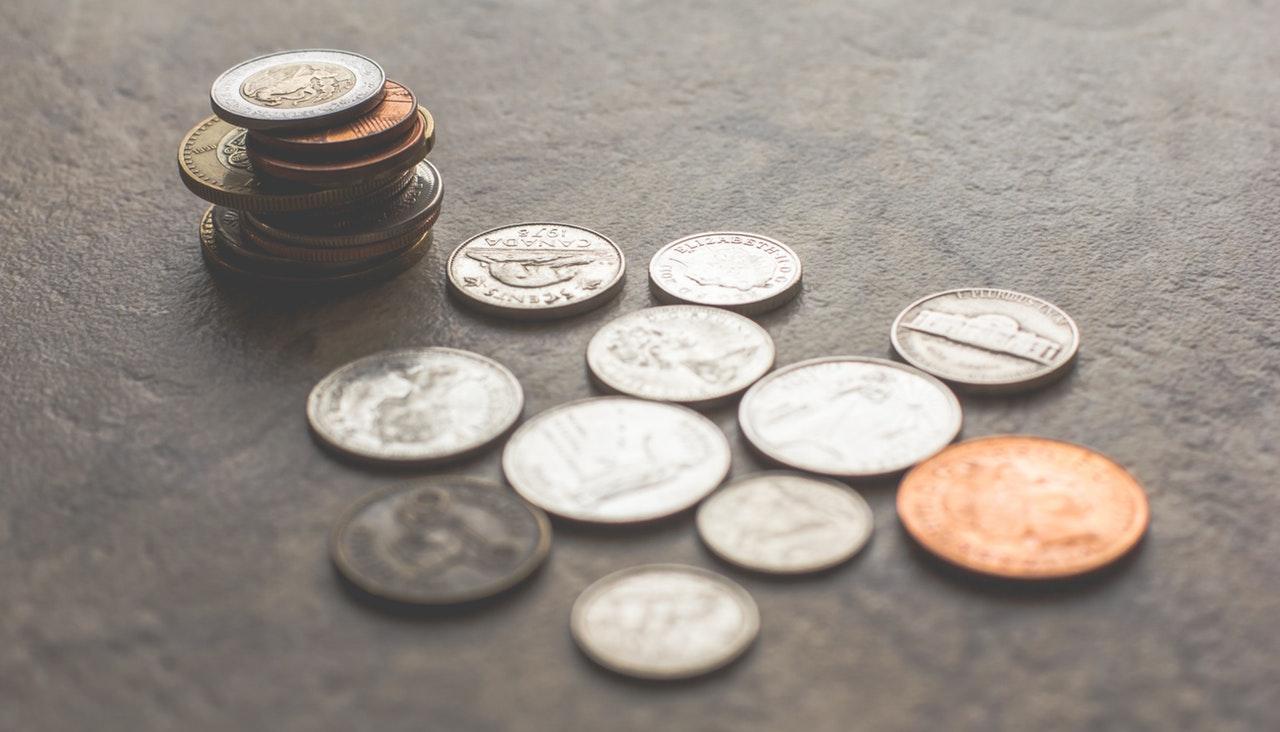
C:\Users\Renae\Downloads\amount-blur-change-1006060.jpg

There could be a number of reasons why you are looking to sell coins in Toronto. Maybe you inherited a whole bunch and you aren’t quite sure what to do with them – or maybe you are collector and want to sell off a few for a bit of extra money. You could also be someone who found a stash of old coins at home and are wondering if any are rare and can be worth something.

In either case, it’s important that you go to a trusted source that can ensure you are getting the right value for your coins. If you visit Muzeum.ca/pages/coins you will see that they offer free evaluations by experts who can tell you if you have something worthwhile on your hands.

What They Buy

This Toronto storefront of the famous Great Canadian Roadshow will buy Canadian and American coins, but because of their large network of collectors they are able to take any kind of gold or silver coin off your hands.

Gold Coins

  • Worldwide from any nation (Austrian, Mexican, etc.)
  • American – Gold Eagle, Liberty Head, Indian Head
  • Olympic
  • Centennial
  • Royal Canadian Mint

Silver Coins

  • Worldwide from any nation (Austrian, Mexican, etc.)
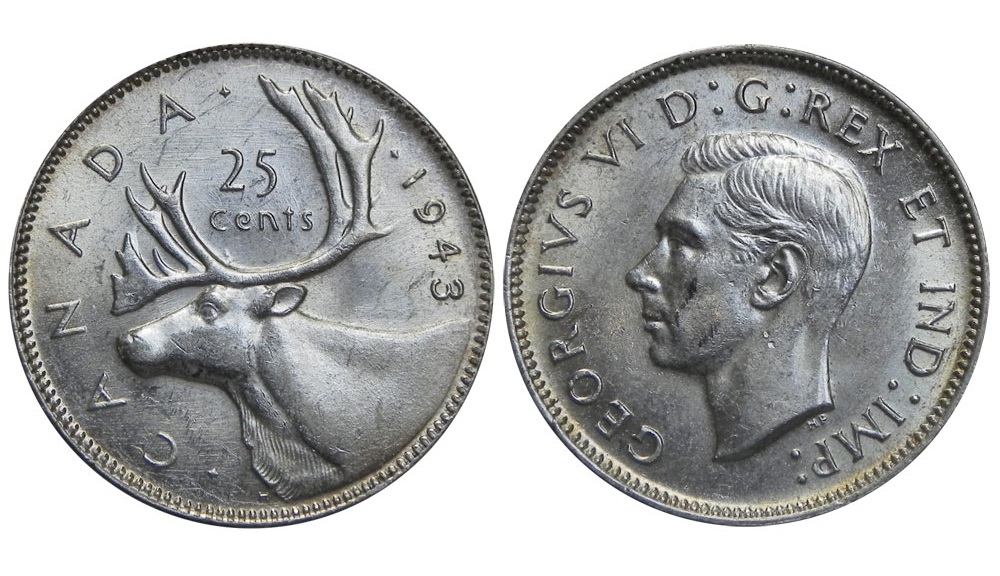
  • Canadian dated 1968 and Earlier
  • American dated 1964 and Earlier
    • JFK Half Dollars 1969 and Earlier
  • British Coins dated 1946 and Earlier 

They will also buy numismatic, commemorative, proof, and uncirculated coins.

What Makes a Coin Valuable?

There are a number of factors that go into what makes coinage valuable – precious metal content being one of them. If coinage is made of gold or silver it will be worth money purely based on the fact that it is made of precious metals.

Typically, Canadian and American coins from the mid-1960s and earlier were made of silver, making them more valuable than coinage dated later. This is because after the Great Depression it became harder to make coins out of silver, so they began to make them out of bronze, copper, and/or steel.

But even then some coins like the Canadian 1948 silver dollar (dubbed the “King of Canadian Silver Dollars”) can be worth a lot of money simply because so few of them were minted. In fact, though 18,780 coins were minted only a few are said to have survived. Therefore, rarity is another determining factor of coinage value.

Another factor is the design of the coin and whether or not there were any errors in its production. Take, for instance, the 1906 Canada “Small Crown” Quarter where the crown was printed in error with a smaller crown than what it should have. These few misprints can be worth almost $1,000.

Finally, coinage maintains its value when it is well taken care of. A scale of 1 to 70 is used to determine the grade of a coin. Mint condition, uncirculated, or dated coinage is usually rated between 65 and 70.

Only One Way to Be Sure

After all is said and done, the only way you can tell for sure how much your coins might be worth is by taking them in to get evaluated. An expert will be able to check whether your items are authentic based on multiple factors including weight, precious metals, design, and minting.

Your Electronic Goods Recycling Donations Become Bank Deposits

Used and broken electronics such as computers, cellphones, dvd players, washers and dryers still hold intrinsic value because if you were to peer inside these things you’d notice a lot of wire and circuitry. There is a surprisingly substantial amount of copper, silver and gold waiting for “the recycling”.

Consumerism- the acquisition of goods, is largely based today on electronic devices- large screen televisions or smartphones for example. Many of us feel the need to upgrade regularly: bigger screens for our living rooms and faster and more powerful phones.  But in broad terms, our discarded electronic goods contain about the same amount of silver, copper, gold and platinum as the new items we are replacing them with.

How much value are we talking about?

It is difficult to determine an exact value of gold and other precious materials in an average cellphone. This is because no two models are exactly alike, no two batteries are exactly alike.

Lux Bringer from reddit.com:

All of a sudden these, “bring your old cellphones to us so we can recycle them for you” campaigns are making a lot more sense. Sneaky bastards.

 PtrN from reddit.com:PtrN                                                                                                         

I’m not sure. I’m seeing that the average cell phone has 1/8 a gram of gold in it from other comments. At the time of this writing, CNN currently has gold going at $1650USD per troy ounce. I crunched the numbers and am seeing that there is about $6.60USD worth of gold in a cellphone. Not too bad, but I don’t know how profitable it will be after you take into account the costs of transportation and the extraction process itself.

Thoust from reddit.com:

There are other materials in a phone they can salvage besides gold

professor_fatass from reddit.com:

According to the article you also get platinum, palladium, and copper. As well as the glass and plastic which may not be worth much but it can still be recycled.

Interesting isn’t it?

Let’s consider the price of copper. Right now in Canada it is just under 4$CDN per pound. If you’re keen and want to sell your own scrap copper you will need a lot of it. An average washing machine motor has about 8$CDN worth of copper wiring up for grabs. http://www.instructables.com/id/how-to-get-tons-of-free-enameled-copper-wire/http://priceofscrapmetal.com/how-to-sell-scrap-copper-wire/

Gold!

There is gold and platinum inside computer circuit boards and hard drives. Most of the gold is an alloy or plated over another metal but at highs predicted to reach near $1,8000USD per ounce- a high volume recycling effort will pay off.

Bleepin’ Animinion from bleepingcomputer.com:

Any, true recycling effort that would be of a profitable nature needs to be EPA approved. Due to the multiple hazardous materials mixed in with the minute amounts of precious metals. As well as the highly toxic removal and heavy metals separations processes. Also as an example it would take an average of one ton of random circuit-board waste to generate one pound of gold. Add to that electronic grade precious metals are not the expensive jewelry grade high dollar metals. Therefore looking at the gold market is not the price you would get. So the profit you would make on the precious metals would be eaten up by the fees and expense of waste disposal of the one ton of hazardous useless waste product left behind after you reclaimed the precious and hazardous heavy metals. This is definitely not a a project to undertake on a small scale in your garage.

This last quote is an important thing to consider.

If you are considering dropping off your scrap electronics and appliances ask the receiving party if they are environmentally approved and a member of an Electronic Stewardship.  After all, your discarded electronics will earn a tidy sum of money for a large scale salvager. The least they can do is operate within the law and operate with an environmental conscience. But there is some worry.

The salvagers are looking for an uninformed public- they set up their marketing and advertising in a way that makes no mention of the economic benefits they stand to make.

They seldom if ever offer you a small stipend for your ‘donated scrap’ and perhaps even worse, many pose as “good deed” companies ridding us of our “broken goods” destined for the landfill. The Ontario Electronic Stewardship  is a non-profit group that overseas responsible recycling of electronics.  This Stewardship works with existing legal frameworks put in place by Waste Diversion Ontario and the 2002 Waste Diversion Act.  www.wdo.ca

Social impact in the developing world.

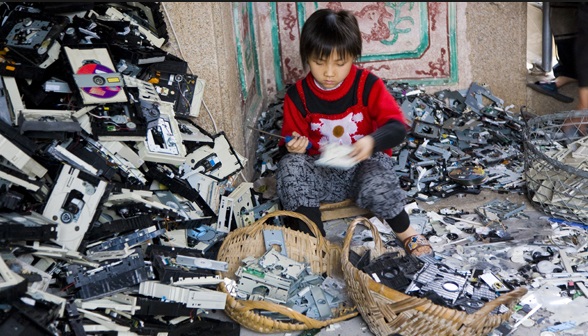
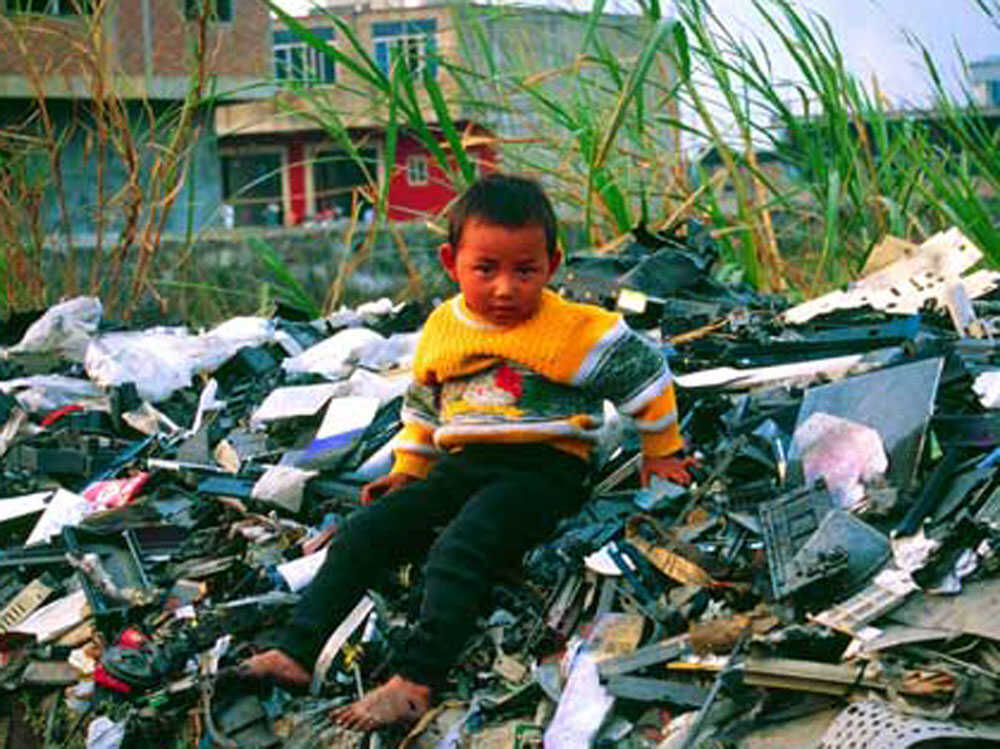
In Southern China over 100,000 people including children spend their lives dismantling discarded electronic devices for scrap metal and an unknown number are doing the same thing in Nigeria.  http://www.economist.com/news/international/21570678-growing-mounds-electronic-scrap-can-mean-profits-or-scandals-cadmium-lining

In this file photo from 2001, a migrant child sits atop a pile of unrecyclable computer waste imported to Guiya, China, from other countries.

Basal Action Network

Some players are keeping it real.

Not every electronic device recycling campaign is shady.  Increasingly, not-for-profit groups and volunteer fire departments are setting up large recycling bins with signage such as “your donated scrap metal and electronics helps fund X”. 

If you are considering dropping off discarded electronics to your local “recycling and scrap drive” ask a few questions. Where are the profits from the salvaged materials going? Is the company operating the drive aware of the Ontario Electronic Stewardship guidelines? What happens to your donated goods at the end of the cycle- are they destined for a landfill or for China?