Religious Leaders making Money from Impossible Promises: Chasing 120 Book

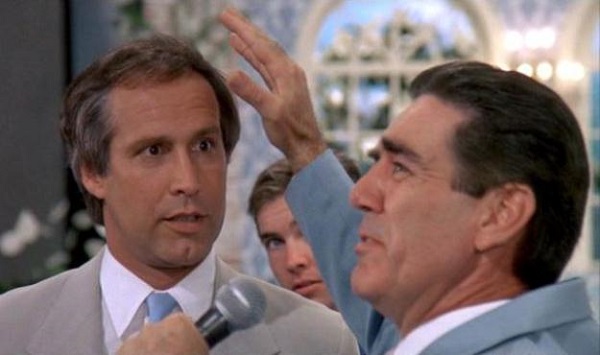
Fletch Lives

We see them on TV; dressed in impeccably-cut suits, with a picture-perfect smile and a never-ending supply of smooth rhetoric. Dr. Tyler Belknap is the epitome of a charismatic, fast-talking preacher who has convinced his cult-like following that, with the help of his Bible-based program, they will enrich their lives with maximum health and longevity.

Belknap is the lead protagonist in Monte Wolverton’s newly-released debut book, Chasing 120: A Story of Food, Faith, Fraud and the Pursuit of Longevity – a story of intrigue and truths and a remarkable tale of what can happen to people’s dreams when they put their faith in a high-profile religious leader rather than God.

From his vast Oregon-based Wellness 120 empire, Tyler Belknap charms and targets Christian consumers, influencing them to dig deep into their pockets – enticing them with Biblical-sounding promises of a healthier life following his recommended regimen.  While some believe their health is improved, others suffer serious side effects after taking his specially formulated supplements and GMO’s that are developed in a secret underground research facility in the foothills of the Cascade Mountains. But this does not deter Dr. Belknap who keeps this information from the public by bribing city officials and politicians – and who will stop at nothing to keep whistleblowers at bay.

But as much as the fast-talking doctor would like his followers to stay in a state of confusion, he’s not able to keep the negative effects of GMO’s from hitting the news and the public eye. People hear that results from studies done on lab animals cite serious findings, such as, organ damage, immune system disorders, infertility – and yes, aging! Ironically, the polar opposite of Belknap’s claims of longevity!

Since the truth eventually finds its way to the surface, readers learn that a Belknap employee and his wife find themselves at the center of a huge crisis when it’s discovered their son developed brain damage from one of the substance-laced foods. As their fragile house of cards begins to topple, they are forced to admit that the leader they have long admired is, in fact, a crook!

About the Author

An example of Monte's syndicated political cartoons.
An example of Monte’s syndicated political cartoons.

Monte Wolverton celebrates life through his creative talents as a designer, artist, cartoonist and writer.  Formerly the managing editor and design director for Plain Truth magazine, his editorial cartoons are internationally syndicated. Wolverton is an ordained minister and holds a MA from Goddard College in Vermont.  He resides in Vancouver, Washington.  

Monte Wolverton


About Plain Truth Ministries

Plain Truth Ministries invites audiences to discover authentic Christianity without the legalistic religion through online and print media, including magazines, books and radio, at www.ptm.org.

Available at online outlets and author’s website:
Chasing 120 – A Story of Food, Faith, Fraud and the Pursuit of Longevity
By Monte Wolverton
Publisher:  Plain Truth Ministries
ISBN-13:  978-1-889973-15-9


Wayne Jacobsen, author and President of Lifestream Media: “Monte Wolverton’s first novel is a heady brew of faith and finances as people’s spiritual hungers are exploited by an unscrupulous man bent on making money under the guise of making disciples. Chasing 120 will take you on a ride through the perils of greed, misplaced faith, and awakening to the truth no matter how painful. “

Dan Wooding, author, broadcaster, journalist, and founder of the ASSIST News Service: “…Having known Monte for almost 20 years, I know he has the necessary credentials and experience to write this fascinating story, filled with Christ-centered, real life lessons. [He] addresses some contemporary concerns and problems, as they might meet in a “perfect storm” with dysfunctional Christianity. This story moves and keeps the reader interested…You won’t regret reading it, and I am certain you will recommend it to friends. This story is guaranteed to both entertain you and to make you think.”

Christi Silbaugh – Freelance writer: “Chasing 120 brings to the forefront issues that surround us today, with so many people following rogue religions and corrupt politicians, instead of educating themselves, asking questions, and standing up when something isn’t right. This book is a delightful read that from the beginning to the end will have your mind wondering how much it actually parallels what is going on in today’s world with the hunger for youth and longevity at its peak. Are you chasing 120?” 



Contraband Tobacco solution requires more than Federal legislation ‘tinkering’

Illegal Cigarettes Stashed

SOLVING ILLICIT TOBACCCO  A National Strategy  There is no debate that the global trade in contraband tobacco has far-reaching implications for society. Too much evidence exists today to deny that the black market in tobacco draws in the involvement of a host of problems for public safety and national security.  Complicating the picture is the inevitable Canadian debate relative to which level of government has control over what activities and in so doing responsibility for quelling the illicit tobacco industry falls between the cracks.

The reality of the debate is much more visceral when viewed through the lenses of aboriginal rights and commercial responsibilities. Competing “constituencies” in the debate continue to pursue support by staking out scientific, social and moral positions on the smuggling and selling of untaxed and unregulated tobacco products.  The Ontario Convenience Store Association points fingers at the Canadian First Nations as the source of contraband tobacco off reserve.  Law Enforcement warns of the role of Organized Crime – up to 175 gangs and the Italian Mafioso too!  Band leaders on reserve say that it is their right to deal in tobacco all they want so long as it helps the economic prosperity of the community.  Ontario farmers blame the McGuinty Liberal Government for “ripping them off” for 69 cents for the tobacco pounds they agreed not to grow pursuant to the Tobacco Transition Program of 2008.  All in all, things are a mess!

The provisions of Bill C10, An Act to amend the Criminal Code (trafficking in contraband tobacco), which was sent to the Senate for “sober second thought” has passed Third Reading and awaits proclamation. The Bill will pass but it will leave a sour taste in the mouths of some of the Bill’s “constituencies”, including First Nations. During the Senate “consultation” process, several First Nations leaders decried the flawed consultation process with Canada’s First Nations.

Despite the progress against contraband tobacco with Bill C-10 from a law enforcement point of view, many of the conditions that support the illicit trade in tobacco remain. Save for high profile busts like the “Sweet Dreams” takedown last spring in Montreal that netted the Sicilian Mafia connection, the slow burn of the illicit tobacco trade has caused convenience store closures, stripped billions of dollars from federal and provincial tax coffers, made criminals out of law abiding farmers, and has opened new routes to marketing cigarettes to children on school grounds.


A National Approach

The solution to the many problems associated with contraband tobacco require more than just tinkering with federal legislation yet again. The complexities of the issue require a complete re-thinking of the problem of illicit tobacco and how best to deal with it.

A truly novel and potentially much more effective way of dealing with all tobacco regulation in Canada would be to appoint a National Tobacco Ombudsman (NTO) with sufficient investigative and search and seizure powers to greatly reduce or even eliminate the prevalence of illicit tobacco in Canada. To avoid any constitutional confusion, the NTO would be specifically national in scope but multi-jurisdictional in its powers and therefore a uniquely derived capability that can cross federal/provincial/First Nations lines to arrive at practical solutions.


Tobacco and Competing Constituencies

When it comes to a serious attempt to address the problems associated with the illicit tobacco trade in Canada, the solution needs to focus on four areas that need fixing. All four need to be dealt with rationally and objectively and potentially all by a properly selected and resourced NTO.

  • Law Enforcement


To date in Canada the RCMP has been afforded the mandate and financial resources to combat contraband tobacco. Unfortunately, the Mounties have been sorely inadequate to the task.  Despite RCMP press releases that take credit for illicit tobacco busts, two realities remain.  First, most of the Mounties believe that stopping the flow of contraband tobacco is an insult to their mandate as Canada’s federal police force.   Instead of trying to convince the RCMP that this is important work for them to pursue, it would be better to shift law enforcement to local and provincial police forces and provide them with the manpower and financial resources they need to investigate and pursue offenders.

Besides pursuing organized crime groups and chasing terrorism-related financial networks, there are many other, less sexy law enforcement activities that need to be attended to in order to fully address the contraband problem. For one example, enforcing the regulations that control the production and distribution of tobacco are provincial matters but require the monitoring and investigative expertise that comes with experienced and trained law enforcement personnel.

A NTO should be given the mandate to define the roles and resources of local and provincial police forces to support the enforcement of tobacco growing and distribution legislation and regulations at both the provincial and federal levels. Moreover, should the provisions of Bill C-10 (or something like it) come into effect, sworn peace officers from local and provincial forces will need to be coordinated in training and procedure.


  • First Nations – Rights and Fairness

A First Nations Chief stated that Bill C-10 effectively allows the Canadian Government to enter the 6 Nations of the Grand River or Tyendinaga, both in Ontario, with no-knock raids, flash bangs, police dogs and RCMP in riot gear if we have in our possession unstamped tobacco products.  In both the Akwesasne and Kahnawake reserves in Quebec there are no less than 50 illicit cigarette factories.  First Nations here have long served notice to both legislative authorities and law enforcement that they are most unwelcome.  Both of these reserves continue to produce high volumes of contraband tobacco that continue to be distributed across Canada.


  • Growers – the 69 cent solution


Farmers in Southern Ontario believe fervently that they have been “screwed” by the Ontario Government. This screwing took place when Premiere McGuinty reneged on a deal, as part of the Federal Government’s Tobacco Transition Program of 2008, to pay farmers sixty-nine cents for every pound of tobacco they would not grow in future.  Some of the farmers lost their farms; others found ways to circumvent the deal – take the money from the feds and continue to grow tobacco for sale to the black market.

The NTO would not permit this fiasco to develop. Fairness would have dictated a process for negotiating the buyout such that all parties would be agreeable to the outcome and all parties would respect the terms of activity or payment.  To give the deal teeth, the NTO would have the resources to monitor the results of the agreement, including payments promised and behaviour modified.


  • Taxation Rationalization


It is widely known that the infamous U.S. mobster, Al Capone, was convicted for tax evasion in order to put him away for life. Present day mobsters are involved in using contraband proceeds to engage in other serious criminal activities such as drug, gun and human trafficking and terrorism funding.

Illegal Cigarette Profits Feed Terrorism

Studies by reputable think tanks such as the US Mackinac Institute have determined that there is a sweet spot in government taxation levels that represents the most effective price deterrent to smoking and the point where tax hikes drive consumers – especially young consumers – to buy contraband cigarettes.

A NTO would have the ability to provide much wisdom and hopefully much influence in advising governments at all levels how to set tax policy and rates within the context of knowledgeable consequences. The other important aspect that would be performed by the NTO is to ensure harmonization across jurisdictions which would eliminate “spatial arbitrage” between jurisdictional lines.


Action Required

The concept of a National Tobacco Ombudsman requires immediate discussion and very near term implementation so that tax bases can be restored with money now flowing to the criminal elements in Canada and abroad.

Ombudsmen are about protecting the rights of the public. A NTO with criminal investigative powers led by a credible Ombudsman  would protect the legitimate interests of the First Nations communities, provide law enforcement with the tools to rid our communities of organized crime groups, provide guidelines for the orderly growing of tobacco on or off reserves, and stop the lust for tax grabs at the expense of public safety.  This Ombudsman would be answerable to Parliament and would not be buried in the bureaucracy with hierarchical structures that have been established to protect and avoid issues of significant importance.  Contraband tobacco in Canada continues to be a multi-billion dollar rip off that fuels organized crime and is a significant threat to national security as the illicit trade moves with fluidity across national and international borders.

The establishment of the NTO requires unwavering leadership, transparency and accountability at all levels of government, within commercial activity involving tobacco, and within First Nations’ communities. For the Silo, Edward R. Myers

Supplemental– Tobacco.org home to tobacco news and information

In England, convenience store owners (called Publicans) are charged and serve jail time for selling illegal cigarettes and tobacco

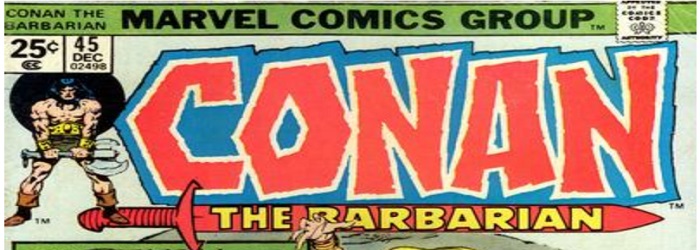
Vintage Conan the Barbarian original comic page sold via Heritage Auctions

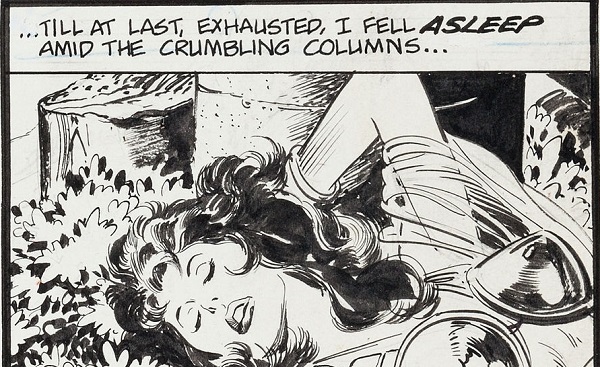
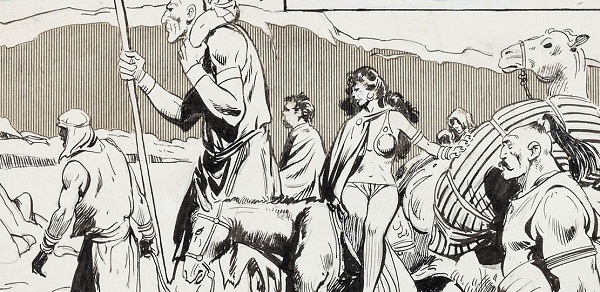
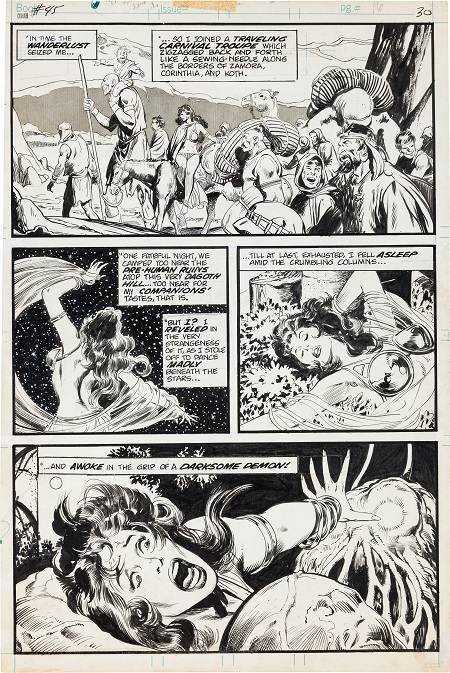
John Buscema and the Crusty Bunkers Conan the Barbarian #45 Page 16 Original Art (Marvel, 1974). Wondrous and horrible things await in this page from “The Last Ballad of Laza-Lanti,” written by Roy Thomas. The ink on Bristol art has an image area of 10″ x 15″ and it is in Very Good condition. Let’s take a look at a single panel from the page on offer.

Fans of 1970's/1980's Conan the Barbarian graphic comics appreciate the moody almost expressionist pencil and inks.
Fans of 1970’s/1980’s Conan the Barbarian graphic comics appreciate the moody almost expressionist pencil and inks.

Buscema, John:John Buscema (American 1927-2002): After the departure of Jack Kirby from Marvel in 1970, John Buscema became one of the company’s most influential artists [Often called the Michelangelo of comics CP]. Buscema is perhaps most celebrated for his Bronze Age work on the Avengers, the Silver Surfer, and Conan the Barbarian. Buscema’s work proved so in-demand in the mid-seventies, he launched the John Buscema Art School which advertised for students in the pages of many Marvel titles. Stan Lee made appearances as a guest lecturer at Buscema’s school and the two collaborated on the wildly popular book How to Draw Comics The Marvel Way, Simon and Schuster, 1978. Comic Art

Conan the Barbarian Original Comic Art

Conan the Barbarian Original Art

Conan the Barbarian Original Art Full Page

The page was sold to the highest bid which reached $US 2,210.75

Supplemental- L.A. Times’ John Buscema obituary – article from 2002

One of the best epic fantasy films of all time? Sure. We will go that far and say Yes!

Money Buys Happiness If You Give It Away

“All of us could invest part of our ‘fortune,’ great or small, on something that gives back on a deeper human level, such as non-predatory loans to individuals from impoverished communities,” Tim McCarthy

North Americans are still choosing to hold onto their money these days, a lesson learned from the 2008-09 financial crash.

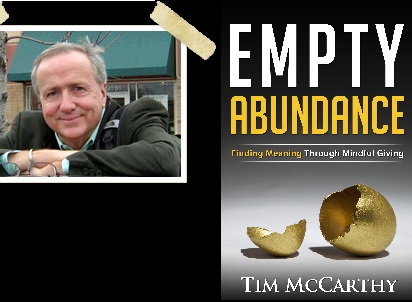
It’s good to have savings – but not to the point of hoarding, says entrepreneur and philanthropist Tim McCarthy, author of “Empty Abundance”.

Citizens in the United States of America are saving at a rate of 5.30 percent, well above the record low of 0.80 percent in 2005, according to the U.S. Bureau of Economic Analysis.

The world’s billionaires are holding an average of $600 million each in cash, which is more than the gross domestic product of Dominica, according to the new Billionaire Census from Wealth-X and UBS. That’s up from $60 million the previous year, signaling that the very wealthy are keeping their money on the sidelines and waiting for an optimal investment time.

McCarthy diverts all of his business profits annually to his foundation, The Business of Good, which invests in socially conscious businesses and scalable nonprofit concepts.

The Business of Good Foundation

He reviews what everyone has to gain from mindful giving.

•  Money buys you happiness – up to $75,000 worth. Life satisfaction rises with income, but everyday happiness – another measure of well-being – changes little once a person earns $75,000 per year, according to a 2010 Princeton study. Another widely published survey by psychologist Roy Baumeister suggested that “happiness, or immediate fulfillment, is largely irrelevant to meaningfulness.” In other words, so many who finally achieve financial excess are unfulfilled by the rewards that come with that.

•  Remember the wealth disconnection to overall fulfillment. A Gallup survey conducted in 132 countries found that people in wealthy countries rate themselves higher in happiness than those in poor countries. However, 95 percent of those surveyed in poverty-stricken countries such as Ethiopia, Kyrgyzstan and Sierra Leone reported leading meaningful lives, while less than 60 percent reported the same in wealthier countries.

“While more investigation to wealth, happiness and well-being is certainly in order, I think it’s clear that while money is important, it cannot buy purpose, significance or overall satisfaction,” McCarthy says.

•  Giving money reliably equals happy money. Two behavioral scientists, Elizabeth Dunn and Michael Norton, explore in their recent book, “Happy Money: The Science of Smarter Spending,” what makes people engage in “prosocial behavior” – including charitable contributions, buying gifts and volunteering time. According to Dunn and Norton, recent research on happiness indicates that the most satisfying way of using money is to invest in others.

In 2010, multi-billionaires Warren Buffet and Bill and Melinda Gates co-founded The Giving Pledge, a long-term charitable effort that asks the wealthiest among us to commit to giving more than half of their fortunes to philanthropy. Among the first to join, Michael R. Bloomberg wrote in his pledge letter: “If you want to do something for your children and show how much you love them, the single best thing – by far – is to support organizations that will create a better world for them and their children.”  To date, 115 of our country’s 495 billionaires have pledged.

•  Anhedonia, amnesia and the fallacy of consumption. Anhedonia is the inability to enjoy activities that are typically found pleasurable.

“After making my wealth, I found that I suffered from anhedonia,” McCarthy says. “Mindful giving – intelligent and conscious giving to those who need it – turned out to be my best therapy.”

Everybody has experienced the limits of consumption, the economic law of diminishing returns. One cookie is nice and so, too, is your first $1 million. But at some point, your ability to enjoy eating cookies or earning millions diminishes more with each successive one.

“Everyone learns this lesson, yet the horror is that so many of us succeed in forgetting it,” McCarthy says. “I think that, in every moment, we need to remind ourselves that continually reaching for the next ‘cookie’ is not in our best interest.”

About Tim McCarthy

Tim McCarthy’s first business, WorkPlace Media, eventually built a permissioned database of 700,000 gatekeepers who reach more than 70 million employees with incentives for clients such as Coca-Cola, Lenscrafters and McDonalds. He sold the company in 2007 and recently bought it back. 

Has SARS Prepared Ontario For Ebola Possibility?

In October, 2014  Dr. Eric Hoskins, then Minister of Health and Long-Term Care, and Dr. David Mowat, Interim Chief Medical Officer of Health, issued the following statement on Ontario’s preparedness for Ebola virus disease in Ontario:

“We know that Ontarians may have concerns related to the ongoing challenges in West Africa and recent events in the United States regarding the spread of the Ebola virus.

Reason for concern: the Ebola Virus is almost biblical in nature with horrible effects on the inflicted.

Let us assure you that the safety of Ontario’s health care workers, patients and the public are our top priority.

We are confident that Ontario is prepared and ready to contain and treat any potential case of Ebola virus in our province — protocols are in place and we’ve seen the system work well in Ontario hospitals.

With the experience and lessons learned from the Severe Acute Respiratory Syndrome (SARS) epidemic, our health care facilities now have sophisticated infection control systems and procedures to protect health care providers, patients and all Ontarians. They are fully equipped to deal with any potential cases of Ebola.

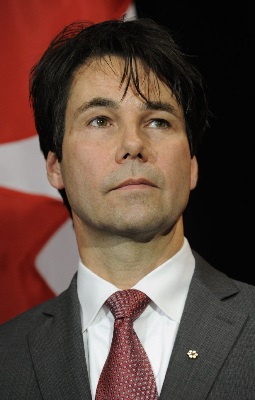
Dr. Eric Hoskins, Minister of Health and Long-Term Care

But all health care workers, especially those providing care to patients, must be safe and protected. This is why we are working with health care employers to ensure they are providing appropriate training for their staff on the proper use of personal protective equipment and other occupational health and safety measures. We are also continuing to work with health care workers and employers to further strengthen protective measures and ensure they’re in place at all times.

Our health care workers are on the front lines and it is times like these when we are all reminded of how critical their work is in protecting the public. We want them to feel safe.

We will be reaching out to our health care partners to ensure they have the maximum protection possible and plan to release revised guidelines by the end of the week.

The government, in collaboration with our health system partners, is monitoring the Ebola situation and is continually assessing our state of readiness should a case of Ebola ever occur in Ontario.

On behalf of both the ministry and the government of Ontario, we would like to thank our health care workers for their selfless and tireless work on behalf of all Ontarians.”

Carbon Monoxide alarms now mandatory in all Ontario homes

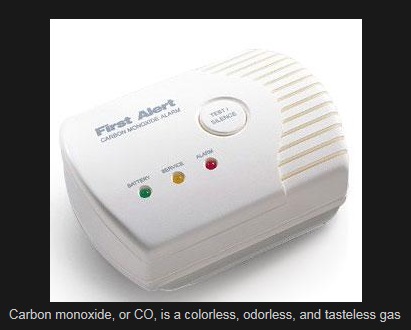
It's been called the silent killer and CO (Carbon Monoxide) is a poison and found outside and within our homes CP
It’s been called the silent killer and CO (Carbon Monoxide) is a poison and found outside and within our homes CP

Keeping Ontarians Safe from Carbon Monoxide-  Ontario is taking another step to keep families and homes in Ontario safe by making carbon monoxide alarms mandatory in all residential homes.

The new regulation, which comes into effect October 15, updates Ontario’s Fire Code following the passage of Bill 77 last year. These updates are based on recommendations from a Technical Advisory Committee which was led by the Office of the Fire Marshall and Emergency Management and included experts from fire services, the hotel and rental housing industries, condo owners and alarm manufacturers.

Carbon monoxide detectors will now be required near all sleeping areas in residential homes and in the service rooms, and adjacent sleeping areas in multi-residential units. Carbon monoxide alarms can be hardwired, battery-operated or plugged into the wall.

QUOTES

” We want Ontarians to be aware of the dangers of carbon monoxide poisoning because these tragedies are preventable. The change to the Fire Code is all about making sure we keep our families and homes safe. I urge all Ontarians to install a carbon monoxide alarm in their homes immediately.”

– Yasir Naqvi

Minister of Community Safety and Correctional Services

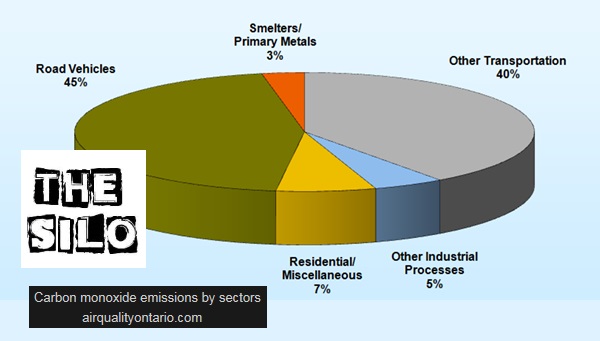
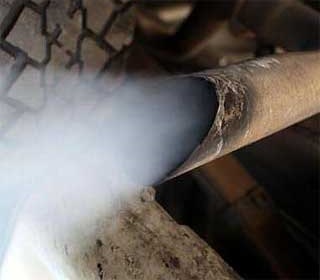
Road vehicles and transportation make up 85% of Ontario's CO pollution
Road vehicles and transportation make up 85% of Ontario’s CO pollution

” Mandating the installation and maintenance of carbon monoxide alarms in existing homes with a fuel-fired heating system or appliance, fireplace or attached garage under the Fire Code, and providing the authority for municipal fire services to conduct inspections and promote CO awareness, are significant steps forward for enhancing public safety.”

– Tadeusz (Ted) Wieclawek

Ontario Fire Marshal & Chief of Emergency Management

” The fatal effects of carbon monoxide left us with an irreplaceable family loss. Keep your family safe and install a CO alarm so we can combat the silent killer.”

– John Gignac

Co-Chair, Hawkins-Gignac Foundation for CO Education

Carbon Monoxide Alarm


QUICK FACTS

* More than 50 people die each year from carbon monoxide poisoning in Canada, including 11 on average in Ontario.

* Bill 77, an Act to Proclaim Carbon Monoxide Awareness Week and to amend the Fire Protection and Prevention Act, 1997, received royal assent in December 2013.

* The first Carbon Monoxide Awareness Week will take place November 1-8, 2014.

* The Ontario Building Code requires the installation of carbon monoxide alarms in homes and other residential buildings built after 2001.

LEARN MORE

* Read the Technical Advisory Committee’s recommendations on carbon monoxide alarms

* Learn more about the Ontario Fire Code

* Read about the Ontario Building Code

* Read about the Hawkins-Gignac Foundation for CO Education

NOUVELLES-  ministère de la Sécurité communautaire et des Services correctionnels

L’Ontario prend une nouvelle mesure pour protéger les familles et les foyers ontariens en rendant obligatoire l’installation d’avertisseurs de monoxyde de carbone dans toutes les habitations.

Le nouveau règlement, qui entre en vigueur le 15 octobre, met à jour le Code de prévention des incendies de l’Ontario à la suite de l’adoption du projet de loi 77 l’année dernière. Ces mises à jour visent à renforcer la sécurité de la population ontarienne. Elles s’appuient sur les recommandations d’un comité consultatif technique dirigé par le Bureau du commissaire des incendies et de la gestion des situations d’urgence et composé d’experts des services d’incendie, des secteurs de l’hôtellerie et de la location à usage d’habitation, de propriétaires de condos et de fabricants d’avertisseurs.

Des avertisseurs de monoxyde de carbone seront désormais exigés à proximité des chambres à coucher dans les maisons, ainsi qu’à l’intérieur des locaux techniques et à proximité des chambres à coucher adjacentes dans les immeubles à logements multiples. Les avertisseurs de monoxyde de carbone peuvent être câblés, fonctionner sur piles ou être branchés dans une prise murale.

CITATIONS

« Nous voulons que les Ontariens et Ontariennes soient conscients des risques d’intoxication au monoxyde de carbone parce que ces tragédies sont évitables. Cette modification au Code de prévention des incendies vise à protéger nos familles et nos foyers. J’exhorte tous les Ontariens et Ontariennes à installer immédiatement un avertisseur de monoxyde de carbone à leur domicile.»

– Yasir Naqvi

ministre de la Sécurité communautaire et des Services correctionnels

« En rendant obligatoires, en vertu du Code de prévention des incendies, l’installation et l’entretien d’avertisseurs de monoxyde de carbone dans les maisons existantes dotées d’un système de chauffage ou d’un appareil à combustible, d’une cheminée ou d’un garage attenant, et en conférant aux services d’incendie municipaux le pouvoir d’effectuer des inspections et de promouvoir la sensibilisation au CO, nous franchissons des étapes importantes pour améliorer la sécurité du public. »

– Tadeusz (Ted) Wieclawek

commissaire des incendies et chef de la gestion des situations d’urgence de l’Ontario

« Nous avons perdu des membres irremplaçables de notre famille à cause des effets mortels du monoxyde de carbone. Protégez votre famille et installez un avertisseur de CO afin que nous puissions lutter contre le tueur silencieux.»

– John Gignac

Fondation de l’éducation au CO Hawkins-Gignac

FAITS EN BREF

* Plus de 50 personnes meurent chaque année d’intoxication au monoxyde de carbone au Canada, dont 11 personnes en moyenne en Ontario.

* Le Projet de loi 77, Loi proclamant la Semaine de sensibilisation au monoxyde de carbone et modifiant la Loi de 1997 sur la prévention et la protection contre l’incendie, a reçu la sanction royale en décembre 2013.

* La première semaine de sensibilisation au monoxyde de carbone se déroulera du 1er au 8 novembre 2014.

* Le Code du bâtiment de l’Ontario exige l’installation d’avertisseurs de monoxyde de carbone dans les maisons et autres immeubles d’habitation construits après 2001.

POUR EN SAVOIR DAVANTAGE

* Recommandations du Comité consultatif technique sur les avertisseurs de monoxyde de carbone <http://www.mcscs.jus.gov.on.ca/french/FireMarshal/Legislation/TechnicalGuidelinesandReports/OFM_COAlarms_fr.html>

* Le Code de prévention des incendies de l’Ontario (disponible en anglais seulement)<http://www.e-laws.gov.on.ca/html/regs/english/elaws_regs_070213_e.htm>

* Renseignements sur le Code du bâtiment de l’Ontario <http://www.mah.gov.on.ca/Page5847.aspx>

* La Fondation de l’éducation au CO Hawkins-Gignac (disponible en anglais seulement)<http://endthesilence.ca/>

Lauren Callighen Bureau du ministre

416 325-5982

Carol Gravelle Bureau du commissaire des incendies et de la gestion des situations d’urgence

416 325 3138

Disponible en ligne<http://news.ontario.ca/mcscs/fr/2014/10/proteger-les-ontariens-et-ontariennes-contre-le-monoxyde-de-carbone.html>

Available in English<http://news.ontario.ca/mcscs/en/2014/10/keeping-ontarians-safe-from-carbon-monoxide.html>

Technology Detects Eye Disease Years Ahead Of Current State Of The Art

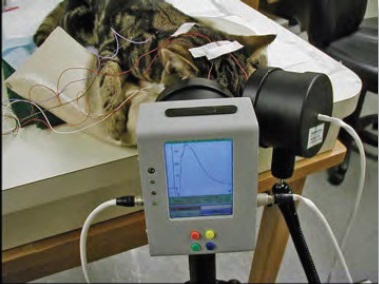
The technology is not limited to 'human only' use CP
The technology is not limited to ‘human only’ use CP

WATERFORD, Mich. – An Ann Arbor-based medical device manufacturer that developed a technology to detect eye disease years earlier than current methods is Medical Main Street’s “INNO-VATOR of the Year.” 

OcuSciences, Inc. is a medical diagnostic device company commercializing a rapid, non-invasive test for early detection of retinal disease. Physicians can use the device to screen patients for diabetes and early eye disease. Optometrists and ophthalmologists can use the device to diagnose and monitor disease progression and guide therapy. 

“I stand in awe of the work done by OcuSciences and its new imaging techniques to measure damage to retinal tissue from diabetes, macular degeneration and glaucoma,” Oakland County Executive L. Brooks Patterson said. “This achievement in medical device manufacturing is indicative of the type of world-class research being conducted in the Medical Main Street region.” 

iVivo VET

The INNO-VATOR of the Year award honors the creators of a medical device which demonstrates the most dramatic change in the health care industry in Michigan. To be considered for the award, the device must have been developed in Michigan, achieved prototype development and validation, and incorporate a game-changing innovation.

The award will be presented Oct. 22 during Medical Main Street’s INNO-VENTION 2014 conference at the Suburban Collection Showplace in Novi. In 2013, Ann Arbor-based HistoSonics won for its Vortx Rx® device that uses sound energy to treat tissue inside the body without the need for traditional surgery. In 2012, Sentio LLC of Southfield and Ablative Solutions of Kalamazoo were each named co-winners. Sentio created a device to alert doctors when nerves are at risk during surgery and Ablative Solutions’ technology treats hypertension.

Based on technology licensed from the University of Michigan, OcuSciences has developed a proprietary, ocular imaging technique, Retinal Metabolic AnalysisTM (RMA), as a non-invasive, rapid biomarker for measuring the damage to retinal tissue due to diabetes, macular degeneration and glaucoma. This new measure has been termed a new vital sign for patients – similar to blood pressure or body temperature.

The RMA technology provides a means to detect disease processes several years earlier than current clinical methods and before irreversible structural alterations due to cell death become visible in the retina.

OcuSciences has demonstrated that RMA is more predictive of diabetes than other tests, helping pharmaceutical companies develop ophthalmic drugs more rapidly and precisely.

With 57 million diabetics in the U.S. today, and eight percent of those as undiagnosed diabetics, diabetes is a rapidly growing epidemic, especially among children. The screening for diabetic retinopathy and early treatment can help prevent blindness in 24,000 patients annually and reduce the $174 billion costs associated with diabetes.

INNO-VENTION 2014 is set for Oct. 21-22 at the Suburban Collection Showplace.

Now in its third year, the conference will feature an expansion of the popular Demonstration Alley, with 21 companies exhibiting the latest medical technology innovations. There will also be expert panel discussions on intellectual property, accountable care organizations, health and wellness as an asset, and mobile health care.

The Medical Main Street board includes Barbara Ann Karmanos Cancer Institute, Beaumont Health System, Beckman Coulter Molecular Diagnostics, Crittenton Hospital, Detroit Medical Center, Ferndale Laboratories, Henry Ford Health Systems, Housey Pharmaceutical Research Laboratories, McLaren Health Care – Oakland, MichBio, State Rep. Gail Haines, R-Waterford, Oakland Community College, Oakland University, Oxus Inc., Priority Health, Rockwell Medical Technologies, St. John Providence Health System, St. Joseph Mercy Oakland and Stryker Corp.

For more information on INNO-VENTION 2014, visit www.MedicalMainStreet.com.

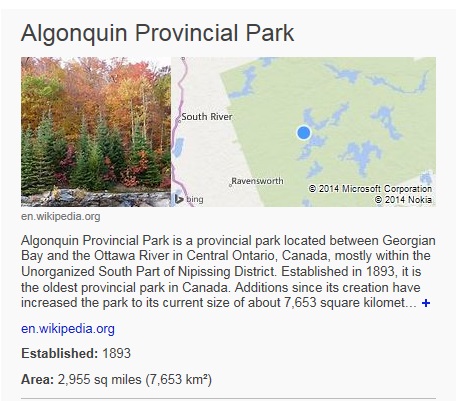
Greens call for ban on logging in Algonquin Provincial Park- over 65% open to logging

Queen's Park - Green Party of Ontario leader Mike Schreiner is calling for a ban on logging in Algonquin Park. image courtesy of Bing
Queen’s Park – Green Party of Ontario leader Mike Schreiner is calling for a ban on logging in Algonquin Park. image courtesy of Bing
“People are outraged when they learn that the Liberals are failing to protect one of the province’s Crown Jewels – Algonquin Park,” says Schreiner. “It’s time to phase out logging in Algonquin now.”
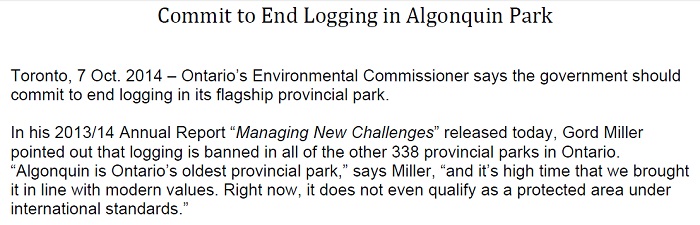
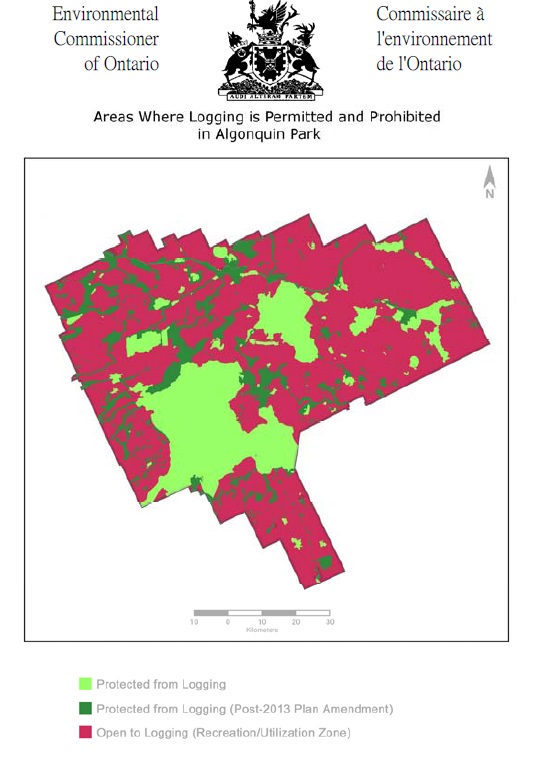
According to the Environmental Commissioner of Ontario’s (ECO) Annual Report released recently at Queen’s Park, the ecological integrity of the park is threatened. Over 65% of Algonquin is open to logging. [The Report also mentions the use of bee-killing pesticides at Algonquin CP]
“The Liberals have a choice: stop the logging or be honest with people that Algonquin is not really a provincial park with basic environmental protections,” says Schreiner.
 Ontario Environmental Commissioner Report
The Green Party is calling for a ban now in order to provide forestry companies time to economically phase out logging in the park over the next decade. The ECO suggests there is adequate lumber supply in the region to keep companies in business while protecting the integrity of the park.
“Like many parents, one of the highlights of my summer was paddling in Algonquin with my daughter. I’m not going to let the status quo politics at Queen’s Park prevent my daughter from enjoying the park with my grandkids,” says Schreiner. “Algonquin is worth fighting to protect.”
The government recently reduced the area of the park open to logging, but almost two-thirds of Algonquin is still potentially open to timber harvesting.
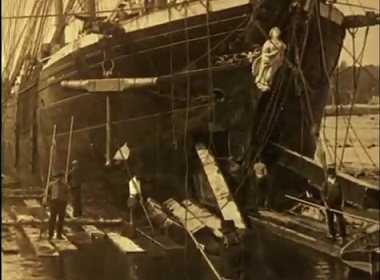
Historical logging and planking of Algonquin timber in the "Age of Wood"- harvested log planks being shipped to distant ports
Historical logging and planking of Algonquin timber in the “Age of Wood”- harvested log planks being shipped to distant ports

Niagara Falls Canada Is Romantic And Beautiful Twelve Months Of The Year

Niagara Falls Friendly to Same Sex Weddings

Every girl dreams of that perfect wedding, where she is pampered and spoiled, as she embarks on a new life. With one of the world’s most breathtaking natural wonders providing a unique backdrop, Niagara Falls is the place for a magical wedding that you and your guests won’t soon forget.

Marriott’s wedding specialists will ensure the most important day of your life is absolutely perfect, from preparation through the ceremony and reception and into the honeymoon, the bride and groom will be pampered, refreshed and relaxed on their wedding day.

Niagara Falls is a dynamic place all twelve months of the year. Imagine having your wedding or engagement photos with this winter time vista.

Pampering the bride starts the morning of the wedding at Serenity Spa by the Falls where a memorable spa experience will have the bride and her maidens glowing when they step up to the altar. That altar is perched 23 storys above the crest of Niagara Falls in the Marriott’s elegant and intimate Chapel Overlooking the Falls, a majestic setting that is truly awe-inspiring. During the reception, experience elegance with every flawless detail tailored to fit your unforgettable story.

The fairy tale continues in a luxurious Honeymoon Suite overlooking the Falls, with breakfast in bed as befits the newly-wed couple. The happy couple can then spend their first day together with a romantic afternoon of indulgence with Serenity’s Couple’s Ritual Spa Treatment.

Beautiful all year round.

For the guests, Niagara Falls boasts a vibrant night life to keep them entertained once the happy couple steps away to begin their honeymoon. Clubs, bars and restaurants, not to mention two casinos and several theatre shows, will ensure a wedding in Niagara Falls is a wedding people will be talking about for years.