Tag Archives: GM

Collector Car Market’s Big Winners And Losers In 2025

Mecum

Part of what makes this hobby and the markets surrounding it so interesting is how organic and ever-changing they are. Tastes shift, new people start participating in the old car world, and prices adjust to reflect that. That’s why Hagerty updates our price guide four times per year.

Over the past 12 months, words like “cooling,” “softening,” or “more cautious” have dominated conversations about the market as a whole, but that doesn’t mean there weren’t big moves for certain individual vehicles. Below are the ones that moved the most up, and the most down, in 2025.

1948-52 Ford F-Series
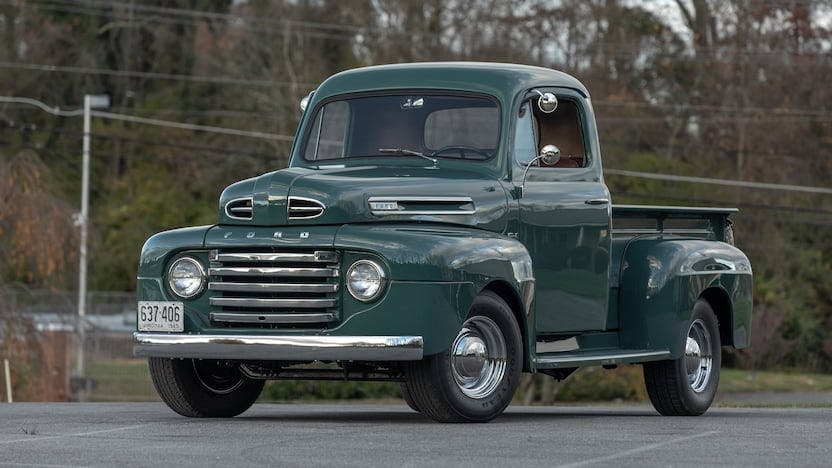
1949 Ford F1 pickup
Mecum

Median condition #2 change: -32%

These pickups were showroom rivals to GM’s Advanced Design line. They were also Ford’s first all-new postwar vehicles, as well as the very first F-Series, which has since become the most recognized and best-selling line of pickups out there.

The field of classic trucks, however, is a crowded one. Although these first-gen F-Series effectively doubled in value from 2015 to the early 2020s, they’ve been sliding since the beginning of 2024. The current median #2 value is $31,800 usd/ $43,887 cad, which is lower than it was at the beginning of 2019, before even adjusting for inflation.

1966-83 Fiat 1241983-85 Pininfarina Azzurra

Fiat 124 Sport Spider Pininfarina front three-quarter
Flickr/Gilles Péris y Saborit

Median condition #2 change: +45%

Fiat marketed attractive convertible models in the U.S. and Canada starting in the 1950s. They were typically lower-priced but less lively than the alternatives from Alfa Romeo. This trend continued into the 1960s with the 124 Spider, introduced in 1966. The handsome, Pininfarina-styled convertible started with a 1.5-liter twin-cam engine but displacement changed over the years, even if the basic styling and layout of the car didn’t. After Fiat left the U.S. market (for the first time) in ’83, Pininfarina picked up the mantle and sold the same basic car as the “Pininfarina Azzurra” for another few years. For decades, these svelte Fiats and Pininfarinas were one of the cheapest ways into motoring dolce vita, but prices have definitely gone up, especially this year.

This is less a story of big-dollar gains than it is one of percentages. In excellent condition, most Fiat-badged versions can be had in the low-$20K usd/ $27,600 cad range. The Pininfarina versions are rarer, supposedly better built, and have a more premium badge, but they still sit at $33K usd/ $45,540 cad in excellent condition. Few classic Italian drop-tops can be had for so little.

1951-57 Hudson Hornet

Median condition #2 change: -30%

Hornets are neat cars. They rode on Hudson’s unique “step-down” chassis that gave it a lower, sleeker profile and driving position than other American cars of their day, and despite the early models’ six-cylinder engines, Hornets regularly bested more powerful competition in early ’50s NASCAR racing.

But Hudson also became a defunct brand before many car enthusiasts were even born. Even with some star power as “Doc Hudson” in the Pixar movie Cars, the Hornet doesn’t have the staying power and wider cultural relevance as something like a Tri-Five Chevy, ’57 Thunderbird, or ’59 Cadillac. Hornet prices grew a bit during the early 2020s along with just about every other classic car, but have been falling since last year. The current median #2 value of $32,300 usd/ $44,577 cad is roughly the same as it was three years ago in pure dollar terms. Adjusted for inflation, though, the value is about where it was in 2013.

1985-91 Honda CRX

1991 honda crx si teal
Mecum

Median condition #2 change: +50%

Honda’s famous two-seater hatchback, the CRX, brought cheap and cheerful fun to enthusiasts across North America and became an icon of tuner culture. These little cars are definitely still cheerful, but they’re not so cheap anymore, as the supply of clean, unmodified, low-mileage examples has dwindled in front of higher demand.

Indeed, the CRX has made several of these “winner” lists from the Hagerty Price Guide in recent years, and since the beginning of 2020 the median condition #2 value is up by a whopping 168%. The desire for these pocket rockets is so strong that one of the 1988-91 cars in excellent shape is currently worth $45,500 usd/ $62,100 cad. That much money will almost buy you a brand new Civic Type R, which comes with exactly triple the horsepower as well as a warranty, but doesn’t come with the same old-school charm.

1984-91 Jeep Grand Wagoneer

Median condition #2 change: -28%

On the new car market, the love for pricey, premium luxury 4x4s in North America is as strong as ever. The roots of our affection for luxury SUVs go back a lot further, though, and Jeep’s 1984-91 Grand Wagoneer was the weapon of choice in the affluent suburbs and vacation towns of yuppie-era America.

Nostalgia for those woodgrain-clad boxes helped pull prices up in the late 2010s and values exploded during the early 2020s. In the gotta-have-it, pay-whatever-it-costs craziness of 2022, we even asked if a $154K usd/ $212.5 K cad Grand Wagoneer sale was “peak market insanity.” Yep, turns out it was. Sale prices have definitely come back down to earth since. The median #2 value for Grand Wagoneers at the end of 2025 is $45,900 usd/ $63,350 cad . At first glance that looks a lot higher than the $36,600 usd/ $49,680 cadit was at the beginning of 2020, but when you adjust for inflation the two numbers are within a hundred bucks of each other.

1979-1992 Mercedes-Benz G-Class (W460)

Mercedes-Benz

Median condition #2 change: +68%

Like the Grand Wagoneer in the ’80s, the Mercedes G-Wagens mostly serve as bougie-mobiles that don’t see anything rougher than a gravel driveway, but the earliest versions (aka the W460) were rugged and relatively simple off-roaders, sort of like a German Land Rover. Mercedes-Benz didn’t market the W460 in America, as we identified the three-pointed star with luxury and high-performance, whereas this was a spartan runabout with underpowered four-, five-, and six-cylinder gas or diesel engines. W460s are therefore pretty rare here.

Several huge sales over the past 12 months have been impossible to ignore, however, and it appears the W460 is gaining a big following. Current values vary widely depending on body style, engine, and model year. Certain hardtop wagon models can be had for under $40K usd/ $55.2 cad (exchange rate at time of posting) in excellent condition, while certain convertibles are nearly 90 grand. For the Silo, Andrew Newton.
Why Canada’s Electric Vehicle Targets Beyond 2026 Are Still Unrealistic

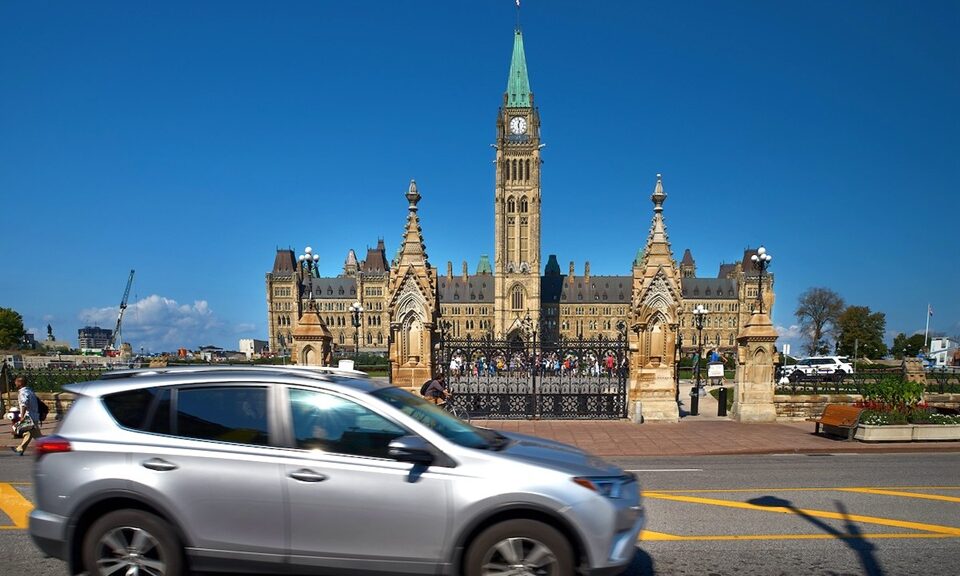
November, 2025 – The federal Canadian government is expected to unveil proposed changes to its electric vehicle sales mandate this winter. The upcoming announcement comes as Canada’s 2026 Zero Emissions Vehicle (ZEV) mandate – requiring 20 percent of new light-vehicle sales to be electric – faces mounting evidence it was unlikely ever to be met, according to a new report by the C.D. Howe Institute.

In “Mandating the Impossible? Assessing Canada’s Electric Vehicle Mandate for 2026 and Beyond,” Brian Livingston, at the C.D. Howe Institute, finds that the policy’s trajectory remains unrealistic beyond 2026. “Even if incentives return, the targets far exceed what consumers are willing or able to buy,” says Livingston. “Mandates alone won’t generate the demand or the vehicles needed to meet these goals.”

The analysis shows that under the 2026 requirement, automakers collectively would have had to spend hundreds of millions of dollars to comply. Companies falling short of their targets could face over $200 million in penalties to generate “Charging Fund Credits,” along with unknown additional costs to purchase “Excess Credits” from firms such as Tesla and Hyundai. To meet compliance thresholds, manufacturers might have been forced to restrict non-ZEV sales, reducing total vehicle supply by more than 400,000 units – leaving significant consumer demand unmet.

Meanwhile, companies exceeding the 20 percent target – primarily foreign-based automakers – would benefit from windfall revenues by selling excess credits. Canadian-based producers such as GM, Ford, Toyota, Stellantis, and Honda, which manufacture domestically, would bear higher costs and face reduced competitiveness.

Federal officials recently noted that the government’s highly anticipated review of the ZEV mandate – launched after Prime Minister Mark Carney paused the 2026 target in September – will report back this winter and unveil proposed changes to targets and credit rules.

Livingston recommends that Ottawa either abandon or substantially revise the ZEV mandate. Options include revising percentage targets to align with market realities, counting increasingly popular hybrid vehicles toward compliance, redirecting credit proceeds to the federal government, or suspending the mandate until trade negotiations with the United States and China clarify the future of Canada’s auto sector.

“The waiver of the 2026 target is only a first step,” Livingston cautions. “Unless the policy is recalibrated to reflect consumer demand and production capacity, Canada’s ZEV mandate risks driving up costs, shrinking supply, and undermining competitiveness – without delivering meaningful emissions reductions.”

Art and Science of Hunting Rare Corvettes

Another boss article via friends at Hagerty. Vintage Corvettes have been bought and sold as collector vehicles for decades, and so you could be forgiven for thinking that all the hot ones have been accounted for, and that the current body of research has documented all that’s known about them.

That’s not the case, and to seasoned Corvette hunters like Kevin Mackay, that’s actually good news. Mackay started his business, Corvette Repair, 30 years ago in Valley Stream, N.Y. His timing could not have been better. Chevy had just launched the exciting C4 model, and the Corvette collector hobby was shifting into hyper drive. That trend brought a renewed interest in the Corvette’s heritage, including racing.

Canada Corvette Connection?

There were already expert collectors well versed in Corvette history, but history has a way of changing. As deeper dives would reveal gaps in Corvette knowledge, those who applied the resourcefulness and tenacity of TV police detective Columbo were able to find and authenticate super-rare Corvettes.

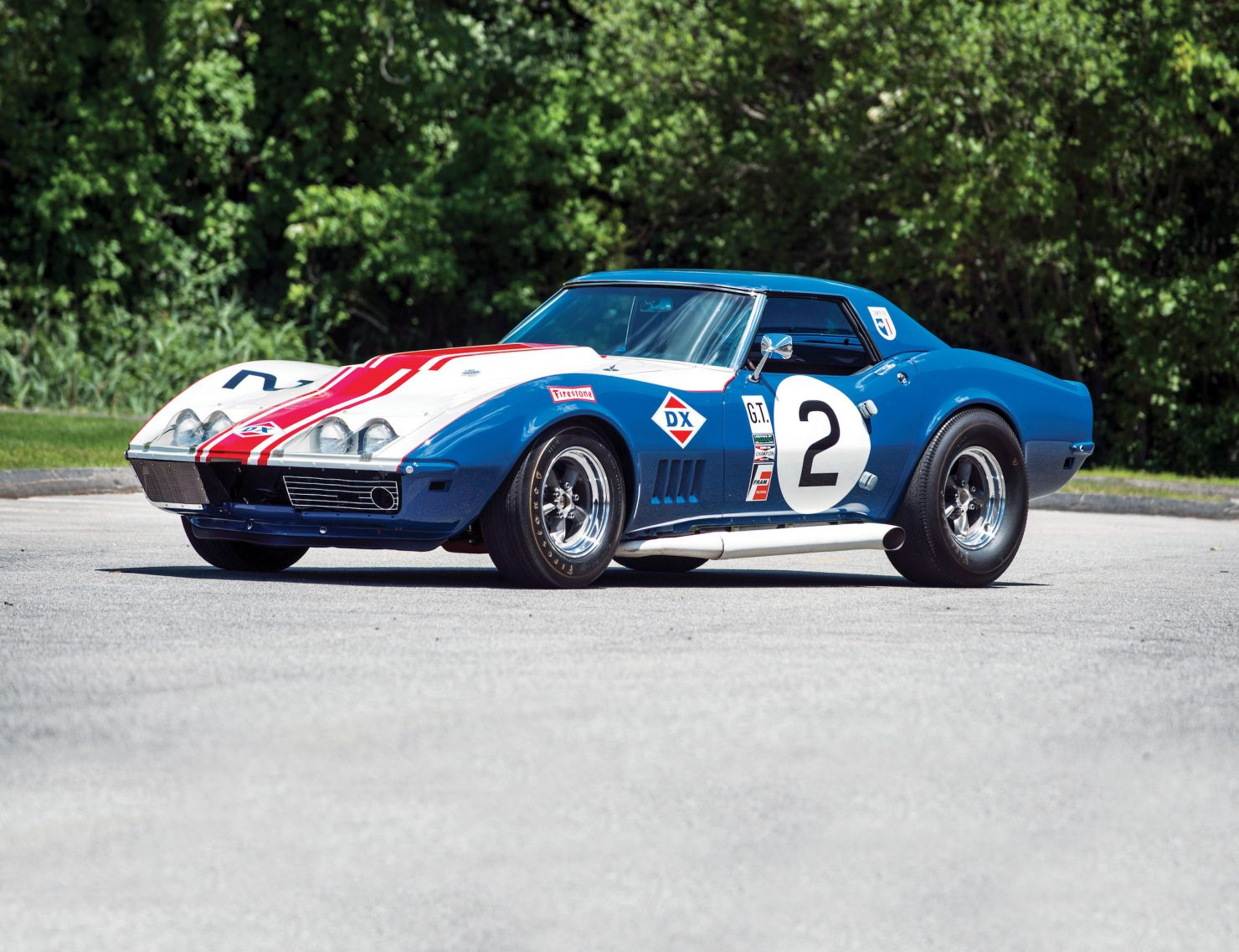
1968 Sunray DX L88

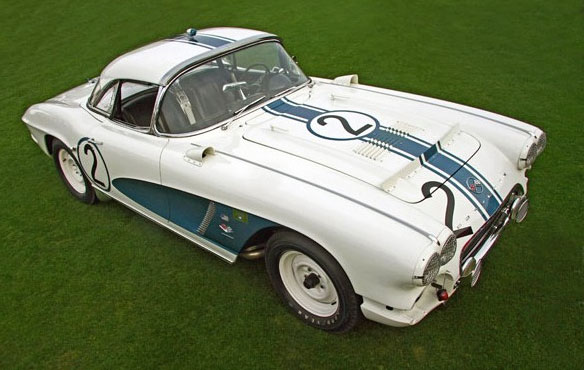
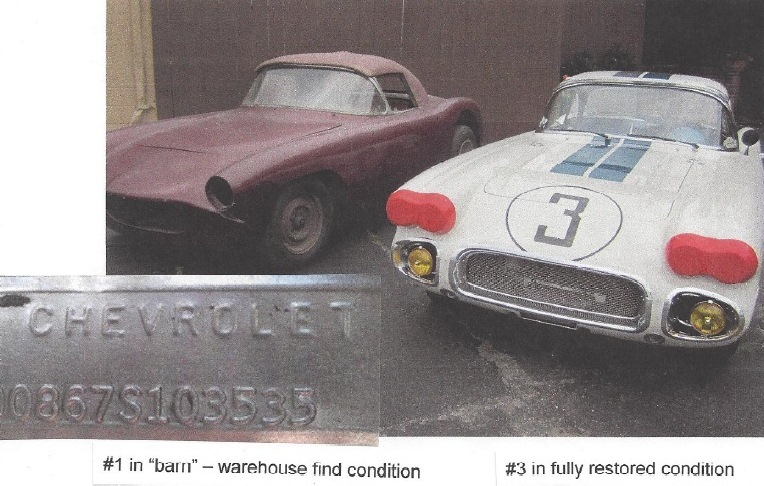
You won’t find Mackay wearing a rumpled raincoat around his shop, but his detective work continues to uncover cars thought to have been lost. Some of those are race cars that have come through his shop, including the 1960 Briggs Cunningham Le Mans car, 1962 Yenko Gulf Oil, 1966 Penske L88, 1968 Sunray DX L88 (found in a barn) and 1969 Rebel L88. All were Le Mans, Daytona or Sebring class winners. Corvette aficionados will see a pattern: Among lost Vettes that Mackay hunts are ones campaigned in those races.

The Rebel was one of the most successful C3 Corvette race cars ever, winning the GT class at Daytona and Sebring in 1972, where it also took fourth overall behind two prototype-class Ferraris and a prototype Alfa Romeo. Mackay tracked the car to a southern scrapyard 24 years ago and restored it; the car sold at Barrett-Jackson’s Scottsdale sale in January 2014 for $2.86 million usd/ $3.95 million cad.

“I know where every Corvette that raced Le Mans is,” Mackay said. Knowing, of course, is only the start of a long road to acquiring a car. Aspiring Corvette hunters might take note of other cars that grab Mackay’s interest.

Listen to What The Man Says

It could go without saying that any Corvette collector would want to stumble upon an L88 hiding in a barn. It’s a comparatively small group of cars, but it’s bigger than originally thought.

“We located 13 factory L-88 cars not previously known,” said Mackay, adding that three of the 20 1967 L88s are still missing. So, when an elderly man approached him with a claim that he still owned a 1967 L-88 that he bought new, Mackay listened, if with a skeptic’s ear.

“That happens a lot,” he said. “Guys claim they have a car that nobody has ever seen.”

A doubter may dismiss such claims, but Mackay says his experience has shown that sometimes, they lead to Corvette treasure. For example, he knows of a 1967 L-89 car, one of 16 made, that hasn’t been seen in decades; it was driven just 11 miles / 17.7KM from new and put away.

Not every lead pans out, but patience can lead to gold, Mackay advises.

“I waited 11 years to buy one particular car,” he said. “I’d call the owner every year. It was all about building trust.”

And so comes another lesson in hunting and buying classic Corvettes: It’s not always about the money. Mackay said that some owners are too emotionally attached to their cars to let go. And some never do, leaving valuable cars to be auctioned by heirs. In such cases, years of patience and building trust can seem wasted. But Mackay loves the challenge of the hunt.

For another car, he waited 19 years. And he’s got a list of others.

“There are two cars I’ve been waiting nine years to buy,” he said. “I always tell the owner that he’s just holding them for me for free storage.”

Follow the Clues

Many car enthusiasts enjoy reading old magazine articles. Mackay reads them for clues. “I look for names of people associated with cars, such as race mechanics, and then I look for those people,” he said.

Knowing where a Corvette was sold can be a help for an experienced hunter. If you have a Corvette’s VIN, you can get its original shipping data – including the selling dealer – from the National Corvette Restorers Society (NCRS) for $40. Even if the dealer is no longer in business, the information could lead to other clues.

Sometimes, answering an ad for parts leads to whole cars. While hunting down a lead on parts for a 1969 Baldwin-Motion Phase III Corvette, Mackay stumbled across a super-rare Phase III GT that turned out to be a car a customer owned when new and had regretted selling many years before. Mackay has also found engines and then later located the cars they belong to.

Serial Boxes

Some collectors like to own “firsts” and “lasts” and therefore hunt low and high serial number cars. The top prize in that category would of course be the very first Corvette built, but the first two were test cars thought to have been destroyed. Yet, as Lt. Columbo might ask, “Where’s the body?”

Mackay can claim something close. He found the original chassis to 1953 serial No. 3 for a customer. He explained: “The first three made were test cars. Before GM sold No. 3, they swapped the chassis, because the first one had been used in Belgian block testing, and there were concerns about possible stress cracks.”

Somehow, the first chassis got out of GM’s grasp and was discovered underpinning a 1955 body in the 1970s. Another chassis swap ensued, and 1953 No. 3 just needed to be reunited with its original body. Mackay said the owner of that car, however, was not interested.

So, instead, Mackay is building a unique cutaway 1953 Corvette around the chassis. It’s something he said could be shown and enjoyed by the whole Corvette hobby.

Other aspects can catch a collector’s fancy. It should be no surprise that original color can affect value, but the effect might be bigger than you thought.

“Black is the most sought-after color for Vettes,” said Mackay. “A black 427/435 car could be worth double a green version.”

And then there are production oddities, the kinds of things that likely would never happen on today’s computerized assembly lines with their just-in-time parts inventory control systems. The fabulous center knockoff wheel offered as an option for the 1964-1966 Corvette actually made an earlier appearance. Mackay said 12 cars got the wheels in 1963. One is claimed to be a Z06 “big-tank” car.

Have a clue to a “lost” Corvette? Mackay would love to hear about it: [email protected] For the Silo, Jim Koscs/Hagerty.

When Buick And Oldsmobile Promoted Cars With Space Themed Musicals

General Motors’ affinity for using entertainment to promote its products reached a fever pitch in 1955, as an estimated two million people attended Motorama in New York City, Boston, Miami, San Francisco, and Los Angeles. It was followed that same year by Powerama in Chicago, a show that highlighted GM’s non-automotive businesses and featured a musical dubbed “More Power to You.” It included French acrobats atop a 70-foot crane, 35-ton bulldozers dancing the mambo, and a battle of strength between a top-hatted elephant and a bulldozer in which the pachyderm is sent packing. The show ran for 26 days and attracted two million visitors. 

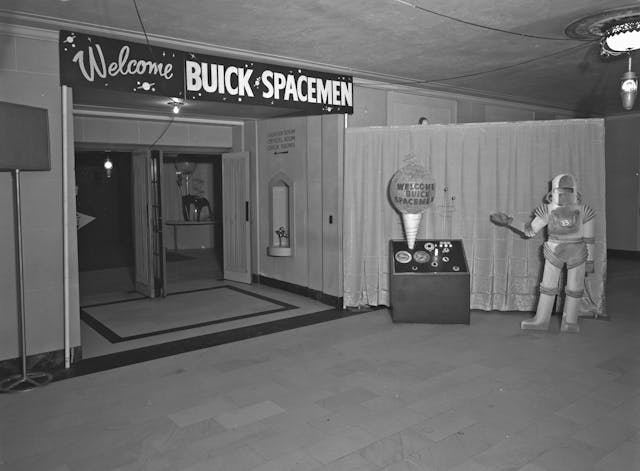
But that wasn’t the end of it, as GM produced musicals—yes musicals—to help move the metal. The result would be Buick’s Spacerama (so many -ramas) and Oldsmobile’s The Merry Oh-h-h.

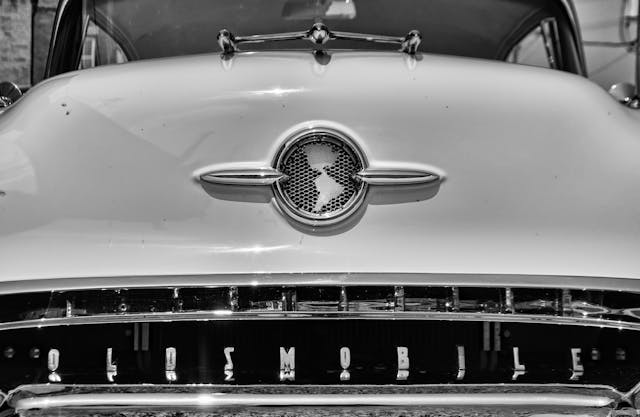
Oldsmobile in 1955

1955 Oldsmobile black white
Flickr/Chad Horwedel

Having reached record sales of 583,179 units for the 1955 model year, Oldsmobile hoped to continue the sales boom for 1956, even though its lineup was mostly carryover. The biggest news was the Jetaway Hydra-matic automatic transmission, which was redesigned for the first time since its introduction in 1940. For the first time, it offered a Park position, like modern automatics, and featured two fluid couplings to enhance shifts between its four gears. The Jetaway was standard on the 98 and Super 88. 

J.F. Wolfram, Oldsmobile general manager, confidently predicted Oldsmobile would sell 750,000 cars for the 1956 model year as Oldsmobile employment reached a record high of 19,170 employees.

To stoke enthusiasm, the company created a musical dubbed “The Merry Oh-h-h”, which debuted in New York City at the Ziegfeld Theatre. The show starred Chita Rivera, who had appeared in “Call Me Madam” and “Can Can.” Here she plays Miss Jetaway Drive alongside singer Mildred Hughes and Billy Skipper, who danced in “Annie Get Your Gun.” Other notable names include Joe Flynn, Frank Gorshin, Charles Cooper and Bern Hoffman. It was directed by Max Hodge, who would go on to work on the TV shows “Mission: Impossible” and “Mannix.”

General Motors Merry Oh h h
GM

The musical, which at the time cost GM $150,000 usd / $210,000 cad to produce, espoused the glories of power steering, automatic transmissions and Rocket V8 engines. Songs included “Tops in Transmission,” “Advancing on Lansing” and “The Car is the Star.”

After its New York debut, the musical and its 34-member cast went on tour to San Francisco, Fort Worth and Chicago before arriving in Lansing, Michigan, Oldsmobile’s hometown, which included an appearance by pop star Patti Page.

But the show generated unintentional notoriety when its piano player, Robert Orpin, was found dead in his room at the Hilton Hotel in Fort Worth. Orpin, who hailed from Forest Hills, Long Island, was found in a filled bathtub with the hot water running. He was discovered by a maid who heard the running water running. His death was later ruled accidental. 

“The Merry Oh-h-h” would play to 30,000 Oldsmobile employees and their families nationwide. But it did little for Oldsmobile sales, as demand fell to 485,492 units for the model year.

Buick heads for Spacerama

General Motors Spacerama
GM

No doubt using a stage show to promote new models was hardly an isolated idea at GM in 1955. In fact, Buick arrived at the idea before Oldsmobile, thanks to their ad agency at the time, the Kudner Agency and its vice president, Myron Kirk.

Kirk had attended GM’s 1954 Motorama during its nine-day stand in Boston, where he ran into Ivan Wiles, vice president and general manager of Buick, and Al Belfie, Buick’s general sales manager. While watching the theatrics, Kirk told the executives of the impressive dancing he had seen in the then-new movie, “Seven Brides for Seven Brothers.” Kirk arranged a private viewing of the film for them, and afterwards, Kirk received approval to bring in the movie’s choreographer, Michael Kidd, to produce a show to promote the 1956 Buick lineup.

General Motors Spacerama
GM

He tapped Alan Lipscott and Robert Fisher to write the show. The duo was well-known for writing scripts for such TV shows as “Make Room For Daddy,” “The Donna Reed Show” and “Bachelor Father” along with many others. The plot concerned mankind’s search for the obtaining transportation from the Stone Age to the current day, where a trip to Mars reveals a depressed population. They overcome their depression when they are brought to earth to see the 1956 Buick lineup. The show starred Mark Dawson and comedian Jack E. Leonard. 

For the music, Kirk’s agency chose Bernie Wayne, who is best known for such songs as “Blue Velvet,” “The Magic Touch,” the Miss America theme, and the commercial jingle “Chock Full O’Nuts Is the Heavenly Coffee.” For Buick’s musical, Wayne composed such songs as “Just Like Coming Home Again,” “Switch the Pitch,” and ‘The Peak of Civilization.”

The show started in Flint, Michigan before heading to Los Angeles, Houston, Chicago, Atlanta, Detroit, and wrapping up in New York City. In all, 50,000 Buick dealers, employees and their families saw the show.

Still, you have to wonder why GM went to so much trouble. “We have about 12,000 dealers and their salesmen,” a Buick spokesman told the Detroit Free Press in September 1955. “Many of them will sell as much as $150,000 usd of our products next year. You surely can afford to spend $100 or more to entertain them.”

Of course, GM could afford such largesse; they were on their way to their first billion-dollar annual profit. Now that’s a lot of spacebucks. For the Silo, Larry Printz/ Hagerty. Featured image- GM’s Spacerama 2 promo.

8 Cars That Deserved Better Engines

What vehicle never got the engine it deserved? That’s the question posed to our friends at Hagerty Auto Insurance. Their love of cars goes back decades, or centuries and they’ve all been wondering how much better certain cars would be if they had a different engine …

… Or a better engine, something that truly spoke to the rest of the car. Let’s see what alternate car realities they would have created.

A Standard V-8 for Every Cadillac

engine cadillac VVT
Lies! All lies! Cadillac

For me, it’s the fact that all Cadillac cars (cars—Escalade excluded) from the last 20 or so years lack a standard V-8 engine. GM has an excellent LS motor, and a baby Caddy with a modest 4.8-liter small-block would give buyers more reason to avoid a thirsty BMW for a slightly more thirsty Caddy.

As the Caddy becomes larger, the V-8 engine follows suit (5.3-liter CTS, 6.2-liter CT-6, etc.) with increased displacement, and forced induction for the V-series examples. The inherent torque and simplicity of a pushrod V-8 complements the minimalist architecture of GM’s new EV powertrains, and exclusively pairing those two in a luxury car brand will make Cadillac more appealing than any of its competition. — Sajeev Mehta

As under-the-radar-good (and as mod-friendly) as the ATS-V’s LF4 V-6 is, I agree. After having spent over ten thousand miles with the smaller of the Alpha-chassis Caddys, the ATS should have gotten the 455-horse LT1 from the Camaro, and the ATS-V should have gotten the LT4. — Eddy Eckart

V-8 Bronco Raptor/ Ford GT

2024 Ford Bronco Raptor climb front three quarter
Ford

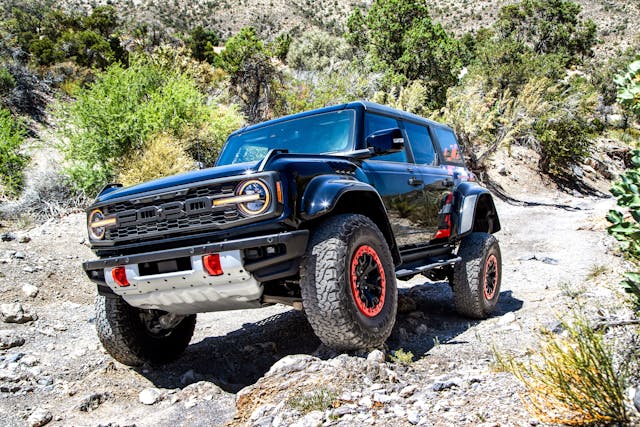
Ford Bronco Raptor. Lack of a V-8 is … yeaaaaah. For the record, I am fully aware that you can’t easily fit that V-8 into Ford’s T-6 frame. Actually, here’s the same opinion again: This also applies to the most recent Ford GT. — Matt Tuccillo

For sure, the Ford GT shoulda had a V-8. — Larry Webster

I think I’ll also jump on the Ford GT bandwagon, as I don’t care for the reasoning of why it got the EcoBoost V-6. That car deserved a V-8 based on heritage alone. – Greg Ingold

That buttress really flies Sajeev Mehta

Yes, please! Kill the flying buttress, make room for a 900+ horsepower Coyote with a twin-screw supercharger. — Sajeev Mehta

V-8 Prowler

1997 Plymouth prowler rear three-quarter
FCA

The Plymouth Prowler comes to mind. Chrysler Corporation came up with a car that was a modern nod to the classic hot rod but forgot the one factor that people want from a hot rod: A V-8 engine. You have to actively try to miss that detail. I don’t think anyone would’ve minded seeing a 318 Magnum out of a Ram pickup in the Prowler, as long as it came with eight cylinders. — Greg Ingold

Honda Motors in a Modern Lotus

Lotus Evora GT40 front three quarter
Lotus

Any modern-day Lotus fits in this category. They make do with Toyota engines but the chassis deserves the character of a Honda motor. — Larry Webster

Having a Lotus with a K-Series would be excellent! Totally agree with that take. — Greg Ingold

A Straight-Six SLK

Mercedes-Benz

Let’s not overlook the original Mercedes SLK. This folding-roof roadster needed Mercedes’ juicy and punchy 2.8-liter straight six. That supercharged four-cylinder engine was disappointing, and the manual gearbox was even worse. — Larry Webster

SHO-inental, If Only

1989 continental signature series engine
Sajeev Mehta

I only thought of this car/engine combo since I yanked my 1989 Continental Signature Series out of storage. Turns out it needed new rubber, and tires from a 1989 Ford Taurus SHO are a smidge wider on the same-sized wheel. Getting a set of those and slapping a set of 1/4-inch spacers on the rear gave it a stance that I can’t stop looking at. And now, curiously, it’s getting a lot more compliments. Even the manager of a local burger joint stopped me from giving my order so he could compliment me on it.

He thought it was a Town Car, but that’s not the point. These moments get this Lincoln-restomodding fool thinking about one thing: Ford needed an automatic transmission ready for the Taurus SHO sooner, and should have slapped it all into the 1989 Continental. Such a tragedy! — Sajeev Mehta

Citroën DS

citroen ds engine
Le nuancier DS

The Citroën DS was so unconventional and interesting that it’s easy to forget there was only ever an old-fashioned, underwhelming OHV four under the hood. The later SM got a Maserati V-6, but the DS was never so lucky. — Andrew Newton

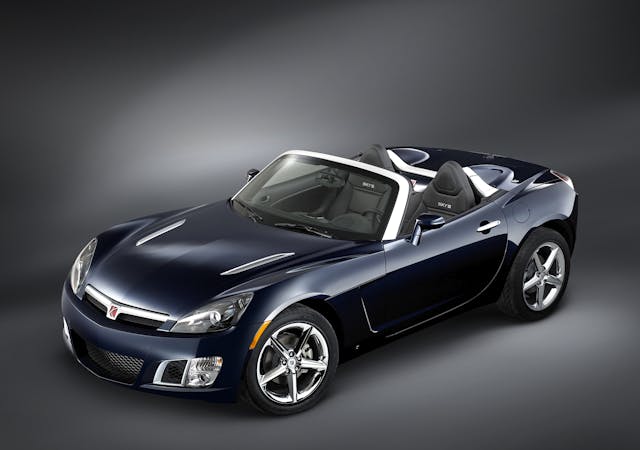
The Sky Shoulda Been the Limit

2007 Saturn Sky Red Line front three-quarter
GM

GM flogged its Ecotec four-banger, and I know they made crazy power for drag racing. But I thought the Pontiac Solstice and Saturn Sky deserved a more refined motor. — Larry Webster

They needed an LS, maybe just a small-displacement 4.8-liter, to keep Chevrolet appeased with their Corvette’s dominance. But I am sure that was discussed in some conference room at GM, and it was quickly shot down. — Sajeev Mehta

Featured image- Ford GT with Ecoboost 6 cylinder engine.