Life sometimes can seem off kilter as responsibilities mount and people plow all their physical and mental resources into what seems to be the most pressing crisis of the moment.
But Lumbie Mlambo says that’s a good time to take a step back. Everyone has the potential to shine in life’s darkest moments, but the key to achieving goals and an overall better existence is to maintain a balance so that one aspect of your life isn’t consumed by another.
While some people might say balance in life is an impossible goal, she disagrees and says when each of us find our equilibrium, we become more productive and a greater asset to our communities.
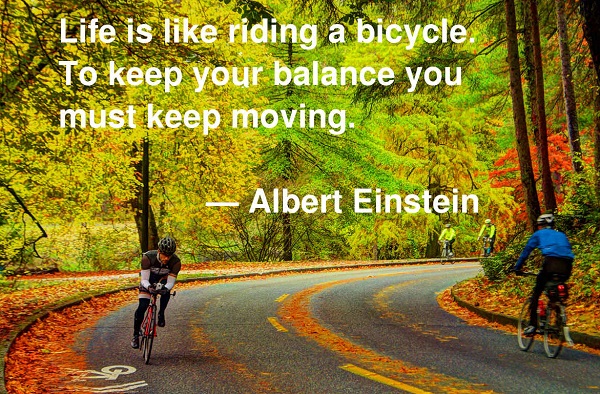
“There’s balance in everything we do, be it walking, talking, eating, sleeping, working or spending time with family,” says Mlambo, editor of Equanimity Magazine, an online publication that features inspiring stories of life and success.
“For example, look at how we try to deal with our work-life situation. We balance our workload so that we can still make room for other activities, to spend more time with our spouses or our children. We do that because we understand how important it is.”
She offers these reasons for why living a balanced life is essential.
• The health factor. Staying balanced is a key to a healthier and successful life. Both mental health and physical health benefit, and as a result, so do our overall lives. “When we’re healthy, we’re able to care for ourselves and others in our community,” Mlambo says.
• The empathy factor. When we find balance in life, we can better understand the importance of helping the underprivileged, says Mlambo, who grew up in a rural area in Zimbabwe. You begin to realize that someday you could be in their situation, which makes you a more empathetic person. “Your economic situation is like your health,” she says. “Nothing is guaranteed.”
• The role-model factor. Sharing our stories – whether it’s a tale of success or even a tale of failure – is important because others can learn from us or be inspired by us as they too strive for a balanced life. “When you tell your story, it empowers, motivates and encourages people to not give up on their dreams and goals,” Mlambo says. “Maybe you think your story is just not that interesting or important. But for someone out there, it may be the spark that ignites them to great things.”
Mlambo always strove to find balance in her life. But she became even more passionate about it after she suffered a stroke in 2001 that left her partially paralyzed. She since has recovered, but says the event had a profound impact on her and she will always consider herself a stroke patient.
“Before the stroke, I thought my life was balanced in a way,” she says. “I mean, I ate healthy foods. I exercised seven days a week. But it was not balanced in the way I wanted. I had been too focused on myself. I realized that life was not just about me, but about others.”
Finding balance in life isn’t just a feel-good concept, Mlambo says. As people achieve balance, they realize they have the potential to rise above their circumstances. They can become more productive in their communities and that is good for everyone.
“Staying proactive and shifting the way we think can even help the economy to grow and can help create more jobs,” she says.
Certainly, maintaining a balanced life may be tougher than ever because technology allows work – emails, text messages, telephone calls – to intrude on people’s “off” hours. But that’s just all the more reason to make a concerted effort to strive for balance, Mlambo says.
She says it’s become popular in some circles to argue that a balanced life is a myth and can’t be achieved. But regardless of their views, she says, most people seem to be trying to bring balance to their lives, even if they don’t think of it that way.
“We eat healthy to stay balanced, we get enough sleep or rest to avoid stress, we juggle our daily activities to stay balanced,” Mlambo says. “To be successful in anything we do, we must have some sort of balance.” For the Silo, Lumbie Mlambo.
Screenshot from waaaay back in 2010 and from an Ontario Lottery Gaming commercial. The premise? You’re stuck in a desert in a stalled car with a giant robot attacking. But then you remember what’s in the glove compartment…watch the video below and realize that counting on a lottery win is not the best way to financial security.
Maybe you’ve seen the ad, or one like it? For example-an Ontario Lottery Gaming commercial that depicts an attractive woman climbing out of bed, enjoying a leisurely cup of coffee before climbing into the cockpit of a sailboat, the implication being that if one wins a multi-million dollar jackpot, one can have the “yachty” lifestyle.
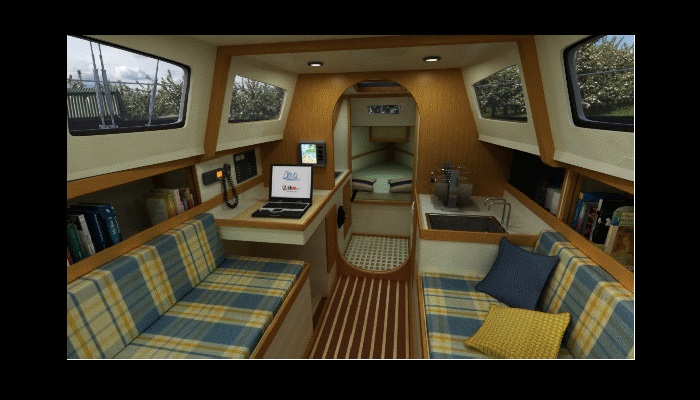
As I write this, I am sitting in the cockpit of my sailboat sipping a cup of coffee while enjoying the morning sun, and I have never won the lottery. In fact, I will be going to work at my average-guy, average-wage job shortly. Then, at the end of the workday, I will be returning to my sailboat, to enjoy the sunset.
For several years my wife, and I, and our dog, have spent the spring, summer and fall aboard our small sailboat. We return to our “dirt-home” only occasionally, to do laundry, mow the lawn so the neighbours don’t complain, collect mail and make sure the place hasn’t burned down.
This is the view that Bryan enjoys along with his ‘dock coffee’ at the Port Dover Harbour Marina. photo: B. Jones
After all, we need some place to live when the water is too hard and too cold to float a sailboat.
When new acquaintances find out that we are sailors and dock-rats, we often hear, “Oh, I have always wanted to sail!” or “I have always wanted to live on a boat!” What follows is often an enjoyable conversation about how to make it happen, how to “live the dream.”
I will confess, though, when hearing “Oh, I have always wanted to…” that the curmudgeonly little voice in the back of my head wants to retort, “No, you haven’t. If you really did, you would be doing it.”
Because it ain’t that hard to do.
We’re not rich. As I mentioned, my wife and I are pretty average people. Average age, average income, average credit scores, average sized mortgage, kids in college… look up “average” in the dictionary, and you don’t see our picture, because there are millions of folks just like us, and somebody way up the line got the honour.
We made a choice. We chose to buy a good, old boat for a mid-four- figure sum, invest a few hundred bucks a year on maintenance and a few hundred more on a slip to dock it in.
Our boat cost less than the annual membership at many golf clubs, and our slip fee for 6 months is less than a two week cottage rental in Turkey Point.
Bryan’s solution to beating the heat is to leave the dock and sail into the wind.
(Okay, before you start pelting me with hate mail, there’s absolutely nothing wrong with golf or vacationing in Turkey Point. Really. Except the clothes. KIDDING!)
It isn’t all fun and games and Jimmy Buffett tunes though.
Before you dash out and buy an old boat, here’s ten things my wife and I have learned over the past few seasons:
1. The stuff that bothers each of you about each other in 2000 sq ft on land does not magically go away in less than 200 sq ft on water. Learn to communicate, consider and compromise.
2. If you take it out, put it away. Now.
3. Each new item onboard means an old item has to leave.
4. Its okay to not talk.
5. One cooks, one does dishes. Helping doesn’t help.
6. When the dog needs shore patrol, the dog. Needs. Shore. Patrol. Now.
7. Find your own quiet spot, whether it is the v-berth, quarter berth, foredeck or cockpit.
8. You don’t have to get there today. You don’t even have to get there tomorrow.
9. When docking, mooring, anchoring, tacking or damn near anything goes awry, talk it out, and then hug it out.
10. There is a difference between being heard, and yelling.
We live in a slip on a dock with no services. No electricity and no water (aside from that which the boat floats in, smart-alecks,) means we have to refill our onboard water tank from 6 gallon water jugs hauled up the dock a couple of times a week, heat water on our alcohol stove to wash dishes, use solar panels to keep our batteries topped up and we don’t have air conditioning, or a microwave, or a big flat screen TV. A shower is a 10 minute dinghy ride or 15 minute walk away.
And we’re cool with that. We have become better, more creative cooks, we read more, we talk more, and the sunsets here and the characters we share them with more than compensate. We have talked more, laughed more and shared more with our dock-side neighbors than we ever have with our neighbors “on the dirt.” Our house is a house, but this is our home. For the Silo, Brian Jones.
Agrarians from various ancient cultures around the world discovered the soil fertility benefits of charred biomass over two thousand years ago.
Now known as ‘biochar’, this ancient soil management practice has been enjoying a renaissance of late for a number of reasons largely related to the need for more resilient and productive soils and biochar’s ability to sequester carbon in a safe and beneficial manner.
Biochar is made by baking organic material in an oxygen-limited environment, called pyrolysis. Benefits vary depending on the soil, crops and climate where biochar is used with poor soils benefiting the most. Providing long-lasting organic material, improving water and nutrient holding capacity, and improving overall soil tilth are all potential benefits.
Due to its porous nature and cation exchange capacity, biochar can also be used as a filtration medium to prevent nutrient run-off from farms into local water bodies. In Europe livestock farmers are adding small amounts of biochar to feed rations to improve feed conversion ratios and overall animal health. Biochar as carbon fodder has also shown promise as a way to reduce enteric methane emissions.
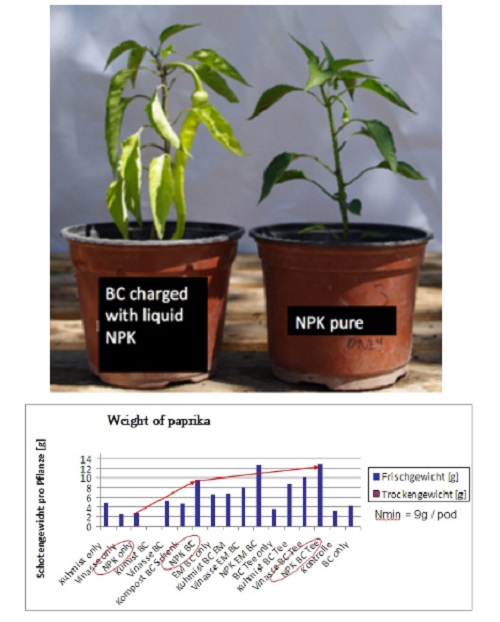
“When we first started in 2011 to load biochar with high amounts of liquid NP-fertilizer and tested them in pod trials, we could prove reduced nutrient leaching after simulated strong rain events. When we planted a second culture (paprika after radish) in the same pods without additional fertilization, plant growth was significantly improved in the biochar treatments (see image). From an economic point of view, the difference in growth might have been not relevant as some additional fertilization would have been cheaper than the price of biochar that saved some mineral fertilizer. However working with low amounts of nutrient enhanced biochar [1 t per hectare] applied as slow release fertilizer close to the roots every year seems very promising when viewed from both an economic and ecological perspective. ” Ithaka Institute
Biochar is increasingly available to purchase but farmers can also convert their on-farm waste biomass in to biochar.
Farm scale equipment for making biochar is evolving and shows promise not just as a waste conversion technology which produces a valuable soil amendment, but also as a means for farmers to generate renewable energy in the form of heat, and in some cases electricity. For the Silo, Kathleen Draper.
Seen here: “…we focused on organic plant nutrients and started multiple tests with a wide variety of nutrient rich biomass wastes including: liquid animal manure, urine, feathers, yeasts, wool, vinasse etc. Over the past four years we have developed a panoply of organic carbon fertilizer that can be produced commercially or manufactured by farmers themself all over the world. One of our favourites is the sheep wool, vinasse, pyrolyse ash, biochar pellets with 7% Norg / 6.5% P2O5 / 6% K2O “
Kathleen Draper is the US Director of the Ithaka Institute for Carbon Intelligence, a non-profit focused on research, education and program services that promote climate positive solutions which enhance land management, urban design, and resource efficiency.
Paris, January, 2023 – The World Heritage Committee meeting in an extraordinary session on Thursday inscribed the Landmarks of the Ancient Kingdom of Saba, Marib (Yemen) on the List of World Heritage in Danger.
The Landmarks of the Ancient Kingdom of Saba, Marib, is a serial property comprising seven archaeological sites that bear witness to the rich Kingdom of Saba and its architectural, aesthetic and technological achievements from the 1st millennium BCE to the arrival of Islam around 630 CE.
Yemen’s recorded history started when it was known as Saba/Sheba three thousand years ago, on the main spice route from the east to Europe, and was rich and powerful. The Queen of Sheba’s visit to King Solomon appears in both the Bible and the Koran.
They bear witness to the complex centralized administration of the Kingdom when it controlled much of the incense route across the Arabian Peninsula, playing a key role in the wider network of cultural exchange fostered by trade with the Mediterranean and East Africa.
Located in a semi-arid landscape of valleys, mountains and deserts, the property encompasses the remains of large urban settlements with monumental temples, ramparts and other buildings.
The irrigation system of ancient Ma’rib reflects technological prowess in hydrological engineering and agriculture on a scale unparalleled in ancient South Arabia, resulting in the creation of the largest ancient man-made oasis.
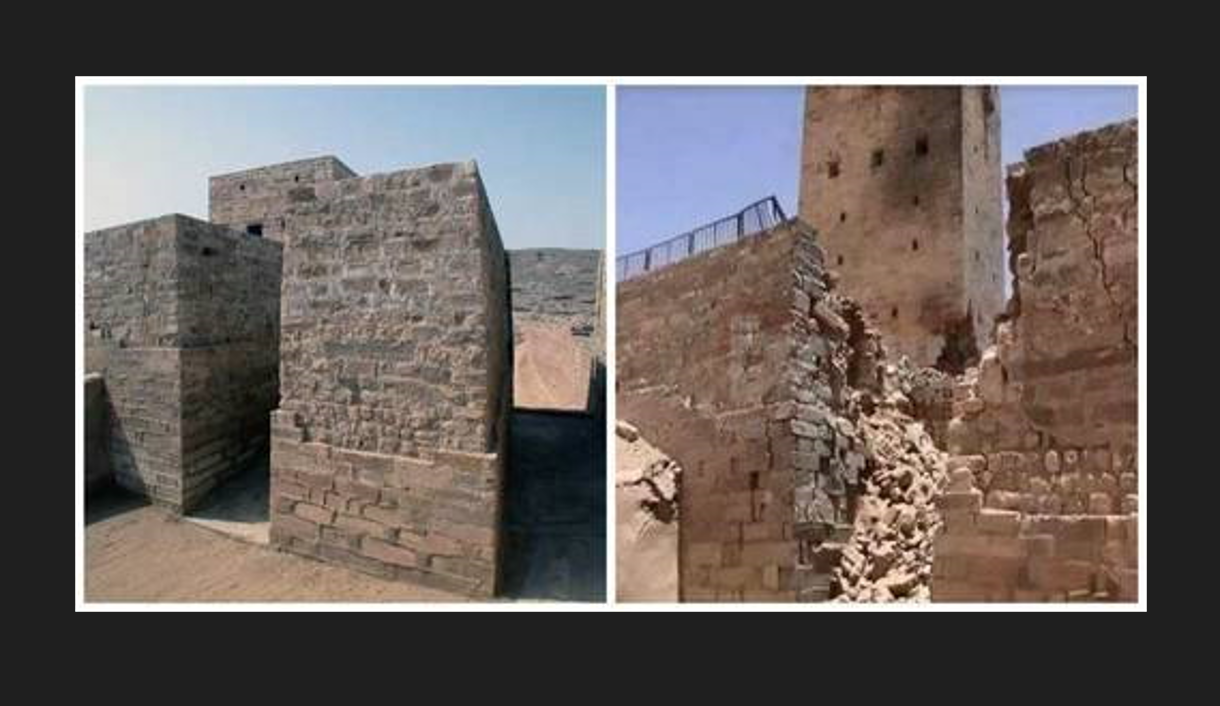
Marib Dam photos before and after the destruction. photo: German Archaeological Institute/Burkhard Vogt
The World Heritage Committee used an emergency procedure to inscribe this site on the List of World Heritage in Danger, due to threats of destruction from the ongoing conflict.
The List of World Heritage in Danger provides access to enhanced international assistance, both technical and financial, and helps mobilize the entire international community for the protection of sites.
To commemorate the company’s 60th anniversary, Audio-Technica released a limited-edition Sound Burger portable turntable this past November – four decades after its original debut. A-T never imagined the overwhelming response the release would generate.
That limited-edition AT-SB2022 retro red Sound Burger sold out in a matter of days worldwide – faster than anyone projected.
The Sound Burger will return in spring 2023.
Inspired by the response and acknowledging the loud chorus of fans who were not able to purchase the limited-edition model (but were still hungry for Sound Burgers), the company has announced that the Sound Burger will return in the spring of 2023.
“The response to the 60th anniversary limited-edition model of the Sound Burger portable turntable was nothing less than extraordinary,” said Gary Boss, Director of Marketing. “We heard loud and clear the frustration of those who hoped to buy one of these turntables but were unable to do so. While the new model coming in the spring will not feature the 60th anniversary numbered badge, color and packaging of the limited-edition version, it will be more widely accessible. We hope Sound Burger fans will be just as excited about this new model and that it will inspire the next generation of analog enthusiasts.”
Love at first listen, the Sound Burger is an affordable entry-level machine in terms of both features and price. For those who are new to vinyl records, it is a doorway to a deeper knowledge of analog music.
Thanks to its Bluetooth® connection and compact, lightweight design, the Sound Burger is the perfect partner for parties, picnics, or condensed living spaces. It easily connects to Bluetooth headphones or speakers for up to 12 hours of wireless record listening.
The Sound Burger offers high-quality sound reproduction with a belt-drive system that plays 33-1/3 and 45 RPM records. To achieve both portability and stability, the tonearm employs a dynamic balance system in which stylus pressure is applied via a spring. In addition, a high-precision DC motor maintains stable rotation. Accessories include a 45 RPM adapter, RCA audio cable (3.5 mm male to dual RCA male), and USB cable for charging (USB Type-A / USB Type-C™). The stylus on the Sound Burger can be upgraded with the higher quality ATN3600L (sold separately).
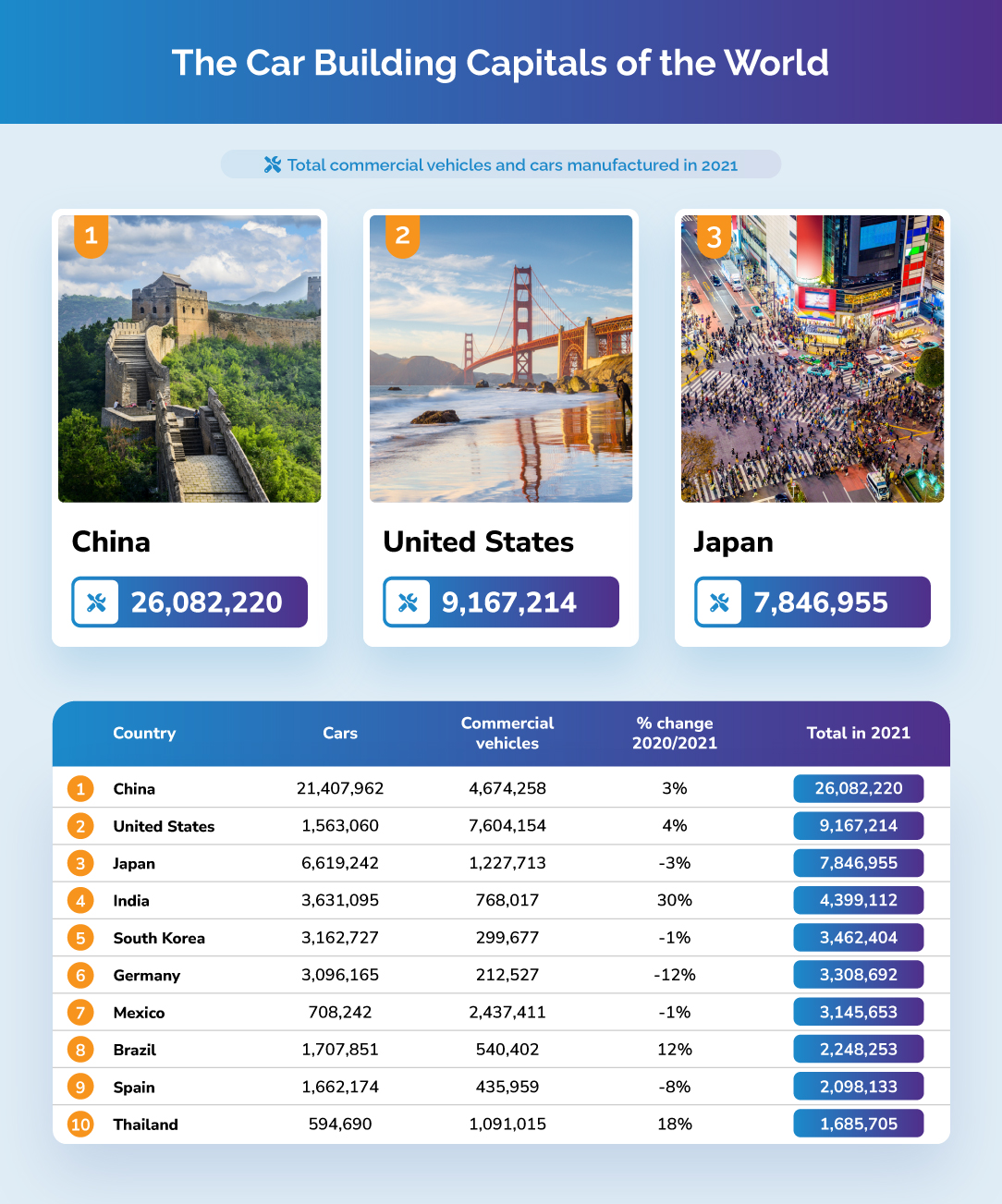
The research by GoShorty looked at worldwide car production figures from previous years, the number of people employed in the automotive industry, and other factors to reveal which countries produce the most and least commercial vehicles in the world.
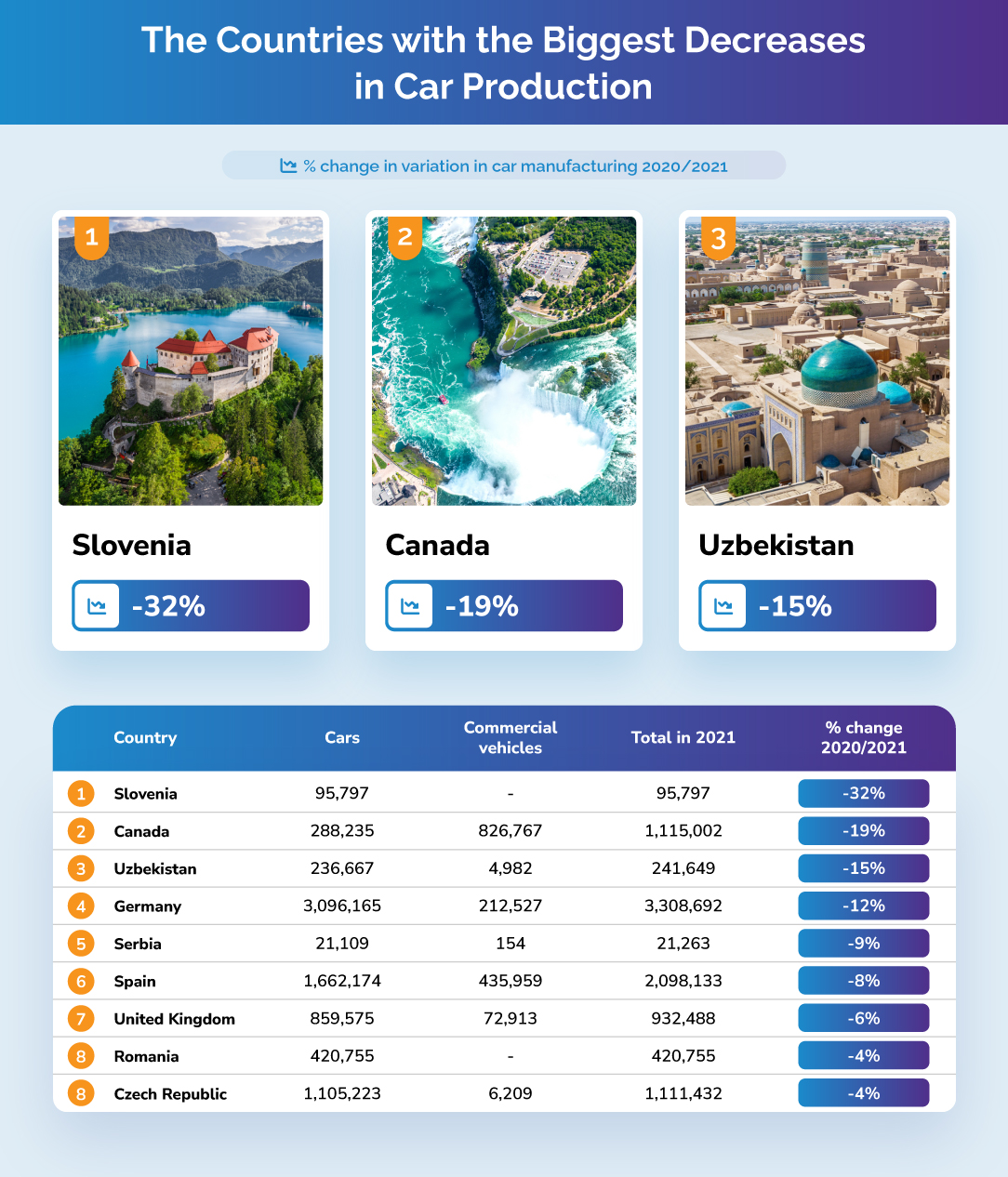
Countries with the biggest decreases in car production:
Rank
Country
Cars Produced
Commercial Vehicles Produced
Total Produced 2021
% change variation2020/2021
1
Slovenia
95,797
–
95,797
-32%
2
Canada
288,235
826,767
1,115,002
-19%
3
Uzbekistan
236,667
4,982
241,649
-15%
4
Germany
3,096,165
212,527
3,308,692
-12%
5
Serbia
21,109
154
21,263
-9%
6
Spain
1,662,174
435,959
2,098,133
-8%
7
United Kingdom
859,575
72,913
932,488
-6%
8
Romania
420,755
–
420,755
-4%
9
Czech Republic
1,105,223
6,209
1,111,432
-4%
10
Hungary
394,302
–
394,302
-3%
Slovenia’s motor vehicle production was reported at 95,797 units in Dec 2021. This records a decrease from the previous number of 141,714 units for Dec 2020. Global car manufacturers like Renault have made plans to cut production in the country. Renault has cut production in its Revoz Slovenia unit and reduced its staff by 350 people.
Canada had the second biggest decrease in car production in 2021 compared to the previous year, a decrease in production of -19%. The low production numbers, down from 1.4 million in 2020 and close to two million in 2019, came as the global auto sector was hit by a shortage of semiconductor chips caused by pandemic-related production issues and a surge in demand for electronics.
Uzbekistan had the third biggest decrease in car production in 2021 compared to the previous year, a decrease in production of -15%. In 2021, Uzbekistan produced 236,667 passenger cars. That means that compared to 2020, production decreased by 15%. Despite the reduction in production, Uzbekistan increased the export of cars by more than a third.
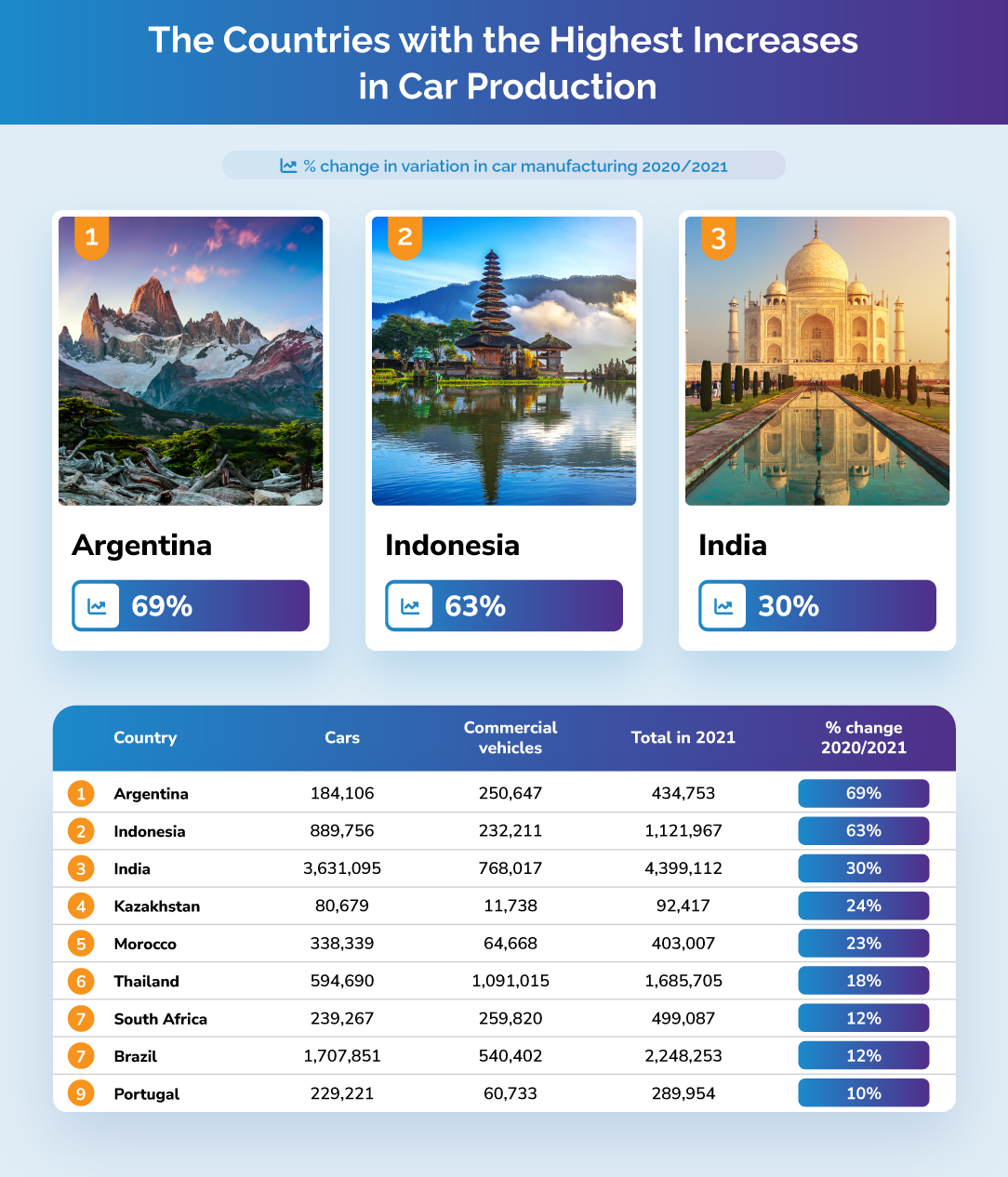
The countries with the highest increases in car production:
Rank
Country
Cars Produced
Commercial Vehicles Produced
Total Produced 2021
% change variation2020/2021
1
Argentina
184,106
250,647
434,753
69%
2
Indonesia
889,756
232,211
1,121,967
63%
3
India
3,631,095
768,017
4,399,112
30%
4
Kazakhstan
80,679
11,738
92,417
24%
5
Morocco
338,339
64,668
403,007
23%
6
Thailand
594,690
1,091,015
1,685,705
18%
7
South Africa
239,267
259,820
499,087
12%
7
Brazil
1,707,851
540,402
2,248,253
12%
9
Portugal
229,221
60,733
289,954
10%
10
Austria
124,700
12,000
136,700
9%
Argentina saw the highest percentage increase in car manufacturing in 2021 compared to 2020, at a rate of 69%. Argentina’s motor vehicle production was reported at 434,753 units in Dec 2021. This records an increase from the previous number of 257,187 units for Dec 2020. This year, Argentina’s Senate has approved a bill to promote the automotive industry. The initiative was spearheaded and supported by IndustriALL affiliates in the country.
Indonesia had the second-highest increase in car production in 2021 compared to 2020, at an increase of 63%. As well as being the fourth most populous country in the world,
India was the country that witnessed the third-highest increase in car production in 2021 compared to the previous year, at an increase of 30%. India’s automotive sector is benefiting from a host of improvements, which include global supply-chain rebalancing and government incentives to increase exports.
Methodology:
We started by taking the International Organization of Motor Vehicle Manufacturers’ 2021 PRODUCTION STATISTICS to get World Motor Vehicle Production figures, to find the total number of commercial vehicles and car production for each country. This data is accurate as of 01/11/2022.
Ukraine and Russia were omitted due to the ongoing conflict between the two countries.
We ranked our countries based on their total production of both commercial vehicles and cars in 2021. We were also able to rank these countries based on their % change in variation between the years of 2020/2021 to find which countries had an increase in the number of produced cars in recent years.
We used ACEA’s Share of direct automotive employment in the EU, by country, to find the total share of direct automotive employment in total manufacturing for each of the 27 member states of the European Union in 2020. We were able to rank each country by the share of automotive employment. This data is accurate as of 01/11/2022.
Further findings:
China is the world’s biggest manufacturer of cars – it produced the most cars and commercial vehicles in 2021, with a total of 26 million units manufactured.
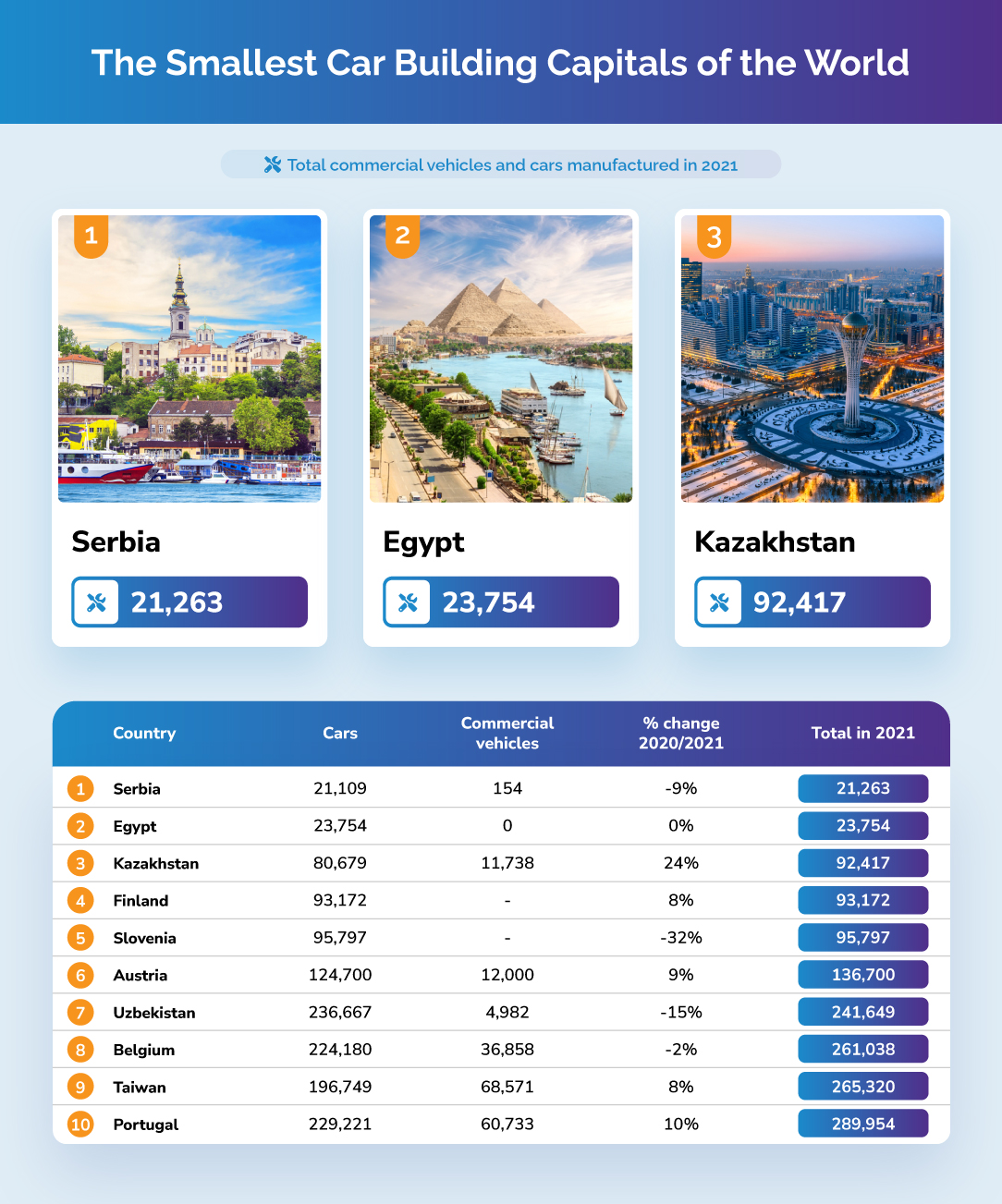
Egypt had the second lowest number of vehicles manufactured in 2021, with a total of 23,754 commercial vehicles and cars produced annually.
Slovakia has the highest share of automotive employment in Europe – it accounts for 16.2% of employment in the country.
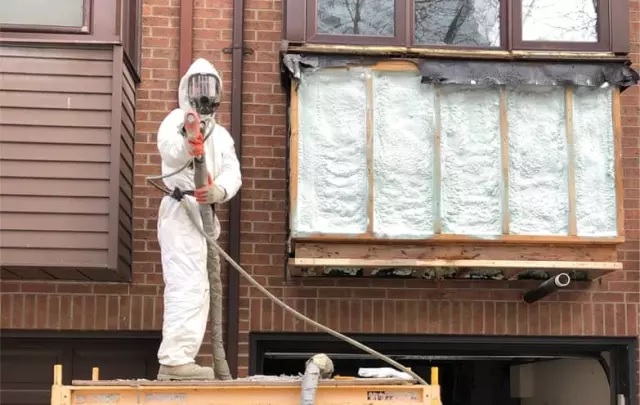
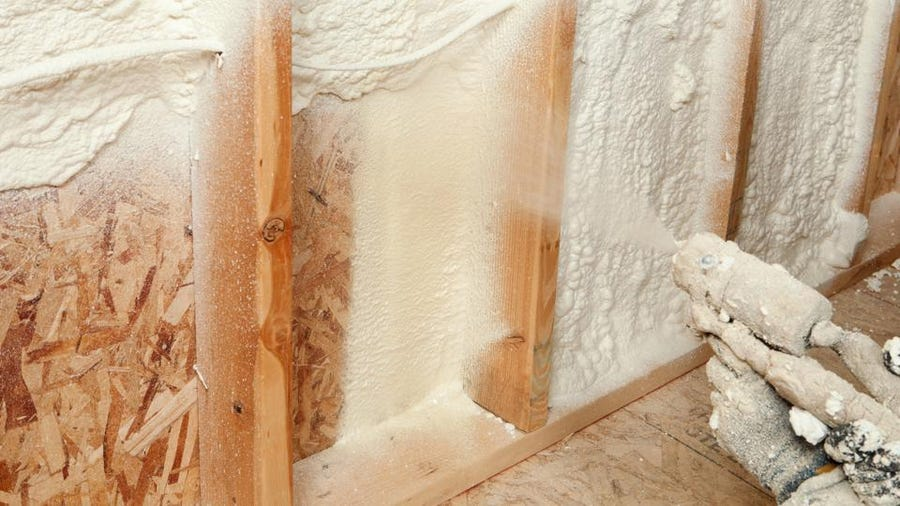
Expanding foam is a versatile material that is commonly used in construction, DIY projects, and home repairs. It is a polymer foam that expands upon application and hardens to fill gaps, cracks, and voids. Expanding foam is useful for insulating walls, sealing leaks, and stabilizing structures. While it is readily available for purchase at hardware stores and home improvement centers, it is also possible to make expanding foam at home. Visit here to learn more.
Making expanding foam at home is a cost-effective alternative to purchasing premade foam. It also allows you to customize the foam to your specific needs and preferences. In this guide, we will walk you through the steps of making expanding foam at home.
Step 1: Gather materials
To make expanding foam at home, you will need the following materials:
The ratio of ingredients needed to make expanding foam varies depending on the desired consistency and expansion rate. A common ratio is 2 parts polyurethane resin to 1 part isocyanate and a small amount of catalyst and foaming agent.
Measure out the ingredients using a mixing container or a measuring cup. It is important to be precise with the measurements to ensure that the foam expands and hardens properly.
Step 3: Mix the ingredients
Pour the polyurethane resin and isocyanate into the mixing container. Use the stirring stick to mix the ingredients together until they are fully combined.
Step 4: Add the catalyst and foaming agent
Once the polyurethane resin and isocyanate are fully combined, add a small amount of catalyst and foaming agent. The exact amount of catalyst and foaming agent needed will depend on the size of the batch and the desired expansion rate.
Step 5: Stir the mixture
Stir the mixture until the catalyst and foaming agent are fully incorporated. It is important to stir the mixture thoroughly to ensure that the foam expands and hardens properly.
Step 6: Pour the foam into the desired area
Pour the foam into the area where it is needed. The foam will begin to expand as soon as it comes into contact with the air. Use a tool, such as a spatula or putty knife, to shape the foam as desired.
Step 7: Allow the foam to harden
Allow the foam to harden completely before handling or using it. The drying time will depend on the size of the batch and the desired expansion rate.
Benefits Of Expanding Foam
Expanding foam is a versatile and widely used material in construction, DIY projects, and home repairs. It is a polymer foam that expands upon application and hardens to fill gaps, cracks, and voids. Expanding foam is useful for a variety of purposes, including insulation, sealing leaks, and stabilizing structures. In this article, we will explore the many benefits of expanding foam and how it can be used in a variety of applications.
Insulation: One of the primary benefits of expanding foam is its ability to insulate a space. When applied to walls, attics, or crawl spaces, expanding foam can help to keep a building or home warm in the winter and cool in the summer. This can save energy and reduce heating and cooling costs. Expanding foam is also effective at blocking drafts, which can further improve energy efficiency.
Sealing leaks: Expanding foam can be used to seal leaks around windows, doors, pipes, and other openings. It is an effective way to prevent water damage and improve the overall energy efficiency of a building or home.
Stabilizing structures: Expanding foam can be used to stabilize structures, such as foundations, roofs, and walls. It is often used in situations where traditional methods of repair are not feasible, such as when access to the damaged area is limited.
Filling gaps and cracks: Expanding foam is an excellent material for filling gaps and cracks in walls, floors, and other surfaces. It can be used to fill small gaps and cracks as well as larger voids.
Durability: Expanding foam is a durable material that can withstand a range of temperatures and weather conditions. It is resistant to water, moisture, and rot, making it an ideal choice for use in damp or humid environments.
Easy to use: Expanding foam is easy to apply and does not require any special tools or equipment. It can be applied using a simple nozzle or applicator and hardens quickly, making it convenient to use.
Customizable: Expanding foam can be customized to suit specific needs and preferences. The expansion rate and consistency of the foam can be adjusted by adjusting the ratio of ingredients used to make it. This allows for a wide range of applications and allows the foam to be tailored to specific requirements.
Versatility: Expanding foam can be used in a wide range of applications, including construction, home repairs, and DIY projects. It is an effective material for filling gaps and cracks, sealing leaks, insulating spaces, and stabilizing structures.
Conclusion:
Making expanding foam at home is a cost-effective and customizable alternative to purchasing premade foam. With the right materials and a little bit of elbow grease, you can easily make expanding foam at home. Just follow the steps outlined in this guide and you’ll be on your way to using your very own homemade expanding foam in no time.
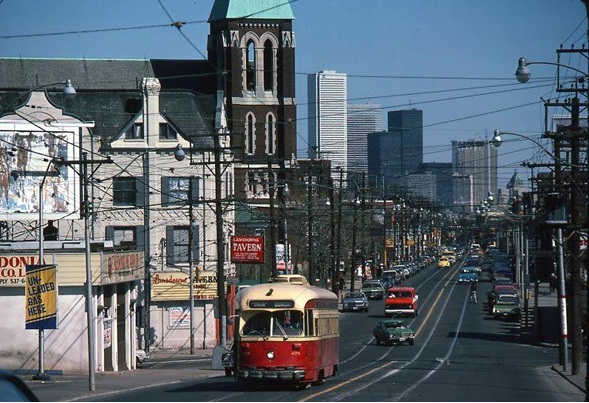
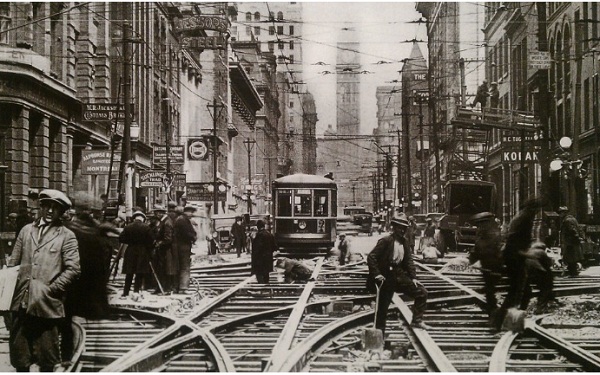
I am sure that many of you will agree that the streetcars that rumbled through Toronto from 1800s until… let’s say 1990’s helped shape many neighborhood. They were the most effective way to connect Toronto’s core with its suburbs and greatly encouraged development of the communities as new grocery stores, restaurants, galleries, shops and banks as amenities have been built near the streetcar lines.
Standing in the middle of road, going nuts being stuck behind a streetcar, it is sometimes difficult to appreciate how important role they have played in the city’s history.
First Streetcars in Toronto
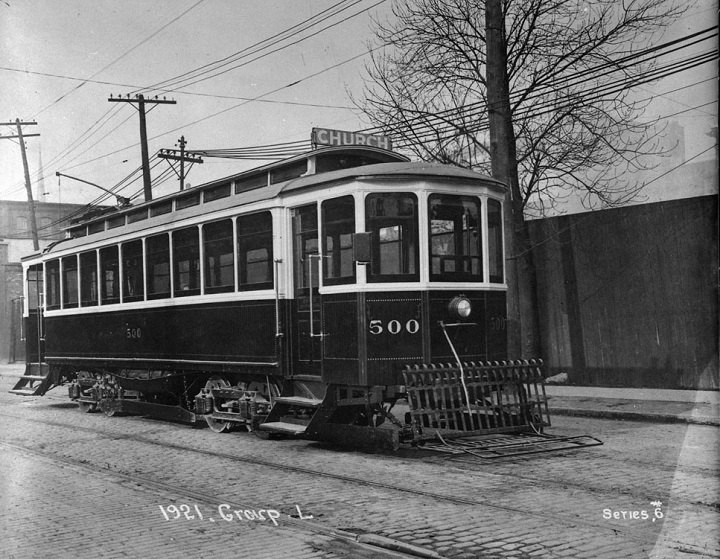
Inspired by the success of horse-drawn streetcars in the U.S., Alexander Easton’s Toronto Street Railway company started operating in 1861. New rail lines played a vital important role in connecting the city centre with its sleepy suburbs. What started as an enterprise with 6 miles of track and 11 cars, turned slowly into 68 miles of track with 361 street cars. The company expired in 1891 and the management was turned over to the Toronto Transit Commission (TTC).
The next company to take control over the system was the Toronto Railway Company, under which first electric streetcars were introduced. All services were later taken over by the Toronto Transportation Commission, which was later renamed to the Toronto Transit Commission (TTC).
Building street car tracks on Bay St. Toronto circa 1918
However, even streetcars had their bad times. In the 1960s they were almost abandoned when people thought of it as an outdated mode of transportation. Thirty years later it fell upon hard times once again because of budget cuts, the recession and its inability to service the rapidly-growing parts of the city.
It took months for the TTC to pull itself out of its bad times, but streetcars somehow managed to return back to their previous fame. Since then, the company’s services have been improving every year, but there are still some issues. Let’s take a look at the current state of the streetcar rail services in Toronto, its advantages and the most annoying faults.
The Ashbridges Bay street car line 1917.
Present
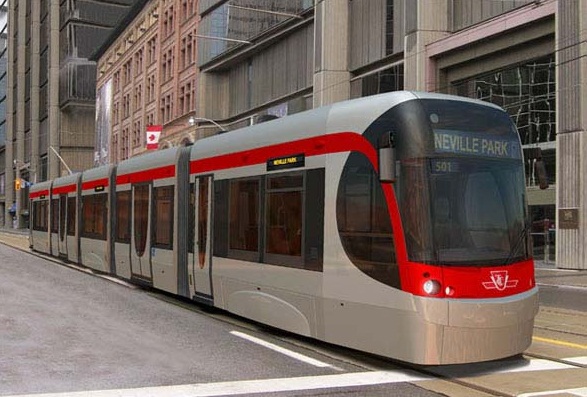
Although the number of streetcars crossing the city declined in the latter half of the 20th century, they never disappeared completely. In fact, streetcars have become a vital part of Toronto’s history and nearly every citizen’s life. Nowadays, the city owns 247 streetcars, of which 52 are higher-capacity articulated streetcars. These operate over 11 routes, serving a total of 617 stops over a system length of 75 kilometers. These numbers make it by far the largest surface rail system in North America.
Public transportation in Toronto relies heavily on streetcars in the downtown core which is the thin red lines you see on the TTC map above. Technically, they’re light rail trains, but locals refer to them as streetcars. Each line usually follows a street e.g. 501 Queen St., so it shouldn’t be too hard to get on the right vehicle.
Done right, streetcars can really encourage the overall development of the city, they are able to define whole neighborhoods, reduce traffic congestion, reinforce retail, bring life to streets and fit easily into the surroundings without disruption to existing businesses, residents or traffic.
Pros
One of the main advantages of streetcars is its high passenger capacity. Streetcars carry between 75 and 100 people per vehicle.
Regarding energy efficiency, streetcars are believed to do a little bit more for the environment that other public transport systems. Because every streetcar user means one less car on the road, words such as clean air quality, for environmental sustainability, for climate protection are often associated with streetcars. In fact, nothing drops greenhouse gas emissions faster than effective rapid transit, so if we truly want green for Toronto, streetcars might be the answer.
Another argument made in favor of streetcars is their long lifespan. The vehicles are designed to be very durable and can keep running for over 30 years. In contrast, buses wear out after just 8 – 12 years.
One of the “last” Toronto street cars. image: blogto.com
Since they are longer-lasting than other means of transport, the cost of repair and replacement is typically also much lower.
One ride costs $3.25, making it a very cheap transit option across the city. At the same time they are relatively fast to build, without impacting the city for a long period of time and resulting in minimal disruption to the neighborhood.
Streetcars can be so charming. Well, this is a subjective opinion, but have you seen vintage trolleys in San Francisco or New Orleans? They’re so awesome.
Cons
There are two sides to every coin so we have to mention disadvantages of streetcars, too. Once again, let’s talk about their passenger capacity. Even though they carry a relatively high number of passengers, the difference between a streetcar, LRT and subway is noticeable. Just for comparison, a subway train can hold up to 1500 passengers and an LRV can hold up to 255 people in a single vehicle (depending on speeds, frequency and actual vehicle length and capacity).
Next, streetcars require “loops” to turn around, which slows them down. This is not the case with cars, LRVs or subways.
Streetcars are noticeably slower than cars as they are travelling at speed of about 17km/h. LRVs run at an average of 27km/h and subways at 32km/h.
Streetcars are said to contribute to traffic congestion greatly. Imagine a situation when a streetcar stops to let passengers load on or get off. In such situation, both lanes at of traffic are blocked. This causes delays and angst among riders. If you’ve ever driven behind a streetcar, you know how much of a problem this is. You have nowhere to go, unless you stand far back enough to turn your car around.
At certain times they may pose danger to both passengers and pedestrians. For example, when cars try to pass them before they stop.
When it comes to costs, it is important to distinguish between the cost of laying down streetcar tracks, maintaining the streetcars themselves and maintaining roads. Streetcars require a whole lot of special mechanics and thus the cost of maintenance is much higher.
And let’s not forget about pollution. You might disagree with a statement that streetcars are a reason behind increased pollution in our city, but if you think about it for a second, you will realize there is some truth in it. Since it creates traffic congestions, it also adds to pollution.
Future of Streetcars
Even though many people are getting more and more angry at streetcars, they are not going anywhere. When (then Mayor) Rob Ford tried to cancel the Transit City light-rail-plan and build tunnels underground in some parts of the city, city council decided to keep new transit lines above ground. The main reason behind this decision was the cost of tunneling and powering subways.
And for those unhappy citizens who are queuing up behind streetcars every morning, the least Toronto could do is indicate that they are keeping an open mind about new subway lines. And let’s not forget that the city intends to build and operate new light rail transit lines, which means that people will be able to travel in new dedicated lines, separated from motor vehicle traffic. For the Silo, Jamie Sarner.
When I think about whether working from home is right for any person, I remember a story that Richard Kiosaki told in his book “Poor Dad- Rich Dad”. He talks about his two dads who had two very different mentalities about money. One had the mentality of an employee and the other of a business owner. Both dads believed they were giving correct advice although they were advising exactly the opposite.
His “poor” dad told him to choose employment because it offered job security and corporate ladder, where he could become somebody after years of being promoted. The “rich” dad asked him to choose the path of an independent business owner because that way he could work for something that he owns.
Of course when you talk to most people about starting your own business and having a passion about some new idea, you will get two main reactions.
There will be … The Naysayers – These are the people who will tell you, “you will never make it” and that you are “stupid to attempt the impossible”.
But then you will find people who are…
The supporters – These are the people who will say go for it. They say “don’t worry” and “we will be there for you when you need us”.
While you may have your questions and even your doubts, listening to the naysayers will never get you where you want to go. Listen to those who will ask good questions, who will give you good advice and support you if your desire is to do something unique and be your own boss.
The fact is, working from home has some fantastic advantages. 1. Flexibility When you are juggling a family and other obligations, having a work from home business is a huge bonus. Firstly, you can more easily accommodate your customers in all the different time zones. Rather than being tied down to a regular office hour routine, having the ability to work part time or full time, takes on a whole new meaning.
2. Your overhead costs are reduced You will save money on gas, the wear and tear your vehicle (not to mention the wear and tear on your nerves), office space and utilities. The reality is that with those savings you can be a lot more flexible in how you are pricing your product.
3. Testing,Testing When you realize that more than 50% of all new businesses fail, then testing out your new business without a lot of overhead is common sense. When you test and tweak your home business, you can determine its viability before you start investing a lot of money!
4. Tax Benefits Many people don’t realize the major tax incentives there are for having a home business and while the tax laws are different from country to country, some of the perks are:
– A percentage for rent or mortgage costs (for the space you use to operate your business)
– A percentage for utility bills such as gas, electricity, water
– Business operating software and management tools, which also includes webpages etc.
– Phone and communications, including internet expenses
and of course the biggest tax saving
The initial investment you paid to start your business
5. Experience A home based business will allow you to gain invaluable business experience and business skills such as internet marketing, identifying markets, learning how to market yourself and all the other traits needed to run a successful home business. This experience can be transferred to other projects that you wish to pursue.
6. Turning Creativity into a profit Creating a home business is the ideal way to turn your hobbies or passions into a business that will be unique to your talents and what you really love to do.
You also have to be realistic in understanding what owning a home business is all about! “Working from home”, it has a wonderful sound to it doesn’t it? I bet many of you have visions in your head of sleeping in, lazing around and working when the mood strikes you right?
Like anything else there are also challenges that you should take into consideration and create a plan on tackling them. Any problem can be solved as long as you are prepared for what is coming your way.
1. Motivation It’s great to be your own boss, but with no code of conduct to follow or formal routines to keep you on track, it’s easy to fall into the trap of putting off doing your business and procrastination. If you have an ineffective time management schedule, it makes it hard to reach your goals.
Solution Make sure that you follow your passion and this will help you with getting motivated and working extra time when needed. 2. Lack of privacy Unless you have a separate office set up, privacy can be a big concern. For example if you have created your office near the family room, and your house guests drop by, they will be near your work area. Your documents, work and even files can be fair game to everyone! Take that thought one step further and if you have kids, they will come in and distract you while you work
. Solution
Create your own workspace and set your own hours. Make everyone aware that when you are working you can’t be disturbed and if anyone needs your help they need to respect your schedule like everyone else.
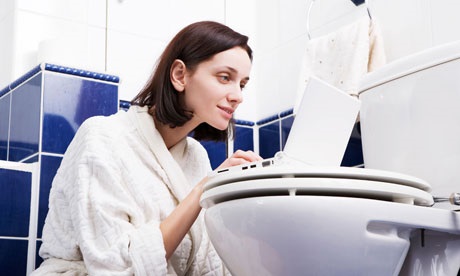
Finding a workplace that offers privacy can be a challenge at first. We don’t recommend setting up a home office in your bathroom. CP image: guardian.co.uk
3.Learning When starting a home based business, you are going to have to develop a lot of new skills, which will take time. You will be wearing many hats and in the beginning you won’t be able to afford to hire specialists who can quickly and efficiently do new tasks to you. You will have to learn things which you never thought you would need to learn.
Solution This generally is a positive thing. You would never embark on new challenges if it wasn’t for your business. As the oldsaying goes, “knowledge is power” and along with building your business you are becoming an expert in new domains.
4.While its nice to be the boss, you will find that you will be facing unexpected situations you will have to deal with on your own. When you make a mistake you will be dealing with the consequences on your own.
Solution Being the Boss is rewarding but paying unnecessary bills for unqualified decisions is not fun.
“One of the most important leadership lessons is realizing, you are not the most important person or the most intelligent person in the room at all times.”
~ Mario Btali
5.Loneliness is a huge downside to running your own business at home. In the beginning you love the fact that you can get your work done, but after a few days or weeks, you may find that you are tired of hearing your own voice.
It’s a sort of dread that happens and you might turn to such things as web surfing or chatting with friends to relieve the nervousness you may experience.
Solution
In business you need to talk to people about your ideas and brainstorm to see if they are workable. Set up a “support system” early in your business, and you will find yourself not only running into less problems, but you will have someone to exchange your ideas with and have good conversation when you need to step away from daily tasks.
6. Legalities. Most people do not realize that whether you are “telecommuting” or creating a home based business, you need to be sure that you are covered by insurance, that you have checked zoning laws, and that you have the proper paperwork for taxes. Completing paperwork like NDA forms is important to safeguard your business.
Solution First don’t worry about not knowing all the legalities. The Government and your suppliers will quickly communicate to you what your obligations are. They will scream loudest, and you will comply with their demands. 7. Dependency. Most people do not realize that even as a business owner, you need to create team of people who you work with. In case of a car accident, you still want to come back to functional business and want to have someone who can handle daily tasks where you are not around.
Solution Have family, business partners or a team of supporters be involved early in your business, at the very least have part time bookkeeper or a person who will answer phones for you when you are away. 7. Balancing your life. Working at home can cause a lot of stress in your life, juggling the needs of your family with the needs of your work and for some people it can cause a lot of strain in their relationships. You will want to take vacations which will require someone to look after your business while you rest and recharge. You will need to plan for things like this, so you are not surprised by life, because life has a tendency to surprise us when we least expect it.
Solution Although business is important at all times, you will not be able to benefit from it if you are stressed, tired and sick. Implement periodic holidays and time away from your work. Leave your home far enough so you can’t do anything business related while you are away. This will provide you with time to recharge.
As you can see having a home business can be a very workable solution to creating a good income. However, like anything, you need to look at all sides of the equation. Ask yourself the question, will you take the advice of the “poor” dad and be the employee or the “rich” dad and choose the path of becoming an independent business owner.
For me, I chose to be an independent owner and I have never had any regrets!
So how do you respond when someone brings you into the conversation? How do you answer when they ask you for your opinion or who you’re going to vote for?
You could always just doodle on a receipt like this one from J. Barker 🙂
Sharon Schweitzer, an international etiquette expert, author and founder of Protocol & Etiquette Worldwide, says you have options.
Has politics become a reality TV show?
You don’t want to respond
Keeping your opinion to yourself can be difficult; however, it is possible. Say something like, “In the midst of such a contentious political season, I feel it’s best to keep my opinion to myself. I do appreciate your interest and wish you the best in your political decisions.”
By acknowledging and thanking them for their genuine interest, you are able to get out of sticky political conversations but retain your well-mannered and ever sophisticated demeanor.
If they push again
If they keep pushing for a response, you can play the undecided card and change the subject.
“I’m still evaluating the candidates and the issues and haven’t made up my mind yet. It will be interesting to see how it plays out.”
To get them off the topic for good, ask them about something meaningful to them that they will want to talk about. “I hear your son got accepted to Ohio State. Congratulations!” “Great job on closing that account. How did you do it?” “Tell me about your trip to the mountains a few weeks ago. I hear it is beautiful this time of year.”
You want to respond
If you would like to express your beliefs, the best way to do so is to cite research and concrete reasons why your views align a certain way, as this will encourage more of an intellectual conversation than a possible war of opinions. Just as you want to express your beliefs, be courteous and let the person you are speaking to express his or her beliefs, even if you disagree.
If you disagree
It’s inevitable that disagreements will arise, but when they do, handle them with grace, dignity and respect. Say something like, “That’s an interesting way to look at it and you bring up some valid points; however, I feel that…” Never raise your voice, show anger, abruptly walk away or make it personal.
Either way
Whether you decide to respond or not, be tactful, polite, and remember that educated responses will help you either to cordially engage, or graciously decline whenever these inevitable conversations cross your path. For the Silo, Alex Smith.
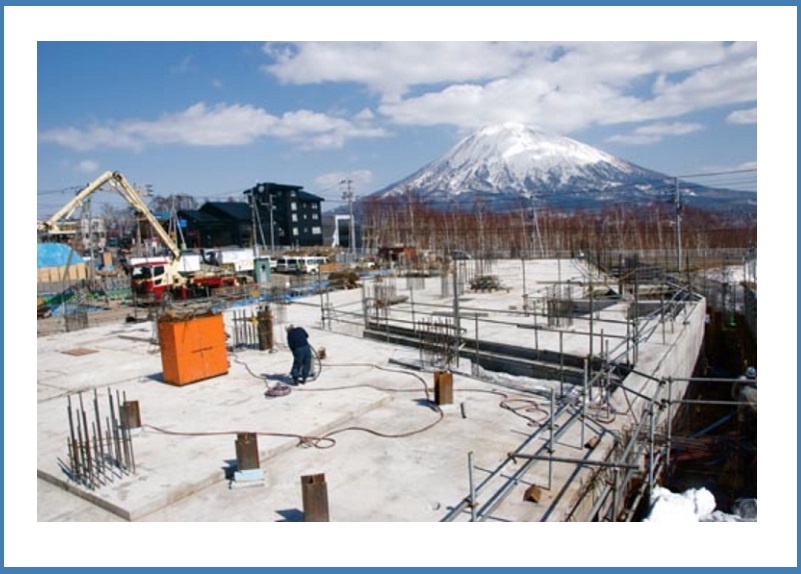
Concrete workers are unsung heroes. Their work doesn’t end, even when winter hits and the temperature drops.
Unlike people who work in the warmth of an indoor space, they may not have the luxury of avoiding the harsh weather.
Without the right precautions, they may suffer from problems such as hypothermia, frostbite, or trench foot. The wet weather can also increase their risk of injury. If the weather is extremely harsh, then work can be called off for safety reasons.
However, workers who are trained and experienced to work in cities that experience colder climates usually adapt well. For example, if you need someone to help you with concrete cutting in Calgary – then you can easily find a reputable and professional locally owned and operated company that’s been serving clients in cold climates for decades.
Here are a few ways concrete contractors adapt to the winter:
#1 They Pay Attention to the Weather Forecast
When working outside, contractors pay attention to the weather forecast. They identify potential weather-related issues so that they can prepare in advance. They also try to use daylight to their advantage and have artificial light to help if necessary.
#2 They Protect Their Body
When working in the cold, concrete contractors usually wear multiple layers. Some also wear insulated clothes, which shield the skin from moisture, and thermal undergarments. The outer layers are waterproof and quickly removable. On their heads, they may wear a wool liner under their hard hat.
In the winter, contractors may take more short breaks to warm up their bodies or their clothes. They may also try to get the most work done during the warmest part of the day. The buddy system also comes in handy during the winter, where partners can look out for each other.
#3 They Protect Their Hands
Gloves are especially important in the winter. Many contractors prefer leather gloves because they’re more resistant than cotton gloves, which can get damp. When the temperature drops to less than 20 C, they may switch to mittens. However, mittens aren’t always practical for work.
#4 They Protect Their Feet
Waterproof boots are a must in the winter. Contractors may treat their leather boots to waterproof them further and wear insulated socks. They may also wear multiple layers of socks, with the outer sock being the largest size. Some carry extra socks in case they need to work outdoors for longer periods.
#5 They Protect Their Equipment
After donning the proper equipment, concrete contractors also take precautions with their equipment. They avoid using cold tools because this can lead to problems. Instead, the tools are warmed up before they can contact concrete.
Tools with metal handlebars are treated with extra caution. Metal handles are covered with an insulating material to protect workers. Usually, contractors only use equipment that’s designed to be handled with gloves or mittens. Contractors may also use powerful tools that are integrated with dust collection to avoid cutting wet.
These are a few ways concrete contractors adapt to the winter when doing outdoor work. With the right precautions and appreciation from their clients, they get the job done correctly and safely.