Rocketium App Democratizes Video Creation

Audiences in today’s world are increasingly consuming information on the internet in visual and interactive ways. Every industry is exploring ways to transform and present content on video. What does this mean for learners around the globe?
“Being able to translate your story into over 120 languages is increasingly important in a global world.” – Anurag Dwivedi 

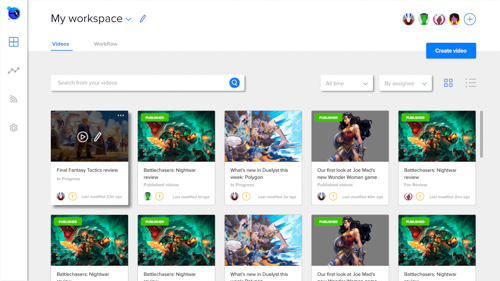
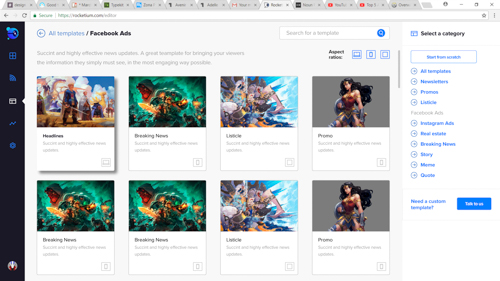
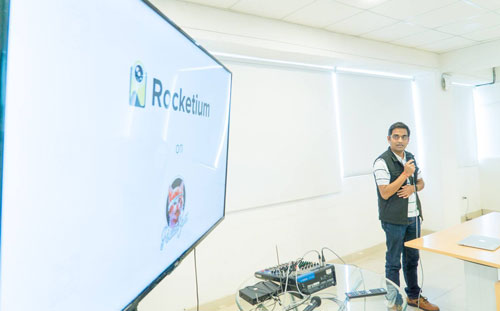
Anurag Dwivedi is one of the founders of the Rocketium video platform.  He believes everyone has important stories to tell. What limits the story-tellers is not having a platform that makes storytelling “easy to create and easy to consume.” The Rocketium platform is unique in that it allows teams of creators to work collaboratively on video projects in one innovative space.  The company has automated the majority of the time-consuming tasks of the video creation process. For example, some of the Rocketium product features include one-click styling, automatic resizing of videos in different aspect ratios for different social platforms, and automatic translation of any content into over 120 languages. In addition, the platform provides advanced controls for styling and sequence timing for users. This enables creators to customize styles in a way which Dwivedi claims no other video creation platform can provide.  Further, Rocketium creators have an online customer service team ready to support users’ production questions at any point in the process. Anurag Dwivedi from Rocketium talks further about how his company is giving anyone, anywhere in the world, the tools to tell important stories:
“I think the mindset that some of us can write a script but cannot produce an audio-visual version of it is a roadblock for many young creators.”  – Anurag Dwivedi 

What do you think sets Rocketium apart from the other video creation platforms?

Rocketium offers an end-to-end video creation suite that we believe no other product like it can offer. We’re enabling our users to scale video production efficiently by providing simple tools for the writers and marketers to create templates, and automation to generate videos in large volumes. The goal is to enable storytellers to work either individually or in teams with anyone, anywhere in the world.  Hence, all the features you need for a collaborative process, such as being able to assign videos to members of your team, or discuss creative issues in real time, or share content via social media platforms, are built into our system. We’ve broken down the massive job of video production and distribution into simple steps so that everything from writing a script to developing it, to editing and finally publishing on the internet are all on the same platform. And, of course, being able to translate your story into over 120 languages is increasingly important in a global world.

What do you see as the biggest challenge for an absolute beginner, a teacher or a student who wants to tell a video story?

Video making is often considered a daunting task — something that only experienced video editors  and designers can do. Rocketium has made the video creation process less intimidating and also faster. We have broken down the process into simple steps. We offer creators a versatile selection of themes and templates.  There are numerous options for video styling available to the user. Our process in some ways is similar to mini-blogging, i.e. the user is writing stories in a shorter format and then adding still images or video clips. Your job as the storyteller is to use our tools to create the most impactful video story you can without worrying about the design or styling aspect of video making.

How is telling a video story different from telling a text story?

I personally believe there is no difference if you have the right tools. I think the mindset that some of us can write a script but cannot produce an audio-visual version of it is a roadblock for many young creators. Visuals improve and enhance any story that’s ever been written.  The impact of a visual story is exponentially greater than that of a text story because visuals contain a lot more information in a sequence of frames and that leaves a lasting impression on the mind. Additionally, adding music and special effects to text always builds a deeper emotional connection between your story and its audience.
As creators develop more and more videos, they learn about the creative process and they get better at leveraging  the resources on the platform.”  – Anurag Dwivedi

Let’s talk about video creation as a learning process. What specific skills are nurtured in this process and why do you think they are important?

We present video creation as a learning journey which trains creators how to portray their story through a combination of words, images and music. As creators develop more and more videos, they learn about the creative process and they get better at leveraging  the resources on the platform. For example, what color palette will you select to evoke the right emotion for this portion of your story, or what style of music will generate the mood you’re looking for? Users ultimately develop and expand their creative skill sets while supported by the tools on the platform.

Is Rocketium designed for all wannabe video producers?  How would you describe your target audience?

We believe there is no one-fits-all solution for video creation. Our product offers global access to anyone who wants to produce a story on video. We have simplified the production process but there is plenty of space for users to develop their own creative and communication skills. Not everyone is destined to become the next Steven Spielberg, but we have built a comprehensive tool that allows anyone to try.  And we believe that to flourish in the 21st century, learners need to be able to use tools like ours to enhance their communication skills.

How else do you see the democratization of visual production impacting our society generally?

There is no doubt that dissemination of information is becoming easier as the world is more connected through smart devices. Anyone can now tell stories and distribute them on the internet. Two things we need to be wary about. First are the duplication issues and the relevance of content.  The second is the accuracy and truthfulness of content. Fake news is a global issue which we need to tackle as a global society. I believe this is where educators can help.
“We believe that to flourish in the 21st century, learners need to be able to use tools like ours to enhance their communication skills.” – Anurag Dwivedi

Look into the future — where do you see Rocketium 5 or 10 years from now?

We continue to explore the possibilities of creative learning tools for various scenarios. Ten years from now, I see Rocketium as a platform employed in all applications — education, entertainment, lifestyle, sales, marketing, etc. We are happy to be the backend engine for the creation and distribution of any form of interactive and visual content, by anyone and for everyone, from individuals to global enterprises. For the Silo, C.M. Rubin.

For more information

C. M. Rubin and Anurag Dwivedi

The Global Search for Education Community Page

C. M. Rubin is the author of two widely read online series for which she received a 2011 Upton Sinclair award, “The Global Search for Education” and “How Will We Read?” She is also the author of three bestselling books, including The Real Alice in Wonderland, is the publisher of CMRubinWorld and is a Disruptor Foundation Fellow.

Follow C. M. Rubin on Twitter: www.twitter.com/@cmrubinworld

Contemporary Look Trending For Residential Construction

The contemporary look has spread from the urban core and is growing increasingly popular in the suburbs and communities outside major Ontario cities, such as Toronto, say industry experts.

“The past couple of decades of residential construction have been dominated by neo-traditional designs, but we’re in the midst of a major shift to modern or contemporary homes,” says David Stewart, an Urban Designer and Principal of Williams & Stewart Associates Ltd. in Richmond Hill, Ont. “We’re seeing more and more builders who are using contemporary designs to gain a competitive edge and buyers who are looking for homes that really make a statement and are modern and unique.”

Modern Brick Construction Home

The contemporary trend in residential architecture features:

  • Smooth-faced brick and stone instead of the tumbled, rough and “rusticated” surface of brick and stone in neo-traditional and heritage-style buildings;
  • Bold monochrome colours in shades of black, grey, brown, red and buff are replacing multi-chromatic colours;
  • Linear masonry shapes;
  • Greater use of mixed masonry products to create varied elevations which give more interest to exterior appearance; and
  • Stone, brick and panel accents.

While brick, block and stone have been the most trusted building materials for hundreds of years because of their durability, masonry manufacturers are taking the lead in developing innovative new products to stay ahead of shifting architectural design tastes and trends.

“Our manufacturers are constantly refining their products to meet evolving demands for new colours, textures,sizes and shapes,” said Judy Pryma, President of MasonryWorx, a tradeassociation for Ontario masonry industry professionals. “Brick, block and stone may stand the test of time for hundreds of years, but they are also extremely versatile and can adapt to any building style.”

At the same time as more residential buyers opt for contemporary-style homes, municipal and provincial government policies are encouraging developers to build higher density housing to make the most of residentially zoned property. As a result, communities are seeing a shift to more creative townhome designs, low-rise apartments and mixed-use buildings with retail at ground level and residential space above.

As with single-family residential construction, masonry products continue to be the exterior cladding of choice for multi-family residential units, Stewart said.

“Municipalities want high-quality and durable new communities, and brick, block and stone are definitely the preferred solution,” he said.

An overwhelming 90% of consumers who participated in a recent province-wide study by MasonryWorx said they would prefer to buy homes made of masonry products over other exterior finishes, such as wood, vinyl siding or stucco. The majority of respondents said they favour masonry because it’s durable, attractive, easy to maintain and adds greater long-term value to their investment than other building materials.

About MasonryWorx:

MasonryWorx is an association of industry professionals working in brick, block and stone masonry. Our members include product manufacturers, suppliers and skilled professionals from across Ontario who create high-quality homes, buildings and structures that last for generations, increase in value, are environmentally friendly and beautify neighbourhoods. We are committed to providing consumers, members of the construction industry and all levels of government with accurate information about the uses and benefits of brick, block and stone products.

Discrimination Against Cyborgs? Tomorrow’s Hate Crime…Today

Neil Harbisson -cyborgist (image creative commons)

We tend think of cyborgs as something from the type of ‘horrible future’ depicted in video games and science fiction movies. At least I do, but every once in a while I come across something that reminds me that I am already living in that future. Hate crime against cyborgs may seem like bad fiction, but it has already happened.

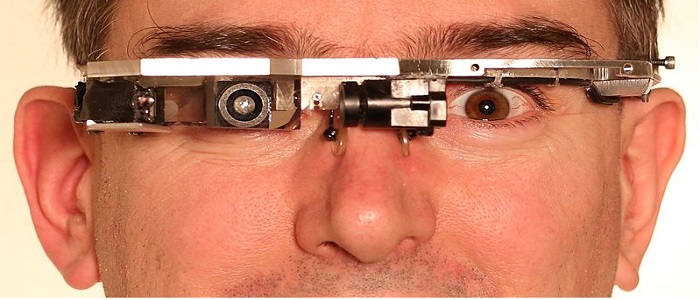
Waaay back in 2012 Toronto cyborg, Steve Mann, claims he was assaulted in a Paris McDonald’s just for wearing his EyeTap. Mann is a professor of electrical and computer engineering at the University of Toronto. He is known as the father of wearable computing and is the inventor of the EyeTap, among other things. The EyeTap is an assistive device that can enhance visual information for people who are visually impaired, but can also superimpose extra information on top of the visual scene. For instance, it can overlay infrared heat signatures, measurements, or statistics.

Mann states he was confronted about his EyeTap while in line to order but was left alone after he showed the employee his doctor’s note (something Mann always travels with) which explains exactly what the device is for and why Mann wears it. After eating Mann was surrounded and manhandled by several McDonald’s employees who were concerned that he was filming trade secrets. The employees tore up his doctor’s note and tried to rip off the EyeTap device. However, the EyeTap does not come off without special tools: it cannot just be removed. Although the EyeTap was damaged in the altercation, it managed to capture footage of the employees who assaulted Mann, who was upset but essentially uninjured. McDonald’s consistently denied any wrongdoing in this case despite these images.

But this is just a one-off event right? I suspect that is not the case. In a very real sense, cyborgs are already here. More and more people are turning to the sort of assistive devices that blur the line between human and machine. If you think about it, a cyborg is what you get when you enhance human abilities by adding mechanical elements.

Imagine a deaf person. After a lifetime of being deaf, he gets a cochlear implant allowing him to hear for the first time. His natural abilities have been extended using technology. Another person has a pacemaker that allows her heart to beat in a regular rhythm. Her natural abilities have been extended with technology. Sure, it is not laser hands or a Wi-Fi connection to the hive mind, but it is real and fits the definition.

The Cyborg Handbook estimates that ten percent of Americans qualify as cyborgs in a technical sense. That’s the thing about the future: we are so used to living in it; we forget to be impressed by it. There are also, however, a handful of people who would be considered cyborgs in the traditional sense.

For instance, Steve Mann himself is generally considered a cyborg. Neil Harbisson, artist and cyborg activist is the first person to be legally recognized as a cyborg. Born colour-blind, Harbisson created a head mounted device which turns colour frequencies into sound. He later had a version of this device implanted directly into his skull. With his “Eyeborg” implant Harbisson can now hear colours even into the infrared and ultraviolet spectrum.

Just as more people get closer to being proper cyborgs, more people are starting to push back against what they see as a harmful trend. Stop the Cyborgs is a real group dedicated to preventing a future where privacy is impossible, where we in fact have no expectation of privacy, where surveillance is normalized. It is difficult to argue with that, none of us regular people want to create an Orwellian surveillance state on purpose.

Fear factor? The recurring cyborg character "Davros" from TV's and Netflix' Doctor Who
Fear factor? The recurring cyborg character “Davros” from TV’s and Netflix’ Doctor Who

Their second point of contention is much more problematic. Stop the Cyborgs wants to ban or restrict wearable computing devices that can record and upload data, just as an increasing number of people are turning to such devices to manage their tasks of everyday living. They argue that wearable technology blurs the line between human and machine, with the implication of course, that this is a bad thing. They do make a limited exception for people using ‘assistive devices’ as long as the device itself and the data it gathers remain in the sole possession of the individual.

But how do they, and more importantly, how do you determine that on a daily basis? This ‘cyborgs are bad’ mindset is going to lead in a bad direction. With the widespread release of Google Glass this past spring, we are only going to see more integration of people with their computing devices. As the price goes down, a greater number of people are going to adopt wearable technologies.

Stop the Cyborgs seems like a knee-jerk reaction to the introduction of Google Glass, which threatens to normalize an always-on type of surveillance. They even go so far as to suggest that we cannot know if cyborgs are in control of their own implants, or even of their own bodies. But the actual threat is probably much less serious than that.

First, we are already at the point where we could be filmed at any time. Nearly everyone has a video camera in their phone, and most of us are recorded by closed circuit security cameras all day long as we go about our business. If we assume that every person wearing an assistive device is some sort of covert-ops tool of the state, things are going to get ugly very quickly. For instance, Stop the Cyborgs just released a new device called Cyborg Un Plug that prevents cyborgs in your vicinity from connecting with the hive mind, er, internet and uploading video or audio data.

Second, as Steve Mann points out, these cameras can be used by regular people to keep a record of the doings of the state and its agents, like the police. Mann calls this ‘sousveillance’ which essentially means watching from below. Recording and sharing the events of everyday life can allow people to share their personal experiences with others, can provide an alibi when there is alleged wrongdoing, and can make it easier to make power-holders accountable for their actions. These are the real trends to watch for as wearable computing becomes more common. For the Silo, Cathy Greentree.

Supplemental:

http://stopthecyborgs.org/

http://spectrum.ieee.org/geek-life/profiles/steve-mann-my-augmediated-life

http://cyborganthropology.com

Can Anyone Make Sports Betting Pay?

 If ever you read about any kind of “system” someone is trying to sell you or any kind of sports betting tipping service etc., you’d be well-advised to completely ignore it. If anyone “knew” anything in advance, they wouldn’t be busy trying to sell it to you – they’d be busy making a killing themselves. So please ignore all this stuff.

At the same time there are an increasing number of people around the world making a living from gambling online on various sports – so how do they do it and is it possible for any of us to emulate what they do?

Well first things first – it is possible to make a steady profit at sports gambling if you’re balanced and determined enough and, crucially, you understand value as a concept and have a niche knowledge in some way.

So what do we mean by value as a concept?

Well simply put, you need to have a feel for the study of mathematical probabilities and the way that even small margins can result in one side of a wager winning very large amounts over time. After all, it’s this simple principle on which the whole of the worldwide casino industry (whether online or real) is built. They call it the house edge.

So let’s consider roulette as a simple option. Roulette comes pretty close to giving gamblers an even chance in European versions of the game anyway when there is just the one “zero” slot. This means that you have a 48.6% chance of doubling your money if you select red or black, or odd or even numbers etc. 

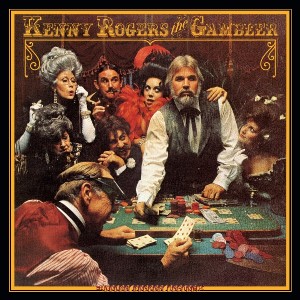
36 Years ago, almost to the day.....Kenny Rogers released The Gambler- click on the image above to learn more.
At the time of this article being published it was 36 Years ago, almost to the day….. that Kenny Rogers released The Gambler- click on the image above to learn more.

Conversely, it means the house (i.e. the casino) has a 51.4% chance of winning. And just that small percentage – the house edge – is sufficient when enough gamblers gamble long enough. It’s inevitable that the house will steadily profit – so the more players it gets, the bigger those profits are. There have been some big individual winners in casinos over time – but the really big winners are the casinos themselves, courtesy of that small percentage difference. That’s all it takes to make millions upon millions if you can get enough people to play with enough money. The laws of probability do the rest.

This is what we mean by value as a concept. So to overcome the edge, you have to have your own edge. And this usually means either an in-depth knowledge of a sport or some kind of information that the rest of the market hasn’t woken up to yet.

So look for opportunities in one-to-one situations mainly – where you think the wider market’s odds don’t reflect the actual chances of real-life events. You’re more likely to be able to spot these if you know a minority sport inside out. This will give you the kind of edge we’re talking about here –though you also need to understand value.

Let’s look at one specific example, then, of a sport that is big in some other countries but not here in Canada. In some niche areas like gambling on rugby league with exchanges like Betfair – a detailed knowledge and the ability to analyze a game can really help. In Canada, of course, rugby league is a relatively tiny minority sport, but in both the UK and Australia that is not the case at all. In these countries, gambling on the sport is huge business – often via handicap betting where the odds are slightly less than even money, but one of the teams is given ‘X’ points start to even things up in the eyes of the market anyway.

The fact that rugby league is such a minority sport in Canada though, gives expert punters here a real edge – on games in the country. And that’s all any of us can hope to do – get a small edge on the market. That’s because making a steady profit at any form of gambling is a very tough thing to achieve – so even with the exchanges markets where the odds are slightly better than with the bookies, you still need to overcome the five per cent commission charged by the exchange betting website on each and every winning bet.

It’s rather like one of those old fashioned “penny falls” machines you see in amusement arcades where some of sliding off the side each time 

the cash (in this case around five per cent) is into the proprietor’s coffers. In other words, if you keep gambling away and the market has the odds perfectly right all the time, then you are sure to lose gradually over time. In fact, to be specific, you’ll lose five per cent steadily – obviously.

So not only do you need to understand your niche sport inside out – but you also need to be shrewd and understand the whole concept of a true ‘value’ bet. This may sound obvious but it isn’t in practice as people are swayed by the market. But there’s one neat trick which is a really easy way around this “sway” problem and it’s this; always try to come up with your best educated guess of the likely odds of any market you feel you know pretty well before looking at the actual odds. Then – and only then – take the odds when you see that they’re markedly bigger than you think they “should” be.

Sports Gambling and Betting

This neatly gets around any extraneous external factors – and helps clear your mind of any market-driven bias in ignorance of what the market has actually made of it. Remember that you will have to be contrarian to make money over a long enough period of time at this game. Otherwise – if the market always called the odds on everything just right, there would be theoretically no room for the professional gamblers to make money – yet there are plenty people doing just that. And they all either have a system, or an in-depth knowledge of their chosen markets that has been tried and tested and is proven to beat the rest of the market over time – or they have a little of both of these things. You cannot win by being the same as everyone else – that’s a given.

Just remember that if you think you have what it takes – to trial and trial again your ideas with tiny amounts of cash only at first – whilst treating that amount like its 100 or 1,000 times as much. For the Silo, Claire Siblot. Online Media Relations Specialist. Leeds, UK

Once Devastated By Hurricane Irma Now Giving Back

What do you do when you end up losing everything in a natural disaster? You pick yourself up and really haul the proverbial ass on getting your ducks in a row. One never knows just how blessed you are until it’s all gone.

Just the simple thing of buying towels, toothpaste, toothbrushes and utensils (after losing everything) adds up to hundreds of dollars. But where do you turn when absolutely everything is gone and you spent your last dollar on a house but you literally have nothing to put in it? There are wonderful charities out there to help you get back on your feet such as the Furniture bank of Metro Atlanta. They helped our family with furniture when we lost everything in August of 2017 due to Hurricane Irma and had nothing but our new floor to lay on.

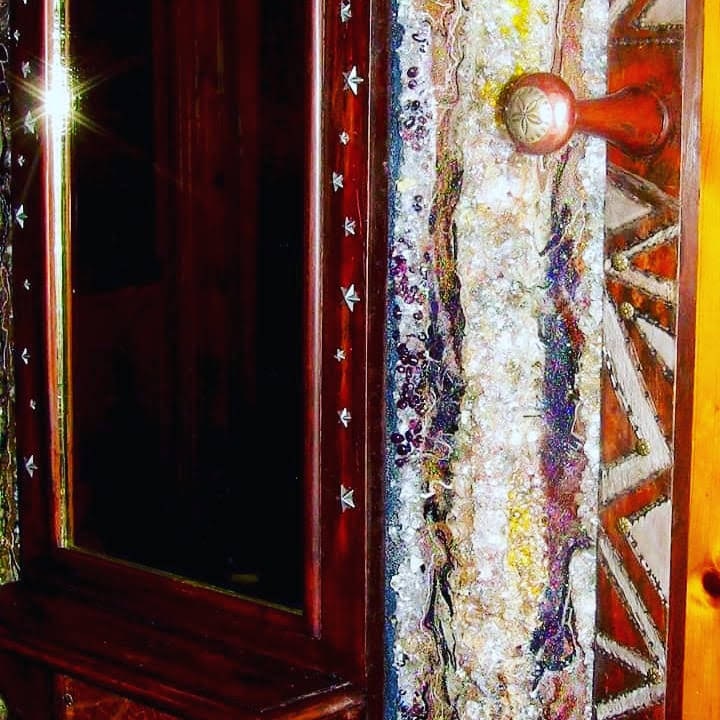
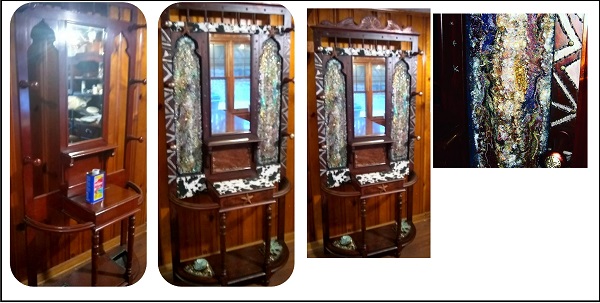
I wanted to give back and so I got an old piece of furniture to ‘redo’ for their February 22nd furniture gala which raises money for their worthwhile foundation. The old furniture I worked on was a 1910 hat rack which at the time of purchase was falling apart. I created two sculptural cathedral agates in paint and resin to go on either side of the turn of the century mirror. I then stripped, sanded, studded, wood burned, wood carved and added leather and succulent gardens at the bottom. After that, I create handmade conchos and metal stars to add a bit of southwest flare. Now the old hat rack is transformed into a southwest jewelry doorless armoire.

https://www.facebook.com/Offtofindalife/videos/2036272949803790/
Painting the cathedral agates.

For a final touch, I stashed it full of handmade- one of a kind jewelry! In many ways, I feel like I have responded positively to such a tragic event. Remember when tragedy strikes, you have a choice on how you will react and move forward. Art is one of the best ways of digging yourself out of a void.

Here are a few photo’s of my work and if you enjoy it, please consider voting for me, Josette Redwolf, for peoples choice award by liking the photo on the furniture bank facebook page.

Josette Redwolf.

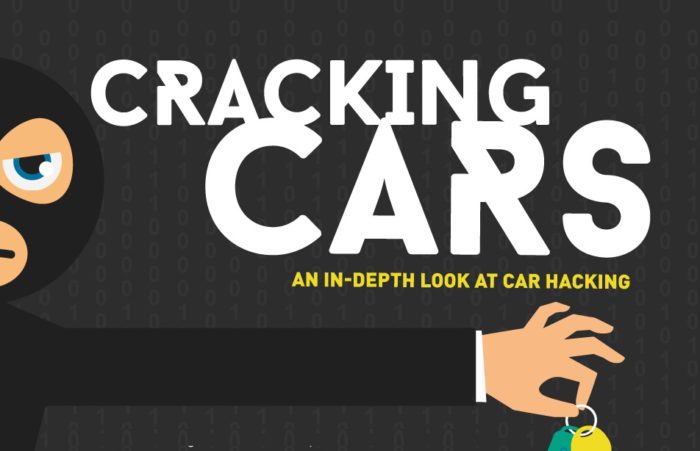
World Agencies Are Eradicating Car Hacking

With Cars becoming more like smartphones nowadays, we thought we’d take a look at the growing concern of Car hacking, a phenomenon that’s sending chill up motorists’ and manufacturers’ spines across the globe, more efficiently than any air-conditioning unit could ever do.

However, perhaps even more importantly, we’ll tell you what the world’s governing agencies are doing to help eradicate car hacking and what YOU can do to prevent your car from being hacked. For the Silo, Louis S. Dixon and our friends at Select Car Leasing UK.

who discovered car hacking infographic

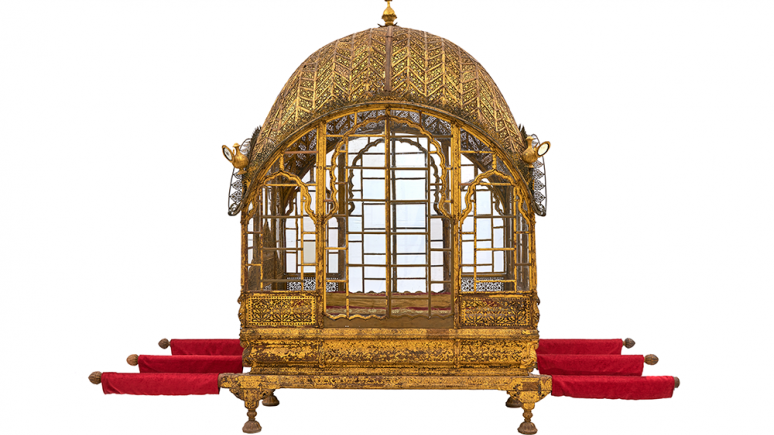
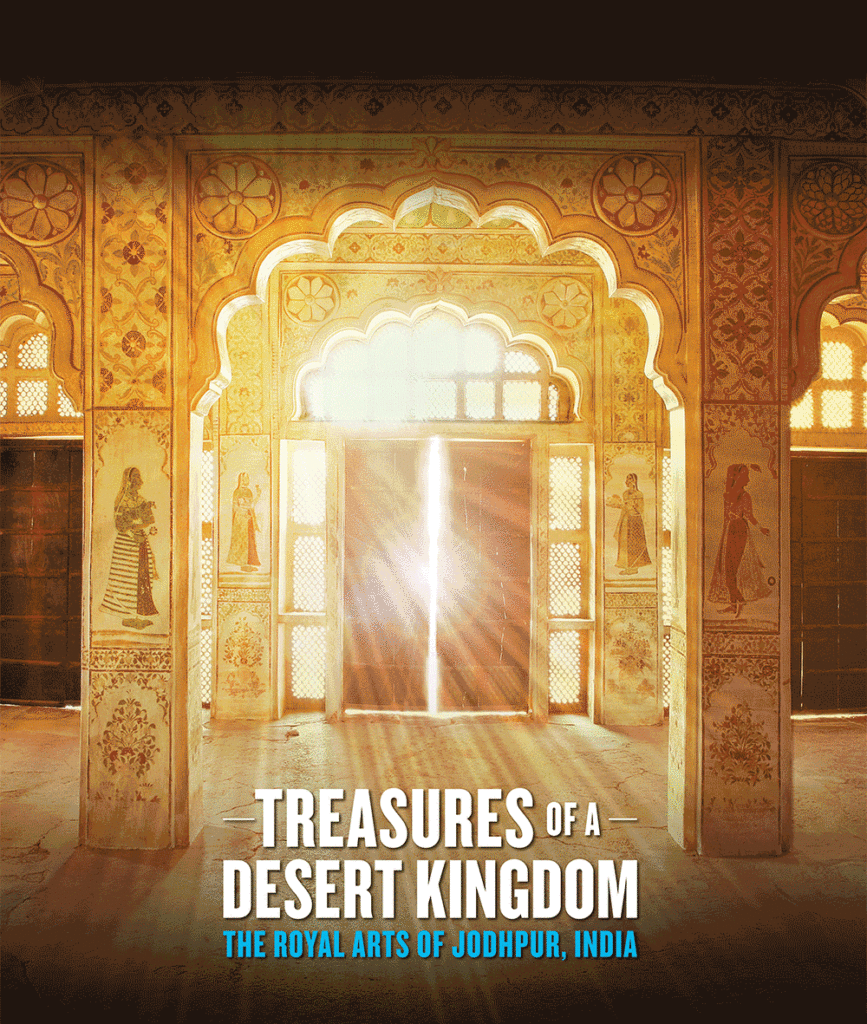
Treasures Of Desert Kingdom Exhibit Coming To ROM Soon

Explore the spectacular royal arts of one of India’s greatest former kingdoms, Jodhpur, Rajasthan, where alluring jewelry, lavish tents and canopies, vibrant paintings, and opulent decorative arts tell stories of kingship, strategic alliances, the role of women, and life at court.

Photo- Neil Greentree

Treasures of a Desert Kingdom features masterpieces drawn from the collection of the former royal family, most of which are on display outside their palace setting for the very first time.

Rolls Royce Silver Shadow Mehrangarh Museum Trust

While the stunning objects highlight India’s multifaceted past, they reveal a lasting cosmopolitan culture that was sustained by a delicate balance between local and external influences, and tradition and modernity.

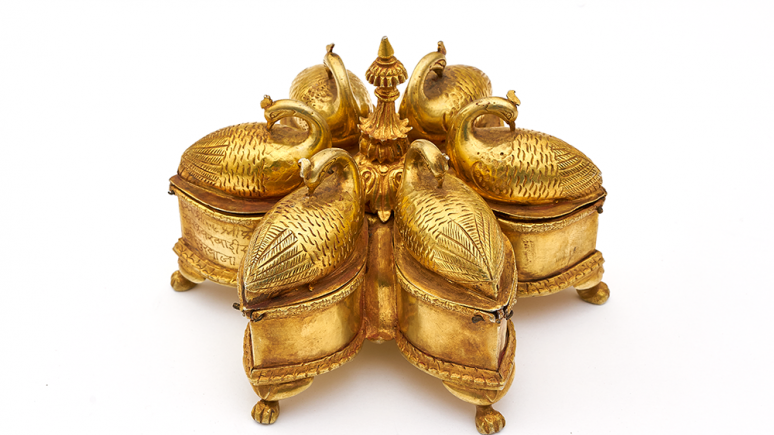
Rajasthan Spice Box for Paan or Betal nut. Photo- Neil Greentree

Now showing- ON NOW AT THE ROM Royal Ontario Museum
Wildlife Photographer of the Year
Zuul: Life of an Armored Dinosaur, presenting sponsor Sinking Ship Entertainment
Gods in My Home: Chinese New Year with Ancestor Portraits and Deity Prints
Being Japanese Canadian: reflections on a broken world

For the Silo, Jarrod Barker.

Holistic Dentistry Using Intravenous Vitamin C In Silver Filling Removal Procedures

When looking for a dentist, we look for the most experienced – more so in the highly specialized field of holistic dentistry. Clients travel from as far as Europe and Africa to have Dr. David Villarreal remove old ‘silver’ fillings and their damaging effects on health. While he has removed 20,000 in his 30-year career, it’s his methods that are so sought after.

You might have heard that mercury in your “silver fillings” could be harmful to your health, but that’s not all that could be slowly killing you!

Any dental material in your mouth that is not compatible with your particular body chemistry is likely to be suppressing and stressing your immune system. The suppression of the immune system can lead to a host of illnesses from frequent colds to autoimmune diseases to far worse conditions.

“Traditional medical practitioners and the public at large do not realize that what occurs in the mouth doesn’t end at the neck. The mouth is the gateway to our overall health and impacts nearly every aspect of the body.” says Villarreal, a leading spokesman for bio-compatible dentistry.

Villarreal employs a procedure that ensures there is a perfect match between your filling material and individual body chemistry. Performing a blood compatibility evaluation, he pinpoints the right material and offers dozens of different aesthetically pleasing composites – whichever works best to maintain optimum health and help heal the immune system.

Villarreal’s practice, BioDental Healing in Newbury Park, CA, is also renowned for the strict bio-protective protocols that he employs in removing silver amalgam fillings with mercury in them. Amalgam fillings contain 50% mercury, which is the most toxic, non-radioactive element on Earth—more toxic than lead, arsenic or cadmium, according to scientists. Studies show that mercury—heavy metal poisoning–has been linked to Multiple Sclerosis, ALS, chronic fatigue, fibromyalgia, Lupus,  Parkinson’s, arthritis and many other auto immune diseases, not always apparent until many years after the filling is applied. Removing them can be dangerous to all parties when particles are released into the air. Most European countries banned mercury fillings nearly 40 years ago.

Villarreal employs a host of procedures that protect everyone in the process. The doctor and his team don special protective gear including gas mask, gloves and contamination-free coverings, and the patient is provided complete draping and protective eye wear. Using extra protective covering in the patient’s mouth and a suction system that ensures all significant mercury particles are contained – they take it a step further by using an ionizer in the room and a mercury separator that ensures none gets into water systems or oceans (and which is periodically cleared by the EPA for proper disposal).

A naturopathic doctor is on hand to administer intravenous vitamin C in order to help pull the heavy metals out of the system so they can exit the body as waste. The vitamin C also offsets any possible negative health consequences or withdrawal symptoms that may arise from the extraction of the heavy metals from the system.  “This is called Ozone dentistry,” says Villarreal, “We’re purifying and sterilizing the tooth so it can be filled with a more healthful alternative. But it’s important to note that there are many white fillings that also have heavy metals in them.”

People come from as far away as Europe and South Africa to have their mercury fillings removed by Villarreal in a non-toxic and environmentally safe way. He has removed more than 20,000 in his 30-year career. Filling removal accounts for 75% of his practice.     

“But what gives me the most satisfaction is that people report back that they have seen significant overall health benefits and often the elimination of specific conditions that they didn’t perceive were related to their teeth at all,” says Villarreal. “Physicians and dentists have been using mercury for more than 200 years. But we are way past old fashioned dentistry. Today, we have the ability to ensure more than oral health with bio-compatible materials and practices.” For the Silo, Jarrod Barker.

Supplemental-

Ancient “fish eating” Mercury contamination discovered http://www.archaeology.org/issues/110-1311/trenches/1387-denmark-medieval-cemetery-mercury-in-soil

Supreme Analog Vinyl Record Weights Trending

“If there is no sound philosophy in making the audio gear, then all product you make is plagiarism.” Zoran Mihajlovic
Having grown up around record players of dubious quality, I remember very clearly my first ‘real’ turntable. An audiophile friend of the family helped my father put together an entry level system for my 15th birthday. The system included 3 way Acoustic Research speakers, Sansui integrated amplifier, Sansui 3 head cassette deck and my first decent turntable- a gently used Sansui direct drive with a shiny S-arm and what looked like a strange silver hockey puck.

At 15 I was into my second year of drumming and with this turntable was now able to play along to LP records without having to worry about the inevitable skipping that the cheap family record player performed almost every time I hit the bass drum hard. I later learned that the puck was actually a custom made record clamp that the previous owner had fashioned to squeeze every last bit of performance out of the record player.

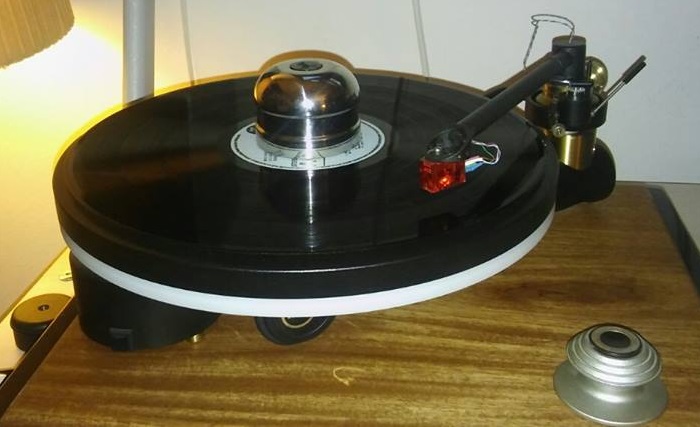
There is a surprising amount of science behind the advantages of using record clamps to ‘push’ the vinyl down onto the slipmat and platter and people that use them swear by them. In general terms, the added mass from the fitted clamp flattens warps in the record and a beneficial flywheel effect takes place once the record is spinning at speed.

Today, turntable designs have advanced and exotic materials and technologies are incorporated into high end models. This has translated into a need for ultra high quality clamps designed to properly secure records to all kinds of esoteric spindles and platters.

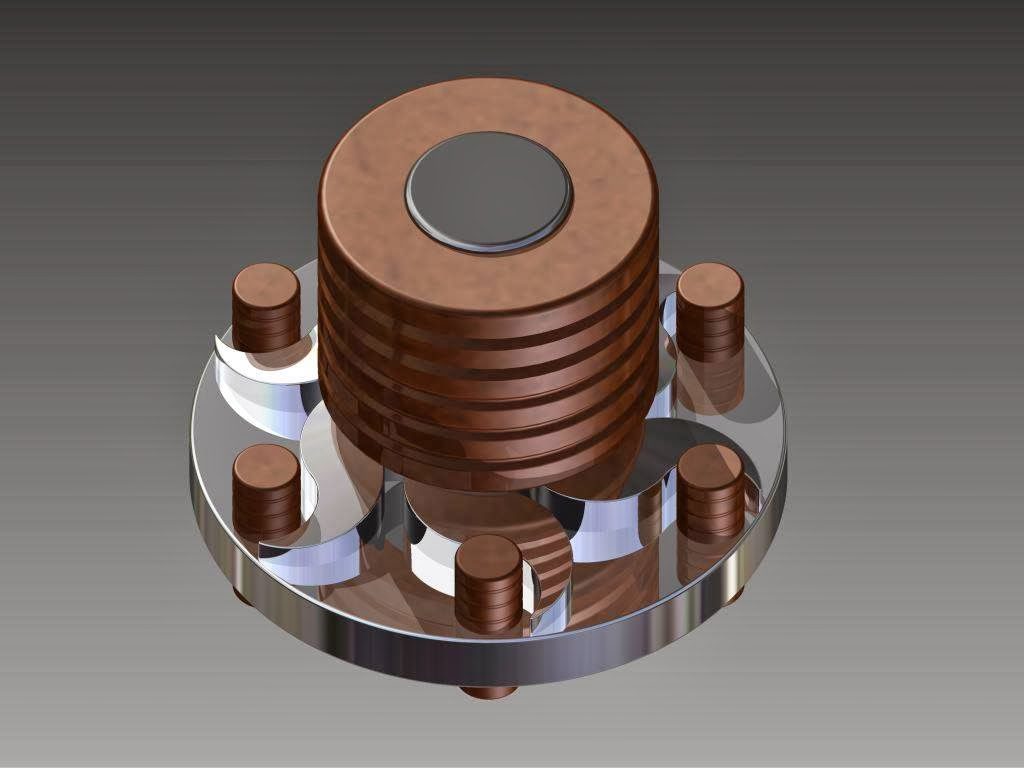
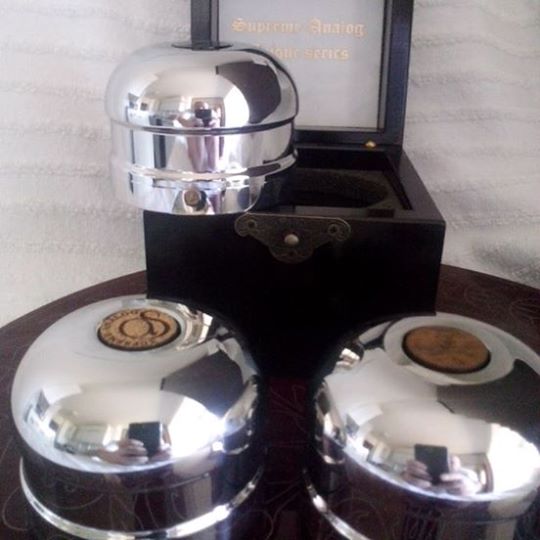
Enter Zoran Mihajlovic- a man devoted to producing the highest quality record clamps such as the Model 1 via his Serbian company Supreme Analog. At 3000 euros (at time of this article, 1 euro = 1.5 Canadian dollars) , this is a record clamp (Supreme-Analog calls it a record weight) that is produced on order only and commands attention.

Supreme Analog Model 1 record weight
70mm wide, 50mm high, 460g weight
Swiss stainless steel and Serbian sinked wood

Supreme Analog Basic Line Record BL006 stainless steel
If you are on a more modest budget, they also offer the BL-006 for 250 euros. Also made from Swiss stainless steel, the more basic model weighs in at 950g and ships world wide for free in a solid wood box.

It’s easy to tell that Supreme-Analog have a real passion for audio and they make a number of interesting products including jewel like tonearms and gorgeous horn speakers. Check them all out.  For the Silo, Jarrod Barker.

New York Fashinnovation Show Connected Technology And Fashion

NEW YORK, – FASHINNOVATION, a platform where fashion and technology connect with a mission to inspire and share knowledge in the fashion, entrepreneurship and technology sectors, hosted its second edition of its semi-annual conference on February 13, 2019. The all-day red carpet event took place during NYFW at one of the city’s premiere venues, Tribeca Rooftop, and featured panels, live performances, installations, displays, and aimed to “humanize homelessness” with the launch of a book titled: It Can Be You by The NYLON Project.

Panel topics included fashion tech innovation for retail, manufacturing, production, design, textiles, blockchain, customization, sustainability, augmented reality and more. Other discussions focused on women empowerment, entrepreneurship, and even a Twitter-based elevator pitch competition. Featured guests, panelists and moderators include: Eno Polo, CEO, Havaianas, Michael Ferraro, Director of FIT’s Information Design & Technology Lab, Ryan Leslie, Co-Founder, SuperPhone, David Meltzer, Host of Entrepreneur.com’s “Elevator Pitch”, Renata Black, Co-Founder, EBY, Mark Price, CEO, FIREWIRE Surfboards, Lilian Liu, Manager of Partnerships, UN Global Compact, Gonzalo Pertile, Sustainable Director, J. Crew, Giulio Bonazzi, CEO of Aquafil, Ivan Poupyrev, VP, Google Jacquard, Carolina Wang, Co-Founder, EatGoodNYC, and Paul Dillinger, VP and Head of Global Product Innovation, Levi Strauss and more.

“The future is now, and as the tech and fashion industries converge, there’s no better place than New York Fashion Week to formalize conversations and networking opportunities by bringing these two industries together,” said Jordana Guimaraes, co-founder of FASHINNOVATION.

“There’s a reason why companies such as Farfetch and Revolve exist and are valued at billions of dollars – we need to pay attention to fashion tech innovation, and FASHINNOVATION is at this intersection,” said Marcelo Guimaraes, founder of FASHINNOVATION.
FASHINNOVATION Second Edition expected approximately 500 guests and was presented by partner sponsors Runway Moda, ELYSIAIS, Lyft, and DisruptivAgency. The conference showcased a fashion installation by Constanza+LAB (Spain) and 19-year-old IMI by Imogen Evans, a mid-day cocktail hour and networking event, pop-up displays, a red carpet step-and-repeat, a special live performance by DeeMo, and an after-party by TROY. NYLON Project’s book,  It Can Be You, which included 50 stories of homelessness from influencers around the world, including Melissa Molinaro, Claudia Salinas,

Madeline Stuart, Eric Bigger, Thania Peck, Josh Heffler, and Jessica Ross, to name a few, were featured in a panel.

The first edition of FASHINNOVATION took place during NYFW on September 12, 2018, with hundreds of people exploring fashion tech panels from NASA, FIT, IBM, and more.
For more information, go to https://fashinnovation.nyc/. For the Silo, Ruben Ochoa.

What Keeps The Mona Lisa Smiling?

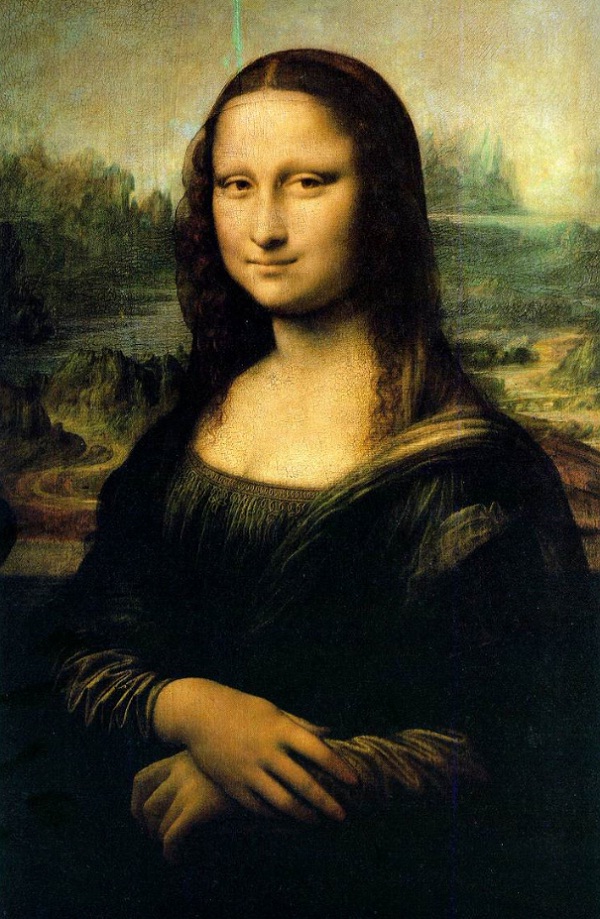
This is the most famous painting in the history of art. It is titled the Mona Lisa but it’s original name was Monna Lisa- a short form of “Madonna” or “my lady” but thanks to a spelling error we know this work as the Mona Lisa. Painted by Leonardo Da Vinci in the years 1503-1507, there are actually three different versions painted beneath the visible version. In one hidden version (discovered using xrays) she is seen clutching the arms of a chair. image/info courtesy of prlog.org

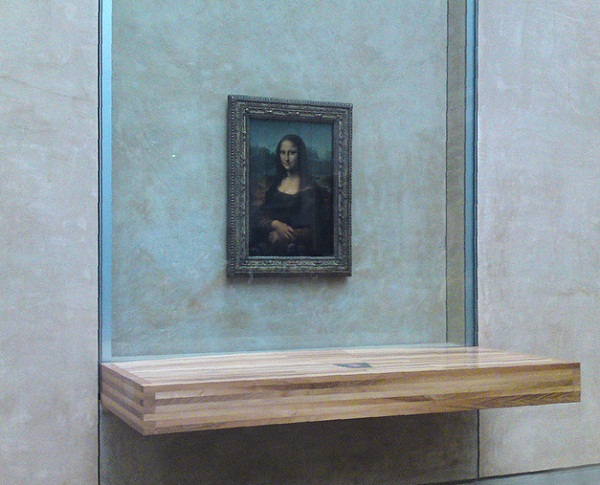
Every year 8.5 million visitors see the renowned work of art that is the Mona Lisa. It is a vision that graces t-shirts, calendars, coffee mugs, and art history books worldwide. Still, among those millions, I would wager that few are those that have left Paris remarking on the wall on which Mona is placed. More on this later….

Did you know that the Mona Lisa is the only work of art to be stolen from the Louvre( in 1911) and recovered? Not only that, but in 1956, it was attacked with acid and, in that same year, cut open with a rock thrown at Mona’s elbow. It would seem that times haven’t changed much either. In 2009 a coffee mug was thrown at it by a gazing woman.

Art hygiene: the Mona Lisa is protected by bulletproof glass while on display at Paris’ Louvre photo: Gilli8888/flickr

Time has provided the foresight to maintain Mona’s beauty. With 2 centimeters of bullet proof glass and an inner casing protecting against heat and humidity the artwork seems safe. But what about the wall ‘holding’ the Mona for all of us to admire?

Take a look at these choppers…are they healthy enough to support a Mona Lisa smile? Pay attention because we’re about to switch gears and talk a little oral health.

As a dentist I am prone to notice the wall and that famous Mona Lisa smile. That smile, seen on TV and used in advertising everything from vacations to toothpaste, would be worth little without considering the healthy gums and bone that keep it in place. In other words, without noticing the wall. Years spent in my business have taught me, that if not protected properly, a smile can be stolen from us, chipped, and worn away with acid leading to very costly repairs. If you value your smile then the bullet proof glass is a worthy investment.

By focusing on in-office prevention and care the need for extensive intervention is often averted. It is more time and cost effective to put up and maintain a very impressive wall for your work of art than it is to meticulously rework the masterpiece. This analogy holds true for your teeth, gums and your smile. Maintenance is the greatest security from acid and coffee alike and with it, your smile can continue to break the ice… but I wouldn’t count on 8.5 million visitors. That may be a little more than any of us can chew. For the Silo by Dr. Peter Gunn. Dr. Gunn’s practice is in Port Rowan, Ontario. www.facebook.com/caredental

Supplemental– New Scientist article: Mona Lisa’s smile a mystery no more

A Newbie Guide To Proper Ordering And Eating Steak

The best steakhouse and seafood restaurant in town is not like other dining establishments. There are some simple guidelines to keep in mind when you’re dining in one:

  • The first rule is that if you’re going for a steak,it’s best to go to one of the best steakhouses in town. Cheaper places offer tasteless food, and you may just end up with MSG-laden steak that’s bad for your health and your taste buds.
  • If you only eat steak on special occasions, you may as well splurge on the best meat you can afford. These cuts include the rib eye, which is tender because of the high fat content. The filet is also flavorful and tender. You should also try the tender short loin, also known as the New York cut.

The special “Cowboy Rib Steak” from Baton Rouge Steakhouse Canada.

  • Of course, the taste of the steak also depends on where the meat comes from. American steak is tastier than European steak, while Japanese steak is extremely fatty. You may want to refrain from ordering a rib eye if you are ordering a Japanese steak.
  • It’s best if you order your steak rare to medium rare. This isn’t about snobbishness. It’s about the fact that when you cook steak to a degree more than medium the steak can become tough and very chewy. It’s not as enjoyable to eat.

  • When you cut meat and you’re right-handed, you hold the fork with your left hand while the knife is on the right hand. Hold the knife and the fork with the index fingers down the back of the utensils. You shouldn’t hold them like they’re pencils or by clenching your fists around them. You can then use the fork to hold the meat while you make your cut with the knife.

  • After cutting the meat, you have 2 options. One is the American style of transferring the fork to your right hand. You first have to put the knife on the plate without it touching the tablecloth. Then you use the fork in your right hand to spear the meat and place it in your mouth.
  • You can also use the Continental style of just using the fork in your left hand to spear the meat and take a bite. It’s quick and efficient.
  • You should cut each piece of meat one at a time. You shouldn’t cut more than once before you take a bite, as it’ll leave a mess on your plate. It may also tempt you to take more than 1 piece of meat into your mouth and that can be awkward when you’re having a conversation around the table.
  • For the best wine drink some good red wine. California wines are very good with steak.

  • Side dishes depend on your particular tastes. Sautéed spinach is excellent, while for some the best side dish is French fries. You may also want to try creamed spinach with fried egg at the top.
  • You should try to eat your steak with no sauces so that you can really savor the true taste of your steak. You can then add a bit of sea salt to flavor. For sauces, you candip your French fries into your favorite sauce to accompany the taste of the steak.

Of course, the true rule of eating steak is to enjoy yourself while you mind your manners. Etiquette isn’t really about blind obedience to the rules. It’s all about making sure that your dining companions (and everyone around you) enjoy the steak as much as you do!

Featured image- Angus Beef New York Strip Steak