Dual HDMI Adapter Supports Two 4K UHD Monitors

Sonnet Technologies recently announced its latest Thunderbolt™ 3 product, the Thunderbolt 3 to Dual HDMI™ 2.0 Adapter. This compact bus-powered device enables users to connect up to two 4K ultra-high-definition (UHD) HDMI monitors with just one Thunderbolt 3 port on their computers.

Many desktop computer users enjoy dual-display or multi-display setups: with the added screen space, a main work window can be expanded to fill one screen, while tool bars and palettes, plus other applications, occupy the second screen.

If you are using 2 monitors for “split screen” viewing- remember to consider the thickness of the monitor frame.

With Sonnet’s Thunderbolt 3 to Dual HDMI 2.0 Adapter plugged in, users of notebook and all-in-one computers with limited available ports may also easily connect two displays while using only one Thunderbolt 3 port. The Sonnet adapter is a plug-and-play solution for adding dual HDMI port connectivity to computers with Thunderbolt 3 ports. Users simply plug the Thunderbolt adapter into their computers, connect the monitors with standard HDMI cables (sold separately), and then configure the displays through the operating system.

The Sonnet Thunderbolt 3 to Dual HDMI 2.0 Adapter supports up to two 4K HDMI monitors at 60 hertz, but it also can support monitors with lower resolutions, such as full HD 1080p (1920 x 1080) and 1920 x 1200, making it well suited for different home and office work space applications. Plus, the Sonnet adapter’s built-in audio support ensures that there’s no need to connect additional cables to hear sound from the monitors.

The Sonnet Thunderbolt 3 to Dual HDMI 2.0 Adapter (part number TB3-DHDMI) is available now with an MSRP of $89.90 USD. For the Silo, Elisabetta Fernandez.

Asteroid Prospecting And Mining Nearing

Have you ever wondered how you’d mine an asteroid? Not many people have. But you may be interested to discover that scientists are actually attempting to achieve this, seemingly impossible, feat. You may even remember reading about an asteroid mining company here at The Silo. That company is still in business.

Why? Well, an asteroid can hold many materials that are considered to be very valuable back here on earth. And, bearing in mind how many asteroids there are, asteroid mining could turn into being a far more “earth-friendly” way to gather resources.

So, check out this infographic from our friends at fuelfighter.co.uk and discover how scientists are planning on mining Asteroids and how much it could cost in US dollars/British pounds to do so.

Asteroid Mining Infographic

University Of Pittsburgh Professor Asks Teachers To Decentralize Race

H. Richard Milner, a professor, noted researcher and expert on race in education at the University of Pittsburgh believes that “education is the key to addressing inequity and racism in society” and if we are not “working in education to combat racism, we are complicit in maintaining inequity and the status quo.” Are teachers prepared and willing to take this on? Milner notes that teachers “can struggle with tools to advance justice-centered curriculum and instructional opportunities that work against racism” and therefore education programs for teachers must support them “in developing knowledge and skills in ways that centralize race so that students can examine both localized and global perspectives and worldviews.” Additionally, school administrators and policies must be in place that “advance agendas that encourage and expect race-central learning opportunities and especially discourse.” Beyond these stakeholders, Milner recommends that students, community members, families and parents be part of the learning discourse “providing perspectives about their own worlds and experiences.”

This month we opened up the conversation on racism in education to our global Millennial Bloggers. The Millennial Bloggers are based all over the world. They are innovators in entrepreneurship, journalism, education, entertainment, health and well-being and academic scholarship. We asked them: Do we need to talk more about racism in Education?

“When I was 14, in our first class of Literature in English, I remember our teacher saying, rather solemnly, that our subject is called Literature in English, rather than English Literature,” writes Bonnie Chiu. “It was a moment of enlightenment for me. It instilled in me this critical mindset, this yearning to challenge the status quo; and it gave me a sense of agency.”

“We can’t afford to defer the conversation about white supremacy for even a single moment longer. It has proven itself to be the most obstinate social institution in the entire history of America,” writes Francisco Hernandez. “How could we even possibly think we could fight something so tough if we can’t even talk about what it means to fight it?”

“Any nation that can stomach the principle of caste, which is the most brutal ‘classification’ of human beings based on birth anywhere in the world, cannot help but differentiate, and differentiate repeatedly, on the basis of every parameter society can construct in a desperate and insular bid to separate ‘us’ from ‘them’,” writes Harmony Siganporia. “Nothing short of critical pedagogical interventions which would overhaul what we consider to be the very purpose of our educational system, and the resources to channel these interventions into more meaningful curricular design, can help us change these terms of engagement.”

“Textbooks were created by people who lived in a racist society,” writes Jacob Navarrete. “I’m telling you there are better tools. I’d be happy to help you learn how to use them. There is a big world to build outside the cave and we could use your help. It might hurt at first, just like the light does when you exit a dark cave.”

“Racism cannot be explained or understood properly without incorporating a discussion about privilege,” writes Dominique Dryding. “Until educational institutions take the lived experiences of their student bodies seriously and recognize that racism does not only include name calling and physical exclusion, racism in schools and universities will not end.”

Guest Blogger Salathia Carr writes, “Racism is not something that can be swept under the rug. After so much sweeping, your rug becomes distorted. People have become so desensitized regarding racism and injustices because they truly do not know what it is like. Judgment is very easy to make when you’re not living that way. But, if we force discussions about inequality from the very first history class we take, you cannot avoid it.” For the Silo, C.M. Rubin.

The Millennial Bloggers are Alusine Barrie, Sajia Darwish, James Kernochan, Kamna Kathuria, Jacob Deleon Navarrete, Reetta Heiskanen, Shay Wright, Isadora Baum, Wilson Carter III, Francisco Hernandez, Erin Farley, Dominique Alyssa Dryding, Harry Glass, Harmony Siganporia and Bonnie Chiu.
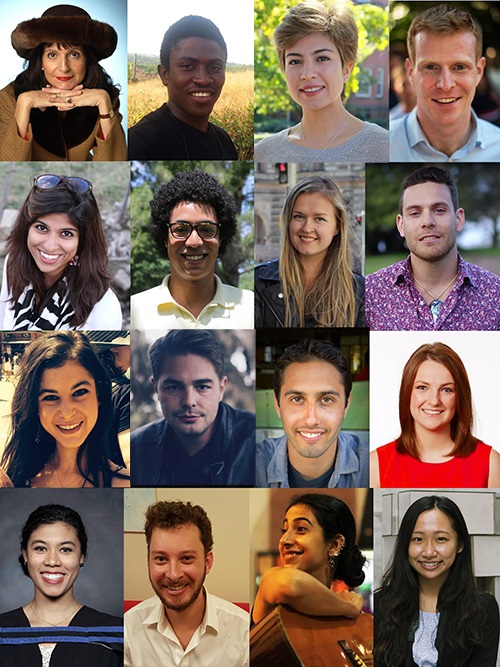
 

Top Row: C.M. Rubin, Alusine Barrie, Sajia Darwish, James Kernochan

2nd Row: Kamna Kathuria, Jacob Deleon Navarrete, Reetta Heiskanen, Shay Wright

3rd Row: Isadora Baum, Wilson Carter III, Francisco Hernandez, Erin Farley

Bottom Row: Dominique Alyssa Dryding, Harry Glass, Harmony Siganporia, Bonnie Chiu

 

ISIS Goal Splits Family And Divides Muslims

History is made in moments, often of crisis and uncertainty, and the wisdom with which we meet them. This is one of those moments.

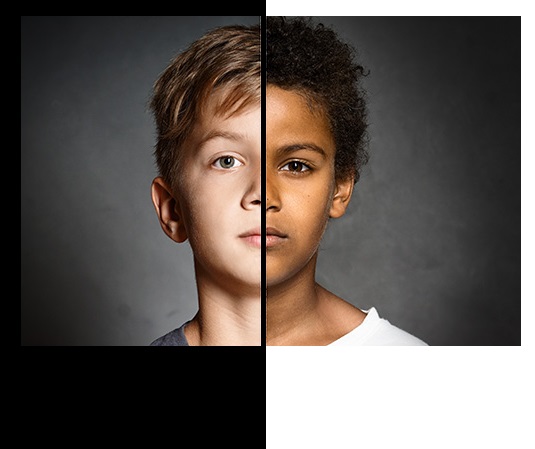
ISIS goal is to split the human family. To divide the world’s 1.5 billion Muslims from everyone else. Those in our societies who sow fear, suspicion and hatred of Muslims  are the best allies the extremists who attacked Paris and Beirut could ask for.

Muslims are almost one quarter of humanity, and 99% are as horrified by the ISIS attacks as everyone else. They have been the greatest victims of ISIS, and have the greatest power to help defeat it. So let’s answer hate with humanity, and seize this chance for transformative change. For all of us – Muslims and Non-Muslims everywhere – to fiercely welcome each other into our one human family like never before.

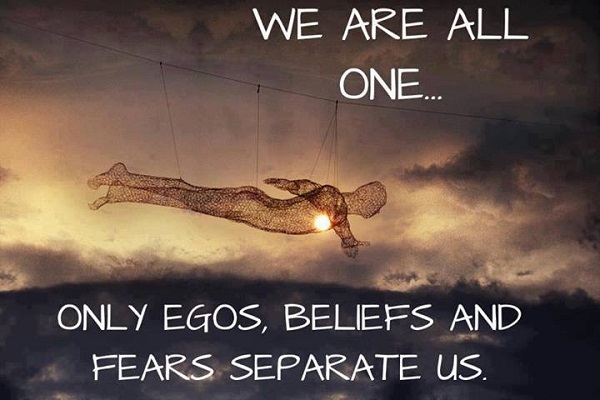
We Are All One

Sign the global “Undivided” message, add your own, and share the page with everyone – If enough us join now, we can start a global wave of solidarity, and make the pain of these attacks the birth pangs of a more beautiful world. When we get to 500,000 signatures Avaaz will run ads in Muslim community papers and online, as well as key right wing papers that spread fear and division: 

https://secure.avaaz.org/en/loving_transformation_loc/?bsOTIab&v=69561&cl=8992696952

The real front line of this war is not just in the dusty towns of Syria and Iraq, but in the media and social media forums where the stories we tell ourselves compete. There is a fraternity of ignorance and hatred and it stretches across borders, in which extremists on all sides work together to drag the rest of us down into their backward world of spiraling brutality.

Our governments will need to increase their vigilance in preventing attacks, and support military efforts to defeat ISIS. But our job as people, and our leaders’ jobs as moral leaders, is to ensure that love, the transformational antidote to ISIS’ hate, blooms between Muslims and everyone else everywhere. THAT would be ISIS’ worst nightmare – it might even give some of the angry young men they recruit cause to hesitate – a chance to see an alternative as inspiring to them as the backward brand of faith that ISIS markets.

At the darkest times, our light as humanity can shine brightest. Human rights were not recognized until after the second world war. The world got it wrong after 9/11, when leaders play into Al Qaeda’s hands by stoking Islamaphobia. This time, let’s be wiser, come together as Muslims and non-Muslims more closely than ever before, and brightly shine the light of the world we’re building:

https://secure.avaaz.org/en/loving_transformation_loc/?bsOTIab&v=69561&cl=8992696952

From a place of love, we might begin to listen to our brothers and sisters among Muslims that have lent ISIS some support. First and foremost those Sunnis from Syria and Iraq, who have been treated unjustly by Iraq’s government, and incredibly brutally oppressed by Syria’s dictator Al Assad. We might begin to understand that when we failed to offer their families protection and relief from the horrors they faced, ISIS offered that protection, and some accepted it. We might focus on learning from this, and offering them a better deal.

With that lesson, we might see the stories of the peoples around the world that ISIS fighters come from. From Chechnya, where generations of Muslim families were horrifically murdered while the world looked away. Or from Egypt, or Algeria, or dozens of other countries, where sickeningly brutal state security police have tortured and murdered countless Muslims who dared to stand up to their venal corruption – something that is a religious responsibility for Muslims.

And maybe then we will understand that while ISIS is a monster that we must defeat, the monster is more than just the group itself. It’s the desperation of millions of people suffering under horrific conditions, and looking for a way out. And the rest of us in the human family, Muslims and non-Muslims, have either looked away, failed to effectively address, or often, backed and supported these horrors.

So let’s seize this moment with wisdom, to bring down the monster we face, the one we all have lines of responsibility for. Let’s see the human family united like never before to defeat ISIS – not just on the battlefield, but in our own societies, in the media and social media, and most of all in the thousands of Muslim communities that live today around the world in fear.  Let’s encourage Muslim and Non-Muslim communities everywhere to embrace each other, welcome refugees with compassion, escalate our pressure on Egypt and other brutal governments to stop brutalizing opponents and creating the ISIS’ of the future, redouble our efforts to achieve a peace deal in Syria, protect at-risk communities like the Rohingya, stop constant terrifying drone attacks on communities, and ensure that the military actions we support are scrupulously careful to avoid traumatizing the civilians who are suffering enough already under ISIS’ boot. If we do these things, we’ll do far more than defeat ISIS, we’ll defeat the misery that has given rise to them, and in a way that takes the human family one wiser step further on our journey together.

With love and gratitude for this amazing community,

Ricken, Luis, Ben, Alice, Rewan, Elana, Mohammed, Steve, Emma and the whole Avaaz team.

Do’s And Don’ts Of Political Conversations

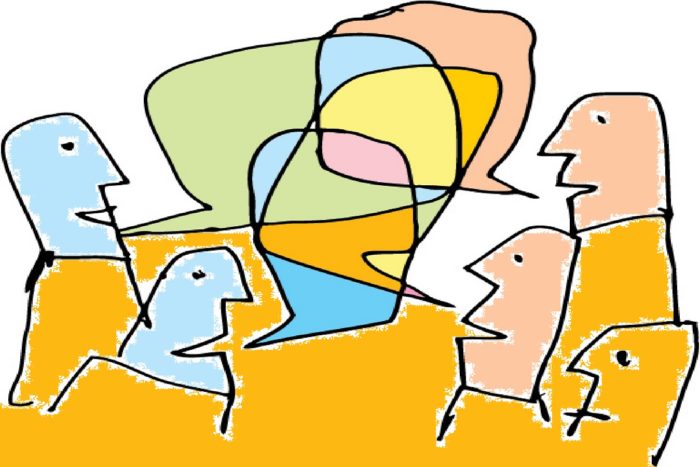
We live in one of the most politically heated times in history. Expressing your point of view is a personal decision and can be tricky.  Although conversations may start out benign, they can quickly become a toxic dialogue.

Sharon Schweitzer, an international etiquette expert, author, and the founder of Access to Culture, says there are several “do’s and dont’s” to make sure polite political discourse doesn’t turn into hostile debates.

DO   

Show respect for differing opinions

It can be challenging to listen to those with different opinions. It’s important to show respect and take time to listen, giving the other person the opportunity to share their viewpoints. The Platinum rule encourages treating others as they wish to be treated. Stay calm, collected and respectful.

Agree to disagree

If their opinions are different from your views, you can agree to disagree. Try saying something along the lines of, “I respect your perspective, but I think we may need to agree to disagree” or “That’s a different way of thinking about the issue, but I’m comfortable if you and I can agree to disagree.”

Ask questions

If someone asks you a question about your political beliefs, you can reciprocate by asking them about their own beliefs. Let the other person do the talking while you listen. Try to ask open-ended questions such as, “What are your thoughts on the current political atmosphere?” or “How do you feel about the media’s portrayal of …?”

Change the subject

  • If someone continues to ask your opinion, change the topic by saying: “It’s impossible to keep track of the different versions of the news. How is your family doing by the way?” “With the divisive political atmosphere, I’m not comfortable sharing my personal opinions, but thank you for your interest.” “I can’t answer that question, but what I can discuss is… ”

DON’T

Get angry, cross or upset

It can be difficult to keep your temper, but don’t get angry or upset if you don’t agree with someone’s viewpoints. Expressing sarcasm, bitterness or passive aggressiveness won’t change any minds. It will only damage your reputation.

Talk over them

The worst thing you could do is interrupt conversation and start talking about your own opinion. Be respectful of other opinions and views. Listen attentively, especially when you don’t agree with that viewpoint. It gets easier the more you practice.

Overshare

Politics is a difficult conversation, particularly with family members and close friends. If you are speaking to someone you’ve just met, refrain from oversharing. In this case, less is more. Avoid saying something you will later regret.

Make assumptions

We make mental notes when we first meet someone new. We make a first impression based on hair, shoes, watch, clothing, mannerisms, etc. However, political views are hidden unless they are shared verbally or by wearing a revealing detail.  It’s important to approach people with an open mind to avoid awkward and potentially toxic conversations.

For the Silo, Scott Jones.

Featured image- http://ashleylewis-oldmeetsnew.blogspot.ca/

Horses Fleeing California Wildfires Helped By In Defense Of Animals

SAN RAFAEL, Calif.  – New footage released by In Defense of Animals reveals horses, sheep, and wild turkeys who fled the California wildfires. In Defense of Animals has banded together with six other North Bay animal organizations to rescue and care for fire victims. The disaster continues to cause vast amounts of damage and massive loss of human and animal life.

Terrifying video footage shows In Defense of Animals’ Nicole Otoupalik leading a horse to safety in Orange County while huge, angry smoke plumes approach. Otoupalik was caught in the Irvine Park blaze and got straight to work evacuating horses.

“It was pretty scary, as the fires were right there, and they were moving fast,” reports Otoupalik. “The poor horses were scared, too. It was amazing to see people just running to help the horses at Irvine Park. They didn’t have enough staff to evacuate the horses, and so members of the public who had come to get a look at the fire just started running back into the park to help lead the horses out. Strangers were just offering their time, trailers, and trucks to help get the animals out of there. Others in cars stopped to offer rides to help everyone get there more quickly.”

Horse evacuation Irvine Park wildfire
Nicole Otoupalik evacuates horse from Irvine Park

The horses were evacuated safely from Irvine Park to a grocery store parking lot, and from there to an evacuation camp at the Orange County Fairground.

“Although the danger is over in Orange County, so many animals were injured and killed. Now, their homes are destroyed. It’s so sad, and northern California is even worse with many animals still at great risk. It is just a tragedy and so sad for so many people and animals. Please give what you can now to ensure the animals get the help they need.”

In Defense of Animals based in San Rafael, Marin County, has been coordinating aid to animal victims of the wildfires in concert with local organizations. Emergency relief from In Defense of Animals’ disaster fund has benefited Sonoma Humane Society, Lost Hearts & Souls Horse Rescue, and Forget Me Not Farm in Santa Rosa; Sonoma County Wildlife Rescue in Petaluma; Jameson Animal Rescue Ranch in Napa; House Rabbit Society in Richmond; and Otra Mas horse rescue in San Juan.

Sonoma Humane Society
Sonoma Humane Society receives IDA aid.

5,700 homes and businesses are reported destroyed, with at least 41 confirmed human deaths and untold animal casualties. 217,000 acres have been consumed by the flames and wild animals have no choice but to simply run as fast as they can from the terrifying blazes consuming their homes. Tens of thousands have perished, and many more are injured and need help.

Many families forced to flee the burning onslaught had very little preparation or warning. Some barely made it out alive as they dashed to find and secure their animals. Now these family members – four-legged, winged or hoofed – must find shelter and hope for the best as 11,000 firefighters battle the blaze. For the Silo, Fleur Dawes.

Donations made to In Defense of Animals’ Disaster Relief Fund help provide emergency supplies and resources to thousands of displaced victims of this sudden unexpected crisis. Support California’s wildfire victims here: www.idausa.org/californiawildfires

photos courtesy of F. Dawes/IDA.

Toronto Company Raising Cancer Fighting Funds Via Funky Gowns

Giftgowns logoGiftgowns, a Toronto based company specializing in redefining the archaic hospital gown, announced today the release of a limited-edition gown to raise funds and awareness for the Canadian Cancer Society in celebration of October Breast Cancer Awareness Month. The alternative hospital gown features graphics driven to motivate and inspire patients with quotes such as “You are Magic” and “Warrior”, available online at WWW.GIFTGOWNS.COM throughout the month of October.

Giftgowns Medical Gown “This October, we are pleased to partner with Giftgowns in the fight against breast cancer,” states Zahra Karimi, Corporate Development Officer at Canadian Cancer Society. “At the Canadian Cancer Society, we are taking action against the disease by funding high-quality breast cancer research, educating women about early detection and providing information and support services to those living with the disease.”

Founded by Jackie Moss under two years ago, Giftgowns’ inspiration originates from Moss’ own experience within some of Canada’s finest medical facilities. As a former patient, Moss recognized the need to create a modern, humourous and functional gown designed with snap enclosures on the backs and sleeves. The gowns are designed to make patients feel more comfortable in pyjama-like pieces that they might wear at home and aid healthcare practitioners easy access for medical needs.

“Breast Cancer Awareness Month is dedicated to not only raising awareness but working to save lives and we wanted to be part of this national effort,” says Jackie Moss, Founder, Giftgowns. “10% of the proceeds from the sale of the special edition gown will be donated directly to the Canadian Cancer Society.”

Giftgowns proceeds fight cancerMoss consulted with breast cancer survivors who gave positive feedback on the gown especially after a mastectomy. One survivor noted the function of the gown as an asset, with the easy access during the recovery period at home as more useful than a traditional robe or housecoat that cannot accommodate drainage tubes. For the Silo, Dani Matte.
MORE ABOUT GIFTGOWNS

Made with purpose, Giftgowns give patients an opportunity to share an active sense of their personal character with what they wear – even when dealing with less than ideal medical situations. Designed with the intention to bring positivity and a fresh take on the archaic hospital gown, Founder Jackie Moss believes creative and colourful hospital gowns give patients of all walks of life the ability to find individuality and joy through something as simple as a dressing gown.

Giftgowns ships worldwide daily through the e-commerce platform, www.giftgowns.com, as well as through Amazon and Etsy.

About the Canadian Cancer Society

The Canadian Cancer Society is a national, community-based organization of volunteers whose mission is to eradicate cancer and enhance the quality of life of people living with cancer. Thanks to our donors and volunteers, the CCS has the most impact, against the most cancers, in the most communities in Canada. For more information, visit cancer.ca or call our toll-free bilingual Cancer Information Service at 1-888-939-3333 (TTY 1-866-786-3934).


Theft Of Artist Ideas May Not Be Theft At All

Recently, one of my readers wrote that “there is another kind of generosity that comes much harder to me. I know I shouldn’t be stingy in this way, but I find myself stubbornly so. It’s the generosity of sharing my ideas, my connections, or giving a leg up to those who could benefit sometimes from my knowledge – whether that’s contacts, networks, tips, or the meat of my ideas themselves.”

This concern, of course, is not unique and strikes at the heart of something that all those in creative professions fear and must face. The ownership of ideas is difficult to prove. If you tell someone your plan in confidence and they, in turn, use it for their own purposes, there is very little you can do to show that you are the originator. Spreading this rumor is likely to make you look like the bad guy. It’s no wonder that this sort of generosity is cause for concern.

Arguably, no one would really offer up their original ideas before they have been fleshed out and no one would expect this from another artist. Talking about work in progress in general terms is one thing, but detailing the entire plan is another altogether. There is nothing wrong with being a little protective of your creative capital, it is the lifeblood of what you do.

Steve Jobs and Apple on stealing ideasBut what about sharing your networks or some trade secrets that helped you get to where you are today? While you may have worked tooth and nail for everything you’ve gained, there were surely people along the way who said yes at the right moment and assisted your progress. No one can ask more than this, and as an artist of a certain standing, there is nothing wrong with offering this sort of help.

It’s important to ask yourself what you may gain or lose by offering your assistance in any way. While this may not sound like a very altruistic way of thinking, remember that you are indeed running a business and there is nothing wrong with a bit of shrewd thinking. Further, though, when you stop and think about the outcome of sharing your network, it is unlikely that helping an emerging artist by introducing people who might be able to help will in any way affect your position as a more established artist.

No one exists in a vacuum. Even you, who may have scraped and fought your way to where you are today, benefited from the acceptance and help of others. Sure, you may have pounded the pavement endlessly in order to secure your position but that is no reason not to pay forward the success you have achieved. It is too easy to forget, once you have achieved a certain status, the myriad small moments that led you there. While it may seem as though hardly anyone was out to help you in the early days, surely there were some, otherwise you could not be where you are today. Even if it was just a few gallerists who were finally willing to take a chance, there are always rungs of assistance in the ladder to every success, no matter how small.
In our present times, we live in a world where community is very much at our fingertips. The rules of social engagement have definitely changed. This is both a benefit and a burden. While the new landscape of online social engagement can absolutely open up opportunities that didn’t exist prior to this revolution in social connection, the online community can also present a world of its own difficulties. It is impossible to know who you are actually dealing with and with virtually everyone in the entire art world present online, it can easily overwhelm a newcomer to the scene.

For these reasons, there is a lot to be said for good old-fashioned face-to-face interaction. Being the sort of artist who is willing to mentor in the real world sets you apart. Establishing this sort of reputation, for being the one who will gladly share the bounty you have created, seldom reverses one’s own success and frequently opens new doors you may never have considered.
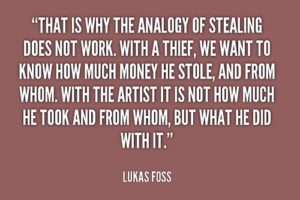
Getting back to the idea of sharing artistic ideas and concepts, this is a bit trickier. As I said before, it may be unwise to give away your nascent, unfruited plans to just anyone. On the other hand, allowing others to view works in progress isn’t likely to cause too much harm.

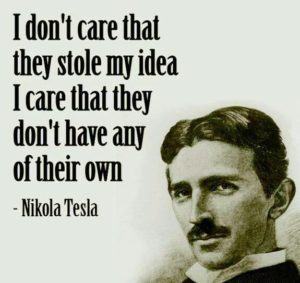
Arguably, there is no such thing as original art. Even some of the most contemporary artists’ work is derivative of past creations. Marina Abramovic, in her unique style, has absolutely drawn from (and occasionally been accused of copying) works by other artists. Pablo Picasso (and perhaps more famously, Steve Jobs who quoted him) said, “good artists copy, great artists steal.” This doesn’t mean that you should open yourself up to idea theft, but it does mean that perhaps being stingy with your concepts, your network, your position as an established artist, doesn’t count for as much security as you might think. Be smart about things, but in general, it is always a good idea to reach down the ladder and help those coming up behind you find the next rung.  For the Silo, Brainard Carey.

Brainard  is currently giving free webinars on how to write a better Artist bio and statement and how to get a show in a gallery – you can register for that live webinar and ask questions live by clicking here.

Featured image: Jarrod Barker.