Tag Archives: Moscow

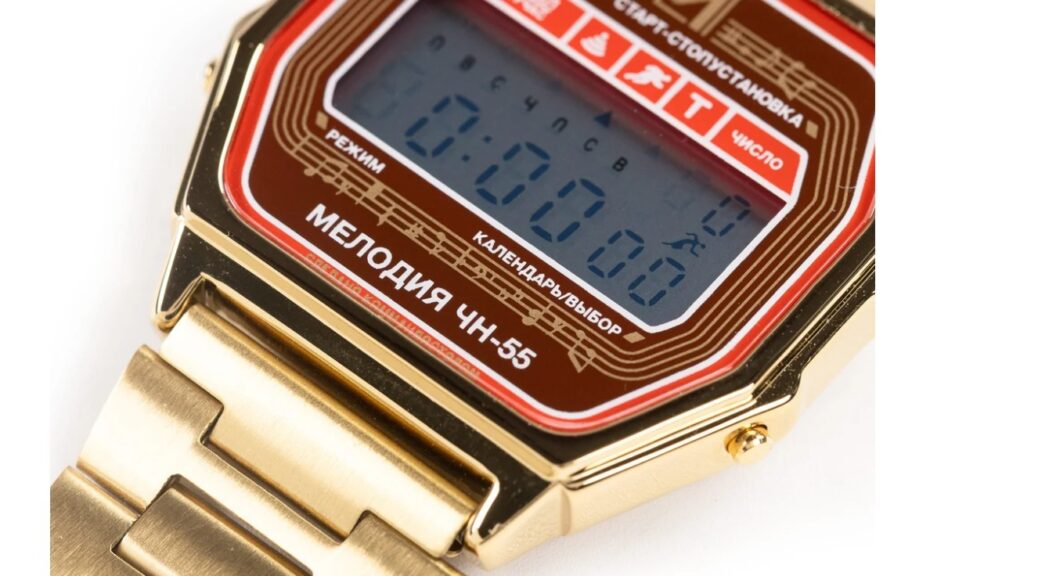
Old School Soviet Digital Watch Is Back

The US and USSR going “Band for Band”

Our friends at kommandostore talk about the Cold War on their site so often, it’s become one of their defining aesthetics…..and that’s a good thing- read on!

Grand armies and weapons are arguably less than half of the story.

Many of the cold war ‘battles’ from the 1950s through the 1990s took place in the minds and on the wrists of millions of people. Some might say they certainly still do…

Rogue media campaigns, protests & activism, black ops — they defined the hottest parts of the Cold War. But what if we told you that the watch you were wearing was just as important? The Soviet Union sure thought so…
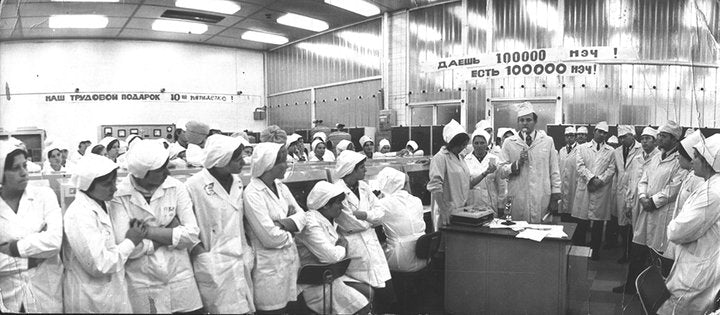
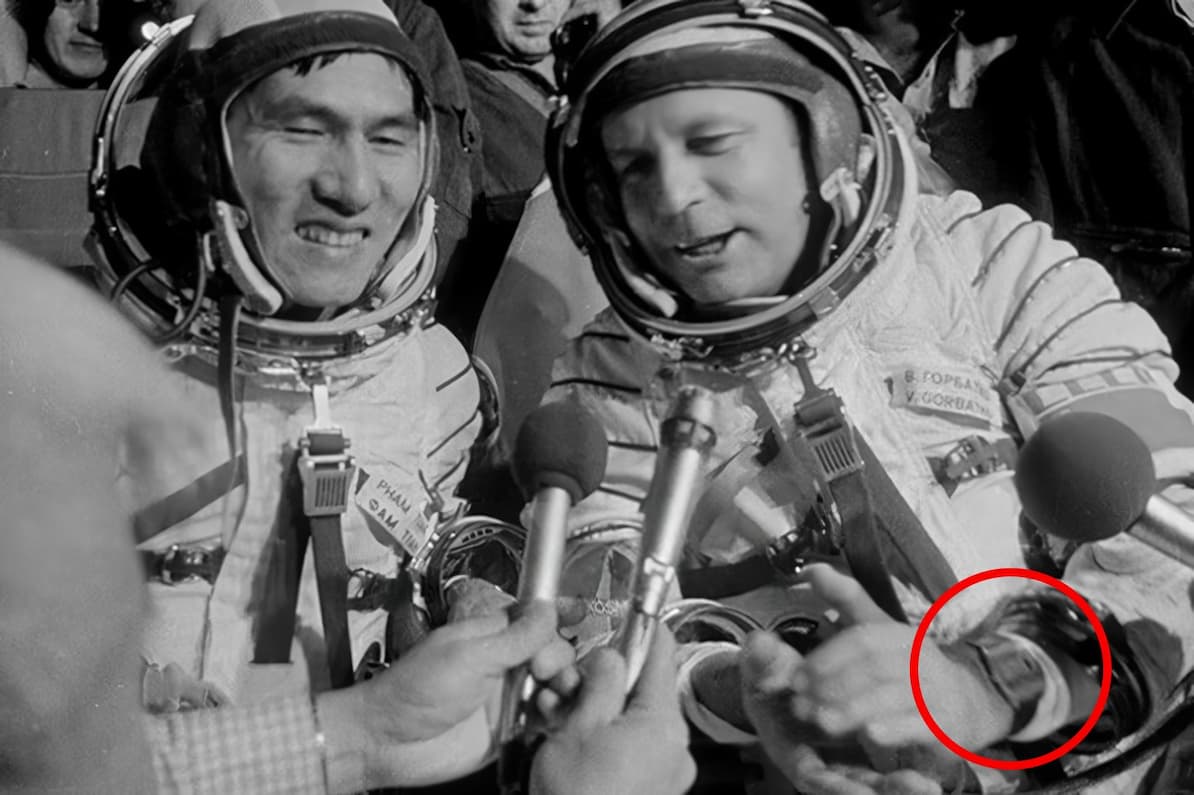
Having gotten sucked into the almost endless lore rabbithole of watches, the first thing that kommandostore sought to bring back from obscurity was the Elektronika 55B — the soviet union’s most popular digital watch that went the way of… well, the Soviet Union… When it collapsed in ’91.

Above all else, there’s one story about this watch that truly stands on its own, a story that will make you realize that there is much more to this little watch that jovially plays chiptune soviet music…

It involves two of the most powerful men in the world, Leonid Brezhnev and Henry Kissinger convening and comparing their new digital watches.
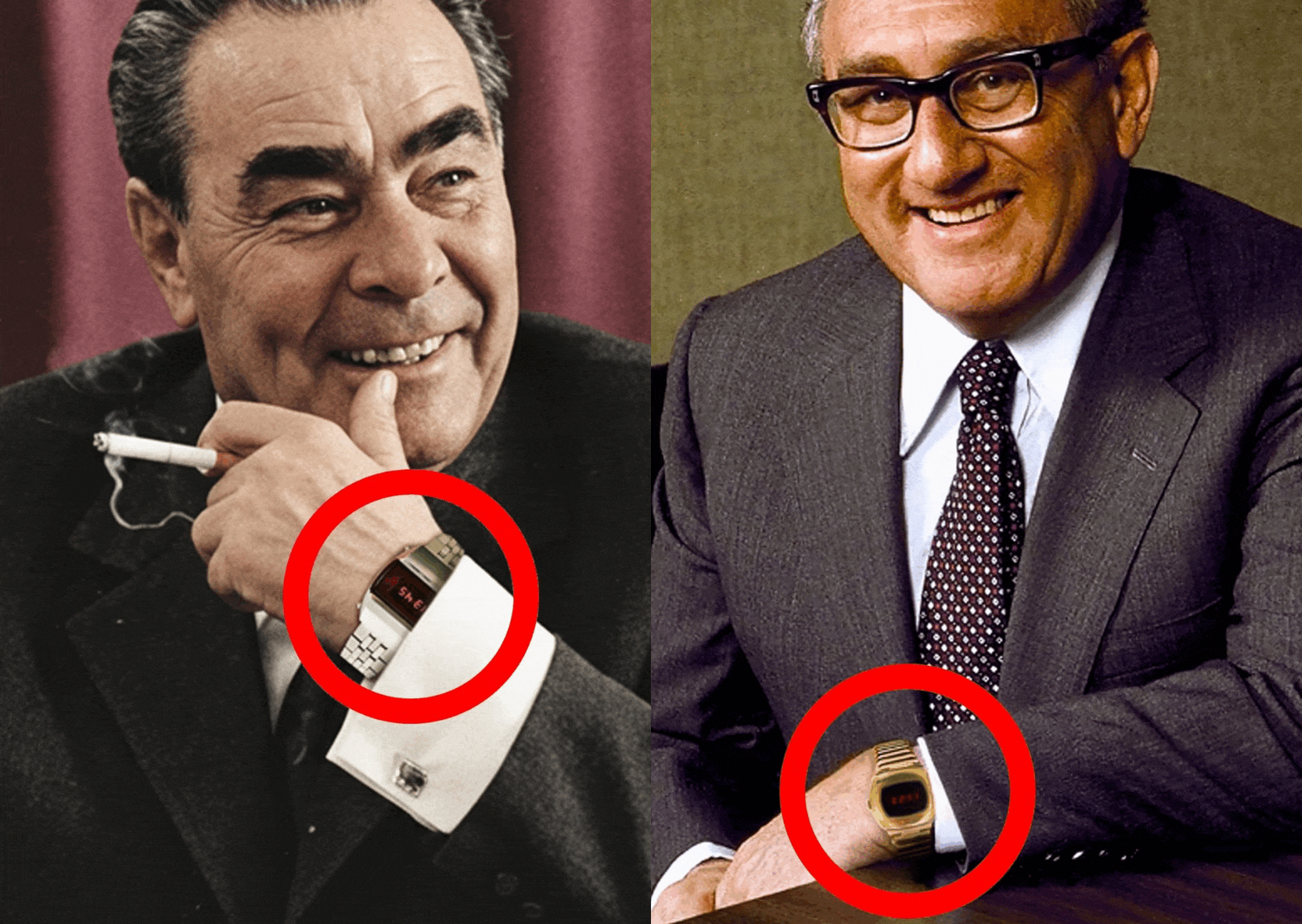
Ok, they weren’t really wearing the watches in that photo, but such an encounter really did happen between the two gentlemen in the early 70s, one that subtly let the United States know that the Soviets were right on the US’s tail for semiconductor technology.

On a somewhat-routine visit to Moscow, US Secretary of State Henry Kissinger wore a Pulsar P2 Watch — one of the very first digital watches. Known for it’s striking red LED display and appearance on the wrist of none other than James bond.

It also carried a hefty price tag, with the 21k gold edition costing enough to buy you a car in today’s money.
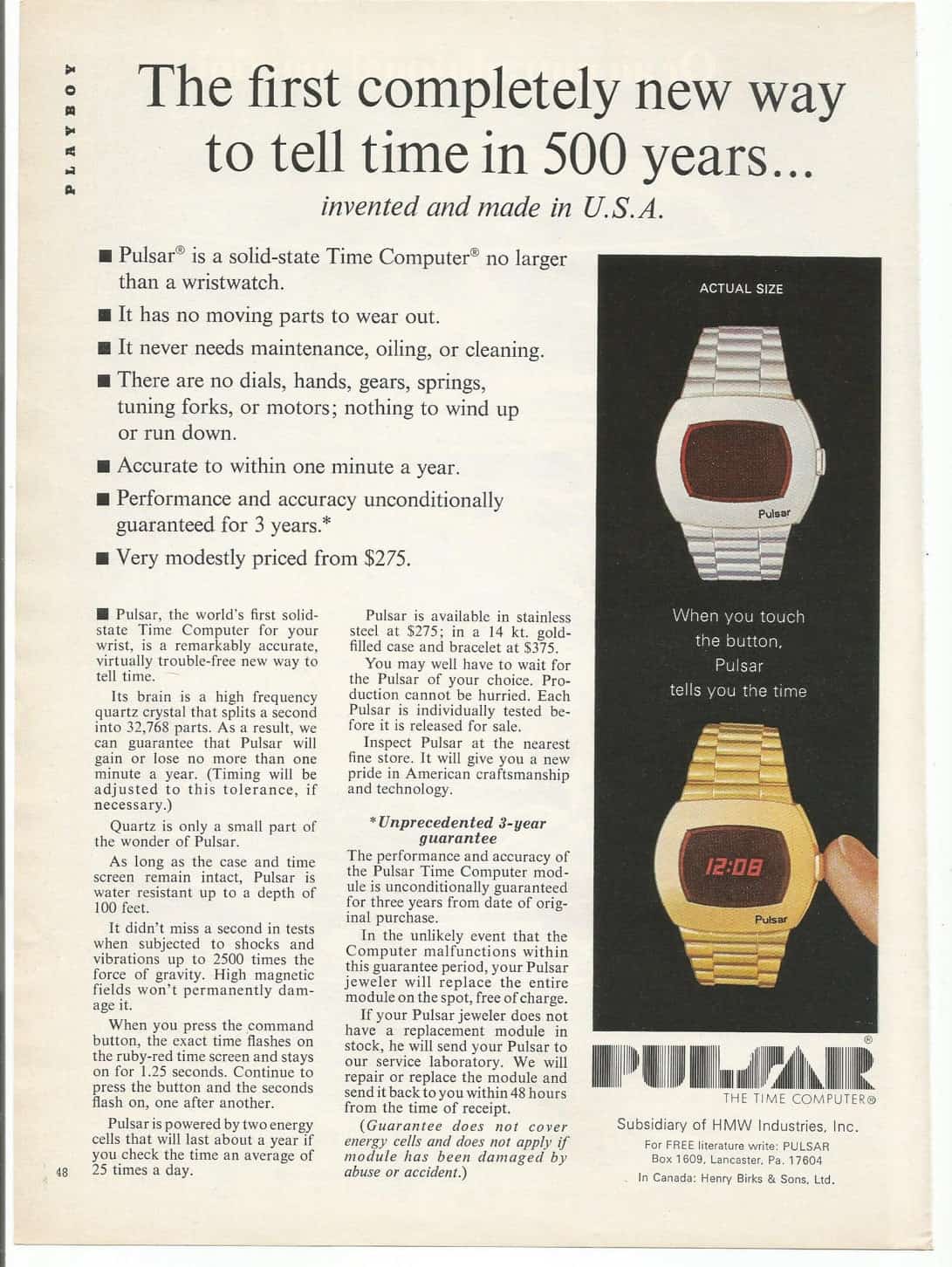
You tell us, is $1800 usd/ $2,526 cad in today’s money worth it for one of the two base models? 

The meeting was with Leonid Brezhnev, General Secretary of the Soviet Union. He remarked that he did indeed like Kissinger’s watch, being a man of taste.

Then he told Kissinger that the USSR had already developed a prototype using the very same technology.
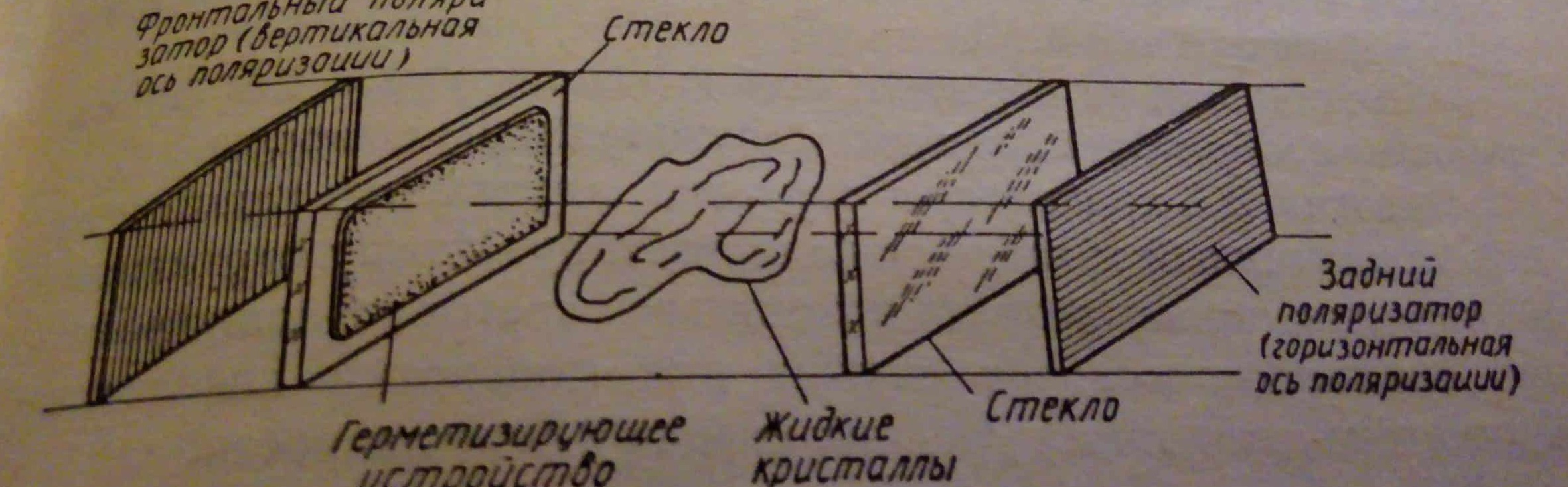
Kissinger was reportedly astonished — and was presented with a functioning Soviet-Made digital wristwatch, the Elektronika B6-02. Featuring CMOS circuits, it was blocky, brutalist, and affordable enough for practically anyone to buy when it officially launched.
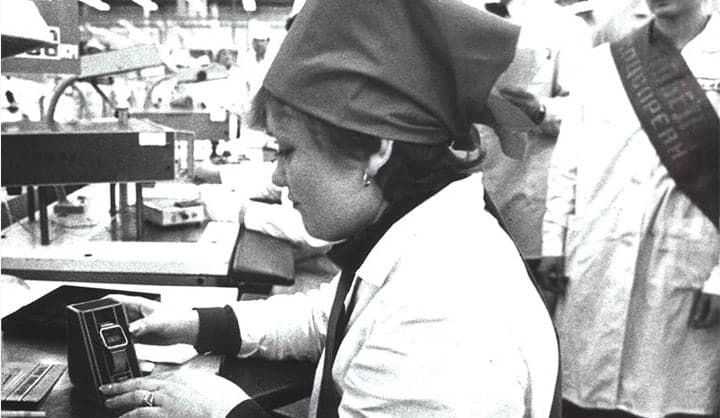
The whole Elektronika series carried this statement — the latest fancy tech of the west is cool, but when it’s done the soviet way, for way cheaper, it’s not a luxury to be worn by only the elites.

It didn’t take a horology enthusiast to buy and wear this watch. It’s Kalashnikov-esque ubiquity meant it was worn by everyone from party members to coal miners. 

Sure, in 1969 we brought a luxury-watch masterpiece, the Omega Speedmaster, to the Moon before the Soviets were able to. But as a tool of propaganda, the USSR might have had us beat, and the Elektronika 5 appeared in space several more times…
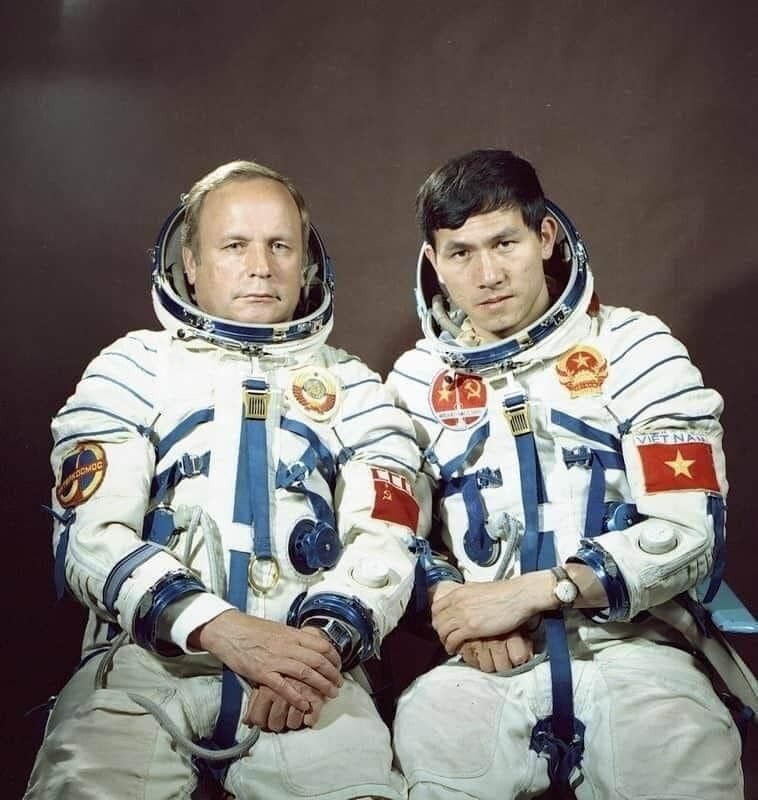
We found it intriguing and somewhat disheartening that Elektronika, what seemed to be the people’s choice, was snuffed out much in the same time period as the Soviet union.

In a world full of Casios & Timexes, who can’t help but succumb to the charm of the plucky Elektronika, so why not give it the wrist time it deserves…because it is now available once again and this time in a near perfect reproduction right down to the packaging.
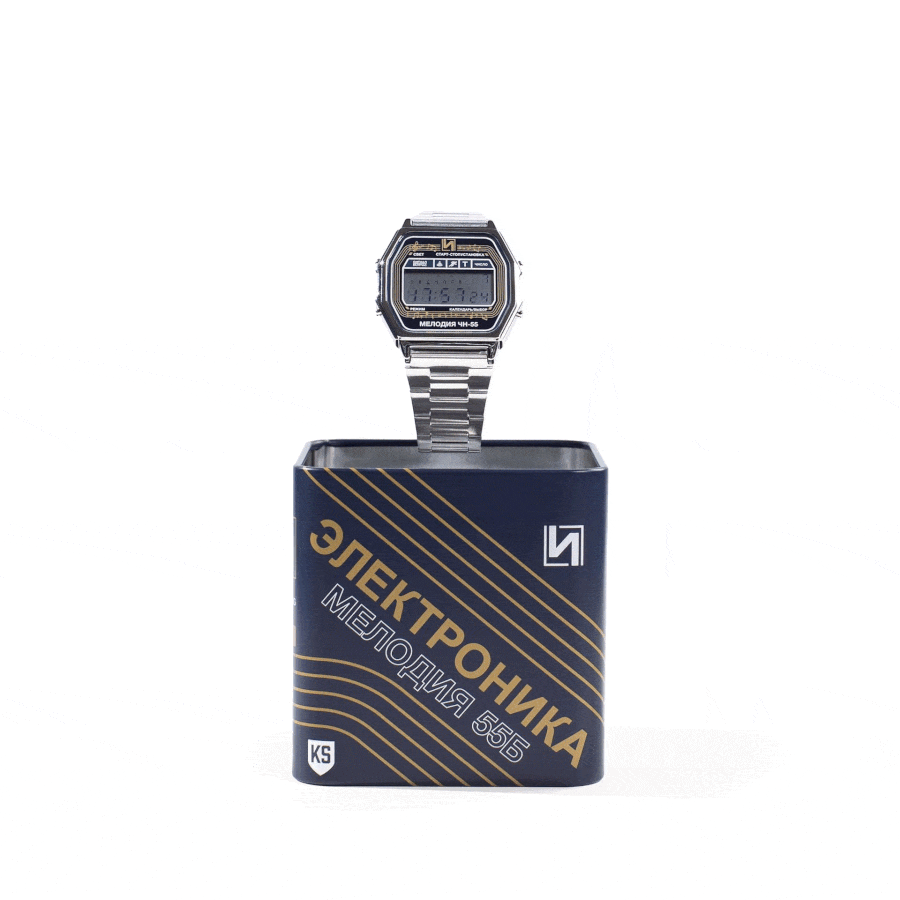
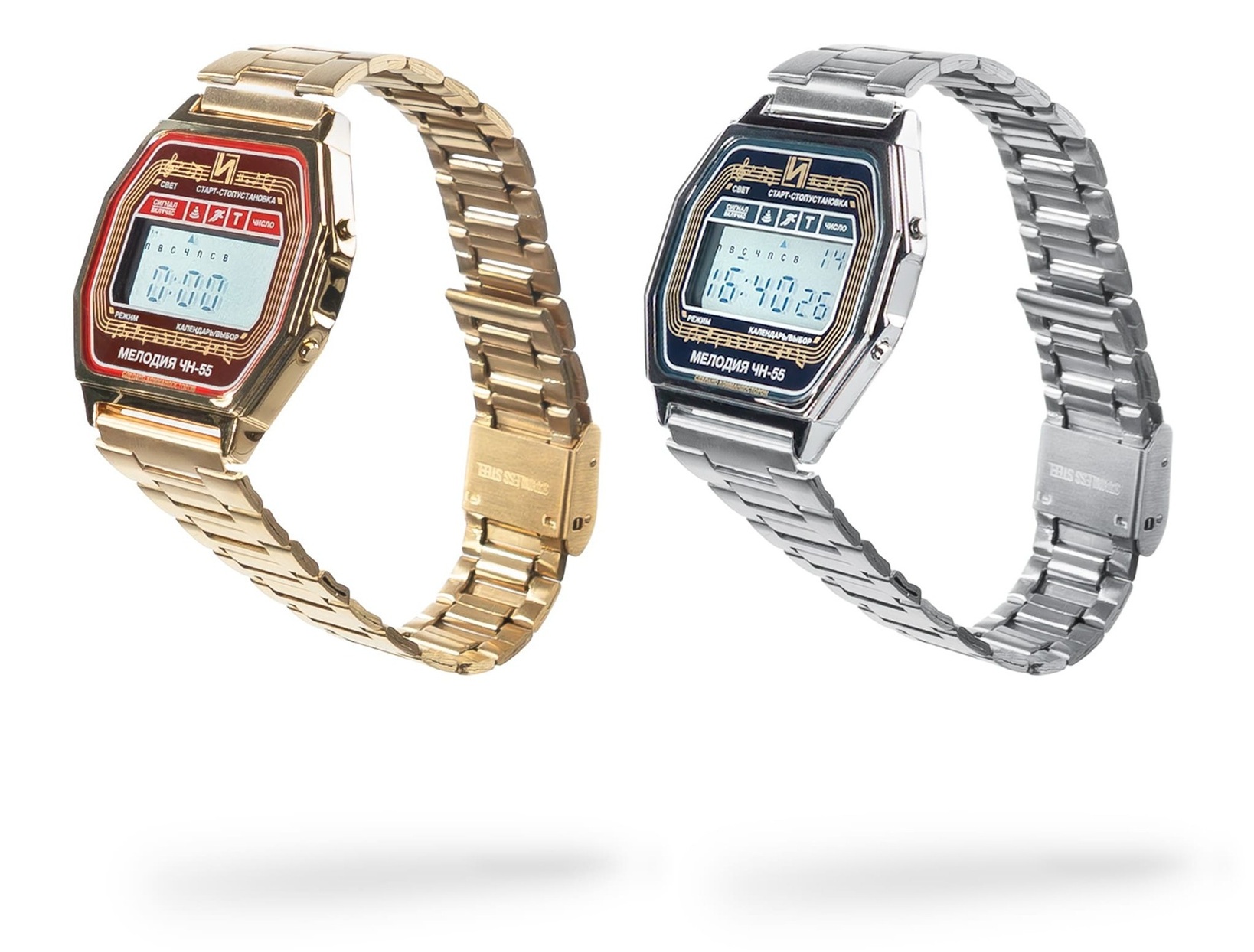
 A 1:1 functional replica of the original Elektronika with 4 new Slav-approved “Melody” alarms. Sanctioned to the second-hand market (pun intended), thankfully kommandostore thought that the watch deserved a proper revival after its unceremonious disappearance following the collapse of the USSR. 
 Just like the original, it’s an affordable and reliable piece with just enough fun to get even the most uptight horologists asking you questions.  But unlike the OGs, the sad truth of capitalism is that we’re slaves to supply and demand. They are running out fast, and even though there are plans to quickly continue production, there may be a slight gap. So, if you’re interested, this is kind of a last call. 

Click the following link to place your order while supplies last.
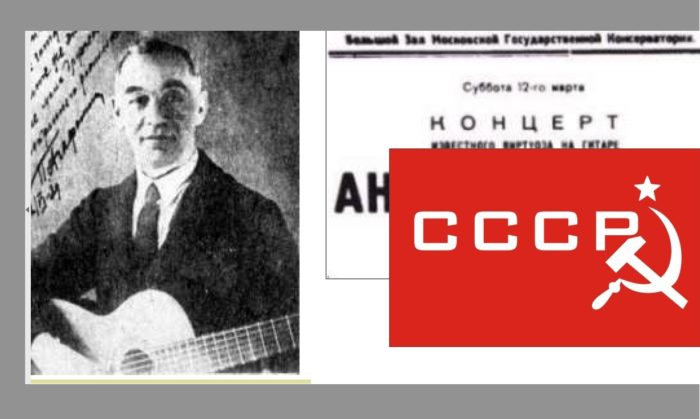
Unique Guitar Fraternity In Russia Was In Isolation For Seventy Years

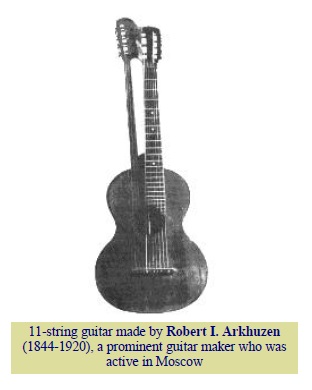
Since the collapse of the Berlin wall in 1989, the countries of eastern European have exploded in a painful big-bang that has changed the geography of Europe and Asia drastically. The new Russia was born, now being part of the Community of Independent States (CIS) that replaces the former USSR. The guitar fraternity in Russia has been living for more than 70 years in total isolation, prevented from being in touch with the West. The presence of many types of the instrument that we call “guitar” has been a constant one in 19th Century Russian 11 string Guitar Russian music life in all periods, having very old origins. But only recently has this guitar world started opening to western Europe, and we still know far too little about Russian composers for guitar and Russian guitarists. It was quite difficult for me to get information about some Russian guitarists, due both to the ever-present difficulties in communication (it is still difficult just to send a fax to Moscow during the day time)and to the problems of language comprehension.

The Guitar of the Czars- a new English summary redaction

In the past, references to the Soviet guitar world in Western music literature were always very scarce, and only in recent years has a subtle breath from that guitar world started blowing beyond the Urals. I wish to thank especially the guitarists Mikhail Goldort from Novosibirsk (central Siberia)and Piero Bonaguri, teacher at the Conservatory of Rovigo (Italy) as well as the composer Umberto Bombardelli, who helped me in collecting more information.

At the beginning there was the domra

The guitar was not the only known plucked instrument in Russia; two other instruments at least are worthy of mention: the domra and the balalaika. The domra is nowadays known in two variants with three or four metallic strings and in different sizes. It has a triangular shape, is tuned by fourths,and is played by means of a plectrum.

It is the most ancient plucked instrument, having been imported by the Mongols during the 13th century. Its tremolo is similar to the one of the Neapolitan mandolin and its range is large, due to its having 16 frets up to the junction of the neck. It is now employed both as a solo instrument and in an orchestra,together with the balalaika .

The balalaika has a peculiar triangular shape and three strings, among which two are tuned in unison and the other a fourth up. It appeared first during the 17th century. It was able to oust the domra in popularity, thanks to the preference of the Czars. It is played both by fingers and with the plectrum; from the last years of the Nineteenth Century it has existed in different sizes which cover all the frequency spectrum of the orchestra.
The guitar appeared in Russia during the 18th century, in a society far behind the European one in development. However, at the first half of the 19th century it was already known as a national instrument: the Russian guitar. Its own peculiarities were the tuning by thirds on the notes of the G scale, and having seven strings. It is known by the tender-sounding name of “semistrunaia” (a composite noun made from
“sem’ ” =seven and “struny” = strings).
Its popularity grew among the people of all ranks, both middle and upper class, as described by many Russian poets and writers. There are also many variants of this main type, in number of strings and dimensions. By studying the surviving photos of Russian guitarists of the last century, re-published in the volume Guitar in Russia and USSR (see photo in the full PDF article linked below), we see that the guitar with 7 strings on the neck and 4 strings outside of the neck was very popular. The famous photograph of  Valerian Rusanov, one of the first Russian guitar historians, with his 11-string guitar is significant in this respect. This instrument shared favor with the six string guitar (the so-called “shestistrunaia“, from “shest,” which means “six” ) tuned as in the West, and many other types. Continue reading full article PDF by clicking here.  For the Silo, Marco Bazzotti.


Raketa’s Three Thousand Euro Russian Made Puppet Watch

Preserving history, creating the future

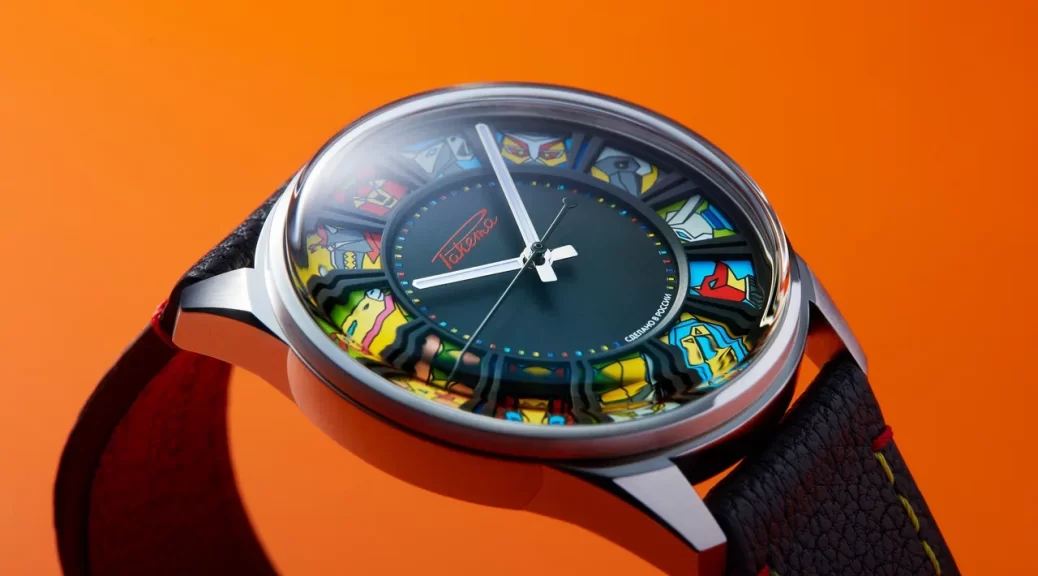
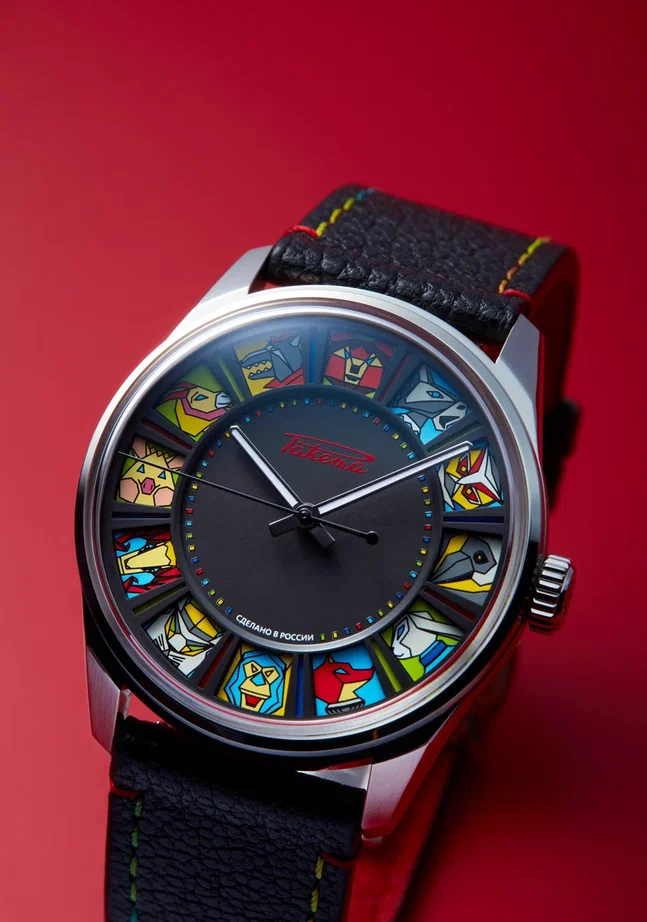
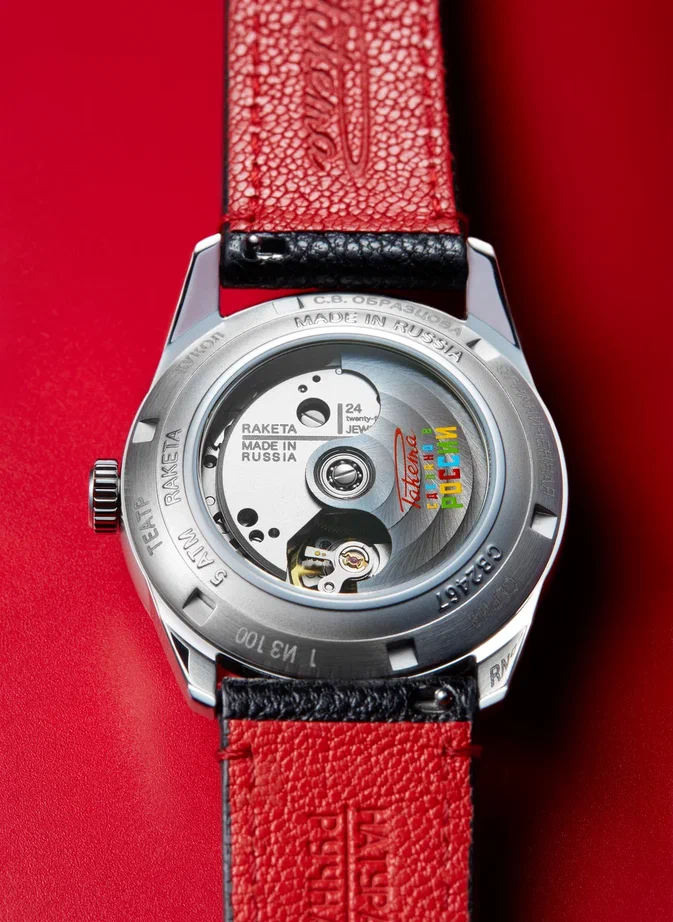
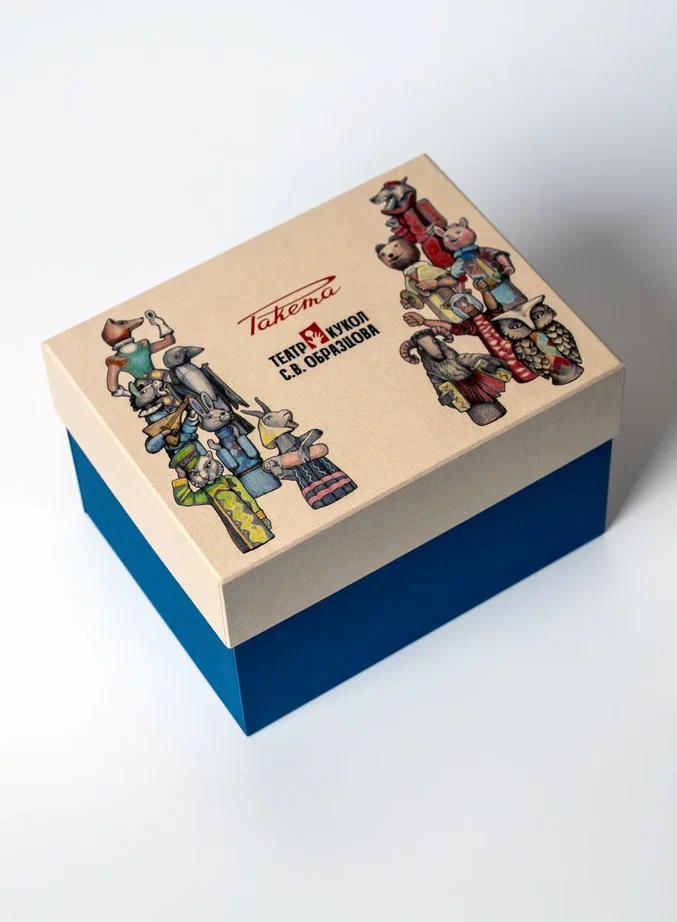
The Raketa Watch Factory in collaboration with the famous Moscow Sergey Obraztsov Puppet Theatre presents an exclusive watch model — Raketa Theatre. The limited series consists of 100 individually numbered pieces. Imagine it’s not just a watch, but a unique ticket to a special performance — where there are only 100 seats in the auditorium. Each watch is like a personalized theatre seat with an engraved number:

1/100, 2/100…100/100.

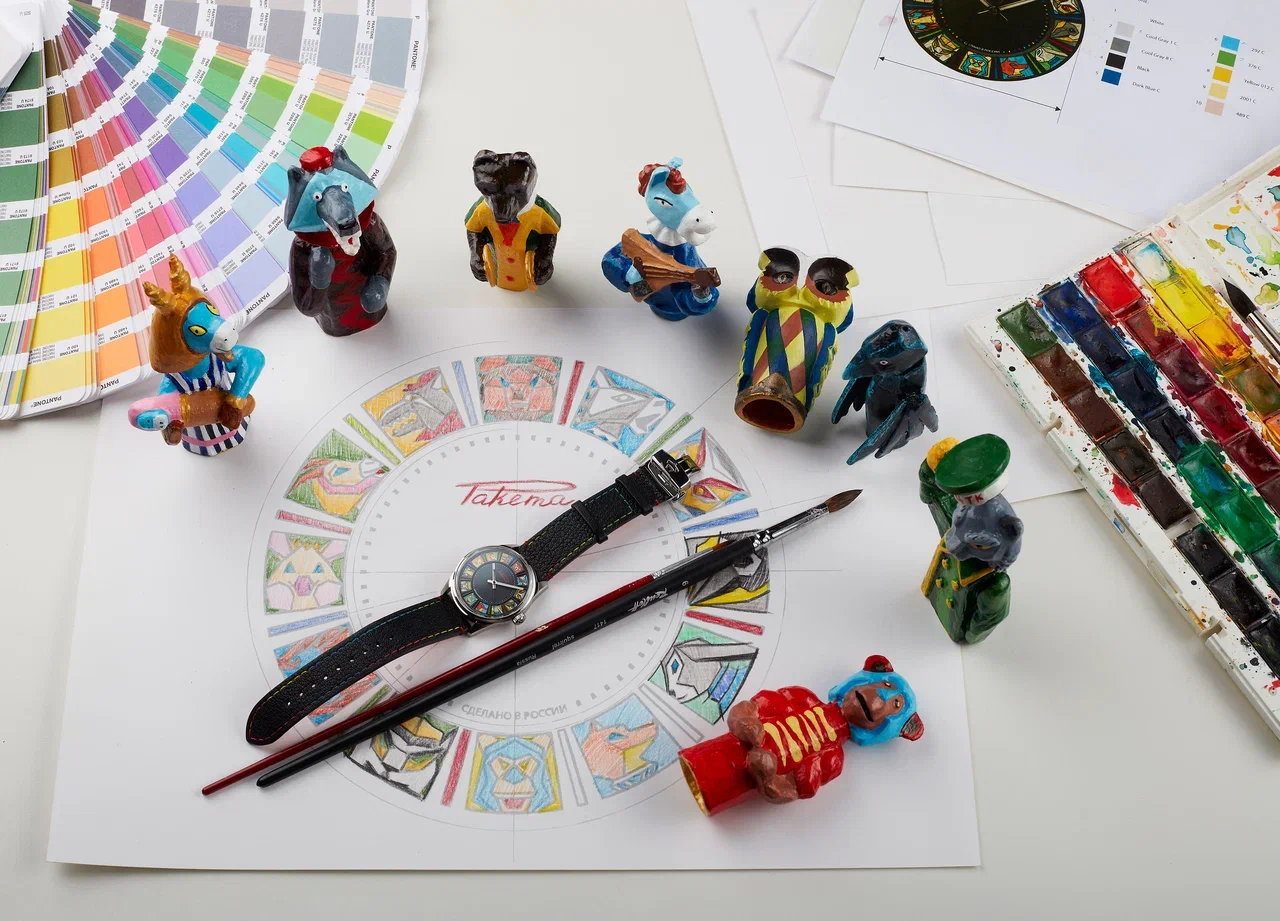
The dial of the model is inspired by the famous pediment clock that decorates the facade of the Sergey Obraztsov Puppet Theatre, where each hour corresponds to the figurine of an animal. Each figurine image has been reinterpreted by the Raketa’s designers in a modern avant-garde aesthetic and applied to the dial.

The restrained design of the Raketa Theatre watches is elegantly enhanced by three stylish accents: an avant-garde dial, multi-colored printing on the rotor, and contrasting stitching on the leather strap. These thoughtful details resonate with each other, creating a stricking balance of restraint and distinctiveness.

New time for the Sergey Obraztsov Puppet Theatre

The partnership with the Sergey Obraztsov Puppet Theatre goes beyond developing an exclusive watch model. Raketa specialists are also consulting the theatre on the restoration of its famous monumental facade clock. This project reflects the brand’s commitment to preserving cultural heritage and its tradition of incorporating art into watch movements.

Elena Bulukova, Director of the Sergey Obraztsov Puppet Theatre

“The clock is under restoration, but time at Obraztsov does not stand still. The clock’s characters have a new look now. Instead of becoming museum exhibits, they remain with us, as part of our living reality. This is how the living history of the puppet theatre continues”.

The art of appreciating time

For many people, the Sergey Obraztsov Puppet Theatre’s pediment clock is not just a mechanism but also a symbol of warm memories of the first time their parents brought them to meet fairy-tale characters. This tradition has become part of the personal history for thousands of families. Raketa’s new model is meant to bring back these touching moments, helping to lay the foundation for new traditions for future generations.

Made in Russia

The heart of the Raketa Theatre model is its automatic movement, manufactured from A to Z at the Raketa Watch Factory in St. Petersburg, one of the few watch manufacturers in the world that produces its own movements, relying on a base of Soviet-era production technology that passed down through generations.

Price

The cost is 3000 EUR (including VAT) / $4,876 CAD at time of posting . For the comfort of customers, Raketa watches are delivered worldwide free of charge by DHL directly up to the front door.

Specifications

Manufacture: Raketa Watch Factory (Saint-Petersburg)

Movement: Calibre: 2615

Functions: Automatic

Number of jewels: 24

Testing positions: 4

Average rate (s/d): 10+20

Average running time (h): 40

Frequency/hour: 18 / 2.5 Hz

Bi-directional automatic winding: Yes

Stopper of self-winding unit activated during manual winding: Yes

Decoration: Neva waves Printing

Case: Material: Stainless steel

Size: 39.5 mm

Dial glass: Sapphire

Back glass: Mineral

Crown: Synthetic ruby inside

Water resistance: 5 bar

Hands: Superluminova

Dial: High-quality printing, embossing

Strap : Material: Stainless steel

Strap width: 22 mm

Sex : Unisex

Buckminster Fuller’s Fascinating Unbuilt Buildings

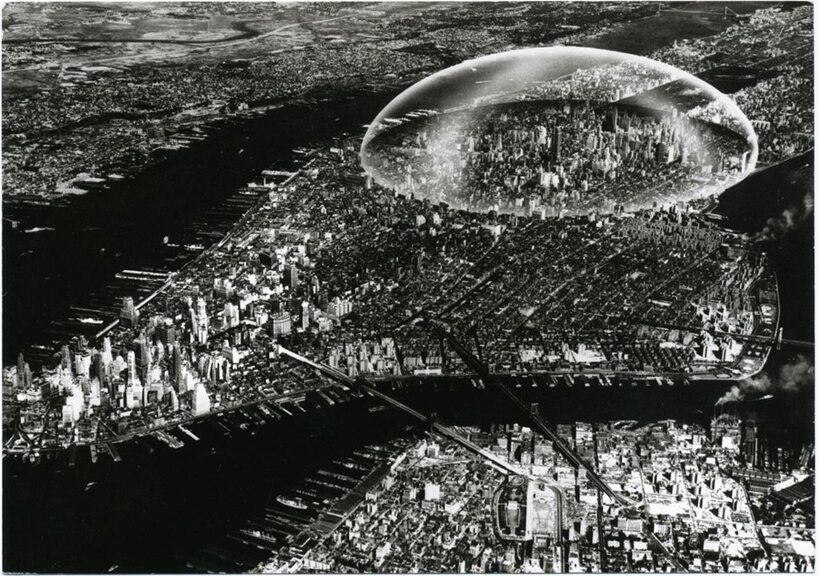
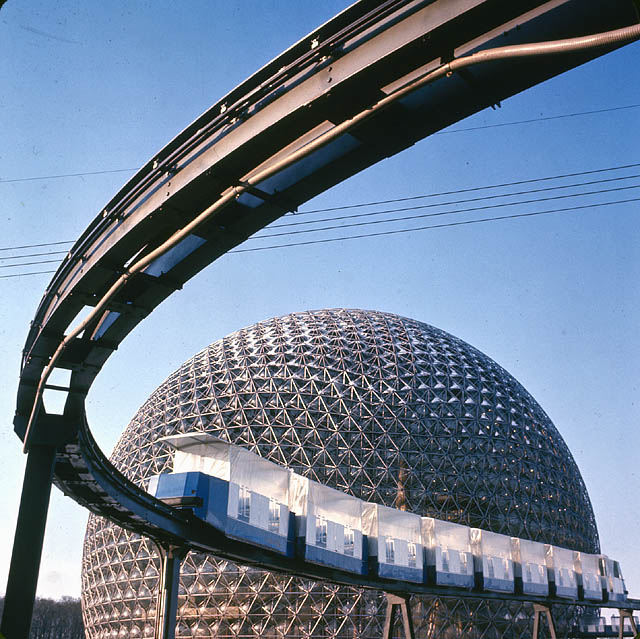
Buckminster was a genius and his geodesic dome buildings were not only revolutionary in their construction but were also incredibly unique and memorable. Perhaps your grandparents attended Expo67 in Montreal (you guessed it, waaay back in 1967) and visited the United States Pavilion- read this snippet for a time capsule account:

“The United States exhibit, entitled Creative America, is designed to illustrate technological and esthetic inventiveness in the U.S.A.A huge transparent geodesic “bubble” contains a multi-level system of exhibit platforms interconnected by escalators, and walkways. The platforms support a variety of exhibit components specially selected or designed for the new environment created by the structure. Situated on Ile Sainte-Hélène close to the Métro station from which there is Minirail connection with the Expo-Express, the bubble is 20 stories high and has a spherical diameter of 250 feet .By day, the bubble glistens as the sun highlights the structure and, by night, the bubble “glows” from interior lighting. The interior exhibits reflect different aspects of the United States and include folk art, cinema and fine arts displays, as well as a space exhibit which is reached by a 125 foot escalator and a simulated lunar landscape supporting full scale lunar vehicles. A 300-seat theatre features a 3-screen color film showing the games children play.”

Photo- National Archives of Canada

If you think that was pretty amazing check out some of Buckminster’s buildings that unfortunately didn’t make it past the planning stage.

Fascinating Unbuilt Buildings

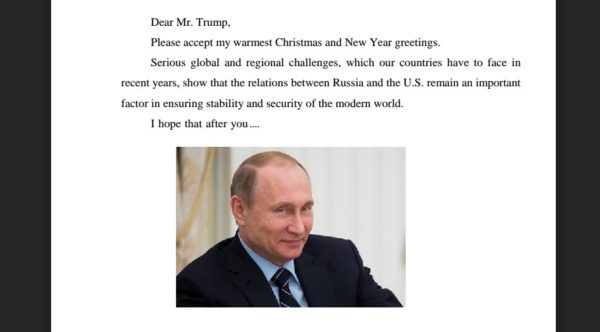
Read Here- Putin “Bilateralism” Christmas Letter To Trump

Statement from President-Elect Donald J. Trump 
(Palm Beach, FL) – President-elect Donald J. Trump released the following statement in response to the attached letter from Russian President Vladimir Putin.

“A very nice letter from Vladimir Putin; his thoughts are so correct. I hope both sides are able to live up to these thoughts, and we do not have to travel an alternate path.”

christmas letter to trump from putin2016bannerClick on the hyperlink above to read the full letter.