Tag Archives: industrialization

America Welcomes a New G20


StateDept

Dec, 2025

Author: U.S. Secretary of State Marco Rubio

Next year, the United States will host the world’s 20 largest economies for the first time since 2009. Coinciding with America’s 250th anniversary, the 2026 G20 will be a chance to recognize the values of innovation, entrepreneurship, and perseverance that made America great, and which provide a roadmap to prosperity for the entire world. We’ll showcase these values and more when we host the G20 Leaders’ Summit in December 2026 in one of America’s greatest cities, Miami, Florida.

Under President Trump’s leadership, the G20 will use four working groups to achieve progress on three key themes: removing regulatory burdens, unlocking affordable and secure energy supply chains, and pioneering new technologies and innovation. The first Sherpa and Finance Track meetings will be held in Washington, DC, on December 15-16, followed by a series of meetings throughout 2026. As the global economy confronts the changes driven by technologies such as Artificial Intelligence, and shakes off ideological preoccupations around green energy, the President is prepared to lead the way.

We will be inviting friends, neighbors, and partners to the American G20. We will welcome the world’s largest economies, as well as burgeoning partners and allies, to America’s table. In particular, Poland, a nation that was once trapped behind the Iron Curtain but now ranks among the world’s 20 largest economies, will be joining us to assume its rightful place in the G20. Poland’s success is proof that a focus on the future is a better path than one on grievances. It shows how partnership with the United States and American companies can promote mutual prosperity and growth.

The contrast with South Africa, host of this year’s G20, is stark.

South Africa entered the post-Cold War era with strong institutions, excellent infrastructure, and global goodwill. It possessed many of the world’s most valuable resources, some of the best agricultural land on the planet, and was located around one of the world’s key trading routes. And in Nelson Mandela, South Africa had a leader who understood that reconciliation and private sector driven economic growth were the only path to a nation where every citizen could prosper.

Sadly, Mandela’s successors have replaced reconciliation with redistributionist policies that discouraged investment and drove South Africa’s most talented citizens abroad. Racial quotas have crippled the private sector, while corruption bankrupts the state.

The numbers speak for themselves. As South Africa’s economy has stagnated under its burdensome regulatory regime driven by racial grievance, and it falls firmly outside the group of the 20 largest industrialized economies.

Rather than take responsibility for its failings, the radical ANC-led South African government has sought to scapegoat its own citizens and the United States. As President Trump has rightly highlighted, the South African government’s appetite for racism and tolerance for violence against its Afrikaner citizens have become embedded as core domestic policies. It seems intent on enriching itself while the country’s economy limps along, all while South Africans are subject to violence, discrimination, and land confiscation without compensation. Its former Ambassador to the United States was openly hostile to America. Its relationships with Iran, its entertainment of Hamas sympathizers, and cozying to America’s greatest adversaries move it from the family of nations we once called close.

The politics of grievance carried over to South Africa’s Presidency of the G20 this month, which was an exercise in spite, division, and radical agendas that have nothing to do with economic growth. South Africa focused on climate change, diversity and inclusion, and aid dependency as central tenets of its working groups. It routinely ignored U.S. objections to consensus communiques and statements. It blocked the U.S. and other countries’ inputs into negotiations. It actively ignored our reasonable faith efforts to negotiate. It doxed U.S. officials working on these negotiations. It fundamentally tarnished the G20’s reputation.

For these reasons, President Trump and the United States will not be extending an invitation to the South African government to participate in the G20 during our presidency. There is a place for good faith disagreement, but not dishonesty or sabotage.

The United States supports the people of South Africa, but not its radical ANC-led government, and will not tolerate its continued behavior. When South Africa decides it has made the tough decisions needed to fix its broken system and is ready to rejoin the family of prosperous and free nations, the United States will have a seat for it at our table. Until then, America will be forging ahead with a new G20.

Marco Rubio was sworn in as the 72nd secretary of state on January 21, 2025. The secretary is creating a Department of State that puts America First.
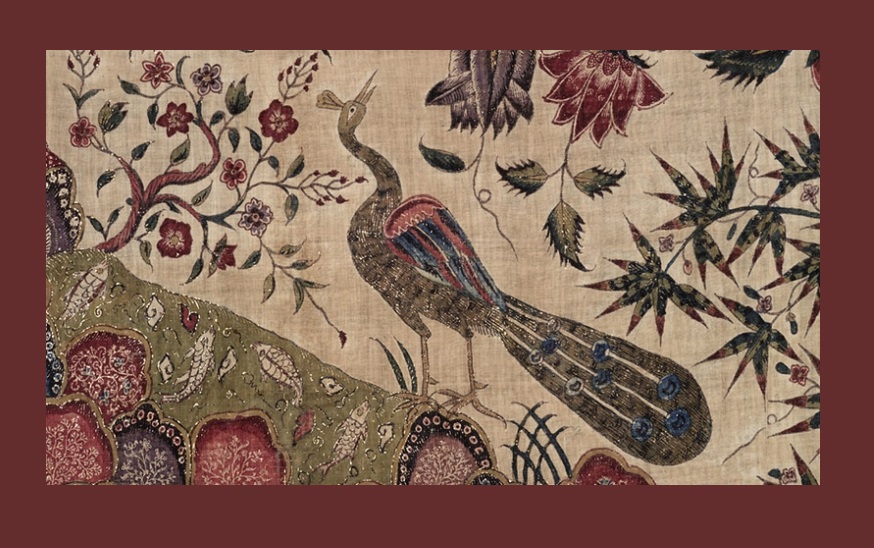

The Royal Ontario Museum Publishes Cloth That Changed The World: The Art And Fashion Of Indian Chintz

New book explores the story of India’s richly coloured textiles ahead of ROM original exhibition

Photography by Tina Weltz

TORONTO — The Royal Ontario Museum (ROM) is pleased to announce the publication of Cloth that Changed the World: The Art and Fashion of Indian Chintz on December 2, 2019. The collection of essays explores the far-reaching influence this vividly printed and painted cotton cloth has had on the world, from its origins 5,000 years ago to its place in fashion and home décor today. The volume is the official companion to the ROM-original exhibition The Cloth that Changed the World: India’s Painted and Printed Cottons, which runs from April 4 to September 27, 2020 in Toronto.

The scholarly and beautifully illustrated publication draws from the Royal Ontario Museum’s own Indian chintz collection, which ranks as one of the best in the world. Featuring extensive new research, this multidisciplinary book traces the story of chintz and the indelible footprint it has left on the world. The publication combines vivid field photography of artisans at work with striking images from the ROM’s world-class collection, as well as images from India’s fashion runways and the work of top designers embracing this heritage textile today.

“The world would be a drab place without India,” says Sarah Fee, editor, Cloth that Changed the World and ROM Senior Curator of Eastern Hemisphere Fashion and Textiles. “Our blue jeans and printed T-shirts trace much of their lineage back to the ingenuity of India’s cotton printers and dyers. This exhibition and companion book celebrate how India ‘clothed the world’ in exuberantly coloured cottons for thousands of years. It explores the art’s resiliency in the face of modern industrial imitation and shares the exciting stories of reviving natural dyes and hand skills in India today.”

Contributing writers include leading experts Ruth Barnes, Rosemary Crill, Steven Cohen, Deepali Dewan, Max Dionisio, Eiluned Edwards, Sarah Fee, Maria João Ferreira, Sylvia Houghteling, Peter Lee, Hanna Martinsen, Deborah A. Metsger, Alexandra Palmer, Divia Patel, Giorgio Riello, Rajarshi Sengupta, Philip Sykas, and João Teles e Cunha, and a preface by Sven Beckert, Harvard University’s Laird Bell Professor of History.

Next spring, the book comes to life in the ROM’s Patricia Harris Gallery of Textiles and Costumes, where ROM-original exhibition The Cloth that Changed the World: India’s Painted and Printed Cottons will take visitors on a journey through the ROM’s world-renowned collection of chintz, on public display for the first time in over 50 years.

The striking exhibition will explore thought-provoking themes, including the ingenuity, skill and technique of Indian artisans; the adaptation of chintz for international markets; and the environmental impact of the global textile industry over time. With a focus on attire and home furnishings, the exhibition features 80 objects spanning 10 centuries and four continents. Religious and court banners for India, monumental gilded wall hangings for elite homes in Europe and Thailand, and luxury women’s dress for England showcase the versatility and far-reaching desire for Indian Chintz.

About Sarah Fee (Curator and Editor)

Dr. Sarah Fee is Senior Curator of Eastern Hemisphere fashion and textiles at the Royal Ontario Museum. She has degrees in Anthropology and African studies from Oxford University and the School of Oriental Studies, Paris, and in 2002, guest-curated an exhibition on Madagascar for the Smithsonian’s National Museum of African Art. Today, she continues to focus on Malagasy historic textiles and fashions, in addition to those of Zanzibar and Western India. A research associate at the Musée du Quai Branly, Paris, and the Indian Ocean World Centre at McGill University, Fee also teaches at the University of Toronto’s Department of Art. Fee is a past Board Member of the Textile Society of America, and currently sits on the editorial board of the Textile Museum Journal (TMJ).

About the Publication

Cloth that Changed the World: The Art and Fashion of Indian Chintz
Editor: Sarah Fee
Available at the ROM store starting December 2, 2019.
9 x 12, 272 pages, 300 colour illustrations.
$50.00.
Royal Ontario Museum and Yale University Press.

ROM SOCIAL MEDIA 

Join the Conversation: @ROMtoronto
Like: ROM Facebook
Watch: ROM YouTube

Sarah Fee
@aTextilesCurator

ABOUT THE ROM

Founded in 1914, the Royal Ontario Museum showcases art, culture and nature from around the world and across the ages. Among the top 10 cultural institutions in North America, Canada’s largest and most comprehensive museum is home to a world-class collection of 13 million art objects and natural history specimens, featured in 40 gallery and exhibition spaces. As the country’s preeminent field research institute and an international leader in new and original findings, the ROM plays a vital role in advancing our understanding of the artistic, cultural and natural world. Combining its original heritage architecture with the contemporary Daniel Libeskind-designed Michael Lee-Chin Crystal, the ROM serves as a national landmark, and a dynamic cultural destination in the heart of Toronto for all to enjoy.

ON NOW


It’s Alive! Classic Horror and Sci-Fi Art from the Kirk Hammett Collection
Gods in My Home: Chinese New Year with Ancestor Portraits and Deity Prints

COMING SOON


November 16, 2019 | Bloodsuckers: Legends to Leeches
March 7, 2020 | Egyptian Mummies: Exploring Ancient Lives


À L’AFFICHE


Sauve qui peut! L’art des grands films d’horreur et de science-fiction de la collection de Kirk Hammett
Accueillir les divinités : Portraits d’ancêtres et estampes de dieux pour le nouvel an chinois

À VENIR


Le 16 novembre 2019 | Soif de sang
Le 7 mars 2020 | Les momies égyptiennes : À la rencontre des Anciens