September 2025 – Canada’s immigration policy continues to move in the wrong direction and requires a fundamental course correction, according to a new Communiqué from the C.D. Howe Institute’s Immigration Targets Council.
In “Immigration Policy Still in Need of a Course Correction,” the Council – composed of leading academics and policy experts – stresses that who is selected matters more than meeting numeric targets. They determined that immigration should be guided by human capital and long-term prosperity, not short-term labour market fixes or non-economic objectives. Notably, members also emphasized the importance of transparent, predictable policy that ensures economic immigrants have strong skills, earnings potential, and integration prospects.
Second Meeting of the C.D. Howe Institute Immigration Targets Council
The C.D. Howe Institute Immigration Targets Council held its second meeting on August 26, 2025, bringing together leading academics and policy experts to provide recommendations on Canada’s immigration-level targets and system design.1
Members agreed that Canada’s immigration policy has moved in the wrong direction and needs a fundamental course correction. Members stressed that the labour market skills and earnings potential of immigrants – both temporary and permanent – matter more than meeting numeric targets. Immigration policy should raise average human capital, rather than focusing narrowly on filling short-term labour market gaps, which prevents wage increases and capital investment to enhance productivity, or meeting non-economic objectives such as increasing Francophone immigration outside Quebec. Policy should also be transparent, predictable, and oriented toward long-term prosperity, ensuring that economic immigrants have strong skills, earnings potential, and integration prospects.
Building on these principles, the Council recommended annual permanent resident admissions of 365,000 in 2026, 360,000 in 2027, and 350,000 in 2028, reflecting the Council’s median votes. For 2026, this recommendation is modestly below the government’s current target of 380,000. Some members favoured a gradual reduction over three years to return to historical norms, while others supported higher levels to ease transitions from the non-permanent resident (NPR) population.
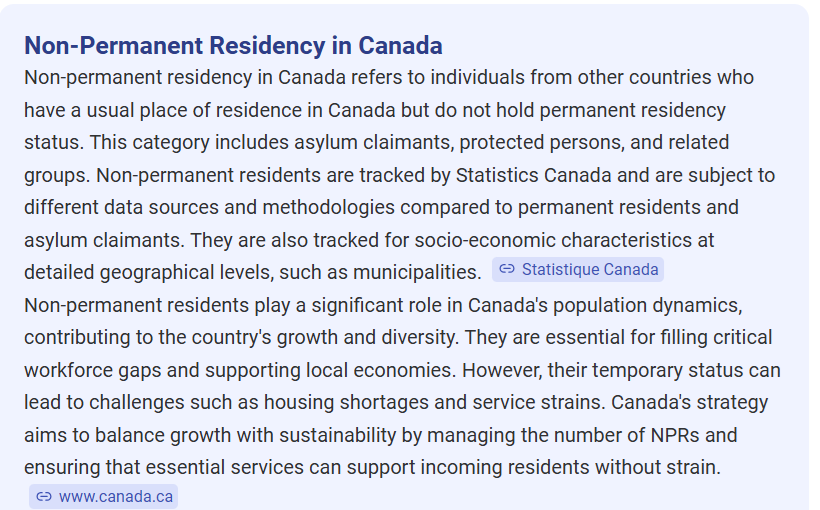
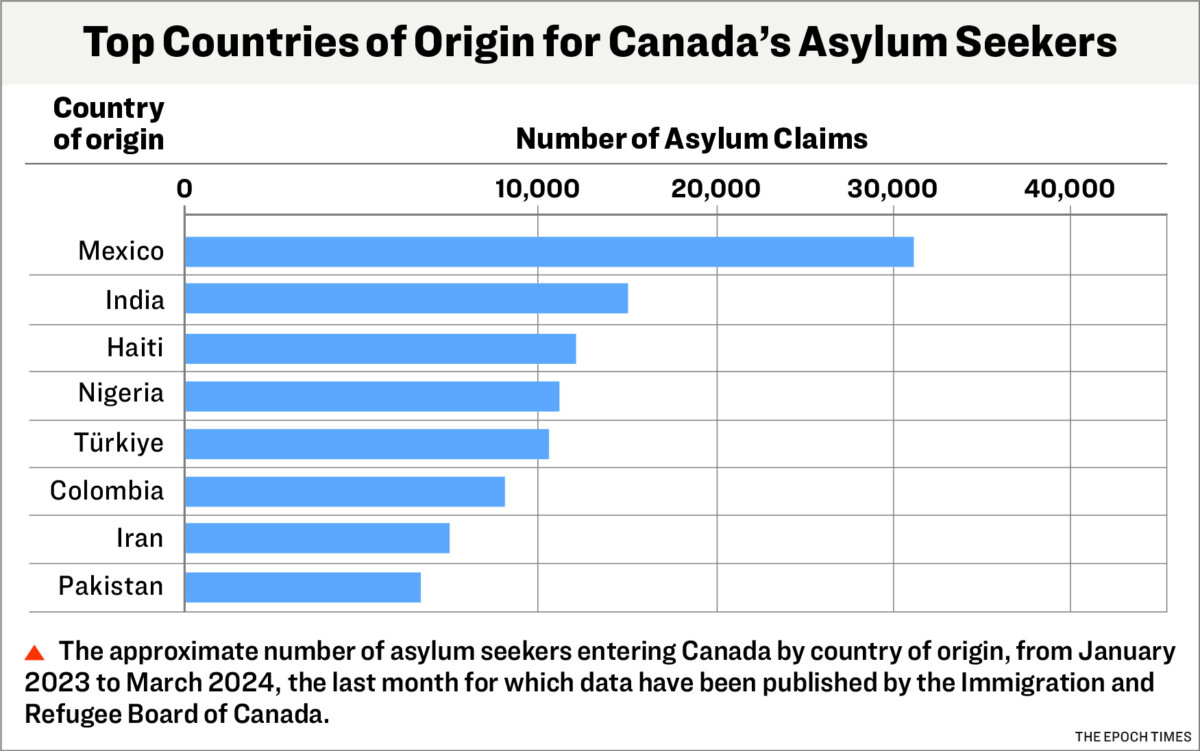
The group also raised serious concerns about the rapid growth and complexity of the NPR (Non permanent residency) population, as well as persistent challenges in the asylum system.
Members emphasized the importance of clear guardrails for the NPR population, recommending that the government maintain a ceiling of 5 percent of Canada’s population for NPRs in 2026, with a review in early 2027. They noted that the optimal NPR share requires balancing inflows, outflows, and clear pathways for temporary residents employed in high-skill occupations to transition to permanent residency, using objective criteria such as earnings. Improving efficiency in the asylum system was viewed as critical to protect genuine claimants and reduce pressures on the broader immigration system, since many currently see asylum as a pathway to permanent residency.
The Council further agreed that immigration programs require substantial reforms.
Regarding temporary immigration, members expressed concern that the international student system has become a pathway for low-wage labour rather than a means of attracting top global talent. They recommended higher admission standards, stronger language and academic requirements, limits on off-campus work, and stronger federal oversight to ensure only high-quality institutions and programs are eligible. Similarly, the Temporary Foreign Worker Program should be scaled back and not be used as a substitute for raising wages or improving working conditions, since relying on temporary workers can reduce employers’ incentives to offer better pay or workplace standards. Reducing reliance on low-skilled temporary workers – except in sectors such as agriculture, where transitions take time – was viewed by the group as essential to encourage productivity growth and higher wages for Canadian workers.
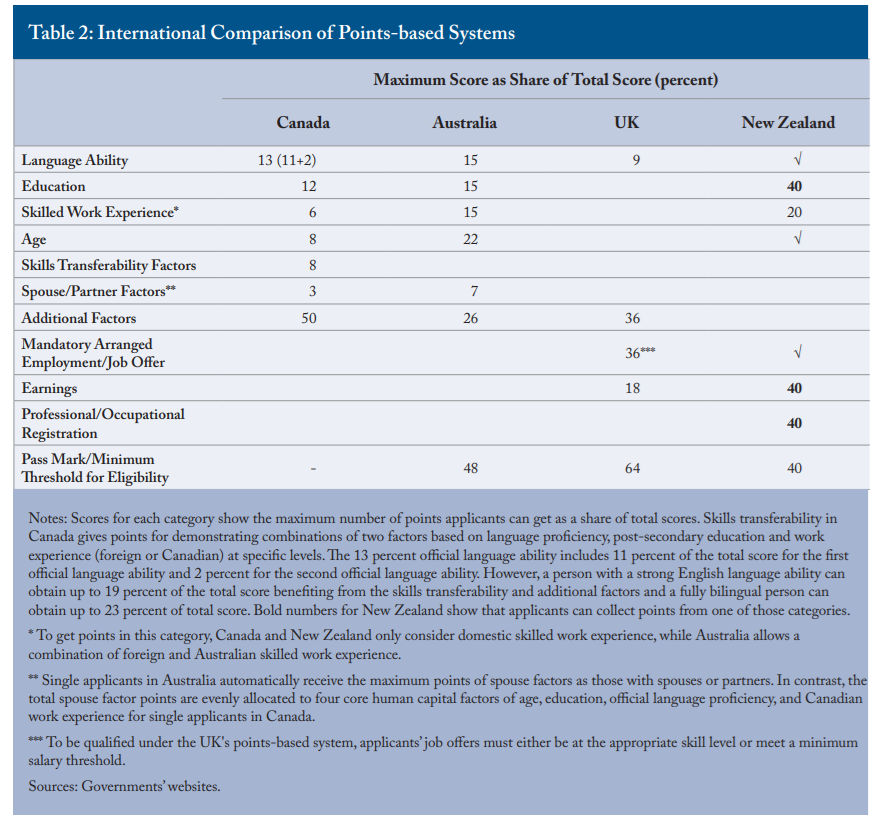
For permanent immigration, members were critical of the proliferation of boutique pathways in the economic class, such as category-based selection – targeted draws from the Express Entry pool based on specific attributes like occupation or language – and provincial nominee programs that prioritize lower-skilled workers, which allow provinces and territories to nominate candidates to meet regional labour market needs. They highlighted the need to simplify and strengthen the selection mechanism and agreed that Canada should move toward a single, transparent system centred on Express Entry and the Comprehensive Ranking System (CRS), a points-based tool used to assess, score, and rank candidates in the pool. They supported a human-capital-based model for economic principal applicants, which evaluates individuals on their education, work experience, and language ability, with a revised CRS that places greater weight on predictors of long-term success. New criteria should include the field of study for all applicants and verified earnings in Canada for those with prior Canadian experience. All economic principal applicants, they stressed, should be required to meet the CRS threshold. Members also agreed that these reforms – across temporary and permanent immigration programs, together with improving the integrity of the asylum system – are essential to reducing the size of the non-permanent resident population.
In addition, members highlighted the importance of fast-track pathways and policies to attract top-tier global talent. They called for stronger federal–provincial coordination and targeted initiatives to recruit individuals with extraordinary achievements in fields with lasting impact, such as science, medicine, and artificial intelligence. For high-profile research leaders, this should include pathways that allow them to bring their teams. Attracting such talent, they noted, requires not only immigration pathways but also the infrastructure and support that world-class research demands.
In conclusion, the Council emphasized the urgent need to restore a principled and sustainable immigration policy. By focusing on raising human capital, maintaining guardrails on the non-permanent resident population, addressing weaknesses in the asylum system, and reforming the economic immigration system, Canada can ensure that immigration contributes to long-term prosperity and sustains public confidence.
Members of the C.D. Howe Institute Immigration Targets Council:
Members participate in their personal capacities, and the views collectively expressed do not represent those of any individual, institution, or client.
Convener:
• Parisa Mahboubi, C.D. Howe Institute
Members:
• Don Drummond, Queen’s University
• Pierre Fortin, Université du Québec à Montréal
• David Green, University of British Columbia
• Daniel Hiebert, University of British Columbia
• Michael Haan, Western University
• Jason Kenney, Bennett Jones LLP
• Mikal Skuterud, University of Waterloo
• Christopher Worswick, Carleton University
• Donald Wright, C.D. Howe Institute and Global Public Affairs
May, 2025 – Canada cannot rely on immigration alone to address the challenges posed by its ageing population and relentless decline in fertility rates [ see Canada’s Soaring Housing and Living Costs Stop Baby Making CP], according to a new report from our friends at the C.D. Howe Institute. Without a broader population strategy, rising immigration could fuel rapid growth while straining housing, healthcare, and infrastructure – without fully resolving rising old-age dependency ratios or labour force pressures.
In this post, Daniel Hiebert confronts an important policy dilemma: although immigration increases overall population and helps address short-term labour gaps, the long-term trade-offs are significant. Without corresponding investment and planning, rising immigration risks compounding the very pressures it aims to alleviate.
“This is a particularly opportune moment to reflect on how immigration fits into Canada’s long-term demographic strategy, especially as both permanent and temporary immigration surged between 2015 and 2024, and are now being scaled back,” says Hiebert. “We need to think ahead about what kind of future we are building — and how we get there.”
Based on current patterns, it takes five new immigrants to add just one net new worker, once dependents and added consumer demand are factored in — a reality that undermines assumptions about immigration as a direct fix for labour shortages.
Hiebert argues that Canada must move beyond short-term immigration planning and adopt a long-range population strategy — one that combines immigration with other tools like delayed retirement, increased workforce participation, and stronger productivity growth. The alternative, he warns, is a “population trap”: a scenario where growth outpaces the country’s capacity to support it, undercutting prosperity in the process.
The report also calls on governments to coordinate immigration levels with long-term planning in housing, healthcare, education, and infrastructure.
“There’s no question that immigration is integral to Canada’s future,” says Hiebert. “But assuming it can carry the load alone ignores the structural pressures we’re facing — and the investments we need to make today to ensure future stability.”
Balancing Canada’s Population Growth and Ageing Through Immigration Policy
Canada faces twin demographic pressures: an ageing population and rapid population growth driven by immigration. The report argues that immigration levels must strike a careful balance – sufficient to offset some effects of low fertility and an ageing workforce, but not so high as to outpace infrastructure and economic capacity.
A sustainable population strategy requires coordinated planning across immigration, infrastructure, workforce participation, and capital investment. The report calls for long-term planning that aligns immigration policy with economic and social goals and emphasizes the need to manage absorptive capacity to avoid overburdening housing, healthcare, and public services.
Introduction
Declining fertility is a global trend and is especially pronounced in countries with high levels of economic development. These countries share the common challenge of ageing populations, with rising old-age dependency ratios (OADRs)1 and a shrinking portion of the population in prime working age. Several policy responses have been established to deal with this emerging reality, including pronatalist and other family-based social programs, efforts to enhance automation and productivity, incentivization of a larger proportion of the population to enter the formal labour force, delaying retirement benefits, and increasing the rate of immigration. The success of these approaches has varied, raising critical questions for policymakers: which strategies are the most efficient? What are their costs? And which policies offer the best balance between risk and reward?
This Commentary explores the potential role and limitations of immigration in alleviating Canada’s challenges of low fertility and ageing. This is a particularly opportune moment to consider such an issue given that both permanent and temporary immigration strongly increased between 2015 and 2024 and will be reduced for the 2025 to 2027 period.
Using custom demographic projections, this paper examines how various immigration scenarios – ranging from historical rates to the peak of 2024 – will affect Canada’s demographic outlook over the next 50 years. The analysis investigates the role immigration could play in mitigating the effects of an ageing population, while also acknowledging the associated trade-offs, including pressures on infrastructure and rapid population growth. The findings highlight that Canada’s immigration policy, while important, should be framed within a long-term population strategy that aligns immigration policy with broader economic and social goals – including capital investment, productivity, delayed retirement, and expanded social infrastructure – to ensure sustainable growth and enhanced prosperity for all Canadians.
Canada’s Demographic Challenge and Recent Immigration Policy Responses
Canada’s current demographic challenge is the product of two primary factors: low fertility and the ageing and retirement of the Baby Boom generation. Canada’s fertility rate first rapidly declined from the peak of the Baby Boom (1950s) to the early 1970s, when it first fell below the replacement level. Since then, it has continued with a slower, though persistent decline, interrupted by occasional slight recoveries. Most recent calculations reveal that Canada’s fertility rate is now at 1.26 – a level unprecedented in Canadian history and among the lowest globally. The consequences of low fertility are particularly pronounced today due to the ageing of the Baby Boom generation. In 2025, this cohort ranges in age from 59 to 79 years old, while the average age of retirement in Canada was 65.1 in 2023. Around two-thirds of boomers have already reached the age of 65, with the remaining third expected to follow in the coming years. The impact of this demographic shift is therefore ongoing and continues to affect the labour market and economy at large.
Throughout its history, Canada has turned to immigration to resolve demographic challenges (Hiebert 2016). From the late 1940s to the mid-1980s, Canada admitted an average of 150,000 permanent residents annually, though numbers fluctuated. By the end of that period, concerns over low fertility began to be articulated. This prompted the government to increase annual immigration levels to 250,000, a figure that was quite consistent over the following 30 years, with annual rates ranging from the low to high 200,000s. By the end of the 20th century, immigration accounted for over half of Canada’s population growth and labour force expansion.
The most recent shift in immigration policy began in late 2015 under the Liberal government, which pursued an expansionary strategy. Annual immigration targets and admission levels increased – save for the 2020 pandemic year – leading to a target of 500,000 for 2025. However, this target will no longer be realized following the revised plan announced at the end of 2024. Along with increased permanent immigration, the government had adopted a more facilitative approach to temporary migration, leading to rapid growth in the number of international students, temporary foreign workers, and other non-permanent residents. In 2023, the Canadian population expanded by 1.27 million, representing an annual growth rate of 3.2 percent, which is highly unusual among advanced economies. For example, the average population growth rate of the other G7 countries in 2023 was less than 0.5 percent (Scotiabank 2023).2
Given Canada’s low fertility, 98 percent of this growth stemmed from net immigration, both temporary and permanent (Statistics Canada 2024a). Today, Canada is approaching a point where all population growth and most of the impetus for population renewal (Dion et al. 2015) will come from immigration. However, the “big migration” trajectory of 2015 to 2024 has shifted. While public opinion historically supported ambitious immigration targets, this sentiment changed sharply in 2024. Concerns about housing shortages, infrastructure strain, and what has been termed a “population trap” – where population growth outpaces capital investment capacity – have fueled resistance to current immigration levels. These pressures clearly influenced the 2025 to 2027 plan, which curtails permanent immigration targets by approximately 20 percent and tightens restrictions on temporary migration programs.
Short- and Long-Term Immigration Policy
Before focusing on the relationship between immigration and demography, it is instructive to explore a fundamental tension in immigration policy: should the Government of Canada prioritize the “maximum social, cultural and economic benefits of immigration”3 for today or for the future? These goals may not always align: satisfying the needs of today may have long-term consequences – a trade-off familiar to anyone who has managed a budget.
It has been long underappreciated that Canada’s immigration policy is built around a combination of short- and long-term goals. Economic selection practices provide a helpful example. Since the introduction of the points system nearly 60 years ago, selection priorities have oscillated between addressing short-term labour market needs (e.g., incorporating and/or prioritizing job offers in selection criteria) and building the human capital of the future workforce, under the assumption that highly skilled individuals can adapt and drive productivity, and therefore prosperity. Striking the right balance between these priorities is challenging and requires careful planning.
The balance between short- and long-term immigration perspectives is reflected in the combination of the economic selection system and levels planning. The former – which includes permanent skilled immigration – involves trade-offs between filling immediate labour shortages and building future human capital.4 The latter determines the scale and composition of Canada’s permanent immigration system. In contrast, temporary migration programs are almost entirely shaped by short-term planning horizons – with the partial exception of the International Student Program, which operates in accordance with a medium-term planning horizon in five-year increments.5
These issues are pivotal to considerations of the relationship between immigration and demography. The impact of immigration extends beyond the number of admissions. If immigrants are selected to enhance the human capital of Canada’s workforce and integrate productively, they can potentially raise per capita GDP and mitigate the challenges of an ageing population (Erkisi 2023; Montcho et al. 2021). Conversely, if the system prioritizes lower-skilled individuals, fails to utilize the skills of highly educated immigrants, or admits newcomers at a scale that exceeds the economy’s capacity to absorb them, it risks lowering per capita GDP and compounding demographic challenges (Smith 2024).
Immigration, therefore, has both scale and compositional effects. Scale impacts include changes to population size, age structure, and regional distribution, which directly affect housing demand and social services. Compositional impacts include broader socioeconomic outcomes such as income inequality, productivity, and trade relationships. While this paper focuses on scale impacts, readers should bear these compositional effects in mind.
Another critical consideration is the relationship between admission levels and the expected economic outcome of admitted immigrants. In Canada’s Express Entry system, admission thresholds are adjusted based on the number of entries. Larger admission cohorts tend to lower the points threshold, potentially reducing the overall human capital of entrants (Mahboubi 2024).
Immigration and Canada’s Demographic Challenge
This paper argues that long-term considerations should play a larger role in immigration levels planning. Immigration decisions made today shape Canada’s demographic structure for decades, as immigrants become part of the population, contribute to fertility, enter the workforce, and eventually retire. These stages must be incorporated into demographic projections and policy planning, yet they are often overlooked due to the focus on immediate needs and political cycles.
To illustrate the long-term demographic impact of immigration, consider two extreme scenarios. In the first, Canada’s fertility rate declines to 1.0 (the 2023 rate in British Columbia) and net migration falls to zero, implying no population growth from migration. Under these conditions, Canada’s population would shrink from 40 million in 2023 to 12.3 million by 2100. In the second scenario, the extraordinary 2023 growth rate of 3.2 percent continues indefinitely, with rising migration levels. By 2100, Canada’s population would reach 452 million.
While neither of these scenarios is realistic, they illustrate the decisive influence that fertility and migration have in shaping the future scale of Canada’s population. Despite their seemingly preposterous nature, the key point remains: with fertility rates remaining low,6 the state is entirely responsible for determining the scale of the Canadian population. Decisions about temporary visas and permanent residence serve as the primary levers of control. Policymakers must recognize that the choices made today will have profound and lasting effects on Canada’s demographic and economic future.
Population Projections and Their Implications
Statistics Canada produced a recent population projection for various scenarios in January 2025, covering the period of 2024 to 2074.7 Across the scenarios, total fertility rates range from 1.13 to 1.66, permanent immigration rates vary from 0.70 to 1.2 percent per year, and net temporary migration figures are assumed to decline in the short term before stabilizing. The selected scenarios suggest that the projected population of Canada would range from 45.2 to 80.8 million in 2074 – a difference of over 35 million people, roughly equivalent to Canada’s current population. The scale of infrastructure and social investments needed to accommodate such growth would be enormous.
Beyond sheer numbers, government policy also affects the age structure of Canada’s future population. The OADR is expected to rise, and increased immigration is often proposed as a solution. However, the retirement age is, to an important extent, a social construct and this paper explores the efficiency of changing Canada’s retirement age compared with adjusting immigration levels to address the issue.
While migration can temporarily mitigate low fertility effects by maintaining a larger workforce, it cannot fully offset population ageing (Robson and Mahboubi 2018). Even doubling Canada’s population through immigration would only reduce the average age by five years, as immigrants’ average age is close to that of the receiving population (around 30 versus 40).8 Doyle et al. (2023) argue that increasing immigration could delay ageing impacts but would require continuously higher volumes, becoming unsustainable.9 Immigrants are typically concentrated in the labour force ages (25-40) but, in 30-35 years, this group will be approaching retirement, creating an economic challenge similar to the Baby Boom generation’s retirement. Unless increasing rates of immigration are in place continuously (an unrealistic scenario), at some point society must adjust to a smaller, older population.
Moreover, there appear to be additional costs to rapid population growth that are driven by high immigration. Doyle et al. (2023 and 2024) contend that when the labour force expands faster than investment in capital and infrastructure, the result is a dilution of capital per worker, reducing Canada’s productivity and living standards. This concern highlights not only the pace of immigration-driven growth but also Canada’s historically low levels of business and infrastructure investment, suggesting a need to boost investment alongside population growth.10
Research shows that while larger immigration targets increase real GDP through a larger labour supply, they could also reduce GDP per capita (El-Assal and Fields 2018).11 Indeed, in recent years of very high population growth through net international migration (2022-2023), Canada’s level of real GDP per capita has been stagnant.12
Furthermore, house price escalation associated with a surge in demand may negatively affect fertility decisions, particularly for families renting homes (Dettling and Kearney 2014; Fazio et al. 2024). In other words, compensating for low fertility through high rates of immigration may indirectly contribute to additional fertility decline.
Studies show that immigration alone has a limited impact on altering age composition (Robson and Mahboubi 2018). Even doubling immigration rates would only slightly improve the OADR (Beaujot 2001). All of the immigrants admitted by Canada between 1951 and 2001, for example, are believed to have reduced the median age of Canadians in 2001 by only 0.8 years.
The effect of younger immigrants, as seen in Australia’s approach, would improve outcomes,13 but Guillemette and Robson (2006) found that this impact would still be modest. An unintended consequence of focusing on younger immigrants is that it contrasts with Canada’s economic selection system, which rewards human capital development. Half of the 2022 Express Entry applicants were 30 or older (IRCC 2022), challenging the idea that immigration could rapidly reduce the average age of the population.14
A Custom Glimpse of the Future
To update our understanding of the role immigration could play in Canada’s demography, this section explores the results of a special population projection, using Statistics Canada’s microsimulation model called Demosim, to assess the impact of varying immigration rates on the Canadian population in the future. Two demographic outcomes are highlighted in this analysis: population size and the OADR.
While population size is a straightforward measure, the exclusive focus on the OADR – without also considering the youth dependency ratio (YDR) – may raise questions about the completeness of the analysis. After all, both young and older people place disproportionate demands on social services. One could also argue that increasing the rate of immigration (depending on the age profile of newcomers, other things being equal) could reduce the OADR while increasing the YDR. There are two major reasons for focusing on the OADR in this analysis. First, it is the most widely used indicator of the ageing population and has particularly profound impacts on the cost of healthcare, Canada’s most expensive social program.15 Second, while the YDR and OADR reflect dependency burdens, they have very different long-term implications: a high YDR represents a short-term fiscal cost but also an investment in the future workforce. In contrast, a rising OADR signals a more permanent shift in the age structure of the population, with fewer economic offsets. For these reasons, and to maintain analytical clarity and focus, the YDR has been omitted from this analysis.
Demographic variables used in the projection, except for the immigration rate, were either held constant (e.g., fertility rate at the 2023 level of 1.33 and the temporary resident population assumed to remain constant at around two million after 2021) or based on assumptions from recent Statistics Canada projections (e.g., emigration rate, life expectancy).16 Using the 2021 base population,17 projections were provided for 50 years. Six scenarios were created based on annual permanent immigration rates ranging from 0.3 percent to 1.8 percent. These correspond to immigration levels in 2025 between around 125,000 and 750,000, based on the 2024 Q4 population estimate of 41.5 million. From 2000 to 2015, the immigration rate averaged 0.6 percent per year (Scenario 2), rising to nearly 1.2 percent per year by 2024 (Scenario 4). The 2025-2027 immigration plan aligns with Scenario 3, at a rate of around 0.9 percent. In essence, the scenarios reflect both current and recent immigration rates, allowing for expansion or contraction, as shown in Table 1.
Population projections vary significantly across the scenarios (Figure 1). As Canada’s natural population growth is rapidly approaching zero and is expected to turn negative in the coming years – and with emigration remaining steady – an immigration rate of 0.3 percent of the population would result in virtually no net international migration. Under this scenario, the population would begin to decline slightly. At the same time, Canada’s OADR would more than double, rising from 29.5 retirees (65 and older) per 100 working-age individuals (18-64) to 48.2 in 2046 and 61.6 in 2071 (Figure 2).18 Such a demographic structure would be unprecedented and pose a significant challenge to economic prosperity. For context, Japan currently has the highest OADR globally, at approximately 48 per 100.19
The second scenario, reflecting Canada’s immigration levels from 2000 to 2015, would add 4.6 million to the population by 2046 and another two million by 2071. The OADR would rise to 44.5 by 2046 and 55.8 in 2071. The third scenario most closely aligns with the 2025 to 2027 immigration plan (though it excludes the projected reduction in temporary residents). If immigration remains at 0.9 percent of the population for the next 50 years, the national population would reach 55.6 million in 2071, and the OADR would be 50.8. The fourth scenario extends the higher 1.2 percent immigration rate from 2024, projecting a population of 67.2 million by 2071. Despite this growth, the OADR would still rise to 46.5 by 2071 – similar to Japan’s current level. Reducing the immigration target from 1.2 percent to 0.9 percent in the 2025-27 plan would result in 11.6 million fewer people by 2071, assuming a stable rate. The sixth scenario, though ambitious, is instructive. If IRCC raised the permanent immigration target to 1.8 percent annually and maintained it for 50 years, Canada’s population would increase to nearly 62 million by 2046 and exceed 91 million by 2071. Even with this growth, the OADR would still rise to 39.5 by 2071. A visual scan of the relevant figure suggests that it would take an immigration rate of around 2.7 percent per year to hold the dependency ratio constant. Moreover, it would be challenging to sustain Canada’s high-human-capital selection threshold in the Express Entry system under this scenario.
Note another important trend. Figure 1 shows that the population diverges across the six scenarios over time, demonstrating the growing efficiency of immigration rates in changing Canada’s population growth over time. In contrast, the OADRs across the scenarios in Figure 2 remain roughly parallel after 2046 and begin to converge a little in the later years, illustrating that immigration ultimately becomes less efficient at altering the age structure of the population over time. Why? A population with low fertility receiving a steady flow of younger immigrants will, in the short term, have a younger average age due to the immigrants’ youth. However, as the immigrant population ages, its average age eventually surpasses that of the receiving population, making the overall population older in the long term.20 Therefore, the effect of steady immigration on the age structure diminishes over time, and only a continuous increase in immigration would prevent this.
Further, it is also important to acknowledge that once there is a sustained period of high immigration (i.e., the case of Canada between 2015 and 2024), a dramatic reduction in the rate of immigration will result in a demographic “bulge” with a large cohort followed immediately by a smaller one – akin to the relationship between the Baby Boom and Generation X. This would ultimately set in motion the same demographic dynamic that Canada faces today, with the larger generation eventually retiring and the OADR increasing. The demographic lesson is clear: shocks in the age structure of a population – whether through dramatic increases or declines in fertility or through major changes in the rate of net migration – place stress on infrastructure and, if they are large, may challenge the long-term stability of the welfare state.
Before reflecting further on these findings, consider the impact of varied immigration rates on the cultural composition of the Canadian population (Vézina et al. 2024). In 2021, approximately 44 percent of the Canadian population had an immigrant background – either as non-permanent residents, immigrants, or individuals with at least one immigrant parent (see Table 2). Under the third scenario, which aligns with the 2025 to 2027 immigration plan, this proportion would nearly reverse by 2046 and change even more dramatically by 2071, with nearly two-thirds of all Canadians being persons with an immigrant background.21
Such a shift would redefine immigrant integration and public perceptions of multiculturalism. Whether this level of cultural change would be widely accepted remains uncertain. If the high 2024 immigration rate was sustained, nearly three-quarters of Canadians in 2071 would be either immigrants or children of immigrants.
Immigration and Other Policy Levers in Addressing Population Ageing
This section assesses how immigration compares to other policy tools in addressing the demographic challenges of an ageing population. Governments have several policy tools to either shape demography directly or mitigate societal consequences. The key concern in an ageing society is the impact of a shrinking labour force on the ability to sustain social services such as healthcare, education, and pensions. The principal direct policies are encouraging fertility and increasing immigration (Lee 2014). Governments can also address the fiscal impact of ageing by: boosting workforce participation among working-age adults; delaying retirement and enlarging the working-age population; raising tax rates; reducing expenditures – especially those related to the elderly population; and increasing the productivity of labour (Lee et al. 2014; Beaujot 2017). Some of these choices are more efficient than others. Pronatalist policies have been established in some 60 countries, yet none have been successful in restoring fertility to a replacement level (UNFPA 2019). Moreover, their effects tend to be short-lived.22
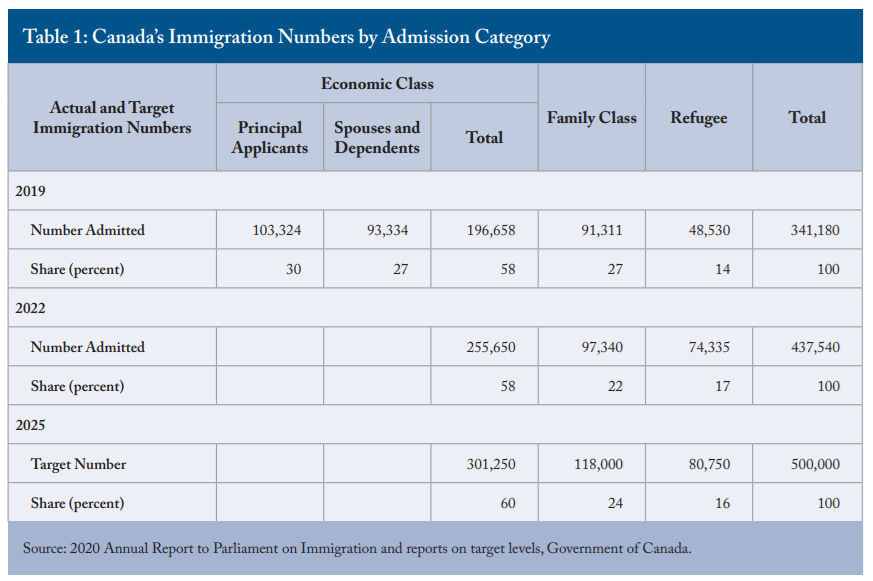
How efficient is immigration in mitigating population ageing and its effects? The data explored so far indicate that while increasing the rate of immigration is highly effective at generating population growth, it is less effective at significantly changing the age composition of the population. A recent analysis by British Columbia Ministry of Advanced Education and Skills Training provides additional depth on this issue.23 Their study presents a simple but informative labour force participation ratio: for every 10 permanent immigrants admitted to the province, six will find work relatively quickly, while the remaining four will be too young or old, pursuing education, or not immediately ready to join the labour market. This reflects the broader reality that approximately half of all economic-class immigrants are spouses and dependents and that only around 60 percent of immigrants are admitted through the economic class to begin with.
It would be tempting, but also simplistic, to see this as the direct impact of immigration on the labour force (i.e., 10 newcomers equate to six net new workers), but there is an important additional dimension that must be considered. Adding 10 people to the population generates consumer demand for goods and services including shelter, food, transportation, and many other things. Meeting this demand requires four additional workers. These four additional workers expand the scale of the economy but do not create net new workers (Fortin 2025).
When 10 newcomers are admitted, given that four will not immediately enter the labour force and another four workers will be required to satisfy extra consumer demand, only two net new workers are added. That is, to add one net new worker to the labour force requires five new permanent immigrants (and therefore approximately two additional dwellings). This is nicely summarized in a ratio: 10-6-4-2. There is no reason to expect that this ratio would be appreciably different in other provinces or Canada as a whole. Just as immigration is more efficient at increasing the size of the population than it is at changing the age structure, the same holds true for the relationship between immigration and net workers added to the labour force.
An example can help illustrate this point. Imagine an ageing society with a population of one million and 1,000 doctors. As more doctors retire than can be replaced through domestic training, the government looks to immigration to fill the gap. It estimates that 100,000 newcomers must be admitted, since only a small fraction of new immigrants will be doctors. This produces the desired effect, and the number of doctors remains stable. However, the population has grown to 1.1 million, and to preserve the same level of access to care, 1,100 doctors are now required. Simply stabilizing the labour force while adding population is an insufficient way to resolve emerging labour shortages because it ignores the additional demand created by population growth (Fortin 2025). This mirrors the earlier point: immigration adds workers, but it also adds consumers. As a result, the net gain to the labour force is much smaller than the headline number of newcomers might suggest.
It is beyond the scope of this paper to investigate the efficiency of all the other measures in mitigating the effects of ageing or increasing the size of the labour force. However, Figure 3 illustrates the demographic impact of one such lever – delaying the average retirement age to 70, compared to maintaining it at 65 – as an example to demonstrate how different policies vary in their ability to influence the OADR.
Figure 3 shows that, under this policy shift, maintaining immigration at the rate of the 2025 to 2027 plan (Scenario 3) would be sufficient to stabilize the OADR to 2046 – keeping it just below 30, similar to its level in 2021. None of the immigration scenarios alone achieve this outcome if the retirement age stays at 65. While the OADR increases over time in all scenarios, delaying retirement significantly slows both the pace and magnitude of this rise.24 However, the purpose of this example is not to propose a specific change. Instead, it highlights the relative effectiveness of this particular lever and emphasizes the need for a multifaceted strategy to address demographic challenges.
In summary, Canada’s demographic challenges stem from low fertility and the retirement of the Baby Boom generation. Immigration can delay and mitigate the effects of ageing but cannot fully counteract them without immediate and dramatic increases. As long as immigration remains within historical levels, ensuring a sufficient workforce will require a combination of immigration and complementary policies.25
Demography and Levels Planning
The policy dilemma implied by demographic realities is both straightforward and immensely complex: it is now impossible to maintain the age composition of the Canadian population while also maintaining its size without turning back the clock more than 50 years in terms of fertility. At the extremes, there are two stark policy choices: maintain the current size of the Canadian population but adjust expectations to accommodate a vastly higher OADR (approximately that of Scenario 1); or maintain the age structure of the Canadian population and plan for a vastly larger population (larger than any projected in the scenarios used in this study). The real policy choice will lie somewhere between these extremes and will require a combination of accommodations.
Table 3 summarizes more realistic options by showing the level of population increase and the different OADRs projected for 25 and 50 years forward. It compares the scenarios that most closely approximate Canada’s permanent immigration targets for the recent past – Scenario 2 (pre-2015 consensus), Scenario 4 (2024 rate), and Scenario 3 (2025 to 2027 plan). Had the Liberal government maintained the earlier rate of immigration after 2015 (that is, maintaining the 0.6 percent rate of immigration), Canada’s population would have grown by around 7.5 million by 2071, but with an OADR higher than any country today (55.8 senior citizens per 100 working-age people). By shifting to, and maintaining, a 1.2 percent annual immigration rate between 2015 and 2024, the population would grow much faster – by 29 million more people over half a century – while the OADR would be lower, at 46.5 per 100. Notice that the change in policy would lead to nearly four times the population growth compared to the reduction in the OADR, which improves by only 17 percent. Scaling back the rate of permanent immigration in 2025 to 2027 moderates both the population increase and the OADR improvement. Nevertheless, it would still yield a population growth of over 17 million in the next 50 years, with Canada’s OADR surpassing that of contemporary Japan.
Regardless of the choice being made, Canada will be both larger and older in the coming decades. This shift has significant implications and calls for strategic long-term planning. For example, the country will need to invest simultaneously in child benefits and new schools, as well as in elder care facilities. Housing demand will continue to mount unless significant changes occur in housing investment policies and outcomes. It also means investing in infrastructure to sustain key public services – such as increasing hospital capacity and expanding public transit. Without these adjustments, the quality of life for Canadians would decline. Crucially, this must occur while public finances are adjusted in light of a rising OADR (or the retirement age is raised).26 It also necessitates a continuing cultural diversification of the population through immigration and temporary migration. Ongoing and growing investments in social inclusion will be required.
The greatest challenge for government is to decide on the optimum balance between ageing and growth while securing public buy-in for immigration policies.27 All of this must occur against the backdrop of other pressing issues such as global climate change, geopolitical instability, technological change, and political polarization – not to mention the need to be mindful of the relationship between immigration, ethnocultural diversity, linguistic and religious groups, Indigenous Peoples, and other equity-seeking groups. Assiduous attention must be paid to Canada’s demographic challenge, despite these powerful intersecting concerns.
Consider financial investment, where growth is based on compounded rates of interest. One of the most common recommendations made by financial advisors is to harness the power of compounded growth by starting to invest early in one’s life. Even small amounts invested in one’s twenties can pay remarkable dividends forty years later. The same logic applies to population management; demographic choices today will have far-reaching consequences in subsequent decades. Adding four to five million to Canada’s population over the next decade cannot simply be undone at the end of that period. The same ageing pressures will remain, but with a larger population that may require even higher immigration levels. As long as fertility remains well below replacement, this issue will persist – regardless of Canada’s population size. There will always be the looming threat of population decline and its consequences.
Short and Long Policy Horizons
Population change is cumulative and difficult to reverse, making it imperative to consider the long-term implications of both temporary and permanent immigration together. This requires viewing them as components of the same system – particularly given the many pathways that allow temporary residents to transition to permanent status, and the increasing reliance on temporary residents within Canada’s permanent immigration system (Crossman et al. 2020). In recent years, temporary migration has increasingly become a kind of “down payment” to Canada’s permanent immigration system, a shift that has transformed Canada’s immigration system into a more fluid, two-step process, although this flow-through process may be interrupted given the latest levels plan (i.e., there is a large gap between the number of temporary residents in Canada and the “room” accorded to that population in the new plan). A comprehensive approach also demands that levels plans, which currently establish expectations for a three-year period, be developed with longer time horizons in mind.28 In other words, immigration levels should reflect Canada’s immediate priorities as well as its long-term goals, including the potential for future population renewal. The focus on present needs should not overshadow a forward-looking vision for the country, as current policies play a decisive role in shaping Canada’s future.29
A common point made in public discussion of Canadian immigration policy is that levels planning should pay more attention to absorptive capacity. This means aligning the number of both temporary and permanent residents with the growth of social services – notably education and healthcare – as well as housing and other infrastructure. The concept of absorptive capacity can be interpreted in passive or active terms. Under a passive approach, levels planning would be guided by the current state of social services and infrastructure including housing, which would determine the appropriate level of immigration (e.g., based on an acceptable range of physicians, housing completions, etc., per 1,000 persons). Conversely, an active approach would flip the direction of causality and establish the parameters of social spending and infrastructural investment based on population growth which, in an era of low fertility, is essentially a function of the scale of temporary and permanent immigration. In this latter situation, IRCC would play a more central role in national planning, as immigration targets would shape the long-term scale of government spending across a wide range of responsibilities. This process would be greatly facilitated by a conscious, long-term population strategy at the heart of levels planning. In such a framework, all sectors of society – government, private business, and non-profit social services – could make informed decisions to guide their investments with far more assurance of long-term patterns of demand. This would be a potent indirect benefit of a population-based approach to migration and immigration management.
There are important tradeoffs between these approaches. A passive approach may be more cautious and politically feasible in the short term, but risks underestimating long-term needs and perpetuating reactive policymaking. An active approach, by contrast, allows for proactive investment and planning – but only if there is full follow-through. If governments commit to population growth targets without ensuring that social and physical infrastructure keep pace, the result could be increased strain on housing, healthcare, and public trust.
While this paper supports an active approach, its core aim is to push for long-term thinking and to encourage an informed public conversation about the choices ahead.
Regardless of which approach is chosen, the issue of social license is key. As noted earlier, a majority of Canadians have recently come to believe that population growth generated by immigration has outstripped the development of social and physical infrastructure. In 2023, this growing perception led to a substantial shift in public support for the number of newcomers that were being admitted. The government must ensure that population growth, infrastructure capacity, and capital investment are aligned – and clearly communicated to the public. This means developing a population strategy alongside an economic strategy. These are not competing priorities, but complementary and mutually reinforcing goals.
Conclusion
Given its low fertility, Canada’s demographic and economic future would be bleak in the absence of immigration. Even under low immigration scenarios (0.3 and 0.6 percent of the population per year), Canada would enter uncharted territory with respect to its OADR. At the same time, immigration is more efficient at increasing the population size than it is at either adding net new workers to the economy or fundamentally altering the age structure of the population. Higher rates of immigration may address short-term labour shortages, provide important skills, and stimulate economic activity (a higher GDP), but their effect on prosperity (GDP per capita) depends on whether they are accompanied by robust productivity growth, capital investment, and innovation. Moreover, they present challenges to Canada’s infrastructure, particularly in housing supply and healthcare availability. Without such complementary investments, rapid population growth could lead to a population trap – where population growth outpaces investment capacity – ultimately lowering prosperity, and potentially worsening fertility rates.
Canada’s demographic future depends on policy decisions made today, which carry long-term consequences that require careful planning and adaptation. While immigration level planning includes multi-year targets and considers a range of factors, in practice it often focuses on managing short-term pressures rather than shaping a long-term population vision. With fertility rates at historic lows, Canada’s reliance on immigration for population growth is intensifying. While immigration is a relevant tool for mitigating population ageing, it cannot prevent Canada from ageing on its own. This impasse highlights the need for a comprehensive population strategy that aligns with a long-term economic strategy – recognizing that growth and economic planning are complementary, not competing, goals. The strategy must also balance population growth with the challenges of an ageing society and address social priorities, including ethnocultural diversity and inclusion, Canada’s linguistic landscape, and Indigenous reconciliation.
A sustainable path forward must integrate immigration with policies to boost workforce participation, promote productivity, incentivize capital investment, and consider measures such as delayed retirement, all while recognizing the potential social and economic trade-offs involved. Without a clear and proactive strategy, Canada risks mounting economic and social pressures. A well-managed, long-term population plan, grounded in both economic realities and social capacity, will be essential to maintaining prosperity and ensuring that growth benefits all Canadians. For The Silo, Daniel Hiebert -Emeritus Professor of Geography at the University of British Columbia.
References
Adcerà, Alicia, and Ana Ferrer. 2013. “The Fertility of Recent Immigrants to Canada.” IZA Discussion Paper Series 7289: 1-21. https://docs.iza.org/dp7289.pdf.
___________. 2017. “Canada: The case for stable population with moderately low fertility and modest immigration.” Canadian Studies in Population 44(3-4): 185-190.
Dettling, Lisa J., and Melissa Schettini Kearney. 2014. “House prices and birth rates: The impact of the real estate market on the decision to have a baby.” Journal of Public Economics 110(c): 82-100. https://ideas.repec.org/a/eee/pubeco/v110y2014icp82-100.html.
Dion, Patrice, Éric Caron-Malenfant, Chantal Grondin, and Dominic Grenier. 2015. “Long-Term Contribution of Immigration to Population Renewal in Canada: A Simulation.” Population and Development Review 41(1): 109-126. https://doi.org/10.1111/j.1728-4457.2015.00028.x.
Dungan, Peter, Tony Fang, Morley Gunderson, and Steve Murphy. 2023. “Macroeconomic Impacts of Immigration in the Canadian Atlantic Region: An Empirical Analysis Using the Focus Model.” IZA Institute of Labor Economics 16527: 1-25. https://docs.iza.org/dp16527.pdf
Fazio, Dimas, Tarun Ramadorai, Janis Skrastins, and Bernardus Ferdinandus Nazar Van Doornik. 2024. “Housing and Fertility.” SSRN Electronic Journal. https://dx.doi.org/10.2139/ssrn.5046571.
Fortin, Pierre. 2025. The Immigration Paradox: How an Influx of Newcomers Has Led to Labour Shortages. Commentary 677. Toronto: C.D. Howe Institute. February.
Laplante, Benoît. 2018. “The Wellbeing of Families in Canada’s Future.” Canadian Studies in Population 45(1-2): 24-32. https://doi.org/10.25336/csp29376.
Lee, Ronald D. 2014. “Macroeconomic Consequences of Population Aging in the United States: Overview of a National Academy Report.” American Economic Review 104(5): 234-239. https://www.aeaweb.org/articles?id=10.1257/aer.104.5.234.
Lee, Ronald, et al. 2014. “Is low fertility really a problem? Population aging, dependency, and consumption.” Science 346(6206): 229-234. https://doi.org/10.1126/science.1250542.
Montcho, Gilbert, Julien Navaux, Marcel Mérette, and Yves Carrière. 2021. “Comparing Public Transfers between Immigrants and Natives: A National Transfer Accounts Approach.” SSRN Electronic Journal. https://ssrn.com/abstract=3968396.
Romaniuk, Antole. 2017. “Stationary population, immigration, social cohesion, and national identity: What are the links and the policy implications? With special attention to Canada, a demographer’s point of view.” Canadian Studies in Population 44(3-4): 165-178. https://journals.library.ualberta.ca/csp/index.php/csp/article/view/29290.
Smith, Philip. 2024. “Accounting for the decline in Canada’s Real GDP Per Capita since Mid-2022.” International Productivity Monitor 46: 83-100. https://www.csls.ca/ipm/46/IPM_46_Smith.pdf.
Zhang, Haozhen, Jianwei Zhong, and Cédric de Chardon. 2020. “Immigrants’ net direct fiscal contribution: How does it change over their lifetime?” Canadian Journal of Economics/Revue canadienne d’économique 53(4): 1642-1662. https://doi.org/10.1111/caje.12477.
Newcomers increase consumption and spending, and are actually contributing to demand for labour in other sectors.
Study in Brief
This study investigates the effects of Canada’s expansive immigration policy, implemented between 2016 and 2024, on labour shortages. It explores how the influx of permanent and temporary immigrants has affected the balance between labour supply and demand, with attention to whether the policy has met one of its key objectives – alleviating shortages in labour markets.
It provides an analysis of labour market dynamics through the lens of the Beveridge curve, which tracks the joint path of unemployment and job vacancies over time. The study compares labour market tightness before, during, and after the pandemic and evaluates how rapidly rising immigration and the adoption of remote work have affected job vacancy rates in Canada.
The arrival of immigrant workers has expanded the supply of labour to employers, but has also generated additional income and spending, and hence greater demand for labour throughout the economy. The macroeconomic evidence from this study indicates that, on balance, the increase in demand generated by immigration has more than likely outpaced the additional supply, potentially making economy-wide labour shortages more widespread rather than alleviating them.
Introduction
Canada’s immigration levels began to accelerate in 2016, following a period of relative stability. From 2001 to 2015, the annual inflow of immigrants, including both permanent and temporary admissions, was reasonably stable at around 0.85 percent of the overall population. In the following years, despite a temporary contraction during the pandemic, this rate rose fourfold, reaching up to 3.2 percent of the population in 2023.
This post-2015 expansion was consistent with recommendations from the Advisory Council on Economic Growth, established by Minister of Finance Bill Morneau in 2016. The Council’s 2016 report suggested that the annual number of permanent economic immigrants should be increased from 300,000 in 2016 to 450,000 in 2021, and to nearly double this number later. Its stated objectives were to increase population growth, reduce the old age dependency ratio, generate a bigger GDP, and accelerate the rise in real GDP per capita by easing shortages of high-skilled workers and other means. Policymakers, encouraged by the perceived success of Canada’s immigration program, embraced the idea that higher immigration levels could deliver even greater economic and demographic benefits.1 The Council also urged the government to facilitate admissions of temporary workers and attract more international students. The government responded by increasing permanent immigration levels from 270,000 in 2015 to 480,000 in 2024, allowing uncapped increases in temporary immigration, and trying to address shortages of low- as well as high-skilled labour.
The C.D. Howe Institute’s research has shown that the benefits of immigration in mitigating population aging, and supporting the growth of GDP per capita, have been more limited than expected (Mahboubi and Robson 2018; Doyle, Skuterud and Worswick 2024). The present study is an attempt to assess whether the policy has succeeded in meeting the goal of easing the challenges employers face in finding suitable candidates for their job openings. The answer to this question has clearly been a big “yes” at the level of the individual employer. Many employers are benefiting from the contribution of their new immigrant workers, which is the basis for the unrelenting support for more immigration by representative national business organizations.
It is less clear whether immigration has helped alleviate labour shortages in the overall economy. Immigration not only expands the supply of labour, but also adds to the demand for labour. Putting more immigrants to work generates an expansionary multiplier effect on gross domestic product (GDP) and national income. As the additional income is spent on various consumption and investment goods by households, businesses and governments, the demand for labour increases. The net effect of immigration on the difference between supply and demand in the aggregate economy is, therefore, a priori uncertain. It could be negative or positive.
My goal in this study is to uncover what simple economic logic, and the statistical evidence from Canadian macrodata, reveal about the direction and quantitative importance of the net effect of rising immigration on the economy-wide balance between the demand for, and the supply of, labour. I find that the demand has likely matched or exceeded the supply and has therefore increased the overall job vacancy rate at any given level of unemployment.
Labour Shortages and Job Vacancies
What do “labour shortages” mean, and how have they evolved since Canada’s immigration rate began to increase eight years ago? Employers feel they are short of labour when the number of unfilled job openings significantly exceeds the number of available employees with the necessary skills and qualifications to meet their operational needs. Each month, Statistics Canada reports the extent of labour shortages in various sectors and regions from its Job Vacancy and Wage Survey. It is called the “job vacancy rate” and is an estimate of the number of job vacancies as a percentage of total labour demand, including all occupied and vacant salaried jobs.
Data on the job vacancy rate have been available since 2015 (Figure 1). After the oil-induced economic slowdown of 2014-2015, job vacancies increased from 2.3 percent of labour demand in mid-2016 to 3.3 percent in early 2020. No vacancy data were available from April to September 2020 due to a six-month pandemic-related pause in Statistics Canada’s survey. Moving through the spring 2020 recession, but with the unemployment rate still very high, job vacancies then increased swiftly, reaching a peak of 5.7 percent of all occupied and vacant jobs in the second quarter of 2022. But with the economic slowdown and slackened labour markets subsequently accompanying high interest rates, vacancies fell back to 3.0 percent of labour demand in the third quarter of 2024.
Immigration and Labour Supply and Demand
Since 2015, Canada’s job vacancy rate has fluctuated in response to three key macroeconomic factors: rising immigration, the pandemic, and fluctuations in aggregate economic activity.
Immigration has risen steadily in recent years, with both permanent and temporary entries increasing in each non-pandemic year (Figure 2). Permanent admissions rose from 272,000 in 2015 to 472,000 in 2023. This upward trend was guided by the multi-year immigration-level targets set each year since 2017 by the government in its Annual Report to Parliament on Immigration. For example, the target for permanent admissions in 2023 was set at 465,000 in the 2022 Report.
Temporary immigration includes holders of study or temporary work permits, asylum seekers, and their family members. They are collectively referred to as “non-permanent residents” by Statistics Canada. Prior to 2024, temporary immigration was excluded from the government’s annual targets. It was uncapped and followed demand from businesses and educational establishments. The net annual addition to temporary permits (new entries less exits to permanent residence and to abroad) rose from basically zero in 2015 to 190,000 in 2019, and 821,000 in 2023 (Figure 2).
Overall, total immigration – the sum of permanent and temporary immigration – increased fivefold from 263,000 in 2015, to 1,293,000 in 2023. Was this fivefold surge in immigration over eight years able to lower the job vacancy rate and reduce labour shortages in the aggregate Canadian economy? How could it not? Prima facie, the arrival of new immigrant workers increases the supply of labour, allowing recipient employers to ameliorate their personnel gap, at least in part. The addition of immigrant labour might suggest the “common sense” inference that labour scarcity has been effectively eased up throughout the economy.
However, it is erroneous to assume that simply because immigration solves the personnel shortage of individual employers, it will necessarily solve the problem of labour scarcity in the aggregate economy.
The error comes from focusing narrowly on increasing the supply of labour, while neglecting the simultaneous increase in the demand for labour that is generated by immigration. With more immigrants in the workforce, employers can produce more goods and services and generate more income for themselves, their employees, and their suppliers – a good thing. However, to assess the overall effect of immigration on labour scarcity, it is crucial to consider that this additional income will be spent on various consumer and investment goods. Immigrants allocate their new income, along with any savings brought from abroad, to essentials such as food, clothing, housing, transportation, personal care, and leisure. In turn, employers and their chains of suppliers invest more in construction, machinery and intellectual property. Furthermore, immigrants, employers and suppliers all contribute to taxes, which governments allocate to meet the increased demand for social services, including public housing, education, and healthcare. The growing demand for private and public goods and services will expand aggregate labour demand.
In other words, the hiring of immigrants initially adds to the supply of labour, but it also ends up adding to the demand for labour once the new income generated is spent throughout the economy and a multiplier effect is generated on GDP. On net, it is a priori uncertain whether the supply increases more than the demand, in which case labour would be made less scarce overall, or whether it is the demand that increases more than the supply, in which case labour would be made scarcer.
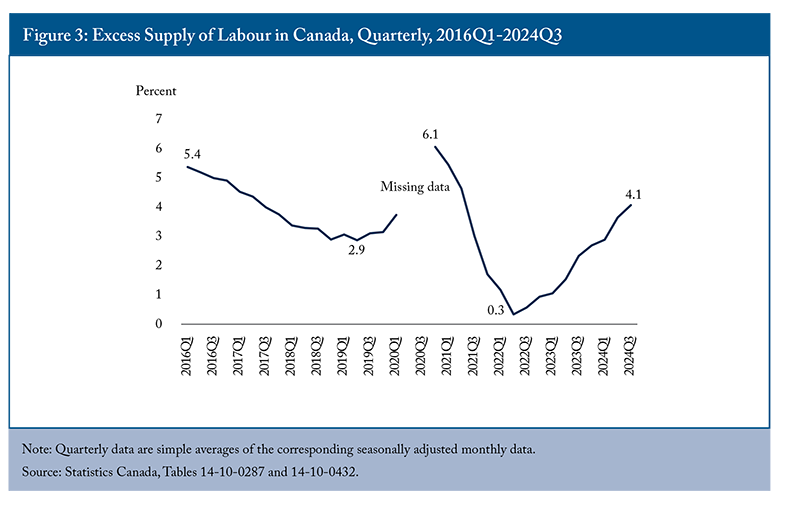
As a first attempt to clarify the picture, let us see how the excess of labour supply over labour demand evolved from 2016 to 2024 (Figure 3). I take labour supply to be the entire labour force (all workers who are employed or are looking for work), and labour demand to be the sum of employment and job vacancies (all jobs that are occupied or ready to be filled). Expressed as a percentage of the labour force, the difference between the two – excess supply – boils down to the difference between unemployment and job vacancies. Excess supply goes up or down depending on whether unemployment increases more or less than job vacancies.
Figure 3 shows that the excess supply of labour has fluctuated widely since 2016. In the pre-pandemic period 2016-2019, it declined from 5.4 percent to 2.9 percent of the labour force. Labour became scarcer. During the pandemic year 2020, it shot up to 6.1 percent of the labour force. But in the aftermath, labour demand outpaced supply again so that by mid-2022 excess supply had dropped to a low of 0.3 percent of the labour force. Since then, it has risen back to 4.1 percent.
The time path of the excess supply of labour cannot alone determine whether the rise in immigration since 2016 has increased labour supply more or less than labour demand. Excess supply results from the interplay of three simultaneous determinants: rising permanent immigration and accelerating temporary immigration, the disruptions caused by the pandemic and its potential after-effects, and fluctuations in aggregate activity. For example, the declining excess supply in the pre-pandemic period 2016-2019 was the combined outcome of rising immigration and aggregate economic expansion. But the impact of rising immigration cannot be separated out from that of aggregate economic expansion by just looking at the trend in excess supply. Correctly identifying the net effect of each of the two factors requires a more comprehensive economic and statistical analysis of the data.
The Shifting Beveridge Curve
To identify the net effect of immigration on labour shortages, I will use a well-established tool called the Beveridge curve. The Beveridge curve offers valuable insights by highlighting the observed inverse relation between vacancies and unemployment.
William Beveridge (Beveridge 1960) used the unemployment rate as a main marker of fluctuations in aggregate activity, a practice business cycle analysts still follow to this day (Romer and Romer 2019; Hazell et al. 2022). He observed that vacancies and unemployment typically move in opposite directions through business cycles. He attributed the negative relationship to the pressure exerted by aggregate activity on economic potential. When aggregate economic activity was moving up to its full potential (as in Canada in 2016-2019), there were fewer unemployed workers and more job vacancies. Conversely, when activity was moving away from potential (as in Canada in 2023-2024), there were more unemployed workers and fewer job vacancies. Since 1960, this inverse relation between the job vacancy rate and the unemployment rate – now called the Beveridge curve – has played a key role in macroeconomic analysis of labour markets. It has been abundantly studied by researchers and has been identified in job vacancy and unemployment data in many countries (e.g., Blanchard and Diamond 1989; Pissarides 2000; Archambault and Fortin 2001; Elsby, Michaels and Ratner 2018; Michaillat and Saez 2021).
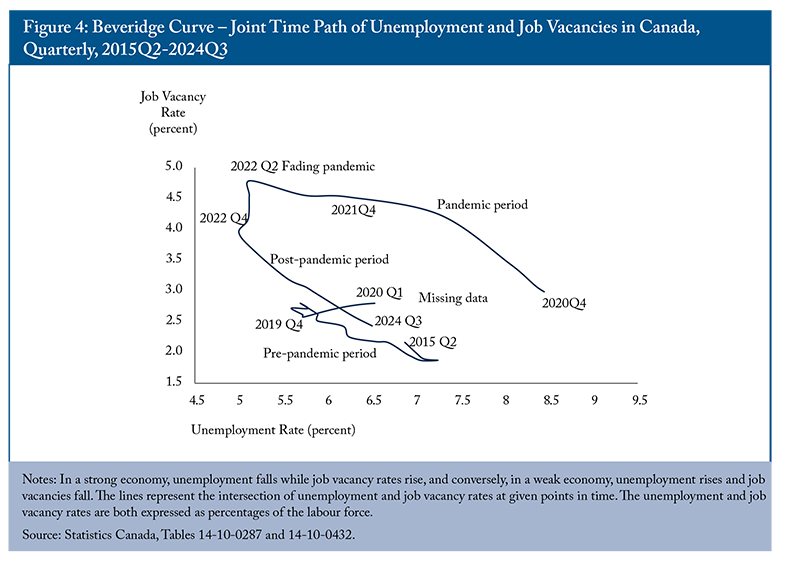
It is instructive to examine the trajectory of the Canadian unemployment – job vacancy relation in two-dimensional space from 2015 to 2024 (Figure 4). First, following the 2015 economic slowdown, the economic expansion of 2016-2019 brought a decrease in the unemployment rate and an increase in the job vacancy rate along a path that was consistent with a negatively sloped Beveridge curve. The sudden outbreak of the pandemic in early 2020 shattered this trajectory. The unemployment – job vacancy pair was sent far outward toward the northeast corner of the chart. From then until the end of 2021, it followed a new Beveridge curve to the northwest. During the recovery following the pandemic recession in the spring quarter of 2020, the unemployment rate decreased and the job vacancy rate increased along a path that was about parallel to that of 2015-2019, but at a much higher level. For instance, whereas the unemployment rate was the same in the summer quarter of 2021 as in the winter quarter of 2016 (7.25 percent), the job vacancy rate was twice as large in the former (4.2 percent) as it was in the latter (1.9 percent). Finally, as the pandemic faded, the unemployment – job vacancy pair did a loop to the west. A new post-pandemic Beveridge curve emerged along a southeasterly trend that looked parallel to, but somewhat higher than, the old pre-pandemic path of 2015-2019.2
This visual check reveals that there have been three distinct periods in the inverse relationship between job vacancies and unemployment, known as the Beveridge curve: pre-pandemic, pandemic and post-pandemic. The start and end of the pandemic significantly affected the vertical position of the Beveridge curve in the unemployment – job vacancy space. Although the three branches are not perfectly aligned, they appear to be nearly parallel. According to the statistical results in Table 1 below, a one percent change in the unemployment rate corresponds to about a 1.5 percent change in the opposite direction in the vacancy rate – this is sometimes referred to as the Beveridge curve “elasticity.”
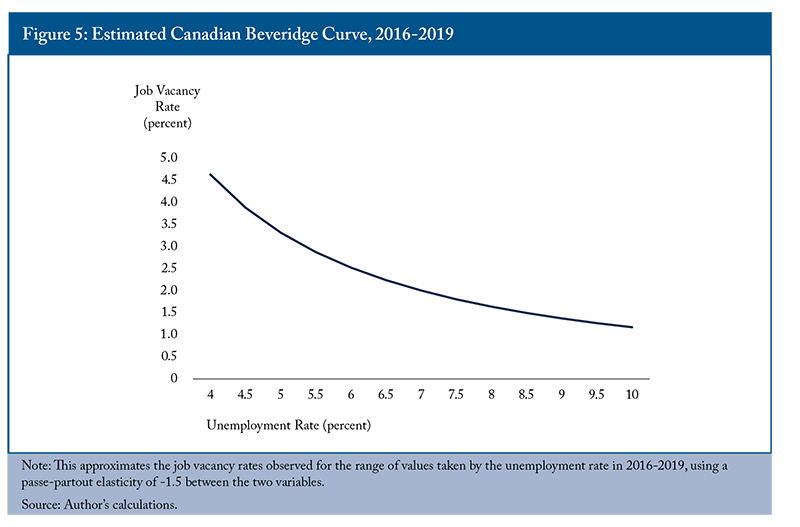
The shifts in the Canadian Beveridge curve during the pandemic are not an entirely unexpected development. Shifts have occurred from time to time in the past.3 As Figure 4 has shown, the Canadian Beveridge curve looked relatively stable before the pandemic in 2016-2019. Figure 5 is an idealized illustration of the position it occupied in the unemployment – job vacancy space in this period. However, starting in 2020, it shifted significantly. It first moved outward during the pandemic in 2020-2021 and then returned inward after the pandemic in 2022-2024.
As an initial assessment of the magnitude of these movements, I use the actual values of unemployment and job vacancies to calculate the implied monthly shifts in the Figure 5 Beveridge curve from January 2016 to October 2024. I then illustrate the implied vertical movements of the job vacancy rate corresponding to a given reference unemployment rate of 5.5 percent4 by averaging the results for each year from 2016 to 2024. The vertical height of the Beveridge curve calculated in this way increased from 2.8 percent in 2019 to nearly 6 percent in 2020-2021, and dropped back to 3.2 percent in 2024 (Figure 6).
The Beveridge curve’s elevation at around 3.2 or 3.3 percent in the post-pandemic period 2023-2024 is higher than its height of 2.8 or 2.9 percent in the pre-pandemic period 2018-2019. This can be attributed to shifts in the ratio of two background factors: the intensity of labour reallocation across occupations, industries and regions, and the efficiency of the matching process between job openings and job seekers (Blanchard, Domash and Summers 2022). At any given rate of unemployment, the job vacancy rate and the Beveridge curve will be higher in relation to the intensity of labour reallocation and the inefficiency of job matching.
The first factor, the intensity of labour reallocation, is captured by the monthly flow of hires as a percentage of the labour force. It is shown as an index with 2019 = 100 in Figure 7. It increased by some 10 percent during the pandemic of 2020-2021. Labour moved from transport industries and those requiring person-to-person contact toward electronic communications and home deliveries. There was a displacement from traditional businesses and occupations to those allowing work from home. However, in 2022-2024 labour reallocation calmed down and its intensity decreased by some 15 percent below its 2019 level. This pushed the Beveridge curve downward.
The second factor, the efficiency of job matching, reflects the capacity of labour markets to generate hires at the observed levels of unemployment and job vacancies. It is an index with 2019 = 100 in Figure 8. It experienced a sharp drop of nearly 20 percent during the pandemic (2020-2021). Factors contributing to this decline include the increasing physical distance between vacant positions and available candidates, as well as the widening gap between the demand for and supply of skills. Also, the rise in illnesses and the increased popularity of remote work during the pandemic likely may have contributed to a decline in job search intensity. As a result, employers found it more difficult to match job offers with suitable job seekers. Matching efficiency did not recover from 2022-2024. It remained some 20 percent below its pre-pandemic level of 2018-2019. This pushed the Beveridge curve upward.
Going from 2019 to 2024, movements in labour reallocation and matching efficiency had opposite effects on the height of the Beveridge curve. But the upward pressure on the curve from the 20 percent drop in matching efficiency was greater than the downward pressure from the 15 percent decline in labour reallocation. Therefore, as already pictured in Figures 4 and 6, the net outcome is that, going over the pandemic, the Beveridge curve wound up at a higher level in 2024 than in 2019, implying a higher job vacancy rate for any given unemployment rate.
So far, I have used the Beveridge relation between job vacancies and unemployment as a broad interpretive framework for macroeconomic developments in Canada over the 2015-2024 period. First, I have focused on the effect of fluctuations in aggregate economic activity (captured by changes in unemployment) on the job vacancy rate. Second, I have noted that the onset and ending of the pandemic have been big shifters of this unemployment – job vacancy trade off upward in 2020-2021 and downward in 2022-2024. Nevertheless, third, I have shown that, mainly due to a persistent 20 percent drop in job matching efficiency since 2019, the Canadian Beveridge curve was occupying a higher vertical position in 2023-2024 than before the pandemic.
In addition to the pandemic, Canada’s immigration policy, characterized by rising immigration levels, is another major development that has impacted labour markets in recent years. Like the pandemic, this policy may have affected the level of the unemployment rate along the Beveridge curve, as well as the vertical position of the curve, through its impacts on labour reallocation and matching efficiency. The following sections try to assess the existence and magnitude of these potential effects of immigration.
Economic Logic
The Beveridge framework can be used to explain how the expansion of immigration in Canada before and after the pandemic could have produced a lasting decrease or increase in labour shortages. Excluding the pandemic’s influence, rising immigration may affect aggregate labour shortages in two mechanical ways: by causing labour markets to slide up or down along the Beveridge curve, or by shifting the entire position of the Beveridge curve upward or downward, resulting in a larger or a smaller number of job vacancies for any given unemployment rate.
The first scenario involves a slide along the Beveridge curve. If rising immigration moves the economy up and to the northwest, unemployment decreases and vacancies increase; if the economy descends to the southeast, unemployment increases and vacancies decrease, as shown in Figure 5.
A permanent increase in unemployment along a given Beveridge curve is not what is generally hoped for by policymakers and the public. We want to achieve a permanent reduction in labour scarcity without being forced to suffer a permanent increase in unemployment. Nevertheless, it is important to understand how rising immigration could impact unemployment permanently, such that a higher or lower unemployment rate would be structurally needed to keep inflation low and stable over time.
A rough check on whether a higher immigration rate has raised or lowered the national unemployment rate consists of seeing if the excess of the national rate over the rate of the experienced group, formed by the Canadian-born plus the immigrants landed more than five years earlier, was higher or lower in 2023 than in 2015. Labour force data indicate that the excess of the national rate over the rate of this experienced group did increase in this period, but by just 0.1 percentage point, owing essentially to the rising labour force share of immigrants landed less than five years earlier. Seen in this light, rising immigration does not seem to have had a meaningful direct effect on structural unemployment. This result is consistent with research by Dion and Dodge (2023), who found no significant change in the national unemployment rate needed to keep inflation stable, known as the noninflationary rate of unemployment, that could be attributed to rising immigration.
It is a relief to see that rising immigration has not entailed a permanent reduction in the job vacancy rate by permanently pushing the national unemployment rate upward. There is evidence, though, that rising immigration has led to greater cyclical volatility of unemployment. First, the phenomenal expansion in the number of new residents since 2021 is known to have contributed to the strong demographic pressure on the demand for housing and, hence, to the significant increase in the cost of rented and owned accommodation. The Bank of Canada has acknowledged that the persistence of high shelter inflation consequently acts “as a material headwind against the return of inflation to the 2 percent target” (Bank of Canada 2024). In other words, through this channel, rising immigration is prolonging the current period of slower growth and higher unemployment. Second, the difference in cyclical sensitivity of the unemployment rate, between the above-defined experienced group and immigrants landed less than five years earlier, seems to have increased. In the economic slowdown during the spring quarter of 2024, the unemployment rate was 4.0 points higher than a year before for immigrants landed less than five years earlier, but only 0.7 point higher for the experienced group. The difference of 3.3 points between them was larger than in the 2009 and 2020 recessions. It could be due in part to the rising share of the low-skilled population of immigrant workers, which is more exposed to layoffs.
This study is primarily concerned with the permanent structural effects of rising immigration on unemployment, which look small, and not with the short-term economic and social costs associated with the greater cyclical volatility of unemployment around its steady state. Nevertheless, the possibility that these short-term costs are real should be kept in mind. Easing labour scarcity by tolerating more unemployment, whether of the short- or long-term variety, is an outcome our policies should try to avoid.
The other way rising immigration may have impacted aggregate labour shortages is by moving the vertical position of the entire Beveridge curve up or down in the unemployment-job vacancy space. Ultimately, we want to know whether rising immigration has increased the job vacancy rate and worsened labour shortages, or whether it has decreased the vacancy rate and alleviated the shortages, at every given level of unemployment.
The combined visual evidence presented by Figures 4 to 8 above implies that the Beveridge curve did shift upward somewhat from the pre-pandemic to the post-pandemic period, particularly due to a persistent 20 percent drop in job matching efficiency. Has rising immigration in Canada contributed to this evolution? Bowlus, Miyairi and Robinson (2016) conducted a longitudinal study of the job search behaviour of immigrants to Canada in 2002-2007. Results imply that heightened immigration may reduce matching efficiency in the short run, as new immigrants often face a lower rate of job offers than natives during their initial integration period. Based on US data, Barnichon and Figura (2015) focused on the two primary determinants of aggregate matching efficiency: worker heterogeneity and labour market segmentation. They pointed out that matching efficiency would decline if workers with a lower-than-average search efficiency became more represented among job seekers, or if the dispersion between tight labour submarkets and slack ones increased. These two conditions would seem to apply to the Canadian context with rising immigration. Lu and Hou (2023) have identified a major shift of immigration toward lower-skilled workers, and a significant relative tightening of labour markets such as construction, accommodation, food, business support services, education, healthcare, and social services. The statistical analysis below will provide a test of whether in recent years rising immigration has in fact shifted the Beveridge curve upward and intensified labour scarcity, or not.
Rising immigration is not the only macroeconomic development that may conceivably have affected aggregate labour shortages in the post-pandemic period. It is entirely conceivable that some of the changes triggered suddenly by the pandemic shock may have persisted into the post-pandemic era. Potentially, the most important of these is the widespread shift to work from home (Aksoy et al. 2023). The pandemic can be seen as a mass natural experiment that brought millions of workers in Canada, and other countries, to suddenly experience more work from home, to value its benefits, and to stick to it thereafter, often with a surprising upside in productivity.
The percentage of Canadian workers aged 15 to 69 who work most of their hours from home was 7 percent in early 2020. It sprang to 41 percent in the great confinement month of April 2020, and then declined as the pandemic evolved and faded out. But it was still holding up around 20 percent in the first half of 2024, which was three times as large as the 7 percent of early 2020.
The large increase in the percentage of Canadians working primarily from home has introduced an increase in worker heterogeneity compared to the pre-2020 period. With more workers satisfied with their work from home, fewer are incentivized to seek new jobs, particularly of the traditional variety. Following the Barnichon and Figura (2015) result, this could partly explain the reduction in job matching efficiency that has so far kept the Beveridge curve at a higher level than otherwise.
The economic logic developed in this section suggests that rising immigration and increased work from home may have contributed to the 20 percent loss of matching efficiency that has kept the post-pandemic height of the Canadian Beveridge curve at a level higher than before the pandemic. (However, fully confirming this hypothesis is beyond the scope of this study).
Statistical Analysis
This section summarizes an analysis of the factors influencing job vacancies in Canada, focusing on immigration and the rise of work-from-home arrangements. Introducing the rate of work from home as a factor is done to verify whether the shift to work from home that was initiated by the pandemic, but persisted in 2022-2024 (Schirle 2024), affected the position of the Beveridge curve.5
The analysis spans six Canadian regions – Atlantic Canada, Quebec, Ontario, the Prairies (Manitoba and Saskatchewan), Alberta, and British Columbia – across the periods from 2015 to 2019 (pre-pandemic) and 2022 to 2024 (post-pandemic).
Table 1 summarizes the key findings of the statistical results. Consistent with expectations, it shows that the Beveridge relationship between vacancies and unemployment is negative, with a precisely estimated elasticity of -1.42 in the two models. The results also show that immigration has been a significant contributor to the rise in job vacancies in Canada. Specifically, Model 1 estimates that a one percentage point increase in the immigration rate is associated with an 8.12 percent increase in the job vacancy rate after one year. It suggests that rising immigration has pushed the Beveridge curve upward, increasing the job vacancy rate at each unemployment rate over the period. However, when accounting for the rise in work-from-home arrangements in Model 2, the effect of immigration is smaller, at 3.21 percent,6 reflecting the additional impact of remote work.7 The positive effect of work-from-home arrangements is estimated at 0.85 percent.
These results suggest that both factors – immigration and remote work – have played a significant role in pushing the Beveridge curve upward, making it more difficult to match available workers with job openings.
While both factors contribute to the rise in job vacancies, their high correlation complicates the ability to isolate their individual effects. The correlation between immigration and remote work is particularly strong, which makes it challenging to assess their independent impacts.8 As a result, the evidence for immigration’s effect on job vacancies in Model 2 is less powerful than it would be if the data allowed sharper estimation.9 However, the findings from Model 2 indicate that the combined effects of both immigration and remote work have contributed to higher job vacancies, suggesting that increasing immigration alone is unlikely to solve labour shortages in the short term.
To be specific, statistical calculation of Model 2 indicates an 82 percent chance that rising immigration has left the job vacancy rate unchanged or raised it, and only an 18 percent chance that it has lowered it.10 In other words, increased immigration is more than four times as likely to have raised the aggregate demand for labour by as much as, or more than, the supply than to have increased it by less than the supply. In short, it is unlikely that rising immigration in Canada has helped the country solve its economy-wide problem of labour shortages by reducing the job vacancy rate at any given unemployment rate.
A natural question is whether the effect of immigration on job vacancies varies between permanent and temporary immigration. So far, an expanded version of Model 2, which distinguishes between these factors by analyzing the permanent and temporary immigration rates separately, has found no significant difference in their four-quarter total effects.11 Future analyses could benefit from disaggregating data by industry, as the impact of immigration and working from home may vary across sectors. For instance, remote work affects sectors like technology differently than it does retail or construction.
Discussion and Conclusion
This paper’s conclusion, drawn from statistical analysis of the macrodata runs, is contrary to the views of business organizations, which have campaigned relentlessly in favour of increases in permanent and temporary economic immigration in the past several years (e.g., Business Council of Canada 2022; Canadian Manufacturers & Exporters 2023; Canadian Federation of Independent Business 2021; Conseil du patronat du Québec 2022). Their position is understandable and grounded in a genuine concern to address labor shortages. By filling the vacancies, economic immigration enables firms to produce more and maintain or increase profitability.
The evidence presented here does not question the important role immigration can play for individual employers, whose need for additional employees is acute and urgent. However, in economics, everything depends on everything. The direction and importance of a phenomenon, confirmed at a microeconomic level with regard to a particular business, government organization, or sector, can be different or even reversed at the macroeconomic level, once all spillovers into the rest of the economy are accounted for. In his 1955 introductory textbook, the renowned American economist Paul Samuelson warned against the risk of the “fallacy of composition,” where it is assumed that what is true for individual parts is automatically true for the whole economy.
In the case of immigration, the fallacy of composition consists of believing that the advantages accruing to employers that hire immigrants can simply be added up and said to extend to the whole economy. What the present study has uncovered is that this belief is not corroborated by the macroeconomic evidence from the recent experience of Canadian regions. It is true that immigration eases up the dearth of personnel in firms that hire newcomers, which is clearly a good thing. But it is also true, conversely, that it worsens the shortage of labour in industries that must cater to the additional demand for goods and services generated by the addition to total GDP. The induced increase in the demand for labour in the aggregate economy can offset or even exceed the initial expansion of supply, so that it contributes to amplify economy-wide labour shortages on net. The insights I have extracted from Canadian regional data suggest that rising immigration has more likely redistributed or increased labour scarcity across the economy than reduced it overall. The political implication is that, if labour shortages persist or increase in the whole of the country despite fast-rising immigration, the insistent demand of business organizations for more immigration will not calm down; labour shortages will persist or intensify.
The vision of immigration as an economy-wide offset to labour scarcity is also reductionist. To take account solely of the hoped-for benefits accruing directly to employers of new immigrants overlooks the fact that immigration is a global and transformative phenomenon. The purpose of immigration is not only to serve the interests of a particular group. It is of concern to a whole society for reasons that are no doubt partly economic, but also demographic, cultural, social, and humanitarian. Society is morally obligated to welcome and integrate all immigrants in the most humane manner. This requires much time and money. Society must also make sure that the pace of immigration is not so fast that it leads ethnic groups to “hunker down” (as Putnam 2007 found) and provokes serious economic disequilibria in sectors that must absorb the induced increase in demand, such as construction, housing, health, education and social services. The overall pace and composition of immigration must balance individual interests against the challenges it brings to society.
Among these costs are the negative potential repercussions on productivity and wage growth stemming from the open-door immigration policy that Canada has followed until recently. Two key implications merit attention. First, investment in housing, business investment to equip newcomers with required physical and human capital, and government investment in public infrastructure to provide social services have not been able to keep pace with fast-rising immigration. Second, the open-door policy has made it easy for employers to rely on low-skilled foreign workers to meet high labour demand, which has been concentrated in low-wage industries (Lu and Hou 2023). While immigration alleviates immediate labour shortages, it may suppress wage increases that would otherwise occur as labour markets tighten and affect capital investments.
For example, in the 12 months leading to 2024Q3, overall wages increased by 4 percent, outpacing inflation at 2 percent, but sectoral differences were stark: wages grew by 3.2 percent in the business sector compared to 6.3 percent in the non-commercial sector. These dynamics suggest that wage growth patterns are influenced by a blend of short-term factors and structural shifts, including immigration trends.
Data also show that business sector labour productivity in Canada is on a slippery slope. From 2021Q3 to 2024Q3, output per hour went down cumulatively by 2.3 percent, whereas it would have gone up by 3.2 percent if it had increased at the same rate as in 1999-2019 (Statistics Canada, table 36-10-0206). While there are many factors behind this slowdown in productivity growth, the high immigration rate may have been a contributor.
In March 2024, the government suddenly announced a reversal of its immigration policy. Immigration Minister Marc Miller committed his department to cutting Canada’s non-permanent resident population from 6.5 percent of the overall population in early 2024 to 5 percent in early 2027. In November, details of the plan were set in the 2024 Annual Report to Parliament on Immigration (Government of Canada 2024, Annex 4). There would be 446,000 fewer entries of new non-permanent residents than exits in each of 2025 and 2026. Annual temporary immigration would be negative to this extent. The Annual Report also announced that the annual target for admissions to permanent immigration would be reduced from 485,000 in 2024 to 395,000 in 2025, 380,000 in 2026 and 365,000 in 2027.
If implemented as intended, scaling back the number of temporary and permanent immigrants will impact Canada’s aggregate labour supply significantly in 2025-2027. The working-age (15-64) population will stagnate instead of increasing by 800,000 or more, as it did in each of 2023 and 2024. An implication of the evidence reported above in Table 1 is that labour demand will likely decline alongside the reduction in labour supply because there will be 800,000 fewer consumers in the Canadian economy. While this policy reversal may not directly address the job vacancy rate, it could reduce vacancies by decreasing the overall demand for labour. As a result, while Canada’s aggregate GDP may contract, GDP per capita could increase, particularly if a smaller portion of national savings is directed toward demographic investments and the composition of immigration shifts toward fewer low-skilled immigrants.
The government’s policy reversal is a first step toward moderation. While it presents challenges, it also offers opportunities for improvement. When employers do not have the luxury of recruiting a rising stream of newcomers who are willing to accept low wages, it may push them to invest more in technology and work reorganization, and hence increase productivity. Furthermore, with a more moderate immigration level, the issue of the lack of absorptive capacity in the economy to provide enough skill-equivalent jobs to high-skilled immigrants will be less acute. Immigrants will see their skill utilization increase and their overqualification rate decrease. This shift could enhance Canada’s ability to attract global talent, aligning with the 2016 recommendation from the Advisory Council on Economic Growth that immigration should help address the shortage of high-skilled workers.
Appendix: Statistical Methodology and Data
This appendix provides a detailed description of the statistical analysis conducted to assess the factors influencing the job vacancy rate in Canada. The analysis spans 27 non-pandemic quarters, covering two periods: 2015Q2 to 2019Q4 (pre-pandemic) and 2022Q4 to 2024Q3 (post-pandemic). It includes data from six Canadian regions – Atlantic Canada, Quebec, Ontario, the Prairies (Manitoba and Saskatchewan), Alberta, and British Columbia. Each of these regions has a population of more than 2 million.
The dataset consists of 162 observations, representing the six regions across the 27 quarters. All labour market and population data are sourced from publicly available Statistics Canada tables. The job vacancy rate and unemployment rate are expressed as ratios of seasonally adjusted job vacancies and unemployment to the labour force. These variables are logarithmically transformed to account for the convexity of the Beveridge curve.
To estimate the relationship between job vacancies and its key determinants, two regression models are specified:
• Model 1 includes the unemployment rate, the immigration rate (measured as the total number of new permanent immigrants and net additional non-permanent residents relative to the population, annualized), and three unconstrained lagged values of the immigration rate.
• Model 2 builds upon Model 1 by including the rate of work from home as an additional explanatory variable. The work-from-home rate is the fraction of workers aged 15 to 69 who work most of their hours from home in their main jobs. This model tests whether the pandemic-induced shift to remote work, which persisted post-pandemic, has affected the Beveridge curve and the job vacancy rate.
Both models incorporate regional and seasonal fixed effects to account for regional disparities and seasonal fluctuations in the labour market.
The author is grateful to Mario Fortin, Gilles Grenier, Jeremy Kronick, Nicolas Marceau, Parisa Mahboubi, Pascal Michaillat, Mario Polèse, Statistics Canada data analysts, Mikal Skuterud, Daniel Schwanen, Christopher Worswick and several anonymous referees for valuable comments and suggestions. The author retains responsibility for any errors and the views expressed.
References
Advisory Council on Economic Growth. 2016. “The Path to Prosperity: Resetting Canada’s Growth Trajectory.” Report of the Advisory Council on Economic Growth to the Minister of Finance of Canada. October.
Ahn, Hie Joo, and Leland Crane. 2020. “Dynamic Beveridge curve accounting.” Finance and Economic Discussion Series 2020-27. Board of Governors of the Federal Reserve System, Washington. March.
Aksoy, Cevat Giray, Jose Maria Barrero, Nicholas Bloom, Steven Davis, Mathias Dolls and Pablo Zarate. 2023. “Working from home around the world.” Brookings Papers on Economic Activity, Fall 2022, 281-330.
Archambault, Richard, and Mario Fortin. 2001. “The Beveridge Curve and Unemployment Fluctuations in Canada.” Canadian Journal of Economics 34(1): 58-81.
Bank of Canada. 2024. Monetary Policy Report. Ottawa, January.
Barlevy, Gadi, Jason Faberman, Bart Hobijn and Ayşegül Şahin. 2024. “The Shifting Reasons for Beveridge Curve Shifts.” Journal of Economic Perspectives 38(2): 83-106.
Barnichon, Régis, and Andrew Figura. 2015. “Labor market Heterogeneity and the Aggregate Matching Function.” American Economic Journal: Macroeconomics 7(4): 222-249.
Beveridge, William. 1960. Full Employment in a Free Society. Second edition. London: Allen & Unwin.
Blanchard, Olivier, and Peter Diamond. 1989. “The Beveridge Curve.” Brookings Papers on Economic Activity (1)1-67.
Blanchard, Olivier, Alex Domash, and Lawrence Summers. 2022. “Bad news for the Fed from the Beveridge space.” Policy Brief. Peterson Institute for International Economics. July.
Bok, Brandyn, Nicolas Petrosky-Nadeau, Robert Valetta, and Mary Yilma. 2022. “Finding a soft landing along the Beveridge curve.” Economic Letter. Federal Reserve Bank of San Francisco. August.
Bowlus, Audra, Masashi Miyairi and Chris Robinson. 2016. “Immigrant job search assimilation in Canada.” Canadian Journal of Economics 49(1): 5-52.
Dion, Richard, and David Dodge. 2023. “Labour force growth and labour market gap in Canada: 2011 to 2032.” Working Paper. Ottawa: Bennett Jones, May.
Doyle, Matthew, Mikal Skuterud and Christopher Worswick. 2024. Optimizing Immigration for Economic Growth. Commentary No. 662. Toronto: C.D. Howe Institute.
Elsby, Michael, Ryan Michaels and David Ratner. 2015. “The Beveridge Curve: A Survey.” Journal of Economic Literature 53(3): 571-630.
Fortin, Pierre.2024. “Does immigration help alleviate economy-wide labour shortages?” Working Paper #70, Canadian Labour Economics Forum, University of Waterloo. May.
Government of Canada. 2024.2024 Annual Report to Parliament on Immigration. Immigration, Refugees and Citizenship Canada. October.
Hazell, Jonathon, Juan Herreño, Emi Nakamura, and Jón Steinsson. 2022. “The Slope of the Phillips Curve: Evidence from US states.” Quarterly Journal of Economics 137(3): 1299-1344.
Lam, Alexander. 2022. “Canada’s Beveridge curve and the outlook for the labour market.” Staff Analytical Note 2022-18, Bank of Canada, Ottawa. November.
Lu, Yuqian, and Feng Hou. 2023. “Foreign workers in Canada: distribution of paid employment by industry.” Economic and Social Reports. Catalogue No. 36-28-0001. Ottawa: Statistics Canada. December.
Mahboubi, Parisa, and William Robson. 2018. “Inflated Expectations: More Immigrants Can’t Solve Canada’s Aging Problem on Their Own.” E-Brief. Toronto: C.D. Howe Institute.
Michaillat, Pascal, and Emmanuel Saez. 2021. “Beveridgean unemployment gap.” Journal of Public Economics Plus 2. December.
Morissette, René, Vincent Hardy and Voltek Zolkiewski. 2023. “Working most hours from home: new estimates for January to April 2022.” Analytical Studies Branch Research Papers Series. Catalogue no. 11F0019M, No. 472. Ottawa: Statistics Canada. July.
Pissarides, Christopher. 2000. Equilibrium Unemployment Theory. Cambridge MA: MIT Press.
Putnam, Robert. 2007. “E Pluribus Unum: Diversity and community in the twenty-first century: The 2006 Johan Skytte Prize Lecture.” Scandinavian Political Studies 30(2): 137-174.
Romer, Christina, and David Romer. 2019. “NBER business cycle dating: Retrospect and prospect.” Paper prepared for the session “NBER and the Evolution of Economic Research, 1920–2020” at the ASSA Annual Meeting, San Diego, California, January 2020. Department of Economics, University of California, Berkeley.
Samuelson, Paul. 1955. Economics: An Introductory Analysis. New York: McGraw-Hill.
Schirle, Tammy. 2024. “Settling into a New Normal? Working from Home across Canada.” E-Brief. Toronto: C.D. Howe Institute.
Shimer, Robert. 2012. “Reassessing the Ins and Outs of Unemployment.” Review of Economic Dynamics 15(2): 127-148.
The Pakistani national who allegedly plotted to travel to New York to murder Jews was seeking refugee status in Canada, according to an immigration consultant.
Muhammad Shahzeb Khan, who came to Canada in June 2023 on a student visa, was arrested on Sept. 4 by the RCMP for allegedly intending to carry out a mass shooting targeting Jews in New York City. He was charged by U.S. authorities with attempting to provide material support and resources to a designated foreign terrorist organization, the Islamic State of Iraq and al-Sham (ISIS), and the United States is seeking to have him extradited.
Fazal Qadeer, an immigration consultant who had worked with Khan, said Khan was applying for refugee status on the basis of sexual orientation, saying he is gay, CBC reported on Oct. 7.
It is not known what Khan’s refugee claim status was when he was arrested, but Qadeer said Khan had recently had a lengthy interview with Immigration, Refugee and Citizenship Canada (IRCC).
Immigration Minister Marc Miller said in September that Khan entered Canada on a student visa.
According to a U.S. criminal complaint that was unsealed in September 2024, Khan repeatedly expressed his support for ISIS and his intention to carry out a terrorist attack around November 2023.
That month, he began interacting online with an undercover FBI agent, and explained his plan to attack Jewish religious centres in the United States around the time of the one-year anniversary of Hamas’s Oct. 7 terrorist attack against Israel.
In a statement, IRCC said it would not comment on individual cases, but that all asylum claimants receive an “independent and fair assessment on the individual merits of their claim,” which included whether they fear persecution based on race, religion, political opinion, nationality, or if they are LGBT.
Minister ‘Confident’ in Screening System
Khan’s arrest came months after a father and son were arrested by the RCMP in Richmond Hill, Ont., for allegedly being in the “advanced stages of planning a serious, violent attack in Toronto.” The two are facing nine terrorism charges, including conspiracy to commit murder on behalf of ISIS.
Ahmed Eldidi had been admitted into Canada in 2019 and later given citizenship, while Mostafa Eldidi was granted refugee status, according to documents provided by IRCC.
Miller defended Ottawa’s immigration system when appearing before the House of Commons public safety committee in September, saying the government remains “confident in the way our biometric system works in the progressive screening that operates in our country.”
Miller told the committee that Ahmed Eldidi had his initial temporary resident visa application refused because of concerns he would not leave Canada at the end of his authorized stay, but his second application was approved after an officer was satisfied he merely intended to visit Canada. He was given a favourable recommendation, Miller said, and officers found no issues that made him inadmissible to Canada.
Conservative MPs on the committee questioned screening procedures and accused the Liberal government of removing the mandatory requirement for police background checks for arrivals from some countries including Pakistan in 2018.
The IRCC’s website currently states that those applying for permanent residence, citizenship, or the International Experience Canada program “may need to provide a police certificate for any other programs” if they have a prior criminal record, but does not specifically mention Pakistan. For the Silo, Matthew Horwood.
Featured image- RCMP logo is seen outside the force’s ‘E’ division headquarters in Surrey, B.C., on March 16, 2023. The Canadian Press/Darryl Dyck.
An RCMP officer and a worker look on the demolition of the temporary installation for refugee claimants at Roxham Road Monday, in St. Bernard-de-Lacolle, Que., on Sept. 25, 2023. The Canadian Press/Ryan Remiorz
The closing of the unofficial border crossing Roxham Road last year stemmed the flow of asylum-seekers into Quebec from New York state, but overall numbers are rising in Canada with a spike in those arriving by air. The rise has many reasons behind it and can’t be accounted for by the growing scope of global conflict alone, immigration experts told The Epoch Times.
A major contributor is likely an increase in travel visa approvals.
The government has recently ramped up its visa processing to eliminate a backlog from the pandemic, Montreal immigration lawyer Stéphanie Valois told The Epoch Times. After arriving on travel visas, many people proceed to claim asylum.
Fewer travel visa applicants have been asked to prove they will return home in recent years, said lawyer and York University international relations professor Michael Barutciski in an email. This is also likely contributing to an increase in air arrivals, he said.
From January to June this year, Canada processed just over 92,000 asylum claimants. That’s a lot more than the roughly 57,000 claimants in the same period last year—and 2023 was already a record-breaking year.
By contrast, from 2011 to 2016, the number of claimants Canada received each year ranged from around 10,000 to 25,000. The numbers began to climb thereafter, and Canada’s per-capita intake of asylum-seekers is now comparable to that of Germany, the European Union’s largest host country, according to Barutciski’s analysis of EU figures for a Macdonald-Laurier Institute paper published in July.
Nearly 28,000 claimants arrived via air in the first half of this year, compared with roughly 8,000 by land. This is a reversal of a long-standing trend of land arrivals being far more common, even before Roxham Road became a heavily used route.
The total number of asylum claimants processed by Canada Border Services Agency and Immigration, Refugees and Citizenship Canada during the first six months of 2017–2024. For 2011– 2016, only annual data is available, so we cut the annual total in half to give a rough estimate for comparison. The Epoch Times
From Land to Air
Roxham Road is an unofficial border crossing between New York and Quebec used by more than 100,000 migrants since 2017. Its use waned after Canada and the United States closed a loophole in their bilateral Safe Third Country agreement in March 2023.
The agreement says anyone seeking asylum must file their claim at the first of the two countries they enter. But the loophole was that this requirement applied only to official border crossings. Now it applies anywhere along the border: Asylum-seekers will be turned back to the United States to make their claims there.
Most of the asylum-seekers in 2023 were from Mexico—about 25,000 of all claimants that year, according to the Immigration and Refugee Board (IRB) of Canada.
The federal government further tightened restrictions on migrants from Mexico in February 2024 by requiring Mexicans to have travel visas.
“This responds to an increase in asylum claims made by Mexican citizens that are refused, withdrawn or abandoned,” said the federal government’s announcement at the time. “It is an important step to preserve mobility for hundreds of thousands of Mexican citizens, while also ensuring the sound management of our immigration and asylum systems.”
Prime Minister Justin Trudeau said in June, after meeting with Quebec’s premier, that his government would “improve the visa system“ in general, but he did not elaborate and it was not a major point of discussion.
The Epoch Times asked Immigration, Refugees and Citizenship Canada for any update or specific plans but did not receive a response as of publication.
“When people apply for a visa, it’s almost impossible to know what their intentions are when they arrive in Canada,” immigration lawyer Valois said. They may be planning to seek asylum, or sometimes the situation changes in their homeland—if a war starts, for example—and they decide to make a claim, she said.
The same is true of international students who file asylum claims, she added. Federal Immigration Minister Marc Miller has expressed alarm regarding international student claims.
The number of international students claiming asylum at Seneca College increased from about 300 in 2022 to nearly 700 in 2023. Claims from Conestoga College students rose from 106 to 450 during that same period.
These increases are “alarming” and “totally unacceptable,” Miller said in February.
As the method of entering Canada to claim asylum has changed, so have the most common countries of origin and the destinations within Canada.
Countries of Origin, Destination
The highest number of claimants so far this year have arrived from India. IRB data on country of origin is only available for January through March. It shows approximately 6,000 claimants from India. The next greatest are those from Mexico (about 5,800), Nigeria (5,061), and Bangladesh (3,016).
Given that the data is limited to only three months, it’s hard to tell how the annual total will compare to 2023. But if the number of Mexican applicants remains steady, Canada may see numbers similar to last year.
However, the number of Haitians and Colombians—which were among the highest in 2022 and 2023—appears to be on the decline. These are also groups that would have come in large numbers through Roxham Road.
The new claimants coming in now are from countries that differ from the top source countries for refugee claims worldwide, Barutciski said, referencing data he analyzed from the United Nations High Commissioner for Refugees.
Canada’s spike is not following global trends, he said, which suggests it may have to do with a perception that Canada’s asylum policies are especially lenient. In other words, Canada is attracting claimants who feel they may not successfully seek asylum elsewhere.
Asylum-seekers are specifically people who arrive in the country without pre-approved refugee status. For example, although Canada has taken in many Ukrainian refugees, Ukraine is not a top source of asylum-seekers.
The majority of claimants so far this year have arrived in Ontario, whereas for years, Quebec was at the centre of the asylum issue.
Quebec has received more claimants than Ontario almost every year since 2016. The only exceptions were 2020 and 2021, but Ontario’s numbers were only slightly higher during those years (a difference of approximately 700 people in 2020 and roughly 1,600 in 2021).
In the first half of this year, Ontario received approximately 48,000 claimants and Quebec received 33,000. British Columbia and Alberta were the next highest recipients, with roughly 5,200 and 4,500 respectively.
How to distribute claimants, along with the federal funds for helping settle them, has been a hot topic.
Quebec received a pledge of $750 million in federal funds in June, and B.C. Premier David Eby was most outspoken about other provinces wanting help as well. Minister Miller replied in June that British Columbia needs to take on more asylum-seekers if it wants more money.
Manitoba and Newfoundland and Labrador have said they are willing to take on some of Quebec’s asylum-seekers.
The Parliamentary Budget Office (PBO) in May put together an estimate of federal costs associated with each asylum claimant from a visa-exempt country.
The average cost for each claimant is $16,500 cad in 2024, the PBO said.
Asylum-seekers are eligible for a work permit, with the processing time to get it about six to eight weeks, according to the Quebec government.
The claims themselves can take years to process. The current projected wait time, according to the Immigration and Refugee Board of Canada, is two years for a refugee claim and one year for an appeal. The backlog of cases has grown over the years to more than 186,000 as of March 31 this year. For comparison, the backlog was approximately 10,000 in 2015.
The proportion of claims that are approved is rising. The data available for 2024 so far, from January to March, shows 82 percent approved—or some 11,000 out of around 13,500 claims ultimately assessed—not counting others that weren’t assessed as they were either abandoned or withdrawn by the claimant.
Similarly, in the 2023 calendar year, roughly 79 percent were approved. That was a steep increase from the 69 percent figure in 2022, and the 71 percent in 2021. If we jump back to 2013, the number was 60 percent, which increased to 64 percent in 2014 and continued to climb.
For the Silo, Tara MacIsaac/The Epoch Times.The Canadian Press contributed to this report.Featured image via alipac.us : A group that stated they were from Haiti line up to cross the U.S.-Canada border into Hemmingford, Quebec, from Champlain in New York, Aug. 21, 2017.
Canada’s immigration point system is designed to select skilled immigrants who have the potential to contribute to the country’s economic growth and meet its evolving skills needs. However, Canada faces challenges in fully leveraging increased immigration levels to enhance the well-being of Canadians due to weaknesses in capital investment and a quantity/quality trade-off in selecting economic immigrants. Furthermore, recent reforms may work at cross purposes to this goal. They include category-based selection that targets low-paying occupations, which can discourage capital investment, and a recent surge in the number of temporary residents in low-wage jobs that also may have adverse effects on the quality of potential candidates for permanent residency.
This study compares skilled immigration selection policy in Canada, Australia, New Zealand, and the UK, with the objective of identifying key areas for improvement in Canadian policy. The skilled immigration point systems in Canada and Australia share some similarities, with both prioritizing a two-step immigration process, placing an emphasis on English proficiency and workforce age, and requiring pre-migration credential and English proficiency assessments. However, the two countries differ mainly in their strictness of criteria and their emphasis on occupational and language skills. Furthermore, Australia has shown more agility and creativity in its skilled migration reforms. Reforms in the UK and New Zealand have also put them ahead in the competition for talent.
Based on this international comparison, the author makes recommendations for improvement. They include: 1) Setting a Minimum Points Threshold for Eligibility. As it is, Canada imposes no minimum points threshold for eligibility in its Express Entry points-based system. 2) Considering a Pre-admission Earnings Factor. Studies show the importance of pre-immigration earnings in predicting immigrants’ outcomes after arrival. The UK, New Zealand and Australia include this factor. 3) Boosting Standards under the Language Requirement. Official language skills are as important in predicting the initial earnings of principal applicants admitted under Canada’s Express Entry system as pre-immigration Canadian work experience, and even more important than educational level and age at the time of immigration. 4) Raising Business Immigration Numbers. Canada faces the challenge of weak business investment but is failing to select business immigrants with entrepreneurial skills, putting it at a disadvantage compared to competitors like Australia and the UK.
The author thanks Tingting Zhang, Charles DeLand, Rosalie Wyonch, Charles Beach, Jodi Kasten, Mikal Skuterud and anonymous reviewers for comments on an earlier draft. The author retains responsibility for any errors and the views expressed.
Parisa Mahboubi is a Senior Policy Analyst and leads the C.D. Howe Institute’s human capital policy program. Her research interest focuses on social policy with a concentration on demographic, skills, education, and labour market concerns. In addition to authoring research studies, she regularly writes a column for the Globe and Mail’s business section.
Mahboubi, Skuterud – A Multi-Pronged Strategy for Managing Canada’s Surging Non-Permanent Resident Population
January, 2024 – Recent years have seen an unprecedented increase in Canada’s non-permanent resident population, far surpassing increases in annual admissions of new permanent residents. This unbalanced growth in the two migration streams will inevitably result in a growing undocumented population and forced deportations. Both developments risk inflaming Canada’s immigration politics and undermining public confidence in the immigration system. It is imperative that the government take immediate steps to stem the ongoing growth in foreign student and temporary foreign worker entries. Here’s how it can do it.
Recent years have seen an unprecedented increase in Canada’s non-permanent resident (NPR) population far surpassing increases in annual admissions of new permanent residents. This unbalanced growth in the two migration streams will inevitably result in a growing undocumented population and forced deportations. Both developments risk inflaming Canada’s immigration politics and undermining public confidence in the immigration system.
It is imperative that the government take immediate steps to stem the ongoing growth in foreign student and temporary foreign worker entries.
Several factors have contributed to the NPR population surge, including ad-hoc programs aimed at expanding eligibility for permanent status, the well-documented postsecondary appetite for international tuition revenue, and eased employer access to temporary foreign workers, most notably in low-wage occupations.
Statistics Canada estimates that by the fourth quarter of 2023, Canada’s non-permanent population had exceeded 2.5 million, while entries of new permanent residents remained below 500,000 and which the government has announced will stabilize in 2025. The tightening bottleneck in temporary-to-permanent residency flows is worsened because many permanent slots go to applicants residing abroad, not non-permanent residents.
A key factor driving the growth in non-permanent inflows is the government’s repeated announcements of ad hoc programs aimed at easing the pathway to PR status for lower-skilled migrants who would otherwise struggle to clear the hurdle of the Express Entry skilled-based points system.
Examples include the February 2021 decision to provide permanent status to all economic class candidates in the applicant pool regardless of their eligibility scores and the April 2021 provision of pathways to 90,000 “essential workers” including cashiers and truck drivers. And the government expanded the program in January 2023 to give PR status to undocumented construction workers and plans to broaden the program, allowing all undocumented people to apply for permanent status.
No wonder large numbers of migrants try their luck.
But given limited permanent admissions, large numbers of justifiably hopeful NPRs will be unable to realize their dreams. As their study and work permits expire, many will be unable or unwilling to return to their home countries. This leaves them increasingly vulnerable to workplace exploitation, which can distort wage outcomes in lower skilled labour markets, and leaves them in poverty with no recourse to government supports because they are ineligible.
Canada urgently requires a multipronged strategy to stem this ongoing NPR growth and restore the stability and integrity of the immigration system. In our view, policies should be aimed at helping applicants make better decisions about seeking NPR status in Canada by offering a straightforward, predictable system against which they can realistically assess their prospects.
On international students, we recommend reintroducing the cap on off-campus work at 20 hours a week that was waived in October 2022 and recently extended to April 30. Continued policy punting is unhelpful in restoring predictability for prospective foreign students. Study permits have become de facto work permits, and brings job-seekers, not committed students.
We also recommend restricting study permits to institutions of a certain standard. Designated Learning Institutions (DLIs) whose students are currently ineligible for Post-Graduate Work Permits should also be ineligible for study permits. The government should also revoke designation based on the measured immigration and labour market outcomes of an institution’s graduates. Those outcomes should be regularly published by the immigration department to help prospective migrants make informed decisions and combat false dreams pushed by education recruiters.
On temporary workers, extended measures allowing, for example, 30 percent of certain workforces to be low-wage temporary foreign workers, need reconsideration. Stemming the growth in the Low-Wage Stream of the Temporary Foreign Worker Program and restoring the pre-2020 hiring regulations recognizes recent evidence of adverse effects of this program on wages and local unemployment rates.
Most important, the government needs to bring back predictability in its permanent resident admission system in the economic-class applicant pool. Though well intentioned, the one-off programs easing the pathway to permanent status are contributing to temporary resident explosion. The department needs to return to its Comprehensive Ranking System as it did before 2020. The transparency of its points system and a stable minimum eligibility score over time will mean that applicants can see what skills or training they need for entry, thereby advancing the objective of our skilled immigration program.
If these policy levers are collectively applied, they can stem the unhealthy growth in Canada’s non-permanent population, restore fairness and transparency in the permanent admission stream, and secure the immigration system’s integrity and sustainability. In doing so, we can ensure that Canada continues to be a welcoming and prosperous country for all. *note this article was sent as a letter by the C.D. Howe Institute authors to The Honourable Marc Miller, Minister of Immigration, Refugees and Citizenship Canada.
Parisa Mahboubi is a senior policy analyst at the C.D. Howe Institute. Mikal Skuterud is a professor of economics at the University of Waterloo, director of the Canadian Labour Economics Forum and a fellow-in-residence of the C.D. Howe Institute.
A study by Compare the Market Australia has analyzed each country around the world on their annual search volume for terms such as ‘relocating to [country]’ and ‘moving to [country]’ to reveal the world’s most desirable countries to relocate to.
The most desired countries to relocate to? Here comes a boring chart!
Rank
Top destination
Favourite in X countries
1
Canada
50
2
Japan
31
3
Spain
19
4
China
15
5
France
11
6
Turkey
9
6
South Africa
9
8
India
7
9
Australia
6
10
Greece
4
10
Fiji
4
Taking the top spot is Canada, with our North American nation being the most desired destination in 50 other countries around the world. Canada is a very welcoming country for expats, which has led to it becoming a very diverse and multicultural destination.
Second place goes to Japan, with 31 countries having it as their number one relocation destination, including Australia. Japan has one of the highest life expectancies in the world, which could explain why so many people are researching to move there.
Spain is another very popular choice, especially amongst those in other European countries, with 19 countries having it as their favourite in total. Known for its warm Mediterranean climate, Spain is also another destination that has excellent healthcare and quality of life.
The least desired countries to relocate to in the world include: Sweden, The Philippines, Bulgaria, Germany, Thailand, Egypt, Singapore, Myanmar, Italy, and Nigeria with only one other country wanting to move to each of these destinations.
Further Study Insights:
Each country’s most desired relocation destination
Check the map below to see where each country in the world wants to relocate to the most.
While the majority seem to prefer somewhere within the same continent, there are some notable exceptions to this.
As the most searched country overall, we can see that people from as far away as India and South Africa have Canada as their most searched destination.
However, there were also some definite regional trends though. For example, many African nations have South Africa as their most searched destination.
Methodology
Using Google Ads Keyword Planner, the annual search volume for each of the following terms was found for each country in the world:
Houses in [country]
[Country] property
Moving to [country]
Relocating to [country]
This process was then repeated for each country in the world, taking a total of the searches across all four search terms, to reveal where each country wants to relocate to the most.
Note that searches within the same country were removed from the results.
In addition, all searches were carried out in English, as results in native languages proved to give inconsistent results.
This year, I have been in Canada 54 years. It is difficult to define what I need to do but I have to be more active, more involved in positive social change…….The state of Trumpism gnaws at me.
A few years ago, during March 2017, about 40 of my photographs (1967 – 1974) of Toronto’s Baldwin St. were exhibited at the Toronto Arts & Letters Club. I recently spoke at the Club about my experience as an immigrant in 1967 with a draft dodger avoiding the Vietnam War.
Here is one of my photographs.
In Feb. of that same year, I was fortunate enough to have exhibited photographs at Unlovable Gallery that John Phillips (my ex-husband and late husband) and I took of the American Civil Rights Movement. Last year, I gave a slide presentation at the Women’s Art Association on Canadian women photographers who worked between 1865 -1915. Three projects – war resisters, civil rights, and feminism.
…and this one taken Toronto City Hall
My son, Bennett Jones Phillips, and his partner, Lisa Pereira are in the process of creating a record store on Baldwin St. and I am going to have an exhibition space- provided the current Covid epidemic is managed, controlled and finally defeated. (I had a gallery in the past on Baldwin). Here is a chance to be more active and socially involved. My plan includes an expanded “coming to Canada” exhibit with blow ups of my and John’s photos and some pages of John’s FBI file and underground papers. It looks like the space will be a shipping container. The opening event will likely include having a tent in the former Silverstein Bakery parking lot and having music, poetry, and a 60’s feel with Baldwin Street history – Irish, Jewish, Chinese, and American immigration being part of the opening focus.
There are lots of possibilities. I am very open to ideas and involvement of other people. So what do you think? Cheers, Laura Jones.
As parts of the globe cautiously begin to open up, the focus is on what travel freedom and global mobility will look like in a post–Covid-19 world. Last week the EU released a list of countries whose residents would be allowed entry into the bloc from 1 July based on coronavirus-related health and safety criteria. Included on the welcome list are countries such as Australia, Canada, Japan, and South Korea that traditionally score highly on the Henley Passport Index — the original ranking of all the world’s passports according to the number of destinations their holders can access without a prior visa. However, in a move perceived as a stinging rebuke for its poor handling of the pandemic, the US was notably excluded from the list, as were Brazil and Russia.
Although not reflected in the latest ranking, which does not take temporary travel bans into account, it is eye-opening to consider what travel freedom currently looks like for the holders of once-prestigious passports. For instance, before Covid-19 the US passport usually ranked within the top 10 on the Henley Passport Index in 6th or 7th place, with its citizens able to access 185 destinations around the world without requiring a visa in advance. However, under the current EU ban, the picture looks starkly different. US nationals now have roughly the same level of travel freedom as citizens of Uruguay (included on the EU’s list of welcome countries), which ranks 28th on the index, with a visa-free/visa-on-arrival score of 153. In another striking inversion, the US’s dramatic decline in passport power means that Americans find themselves with a similar level of travel freedom usually available to citizens of Mexico (25th on the index, with a score of 159), current travel bans notwithstanding, albeit temporarily.
This is one of many extraordinary shifts in passport power caused by the temporary pandemic-related bans. Brazilian passport holders, for example, find their passport strength greatly diminished. The country usually ranks highly on the index ¾ most recently placed 19th, with a visa-free/visa-on-arrival score of 170 ¾ but the loss of access to the EU means Brazilians currently have roughly the same extent of travel freedom as citizens of Paraguay (36th on the index, with a score of 142).
Without taking the various travel bans and restrictions into account, Japan continues to hold the number one spot on the Henley Passport Index with a score of 191. Singapore remains in 2nd place with a score of 190, while Germany and South Korea are in joint-3rd place, each with a score of 189. Both Japan and South Korea have been included on the EU’s list of ‘safe’ countries, while Singapore has been excluded, which means Singaporean passport holders currently have far less travel freedom than their closest competitors on the index, which is based on exclusive data from the International Air Transport Association (IATA).
Dr. Christian H. Kaelin, Chairman of investment migration firm Henley & Partners and the inventor of the passport index concept, says the EU’s recent decision will have far reaching effects. “As we have already seen, the pandemic’s impact on travel freedom has been more drastic and long lasting than initially anticipated. This latest decision by the EU indicates that there is more upheaval to come. Look at the US passport, for example ¾ in 2014, it held the number one spot in the world on our index, but US nationals currently have far less travel freedom than most citizens of other wealthy, industrialized nations and even of some less developed nations, being effectively locked out of Europe. We see an emergence of a new global hierarchy in terms of mobility, with countries that have effectively managed the pandemic taking the lead, and countries that have handled it poorly falling behind.”
Immigration controls in US and UK tighten amid calls for co-operation
While the US looks set to be significantly affected by the EU’s latest decision, it has issued stringent immigration controls of its own over the past few months. Greg Lindsay, Director of Applied Research at NewCities, says that the Trump administration’s temporary suspension of all work visas will have far-reaching effects. “The executive order, signed on the 22 June, will bar as many as 525,000 foreign workers from entering the country for the rest of the year.” As Lindsay points out, this decision is only the latest salvo in White House aide Stephen Miller’s years-long campaign to curtail worker visas, arguing that they harm employment prospects for Americans.
In the UK, the pandemic’s effect on mobility has also been severe. Robert McNeil, Deputy Director of the Migration Observatory at the University of Oxford, says that the almost complete cessation of international arrivals into the country has generated serious challenges for industries that have become dependent on seasonal migrant workers from the EU. McNeil says that despite public attitudes around immigration softening, the Brexit process has not slowed down. “In May, the government pushed through the new Immigration Bill, paving the way for a new ‘points-based’ immigration system. The new restrictions would prevent many people from becoming key workers in the UK in future. Around half of the EU citizens currently in key worker positions in the UK would not meet the new salary and skills thresholds required to move to the country from 2021.”
Changing priorities in a transformed world
As premium passports lose their shine in a post-Covid world, experts suggest that the crisis is likely to make international mobility more restricted and unpredictable in the longer term. “Even as countries open their borders, it is expected that numerous governments will use epidemiological concerns as a justification for imposing new immigration restrictions and nationality-targeted travel bans that will mainly be aimed at citizens of developing countries,” says Prof. Dr. Yossi Harpaz, Assistant Professor of Sociology at Tel Aviv University. Noting the recent decision by the EU with respect to the US and other countries, Harpaz says, “The passports of both developing and developed nations stand to decrease in value, at least temporarily. In such uncertain times, global demand for dual citizenship and investor visas is expected to increase.”
Discussing the impact of the pandemic on global migration trends, Charles Phillips, researcher and consultant for Oxford Business Group, suggests that environmental health concerns could become a priority for those seeking alternative residence or citizenship. “We can expect places that are governed well and better equipped to deal with pandemics to become destinations people will seek to move to. Just as travel choices will likely be more strongly influenced by health considerations, we may see those acquiring alternative residence or citizenship placing a greater emphasis on a country’s health policies when deciding where to reside.”
Dr. Juerg Steffen, CEO of Henley & Partners, says the growing demand for additional residence and citizenship options comes as no surprise. “We have seen extraordinary upheaval over the past few months, with many certainties falling away. For investors and their families, having a second citizenship or an alternative residence is an even more precious asset than ever before, as concerns over access to first-rate healthcare, global mobility, and quality of life take on a new urgency. In turn, investment migration programs provide invaluable economic security to the countries that offer them.
As we enter the worst recession since the Great Depression, a small country like Montenegro, for instance, is better equipped to weather the storm. The recently launched Montenegro Citizenship-by-Investment Program provides permanent access and the right to stay in this beautiful and safe European country. It also provides the country with an immediate liquidity injection of much needed debt-free foreign capital that can be used to buffer the impact of the pandemic and create significant societal value.” For the Silo, Sarah Nicklin.
About the 2020 Henley Passport Index
Boasting cutting-edge expert commentary and historical data spanning 15 years, the Henley Passport Index is the original ranking of all the world’s passports according to the number of destinations their holders can access without a prior visa. The ranking is based on exclusive data from the International Air Transport Association (IATA), which maintains the world’s largest and most accurate database of travel information, and it is enhanced by extensive, ongoing research by the Henley & Partners Research Department. Along with the Kälin – Kochenov Quality of Nationality Index, it is considered a major reference tool for global citizens and the standard reference for governments in this field.