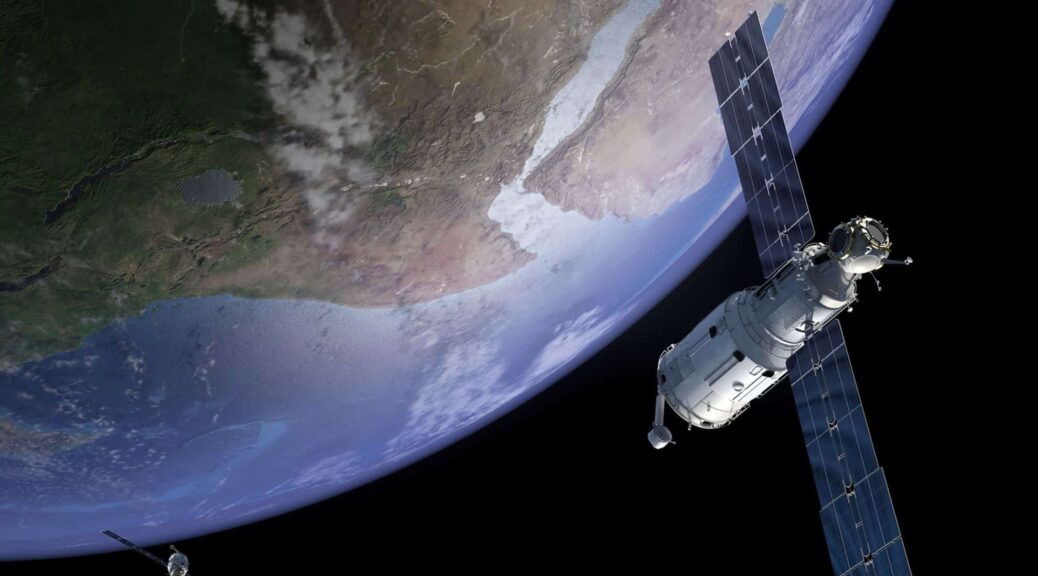
A Russian military satellite is shadowing a radar satellite that Ukraine reportedly relies on, and the distance between them is disputed.
For more than three days, Kosmos 2612 has flown in near-formation with the US satellite ICEYE-X36 used by Ukraine. The operation sets a new precedent in space. Experts worry about escalation as Russia’s goal remains unclear. Plesetsk Cosmodrome, launch site 43/4 for Soyuz-2.1v and Soyuz-2.1b rockets. Satellite image by Planet Labs: 18 October 2026. Analysis by Vertical52. For three days, one of Russia’s military satellites has been doing something unseen in low Earth orbit: It has pulled up alongside a US commercial satellite at low relative speed and proceeded to stay close. Satellite shadowing manoeuvres are common, but never before has a Russian spy satellite come this close to another state’s space infrastructure for such an extended period of time.Similar operations have proliferated in recent months, as countries seem to prepare for potential conflicts in space. A month ago, the US military confirmed it has deployed weapons in orbit. There is extensive documentation of Chinese satellites shadowing Western space objects or practicing close proximity manoeuvres with their own satellites. In July, The Insider and Der Spiegel reported on a Chinese-Russian plan to limit or destroy SpaceX Starlink infrastructure. This recent operation targets the satellite ICEYE-X36, registered in the US and providing radar data to Ukraine. How close was the Russian satellite? Thursday 15 October, Axios reported that Russia’s Kosmos 2612 was detected more than 320 kilometres from ICEYE-X36. By Friday afternoon, their distance was about 5 kilometres – close proximity for objects moving at many kilometres per second. The latest orbital data projected that Kosmos 2612 would position itself closest to the US-registered satellite yesterday afternoon.  Proximity estimation by Cosmos Radar, as of 1.11pm UTC. Source: Cosmos Radar. The analysis portal Cosmos Radar estimates a proximity of just 26 meters. Jonathan McDowell, a satellite tracking expert consulted by Vertical52, could not confirm the number: “With open-source data we can only confidently determine distance within an error margin of up to 2000 meters”, said the astronomer and astrophysicist.  Distance calculations by satellite tracking expert Marco Langbroeck. Source; X. McDowell described the operation as unprecedented and the closest uninvited rendezvous they had observed in Low Earth Orbit. Though earlier Kosmos satellites stalked US satellites too, they stayed at a distance of tens and hundreds of kilometers. “This is different. This is close, low velocity, low orbit. They’ve matched orbits”, said the astrophysicist. Yesterday afternoon, the Russian spy satellite was projected to come closer to ICEYE-X36 than any other foreign satellite before. Kosmos 2612 was launched from Plesetsk in April alongside other military satellites. Since then, it has orbited in close proximity to ICEYE-X36 and other satellites of the same programme. The operation seems to have been in the making for months. In May, several of them shifted the tilt of their orbits into ICEYE-X36’s orbital plane. They then passed by it at 13 to 18 kilometers, according to analysis by Integrity ISR reported by Meduza. The US Space Force described the incident in May: “Russia executed fuel-intensive orbital manoeuvres to position four military satellites (Cosmos 2610 through 2613) close to a Western commercial radar satellite used by Ukraine for imagery intelligence.” Over the summer, there were no other noticeable manoeuvres by the Kosmos fleet. Then, on 30 September, a new burn began – “clearly designed to bring the two objects very close and synchronise their orbital periods, orbital altitude, and eccentricity”, wrote Marco Langbroek, a Dutch satellite tracking expert. What is Russia’s goal? The motive behind Russian spy satellites’ escalation in proximity remains unclear. Payloads, the contents a satellite carries to space, are mostly undetectable through open-source data. This leaves room for speculation. The Center for Strategic and International Studies does not rule out on-orbit weapon use, while Langbroek expressed worries about the satellite’s behaviour. Kosmos 2612’s operation is one sign of the hybrid war Russia wages against Ukraine and NATO is spreading into space. The manoeuvre aligns with leaked documents that plan the destruction of Starlink space infrastructure. In July, The Insider and Der Spiegel reported on a leaked Russian-Chinese military strategy presentation. The documents described a “joint plan to defeat Elon Musk’s Starlink and a weapons development partnership”. Satellite tracker and astrophysicist Jonathan McDowell currently sees no indication of an obliteration of the US-registered satellite: “My interpretation is that this is an inspection mission, studying it, trying to measure characteristics, maybe try jamming the satellite”. It would not make sense to physically attack the satellite at such low speed. |
For the Silo, Luis Beyerbach.