Tag Archives: Instruments

Met Exhibit Will Explore Human Body & Musical Instrument Physical Connections

The exhibition will feature an interactive space for visitors to make music through body movement, as well as immersive elements, live performances, and workshops
Exhibition Dates:  June 7–Sept 27, 2026
Location: The Met Fifth Avenue, Gallery 199

(New York, April, 2026)—From clapping hands and tapping feet to beatboxing and whistling, the human body is a musical instrument. In turn, instruments often draw their form and decoration from the body. Musical Bodies, which opens on June 7 at The Metropolitan Museum of Art, will explore the multifaceted relationship between musical instruments and the human body. This is the first major exhibition to address this theme and will bring together some 130 works from around the world and across time, including musical instruments, paintings, sculptures, and drawings from The Met collection along with important international loans.

Musical Bodies was conceived as an experiential exhibition. An innovative interactive will enable visitors to create music through intuitive movements and explore the blurred boundaries between body and instrument. Large-scale projections will display newly commissioned footage of beatboxing, body percussion, tap dancing, and more by such acclaimed New York–based and international artists as tap dancer Savion Glover, Beatbox House, and whistler Molly Lewis. Special activations throughout the run of the exhibition will take place in the gallery and include musical performances from an array of artists as well as workshops that activate the body as an instrument. More details will be announced at a later date.

 “Musical instruments, which represent an important part of the Met’s collection, have long been recognized and celebrated as dynamic tools for creative expression, and also as works of art in their own right,” said Max Hollein, The Met’s Marina Kellen French Director and CEO. “This multisensory exhibition is the first to explore—through remarkable instruments, objects, and works of art—the fascinating ways in which sound, musical objects and the human form have been in conversation for millennia. Including outstanding instruments, powerful performances and immersive in-gallery experiences, Musical Bodies is a show that will resonate, fascinate and inspire.”

The exhibition is made possible by Barbara Tober, the Diane W. and James E. Burke Fund, the William Randolph Hearst Foundation, and the Gail and Parker Gilbert Fund.

Additional support is provided by Anonymous, The Dancing Tides Foundation, and the Vanguard Council.

Encompassing 4,000 years of music history and art, Musical Bodies will feature a range of objects from across the visual arts, literature, religion, pop culture, and mythology. This includes ancient Egyptian rattles, paintings by Titian and Degas, instrument-inspired apparel, and one of Prince’s most notable guitars. The ways in which the boundaries between body and instrument have been artfully blurred will be explored through visionary works such as Nam June Paik’s TV Cello; the PianoArc circular keyboard designed in collaboration with Brockett Parsons, keyboardist for Lady Gaga; and a steel guitar in the form of a crutch that was made for country music singer and songwriter Barbara Mandrell while she was recovering from an automobile crash.

Musical Bodies will include prominent works from across 10 of The Met’s curatorial departments, including over 50 instruments from the Department of Musical Instruments as well as ancient works from Egypt, 19th-century masterpieces from European Paintings, and 20th -century works from the Department of Modern and Contemporary Art. The exhibition will also feature significant loans from collectors and institutions such as the Musée de la musique (Paris), the National Music Museum (Vermillion, South Dakota), and the Royal College of Music (London). One of the earliest surviving bowed string instruments, a rare figural lira da braccio from the Kunsthistorisches Museum (Vienna), and a lavish hurdy gurdy from the Victoria & Albert Museum (London) will be shown in the United States for the first time.

Musical Bodies first formed in my mind as a deceptively simple question: Why are so many instruments shaped and decorated like the human body?” said Bradley Strauchen-Scherer, Curator in the Department of Musical Instruments at The Met.”The quest for an answer has become an exploration of humanity through the lens of instruments and music. We find ourselves represented in these instruments because, for much of our history, music has been central to who we are and what we do. I hope this exhibition will reconnect all of us with our innate musicality and shared heritage of harmony.”

Through six thematic sections, the exhibition will illuminate the relationship between the body and musical instruments and how they serve as channels for self-exploration and expressions of culture and belief systems. Musical Bodies will also reveal how instruments are used to stand in for the body to address topics that are traditionally considered taboo, such as sex and death.


Credits and Related Content

Musical Bodies is conceived and organized by Bradley Strauchen-Scherer, Curator in the Department of Musical Instruments at The Met, assisted by Ava Valentino, Research Assistant in the Department of Musical Instruments.

A fully illustrated catalogue will accompany the exhibition and will be available for purchase from The Met Store.

The catalogue is made possible by the Mary C. and James W. Fosburgh Publications Fund.

The Met will host a variety of exhibition-related educational and public programs, including a Creative Convening, Artists on Artworks and Met Expert talks in the galleries, a music workshop, and more. Details will be announced.

Musical Bodies will be on view during the presentation of the exhibition Costume Art (May 10, 2026–January 10, 2027), which will examine the centrality of the dressed body in fashion and art. The two shows will provide visitors with distinct and engaging explorations of the body’s relationship to artistic expression.

For the Silo, Jarrod Barker.


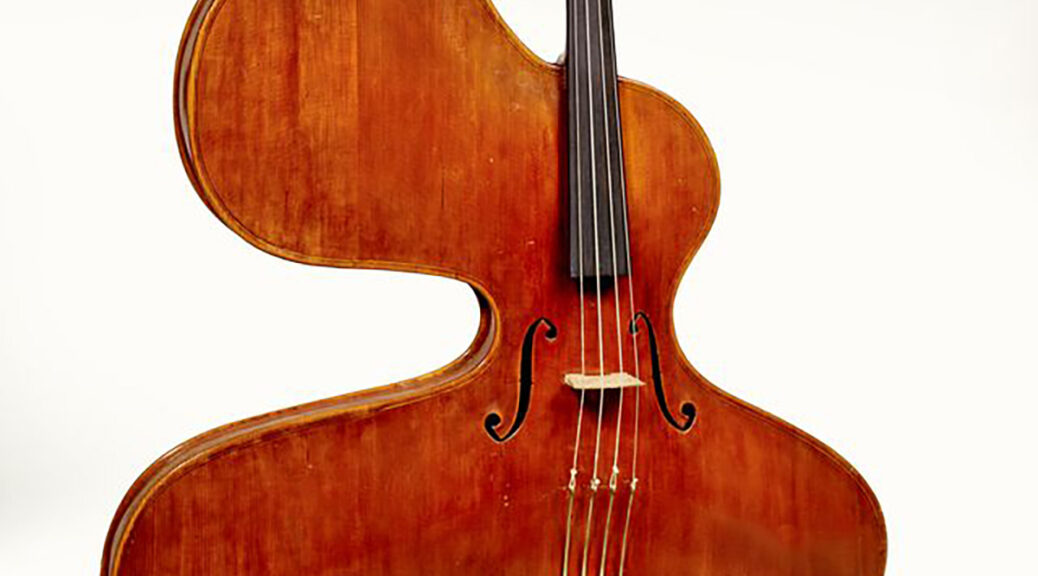
Featured Image: Thomas Zach, Violino Harpa Forma Maxima, 1874. Wood (spruce, maple, ebony), metal strings. Collections Musée de la musique / Cliché Claude Germain, 2020. Cité de la musique-Philharmonie de Paris
Visit The Met
Fifth Avenue1000 Fifth Avenue
New York, NY 10028The Met
Cloisters99 Margaret Corbin Drive,
Fort Tryon Park
New York, NY 10040 metmuseum.org

A Quest To Build My First Synthesizer

I started out creating sound experiments while in high school, circa 1980 with circuit bent hardware and a cheap Casio keyboard.

I then entered the working world and forgot all about making music. Fast forward 30+ years, and the itch to make experimental music overtook me again, but now technology had changed drastically. I no longer needed hardware. I discovered apps on my iPhone, and music platforms like SoundCloud and Bandcamp were all that I needed. I was immediately obsessed.

Within a couple years, I had filled over seven free SoundCloud accounts, and two Bandcamp albums  as well as an artist page  with experimental music, and having a great time doing it. But, I started to grow tired of using the same software.
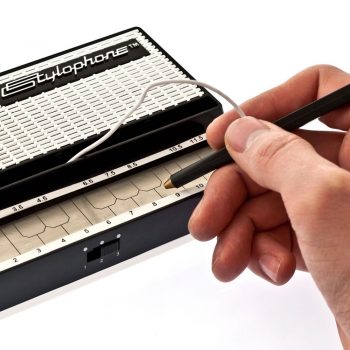
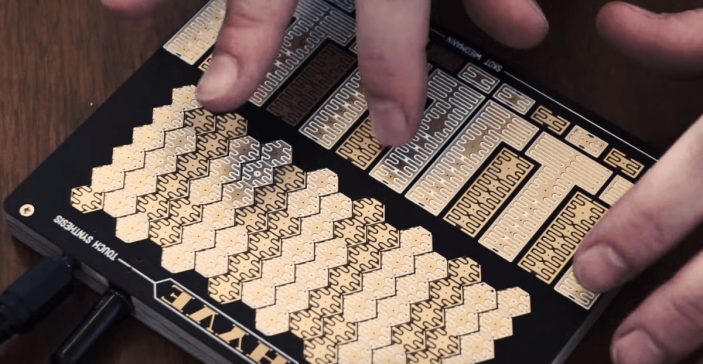
stylophone synthI yearned to use hardware/instruments again, but not being able to play an instrument is a definite hindrance 🙂 I searched for cheap keyboards on the net. I soon discovered the “Stylophone” and ordered one ‘sight unseen’. It was unique, inexpensive and fun, but quite limited in sound variety. I started mixing the Stylophone with app produced sounds/music, as well as other “found sounds”. (I really appreciate the functionality of software based mixing apps, which are almost essential to my creations these days). I then stumbled upon a couple of user videos of the Hyve synthesizer, and knew I had to have it. It was clearly non-musician friendly (and looked so different, cool and fun).

Then came the disappointment …

You can’t buy one! (BUT I HAD TO HAVE ONE!!!) Turns out, the engineer/designer guru behind this awesome device (Skot Wiedmann), had (Hard to believe but it’s been almost a decade since I made this trip!) work shops in the Chicago area, and you can go build your own, ( very inexpensively ). I knew what I had to do. I looked at a map, saw that Chicago was about 8 hours away from me here in Ontario, Canada and realized that I had to go build it. I started to plan the trip. I knew that a fellow SoundCloud musician and Facebook friend (Leslie Rollins) lived in Berrien Springs, Michigan, about 2 hours outside of Chicago.
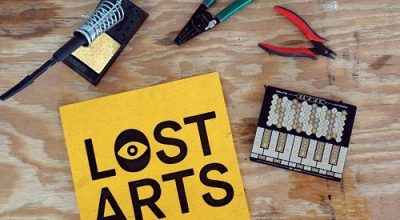
This presented a twofold opportunity. I could hopefully, meet Leslie face to face, and hopefully have a place to spend the night. I contacted Les and everything was A-OK! I purchased a ticket to build my Hyve, and started to plan my road trip. The workshop was going to be from Noon to 3pm, on a Saturday in late September in a cool space called Lost Arts in Chicago.

I had the whole week off from work, because I was overseeing a contractor doing extensive yard work at my house all week, and I was hoping to leave Friday so as to arrive at Leslie’s place in the late afternoon or early evening, spend the night, and leave for the workshop Saturday morning. Alas, plans rarely work as hoped.

The contractor wasn’t finished until Friday afternoon, and Les wasn’t getting home from a business trip until late Friday night.
New plan! Early to bed Friday. Early to rise Saturday (2:30 am), and depart for Leslie’s place in Michigan. It was an easy drive, and I got to Berrien Springs (a beautiful sleepy little university village) around 8:30 am. Met Leslie, and got to trade stories over a great breakfast in a local cafe. Then, I quickly admired Leslie’s impressive modular synth racks at his home studio “Convolution Atelier” and then left for “Lost Arts” in Chicago.

Lost Arts is located in a cool old industrial complex.

The workshop provided everyone with a surface mount board with the touchpad on one side, and components layout on the back. A sheet listing components and placement was also handed out, along with tiny plastic tweezers. Everyone then had their component side “pasted” with a solder paste applied through a pierced template, in a process similar to silk screening. Everyone then started to receive their very tiny components from the parts list. Following the placement locations, the components (chips, capacitors, resistors, etc) were set into their pasted areas with the tweezers (magnification and extra lighting was a must). Once all the components were placed, they were carefully “soldered” into place by simply holding a heat gun over each component until the solder on the board had adhered it. Once this was done, everyone had their 9v battery and line-out jacks hand soldered into place by Skot , and then … the moment of truth, Skot tested each one for proper operation.

It was a fascinating process and great experience.

I met a lot of cool people at the workshop, both builders and staff/helpers! I can’t say enough what a fantastic experience this was, and what an awesome, diverse and versatile device the Hyve is. I doubted my sanity when planning this trip, but it turned out to be very rewarding!

Leslie and I then went back to Michigan, stopped at a local brewery in Berrien Springs (Cultivate) and sampled a few of their excellent brews, and then proceeded to Convolution Atelier to play with Leslie’s modular system. (I’m a newbie to all things modular, and I received a great crash course from Leslie on his very cool array!) Then it was out to dinner with Leslie and his wonderful wife Lisa, and finally back to their house where I stayed for the night, and finally hit the road towards home the next morning. It truly was a great adventure! For the Silo, Mike Fuchs.