Have you ever wondered whether the air that we breathe indoors can be equally harmful as outdoors?
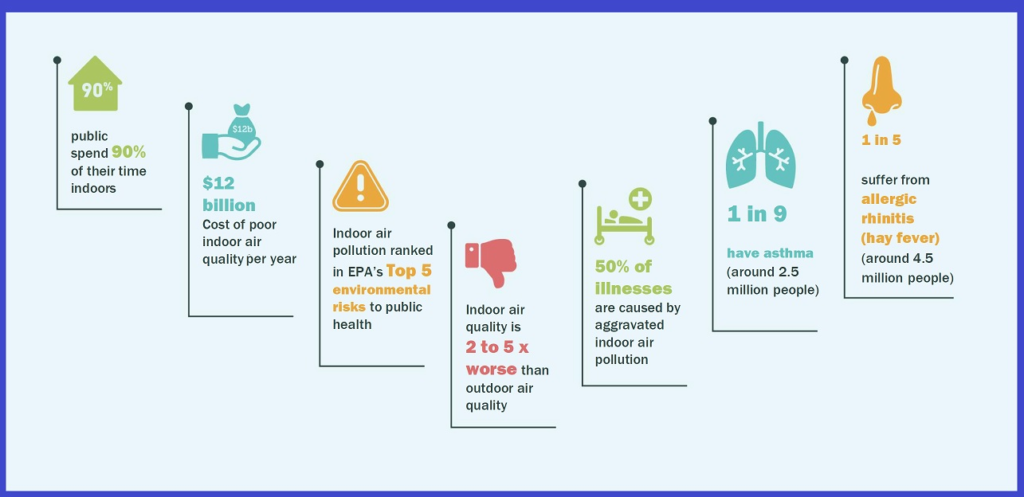
When it comes to healthy living, the air that circulates inside our house is often more crucial than the outdoor air, pollution, smog and other environmental factors. Research suggests that the indoor environments can have up to five times more pollutants than outdoor ones thus affecting several parts of our body including skin, lungs, nose, eyes, and throat among others. Once inhaled, these very air pollutants can continue to have harmful effects as and when it is processed through our systems. Just think over it. Ever felt stuffy in a room only to feel refreshed once you have stepped out? That lethargic feeling is directly related to the poor quality of air inside the house. And when you are exposed to such an indoor environment year after year, it can have a serious effect on your daily life.
What are the root causes of poor indoor air quality?
According to the experts from The American Society of Heating, Refrigeration, and Air-Conditioning Engineers (ASHRAE) here are the factors that can lead to poor indoor air quality:
Building Design and construction
Building wasn’t checked thoroughly to see if it was suitable for the occupants
Ventilation systems are dirty and damp
Indoor contaminant sources
The equipment and activities carried out indoors that add to the contaminants
Moisture trapped in the building enclosures
Failure to check filtration and air cleaning
Poor outdoor air quality
Poor ventilation rates
With Canadians spending over 90% of their time staying indoors combined with the COVID-19 pandemic, it is now more than ever that the role of indoor air quality has gained prominence. First, we need to understand the need for getting an air quality test done within your premises.
Healthy buildings improve performance and productivity of the residents
Healthy folks take lesser sick leaves
The test validates your space’s current indoor air quality
Verification of your space meeting the indoor air quality standards
Address any concern or issue arising due to a complaint
Prioritize the health and safety of the occupants
Obtain or renew LEED, WELL or BOMA BEST certification
Gateway Mechanical as a company continuously strives to assess, audit and improve health and safety program to reduce the risk of injury in a changing work environment. The indoor air quality test offered by Gateway Mechanical will solve all your queries regarding the health of your space’s air quality. This test investigates the air quality within your premises for the following:
It turns out there’s a lot we can do to control and reduce these contaminants to make our facilities, buildings, and spaces safer. To summarize, good indoor air quality significantly increases occupant health and experience in the provided space, enhances performance and productivity, drastically reduces absenteeism, optimizes returns on your investments, and eventually boosts your triple bottom line. For the Silo, Mike Robert.
A recent Commonwealth report has revealed violence against women and girls costs Lesotho more than $113 million (about 1.9 billion Lesotho loti) a year. The report estimates the total cost, including loss of income and expenses associated with medical, legal and police support, equates to around 5.5 per cent of Lesotho’s gross domestic product (GDP).
The cost of $113 million means each Lesotho citizen loses at least $50 every year to violence against women and girls.The cost of $113 million means each Lesotho citizen loses at least $50 every year to violence against women and girls.
The bulk – $45usd million – is attributed to legal protection, healthcare, social services and learning loss.
This is more than twice the amount – $21 million – Lesotho spent on health, education and energy in the last fiscal year. The report sets out policy recommendations for the health, education, legal and private sectors to better meet the needs of victims, which include: Updating the forms used for collecting data on violence against women and girls; Using digital services to collect and share the data with stakeholders; Training staff responsible for recording, analyzing and sharing data; Developing a broad approach involving all sectors to prevent the abuse; and making strategic shifts to allocate resources to carry out these recommendations.
Commonwealth Secretary-General Patricia Scotland said: “This report proves once again that ending violence against woman and girls is not only the right thing to do but it is also the smart thing to do and beneficial to us all. “Tackling this issue will prevent immense pain and suffering for individuals and communities and will also end the damage this violence does to our economies and prosperity. “As the first report of its kind to focus on Lesotho in this way, our intention is that it should provide the basis for designing more clearly focused national policies and programs, and help ensure that adequate resources are allocated for priorities such as training service providers.
“The findings put a price tag on the endemic scourge of gender-based violence, and demonstrate that the consequences of ignoring the problem are far higher than the cost of taking preventative and remedial action. “By providing the baseline for a series of periodic costing studies and practical intervention, we hope the report will help pave the way towards significant progress on eliminating violence against women and girls, thereby saving many lives.”
The loss of income for women who experience violence due to missed days of work and lost productivity comes to $22usd million annually. Income losses result in less spending which triggers a negative impact on commodity demand and supply of goods and services. Lesotho’s Minister of Gender and Youth, Sport and Recreation Mahali Phamotse said: “Violence against women and girls is a problem in Lesotho which affects national development.“
The report will help Lesotho come up with appropriate strategies that will help eradicate violence against women and girls as we are now aware of its causes and economic implications. “The report calls for immediate action through which my ministry will embark on a project to ensure the protection of women and girls.”
In Lesotho, about one in three women experience sexual or physical violence in their lifetime, similar to the global prevalence rate. The Commonwealth worked with Lesotho’s Ministry of Gender and Youth, Sport and Recreation to conduct the study and produce this report.
The Commonwealth is a voluntary association of 54 independent and equal sovereign states and includes Canada. Our combined population is 2.4 billion, of which more than 60 per cent is aged 29 or under. The Commonwealth spans the globe and includes both advanced economies and developing countries. Thirty-two of our members are small states, many of which are island nations.
The Commonwealth Secretariat supports member countries to build democratic and inclusive institutions, strengthen governance and promote justice and human rights. Our work helps to grow economies and boost trade, deliver national resilience, empower young people, and address threats such as climate change, debt and inequality. Member countries are supported by a network of more than 80 intergovernmental, civil society, cultural and professional organisations.
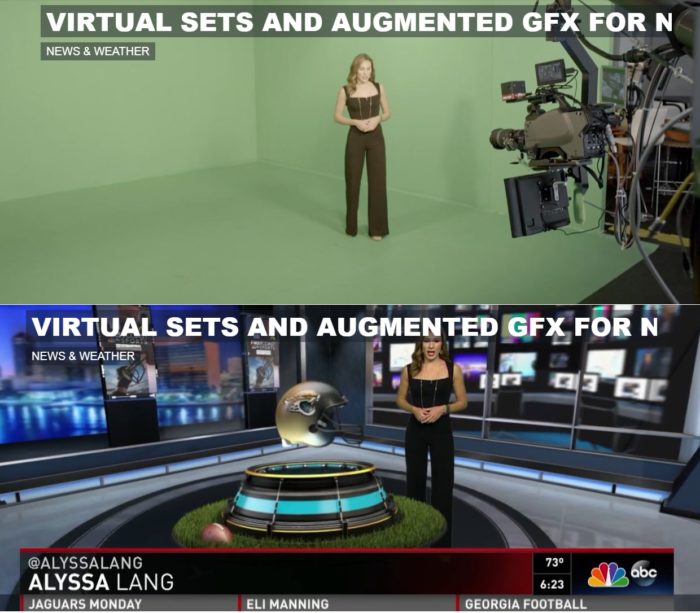
LAS VEGAS — A couple of years ago, ChyronHego announced a partnership with leading game developer Epic Games to integrate the Unreal Engine with ChyronHego’s family of augmented reality (AR) graphics and virtual sets solutions. With the integration, news broadcasters and other customers of ChyronHego’s Neon and Plutonium software will be able to leverage Unreal’s industry-leading rendering and real-time special effects capabilities to add powerful new photorealistic and hyper-realistic elements to their on-air virtual sets. Only a decade ago, editDROID and other Laserdisc based systems were still commonly in use with a much more rudimentary set of effects possibilities- this new Neon and Plutonium software system is an industry wide ‘game changer’.
Here is a look at 2017’s ChyronHego’s live use demo-
“In an environment that’s more competitive than ever, our broadcast news customers are on a constant search for innovative ways to tell a better story and captivate viewers,” said Olivier Cohen, senior product manager, virtual solutions, ChyronHego. “Virtual sets that harness the amazing graphics capabilities of world-class gaming engines are the wave of the future for news, sports, and weather broadcasting, and Epic Games is the perfect partner to take us there. The integration with Unreal is just the latest link in our CAMIO Universe strategy to place the industry’s most powerful storytelling tools at news producers’ fingertips and drive template-based, unified news and weather workflows.”
“Since we launched Unreal Engine 4, it has become one of the world’s most powerful rendering engines for the game industry — but its flexibility, real-time performance, and robust set of tools make it ideal in just about any type of content creation workflow,” said Marc Petit, general manager, Unreal Engine Enterprise at Epic Games.
“ChyronHego’s AR and virtual set solutions for broadcast production are the ideal match for Unreal Engine. By partnering with one of the leading broadcast graphics providers, we can continue to expand our presence in the broadcast, film, and entertainment industries.”
ChyronHego will work to integrate the CAMIO graphic asset management server with Unreal Engine, including creating broadcast-specific camera movements. Unreal’s 3D graphics engine enables producers to generate AR graphics through the templated workflows of the CAMIO Universe. Via custom user interfaces built with ChyronHego Live Assist panels, producers can then present the AR graphics on air using ChyronHego’s Plutonium and Neon virtual set and robotic camera tracking solutions.
Cohen added, “As one of the world’s most powerful rendering engines from one of the world’s foremost gaming companies, Unreal will bring new levels of openness and scale-ability to our virtual set solutions. Unreal Engine is easily customizable and expandable, and five million users around the world will benefit from Epic Games’ vast reach across the global community of gamers and game developers. It means news broadcasters will be able to render effects in their virtual sets that rival anything their viewers have seen in the gaming world, with special effects like real-time shaders, bumps, sliders, and highly photo-realistic objects.” For the Silo, Lyndsey Albright.
Supplemental- The Revolutionary Video Toaster and Amiga Computer system 1991.
Tech and cars go together: the Hoonicorn RTR, the famous hybrid race and demo car.
The first tech start-up in a garage wasn’t Hewlett Packard. Back in the day, pre-Silicon Valley, it was the men and women bolting together cars, optimizing engines, lovingly perfecting car technology in their garages and taking it to the streets.
Profiled on RxSpeed’s website in the LAB [link below CP], take a visual tour of this incredible car and wild video and other modified cars.
Like building a spaceship around an astronaut, this million-dollar racecar was built around a driver, the needs of his craft and the exploration of a genre.
For two years the Hoonicorn RTR was kept a secret.
No one outside the very small and tight-knit circle knew about the project; even best friends were left out. Shrouded in secrecy, the six-cylinder 1965 Mustang Notchback 3-speed was cut and sewn back together into the Hoonicorn RTR, a hybrid race and demo car.
Cell phones and computers provide access to such an incredibly fast-paced information network that keeping anything hidden from prying eyes is becoming increasingly rare—and a Ken Block Gymkhana car is on another level of vulnerability. With over a quarter of a billion views on the Gymkhana franchise, the reveal of the next-generation car is on par with anything the automakers can throw out, which is why the Hoonicorn RTR was such a big surprise to the world.
It’s not cheap or quick modifying a stock car. To keep costs down, motorheads can visit RxSpeed to check out where to buy automotive products at the lowest cost. More over-the-top car stories can be found in the LAB
About RxSpeed
www.rxspeed.com is a comparison shopping engine for the automotive aftermarket. It saves consumers time & money during their research and purchase process. Their proprietary software platform catalogs millions of parts from hundreds of brands to help match customers with retailers easier and faster than ever before.
The COVID-19 pandemic caused by the novel coronavirus SARS-CoV-2 has led to over 910,000 deaths worldwide and unprecedented decimation of the global economy. Despite its tremendous impact, the origin of SARS-CoV-2 has remained mysterious and controversial. The natural origin theory, although widely accepted, lacks substantial support.
Censorship Of Alternative Theory
A recent Reddit page
The alternative theory that the virus may have come from a research laboratory is, however, strictly censored on peer-reviewed scientific journals. Nonetheless, SARS-CoV-2 shows biological characteristics that are inconsistent with a naturally occurring, zoonotic virus.
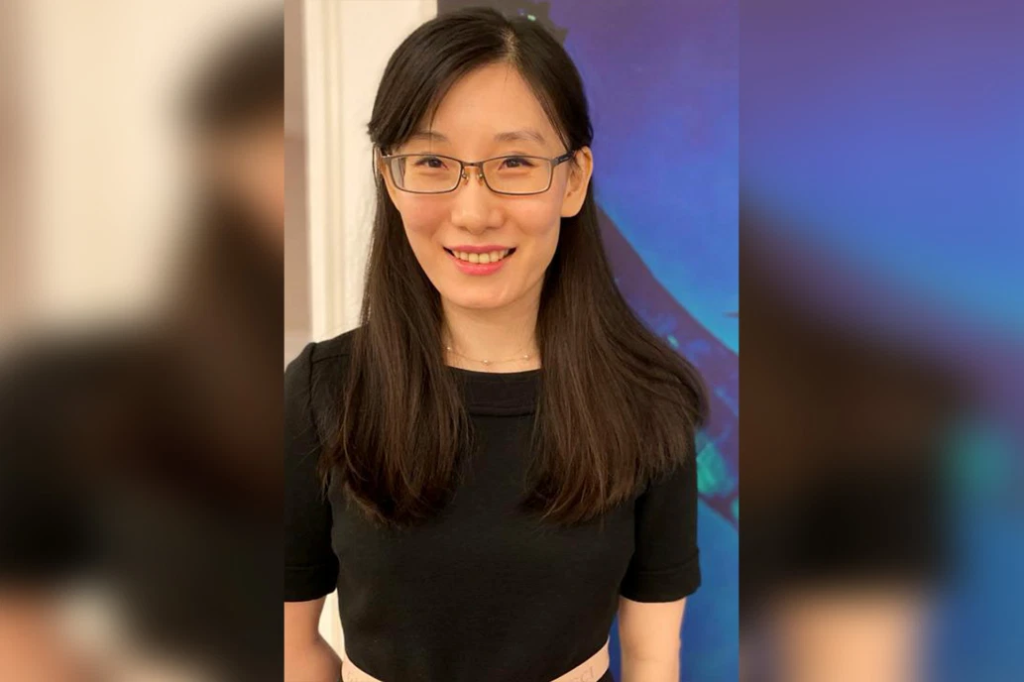
Dr. Li-Meng Yan, one of the key authors of the report has been labeled as a whistle blower by Western media.
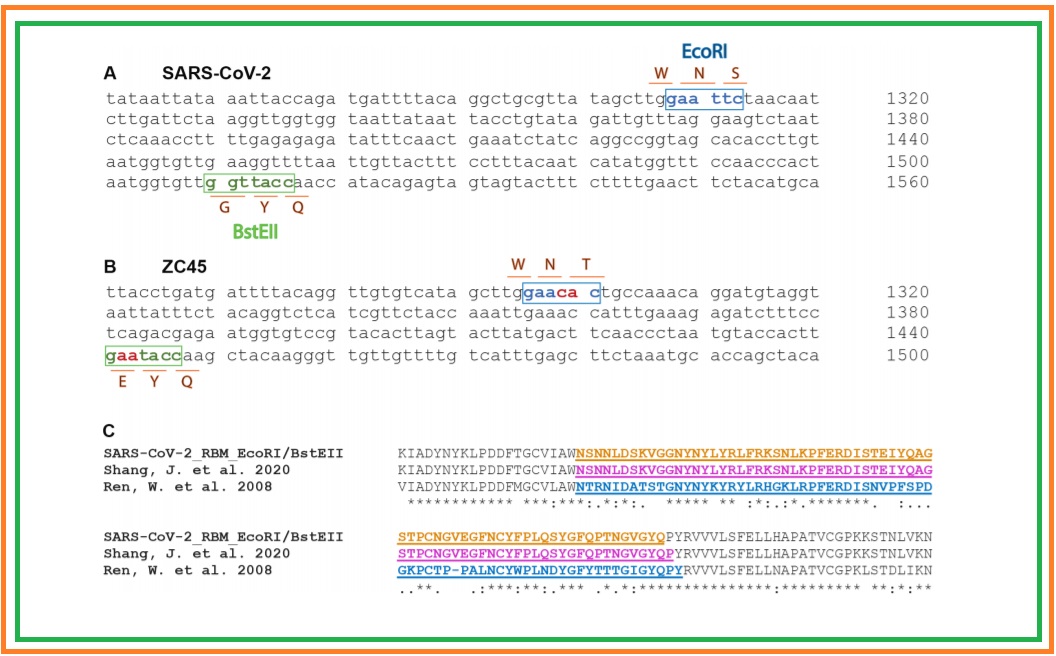
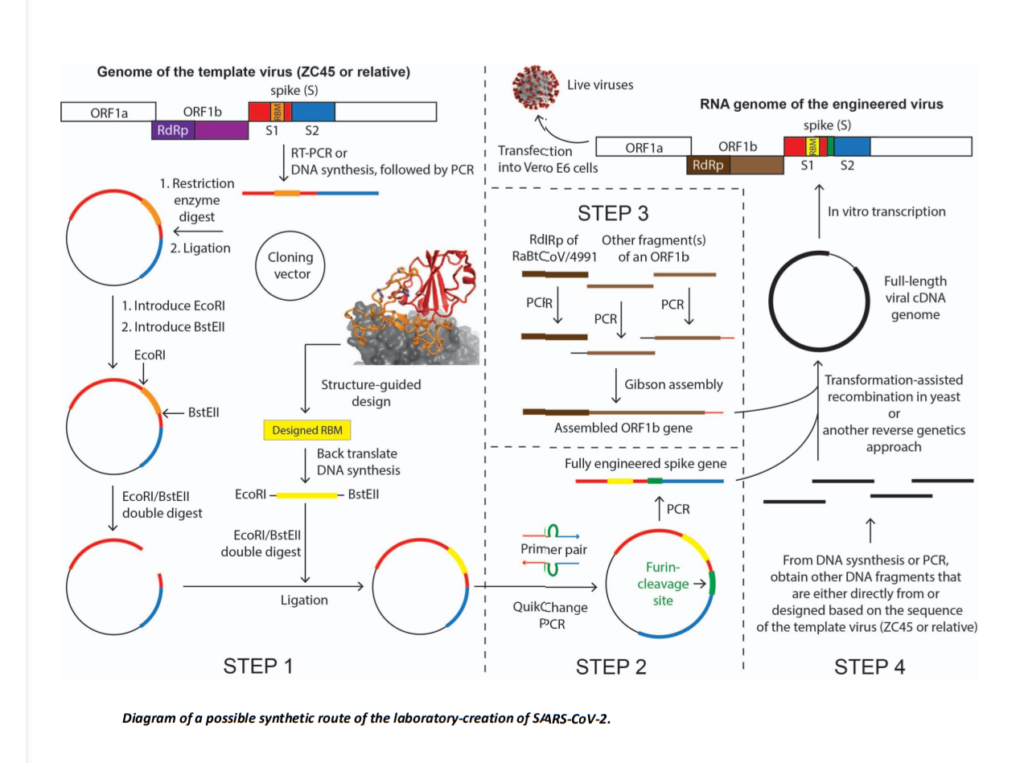
In this report, the authors describe the genomic, structural, medical, and literature evidence, which, when considered together, strongly contradicts the natural origin theory. The evidence shows that SARS-CoV2 should be a laboratory product created by using bat coronaviruses ZC45 and/or ZXC21 as a template and/or backbone. Building upon the evidence, we further postulate a synthetic route for SARS-CoV-2, demonstrating that the laboratory-creation of this coronavirus is convenient and can be accomplished in approximately six months.
Our work emphasizes the need for an independent investigation into the relevant research laboratories. It also argues for a critical look into certain recently published data, which, albeit problematic, was used to support and claim a natural origin of SARS-CoV-2.
From a public health perspective, these actions are necessary as knowledge of the origin of SARS-CoV-2 and of how the virus entered the human population are of pivotal importance in the fundamental control of the COVID-19 pandemic as well as in preventing similar, future pandemics.
Introduction
COVID-19 has caused a world-wide pandemic, the scale and severity of which are unprecedented. Despite the tremendous efforts taken by the global community, management and control of this pandemic remains difficult and challenging. As a coronavirus, SARS-CoV-2 differs significantly from other respiratory and/or zoonotic viruses: it attacks multiple organs; it is capable of undergoing a long period of asymptomatic infection; it is highly transmissible and significantly lethal in high-risk populations; it is well-adapted to humans since the very start of its emergence ; it is highly efficient in binding the human ACE2 receptor (hACE2), the affinity of which is greater than that associated with the ACE2 of any other potential host.
The origin of SARS-CoV-2 is still the subject of much debate.
A widely cited Nature Medicine publication has claimed that SARS-CoV-2 most likely came from nature. However, the article and its central conclusion are now being challenged by scientists from all over the world.
Online casinos are a lot of fun. There are thousands of websites
and mobile apps dedicated to online gambling and casino games.
Unfortunately, some of these casinos do not offer a safe place to
play online roulette and other casino games.
Before creating an account and depositing money in an online
casino, you should take a closer look at its features.
The following four factors should help you find a credible online casino. If you are developing your own casino, you can also benefit from ensuring that your platform offers these features.
Security
Security is the most important factor when choosing an online
casino. You should first ensure that the online casino complies with
their local regulations. For example, online casinos in the UK should
be licensed by the UK Gambling Commission.
When you open an account with an online casino, you may need to
provide sensitive information. Besides your name and email address,
you may include bank details or provide access to your PayPal
account.
Reliable online casinos use the latest SSL encryption to ensure
that your personal and financial information remains secure.
Variety
You may get tired of playing the same game for hours at a time. The best online casinos provide users with a variety of games.
For example, casino.netbet.co.uk
offers over a dozen different online roulette games. They also have
slots, blackjack, and other online casino games. With over 1,500
total games and new games added weekly, there is no shortage of games
to keep you entertained.
Rewards
The casino that you choose should offer rewards, bonuses, and
promotions. Many of these websites offer free funds to match your
initial deposit. Depending on the site that you choose, you may start
with a hundred dollars in your account after depositing fifty
dollars.
Besides sign-up bonuses, many sites feature weekly promotions or
special giveaways. Sometimes, they may increase the potential payouts
for popular games.
Mobility
The top online casinos allow players to play from any device.
Instead of just accessing the online casino from a website, you
should have mobile options for playing on your smartphone or tablet.
Online casinos that allow you to play across all devices provide a
convenient way to enjoy your favorite games. You can play while
commuting to work or during a break.
These are the main factors that you should consider when choosing
an online casino. These same details may also benefit those that are
planning to develop their own online casinos.
As technology
makes it easier to reach customers across the globe, you should
ensure that your platform appeals to a wider audience. Remember to
focus on security, variety, rewards, and mobility.
Wyland, marine life artist and environmental activist, is making waves with his latest nationwide campaign for conservation. He’s best known for his series of 100 monumental marine life murals around the globe.
Steve Creech, President of the Wyland Foundation, is one of many behind the work the org is doing to enlist the support of cities and mayors nationwide to urge conservation. Hundreds enlisted this year- see latest participants here. The group works on educating constituents about CO2 emitted from our homes and lifestyles. For the Silo, Virginia Chavez.
About the Wyland Foundation
Founded in 1993 by environmental artist Wyland, the Wyland Foundation, a 501c3 non-profit organization dedicated to promoting, protecting, and preserving the world’s ocean, waterways, and marine life. The foundation encourages environmental awareness through community events, education programs, and public art projects.
“Your task is not to foresee the future, but to enable it.“
Founded on the values of pioneer pilot Antoine de Saint-Exupéry, a new partnership has formed between the leading Quebec AI research institute, Mila, and France’s IRT Saint Exupéry, which established a Montreal branch one year ago.
This partnership confirms the commitment shared by both parties to advance research in the field of intelligent systems, with a focus on embedded intelligence in critical systems, particularly related to travel (i.e., planes and cars) and healthcare (medical devices).
At the heart of the partnership are two key players in scientific and technological research who have joined forces to promote best practices and tackle the scientific challenges of artificial intelligence driven by industry needs and societal impacts.
Recognized worldwide for its numerous breakthroughs in artificial intelligence, Mila distinguishes itself both in calibre and in number of its researchers. Thanks to this partnership, Mila is enriched by an original model of collaboration, in which industry and academia will work together in a common space to solve scientific questions arising from industrial concerns. This collaborative model, tried and tested at IRT Saint Exupéry in France since 2013, has led to the creation of a French-Canadian research program, *DEEL, mobilizing 14 industrial companies and roughly 20 academic researchers in Toulouse, Montreal and Quebec City, including researchers from Mila. IRT Saint Exupéry now has access to a cooperative space on Mila’s premises. The proximity to Mila’s researchers and industrial partners encourages the development of multi-partner French-Canadian research programs.
If the Canadian branch of IRT Saint Exupéry was selected to integrate within Mila’s ecosystem, considered one of the best in the world for AI research and development, it is thanks to the partnership established two years ago with the Quebec Institute for data valorization IVADO, which was founded to foster AI partnership projects with industry. After the DEEL project, initiated jointly and now integrated into the Toulouse Interdisciplinary Institute of Artificial Intelligence “ANITI” of which it is the driving force, IRT Saint Exupéry and its Quebec partners are now developing new expertise in the field of confidence AI and decision support for critical systems, with applications for land, air and space mobility, but also for health and the environment.
YoshuaBengio, Scientific Director – Mila
“Mila‘s mission is to develop the understanding of intelligent systems in order to put them at the service of all humanity in an ethical, inspiring and sustainable way. More than 500 world-class researchers at the Institute focus on deep learning and neural networks that shape today’s intelligent systems. This partnership with IRT Saint Exupéry Canada broadens our horizons and our network.We are proud to make concrete through this partnership the commitments of collaboration between Canada and France in the field of artificial intelligence.“
Geneviève Fioraso, President – IRT Saint Exupéry
“I am convinced that collaborations with the researchers, engineers, laboratory students and partners of the Mila ecosystem in Montreal will be very stimulating for the IRT Saint Exupéry teams in Canada as well as in Toulouse.By working closely with the Mila Institute, we are going to accelerate our work and strengthen our expertise in AI, thus enhancing the reliability, safety and competitiveness of the fields concerned with critical and complex systems: air, space and ground transportation, medical devices and the environment.Ourlongstanding partnership with IVADO and CRIAQ in Quebec allows us today, alongside Mila, to achieve a new level of deep learning and understanding of intelligent systems.This new alliance with the French-speaking centre of excellence in AI, based on shared scientific and ethical values, also illustrates the willingness of the technological research institutes to open up internationally.“
Guillaume Gaudron, CEO – IRT Saint Exupéry Canada
“We are really excited to join Mila.Working in this privileged environment and close to the very best researchers in the field represents an unprecedented opportunity for the institute to showcase its skills and respond to the deep concerns raised by artificial intelligence.We are also pleased to be able to offer a very unique collaboration model, one which brings together different actors to address common, shared and open challenges.We are mobilizing artificial intelligence on future topics such as the quantum computer, the autonomous vehicle, medical applications (diagnosis of rare diseases), satellites, and more. These are all complex and compelling subjects that need to be supported by very high-level scientific research, and require the use of AI algorithms that are robust, reliable, justifiable and, in the future, certifiable.“
About Mila:
Founded in 1993 by Professor Yoshua Bengio of the Université de Montréal, Mila is a research institute in artificial intelligence which rallies 500 researchers specializing in the field of deep learning. Based in Montreal, Mila’s mission is to be a global pole for scientific advances that inspires innovation and the development of AI for the benefit of all. Mila, a non-profit organization, is recognized globally for its significant contributions to the field of deep learning, Mila has distinguished itself in the areas of language modelling, machine translation, object recognition and generative models. For the Silo, Diane Loth.
About IRT Saint Exupéry Canada (CRAN):
IRT Saint Exupéry Canada or CRAN (Centre de Recherche Aéro-Numérique) settled in Montreal in June 2019. With a specialization in areas of artificial intelligence, it brings together academia and industry through a recognized collaboration model to build multi-partner research programs within a French-Canadian framework.
IRT Saint Exupéry Canada was founded by IRT Saint Exupéry, a French research and innovation institute that is very involved in Franco-Quebec collaborations, particularly through the ambitious DEEL* research program with its partners IVADO and CRIAQ.
——————————————————————————————————————–
« L’avenir tu n’as point à le prévoir mais à le permettre » … c’est sous la formule empruntée à Antoine de Saint-Exupéry que s’engage un nouveau partenariat entre le laboratoire d’excellence en intelligence artificielle Mila et l’IRT Saint Exupéry Canada installé à Montréal depuis un an. Ce partenariat confirme la volonté partagée par les deux parties de faire avancer la recherche en matière de systèmes intelligents, avec un focus sur l’intelligence embarquée dans les systèmes critiques, en particulier liés à la mobilité (avions, voitures) ou la santé (dispositifs médicaux).
L’IRT SAINT EXUPERY DANS LA PLATE-FORME MILA A MONTRÉAL : UN FORMIDABLE ACCÉLÉRATEUR POUR LES PROJETS D’IA
Au cœur du partenariat, ce sont deux acteurs de la recherche scientifique et technologique qui s’allient pour échanger des bonnes pratiques et adresser des défis scientifiques de l’intelligence artificielle motivés par des besoins industriels et les impacts sociétaux.
Reconnu mondialement pour ses nombreuses percées en intelligence artificielle, Mila se distingue tout autant par le niveau de ses chercheurs que par leur nombre. Grâce à ce partenariat, il s’enrichit d’un modèle de collaboration original, dans lequel industriels et académiques travaillent ensemble, en un lieu commun, pour résoudre des questions scientifiques issues de préoccupations industrielles. Ce modèle, expérimenté depuis 2013 à l’IRT Saint Exupéry en France, a conduit à la création d’un programme de recherche franco-canadien, DEEL*, mobilisant à Toulouse, Montréal et Québec 14 industriels et une vingtaine de chercheurs académiques parmi lesquels des chercheurs de Mila. L’IRT Saint Exupéry Canada a désormais accès à un espace coopératif dans les locaux de Mila, la proximité avec les chercheurs et les partenaires industriels de Mila favorisant le montage de programmes de recherche franco-canadiens multi partenariaux.
Si l’antenne canadienne de l’IRT Saint Exupéry a été choisie pour intégrer la plate-forme Mila, considérée comme l’une des meilleures au monde pour la recherche et le développement en intelligence artificielle, c’est bien grâce au partenariat noué il y a deux ans avec le centre de recherche québécois IVADO, Institut de la VAlorisation des DOnnées fondé pour développer des projets partenariaux en IA avec l’industrie. Après le projet DEEL, initié en commun et maintenant intégré à l’Institut Interdisciplinaire d’Intelligence Artificielle toulousain « ANITI » dont il est le moteur, l’IRT Saint Exupéry et ses partenaires québécois développent de nouvelles expertises dans le domaine de l’IA de confiance et d’aide à la décision pour les systèmes critiques, avec des applications pour les mobilités terrestres, aériennes et spatiales, mais aussi pour la santé et l’environnement.
Yoshua Bengio, Directeur scientifique – Mila
« Mila a pour vocation de développer la compréhension des systèmes intelligents pour les mettre au service de toute l’humanité de façon éthique, inspirante et durable. Au sein de l’institut, plus de 500 chercheurs d’excellence se concentrent sur l’apprentissage profond et les réseaux de neurones qui façonnent les systèmes intelligents actuels. Ce partenariat avec l’IRT Saint Exupéry Canada élargit notre horizon et notre réseau : nous sommes fiers de concrétiser par ce partenariat les engagements de collaboration entre le Canada et la France en matière d’intelligence artificielle. »
Geneviève Fioraso, Présidente – IRT Saint Exupéry
« Je suis convaincue que l’interaction avec les chercheurs, les ingénieurs, les étudiants des laboratoires et les partenaires de la plate-forme Mila à Montréal sera tout à fait stimulante pour les équipes de l’IRT Saint Exupéry au Canada comme à Toulouse. En nous rapprochant de l’Institut MILA, nous allons accélérer nos travaux et renforcer notre expertise en IA, au service de la fiabilité, la sûreté et la compétitivité des domaines concernés par les systèmes critiques et complexes : transports aériens, spatiaux, terrestres, dispositifs médicaux, environnement. Notre partenariat plus ancien avec IVADO et le CRIAQ au Québec nous permet aujourd’hui, au sein de MILA, de franchir une nouvelle étape dans l’apprentissage profond et la compréhension des systèmes intelligents. Le rapprochement avec ce pôle d’excellence francophone en IA, fondé sur des valeurs scientifiques et éthiques partagées, illustre également la volonté d’ouverture à l’international des Instituts de Recherche Technologique. »
Guillaume Gaudron, Directeur général – IRT Saint Exupéry Canada
« Nous sommes vraiment ravis de rejoindre le Mila. Travailler dans cet environnement privilégié et à proximité de chercheurs d’excellence représente une opportunité inédite pour l’institut d’exprimer ses compétences et de répondre à des préoccupations profondes posées par l’intelligence artificielle. Nous sommes également heureux de pouvoir proposer un modèle de collaboration assez unique, une capacité de réunir des acteurs différents autour de problématiques communes, partagées et ouvertes. Nous mobilisons l’intelligence artificielle sur des thématiques d’avenir comme l’ordinateur quantique, le véhicule autonome, les applications médicales (diagnostic de maladies rares), les satellites, etc. autant de sujets complexes, séduisants, ayant besoin de s’adosser à une recherche scientifique de très haut niveau, et nécessitant de s’appuyer sur des algorithmes d’IA robustes, sûrs de fonctionnement, explicables et, à l’avenir, certifiables.
À propos de Mila :
Fondé par le professeur Yoshua Bengio de l’Université de Montréal, Mila est un institut de recherche en intelligence artificielle qui rassemble aujourd’hui 500 chercheurs spécialisés dans le domaine de l’apprentissage profond et par renforcement. Basé à Montréal, Mila a pour mission d’être un pôle mondial d’avancées scientifiques qui inspire l’innovation et l’essor de l’IA au bénéfice de tous. Mila est un organisme à but non-lucratif reconnu mondialement pour ses importantes contributions au domaine de l’apprentissage profond, particulièrement dans les domaines de la modélisation du langage, de la traduction automatique, de la reconnaissance d’objets et des modèles génératifs.
À propos de l’IRT Saint Exupéry Canada (CRAN) :
L’IRT Saint Exupéry Canada ou CRAN (Centre de Recherche Aéro-Numérique) s’est installé à Montréal en juin 2019. Spécialisé dans les thématiques d’intelligence artificielle, il fédère académiques et industriels grâce à un modèle de collaboration reconnu pour construire avec eux des programmes de recherche multi-partenariale dans un cadre franco-canadien.
L’IRT Saint Exupéry Canada a été fondé par l’IRT Saint Exupéry, institut français de recherche et d’innovation très engagé dans les collaborations franco-québécoises en particulier au travers de l’ambitieux programme de recherche DEEL* avec ses partenaires IVADO et CRIAQ
Aranyani has been impressing Western shoppers, fashionistas and savvy consumers since day one. They are founded on the classic atelier concept which originated not in Europe as many believe, but in India with the Kirana; a small, family run shop that served the community. The Kirana concept was embraced in Europe and inspired some of the fashion houses to create their own ateliers.
Standing By Their Products
Aranyani is one of the first companies in India to not only offer the highest quality artisanal products, but also one of the first to ensure that their products are ethically sourced and manufactured. The Western assumption that products from the East have compromised principles is put to rest: for starters, this company offers international free shipping and returns and are clearly committed to standing behind their products.
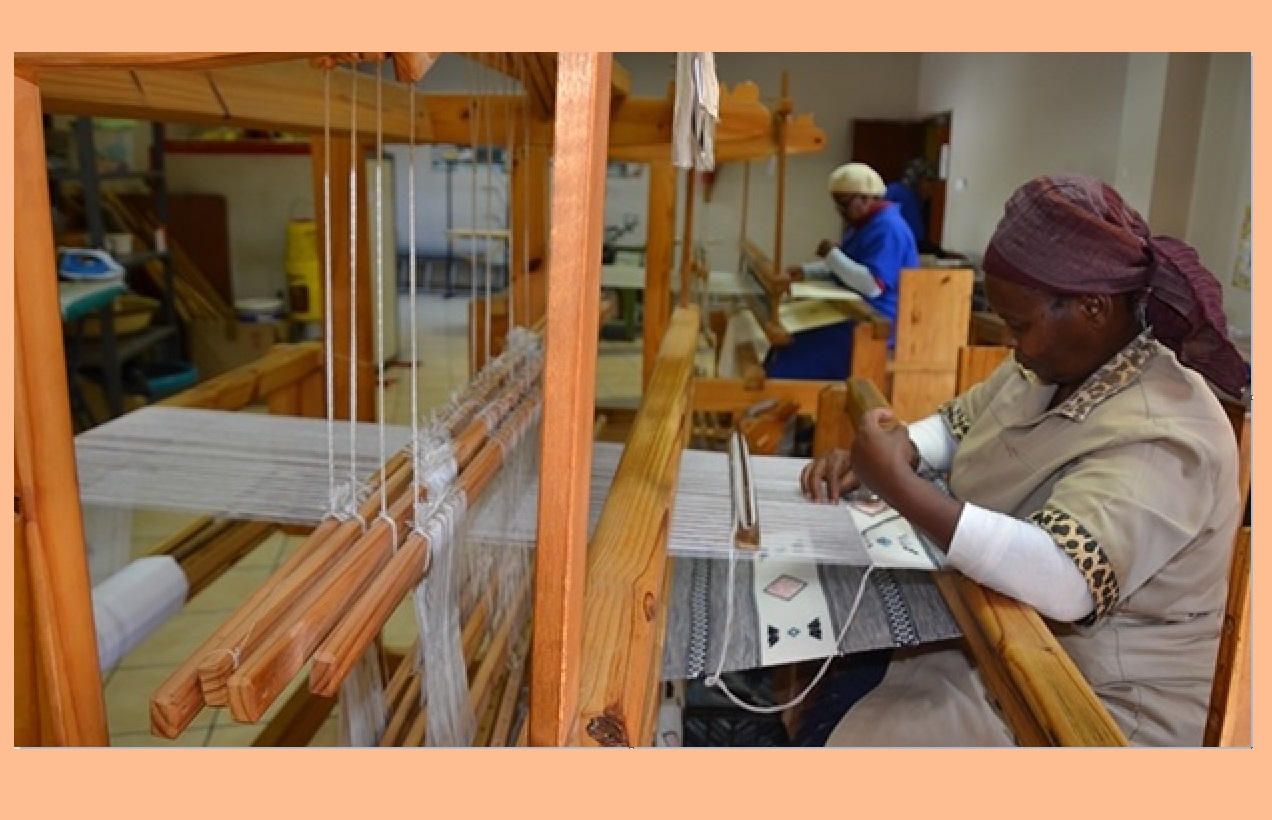
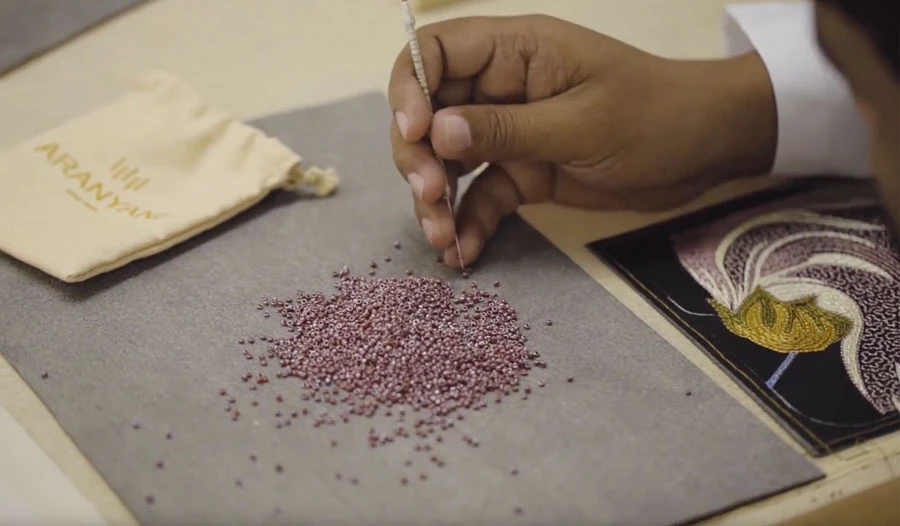
Aranyani artisan at work.
Standing By Their Community
Another way they are raising the bar is with the launch of the Aranyani Educational and Vocational Trust. The trust’s purpose is two-fold; to help Aranyani employees educate their children from primary through secondary school, as well as to help other children in the Bangalore neighborhood of the factory, secure funding for their public school education.
Education For Local Children
“Education should be a right not a privilege for every child. There is nothing more important to us than ensuring that the children in our community get a proper education,” says Haresh Mirpuri Founder of the Aranyani Educational and Vocational Trust.
Over the first two years, the Aranyani Education and Vocation Trust‘s funding will be fully funded by Aranyani. From September 2020 onward, 1% of the sales of the company will be contributed to the trust. During this first year, eight children of employees will be receiving funds for their public education. The goal for the second year is to fund the education for 14 of the employees’ children.
The founders are Mr. Haresh Mirpuri, Mrs. Dimple Mirpuri, Mr. Somshekhar Mirpuri, Ms. Pooja Sharma and Mr. Prashant Nair. The trust is founded in accordance with the SAI values that form the foundation of Aranyani. These values recognize service, awareness and inclusivity throughout the community.
Elon Musk is one step closer to connecting a computer to your brain.
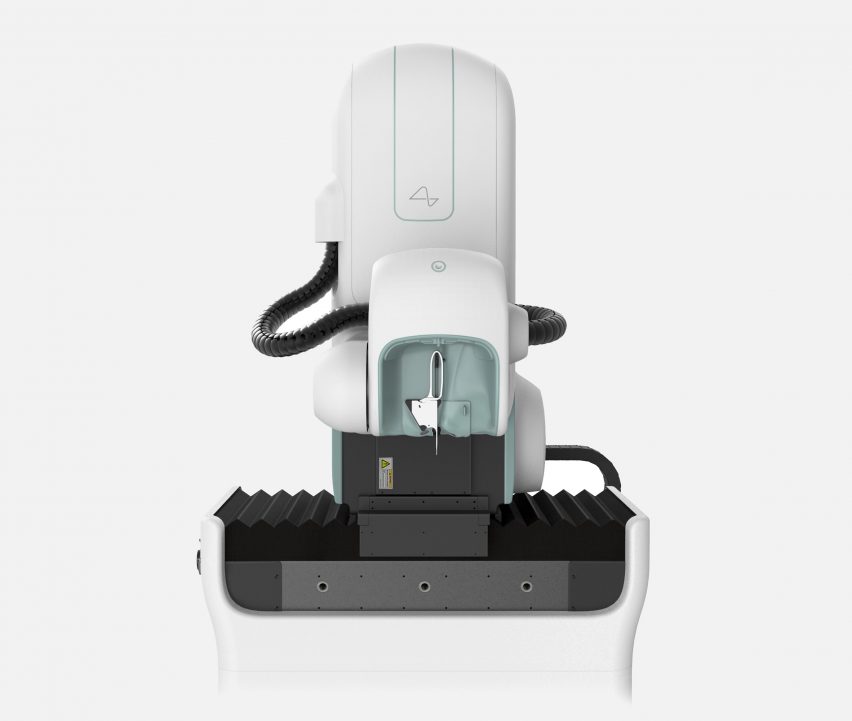
Neuralink is building a brain-machine interface as well as a little robot that installs the necessary wiring directly into your skull. Neuralink, the mysterious neuroscience company backed by Elon Musk, revealed more details about its plans to connect computers to human brains recently.
Musk explained that his off-the-radar neuroscience company Neuralink continues to push the boundaries of science with its latest model: the aim being not only for a smaller interface but for a vastly more powerful interlink.
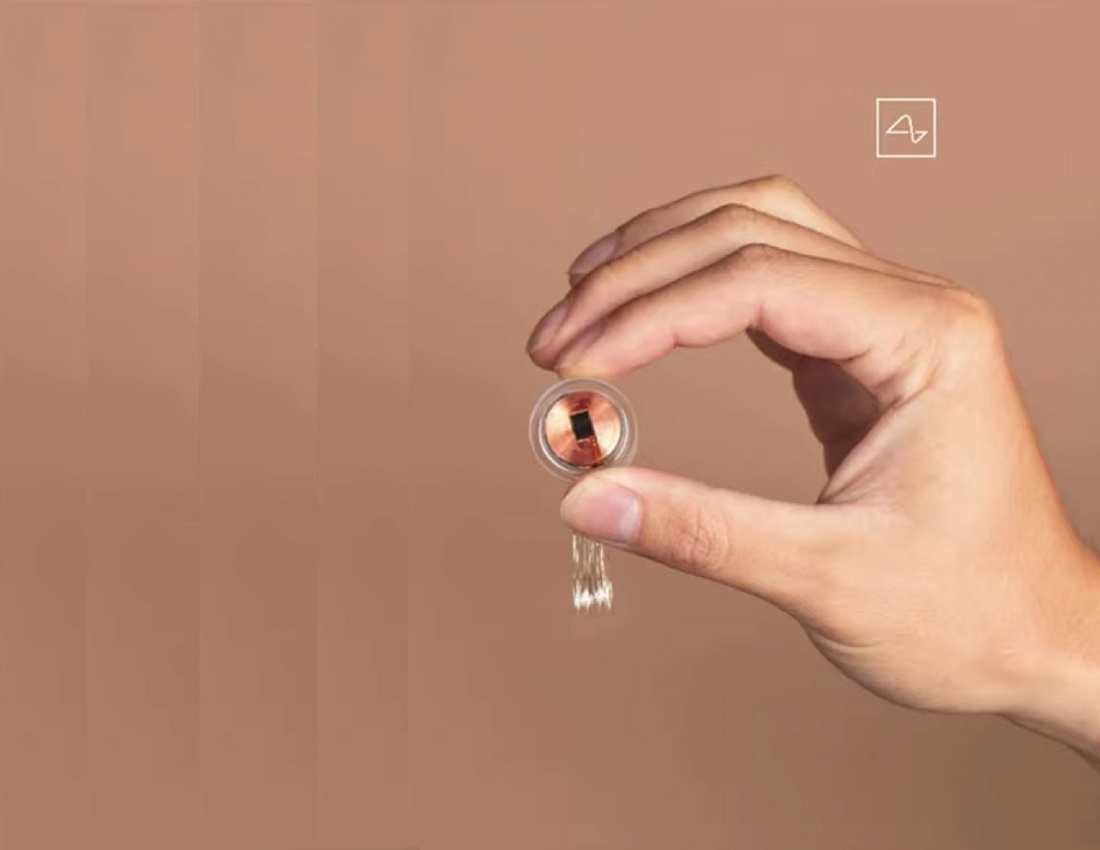
The size of the flexible threads, attached to a fingertip for scale. Image: Neuralink
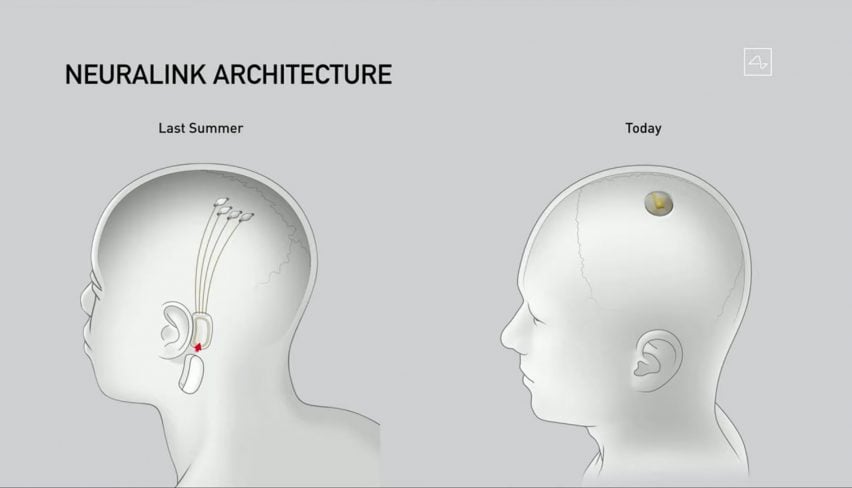
In 2019, using tiny wired pathways or neural links implanted directly into the head , a discrete behind the ear ‘controller’ received the wired pathway signals wirelessly. Computers running proprietary software are able to track the brain activity in real time. The latest version, just announced is a coin size device that sits on top of your head and is wired to go directly into your brain.
The chip in the last years’behind the ear’ receiver.
Unlike last years behind the ear model, the new model on the right is almost impossible to notice.
Cyber Frankensteins
This technology in a cruder form, has been used already to enable amputee control over prosthetic robotic limbs but the neural link was not hard wired or physically connected to the body.
Musk stressed the wide variety of spinal and neurological conditions — including seizures, paralysis, brain damage, and depression — that Neuralink technology could help treat. “These can all be solved with an implantable neural link,” said Musk. “The neurons are like wiring, and you kind of need an electronic thing to solve an electronic problem.”
Woke Studios designed Surgical Robot that inserts neural threads.
However, this new hard wired development changes things- not only in terms of faster and more accurate tracking of brain impulses but in the implications of what may be possible using hard wire. How about human pilots directly wired into the flight and combat systems of an advanced flying craft? Or a neural link human network where brain impulses can be transmitted and received between linked in people? Or a monkey that can control an advanced computer? Oh wait, that last one actually happened….