Pueblo Incident: Two Failed Submarine Missions ©

In response to the January 23, 1968 North Korea seizure of the USS Pueblo and crew, the Johnson Administration sent an armada of ships and up to nine subs, both nuclear-powered and diesel/electric, into the Sea of Japan. The operation was known as “Formation Star,” the largest build-up of U.S. naval forces around the Korean peninsula since the Korean War. This U.S. naval show-of-force was led by the USS Enterprise, the world’s first nuclear-powered aircraft carrier and the largest warship in the world at the time.

Less known are the stories of the two submarines sent in response to the Pueblo Incident—the USS Segundo and USS Swordfish—both of which failed to execute their missions as planned. In the case of the Segundo, her detection by the North Koreans off the coast of Wonsan, North Korea nearly led to the deaths of the entire crew. And while not life-threatening, the failed Swordfish mission led to a cascade of Cold War events including, according to one author, the sinking of a U.S. sub in retaliation for the sinking of a Soviet sub, which the Russians had falsely attributed to ramming by the USS Swordfish.

In August 2000, decades after the resolution of the Pueblo crisis, a small California newspaper interviewed Russ Noragon, a member of the USS Segundo crew. In what a staff writer at the Ventura County Star described as a “top-secret mission that might be the stuff of a Tom Clancy spy novel,” Noragon described how his sub had to submerge to the bottom of the sea off the coast of Wonsan, North Korea to avoid capture by the North Koreans. At the time, Noragon was a Machinists Mate (MM); a Chief before retirement.

In an article titled “Local Submariner Recalls Time on Bottom,” Noragon told how he and the other 79 men on board had barely escaped with their lives when the Segundo and crew nearly ran out of air. The incident occurred on the day the Pueblo was hijacked in international waters off the coast of North Korea. Noragon said his sub was “ordered to attempt a rescue of the 83 sailors aboard the intelligence vessel USS Pueblo…,” the planning of which began immediately, he said. According to the Segundo’s Chief of the Boat (COB), there were five special ops on board, but their role was unknown to the crew.

But instead of completing their mission undetected, Noragon said North Korean sonar-equipped patrol boats discovered his sub at periscope depth shortly after it arrived in the area. They then began bombarding the Segundo with depth charges, forcing it to the sea bottom with its engines and most of its equipment shut down. After a couple of days on the ocean floor, “It was miserable,” Noragon said. “We all got terrible headaches from the lack of oxygen.”

Noragon, who was assigned to the engine room, said he didn’t even know the depth of the water, only the tenseness of the situation. Meanwhile, the crew covered everything on board with a “special powder” (presumably lithium hydroxide) that absorbed the carbon dioxide in the air that built up in the close quarters. Some fresh air was pumped in from the submarine’s reserve tanks, but only enough to keep the air breathable.

To avoid detection, Noragon said the crew, who “spoke in whispers,” were ordered to stay in their bunks when not on watch, in what submariners call “silent running.” The seriousness of the situation became all too apparent when classified materials and equipment were readied for destruction. Noragon said he really got nervous when the radiomen brought out all of the Segundo’s cryptography gear and the weighted bags and hammers. At which point, Noragon said to himself, “Oh, this is not good.” When the commanding officer of the Segundo, Cdr. David A. Fudge, realized that rescuing the Pueblo crew was no longer possible, Noragon said his crewmates devised an escape plan.

With North Korean vessels at the surface lying in wait, Fudge had the crew eject hollow can targets, alternating between the sub’s bow and stern. As each target pinged the North Korean sonar, the Segundo moved a little. “We had all these bubbles down there,” Noragon recalls. “Pretty soon, there were so many targets, they [the North Koreans] didn’t know which was real and which were a decoy.” This allowed the Segundo and crew to finally escape. Now fifty years later, the ill-effects of this failed mission remain with the surviving members of the crew.

About ten days after the Pueblo seizure, the USS Swordfish raced to the Sea of Japan from her homeport at Pearl Harbor. The sub’s belated departure might have been to compensate for the withdrawal of Segundo from the area, or perhaps it was sent to help confront the Soviets who by then had sent an armada of their own ships and subs to confront Operation “Formation Star.”

Unfortunately, in early March, Swordfish struck a block of ice that had drifted south, bending her mast back at a 45-degree angle; so she departed the area for the U.S. Naval Base at Yokosuka for repairs, which required ten days. However, when the Japanese press noticed the arrival of a damaged submarine on the surface—a rare event—they requested an explanation from the U.S. Navy. To avoid disclosing the Swordfish’s secret mission—all submarines on special operations were classified—the Navy said the Swordfish had come to Yokosuka for some much-needed R&R. But what about the damage? As the Navy explained, the “damage was likely caused by hyoryubutsu,” meaning flotsam or wreckage, not ice.

When a photo of the Swordfish with a bent mast appeared in an article in a Japanese newspaper, the Russians smelled a rat. About a week earlier, K-129, their nuclear-armed Project 629A (NATO reporting name Golf II) diesel-electric powered submarine, sank without explanation. Had the Swordfish intentionally rammed a Soviet submarine, resulting in the death of all 98 men on board? When the Russians confronted the Americans, the Pentagon would only say that the Swordfish was about 2,000 miles from where their Soviet submarine sank—no mention was made of Swordfish’s secret Pueblo mission. According to Ed Offley, the author of “Scorpion Down: Sunk by the Soviets, Buried by the Pentagon,” the Soviets intentionally sank a U.S. submarine, the USS Scorpion, in retaliation for the Swordfish’s sinking of their submarine about two months earlier. For the Silo, Bill Streifer.

© bill.streifer@gmail.com

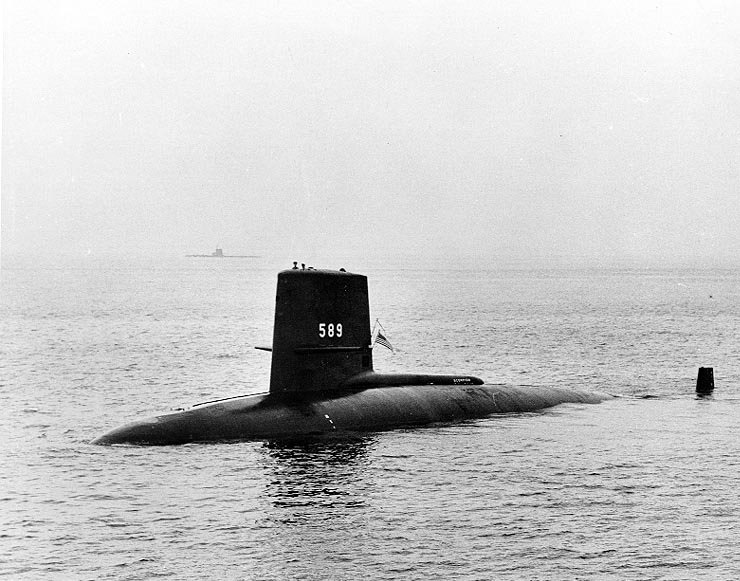
Featured image- USS Scorpion.

USA Asking Countries To Call Huawei Security Threat For Stealing Its Telecom Technology

In May 2019, the Trump administration  filed criminal charges against Huawei for stealing technology calling the firm an espionage threat. The U.S. is asking other countries to follow suit.

Lawrence Ward is a partner at the international law firm Dorsey & Whitney in international business focusing on U.S. national security law, CFIUS, and international trade compliance law and licensing. Of the news he says:

“In sanctioning Huawei , the Trump Administration took an escalated step in its trade war with China and in the race to take the technological lead with respect to 5G. That action means U.S. tech companies can no longer supply Huawei or any of its 70 affiliated entities worldwide once they are officially added to the Entity List.

Additionally, foreign companies can no longer supply U.S.-origin parts and components to those entities and certain foreign-made parts and components that incorporate U.S.-origin parts and components may not be able to be supplied either.

Although in recent years Huawei has only sourced between 10 and 20% of its parts and components from U.S. companies, there is speculation that these parts and components – chips, processors, and OS software – are critical to Huawei’s product offerings and business.

China has threatened retaliatory sanctions that could impact U.S. telecom and tech companies. Not only will these new sanctions present a compliance challenge to U.S. companies but the sanctions will also create unique business challenges as U.S. companies will need to more carefully screen overseas R&D partners to snuff out connections to Huawei,” Ward says. For the Silo, Laura Kelley.

Model Building Led To Canadian Titanic Society Founding

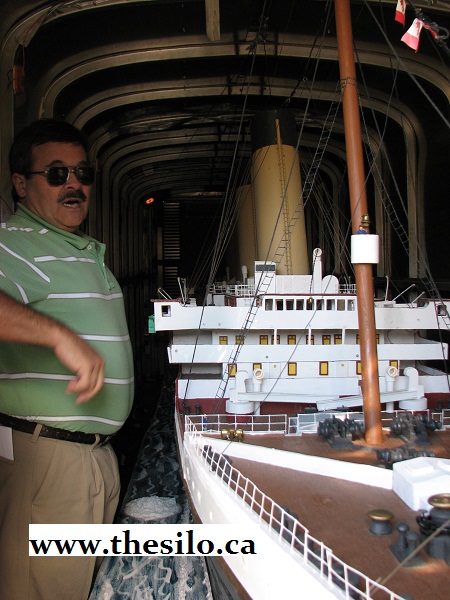
Detail of Norm’s Titanic model.

Norm Lewis was just twelve years old in 1958, a student at the old South Public School, when he saw the film A Night To Remember, a straight forward rendering of the Titanic disaster based on the book by Walter Lord. The film was a pivotal experience for Norm, and the beginning of a life-long fascination with this most infamous nautical event.

The Beginnings of a Canadian Society

In 1993 Norm attended a Boston conference of The Titanic Historical Society, meeting enthusiasts from all over the world. He began polling Canadian delegates on the idea of starting their own group and got an overwhelming response. In 1998, this former locksmith and transport driver became the President, Founder and CEO of the Canadian group. Radio stations from Calgary, Kitchener and Toronto all called for an interview, and within a week The Canadian Titanic Society was receiving more letters than Norm could carry.

Norm has collected a great deal of Titanic memorabilia over the years, including 110 underwater photographs taken by Ralph White, the Society’s official “Explorer in Residence” and 2nd Vice-President, who at the time of his death in 2008 had made more dives to the wreck than anyone else in the world. A pioneer in deep sea photography and cinematography, Ralph was the expedition leader for James Cameron’s 1997 epic movie. And you know the name of that one.

Norfolk County Ontario Connections

With the help of some volunteers, Norm also researched Norfolk County connections to the disaster, finding Titanic crew members, survivors and passengers from the rescue ship Carpathia living like Norm, in Simcoe Ontario though all have now passed away.

But perhaps most impressive, Norm Lewis is the sole architect of a twenty-foot scale model of R.M.S Titanic that has appeared in parades and exhibitions all over the province. Detailed, historically accurate, and made almost entirely out of wood, the model is the only one of its kind. It has working propellers, smoking funnels and a truly impressive digital recording of the actual titanic whistles. It took him eight years. You might call that obsession, but if you think of a twelve year old boy, rapt in fascination at one of the most spectacular and terrible stories in nautical history, you might just call it a labor of love. For the Silo, Alan Gibson.

Record Number Of Clean Beach Blue Flags Now Flying

Pinterest
More Canadian beaches and
marinas awarded Blue Flags

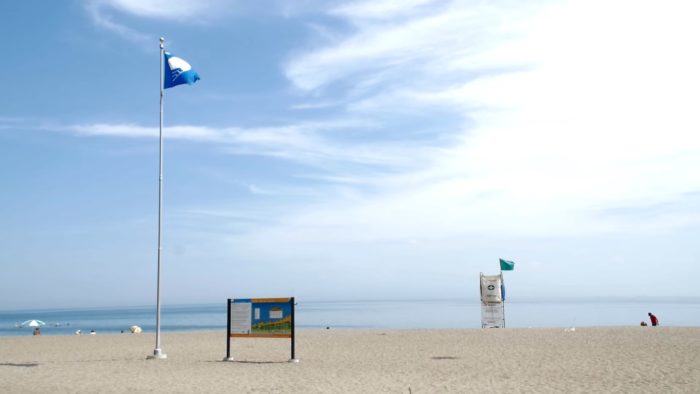
2018 is another record year for Canada’s waterfronts, 27 beaches and nine marinas have been awarded a coveted Blue Flag, including our very first coastal flag at beautiful Aboiteau Beach, NB. The Blue Flag is the internationally recognized symbol of environmental excellence for beaches and marinas. Read on to find the best waterside spots to spend your Victoria Day weekend.

Time for
the Government
to step up on
plastic waste
Only 11 per cent of Canada’s plastic waste is recycled.  Let that sink in for a minute.  This problem goes way beyond individual changes, we need the Federal Government to step up and take meaningful action before it’s too late. Sign the petition now to ask for a plastic free environment.
Banned chemicals found in products that babies chew, play and nap on A new study reveals that 86 per cent of tested products sold in Canada contain toxic chemicals, some of which are banned. Baby bibs, blankets and more were found to contain water and stain resistant chemicals linked to hormone disruption, and even cancer. Find out how you can take action.
Tell Canada that all high-carbon projects need an impact assessment What the frack?! The Canadian government is proposing to exempt fracking and in situ tar sands from the new federal environmental review process. We have until June 1st to fix this – send a letter now to tell the government that ALL high-carbon projects should get an impact assessment.

VisaNet Connects Two And A Half Billion Credit Cards

One of the many ways the Internet is driving the global economy is through digital payments, making it easy for consumers to buy just about anything from anywhere. VisaNet is the largest payment processing network in the world, connecting 2.4 billion credit cards at 36 million locations across 200 countries.

Canada Passes Bill Ending Captivity Of Whales & Dolphins

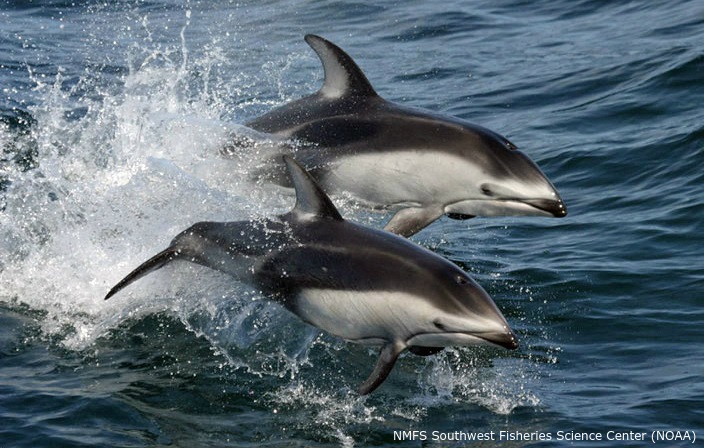
OTTAWA, CANADA (June, 2019) – In Defense of Animals applauds Canada’s passing of Bill S-203, the Ending the Captivity of Whales and Dolphins Act, which passed through the House of Commons in Ottawa, Canada on Monday, June 10, 2019.

First introduced by Senator Wilfrid Moore in 2015, the legislation will officially make it illegal to hold any cetacean in captivity, for reasons other than rehabilitation and scientific research. Breeding or trading reproductive materials of whales and dolphins will also be prohibited. Any breach of this ban carries fines of up to $200,000.

“We applaud Canada for passing this progressive legislation, since whales and dolphins suffer greatly in captivity, no matter the size of the tank,” said Marilyn Kroplick M.D., President of In Defense of Animals. “The overwhelming support for this ban demonstrates how many Canadians are opposed to the inherent cruelty of keeping and breeding cetaceans.”

Two facilities currently hold cetaceans captive within Canada.

Vancouver Aquarium holds one dolphin captive. The ‘beluga breeding mill’ was shamed in #9th place on In Defense of Animals’ Ten Worst Tanks list, and faced significant public pressure regarding its cruel activities from many concerned citizens including world-famous Dr. Jane Goodall and thousands of In Defense of Animals supporters. The Vancouver Parks Board passed a captive cetacean ban in 2017, prompting the Aquarium to announce its plans to phase out its cetacean exhibit.

https://www.facebook.com/LeParadisDeLimage/videos/365798150957404/

Marineland in Ontario is placed as #2 Worst Tank and continues to hold captive more than 50 belugas, five bottlenose dolphins, and Canada’s last captive orca. All of these animals will be grandfathered in, so the passing of the Ending the Captivity of Whale and Dolphin Act will not directly impact them. However, Marineland will be required to halt all captive breeding at its facility, ultimately putting an end to the cetacean captivity industry throughout Canada.

Over 10,000 members of In Defense of Animals contacted Canadian decision-makers to support this historic bill, demonstrating significant public support for this important animal protection legislation.

Keeping dolphins and whales in captivity, forcing them to perform degrading tricks and being placed on perpetual display, is archaic and not in line with scientific discoveries about their significant cognitive and emotional sophistication.

The time has come for the unethical captive animal industry to dissolve–and Canada has taken steps to ensure this will happen. We urge Marineland to abide by the spirit of the Ending the Captivity of Whales and Dolphins Act, and the wishes of the Canadian people who stand by this landmark legislation, and release the dolphins and whales it holds captive to seaside sanctuaries.
For the Silo, Laura Bridgeman/IDA In Defense of Animals.

Rising Cost Of European Airline Snacks And Drinks

German budget carrier Eurowings will now charge economy passengers for snacks and drinks on board its flights, the travel platform fromAtoB conducted research into the costs of food and drinks on different airlines.

• Ryanair charges more than other airlines for soft drinks and chocolate

• Ryanair and EasyJet menus relatively expensive

• German airlines offer the cheapest beer and best overall value for money

• Eurowings joins the majority of low-cost airlines, which now charge for snacks and beverages

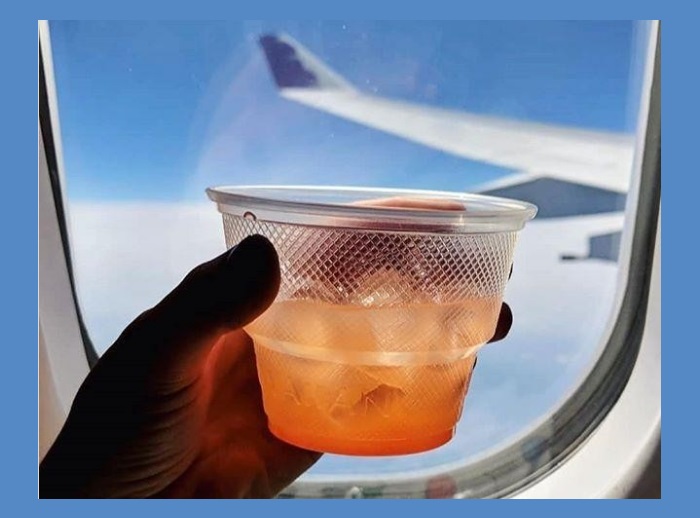
Berlin, June 2019. None of us are keen to fork out for snacks and drinks on budget airlines, but since we are forced to dispose of liquids before going through security, we are often left with no choice. Travel platform fromAtoB compared the current prices for drinks and snacks in ten European low-cost airlines to see which are the worst offenders.

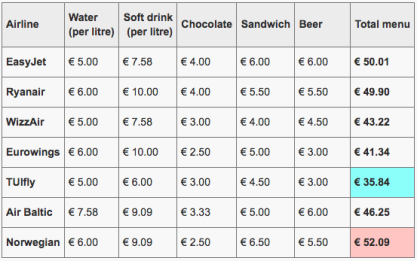
Water is often the first thing passengers need, and the price of this basic necessity can vary widely. EasyJet, TUIfly, and Wizzair all charge €2.50 for a 500ml bottle of water, while Ryanair and Pegasus charge €3. [One euro at time of publishing = $1.50 Canadian dollar]

Soft drinks also cost anywhere between €2.50 and €3 for varying sizes. The price per litre varies significantly between airlines. While TUIfly charges €6, Ryanair and Eurowings ask for €10. 

German airlines offer the cheapest beer

As is fitting for a country known for its beer, flights to and from Germany offer the best value, with a 330ml can costing just €3 with Eurowings and TUIfly. EasyJet makes passengers dig a little deeper into their pockets, charging twice as much, while a beer on a Ryanair flight will set passengers back €5.50.

Food for thought

The cost of a sandwich also varies significantly. The East European carrier Wizzair offers the cheapest options for just €4, while Eurowings passengers can expect to pay €5 for a chicken roll. Both Norwegian and Spanish airline Vueling charge €6.50 for a club sandwich.

TUIfly: best value overall

Almost all airlines offer a combined menu that often includes a sandwich, drink, and snack. A Wizzair meal deal costs between €6 and €8.50, while a meal alone with Norwegian costs €8.

TUIfly offers the best overall value for money, with all items on the menu totalling €35.84, compared the Norwegian menu which totals €52.09, and Easyjet at €50.         

The full data can be seen here.  

Comparing costs of European airline snacks and drinks

For the Silo, Carmen Cracknell.

Supplemental- The 10 Best US Airlines Ranked by Free Snacks https://mashable.com/article/best-airline-free-snacks/

Autonomous Vehicles Now Able To Stop Safely

Mendon, Utah – Autonomous Solutions, Inc. (ASI) has received Phase I funding from the U.S. Army Combat Capabilities Development Command Ground Vehicles Systems Center (formerly TARDEC) to improve the way heavy vehicles stop while operating autonomously. 

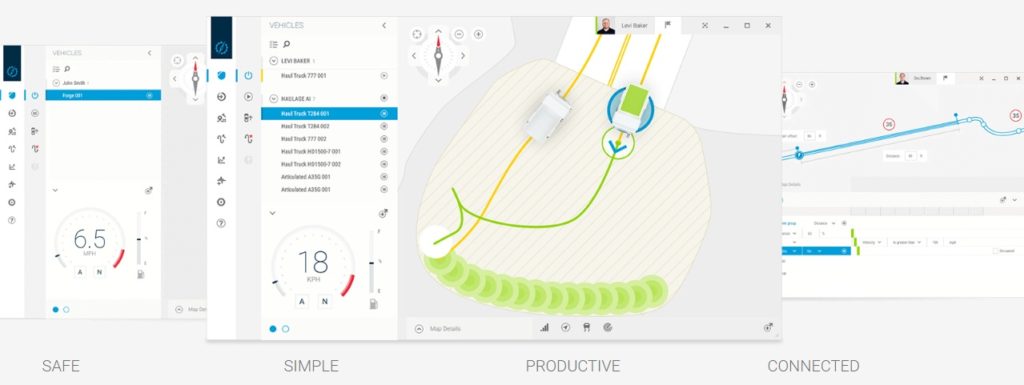
“Bringing large autonomous vehicles to a safe stop in varying environments can be challenging,” said Jeff Ferrin, CTO of ASI. “Having additional funding from the Army to further develop this technology will help us make autonomous vehicles safer, which is always our number-one priority.” 

The objective of the Army in awarding this grant is to develop and demonstrate a system that can be operated remotely and considers both the dynamics of the vehicle, as well as the environment, to optimally and safely bring a large ground vehicle to a complete stop despite the terrain.

“ASI has been working on terrain characterization with the Army since 2014,” said Ferrin. “This project will use similar technology to make sure the vehicle is aware of the terrain around it. This model of the terrain will then be used by the vehicle to ensure a safer stop is completed.”

A significant focus of this intelligent urgent stop initiative is machine learning. This improved technology will continuously monitor the interaction between a vehicle and its surroundings and update the internal model that is used to properly halt the vehicle. This process will allow the vehicle to learn and adapt as the terrain and environment change.

As the advanced solution is developed, tested and proven, it can be used by ASI’s autonomous vehicles across all the company’s multiple industries, including agriculture, automotive, construction haulage, mining, facility robotics and more.

According to Ferrin, “The system can be used with any drive-by-wire vehicle. It will interface with the brakes and steering to bring the vehicle to a safe, controlled stop.”

Details of the Phase I stage awarded to ASI include development of a concept design using commercial-off-the-shelf (COTS) sensors to perform safe deceleration of a large ground vehicle. A concept design report and performance analysis report are required deliverables before Phase II can be awarded. For the Silo, Brandon Taylor.

About ASI

Autonomous Solutions, Inc. (ASI) is a world leader in industrial vehicle automation. ASI serves clients across the world in the mining, agriculture, automotive, government, and manufacturing industries with remote control, teleoperation, and fully automated solutions from its headquarters and 100-acre proving ground in northern Utah.

Luxury Villas Offering Guests Oil Paintings of Themselves

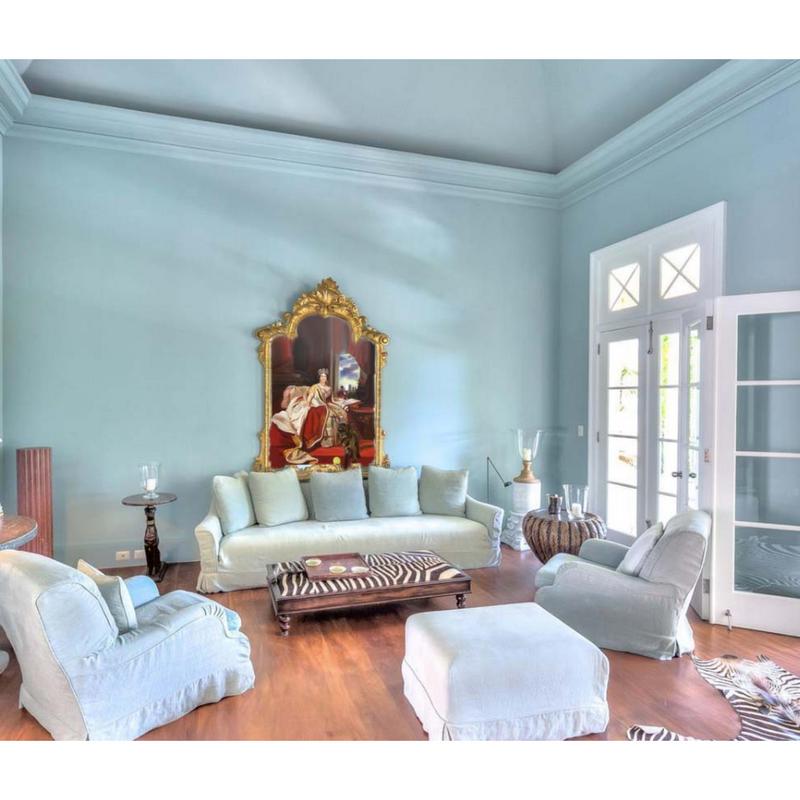
Nobilified and Villa de Campo have partnered up to offer their customers a unique art and hospitality experience. A selection of luxurious villas offered by Villa de Campo for rent come with hand-painted portraits of each guest, which are hung throughout the Villa during their stay.

Located in La Romana, Dominican Republic; Casa de Campo is no stranger to luxury. This prestigious Resort spreads over 7,000 acres, featuring three award-winning golf courses, a clay pigeon shooting center, an equestrian center, tennis courts, pools, and restaurants, as well as 1,700 private villas populating the resort, some of which are available for rent. Villa de Campo specializes in giving customers prompt and personalized service for vacation rentals in the resort. Whether it’s understanding your needs and recommending homes to stay in or helping you book a personal chef or schedule your activities, Villa de Campo is stepping up the meaning of the saying “the customer is king”.

With this partnership with Nobilified, Villa de Campo adds an extra touch of personalization to one’s holiday—and we aren’t talking about personal chefs or yacht rentals. Nobilified, which creates hand-painted oil portraits of its customers as royalty will be using its inspiration to paint memories of holidays for guests to keep. The paintings will be inspired by the nature of the trip, whether a romantic couple retreat, a golf trip with boys, or a family holiday; Nobilified’s classically trained artists will paint the guests prior to their arrival, according a certain theme, and have the pieces hung throughout the villa during their stay. Guest then get to take the pieces home after their stay.

The Nobilified special aims capture memories in the world of art.  Chris Jensen, the founder of Nobilified, says, “Our aim is to capture one’s memories in art. We want guests of the villas to remember all the small things that made their holiday one to remember. When they get home, they will hang the piece, and each time they look at the piece, they will remember their holiday. We think that is special.”

Villa de Campo

Villa de Campo offers a selection of luxury villas in which to spend your next activity-filled holiday in the Dominican Republic. Spread over 7000 acres, the Casa de Campo resort is home to over 1700 private villas of which around 100 are available for rent on villadecampo.com.

Punta Aguila #57 is true Casa de Campo villa. The beautiful five bedroom villa was built right in the middle of a beautiful bamboo forest, palms and Embauba trees in a five thousand square meter homesite.

Booking a Villa has become the perfect way to spend a holiday whether with family, friends or as a couple. Our selection of luxury villas are located throughout the entire resort and cater to various tastes and needs. Villa de Campo also includes additional amenities such as complimentary golf carts, private chefs and a holiday concierge to help you book and plan your dream stay. Casa de Campo possesses a variety of restaurants, private beach clubs, a Marina, 3 golf courses, a tennis center, an equestrian center, a spa, and much more.

Nobilified

Nobilified is dedicated to revolutionizing the art world. Nobilified believes that while not everyone may have the artistic skills required to paint a masterpiece, everyone possesses an intuitively creative mind. At Nobilified, customer dreams and fantasies are transformed into actual works of art, which can proudly displayed in any home, dorm, office, cabin, yacht, or even a swanky Chateau. Everyone has an artistic side, and everyone sees the world in their own unique way. Nobilified wants this diversity to make an imprint on the course of art history by immortalizing customers’ wildest dreams.

In addition to providing high quality oil paintings, Nobilified wants to change the way people perceive art, by making it fun and accessible, thus giving customers the opportunity to share or gift a unique custom made oil painting with friends and family. No longer will having an oil painting of oneself hanging above the chimney be out-of-reach. This privilege used to be reserved for the upper tiers of society, but, now, it is shared with everyone, even if they are not knighted. A unique, hand-painted, oil-on-canvas work of art can add a touch of grandeur to any living quarters.

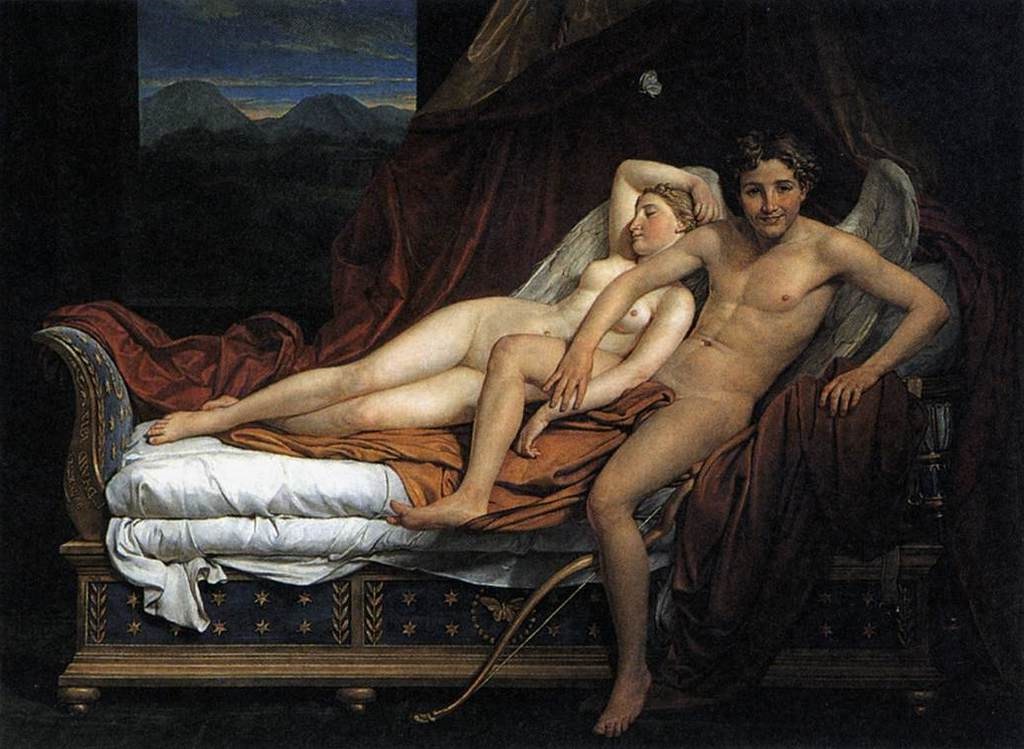
Featured image: Cupid and Psyche by Jacques Louis David

How Award Winning Math Professor Inspires Students And Family

RAPID CITY, SD- Professor Travis Kowalski starts most days with a squiggle.

For the past eight years, the South Dakota School of Mines & Technology math professor has carried on a family tradition started by his father, who would ask the young Travis to make a squiggle on a piece of paper. From that squiggle, his father would create a drawing. Often, Kowalski’s father would give him a squiggle and the two would sit together drawing.

Image may contain: 1 person, eyeglasses

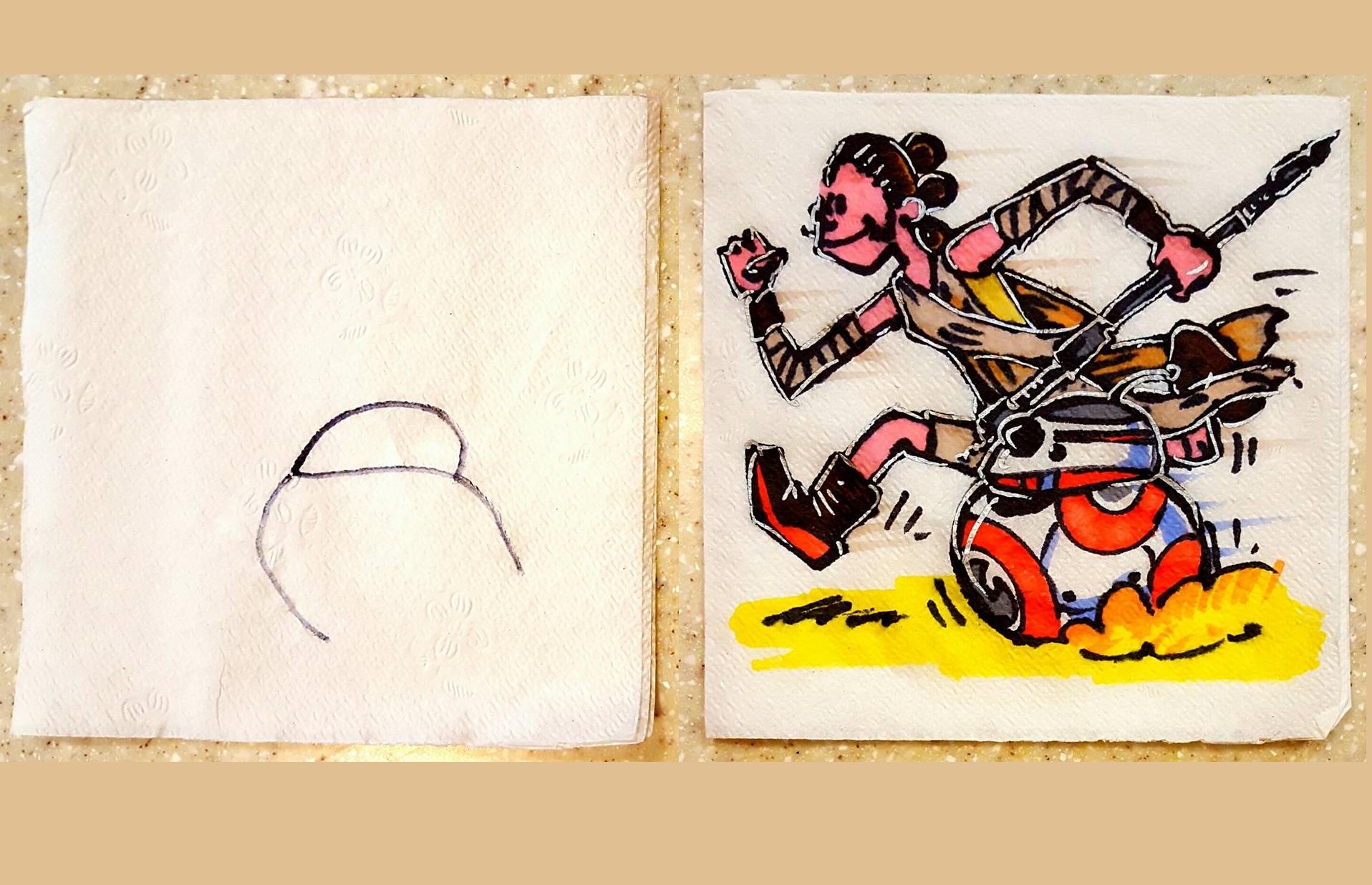
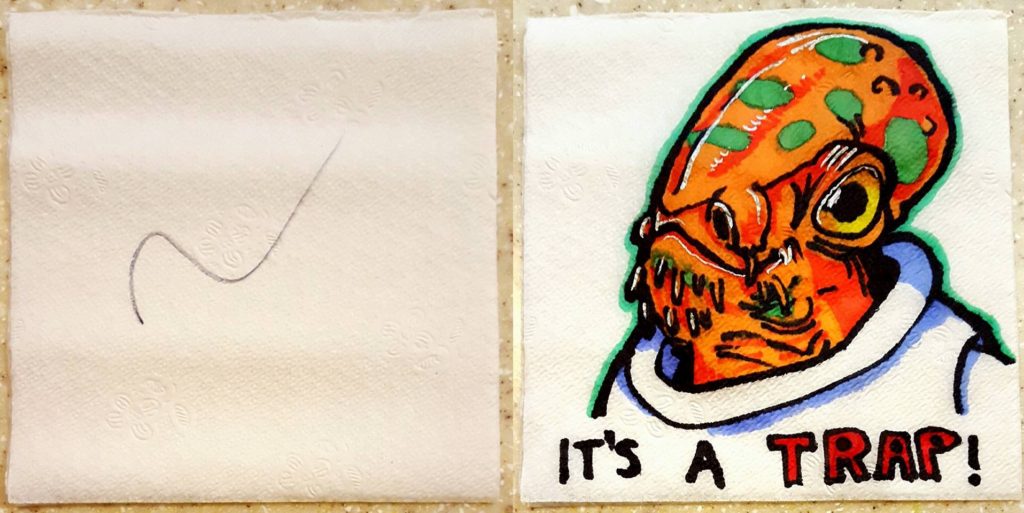
Nowadays, Kowalski uses a napkin and markers in his “squiggle game,” and the recipients are his two daughters – Liliana, 13, and Maia, 9. Kowalski says he started the tradition when Liliana was entering kindergarten, hoping the lunch napkin art would make her transition to school easier.

Each evening or early in the morning, Kowalski encouraged his oldest to draw a squiggle on a napkin. The next morning, he turned the squiggle into colorful drawings and slipped it into her lunch box. Once Maia arrived, Kowalski began doing the same for her. “She expected it,” he says.

It’s not exactly what most people expect from a math professor at an engineering and science university. But Kowalski, a Ph.D. who currently serves as the interim head of the Department of Mathematics at SD Mines, says math and art co-mingle perfectly.

His drawings range from a buffalo against a bright pink sky (drawn May 6, 2019) to an astronaut in space (Jan. 24, 2019), to Kermit the Frog (Dec. 7, 2018), to the composer Bach at his harpsichord (May 14, 2018). Kowalski posts both the starting squiggle and the finished product on his Facebook and Instagram pages.

The two social media platforms are filled with vibrant, colorful drawings often accompanied by clever taglines – a bear holding up a paw and asking, “I would like some salmon, please” and a praying mantis playing a video game under the title, “Playing Mantis.”

Known on campus for his colorful Hawaiian shirts and clever math-related ties, Kowalski is the professor whose office walls are covered with unique visual art. He’s the kind of professor who sneaks his labradoodle Cauchy, named after French mathematician Augustin-Louis Cauchy, into class the last day of the semester to play out an obscure (to the general audience at least) mathematics joke. He’s the math teacher who so passionately talks about the subject that even the least math-minded people can’t help but get excited.

Image may contain: 3 people

And he’s good at what he does in the classroom. So good that Kowalski was recently awarded the 2019 Burton W. Jones Award by the Mathematical Association of America. The award recognizes post-secondary level math instructors nationally who “foster student excitement about mathematics.”

“It’s cool and humbling to be part of that group,” he admits.

Donald Teets, a Ph.D. professor in the SD Mines math department, is a previous winner of the award and the person who nominated Kowalski. In his nomination, Teets writes, “He is, (in this writer’s opinion) the best teacher in a department devoted to teaching excellence.”

This is hardly the first recognition for Kowalski, Teets says. In 2014, Kowalski was awarded the Benard Ennenga Award, which honors one SD Mines faculty member each year for teaching excellence; and in 2017, he won the George Polya Award from the Math Association of America for his College Mathematics Journal article, “The Sine of a Single Degree.”

“His lecture based on ‘The Sine of a Single Degree’ is as good a mathematics lecture as you will ever see!” Teets wrote in his nomination.

Teets says the thing that makes Kowalski so good at this job is his enthusiasm, noting that students consistently rate him on classroom surveys as “the best math teacher I’ve ever had.” He’s “innovative,” constantly striving to engage his students and utilize technology into his teaching, Teets says. “Like Superman wears the big ‘S’ on his chest, Dr. Kowalski deserves a big ‘I’ for Innovator.”

As for Kowalski’s artistic talents, Teets is equally as effusive. “As a person who can barely draw recognizable stick figures, I am in awe of Travis’s artistic abilities.  It’s a great complement to his extraordinary skills in mathematics!” he says.

Kowalski grew up in California, raised by a draftsman father and a “crafty” stepmother. “My dad drew all of the time,” Kowalski says. “That was the home I grew up in. You drew.”

In college at University of California, Riverside, Kowalski majored in art. To finish off an academic requirement, he enrolled in Calculus 2. A good student in high school, he had already taken an advanced placement Calculus 1 class. He was class valedictorian, but “I worked hard at it. I was not a prodigy,” he says with a laugh. 

He still remembers the Riverside professor’s name who taught his first college math course – Albert Stralka. He “taught in a way I hadn’t seen before,” Kowalski says. “There were ideas behind the math.”

When he got an A in that class, the professor convinced him to take Calculus 3.

Next, the professor suggested he take topology, which is the study of geometric properties and spatial relations which are unaffected by the change of shape or size of figures. “It’s the geometry of shapes under change,” Kolwaski says. “That class blew my mind.”

The rest is history – after topology Kolwaski changed his major and embraced a love of mathematics. But he never left his art behind, and it’s important to understand that the two subjects go hand-in-hand, he says. “Half of mathematicians do what they do because they think it’s pretty,” he says of the geometry of math.  

As a math professor at SD Mines, Kolwaski admits that “I still like to sit and draw things, but I don’t have as much time anymore,” he says.

That’s where his morning squiggle drawings come in. 

Each one of Kowalski’s squiggles for his daughters takes about 15 to 30 minutes from start to finish. “The first part is to see something,” he says. He spins the napkin around, looking at the squiggle until he “sees” the picture that will emerge.

Mia tends to draw extremely elaborate squiggles, sometimes lobbying for a specific outcome – for instance a unicorn. Other times, his daughters will bring home requests from friends for specific drawings.

Liliana has saved all her napkins over the years, storing them in a plastic container in her room. That made it a little easier for Kowalski when she came to him recently to say, “What with my school schedule being so busy and my lunch break so short and closet so full of the ones you’ve already made me – which I love, thank you – I just don’t think you need to make me lunch napkins anymore.” Kowalski playfully posted her words on social media with an image from Boromir’s death from “Fellowship of the Rings” with arrows sticking from his heart.

Kowalski says his older daughter relented, most likely after an intervention from his wife, and is continuing to play the squiggle game. He’s glad, hoping that both of his daughters will always remember the squiggle game and maybe even carry it on with their own families one day.

“It’s definitely a great memory about my dad,” he says. “Hopefully it will be the same for them.”  For the Silo, Lynn Taylor Rick.

Texas NRCS Accepting Conservation Applications From Rice Producers

TEMPLE, Texas – Rice producers wanting to enhance current conservation efforts are encouraged to apply for a special Conservation Stewardship Program (CSP) sign-up.  Led by the USA Rice-Ducks Unlimited Rice Stewardship Partnership, the Gulf Coast Water and Wetlands Regional Conservation Partnership Program (RCPP) and the Lower Colorado River Authority (LCRA), the RCPP provide an opportunity to enhance conservation on rice lands in 12 Texas counties. Applications for RCPP-CSP are accepted on a continuous basis, but to be considered for this funding period applications must be received by June 28, 2019.

The special sign-ups assists landowners and rice producers who voluntarily implement conservation and management practices that aim to provide waterfowl habitat on rice production lands.  Nutrient management and integrated pest management (IPM) to address water quality concerns are also a priority.  Although enhancements are limited, irrigation efficiencies are also a focus.   

“NRCS is pleased to partner with USA Rice and Ducks Unlimited and others in these RCPP efforts.  said State Conservationist Salvador Salinas. “RCPP-CSP provides an opportunity for rice producers to build their businesses while implementing conservation practices that help ensure the sustainability of their operations and improve the environment for Texas’ citizens.”

These special RCPP CSP sign-ups are targeted for rice production acreage in Brazoria, Calhoun, Chambers, Colorado, Fort Bend, Jackson, Jefferson, Lavaca, Liberty, Matagorda, Waller and Wharton counties. These projects will provide a special CSP allotment of approximately 110,000 acres in 2019 to Texas rice growers, 80,000 acres under Gulf Coast Water and Wildlife RCPP and 30,000 acres under the LCRA RCPP respectively.

“NRCS has updated the program to help producers better evaluate their conservation options and the benefits to their operations and natural resources,” said Rice Stewardship Coordinator Kyle Soileau. “Partnership staff can help producers see up front why they are or are not meeting stewardship thresholds and allow them to pick practices and enhancements that work for their conservation objectives. These tools also enable producers to see potential payment scenarios for conservation early in the process.”

For additional information producers interested in CSP or other conservation planning, technical and financial assistance can contact their local USDA service center or visit www.tx.nrcs.usda.gov.