Tag Archives: U.S. Census Bureau

Canada Joins World’s Impending Population Crisis

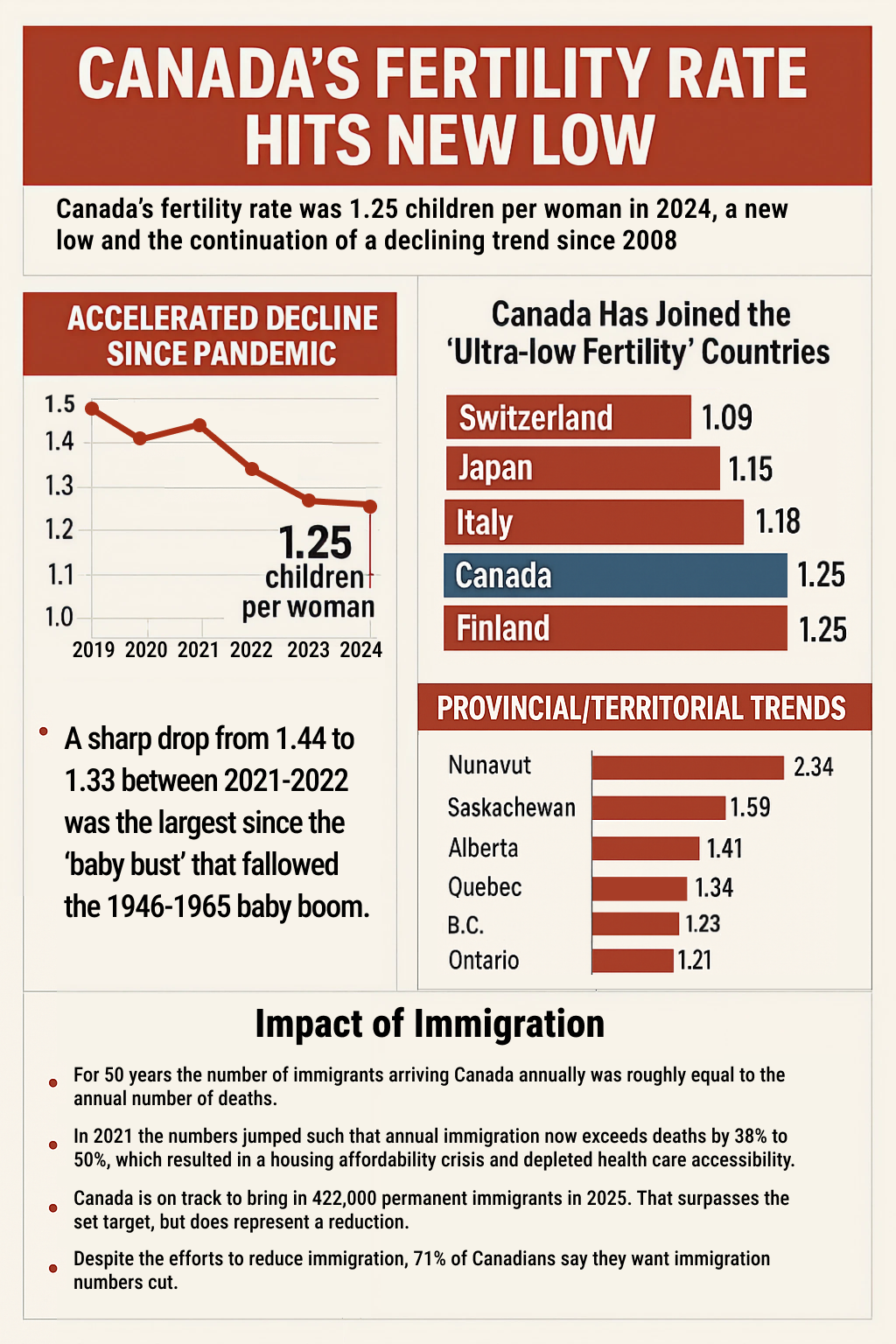
Canada’s fertility rate has just hit a record low.
In case you missed it- the world is quietly entering a population crisis. Global fertility rates have plunged to their lowest level in 60 years, raising profound questions about how societies will sustain themselves in the decades ahead.
In Canada, births have fallen to just 1.25 children per woman, the lowest in our history. Behind the numbers are shifting values, economic pressures, and growing uncertainty about the future.
This week, let’s examine the global decline in birth rates and explore what’s driving it—and what it means for the economy, family, and national identity.
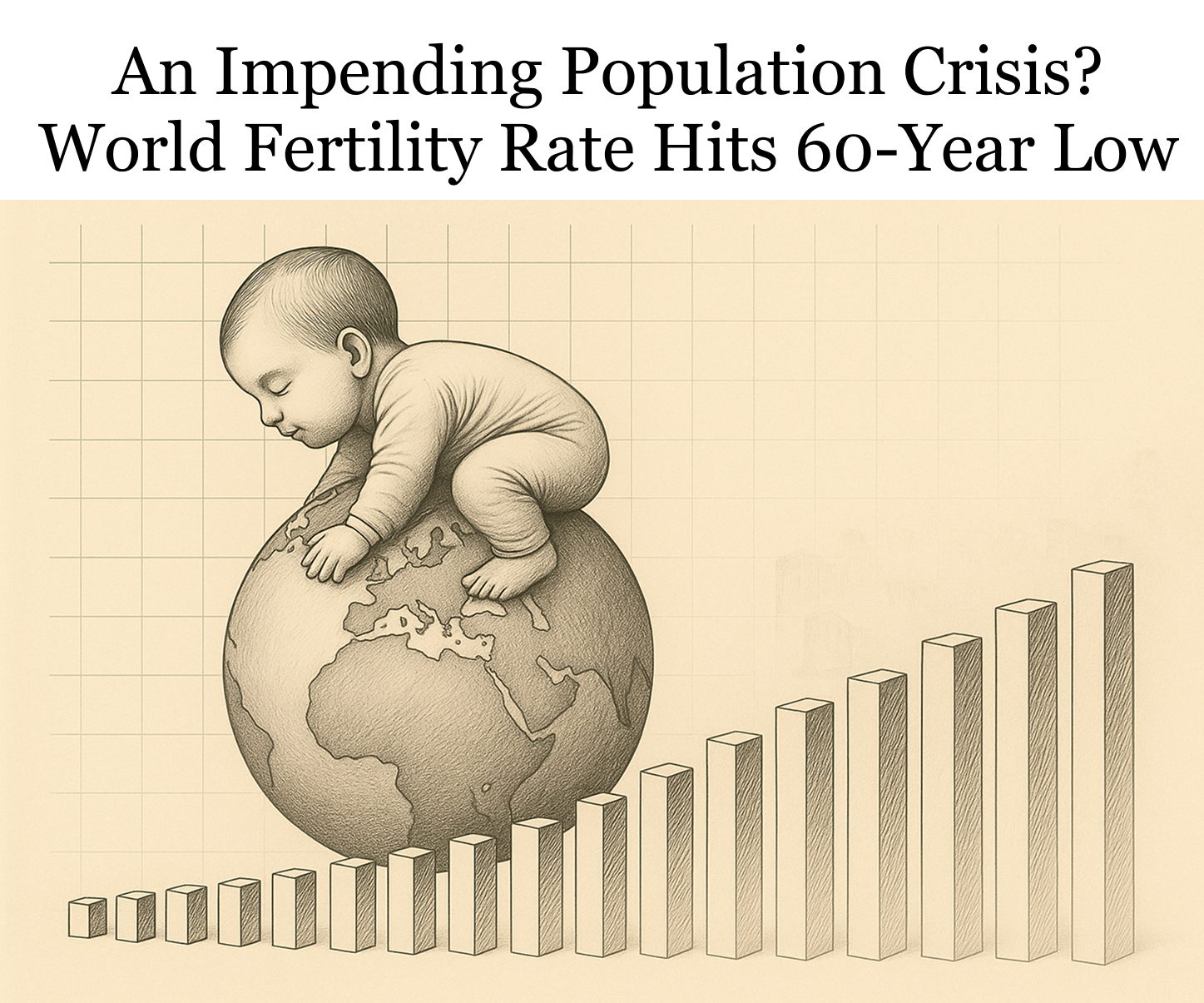
An Impending Population Crisis? World Fertility Rate Hits 60-Year Low
For the Silo, By Sylvia Xu / Epoch Times.

Fertility rates have plummeted worldwide over the past six decades, leading experts to warn of dire consequences as the downward trend continues.
Continued low fertility rates will cause “a gradual implosion of the world’s economy as the population ages and dies,” Steven Mosher, president of the Population Research Institute.
Mosher is an expert on population control, demography, and China.”
This will not occur overnight, of course, but once it is well underway, it will be difficult, if not impossible, to reverse course,” he said.
The fertility rate is the average number of children born to a woman in her lifetime; the birth rate is the number of live births per 1,000 people in a population over a given period.
Macroeconomist Jesús Fernández-Villaverde called low fertility rates “the true economic challenge of our time” in a February report for the American Enterprise Institute.
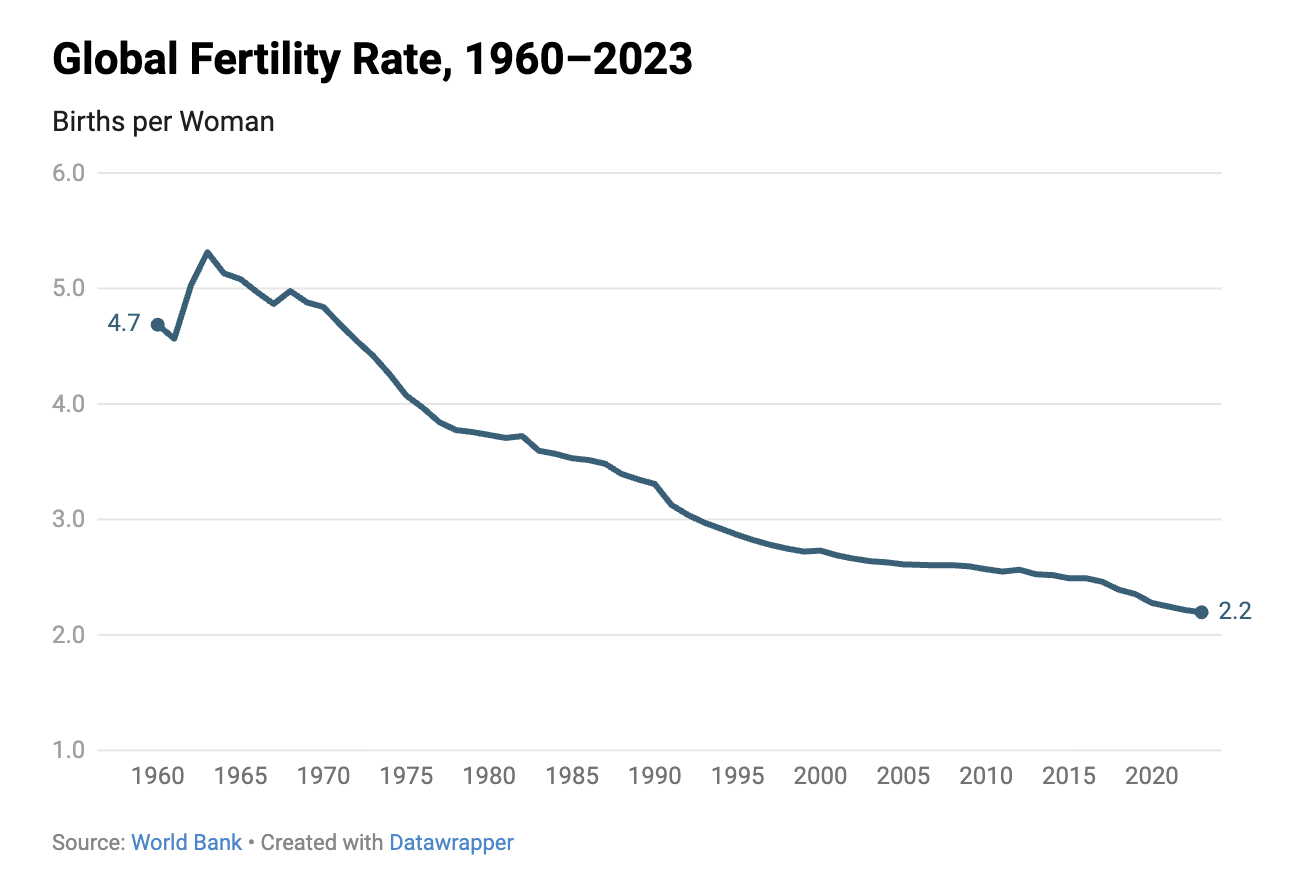
In 1960, the fertility rate was between four and five. By 2023, that number had halved to 2.2, approaching 2.1, the level at which a population replaces itself from one generation to the next.In July, the U.S. Census Bureau projected that the world’s population will reach 8.1 billion this year. Experts say that although the figure has grown from 3 billion in 1960, the number to watch is the pace of population growth.”
The rate of growth peaked decades ago in the 1960s and has been declining since and is projected to continue declining,” the Census Bureau stated.
Fernández-Villaverde warned that although the sagging rate of growth may not have immediate consequences, in less than 50 years, declining fertility will affect the world economy. Countries with low or negative birth rates will contend with a shrinking workforce and the ballooning costs associated with an aging population.
Global Fertility Rates
Only about 4 percent of the world’s population is in countries with high fertility rates—more than five children per woman—and all of those nations are in Africa, according to the Census Bureau. Even in those countries, fertility rates are generally lower than they once were.
The Census Bureau reported that nearly three-quarters of the world’s population is in countries where fertility rates are at or below the replacement level.
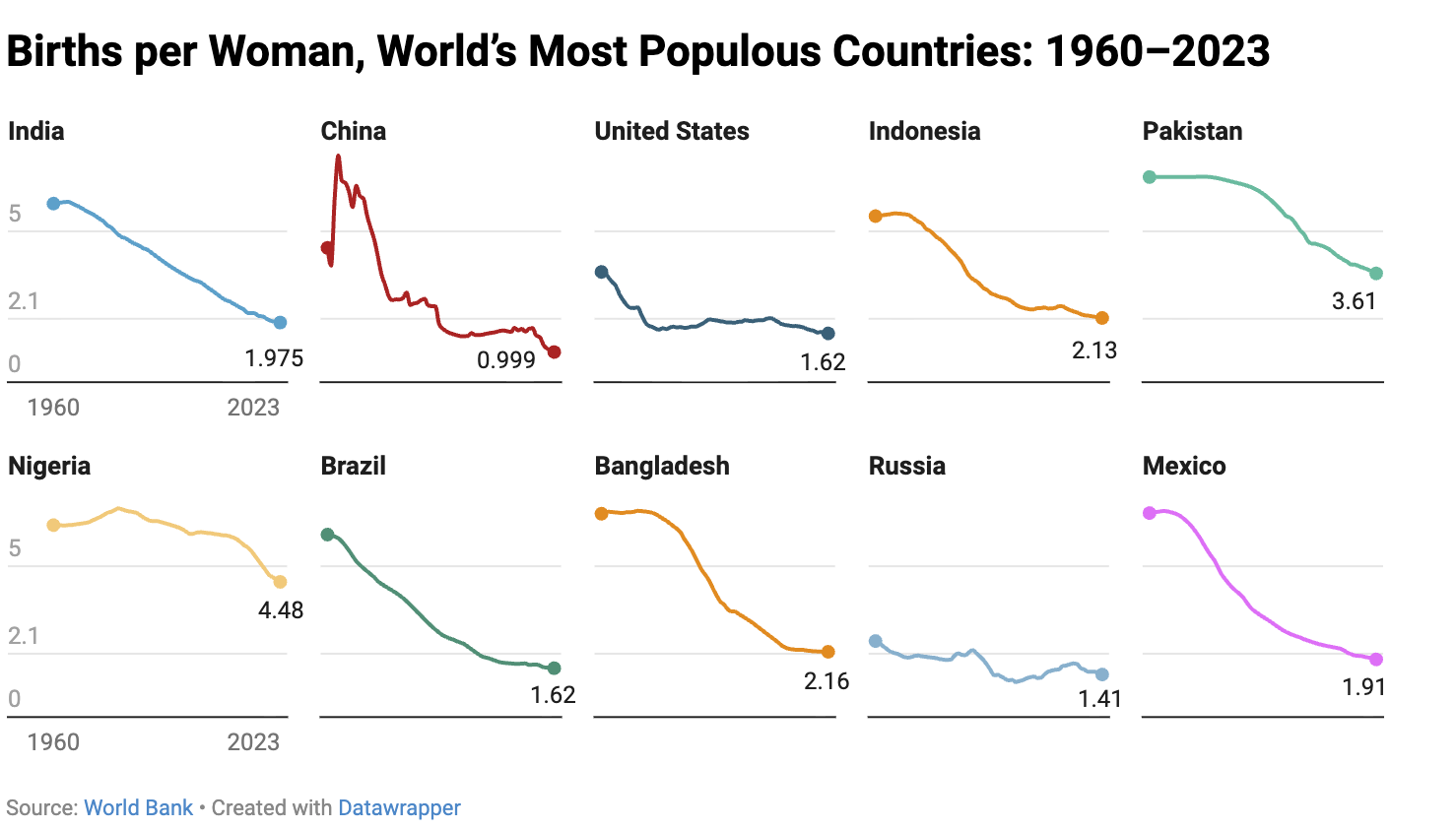
The fertility rate in India, the world’s most populous country, has steadily declined over the past six decades. In June, the U.N. Population Fund reported that India’s fertility rate stood at 1.9 children per woman, down from five or six children in 1960. In Canada, fertility rate fell to 1.25, well below the replacement level of approximately 2.1 children per woman needed to maintain a stable population.
In 1990, China’s fertility rate was 2.51, despite its one-child policy. By 2023, it had dropped to less than one birth per woman, according to the U.N.’s population division.In the United States, fertility has undergone a persistent decline. It fell below the replacement level in 1972, and in 2023, it reached 1.62—a historic low.Asian and European countries have the lowest fertility rates in the world, and South Korea (0.72), Singapore (0.97), Ukraine (0.977), and China (0.999) all have rates below one.  (Read More →)
Key Data & FactsSource: Statistics Canada

Diversity is Elusive in Rare Disease Research

Only 10% of rare diseases have an FDA-approved therapy. This sobering statistic highlights why research is so imperative for patients with rare diseases. Clinical trials can be a crucial opportunity to access life-saving treatments.

However, African-American, African-Canadian and Latino patients with rare diseases face significant underrepresentation in clinical trials. This lack of representation results in drugs being developed that aren’t proven safe or effective across different populations.

A 2018 research carried out by the U.S. Census Bureau stated that out of the 12% Black or African American population across the U.S., only 2.2% had participated in clinical trials for rare diseases. Sickle cell disease is one rare disease that predominantly affects the African American community.

India has close to 50-100 million people affected by rare diseases or disorders, with almost 80% of these rare condition patients being children. As per the U.S. Census Bureau, Indian Americans constitute 1.2% of the U.S. population, which translates to 4.5 million, as of 2021, and out of the 5.8% total Asian population across the U.S., their clinical trials participation in 2018 was only 1%.

When certain groups are underrepresented, the universal right to health is jeopardized, and the economic burden of public health care rises. Inequities in clinical research participation impede applications in drug efficacy, toxicity, therapeutic indices, and other areas. Furthermore, it has the potential to raise healthcare costs.

February is “Rare Disease Month”, while February 28th is “Rare Disease Day”, and 2023 is the 40th anniversary of “The Orphan Drug Act”—a law that was passed in the United States in 1983 to facilitate the development of orphan drugs—drugs for rare diseases.

Dr. Rajasimha, Founder and Executive Chairman of IndoUSrare says“Rare Disease Month allows the rare disease community to come together and make themselves heard.”

The future of rare disease research and treatment still requires enhanced detection techniques, dissemination of understanding concerning optimal care, and research to prevent, treat, and cure disease, and IndoUSrare collaborates with researchers in the U.S. and other western countries with their counterparts in the Indian subcontinent to engage and include the large and diverse populations of Indians in India and globally.

SUPER BOWL TO GENERATE $1 BILLION IN LEGAL BETS

(LAS VEGAS) — Bettors could place $1 billion usd in wagers on Super Bowl LVI at legal online and retail sportsbooks across the country, according to projections by PlayUSA, which provides news and analysis of the U.S. gaming industry. If sportsbooks reach those estimates it would roughly double last year’s estimated Super Bowl handle of more than $500 million, a product of the continued proliferation of legal sports betting.

NFL Bets, 2022 Pro Bowl NFL Betting Lines | Vegas Super Bowl Odds NFL

“It would have seemed impossible just a few years ago to reach such heights, but with the expansion of sports betting over the last year it is inevitable that legal wagering will soar.”

https://www.thesilo.ca/wp-content/uploads/2022/02/Super-Bowl-fact-sheet-2022.pdf

The Super Bowl is the most-wagered-on single sporting event in the U.S. In 2021, the American Gaming Association estimated that Americans & North Americans bet $4.3 billion usd on Super Bowl LV, both legally and illegally. PlayUSA estimates that more than $500 million usd was wagered at legal online or retail sportsbooks for last year’s game between the Kansas City Chiefs and the Tampa Bay Buccaneers, still a small chunk of the more than $50 billion usd in legal wagers placed across the country throughout 2021.

When the Los Angeles Rams and Cincinnati Bengals meet for the Super Bowl on Feb. 13, sports betting in some form will be legal in 30 states and Washington D.C. Those jurisdictions represent more than 166.9 million people, according to the U.S. Census Bureau estimates for 2021. By contrast, 120 million people lived in 21 legal sports betting jurisdictions for last year’s Super Bowl.

For this year’s game:

  • Sports betting is legal in at least some form in Arizona, Arkansas, Colorado, Connecticut, Delaware, Illinois, Indiana, Iowa, Louisiana, Maryland, Michigan, Mississippi, Montana, Nevada, New Hampshire, New Jersey, New Mexico, New York, North Carolina, North Dakota, Oregon, Pennsylvania, Rhode Island, South Dakota, Tennessee, Virginia, Washington, Washington D.C., West Virginia, Wisconsin, and Wyoming.
  • New York, which was limited to retail sportsbooks last year, launched online betting in early January. New York is already on pace to shatter the U.S. record for monthly handle, which New Jersey set in October with $1.3 billion usd in bets.
  • Arizona, Connecticut, Louisiana, Maryland, North Carolina, North Dakota, South Dakota, Washington, Wisconsin, and Wyoming did not offer any form of legal sports betting for last year’s Super Bowl.
  • Even with legal sports betting in 30 states and Washington, D.C., no team from a state with legal sportsbooks has ever played in the Super Bowl. That will continue this year as Ohio awaits launch sometime over the next year and California lawmakers debate legalization.

“The sports betting landscape has changed dramatically since last year’s game,” said Eric Ramsey, data analyst for PlayUSA. “More than half of all Americans now live in a legal jurisdiction, and even well-established markets such as New Jersey and Nevada have grown significantly over the last year as mobile betting gains in popularity.”

PlayUSA projects that Nevada, which was the second-largest market in 2021 and historically the top Super Bowl market, will produce the largest Super Bowl handle with $175 million usd. New York could generate $160 million usd. If those estimates come to fruition, that would be more betting volume than every legal sportsbook in the U.S. combined to tally for the 2019 game.

New Jersey ($130 million usd), Illinois ($75 million usd), Pennsylvania ($70 million usd), Arizona ($55 million usd), Michigan ($45 million usd), Indiana ($40 million usd), Colorado ($35 million usd) Louisiana ($35 million usd), Virginia ($35 million usd), and Tennessee ($30 million usd) will follow Nevada and New York, according to PlayUSA estimates.

“Americans & North Americans have become increasingly comfortable with online betting in general and the less conventional bets it facilitates, such as in-game wagering,” Ramsey said. “This should really help boost Super Bowl betting, which for years has enticed bettors with fun prop bets and other unconventional wagers. The big difference this year is those types of bets are easier than ever to make in more places than ever before.” For The Silo, Zack Hall.