Tag Archives: social science

Navigating the Great Wealth Transfer: What It Means for Families

The landscape of North American wealth is on the brink of a historic shift. Current research estimates that between $75 trillion usd and $125 trillion usd ($102.5 trillion cad and $170.8 trillion cad) will change hands over the next two decades in American alone as assets pass from the baby boomer generation to younger heirs. This unprecedented movement of capital, now widely referred to as the Great Wealth Transfer, is set to redefine family finances, generational relationships, and the future of estate planning across North America.

While the transfer represents an extraordinary opportunity for Millennials and Gen Xers, it also carries significant legal and emotional risks. Attorney Don Ford, a Board-Certified expert in Estate Planning and Probate Law with Ford + Bergner LLP, warns that without thoughtful preparation, the same wealth intended to provide security can just as easily fracture families and ignite costly disputes.

A Scale Never Seen Before


“The scale of this transfer is unlike anything we have seen before,” explains Ford, Managing Partner at Ford + Bergner LLP—a Texas-based boutique firm specializing in estate planning, probate, and guardianship. “And when large sums of money move quickly through families that are unprepared, conflict becomes far more likely.”

Why This Is Happening Now

Several forces have converged to accelerate this moment.

Americans are living longer, allowing assets to compound over extended periods. Many individuals entering their later years benefited from decades of sustained market growth, dramatically increasing the value of retirement accounts, real estate holdings, and privately owned businesses. Together, longevity and market performance have produced estates that are often far larger and more complex than families anticipate.

Yet wealth has grown faster than planning.

“Many estate plans are static while wealth is dynamic,” Ford notes. “People create documents years earlier and assume they will still work, even though their family structure, asset values, and risks have changed.”

Why Planning Is an Act of Care

Estate planning is often misunderstood as a tax exercise or paperwork requirement. In reality, it functions as a roadmap that protects families, preserves intent, and prevents conflict.

Effective planning allows families to address challenges before they escalate. Trust structures can provide what Ford describes as “training wheels” for heirs who are not yet equipped to manage significant portfolios. Clear language can reduce ambiguity in blended families, ensuring spouses and children from prior marriages are treated according to the individual’s wishes rather than default statutes.

Business continuity is another frequent flashpoint. Without an agreed-upon succession plan, profitable family enterprises can be forced into liquidation simply because heirs cannot agree on control or direction.

“Planning is not about control from the grave,” Ford says. “It is about clarity while you are still here.”

The Rising Tide of Probate Litigation

As wealth transfers accelerate, probate courts in America are bracing for an increase in estate-related litigation and similar situations are set to occur in Canada and Mexico. According to Ford, several recurring issues are already driving disputes.

Cognitive decline and undue influence are among the most common triggers. As older adults reach their eighties and nineties, dementia and other impairments become more prevalent. Late-life changes to wills or trusts are frequently challenged by heirs who believe a loved one was pressured or lacked capacity.

Blended family dynamics also play a major role. Modern families often include second marriages, stepchildren, and competing expectations. When individuals die without updated documents, intestacy laws can produce outcomes no one intended, fueling resentment and lawsuits.

Ambiguous or outdated estate plans remain another risk factor. DIY documents and boilerplate language often fail under scrutiny, leaving courts to interpret vague instructions. Fiduciary disputes are equally common when executors or trustees are accused of mismanagement, lack of transparency, or favoritism.

Family-owned businesses present some of the most complex conflicts. When multiple heirs disagree over leadership, equity, or control, litigation can become the only path forward, sometimes ending in forced sale.

“The tragedy is that most of these disputes are preventable,” Ford emphasizes. “They arise not from greed, but from silence, assumptions, and documents that were never meant to handle modern family realities.”

The Bottom Line

The Great Wealth Transfer is not merely a financial event. It is a social and legal reckoning that will test families’ communication, planning, and preparedness. As trillions of dollars move between generations, proactive estate planning has become less about wealth preservation and more about relationship preservation.

For families willing to plan with intention, the transfer can strengthen legacies rather than divide them. For those who do not, the cost may be far higher than they ever expected.

For the Silo, Merilee Kern.
Quality Over Quantity: How Canada’s Immigration System Can Catch Up


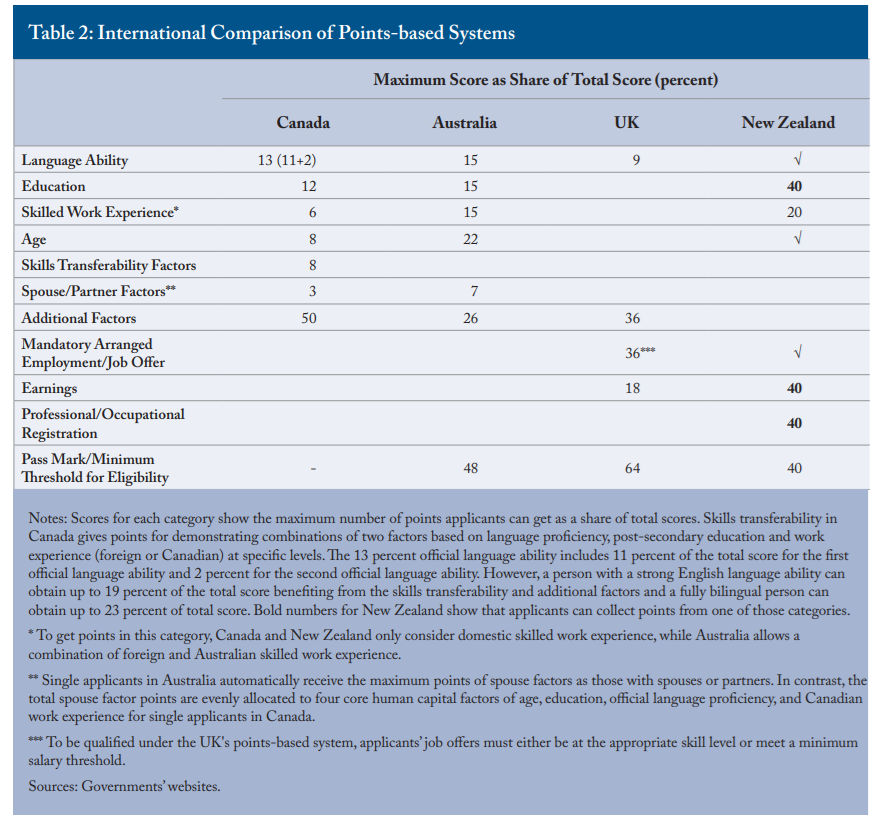
Canada’s immigration point system is designed to select skilled immigrants who have the potential to contribute to the country’s economic growth and meet its evolving skills needs. However, Canada faces challenges in fully leveraging increased immigration levels to enhance the well-being of Canadians due to weaknesses in capital investment and a quantity/quality trade-off in selecting economic immigrants. Furthermore, recent reforms may work at cross purposes to this goal. They include category-based selection that targets low-paying occupations, which can discourage capital investment, and a recent surge in the number of temporary residents in low-wage jobs that also may have adverse effects on the quality of potential candidates for permanent residency.
 

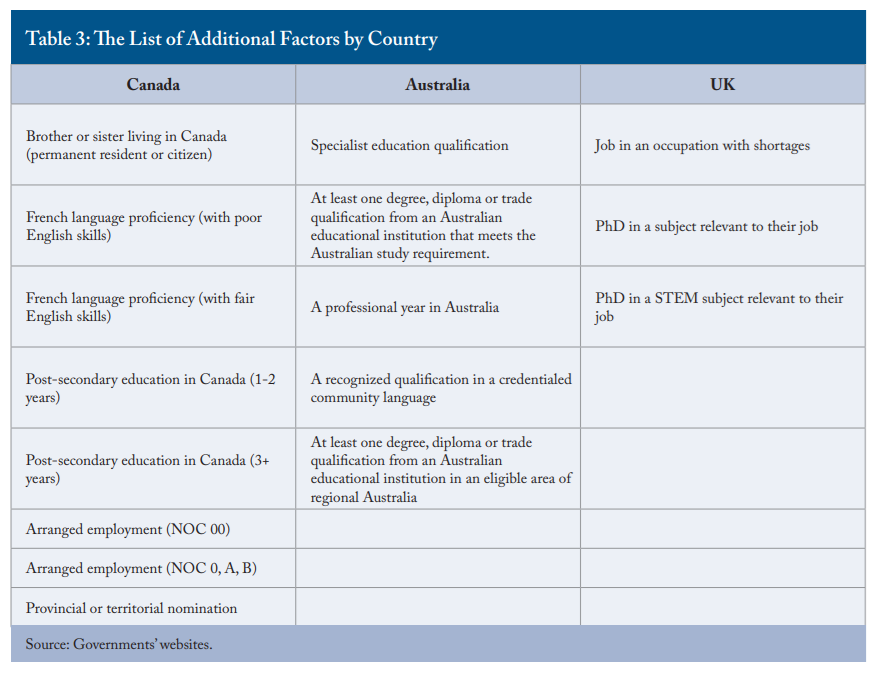
This study compares skilled immigration selection policy in Canada, Australia, New Zealand, and the UK, with the objective of identifying key areas for improvement in Canadian policy. The skilled immigration point systems in Canada and Australia share some similarities, with both prioritizing a two-step immigration process, placing an emphasis on English proficiency and workforce age, and requiring pre-migration credential and English proficiency assessments. However, the two countries differ mainly in their strictness of criteria and their emphasis on occupational and language skills. Furthermore, Australia has shown more agility and creativity in its skilled migration reforms. Reforms in the UK and New Zealand have also put them ahead in the competition for talent.
 

Based on this international comparison, the author makes recommendations for improvement. They include: 1) Setting a Minimum Points Threshold for Eligibility. As it is, Canada imposes no minimum points threshold for eligibility in its Express Entry points-based system. 2) Considering a Pre-admission Earnings Factor. Studies show the importance of pre-immigration earnings in predicting immigrants’ outcomes after arrival. The UK, New Zealand and Australia include this factor. 3) Boosting Standards under the Language Requirement. Official language skills are as important in predicting the initial earnings of principal applicants admitted under Canada’s Express Entry system as pre-immigration Canadian work experience, and even more important than educational level and age at the time of immigration. 4) Raising Business Immigration Numbers. Canada faces the challenge of weak business investment but is failing to select business immigrants with entrepreneurial skills, putting it at a disadvantage compared to competitors like Australia and the UK.

The author thanks Tingting Zhang, Charles DeLand, Rosalie Wyonch, Charles Beach, Jodi Kasten, Mikal Skuterud and anonymous reviewers for comments on an earlier draft. The author retains responsibility for any errors and the views expressed.

Read the full report here.

For the Silo, Parisa Mahboubi/C.D. Howe Institute.

Parisa Mahboubi

Parisa Mahboubi

Parisa Mahboubi is a Senior Policy Analyst and leads the C.D. Howe Institute’s human capital policy program. Her research interest focuses on social policy with a concentration on demographic, skills, education, and labour market concerns. In addition to authoring research studies, she regularly writes a column for the Globe and Mail’s business section.

The Godlike Power Of Money

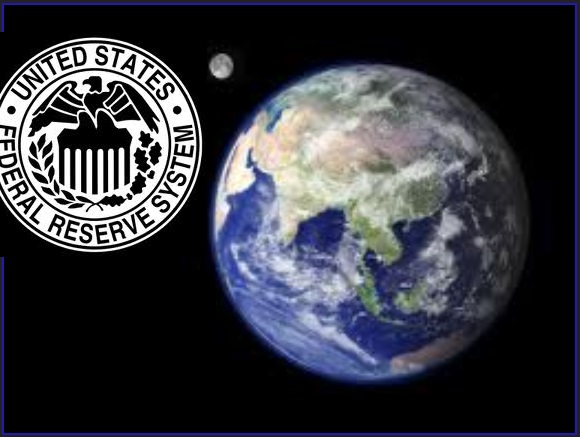
God-like powers? The United States Federal Reserve essentially drives the entire world economy. image: imagesci.com

    God-like powers? The United States Federal Reserve essentially drives the entire world economy.

Money runs the world’s economy. It determines who rules nations, and it rules lives.

These are the three most significant properties attributed to the power of money, in addition to its basic function as a medium of exchange. But we can attribute several less significant properties, although similarly important, to the power of money.  They include:

1. Money separates people of the same nation into classes, divisions and groups.

2. The pursuit of money and wealth can turn man against man, son against father, family against family and nation against nation.

3. Money’s devaluation of natural values makes Nature the object of buying and selling.

4. The ability of man to perform labor by placing a price on his head allows one man, or group of men, to enslave another individual or group of individuals.

5. The ability of money to corrupt tends to change man’s personality from social being to self-oriented individual.

6. The power of money drives people to produce services in order to pursue everyday life. This inflicts stress upon people, leading to a spiritual breakdown manifested in acts of crime and mental illnesses.

Bitcoin- electronic currency invented in the 21st century- poised to revolutionize what money is and can be? It's value in US dollars has tripled in one year. CP
Bitcoin- electronic currency invented in the 21st century- poised to revolutionize what money is and can be? It’s value in US dollars in 2013 tripled in one year. CP

Amazingly enough, not many people in modern society are aware of the source of the power or money, including businessmen such as bankers, money market brokers and financiers, who consider themselves money experts.

Perhaps one of the reasons the origin of money’s power is one of the least discussed subjects among academics is the non-existence of prehistoric written records. The second reason is historians’ failure to unveil when and how currency converted from an ordinary medium of exchange into the dominant value of society by expanding its usage to include rendered labor compensation. Also, when and what societal changes elevated the abstract value of currency into an absolute ruling power over humans, including all natural values and treasuries of the Earth.

The blank page left by the theory of early civilization about the invention and rise of money invited independent thinkers to develop their own theories.

The records indicate that this enigma is hidden in the formation of the first state and government. Reforms enacted almost 4,000 years ago led to the breakup of the original communion society, creating conditions that enabled different classes of people to pursue independent ways of life.

From above... 2. The pursuit of money and wealth can turn man against man, son against father, family against family and nation against nation.
From above…
2. The pursuit of money and wealth can turn man against man, son against father, family against family and nation against nation.

Regulating all natural values and treasuries, including human labor, through money, one individual was able to declare himself the king, and establish absolute ruling power over society by entrapping people within guarded wall.

This historic event advanced the abstract value of money from the ordinary medium of exchange to an absolute ruling power unparalleled in the real world. Some ancient spiritual leaders expressed a serious concern about the prudence of the proposed reforms.  They warned that the enactment of these reforms would void the God-given dominant role of natural values within society at the expense of the abstract value of money. This would subsequently interrupt the relationship between man and nature, and change the original role of man upon the Earth from the guardian of nature to the biggest annihilator of nature.

But the followers of the philosophical doctrine of man’s uniqueness compared to other species dismissed such warnings. Promoting man’s spiritual virtue of freedom to make his own norms and laws instead of following the law of nature, they were delighted by the proposed reforms.

Ever since, the corruption, exploitation of one man over another and class warfare became the norms of the New World Order leadership.

The comparatively recent freedom movements that led to the French and Bolshevik revolutions failed to liberate people from the chains of money’s absolute power. Despite that, the idea of freedom lives on in people’s minds, inspiring liberators to wonder why the formation of a communist state failed to succeed.

The liberators failed to realize that the institution of state and government is the foundation that, by providing the conditions for money currency to function, imposes absolute ruling power over society. This means that the institution of state and government is not a suitable foundation for the establishment of a free, classless society.

Is the only way to liberate society from the absolute power of money a return to the system of farming communities and declaring abolition of money currency, which would ultimately lead to dismantling the institutions of state and government?

However, taking into account that man is biologically a mortal relative entity incapable of resisting temptation offered by the absolute power of money, the prospect for the abolition of money is not practically realistic. For the Silo, Michael Vladimirovich Trisho.

Featured image: imagesci.com

Michael Vladimirovich Trisho is the author of “How Did Humanity Become Enslaved to Money?”  Born in Panchevo, currently part of Serbia, Trisho’s tendency to inquire about the mysteries of the world using reason and logic were evident at an early age. All his life, he wondered how humankind became entrapped by money and why people believe a money-based society is best. After immigrating to the United States, he continued to examine early history in search of answers about the monetary system and its relation to the institution of state. Examining archeological fossils and excavations focused only on a narrow part of early human experience and did not reveal important events that played a critical role in society’s development. Michael created his own reconstruction of events, the product of which is his debut novel.

Supplemental- How does the U.S. Federal Reserve drive the world economy? http://www.cnbc.com/id/100430256

The 20th Century spread of Bolshevik power-  http://schools.cbe.ab.ca/b628/social/russia/post_revolution_history.html

Plastic Surgeon Says There Are Three Ways Your Face Can Lie

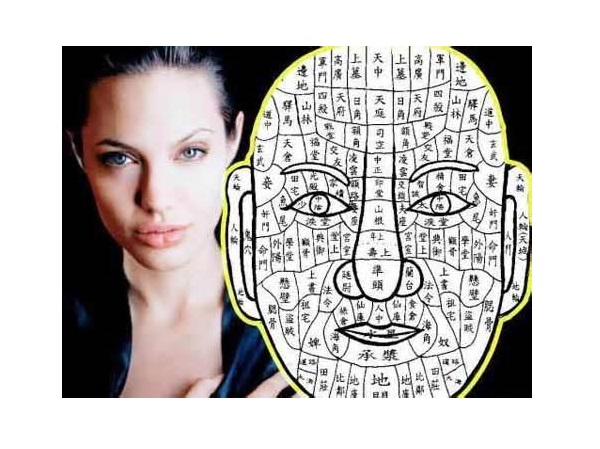
image: http://www.tips-tricks.net/lifestyle/face-reading-techniques/

Social science experts agree — much of what we “say” is  never actually spoken.

“Facial expressions and other body language account for more than half of our communication,” says Adam J. Scheiner, M.D.,
www.adamscheinermd.com, an international Oculoplastic surgeon who’s been featured on “The Dr. Oz Show” and “The Doctors.”

“When we look at someone, especially when we’re meeting for the first time, we quickly scan the eye and mouth areas of the other person’s face to make some quick judgments: Are they friendly or a potential threat? Are they trustworthy? We form first impressions within 7 seconds of meeting.”

Those first impressions can become misleading due to the normal aging process and damage caused by stress, diet and environmental factors, particularly sun exposure.

“I call them the three D’s of aging: Our skin begins to  deteriorate; our faces deflate, making them narrower and wrinkled; and our eyelids and face descend, causing drooping and sagging,” Scheiner says. “All of these can affect what our face communicates to those around us.”

It’s bad enough to communicate something you don’t really feel, he says. It’s worse when people react to that communication so often, such as saying, “You look so tired,” that you actually begin to believe you are tired, he says.

He shares the three common “miscommunications”:

•  “People say I look tired when I’m not.”
As we age, our eyelids can begin to droop and look heavy, Scheiner says. The lower eyelid region often develops fullness below the lower lashes due to changes in the fat around the eye and changes in the facial fat of the surrounding cheek region. A lower eyelid height, heaviness of the upper or lower eyelid, or an eyebrow falling into the upper eyelid space can also occur. Whatever the cause, having baggy, puffy eyes can make a person look tired, sleepy, old or sick.

•  “People avoid me because they say I look stern, even angry. I’m neither!”
Whether through genetics or aging, eyebrows may lack or lose the arc that opens up the eye area and the entire face. A fairly straight eyebrow can convey a closed, unapproachable personality.

•  “People think I’m sick or have no energy.”
The brain expects to see a smooth curve from the temple to the cheek through the jawline to the chin. Any break in the curve is read as a lack of vibrancy. Normal facial aging causes loss of youthful fullness due to facial fat changes. This can cause a break in the curve that translates as a lack of vibrancy. In addition, poorly injected facial fillers can cause unnatural results.

Cosmetic procedures shouldn’t aim to turn you into something you’re not, Scheiner says.

“For rejuvenation, you simply want your face to communicate how you really feel inside. When you accomplish that, it’s so natural, people
will say, ‘Wow, you look great!’ But they won’t be able to put their finger on why.” For the Silo, Ginny Grimsley.

Body Language

Adam J. Scheiner, M.D. is world-renowned in laser eyelid and facial plastic surgery for his groundbreaking treatment for Festoons. He wrote the medical text on the condition and treated two complex causes of Festoons for the Dr. Oz and The Doctors TV shows.