2013 will be remembered for many things, but in the world of consumer electronics it will be remembered as a year when techpreneurs proved that innovation lives and the spirit of enterprise still burns strong.
The technologies propping up the gadgets on display in this infographic are a product of incremental development, iterations of ideas that have been gestating for many years and are slowly being integrated into products that we use daily.
Take fingerprint authentication, for instance, on the new iPhone 5s. For close to ten years, the technology has been commercially viable but Apple made the bold move of finally putting an end to the forgotten password woes of its customers.
HTC finally incorporated the technology Full HD displays on a smartphone with amazing results. The images on HTC one remain unmatched for clarity and color accuracy.
Leap Motion made a leap of faith by investing in technology that changes the way users interact with their devices. Instead of the keyboard, mouse, or screen, we can now use gestures to make devices do our bidding. All for less than a hundred dollars with technology packed into a device no bigger than a bubble gum pack.
Google Glass is setting imaginations on fire with its unique first-person perspective for recording visual images. Is it ethical to photos and videos
of people without their permission and without them noticing that you’re actually doing it? Will the technology be abused? Will it change the way users live their lives?
For many, the questions won’t be as complex or thought-provoking. It might simply be, “Will I get an Xbox One for Christmas?”
Ahhh Jane Jetson- you really know how to take advantage of technology.
We know they let you watch TV on the go, surf online, send emails and, oh yeah, make phone calls. But an innovative new tool now also gives you the power to use your mobile device to switch on any light in your home, open your garage door or turn on any other piece of electronic equipment, no matter where you’re located.
Ontario Technology firm: The Skylink Group – which previously introduced Skylink HomeControl, an affordable and easy-to-use system to wirelessly control your entire house – recently launched a mobile application, Skylink HomeControl App, that effectively turns your smartphone, tablet or PC into a remote control.
The handy app allows users to control just about anything in their home with the touch of a couple buttons on a virtual keypad, which can be customized to the specific devices they want to be able to access remotely.
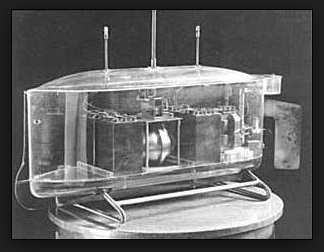
You might be surprised to learn that home automation has been around for a long time and since the earliest days of electricity in the home, inventors and entrepreneurs have scrambled to find a useful and profitable way of harvesting radio waves and electricity. Tesla was one such visionary and among his many accomplishments is perhaps the first use of control by remote- considered at the time, an important form of automation. In 1898 he constructed and demonstrated this remote control model boat in New York. image: kerryr.net
“Anyone who already understands how to use a mobile device or a computer tablet will be able to use this app easily. That’s the key to getting the greatest benefit from new technologies – making them easy to understand and user friendly,” says Philip Tsui, CEO and the Chairman of Skylink Group.
The Skylink HomeControl System is designed for do-it-yourselfers and uses control modules which can be wired out of sight and wireless receivers plugged into wall outlets or lamp sockets, even wall switches and dimmers which replace your existing wall switches. For professionals, the Skylinkhome Wireless Control System has modules with three wires that can be installed almost anywhere.
The Wireless Control System can be used to control anything electronic, including:
. Lamps
. Coffee makers
. Fans
. Stereos
. Fire places
. Ceiling fans
. Indoor and outdoor lighting
. Garage doors
. Security systems
. Countless other electronic devices and appliances
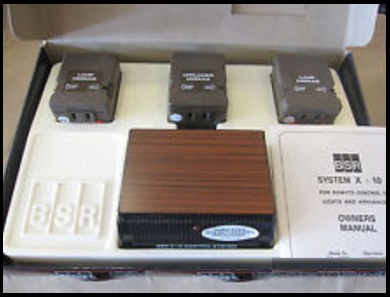
Often cited as the “McDonald’s of Home Automation” X-10 modules were considered a major breakthrough when they entered the consumer market in the 1970’s. A central control unit (here seen in lovely 70’s woodgrain) controlled separate modules that were plugged directly into a home power outlet. An appliance requiring automation such as a lamp, was plugged into the module and controlled via wired or wireless control from the X-10 ‘brain’. CP
For those who may not have a smartphone or computer tablet, Skylink also has a remote control – the credit card-sized SkylinkPad – which can be used to wirelessly control devices in your house.
In addition to convenience, the Skylink HomeControl System helps users realize significant energy savings. With the touch of a button, you can shut off all of your lights or set up motion sensors to work with the system. The wireless system also uses timers to ensure that lights and electronic equipment can be shut off when they’re not needed. Dimmers also reduce energy usage, contributing to a greener environment and lower electricity bills.
About Skylink Group:
The Skylink Group understands the needs and concerns of the homeowner in providing a safe and comfortable environment for their family whether they are at home or away. Established in 1990, Skylink Group operates out of Brampton, Ontario. On
Twitter at @skylinkhome.
The Project: The 980,000 sq. ft. acute care community hospital replaces two aging facilities in the Niagara region and accommodates 375 acute care beds, with associated outpatient and support services.
New Health Care Complex – St. Catharines Site “2oth Century NOT included”
It provides a comprehensive range of clinical services including:
• a cancer centre serving 1,200 patients close to home, relieving them from the stress of travelling to Hamilton or Toronto for treatments
• a longer-term mental health service that includes 53 beds
• dialysis services
• cardiac catheterization services, which provides diagnostic investigation, reduces hospitalizations for heart disease and provides faster local care for residents of the Niagara region
The goal of this project was to provide Niagara Health System with a modern, state-of-the-art, one million square foot building capable of providing one million square feet of care.
In addition to design and construction management, PCL’s [ PCL comprises a family of general contracting companies and is the largest such organization in Canada and the fifth largest in the U.S. CP ]scope of work also included the procurement and installation of more than 25,000 pieces of medical equipment, as well as medical gas, head walls, nurse call system, information technology, audio visual, and security technology.
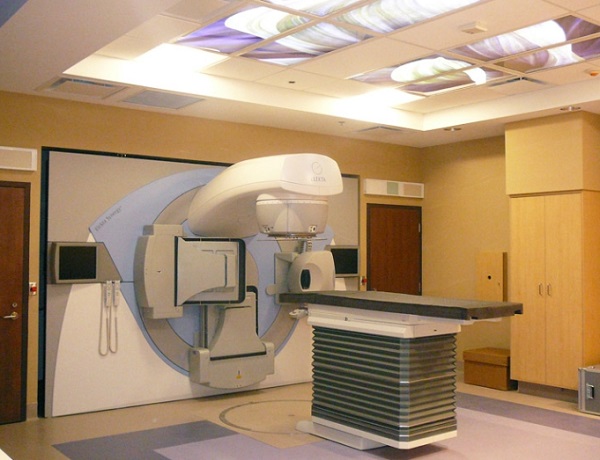
Some of the many interesting features that set this building apart include construction of the first radiation suites in the Niagara region, an enclosed ambulance bay to provide protection to incoming patients, an interior design that strategically locates departments to minimize clinical travel time by staff, and an exterior design that implements materials indigenous to the Niagara region.
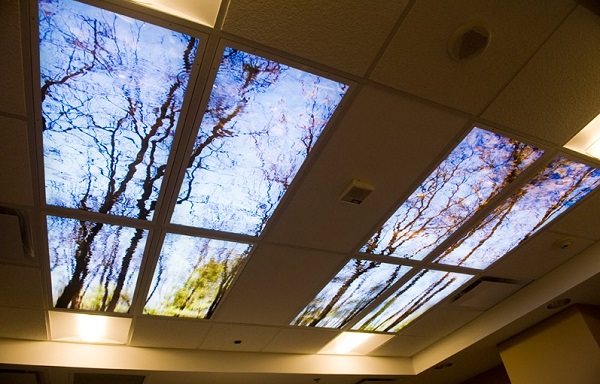
Interior and exterior architectural designs affect patient and staff psychology so why not design accordingly? This ceiling detail of the Walker Cancer Care Treatment Room ceiling reveals the care and consideration that went into the hospitals designs. CP
Architectural
• Main Street feature wall using a combination of indigenous and complementary stones that tell a story of the geological formation of the Niagara Escarpment.
• Use of structural elements in the form of a tree at the main entry and cafeteria to create the canopy.
• First operating rooms in Canada to use Corian wall finishes.
• Integrated interior finishes and way finding system,using landmarks to help visitors and patients locate themselves in the facility.
• Enhanced use of natural light to infiltrate deeper into the building, with particular attention to patient spaces.
• An acoustical design at the building envelope to mitigate and isolate noise generated by a nearby train corridor.
Structural
• Blending structural elements with architectural finish and spectacle.
• Strategy of a structural grid system to maximize open spaces and floor to ceiling height.
• Foundation system and MRI inertia slab to address vibrations created by train traffic and a nearby machine stamping plant.
• Post Disaster design to address potential seismic event, to allow the facility to operate during and after as a relief centre.
• Use of cast-in-place elements to allow equipment flexibility.
Mechanical/Electrical
• Pandemic containment capability to deal with infectious outbreaks and disasters, allowing the facility to isolate building sections and departments.
• Building automation system, fully integrated with building elements and equipment to monitor and ensure optimal building performance.
• Back-up and dual power systems to ensure fundamental building and medical systems remain available and functioning at all times, including integration with the building automation system, to allow targeted load distribution to non fundamental systems to become available as required.
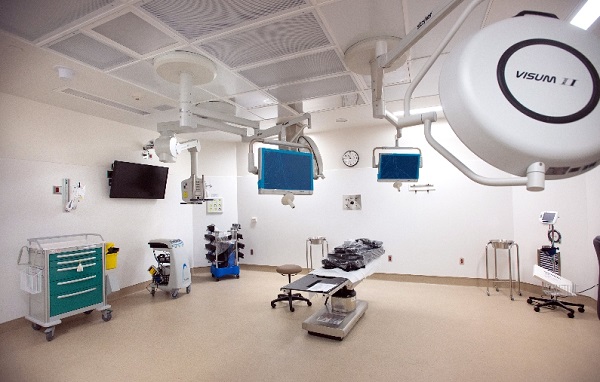
The Operating Theater. It’s understandable if you think that this is a set from Star Trek-
Sustainability
• The project is targeted for LEED® certification. As part of the construction and design strategy, the project team developed several innovations and elements for a significant improvement of the target to LEED® Silver certification – from 26 to 35 points.
• Incorporated an energy efficient lighting strategy using natural lighting as much as possible, as well as the broad use of occupancy sensors and low energy lighting systems.
• Integrated and efficient cooling and heating systems, and an optimized building envelope system that helps to reduce greenhouse gas emissions.
• The overall energy strategy resulted in the Energy Model that realizes an energy savings of 46% relative to the Model Energy Code for Buildings, which is expected to produce savings to the client in excess of $1 million annually.
• Use of native and hardy plant species and an integrated storm water management program, including irrigation and water features to eliminate city water use for landscape elements.
A look at the state-of-the-art radiation treatment facility.