It’s an idea that has crossed the minds of virtually everyone who has worked for somebody else, regardless of the job.
As you put in time and labour that ultimately benefits someone else’s business, it dawns on you: Why can’t I just set up shop and do this myself? Why can’t I be the one taking home the big money after all the bills are paid and enjoying the independence of running my own show?
They’re great questions, but the answers aren’t for everybody.
Actually making the decision to give up the security of a steady job, and the regular paycheque and benefits that come along with it, takes a lot of guts and perseverance — especially in today’s highly competitive economy.
Unless you are among the fortunate ones backed by deep resources, the bottom line is this: when you first set out to become an entrepreneur, you are truly on your own. It’s just you and your idea. And it will be the marketplace — relentlessly detached and unemotional — that determines whether you make it or not.
Budding entrepreneurs who do take the risk to start up their own business generally face two key barriers — capital and human resources.
Many entrepreneurs owe their initial success to the trust of friends and family members, who invest funds in their start-up idea. These types of loans can be troublesome if the proper precautions aren’t taken. Make certain the terms of all loans from friends or relatives are spelled out clearly in a promissory note prepared by a lawyer. You may not be dealing with a bank or a financial institution, but you have to treat repayment in the same manner to avoid conflict with your lenders, who also may happen to be your best friend or your sister.
It’s also important to keep your credit record as clean as possible and establish a line of credit, which you can access for instant cash flow at certain times.
Start-ups are limited to hire only the personnel who they can afford, which often means running on a skeleton staff who may not necessarily be those with the greatest skills and experience. This is why most of us who have conceived what we think is a great idea for a business usually choose too much of the work ourselves and wear many hats in the early days.
It can take a long time to find the right employees when you’re just starting out. Some of the top talent may be reticent to work for a small start-up because they are worried about how it will look on their resume, job security or getting a bigger paycheque.
You need to find candidates who share your entrepreneurial spirit and aren’t averse to taking risks. Look for people who want get in on the ground floor and grow with the business.
As you build your company and expand your market, it’s tremendously important to have a network of mentors whose advice and counsel you trust. No matter how much thought and preparation you put into your business plan, you won’t be able to anticipate everything ahead of you. The marketplace is constantly moving and evolving, causing you and your business to adapt. This is where mentors can help, offering guidance drawn from experiences they had during similar changes in their own journeys.
My own mentors have changed as my career progressed, but they all had a common trait that served me and my businesses well — perspective. They have been able to see things clearly from a distance when my own vision may have been clouded by emotion, allowing me to make more-effective decisions. Entrepreneurship is about taking chances, but not blind ones.
Being an entrepreneur is a calling for those who not only cope well with risk, but thrive on the challenges it presents. Those who are satisfied by the comfort of a secure job and a steady paycheque need not apply. For the Silo, Paola Abate.

 Gen Z, of which I am a part, has been dealt a rough hand with regard to this generation’s entrance into the workforce at large. We’ve collectively experienced so many “unprecedented” events throughout our formative years that have caused many to lose their meaning and purpose in their professional and personal life. For executives seeking to understand, and aptly integrate, Gen Z into staff teams, it’s essential to recognize and address the unique challenges and needs of this consequential generation greatly influencing the workforce. While there are a litany of issues undermining Gen Z career prospects, there are a few key set of obstacles that must be overcome to bolster this generation’s advancement opportunities:
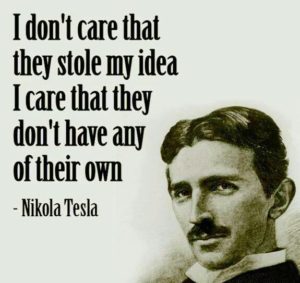
 This concern, of course, is not unique and strikes at the heart of something that all those in creative professions fear and must face. The ownership of ideas is difficult to prove. If you tell someone your plan in confidence and they, in turn, use it for their own purposes, there is very little you can do to show that you are the originator. Spreading this rumor is likely to make you look like the bad guy. It’s no wonder that this sort of generosity is cause for concern.
 But what about sharing your networks or some trade secrets that helped you get to where you are today? While you may have worked tooth and nail for everything you’ve gained, there were surely people along the way who said yes at the right moment and assisted your progress. No one can ask more than this, and as an artist of a certain standing, there is nothing wrong with offering this sort of help.
 No one exists in a vacuum. Even you, who may have scraped and fought your way to where you are today, benefited from the acceptance and help of others. Sure, you may have pounded the pavement endlessly in order to secure your position but that is no reason not to pay forward the success you have achieved. It is too easy to forget, once you have achieved a certain status, the myriad small moments that led you there. While it may seem as though hardly anyone was out to help you in the early days, surely there were some, otherwise you could not be where you are today. Even if it was just a few gallerists who were finally willing to take a chance, there are always rungs of assistance in the ladder to every success, no matter how small.
 For these reasons, there is a lot to be said for good old-fashioned face-to-face interaction. Being the sort of artist who is willing to mentor in the real world sets you apart. Establishing this sort of reputation, for being the one who will gladly share the bounty you have created, seldom reverses one’s own success and frequently opens new doors you may never have considered.
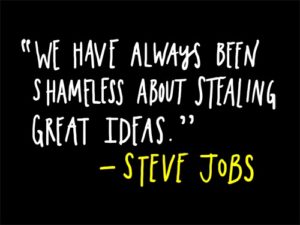
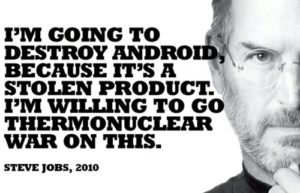
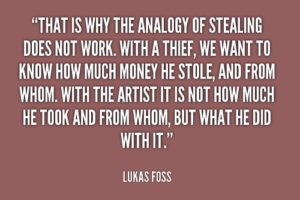 Arguably, there is no such thing as original art. Even some of the most contemporary artists’ work is derivative of past creations. Marina Abramovic, in her unique style, has absolutely drawn from (and occasionally been accused of copying) works by other artists. Pablo Picasso (and perhaps more famously, Steve Jobs who quoted him) said, “good artists copy, great artists steal.” This doesn’t mean that you should open yourself up to idea theft, but it does mean that perhaps being stingy with your concepts, your network, your position as an established artist, doesn’t count for as much security as you might think. Be smart about things, but in general, it is always a good idea to reach down the ladder and help those coming up behind you find the next rung. For the Silo, Brainard Carey.