A multitude of factors conspired to hamstring the American muscle car market in the early 1970s, most of all a 1972 change in how horsepower was measured. Here’s how that rating change affects the values of eight familiar collector cars.
Let’s Dig In!

As anyone who’s ever wrung out a small sports car will tell you, horsepower isn’t everything. Driving is more about feel than what’s on a spec sheet. But that magical equine number, first adopted in the eighteenth century to measure the output of steam engines, does count for a lot, and domestic carmakers have been using it to sell cars for generations.
This was especially true during the second half of the 1960s, when muscle cars were flexing their hardest and 400-plus horsepower V-8s were readily available. Starting in 1971–72, though, the muscle car market famously came crashing down, and it wasn’t until the spread of electronic fuel injection in the 1980s that the numbers finally started to catch up to those of the ’60s.
Understanding that early ’70s crash takes some explaining.
Muscle cars faced the multi-whammy of increased emissions regulations, crash safety rules mandating fatter bumpers, spiking insurance rates for high-performance automobiles, and lower compression ratios with the advent of lower-octane unleaded gas. There was also the 1973 oil crisis and well as the recession and 55-mph speed limits that resulted.

On top of all this was a 1972 switch in how horsepower was measured, which made the drop in muscle car performance seem worse than it actually was.
Prior to 1972, American carmakers used the SAE (Society of Automotive Engineers) “gross” measurement of horsepower, which is a figure taken from the engine running on a stand with no power-robbing accessories or mufflers. “Net” horsepower, meanwhile, measures the engine with accessories connected. Some carmakers started advertising gross and net figures in 1971, but a California law requiring only the net figure in any advertising materials starting in 1972 effectively prompted the switch to the net figure across the industry. Some American muscle favorites appeared to suddenly “lose” 100 hp.
That wasn’t strictly the case, though, and our friends at Hagerty recently started wondering what effect that gross-to-net switch might have on classic car values. Is there a discount to be had by ignoring the arbitrary numbers and going after an American V-8 classic from 1972 instead of its nearly identical ’71 counterpart? The answer is, sometimes “yes,” and sometimes “not really.” Below are eight examples. NOTE all monetary values are in US dollars- at time of posting multiply by 1.38 for CAD dollars.
Chevrolet Corvette LT1

Regular Production Option (RPO) LT1 debuted in 1970 on the Corvette and the Z/28 Camaro. In the Corvette, what it got you was a 350cid V-8 with solid lifters, tight 11:1 compression ratio, forged pistons, balanced crankshaft, freer-breathing heads, and more improvements that helped push the new hot-rodded, high-revving small-block to 370 hp and 380 lb-ft. Unfortunately, the LT1 arrived just in time for the horsepower wars to start winding down, and with its compression ratio lowered to 9:1 in the 1971 version, performance was down to 330 hp. A bit disappointing, sure, but still lots of oomph.

For the 1972 Corvette, RPO LT1 dropped to 255 hp with the switch to net ratings. The LT1 option disappeared after 1972, which was also the last year for chrome bumpers at both ends of America’s sports car. Visually, all 1970–72 LT1 Corvettes look nearly identical, but values drop way off as the power ratings decrease. A 1970 LT1 convertible is currently worth $108K in #2 (excellent) condition in our price guide. The equivalent coupe is currently worth $89,600. The 1971 model falls to $82,300 for a convertible in #2 condition, and $64,500 for a coupe. At the bottom, the 1972 LT1 currently carries #2 values of $74,300 for a convertible and $73,000 for a coupe. Condition #3 (good) values for these cars typically come in at about 25 to 30 grand less than the #2 value.
As for the Camaro Z/28, its #2 value drops from $53,600 for a 1971 model to $52,800 for a ’72, while the condition #3 value drops from $39,400 to $32,700.
AMC Javelin

American Motors redesigned its plucky pony car, the Javelin, for 1971. The new second-gen model sprouted the famous exaggerated, creased wheel arches and long hood for which the Javelin is perhaps best known, in part thanks to Mark Donohue’s dominant ’71 Trans Am season behind the wheel of one. AMC’s two-seater AMX model also disappeared after 1970, but was added to the Javelin lineup as a high-performance submodel.
New for ’71 was a 401cid V-8, available in both Javelin SST and Javelin AMX trim. In gross horsepower terms, the 401 made 330 hp. In 1972, the net rating dropped that figure to 255 hp. Values also drop from ’71 to ’72, despite there being few cosmetic differences between the two years. For ’71 Javelins, an SST is worth $35K in #2 condition, and an AMX is worth $49,300. For ’72 models, these figures fall to $25,700 for an SST and $43,200 for an AMX.
Cadillac Eldorado
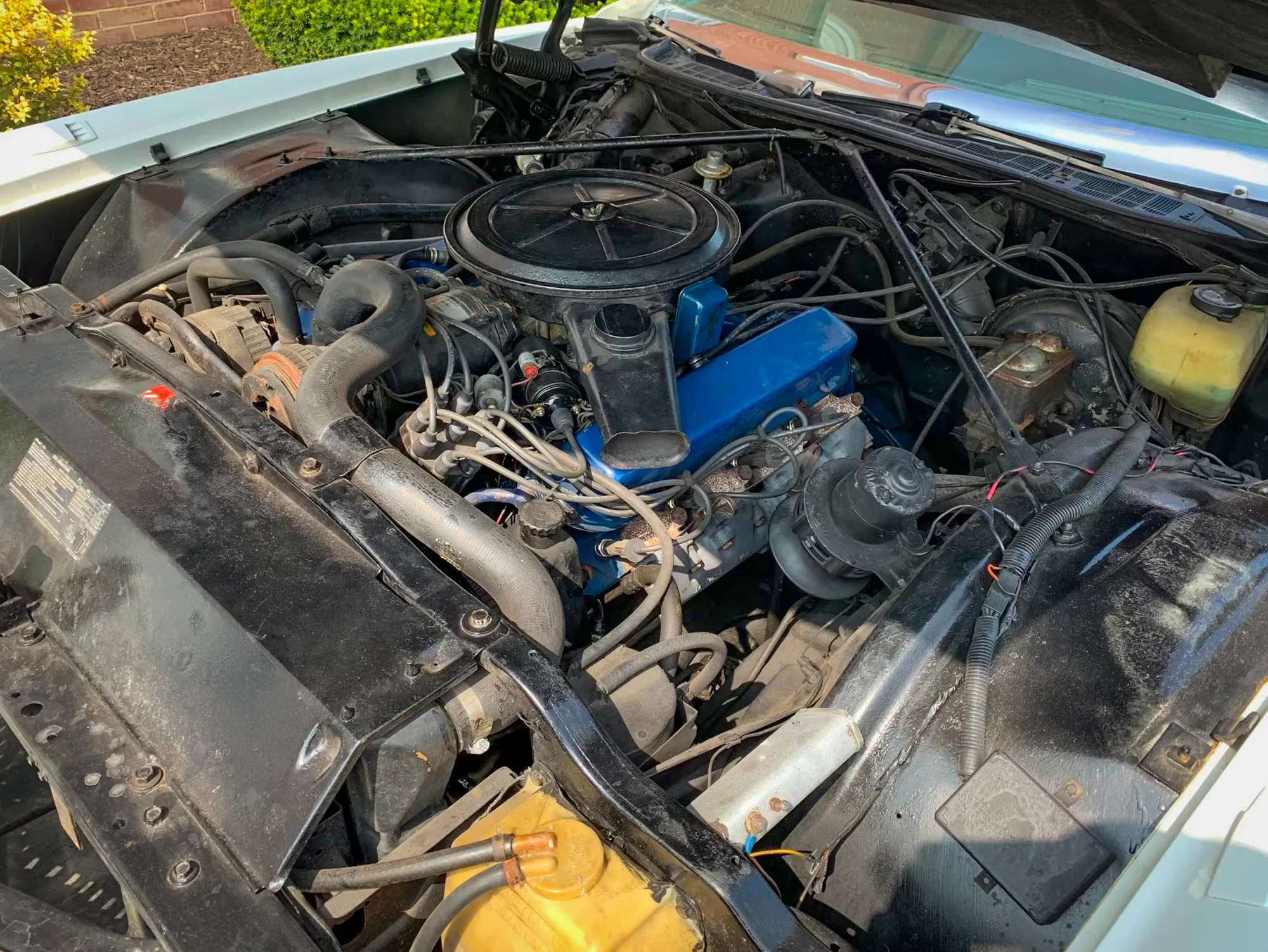
The ninth-generation Eldo came out in 1971, growing in wheelbase, overall length, and weight over its predecessor. Fender skirts were another addition, as was a convertible body style. Motivating this huge Caddy was a similarly huge V-8, which displaced a whopping 500 cid (8194 cc). The 500-cube unit had made 400 hp in the ’70 Eldorado, but this dropped to a still-potent 365 horses in ’71. The switch to net ratings suggested a huge drop, though, with the figure dropping to 235 hp for 1972.
The ’72 discount is fairly modest for the Eldorado, a car that never sold itself on speed, anyway. For 1971 models, a convertible is worth $37K in #2 condition, and a hardtop is worth $25,200. A ’72 convertible is worth $35,600, and a hardtop is worth $25,200.
Oldsmobile Toronado
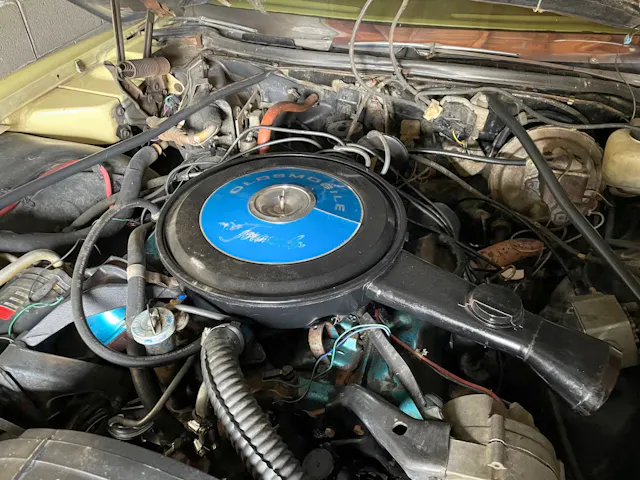
Oldsmobile’s large, groundbreaking front-wheel drive Toronado entered its second generation in 1971. Like the Eldorado, it was larger than its predecessor. Its 455cid Rocket V-8 carried over from the ’70 model, and carried a gross rating of 350hp. The switch to net ratings knocked off a full 100 ponies, for 250hp total. But, also like the Cadillac, the Toronado’s primary selling point was never power, despite its monstrous engine.
That goes a long way in explaining why a ’71 Toronado and a ’72 Toronado are worth almost exactly the same, with a ’71 coming in at $16,000 in #2 condition and a ’72 coming in at $15,600.
Plymouth GTX
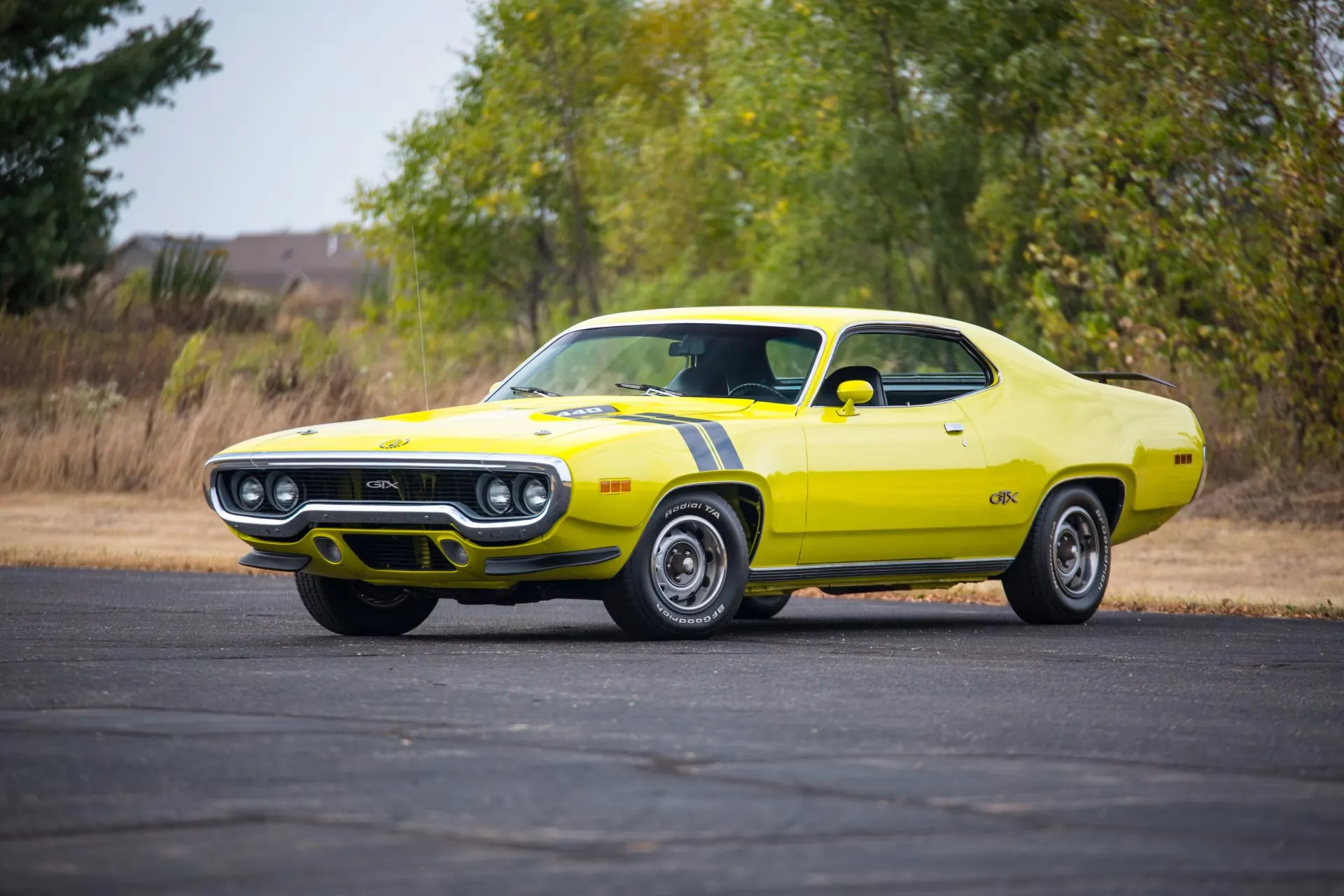
Plymouth redesigned its Road Runner, upon which the GTX was based, for 1971. The handsome fuselage theme included a loop bumper and a high trunk. While the 426-cid/425-hp Hemi was still available in the ’71 GTX, most got a version of the 440, either the three-carb 440-cid/375-hp “Six Pack” or the 440-cid/370-hp four-barrel.
By 1972, the original Street Hemi was gone, closing a major chapter in the history of Mopar muscle. The Six Pack was gone, too, leaving only the four-barrel 440 for GTX buyers, and its rating dropped from 370hp to 280hp. The GTX also ceased to be its own model that year, instead becoming an option package for the Road Runner, though styling remained largely the same. The discount in choosing ’72 over ’71 in this case is significant. The current #2 value for a 1971 GTX is $64,100, and for a ’72 Road Runner GTX it’s $53,300.
Pontiac GTO
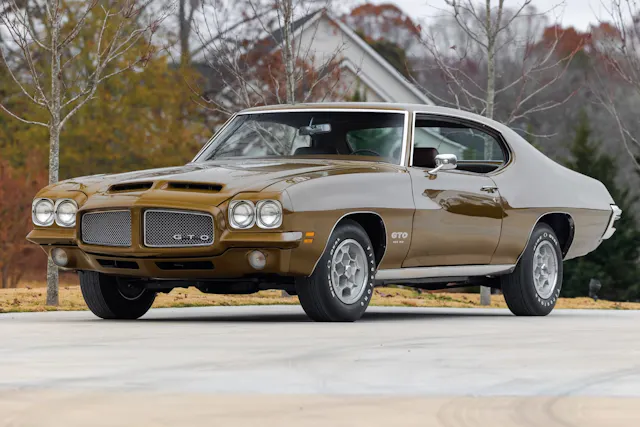
By 1971, the second-gen GTO’s muscles had atrophied a bit. The splashy colors of “The Judge” were still available, but the potent Ram Air engines were not, and compression ratios dropped across the GM lineup. The Pontiac’s most potent powerplants were now a 455 cid/325 hp or a 455 cid/335 hp.
For 1972, the GTO went from being its own separate model to being an option package on the Le Mans, just as it had been when it kicked off the muscle car era in 1964. In net terms, the 455 engines now carried ratings of either 250 hp or 300 hp.
As collector cars, there is naturally some variation in terms of value. The ’71 455/325 GTO carries a #2 value of $54,300, while the ’72 455/250 is worth $41,000. With the higher-output engines, though, they are essentially worth the same, with both ’71 455/335 and ’72 455/300 sitting at around $64,000, possibly due to the rarity of the later car.
Oldsmobile 4-4-2 W-30
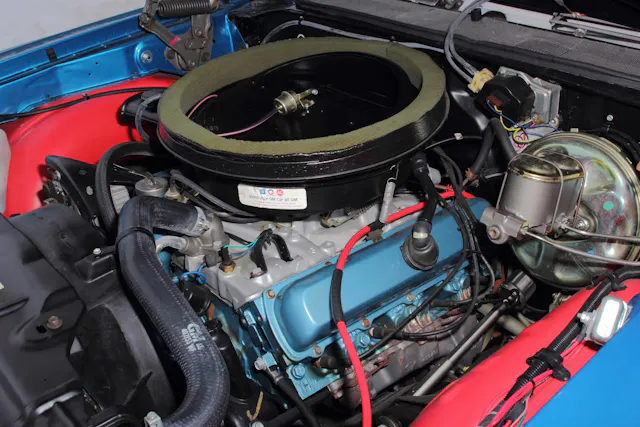
The second-gen 4-4-2, like the GTO, was a staple GM muscle car built on the A-body platform from 1968–72. It was similarly down on power and compression in 1971, with the high-performance W-30 package offering a 455-cid/350-hp V-8, down from 370 horses the year before. Net horsepower for the 1972 W-30, when the 4-4-2 reverted to being an option package on the Cutlass, sank the number to 300 hp. The beefier, slower third-gen 4-4-2 debuted in 1973 with GM’s malaise era “Colonnade” styling.
Olds 4-4-2 values drop significantly as the horsepower numbers go down. A 1970 W-30 Holiday Coupe in #2 condition is worth $99,200. The 1971, 350-hp equivalent is worth $82,800, and the 1972, 300-hp version is worth $69,400.
Chevrolet Chevelle SS

Also an A-body, the Chevelle got a mild facelift in 1971, with two headlights instead of four, and four circular taillights instead of two rectangular ones. While the big dog in 1970 was the 454-cid/450-hp LS6 engine, it disappeared from the Chevelle lineup in ’71, and the top engine became the 454-cid/365-hp LS5. For 1972, little changed visually other than an updated grille and new front parking lights, but the LS5’s stated output dropped to 270 hp. A completely new and significantly less exciting, Colonnade-bodied third-gen Chevelle debuted for 1973.
LS5 values don’t vary too much from ’71 to ’72. A ’71 convertible in #2 condition is worth $93,300 or $73,100 in #3 condition, while a sport coupe in #2 condition is worth $70,500 or $53,500 in #3 condition. A ’72 convertible in #2 condition is worth $89,700 or $75,300 in #3 condition, while a sport coupe in #2 condition is worth $69,300 or $55,400 in #3 condition.
For the Silo, Andrew Newton.