Making Connections
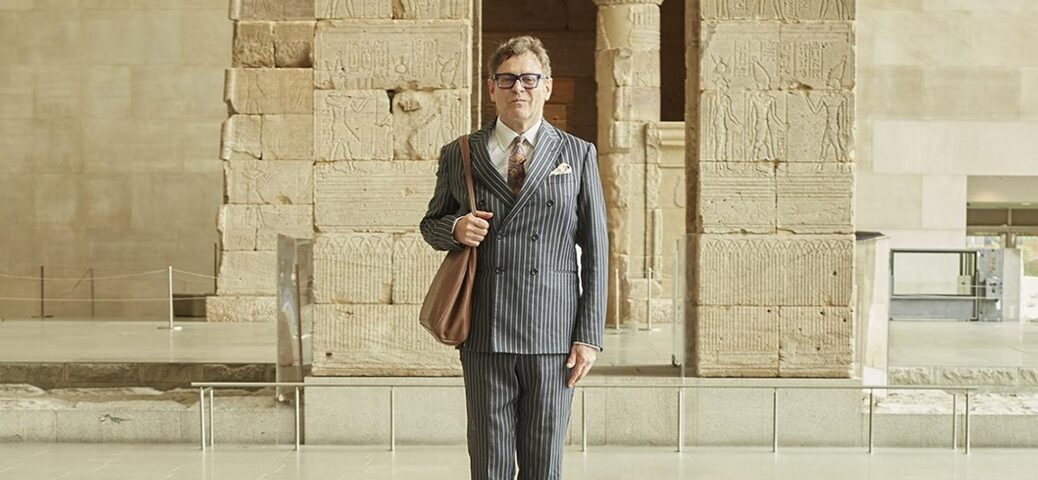
For more than two decades, Bruce Bailey has played a crucial role in connecting Canadian contemporary artists with audiences beyond the country’s borders. Through exhibitions, institutional partnerships, artist residencies, philanthropy, and collecting, he has worked across Toronto, Montreal, Venice, Barcelona, New York, and London to expand international exposure for Canada’s most promising artists.
His involvement has taken many forms, including organizing exhibitions for emerging artists, sponsoring Canadian Pavilion presentations at the Venice Biennale, supporting museum acquisitions, and establishing Espacio Bruce Bailey in Barcelona as a residency and exhibition space for international exchange. Over the years, artists including Kent Monkman, Shary Boyle, David Altmejd, Geoffrey Farmer, Jeremy Shaw, and BGL have been connected to projects and institutions Bailey has supported.
Questions and Answers
Q: You founded Bruce Bailey Fine Art Projects in Toronto at a time when many younger artists struggled to gain institutional visibility. What were you trying to create?
Bruce Bailey: I wanted artists to have a serious presentation before the market fully formed around them. In many cases, commercial galleries were hesitant to take risks on younger artists whose work was still developing. I felt there needed to be a place where ambitious exhibitions could happen without immediate pressure from sales expectations. With Kent Monkman, for example, I organized Dance to the Berdashe in Toronto in 2008. Years earlier, I had already started collecting his paintings and introducing his work to museums and collectors. The same thing happened with artists like Ryan McGinley and Christian Jankowski. These were artists making very strong work before institutional recognition arrived. The idea was always to help build momentum for artists by placing their work in front of curators, collectors, museum directors, and critics who could continue supporting them afterward.
Q: Your work has often involved bringing Canadian artists into international conversations. Why has that mattered to you?
Bruce Bailey: Canadian artists have always deserved greater visibility internationally than they often receive. There is extraordinary work being produced here, although artists sometimes face structural limitations tied to geography and market size. I became involved with supporting Canadian Pavilion presentations at the Venice Biennale because Venice remains one of the few places where curators, museum directors, collectors, and critics from around the world gather in one concentrated setting. When David Altmejd represented Canada in 2007, or when Geoffrey Farmer, Shary Boyle, BGL, and Stan Douglas later participated, those presentations carried importance far beyond a single exhibition season. The exposure can influence museum acquisitions, future exhibitions, publications, and international representation. Supporting those projects was especially important, with the artists speaking to global audiences as representatives of Canada’s cultural life.
Q: In 2016, you established Espacio Bruce Bailey in Barcelona. What role does that space serve today?
Bruce Bailey: Barcelona offered something very specific. It has a strong cultural history, an international population, and proximity to major European institutions and collectors. I wanted to create a setting where artists from Canada could spend time working, exhibiting, and building relationships outside North America. The residency and gallery space are located in the Gothic Quarter, which brings people from many countries into contact with the program. Some artists arrive with established careers, while others are still developing. The conversations that happen there can be very productive, exposing artists to curators, writers, collectors, and other artists they may never encounter otherwise. I have always believed artists benefit from spending time outside familiar environments. It changes their view of the work and often changes the scale of their ambitions.
Q: Your collections have been shown in places such as the Montreal Museum of Fine Arts and in Venice. How do you approach collecting?
Bruce Bailey: I collect work that continues to hold intellectual and emotional weight over time. I am interested in artists who build complete visual languages rather than producing work that responds to short-term trends. The exhibitions drawn from my collection at the Montreal Museum of Fine Arts were important. They provided public access to works that would otherwise remain private. For Every Atom Belonging To Me As Good Belongs to You brought together many different artists and generations in a museum context. Earlier, Disasters of War connected works by Jake and Dinos Chapman with Goya’s print series, addressing violence, history, and political imagery across centuries. Museums matter because they allow the public to encounter work slowly and seriously. That experience carries enormous value.
Q: Your fundraising efforts have supported museums, opera, and ballet organizations across Canada. How do you view that role?
Bruce Bailey: Public institutions require long-term support if they are going to take risks artistically. Acquisitions, exhibitions, catalogues, educational programs, and performances all depend on philanthropy at some level. With Bruce Bailey’s Canadian Fête Champêtre, the intention was to create something ambitious enough to generate substantial support for institutions while also bringing together people from different parts of cultural life. The Montreal Museum of Fine Arts was central to those efforts, though support also extended to organizations like the Canadian Opera Company and Canada’s National Ballet School. I have always felt the arts ecosystem functions best when different disciplines interact with one another. Visual art, music, dance, opera, architecture, and literature constantly influence each other. Supporting one area strengthens the broader cultural environment around it, and ultimately benefits the arts scene as a whole.
For the Silo, Jarrod Barker.
Featured image Photography by Arseny Jabieve.