Identify Toxic Cosmetics

What does the ingredients list above represent? It’s taken from the label of a popular name brand soap advertised with fresh faces, and as leaving no residue on the skin. Would it surprise you? Perhaps you recognized it, but thought well it’s being sold in stores so it must be safe.

The good news is that since 2006,  Canadians have been provided with mandatory labeling on personal care products. Health Canada has even gone a step further providing a “hotlist” or list of prohibited or restricted chemicals . This is a huge step above our neighbours to the south, whom currently have minimal regulation on personal care products. Canada is on the right track, but is still a few steps behind the European Union, where personal care products are held to stringent guidelines.

The bad news is that even though there are guidelines set of by Health Canada, some of the products on the market today still contain chemicals, with similar structures to those chemicals that have been restricted. And if something shares a similar structure it is likely to interact with the human body in a similar fashion, thus causing similar health concerns.

What at can you do? The good folks at the David Suzuki Foundation performed a Survey of Canadians and their use of personal care products, and from this developed a “dirty dozen” of chemicals to avoid. Results of their survey demonstrated that 80% of products contained at least one ingredient on the list, and only 20% did not contain any. By visiting the www.davidsuzuki.org and searching “What’s Inside? That Counts,” you can download your own copy of the list, or even visit the mobile site when you are out shopping.

Why does this all matter? Many of the chemicals that are found in personal care products can bio-accumulate, meaning they can increase in concentration over time, and be passed on to our next generations. There is also well documented evidence of effects within the human body caused chemicals affecting the endocrine system. Within the human body endocrine disruptors have been implicated in neurological diseases, reproductive disorders, thyroid dysfunction, immune and metabolic disorders. Cancer is also another health concern that has been linked to many of the chemicals found in personal care products.

What about my health? As a naturopathic doctor I am always thinking from a preventative medicine point of view. The more I learn, I continue to look for natural/chemical free personal care products. Also important is optimizing your body’s innate ability to remove build up of chemicals through organs such as liver, skin, and kidneys. As always, prevention is the best medicine, and becoming a savvy consumer involves reading labels and asking questions. For the Silo, Ashley Beeton Bsc. ND. 

Ontario Gets Highest Grade Ever For Red Tape Reduction

SIMCOE — Ontario received the province’s highest grade ever in an annual report card that evaluates governments across Canada based on their progress in cutting red tape.

The Canadian Federation of Independent Business (CFIB) gave Ontario an A- in its 2019 Red Tape Report Card. This was a dramatic increase from the C+ that the previous government received in 2018 — which was tied for Ontario’s lowest grade ever. The jump from the province’s lowest to its highest grade ever is a result of the new government’s determination to cut the cost of doing business in Ontario and make companies more competitive.

“The last thing small business needs in Ontario is continued unnecessary, bureaucratic, regulation, rules, paperwork and red tape,” said Haldimand-Norfolk MPP Toby Barrett.

“I am proud that CFIB has recognized we mean business when it comes to cutting red tape,” said Todd Smith, Minister of Economic Development, Job Creation and Trade, who is the lead minister on reducing red tape and regulatory burden. “Ontario businesses face the highest cost to comply with regulations in any province — about $33,000 per company — and small businesses are being hit the hardest. Lowering the cost of doing business here will make companies more competitive so they can create and keep good jobs right here in Ontario. And we won’t stop until we get the job done.”

People across the government are rolling up their sleeves to lighten the regulatory burden on businesses, and Ontario will take this work to the next level this spring. Ministries are already pitching in with ideas for new actions to help meet an aggressive target – reducing regulatory red tape affecting businesses by 25 per cent. From the Premier on down, the government is continuously looking for ways to lower business costs to help create and protect good jobs for the people of Ontario.

QUICK FACTS

  • CFIB is a non-profit organization representing and advocating for the interests and concerns of more than 110,000 Canadian owners of small and mid-sized businesses.
  • It has published an annual Red Tape Report Card since 2011. CFIB says its goal is to hold the federal, provincial and territorial governments accountable for one of the biggest headaches for small businesses — excessive regulations.

QUOTES

“We’re committed to reducing red tape and easing regulatory burden for our businesses, so they can grow, create jobs and compete on a global level,” said Ernie Hardeman, Ontario Minister of Agriculture, Food and Rural Affairs. “I was so pleased to see the CFIB award Ontario its highest grade on their Red Tape Report Card. We’ll continue earning top marks by further lowering the costs of doing business in our province.” – Ernie Hardeman, Oxford MPP and Minister of Agriculture, Food and Rural Affairs

“Speaking to just about everyone in all sectors, red-tape is one of the single biggest hurdles community agencies and small businesses face in serving our region. It’s so great to see CFIB recognize the great work we are doing to make Ontario open for business.” – Will Bouma, Brantford-Brant

“This is great news for our province. Receiving this grade shows that our government is on the right track to creating an environment in Ontario where businesses will want to come and create jobs” – Toby Barrett, Haldimand-Norfolk MPP

ADDITIONAL RESOURCES

Statement by Minister Smith on the Passage of the Making Ontario Open for Business Act

Ontario’s Government for the People Cutting Red Tape to Help Create Jobs

Ontario Open for Business

Ontario PC’s Initiate Social Assistance Reforms

A comprehensive package of reforms to encourage employment, restore people’s dignity and empower the province’s most vulnerable to break free from poverty has been rolled out by the Ministry of Children, Community and Social Services.

Last year, more than 450,000 people – recipients and their dependents – received assistance through Ontario Works. Delivered through municipal and First Nations governments, Ontario Works provides temporary financial assistance while helping recipients find jobs and become self-reliant.

The Auditor General of Ontario recently investigated the Ministry of Children, Community and Social Services and the Ontario Works program. The findings from Auditor General Bonnie Lysyk do not paint a pretty picture:

* Since the last audit in 2009, the average monthly number of Ontario Works cases increased by almost 25 per cent from 202,000 to 250,000 by 2017/18.

*The average length of time people depended on Ontario Works doubled, going from 19 months to almost three years.

* Service managers identified 36 per cent of recipients have barriers affecting employability, such as homelessness and mental health issues.

* In each of the last five years, Ontario Works only helped 10 to 13 per cent of recipient cases to find jobs, and only one per cent re-enter the workforce in a given month.

* Costs of the Ontario Works program increased more than 55 per cent since the last audit in 2009 – an increase from $1.9 billion to almost $3 billion.

Auditor General Lysyk concluded the ministry oversight of Ontario Works and service managers is “ineffective” with much of her criticism directed at programs to find employment.  She also said the ministry is not tracking whether service providers are completing financial reassessments on time, and if they are investigating fraud tips. On average, fraud investigation is a year behind.

Designed to offer a coordinated multi-ministry approach, the government’s reforms will reduce red tape and unnecessary rules, and support individual action plans to establish self-reliance. Measured and carefully implemented changes will ensure minimal disruption for those on the system.

Several priorities will guide the reforms. One priority will be moving people to employment by reducing administration and paperwork so people receiving Ontario Works, as well as frontline staff, can focus on individual action plans that set out a path to health, wellness and preparation to return to work. Local responsiveness and flexibility will help job seekers reach their potential.

Once redesigned, The Ontario Disability Support Program will provide annualized income support with fewer reporting requirements.

A simplified system will focus on improving outcomes by reducing administration, cutting unnecessary rules and restoring service accountability.

Ontario’s social assistance system has not seen significant change in over 10 years. Change will occur gradually to update the system so it can better meet the needs of those who need it the most. As a first step, the government will work closely with municipalities to develop a plan to phase in changes, giving them flexibility to meet local needs in the context of their local economies. There will be consultation with First Nations to develop a specific approach for social assistance and employment services.

The province has also launched a web site, Ontario.ca/openforbusiness to make matching job seekers with businesses easier. For the Silo, Toby Barrett MPP for Haldimand Norfolk.

Virtual Reality Use In Classroom Shows Deforestation Reality

“When the viewer looks down, they’ll see their arms are branches, their body is the trunk, and when they move, the tree moves too.” – Winslow Porter

Virtual Reality (VR) and Augmented Reality Markets are expected to reach US$162 billion by 2020.  How can schools use virtual reality to make learning more engaging?

Most of us don’t live in a rainforest but we do know that they are in great danger. Classrooms are looking for ways to help young learners better understand the deforestation crisis, for which we urgently need to find global solutions. What if it were possible to have first-hand experience on how we as humans are contributing to the extinction of trees?

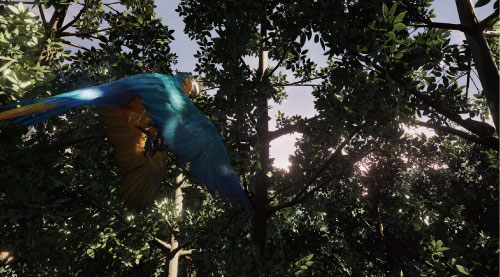
Tree  is a hyper-realistic VR experience that transforms the audience into a living and breathing rainforest tree. The viewer can see and feel the tree’s growth from a seedling into its fullest form and witness its fate firsthand. In a collaboration between MIT Media Lab and filmmakers Milica Zec and Winslow Porter, a fully immersive virtual reality story about a tree was created. The film has been presented to date at over 70 conferences and film festivals (including Sundance and Tribeca).

The Global Search for Education welcomed Winslow Porter to talk about the reality of deforestation and how Treecan help.

People often develop a personal connection to the tree after viewing the experience.” – Winslow Porter

Winslow, what motivated you to tell this story? How did you come up with the idea?

Everything started with our first project, Giant, in which we depicted an innocent family trapped in a war-zone. Giant speaks about the destruction humans do to each other, and we wanted to continue in our second piece with how humans destroy nature. That is how the idea of Tree was born. We wanted to shift the perspective of the audience and place them in the position of nature, so that they can witness firsthand how we as humans contribute to deforestation.

What does the VR experience really add to our viewing experience in this story? Are we missing something if we don’t see this movie in VR?

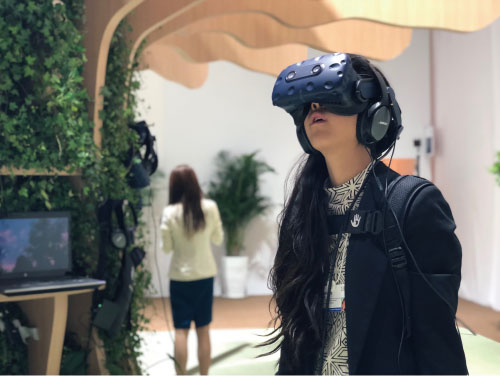
In our piece, we use VR as a tool to transform the viewer into a living and breathing tree. When the viewer looks down, they’ll see their arms are branches, their body is the trunk, and when they move, the tree moves too. We use multi-sensory elements so the viewer feels the growth from a tiny seed underground, to the tallest tree in the rainforest. We use a Subpac – essentially a backpack with bass speakers in it – to vibrate along with the piece, simulating the feeling of growing and expanding. The viewer can also smell the soil and the rainforest, sense the change in temperature and feel the wind on their face when they reach their tallest height. As of now, we believe that VR is the only medium that allows us to closely replicate what it is like to be a tree.

How do people react during and after the Tree experience? What kind of emotional connection is evoked?

So far, we have brought Tree to over 70 festivals and conferences and witnessed thousands of people from across the globe take off the headset. Most people have a very emotional reaction to the piece, strongly identifying with the tree. There is no language in the piece, just the sounds of nature, which creates a universal story that anyone can relate to. After the experience, people have a stronger understanding of the deforestation happening all around the world. People often develop a personal connection to the tree after viewing the experience.

“At the end of the experience, we give each viewer the seed of the tree they just embodied with the message “take this seed as a reminder to keep our forests standing.” – Winslow Porter

Climate Change and the Environment are timely topics. In what ways do you believe Tree can add to our understanding of these issues? How would it be different from traditional ways we learn about The environment and climate change?

Since most of us do not live inside of a rainforest, it’s difficult to imagine what is really happening. Tree brings you into that environment and shifts a viewer’s perspective to shed light on a topic that many people haven’t really thought about before. We partnered with the Rainforest Alliance, which helped us remain scientifically accurate while creating the project, and also provided us with a lot of knowledge about deforestation. People often come out of the headset asking what they can do to help, so at the end of the experience, we give each viewer the seed of the tree they just embodied with the message “take this seed as a reminder to keep our forests standing.” We link them to our website and the Rainforest Alliance, so they can discover the many different ways they can help.

What can you tell us about your next project, Rainforest? What’s the story and what’s the inspiration?

Rainforest is a mixed reality game. In Tree, we focused on a singular rainforest tree, when in reality there are many plants and animals that inhabit those forests. We want to educate people on this entire wonderous world that is being threatened by extinction. To do that, we wanted to bring the actual scale rainforest into the player’s room. Rainforest allows people to play in the environment, and through entertainment and fun they can discover and learn about all the life within. They will also learn about the dangers that rainforests are facing and actively participate in the preservation of those ecosystems.


“With VR, the screen is no longer just across from us, but all around us, and viewers have the ability to be a part of the piece they are viewing.” – Winslow Porter

The global VR market is growing rapidly. As the technology improves in the next 5 years or so, what do you believe are the additional benefits for storytellers/creators as well as entertainment consumers? What are the challenges?

With VR, the screen is no longer just across from us, but all around us, and viewers have the ability to be a part of the piece they are viewing. We’re breaking the boundaries and making entertainment more visceral and real, no matter where people are. Instead of watching movies on a TV screen, the movie can be playing all around someone, even inside their home. The viewer is getting the opportunity to become a participant in these pieces and decide on where the story should go, and how it should progress. The biggest challenge is that although we’re developing these projects with ground-breaking technology, not everything is ready for mass consumption, however, that time is coming very soon. For the Silo, David Wine/CMRubinWorld.

C M Rubin and Winslow Porter

Worthy Road Trips Part 2 New York State

In my last Silo travel column, I featured five of my favorite travel destinations in Ontario within 250 kilometres of Niagara. Here’s another five, but this time “on the other side of the ditch”.  First, I’d suggest if you travel into the United States frequently like I do apply for a NEXUS pass (www.cbsa-asfc.gc.ca/prog/nexus). This pass is available to Canadian and U.S. citizens and costs around $50.00. It allows you and every other occupant in your car that has the pass to quickly cross over the border and return. It’s saved me hours of waiting at the border. Also be sure to carry health insurance for travel outside of Ontario.

[The nexus card will save you time at US Canada border crossing but part of the application process involves finger-printing and the completed card uses the same controversial RFID technology used across parts of the US Mexico border CP]

Now let’s get down to business…….and in no particular order ;>
Ellicottville, N.Y.
(120 kilometres from the Canada/U.S. border)
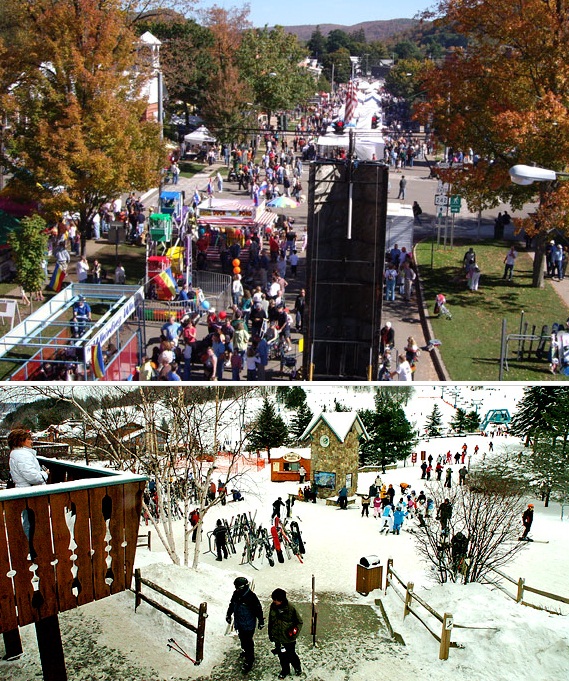
This is a place I go to two or three times a year because there’s always something happening. They have 11 festivals spread throughout the year. Ellicottville has a compact pretty-as-a picture postcard downtown. It’s void of big-box retailing. There are plenty of historic brick and wooden buildings that have been re-born as unique, quirky, crayon-coloured stores and restaurants www.ellicottvilleny.com or 1-800-349-9099

Ellicottville NY- top- late Summer bottom- mid Winter

Randolph, N.Y.
(140 kilometres)
Not far from Ellicottville you’ll find the tiny village of Randolph. This village and the outlying countryside are deliciously peaceful. You’ll find a large thriving population of Amish families. As you drive the back roads, you’ll pass numerous styles of Amish horse and buggies. Loose your camera for this part of the trip. The Amish don’t like to be photographed. We spent all day visiting and speaking with these fine people who operate numerous businesses along, “The Amish Trail” that are open to the,” English”. Some of the places we visited specialized in toy making, farming, jams, pies, cheese making, quilting, pillows, and rugging. Forget your credit card. The Amish only accept cash and they’re closed on Sundays.
www.NYAmishTrail.com or 1-800-331-0543

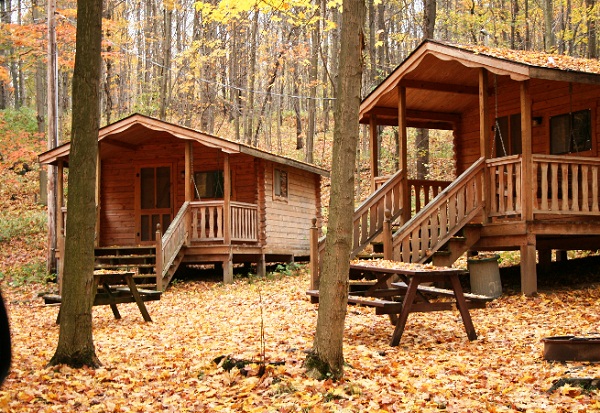
Stay cabins along the Amish Trail in Randolph

Hammondsport N.Y.
(250 kilometres)
I was originally trying to find Watkins Glen when I got lost and stumbled upon Hammondsport N.Y. What a hidden gem it turned out to be. This small community is nestled at the southern end of Lake Kueka and set in a protected valley in New York State’s Finger Lakes region. You can’t be in a hurry here. An old-fashioned town square anchors the village. Historic buildings snuggle side-by-side around its perimeter. The star attraction here is pristine Lake Kueka. There are also well maintained homes on the tree-lined streets date back to the 1800’s.Just on the outskirts of town is the Glenn H. Curtis Museum. It pays tribute to Glenn Curtis a pilot who took the first preannounced flight in America on July 4, 1908.In January of this year Budget travel voted Hammondsport the, “Coolest Small Town in America”. Well, so much for my hidden gem.
www.hammondsport.org

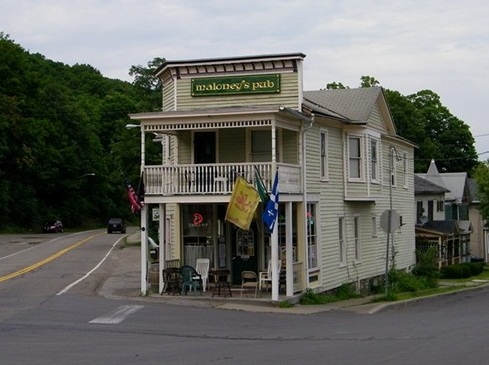
Heritage architecture and vintage ooze at Maloney’s Pub in Hammondsport

Medina, N.Y.
(69 kilometres)
I have known some great breakfast joints in the past but Rudy’s Diner (closed Sundays) found in this friendly village along the old Erie Canal is one of the best. Just about everything here is made from scratch and reasonably priced in this converted 1940’s Sinclair Gas Station.
This town founded in the 1820’s echoes of the nineteenth century. Check out these things. Their beautifully restored downtown is very walkable. Don’t pass up seeing the Oak Orchard River Gorge and Medina Falls. It’s hard to find so ask a local. On the outskirts of town is the Culvert Road Tunnel. It’s the only arched roadway running under the Erie Canal. This narrow tunnel is like going through the eye of a needle! One must, is a visit to the Medina Railroad Museum (closed Mondays and major holidays).If you have kids they’ll love it and so will you. Tell owner Marty that George and The Silo sent you.
www.medina-ny.com

So there you have it. Enjoy the remaining bit of Summer holidays and remember September and October are beautiful months. For the Silo, George Bailey.

Star Ancestors Extraterrestrial Contact In Native American Tradition

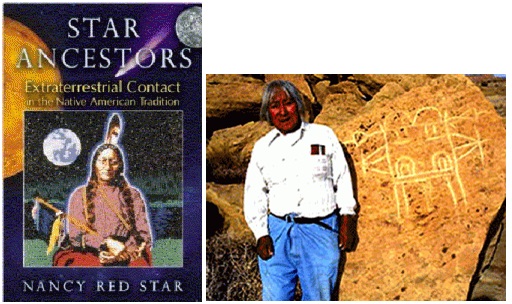
Star Ancestors by Nancy Red StarNancy Redstar explores the long-standing contact between American Indian tribes and extraterrestrial visitors through interviews with the tribes’ spiritual leaders and shares the wisdom and ET experiences of Dawnland founder Dana Pictou, Mayan daykeeper Hunbatz Men, Choctaw wisdomkeeper Sequoyah Trueblood, and Creek healer and artist Shona Bear Clark.

Her book includes color photos of ET-inspired work by prominent Indian artists as well as traditional Indian art and petroglyphs depicting contact with “Sky Elders”

As humanity stands at the crossroads between the Fifth and the Sixth Worlds, American Indian wisdom keepers have recognized signs that they must now speak their closely held knowledge about extraterrestrial contact, their original instructions from the Sky Elders. These ET relationships have existed since the beginning of time. They have been depicted on ancient rocks and hides, embedded in creation stories, choreographed in sacred dances, beaded on wampum belts, and continued to this day through rituals and the tobacco blessing.

They show our planet back into balance with natural laws.

Exploring the unifying “Sky Elder” theme found in virtually every Indian culture, Nancy Red Star shares her profound interviews with wisdom keepers from several Native traditions and produced an exciting documentary film that offers their teachings on taking our rightful place among the peoples of the universe. http://www.nancyredstar.com/film.htm

Laying out a path for rebuilding our world, the Sky Elders’ original instructions initiate us into the possibility of a coming time of peace. Inviting all peoples to realize their Star ancestry, the women and men of proud lineage and inspiring wisdom who share their experiences here offer us a survival plan for walking into the next world. http://www.amazon.com/Star-Ancestors-Extraterrestrial-American-Tradition/dp/1591431433

For the Silo, George Filer. from Filer’s Files #23 http://tinyurl.com/ka82j4j