In the era of social media, it only takes a few seconds for a picture to change the world. Photographs shared on sites like Facebook, Twitter, Instagram and Pinterest can shape public opinion in seconds, which has huge implications for politics, marketing, and social campaigning.
Last week, amongst the many iconic images doing the rounds on people’s timelines and newsfeeds, one from the world of sport stood out: the shots of Jose Bautista tossing his bat after hitting a game-winning home run in the Toronto Blue Jays’ 6-3 win over Texas Rangers.
The image at the top of this article summed up the passion and emotion that are hallmarks of Bautista’s style of play, and drew attention to the fantastic entertainment that the Blue Jays’ campaign in the American League Championship Series has provided for millions of loyal fans.
Anyone who glimpsed the photos and dug a little deeper into the backstory would have learned of Bautista’s brilliant performance in a do-or-die game for the Jays. The contest was full of drama and controversy, disputed calls, crucial errors, and brilliant baseball.
In countries like the UK, where baseball barely registers on the radar of most sports fans, moments like this can be pivotal. All of a sudden, legions of sports fans sit up and take notice of what’s happening overseas, and some of them fall head over heels in love.
image: tsn.ca
All it takes is a performance like Bautista’s to send sports fans into action. Some of them will be slow burners, taking note of the Blue Jays’ progress over the years before gradually developing into full-blown fans. Some will use their newfound interest in baseball as part of their sports betting strategy. Sports betting is huge in Europe, and many avid gamblers relish the opportunity to gain an advantage over bookmakers and place bets on the less-talked-about sports at online destinations like Bet365 and others.
Then, there are the sports fans who will take drastic action when they discover a new sport that they enjoy. These are the superfans who will go straight to the Blue Jays’ online store, immediately buy themselves a jersey, and then book themselves on the next available flight to Toronto in time to catch the very next game taking place at Rogers Centre.
Sports clubs and franchises have cottoned on to this, and are employing marketing managers who are wise to the power of social media to gain new fans overseas and bring them flocking to the stadiums and stores where they will spend their money and contribute to the club’s coffers.
Baseball is some way behind sports like football, which have been successfully exported to Europe through initiatives like the International Series, which sees a number of NFL games played in London each season.
Europe lacks the stadiums and infrastructure to support a similar export of baseball, but that certainly won’t stop clubs like the Blue Jays from reaping the benefits of the new fans who will support the club from afar if they continue to send powerful messages around the world via the web. For the Silo, Keith Allison
[See Comments at the end of this article for updates Ed.] “All my pension goes to pay my electricity” – constituent. With Ontario boasting the highest energy prices in North America, quite honestly I don’t know how some people get by. When people bring their electricity bills into my office, it provides a line-by-line window on just how difficult it has become to pay the bills.
Recently I met with a couple who live in a modest 790 square foot house – they heat with one electric space heater, have been wearing heavy sweaters all winter and are doing absolutely everything they can to keep costs down. But their hydro bill for January was $641.67 — $233.89 of which was delivery charge. During the meeting I was told: “All my pension goes to pay my electricity.”
Nowadays if you can’t afford your electricity, in many cases, you don’t have the option of paying interest or getting caught up later – your service is simply shut off. To have service reconnected is often hundreds of dollars. If someone can’t afford their bills in the first place how will they ever be able to pay exorbitant fees for reconnection? Apart from closing down cheap coal generation, there are many reasons why hydro has skyrocketed.
For example, the Feed-in-Tariff (FIT) Program pays out massive subsidies for wind and solar contracts to produce power we don’t need. This continues to drive up the cost of electricity which rose by 26 per cent between 2008 and 2010 – projected to rise another 46 per cent by the end of this year. The FIT Program, with its overly-generous payments, will cost taxpayers $4.4 billion more than the previous Standard Offer Program. Wind generators operate at 28 per cent capacity and their output is out of phase with electricity demand during certain times of the day.
You can’t store electricity, so we pay the U.S. and Quebec to take the surplus power off our hands. We’ve paid them $1.8 billion over the past six years. Their industries use this cheap power to compete even harder with our manufacturers, and so the downward spiral continues.
If you’re a large user, look for the words ‘Global Adjustment’ on your hydro bill. Simply put, Global Adjustment covers the spread between market price and guaranteed price paid to generators, plus the cost of paying standby natural gas plants not to produce electricity, as well as paying for conservation programs. One North Bay manufacturer had a Global Adjustment — nonexistent on their 2009 hydro bills — of $1,700 on their electricity charge of $1,400 for that month. The Global Adjustment is expected to increase tenfold, from $700 million in 2006 to $8.1 billion in 2014. This will certainly cause more Ontario manufacturers to close up shop and move to cheaper locales.
Also, watch for the Smart Meter charges to hit home. The computer system cost $250 million, and the bill is now due.
Let’s not forget the cancellation of the Oakville power plant and cancelling, demolishing and relocating the Mississauga power plant. These cancellations were nothing more than political ‘seat savers’ for the last election and will cost taxpayers $1.1 billion.
Click Me!
In many ways the Green Energy Act put the desires of the renewable power industry ahead of the needs of people and Ontario businesses – a perfect formula for killing jobs and crippling consumers. For the Silo, MPP Toby Barrett
DID YOU KNOW?- Norfolk Power (and in fact all Ontario Municipal power companies to the best of our knowledge-CP) has a 13 days past due policy for Service Termination Proceedings. Even small “ma and pa” businesses provide 30 day terms and even 60-90day terms before sending out Collection Letters or Warning Letters. We contacted Norfolk Power and were told that “it’s standard policy- set by Ontario’s Energy Board”. Hmmm- that sounded like a standard “sub-standard” explanation to us, so a bit of research showed that the Ontario Energy Board is a self-regulated, internally filled board that sounds impartial but is anything but- in fact we were unable to determine exactly who or how board positions are filled, never a good sign for impartiality. If you decide to call them at 416 481 1967 be ready for one of the most confusing answering services you will ever find. Messages prompt you with a never ending supply of websites and telephone numbers- finally if you are persistent enough you will be asked to “press 9” to consent for your personal information to be gathered, recorded and used by the Ontario Energy Board- not exactly consumer friendly. I suppose you could always speak with one of the Public Information Officer but then they will refer you to media relations. You won’t be transferred (we were told they aren’t allowed to) so keep a document open and handy- 416 544 5171 and then the process begins again only this time you are immediately connected with an answering machine asking for your credentials. *sigh Fifteen minutes later from when we started our initial inquiry we realized we might as well be prospecting for dare we say it “oil”. [Update- Many Municipal aka “County” Hydro companies including Norfolk Power have sold their electricity services to Hydro One but have held onto their Water services. Ontarians will now receive a separate bill for Water and a separate bill for electricity. Perhaps more confusing, in Spring of 2015 Ontario announced that it would sell 15% of its Hydro One holdings in an IPO plan that will eventually sell off another 45% in order to raise money for debt repayment, transportation and infrastructure programs. Targeted buyers would be Canada’s largest pension plans. http://www.bloomberg.com/news/articles/2015-04-16/ontario-to-sell-15-of-hydro-one-one-of-biggest-iposEd. ]
If you have the brain power – take a look at this excerpt from the Energy Board’s website- listing (in broad terms) changes to Ontario’s energy act- which ultimately affects consumers in Ontario and their payment and use of energy:
1907-1959
The Natural Gas and Oil Wells Act marked the Province’s early concern for the proper management of its energy resources – a concern that evolved through the Natural Gas Act of 1918, the Natural Gas Conservation Act of 1921 and the Ontario Fuel Board Act of 1954.
1960-1998
The Ontario Energy Board Act, 1960 created the Ontario Energy Board (OEB) as a successor to the Ontario Fuel Board. The OEB was authorized to set just and reasonable rates for the sale and storage of gas and to make orders granting leave to construct pipelines for the transmission of oil or gas to expropriate land for oil or gas pipes.The Ontario Energy Act, 1964 clarified certain powers of the OEB and strengthened the sections dealing with gas storage. An amendment to this Act in 1965 set out the ground rules for the OEB in determining the rate base of gas utilities and giving the OEB power to make regulations prescribing a uniform system of accounts for gas companies.On June 7, 1973, the Premier announced the establishment of the Ministry of Energy which would include the OEB. Further amendments were made to the Ontario Energy Board Act which included provisions for the appointment of additional board members and making the OEB responsible for annual reviews of rate and rate-related matters of Ontario Hydro.In the late 1960s and early 1970s, the oil crisis developed in the Middle East, causing natural gas prices to soar. Ontario Hydro turned to nuclear generation and the public became conservation conscious. During that time, the Board decided on hundreds of natural gas applications and conducted major reviews of Ontario Hydro rates.
1998
The mandate of the Board changed significantly with the passage of the Energy Competition Act, 1998 (ECA) The ultimate goal of the ECA was the creation of a competitive market in the electricity and natural gas industries.To achieve the goal of creating a competitive market in the electricity industry, the former Ontario Hydro monopoly was replaced by several business entities including two distinct commercial companies, Ontario Power Generation (OPG) and Hydro One Inc., and one Crown corporation, the Independent Electricity Market Operator, now known as the Independent Electricity System Operator (IESO). OPG has taken responsibility for the generation of electricity while Hydro One owns and maintains transmission and distribution wires. The IESO manages the province’s electricity system and operates the wholesale electricity market. The OEB had varying degrees of regulatory authority over all three corporations as well as the province’s municipal electric utilities.The OEB became responsible for regulating local distribution companies and for ensuring that the distribution companies fulfill their obligations to connect and serve their customers. The OEB also became responsible for licensing certain participants in the market. The OEB regulated all market participants in the province’s natural gas and electricity industries and it provided advice on energy matters referred to it by the Minister of Energy and/or the Minister of Natural Resources.
2002
On May 1, 2002, Ontario’s new electricity market opened. The new market was the culmination of over five years of work by the electricity industry, government, the OEB, the IESO and many other market participants. The generation of electricity became a competitive activity, with electricity bought and sold on the new spot market at competitive prices. The IESO successfully began operating the wholesale market.Over the summer of 2002, record-high temperatures drove up the demand for electricity as well as the market price, which resulted in considerable consumer concern. In response, the government introduced the Electricity Pricing, Conservation and Supply Act, 2002. This legislation, which received Royal Assent on December 9, 2002, capped the price of electricity at 4.3 cents per kilowatt hour for residential, small-business and other designated low-volume consumers, effective May 1, 2002 to May 1, 2006. This legislation also provided refunds, retroactive to May 1, 2002, to compensate those consumers for any costs in excess of the 4.3-cent cap.All transmission and distribution rates were frozen at existing levels until at least May 1, 2006. Utilities were required to receive written approval from the Minister of Energy before any application for rate changes could be submitted to the OEB. This legislation also deemed any interim rate order to be final. In addition, the new legislation modified the OEB’s objectives in the areas of energy efficiency and conservation with respect to both natural gas and electricity from “facilitating” to “promoting.”
2003
Proclaimed on August 1, 2003, the Ontario Energy Board Consumer Protection and Governance Act, 2003, established the new OEB as a self-financing crown corporation and gave the OEB the opportunity to do its work more efficiently and effectively. In particular, the legislation provided for a management committee to manage the activities of the OEB. The legislation further enhanced the OEB’s role in protecting and educating energy consumers.In December 2003, the government introduced the Ontario Energy Board Amendment Act (Electricity Pricing), 2003, which put in place a new interim electricity pricing structure, replacing the 4.3 cent per kilowatt hour (kWh) price cap as of April 1, 2004. Under the interim structure, residential, low-volume and other designated consumers paid 4.7 cents per kWh for the first 750 kWh consumed per month, and 5.5 cents per kWh for consumption above that level.The Act called on the OEB to develop a new electricity pricing mechanism. It also charged the OEB with the responsibility to protect and renew Ontario’s electricity grid by ensuring reasonable charges for the delivery of electricity.The legislation also required the OEB to allow local distribution companies to recoup costs (called “regulatory assets”), the recovery of which had been put on hold in 2002 by the Electricity Pricing, Conservation and Supply Act, 2002. These recoveries would be spread over a four-year period so that they would have only a modest impact on the final price to consumers.
2004
In June 2004, the Government of Ontario proposed a restructuring of the province’s electricity sector in order to encourage new electricity supply, energy conservation and stable prices at a level reflecting the true cost of electricity.The Electricity Restructuring Act, 2004, received Royal Assent on December 9, 2004. The new legislation amended the Ontario Energy Board Act, 1998, and the Electricity Act, 1998.The OEB became responsible for developing a transparent mechanism for establishing electricity commodity prices for eligible consumers who have not signed contracts with electricity retailers. The Regulated Price Plan, which took effect May 1, 2005, replaced the interim two-tier pricing of 4.7 cents per kilowatt hour (¢/kWh) and 5.5 ¢/kWh hour that had been in place since April 2004.The OEB also assumed responsibility for the Market Surveillance Panel, previously the responsibility of the IESO.A new agency, the Ontario Power Authority (OPA), was established to ensure an adequate, reliable and secure supply of electricity in Ontario for the medium and long term. The OEB was given the duty of approving the OPA’s fees and its integrated power system plan and procurement process. The OEB is also responsible for licensing the OPA.
2009
The Green Energy and Green Economy Act, 2009 received Royal Assent on May 14, 2009. Among other things, the legislation amended the Ontario Energy Board Act, 1998 and the Electricity Act, 1998. It established important responsibilities for the OEB and other entities in achieving the objectives of conservation, promotion of renewable generation, and technological innovation through the smart grid.The OEB’s three new objectives are:
The promotion of renewable energy, including the timely connection of renewable energy projects to transmission and distribution systems;
The promotion of conservation and demand management; and
The facilitation of the implementation of a smart grid.
The OEB has an important role to play in ensuring the government’s objectives in the legislation are achieved. That includes ensuring that electricity distributors meet the requirements for renewable generation connection, smart grid implementation and conservation and demand management.
2010
In 2010, Ontario passed the Energy Consumer Protection Act, that would ensure Ontarians have the information they need about electricity contracts and bills, as well as the comfort of knowing they can rely on fair business practices. The new rules come into effect in January 2011.
Silo reader “Jack” sent us this scan of his hydro bill- over 500$ for two months of service for a small 2 Bedroom basement apartment. Notice that he was unable to pay his bill on time due to the fact that his bill accounted for almost 50% of his rent.
The first bill was $237 and the next month was even higher at almost 300$ for a single month of hydro.
Ontario First to Test Automated Vehicles on Roads in Canada
Province Supports Innovation in Transportation Technology
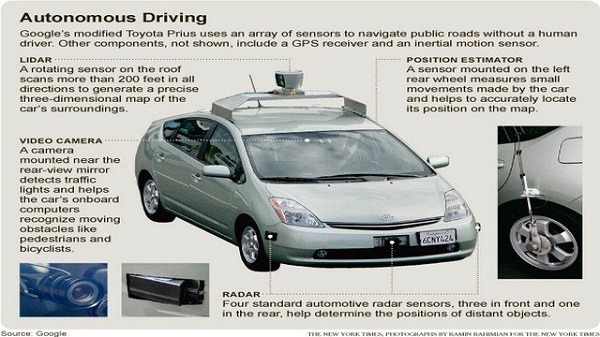
You should take auto-driving cars seriously- every major Auto manufacturer is venturing forward with concepts such as this one from General Motors- the GM EN-V
Ontario is launching a new pilot to allow for the testing of automated vehicles on Ontario roads.
Automated vehicles are driverless or self-driving vehicles that are capable of detecting the surrounding environment using artificial intelligence, sensors and global positioning system coordinates. Automated and connected vehicle technologies have the potential to help improve fuel efficiency as well as reduce traffic congestion, greenhouse gas emissions and driver distraction.
Beginning on January 1, 2016, Ontario will lead Canada as the first province to test automated vehicles and related technology on-road. Currently there are nearly 100 companies and institutions involved in the connected vehicle and automated vehicle industry in the province. The pilot will enable those companies to conduct research and development in Ontario rather than in competing jurisdictions, as well as support opportunities to bring automated vehicles to market.
The province is also pledging an additional $500,000 in funding to the Ontario Centres of Excellence Connected Vehicle/Automated Vehicle Program, in addition to the $2.45 million in funding recently provided. The program brings academic institutions and business together to promote and encourage innovative transportation technology.
Ensuring Ontario’s place as a world leader in the auto, transportation, information and communications technology sectors are part of the government’s plan to build Ontario up. The four-part plan includes investing in people’s talents and skills, making the largest investment in public infrastructure in Ontario’s history, creating a dynamic, innovative environment where business thrives, and building a secure retirement savings plan.
Not all concepts are futuristic looking such as Google’s modded Prius. We’re betting Ontario will test more conservatively styled auto-drivers such as this one. CP image: New York Times
QUOTE
“In the world of transportation, Ontario has the opportunity to show leadership on automated technology. Today, Ontario is making its claim in the global marketplace by taking the next steps in automated vehicle innovation. The automated vehicle pilot will ensure that the province’s roads remain safe without creating burdens that stifle investment and innovation in Ontario’s dynamic business environment.”
— Steven Del Duca, Minister of Transportation
“Ontario is a global leader in developing and manufacturing the next generation of vehicles.
This new pilot program will build on our success, and help Ontario lead the development of automated and connected car technologies. In this highly competitive global economy, investing in people’s talents and skills to create the next generation of innovative technologies is good for business, and can help lead to the easier movement of goods and services across the province.”
— Brad Duguid, Minister of Economic Development, Employment and Infrastructure
QUICK FACTS
Information about applying for the pilot will be available online from the Ministry of Transportation in late November.
Who wouldn’t want to ride/drive Chevrolet’s FNR concept car?
Disponible en français: L’Ontario est la première province à mettre à l’essai les véhicules automatisés La province encourage l’innovation dans les technologies des transports
L’Ontario lance un projet pilote en vue de la mise à l’essai de véhicules automatisés sur ses routes.
Les véhicules automatisés sont des véhicules sans chauffeur ou autoconduits qui peuvent détecter l’environnement avoisinant grâce à l’intelligence artificielle, aux capteurs et aux coordonnées fournies par le système de positionnement global. Les technologies relatives aux véhicules automatisés et connectés ont le potentiel d’améliorer le rendement du carburant et de réduire la congestion routière, les émissions de gaz à effet de serre et la distraction au volant.
Dès le 1er janvier 2016, l’Ontario sera le premier lieu au Canada à mettre à l’essai les véhicules automatisés et les technologies connexes sur la route. Près d’une centaine d’entreprises et d’établissements œuvrent actuellement dans le secteur des véhicules connectés et automatisés dans la province. Le projet pilote permettra à ces entreprises de mener des activités de recherche et de développement en Ontario plutôt que dans les territoires concurrents, en plus de créer des possibilités qui favoriseront l’introduction des véhicules automatisés sur le marché.
La province s’engage aussi à injecter 500 000 $ de plus dans le Programme de recherche sur les véhicules connectés et autonomes par l’intermédiaire des Centres d’excellence de l’Ontario, outre le financement de 2,45 millions de dollars récemment alloué. Ce programme réunit des établissements universitaires et des entreprises en vue de promouvoir les technologies de transport novatrices et d’encourager leur utilisation.
S’assurer de faire de l’Ontario un chef de file mondial dans les secteurs de l’automobile, du transport et des technologies de l’information et des communications s’inscrit dans le plan du gouvernement visant à renforcer la province. Ce plan comprend quatre volets : investir dans les talents et les compétences de la population, faire le plus important investissement dans l’infrastructure publique de l’histoire de l’Ontario, créer un environnement dynamique et novateur où les entreprises prospèrent, et établir un régime d’épargne-retraite sûr. CITATIONS
« L’Ontario a l’occasion de montrer l’exemple par le recours à la technologie automatisée dans le domaine des transports. L’Ontario marque aujourd’hui le marché mondial de son empreinte en franchissant une nouvelle étape pour stimuler l’innovation dans l’automatisation des véhicules. Le projet pilote sur les véhicules automatisés sera mis en œuvre de façon à s’assurer que les routes de la province restent sûres sans créer des fardeaux qui étoufferaient l’investissement et l’innovation dans le dynamique environnement commercial de l’Ontario. »— Steven Del Duca, ministre des Transports
« L’Ontario est un chef de file mondial dans la conception et la fabrication de la prochaine génération de véhicules. Ce nouveau projet pilote misera sur notre succès et aidera la province à prendre les devants dans le développement des technologies des véhicules automatisés et connectés. Dans cette économie mondiale hautement concurrentielle, le fait d’investir dans les talents et les compétences de la population afin de créer la prochaine génération de technologies innovatrices est bon pour les affaires et peut faciliter un mouvement plus fluide des biens et des services dans l’ensemble de la province. »— Brad Duguid, ministre du Développement économique, de l’Emploi et de l’Infrastructure FAITS EN BREF
Le ministère des Transports offrira de l’information en ligne sur la présentation de demandes dans le cadre du projet pilote à la fin novembre.
Article from March , 2013 – In 1981, the World Health Organization introduced Code of Marketing for Breast-milk Substitutes. To date, 84 countries have enacted legislation making the labeling Code law in their countries. While Canada agreed and signed onto The Code and the amendments, to date it has not created any law, which would uphold this International document.
The WHO Code says, among many other items, that breast milk substitutes (including formula and infant foods) should not be directly advertised to consumers because they are sub-optimal foods to feed to babies and infants. Advertising includes newspapers, ads on Google or other websites, texting, and free samples through the mail.
Formula companies in Canada say they abide by the WHO Code by including a preamble in every commercial: “while breast milk is best…” Ask your average consumer today what they think about breast milk and formula and specifically if there is any difference. I have posed this question while working at numerous health fairs in the past 5 years. It is staggering the number of people who view breast milk and formula as having the same nutritional value. In case you do not know already, this has scientifically been proven false.
Over the past 5 years, I have written MPs and MPPs about why Canada does not uphold the WHO Code. What I heard from Health Canada directly is:
The Food Directorate of Health Canada is responsible for the development of policies, regulations and standards for all foods. The Food Directorate is also responsible for the premarket notification process for infant formulas…Manufacturers are responsible for the accuracy of information on the labels and advertisements for food and for compliance…”
This is akin to letting prisoners run the jail.
While writing my monthly (and at times weekly) concerns to government officials, I found an MP who said that, “If we were signatories to it, we should live up to it.” This was Justin Trudeau.
I am saying be politically involved. I have a stack of letters and many emails from all parties in their response to the WHO Code. It has been 30 years since Canada signed The Code. Why is it taking so long to actually do something to enforce it? Enforcing the Code would not result in taking formula off the market at all. The Code’s aim is to make healthier babies and our babies are entitled to the highest degree of health. For the Silo, Stephanie MacDonald.