Startup Weekend is a global event where aspiring entrepreneurs pitch their idea, find some teammates and work on creating a company for only 54 hours. The teams’ aim is to create a minimum viable product (MVP) at the end of 54 hours and pitch it to a panel of judges mostly comprised of investors and business people themselves. The first Startup Weekend Peel was organized by the RIC Centre in Mississauga and held at Sheridan College’s Hazel McCallion Campus .
Team Carddrop lead by Matthew Gardner, Team Carddrop take a quick break to pose for a picture. The members of this winning team are: Graham Kennery,Brennan D’Aguilar,Mathieu Gosbee,Elaine Dalit,Sarah Khalid,Mickolas Boodram,Varundeep Singh
According to the organizers, almost 90 participants signed up for the event and roughly a third of the participants pitched their idea on the first night. Out of all the pitches, only 11 teams got voted to continue to the next level. The whole of Saturday was spent mostly working on the company and listening to the wonderful talks provided by the mentors.
Sunday, October 21st was “the Pitch Day”. The 11 final teams presented what they had worked on over the weekend, provided an insight where they were at, what their next steps would be and what their “ask” was. Only 10 minutes were allotted per team, which included the presentation, MVP demo and the Q & A portion with the judges. Out of the 11 teams, Carddrop bagged the Grand Prize.
Carddrop http://carddrop.me instantly adds full profile information to any phone’s contacts from any location without the use of an application or “app” With a simple scan or tap, multiple e-mails, phone numbers and even a profile photos are supported.
Carddrop took home the following prices:
$1000 Cash Prize by PointClickCare
$500 Training Certificate by VentureStart
$100 from 1st Customer by Silicon Halton
Free video coverage by SwitchVideo
3 hours of consulting by Candybox Marketing Inc.
— Elaine Dalit is a new contributor to the Silo and is a Realtor based in Mississauga, Ontario. She’s passionate about real estate, heritage, arts and tech startups. She blogs at www.whatsinthehood.com and www.homesbylainey.ca
Canada states that new ePassports do not contain biometric data but the ICAO (see supplemental) set standards for passports internationally and do require biometric data. “..1.3 ICAO’s adoption of a blueprint for Biometric ID in MRTDs in May 2003, after extensive work undertaken since 1997, represents an important step forward in machine- assisted identity confirmation. This involved the selection of facial recognition as the globally interoperable biometric FAL/12-WP/83 – 2 – technology, in combination with contactless IC chips for data storage in a logical data structure (LDS), using a modified public key infrastructure (PKI) scheme to prevent unauthorized alteration…” from http://www.icao.int/Meetings/FAL12/Documents/fal12wp083_en.pdf
Gatineau, Québec, October 26, 2012 – Foreign Affairs Minister John Baird today announced that Canada’s new ePassport will be full of iconic images that will make Canadian passports more attractive and more secure.
“The new ePassport will be more reflective and representative of who we are as Canadians,” said Baird during an event at the newly renamed Canadian Museum of History. “These images showcase Canada’s history and the building of our great nation while adding essential new security features for the 21st Century.”
The new images will also serve to keep the Canadian passport one of the world’s most secure travel documents. The complexity of the images is – first and foremost – a security feature that makes the passport more difficult to counterfeit.
“Our government is tremendously proud of Canada’s rich history. We urge all Canadians to learn more about the events and people that shaped Canada and the great sacrifices made to secure our freedom,” added Baird.
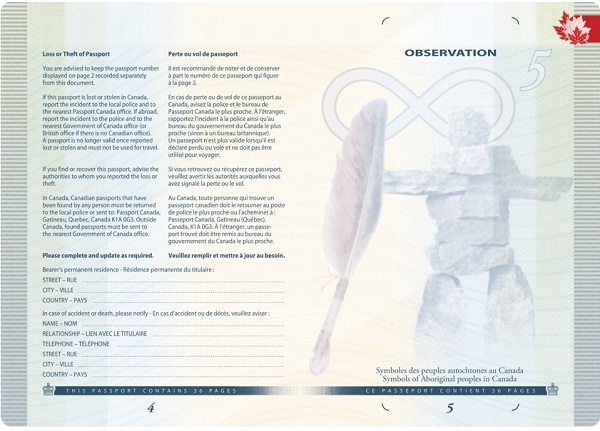
A look at the inside of the new Canadian ePassports image courtesy of ppt.gc.ca
Countries around the world review their passport designs and security features periodically to stay steps ahead of counterfeiters. The new-look ePassport will help facilitate legitimate trade and safe, secure travel which, in turn, helps create jobs, growth and long-term prosperity for Canadians.
The first 5-year ePassports will be issued in select locations during the first quarter of 2013. Production will ramp up through the spring resulting in the full availability of both a 5- and 10- year ePassport in early summer.
For a look at [ more of ] the images included in the new ePassport, please visit the new section on Passport Canada’s website, which features images and descriptions of the new passport design: www.pptc.gc.ca/eppt/photos.aspx?lang=eng.
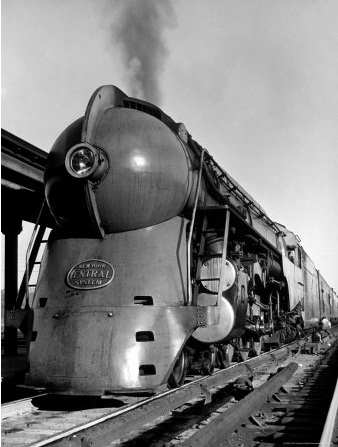
“20th Century Limited Train on Tracks” by Alfred Eisenstaedt
The deficit projection for the current fiscal year has improved by more than $400 million from the 2012 Budget forecast to $14.4 billion. The province remains on track to meet the 2012 Budget deficit targets in 2013-14 and 2014–15 and for the deficit to be eliminated by 2017–18.
Ontario is projecting growth in real gross domestic product (GDP) of 2.0 per cent in 2012, 1.9 per cent in 2013, 2.3 per cent in 2014 and 2.4 per cent in 2015.
As of September 2012, Ontario employment was 356,000 net new jobs above its recessionary low in June 2009. Ontario is expected to create nearly 350,000 net new jobs by 2015, reducing the unemployment rate to 6.8 per cent from a high of 9.4 per cent in June 2009.
The fiscal plan provides no funding for incremental compensation increases for new collective agreements. The government is currently consulting on draft legislation that proposes to freeze compensation for executives and managers across the Ontario Public Service, and the Broader Public Sector (BPS) who are eligible for performance pay. It also proposes to ensure future BPS collective agreements are consistent with the province’s goals to eliminate the deficit and protect jobs and public services. The proposed draft legislation would support avoiding increased spending in the BPS of $2.8 billion over three years and help to protect roughly 55,000 public sector jobs.
QUOTE
“Despite ongoing global economic uncertainty, Ontario is ahead of its targets for lowering the deficit for the fourth year in a row. We will work with anyone who is willing to work with us to meet the objectives of eliminating the deficit and protecting jobs and public services.”
— Dwight Duncan, Minister of Finance
QUICK FACTS
• The 2012–13 revenue projection of $113,019 million is $445 million above the 2012 Budget outlook, largely reflecting a higher estimated 2011–12 tax base. Consistent with the government’s continued effort toward managing the growth in expenses, total expense for 2012–13 has decreased by $3.7 million compared to the 2012 Budget plan.
• Robust business capital investment, a rebound in net trade and increased consumer spending will be key contributors to growth. Over the past two years, business investment spending on plant and equipment has risen by more than 22 per cent, or
$11.1 billion.
• In the 2011–2012 Public Accounts of Ontario, the government announced the deficit for 2011–12 was $13.0 billion, marking the third consecutive year in which the province has improved on its fiscal projections. This result is also 47 per cent lower than the 2009–10 deficit of $24.7 billion forecast in the fall of 2009, at the depth of the global recession.
• The government has brought together business, labour and public sector leaders to form the Jobs and Prosperity Council. Reporting to the Premier, and headed by RBC President and CEO Gordon Nixon, the council will explore additional opportunities in the next few months for a path to sustainable growth that will also help inform the 2013 Ontario Budget.
• The 2012 Budget extended the pay freeze for MPPs by a further two years — for a total of five years.
What kind of tax break would you like to see? Ontario has gotten itself into a difficult situation. Too many people have lost their jobs, our province has lost its leading position in the country, and government has lost its ability to balance its books.
We face a critical choice. Either we implement sensible policies that create jobs and prosperity or we accept a future of high debt, declining public services and living below our economic potential.
The first and most basic thing government needs to do is balance the books. The second is to start to pay down the debt. We can’t afford to run government on a credit card. Interest on our accumulated debt is $10.6 billion a year. That’s a cost we’re passing on to our kids. It slows the economy and restricts government services for years to come.
Over the past nine years, families and businesses in Ontario have experienced a number of unpleasant tax surprises. The primary factor in our slow job creation is high tax levels. The top marginal tax rate in Ontario today is 49.5 per cent. That’s simply too high. Economists have demonstrated that overly high tax rates can actually reduce tax dollars collected because they are a strong disincentive to work. Lower taxes create jobs and higher taxes deter them. We can address the problem of 600,000 people out of work in Ontario, in part, through tax policy.
The three main taxes in Ontario are personal income tax, corporate tax, and the harmonized sales tax. Given that tax cuts create jobs, which sector tax cut do you think would be most effective for job creation? To provide input, contact me at 1-800-903-8629 or toby.barrett@pc.ola.org.
Fair competition means giving all businesses an equal chance. It’s not up to government to act as an investment banker to support some businesses at the expense of others. Rather than use public money to favor companies that know how to work the system, use those tax dollars for broad general benefit. Ending corporate welfare will provide enough for significant tax changes.
Ontario has long benefited from free and open markets. The 1960’s Auto Pact between Canada and the United States, and the North American Free Trade Agreement that superseded it, fueled the manufacturing boom in this province. But while $2 billion worth of trade crosses the Canada-U.S. border each and every day, too often the border is a traffic jam, delaying goods and workers from crossing. Breaking this bottleneck with our largest trading partner, and the costly delays at other entry and exit points along our
southern border, is vital to growing Ontario’s economy. Ontario should embrace the economic opportunities in Alberta, Saskatchewan and British Columbia and tear down the barriers that separate us.
Ontario is long overdue for a major reduction in rules that regulate businesses. Some regulations are necessary, but Ontario has accumulated an absurd paperwork burden that costs the province’s businesses too much time and money. We need fewer rules, and those rules must meet a clear need.
We can drive growth through innovation and ingenuity – and through a belief in markets, in entrepreneurialism, in competition and in free trade. These are values that have long driven economic success around the world. And government can lead economic growth with policies to reduce taxes, balance the books, boost trade and cut red tape. By MPP Toby Barrett
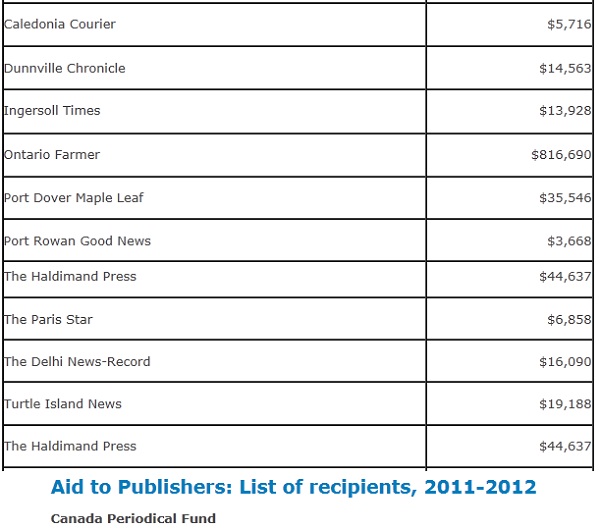
Corporate welfare? In 2011-2012, $ 1,021,521 was steered to Haldimand-Norfolk-Oxford newspapers in one grant alone. image: www.pch.gc.ca
Marineland prostesters at Niagara Falls, Ontario. Summer 2012.
Madeleine Meilleur, Minister of Community Safety and Correctional Services, has announced Ontario is proposing legislative amendments to improve care for marine mammals at aquariums and zoos and strengthen animal welfare enforcement.
Ontario is proposing legislative amendments to improve care for marine mammals at aquariums and zoos and strengthen animal welfare enforcement.
-Propose legislative amendments to the Ontario Society for the Prevention of Cruelty to Animals (OSPCA) Act http://www.e-laws.gov.on.ca/html/statutes/english/elaws_statutes_90o36_e.htm
to improve provincewide enforcement of animal protection measures in the Act. They would also strengthen the governance of the OSPCA.
-Create new regulations to further protect marine mammals in captivity. Explore options for the licensing of zoos and aquariums.
Ontario will continue to work with the OSPCA and other animal welfare partners to fulfill these commitments. The government is also releasing the Animal Welfare Task Force’s report. The task force was established in response to the OSPCA-commissioned Meek-Lesage Review into animal sheltering in Ontario.
QUOTES
“There is no place in our province for those who abuse animals. That’s why our government is continuing to fight for the protection of animals by working with our stakeholders to further strengthen the legislation to make sure all animals can live free of abuse and neglect.”
– Madeleine Meilleur, Minister of Community Safety and Correctional Services
FACTS
•The OSPCA Act was last amended in 2009 to be the strongest animal welfare legislation in Canada.
•There are over 60 zoos in Ontario, which is more than the number of all other provinces combined.
•The Animal Welfare Task Force is made up of government ministries and stakeholders with connections to animal shelters, including the OSPCA.
•The task force concluded animals are well served by Ontario’s animal shelters but has recommended improvements in public health, the operation of shelters, and animal worker health and safety.
Tune in here on Tuesday October 9th and watch Felix Baumgartner make his record freefall attempt.
It’s October 5, 2012 and Felix Baumgartner is about to smash the 50+ year old free fall height record and break the sound barrier along the way.
Using a lighter-than-air balloon for the ascent stage, Baumgartner will float above Roswell, New Mexico, USA to the edge of space and then open the door of his pressurized capsule. It will be one small step for a man, and one giant fall for Felix and one giant marketing coup for RedBull.
When I was a fellow at the Canadian Film Centre’s New Media Lab in 2009, I was asked to make three predictions about future ‘real-life’ trends. Near the top of my list was increasingly ‘extreme’ extreme sports. I think I have gotten that one right, and if you’d like to know what the other two were drop me an email. With each leap in technology, mankind has been able to attempt more extreme feats. Technology has allowed us, the viewer, to live directly through real life participants much more vicariously than ever before, and mainstream virtual reality is just around the corner. Like a feedback loop, technology pushes the boundaries of what the human mind can conceive and what the human body can accomplish. Symbiotically, as we achieve more and more incredible feats, technology is utilized to not only showcase these feats but to instill an empowerment. More on this later….
In the early decades of the last century, extreme sports included seemingly placid activities when viewed with today’s sensibilities. Consider these examples: crossing the English Channel by airplane, modifying an automobile with solid rockets to reach a speed of 100 miles per hour, diving into the sea from a height of one hundred feet. In their allotted place in time, these activities were considered to be incredibly extreme and borderline committable.
Technology at that time meant that in order for a viewer to share in the participant’s experience, the viewer needed to read about the event in the newspaper, listen to the event on the radio or visit the event in person. This was a time of great internal imagination as methods and technologies in play were mystical and were not an everyday occurrence in those viewers lives. That being said, the crossing of the English Channel by airplane and other flights of fancy were made possible due to “magical signals traveling through the ether”. Aka: wireless radio technology. A pilot was now able to fly by honing in on radio signals. This same technology was used to broadcast news of the flight and this connectedness via the same technology may not be symbiosis in the traditional ecological sense but is most certainly a form of extreme mutualism. (Spinoza’s Theory of Imagination says essentially the same thing in his Extended Pattern Preservation Doctrine: The persistence of an individual [replace ‘individual’ with ‘same technology’] through time consists not in the sameness of underlying substance but, insofar as it is conceived through extension, in the persistence of a distinctive pattern of communication among moving parts. *
Our era is markedly different.
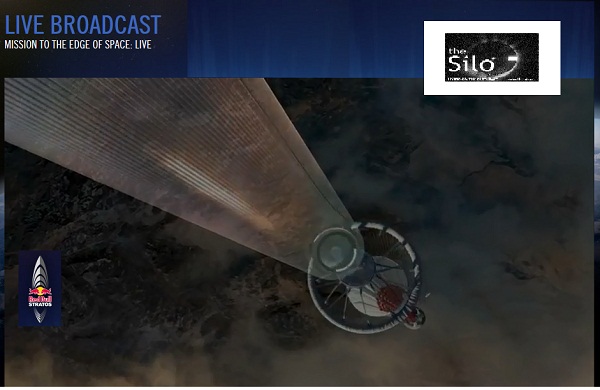
It is one of internal and external imagination. When Felix Baumgartner rides to the edge of space, we get to ride with him. We can watch a live stream of his progress, observe his ‘vital stats’: real-time mission statistics by watching the graphics on our smart device. We can hear the banter between mission control and Felix. We are in effect Felix Baumgartner’s mute passenger. (We will be hosting the LIVE feed right here in this post at the window below. UPDATE due to high winds today’s rescheduled attempt has been postponed until further notice. Check #freefall on Twitter for latest updates. )
This is a much more immediate and virtual form of reality and the excitement is compounded by our anxiety and our sense of power.
We sense our power because we have the very same technology that makes this attempt possible. If you happen to be a regular watcher of a reality television show involving a performance and a smartphone voting system you are essentially experiencing an empowerment. You hold in your hands an actual component of the program and take part in a communal experience. This is not just “must see t.v.”, this is “must do t.v.”
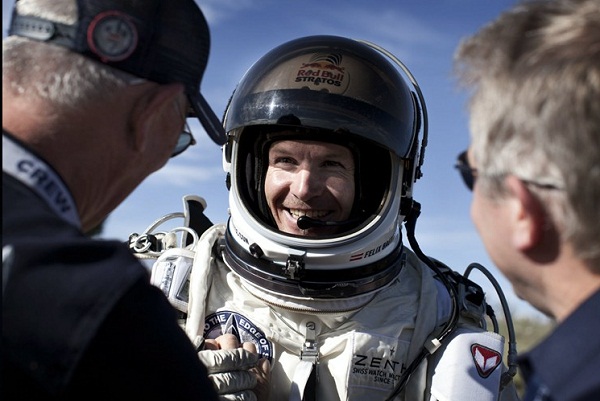
“Fearless” Felix
Much like NASA and the current MARS mission, Baumgartner’s team and sponsor Redbull have come to understand the necessity for hype and sensationalism in order to draw attention to their work and secure future projects. If no bucks=no Buck Rogers, then no Buck Rogers= no bucks.
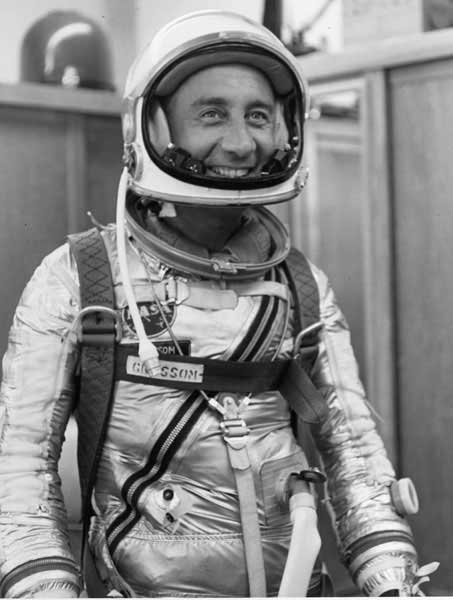
Gemini and Apollo astronaut Gus Grissom. RIP Gus.
Really though, it’s not an economic strategy that I wish to point out here.
It’s the potential for an economic strategy, the potential for a social strategy, the potential for an emotional strategy and in fact all the potential strategies that our digital age has room for. Extreme human activities are by their very nature extremely emotional. They connect with us on a deep rooted, conscious and subconscious level. It’s like a modern incarnation of the primitive hunt or the ancient journey.
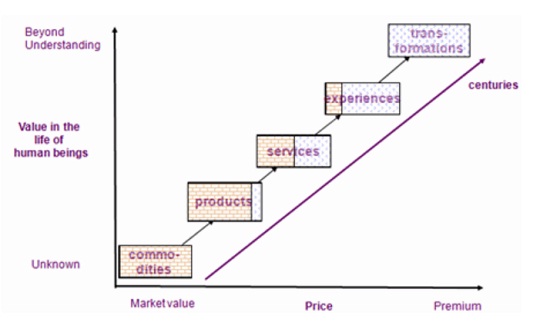
The development of economy and a look at where experience currently influences commerce.
If you choose to experience Felix Baumgartner’s highest free fall record attempt live on your smart device or project it into your living room like we are planning on doing here at the Silo office- you will be transformed on some level. (In the marketing and advertising world this is known as Pine and Gilmore’s Experience Economy.) That’s probably due to the fact that the natural environment, though beautiful, is incredibly dangerous and deadly and throughout our development as we have come to dominate this planet, we have developed and conquered by using technology. Is it incredulous to suggest that by using our smart device to experience these dangerous feats, we are in fact celebrating mankind’s conquering of danger and nature through technology? The very technology that we now hold in our hands? For the Silo, Jarrod Barker.
Ontario’s Environmental Commissioner Gord Miller. The Environmental Commissioner of Ontario is the province’s independent environmental watchdog. Appointed by the Legislative Assembly, the ECO is tasked with monitoring and reporting on compliance with the Environmental Bill of Rights, and the government’s success in reducing greenhouse gas emissions and in achieving greater energy conservation in Ontario.
Queen’s Park – The McGuinty Liberals have consistently failed to deliver simple policies and programs to protect and conserve our environment. These failures negatively affect our economy, communities and well being.
A [Sept 25,2012] report from the Environment Commissioner of Ontario cites many examples of how the government has failed to provide adequate water protection programs, monitor wild life populations and protect public health from industrial dust pollution. Ontario needs water protection and conservation programs to deal with the more extreme weather events caused by climate change.
We saw the importance of this first hand with this summer’s drought. Not having proper water supply affects our ability to grow food, our health and the productivity of industry.
The government’s failure to invest a relatively small amount in monitoring wildlife threatens forestry, one of Ontario’s most important industries. It is short sighted and irresponsible to not have a functioning wildlife monitoring program in place.
The government’s failure to provide responsible environmental protection directly affects our health. One of the most obvious examples is the government’s inaction on complaints related to industrial dust pollution. Ontario can do better. We must do better. Getting back in touch with environmental issues is important for our health, economy and quality of life. For the Silo by the Green Party of Ontario