Tag Archives: telescope

Week With The Stars- My Experience At Almeria Spain Astronomy Days

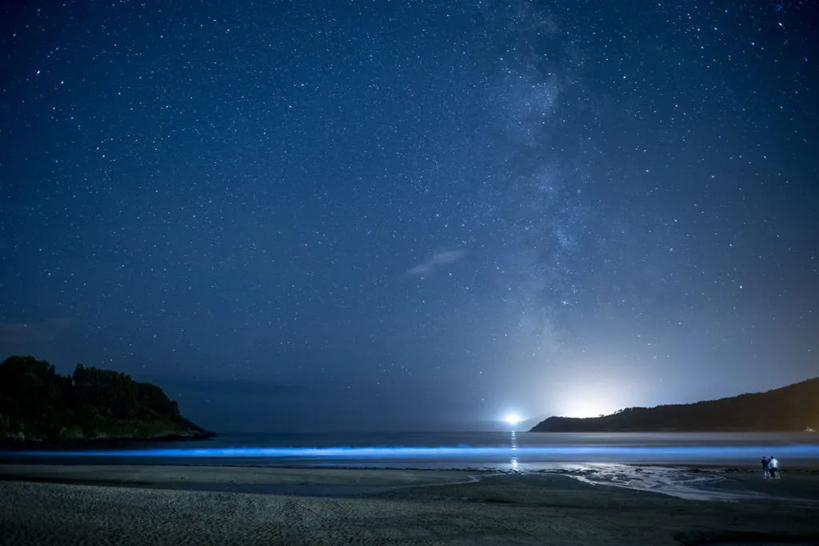
A great night for stargazing. The Milky Way over a bioluminescent sea at Estorde beach, Galicia, Spain. Photo by Brais Lorenzo/Anadolu Agency via Getty Images

What a phenomenal week it’s been here in Almería Spain. If you’ve ever wanted to spend five nights surrounded by brilliant minds talking about the wonders of the universe—all for free—then the 13th Astronomy Days at Teatro Apolo was the place to be.

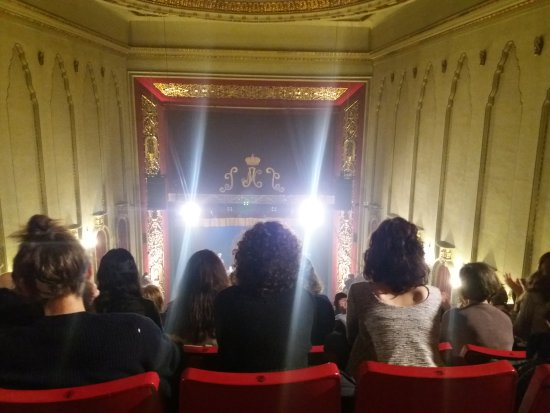
Every evening from Monday to Friday, I joined a packed house at the Teatro Apolo, right on Rambla Obispo Orbera, for one of the most engaging, inspiring, and surprisingly personal science events I’ve ever attended.

As someone with a love for astronomy (but definitely not a scientist), I wasn’t sure what to expect. Would it be too technical? Would the speakers feel out of reach? Turns out—not at all. The talks were not only fascinating, but the speakers themselves were so kind and approachable. I got to chat with all of them after their presentations, and almost everyone was fluent in both English and Spanish, which made the whole experience super welcoming.
Here’s a recap of this unforgettable journey through the stars:

Monday, May 12 – John Mather

The week kicked off in the best way imaginable—with John Mather, Nobel Prize winner and NASA legend. He talked about the James Webb Space Telescope (JWST), and let me tell you: hearing about its mission straight from someone who helped design it was something else.
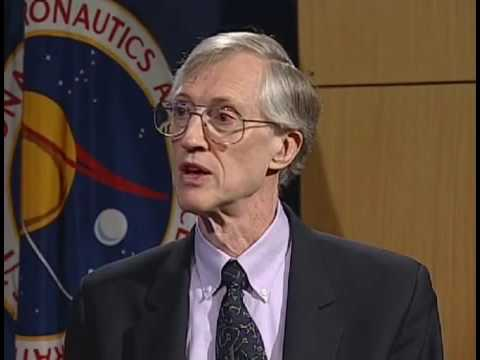
He explained how JWST is literally letting us see the earliest galaxies, basically time-travelling with light, in a way that even I could follow—and I only passed physics with a B.

After the talk, I was lucky enough to have a quick chat with him. He was gracious, humble, and even cracked a joke about how working with ancient starlight makes you feel a little ancient yourself.

Tuesday, May 13 – John E. Beckman

Next up was John Beckman from the Institute of Astrophysics of the Canary Islands (IAC). Originally from the UK, he’s spent most of his career here in Spain, and you can tell he really loves sharing his knowledge.

His talk was all about galaxies—how they form, why they behave the way they do—and it was filled with this kind of poetic curiosity about the universe. He made the whole room feel like part of the story.
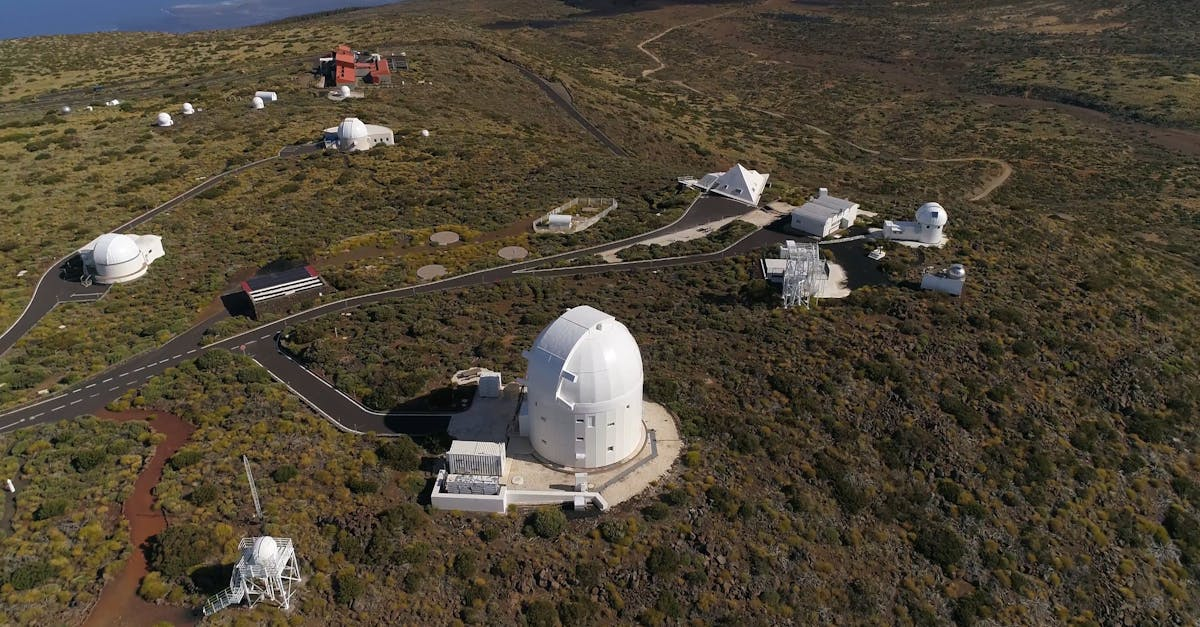
Institute of Astrophysics- The Canary Islands

He stuck around after the lecture, chatting with attendees like we were old friends. I asked him what keeps him inspired after decades of research, and he simply said, “The universe never runs out of surprises.”

Wednesday, May 14 – Martín Guerrero Roncel

Wednesday’s speaker was Martín Guerrero Roncel from the Institute of Astrophysics of Andalusia (IAA), and his passion was contagious. He dove into the bizarre beauty of planetary nebulae—those colourful clouds of gas released by dying stars.

I had no idea how important these structures are in spreading elements across galaxies. His visuals were stunning, and his explanations were super clear, even when things got a little technical.
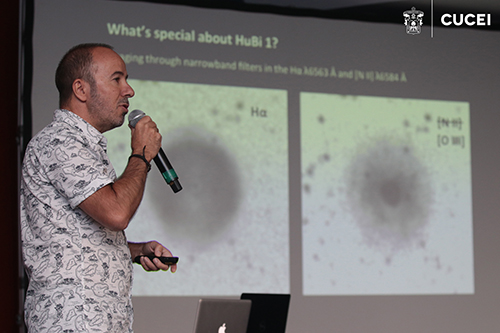
Afterwards, he was more than happy to answer everyone’s questions (and there were a lot), with patience and genuine enthusiasm. Super approachable and just a cool guy overall.

Thursday, May 15 – Sara García Alonso

Thursday brought us the incredible Sara García Alonso—astronaut candidate, molecular biologist, and all-around badass. She talked about her scientific work, the future of space missions, and what it’s like being one of the few selected to train as a European astronaut.
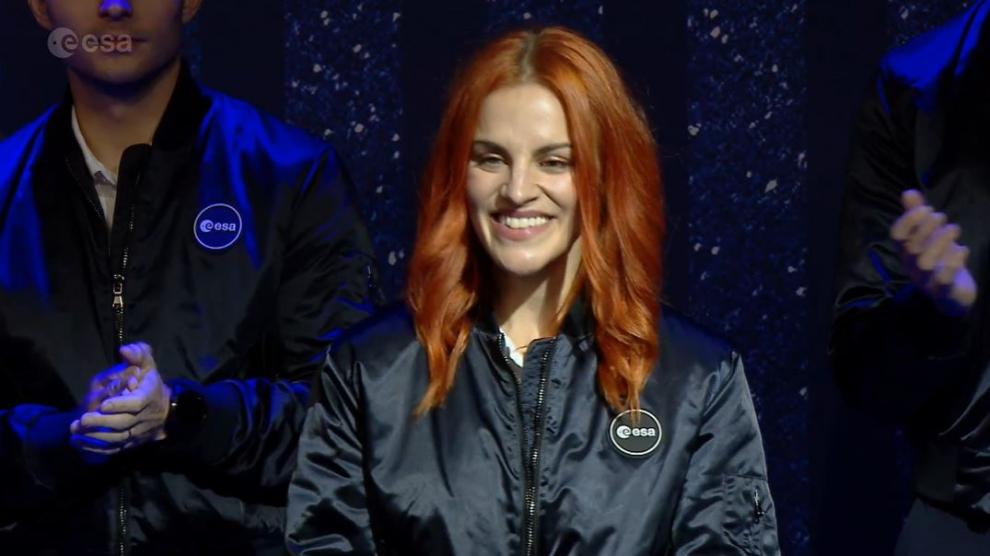
She brought this vibrant energy to the room, blending her love of biology and space exploration into a really inspiring talk. It was especially amazing to see so many young women and girls in the audience visibly lighting up as she spoke.

Friday, May 16 – Eva Villaver Sobrino

The week wrapped up with a bang with Eva Villaver Sobrino, the director of Space at the Spanish Space Agency. Her talk was both visionary and grounded—she spoke not just about scientific discoveries, but also about the future of Spain’s role in space exploration, the importance of collaboration across countries, and the ethical responsibilities we have as we reach further into the cosmos.

She’s been involved in some of the biggest European space missions, and her ability to combine scientific rigour with a big-picture vision of humanity’s place in the universe really struck a chord.

Questions afterward felt like chatting with a wise mentor. She encouraged everyone to keep asking questions and stay curious, no matter their background or age.

Final Thoughts

By the end of the week, I felt like my brain had been stretched in the best possible way. I learned about dying stars, distant galaxies, cutting-edge telescopes, and even the biology of space travel. But more than that, I walked away feeling deeply inspired.

What really made the event special was the human connection. Every speaker stayed around to talk, sign books, take photos, or just share a quiet word. No egos, no academic walls—just real people sharing their love for science.

Huge thanks to the organizers and to Teatro Apolo for making this all happen—and for making it free and open to everyone. Events like this remind us why curiosity matters and how lucky we are to have such brilliant minds willing to share their time and passion.

Already counting down to next year. Until then—keep looking up! For the Silo, Sandia Martin.
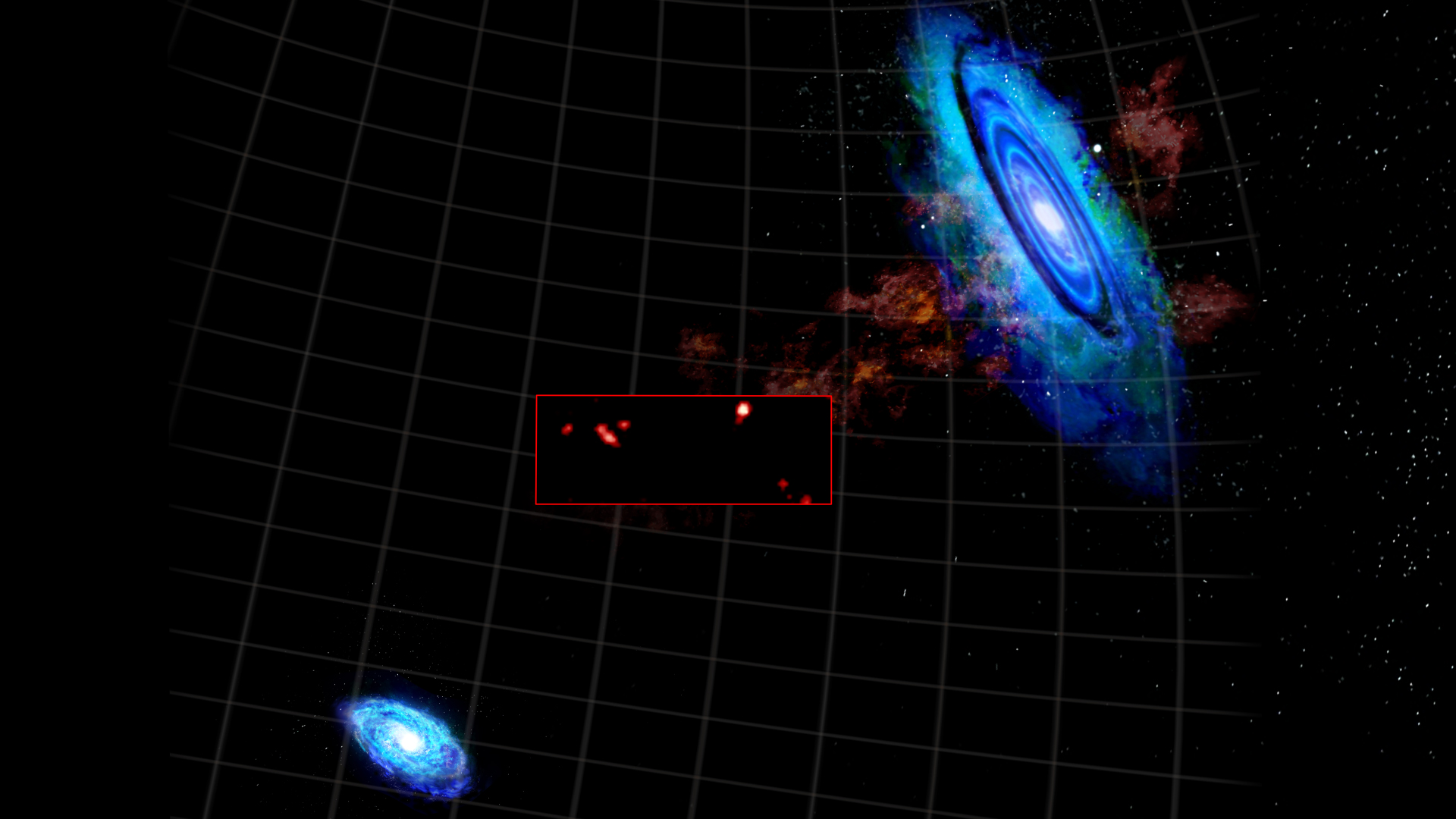
Supplemental-ESA Astronauts Train on Spanish Island for future Space Missions

Astrophysicist Wins Millions Of Dollars For Blackhole And Quasar Study

Schmidt Futures Grants Lehman Astrophysicist $2.94 Million USD For Study of Quasars, Black Holes

BRONX, N.Y. – (August , 2020) – A Lehman College astrophysicist has been awarded a $2.94 million grant by Schmidt Futures, for a five-year study about the structure and evolution of the universe, black holes, quasars and dark energy.

Where have all the quasars gone?

Schmidt Futures is a philanthropic initiative, founded by Eric and Wendy Schmidt. Eric Schmidt is the former CEO of Google. The grant will award $1.8 million directly to Lehman College and the remainder as a subaward to the University of Montreal.

“This by far is the biggest project we’ve ever attempted,” said Matthew O’Dowd, an associate professor in the Physics and Astronomy Department and writer and host of PBS Space Time. “It’s quite ambitious…and will define the next five years of our scientific lives.”

O’Dowd will lead a team of researchers and students from Lehman, the Borough of Manhattan Community College (BMCC) and the University of Montreal as they study data collected from the Vera C. Rubin Observatory (previously referred to as the Large Synoptic Survey Telescope (LSST), currently under construction on Cerro Pachón in Chile. It is an 8-meter-class telescope coupled to a 3.2-gigapixel camera – the world’s largest digital camera ever fabricated for optical astronomy.

A photograph and rendering mix of the exterior of the Vera C. Rubin Observatory building on Cerro Pachón in Chile. Image credit: LSST/NSF/AURA

The observatory, the first in the U.S. to be named after a woman, will survey the entire sky of the Southern Hemisphere every three days for the next decade, O’Dowd said, and will map the dynamic nature of the universe. Each single snapshot will cover an area 40 times the size of the full moon.

O’Dowd’s team will develop a machine-learning pipeline (also known as artificial intelligence) for the observatory “to analyze the flickerings of thousands of distant quasars whose light in the very distant universe is powered by violent storms of matter falling into gigantic black holes,” he said.

Due to the enormous dataset and the non-linearity of the problem, machine learning methods are the only viable method for integrating these effects into a model and analyzing thousands of quasars in real time.

“I believe I have assembled the only people in the world who can do this before LSST begins operation, including some machine learning leaders who have just taken faculty jobs at the University of Montreal,” he said. “So that’s our plan: to develop new machine-learning techniques and build them into an analysis pipeline for (the observatory).”

“People are fascinated by these things and we hope to extend their curiosity about the wonders of the universe,” O’Dowd said.

Once the team begins work, O’Dowd will invite Lehman graduates, post-doctoral fellows and current Lehman undergraduates to participate in the project.

“This project is exciting and will help us attract excellent grad students and if it also helps influence other students to come to Lehman, then that’s fantastic,” he said.

“This is an excellent project that will push the limits of precision of measurement and very difficult computing to clarify important questions in cosmology and high-energy astrophysics,” said Stuart Feldman, chief scientist of Schmidt Futures. “We are delighted to support this path breaking work.”

“This is an incredibly prestigious award and we are incredibly proud of Matt,” said Dr. Pamela Mills, dean of the College’s School of Natural and Social Sciences. “He is very good at communicating science and is an amazing physicist. He is, and has been tapped, as one our young leaders.”

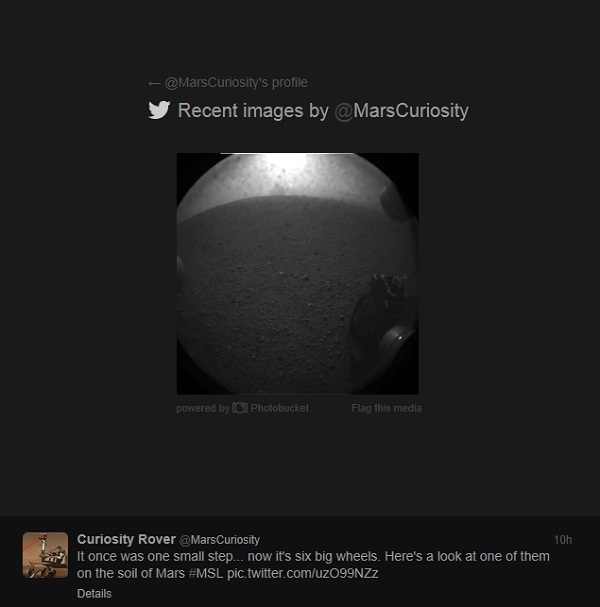
Watch LIVE and archived streams of Mars Rover Curiosity

We’re back on Mars!

If you’re a space geek, science fan or techno nerd then you may already know a bit about the latest planetary lander called Curiosity. Today (August 6th, 2012) this engineering marvel (not to mention the challenge of sending and landing) sits near Gale Crater (this crater is so big there’s a mountain called Mount Sharp inside it CP) and prepares to investigate some of the most geologically interesting areas on the Red Planet.

What’s the big deal? This is an investigation that could unravel the greatest mystery of all…..”is/was there life out there?” So without further ado, here is the LIVE stream with real time chat. Update Aug6 10:03PM EDT the first LIVE stream has ended but has been archived and will play in the window below. Other LIVE streams will play in real-time as the mission developments continue. CP Update Aug22  1:03PM EDT we will be streaming the LIVE NASA press conference with updates on the mission and rover status. Video feed begins at 2:30 PM EDT CP


Live broadcasting by Ustream

  Stop-motion landing sequence video


August 22nd 2012 post NASA stream-

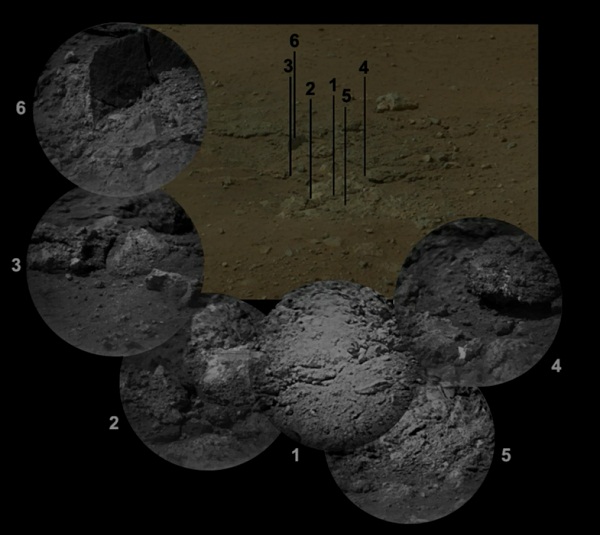
Testing out the optics on board the rover. These are an array of basalt rocks likely similiar to “Coronation”

 
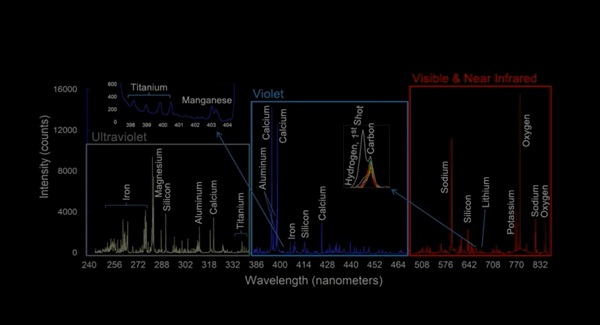
The MARS/NASA/JPL team showed media the first scientifically laser-beamed and analyzed Mars rock during today’s press conference. This Basaltic rock (called Coronation by the team) displayed interesting hydrogen variations and preliminary results showed more hydrogen measured on its surface with exponentially decreasing amounts as the laser probed deeper.

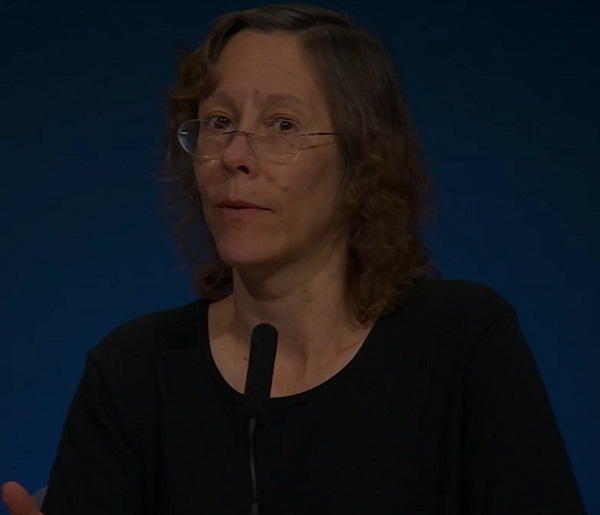
Planetary Scientist Joy Crisp answering media questions during today’s Live feed.

The plan now before searching for water, is a ramping up of technical and rover checkouts, a more thorough planning order of activities and lengths, driving the rover to new sites for rock drilling and investigating what scientists are calling ‘scours’- ground indentations made by the Sky Crane thrusters during the descent of the Mars rover.
Scientists caution the fact that there are no definitive time tables for upcoming tests. This is due to such unpredictable conditions as weather forecasting and rover checkouts and performance. As these tests are conducted and checkouts are completed, the Mars team hope to learn how to ‘fine tune’ future tests after properly calibrating the rovers testing instruments. For example, the wavelength instrument is affected by the slight temperature shifts from the time of the Mars day and from the rover’s movements.

Spectrum results from Mars Rock “Coronation”. Note the Hydrogen peak after laser ‘zap’ #1. image:NASA/TheSilo

Reporter questions focused on the geological aspects of today’s conference and the team responded enthusiastically about plans to drive the rover to areas that have bedrock and opportunities for testing varied rock types. A short video in honor of deceased science fiction author and Mars fan Ray Bradbury rounded things out. As one scientist put it “ We are only 16 days into a two year mission.” Stay tuned. CP