Lockheed Martin continues refining its technology solution for Space Fence, a program that revamps the way the U.S. Air Force & U.S. Space Force identifies and tracks objects in space. The U.S. Air Force selected Lockheed Martin in 2015 to build a $USD 914 million / CAD $1.25 billion Space Fence Radar to Safeguard Space Resources.
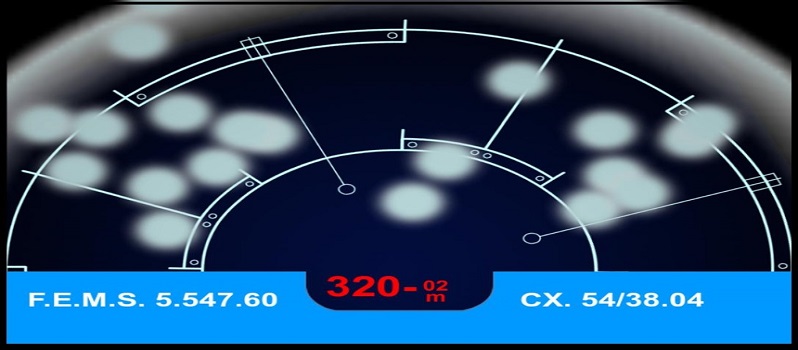
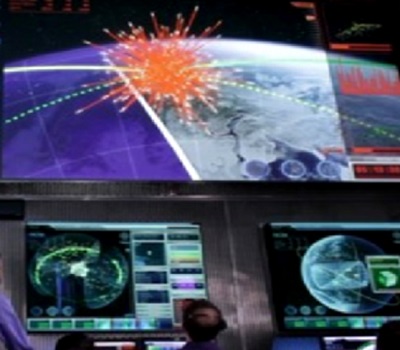
Lockheed Martin’s Space Fence solution, an advanced ground-based radar system, enhances the way the U.S. detects catalogs and measures more than 200,000 orbiting objects and tracks over 25,000 orbiting objects. With better timeliness and improved surveillance coverage, the system protects space assets against potential crashes that can intensify the debris problem in space.
“Space Fence locates and track space objects with more precision than ever before to help the Air Force transform space situational awareness from being reactive to predictive.”
Lockheed Martin delivered up to two advanced S-Band phased array radars for the Space Fence program. The Space Fence radar system greatly improves Space Situational Awareness of the existing Space Surveillance Network.
There is a lot to track and growing space debris every year.Construction of the new Space Fence system on Kwajalein Atoll in the Marshall Islands began in February 2015 to meet the program’s 2018 initial operational capability goal. With more than 400 operational S-band arrays deployed worldwide, Lockheed Martin is a leader in S-band radar operation. The Lockheed Martin led team, which includes General Dynamics and AMEC, has decades of collective experience in space-related programs.
Headquartered in Bethesda, Maryland, Lockheed Martin is a global security and aerospace company that employs approximately 113,000 people worldwide and is principally engaged in the research, design, development, manufacture, integration and sustainment of advanced technology systems, products and services.
On 16 December 2002, US President George W. Bush signed National Security Presidential Directive which outlined a plan to begin deployment of operational ballistic missile defense systems by 2004.
The following day the US formally requested from the UK and Denmark use of facilities in RAF Fylingdales, England and Thule, Greenland respectively, as a part of the NMD Program.
The administration continued to push the program, despite highly publicized but not unexpected trial-and-error technical failures during development and over the objections of some scientists who opposed it. The projected cost of the program for the years 2004 to 2009 was 53 billion US dollars/ 72.2 billion CAD dollars, making it the largest single line in The Pentagon’s budget. For the Silo, George Filer.
Don’t worry, we will get to the jacket- but first the story starts in 1836 in Victorian England. And it you weren’t there you didn’t miss anything. It included a grumpy-looking queen, bad weather, a lot of sexual repression, and rich people throwing buckets of human waste out of their windows.
On the plus side it also had a bunch of scientists running around like kids on acid. One of them was Michael Faraday – Victorian England’s answer to David Blaine.
Over the last 190 years the Faraday cage has gone from a crazy Victorian scientist sitting inside an electrical storm, to critical black-ops architecture, to a wildly experimental jacket that looks like it’s emerged from a craft in Dune.
A Faraday cage at the US Bureau of Standards (now NIST) used to protect delicate measuring instruments from electromagnetic fields.
Now Michael was a showman. But instead of freezing himself in ice, or suspending himself in a glass box, his trick was making super abstract physics feel tangible. And his greatest stunt of all was standing inside an electrical storm. In front of a packed out theatre at the Royal Institution in Mayfair, Faraday lined a large wooden box with metal foil, hit it with discharges from high voltage electrical machines… then calmly stepped inside. Sparks crackled across the outside of the enclosure. Blue light crawled over the metal skin. Faraday meanwhile stood there in silence. Like the final boss. While the energy simply flowed around him.
It might have looked like he’d built his own supersized coffin – complete with all the necessary equipment to kill him – but it turned out Faraday understood equations as well as he understood spectacle.
Made from approx. 50% copper
Blocks electromagnetic waves from 0.2GHz to 14GHz
Eight-pocket defensive storage system with shielding flaps
By the time he stepped into his foil-lined cube, he’d already spent years dismantling older ideas of electricity.
A Faraday cage isn’t a wall. It’s a detour. When an electromagnetic field hits a conductive enclosure, the free electrons inside it immediately start to flow, redistributing themselves across the surface until the field inside is cancelled out. Build the right shape from the right material, and electricity behaves like water flowing around a rock.
It’s one of the simplest demonstrations of how matter tells fields what they are allowed to do. The impact of Faraday’s experiment quickly escaped the lecture hall – because the Faraday cage didn’t just deflect static charge, but whole regions of the radio frequency and microwave spectrum.
The principle was applied in bunkers, test chambers and secure rooms. Then in spacecraft, data centres, radar installations and intelligence facilities, where even a stray spike of interference can crash systems or corrupt data. Today our Faraday Cage Jacket is a descendant not only of that wooden box, but everything that followed in its footsteps. It’s the same physics. Just shrunk. Softened. And wearable. And you can join the waiting list here.
We designed it from scratch, using the principles of clothing and electromagnetic infrastructure at the same time.
And this is what transforms it from a pure physics experiment, to an object that looks like it’s just emerged from a craft in Dune. Most of us spend our lives today inside a semi-permanent yet completely invisible electromagnetic fog: radio waves from antennas. Microwaves from routers. Radar from aircraft. Signals bouncing between satellites, phones, vehicles and buildings.
So the first Faraday Cage Jacket treats that electromagnetic energy the same way someone climbing Everest would treat cold weather – as something you can defend against, and insulate yourself from. It blocks electromagnetic waves across the 0.2–14GHz range. This includes all the unseen wiring of the digital age: WiFi at 2.4GHz and 5GHz. Bluetooth at around 2.4GHz. Mobile networks. As well as higher-frequency Ku-band satellite and radar systems. In lab testing the material reaches shielding effectiveness figures of up to 92 dB – for reference this is the kind of level normally associated with secure infrastructure and electromagnetic test laboratories.
Every seam and every opening affects how energy moves across the jacket.
So the job of the design is to manage those electromagnetic fields.
And that’s why the jacket is built from large, faceted spaceship-style panels and snap-down flaps. Overlapping sections create layered shielding zones and add 10 – 20 dB more attenuation. Each overlap is another place for energy to be redirected – another chance to keep it moving around the body instead of through it.
The jacket’s eight pockets are designed the same way. Instead of flat bags stitched onto a shell, they’re three-dimensional, origami-like bellows pockets that form enclosed volumes that behave less like pockets and more like small rooms – put a device inside one of these pockets and it’s almost impossible to track, hack or even call. So if you’re looking to shield yourself from the dystopian conditions our future digital overlords set – whether that’s surveillance, space radiation, or select parts of the electromagnetic spectrum – the Faraday Cage Jacket belongs in your future.
Technical Details
Outer material: Shieldex® Kiel + 30 non-woven shielding textile
Material composition: 48% copper, 46.5% polyamide, protective acrylic coating
Textile normally used to shield rooms and electronic environments
Shielding effectiveness: up to 92 dB in lab testing
Blocks electromagnetic waves from 0.2GHz to 14GHz
Thermally and electrically conductive
Naturally antimicrobial
Eight pockets including double-entry origami bellows pockets
Snap-down pocket flaps to add additional shielding
1986 film- Aliens radar motion tracker. Now this tech is ready for Queen’s Park.
Eight years ago at Queen’s Park, the Cross-Border Institute (CBI), part of the University of Windsor, hosted an event to demonstrate advances in security, surveillance and fingerprinting technology. That technology had immediate application for border crossing screening, supply chain security and cybersecurity.
The CBI hosted the event as part of its mandate to support ongoing, practical research aimed at addressing numerous cross-border issues with the United States. The CBI works in collaboration with a number of University of Windsor departments, private sector partners and organizations and all levels of government, looking at making land border crossings work better. The technologies demonstrated represented a number of research projects and initiatives currently being conducted at the University of Windsor as part of its strategic focus related to understanding borders. These projects and activities were also supported by the Department of Research and Innovation at the University of Windsor.
Queen’s Park staff and members had a first-hand opportunity to see the work of Dr. Roman Maev’s high-speed biometrics ultrasonic system for 3-D fingerprint imaging. This system allows reconstruction of fingerprint patterns from deeper layers of skin while embedding the internal parameters of these deeper layers as key features of the fingerprints. Also on display was Dr. Sazzadur Chowdhury’s 77GHz short range radar. At the time- the smallest and thinnest in the world and economical enough to be carried by an individual for mobile motion detection or used in multiples in such large surveillance application as airports. Cue the Aliens movie soundtrack. Both Drs. Maev and Chowdhury are members of the University of Windsor Faculty.
The University of Windsor has developed an area of expertise in technologies that can detect threats and violations, provide positive identification and secure the transfer of data. The projects all have practical security applications and are at or approaching the commercialization stage. All of these projects have received support from the Federal Development Corporation for Southern Ontario (FedDev Ontario) Prosperity Initiative Project 802390, which is administered by the Cross-Border Institute at the University of Windsor.
Quick Facts: The Cross-Border Institute at the University of Windsor was founded in 2008 under the direction of Dr. Bill Anderson. The Centre approaches the study of border issues from a multi-disciplinary perspective that includes economic development, geography, engineering, management science and political science. The CBI has focused on initiatives, events and research that address ongoing challenges at land crossings between Canada and the United States. The CBI, as part of the University of Windsor, looks at the impact of trends in cross-border transportation and the impact of policy decisions by governments on both sides of the border. Currently, the CBI is working to launch Canada’s first university level certificate program in border management, Managing Borders and International Trade.
Technology Quick Facts: Short Range Radar for Surveillance Applications – UWindsor engineering professor Dr.Chowdhury has developed the world’s smallest and thinnest short-range radar unit. Because it is inexpensive to build and completely weatherproof it can be used effectively in a variety of applications for motion detection, ranging from individual units attached to a soldiers uniform to arrays of units for border and perimeter surveillance.
High Speed Biometrics Ultrasonic System for 3D Fingerprint Imaging – World-renowned UWindsor physicist Dr. Maev has taken a new approach to fingerprinting using acoustic microscopy technology. This device generates far more detailed information from fingerprint images below the skin level, making it more accurate than conventional technologies, yet it is fast and practical.
Real Time Location System for Security and Indoor Location – Based on the novel indoor positioning method developed by Dr. Majid Ahmadi and Dr. Rashid Rashidzadeh at the University of Windsor, this system will identify, locate and track people in indoor environments. Its positioning algorithm takes advantage of various sensors on smartphones to improve positioning accuracy.
Automated Vehicle Identification – Cameras that can read license plate information are increasingly common. University of Windsor computer scientists Dr. Imran Ahmad and Dr. Boubakeur Boufama have taken this technology several steps farther, allowing the shape and colour of a car to be extracted from video feeds and stored in a database. This technology will be tested in the University of Windsor’s new parking structure in the Spring of 2015.
Data Encryption Using Graphical Processing Units (GPUs) – Data encryption is an increasingly important function that normally requires the use of expensive add-on cards known as crypto-accelerators. UWindsor researcher, Dr. Roberto Muscedere has developed algorithms that make it possible to achieve the same kind of encryption using much cheaper GPU units typically found in laptop computers and game consoles.
Secure vehicle-to-vehicle (v2v) communications – Advanced vehicular communications technology has enabled such life-saving features as collision warning, collision avoidance and emergency vehicle signaling. However these systems may be vulnerable to cyber-attacks that threaten the privacy and safety of drivers and passengers. University of Windsor faculty researchers Dr. Mitra Mirhassani, Dr. Kemel Tepe and Dr. Wu and their students are working to fill security gaps in V2V systems.
Control, Monitoring and Surveillance in Wireless Systems – Large scale power and communications systems, manufacturing and process control plants, networked building energy systems and others are increasingly controlled by autonomous, sensor-rich, wireless systems. Given the consequence of failure in these systems and the danger of cyber-attacks upon them, UWindsor researchers Dr. Mehrdad Saif, Dr. Rashid Rashidzadeh, Dr. Alavi and Dr. Razavi-Far are developing methods to detect intruders and faults early.
Sensor fusion for concealed weapons detection – Conventional images are good for revealing a person’s identity, while infrared images can spot concealed weapons. But what if you want to both identify a person and know if they are concealing a weapon? A University of Windsor engineer, Dr. Jonathan Wu, has found a way to fuse information from different sensors to produce a clear image not only of a suspect’s appearance but also of any concealed weapon they are carrying. For the Silo, Jarrod Barker. Learn More: www.uwindsor.ca/crossborder
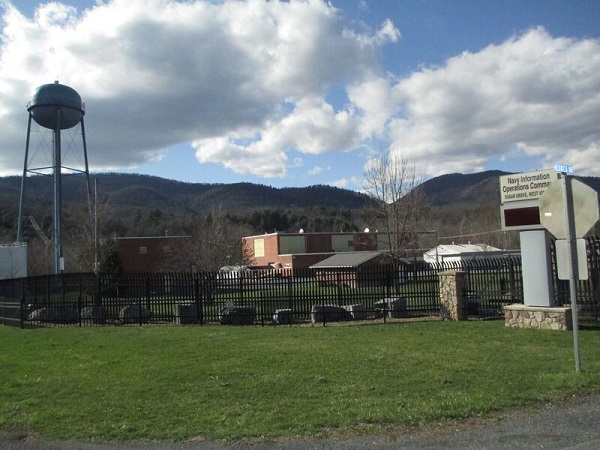
An abandoned United States Navy Information Operations Command spy town with 80 homes and amenities such as bowling alley and football field is going to auction and featured this week by our friends at TopTenRealEstateDeals.com.
View from just outside the main gate.
“United States Spy Town Auction”
It’s not the first time that an entire American town has gone on the auction block, but it might be the most unusual. Sugar Grove Station, West Virginia was originally a United States Navy military base to support part of the National Security Agency’s surveillance operation. Though the array of giant parabolic dishes that continue to track location and content of international telecommunications activity is still in operation and not part of the sale, they are completely obscured from view behind thick forest on their ridgetop one mile distant. When it became unnecessary to house related analytical staff at the base, it was retired in the fall of 2015 and put up for auction to the highest bidder over $1 million.
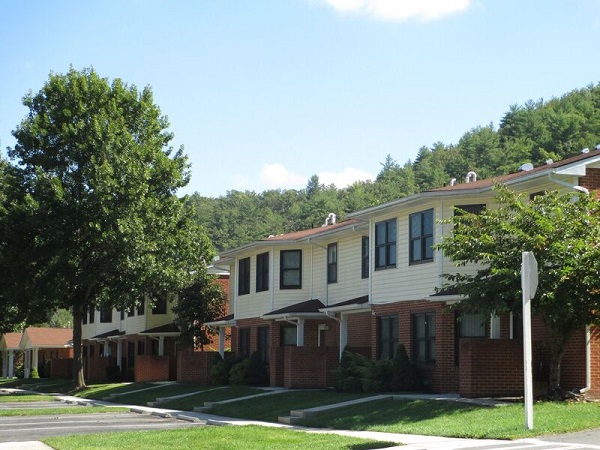
Lincoln Housing homes looking very inconspicuous.
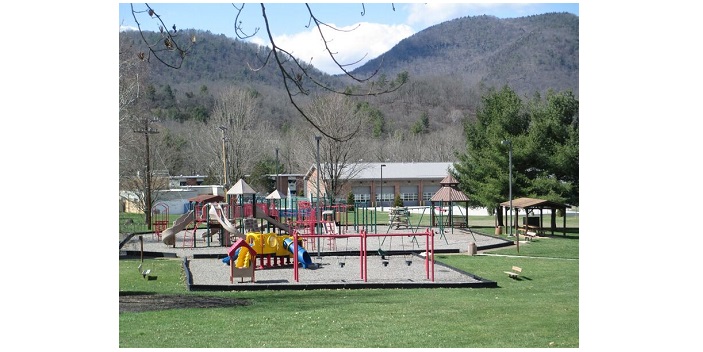
Built between 1960 and 2014, the fenced and gated rural town has private full-service utilities to support as many as 500 people on over 120 acres. Included are 80 homes on tree-lined residential streets in like-new condition, a swimming pool, bowling alley, youth daycare center, community center with fireplace which was designed to function as a restaurant with bar, a gym, full-sized indoor basketball court, tennis and racquetball courts, a football field, large playground with kiddie pool, and twelve guest cabins for visitors. There are also several large buildings for multiple use as well as a four-section hobby building for working on cars, woodworking shop and other creative pursuits. For community safety, a police station and fire station are already in place.
Sugar Grove is surrounded by the George Washington and Jefferson National Forests between the Allegheny Mountains and the south fork of the Potomac River. It is located within a 13,000-square-mile area known as the National Radio Quiet Zone, so cell phones, WiFi and any equipment operating on radio frequencies are restricted from use. The Quiet Zone was established in 1958 by Congress so as not to interfere with the operation of the nearby parabolic dishes or the National Radio Astronomy Observatory 30 miles away.
Interior of dorm housing unit. Note the security desk.
Former U.S. Navy base, Sugar Grove Station, perfect as a corporate retreat, academic campus, corporate training center or left to one’s imagination is up for auction by the U.S. General Services Administration with a minimum bid of $1 million. Auction ending date not yet determined. For the Silo, Terry Walsh.

Lockheed Martin Space Fence Tracks Over 25,000 Orbiting Objects
 Lockheed Martin Space Fence Tracks Over 25,000 Orbiting Objects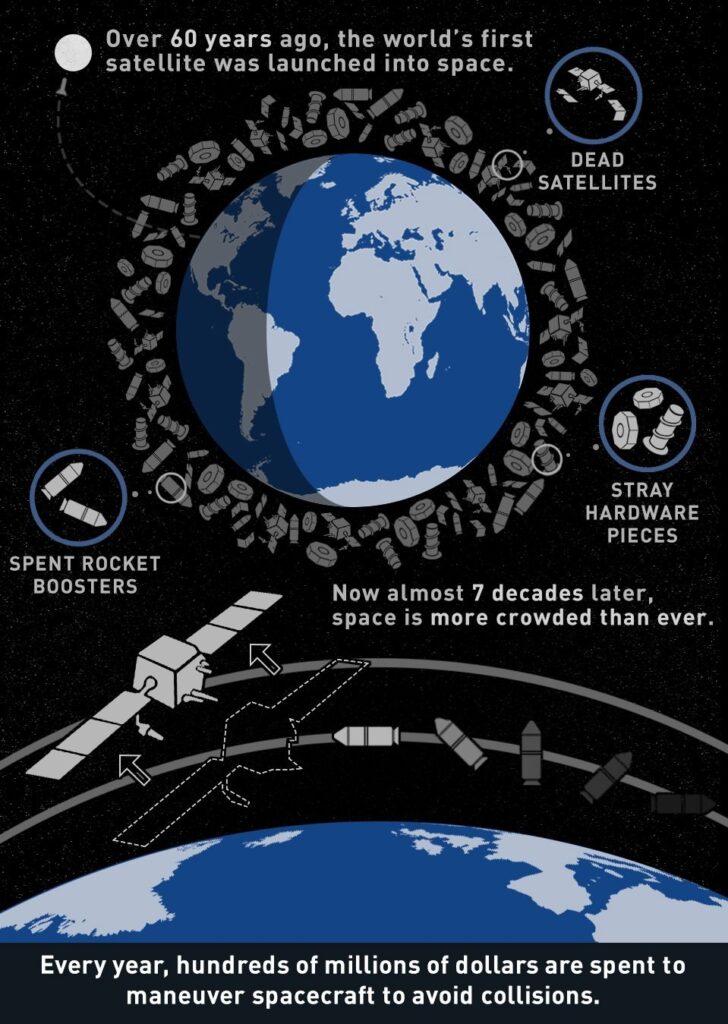
![That's a LOT to track! [CP]](https://www.thesilo.ca/wp-content/uploads/2015/06/SpaceFenceMain.jpg)