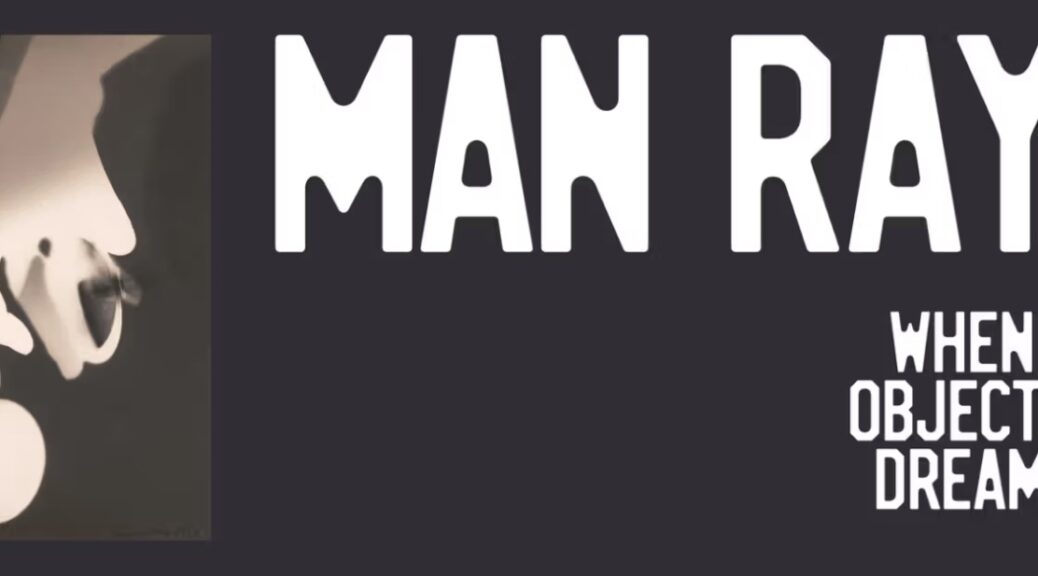
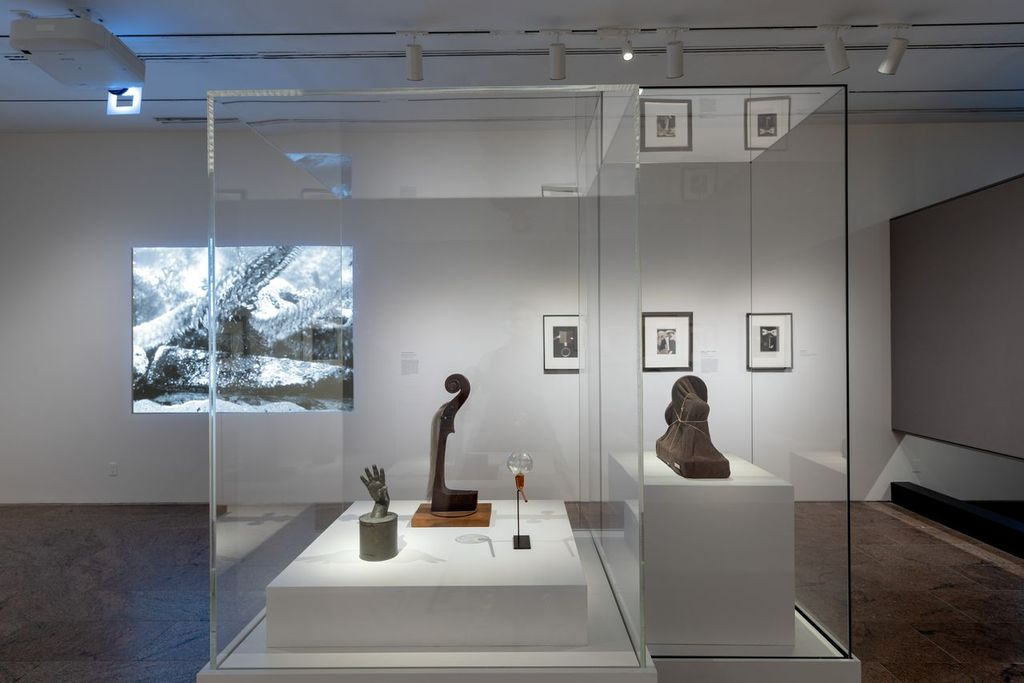
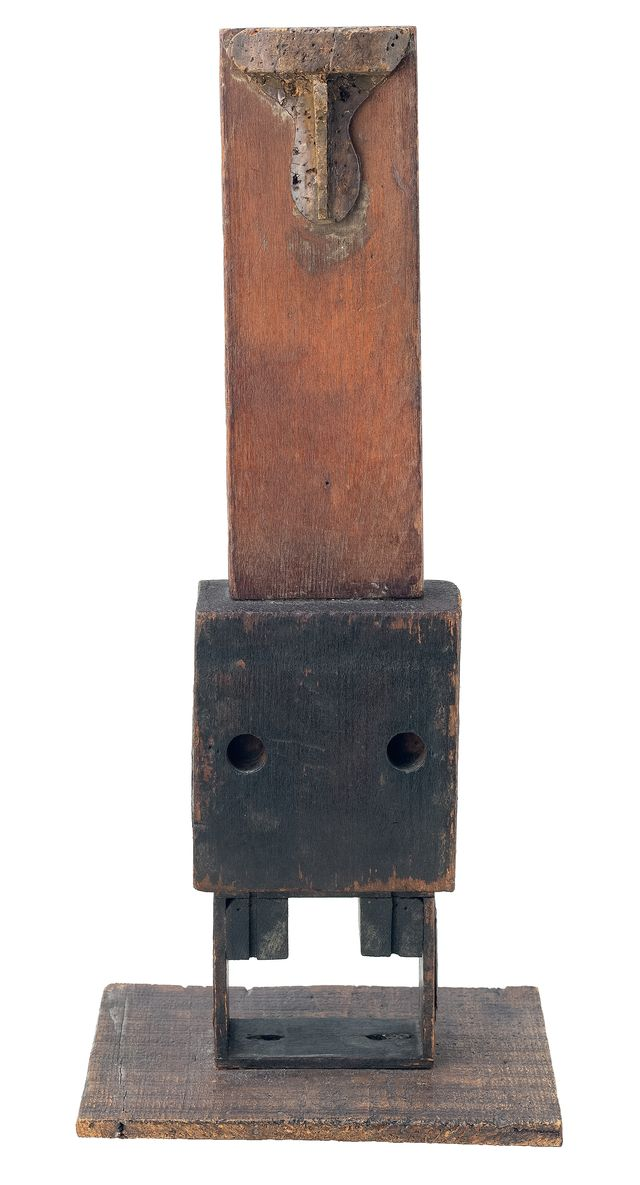
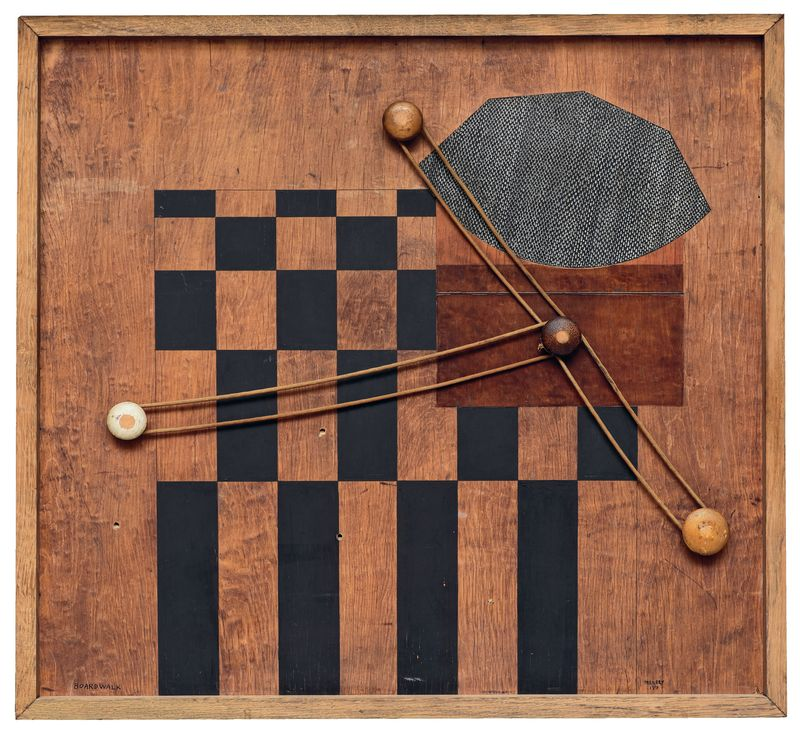
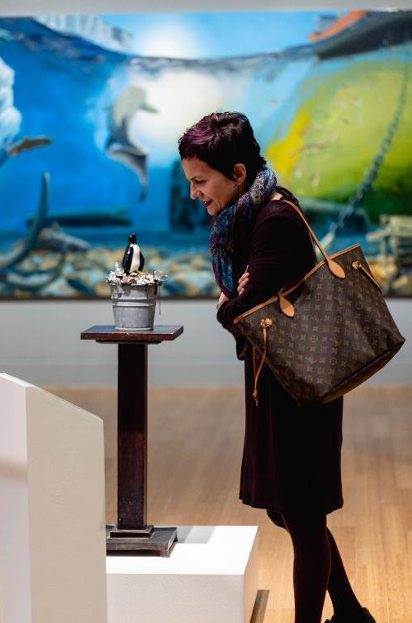
Installation view of Man Ray: When Objects Dream, on view September 14,2025–February 1, 2026at The Metropolitan Museum of Art. Photo by Anna-Marie Kellen, Courtesy of our friends at The Met.
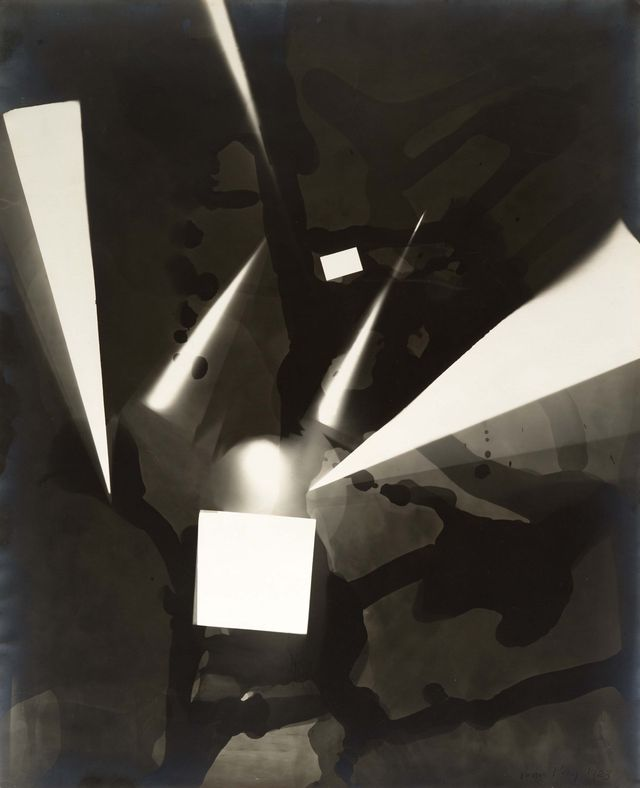
American artist Man Ray (1890–1976) was a visionary known for his radical experiments that pushed the limits of photography, painting, sculpture, and film. In the winter of 1921, he pioneered the rayograph, a new twist on a technique used to make photographs without a camera. By placing objects on or near a sheet of light-sensitive paper, which he exposed to light and developed, Man Ray turned recognizable subjects into wonderfully mysterious compositions.
Introduced in the period between Dada and Surrealism, the rayographs’ transformative, magical qualities led the poet Tristan Tzara to describe them as capturing the moments “when objects dream.”
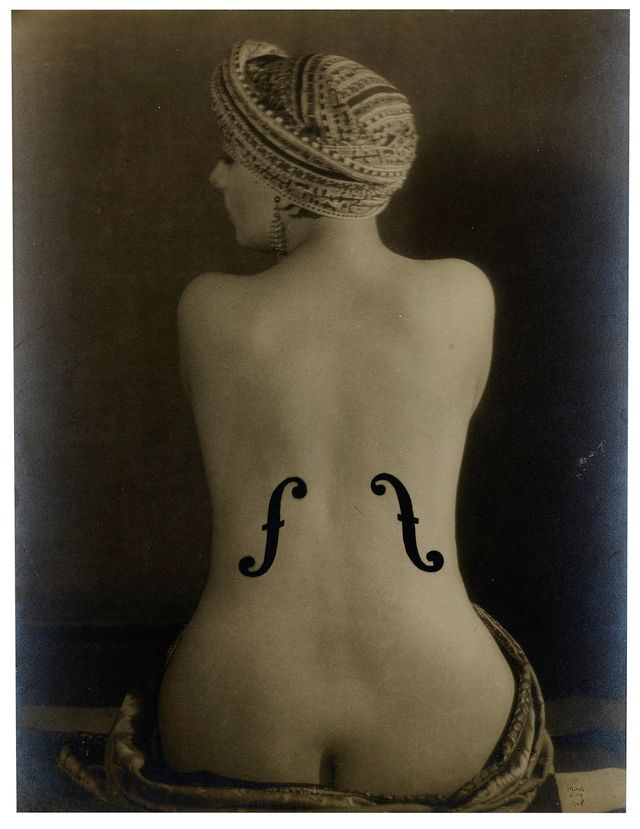
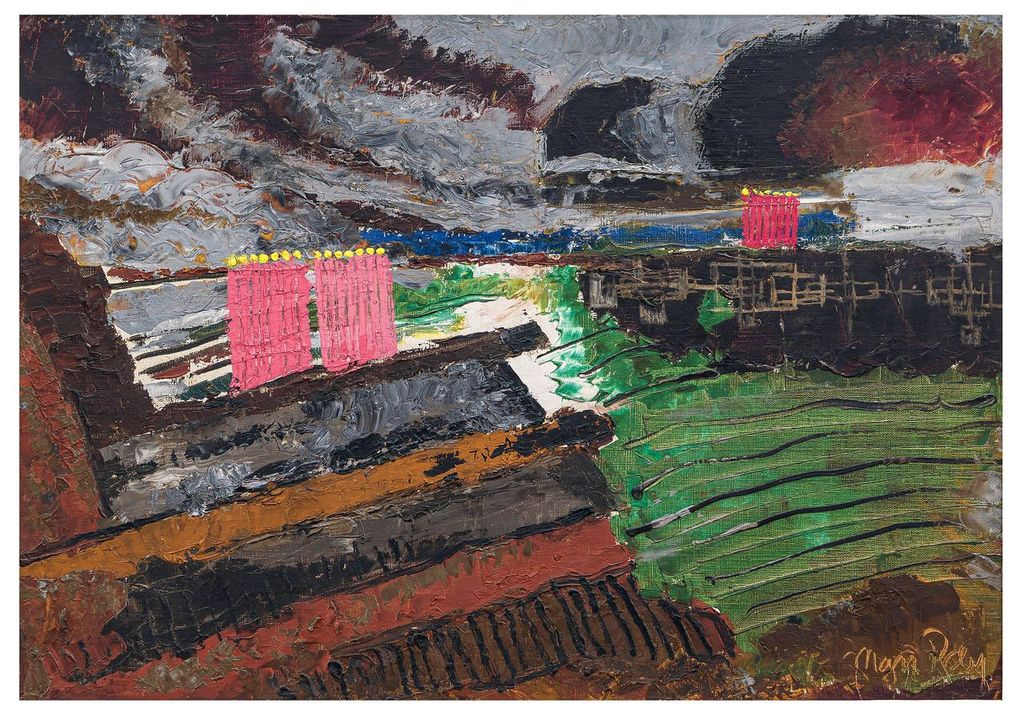
The exhibition will be the first to situate this signature accomplishment in relation to Man Ray’s larger body of work of the 1910s and 1920s. Drawing from the collections of The Met and more than 50 U.S. and international lenders, the exhibition will feature approximately 60 rayographs and 100 paintings, objects, prints, drawings, films, and photographs—including some of the artist’s most iconic works—to highlight the central role of the rayograph in Man Ray’s boundary-breaking practice.
“Before my eyes an image began to form, not quite a simple silhouette of the objects as in a straight photograph, but distorted and refracted … In the morning I examined the results, pinning a couple of the Rayographs—as I decided to call them—on the wall. They looked startlingly new and mysterious.” — Man Ray
The exhibition is made possible by the Barrie A. and Deedee Wigmore Foundation.
Major funding is provided by Linda Macklowe, the Horace W. Goldsmith Foundation, The Daniel and Estrellita Brodsky Foundation, The International Council of The Metropolitan Museum of Art, Andrea Krantz and Harvey Sawikin, and Schiaparelli.
Additional support is provided by the Vanguard Council.
The catalogue is made possible by the Mellon Foundation.
Additional support is provided by James Park, the Carol Shuster-Polakoff Family Foundation, and Sharon Wee and Tracy Fu.
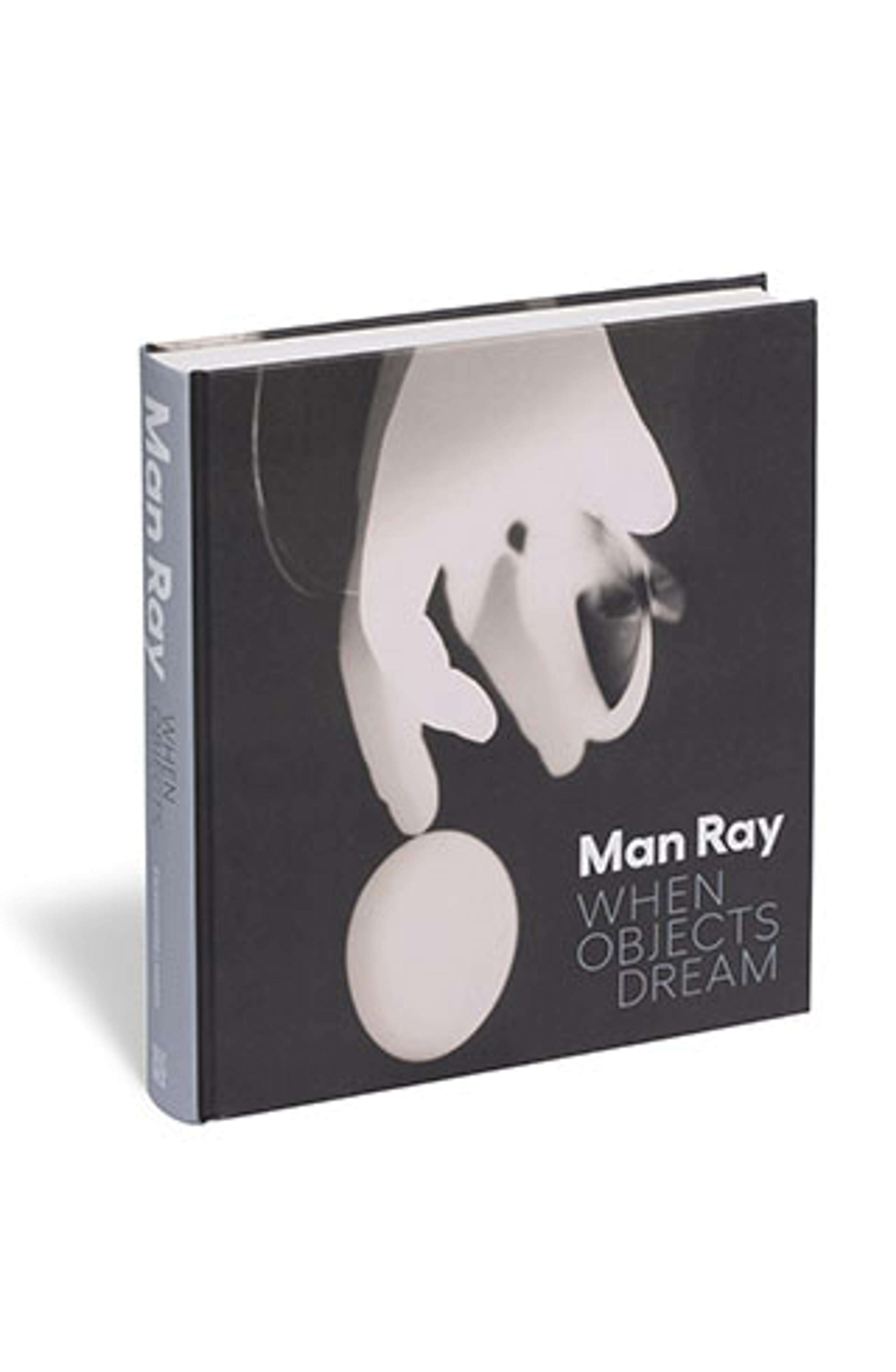
Exhibition Catalog
Man Ray: When Objects Dream
This volume is the first in-depth study of Man Ray’s groundbreaking rayographs of the 1920s and their interconnections with his Dada and Surrealist works.
American Federation of Arts Announces New Season of Touring Exhibitions for Fall 2025 through 2027 ‒ Museums in over 11 cities will headline art exhibitions created by the American Federation of Arts, with more cities to come ‒
The American Federation of Arts (AFA), the leader in traveling exhibitions worldwide since its founding in 1909, proudly announces the new season for the fall of 2025 through 2027. So far, museums in over 11 cities will headline several art exhibitions created by the AFA and its partners, with more cities to come. Throughout its celebrated 116-year history, the nonprofit institution has helped to spearhead the course of art for generations by enriching the public’s experience and understanding of the visual arts.
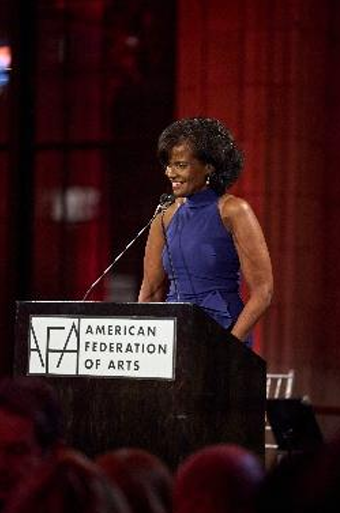
Pauline Forlenza at the 2024 AFA Gala in New York (Photo by Alycia Kravitz)
“The AFA’s expansive panorama of new exhibitions demonstrates the importance of listening to the input of visual arts leaders nationwide, focusing on what audiences want to see, and continuing our legacy of shining a light on new artists and trends,” says Pauline Forlenza, the Director and CEO of the American Federation of Arts. “Our longstanding commitment to touring art exhibitions, publishing exhibition catalogues with scholarly research, and developing educational programs is vital – now more than ever.”
These traveling museum shows will open doors to creativity for the next sixteen months to museumgoers. Some of the shows include:
Abstract Expressionists: The Women • Alex Katz: Theater and Dance Civic Virtue in Rembrandt’s Amsterdam: 17th-Century Group Portraits from the Amsterdam Museum • Presence: The Photography Collection of Judy Glickman Lauder • Making American Artists: Stories from the Pennsylvania Academy of the Fine Arts, 1776–1976 • Experimental Ground: Modernist Printmaking in Paris & New York at Atelier 17
Making Their Mark: Works from the Shah Garg Collection, and more. Links to all of the AFA’s 2025 through 2027 exhibition tours may be viewed at: current shows and upcoming tours. Pauline Forlenza at the 2024 AFA Gala in New York (Photo by Alycia Kravitz)
Some of the museums across the country include: National Museum of Women in the Arts, Wichita Art Museum, Muscarelle Museum of Art, Southampton Arts Center, The Gibbes Museum of Art, Taubman Museum of Art, Peabody Essex Museum, Indianapolis Museum of Art, New Orleans Museum of Art, Mobile Museum of Art, and the Museum of Contemporary Art San Diego, among others.
Since 1909, the AFA has toured more than 3,500 exhibitions that have been viewed by millions of people in museums in every U.S. state, and in Canada, Latin America, Europe, Asia, and Africa. From the Smithsonian – “A vital part of American art history, the AFA was one of the first organizations to develop successfully the concept of traveling art exhibitions on a national and international level. Many arts organizations and museums have followed the AFA’s precedent. This national nonprofit museum service organization is recognized for striving to unite American art institutions, collectors, artists, and museums.”
“Through the years, the AFA has also had an impact on patronage in the arts. During its 116-year history, the Federation’s exhibitions of contemporary art provided collectors with knowledge of new artists and avant-garde art forms, creating a broader demand and market for this type of work. Museums and collectors began purchasing work by new or obscure American artists whom they learned about through AFA exhibitions and programs. The AFA also recognizes the importance of the exchange of cultural ideas.”
“Throughout its history, the organization has concentrated on its founding principle of broadening the audiences for contemporary American art, breaking down barriers of distance and language to expand the knowledge and appreciation of art. The touring exhibitions have brought before the public contemporary American artists and craftspeople, genres, and artistic forms of experimentation – exposing viewers to new ways of thinking and expression.”
Highlights from the New Season
View the full list of tours at: amfedarts.org/exhibitions/current and amfedarts.org/exhibitions/upcoming-exhibitions/. The complete lists of current and upcoming touring museum shows are updated regularly, as new exhibitions and new museum dates are added. Following are highlights of eight of the AFA exhibitions that will be touring during the fall of 2025 through 2027.
Abstract Expressionists: The Women
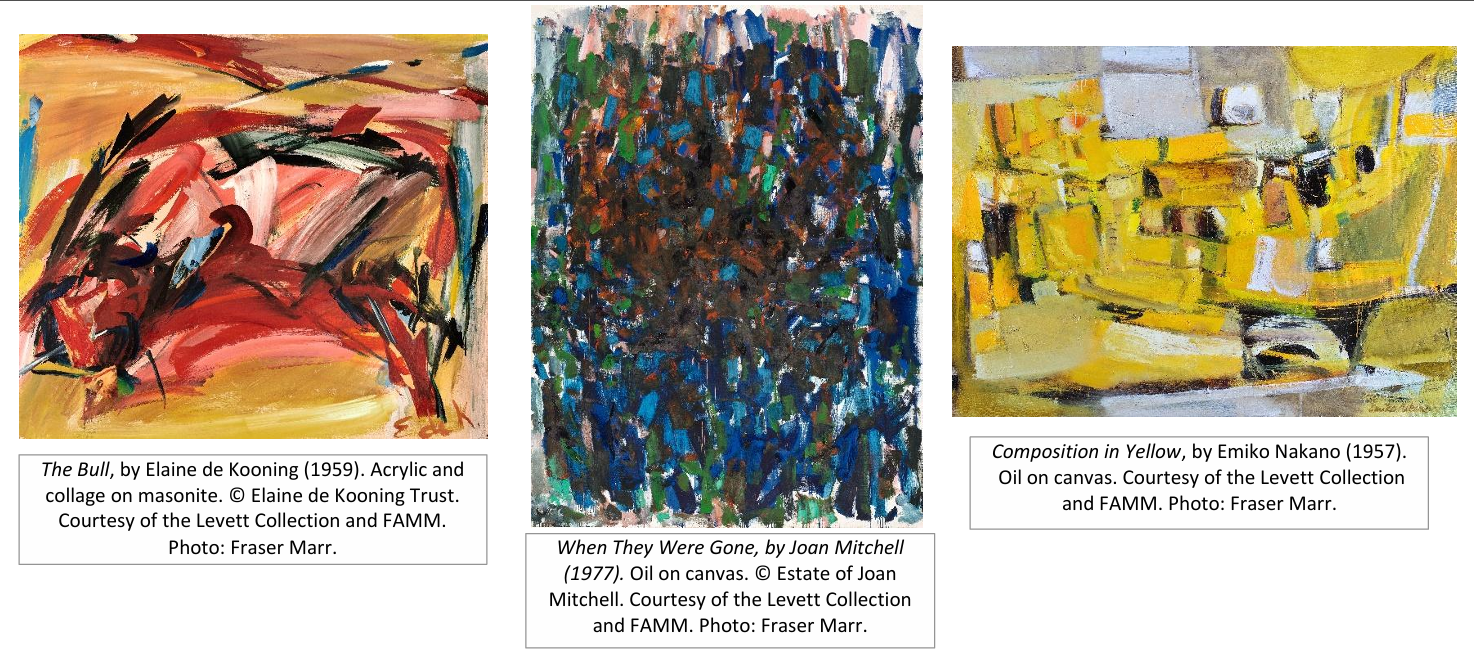
Explores the vital, under-acknowledged innovation of women artists in the Abstract Expressionist movement, the first internationally renowned artistic movement to originate in the U.S. • Featuring 47 works from The Levett Collection, by more than 30 women artists who worked in New York, California, and Paris from the early 1940s through the 1970s.
“Too often, the canon of art history has relegated women artists to supporting roles in major art movements,” says Pauline Forlenza, the Director and CEO of the AFA. “This exhibition upends that narrative, asserting that women painters were critical contributors to the formulation of Abstract Expressionism from the very beginning.
Equally talented and visionary, the female artists featured in this show helped put American art on the map,” adds Forlenza. The exhibition is organized by the American Federation of Arts from the Christian Levett Collection and FAMM (Female Artists of the Mougins Museum), France. This exhibition is curated by Ellen G. Landau, PhD, Andrew W. Mellon Professor Emerita of the Humanities at Case Western Reserve University.
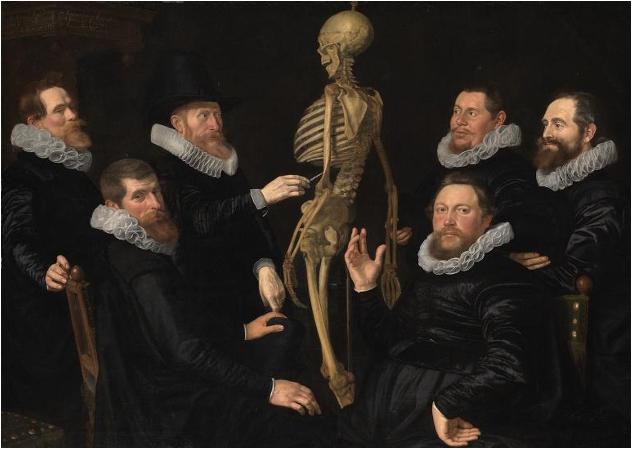
17th-Century Group Portraits from the Amsterdam Museum
The large group portraits in this exhibition have rarely left Amsterdam since they were commissioned in the 1600s, and have never traveled in the U.S. as a group. • The show traces how life in the largest and most important city of Holland was based on the collective responsibility of the burghers, who combined their mercantile wealth with political power. • Amsterdam’s economic success, however, was the result of ruthless trade wars within Europe, colonization and enslavement overseas. • Artists include Adriaen van Nieulandt, Gerrit Berckheyde, Ludolf Bakhuizen, Frederik Jansz, Dirck Santvoort, Ferdinand Bol, Bartholomeus van der Helst, Nicolaes Eliasz Pickenoy, Jan Victors, and of course, Rembrandt van Rijn. • By governing and guarding the city, by organizing and managing a social safety net for the poor and needy, and by stimulating scientific and industrial developments, the burghers contributed to making Amsterdam the most prosperous city in Europe.
The Osteology Lesson of Dr. Sebastiaen Egbertsz, artist unknown (1619). Oil.
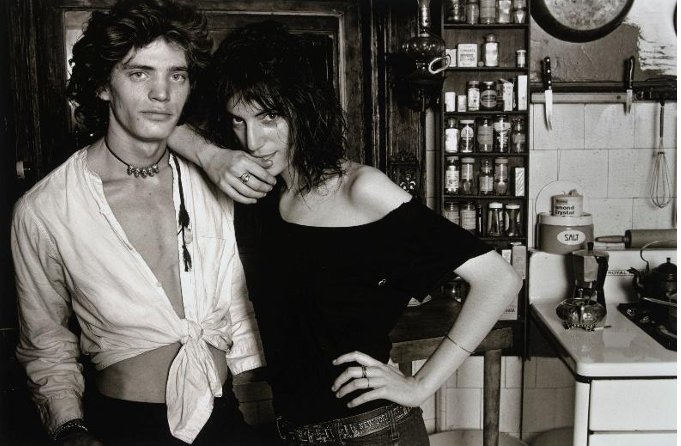
Presence: The Photography Collection of Judy Glickman Lauder 100 photographs by 70 artists. • Explores the concept of presence through the tenderness of portraits, the awe within landscapes, the clarity of reportage, and the spontaneity of cityscapes. • Works by Merry Alpern, Diane Arbus, Richard Avedon, Irving Bennett Ellis, Nan Goldin, Dorothea Lange, Danny Lyon, Sally Mann, Susan Meiselas, Helmut Newton, Ruth Orkin, Gordon Parks, Edward Steichen, Joyce Tenneson, James Van Der Zee, Todd Webb, Edward Weston, and more. • Photographs can be imprinted with the totality of human experiences, and this exhibition embraces that totality, examining the deeply humanistic history of photography.
Robert Mapplethorpe and Patti Smith, New York, by Norman Seeff (1969). Archival pigment print. Portland Museum of Art, promised gift from the Judy Glickman Lauder Collection.
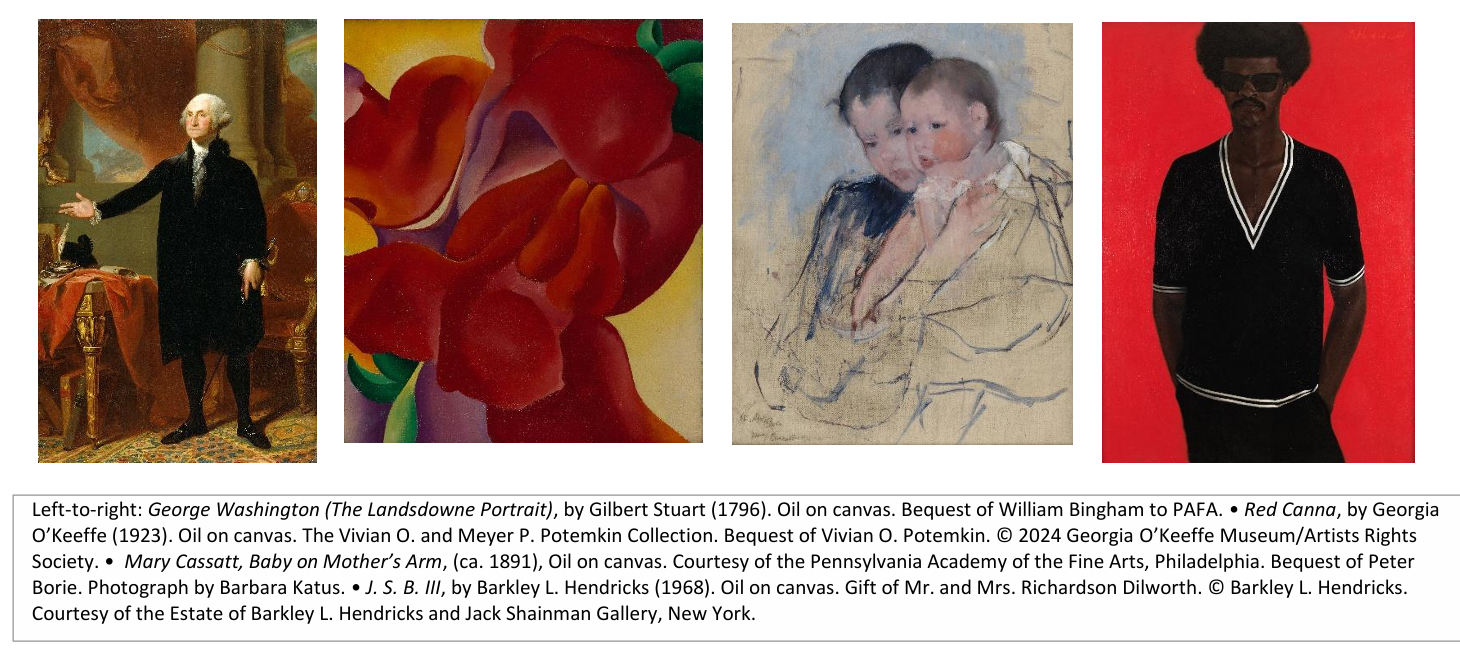
Making American Artists: Stories from the Pennsylvania Academy of the Fine Arts, 1776–1976
Presenting more than 100 of the most acclaimed and recognizable works of American art. • New narratives of the history of American art, embracing stories about women artists, LGBTQ+ artists, and artists of color, alongside iconic works traditionally associated with PAFA. • Women artists participated in PAFA’s exhibitions as early as 1811, and this show includes paintings by Sarah Miriam Peale, Mary Cassatt, Cecilia Beaux, Alice Neel, and May Howard Jackson (the first African American woman to receive a scholarship to attend PAFA, in 1895). • By 1900, PAFA acquired its first work by a Black artist, Henry O. Tanner. PAFA educated African American artists and acquired their works throughout the twentieth century, and this show features works by Joshua Johnson (one of the first professional Black artists in America), Dox Thrash, Laura Wheeler Waring, Edward Loper, and Barkley L. Hendricks.
Curated by Anna O. Marley, PhD., a scholar of American art and material culture from the colonial era to today.
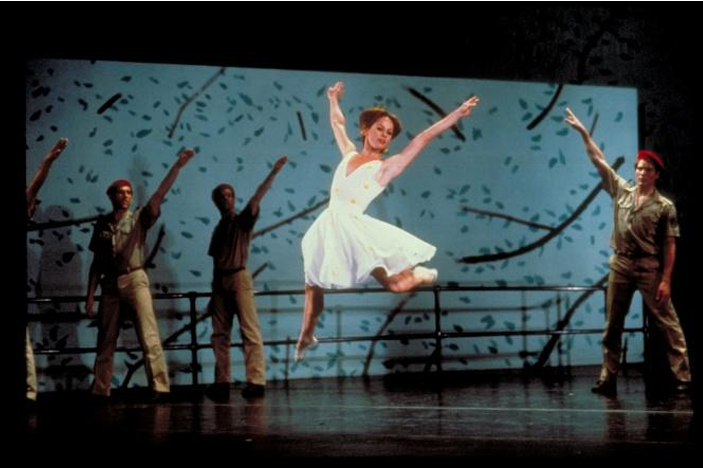
The first comprehensive museum presentation of Katzʼs highly collaborative and playful work with choreographers, dancers, and members of avant-garde theater ensembles over six decades. • Showcases Katz’s deep and lasting influence on the history of the American performing arts. • Rare archival materials, major sets and paintings, and previously unexhibited sketches from more than two dozen productions. • Spotlights fifteen productions that Katz produced with Paul Taylor, exploring their creative partnership that generated some of the most significant postmodern dance and art of the twentieth century. • Artworks from the show are drawn from the Alex Katz holdings at the Colby College Museum of Art (home to a collection of nearly 900 works by the artist), from Paul Taylor Dance Archives, and from the artist’s studio.
• Provides an innovative kind of retrospective: that of an artistic sensibility. • Attesting to the intertwined histories of painting and stage design in Katzʼs works. • Curated by Levi Prombaum, former Katz Consulting Curator, Colby College Museum of Art.
Willie Birch: Stories to Tell
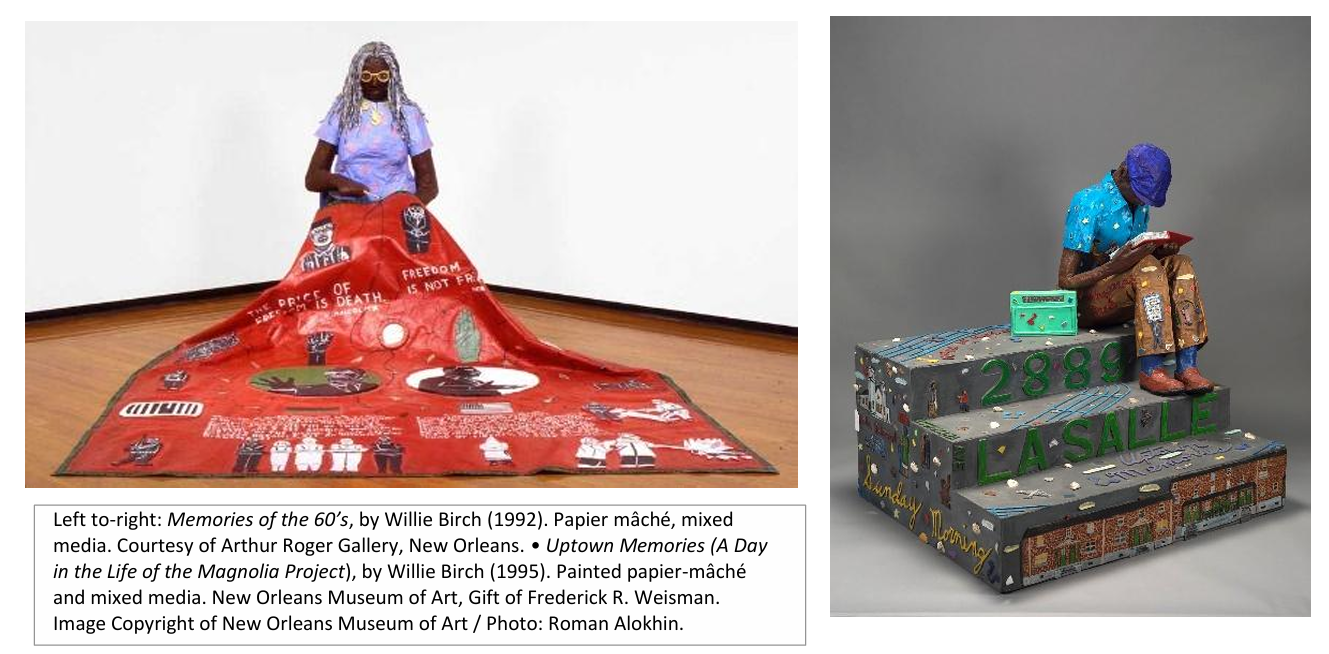
Chronicles Birch’s unique vision of the Black American experience and examines the interconnected nature of global art forms. • The first ever career retrospective brings together groundbreaking works from the early 1970s to the present.
Throughout his career, the artist has explored how African traditions have been retained in music, art, and culture in America and beyond. • Birch was raised in New Orleans and trained in Europe, Baltimore, and New York. • His work as an artist, community organizer, and cultural provocateur questions why certain things are retained and not others, unearthing uncomfortable truths about American identity, but also offering possibilities for greater cultural awareness.
Left to-right: Memories of the 60’s, by Willie Birch (1992). Papier mâché, mixed media. Courtesy of Arthur Roger Gallery, New Orleans. • Uptown Memories (A Day in the Life of the Magnolia Project), by Willie Birch (1995). Painted papier-mâché and mixed media. New Orleans Museum of Art, Gift of Frederick R. Weisman. Image Copyright of New Orleans Museum of Art / Photo: Roman Alokhin.
Making Their Mark: Works from the Shah Garg Collection
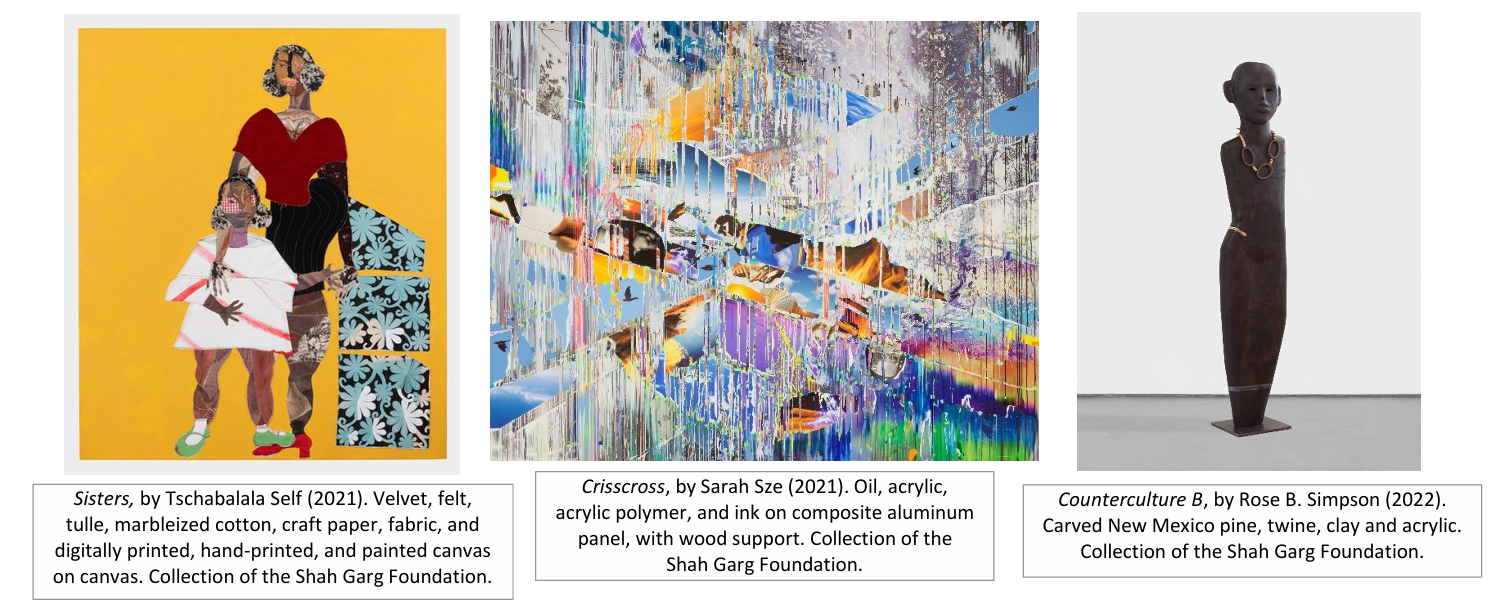
Reveals the intergenerational relationships fostered among women artists over the last eight decades, assembling over 70 works made by 60 women artists between 1946 and today. • Sculpture, painting, installation, textiles, pottery, and mixed media works all converge. • Pioneering examples of post-war abstraction —including early works by Janet Sobel, Judy Chicago, and Mary Corse — are shown alongside compositions by leading contemporary artists such as Julie Mehretu, Lorna Simpson, and Aria Dean. • Paintings and mixed media works by Christina Quarles, Tschabalala Self, and Firelei Báez blur the boundaries between abstraction and figuration. • Connections between the handmade and digital emerge in the various forms of piecework employed in Faith Ringgold’s quilts, Howardena Pindell’s collages, and the pixelated, hypermediated canvases made by Jacqueline Humphries and Anicka Yi.
Works by the Freedom Quilting Bee, Françoise Grossen, and Sheila Hicks explore irregular geometries and eccentric abstractions via fabric and fiber. • Curated by Cecilia Alemani of High Line Arts in New York City. Sisters, by Tschabalala Self (2021). Velvet, felt, tulle, marbleized cotton, craft paper, fabric, and digitally printed, hand-printed, and painted canvas on canvas. Collection of the Shah Garg Foundation. Crisscross, by Sarah Sze (2021). Oil, acrylic, acrylic polymer, and ink on composite aluminum panel, with wood support. Collection of the Shah Garg Foundation. Counterculture B, by Rose B. Simpson (2022). Carved New Mexico pine, twine, clay and acrylic. Collection of the Shah Garg Foundation.
Experimental Ground: Modernist Printmaking
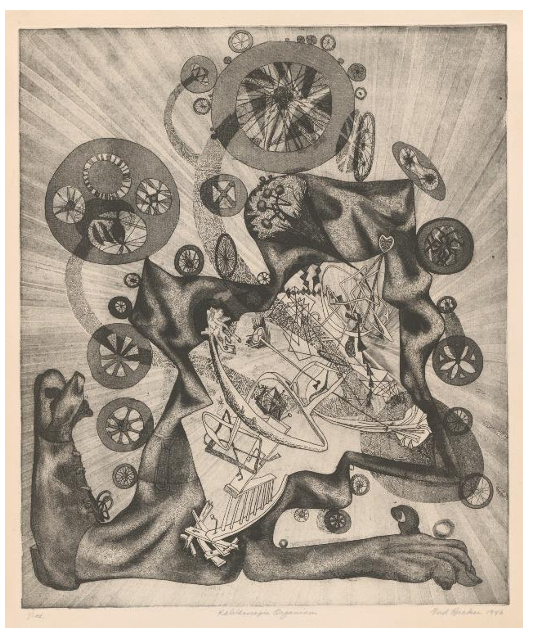
In Paris & New York at Atelier 17 The first large-scale survey of original prints made at Atelier 17 to tour the U.S. in 50 years. • This revolutionary printmaking workshop (1927 to 1988) was famous for its impact on the development of modern art.
Kaleidoscopic Organism, by Fred Becker (1946). Softground etching. Courtesy of O’Brien Art Project Foundation.
It served as a hub of artistic and intellectual exchange — first for Surrealists in interwar Paris, and after World War II for the exploration of abstraction and other modernist styles. • Commemorates 100 years since the founding of the studio. • Presents works by notable artists who gained formative skills at Atelier 17, such as Joan Miró, Yves Tanguy, Louise Bourgeois, Franz Kline, Jackson Pollock, Louise Nevelson, and Krishna Reddy, among many other artists who participated in intense collaborations at the studio. • Atelier 17 attracted hundreds of international artists, drawn to the radical vision of printmaking as a mode for experimentation rather than reproduction.
About the American Federation of Arts
The American Federation of Arts (AFA) is the leader in traveling exhibitions in the U.S. and worldwide. One of the first to successfully tour art exhibitions on a national and international level, the organization unites American art institutions, collectors, artists, and museums. The AFA has toured more than 3,500 exhibitions that have been viewed by millions of people in museums in every U.S. state, and in Canada, Latin America, Europe, Asia, and Africa.
A nonprofit organization founded in 1909, AFA is dedicated to enriching the public’s experience and understanding of the visual arts through organizing and touring art exhibitions for presentation in museums around the world, publishing exhibition catalogues featuring important scholarly research, and developing educational programs.
Abstract Expressionists: The Women is organized by the American Federation of Arts from the Christian Levett Collection and FAMM (Female Artists of the Mougins Museum), France. The exhibition is curated by Dr. Ellen G. Landau. It is generously supported by Berry Campbell Gallery, Betsy Shack Barbanell, Monique Schoen Warshaw, Christian Levett, and Clare McKeon and the Clare McKeon Charitable Trust. Additional support has been provided by the Pollock-Krasner Foundation and the Every Page Foundation.
Making Art, Making History: 200 Years of American Stories from the Pennsylvania Academy of the Fine Arts is co-organized by the American Federation of Arts and the Pennsylvania Academy of the Fine Arts. Lead support was provided to PAFA by the William Penn Foundation, with additional support from the Richard C. von Hess Foundation and donors to PAFA’s Special Exhibitions Fund. In-Kind support is provided by Christie’s and Gill & Lagodich Fine Period Frames, New York. This exhibition is supported by an indemnity from the Federal Council on the Arts and the Humanities.
Alex Katz: Theater and Dance is organized by the American Federation of Arts and Colby College Museum of Art. This exhibition is curated by Levi Prombaum, former Katz Consulting Curator, Colby College Museum of Art. The 2022 presentation of Alex Katz: Theater and Dance was organized by the Colby Museum with curatorial guidance from Robert Storr.
Willie Birch: Stories to Tell is co-organized by the American Federation of Arts and the New Orleans Museum of Art. Major support for the exhibition and catalogue is provided by the Andy Warhol Foundation for the Visual Arts, the Henry Luce Foundation, Wyeth Foundation for American Arts, and the Terra Foundation for American Art.
Making Their Mark: Works from the Shah Garg Collection is organized by the American Federation of Arts and the Shah Garg Foundation. The exhibition is curated by Cecilia Alemani, the Donald R. Mullen, Jr. Director and Chief Curator of High Line Arts in New York City.
Experimental Ground: Modernist Printmaking in Paris & New York at Atelier 17 is organized by the American Federation of Arts. This exhibition is curated by Ann Shafer and Christina Weyl. Civic Virtue in Rembrandt’s Amsterdam: 17th-Century Group Portraits from the Amsterdam Museum is organized by the American Federation of Arts.
Presence: The Photography Collection of Judy Glickman Lauder is co-organized by the Portland Museum of Art, Maine, and the American Federation of Arts.
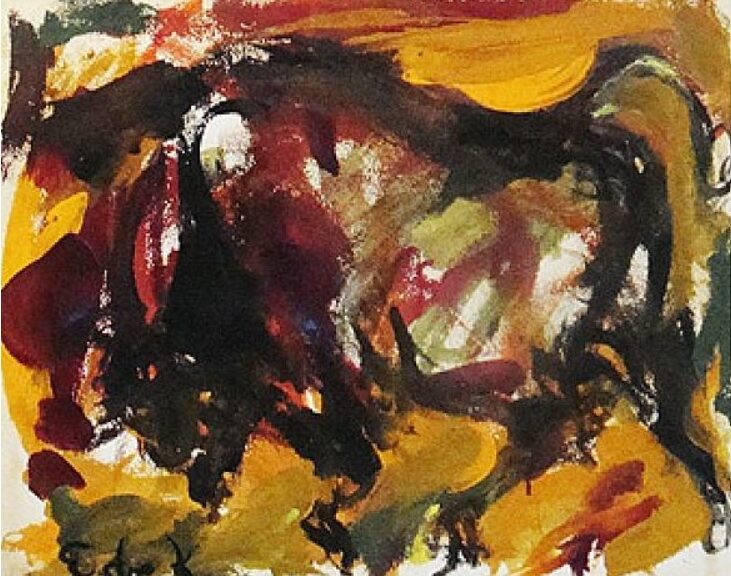
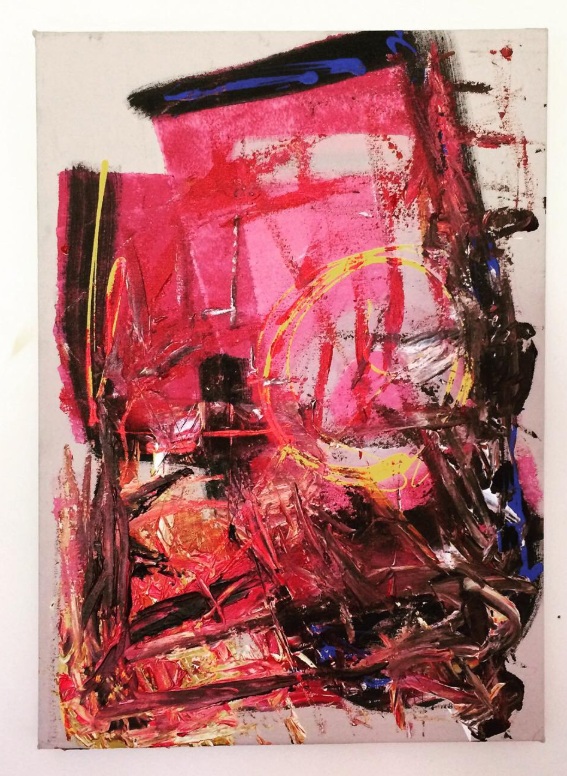
Untitled. abstract expressionism- oil on canvas Jarrod Barker 2021
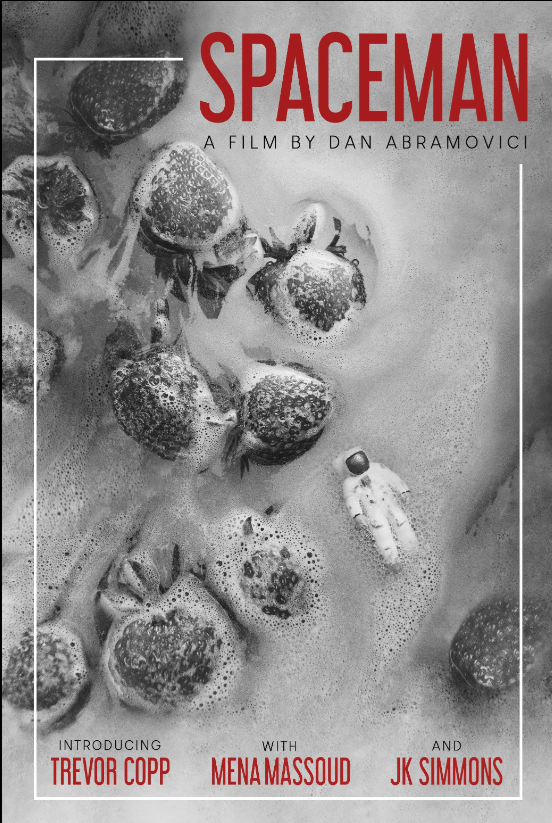
J.K. Simmons and Mena Massoud star in Dan Abramovici’s New Sci-Fi Fantasy
SPACEMAN
New sci fi fantasy by Canadian Film Center alumni is a coming of age film breaks barriers via a deeply human handcrafted story made by fusing old Hollywood techniques with state-of-the art cinematic mastery.
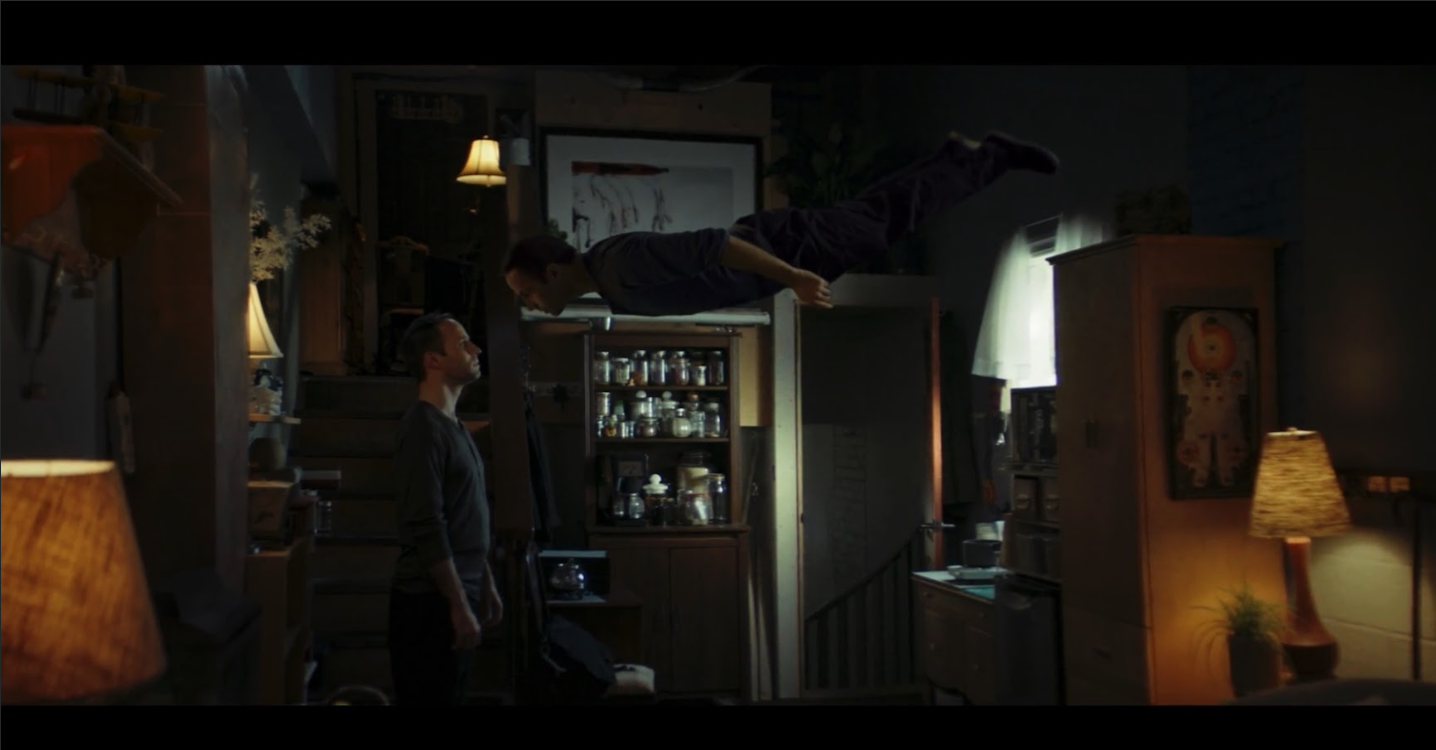
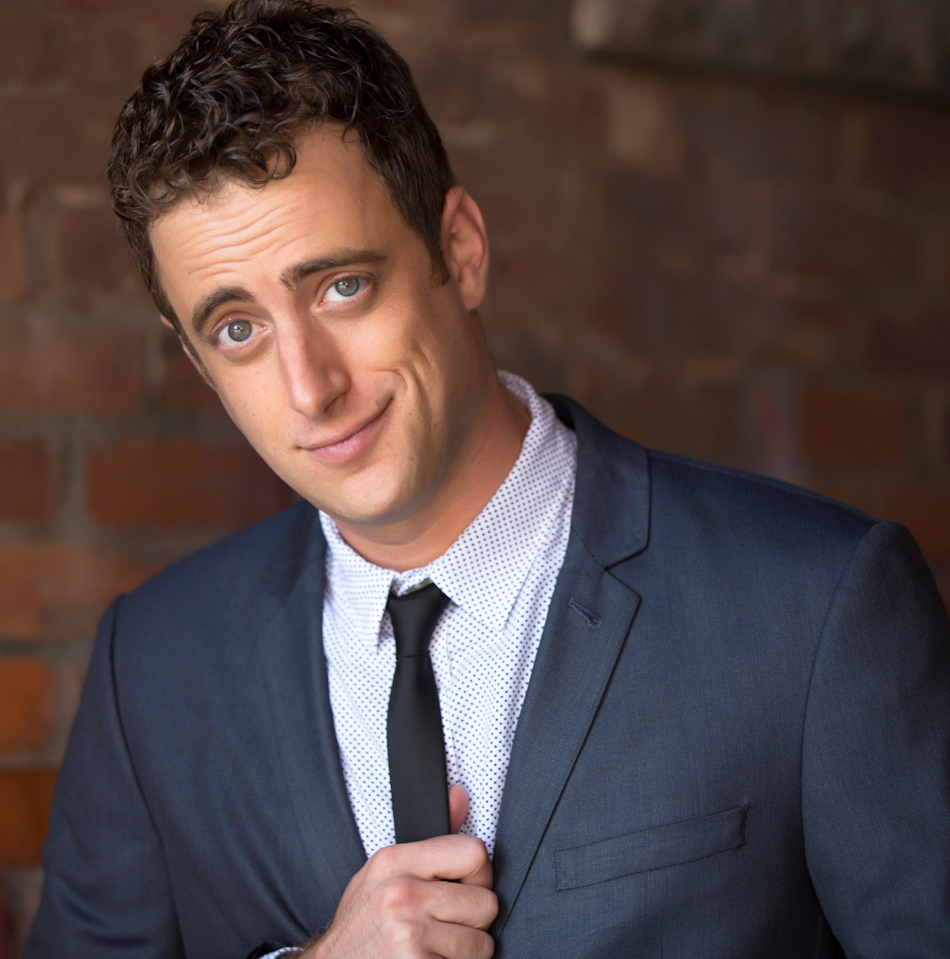
TORONTO (July, 2024) – Press Play Films announces their newest film, SPACEMAN. Written and directed by emerging visionary filmmaker Dan Abramovici, the film stars Academy Award-winner J.K. Simmons (Whiplash, Being the Ricardos, Red One), Mena Massoud (Aladdin, The Royal Treatment) and Trevor Copp (Bulfinch’s Mythology). SPACEMAN is not only a fresh and innovative take on some of the most beloved and renowned cinematic genres, it’s something brand-new: A mix of sci fi, fantasy, and coming of age, combining elements of classic Hollywood, a la Chaplin and Keaton, with cutting edge practical effects, in a film that brings to mind classic works by Michel Gondry and Baz Luhrman.
SPACEMAN is produced by Ali Mashayekhi (The Last King, Evolving Vegan), Mena Massoud, and Dan Abramovici.
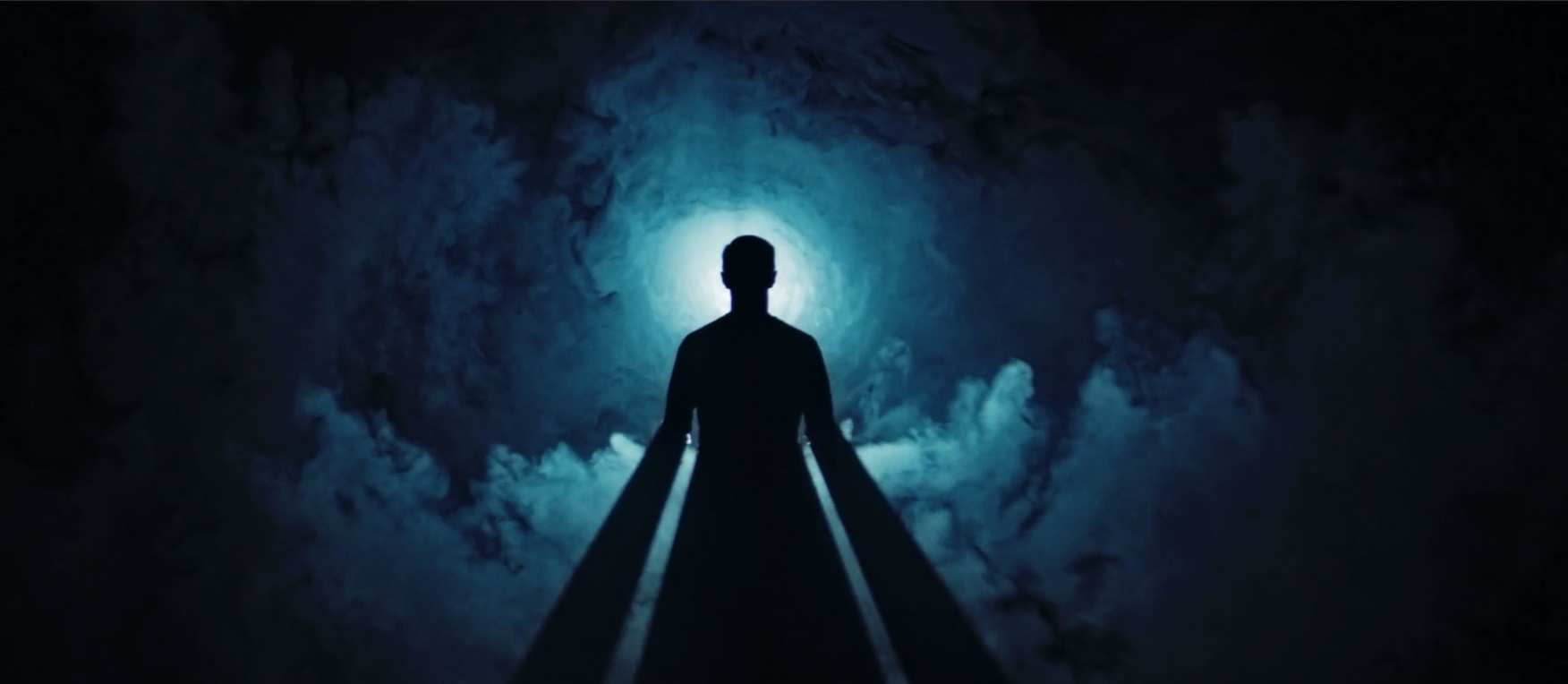
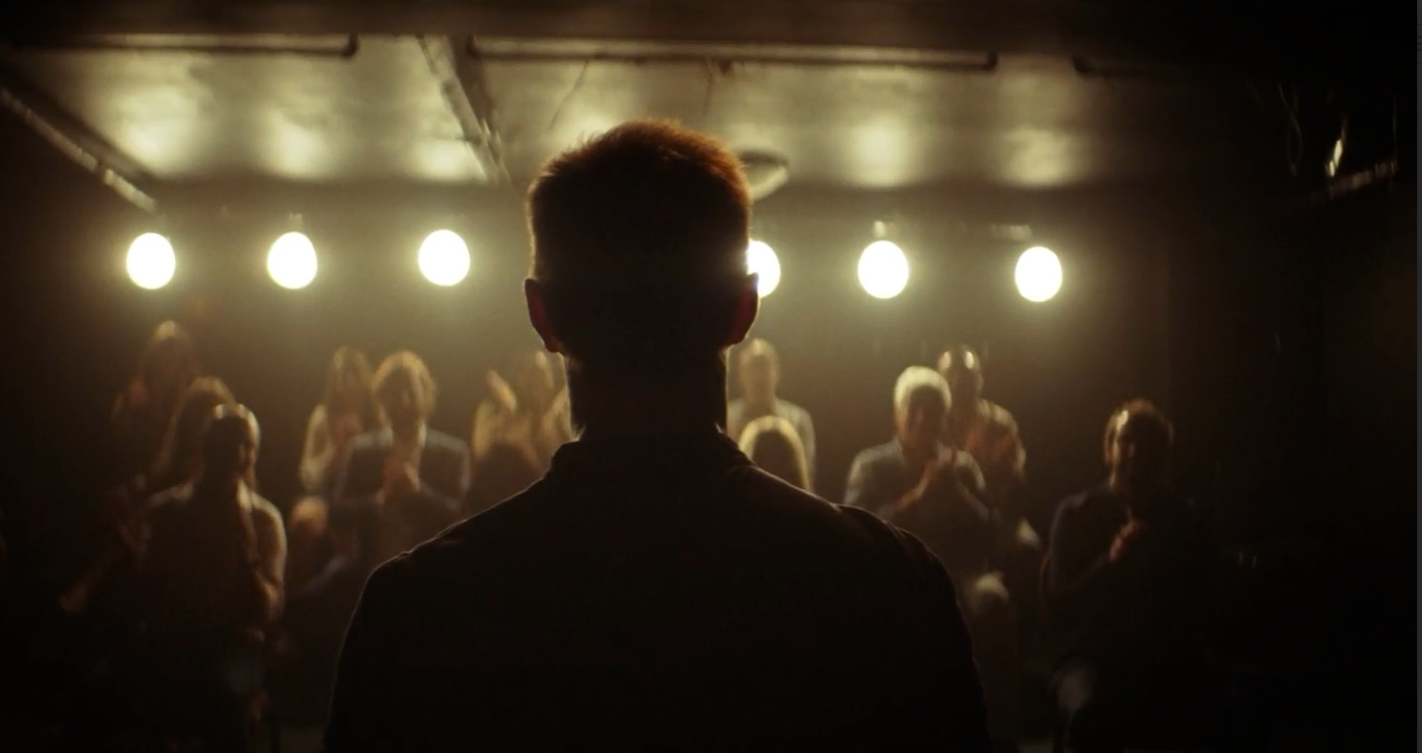
SPACEMAN uses mime, stop motion, classic animation, and theatrical elements, to explore one artist’s loss of creative passion and his journey to get it back. Allied with his passion (Mena Massoud), Spaceman (Trevor Copp) has to travel through the looking glass, and battle his imposter syndrome (J.K. Simmons), in order to truly see himself once more.
The film is an exploration of identity, artistic passion, and the fragile nature of human connection. It weaves themes of self-discovery, mental health, and the pursuit of dreams.
“My hope is to blur the lines between the tangible and the ephemeral. By delving into Spaceman’s subconscious we are able to explore the cathartic nature of artistic creation and the ways in which it can offer a sense of purpose, as well as the danger and risk to one’s sense of self.” Said Abramovici.
“Spaceman is a unique film in many ways, including it being highly commercially viable while staying true to its artistic integrity. It’s a movie that audiences all over the world will relate to on so many levels.” Said Mashayekhi.
After immigrating to Canada, Abramovici used filmmaking to explore his many questions about identity, often using a surrealist approach to broach complex human moments. He began his career as an actor, most recently on projects such as Sofia Coppolla’s Priscilla, HBO’s Jane, FX’s What We Do In The Shadows, and CBS’s Star Trek Discovery.
Abramovici is an alumni of the CFC/ Canadian Film Center.
Abramovici sold his first feature film, the comedy BEN’S AT HOME to Netflix and then jumped behind the camera, writing and directing a series of short films, including the Academy-Qualifying PLAY IT AGAIN (Austin FF Best Short Winner 2021), LIMINAL (Raindance, HollyShorts), STUCK (Dances With Films LA), and SPACEMAN.
He is also a Top 10 screenwriting award winner at Cinequest, where Laurence Kasdan (Star Wars, Indiana Jones) and Dennis Lehane (The Wire, The Drop) served as writing mentors.
Abramovici’s upcoming feature, SEARCHING FOR MARCEAU, builds upon this previous work. It has ranked in the top 1% of projects on Coverfly, is a Shore Scripts Finalist, Top 50 at the LaunchPad competition, and a CineStory recipient.Ali Mashayekhi has produced over 85 films around the world since 2003 including; Japan, Indonesia, USA, Netherlands and France, screening at over a 100 festivals and winning several high profile awards including Best Short Film for “Play it Again”, directed by Dan Abramovici, at the Austin Film Festival in 2021.
Ali is also the Executive Director of the Ethnically Diverse Artists (EDA) Foundation, a non-profit and charitable organization founded by Mena Massoud (Aladdin), which aims to inspire inclusivity and diversity in the arts. Additionally, Ali is the “Lead Creative Ambassador” for the International Network of Aid and Relief Association (INARA) founded by Ex-CNN senior international correspondent Arwa Damon, bringing creative film related initiatives to philanthropic work.
Recently Ali premiered at Raindance Film Festival 2024 a Stephen King short story adaptation based on Sherlock Holmes, The Last King, entirely in the Persian language.
This fall, Ali is producing a gritty crime-thriller with Fortin Films, a Canadian production company from Toronto. Currently Ali is the Executive Producer on the travel vegan food show Evolving Vegan, with producing partner and Host Mena Massoud under their Press Play Productions company.
J.K. Simmons has appeared in a diverse range of projects spanning from motion pictures, television and the stage on and off-Broadway. He won the 2015 Academy Award for Best Supporting Actor for his portrayal of merciless jazz instructor, ‘Fletcher’ in Sony Pictures Classics’ “Whiplash.” His performance in the film also garnered him a Screen Actors Guild Award, Golden Globe, Independent Spirit Award and BAFTA Award, as well as many critics’ group awards around the world. “Whiplash” premiered at the 2014 Sundance Film Festival and won the Dramatic Audience Award and Grand Jury Prize for Best Film. The film also garnered five Academy Award nominations including Best Picture. Simmons will next be seen in “The Union,” “Red One,” “SNL 1975,” and “Juror #2.”
In 2021, Simmons was seen starring alongside Nicole Kidman and Javier Bardem in Amazon’s biographical drama about Lucile Ball, “Being the Ricardos” in which he received an Academy Award nomination.
Simmons was also seen starring in STX’s, “National Champions’ and starring alongside Chris Pratt in Amazon’s sci-fi thriller “The Tomorrow War.”
In 2020, Simmons starred in Hulu’s “Palm Springs”, alongside Andy Samberg and Cristin Milioti. He also appeared in the Apple TV+ miniseries, “Defending Jacob,” based on the 2012 novel of the same name.
In 2019, Simmons starred in the second season of the critically acclaimed Starz series “Counterpart” which began its run in 2017. Created by Justin Marks, Simmons portrays both primary characters as two vastly differing versions of themselves.
In 2018, Simmons starred in Director Brian Kirk’s action thriller “21 Bridges,” alongside Sienna Miller, Taylor Kitsch and Chadwick Boseman. The film follows a disgraced NYPD detective (Boseman) who is thrust into a citywide manhunt for a cop killer. Simmons was also seen in Jason Reitman’s “The Front Runner” with Hugh Jackman and Vera Farmiga. He was recently seen in Universal’s thriller “The Snowman” with Michael Fassbender and Rebecca Ferguson and the Warner Bros. comedy “Father Figures” with Owen Wilson and Ed Helms. In 2017, he was seen in the highly anticipated “Justice League” where he portrayed the iconic ‘Commissioner Gordon.’
In 2016, Simmons voiced the character of Kai in Dreamworks’ highly anticipated “Kung Fu Panda 3” that released in January and voiced the character of ‘Mayor Leodore Lionheart’ in Disney’s “Zootopia” which released in March. Also in 2016, Simmons was seen in Sony Pictures Classics “The Meddler” with Susan Sarandon and Rose Byrne and Gavin O’Connor’s “The Accountant” with Ben Affleck and Anna Kendrick. Simmons also portrayed the real-life hero Jeff Pugliese in the 2016 Boston marathon film “Patriot’s Day” directed by Peter Berg. That same year Simmons completed production on an independent film entitled “I’m Not Here” which was directed by his wife Michelle Schumacher.
He is known for playing the character J. Jonah Jameson in Sam Raimi’s “Spider Man” trilogy and memorably, his portrayal of the off-beat but not deadbeat father, Mac McGuff, in the hit comedy “Juno.”
Past projects include “Terminator: Genisys,” “Jobs,” “Labor Day,” “The Words,” “The Music Never Stopped,” “Jennifer’s Body,” “Extract,” “The Vicious Kind,” “I Love You Man,” “Beginner’s Guide to Endings,” “Contraband,” “Hidalgo,” “The Ladykillers,” “The Mexican,” “Off the Map,” “For Love of the Game,” “The Gift,” “Thank You for Smoking,” “Rendition,” “Burn After Reading” and the Academy Award-nominated “Up in the Air.”
On the small screen, Simmons played LAPD Assistant Chief Will Pope in TNT’s hit series “The Closer.” He also played Vern Schillinger on HBO’s acclaimed drama “Oz,” and had a recurring role as Dr. Emil Skoda on NBC’s “Law & Order.” He has had guest starring roles on NBC’s “Parks and Recreation,” and a recurring role on TBS’ hit comedy “Men at Work.” Simmons has appeared on the Broadway stage in performances of “Guys and Dolls,” “Laughter on the 23rd Floor,” “A Change in the Heir,” “Peter Pan” and “A Few Good Men.” J.K. Simmons is repped by Gersh.
Mena was born in Cairo, Egypt and raised in Markham, Ontario, Canada. He attended the University of Toronto for Neuroscience before transferring to Ryerson University’s notable theater program and graduating with a BFA in acting. He got his first big break starring in ABC Spark & Teen Nick’s mystery-drama television series “Open Heart” as “Jared Malik.”
After several years of acting in high-profile television and film projects, Massoud went on to star as “Tarek Kassar” in the highly-anticipated series “Tom Clancy’s Jack Ryan”.
In 2018 it was announced that, after an extensive worldwide search and multiple auditions, he had landed the coveted role of “Aladdin” in the Disney live-action remake of “Aladdin,” directed by Guy Ritchie. After leading “Aladdin” to the highly coveted $1 Billion Dollar mark at the box office, Massoud went on to star in Netflix’s “The Royal Treatment” which became its #1 film worldwide for several weeks in a row in 2022.
Mena’s banner Press Play Productions was set up to address a growing need for diverse stories and content, particularly from the MENA region, which comprises fast-growing entertainment industries. The international expansion of streaming services such as Netflix into MENA has provided more commissioning opportunities for companies like Press Play. Mena Massoud is repped by LINK Entertainment, Gersh and Hensen, Jacobson, Teller & Hoberman.
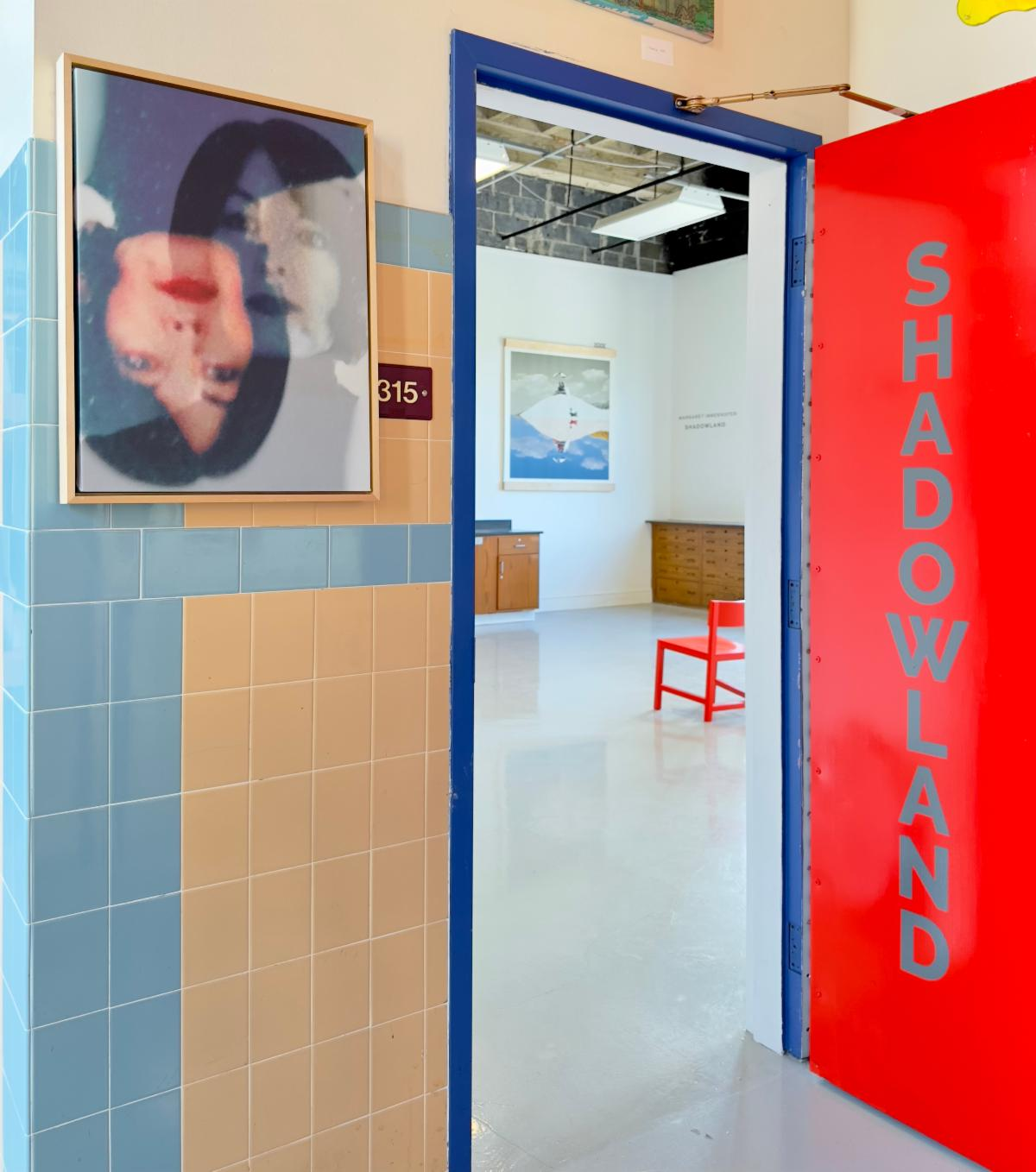
A behind the scene look of the conceptual artist’s solo show SHADOWLAND
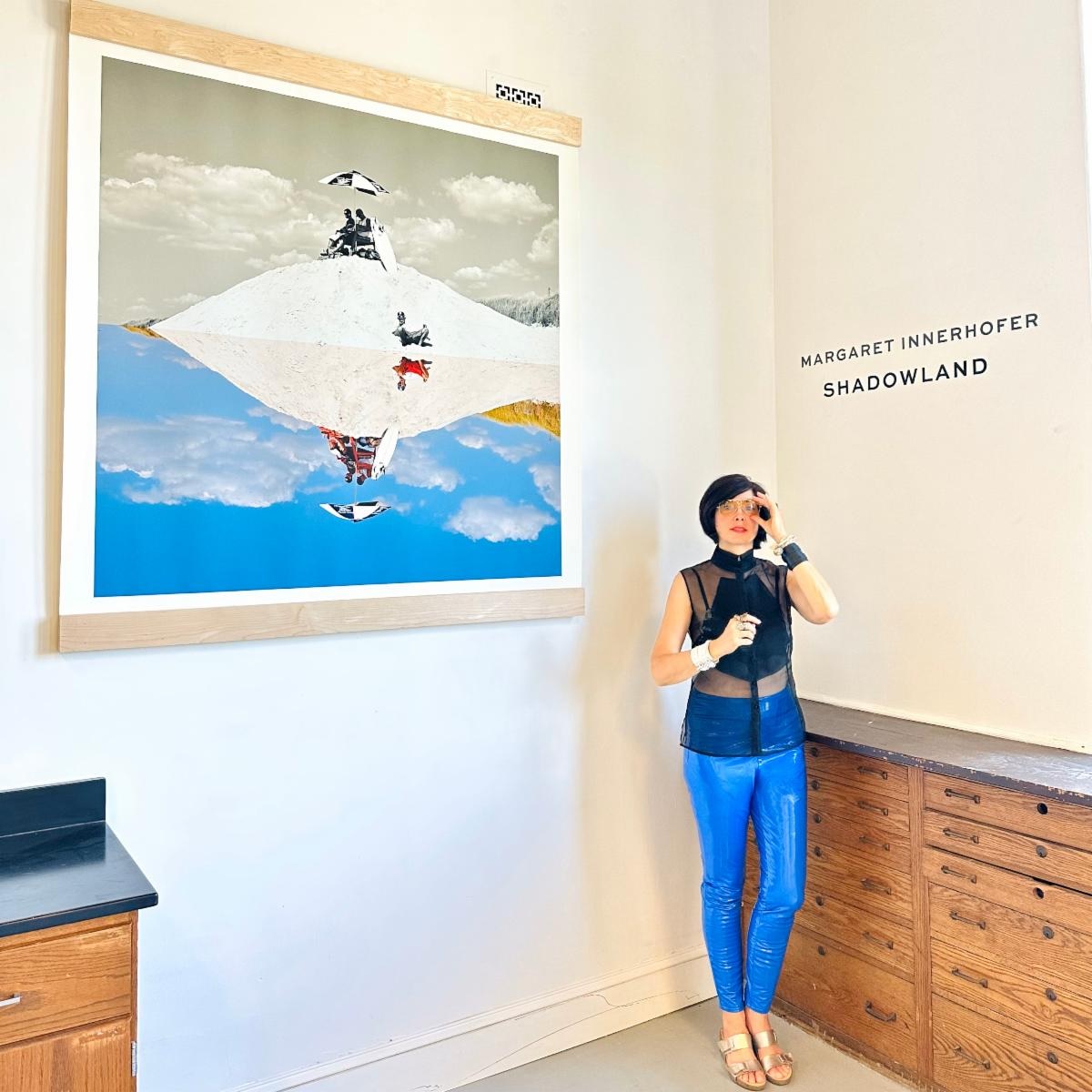
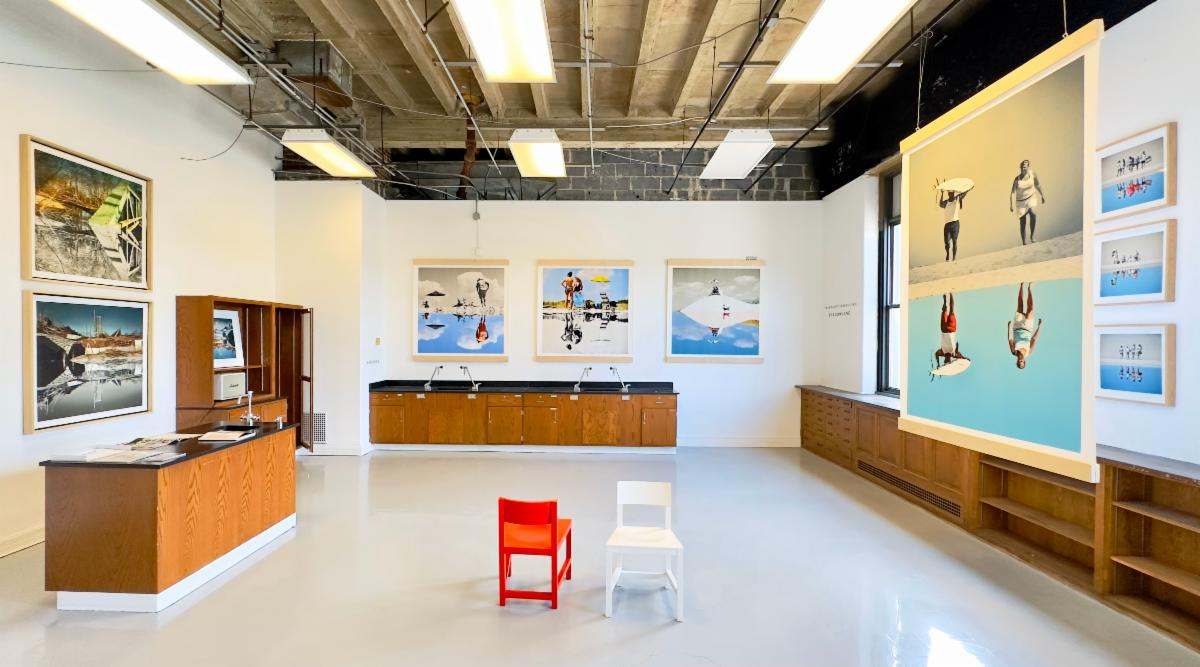
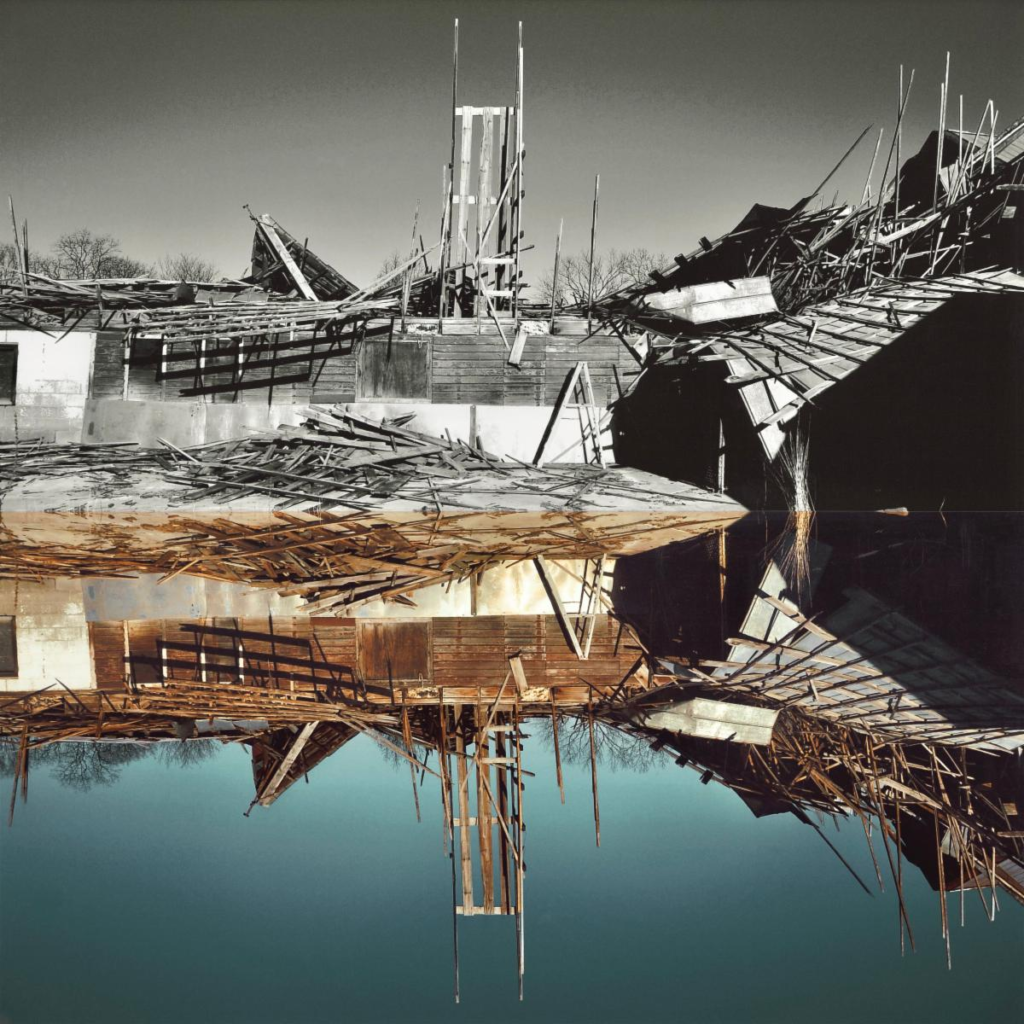
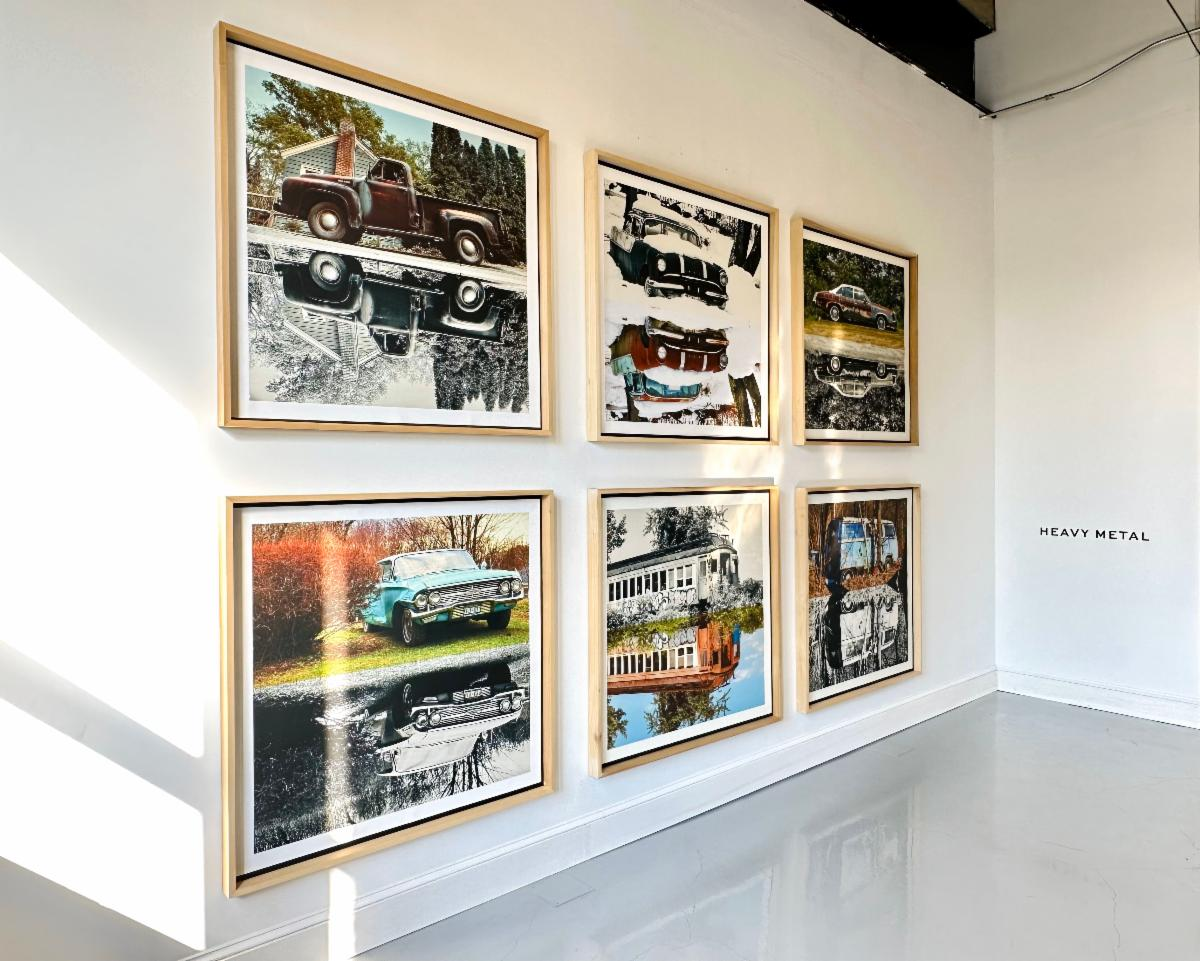
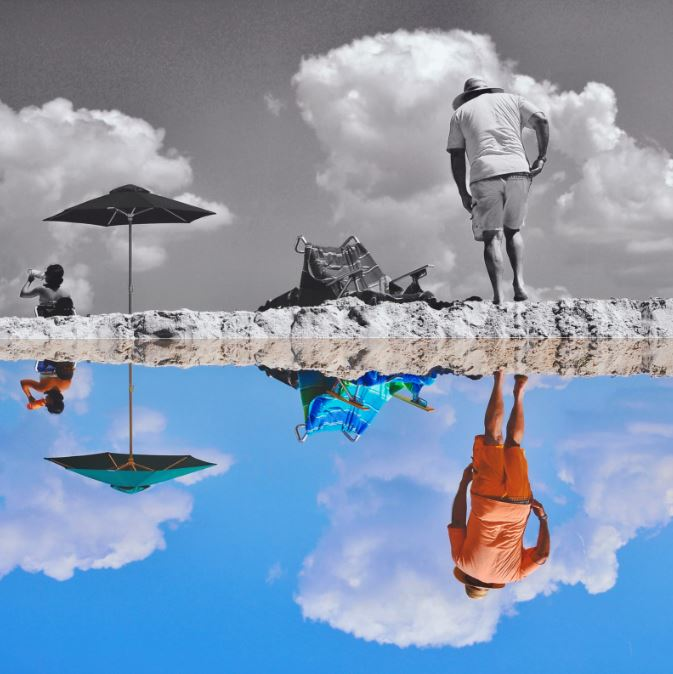
It is the first Saturday of Upstate Art Weekend and I am standing in a chemistry classroom of a former public school looking at inverted works, listening to Gregorian chants meets Jimmy Hendrix inspired music, and feeling that I am falling into a trance. In reality, I am meeting the artist Margaret Innerhofer for the first time at her solo show SHADOWLAND, at Ethan Cohen Gallery at The Kube Art Center in Beacon, NY. The renowned gallery describes her exhibition as: “Photo-based prints and framed canvases that explore the transitional spaces between spiritual and psychological borderlands. Each of the large-scale meditative compositions printed in color has a jarring and surreal black and white reflection that invites the viewer into an alternate psychological and temporal dimension.” So, what is behind these works laden with heavy and deep symbolism of awake versus sleep? I sat down with the elegant and stylish Margaret to understand how a dreamy child from the Tyrolean mountains became a philosophical artist in Beacon, NY. It turns out that we are all in a trance.
SHADOWLAND at Ethan Cohen Gallery at The Kube Art Center in Beacon
Let’s begin with your upbringing. Where were you born and raised?
I was born, and raised in the Tyrolean Alps, Italy, immersed in the idyllic beauty of its nature and harmonious sounds. My childhood was filled with long mountain climbs, horseback riding, yodeling, playing the guitar and drums, and singing Gregorian chants in a strict convent boarding school. I found fascination in Western movies and the Apache Indian lifestyle, particularly their deep connection with nature and the imagery of wild horses roaming freely in vast deserts, accompanied by their rhythmic chants and drum circles. These early experiences forged a profound bond with the natural world, which continues to be a driving force behind my visual and sonic artistic expression.
SHADOWLAND at Ethan Cohen Gallery at The Kube Art Center in Beacon
What was your first introduction to art, and how did you start evolving as an artist?
During my Architectural and Fine Art studies, I relocated to Milan, a city that would leave a lasting impact on my artistic path. Dating an artist during that time exposed me to a bohemian lifestyle and immersed me in Milan’s dynamic art, architecture, and design scene. The conceptual and minimalist concepts of the Arte Povera Movement captivated me, drawing me deeper into the contemporary art world. Socially engaging with fellow artists and actively attending art shows in galleries and museums across Italy and Europe, I was inspired by the diverse expressions of creativity. My early fascination with photography, particularly the works of conceptual artists from the Dada and Surrealist Movements, like Man Ray and Andre Breton, further fueled my artistic interests. This multifaceted exposure played a pivotal role in shaping me as an artist. It broadened my horizons, offered fresh perspectives, and allowed me to find my own artistic voice.
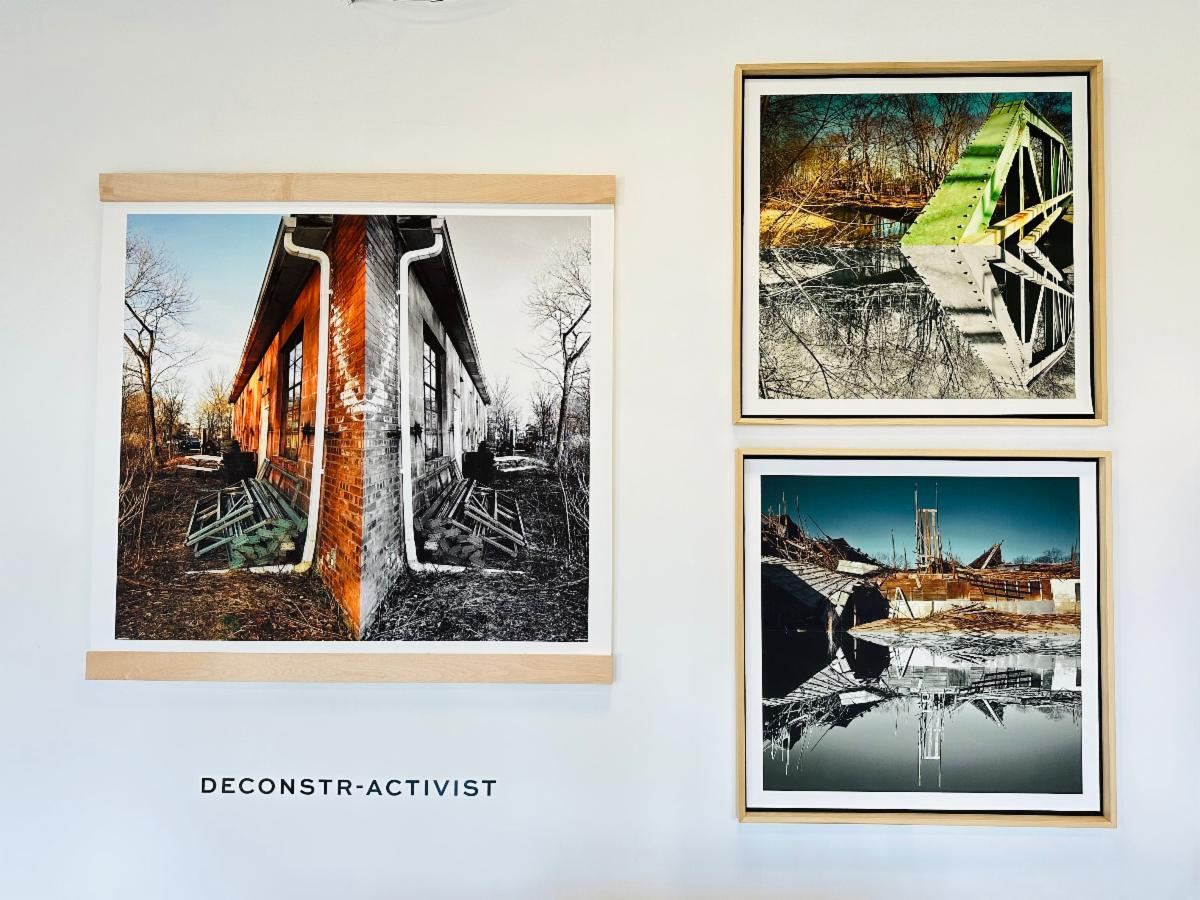
DECONSTR-ACTIVIST II, 2023
You now have a solo show called SHADOWLAND at Ethan Cohen Gallery at The Kube Art Center in Beacon, NY. What is the main inspiration for the three different series: Sandmen, Heavy Metal, and Deconstr-Activist?
In my latest exhibition, I delve into the intricate realms of the subconscious, guided by profound philosophical and scientific readings. Carl Jung’s exploration of collective consciousness has deeply fascinated me, leading me to explore how our subconscious influences our waking decisions and movements. Through my artwork, I seek to unravel the enigma of our subconscious control, drawing inspiration from scientific research, which reveals that a significant 80% of human behavior is governed by our subconscious, heavily influenced by experiences from our formative years, particularly ages 0 to 10. This revelation sheds light on why logical arguments may often be overshadowed by emotional reactions rooted in the gut. Another crucial thread in my exhibition revolves around the environment. I have been an environmental activist well before it became a trend, and I’ve actively co-produced environmental films and fought against practices like fracking. In SHADOWLAND, the subjects in my works interact with nature, and, in many instances, nature appears to reclaim them. This theme highlights the fragile bond between humanity and the natural world, provoking contemplation on our relationship with the environment.
Is it this exploration into the subconscious why the artworks are designed to be inverted? That they can be hung in either vertical orientation?
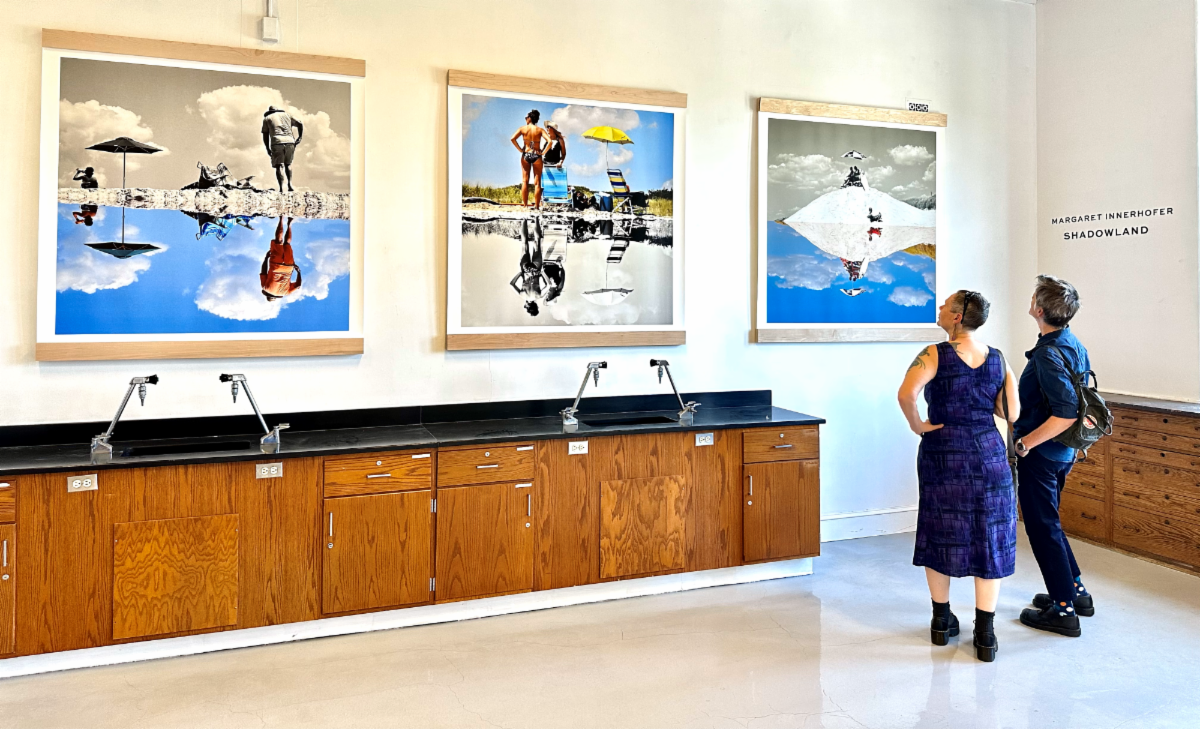
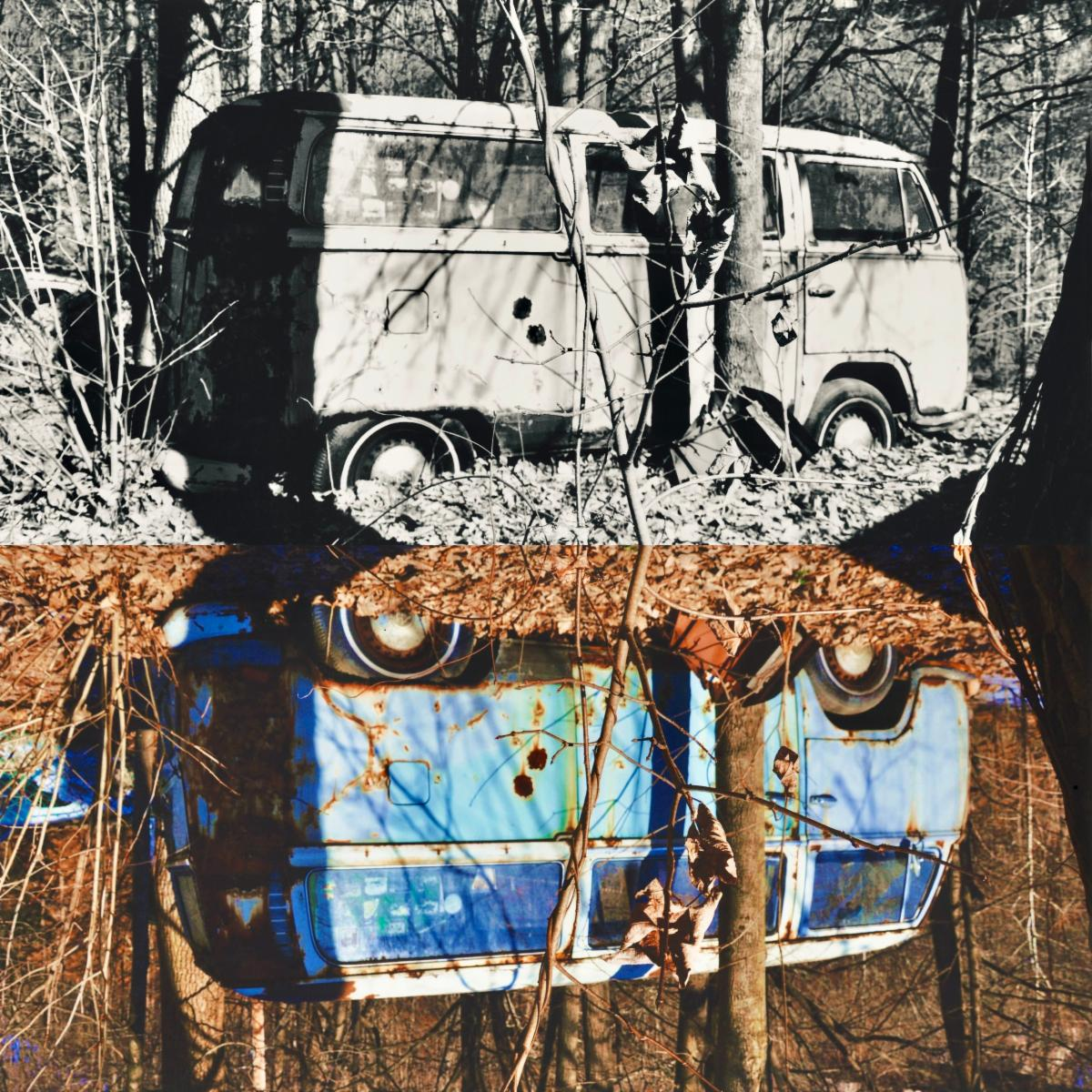
As I present my art to viewers, I give them the unique opportunity to evoke different visual and emotional responses by allowing them to choose how to hang each piece. They can opt for the color side up, revealing a figurative and realistic view of the artwork. Alternatively, they can explore the more conceptual, surreal, abstract, and volumetric perspective of the black-and-white ‘Shadow image’ when it faces upward. What’s intriguing is that showing the ‘Shadow image’ facing up, actually, represents a more realistic worldview, one that most people might be unaware of. It’s a perspective that delves into the subconscious, which I believe rules humanity and ‘runs the show.’ It’s a fascinating paradox: while the color side portrays the conscious perception of the world—what’s readily visible—the ‘Shadow image’ uncovers the hidden depths and complexities that shape our lives. By offering this choice of orientation, I invite viewers to question their own understanding of reality and delve into the intricacies of their subconscious minds. This art goes beyond mere aesthetics; it prompts introspection and contemplation, creating a multi-layered experience that challenges us to consider the complexities of human perception.
DECONSTR – ACTIVIST III, 2023Signature on the back. Archival Pigment Print on Hahnemühle Cotton Canvas,109.2 x 109.2 cm, 43 x 43 in, Edition of 3
Looking specifically at the three different subjects, can you first tell us more about Deconstr-Activist?
My Deconstr-Activist series draws inspiration from the ‘Deconstructivism’ architectural movement, challenging the rationality of modernism and embracing and revealing chaos and complexity. I delve into the intriguing world of shadows, volumes, negative versus positive space, and the interplay between light and darkness. This exploration stems from my background in architecture, which ignited my fascination with these artistic elements. Throughout the series, I endeavor to capture neglected structures that are gradually being reclaimed by nature. By doing so, I aim to shed light on the physical structures we create to accommodate our fragmented psyches. The juxtaposition of abandoned structures being overtaken by nature serves as a compelling visual metaphor for the inherent fragility and impermanence of human constructs.
HEAVY METAL – VOLKS WAGEN, 2023Signature on the back. Archival Pigment Print on Hahnemühle Cotton Canvas,109.2 x 109.2 cm, 43 x 43 in, Edition of 3
What about Heavy Metal?
In my “Heavy Metal” series, the transition from the pristine mountain range to the Hudson Valley exposed me to a striking contrast—defunct cars replacing the beauty of flowers in many backyards. This encounter sparked an obsession, leading me to spend years capturing these scenes with vintage analog Leica cameras, which I acquired from flea markets, embracing the slight imperfections in their lenses as a welcomed artistic element. In this body of work, I explore my fascination with American vintage cars left abandoned and outdated, captured within the passage of time and the encroachment of nature. Each photograph alludes to the poignant collision between the past and the future, symbolizing our own embodiment within these vehicles that are increasingly outdated, yet perpetually trapped in the present. In “Heavy Metal,” I seek to evoke a sense of nostalgia while urging reflection on the transient nature of our material possessions and the fleeting nature of human creations. The juxtaposition of these forgotten vehicles with the ever-encroaching embrace of nature serves as a poignant reminder of the impermanence of all things, urging us to ponder our place in the grand tapestry of time and the inescapable passage into the unknown future.
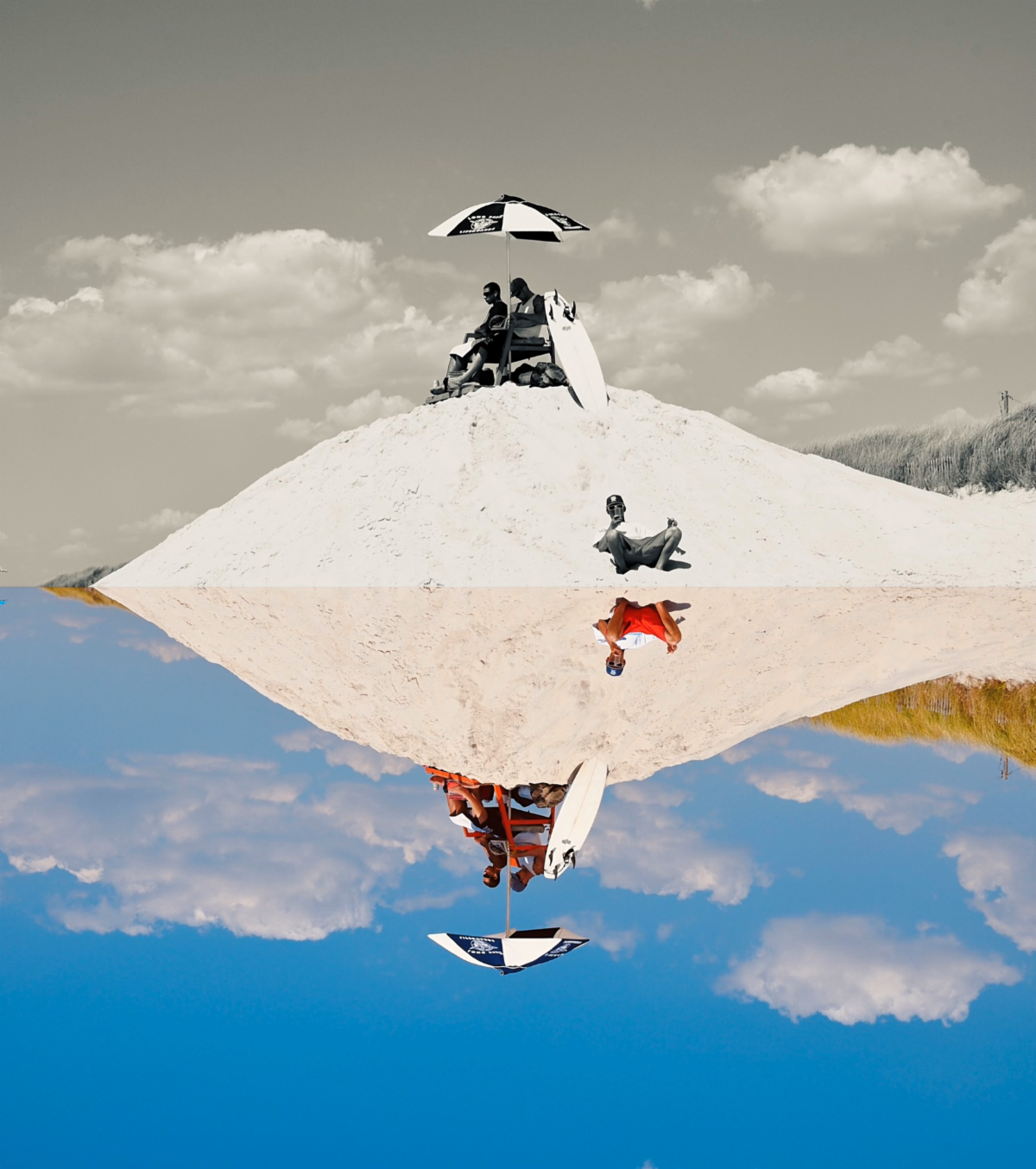
SANDMEN III, 2023Signature on the back. Archival Pigment Print on Hahnemühle Cotton Canvas,152.4 x 152.4 cm, 60 x 60 in, Edition of 3
And finally, what can you tell us about Sandmen?
Within each frame, beachgoers blissfully inhabit the horizon, seemingly unaware of their inverted doppelgängers lurking just below the surface. This juxtaposition of colors and reflections becomes a visual metaphor for the duality of human existence—the conscious experience of the moment above the surface and the hidden depths of the subconscious below. Drawing inspiration from Carl Jung’s concept of the Shadow persona and Quantum Physics, I explore how these profound elements influence human actions and behaviors. The dreamy beachscapes serve as a canvas for contemplating the interplay between our conscious and unconscious selves, the tangible and the intangible aspects of our existence. In this series, I invite viewers to immerse themselves in the enigmatic world of “Sandmen,” where time seems to stand still, and the boundaries between reality and imagination blur. The photographs become a gateway to introspection, inviting you to reflect on the transient nature of human experiences and the profound complexities that shape our perceptions and actions.
What is your favorite piece in the show and why?
As an artist, it’s challenging for me to pick a favorite, each image represents a moment of inspiration, creativity, and a reflection of my inner world. Each image carries a distinct essence, resonating with different viewers in various ways. Together with the sound piece ‘Shadowland’ that I have composed, performed, and recorded specifically for this show, the fusion and synergy between my visual art and sound adds a multi-dimensional layer to the overall experience. The fusion of visual and auditory expressions allows each piece to resonate on a deeper level, connecting with viewers in unique and profound ways.
SANDMEN II, 2023On the back. Archival Pigment Print on Hahnemühle Cotton Canvas,152.4 x 152.4 cm, 60 x 60 in, Edition of 3
What is next on the horizon?
A beach vacation in Italy, is on the immediate horizon!
“Art is a lie that makes us realize the truth” –Pablo Picasso
Pablo Picasso (Spanish, 1881-1973) was one of the most well-known artists of the 20th century. Throughout his long and prolific career, Picasso both innovated and participated in important artistic movements such as realism, cubism and surrealism. In comparison to Vincent van Gogh, the infamous starving artist, Picasso was one of the first modern artists to achieve great wealth and celebrity in his lifetime.
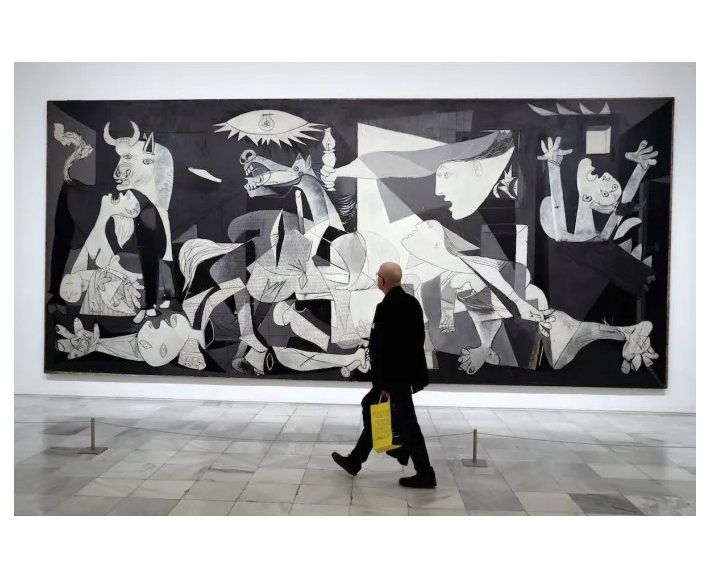
Possibly the most important work that Picasso produced was Guernica (1937).
This large scale black and white mural (approximately 12 x 26 feet), was commissioned for the Spanish Pavilion in the 1937 World’s Fair in Paris and was completed by Picasso in under a month. In it, the artist depicted a catastrophic incident from the Spanish Civil War, wherein the Nazis conducted carpet bombing experiments on the town of Guernica, in the Basque region of Spain.
Historically, Spain had been ruled by a monarchy up until the 1930s, at which time it was replaced by a republican government that promised social and economic reform and a redistribution of goods and land. Spanish conservatives disliked this idea and headed by General Francisco Franco, they launched an insurrection that led to the Spanish Civil War. Aided by the Fascists and Nazis, General Franco assumed dictatorship of the country and ruled until his death in 1975.
During this time of turmoil, Picasso was not in Spain but working in Paris.
This is important to note when considering his choice of palette. He would have been paying attention to the events taking place in his native country largely through newspapers, transforming the black and white newsreel into a large scale canvas. Also, by choosing a dichromatic colour scheme, Picasso allowed the subject matter to stand out over colour.
Prominently positioned in this work is the Minotaur (a half-bull/half-man monster), an important symbol for Spanish people representing the tyranny of General Franco and his Nazi and Fascist supporters. Picasso used distortion in the imagery and figures to portray the horrors and suffering of innocent civilians massacred by the carpet bombing. This, in combination with the palette, evokes in the viewer the sensation of a stark nightmare, tying the work to the surrealist movement.
On a final note, Picasso was adamant that this work not be displayed in Spain until democracy was restored.
On loan to the Museum of Modern Art in New York, Guernica was returned to Spain in 1981. For the Silo, Eve Yantha.
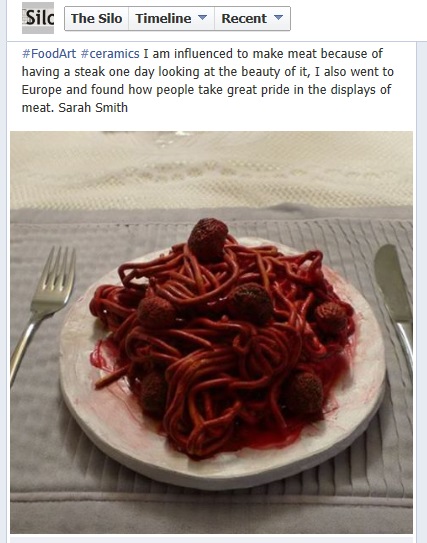
Jack Nicholson, playing The Joker in the 1989 Tim Burton film Batman, said “I don’t know if it’s art, but I LIKE IT!” Looking at artist Sarah Smith’s ersatz ceramic food sculptures I am convinced this work is incredibly effective art. And I like that. A lot.
Part of Smith’s inspiration comes from the cultural differences found when it comes to food preparation and presentation. From her experiences, European’s tend to favor and appreciate food that not only tastes good but looks just as good to match. In the discipline known as culinary arts, the appearance of food is intrinsically linked with the skill of the chef and also with the intended effect on the consumer. In other words, form effects function. Strong components in any art form, Sarah Smith has applied this notion to fake food, emphasizing and reminding the viewer that strong physical reactions can be manipulated through visual presentation.
Throughout time, food has been linked with human emotion and health. Consider this: Apples are associated with our health and death. The “perfect” apple and the “poison” apple. “An apple a day keeps the doctor away.”
Symbiosis of food and the human body. Cucumber slices and orange slices are a remedy for tired eyes and worry lines. Black eyes are healed with a raw steak. Aromatherapy consisting on some level as ‘concentrated scents of food’ (coconut, vanilla, bananas….attempts to create a strong physical reaction such as calming through an associated mental- visual representation. But why is that and is this what Smith is asking us with her food? How do we feel when we see a raw pork chop?
So it’s connections like this that demand we consider Smith’s artistic motivation. Her work exists on many levels. Is it hyper-realism? Surrealism? Pop-art? I believe it is all of those things and more. For the Silo, Jarrod Barker.
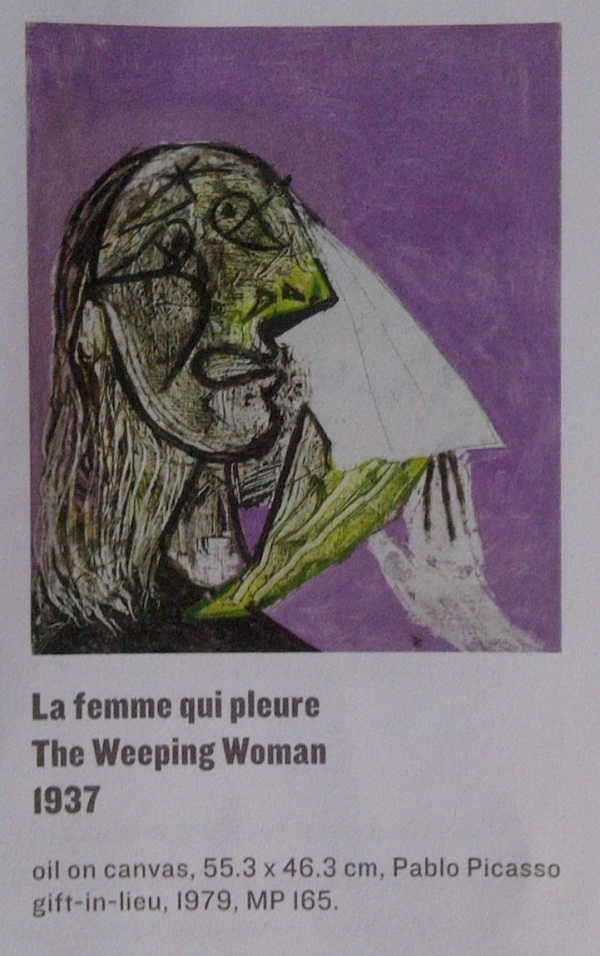
Time flies. Seven years ago, The Silo visited the AGO’s Picasso exhibition. We were not disappointed. Approximately ¼ of the entire second floor was dedicated for displaying works from Picasso’s private collection. That’s right- these are the pieces that Pablo himself deemed specially significant for archiving and for his personal reflection. We were not disappointed.
Blowup and detail from Portait de Dora Maar (Portrait of Dora Maar), 1937. Oil on canvas, 92x65cm
Organized by the Art Gallery of Ontario (AGO) and the Musee National Picasso , Paris- the exhibition is chronologically organized with each period having its own dedicated gallery space and covers the following phases of Picasso’s VASTLY productive lifetime: From Spain to Paris 1900-1905 Ancient, African and Oceanic Inspirations 1906-1909 Cubism, Collage and Constructions 1909-1915 Classicism, Marriage and Family 1914-1924 Surreal Anxiety and Desire 1924-1934 War Paintings 1936-1951 and lastly The Joy of Life and Last Years 1950-1972
According to the Picasso’s Picassos (Picasso’s Early Life and Art) on pg 2 of the AGO’s exhibition catalog, Pablo Picasso was recognized as “an artistic prodigy and began…formal artistic training when he was only seven years old” with his father, who was a painter and an art teacher. For the next 85 (!) years Picasso would go on to not only change the art world, but would leave behind a vast legacy that is as fresh and relevant today as it ever was. Strolling around this fine exhibition and noticing how the other visitors were dressed is proof enough for this writer that Picasso’s influence on society is far from over. For the Silo, Jarrod Barker.
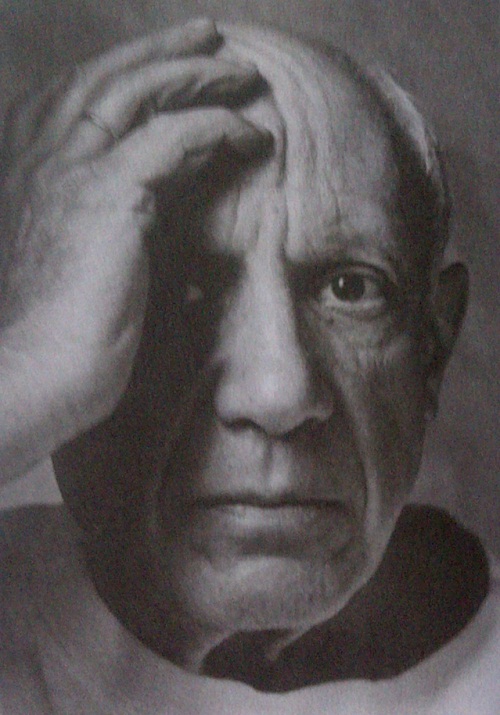
Picasso at 73years of age in 1954. “When I paint I feel that all artists of the past are behind me.”