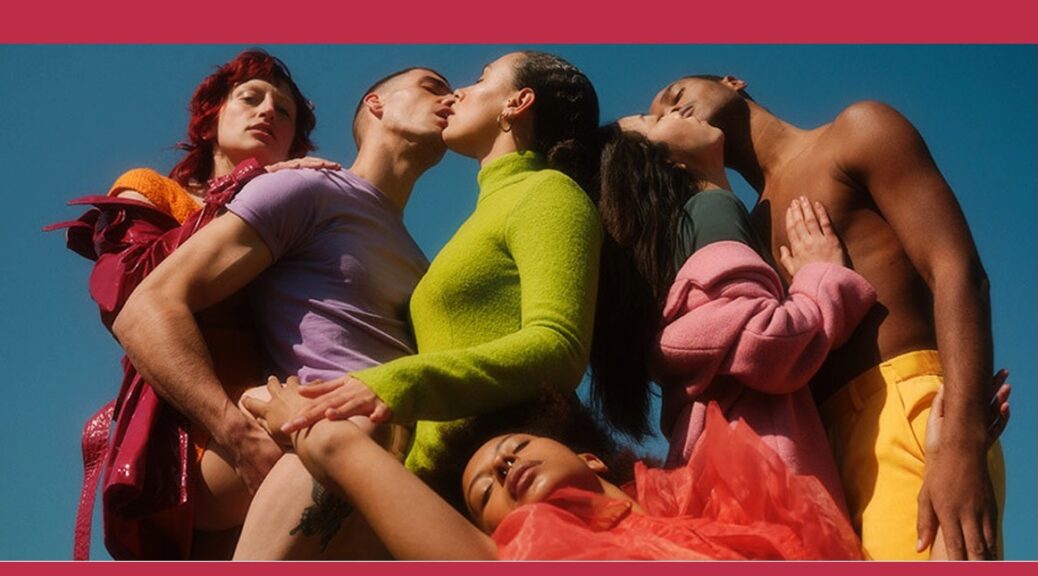
Is it time for an open talk with your parents? Read on…..
Most of us have a specific preference when it comes to sexual arousal and being turned on. As long as it’s safe, sane, and consensual, hey… you do you! But, as we become more open about sexuality and the diverse ways people experience pleasure, it’s natural to start wondering if your preferences and sexual needs are something that is passed down like fear, eye colour or hair type. You might not want to hear it, but your parents are responsible for the way you see and have sex. Well, at least partly. And it seems like there is so much more that comes into play than the dreaded sex talk we all had at one point or another.
There is science behind it, and our friends at LELO are here to explain it.
Turn-ons, kinks, and fetishes – what’s the difference?
Before diving into the possibly interesting family discussion, let’s quickly get our definitions straight:
● A turn-on is something that excites you sexually. It could be anything from a cologne scent to a dirty text.
● A kink is a non-conventional sexual interest, like bondage or role play.
● A fetish, however, is typically a more intense and specific need. Often, it’s a need for an object, body part (like feet), or material (like latex), without which arousal is difficult or even impossible.
In short, all fetishes are kinks, but not all kinks are fetishes.
How do fetishes develop over time?
You may wonder where fetishes actually come from. A study published in the Journal of Personality highlights that personality traits, like openness to experience, neuroticism, and extraversion, are partially
heritable. Since personality plays a huge role in how we approach sex, it’s not a stretch to imagine that certain people might be more genetically inclined to develop unconventional sexual interests.
But here’s the kicker: fetishes are rarely the product of one factor. They’re more like a mix of factors, like:
● Biology: Brain chemistry, hormone sensitivity, and neural wiring contribute.
● Psychology: Your experiences and formative moments matter.
● Environment: What you’re exposed to, media, culture, and family attitudes, can all influence sexual development.
For example, researcher Samuel Hughes at the University of California identified five stages of fetish development, from childhood exposure to community belonging and sexual practice:
● Childhood: This is when a kink or fetish has been encountered before the age of 10, very often before the concept of a kink or fetish has been realised and before said kink or fetish causes sexual arousal.
● Self-exploration: Between the ages of five and 14, one might seek out certain kinds of erotica whilst learning about their bodies and what they like.
● Introspection: Between the ages of 11 and 14, one realises that they have particular interests and can evaluate how they impact their lives, positively or negatively.
● Community: This phase is about realising that others share the same kinks and fetishes as you, and it happens after age 11. This community is often discovered via the Internet and at events, groups, or conferences after the age of 18. This sense of community usually gives the person a
feeling of belonging and allows them to see their kink or fetish in a positive light.
● Outside exploration: This is when a person actively participates and engages in their kink or fetish. This is often being with another person and practicing their preferences.
Are fetishes hereditary?
Here’s where things get interesting. Science hasn’t landed on a definitive “yes” or “no” when it comes to whether fetishes are hereditary. At least, not yet. But there are clues suggesting that at least some aspects of our sexual preferences might have biological roots.
If you were raised in an environment where certain materials or aesthetics were normalized or eroticized, either openly or subtly, your brain might wire arousal around them. Even pre-conscious experiences can shape sexual arousal pathways. This helps explain why someone might associate arousal with very specific, seemingly random things, like rubber gloves or the sound of heels on tile.
The psychological terrain you grow up in and your unique biology can set the stage. If your parents are open-minded and you’re genuinely curious about family sexual history for the sake of understanding yourself better, having an honest, light-hearted conversation could be enlightening (and oddly bonding).
Asking questions like “Do you think our family tends to be more sexually open?” or “Have you noticed any patterns around desire or relationships in our family?” can be a healthy start.
So, the conclusion is no, fetishes aren’t directly passed down like grandma’s porcelain collection. The way we feel about sex is not written in our DNA. What you like in the bedroom and what things about other
people turn you on are not ingrained in your brain, nor do they come from your astrology chart.
All those things are learned the same way you learned to speak and walk. We don’t have proof that fetishes are inherited in the way eye colour is, but traits that influence fetishes (like personality and openness) may be. And since sexual preferences are shaped by a mix of biology, experience, and culture, they might feel hereditary even if they aren’t technically passed through genes. At the end of the day, you are unique, just as your kinks and fetishes, so enjoy and celebrate them. The possibilities are endless.
For the Silo, Emilie Melloni-Quemar/ LELO.
LELO is not just a sex toy brand; it’s a self-care movement aimed at those who know that satisfaction transcends gender, sexual orientation, race, and age. We’re offering the experience of ecstasy without shame, the pleasure of discovering all the wonders of one’s body, thus facilitating our customers with confidence, that leads to a fulfilled intimate life. LELOi AB is the Swedish company behind LELO, where offices extend from Stockholm to San Jose, from Sydney to Shanghai.