Canada’s fertility rate has just hit a record low.
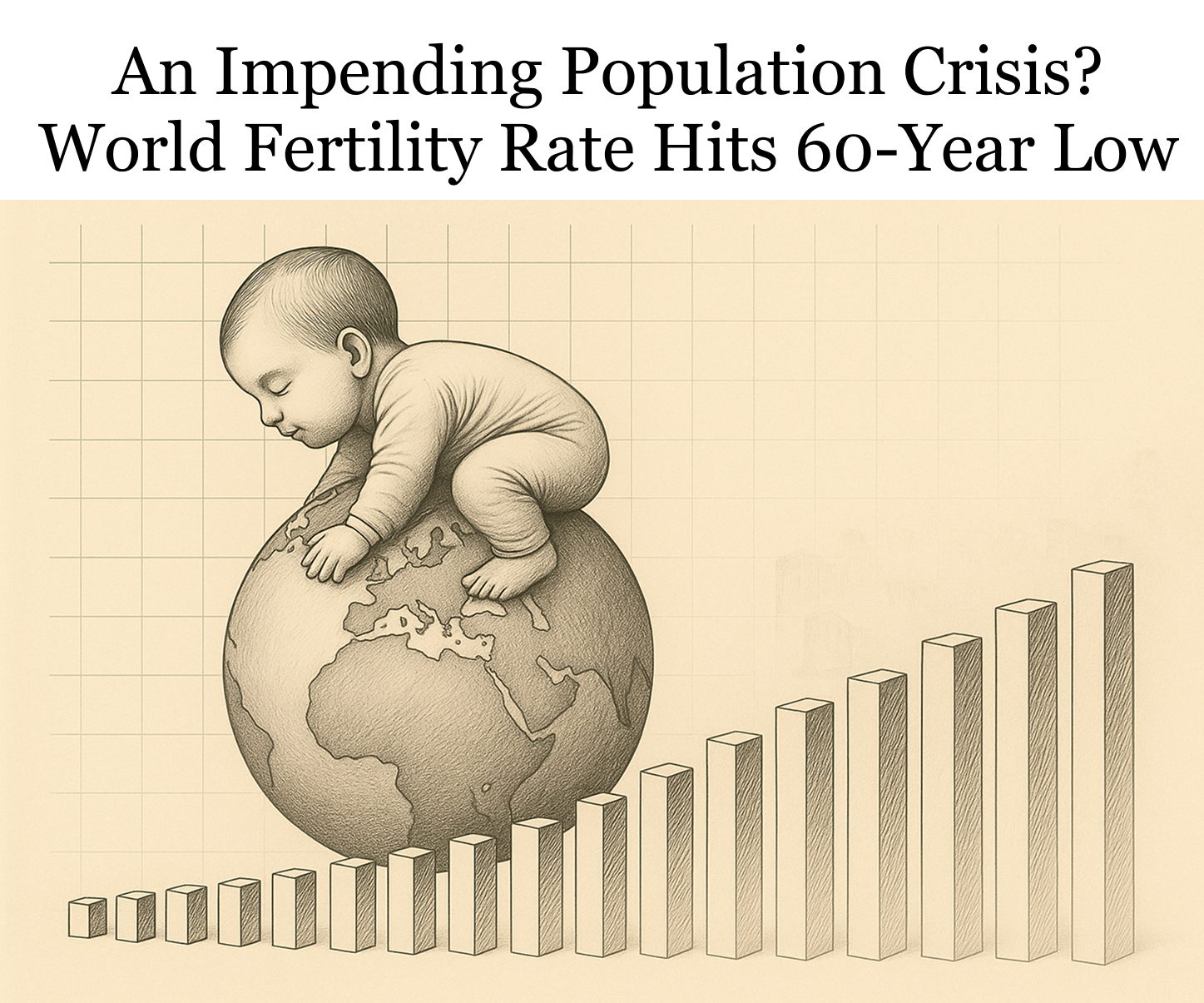 In case you missed it- the world is quietly entering a population crisis. Global fertility rates have plunged to their lowest level in 60 years, raising profound questions about how societies will sustain themselves in the decades ahead. In case you missed it- the world is quietly entering a population crisis. Global fertility rates have plunged to their lowest level in 60 years, raising profound questions about how societies will sustain themselves in the decades ahead.In Canada, births have fallen to just 1.25 children per woman, the lowest in our history. Behind the numbers are shifting values, economic pressures, and growing uncertainty about the future. This week, let’s examine the global decline in birth rates and explore what’s driving it—and what it means for the economy, family, and national identity. |
| An Impending Population Crisis? World Fertility Rate Hits 60-Year Low For the Silo, By Sylvia Xu / Epoch Times. Fertility rates have plummeted worldwide over the past six decades, leading experts to warn of dire consequences as the downward trend continues. Continued low fertility rates will cause “a gradual implosion of the world’s economy as the population ages and dies,” Steven Mosher, president of the Population Research Institute. Mosher is an expert on population control, demography, and China.” This will not occur overnight, of course, but once it is well underway, it will be difficult, if not impossible, to reverse course,” he said. The fertility rate is the average number of children born to a woman in her lifetime; the birth rate is the number of live births per 1,000 people in a population over a given period. Macroeconomist Jesús Fernández-Villaverde called low fertility rates “the true economic challenge of our time” in a February report for the American Enterprise Institute. In 1960, the fertility rate was between four and five. By 2023, that number had halved to 2.2, approaching 2.1, the level at which a population replaces itself from one generation to the next. 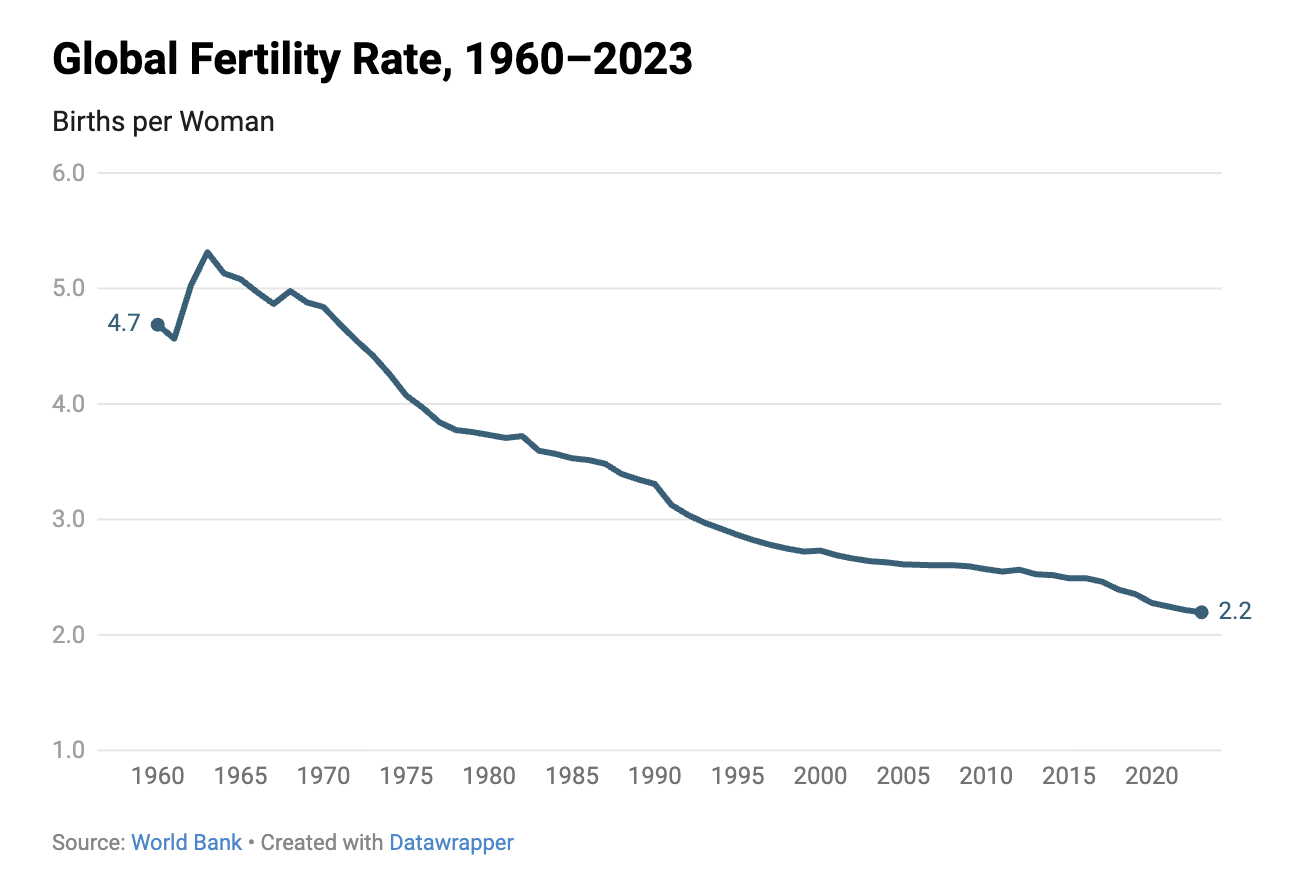 In July, the U.S. Census Bureau projected that the world’s population will reach 8.1 billion this year. Experts say that although the figure has grown from 3 billion in 1960, the number to watch is the pace of population growth.” In July, the U.S. Census Bureau projected that the world’s population will reach 8.1 billion this year. Experts say that although the figure has grown from 3 billion in 1960, the number to watch is the pace of population growth.”The rate of growth peaked decades ago in the 1960s and has been declining since and is projected to continue declining,” the Census Bureau stated. Fernández-Villaverde warned that although the sagging rate of growth may not have immediate consequences, in less than 50 years, declining fertility will affect the world economy. Countries with low or negative birth rates will contend with a shrinking workforce and the ballooning costs associated with an aging population. Global Fertility Rates Only about 4 percent of the world’s population is in countries with high fertility rates—more than five children per woman—and all of those nations are in Africa, according to the Census Bureau. Even in those countries, fertility rates are generally lower than they once were. The Census Bureau reported that nearly three-quarters of the world’s population is in countries where fertility rates are at or below the replacement level. The fertility rate in India, the world’s most populous country, has steadily declined over the past six decades. In June, the U.N. Population Fund reported that India’s fertility rate stood at 1.9 children per woman, down from five or six children in 1960. In Canada, fertility rate fell to 1.25, well below the replacement level of approximately 2.1 children per woman needed to maintain a stable population. In 1990, China’s fertility rate was 2.51, despite its one-child policy. By 2023, it had dropped to less than one birth per woman, according to the U.N.’s population division.In the United States, fertility has undergone a persistent decline. It fell below the replacement level in 1972, and in 2023, it reached 1.62—a historic low. 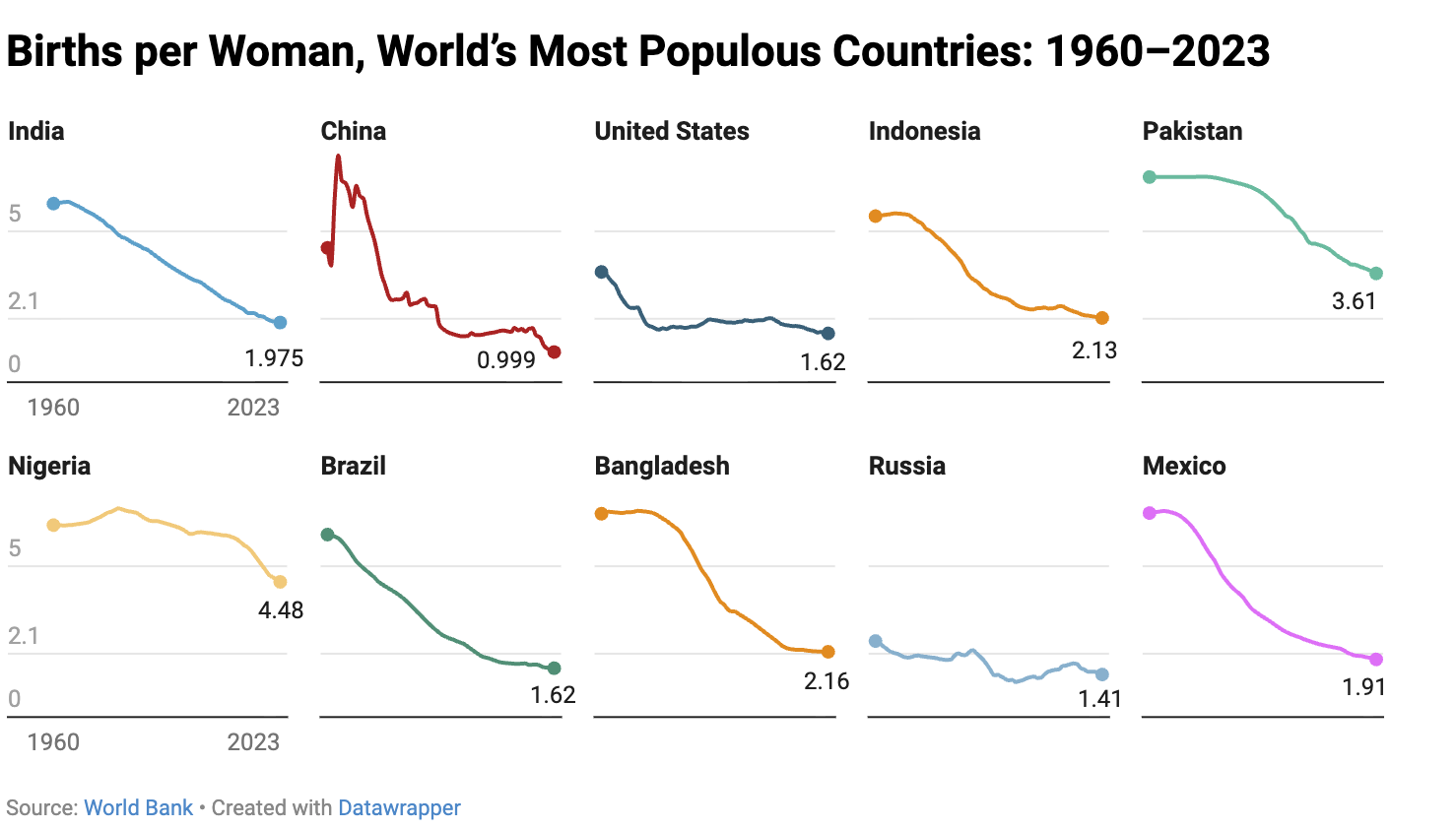 Asian and European countries have the lowest fertility rates in the world, and South Korea (0.72), Singapore (0.97), Ukraine (0.977), and China (0.999) all have rates below one. (Read More →) Asian and European countries have the lowest fertility rates in the world, and South Korea (0.72), Singapore (0.97), Ukraine (0.977), and China (0.999) all have rates below one. (Read More →) |

Key Data & Facts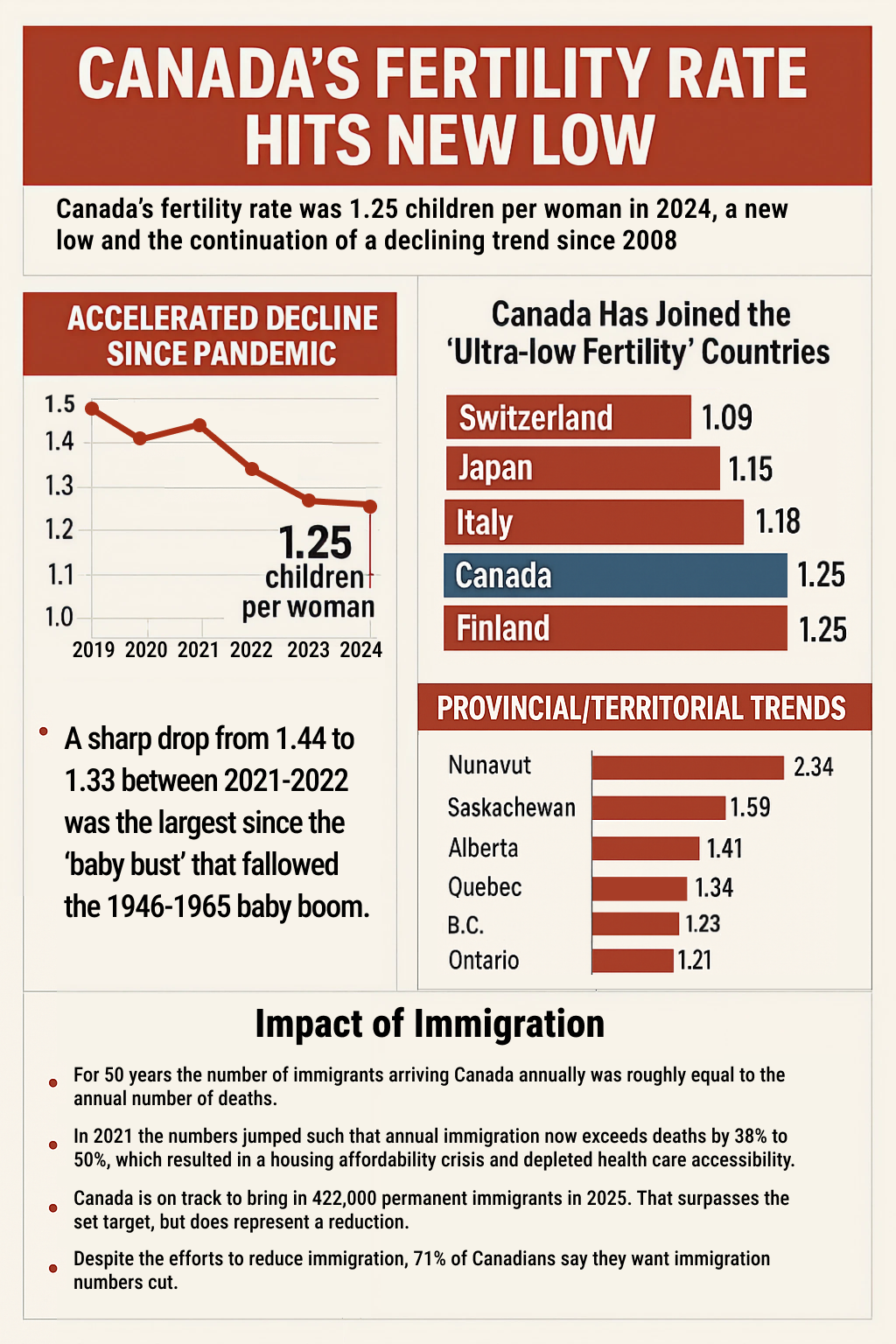 Source: Statistics Canada Source: Statistics Canada |