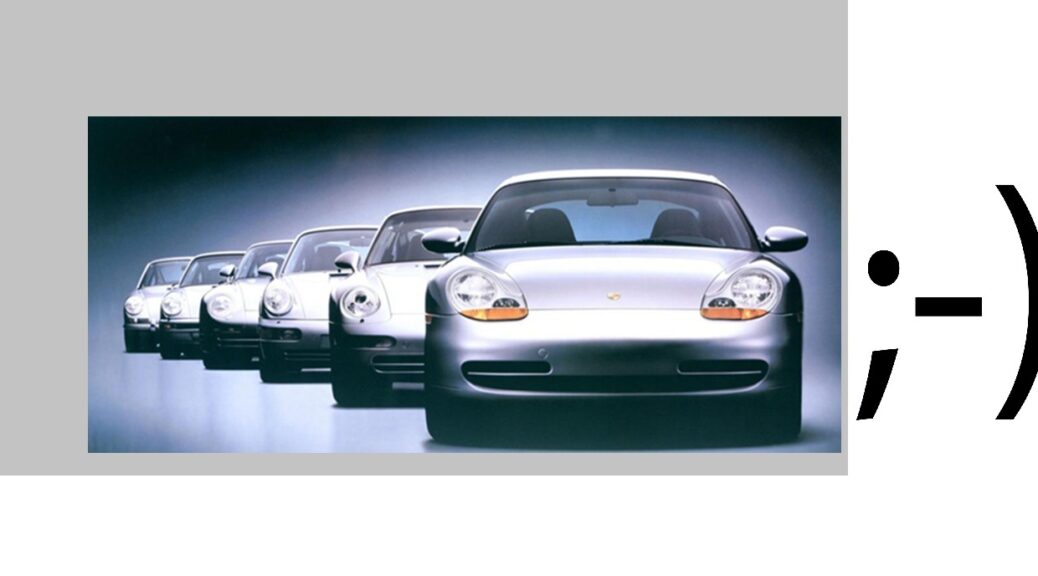
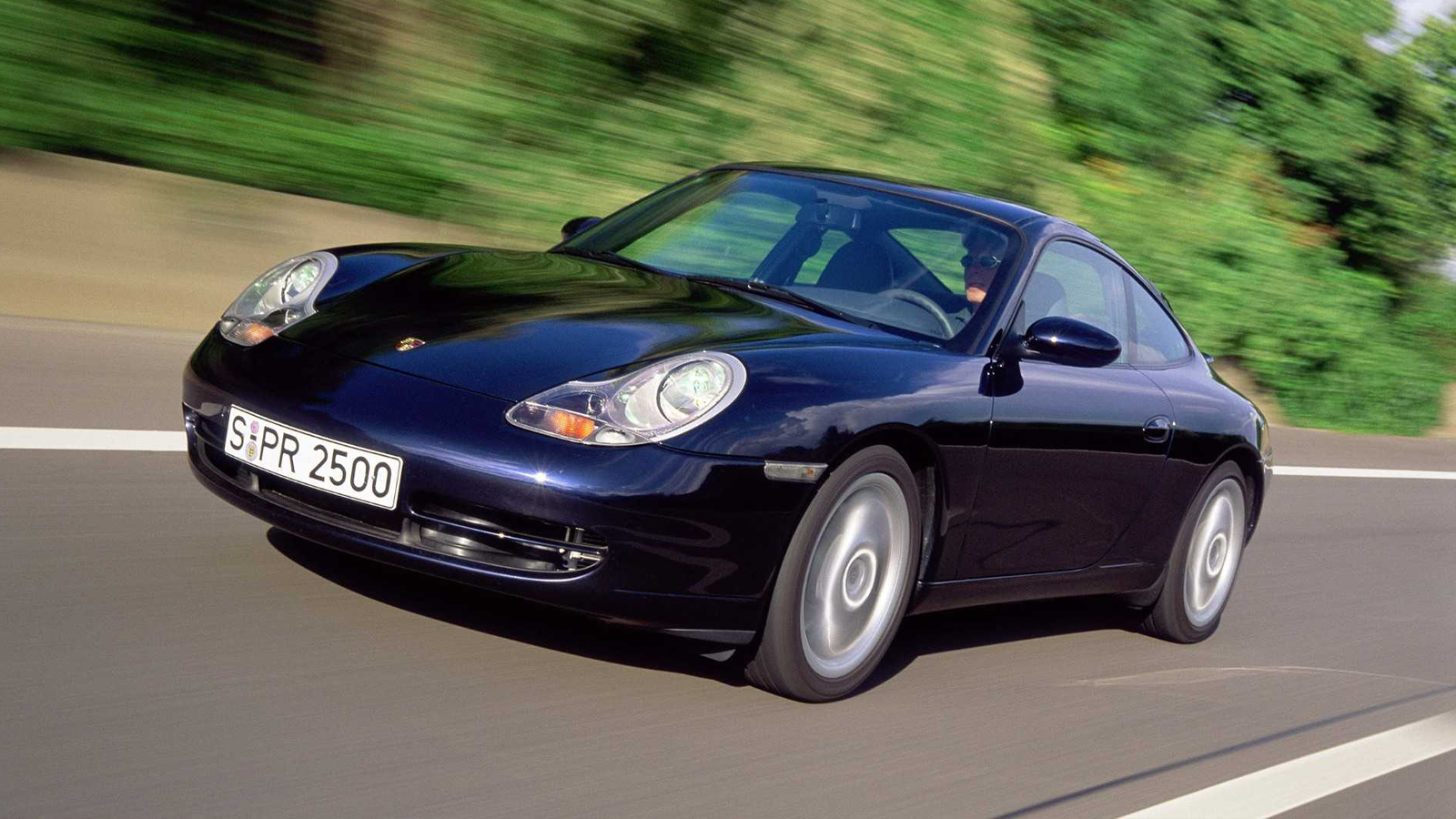
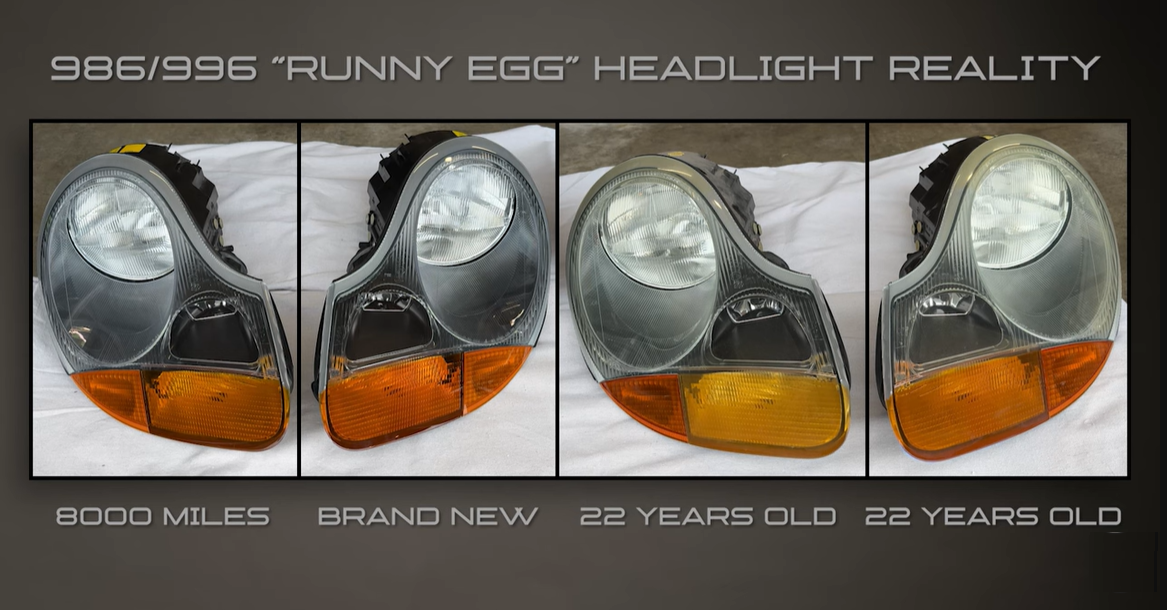
Initially divisive, the 996’s integrated headlamp clusters (combining main, high, and indicator lights under one cover) represented Porsche’s first major step into modern production efficiency. The “Fried Egg headlight” design was so controversial that when introduced, many car purchasers (especially those owning the first generation Porsche Boxster 986) modified the headlights with window tint to “hide the yolk”!
Regardless of how acceptance was split, the design was sensible and borrowed from the 911 GT1 race car, this setup improved aerodynamics and manufacturing simplicity. Over time, enthusiasts have come to appreciate its boldness, and we’re going as far as naming it in our top 10 list of the coolest Porsche headlights ever!
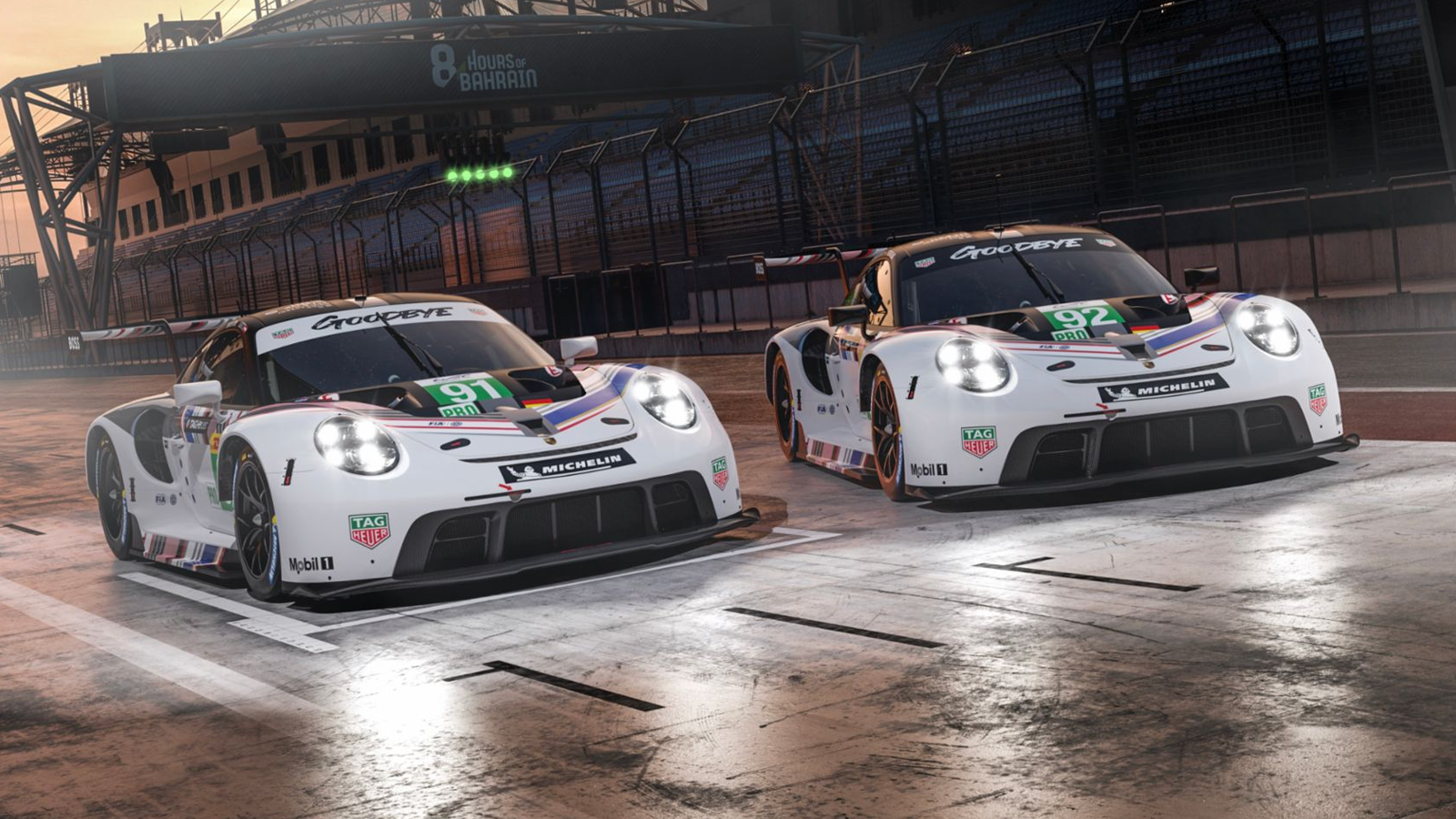
9. Porsche 911 RSR (2017–Present) — The Perfect Fusion of Heritage and Function
The 911 RSR’s headlights combine classic round symmetry with cutting-edge LED tech and aerodynamic sculpting. The signature four-point LEDs maintain Porsche’s unmistakable night-time identity. In endurance racing, where function dominates, the RSR’s lights prove that beauty and performance can coexist perfectly.
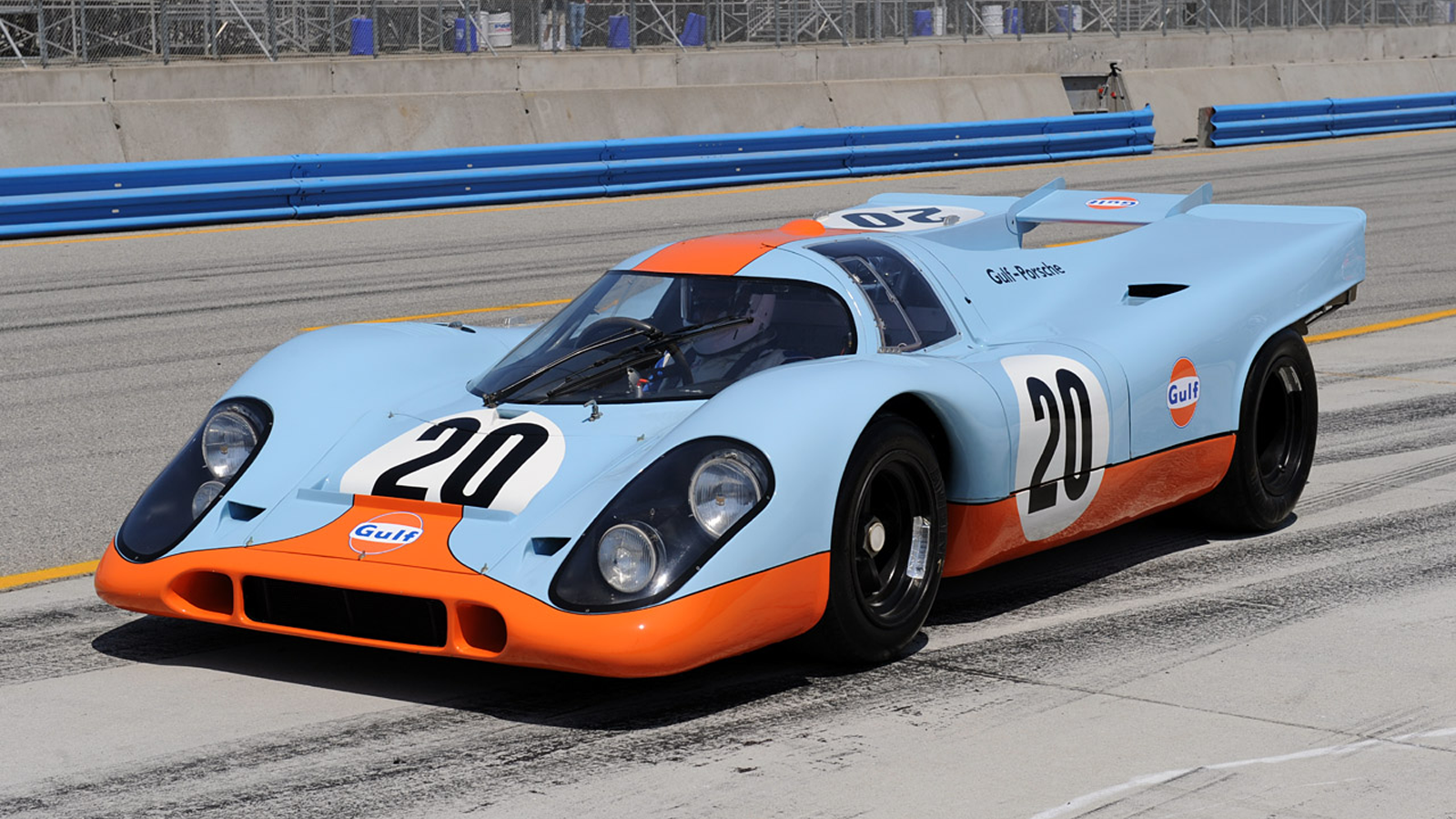
8. Porsche 917K (1970) — Racing Eyes Built for Le Mans
The 917K’s headlights weren’t just for show; they were shaped by necessity. With their low, wide fairings and Plexiglas covers, the lights became a critical aerodynamic component at speeds exceeding 220 mph. Their integrated look and teardrop housing gave the car a menacing, purposeful face that influenced Porsche’s endurance racers for decades.
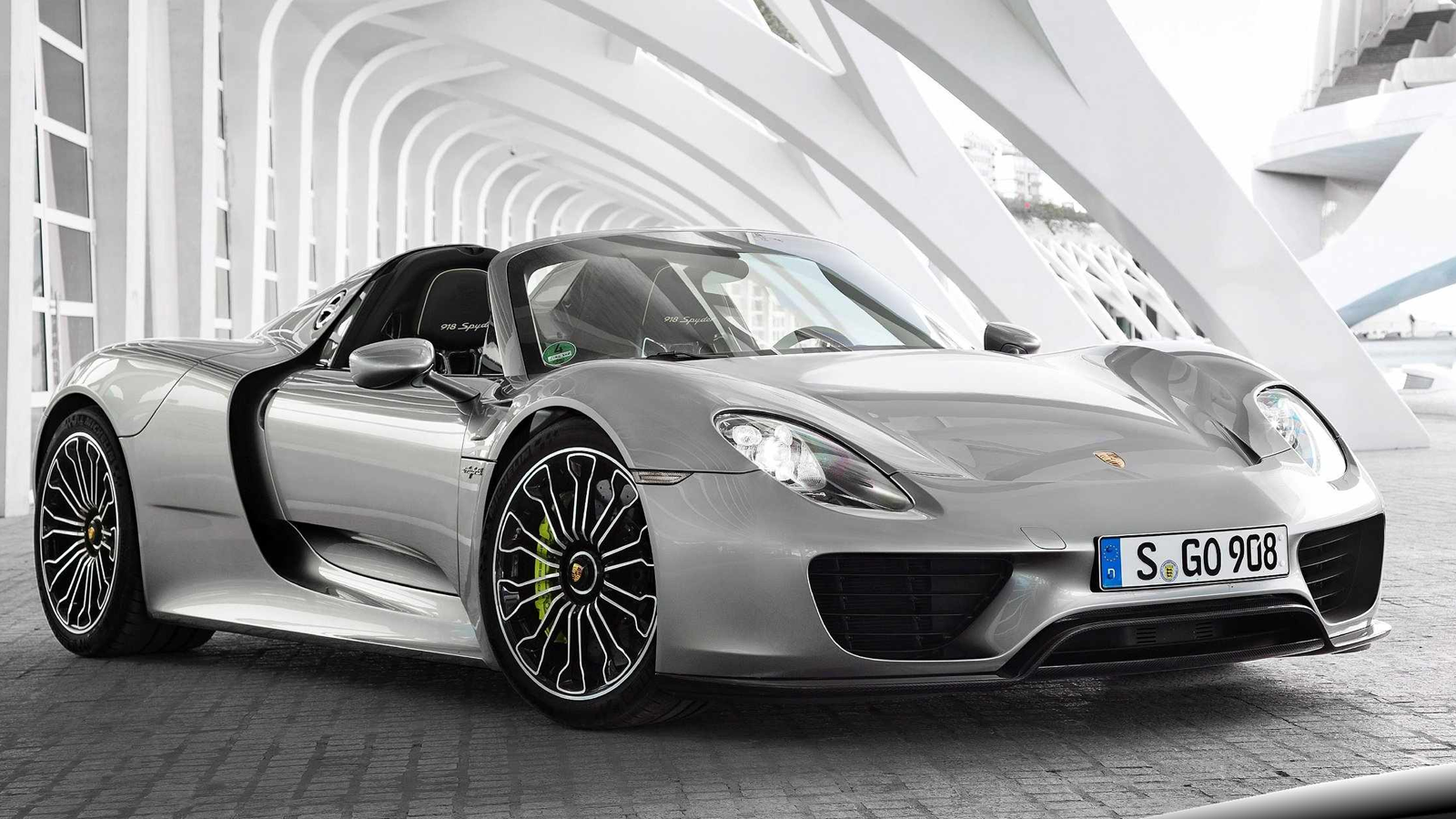
7. Porsche 918 Spyder (2013–2015) — Laser Precision and Modern Drama
A leap into the hybrid era, the 918 Spyder’s four-point LED headlights introduced a motif that defined Porsche design for the next decade. Their sharp-edged housings and distinctive daytime running light pattern made them unmistakable, even in the dark. They also pioneered Porsche’s adaptive light technology, blending form, function, and digital precision.
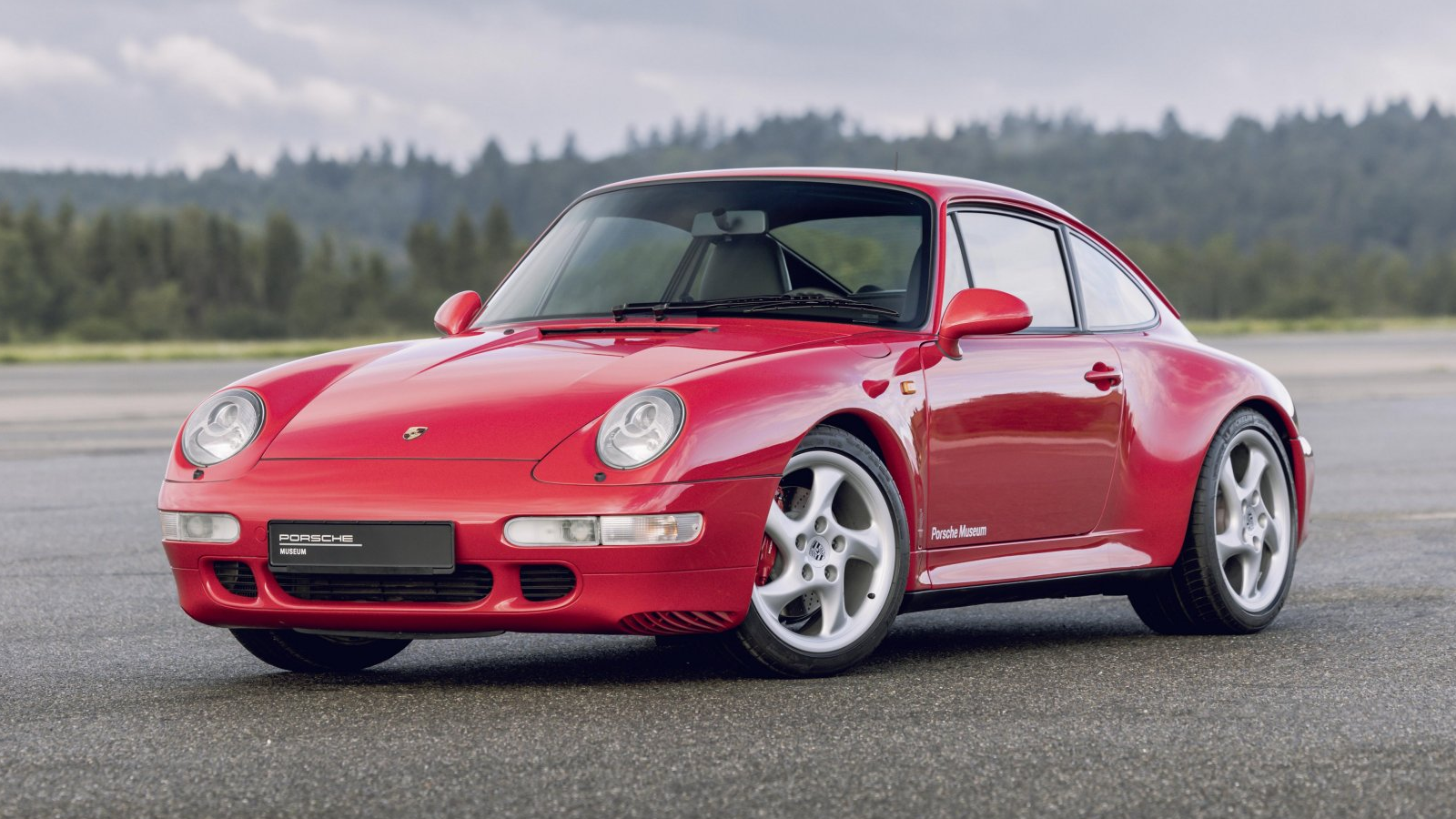
6. Porsche 993 (1993–1998) — The Last of the Classic Round Lamps
The 993 introduced a new, sloped front end with headlights that followed the hood line, a significant break from tradition. The design, though controversial at launch, ultimately modernized the 911’s appearance and improved aerodynamics. Its flush, oval lenses became icons of the 1990s Porsche aesthetic and marked the final air-cooled era’s visual identity.
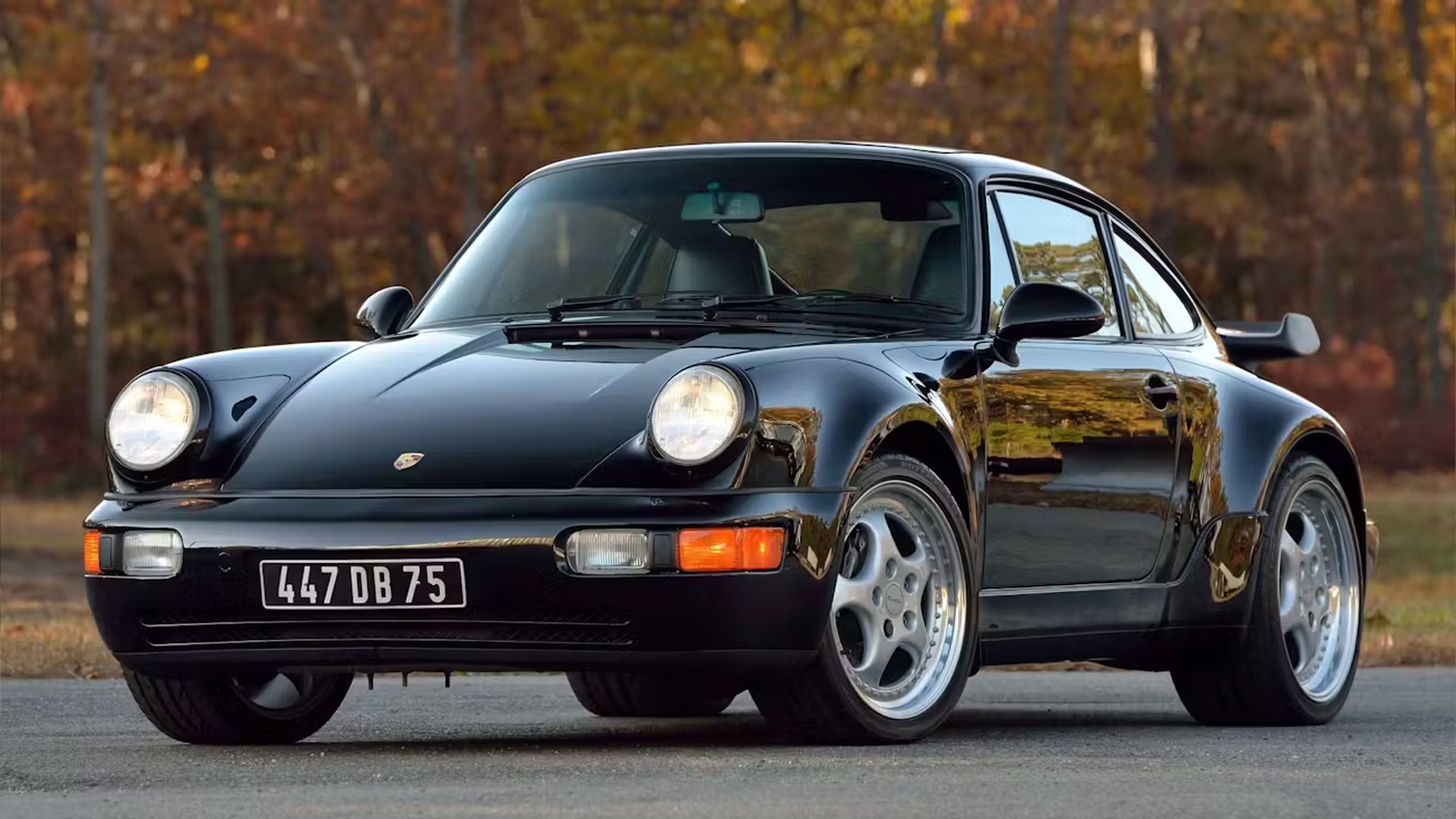
5. Porsche 911 (964) — Classic Form Meets Modern Function
The 964 retained the round 911 lights but subtly reshaped them to fit new, smoother bodywork. They were slightly more upright and used improved reflectors and halogen elements for better illumination. This generation is often overlooked, but its headlights mark the bridge between old-school air-cooled charm and modern Porsche precision.
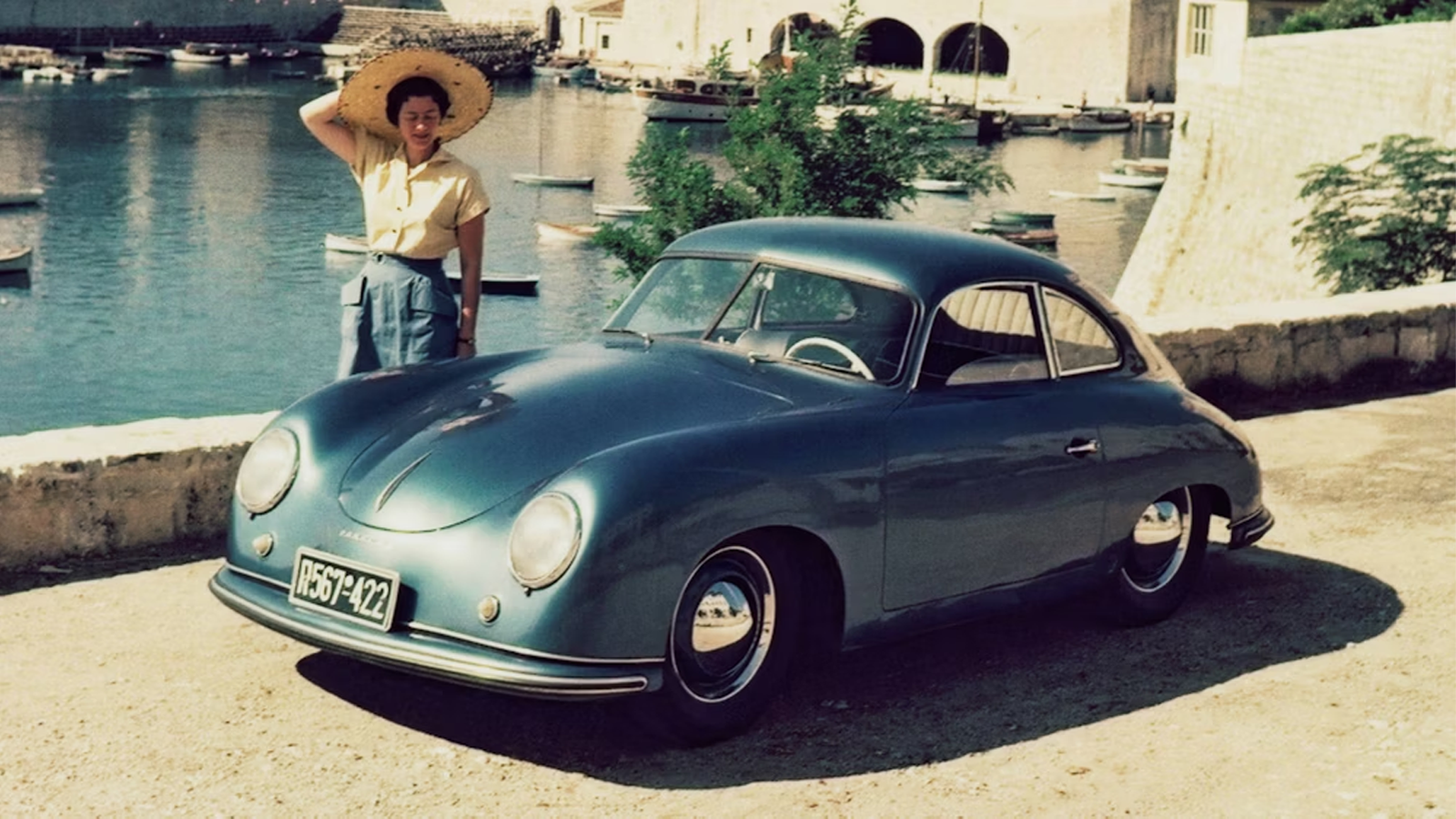
4. Porsche 356 (1948–1965) — The Blueprint for Porsche’s “Eyes”
The 356 established the signature oval headlight shape that became Porsche’s visual identity for decades. Mounted high and slightly reclined, the chrome-rimmed lenses gave the car a friendly yet purposeful look. Though rooted in postwar simplicity, their integrated design flowed seamlessly with the rounded fenders, a foundational cue that carried into every 911 thereafter.
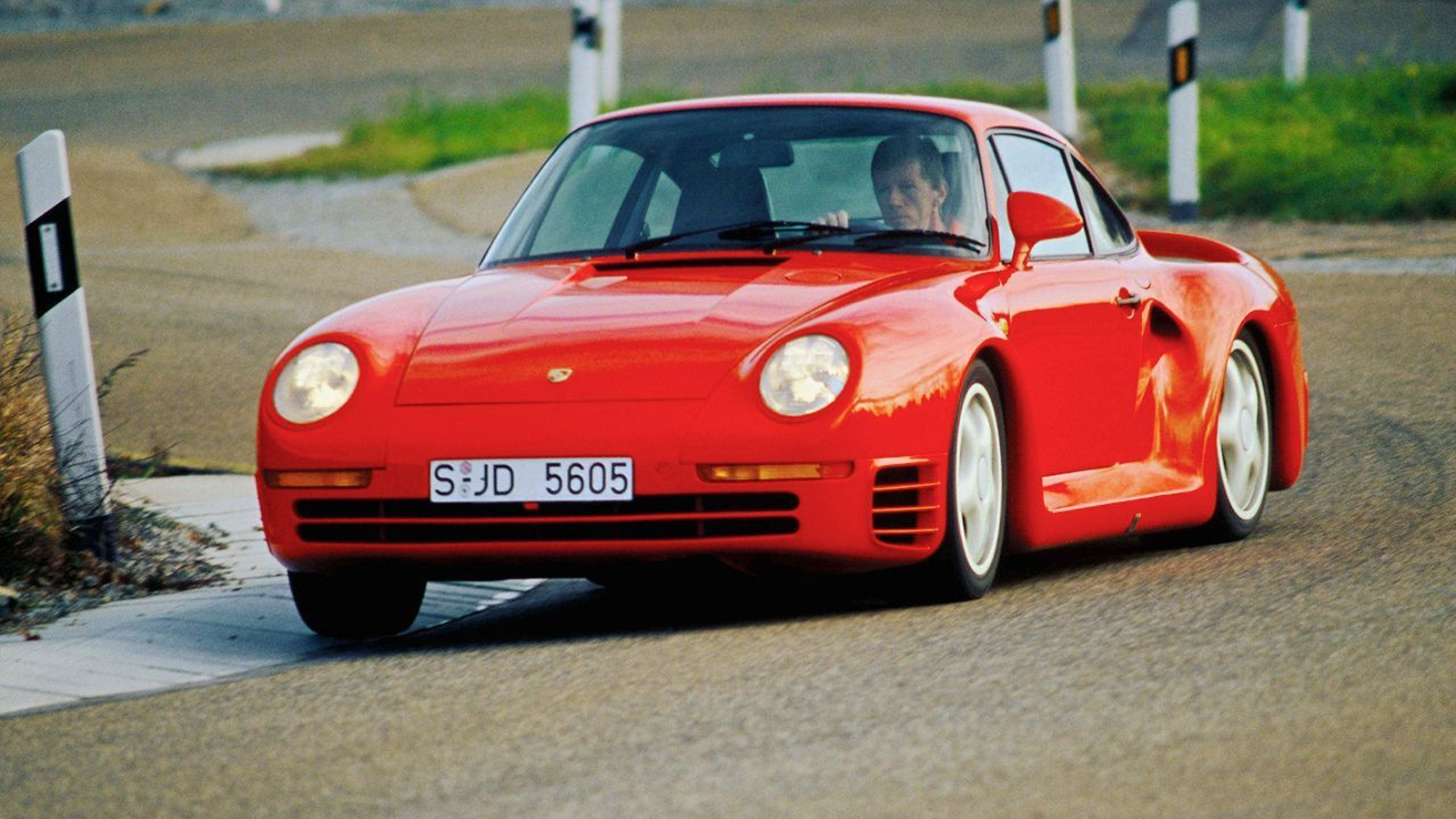
3. Porsche 959 (1986–1988) — Aerodynamic Function in a Supercar Form
The 959’s headlights were a turning point for Porsche’s design language. They maintained the classic round outline but were deeply recessed into the front fenders for aerodynamic efficiency. Flush glass covers gave the car a sleek, cohesive face that previewed Porsche’s shift toward modern integration and minimal drag. Beneath the surface, their lighting performance outclassed most of the era’s supercars.
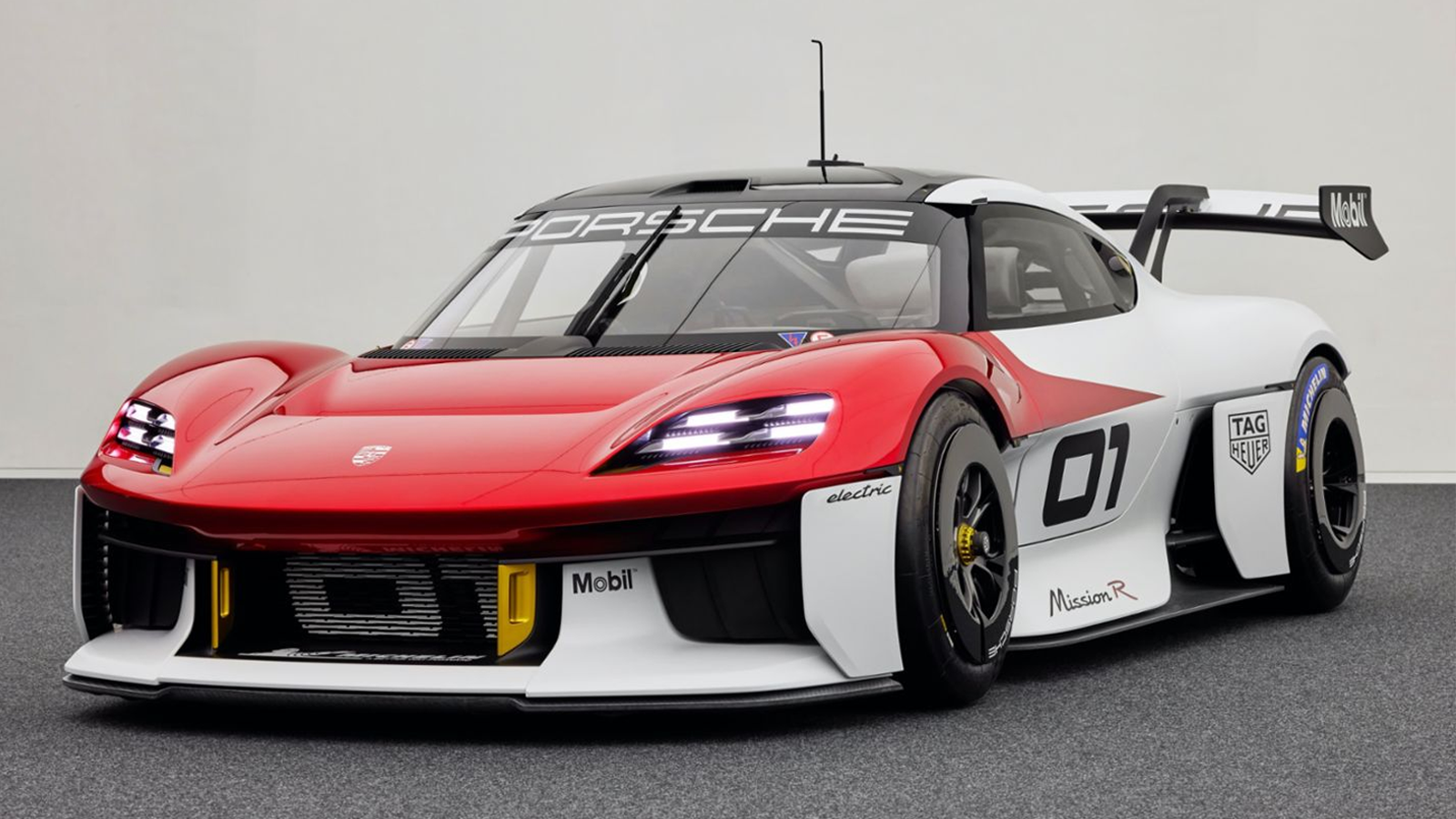
2. Porsche Mission R Concept (2021) — The Future in Plain Sight
With its slim, vertically stacked LED units framed by a minimalist housing, the Mission R’s headlights reimagined Porsche’s “four-point” look for the electric age. They were both expressive and efficient, incorporating cooling ducts and DRL elements into a single sculptural assembly. The design hints at the next generation of motorsport and production cars from Porsche.
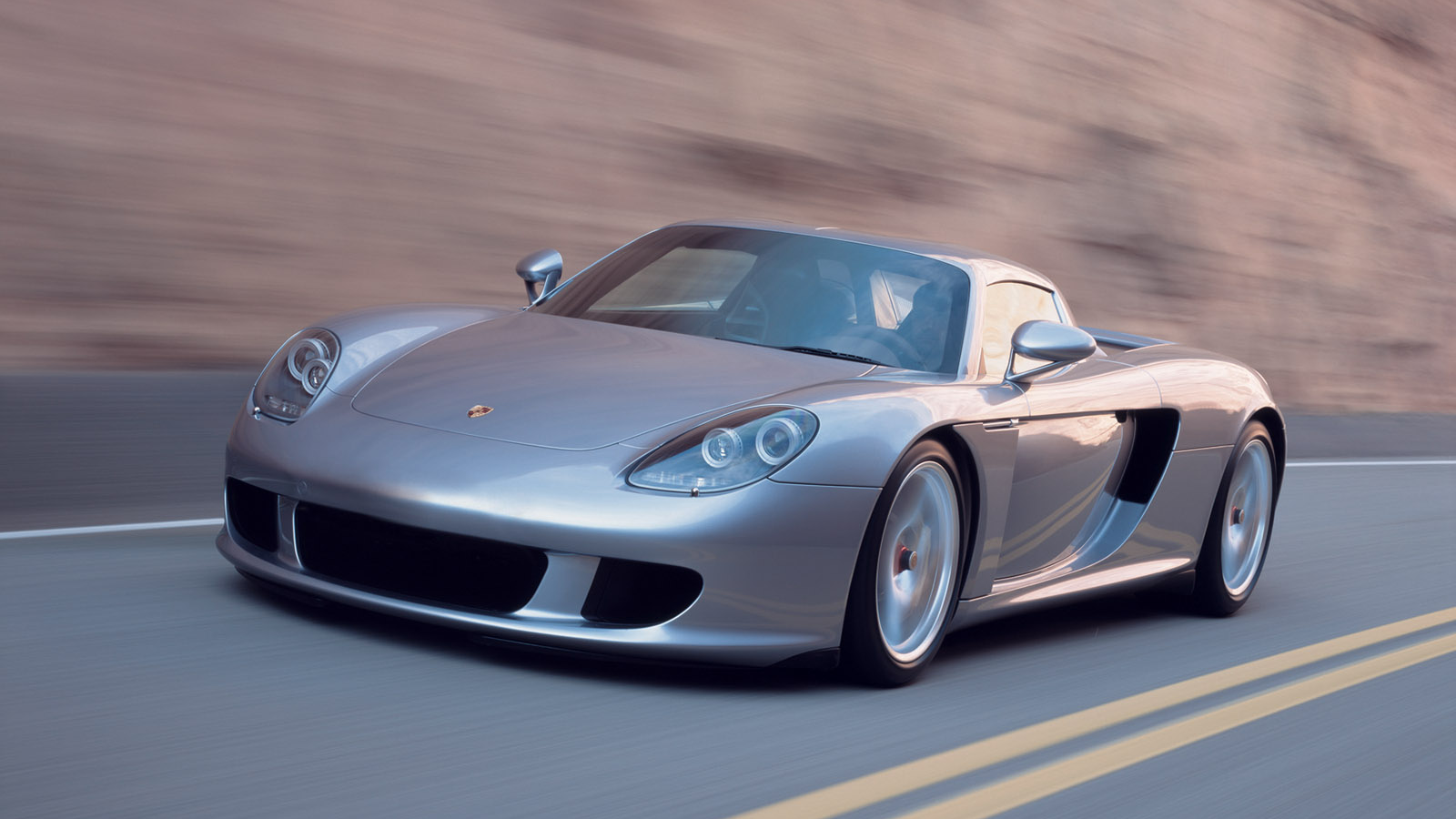
1. Porsche Carrera GT (2003–2007) — Pure Function, Clean Form
The Carrera GT’s headlights embodied Porsche’s design minimalism at its finest. With visible projector lenses under a clear polycarbonate cover, they echoed the look of endurance racers while maintaining a sculptural, lightweight appearance. The compact design allowed for large air channels around them, aiding cooling and aerodynamics, beauty born from engineering.
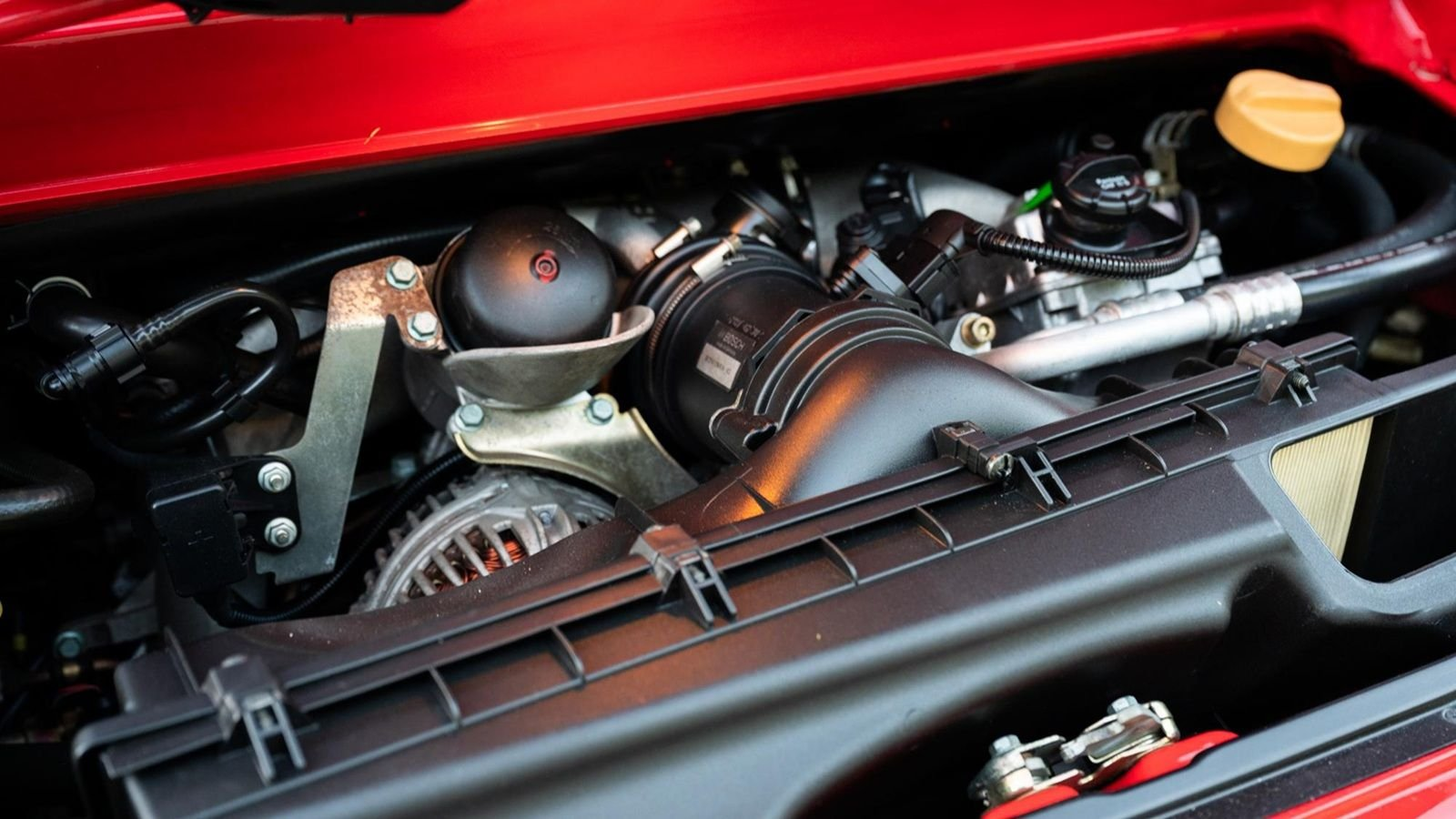
Take it from our friends at rennlist, Porsche has built some truly remarkable engines over the years. The air-cooled 911/83 engine that powered the 1973 911 2.7L Carrera RS is just one example. But if you were asked to go on and list the ten all-time greatest Porsche engines there is a good chance the list would be dominated by various Mezger engines.
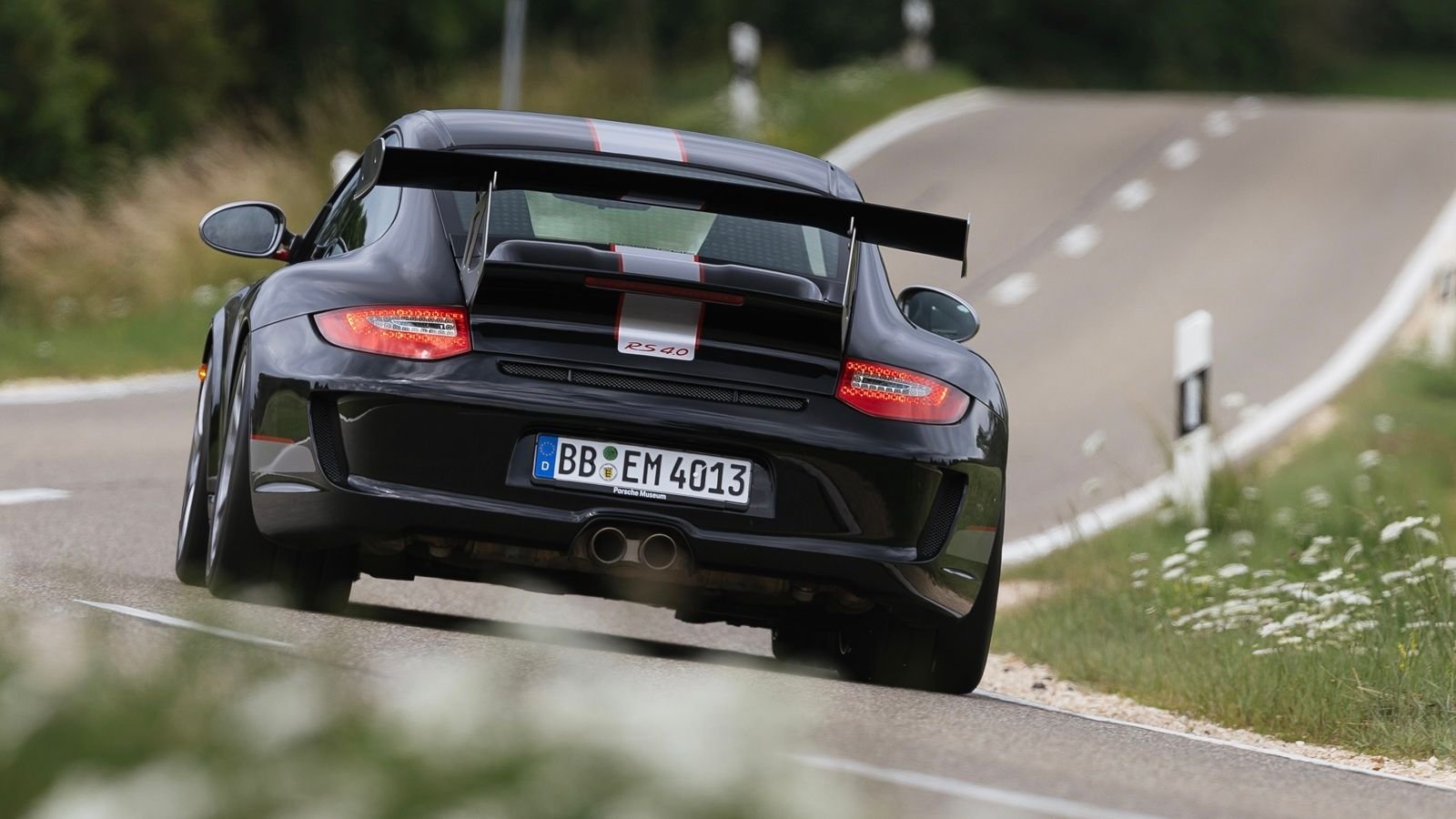
The 12-cylinder found in the Le Mans-winning Porsche 917? That’s a Mezger. The 3.6L flat six in the 996 GT3? That’s a Mezger. The 4.0L in the 997 GT3 RS 4.0? That’s a Mezger.
How about going all the way back to the original 901/911 engine? Yup, that’s a Mezger.
But what is a Mezger engine, and why are they so special? That is what we are going to discuss here today. We have come up with 9 reasons why the Mezger engine is so special. And there is no other place to begin the discussion than the legendary man behind these engines, Hans Mezger.
1. Hans Mezger
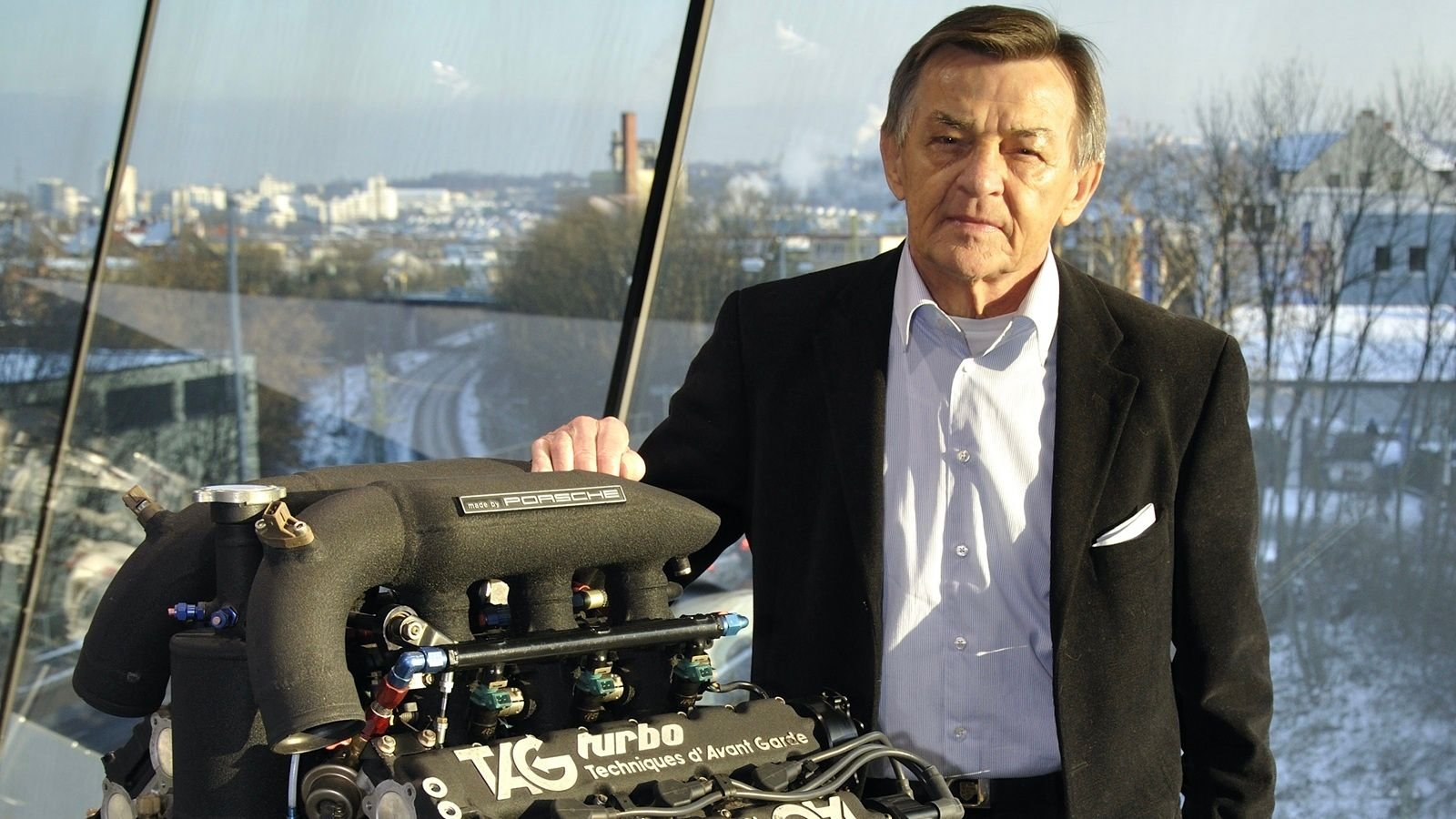
A single slide can in no way capture all that the legendary Hans Mezger accomplished. He joined Porsche back in October of 1956. He loved Porsche sports cars, but his first job was working on diesel engine development. In 1960, he began to work on the type 753 flat-eight engine for Porsche’s first Formula 1 car. Soon after he designed the 6-cylinder boxer engine for the 901/911. He was then promoted to the head of race car design. He was responsible for the 917 and the 12-cylinder engine that powered it to Porsche’s first Le Mans victory in 1970. He then was responsible for the turbocharged 917/10 and 917/30 cars that dominated Can Am. He designed and developed the six-cylinder turbo engines for the Type 935 and 936 race cars.
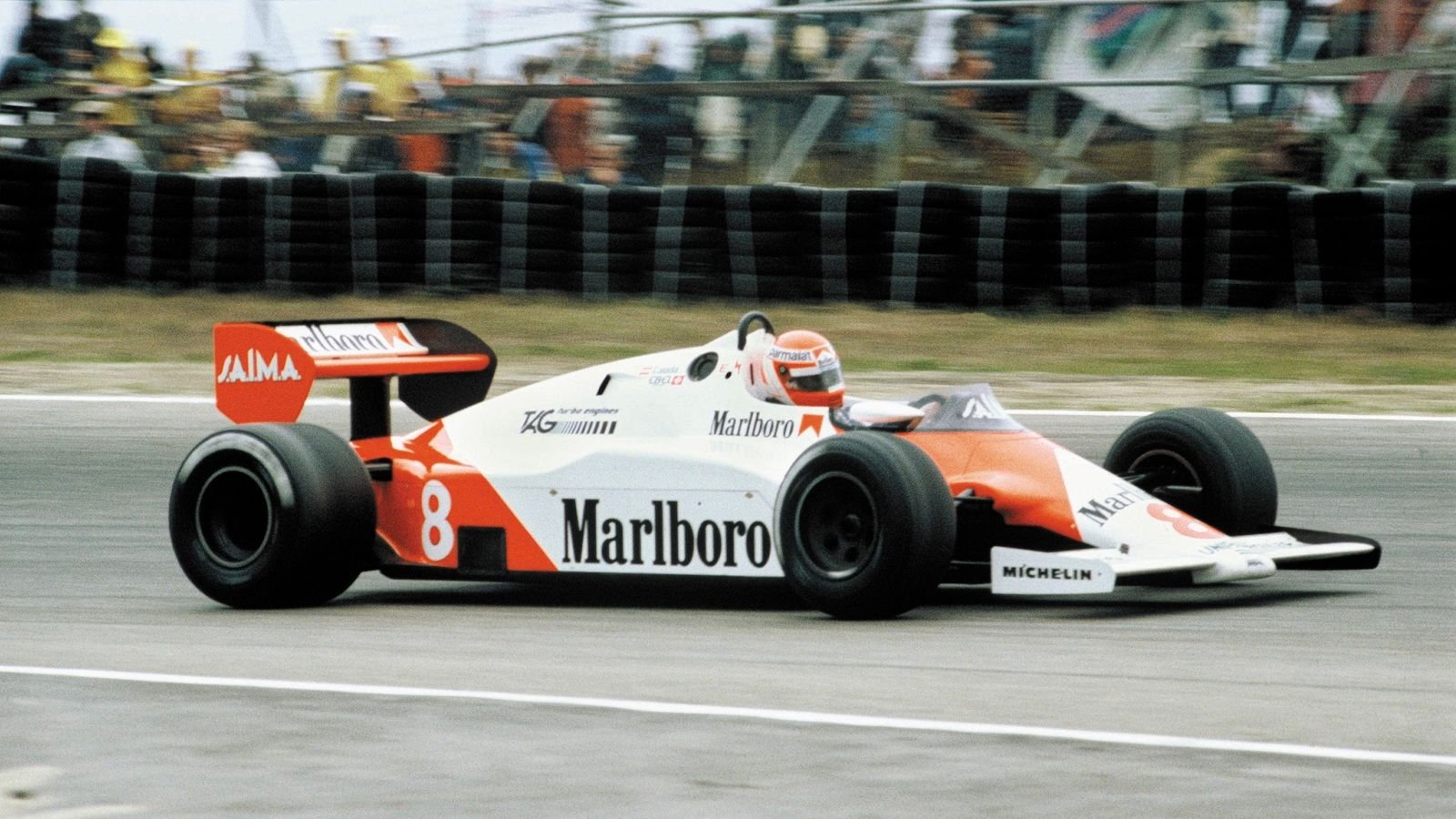
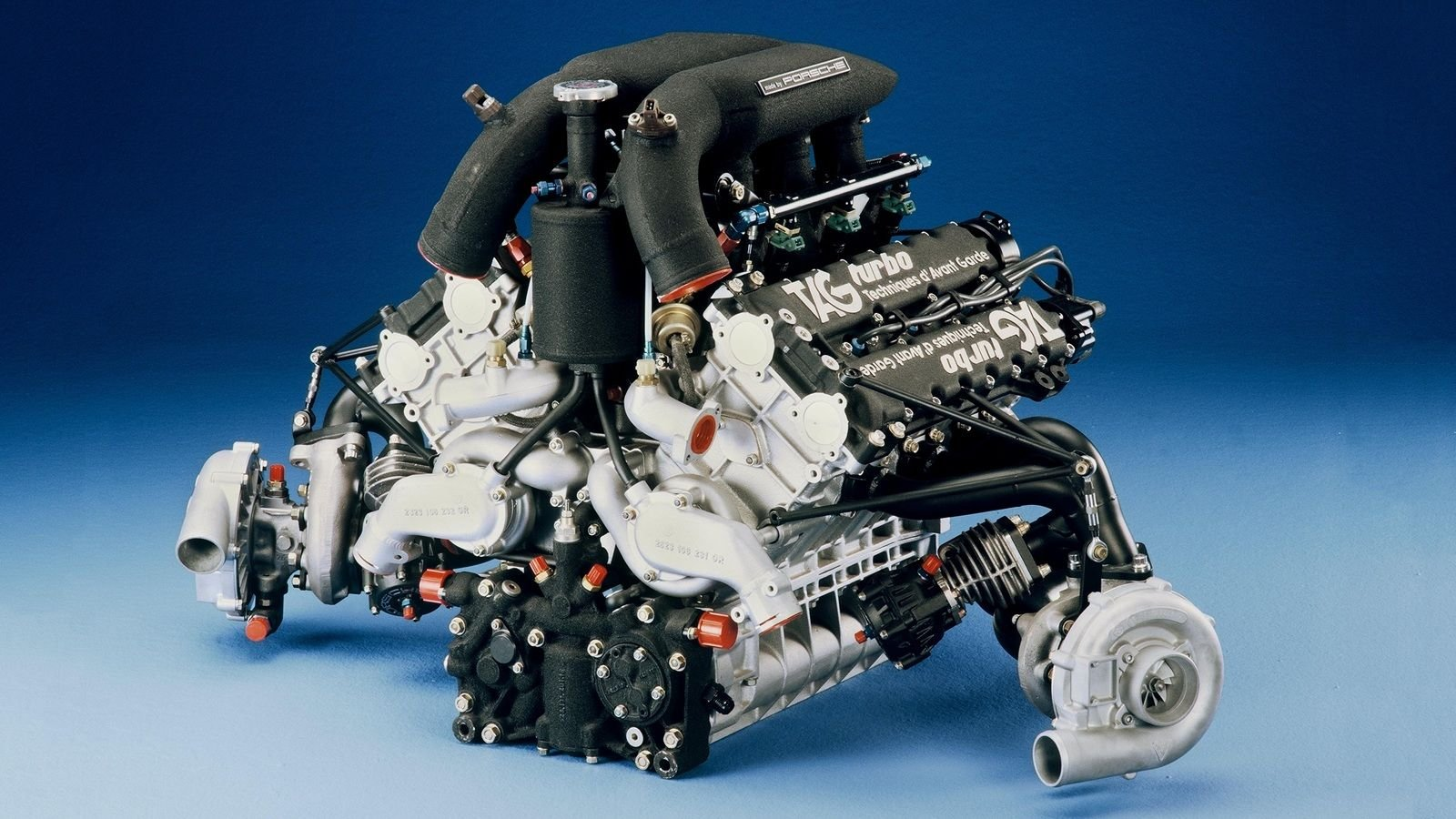
Mezger designed the 1.5L V6 engine known as the TAG Turbo that powered the McLaren Formula 1 cars to championships in 1984, 1985 and 1986. His engines would eventually be found in the most performance-oriented Porsche road cars such as the 996 GT3, GT2 and Turbo. Mezger remained closely connected with the Porsche brand until he passed away on June 10, 2020, at the age of 90.
2. Motorsport Pedigree
Mezger built engines for the most demanding races in the world. His engines that were put into Porsche road cars have the same engineering approach. These engines are designed for long-term high performance. They are essentially overbuilt for road use. These engines were not designed to meet a certain price point. They were designed to provide the best performance. There were no corners cut with any Mezger engine.
3. Birth of the GT3
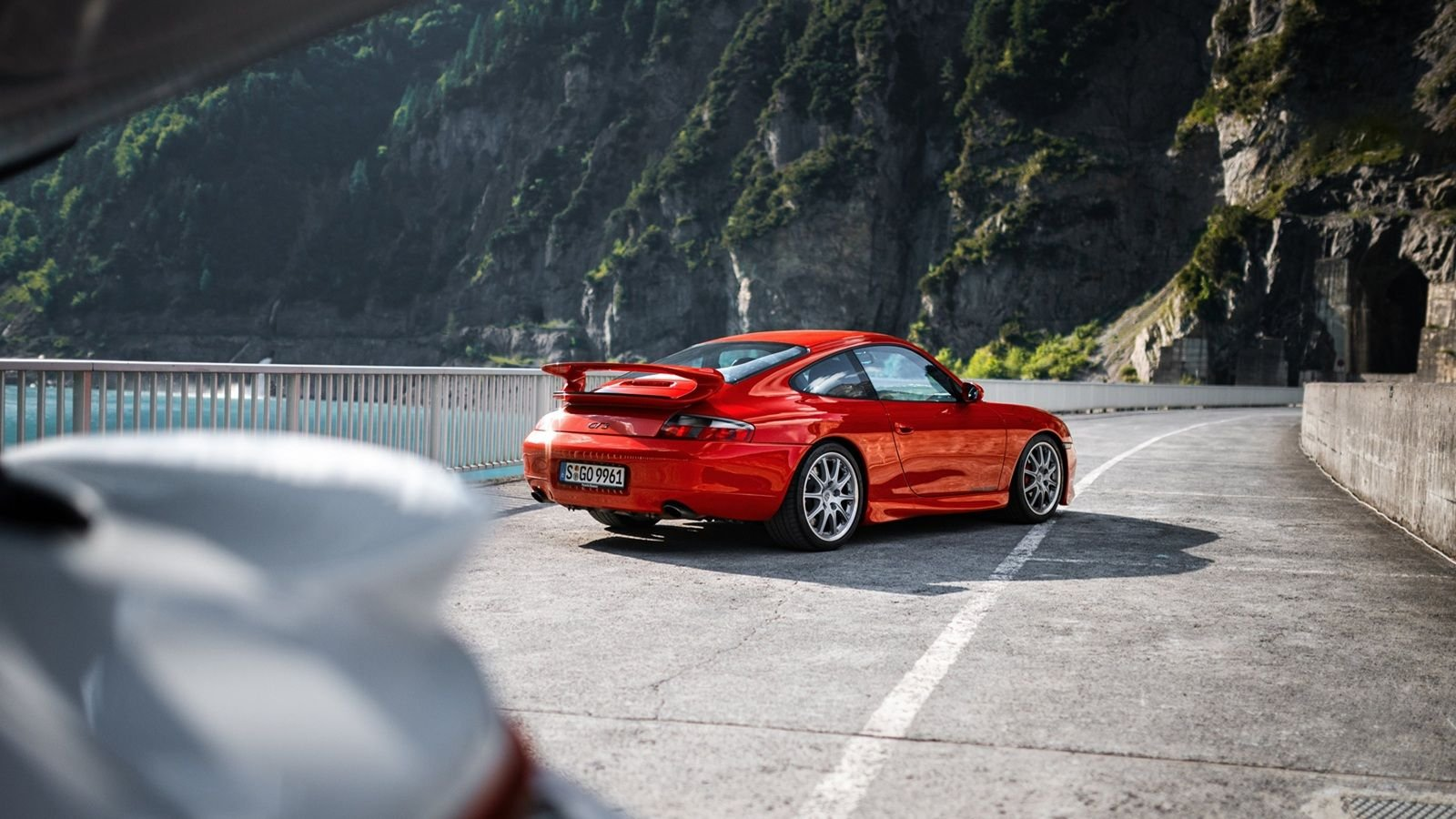
Many people view the 911 GT3 models as the pinnacle of the 911 range. One of the main reasons why is because of the track-focused, high-revving flat-six engine out back. It all started with the M96.79 engine found in the 996 GT3. The European market got the GT3 a few years before us and had the M96.76 engine, but the point is the same. The GT3 legend began in large part because of the incredible engine that powered it. This dry sump engine could rev to 8,200 rpm all day long. The engine was derived from the Porsche 911 GT1-9,8 which happened to win a little race called the 24 Hours of Le Mans. The street version of this engine is nearly bulletproof,f and the GT3 legend was born.
4. Turbocharged Versions
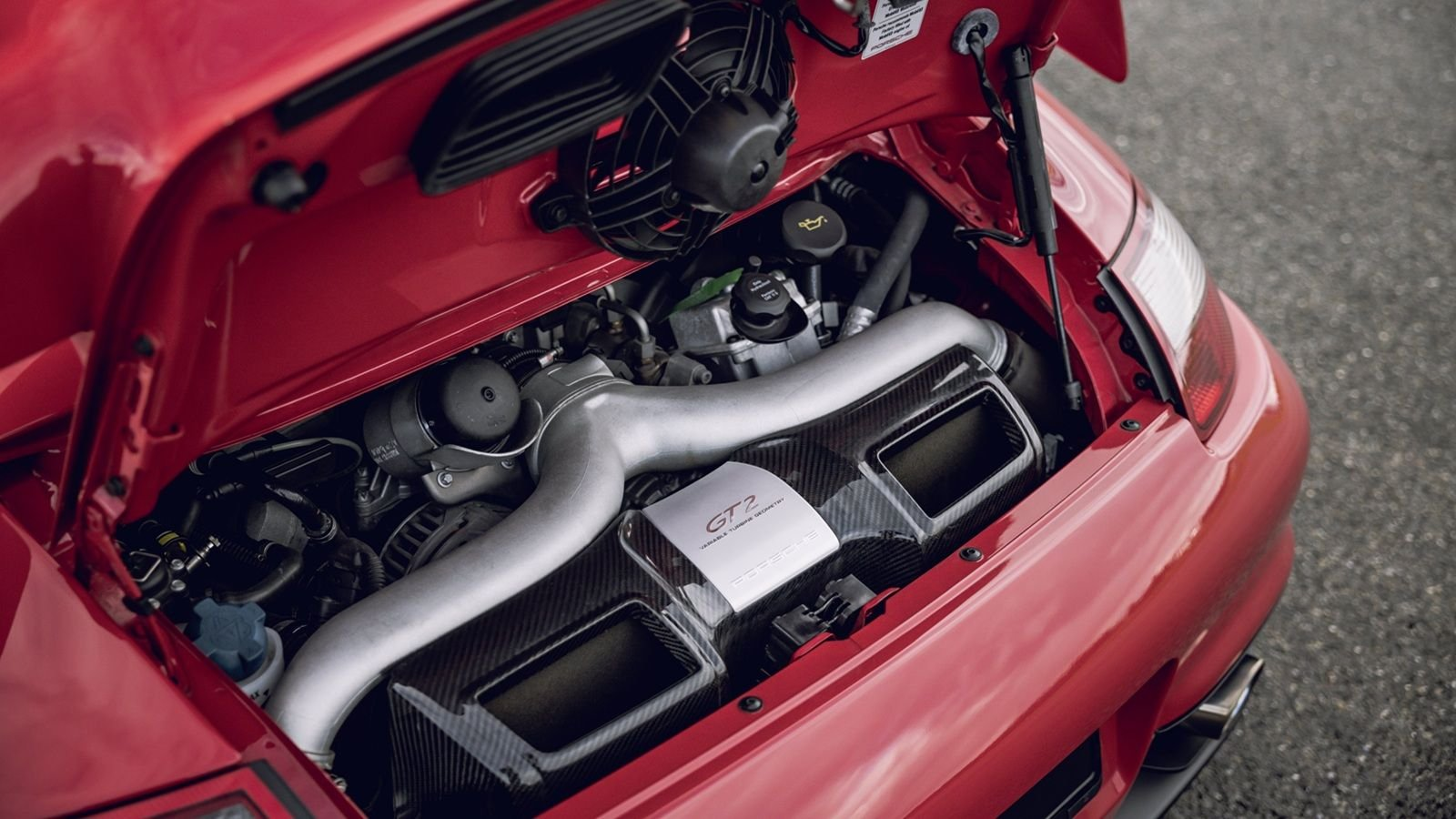
If the GT3 was just not powerful enough for you, Porsche had a solution. The GT2 and Turbo also used Mezger engines, but with a pair of turbochargers. They are not as high-revving as the normally aspirated units, but they offer more power and a lot more torque. And these engines are just as reliable.
5. Reliability
The Mezger engines are not just more powerful but also more reliable. The knock on the M96 and M97 engine series has long been the IMS bearing. But the Mezger versions don’t have the same design. Instead, they use plain bearings that are pressure-fed engine oil for lubrication. These bearings don’t fail. That alone makes the Mezger significantly more reliable.
6. Sound
Even if these engines were not more durable and powerful, people would buy them for their sound alone. It is not just their high-revving nature in naturally aspirated form. But the design of the engine itself, with features such as dual timing chains that give these engines a more characterful sound. They are more gravely and “motorsporty” sounding than the non-Mezger engines.
7. Power Upgrades
These engines were overbuilt and as such, are typically able to comfortably handle more power if you want to modify them. The turbo versions can easily be tuned to reliably make more power. Of course, every engine has its limitations, but the Mezger engine is robust enough to make more power without hurting reliability.
8. The 997 GT3 RS 4.0
Many people consider the 997 GT3 RS 4.0 to be the best Porsche 911 road car of all time. It just so happens to be equipped with the last Mezger engine. A 4.0L jewel making nearly 500 naturally aspirated horsepower. The engine revs to 8,500 rpm and has more character in it than an entire truckload of new 992.2 Carreras. The 4.0L marked the end of an era. It is the last and possibly the best road-going Mezger engine ever produced.
9. Rarity and Desirability
Not every Porsche got a Mezger engine. Technically, all the air-cooled 911s have a Mezger-designed engine, but they have been out of production for over a quarter of a century now. Only a small percentage of water-cooled Porsche engines were a Mezger design. And Porsche is not building any more of them. So, what is out there today is all that will ever be out there. These engines are found in the most desirable Porsche models, and these cars are collectible today and will continue to be collectible for the foreseeable future. If you buy a Porsche with a Mezger engine today, the chances are good that it will be worth the same or even more tomorrow. For the Silo, Joe Kucinski.
These 5 Hot-Rodders Forged the Legacy of the Flathead
The impact of Ford’s flathead V-8 on the hot rod scene is undeniable. But the individuals that immortalized this engine—and, along the way, laid the foundation for the hot-rod scene—are the real heroes.
photo- Brandan Gillogly
n the early 1900s, horsepower was almost exclusively for the Gatsbys of the world. Ford’s flathead V-8, introduced in the depths of the depths of the Great Depression, changed all that. But it needed some help from car obsessives, who went on to invent what we now know as hot-rodding. Learn about them below, then check out Preston Lerner’s deep dive on the Flathead and its impact here.—Ed.
While it’s not without its flaws, the Ford flathead V-8 marked a significant milestone in the history of American performance. Ford’s mass production of the flathead opened up racing to a whole new audience and helped an industry flourish. Ford wasn’t alone, however, as the factory-built flathead was just a building block. Several individuals, through their own innovation and business acumen, were able to build flathead V-8s to horsepower levels that pushed boundaries of speed, developed a massive segment of our hobby, and forged long-lasting businesses, many of which are still with us today. Here are five pioneers of the aftermarket that used the flathead V-8 to cement themselves and their companies in American culture.
Ed Winfield
Magnifico
1901-1982
Known as “The Father of Hot-Rodding,” Winfield got his first job in a blacksmith shop when he was just eight. By the time he was 11, he was stripping down the neighbor’s Model T to shed weight and make it faster. Two years later, he was working on carburetors in Harry A. Miller’s Los Angeles shop where Barney Oldfield’s groundbreaking Golden Submarine race car was being built. With a knack for machinery and an intimate knowledge of engines, Winfield started his own carburetor company in 1919 and began grinding cams the following year. His carburetors were used on eight of the ten Indy 500 winners from 1933-1946, the only exception was Wilbur Shaw, who had won with a Winfield-fed Shaw/Offenhauser engine in 1937 and switched to Maserati power for his wins in 1939 and 1940.
Winfield did it all, from serving as a riding mechanic and racing at Ascot Speedway to working with major automakers in developing engines. Winfield also helped a young Ed Iskendarian with cylinder head work. He was inducted into the Indianapolis Motor Speedway Hall of Fame in 1983 and the Motorsports Hall of Fame in 2011.
Vic Edelbrock Sr.
Magnifico
1913-1962
Already an established mechanic, Vic Edelbrock Sr. designed the Slingshot intake manifold for flathead Ford V-8s in 1938 and tested it on his own 1932 Ford roadster on Southern California’s dry lakes. After WWII, Vic moved into a new shop in Holywood and designed his first cast aluminum cylinder head for flathead V-8s. Also in 1946, Edelbrock created its first catalog of speed parts, and soon its products were found on cars competing in virtually every form of racing, whether it was on the 1/4-mile, on circle tracks, or America’s dry lakes. His son, Vic Jr., took over the business after his passing and expanded the business to include fuel injection and superchargers. Vic Jr. passed away in 2017, but the company continues to make performance parts. To this day, the company makes Victor and Victor Jr. cylinder heads and intake manifolds that keep their legacy alive.
Stu Hilborn
Magnifico
1917-2013
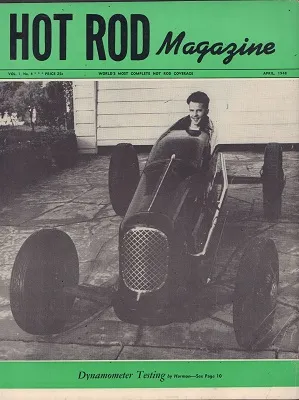
Born in Canada, Hilborn came to southern California in time to graduate high school and attend junior college in Los Angeles before enlisting in the Army Air Corps (you’re going to notice a trend here). While working on aircraft, Hilborn began scheming up a new way to feed fuel to engines, and once he was back in Southern California, he built a dry lakes racer that would prove his constant-flow fuel injection could compete and win against carburetors. The sleek racer was the first to eclipse 150 mph on the dry lakes and graced the fourth cover of Hot Rod magazine in April, 1948.
Hilborn continued to modify and improve his fuel injection design, and in 1952 Bill Vukovich drove the Fuel Injection Special in the Indy 500, where he led 150 laps and was just nine laps from the finish when a steering issue sidelined the car. That was tough luck for Vukovich, but 22-year-old Troy Ruttman passed him and took the win. Rutman, like Vukovich, was running Hilborn fuel injection, as were the remaining drivers on the podium. You can think of Hilborn’s mechanical fuel injection taking over for Winfield’s carburetors, as the individual throttle body system became the induction of choice for America’s top racers, dominating the Indy 500 for decades, claiming 34 victories along the way. Hilborn stacks appeared on road racers of all kinds, and the company’s two-port units could be found atop supercharged drag cars as well, but it all started with the dry lakes flathead.
Alex Xydias
Magnifico
1922-2024
Alex Xydias passed away earlier this year at the age of 102, leaving behind an impressive legacy of business achievement and generosity. His name is synonymous with the So-Cal Speed Shop, the Burbank speed equipment emporium he founded after leaving the Army Air Corps in 1946. The most famous product of that enterprise is the iconic belly tank lakester that graced the January 1949 cover of Hot Rod magazine after it ran using Ford V-8-60 power. The So-Cal Speed Shop followed on the success of the lakester with a sleek streamliner that would go on to be powered by a Mercury flathead that would push the car to 210.8962mph, the fastest time of Speed Week 1950, earning Xydias back-to-back spots on the coveted Hot Rod trophy, and the first in excess of 200mph.
Xydias forged relationships with speed parts manufacturers and helped get race-winning parts into the hands of southern California hot-rodders through his shop, but So-Cal Speed Shop also sold parts across the country through its mail-order catalog, using the fame of his racing success to get more enthusiasts involved by proving what the flathead was capable of.
Ed Iskenderian
Magnifico
1921-
Ever a hot-rodder, Ed Iskenderian’s T roadster was and continues to be an influential build, but there’s a reason he’s known as the Camfather. Shortly after returning from United States Army Air Corps service during WWII, Iskendarian was eager to return to building engines, particularly flatheads, but the booming demand vastly exceeded supply. He didn’t waste time waiting for other cam grinders to catch up. Instead, Isky, already experienced with tool and die work, purchased a machine and converted it to grind cams. Not only were his camshafts effective, but Isky was a talented marketer, coining the term “5-Cycle Cam” to describe his camshafts that used valve overlap and the escaping exhaust gases to scavenge the incoming intake charge. In addition to his many pioneering valvetrain advancements, Isky is also credited with selling logo t-shirts before anyone else.
Iskendarian cams are still used by some of the quickest and fastest racers today.
Featured image via –Historic Vehicle Association For the Silo, Fabian Hoberg / Hagerty.
Porsche is well known for a love of details and colours. And if the normal option list just isn’t enough, the experts from Porsche Exclusive Manufaktur, Porsche Classic and our Sonderwunsch programme are happy to help.
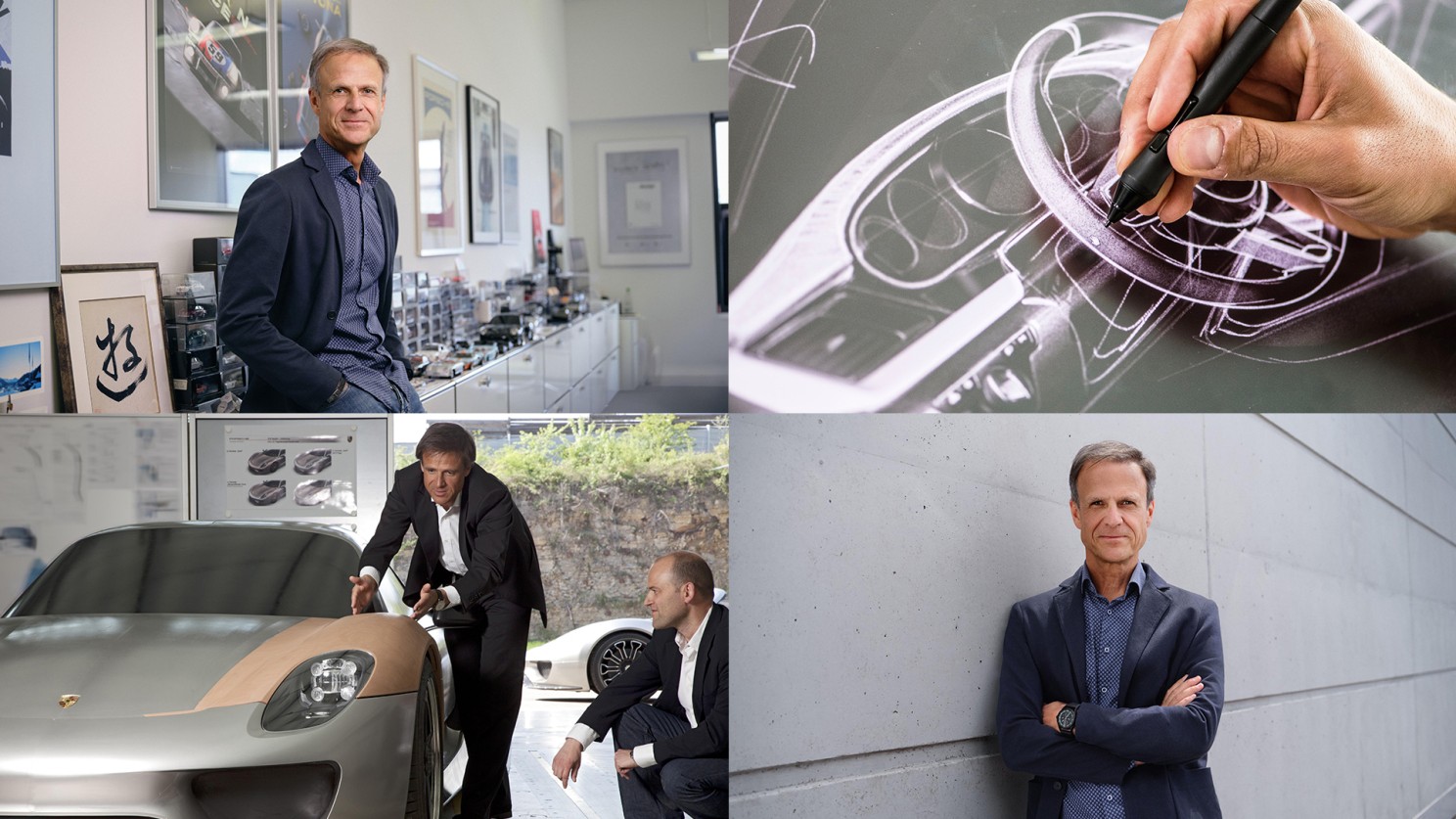
In this article we will cast the light on some of the recent special editions and look at the illustrious career of Michael Mauer, Vice President Style Porsche, who celebrated his 20th anniversary with the brand.
As if that wasn’t enough, two extraordinary events took place recently.
While the Formula Student Germany brought together top students and motorsport enthusiasts, Porsche once again attended the Gamescom in Cologne, the world’s biggest trade fair for computer games.
Something extraordinary does not just happen somehow, somewhere. It happens at a very particular place. Hand-crafted. With experience. With passion. And through the inspiration of customers. Experts in their profession pass on these ideas and the personality of the buyers to the vehicle – and thus make a Porsche your Porsche.
What starts with special paint colours and a stylish leather interior can be topped with one-off cars from the Sonderwunsch department. Here, the highest level of customisation has been offered for more than 70 years. There are technically no boundaries other than the specific budget and the existing rules and regulations to get road approval for the vehicle in the country of the respective buyer.
The Porsche Exclusive Manufaktur is also responsible for special edition models that are either offered worldwide like the new 911 Turbo 50 Years** or only for a specific market like the Taycan Turbo K-Edition***.
Let’s have a look at some of the recent special editions.
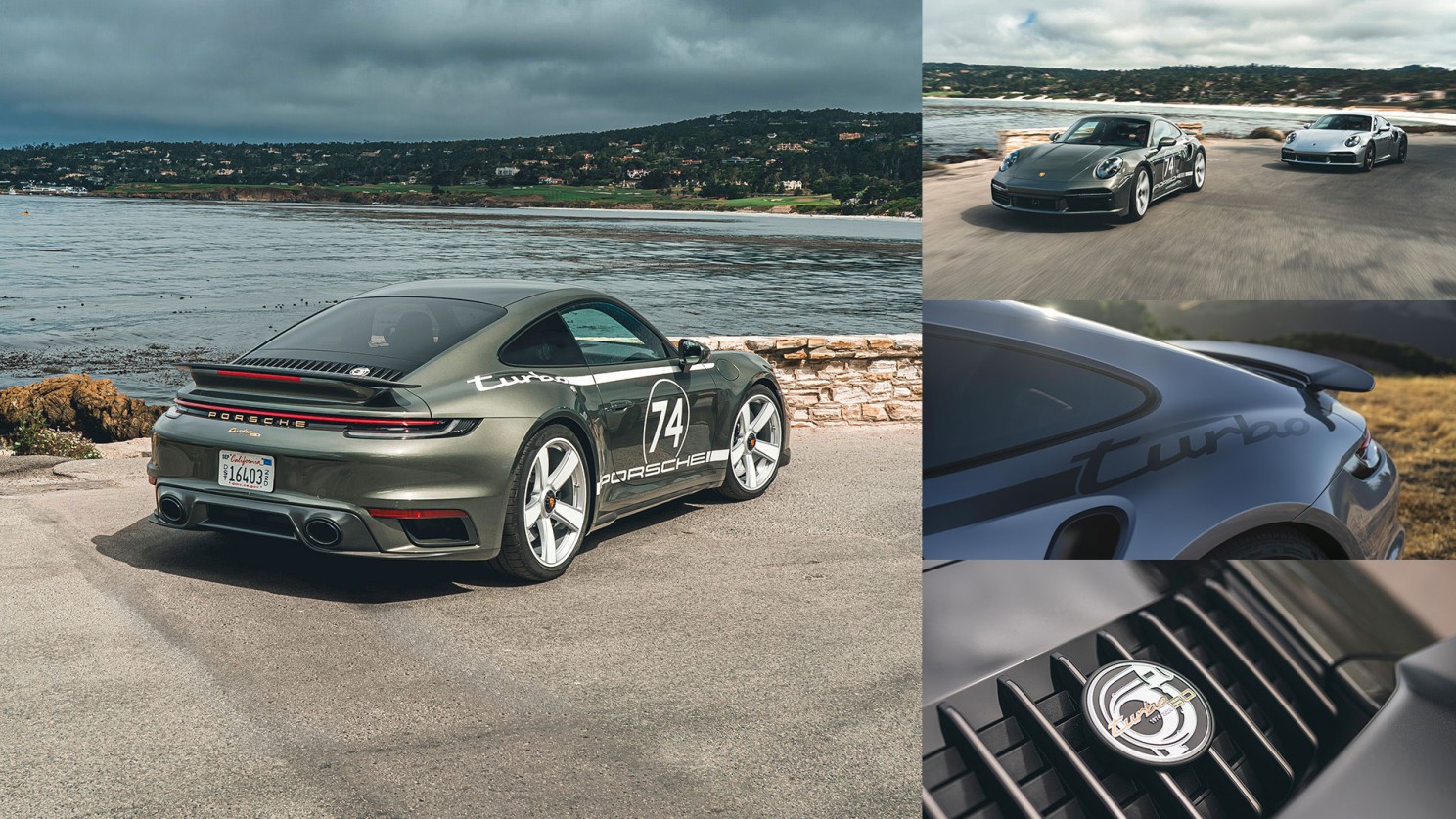
During the recent Monterey Car Week in California, Porsche celebrated the debut of the new 911 Turbo 50 Years** edition to mark the 50th anniversary of our top-of-the-line sports car.
Paying tribute and reinterpreting the Turbo heritage
The 911 Turbo 50 Years** anniversary model is based on the 911 Turbo S**** introduced in 2019. It pays a special tribute to and reinterprets this heritage:
Limited 911 Turbo 50 Years** edition to just 1,974 units worldwide in honour of the year in which the first 911 Turbo made its debut.
When it was introduced in 1974, the Type 930 Porsche 911 Turbo shifted the boundaries of what was possible. It brought the benchmark turbo technology from the 917/10 and 917/30 racing cars into a production sports car with superior performance and combined it with a unique design and unprecedented day-to-day usability.
Combining outstanding performance and the finest materials with exclusive design elements, the 911 Turbo 50 Years edition is available with an optional Heritage Design package. Those who prefer a minimalistic look can dispense with some or all of the graphic elements on the outside.
The standard side vinyl graphics are a nod to the historic livery of the Porsche 911 RSR Turbo presented at the Frankfurt Motor Show in 1973, itself a forerunner of the 911 Turbo*****.
It features the current Porsche Turbo-exclusive colour Turbonite, which makes its first appearance on a 911. Turbonite is also used on inlays in the rear engine cover, the fuel tank cap and in the Porsche crest. It is also being used as a contrasting colour in the Turbo 50 model logo.
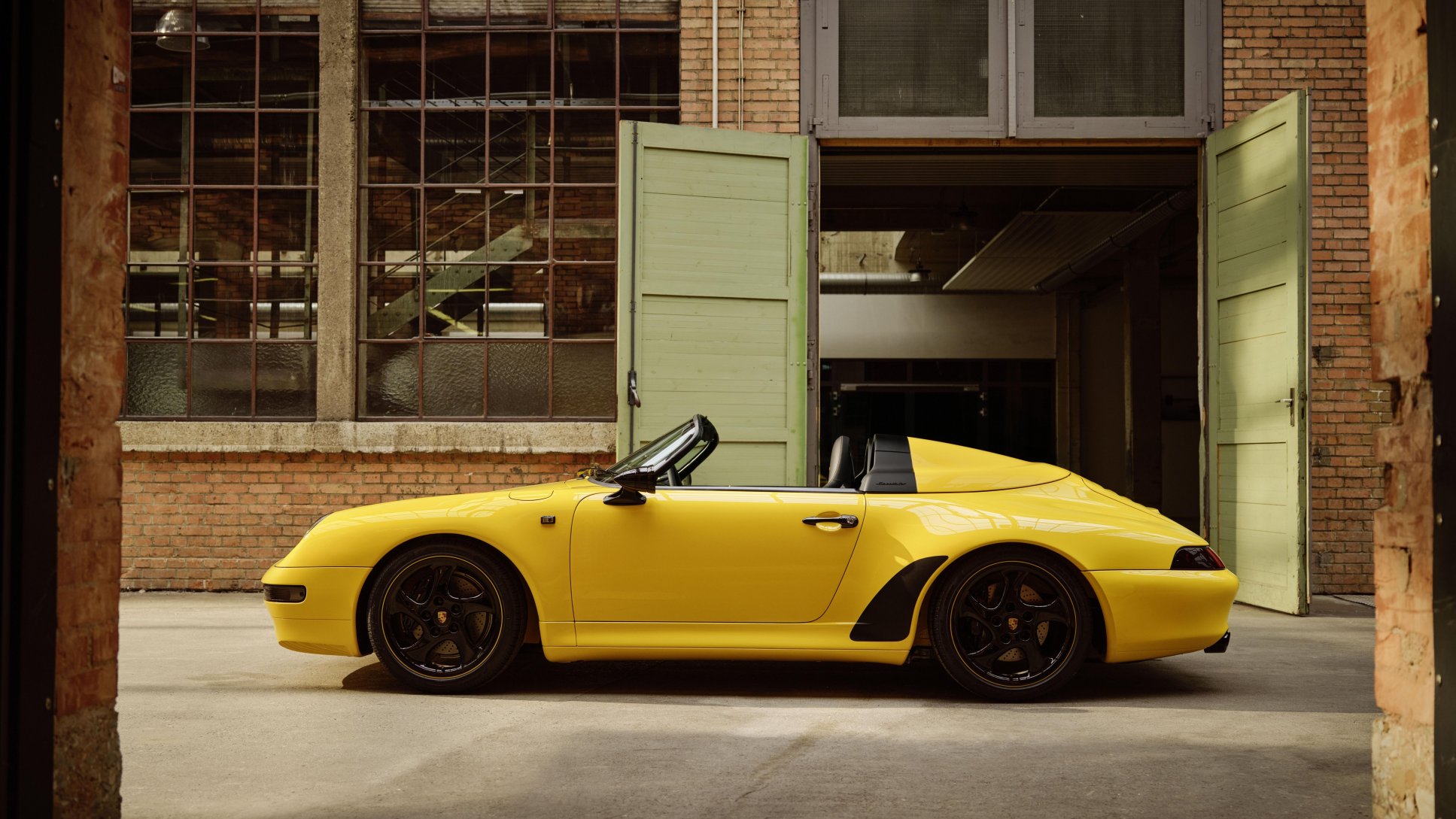
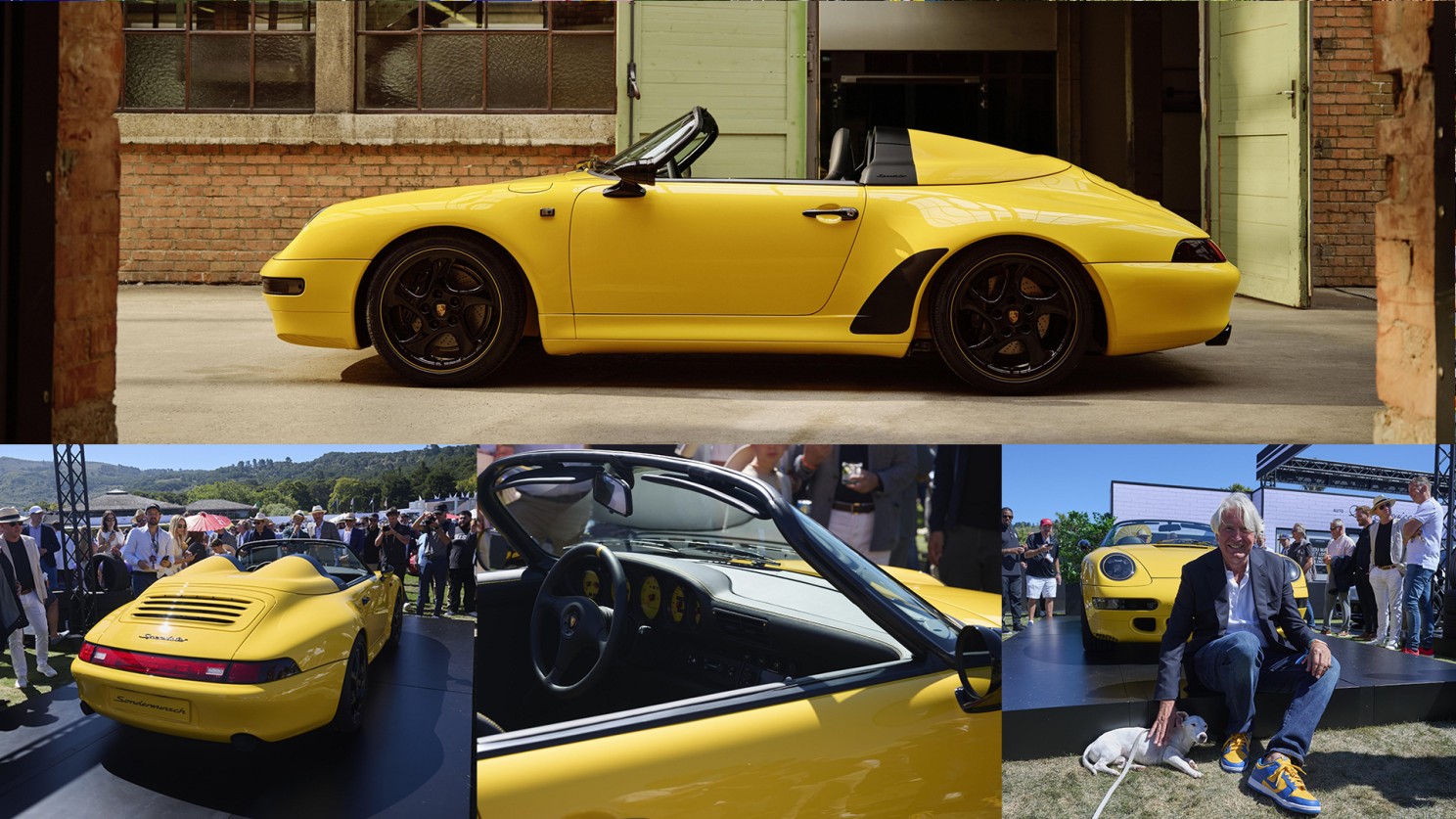
One of the further highlights of this year’s Monterey Car Week was the premiere of a one-off car based entirely on the personal vision of designer and Speedster collector Luca Trazzi.
He made his dream of a 911 Speedster come true via the Sonderwunsch programme.
“In this form, and with this vast range of modifications, the 911 Speedster is our first Factory One-Off for an end customer. This one-off car shows what’s possible with our Sonderwunsch programme – based on a classic Porsche 911 from 1994.” Alexander Fabig, Vice President Individualisation & Classic at Porsche
It took more than three years to create this one-off car based on a 911 Carrera Cabriolet (Type 993) from 1994.
The two-seater with the characteristic rear lid underwent comprehensive technical modifications.
Out of passion, Trazzi designed what this model might look like. He wanted the project to unify the stylistic elements of all previous Speedster models.
Taycan Turbo K-Edition***
Next to special editions, the Sonderwunsch department and Porsche Exclusive are also working together with teams of specific Porsche markets to create unique editions only offered to customers there.
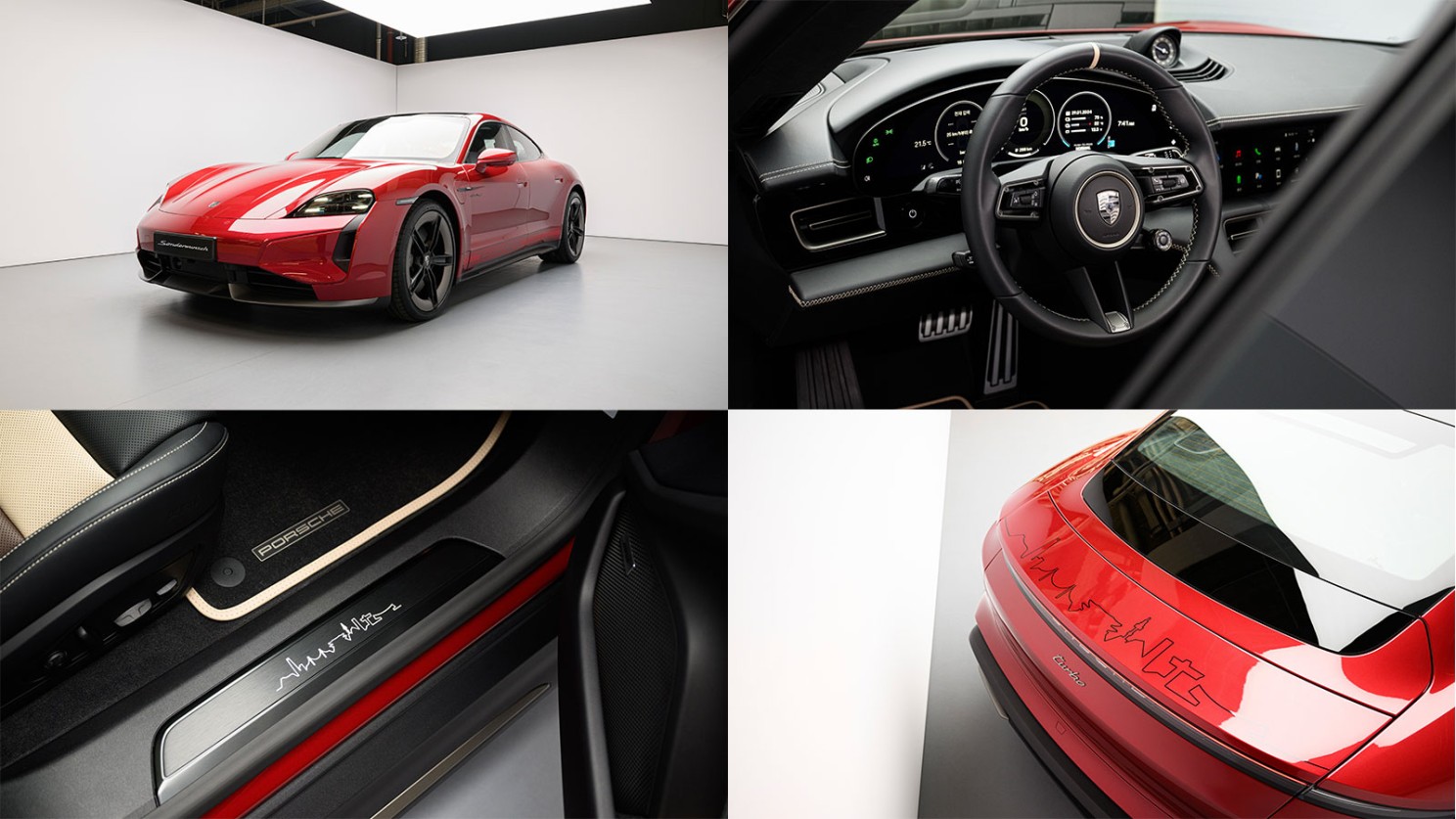
One example is the new Taycan Turbo K-Edition***, which is heavily inspired by Korean culture. It marks the 10th anniversary of 포르쉐코리아 / Porsche Korea and is available in five different exterior paints from the ‘Paint to Sample’ programme.
Designed exclusively for the K-Edition, a unique logo is based on the shape of a historical royal stamp. Within this symbol, the name ‘Taycan’ is written in traditional Korean characters.
The Style Porsche designers have also integrated a racetrack into the abstract representation of the logo and the specialists in the Sonderwunsch team hand-paint this logo in a high-gloss black onto the charging port door on the driver’s side.
Another unique selling point of the K-Edition is a special skyline graphic, created in close collaboration with Porsche Korea. The silhouette combines the characteristics of Korean cities, buildings and landscapes. It is also hand-painted in high-gloss black on the rear spoiler and the key housing.
Elsewhere on the car, the graphic is also milled into the front door entry guards (which are made of brushed black aluminium) and is revealed when the door sills are illuminated.
Inside, the skyline logo is embossed in the lower part of the leather dashboard on the passenger side.
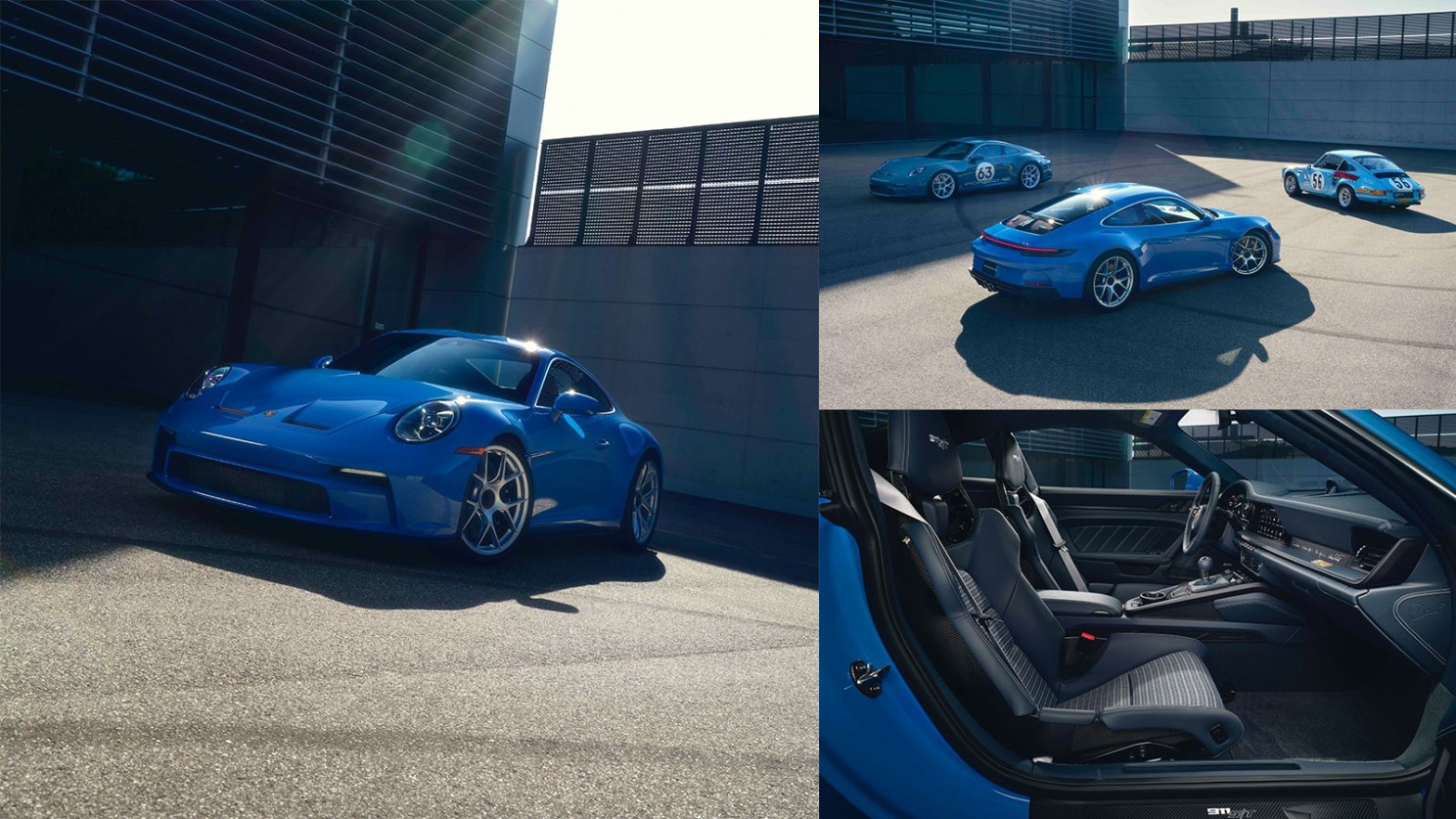
Taycan Turbo K-Edition***911 S/T****** in Dani Blue
Some customers contact their Porsche dealers with special requests. Often, they would like to order a new car in a colour not offered in the current sample. If it is a paint from an earlier Porsche model, many of those can be found via the ‘Paint to Sample’ programme.
But sometimes an owner would like to have his or her personal colour of choice – maybe inspired from jewelry, a model car or just from imagination. This is where the Sonderwunsch team comes in with its ‘Paint to Sample Plus’ programme, as in the case of Porsche enthusiast Jorge Carnicero
As part of the Porsche Sonderwunsch programme, a comprehensively customised 911 S/T in Dani Blue****** has been created.
During the configuration of his 911 S/T, Carnicero asked the colour experts at Porsche to create a special blue that would suit the sporty, puristic character of the limited anniversary model.
The colour concept of the exterior is carried on in the interior, where it strikes a balance between the sporty, puristic S/T look and high-quality individualisation. The most striking feature is the tricoloured pepita pattern on the seat centres.
The sports car collector from the US state of Kentucky named the colour exclusively developed for him after Colour & Trim designer Daniela Milošević.
“Giving the paint my nickname is an overwhelming sign of gratitude for me and my work,” Daniela Milošević, Colour & Trim designer
911 S/T****** in Dani Blue
The hybrid design process at Porsche
With all these special models, did you ever wonder how the vision of a new Porsche actually becomes reality?
Innovative software – from the gaming sector, for instance – supports Style Porsche during the design process. But even in the age of digitalisation, our design department still values the design quality of classic sketches and labour-intensive clay models very highly. Along the path from vision to reality, the designers combine the best of both worlds.
Figure of the month:
20 years: That’s how long Michael Mauer has shaped our design as Vice President Style Porsche.
Continuity is an important aspect of the company philosophy at Porsche. As a luxury brand, Porsche is not about constantly inventing new things, but rather continuously refining things that are already good.
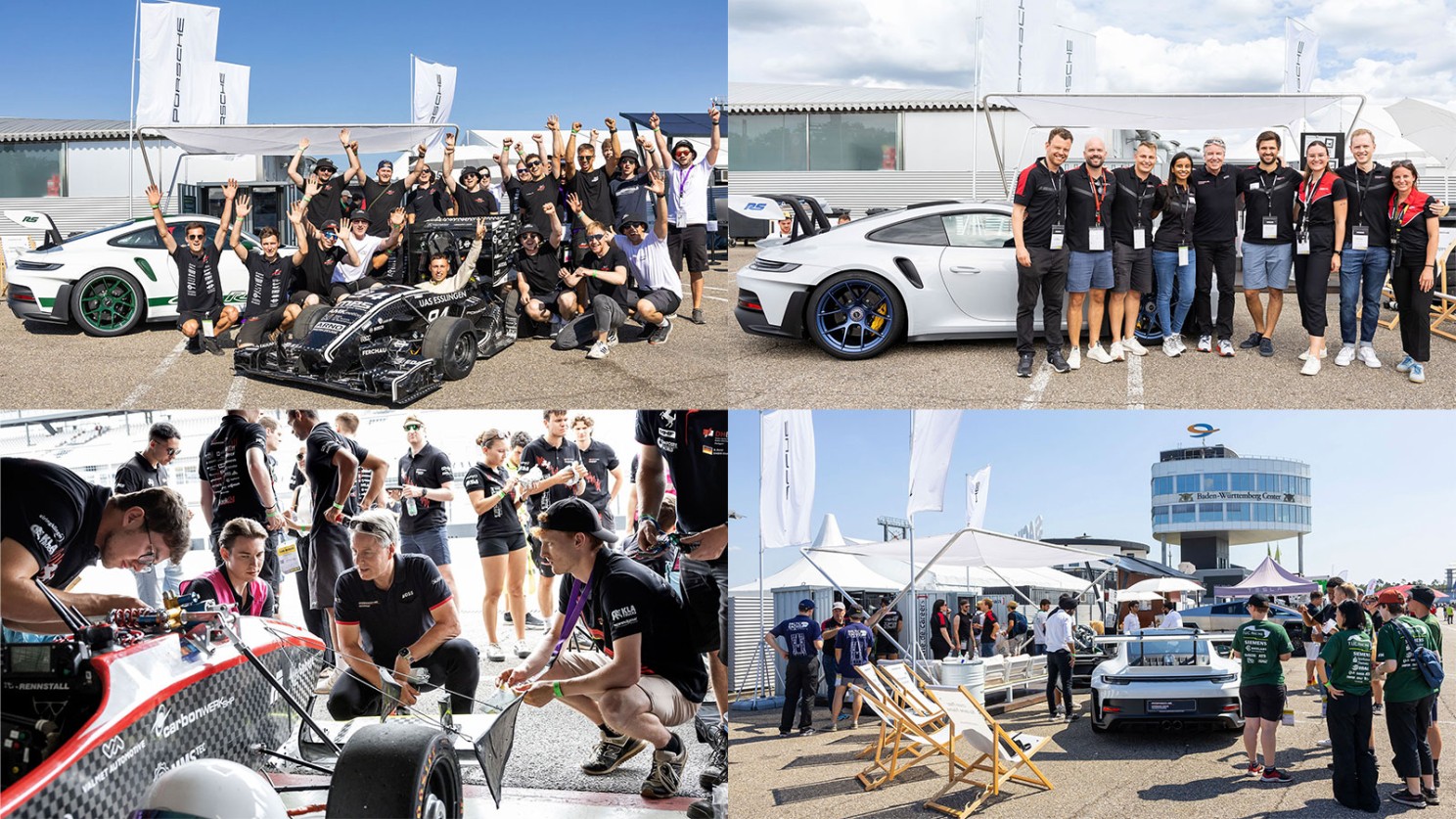
Last month, from 12 to 18 August, the international construction and design competition Formula Student Germany (FSG) took place at the Hockenheimring.
Racing teams from 20 different nations competed against each other. After intense months of preparation, the teams competed in the electric vehicle (EV) class and the so-called Driverless Cup (DC). The best overall package of design and performance as well as financial and sales planning is what counts.
911 GT3 RS*******
Porsche was also on site this year to exchange ideas with the young talents. Employees from some of our specialist departments and recruiting not only cheered on the students, but also advised them on career opportunities at the Porsche Careers stand.
“As Porsche, we have been involved in Formula Student for many years and have access to many talented engineers of tomorrow. The students put a lot of heart and soul into preparing for this competition. We experience an impressive team spirit.” Lena Siegle, Employer Branding
As a special highlight of the cooperation, Porsche invited its sponsored racing teams to the Porsche Experience Centre (PEC) at the Hockenheimring during the competition. A barbecue in a relaxed atmosphere provided the opportunity to talk to the experts from our departments and our recruiters.
“The dialogue with the students was extremely valuable for us. Getting to know their wishes and needs and meeting them at eye level at such events is essential for our work.” Sandra Knittel, Recruiting Young Talents
JOIN THE PORSCHE FAMILY: Interested in joining Porsche for an internship, thesis or dual studies? Find all our current vacancies here: https://porsche.click/NLStudents
Macan Turbo Electric********
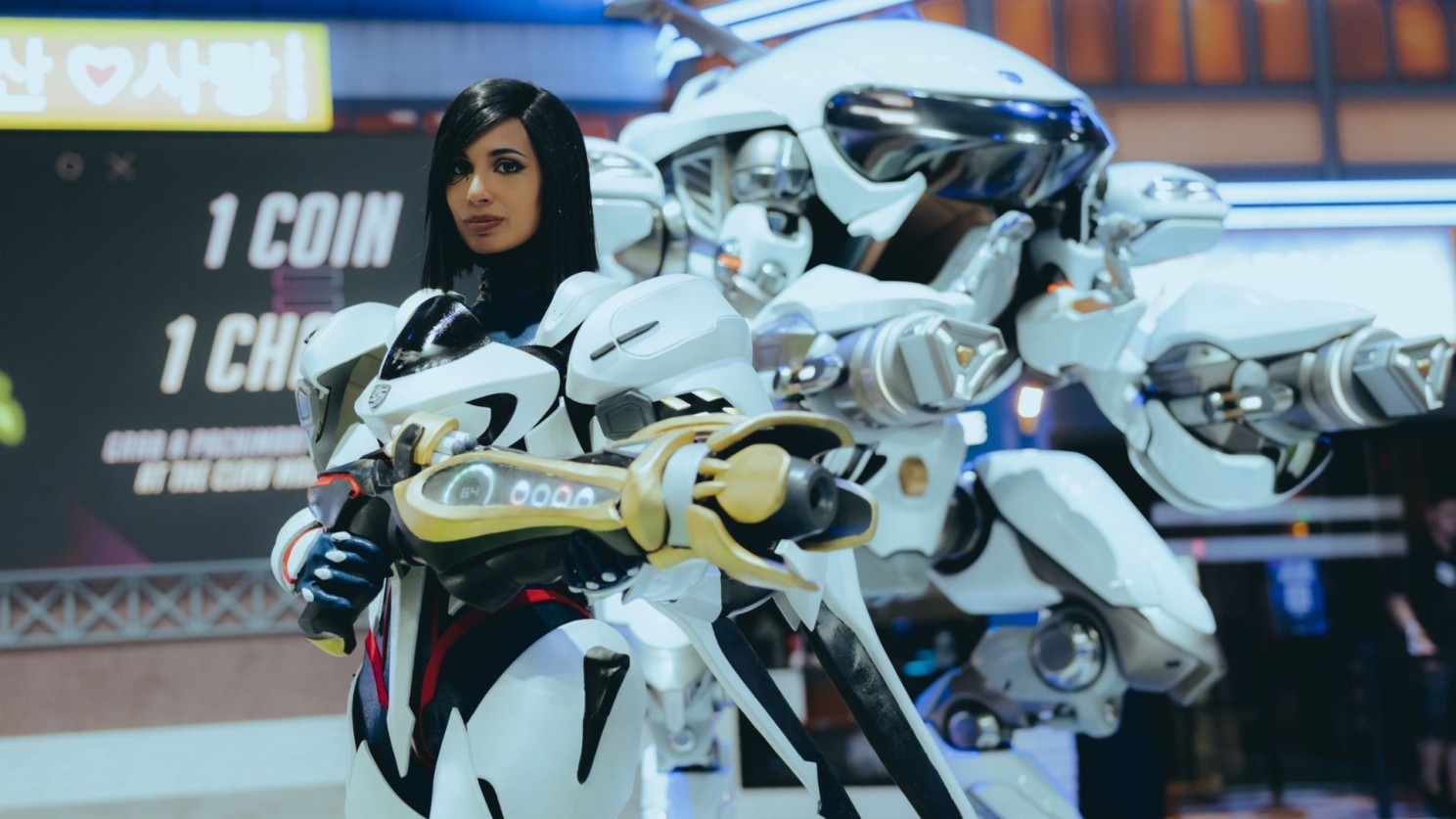
With more than 300,000 visitors, Gamescom once again was the biggest get-together for the worldwide gaming community. For the second time, we were present at the trade fair with our own stand. At our exhibition space in Hall 9.1, visitors could dive into the world of the popular game Overwatch 2®.
“At Gamescom, we have created a special multi-sensory experience of the game with a special Porsche touch for the community to enjoy.” Deniz Keskin, Head of Brand Management & Partnerships
In the spring of 2024, we cooperated with game developer Blizzard Entertainment® for the first time on the successful Overwatch 2®. For the duration of Gamescom, the digital Porsche package was once again available in the game, with players being able to use it to equip the characters D.Va and Pharah with skins inspired by Porsche.
Further, our recruiting colleagues were also present with an additional careers stand on site to advise you about our dual study program, our apprenticeships, as well as other career opportunities.
Read enough automotive-related articles on the internet and you will be convinced the internal-combustion engine is being hunted with a fervor typically reserved for villains in Jason Statham movies.
Okay, that conclusion may be extreme—but it holds some truth. Regulations regarding emissions and engine efficiency grow stricter with each passing year and manufacturers are faced with an impossible task: Take a centuries-old design and make it endlessly better—faster, cleaner, stronger, ad infinitum. At some point, progress will plateau, and the cost of ICE experimentation will simply outweigh the incremental gains in efficiency and power. The good news? The internal-combustion engine might have one more trick up its cylinder sleeve.
Fuel, air, and spark—the three things an engine needs to run. Air is one ingredient that it makes sense to leave alone. Fuel type is essentially decided by contemporary infrastructure. (Synthetic fuels are in the works, but we’re thinking of large-scale changes in the ICE design that would extend far beyond the top echelons of motorsport to the everyman (and woman) on the street.) That leaves spark as the low-hanging fruit in this equation. If a different type of ignition could more completely burn the fuel and air mixture, it would not only reduce emissions but also increase efficiency.
Enter plasma ignition.
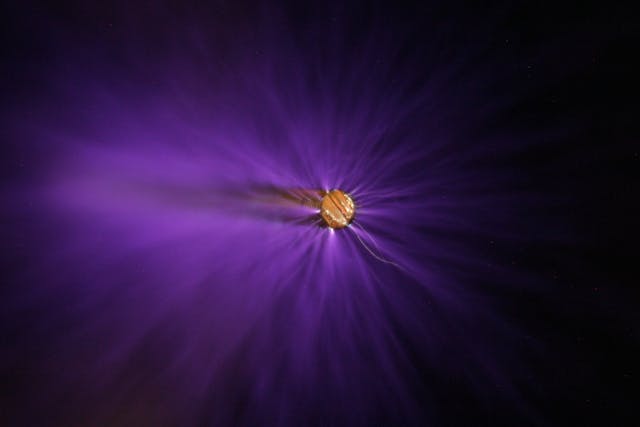
This is what plasma looks like compared to the sharp spark of a traditional ignition system. Transient Plasma Systems, Inc
Traditional spark ignition is very simple.
A coil transforms the 12 volts from the car’s charging system into thousands of volts that discharge quickly to jump between the electrode and the ground strap of a spark plug. This forms a sharp but small zap that lights off the chemical chain-reaction that expands the air and fuel mixture to push the piston down and thus rotate the crankshaft. In order for the fuel-and-air mixture to be lit by this type of ignition system, it needs to be fairly close to a stoichiometric mixture; right around 14.7 to 1. That ratio—14.7 grams of air to one gram of fuel—puts a ceiling on efficiency. But here’s where things get interesting.
If we were able to lean out the mixture by adding air but still getting the same in-chamber expansion, and the corresponding force exerted on the piston, efficiency would increase dramatically. A lean mixture is much harder to ignite, though. So hard that you’d need transient plasma to make it happen in any reliable fashion. Technically, the spark on a standard spark plug does create plasma when it ionizes the gasses between the electrode and ground strap; transient plasma takes that small arc and dials it up to 11. If a spark plug is a zap in the chamber, plasma ignition is a TIG welder mounted in a cylinder head.
Ionfire Ignition
This much more violent mode of ignition can regularly and predictably ignite extremely lean air/fuel mixtures. One of transient plasma’s most obvious advantages, besides a higher-efficiency combustion cycle, is that relatively low amounts of energy are used to perform a lot of electronic “work.” (The difference between energy and power, for those of you who enjoy recalling high school chemistry class.) The spark itself is not lighting a fire to burn the fuel; rather, a rapid-fire sequence of low-range electronic pulses generates a highly potent electric arc, which then breaks the bonds holding the oxygen molecules together and allows the electrons to shoot out, essentially attacking the hydrocarbons (fuel) and creating combustion. This means we are not waiting on a flame to consume the fuel and, in the amount of time between combustion and exhaust strokes, we get a more complete burn.
The most fascinating part? This technology is not new.
We traced the basic concept to patents from the 1980s, but technology has obviously come a long way since then. Outfits like Transient Plasma Systems, Inc. and Ionfire Ignition are reviving the concept and the reintroduction is timed quite nicely. (If you’ll forgive the pun.) TPS ignition systems have been tested and show a 20 percent increase in efficiency while also decreasing harmful emissions like NOx by 50 percent. Numbers like that aren’t a silver bullet in the ICE gun, but plasma ignition could keep our beloved internal combustion engines on the road longer than we’d expected. TPS claims it is working with manufacturers to integrate its ignition tech into production engines, but we are still a few years away from seeing the fruit of that collaboration.
The internal-combustion engine has undergone constant evolution for centuries, and at this point we’re extracting incremental gains. Plasma ignition could be one of the last significant improvements to be found in the ICE story. Here’s hoping that this ’80s tech, refined for the 21st century’s needs, makes its way onto the streets. For the Silo, Kyle Smith /Hagerty.
Grove, Oxfordshire, England. June/July 2022 Williams Advanced Engineering (WAE) showcases industry-leading high performance battery technology at The Battery Show Europe
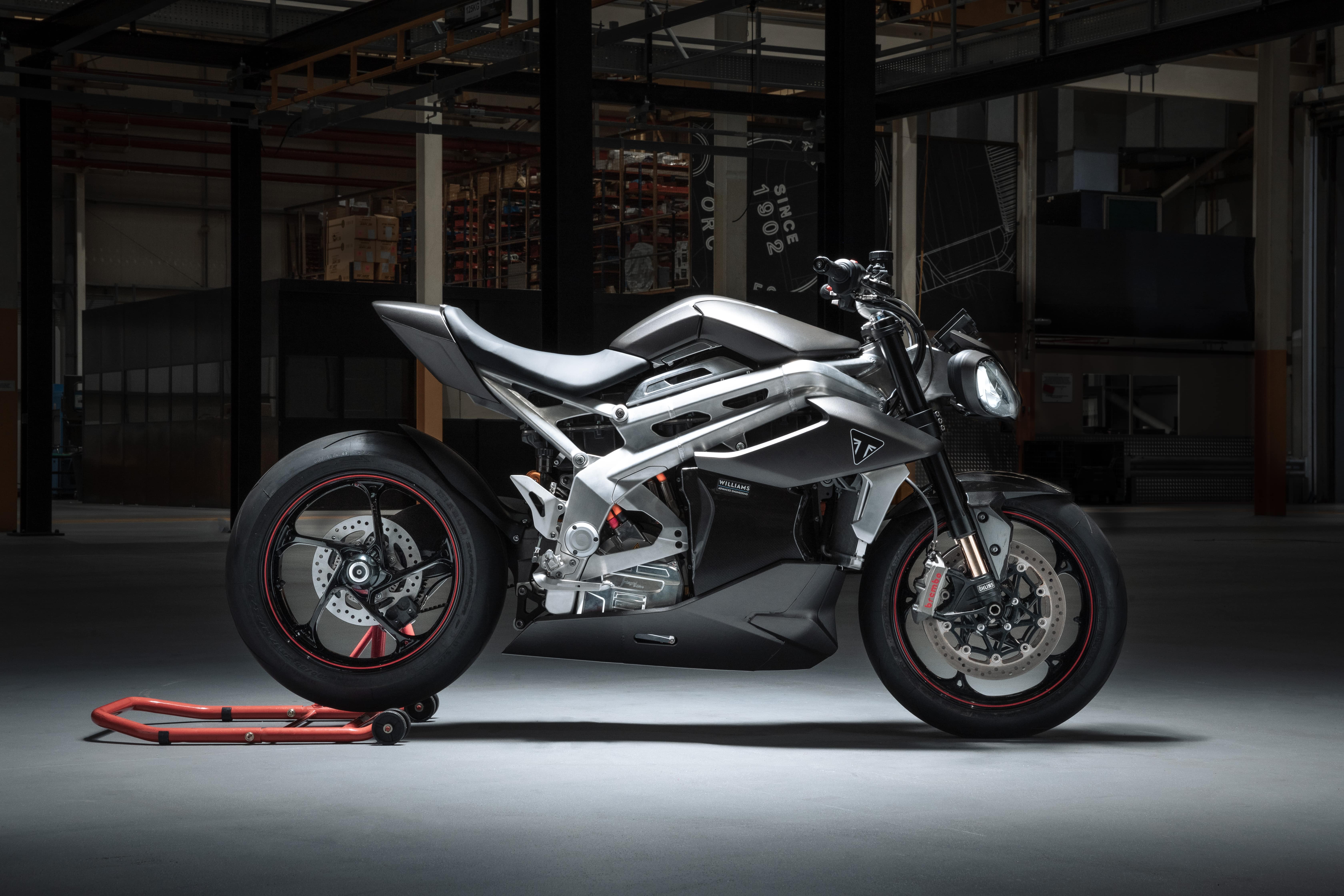
Innovative Adaptive Multi-Chem technology on display at Stuttgart show alongside first real-world application: Triumph Motorcycles’ TE-1 electric motorbike prototype
Adaptive Multi-Chem combines power and energy in one advanced battery system and can be tailored for individual customer requirements
Technology delivers step-change in performance, efficiency, range and charging time when applied to the TE-1 prototype demonstrator
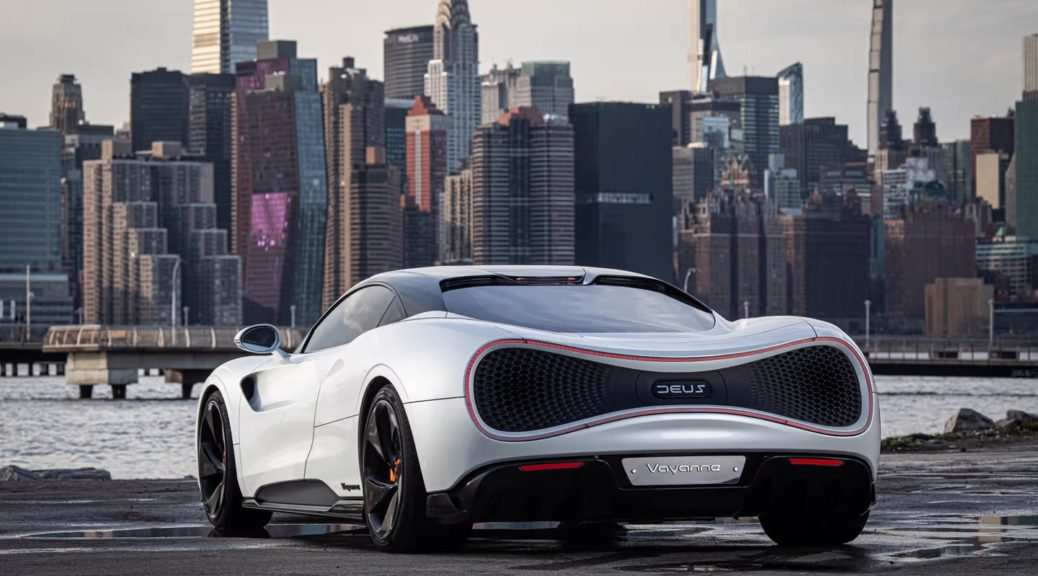
Deus Vayanne EV hypercar, a collaboration between Deus Automobiles, Italdesign and WAE also on display at the event
The Battery Show Europe, Stuttgart, Germany will be held from 28-30 June 2022, with WAE located in Hall 8 on stand F50.
Williams Advanced Engineering (WAE) will showcase its industry-leading high performance battery technology at The Battery Show Europe from 28-30 June, in Stuttgart.
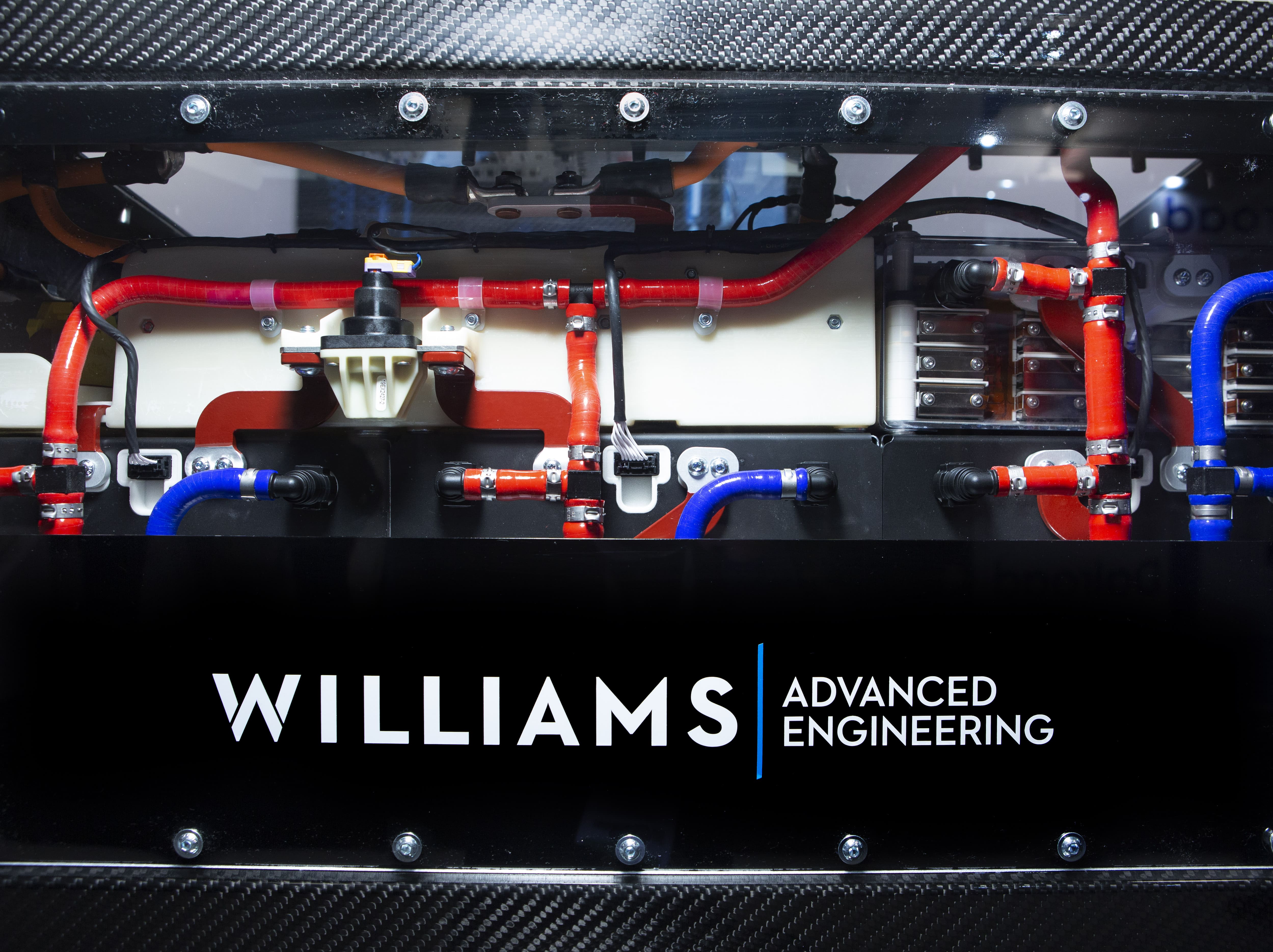
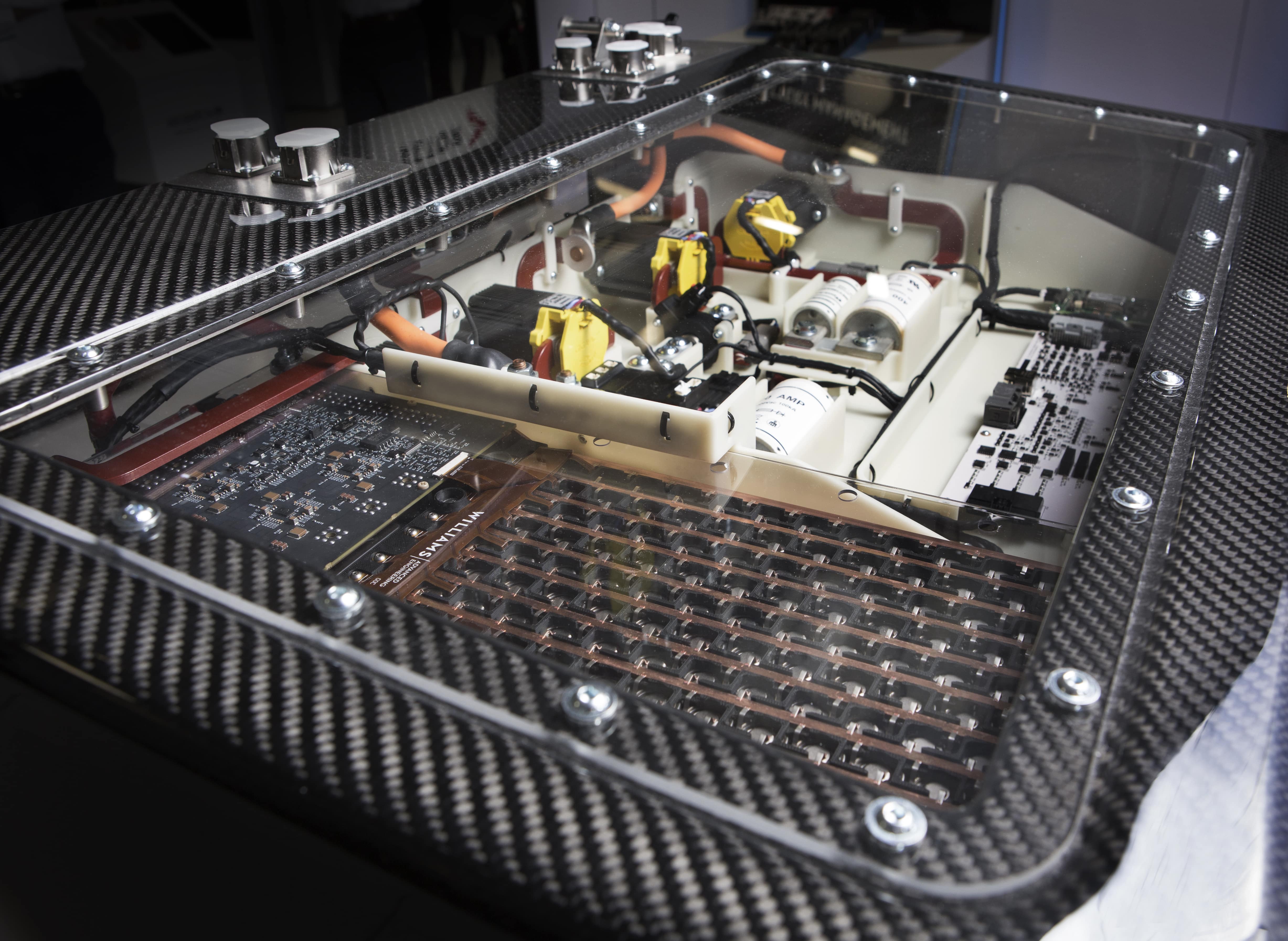
Visitors to the WAE stand in Hall 8, stand F50, will have the opportunity to examine an example of the company’s innovative Adaptive Multi-Chem advanced battery pack, together with the Triumph Motorcycles TE-1 prototype demonstrator.
Combining power and energy in one advanced battery system, Adaptive Multi-Chem sets new standards for performance and efficiency, with the advantage of being totally customizable for individual customer requirements.
Triumph’s first zero emission prototype demonstrator motorcycle – the battery pack for which delivers a peak power of 130kW and continuous power of 90kW, with a capacity of 15kWh – will also be on display. With the optimum balance of power and energy, TE-1’s battery gives the rider access to greater electric power for longer, regardless of battery charge, and matches exhilarating acceleration with exceptional range. The 360-volt system also enables a fast-charging time of under 20mins (0-80%).
WAE developed the technology to support the TE-1 prototype demonstrator, a unique collaboration between Triumph Motorcycles, Integral Powertrain Ltd, and WMG at the University of Warwick funded by the Office for Zero Emission Vehicles through Innovate UK.
In addition, the stunning 2200 horsepower Deus Vayanne electric hypercar, brought to life by WAE’s collaboration with Deus Automobiles and Italdesign, is on display on the Deus Automobiles stand Hall 8, Stand D-30.
This customer project demonstrates WAE’s sector-leading partnership with ItalDesign, which sees WAE provide a highly sophisticated composite EV platform and powertrain, with ItalDesign contributing the body design, safety systems and electric architecture.
The partnership provides a unique offering for established car companies and start-ups who want a luxury, high-performance EV, without having to spend many years – and billions of dollars – developing a proprietary EV skateboard and associated technology.
Taking place from 28 – 30 June 2022 in Stuttgart, Germany, The Battery Show Europe is Europe’s largest battery technology showcase and conference. With more than 480 suppliers in attendance, The Battery Show Europe provides an ideal opportunity for WAE to showcase its motorsport-derived, zero-emission mobility solutions.
On day one of the conference, Tim Engstrom, WAE Manager – Advanced Battery Technologies, will also deliver the keynote presentation, ‘Examining the Role of Motorsport as a Platform to Accelerate Battery Technology, And Why It Matters’.
Dyrr Ardash, Head of Strategic Partnerships, WAE said: “The Battery Show Europe is an ideal event for WAE to showcase its high-performance battery and EV platform technology. As the world electrifies, motorsport developments act as a springboard to bring world-class technical innovation for a decarbonised and sustainable future. WAE’s role in electric motorsport has significantly accelerated the development of the lightweight battery and e-powertrain technology we can offer our customers today. We continue to learn valuable lessons from our motorsport involvement that will deliver further transformative benefits to the users of EVs in terms of power, performance, efficiency, and sustainability.”
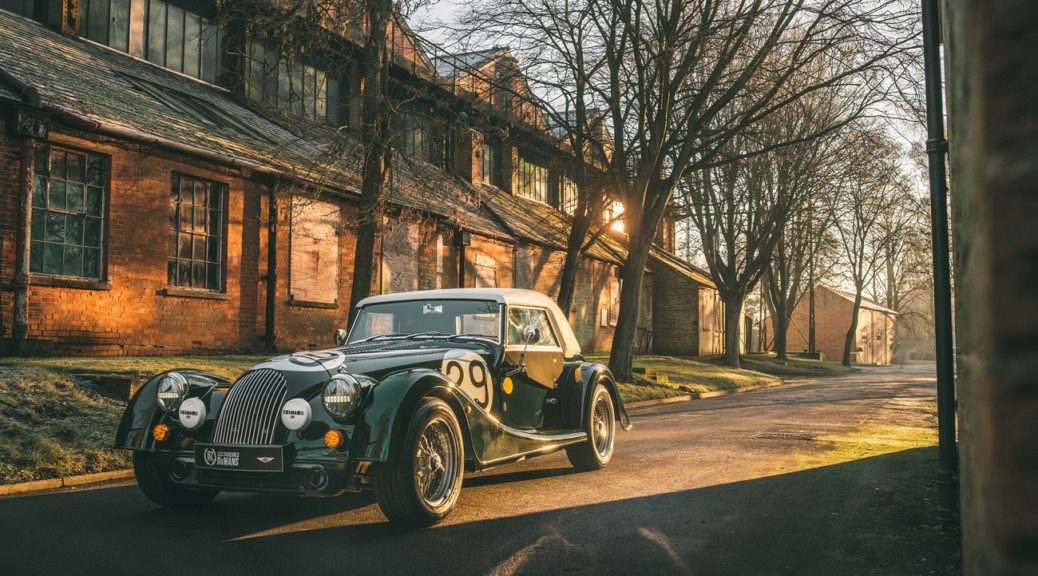
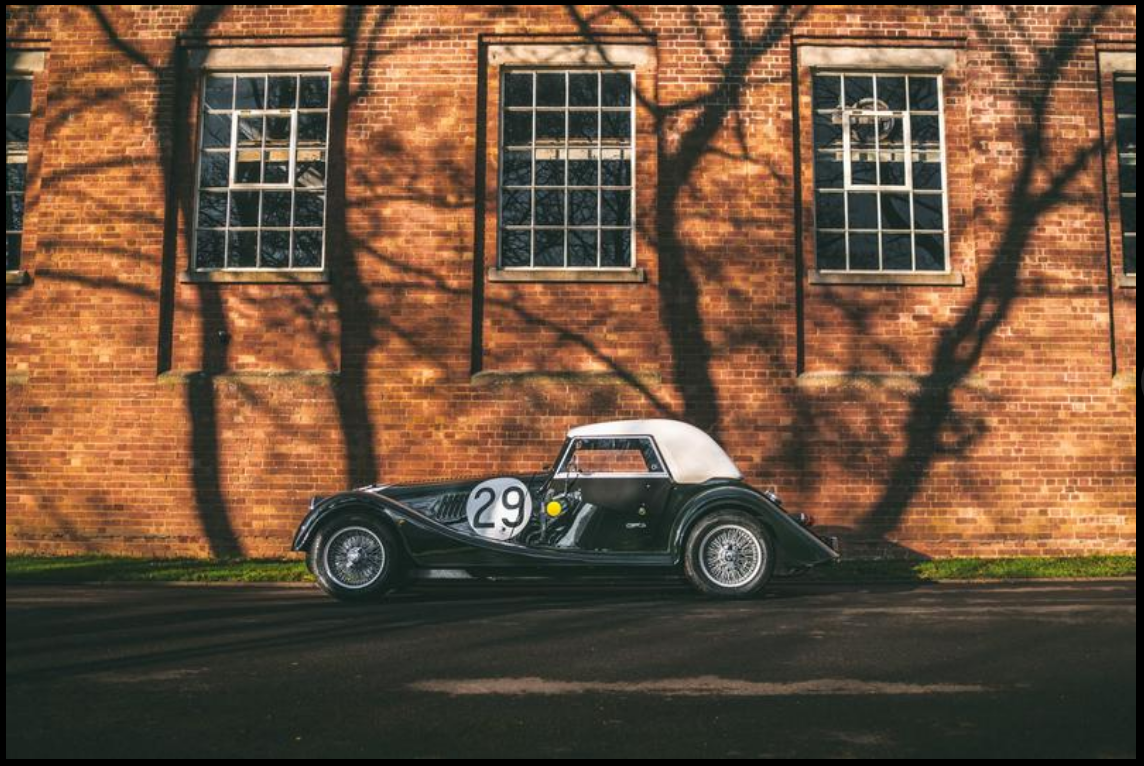
The Morgan Motor Company announces the launch of the Plus Four LM62, a model which celebrates the company’s legendary class win in the 1962 24 Hours of Le Mans. Based on the standard Morgan Plus Four and limited to just 62 examples, it pays tribute to the Morgan Plus 4 SuperSports – known by its registration TOK 258 – which took victory in the 2.0-litre class of the gruelling endurance race six decades ago.
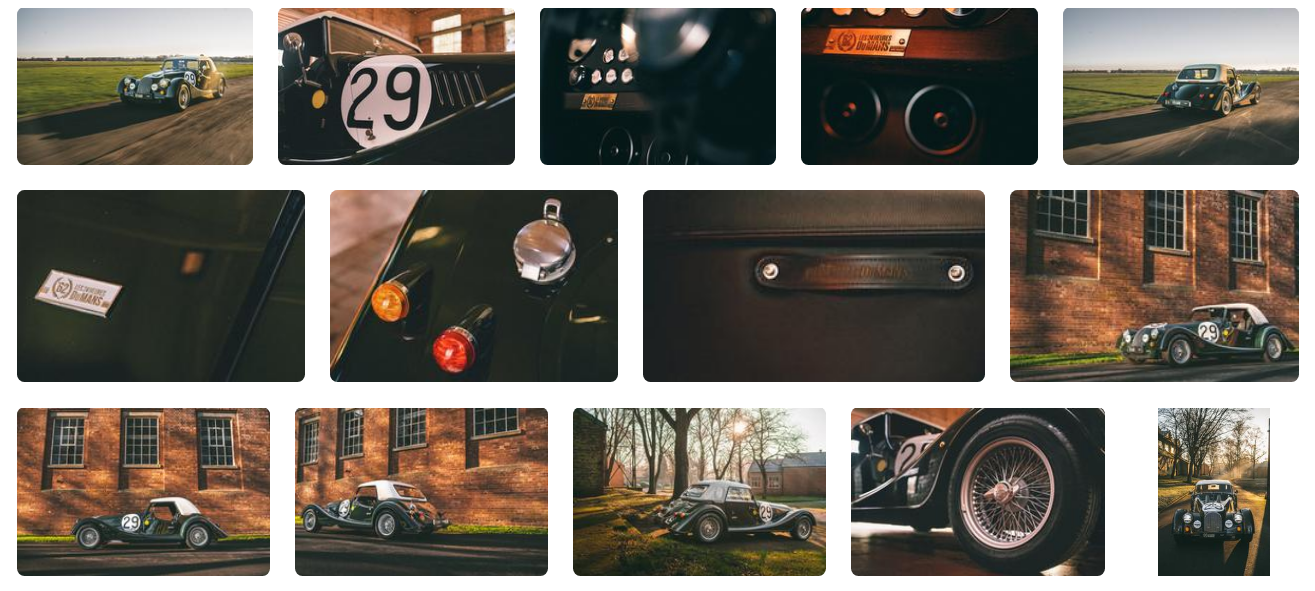
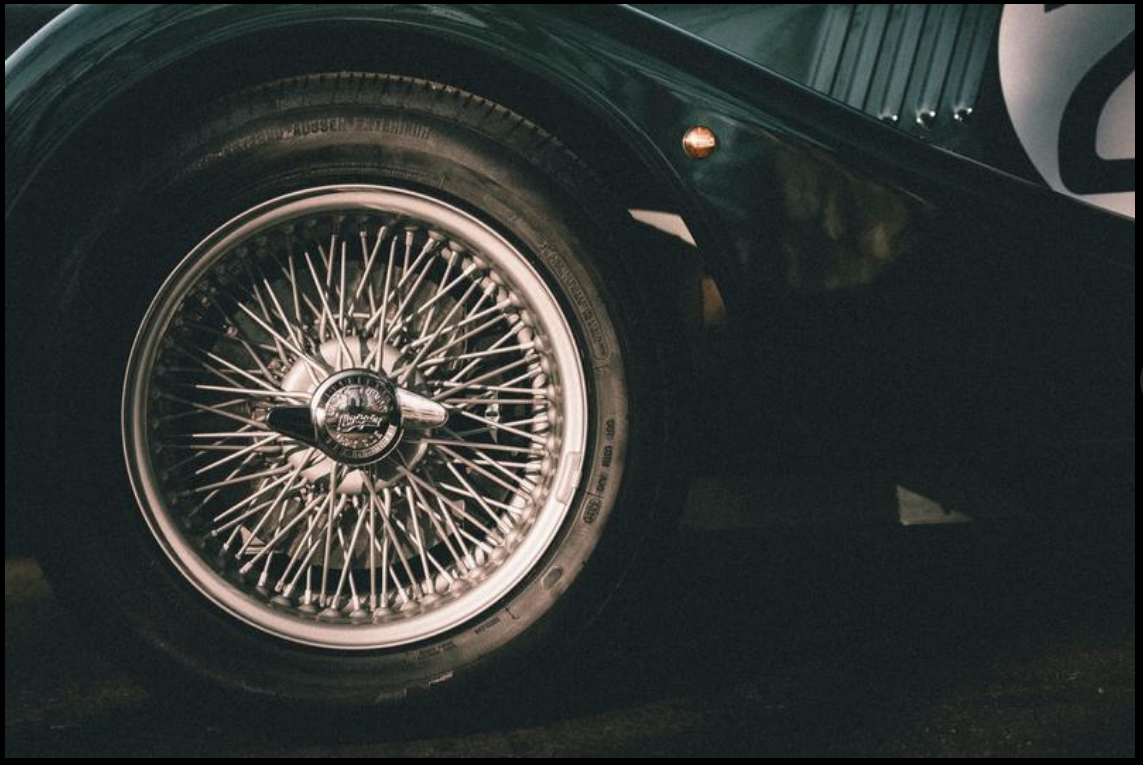
The renowned TOK 258 was finished in dark green, while a particular shade of red was popular on motorsport Morgan vehicles of the time, and these two colours have inspired the hues available on the Plus Four LM62. A Heritage White hardtop – just like the one fitted to the famous race car – comes as standard, marking the first time this item has been available for the model. Further paying homage to the victorious Morgan is an LM62 graphics pack, which includes roundels with the number ’29’ – as per TOK 258 – as well as an LM62 rear badge, silver-painted wire wheels, a Le Mans-style fuel filler cap and a domed rear panel. These touches are complemented by driving spot lights, body-coloured A-pillars, a black splitter and cowl mesh, polished stoneguard, black mohair sidescreens, a sidescreen bag embroidered with the LM62 logo, and an active sports exhaust with black tailpipes.
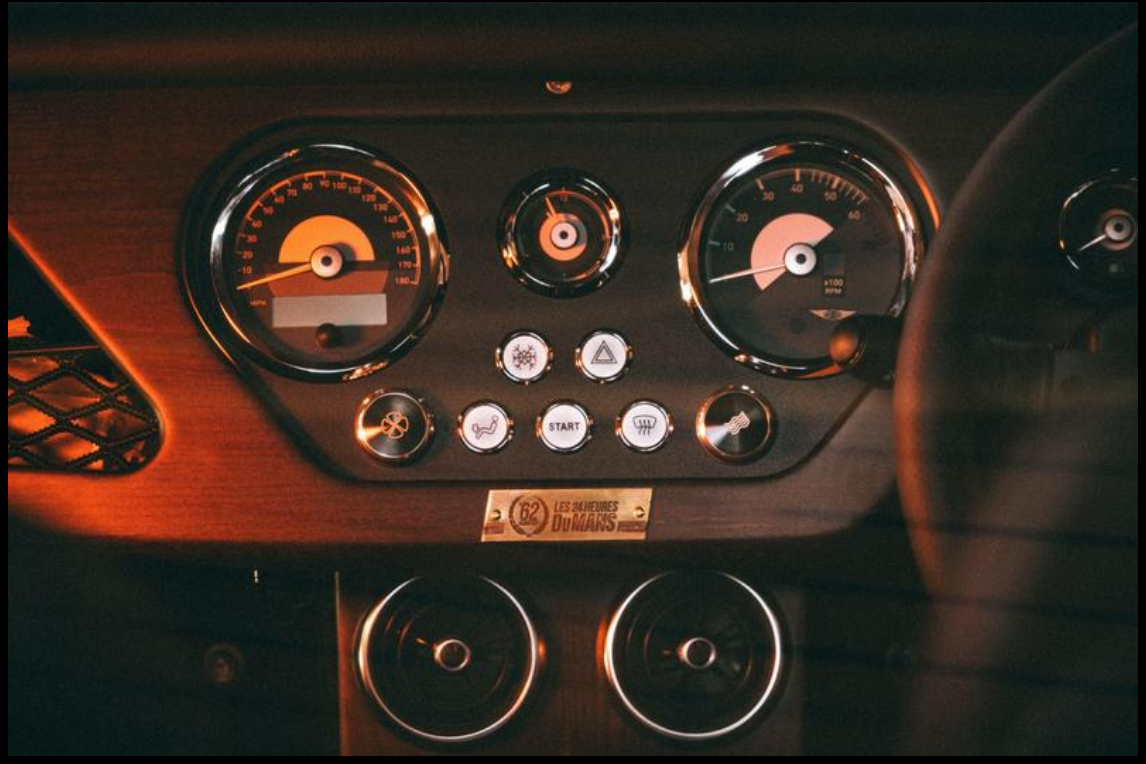
Inside, the model is adorned with an LM62 metal plaque, displaying the car’s unique build number from its run of 62 examples, along with LM62 laser-engraved black saddle-leather door pulls and headrests embroidered with the specially designed LM62 graphic. Bespoke satin lacquer rubber mats with black vinyl edges, painted steering-wheel centre, and a Tawny wood centre-tunnel top and dashboard come fitted to the LM62 as standard, while heated black leather Comfort Plus seats with horizontal pleating, perforated seat centres and matching stitch colour, complete with leather wrapped seat backs complete the interior aesthetic.
To further personalise your Plus Four LM62, options include a soft-top hood, LM62-specific photographic build record, and an LM62 accessory pack which includes two-eared wheel spinners, a Moto-Lita steering wheel, headlight tape, and a chrome interior rear-view mirror.
Steve Morris, Chairman and CEO of Morgan Motor Company, said: “The 1962 Le Mans class-winning Morgan Plus 4 holds a special place in the hearts of Morgan enthusiasts, employees and owners around the world. It marked one of Morgan’s greatest motorsport achievements, the car covering more than 2,200 miles at an average running speed of almost 94mph, and triumphing – like David vs Goliath – over our bigger, and better funded, rivals of the time.
“With the Morgan Plus Four LM62, we pay homage to this famous vehicle and incredible moment in time, 60 years on. Limited to just 62 individually numbered examples, the bespoke touches and enhanced level of standard specification make these cars an enticing proposition for customers wanting a piece of Morgan history.”
The Plus Four LM62 is available from Morgan Dealers globally, in left- or right-hand drive, and with the choice of manual or automatic transmission, the Plus Four LM62 is on sale now. In the UK, it’s priced from £78,995 ($134,224.81 cad). For pricing in other regions please consult your local Dealer.
About Morgan Motor Company:
Morgan Motor Company is a British manufacturer of handcrafted sports cars. Located in Malvern Link, UK. The world-famous Morgan vehicles offer a unique blend of charisma, quality materials, craftsmanship and performance. Morgan has been handcrafting coach built traditional British sports cars that are thrilling to drive and unique within the marketplace since 1909. In March 2019, Investindustrial purchased a majority share of the company, and by doing so invested in the long-term future of the Morgan Motor Company building cars in Britain. The Morgan family, along with the senior management team and the wider workforce, retain a shareholding of the company and work alongside Investindustrial. Morgan produces around 850 models, of which over 70% is exported. Its model range – comprising of the 3 Wheeler, Plus Four and Plus Six – is sold through 50 official dealerships in 32 countries.
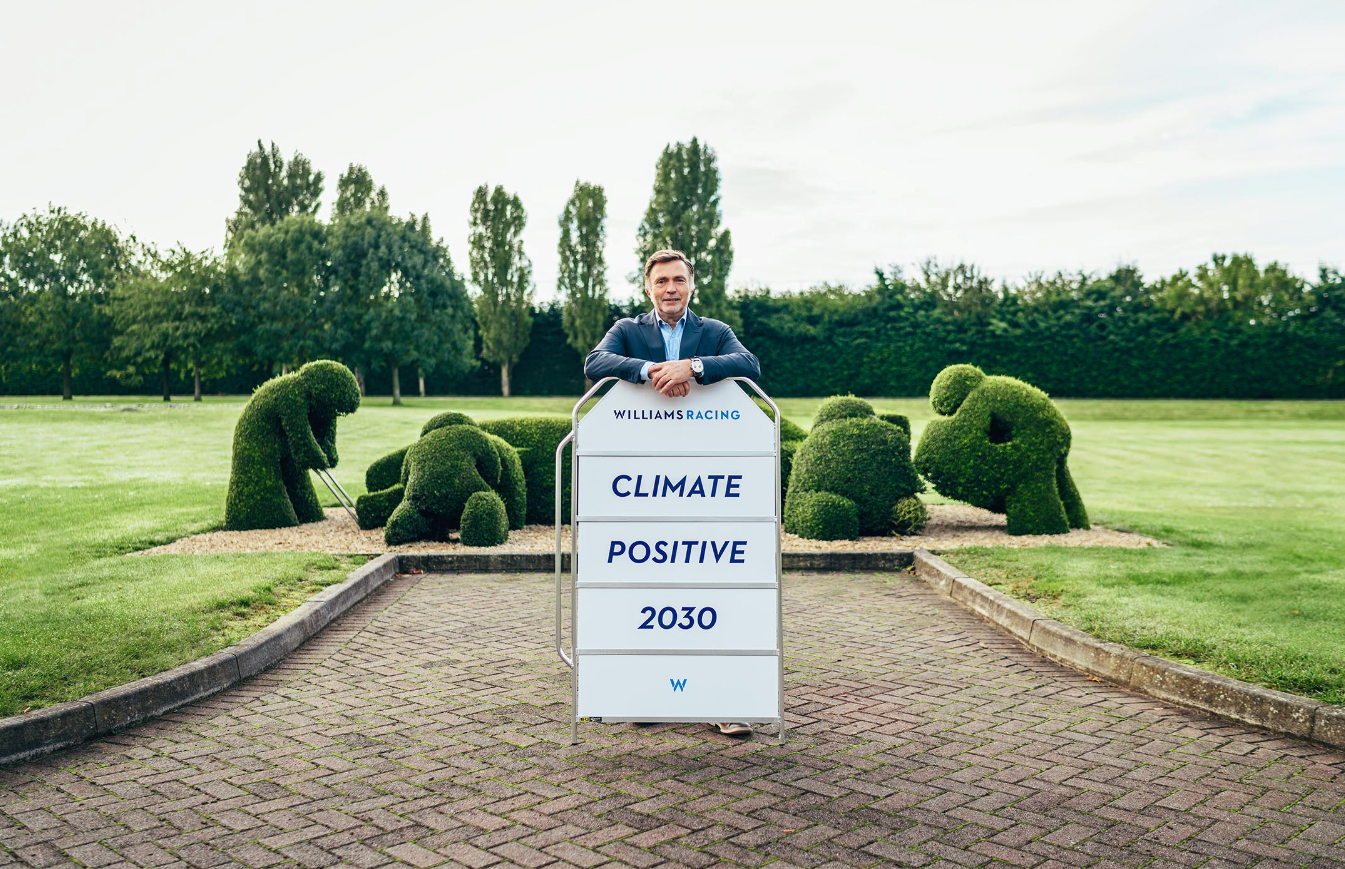
Grove, Oxfordshire UK: Williams Racing, one of the most successful teams in Formula One history, commits to a far-reaching climate change target. Building on the progress the global motorsport industry has made on sustainability in recent years, Williams Racing goes further than any other race team or motor racing series in the world, to commit to becoming climate positive by 2030.
To achieve this ambitious goal, Williams Racing has developed a series of robust technological and data driven initiatives, as part of a comprehensive purpose driven sustainability strategy, aiming to address some of the most important environmental and societal challenges facing Formula One, global sport and the planet.
The Williams Racing Sustainability Strategy, which has been developed over the course of the last year after extensive expert analysis, is based around five key pillars: Climate Action, Biodiversity Stewardship, Sustainable Innovation, Industry Access for All and Purpose Driven Leadership. Each pillar defines actions that Williams will be taking in the short and medium term to accelerate the transition to a better planet. Adding further transparency and accountability, each objective will be measured, audited and annually reported.
Williams is committed to learning and sharing best practices from all sectors and adhering to international initiatives. Accordingly, this strategy brings its emissions reduction target in line with the below 2 degrees Celsius target of the Paris Climate Agreement and UN Climate Change Global Agenda. Williams Racing is now the first Formula One Team to be a signatory of the UNFCCC, UN Sports for Climate Action Framework. In addition, Williams Racing Sustainability objectives are aligned with 12 of the 17 United Nations Development Goals (SDGs). Williams Racing is also aligned with industry specific standards and has recently gained FIA Three-star environmental accreditation.
Jost Capito, CEO, Williams Racing: “Williams Racing is a pioneer in Formula One and the racing world and has a strong heritage developing Formula One technology and transferring it to the EV and sustainable transport and energy sectors. We are living in a time when our planet and society is changing faster than ever. Building on the progress the global motorsport industry has made on sustainability in recent years, we have taken time to thoroughly analyse our entire operation and develop a comprehensive purpose driven, Sustainability Strategy to accelerate our sustainable transformation. As a team, we wanted to push the envelope and be the pace setter for sustainability in global motorsport and in the wider automotive industry. So today we are making the commitment to be climate positive by 2030 and we will be using our knowledge to nurture and develop advanced technology to meet this goal.
“We know where we are strong and understand where improvement is required and we are open to learning from others and sharing best practices in pursuit of our ambitious objectives. To help raise the baseline of sustainable performance in our industry, we welcome interaction and partnerships with key motorsport stakeholders, automotive companies, brands and organisations who share our vision.”
“As a huge global sporting platform, Formula One has the power to inspire millions of people across the world and as the pinnacle of so many advanced technologies, Formula One has the ability to create technical solutions to help tackle the challenges we face as a planet. As we progress towards our goal to be climate positive in the years ahead, my hope is that Williams Racing can inspire all those connected with our sport and beyond, using motorsport as a catalyst for significant and long-lasting change.”
The five key pillars of the Williams Racing Sustainability Strategy
Climate Action, covers the strategy and targets for how the team will reduce carbon emissions for travel and energy consumption at HQ, reduce waste and water usage and over time create its own energy, on its journey to becoming climate positive.
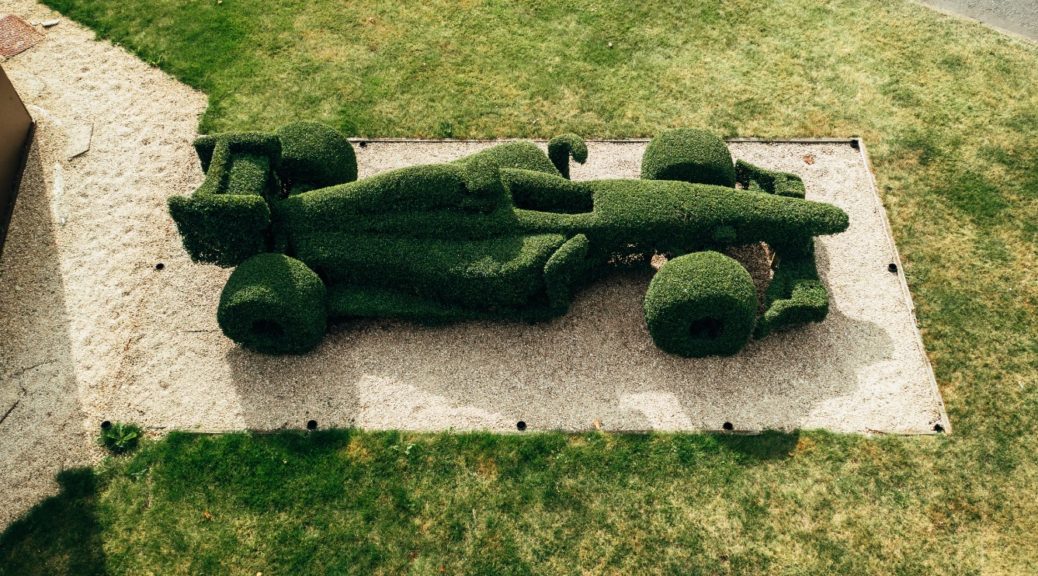
Biodiversity Stewardship, covers the strategy and targets for how the team protect and preserve the biodiversity on the 60 acres of the HQ campus, including the Letcombe Brook – one of only 240 chalk streams in the world.
Sustainable Innovation, covers the strategy and targets to foster sustainable and innovative solutions that tackle global challenges in and outside of F1™. This includes Williams Racing undertaking full life cycle management of its racing cars, deploying circular economy strategies within the team and being actively involved in projects such as carbon capture technologies.
Industry Access for All, covers the strategy and targets to make motorsport more accessible by creating an environment in which anyone can thrive, and a workforce that reflects our community through academy programmes, scholarships and Esports.
Purpose Driven Leadership, covers the strategy and targets for Williams Racing to act as pace setters for sustainability within the motorsport industry. Building a strong, transparent and accountable culture in our team, at races, with our partners, suppliers, local community and fans.
Lindita Xhaferi-Slihu, Sector Engagement in Climate Action, Lead, from the UNFCCC commented “We are pleased to welcome Williams Racing as a signatory to the UN Sports for Climate Action Framework. The team is the first Formula One Team joining the Framework, sending a clear signal on the growing importance of setting clear climate targets and of using the sport and technologies as a catalyst for change. We look forward to working together with Williams Racing to deliver on the goals of the Framework.”
The Williams Racing Sustainability Strategy was developed with support from Enovation Consulting, a purpose driven sustainability and strategic management agency.
About Williams Racing
Williams Grand Prix Engineering Limited’s core competencies are the design and development of racing cars to compete in the Formula One World Championship. As one of the world’s leading Formula One teams, the company has secured 16 FIA Formula One World Championship titles since its foundation in 1977. Nine of these titles have been won in the Constructors’ Championship in association with Cosworth, Honda and Renault. The remaining seven titles were won in the Drivers’ Championship with Alan Jones, Keke Rosberg, Nelson Piquet, Nigel Mansell, Alain Prost, Damon Hill and Jacques Villeneuve.
About Enovation Consulting
Enovation Consulting is a purpose-driven sustainability and strategic management agency with the mission to drive positive and meaningful changes through sport. We deliver creative and innovative research-based solutions that empower our clients to integrate sustainability into their business strategies – delivering on their short, medium and long-term ESG goals.
About UNFCCC Sports for Climate Action Framework
The UNFCCC Sports for Climate Action Framework is the UN Climate Change initiative, a climate action for sport movement of sports organizations and their stakeholders. This initiative aims at supporting and guiding sports actors in achieving global climate change goals, offering a forum where participants can pursue climate action in a consistent and mutually supportive fashion by learning from each other, disseminating good practices, lessons learned, developing new tools, and collaborating on areas of mutual interest. Signatories commit to a series of principles and goals which are incorporated into their strategies, policies and procedures.