Tag Archives: corruption

USA- Breaking The Cycle of Foreign Assistance Enabling Corruption

Moral Hazard – A situation where one party assumes greater risk because it understands that another will remedy the harmful effects.

While the hundreds of billions of dollars in U.S. foreign assistance spent over the years have dramatically improved many people’s lives and livelihoods around the world, too often the United States’ approach to foreign assistance failed to advance U.S. interests, failed to spur systematic development, and enabled and perpetuated dependence and corruption by leaders in recipient countries. Since 1991, the United States has provided more than $200 billion in foreign assistance to Africa, yet the African Union reports that African countries lose an estimated $88 billion each year through tax evasion, money laundering, and corruption. Too often, what is needed for economic growth and development is not more money, but sound reforms that incentivize enduring private investment and growth.

Instead of insisting on mutual accountability to use U.S. assistance to address the causes of poverty and underdevelopment, too often we funded outputs to allay the symptoms. In so doing, we failed both the American taxpayer and the citizens of developing countries who looked to their governments and ours to help create the conditions to realize a better future.

For decades, the United States did not have a consistent policy as to even whether assistance was charity or a foreign policy tool. We did not require a committed partner, a coherent business plan, equity collateral at risk, or funding subject to performance-based disbursements. We infantilized recipient governments instead of having candid discussions on mutual performance expectations. Too often our approach to developing countries – frequently perpetuated by the excuses of those same governments – reflected the soft bigotry of low expectations. We excused away the lack of political will as “capacity constraints,” dismissed it with “we shouldn’t expect too much,” and did not challenge them when governments acted in contrast to their professed commitments.

Too often, we were content to confuse governments’ commitments for actions. We misinterpreted our access to leaders as influence with those leaders. We mischaracterized aid projects’ outputs as outcomes and program objectives as results. We misconstrued governments’ permission for us to expend aid as evidence that they shared a commitment to advance professed objectives. Perhaps worst, we failed to acknowledge when leaders of aid recipient countries demonstrated over and over through their actions that they prioritized their personal interests over, and at the expense of, the interests of their own country and citizens. Virtually never did we withhold assistance funds because host governments failed to deliver on their commitments, instead we responded by providing even more aid “because they have needs.” By trying to save people from bearing the brunt of the bad governance and corruption of their leaders, we helped perpetuate that very same corruption and bad governance.

Quite simply, we violated the central maxim of international development: the donor cannot want development more than the recipient. By doing so, we fueled moral hazard. From the pure greed of Malawi’s “Cashgate” scandal under Joyce Banda to the systematic kleptocracies of Bangladesh or South Sudan, by back filling health and social service needs recklessly created by bad governance, we have enabled and underwritten government corruption. In the worst cases, such as the predatory abuses of Mali’s Ibrahim Keita or Guinea’s Alpha Conde against their own populations, corruption and the failure to deliver basic public services needs led to military coups and incursions by terrorist organizations.

American foreign assistance is not charity but a tool to advance American diplomacy, security, and prosperity.

To accomplish these goals, we must focus our assistance and insist on administering it with host-government buy-in and mutual accountability for outcomes. This, in turn, will leave space for market driven growth that will also help close off the means by which malign international actors exploit developing economies and workers. We should not be dissuaded by detractors who will attempt to vilify a more transactional approach as “neocolonialism.” Quite the opposite is true. By insisting on systematic reforms that spur transparent and accountable growth and allow governments to retain funds to support their people, the United States can do more to catalyze actual economic development and the upliftment of developing countries’ societies – and advance tangible U.S. interests – better than we have in recent decades. It is the dependency-oriented, NGO-driven old model of development that is fundamentally colonial in mindset – refusing to respect development nation sovereignty, determinism, or agency.

Operationalizing this approach involves adopting investment-oriented goals, requirements, and incentives:

  • A Serious Host Nation: Secretary Rubio has been clear, “Americans should not fund failed governments in faraway lands…we will favor those nations that have demonstrated both the ability and the willingness to help themselves.” If a government is not already taking steps to stem corruption and grow the economy when its own funds are at stake, we should have no expectation that they will be better stewards of U.S. funds. Without an aligned host-government, we should focus our resources elsewhere.
  • The Right Focus: Our purpose is not to give money away, but to catalyze systemic reforms that enable sustainable growth and opportunities for the U.S. and recipient country. Neither governments nor donors create growth; instead, our roles are to foster conditions for the private sector to invest, create jobs, spur growth, and pay taxes to fund public services. Hence, U.S. foreign assistance should focus on curbing corruption and overcoming and remediating binding constraints to growth to lay the foundation for a transparent, level, and accountable business enabling environment.

  • Confidence in The Business Plan: Most developing countries have national development plans, but too often they are unresourced and unprioritized works of fantasy, and seldom do governments enforce accountability for their actual implementation. What President Trump explained in clearly delineating America’s national interests in this year’s National Security Strategy is equally true of developing countries: when everything is supposedly a priority, nothing really can be. We should help sincere host governments develop focused, realistic strategies based on core sectors and targeting key constraints that are founded on candid analysis and include specific, tailored tactics.

  • Skin in the Game: If a country is not going to put its own resources behind an effort, it is either not really a priority, they are not really serious, or they don’t have confidence in their plan. Few investors would engage where the owner hasn’t put collateral down or his own equity at risk. Why should foreign assistance not require the same? Here, the Millennium Challenge Corporation (MCC) has demonstrated two key best practices that ensure buy-in. The first is a requirement for co-financing by the host government. The second is conditions precedent: tangible reform actions a host government takes before funding even begins, to enable the success of the project outcomes.

  • The Right Resources: Again, our purpose is not to give assistance away, and the history of both corruption and assistance has shown that money is not what is most lacking to spur development. So, building on an analysis of binding constraints to growth and a business plan that we have confidence in, it is incumbent on the United States and the recipient government to craft a bespoke package of technical assistance interventions to inform and enable the reforms needed. This should not be an approach of letting a thousand flowers bloom, and it must not be built around the question of “how can we help?” Instead, we must start with the questions “what are the outcomes we want to achieve in the American interest and what needs to happen to realize them?” and build an assistance program around that.

  • Have a Contract: Unlike the Development Objective Agreements (DOAGs) of USAID that bound the U.S. to fund sectors but seldom included host governments’ performance commitments, the MCC model again provides a best practice. Explicitly detailing shared objectives and commitments by both governments – typically ratified by the legislature to carry the force of law – reduces uncertainty and improves accountability by enshrining the binding obligations of both parties.

  • Performance-Based Funding: Too often, once development projects were approved, donors’ focus turned inward to implementation, achieving outputs, and keeping funds flowing even if receiving governments actively undermined them. Gradually, funding agencies have begun shifting to performance-based disbursements. By requiring a host government to demonstrate – through its actions, not merely its rhetoric – that it remains politically and financially committed to achieve professed objectives, we ensure that U.S. assistance achieves greater impacts.

Under President Trump and Secretary Rubio’s leadership, we have the opportunity and courage to acknowledge our mistakes, to embrace candid lessons learned, and to do better. America’s generosity in doing business with those who help themselves remains as strong as ever. We are not turning away from less developed nations, instead now is the time to lean in to lend a useful hand to those who are sincere and treat them as mature stakeholders. In engaging valued, sincere nations, nothing should be imposed, hidden, given as ultimatums, or come at the partner’s expense; we are not China. Foreign assistance that delivers for the American people and our partners must be founded on sincere, voluntary, and transparent engagement. But it must be backed by tangible action and, if a recipient nation proves through their actions that they are not committed to our professed shared objectives, our allegiance must first be to the American people to be stewards of their resources.

Having dedicated my life and career to Africa and the developing world, I am invigorated by the massive potential these nations possess, and I have witnessed how the United States can help turn that potential into a reality that benefits both nations. By restructuring our approach to foreign assistance and engaging developing countries based on national interest, we can help curb the corruption that deprives families of the hope of that better future. We can deliver lasting and systematic growth alongside recipient countries. And, we can deliver tangible value for the American people through a more secure and prosperous world.

For the Silo, U.S. Ambassador Michael C. Gonzales.

Michael C. Gonzales is the U.S. Ambassador to the Republic of Zambia and the U.S. Special Representative to the Common Market of Eastern and Southern Africa (COMESA). He has held senior posts throughout Africa and Asia over his career.
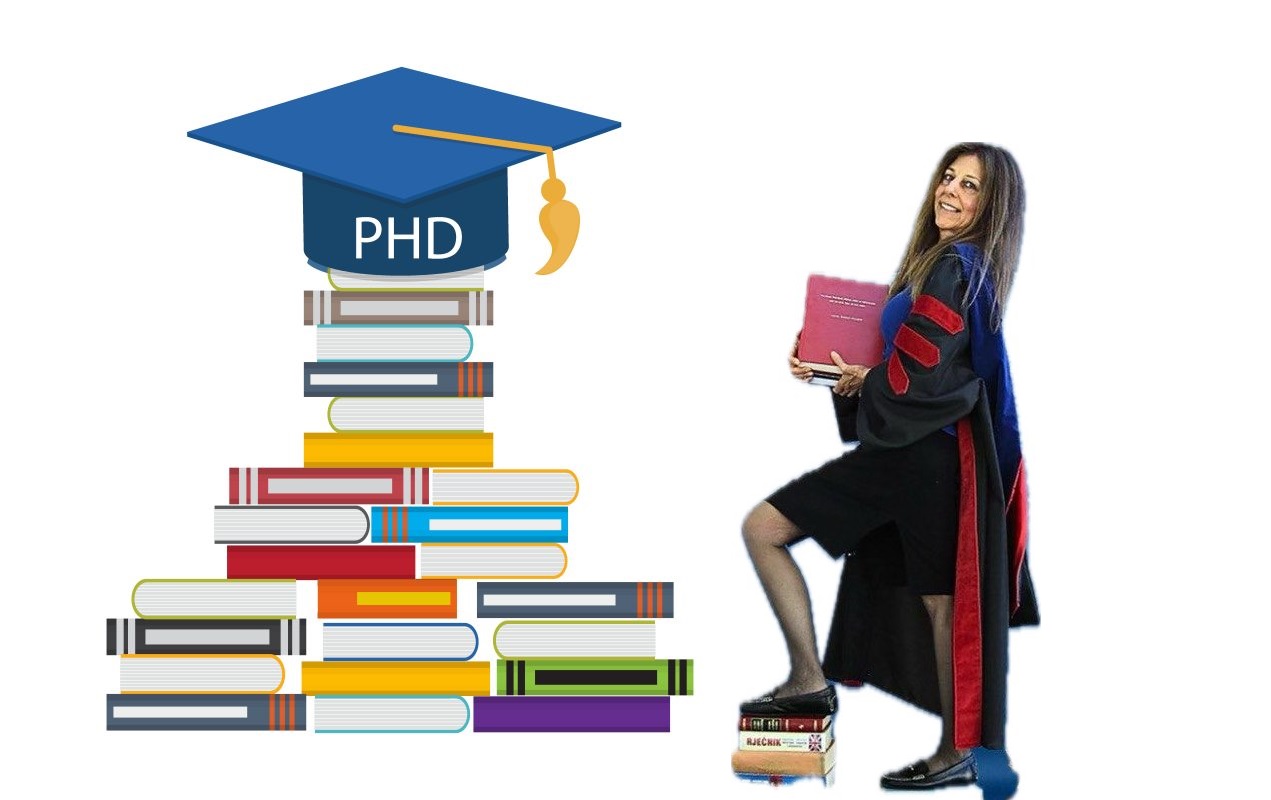
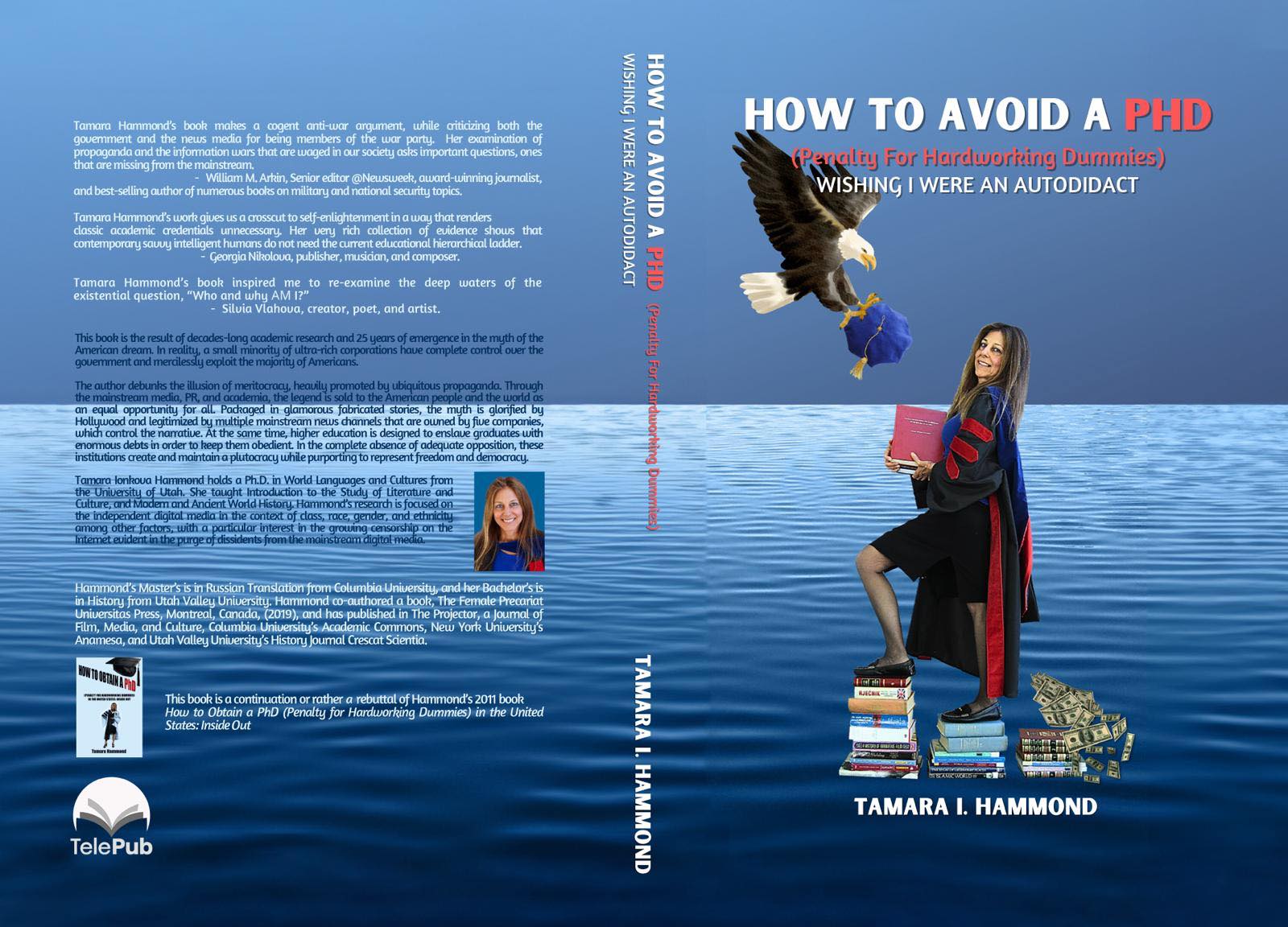
How to Avoid a PhD (Penalty for Hardworking Dummies): Debunking the Meritocracy Myth

To All Who Will Say, “It Has Nothing to Do with Me”

This book is a profound research work that exposes corruption, censorship, and corporate tyranny in the purported democratic system of the US. Hammond reveals the subversive role of the mainstream media in deceiving the public and manufacturing consent for perpetual wars, individual responsibility for institutional failures, and social injustice presented as a meritocracy. At the same time, argues Hammond, the incessant propaganda conditions the public to accept the denial of basic human rights such as healthcare, living wages, and higher education as undeserved luxuries.

According to the author, through sophisticated mechanisms, the People Relations industry constantly disseminates the illusion of freedom and democracy and inculcates the myth. Hammond offers a brief history of media corruption through consolidation of ownership, currently reduced to five giant corporations. The author opens the first chapter with a short analysis of the classic 5 filters of mass media detailed in Herman and Chomsky’s 1988 Manufacturing Consent. Although Chomsky’s revelation is widely popular as every dissident’s bible, less known is that the authors dedicated the book to an Australian writer, Alex Carey, whom they consider a pioneer in the field of propaganda.

According to Carey, people in the US have been subjected to an unparalleled, extensive, three-quarters century-long propaganda effort, designed to expand corporate rights by undermining democracy. Hammond traces the roots of propaganda back to the 1920s, when the founder of the People Relations field, Edward Bernays, initiated his mass psychological campaigns to win public opinion. Bernay’s successes include influencing women to smoke and promoting foreign intervention in Latin American countries at the behest of corporations, later known as Banana Republics.

During that time, leading intellectuals such as Bernays and Walter Lippmann freely used the term “propaganda” as an indoctrination tool and promulgated the idea of manipulating the public.

Bernay’s 1928 book titled Propaganda, was a literal manual for the ruling intelligentsia. According to Bernays, the masses should be unaware of the source of their influencers, while the audience is overwhelmed with carefully selected images and rhetoric by unknown agents. Another source used by Hammond is George Orwell’s unpublished preface titled “The Freedom of the Press” to his 1945 Animal Farm. A curious little-known fact is that Orwell had a hard time publishing the book in democratic Britain, and took him five years to find a publisher. Moreover, the preface, in which he explains the phenomenon of self-censorship and how in Western democracies it is done in a very subtle way in contrast with dictatorships where the censoring is open. Perhaps because of this analogy, the preface is still not published within the book, although could be found separately on the Internet.

Tamara Hammond’s book extensively analyzes the current media status with emphasis on alternative media in the context of the rising censorship practiced by the owners of social media networks. According to the author, from Google to Facebook to X (nee Twitter) tne giant networks are obedient purveyors of the ruling oligarchy that transcends national borders. Hammond warns that we are being conditioned to accept a neo-feudal technocratic dictatorship based on fearmongering and deception. Much of the book is dedicated to educating the audience about the real dissidents in media and academia who fight against wars and corruption, and to liberate imprisoned journalists like Julian Assange.

The epilogue features an allegorical tale about the slippery slope of corruption and the mechanisms of power that overwhelm even the most noble minds. Available for order on Amazon.

The Godlike Power Of Money

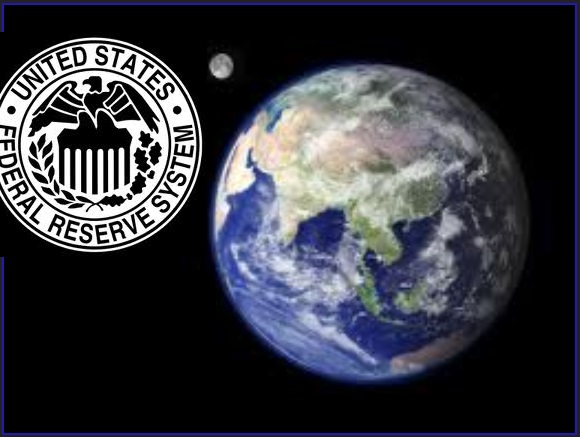
God-like powers? The United States Federal Reserve essentially drives the entire world economy. image: imagesci.com

    God-like powers? The United States Federal Reserve essentially drives the entire world economy.

Money runs the world’s economy. It determines who rules nations, and it rules lives.

These are the three most significant properties attributed to the power of money, in addition to its basic function as a medium of exchange. But we can attribute several less significant properties, although similarly important, to the power of money.  They include:

1. Money separates people of the same nation into classes, divisions and groups.

2. The pursuit of money and wealth can turn man against man, son against father, family against family and nation against nation.

3. Money’s devaluation of natural values makes Nature the object of buying and selling.

4. The ability of man to perform labor by placing a price on his head allows one man, or group of men, to enslave another individual or group of individuals.

5. The ability of money to corrupt tends to change man’s personality from social being to self-oriented individual.

6. The power of money drives people to produce services in order to pursue everyday life. This inflicts stress upon people, leading to a spiritual breakdown manifested in acts of crime and mental illnesses.

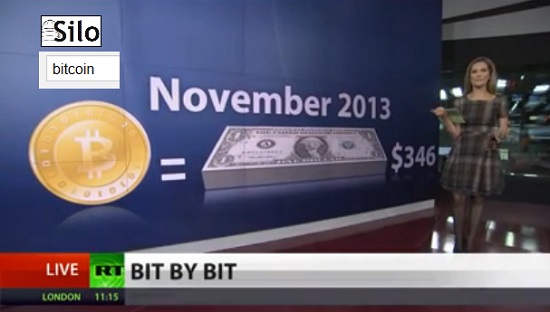
Bitcoin- electronic currency invented in the 21st century- poised to revolutionize what money is and can be? It's value in US dollars has tripled in one year. CP
Bitcoin- electronic currency invented in the 21st century- poised to revolutionize what money is and can be? It’s value in US dollars in 2013 tripled in one year. CP

Amazingly enough, not many people in modern society are aware of the source of the power or money, including businessmen such as bankers, money market brokers and financiers, who consider themselves money experts.

Perhaps one of the reasons the origin of money’s power is one of the least discussed subjects among academics is the non-existence of prehistoric written records. The second reason is historians’ failure to unveil when and how currency converted from an ordinary medium of exchange into the dominant value of society by expanding its usage to include rendered labor compensation. Also, when and what societal changes elevated the abstract value of currency into an absolute ruling power over humans, including all natural values and treasuries of the Earth.

The blank page left by the theory of early civilization about the invention and rise of money invited independent thinkers to develop their own theories.

The records indicate that this enigma is hidden in the formation of the first state and government. Reforms enacted almost 4,000 years ago led to the breakup of the original communion society, creating conditions that enabled different classes of people to pursue independent ways of life.

From above... 2. The pursuit of money and wealth can turn man against man, son against father, family against family and nation against nation.
From above…
2. The pursuit of money and wealth can turn man against man, son against father, family against family and nation against nation.

Regulating all natural values and treasuries, including human labor, through money, one individual was able to declare himself the king, and establish absolute ruling power over society by entrapping people within guarded wall.

This historic event advanced the abstract value of money from the ordinary medium of exchange to an absolute ruling power unparalleled in the real world. Some ancient spiritual leaders expressed a serious concern about the prudence of the proposed reforms.  They warned that the enactment of these reforms would void the God-given dominant role of natural values within society at the expense of the abstract value of money. This would subsequently interrupt the relationship between man and nature, and change the original role of man upon the Earth from the guardian of nature to the biggest annihilator of nature.

But the followers of the philosophical doctrine of man’s uniqueness compared to other species dismissed such warnings. Promoting man’s spiritual virtue of freedom to make his own norms and laws instead of following the law of nature, they were delighted by the proposed reforms.

Ever since, the corruption, exploitation of one man over another and class warfare became the norms of the New World Order leadership.

The comparatively recent freedom movements that led to the French and Bolshevik revolutions failed to liberate people from the chains of money’s absolute power. Despite that, the idea of freedom lives on in people’s minds, inspiring liberators to wonder why the formation of a communist state failed to succeed.

The liberators failed to realize that the institution of state and government is the foundation that, by providing the conditions for money currency to function, imposes absolute ruling power over society. This means that the institution of state and government is not a suitable foundation for the establishment of a free, classless society.

Is the only way to liberate society from the absolute power of money a return to the system of farming communities and declaring abolition of money currency, which would ultimately lead to dismantling the institutions of state and government?

However, taking into account that man is biologically a mortal relative entity incapable of resisting temptation offered by the absolute power of money, the prospect for the abolition of money is not practically realistic. For the Silo, Michael Vladimirovich Trisho.

Featured image: imagesci.com

Michael Vladimirovich Trisho is the author of “How Did Humanity Become Enslaved to Money?”  Born in Panchevo, currently part of Serbia, Trisho’s tendency to inquire about the mysteries of the world using reason and logic were evident at an early age. All his life, he wondered how humankind became entrapped by money and why people believe a money-based society is best. After immigrating to the United States, he continued to examine early history in search of answers about the monetary system and its relation to the institution of state. Examining archeological fossils and excavations focused only on a narrow part of early human experience and did not reveal important events that played a critical role in society’s development. Michael created his own reconstruction of events, the product of which is his debut novel.

Supplemental- How does the U.S. Federal Reserve drive the world economy? http://www.cnbc.com/id/100430256

The 20th Century spread of Bolshevik power-  http://schools.cbe.ab.ca/b628/social/russia/post_revolution_history.html

Novel Warns North Americans Of Corrupt Bankers And Valueless Dollar

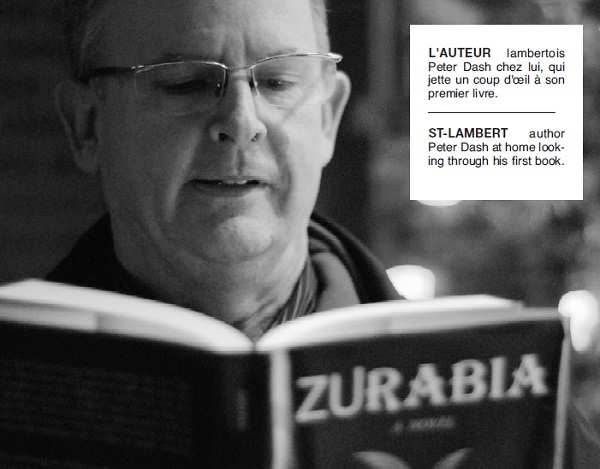
Back in 2012 The Silo reported on a dark novel titled Zurabia. That book held a plot that seems less like fiction with each passing year.  Corrupt bankers, a practically valueless dollar, hyper-unemployment and underemployment, home-grown terrorism, the uptick in natural disasters and the overall lack of trust in our most important institutions – these are some of the reasons all North Americans should be very, very concerned, according to author Peter Dash a world-traveled researcher for Harvard University’s Center for International Affairs.

Peter Dash and his novel

“I predict a brutal world ahead of us,” says Dash, author of “ZUrabia,” a book about rogue forces taking over the world’s most important institutions. “Unfortunately, I have been right since my research at Harvard in 1986, when I questioned the viability of government institutions to meet general needs and growing problems, both domestically and abroad.”

The pragmatic holiday shopper this year will purchase items to safeguard their families against these threats, which have been long in the making and won’t disappear quickly, he says.

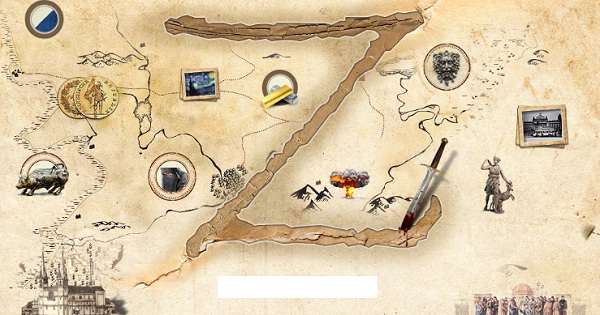
From Dash’s homepage- a map of Zurabia complete with mountains and a mushroom cloud. Biblical ! CP

“Terrorism wasn’t inaugurated with 9-11; extremism in Muslim sects has been growing for decades, and Neo-Nazi groups are starting to flourish in failing states like Greece,” he says. “The dollar has been steadily losing its value since the creation of the Federal Reserve in 1913; climate change has been on the radar for quite a while; and there have been greedy bankers since, well, banks have existed.”

“If you’re confident that everything is sure to be okay, then you’re not paying attention,” he says.

He offers a four-point survival strategy for holiday and everyday shopping:

• Gold is good: The dollar has lost 95 percent of its value in 100 years, and it will continue losing value. As
the Reserve continues to flood money into the system, thereby reducing current or potential value, more inflation is inevitable, acting as yet another tax on wages. So, collect and buy any gold that you can and consider spending federal notes while they’re still worth something to businesses. Think about your
jewelry, and buying more. Silver is a good option if gold is too expensive, and there are Exchange Traded Funds, or ETFs, that are backed by physical gold. A reputable banker or broker can help explain for those who are interested. “TD Ameritrade or Charles Schwab may be good places to start getting information on gold and silver ETF trading,” according to Dash.

• Inflation: Spend your money now or smartly invest it before you lose it. Remember, banks often give clients less than one percent on many accounts, but inflation on food and real items we use, like gasoline, are going up by much more. In essence, your banker is stealing your money through the assistance of the Fed, which is killing your savings rate by cheapening money. As if to pour salt on this wound, the bank,
in many cases, lends money at four percent or higher. Rerouting some bank savings/wages by investing in canned food, for example, may protect you against the scourge of food inflation, as well as other disasters.

• Worthy purchases: With food and water, a failed society puts a premium on additional goods. They include home insulation, gardening tools and materials, computer programs and language learning kits – perhaps Spanish or Chinese – because of the increasing prominence of other cultures. Guns, security systems and other measures to protect one’s home will likely prove extremely valuable should law enforcement be spread too thin, or fail as an institution.

• Buy in bulk: Places like Wal-Mart or Costco will help you get the most value with large purchases of food. It’s important to be well-stocked if something happens that results in the emptying of grocery markets, but remember to have adequate space in your house, apartment or cabin for a “safe” room, which is part of a sound strategy for protecting you and your family.

Peter Dash has been a teacher, professor and corporate trainer for the last 17 years, working in Saudi Arabia, the former Soviet Union and China. He has an applied science degree in forestry from the University of British Columbia and a Masters in applied teaching from Southern Queensland in Australia. He was a researcher in world (dis) order and youth groups at Harvard University’s Center for International Affairs, started by Henry Kissinger. He follows the investment field intensely, focusing on commodity funds and trends.
Fifteen percent of his book’s royalties will go to needy students consistent to the many years Dash has worked in assisting voluntary youth organizations. He lives on a small tropical island that is stocked with the finest well water, fish and food. Dash invests in Gold ETFs and commodity trading companies.

SupplementalCBC radio interview with Dash on Zurabia

In These Days Of Alternative Fact And Secrecy It Is Difficult To Hold On To Truth

The shape of truth is often difficult to discern. It bends and shifts or is manipulated to suit a particular narrative. Facts become the object of debate when power is at stake. Corruption breeds untruths. While objective concepts do not require belief in order to exist, we can not grasp what we simply do not know. In these days of alternative fact and secrecy, it is difficult to hold on to what constitutes truth. We are told by those on high to avert our eyes and ears while purveyors of truth are silenced. John Dalberg-Acton bequeathed these words to the world, “Power tends to corrupt, and absolute power corrupts absolutely. Great men are almost always bad men.”

Richard Vine is the managing editor of Art in America.

Richard Vine, art critic and managing editor of Art in America has recently penned his first novel. SoHo Sins follows the pulp tradition right down to the cover art created by Robert McGuire, one of the greats of noir cover art in the 1950s. The novel deals with the corruption of innocence by way of a murder mystery and harkens back to the 90s heyday for the art world in SoHo. Vine has also curated multiple exhibits including “Darkness Visible” in Beijing, China and “Golden Selections” in Iceland. Vine’s second novel will take on the political crimes enacted at Kent State when the National Guard opened fire on demonstrating students wounding nine and killing four. He was a student at Kent State at the time and witnessed this incident.

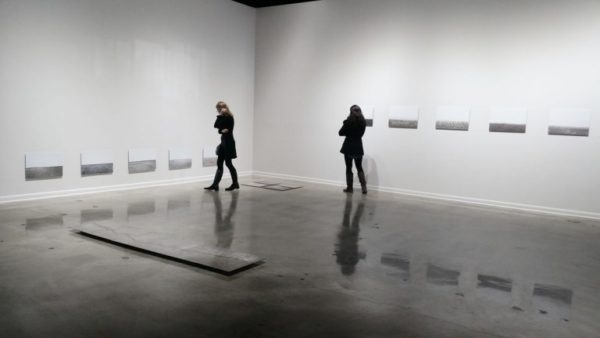
Installation View, Cynthia Greig's “Making Mischief” at Center Galleries, College for Creative Studies, Detroit, MI photo credit: Alex Gingrow
Installation View, Cynthia Greig’s “Making Mischief” at Center Galleries, College for Creative Studies, Detroit, MI photo credit: Alex Gingrow

Cynthia Greig is a native of Detroit. Her studio sits north of the famed 8 Mile. She says of her home city that while there is a great diversity of opinion, even in the midst of decay those who truly know the city could see the inherent beauty of the place. Her art takes on the topic of exhibitionism, investigating and deconstructing the concept of the white cube gallery space and breaking it down to its essential parts. She has watched the scale of galleries grow exponentially from white cube to international powerhouses and examined how this affects the value of the art within. Her art explores these themes often depicting interruptions in the pristine facade of the gallery space.

Additional interviews include: Nate HarrisonChristopher Richmond, and Melissa Stern.

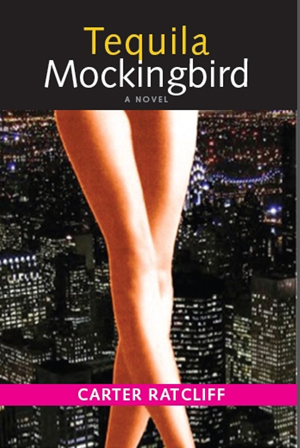
tequila mockingbird bookWhile we can not ever know absolute reality, we can look at it from every angle and make informed decisions. What are you reading to shape your own reality? Tequila Mockingbird is a book written by Carter Ratcliffe, friend and colleague to Richard Vine, that bears witness to Russian oligarchy through the vapid eyes of a supermodel. Cynthia Greig balances intake of the barrage of political news with American Canopy: Trees, Forests, and the Making of a Nation by Erik Rutkow. Add your titles to our reading list here.

FIGMENT NYC invites artists to submit their proposals for an annual mini golf course. Artists create large, interactive installation pieces at Governor’s Island, New York to be enjoyed by the public. Deadline for submissions is March 10 and artists must be able to participate in installation during late May. All proposals must include an estimated budget.

For some, truth is malleable and to be used in order to bolster a particuclar need. We must always strive to stay awake, demanding transparent truths and examining from every angle. We must raise our eyes and our voices, crying out until the truth is spoken loud and clear. For the Silo, Brainard Carey.

Brainard  is currently giving free webinars on how to write a better Artist bio and statement and how to get a show in a gallery – you can register for that live webinar and ask questions live by clicking here.