Tag Archives: car

Collector Car Market’s Big Winners And Losers In 2025

Mecum

Part of what makes this hobby and the markets surrounding it so interesting is how organic and ever-changing they are. Tastes shift, new people start participating in the old car world, and prices adjust to reflect that. That’s why Hagerty updates our price guide four times per year.

Over the past 12 months, words like “cooling,” “softening,” or “more cautious” have dominated conversations about the market as a whole, but that doesn’t mean there weren’t big moves for certain individual vehicles. Below are the ones that moved the most up, and the most down, in 2025.

1948-52 Ford F-Series
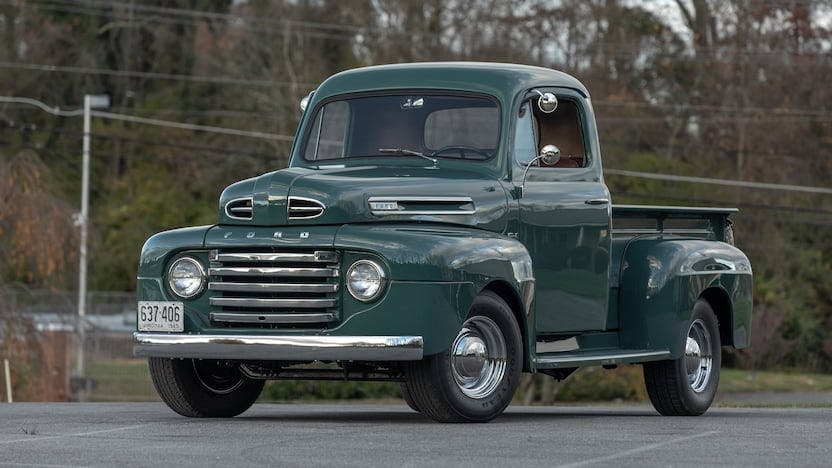
1949 Ford F1 pickup
Mecum

Median condition #2 change: -32%

These pickups were showroom rivals to GM’s Advanced Design line. They were also Ford’s first all-new postwar vehicles, as well as the very first F-Series, which has since become the most recognized and best-selling line of pickups out there.

The field of classic trucks, however, is a crowded one. Although these first-gen F-Series effectively doubled in value from 2015 to the early 2020s, they’ve been sliding since the beginning of 2024. The current median #2 value is $31,800 usd/ $43,887 cad, which is lower than it was at the beginning of 2019, before even adjusting for inflation.

1966-83 Fiat 1241983-85 Pininfarina Azzurra

Fiat 124 Sport Spider Pininfarina front three-quarter
Flickr/Gilles Péris y Saborit

Median condition #2 change: +45%

Fiat marketed attractive convertible models in the U.S. and Canada starting in the 1950s. They were typically lower-priced but less lively than the alternatives from Alfa Romeo. This trend continued into the 1960s with the 124 Spider, introduced in 1966. The handsome, Pininfarina-styled convertible started with a 1.5-liter twin-cam engine but displacement changed over the years, even if the basic styling and layout of the car didn’t. After Fiat left the U.S. market (for the first time) in ’83, Pininfarina picked up the mantle and sold the same basic car as the “Pininfarina Azzurra” for another few years. For decades, these svelte Fiats and Pininfarinas were one of the cheapest ways into motoring dolce vita, but prices have definitely gone up, especially this year.

This is less a story of big-dollar gains than it is one of percentages. In excellent condition, most Fiat-badged versions can be had in the low-$20K usd/ $27,600 cad range. The Pininfarina versions are rarer, supposedly better built, and have a more premium badge, but they still sit at $33K usd/ $45,540 cad in excellent condition. Few classic Italian drop-tops can be had for so little.

1951-57 Hudson Hornet

Median condition #2 change: -30%

Hornets are neat cars. They rode on Hudson’s unique “step-down” chassis that gave it a lower, sleeker profile and driving position than other American cars of their day, and despite the early models’ six-cylinder engines, Hornets regularly bested more powerful competition in early ’50s NASCAR racing.

But Hudson also became a defunct brand before many car enthusiasts were even born. Even with some star power as “Doc Hudson” in the Pixar movie Cars, the Hornet doesn’t have the staying power and wider cultural relevance as something like a Tri-Five Chevy, ’57 Thunderbird, or ’59 Cadillac. Hornet prices grew a bit during the early 2020s along with just about every other classic car, but have been falling since last year. The current median #2 value of $32,300 usd/ $44,577 cad is roughly the same as it was three years ago in pure dollar terms. Adjusted for inflation, though, the value is about where it was in 2013.

1985-91 Honda CRX

1991 honda crx si teal
Mecum

Median condition #2 change: +50%

Honda’s famous two-seater hatchback, the CRX, brought cheap and cheerful fun to enthusiasts across North America and became an icon of tuner culture. These little cars are definitely still cheerful, but they’re not so cheap anymore, as the supply of clean, unmodified, low-mileage examples has dwindled in front of higher demand.

Indeed, the CRX has made several of these “winner” lists from the Hagerty Price Guide in recent years, and since the beginning of 2020 the median condition #2 value is up by a whopping 168%. The desire for these pocket rockets is so strong that one of the 1988-91 cars in excellent shape is currently worth $45,500 usd/ $62,100 cad. That much money will almost buy you a brand new Civic Type R, which comes with exactly triple the horsepower as well as a warranty, but doesn’t come with the same old-school charm.

1984-91 Jeep Grand Wagoneer

Median condition #2 change: -28%

On the new car market, the love for pricey, premium luxury 4x4s in North America is as strong as ever. The roots of our affection for luxury SUVs go back a lot further, though, and Jeep’s 1984-91 Grand Wagoneer was the weapon of choice in the affluent suburbs and vacation towns of yuppie-era America.

Nostalgia for those woodgrain-clad boxes helped pull prices up in the late 2010s and values exploded during the early 2020s. In the gotta-have-it, pay-whatever-it-costs craziness of 2022, we even asked if a $154K usd/ $212.5 K cad Grand Wagoneer sale was “peak market insanity.” Yep, turns out it was. Sale prices have definitely come back down to earth since. The median #2 value for Grand Wagoneers at the end of 2025 is $45,900 usd/ $63,350 cad . At first glance that looks a lot higher than the $36,600 usd/ $49,680 cadit was at the beginning of 2020, but when you adjust for inflation the two numbers are within a hundred bucks of each other.

1979-1992 Mercedes-Benz G-Class (W460)

Mercedes-Benz

Median condition #2 change: +68%

Like the Grand Wagoneer in the ’80s, the Mercedes G-Wagens mostly serve as bougie-mobiles that don’t see anything rougher than a gravel driveway, but the earliest versions (aka the W460) were rugged and relatively simple off-roaders, sort of like a German Land Rover. Mercedes-Benz didn’t market the W460 in America, as we identified the three-pointed star with luxury and high-performance, whereas this was a spartan runabout with underpowered four-, five-, and six-cylinder gas or diesel engines. W460s are therefore pretty rare here.

Several huge sales over the past 12 months have been impossible to ignore, however, and it appears the W460 is gaining a big following. Current values vary widely depending on body style, engine, and model year. Certain hardtop wagon models can be had for under $40K usd/ $55.2 cad (exchange rate at time of posting) in excellent condition, while certain convertibles are nearly 90 grand. For the Silo, Andrew Newton.
Own One Of These Exotic Cars While On A Budget

Earlier this month our friends at Hagerty reported on the some of the absolute cheapest ways to get into the old-car hobby. These included cars like the 1975–81 Triumph TR7, the 1986–91 Cadillac Seville, and the 1973–77 Olds Vista Cruiser. The “ew gross” reaction these cars elicited in some of the comments wasn’t too surprising; no one, it seems, wants to shop for fun cars at a suburban Goodwill.

But what about the fun cars you might find at, say, the Goodwill in Beverly Hills? 

That’s right, we’re talking about bargain-basement exotics—not exactly a tagline that inspires confidence when shopping for often-temperamental imports, but they are out there. Just know that service history and records are important to consider here. And just because a car is cheap, or keenly priced, if you prefer, doesn’t mean it’s not worth owning, especially if it provides entry into a marque you’ve always coveted. So give some consideration to these five once-distinguished Euro-mobiles, the cheapest models from their makers and all rated in #3 (good) condition. Let us know if you think we have missed any other contenders.

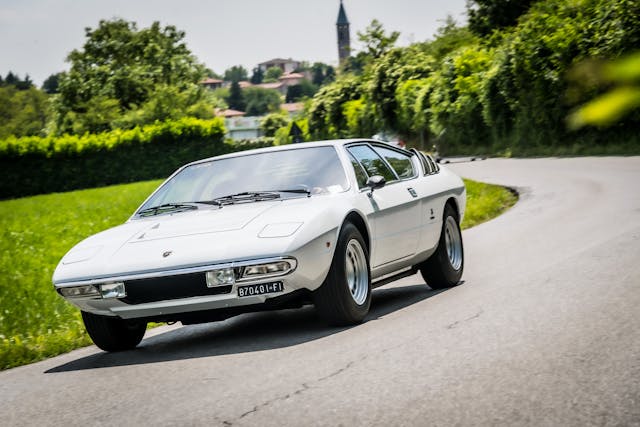
1973–77 Lamborghini Urraco

lamborghini Urraco front three-quarter action
Lamborghini/Massimiliano Serra

Lamborghini announced the Urraco in 1970 as a Marcello Gandini–styled 2+2 coupe with a transverse V-8 mounted amidships. As a sharper-edged follow-up to the swoopy Miura, it foreshadowed the shape of Lambos to come. When it finally arrived for 1973, it made a fine competitor to the Ferrari Dino 308 GT4 and was available in 220-hp 2.5-liter P250 form, while the 265-hp 3.0-liter P300 launched in 1975. When that car arrived in the U.S. a year later, however, power was severely choked by emissions equipment, down to around 180 horses. Not many were built—just 522 of the P250s and 205 P300s—but today a #3 example ranges from $49,000 usd/ $68,350 cad for a P250 to $59,000 usd/ $82,290 cad for the P300. Given the ascendancy of Miura, Countach, Diablo, and Murcielago prices in recent years, that the Urraco is still so cheap is a bit surprising.

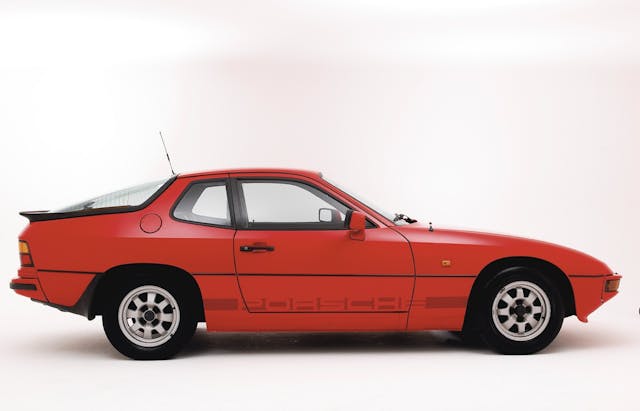
1977–82 Porsche 924

1983 Porsche 924 side
Getty Images

From the start, it seemed like Porsche vs. the world when it came to the 924. Whether because it was front-engined, or water-cooled, or simply a discount sports car meant to be a Volkswagen, plenty of people discounted it from the get-go. Until they drove it and realized, hey, this thing’s great. And it was great. Still is. With just enough power (110 hp from ’77 on) from a VW/Audi-sourced 2.0-liter four to complement its finely poised chassis, the 924 remains an excellent, easily approachable driver’s car, with good club support. Rust has killed many of them, and although Porsche built around 150,000 examples, parts are available but spendy, especially interior bits. A good #3 example should set you back about $8500 usd/ $11,856 cad. For comparison, an early 944 in the same shape is around $10,500 usd/ $14,645 cad.

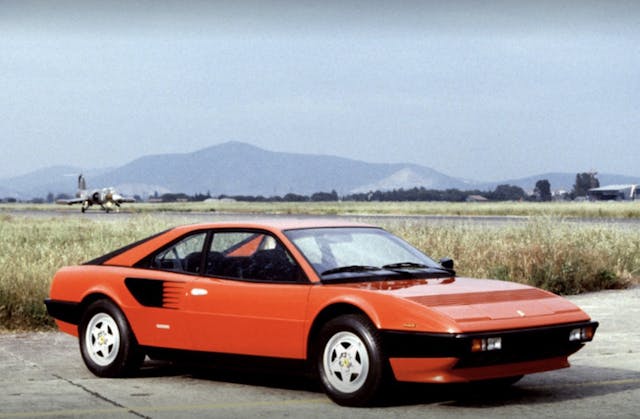
1980–87 Ferrari Mondial 8 / Mondial 3.2 Coupe

Ferrari Mondial 8
Ferrari

When it came time to replace the Bertone-designed Dino 308 GT4, Ferrari tapped Pininfarina, and the resulting Mondial debuted in 1980 as a 2+2 coupe, with a convertible joining the lineup four years later. The GT4’s 2927-cc transversely mounted V-8 carried over, with Bosch fuel injection replacing Weber carbs, and in the Mondial it made 214 hp. They were sharp handlers, with more interior space than their predecessor, but no one ever accused them of being fast. Other Mondial variants arrived throughout the ’80s to address that, however, including the Quattrovalvole (QV) in 1984, the 260-hp 3.2 of 1986, and the radically different t of 1989, but it is the early coupes, along with the 3.2 coupes, that are most affordable. Today, a #3 Mondial 8 or 3.2 coupe costs about $22,000 usd/ $30,686 cad.

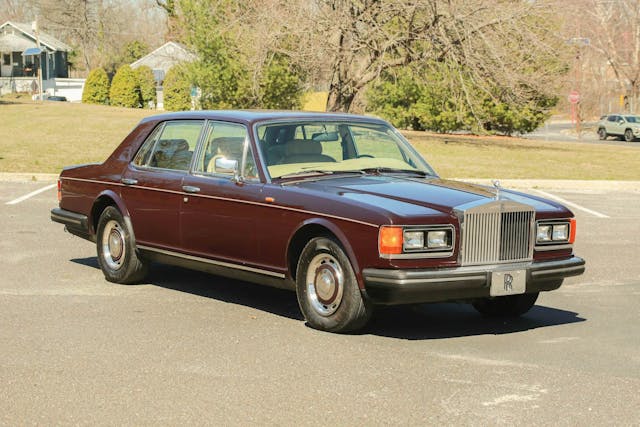
1981–87 Rolls-Royce Silver Spirit

1982 Rolls-Royce Silver Spirit front 3/4
Hagerty Marketplace/William_Cooper

If you’re an enthusiast of affordable opulence and Dijon mustard, then then look no further than the Silver Spirit. Successor to the upright Silver Shadow, the Spirit utilized a 220-hp 6.75-liter V-8 mated to a three-speed automatic. Inside, of course, you got all the trimmings, with Connolly leather seating, Wilton wool carpeting, and burl walnut inlays, as well as A/C and power everything. Giving the Spirit its silky-smooth road manners was a Citroën-sourced self-leveling hydropneumatic suspension. Rolls-Royces from this era have never been cheap to maintain, and deferred maintenance issues claimed many of them, so records are key with any Silver Spirit you might have your sights on. The right one, in #3 condition, won’t cost you much, at around $8400 usd/ $11,716 cad, but it will likely have needs, which could cost a lot.  
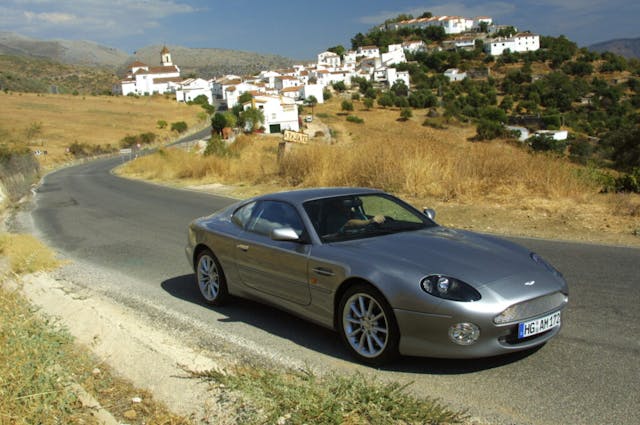
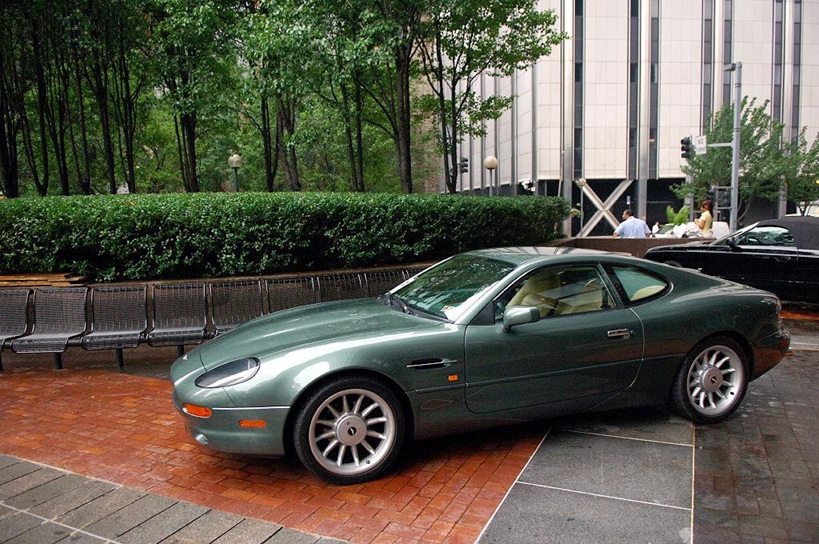
1997–99 Aston Martin DB7

Aston Martin DB7 Vantage
Aston Martin

Even 30 years on, the 335-hp Aston DB7 still looks gorgeous from every angle, and upon its arrival, it was instantly an Aston worthy of the famous DB badge. If you can overlook its relative lack of exclusivity, with more than 7000 produced in both coupe and convertible form, what you get is a proper English grand tourer with excellent performance and luxurious interior appointments. Subtle differences set it apart from the contemporary Jaguar XK8 (which costs less, it should be noted), and the higher costs associated with maintenance and repair are likely to set it apart as well. But right around $21,000 usd/ $29,291 cad should get you a good coupe, with the convertibles slightly cheaper. 

For the Silo, Stefan Lombard, Author at Hagerty Media.

Hagerty protects all kinds of collector cars, trucks, and modified vehicles. Let’s talk about your special ride.

Get an insurance quote

When Buick And Oldsmobile Promoted Cars With Space Themed Musicals

General Motors’ affinity for using entertainment to promote its products reached a fever pitch in 1955, as an estimated two million people attended Motorama in New York City, Boston, Miami, San Francisco, and Los Angeles. It was followed that same year by Powerama in Chicago, a show that highlighted GM’s non-automotive businesses and featured a musical dubbed “More Power to You.” It included French acrobats atop a 70-foot crane, 35-ton bulldozers dancing the mambo, and a battle of strength between a top-hatted elephant and a bulldozer in which the pachyderm is sent packing. The show ran for 26 days and attracted two million visitors. 

But that wasn’t the end of it, as GM produced musicals—yes musicals—to help move the metal. The result would be Buick’s Spacerama (so many -ramas) and Oldsmobile’s The Merry Oh-h-h.

Oldsmobile in 1955

1955 Oldsmobile black white
Flickr/Chad Horwedel

Having reached record sales of 583,179 units for the 1955 model year, Oldsmobile hoped to continue the sales boom for 1956, even though its lineup was mostly carryover. The biggest news was the Jetaway Hydra-matic automatic transmission, which was redesigned for the first time since its introduction in 1940. For the first time, it offered a Park position, like modern automatics, and featured two fluid couplings to enhance shifts between its four gears. The Jetaway was standard on the 98 and Super 88. 

J.F. Wolfram, Oldsmobile general manager, confidently predicted Oldsmobile would sell 750,000 cars for the 1956 model year as Oldsmobile employment reached a record high of 19,170 employees.

To stoke enthusiasm, the company created a musical dubbed “The Merry Oh-h-h”, which debuted in New York City at the Ziegfeld Theatre. The show starred Chita Rivera, who had appeared in “Call Me Madam” and “Can Can.” Here she plays Miss Jetaway Drive alongside singer Mildred Hughes and Billy Skipper, who danced in “Annie Get Your Gun.” Other notable names include Joe Flynn, Frank Gorshin, Charles Cooper and Bern Hoffman. It was directed by Max Hodge, who would go on to work on the TV shows “Mission: Impossible” and “Mannix.”

General Motors Merry Oh h h
GM

The musical, which at the time cost GM $150,000 usd / $210,000 cad to produce, espoused the glories of power steering, automatic transmissions and Rocket V8 engines. Songs included “Tops in Transmission,” “Advancing on Lansing” and “The Car is the Star.”

After its New York debut, the musical and its 34-member cast went on tour to San Francisco, Fort Worth and Chicago before arriving in Lansing, Michigan, Oldsmobile’s hometown, which included an appearance by pop star Patti Page.

But the show generated unintentional notoriety when its piano player, Robert Orpin, was found dead in his room at the Hilton Hotel in Fort Worth. Orpin, who hailed from Forest Hills, Long Island, was found in a filled bathtub with the hot water running. He was discovered by a maid who heard the running water running. His death was later ruled accidental. 

“The Merry Oh-h-h” would play to 30,000 Oldsmobile employees and their families nationwide. But it did little for Oldsmobile sales, as demand fell to 485,492 units for the model year.

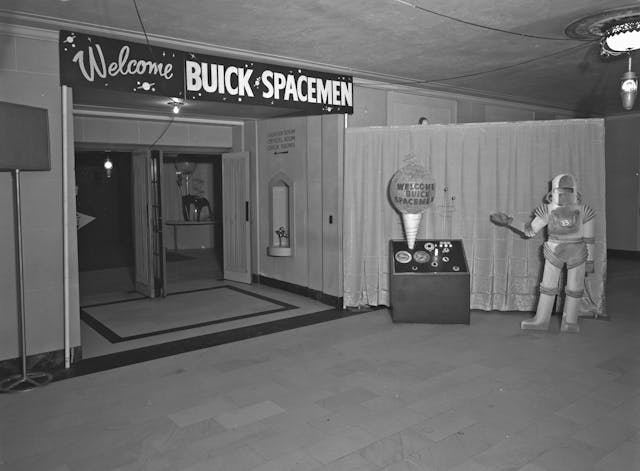
Buick heads for Spacerama

General Motors Spacerama
GM

No doubt using a stage show to promote new models was hardly an isolated idea at GM in 1955. In fact, Buick arrived at the idea before Oldsmobile, thanks to their ad agency at the time, the Kudner Agency and its vice president, Myron Kirk.

Kirk had attended GM’s 1954 Motorama during its nine-day stand in Boston, where he ran into Ivan Wiles, vice president and general manager of Buick, and Al Belfie, Buick’s general sales manager. While watching the theatrics, Kirk told the executives of the impressive dancing he had seen in the then-new movie, “Seven Brides for Seven Brothers.” Kirk arranged a private viewing of the film for them, and afterwards, Kirk received approval to bring in the movie’s choreographer, Michael Kidd, to produce a show to promote the 1956 Buick lineup.

General Motors Spacerama
GM

He tapped Alan Lipscott and Robert Fisher to write the show. The duo was well-known for writing scripts for such TV shows as “Make Room For Daddy,” “The Donna Reed Show” and “Bachelor Father” along with many others. The plot concerned mankind’s search for the obtaining transportation from the Stone Age to the current day, where a trip to Mars reveals a depressed population. They overcome their depression when they are brought to earth to see the 1956 Buick lineup. The show starred Mark Dawson and comedian Jack E. Leonard. 

For the music, Kirk’s agency chose Bernie Wayne, who is best known for such songs as “Blue Velvet,” “The Magic Touch,” the Miss America theme, and the commercial jingle “Chock Full O’Nuts Is the Heavenly Coffee.” For Buick’s musical, Wayne composed such songs as “Just Like Coming Home Again,” “Switch the Pitch,” and ‘The Peak of Civilization.”

The show started in Flint, Michigan before heading to Los Angeles, Houston, Chicago, Atlanta, Detroit, and wrapping up in New York City. In all, 50,000 Buick dealers, employees and their families saw the show.

Still, you have to wonder why GM went to so much trouble. “We have about 12,000 dealers and their salesmen,” a Buick spokesman told the Detroit Free Press in September 1955. “Many of them will sell as much as $150,000 usd of our products next year. You surely can afford to spend $100 or more to entertain them.”

Of course, GM could afford such largesse; they were on their way to their first billion-dollar annual profit. Now that’s a lot of spacebucks. For the Silo, Larry Printz/ Hagerty. Featured image- GM’s Spacerama 2 promo.

Founders Of Hot Rodding Include Canada Born Hilborn

These 5 Hot-Rodders Forged the Legacy of the Flathead

The impact of Ford’s flathead V-8 on the hot rod scene is undeniable. But the individuals that immortalized this engine—and, along the way, laid the foundation for the hot-rod scene—are the real heroes.

photo- Brandan Gillogly

n the early 1900s, horsepower was almost exclusively for the Gatsbys of the world. Ford’s flathead V-8, introduced in the depths of the depths of the Great Depression, changed all that. But it needed some help from car obsessives, who went on to invent what we now know as hot-rodding. Learn about them below, then check out Preston Lerner’s deep dive on the Flathead and its impact here.—Ed.

While it’s not without its flaws, the Ford flathead V-8 marked a significant milestone in the history of American performance. Ford’s mass production of the flathead opened up racing to a whole new audience and helped an industry flourish. Ford wasn’t alone, however, as the factory-built flathead was just a building block. Several individuals, through their own innovation and business acumen, were able to build flathead V-8s to horsepower levels that pushed boundaries of speed, developed a massive segment of our hobby, and forged long-lasting businesses, many of which are still with us today. Here are five pioneers of the aftermarket that used the flathead V-8 to cement themselves and their companies in American culture.

Ed Winfield

Ed Winfield
Magnifico

1901-1982

Known as “The Father of Hot-Rodding,” Winfield got his first job in a blacksmith shop when he was just eight. By the time he was 11, he was stripping down the neighbor’s Model T to shed weight and make it faster. Two years later, he was working on carburetors in Harry A. Miller’s Los Angeles shop where Barney Oldfield’s groundbreaking Golden Submarine race car was being built. With a knack for machinery and an intimate knowledge of engines, Winfield started his own carburetor company in 1919 and began grinding cams the following year. His carburetors were used on eight of the ten Indy 500 winners from 1933-1946, the only exception was Wilbur Shaw, who had won with a Winfield-fed Shaw/Offenhauser engine in 1937 and switched to Maserati power for his wins in 1939 and 1940.

Winfield did it all, from serving as a riding mechanic and racing at Ascot Speedway to working with major automakers in developing engines. Winfield also helped a young Ed Iskendarian with cylinder head work. He was inducted into the Indianapolis Motor Speedway Hall of Fame in 1983 and the Motorsports Hall of Fame in 2011.

Vic Edelbrock Sr.

Vic Edelbrock Senior
Magnifico

1913-1962

Already an established mechanic, Vic Edelbrock Sr. designed the Slingshot intake manifold for flathead Ford V-8s in 1938 and tested it on his own 1932 Ford roadster on Southern California’s dry lakes. After WWII, Vic moved into a new shop in Holywood and designed his first cast aluminum cylinder head for flathead V-8s. Also in 1946, Edelbrock created its first catalog of speed parts, and soon its products were found on cars competing in virtually every form of racing, whether it was on the 1/4-mile, on circle tracks, or America’s dry lakes. His son, Vic Jr., took over the business after his passing and expanded the business to include fuel injection and superchargers. Vic Jr. passed away in 2017, but the company continues to make performance parts. To this day, the company makes Victor and Victor Jr. cylinder heads and intake manifolds that keep their legacy alive.

Stu Hilborn

Stu Hilborn
Magnifico

1917-2013

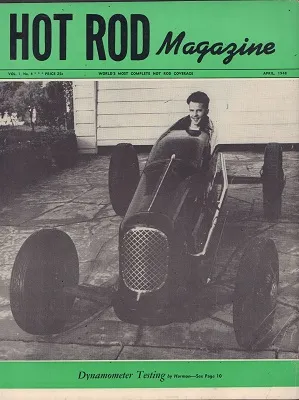
Born in Canada, Hilborn came to southern California in time to graduate high school and attend junior college in Los Angeles before enlisting in the Army Air Corps (you’re going to notice a trend here). While working on aircraft, Hilborn began scheming up a new way to feed fuel to engines, and once he was back in Southern California, he built a dry lakes racer that would prove his constant-flow fuel injection could compete and win against carburetors. The sleek racer was the first to eclipse 150 mph on the dry lakes and graced the fourth cover of Hot Rod magazine in April, 1948.

Hilborn continued to modify and improve his fuel injection design, and in 1952 Bill Vukovich drove the Fuel Injection Special in the Indy 500, where he led 150 laps and was just nine laps from the finish when a steering issue sidelined the car. That was tough luck for Vukovich, but 22-year-old Troy Ruttman passed him and took the win. Rutman, like Vukovich, was running Hilborn fuel injection, as were the remaining drivers on the podium. You can think of Hilborn’s mechanical fuel injection taking over for Winfield’s carburetors, as the individual throttle body system became the induction of choice for America’s top racers, dominating the Indy 500 for decades, claiming 34 victories along the way. Hilborn stacks appeared on road racers of all kinds, and the company’s two-port units could be found atop supercharged drag cars as well, but it all started with the dry lakes flathead.

Alex Xydias

Alex Xyadias
Magnifico

1922-2024

Alex Xydias passed away earlier this year at the age of 102, leaving behind an impressive legacy of business achievement and generosity. His name is synonymous with the So-Cal Speed Shop, the Burbank speed equipment emporium he founded after leaving the Army Air Corps in 1946. The most famous product of that enterprise is the iconic belly tank lakester that graced the January 1949 cover of Hot Rod magazine after it ran using Ford V-8-60 power. The So-Cal Speed Shop followed on the success of the lakester with a sleek streamliner that would go on to be powered by a Mercury flathead that would push the car to 210.8962mph, the fastest time of Speed Week 1950, earning Xydias back-to-back spots on the coveted Hot Rod trophy, and the first in excess of 200mph.

So-Cally Belly Tank Lakester front three quarter
Brandan Gillogly

Xydias forged relationships with speed parts manufacturers and helped get race-winning parts into the hands of southern California hot-rodders through his shop, but So-Cal Speed Shop also sold parts across the country through its mail-order catalog, using the fame of his racing success to get more enthusiasts involved by proving what the flathead was capable of.

Ed Iskenderian

Ed Isky Eskidarian
Magnifico

1921-

Ever a hot-rodder, Ed Iskenderian’s T roadster was and continues to be an influential build, but there’s a reason he’s known as the Camfather. Shortly after returning from United States Army Air Corps service during WWII, Iskendarian was eager to return to building engines, particularly flatheads, but the booming demand vastly exceeded supply. He didn’t waste time waiting for other cam grinders to catch up. Instead, Isky, already experienced with tool and die work, purchased a machine and converted it to grind cams. Not only were his camshafts effective, but Isky was a talented marketer, coining the term “5-Cycle Cam” to describe his camshafts that used valve overlap and the escaping exhaust gases to scavenge the incoming intake charge. In addition to his many pioneering valvetrain advancements, Isky is also credited with selling logo t-shirts before anyone else.

Iskendarian cams are still used by some of the quickest and fastest racers today.

Featured image via –Historic Vehicle Association For the Silo, Fabian Hoberg / Hagerty.

Twenty-One Vehicles With Elite Silhouettes

There’s nothing quite like the sleek side profile of a vehicle with a long hood, a fast roof, and a smooth decklid. But there is more to our shared love of cars, because, we should also consider the smooth, singular sideline of a minivan. While that isn’t an answer one would expect when asking about the most appealing vehicle silhouettes, a minivan is indeed one of the many candidates our friends at Hagerty received here in their latest installment of our According to You series.

So what other vehicles deserve a mention here? Have a look below and tell us what you think in the comments!

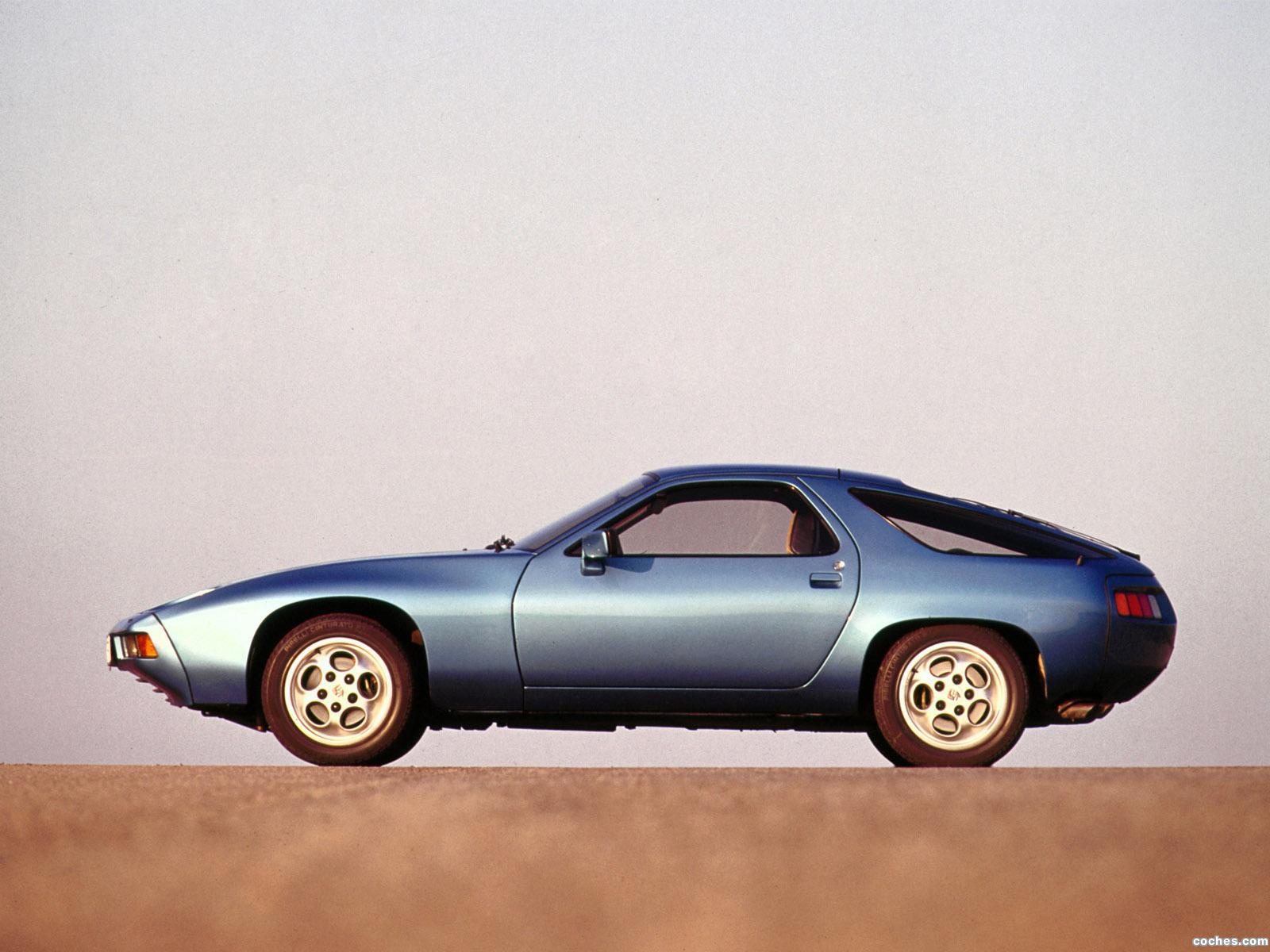
Porsche 928 GT

The original series 928 was clean and wonderfully well balanced and was striking from every angle but take a look at this silhouette and marvel that this design is almost fifty years old.

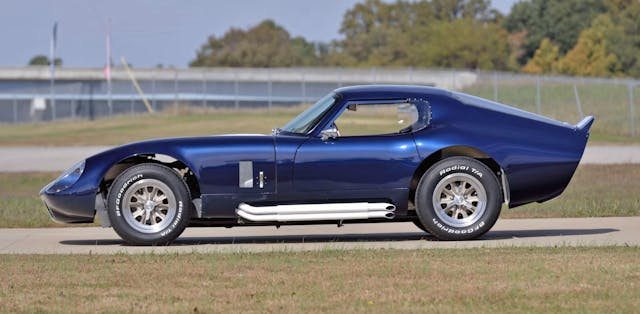
Shelby Daytona Coupe

1965 Shelby Daytona Coupe ReplicaMecum

@DUB6: Hard to beat an early 911 in my book, but really, I’m voting for the Shelby Daytona Coupe. It has some of the muscle of the Cobras built in, with the sloped down nose for aero, the long, sleek roofline, and then that striking rear spoiler and chopped-off tail.

It may not be the most beautiful, but to me, it’s the most striking silhouette out there.

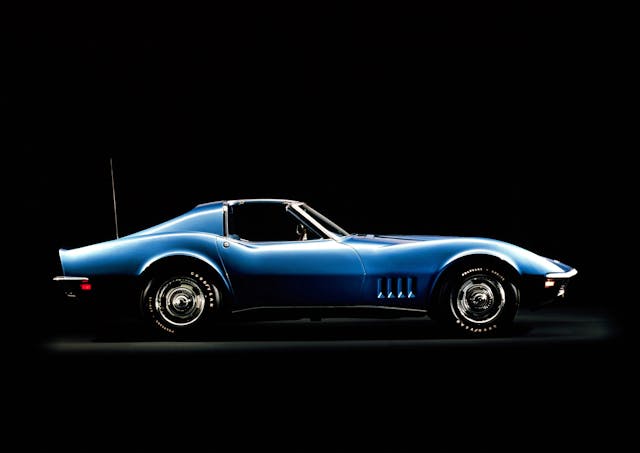
Chevrolet Corvette

1968 Chevrolet Corvette Stingray Side Profile
GM

@Bernard: The first few years of the C3 Corvette. I wasn’t around to see them new, but the C3 has always stood out in the school of cool, IMO, especially the silhouette. I think the crash bumpers and other stuff of the later years softened them up too much, but the silhouettes of the early ones could’ve been used as scalpels.

@Tony: I’d say any modern Corvette. They’re all designed in the wind tunnel these days so they’re all aero-efficient, but the later C4s with the rounded ends I think look great.

@Dave Massie: C3 Corvettes—especially the ’80–82 models.

@C: I agree. I am partial to my 1973 Corvette coupe. It’s a one-year-only design and looks great in silhouette.

@Paul: 1984–90 C4 Corvette. The concave rear bumper is just cool. On the other hand, the convex 1990 ZR-1 bumper and its use on the 1991–96 models are strong candidates. In my C4-centric world, the Corvettes nailed the Silhouette Sweepstakes.

Jaguar XKE

Mecum

@Ken_L: I am partial to my C3 Corvette, but I must say the Jaguar XKE coupe has been my favorite since I was very young.

@Howard: And its “top-down” sibling, the XKE droptop roadster … great road car.

@Doug: Hands down, Jaguar E -ype coupe (XKE)

@Jeff: Had a ’68 XKE roadster. I was about to cast my vote for it, but you astutely beat me to it!

@Lew: The first Jag E-Types with the worthless bumpers and glassed headlights.

Jaguar XK-120

Mecum

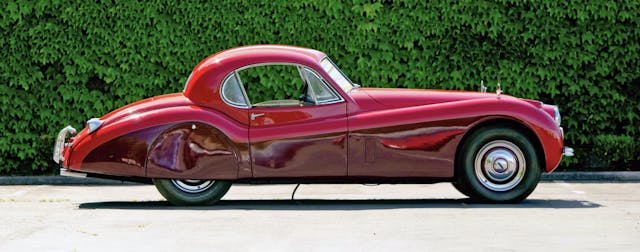
@Gayle: In ’56, my uncle bought a ’53 Jaguar XK-120 FHC and I have been enamored with that gorgeous profile ever since, especially with the disc wheels and the spats (skirts)!

1963 Riviera

Buick

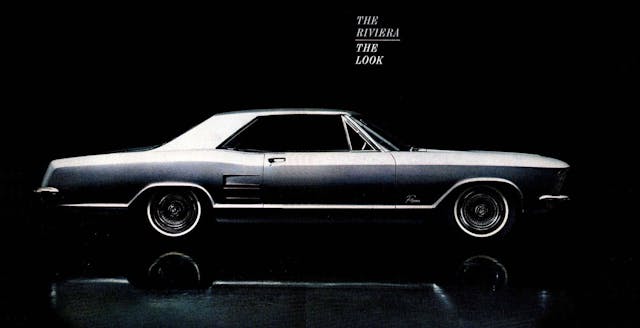
@Snailish: ’63 Riviera … Not sure what got us there, but for decades after, so many vehicles owed it a debt. It would likely still be a cutting-edge design if evolved to today’s construction methods/rules. But it’s also amazing from several directions, not just the side.

Lamborghini Countach

Alpine Electronics, Inc.

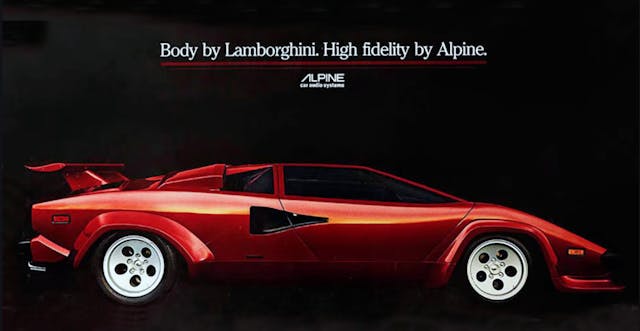
@Shiven: Lamborghini Countach! It absolutely accentuates the ’70s and ’80s realm of excess!

Toyota Previa

Toyota

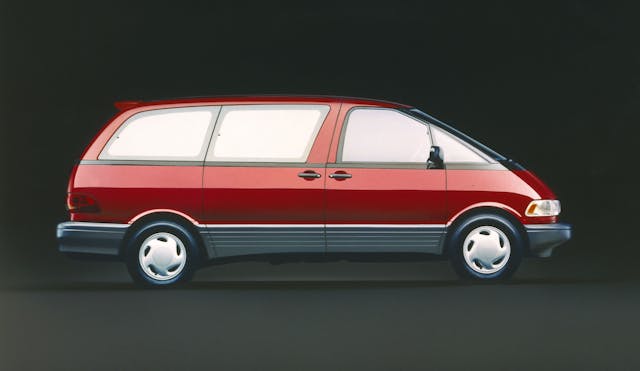
@ap41563: Toyota Previa! Turn the lights off and illuminate it from behind and the egg shape still looks fresh today, even at 30 years old.

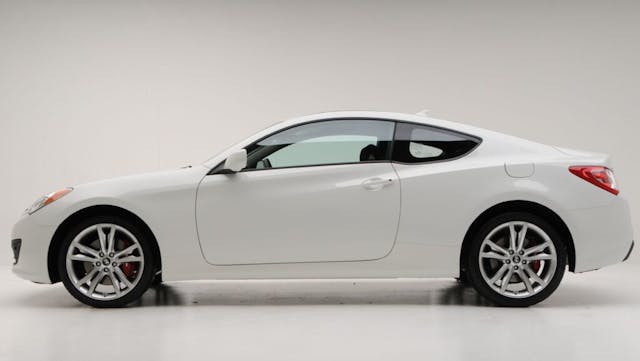
Hyundai Genesis Coupe

Hyundai_Genesis_Coupe_R-Spec_2009_Profile
Hyundai

@Colton: For the more modern, cheaper cars, I’d say the first generation of the Hyundai Genesis Coupe. The car itself was a mixed bag (I owned one for eight years), but the side profile, especially in low light, just highlighted how well that body was sculpted.

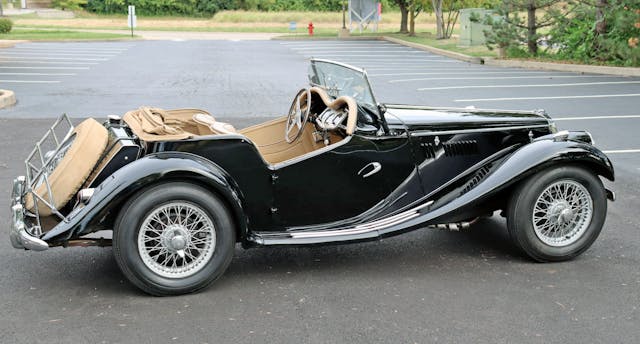
MG TF

Mecum

@T.J.: Without a doubt, my 1954 MG TF is a constant head turner with classic vehicle lines (running boards, smooth curvature in fenders, spoked wheel on the exterior of the gas tank, etc.). A timeless beauty.

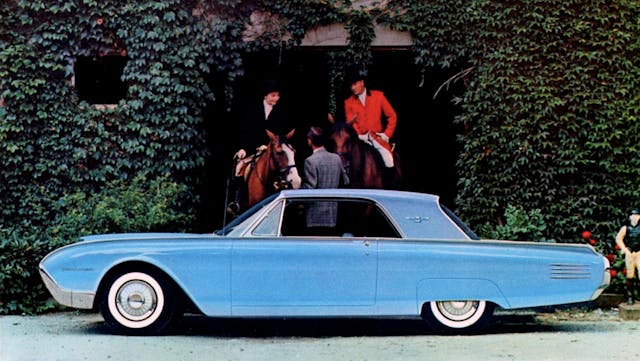
1961–63 Ford Thunderbird

Ford

@Jon: I have always liked the 1961–63 “bullet” Thunderbirds. There was just something perfect about their profiles.

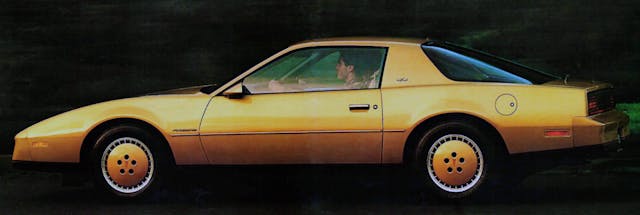
Third-Generation Pontiac Firebird

1982 Pontiac Firebird S/EPontiac

@Espo70: Third-gen Firebird/Formula/Trans Am. One of the best designs to come out of GM. Still looks exotic today.

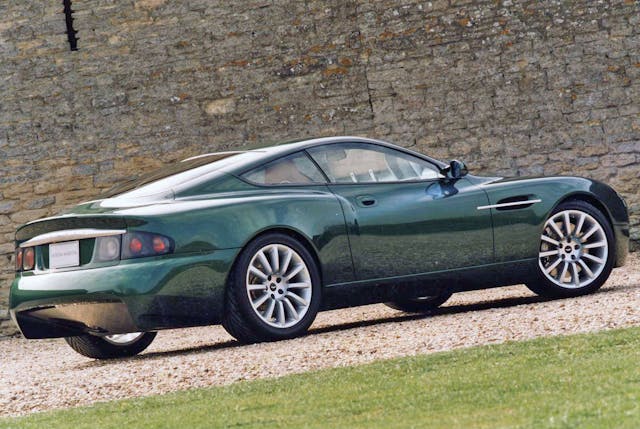
Aston Martin Project Vantage

Aston Martin

@George: I might be biased, but the Aston Martin Project Vantage Concept—which became the Vanquish—is the most cohesive and accomplished shape of all time.

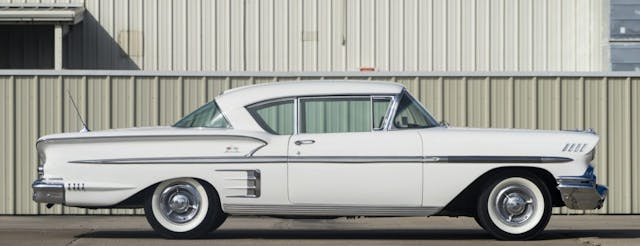
1958 Chevrolet Impala

1958 Chevrolet Impala
Mecum

@Don: How about the 1958 Chevy Impala 2-door hardtop? My wife’s uncle thought it looked like a water buffalo!

GMC Motorhome

1978 GMC RV
Hemmings

@Chuck: For oversize vehicles, the 1973–78 GMC Motorhome. Ahead of its time when new, smooth and sleek (compared to other coaches), and has aged gracefully.

@Kent: Still a very sought-after vehicle after all these decades. Would love to have one!

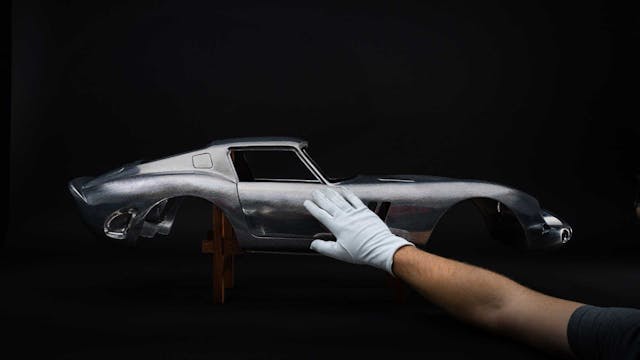
Ferrari 250 GTO

Amalgam Models 250 GTO 4
Amalgam Models

@David: One of the most recognizable, and possibly the most desirable profiles of them all: The 1962 Ferrari 250 GTO by Scaglietti.

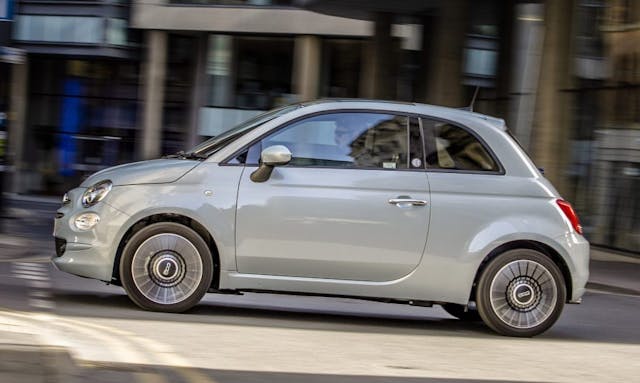
Fiat 500

Fiat 500
Stellantis

@Alex: 2012–19 FIAT 500: Totally unique and unmistakable. You would never confuse it for any other car from any other marker.

1966 Oldsmobile Toronado

Oldsmobile

@John: Without question for me it is the 1966 (and only the 1966) Oldsmobile Toronado.

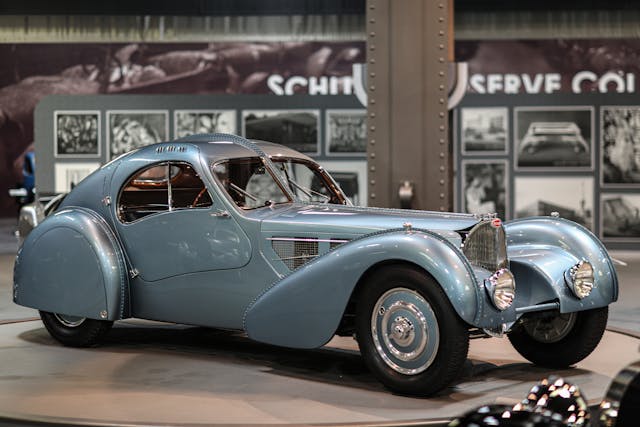
Bugatti Type 57SC Atlantic

Brandan Gillogly

@Tom: So many Ferraris—the Dino, 250 GTO, 275 GTB, La Ferrari, etc., as well as the GT40, Miura, E-Type, and numerous British Roadsters of the ’50s and ’60s. But the granddaddy of all side silhouettes has to be the Bugatti Type 57SC Atlantic.

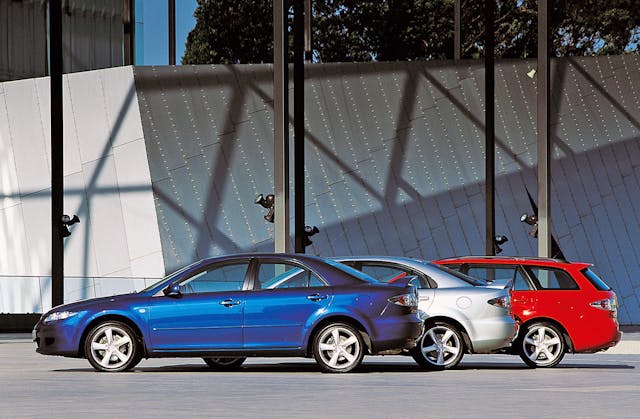
2003–08 Mazda Mazda6

Mazda

@Mike: From a basic sedan point of view I’ve always loved the 2007 Mazda 6 profile with the spoiler.

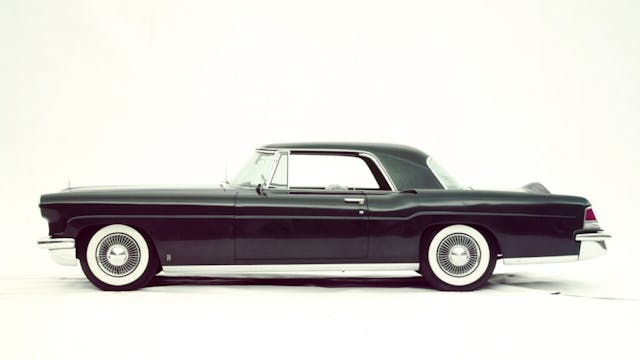
1956–57 Continental Mark II

Continental/Ford

@Jeff: The 1956 Continental Mark II is still the most elegant and beautiful production American car.

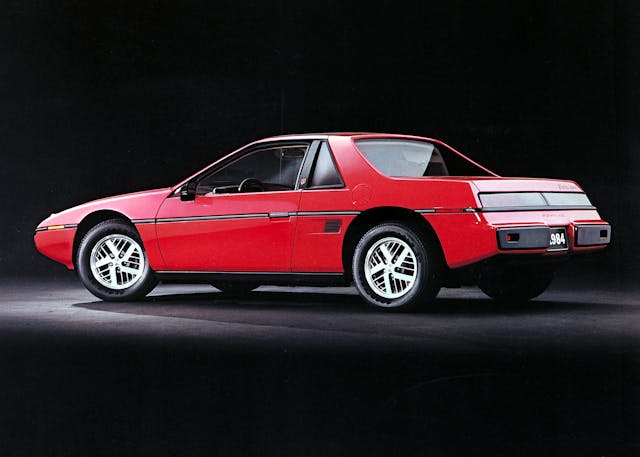
1984–86 Pontiac Fiero

1984 Pontiac Fiero Coupe
GM

@Jack: 1984–86 Pontiac Fiero notchback. Best-looking shape of the 1970s and ’80s wedge cars.

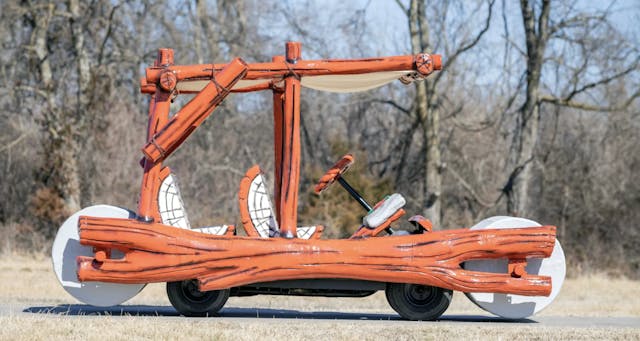
Flintstones Car

Mecum

@Greg: The log car that Barney Rubble drove on The Flintstones … feet and all!

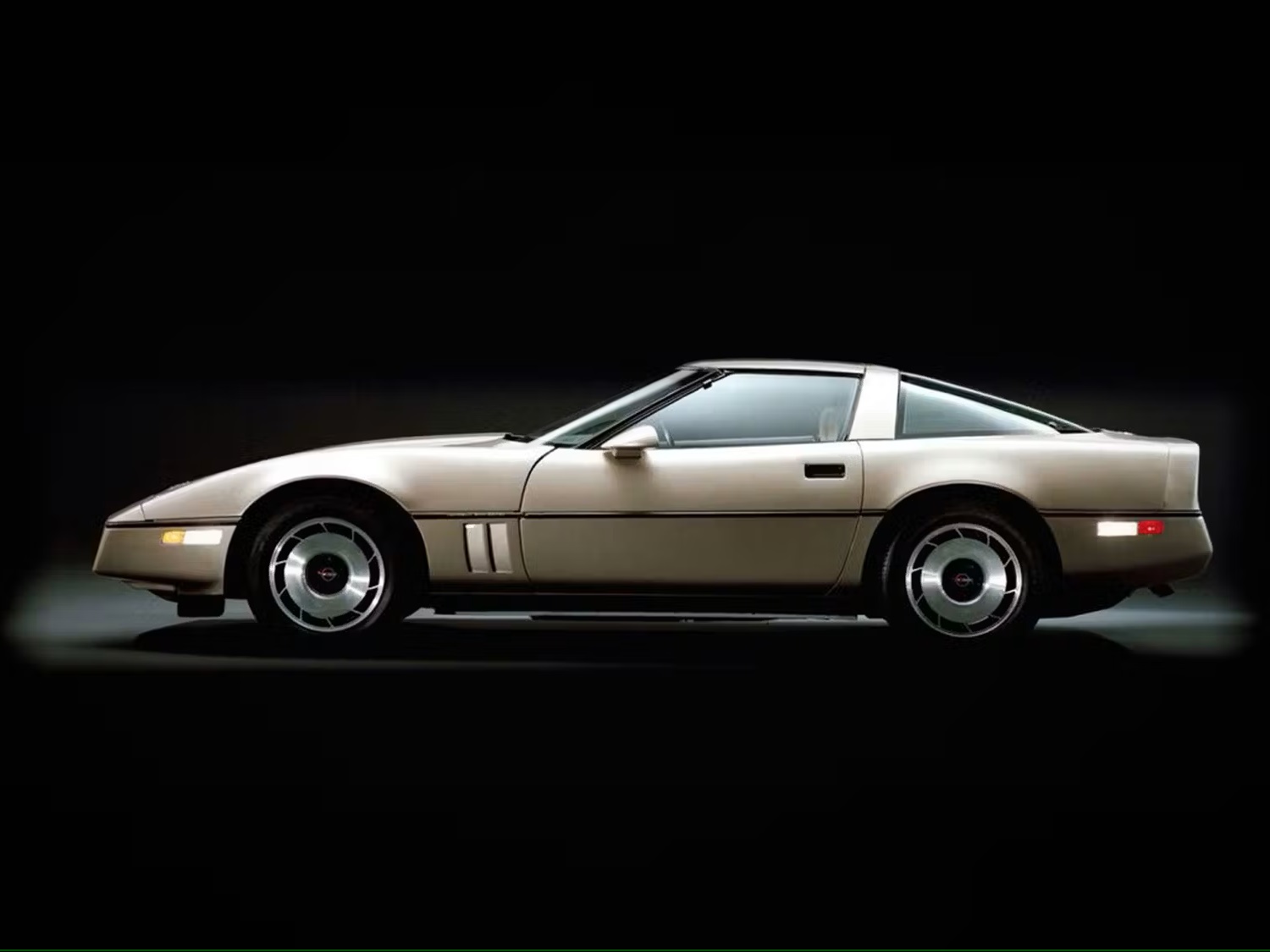
Featured image: 1984 Chevrolet Corvette.

Thrilling Test Drive Of Rolls Royce Wraith

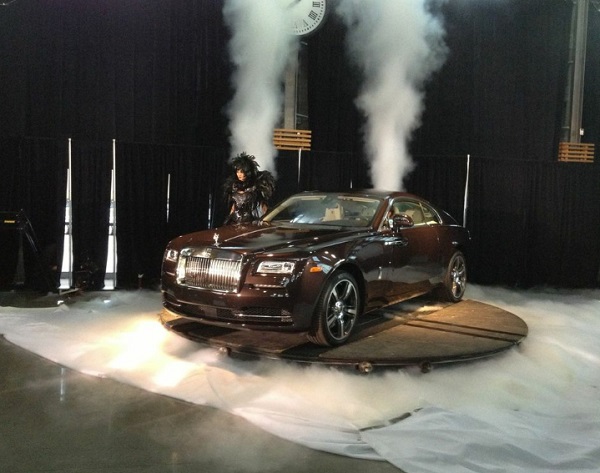
Now THAT'S how you launch a new Rolls....and especially one called Wraith- smoke, vapor, mist, theatrics and a spooky performer. All images A. Maughan/The Silo
Now THAT’S how you launch a new Rolls….and especially one called Wraith- smoke, vapor, mist, theatrics and a spooky performer. All images A. Maughan/The Silo

A Silo look back article 🙂

It’s Fall 2013 and the “now brand new” Wraith from the Rolls-Royce car company is not something I get exposed to often. Let’s face it,  I’m a mid size car guy. Not high-end luxury.  I rationalize my affordability factor by saying that high end’s are too ‘heavy’ and shee-shee poo-poo. Up until now, that may have been as true.

Rolls had an unveiling of their new car The Wraith the other week here in beautiful Vancouver. And well, like the locale, the car itself did stand out even beyond the scenery. The Silo was invited to attend and I earned the assignment. Life is hard 😉

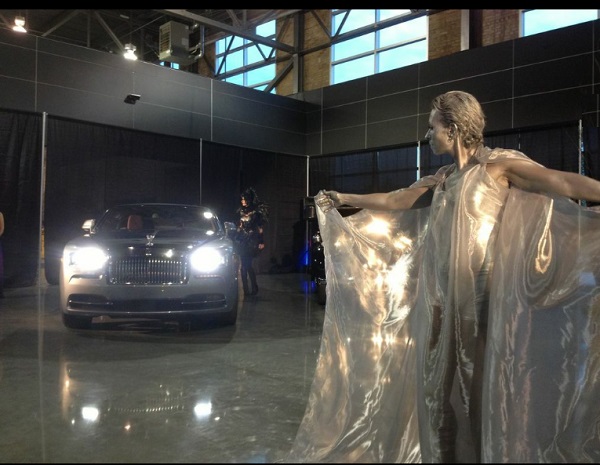
After entering the front doors of the party where a silver painted goddess of sorts and a sleek feather black wraith slowly and elegantly moved around the scene, one can only be sure to expect nothing short of the best attention to these prospective buyers.

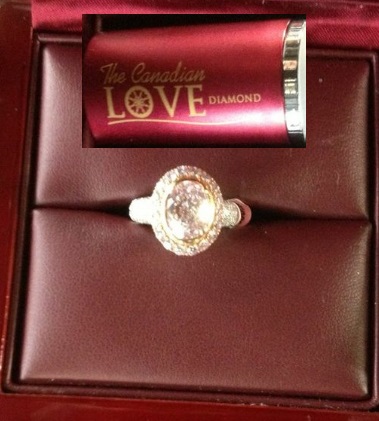
There was jewelry set to the tone of $425,000 (Canada’s biggest pink Diamond); a price tag similar to the cars standing right next to them. The food was excellent and the company certainly discerning.

"Emily" or the Flying Lady is the venerable hood ornament for Rolls-Royce automobiles. The live actress seen here on the right captured the mystery and drama behind the creation of the emblem.
“Emily” or the Flying Lady is the venerable hood ornament for Rolls-Royce automobiles. The live actress seen here on the right captured the mystery and drama behind the creation of the emblem.

There was not shortage of demonstration of other models and those with mostly older not only in lineage but also in style, heralding a tradition one has come to know of Rolls Royce. Which is why when the time came for the unveiling of the new car, there was nothing short of a surprise. The car looked sleek and modern while maintaining the more discernable feature Rolls is known for. It looked like, well, not quite a Rolls. It seemed sporty even.

For those who wanted performance but still the luxury that comes with expectations. People actually gasped and well, they should have.

Once the shock settled opera singers belted out a song of elegance that matched the vehicle’s looks and appearance. I became transported and wanted to change careers all of sudden.

On hand for the North American launch of the Wraith? Only, the largest pink Diamond in Canada.

The show was a success, so now came the long shot that I would get to test-drive one of them. I am not a buyer, no sir.


“So when can I test drive one, ahahaha”


“Are you free tomorrow at 3pm?”


Ummm….yeah maybe sure….oh look at that I am free. Perfect” Gulp.


So on to the test drive.

I show up at the Rolls dealership in Vancouver and was met with nothing but interest and enthusiasm for someone who clearly was not in the market for such a car. That didn’t matter much as they were very excited to show off their new marvel. Ha! I thought. No way this thing can actually drive as cool as it looks. Well, my dear readers, was I wrong.

0-100 in 4.4 seconds. Quite. Handles like a dream. Smooth. Great suspension. 14 speaker sound system. Crazy navigation. Just crazy. The holographic road map was floating next to a virtual speedometer in/on (?) the windshield. Touch sensitive screen for drawing on. I mean the whole thing was about performance from interior to engine.

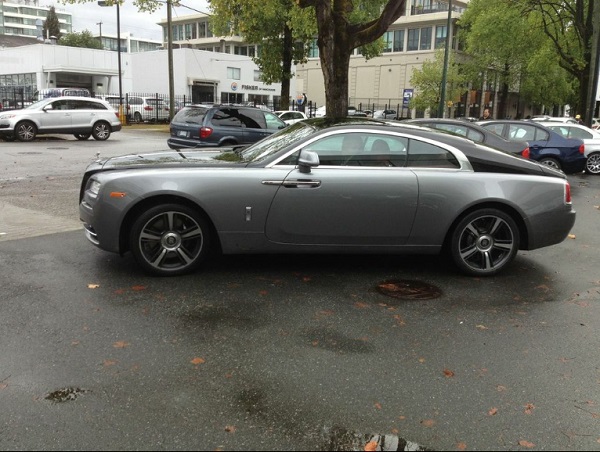
"There she is!" My first look at the Wraith and I'm getting ready to test drive this gorgeous machine. It looks fast.
“There she is!” My first look at the Wraith and I’m getting ready to test drive this gorgeous machine. It looks fast.

The camera system is a cool feature, however at the end of the experience I didn’t really know how to use them. What happens is a 5-camera system captures unique perspectives and through an algorithm creates a bird eyes view of the car. Very cool. However, I just used my mirrors and the over–the-shoulder-one-arm-on-the-back –of-the-passenger-seat to look behind me for the approach in backing up. Technology is great but it has to actually be effective or helpful. Give the user a certain level of confidence that she or he would never have alone otherwise.

And boy did I check my mirrors often when driving. I didn’t want to risk a dent or a scratch.

Just pulling out for the first time was nerve racking, but once you got the feel for it, which happens quick, you are instantly spoiled as a driver which is of course the point when dealing with luxury cars. And it seems Rolls still has been able to retain the  ability to spoil its driver no matter what. The wraith delivers. For the Silo,  Arthur Maughan.

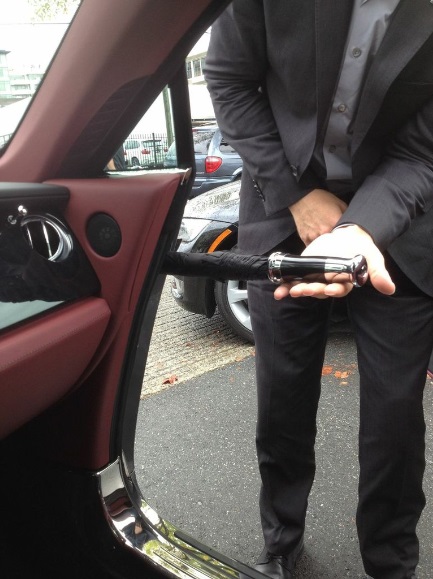
Yes it was rainy and a bit wet that day. Yes, the Wraith had a secret umbrella compartment. Now where is that machinegun button ?

Click to view on I-tunes

Supercars At London Motor Show Include Rolls Royce Dawn

London’s famous Motor Show is back! Thanks to our friends at selectcarleasing.co.uk for the nifty infographic.

London Motor Show 2016 Infographic