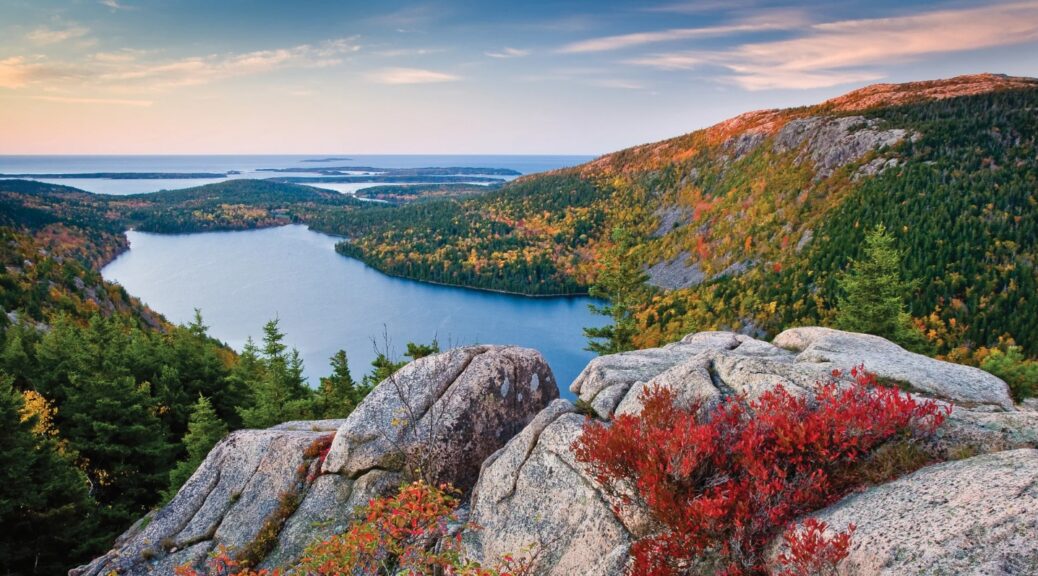

Nestled along Maine’s craggy shoreline, the seaside wilderness of Acadia National Park offers mountain climbing and hikes, boulder-strewn beaches and coastal drives overlooking the Atlantic Ocean.
Acadia was designated a U.S. national park in 1929 and now welcomes 4 million visitors each year. Its 47,000 acres (19,000 hectares) of protected land make up the only national park in New England and encompass much of Mount Desert Island, the region’s largest.
The heart of Acadia is Sieur de Monts springs, a historic landmark near cultivated gardens, hiking trails and bird-watching spots. It’s also a stop along Acadia’s Park Loop Road, a 27-mile (43-kilometer) scenic drive that connects lakes, mountains and shoreline. Early bird adventurers will want to head to Cadillac Mountain — one of the country’s easternmost points — to catch one of North America’s earliest sunrises.
Wildlife viewing opportunities abound as Acadia is home to myriad animals including deer, seals, porcupines, loons and bald eagles.

While Acadia is open year-round, roads can get icy in winter. Fall brings a riot of color when deciduous trees change their leaves, drawing visitors from around the world to witness the symphony of yellows, oranges and reds.
Summer is the park’s most popular season, when Maine’s natural beauty and lower temperatures draw visitors north from major cities. The park is a four-hour drive north from Boston, which is known as the birthplace of the American Revolution and home to numerous historic sites.
Many visitors to Acadia stay in neighboring Bar Harbor, Maine, a small town known for its scenic views and fresh lobster.
For the Silo, Noelani Kirschner/ShareAmerica.