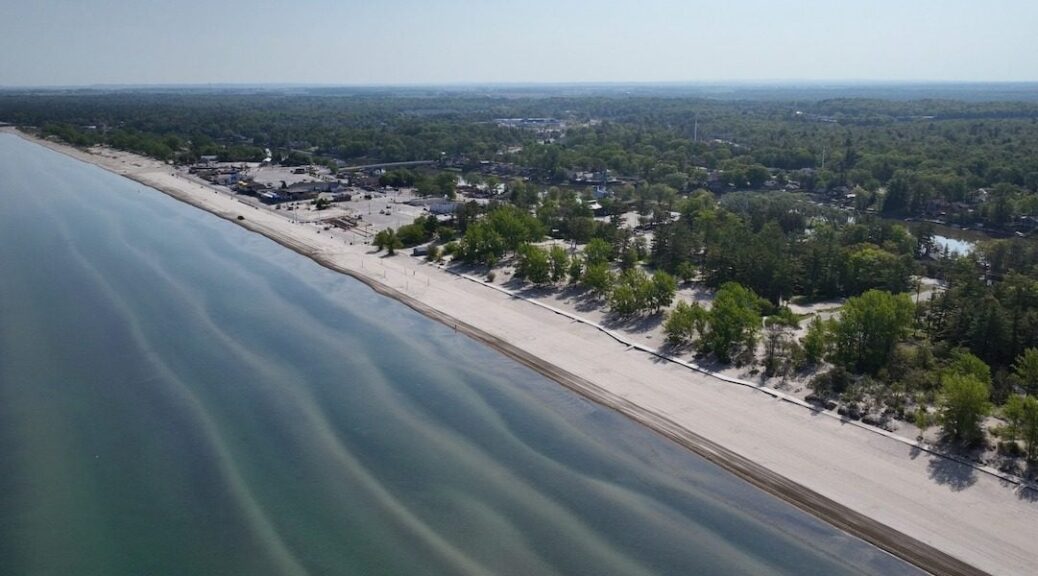
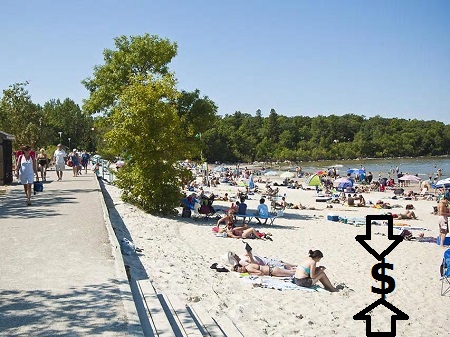
Did you know that the majority of Ontario Wasaga beaches are no longer protected, including critical piping plover habitat? That’s because the Ontario government recently removed Wasaga’s beaches from the Provincial Park and are giving them to the municipality despite fierce opposition from Ontarians, including many of you.
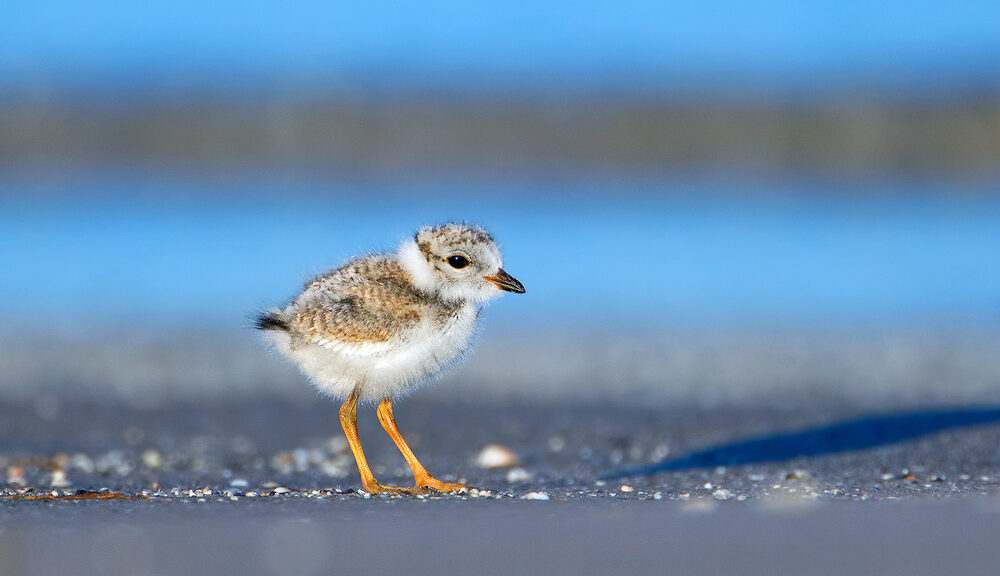
Wasaga’s beaches are the birthplace of 70 percent of all Ontario-fledged piping plovers that have survived to adulthood since the species returned to Ontario in 2007. This irreplaceable habitat is now at immediate risk from destructive mechanical beach and sand dune raking planned by the Town Council for as soon as this spring.
Emergency Order
Although Wasaga’s beaches are no longer in a Provincial Park, there is still a way to protect the piping plover. The Federal government can and should issue an Emergency Order under the Species at Risk Act to protect this endangered shorebird from the destruction of the places where it eats and raises its young.
While this solution seems obvious, ensuring the Federal government does the right thing is not guaranteed. That’s why we urgently need your help. We want to launch a comprehensive public awareness campaign to mobilize Ontarians to push the federal government to fulfill its responsibility and protect Wasaga’s critical piping plover habitat. Will you help us?
Mechanical Raking Of Beaches
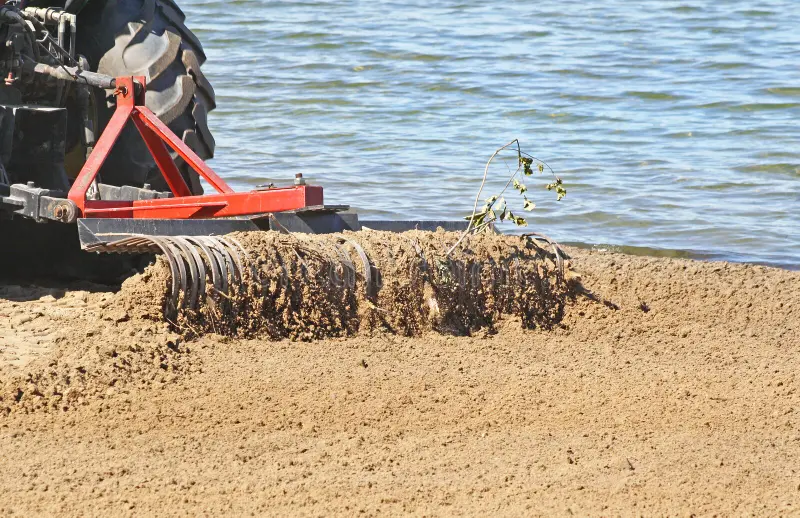
Time is running out. The Town of Wasaga Beach has already purchased mechanical raking equipment and announced a development plan that would bring beach clearing and raking to known piping plover nesting and feeding sites.
Mechanical beach raking destroys the natural debris piping plovers need to nest, forage, and hide from predators. Evidence from other Ontario beaches shows that once raking occurs, plovers often fail to return. With only three other active breeding sites left in Ontario, the loss of Wasaga would be catastrophic.
Environmental Defence has successfully fought and saved the homes of this bird before. After years of advocacy, we stopped the illegal bulldozing of piping plover habitat at Saugeen Beach (formerly known as Sauble Beach), and we will use our experience to fight the habitat destruction now threatening Wasaga. We know that only the immediate action of the federal government stands between the loss and the survival of the endangered piping plover on Wasaga’s beaches. The time for action is now.
Tourism Balance Can Be Established
The Town of Wasaga Beach is, and can continue to be, both a thriving home for endangered piping plovers and a world-class tourism destination. Together, we must demand that the federal government issue an Emergency Act under the Species at Risk Act and prevent the irreversible loss of Wasaga’s piping plover habitat. We hope we can count on your support by clicking here.
This is just a first step- The law protecting other Provincial Parks is also in the government’s cross-hairs
Toronto, Ontario Canada | Traditional territories of the Mississaugas of the Credit, the Anishinaabeg, the Haudenosaunee, and the Wendat – The Ontario government is proposing to sell key parts of Ontario’s second most-visited Provincial Park (2023 data) for a development scheme. The area on the chopping block includes roughly 60% of the Park’s celebrated Georgian Bay shoreline lands and critical habitat of the endangered piping plover. These sensitive areas rely on the Provincial Park’s protections to safely coexist with beachgoers and other recreational users.
Possibly even more concerning, the government is targeting the Provincial Parks and Conservation Reserves Act (PPCRA) that protects all of Ontario Parks and Conservation Reserves.
The PPCRA currently requires that elected MPPs approve any significant removal of provincial park land. Rather than simply complying with that requirement and obtaining that approval for Wasaga Beach Provincial Park, the government is proposing currently unspecified “legislative amendments” to the PPCRA itself. The government notice says the amendments are “to remove” land. Because of this, Environmental Defence is concerned that the Provincial government intends to weaken the process requirements for removing Park or Conservation Reserve lands seeing as the current law would not itself need to be changed if its process requirements, including a Legislative Assembly vote on the park area changes, are followed.
“Provincial Parks belong to the people of Ontario and are meant to be protected forever. It is appalling that the current government is trying to give away big parts of one of our most popular parks, and make changes to the legislation that protects all of our Provincial Parks ” said Tim Gray, Executive Director of Environmental Defence. “These beachfront lands on Georgian Bay are worth millions of dollars and are owned by the people of Ontario. They should never be a part of a tourism development”.
Background
Ecological values in the The Wasaga Beach Provincial Park lands to be lost include:
Known piping plover habitat, which is listed as endangered under both the federal Species at Risk Act and the provincial Endangered Species Act.
Mature sand dunes, which provide important ecological and stabilizing functions including providing a protective buffer against high water, wind and storm events for private or adjacent lands, which is an important role as the climate changes.
Significant vegetation communities and provincially significant wetlands.
“The Point” located in Beach Area 1 which is one of those targeted to be removed is designated as a provincially significant earth science Area of Natural and Scientific Interest (ANSI)
Transferring ownership of Wasaga Beach Provincial Park lands is not required to support beach-related tourism re-development plans in the Town of Wasaga Beach. On the contrary, it is thanks to the active protection of the Recovery Program at Wasaga Beach Provincial Park that piping plovers and their habitat can coexist with a thriving beach destination.
Hundreds of thousands of Ontarians enjoy the beaches each year, The Provincial Park and Conservation Reserves land disposition is regulated under Sections 9(3) and 9(4) of the Provincial Parks and Conservation Reserves Act. Section 9(4) specifies that “The Lieutenant Governor in Council may not order the disposition of an area of a provincial park or conservation reserve that is 50 hectares or more or 1 per cent or more of the total area of the provincial park or conservation reserve, unless,
(a) the Minister first reports on the proposed disposition to the Assembly;
(b) the Minister tables the proposed new boundaries of the provincial park or conservation reserve with the Assembly; and
(c) the Assembly endorses the proposed new boundaries of the provincial park or conservation reserve. 2006, c. 12, s. 9 (4).”
Wasaga Beach Provincial Park land removal and proposed amendments to Provincial Parks and Conservation Reserves Act, EBR posting: https://ero.ontario.ca/notice/025-0694
This press release was re-issued to address the following issues:
The ERO posting from the Province of Ontario includes a general map without calculations of the areas proposed for land disposition in the Wasaga Beach Provincial Park. EDC’s third party GIS consultant included the lakebed abutting the beaches in the original calculations found in EDC’s media statement. Those figures have now been corrected to recognize that under the current provincial proposal the lakebed would not be transferred to the Town of Wasaga Beach.
To clarify that the Provincial government has not yet released for review draft wording or a clear description of its proposed changes to the PPCRA and that it is EDC’s opinion that these changes will be focused on making this and future park land removals easier by weakening transparency and the necessity of a Legislative vote on future boundary changes.
The park land is to be sold for an undisclosed sum, not given away as described in our original release.
ABOUT ENVIRONMENTAL DEFENCE (environmentaldefence.ca): Environmental Defence is a leading Canadian environmental advocacy organization that works with government, industry and individuals to defend clean water, a safe climate and healthy communities.
Amsterdam, Netherlands, – Online travel specialists, TravelBird, have released their annual Beach Price Index, featuring more than 300 seaside locations from 70 countries around the globe. On a year-to-year basis, the price of holiday beaches can change substantially when you take into account factors such as currency fluctuation and inflation. As a company which prides itself on inspiring travelers, TravelBird ranked the beaches in order to provide holidaymakers with the information they need to make a smart decision when booking.
TravelBird first examined an extensive catalogue of the world’s most popular beaches, before reducing this to a final shortlist of just over 300 locations, ranked on the cost of spending a day at each. To calculate their affordability, the price of five essentials were then researched for each destination: the cost of a bottle of sun cream (200 ml), a bottle of water (500 ml), a beer (33 cl bottle), lunch (including drink and dessert for one person), and an ice cream. The sum of these five essentials determined the final affordability ranking of each seaside location. All prices were calculated by standardizing the sizes of products, and with monetary transactions true to exchange rates on 1st June 2017.
Steve Klooster
“It is very interesting for travelers who are planning their trip to see how much the price of spending a day at the beach varies across the world. There are many useful tips in here. One to easily forget, currency fluctuations can make a big difference in the actual cost of your holiday, so keep those in mind. For example, beaches in the UK have become almost 10% more affordable for continental European visitors due to the decline of the pound after the Brexit referendum.” Said TravelBird CEO Steven Klooster. “Also, if you are keen on enjoying local food on the beach, pick Vietnam for instance, where you can enjoy delicious local food on the beach that is very affordable. Another one: in some places you pay a lot for sunscreen, up to 3 times more than you would pay in The Netherlands, so make sure you take some with you!“
The study reveals the 10 most expensive beaches are:
#
Beach
Country
Sunscreen
Water
Beer
Ice-cream
Lunch
Total (USD)
1
Kristiansand Beach
Norway
$21.58
$2.65
$8.48
$4.53
$27.37
$64.61
2
Huk Beach
Norway
$20.67
$2.97
$8.83
$5.09
$24.38
$61.94
3
Solastranda
Norway
$20.14
$2.83
$7.63
$4.71
$25.02
$60.33
4
Mareto Plage Publique
French Polynesia
$21.96
$2.01
$7.30
$3.99
$23.43
$58.69
5
La Plage de Maui
French Polynesia
$20.88
$2.01
$7.49
$3.53
$24.49
$58.40
6
Åkrasanden
Norway
$22.26
$2.57
$8.47
$4.24
$20.44
$57.98
7
Hamresanden
Norway
$22.97
$2.39
$7.42
$4.35
$20.01
$57.14
8
Ribersborg Beach
Sweden
$17.38
$2.12
$6.79
$3.31
$25.73
$55.33
9
Anse Vata
New Caledonia
$15.33
$1.82
$7.42
$2.28
$28.29
$55.14
10
Anse Georgette
Seychelles
$26.63
$0.94
$6.89
$1.24
$17.66
$53.36
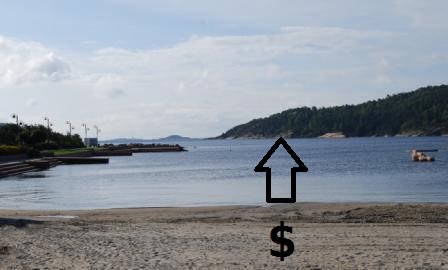
Most expensive beach according to study- Kristiansand Beach, Norway. image: kristiansand.norway.com
In contrast, the study reveals the 10 most affordable beaches are:
#
Beach
Country
Sunscreen
Water
Beer
Ice-cream
Lunch
Total (USD)
310
Cua Dai Beach
Vietnam
$1.95
$0.50
$2.04
$0.88
$7.81
$13.18
309
City Beach
Vietnam
$2.32
$0.33
$2.14
$0.88
$8.23
$13.90
308
Long Beach
Vietnam
$2.57
$0.43
$2.09
$0.99
$8.34
$14.42
307
Marsa Nayzak
Egypt
$6.61
$0.21
$1.96
$0.83
$6.83
$16.44
306
Sunken City
Egypt
$7.12
$0.20
$2.02
$0.84
$6.64
$16.82
305
Varkala Beach
India
$3.98
$0.37
$3.32
$0.73
$9.21
$17.61
304
Benaulim Beach
India
$4.65
$0.31
$3.20
$0.61
$9.15
$17.92
303
Palolem Beach
India
$4.65
$0.24
$3.13
$0.67
$9.52
$18.21
302
Cavelossim Beach
India
$4.65
$0.37
$3.41
$0.83
$9.15
$18.41
301
Sharm El-Naga Bay
Egypt
$7.12
$0.21
$1.96
$0.84
$8.44
$18.57
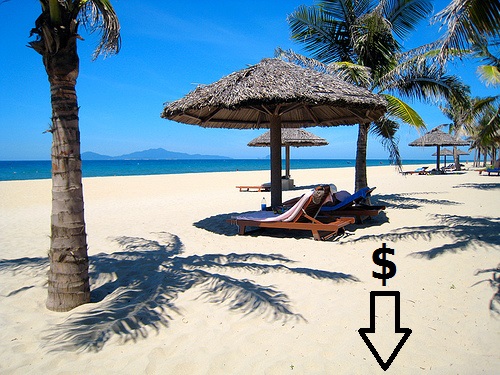
Most affordable beach according to study- Cua Dai Beach, Vietnam. image: vietnamguidenews.com
4 Canadian beaches appear in the Index, with the following results:
#
Beach
Region
Sunscreen
Water
Beer
Ice-cream
Lunch
Total (USD)
118
Grand Beach
Manitoba
$9.15
$1.61
$3.59
$2.89
$20.90
$38.14
121
Brady’s Beach
British Columbia
$9.28
$1.74
$3.65
$3.00
$20.00
$37.67
136
Wasaga Beach
Ontario
$9.15
$1.70
$3.59
$3.38
$19.08
$36.90
149
Parlee Beach
New Brunswick
$8.87
$1.66
$3.57
$2.95
$18.87
$35.92
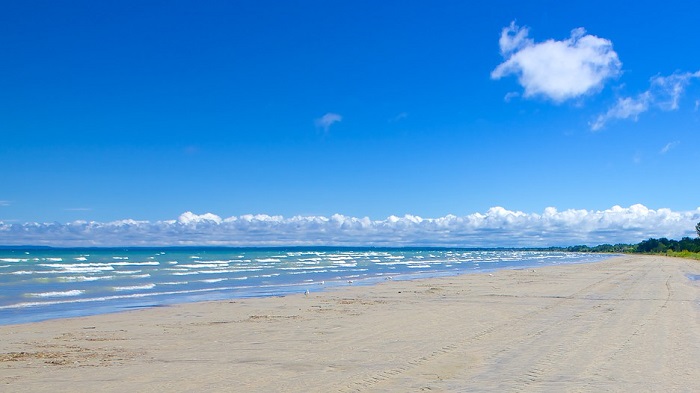
Grand Beach, Manitoba. image: travelmanitoba.com
Other findings from the study include:
Sun cream is most expensive when bought from beaches in The Seychelles, costing $26.63 for a 200ml bottle. In comparison, Cua Dai Beach in Vietnam has the world’s least expensive sun cream, costing just $1.95 per bottle.
The seaside location with the most expensive bottle of water is Huk Beach in Norway, costing $2.97 for a 500ml bottle. The beach with the least expensive bottle of water is Sunken City in Egypt, where the same sized bottle costs just $0.20.
The beach with the most expensive beer globally is Huk Beach in Norway, where a 33cl bottle costs $8.83. In contrast, Soma Bay in Egypt is the seaside destination with the least expensive beer, available for just $0.63.
Norway’s Huk Beach also has the world’s most expensive ice creams, at $5.09 each. Egypt’s El Gouna is the beach with the least expensive ice creams in the world, costing just $0.52.
West Palm Beach in the American state of Florida has the world’s most expensive seaside lunch, costing $28.61 for one person. Egypt’s El Gouna is the beach with the most affordable lunches, available for just $5.63.
About our friends at TravelBird: TravelBird is an online travel company offering a curated collection of holiday and travel experiences – from short inspirational breaks to international get-aways. TravelBird’s passionate local travel advisors work directly with tour operators across the world to offer a selection of travel experiences that invite travellers to discover something new and immerse themselves in different cultures. For more information, please visit: https://travelbird.nl
Methodology:
The study has 310 of the most visited beaches in 70 countries based on local tourism board numbers and data from the UNWTO.
Total Price = $ Sunscreen + $ Water + $ Beer + $ Ice-cream +$ Lunch
Sunscreen costs calculated by taking an average cost from a store in local resort/hotel, a hostel and local pharmacy or supermarket (all where available). We searched for SPF 30, 200 ml.
Lunch costs calculated by taking full meal cost, including a drink and dessert, for one person from a walking distance of maximum 10 minutes from the beach or the closest establishments to it (largely within tourist areas), outlets include hotels and restaurants.
Beer costs were calculated by taking an average of the biggest local beer brand along with the retail cost of Heineken, Budweiser, Becks, Guinness and Fosters at local prices, where available. Where sizes were not available, calculations were undertaken to make serving sizes equal.
Water calculations were found by taking the three largest local brands and calculating an average of these.
Ice-cream costs calculated by taking an average prepackaged branded ice-cream price in the capital city of each country and applying consumer produce cost differences to each area, where applicable. For the Silo, Ricky Sutton.
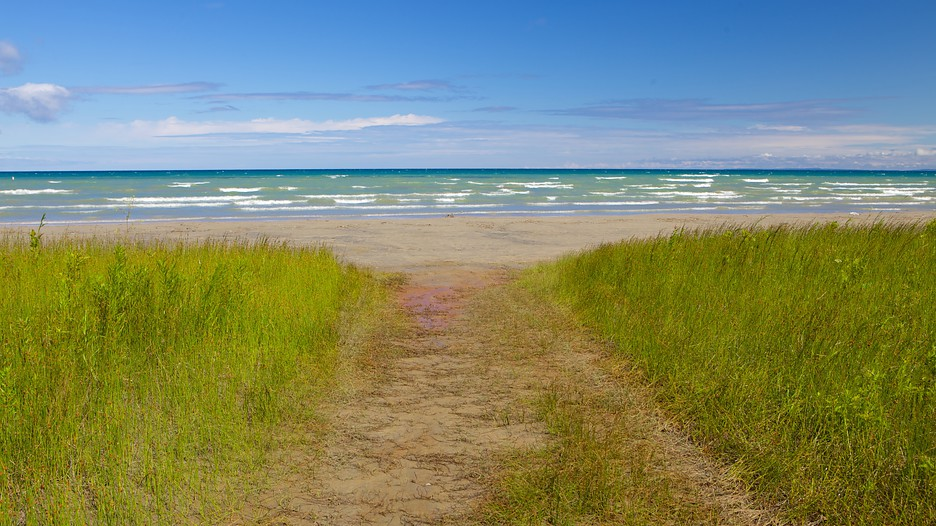
Featured image- Wasaga Beach, Ontario courtesy of expedia.com